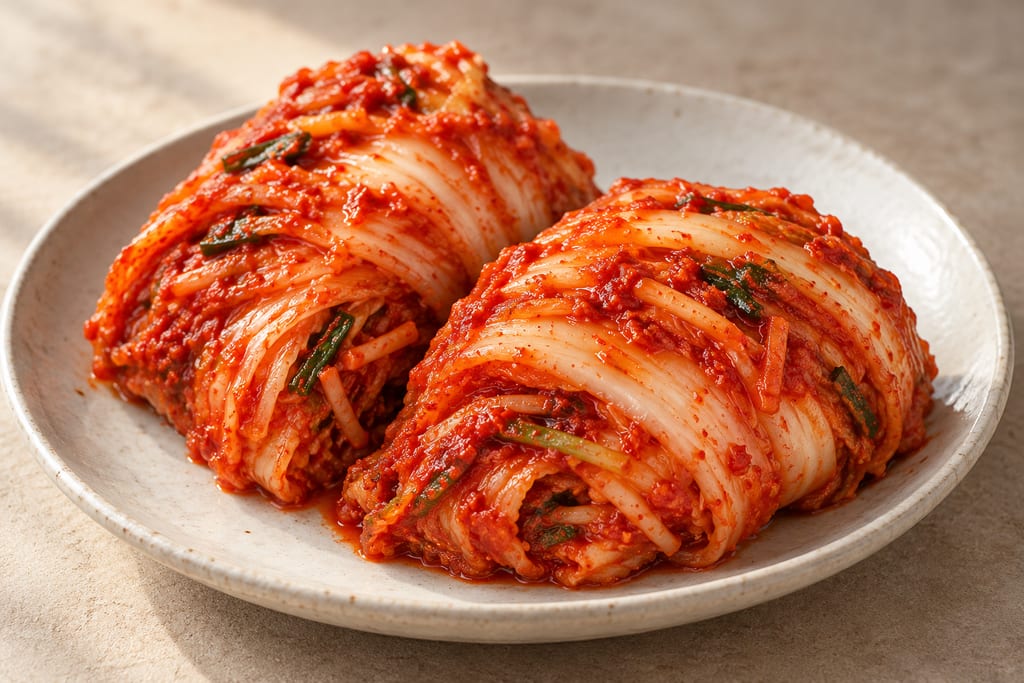
Baechu kimchi
Napa cabbage salted, seasoned with a paste of gochugaru, garlic, ginger and salted seafood, and left to sour through lactic fermentation; Korea's everyday winter preserve.
 FermenteaWhere food goes to change
Traditional method
새우젓 · Saeujeot · Saeu-jeot · Saeu jeot · Saeu jeotgal · 새우젓 · 새우젓갈 · Salted fermented shrimp · Korean salted shrimp · Korean fermented shrimp · 춘젓 · 오젓 · 육젓 · 추젓 · 동백하젓
Korean fermented seafood made by salting whole small shrimp and maturing them in their own brine, used as a seasoning, in kimchi and with pork.
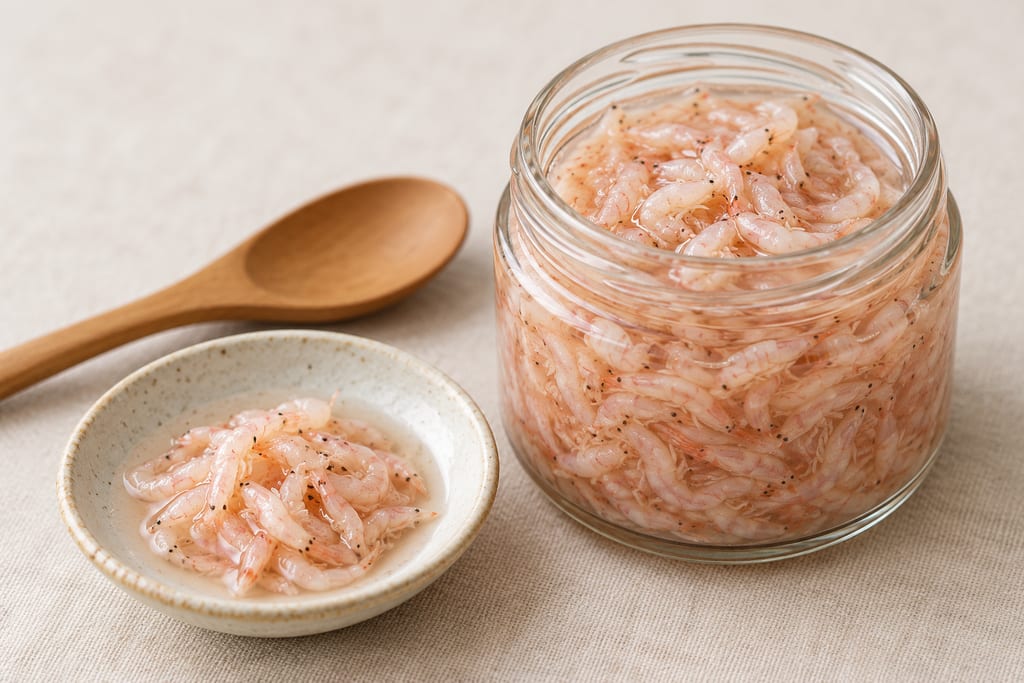
Saeujeot is a Korean fermented seafood made from small whole shrimp preserved in a substantial quantity of salt. The shrimp are mixed with salt, packed into containers and allowed to mature in the salty liquid that develops around them. The finished food contains recognisable shrimp, liquid brine and soluble substances released during fermentation. Its flavour is intensely salty and savoury, with a characteristic fermented seafood aroma. It is usually used in small amounts as a seasoning rather than eaten in the quantity of a main dish.
The Korean name is 새우젓, combining saeu, shrimp, with jeot, a fermented salted seafood preparation. It belongs to the wider jeotgal family, which also includes fermented anchovy, fish roe, shellfish and other marine products. Unlike filtered fish sauce, saeujeot commonly retains the whole shrimp. Saeujeot should also be distinguished from southeast Asian shrimp pastes, which may involve pounding, sun drying and different salt or fermentation processes.
The principal raw material is traditionally jeotsaeu, 젓새우, commonly identified as Acetes japonicus, a small marine shrimp. Korea's National Institute of Fisheries Science records its distribution around the western and southern coasts. Other research identifies Acetes chinensis, Leptochela gracilis and Pandalopsis japonica among shrimp species used in related saeujeot varieties. The species cannot be determined reliably from the generic product name alone.
Season and shrimp type affect the product's name. Chunjeot refers to spring-caught shrimp, ojeot to May shrimp, yukjeot to June shrimp, chujeot to autumn shrimp and dongbaekhajeot to winter shrimp. These are traditional categories rather than separate fermentation mechanisms. In commercial and culinary use, yukjeot is particularly valued for its plump shrimp and its use in kimchi-making.
The ingredients of a basic saeujeot are shrimp and salt. A prepared table condiment may later include chilli, garlic, sesame, spring onion or other seasonings, but these are not obligatory ingredients in the initial high-salt fermentation. Korean cultural records describe shrimp being salted shortly after capture, sometimes directly aboard fishing vessels, and matured in ceramic jars or other containers.
Saeujeot is a genuine microbial and enzymatic fermentation. Shrimp-derived enzymes break proteins into peptides and amino acids, while salt-tolerant microorganisms contribute additional flavour compounds. Unlike many vegetable fermentations, it does not depend primarily on producing large quantities of lactic acid or reaching a strongly acidic final pH. Its principal preservation hurdle is high salt, supported by raw-material quality, controlled processing and storage.
Modern commercial saeujeot may be produced in sanitary facilities or aged in underground tunnels. The finished product varies in shrimp size, appearance, liquid content, aroma and degree of protein breakdown. No single salt percentage, maturation duration or storage schedule can describe all the traditional and commercial versions.
Saeujeot has a documented history in Korean coastal food production, but its earliest invention date is unknown. Salting fish and shellfish was a practical way to preserve highly perishable catches before mechanical refrigeration. Korea's west coast provided favourable shrimp habitat through broad tidal flats, estuaries and shallow coastal waters. Fishing, immediate salting, transportation and inland markets developed together.
The Academy of Korean Studies identifies the Sejong Sillok, the fifteenth-century annals of King Sejong, as containing references to baekhajeot and jahajeot being presented to Ming China. These are early records of named salted-shrimp preparations. They establish the presence of such foods in Joseon-period commerce and court exchange, but do not describe the precise microbial process, salt percentage or modern seasonal classifications.
Shinjeung Dongguk Yeoji Seungnam, completed in 1530, and the geographical survey Yeojidoseo, compiled during 1757–1765, provide documentary evidence of shrimp-producing districts. These records place shrimp resources along a broad coastal area rather than proving a single birthplace for saeujeot. The National Folk Museum uses them to reconstruct the historical distribution of shrimp fisheries from the northwestern coast toward the southern sea.
Seo Yu-gu's Nanho Eomokji, written around 1820, describes the western-coast shrimp trade and the wider consumption of salted shrimp. His Imwon Gyeongjeji also describes preparing salt and storage jars before leaving to fish, allowing shrimp to be preserved as soon as they were caught. The practice addressed the rapid deterioration of small shrimp before they could reach inland consumers.
Historical shrimp-fishing boats were known by names including haeseon, meaning a vessel associated with making jeot, and jeotjungseon. The National Folk Museum describes these craft operating in tidal coastal waters and carrying salt and containers. It also records that fermented shrimp was transported to Seoul through river and coastal trade. Before the 1950s, boats carrying western-coast saeujeot reached the Mapo landing on the Han River.
Hanguk Susanji, compiled between 1908 and 1911, records shrimp-to-salt ratios of 10:3 and 10:4 according to shrimp type and catch season. The National Folk Museum also describes traditional jar fermentation in shaded, relatively steady conditions, with some products matured for more than one year. These are historically documented practices, not proof that the same conditions would satisfy modern food-safety requirements.
The use of saeujeot in kimchi is also historically documented. The National Folk Museum identifies salted shrimp among ingredients of makkimchi recorded in Dongguk Sesigi during the nineteenth century, and in a radish preparation recorded in Siui Jeonseo. Contemporary production now includes tunnel-aged shrimp at Gwangcheon, commercial processing plants and standardised quality testing. These developments represent changes in preservation equipment and food safety rather than the disappearance of the traditional food.
Saeujeot develops through the combined activity of shrimp enzymes, salt-tolerant bacteria and prolonged maturation. Salt initially removes some water from the shrimp and creates a concentrated brine. The shrimp's own proteinases and other enzymes begin breaking down muscle proteins, while microorganisms surviving the salt contribute further biochemical changes. The result is a gradual release of peptides, free amino acids, nitrogen compounds and flavour-active metabolites.
Salt concentration strongly influences which microorganisms can grow. Many ordinary marine bacteria decline as fermentation progresses, while salt-tolerant and halophilic organisms become more important. Unlike vegetable fermentation, saeujeot often remains near neutral pH. It does not depend on a large, rapid fall in acidity caused by lactic-acid bacteria. Salt, temperature and initial raw-material quality are therefore particularly important preservation factors.
A 2013 Food Microbiology study followed salted shrimp for 183 days. The initially prominent Pseudoalteromonas population was followed by Staphylococcus, Salimicrobium and Alkalibacillus, before Halanaerobium became dominant after approximately 66 days. Although halophilic archaea were detected, bacteria were substantially more abundant. These genera were identified in the particular experimental fermentation, not as a universal controlled starter culture.
A 2014 experiment compared salt concentrations of approximately 20%, 24%, 28% and 32% expressed as weight per volume. At the lower concentrations, Halanaerobium became prominent during later fermentation. At 28%, Salimicrobium predominated, while at 32% the initial bacterial community persisted longer. The authors associated Halanaerobium with increasing acetate, butyrate and methylamines, compounds capable of producing undesirable aromas.
Temperature changes the microbial succession. A separate experiment compared fermentation at 10°C, 15°C, 20°C and 25°C. Warmer treatments showed more pronounced development of Halanaerobium-associated metabolites, while lower temperatures changed the persistence of early marine bacterial groups. The authors considered approximately 15°C favourable in their experimental system. This finding is not a universal validated safety temperature for every saeujeot formulation.
The principal flavour chemistry involves protein hydrolysis. Free amino acids, including glutamic acid and aspartic acid, contribute savouriness. Other amino acids, organic acids and nucleotide-related compounds affect sweetness, bitterness and fermented aroma. Trimethylamine N-oxide from marine tissue can be transformed into trimethylamine, while microbial metabolism can generate dimethylamine, acetate and butyrate. These changes may contribute to characteristic flavour or, when excessive, undesirable odours.
Some modern research examines selected starter cultures. A 2019 study found that Tetragenococcus halophilus strain MJ4 suppressed a cadaverine-producing Tetragenococcus muriaticus population during experimental saeujeot fermentation. The result is strain-specific and does not mean every Tetragenococcus is beneficial. Traditional saeujeot is commonly spontaneously fermented, and successful controlled starter use requires separate validation.
Saeujeot is therefore appropriately classified as a mixed microbial and enzymatic fermentation. The microorganisms present are influenced by the shrimp, salt, environment and production conditions. Detecting an organism through DNA sequencing does not prove that it is alive, responsible for flavour formation or suitable for deliberate inoculation.
Traditional production begins with small, fresh shrimp, usually salted soon after capture. Freshness is important because these small marine animals deteriorate rapidly. Historical Korean records describe sorting unwanted fish or debris from the catch, washing the shrimp with seawater, applying salt and packing the mixture into storage jars. Salting aboard fishing vessels reduced the delay between capture and preservation.
The simplest documented ingredients are whole shrimp and salt. The National Folk Museum cites Hanguk Susanji, compiled in 1908–1911, as recording shrimp-to-salt ratios of 10:3 or 10:4. These represent additions of 30% or 40% salt relative to shrimp weight. They are historical formulation ratios, not directly measured final product salinities or universally validated safe quantities.
A traditional local-food record published through Korea's Rural Development Administration describes five kilograms of shrimp and two kilograms of salt. Its accompanying method, however, describes a shrimp-to-salt ratio of 3:1, which is not numerically identical to the ingredient list. It records sorting, washing, draining, mixing with salt, pressing into a jar, applying additional surface salt and fermenting in the shade. The inconsistency must be retained rather than silently corrected.
Modern scientific methods supply more precise but distinct examples. A 2014 Chung-Ang University study fermented shrimp at approximately 20%, 24%, 28% and 32% salt by weight per volume, using added salt and prepared brine at 15°C for 142 days. These were experimental salt conditions, not starting percentages of dry salt relative to raw shrimp. The authors measured microbial succession and metabolites rather than publishing a universal consumer recipe.
A 2024 study followed a Gwangcheon producer using a 75:25 shrimp-to-sea-salt mixture by weight. The shrimp matured in an underground tunnel at 15 ± 2°C for ten weeks. A separate 2023 study used the same starting proportion at 10–15°C and 85% relative humidity for a 360-day investigation. These studies demonstrate different commercial ageing periods, but their specifications must not be combined into one assumed safe method.
Salt suppresses many susceptible microorganisms, extracts moisture and helps determine which halophiles can grow. Whole shrimp supply proteins, enzymes and flavour precursors. The container protects the product and retains the salty liquid. Modern facilities may include incoming-material inspection, brine treatment, foreign-material removal, sanitary processing, controlled maturation and packaging. No deliberate yeast, koji or lactic-acid starter is required in the basic traditional preparation.
Maturation changes the liquid and shrimp together. Soluble nitrogen compounds increase as proteins break down, while salt concentration and temperature influence microbial activity. A complete manufacturing specification also requires raw-shrimp acceptance, hygienic handling, salt measurements, contamination controls and validated storage. Neither a historical ratio nor an experimental incubation period independently establishes safe home production.
Saeujeot varies by shrimp species, fishing season, production area and maturation method. The broadest traditional distinction is seasonal. Chunjeot is associated with spring, ojeot with May, yukjeot with June, chujeot with autumn and dongbaekhajeot with winter. These names reflect the period of capture and often the size, condition and appearance of the shrimp, rather than different preservation mechanisms. Some sources use the lunar calendar for the seasonal distinctions.
Yukjeot is particularly prized in Korean culinary tradition. The National Folk Museum records it as a premium grade, commonly selected for kimchi-making. The Academy of Korean Studies also identifies yukjeot as suitable for kimjang, the preparation of kimchi for winter storage. Ojeot and chujeot are widely used as table condiments and in everyday cooking. These preferences are cultural and commercial distinctions rather than universal microbiological quality rankings.
Ganghwa Island is an important production and trading area. Its extensive tidal flats and the meeting of several river systems support shrimp fisheries. Ganghwa County describes the autumn catch as particularly important for chujeot and identifies Oepo Port as a major market. Its annual salted-shrimp festival reflects the relationship between the autumn catch, regional trade and the kimchi-making season.
Gwangcheon in South Chungcheong Province is known for tunnel-aged saeujeot, or 토굴새우젓. The product is stored and matured in underground tunnels that provide relatively stable environmental conditions. Korea Tourism Organization identifies Gwangcheon as a specialist salted-shrimp market, while a 2024 scientific investigation documented commercial production at 15 ± 2°C. Tunnel ageing is a recognised regional method, but it is not required for all Korean saeujeot.
Ganggyeong, in Nonsan, has another major jeotgal tradition. Its market sells salted shrimp alongside fermented anchovies, yellow corvina and other seafood. Korea Tourism Organization describes low-temperature warehouse maturation at approximately 10–15°C over around three months. These are locally documented commercial practices, not universal manufacturing instructions.
Other recognised production and trading locations include Soraepogu, Gomso, Imjado and Nakweoldo. Traditional terminology also distinguishes gonjaengijeot, made from small reddish shrimp-like crustaceans, and tohajeot, made from freshwater shrimp. Both belong to the broader Korean salted-crustacean tradition but should not be automatically treated as interchangeable with marine Acetes-based saeujeot.
Scientific research confirms that shrimp variety matters. A 2023 study compared four seasonal or species-related products from the Sinan area and found differences in amino acids, nucleotides and other metabolites during fermentation. Commercial grades can also differ in colour, gloss, cleanliness and shrimp condition. These differences should be recorded at product level rather than reduced to one universal formula.
Saeujeot is primarily a concentrated seasoning. Because it contains substantial salt and intensely flavoured fermentation products, a relatively small amount can season a much larger dish. The whole shrimp are often mixed directly into food, while some preparations use the liquid portion. Its taste combines strong salinity with savoury, slightly sweet and fermented seafood notes. The shrimp themselves add texture when they remain intact.
Its most important use is in kimchi, particularly during kimjang. Saeujeot is mixed with vegetables, chilli, garlic and other seasoning ingredients before the kimchi undergoes its own fermentation. It contributes salt, amino acids and seafood-derived flavour. The microorganisms present in saeujeot may also interact with the kimchi microbiota, but it should not be assumed that every bacterial species from the shrimp survives or becomes an important kimchi fermenter.
Saeujeot is also served with pork. The National Folk Museum and Academy of Korean Studies describe it as a traditional accompaniment to boiled or sliced pork, including pyeonyuk. It may be served plain or mixed with chilli, garlic and other seasonings. The strong salinity and fermented flavour provide a contrast to the relatively mild fatty meat. Traditional descriptions also attribute digestive benefits to the shrimp enzymes, but this should not be presented as a clinically demonstrated treatment for digestive problems.
Another established use is in soups and stews. Saeujeot can season tofu stews, vegetable soups and clear broths, replacing some or all of the ordinary salt while contributing additional savoury flavour. Korea Tourism Organization documents aehobak-saeujeot-jjigae, a stew made with Korean summer squash, anchovy broth and salted shrimp. The combination is characteristic of its use as both seasoning and source of umami.
Contemporary cooking also uses saeujeot in gyeran-jjim, Korean steamed eggs, and other mildly flavoured dishes. It may be chopped or crushed to distribute the shrimp and seasoning more evenly. Prepared table versions can include sesame, chilli, garlic or spring onion. These are serving preparations, not mandatory ingredients of the original fermentation.
The liquid from fermented seafood may be used as a seasoning, but whole-shrimp saeujeot is not automatically the same commercial product as a filtered jeot liquid or aekjeot fish sauce. Removing solids, diluting, blending or adding seasonings changes the product and may affect its microbiological stability.
Commercial storage instructions should be followed, particularly after opening. High salt does not guarantee that every packaged saeujeot remains safe at room temperature. The product also contains crustacean allergens, which remain relevant when saeujeot is hidden within kimchi, sauces or prepared dishes. Its high sodium concentration is another reason to treat it as a seasoning rather than a substantial food portion.
Finished saeujeot normally contains small shrimp suspended in a concentrated salty liquid. The shrimp may remain recognisable and relatively intact, although extended maturation can soften their tissues. Their colour ranges from pale translucent or greyish-white to pinkish, depending on species, season and processing. The aroma should be characteristic of fermented salted seafood. Appearance and smell are useful quality observations, but cannot independently demonstrate microbial safety.
Salt concentration is one of the most important measurements. Different publications express salt as a percentage of raw shrimp, total mixture mass or liquid volume. These are not interchangeable. A historical addition of three parts salt to ten parts shrimp does not mean the finished product has 30% salinity. Similarly, the 2014 laboratory treatments of 20–32% weight-per-volume salt cannot be interpreted as identical to the 75:25 shrimp-to-salt weight ratio in the 2024 Gwangcheon study.
The 2014 salt-concentration experiment found substantial differences in bacterial populations and metabolites. Lower-salt treatments developed prominent Halanaerobium populations and increased acetate, butyrate and methylamines during later fermentation. The authors considered 24–28% salt favourable in their experimental system. This is a research conclusion rather than a universally validated safe salt range for homemade saeujeot.
Temperature also affects maturation. A 2014 temperature study found different microbial succession at 10°C, 15°C, 20°C and 25°C. Warmer treatments produced more pronounced late-stage changes associated with Halanaerobium, while early marine bacterial groups persisted longer in some cooler samples. The authors preferred approximately 15°C under their particular experimental conditions. Neither time nor temperature should be copied into a different salt formulation without validation.
High salt does not eliminate every microbial hazard. A 2024 investigation examined fifty-six commercial salted-shrimp products and detected no E. coli, coliforms or Vibrio parahaemolyticus in the tested samples, but recorded Staphylococcus aureus in its microbial assessments. The authors identified raw-shrimp quality and processing hygiene as important sources of contamination. Experimental saltwater immersion and ultraviolet treatment reduced bacterial counts to different degrees, but did not establish universal sterility.
Another 2024 study followed Gwangcheon shrimp during ten weeks of tunnel ageing. It detected no S. aureus or Vibrio spp. in the tested samples, while identifying salt-tolerant bacteria including Psychrobacter, Salinicoccus and Halomonas. Opportunistic species were also detected among cultured isolates. These findings show that the absence of particular pathogens in sampled batches cannot be generalised to all producers or interpreted as proof that every detected microorganism is harmless.
Biogenic amines are a separate chemical concern. Microbial decarboxylation of amino acids can produce cadaverine, histamine, tyramine and related compounds. The Gwangcheon investigation found cadaverine increasing during maturation, with measured concentrations reaching approximately 83 mg/kg in one shrimp-grade treatment. A separate 2023 year-long study found low measured biogenic-amine concentrations in its samples. The two results demonstrate variation between processes rather than a universal safe maturation duration.
Volatile basic nitrogen is another useful quality measurement. It includes compounds such as ammonia and trimethylamine that may accumulate through protein breakdown. The 2024 Gwangcheon study found increasing volatile basic nitrogen during fermentation. Such changes can arise during normal maturation, while excessive accumulation may indicate quality problems. Limits developed for fresh meat cannot simply be applied to fermented shrimp without product-specific standards.
Finished pH is not a substitute for salt or pathogen controls. A 2023 study recorded pH falling from approximately 7.61 after fifteen days to 6.86 after 360 days, while amino nitrogen increased markedly. The product remained much less acidic than a conventional lactic vegetable ferment. Its stability therefore cannot be assessed using a generic kimchi or sauerkraut pH endpoint.
Unknown surface growth, abnormal gas production, damaged containers, unexpected dilution or pronounced deterioration require assessment, but dangerous contamination is not always visible. Adding salt after an unsafe fermentation has begun cannot reliably remove bacterial toxins or biogenic amines already formed. A wild starter of unknown origin or lower-salt substitution should not be assumed equivalent to a professionally controlled high-salt process.
For a reproducible recipe, the essential records are verified shrimp species and freshness, incoming microbial quality, salt addition and measured salinity, fermentation temperature, duration, container hygiene, water activity, pH, pathogen testing, biogenic amines, packaging and storage. Saeujeot is a genuine high-salt fermentation, but the traditional method and laboratory observations do not by themselves give a universally safe home-production specification.
The Academy of Korean Studies identifies references in the Sejong Sillok, compiled in the fifteenth century, to baekhajeot and jahajeot presented to Ming China. These establish early documented salted-shrimp products but do not provide the modern manufacturing formula. Shinjeung Dongguk Yeoji Seungnam (1530) records regional shrimp resources. Yeojidoseo (1757–1765) documents geographical distribution. Seo Yu-gu's Nanho Eomokji (around 1820) and Imwon Gyeongjeji describe western-coast shrimp being salted and traded, including salt and jars carried aboard fishing vessels. Hanguk Susanji (1908–1911) records shrimp-to-salt ratios of 10:3 and 10:4. The earliest invention date is unknown.
A separate 2024 investigation of 56 commercial saeujeot products detected Staphylococcus aureus in the survey and identified incoming small shrimp as an important potential source. High salt does not guarantee that all strains or toxins are absent. The Gwangcheon study did not detect S. aureus in its own samples, but that result cannot validate other batches.
Hazard sourceRaw marine shrimp may carry bacteria originating from coastal waters or become contaminated during landing and processing. Studies of saeujeot detect different marine bacterial genera before salt selection changes the community. The absence of tested Vibrio species in particular commercial samples does not prove absence from all raw materials or products.
Hazard sourceShrimp may acquire contamination during capture, handling, sorting and packaging. E. coli and coliform testing can provide evidence concerning hygiene, but negative findings in a limited survey do not prove that all possible foodborne pathogens have been excluded.
Hazard sourceSalt is a major preservation hurdle, and microbial succession changes substantially with concentration. Lower-salt experimental treatments supported greater Halanaerobium activity and accumulation of particular potentially undesirable metabolites. The starting salt ratio and measured final salinity must not be confused, and no unvalidated salt reduction should be adopted.
Hazard sourceMicrobial amino-acid metabolism can generate biogenic amines during fermented-seafood production. The 2024 Gwangcheon study measured cadaverine increasing during ageing, with a reported maximum around 83 mg/kg in one shrimp-grade group. Histamine was not detected in those samples, but its absence cannot be assumed in untested production.
Hazard sourceSalt-tolerant bacteria can remain active during fermentation. Laboratory research associated some Halanaerobium-dominated communities with increased acetate, butyrate and methylamines. Such compounds can alter flavour and indicate a different fermentation trajectory from the intended product.
Hazard sourceFermentation temperature influences both microbial succession and metabolite development. Experimental higher-temperature batches showed more pronounced changes associated with Halanaerobium. The producer's 15 ± 2°C tunnel condition cannot be assumed safe for every shrimp source, salt formulation or container type.
Hazard sourceSaeujeot does not normally reach the strongly acidic conditions of many vegetable ferments. The studied tunnel-aged products had pH values approximately 5.5–6.5. Product safety cannot be inferred from a generic lactic-fermentation pH endpoint, nor from taste or sourness.
Hazard sourceHandling, portioning and packaging may introduce organisms after fermentation. The published method does not establish a validated room-temperature shelf life, package oxygen specification or after-opening storage procedure. High salt alone is not a complete packaging and storage control.
Hazard sourceSaeujeot contains shrimp, a crustacean allergen. Fermentation does not establish elimination of allergenic proteins. When saeujeot is included in kimchi, soup, sauces or prepared meals, its presence must be declared according to the relevant food-allergen requirements.
Hazard sourceSaeujeot is a concentrated high-salt seasoning. It contributes substantial sodium even when used in small amounts. Historical additions, experimental formulations and measured finished salinity vary, so its sodium contribution should be based on the actual product declaration or analysis.
Hazard sourceThe selected commercial process is a spontaneous salt-fermentation system without deliberate starter inoculation. Some Tetragenococcus strains have been studied for limiting cadaverine formation, while other related strains may produce undesirable amines. A detected organism or a purchased genus-level culture cannot be assumed suitable for introducing into saeujeot.
Hazard sourceSource traceable, appropriately handled raw marine shrimp and establish freshness, microbiological acceptance and receiving-temperature specifications.
Control sourceUse food-grade salt and a validated formulation, recording the initial shrimp-to-salt mass ratio separately from measured finished-product salinity.
Control sourceVerify salt distribution and monitor product salinity using an appropriate calibrated or validated analytical procedure.
Control sourceUse sanitary food-contact vessels and appropriate preparation, equipment hygiene and controls against contamination.
Control sourceMonitor fermentation temperature and time under a process validated for the actual shrimp, salt concentration and storage system.
Control sourceDocument the exact Gwangcheon study condition when reproducing its research record, without treating it as a universally safe fermentation limit.
Control sourceVerify microbiological safety, including appropriate assessment of Staphylococcus aureus, relevant marine pathogens and hygiene indicators.
Control sourceAssess biogenic amines and relevant indicators of excessive protein decomposition where appropriate to the validated product specification.
Control sourceSpecify finished-product characteristics and establish validated packaging, distribution, storage and after-opening controls.
Control sourceDeclare shrimp as a crustacean allergen and prevent allergen cross-contact during manufacture and service.
Control sourceDo not introduce an experimental starter culture without strain-specific evidence, food-use suitability and process validation.
Control sourceIncomplete safety specification: This is a documented commercial research process, not a complete validated home-fermentation recipe.
The 75:25 shrimp-to-sea-salt ratio is based on starting mass. It is not equivalent to 25% finished salinity or to the weight-per-volume salt concentrations in the 2014 experiments.
The 15 ± 2°C tunnel environment was observed at one commercial producer. It must not be treated as a universally safe household fermentation temperature.
Ten weeks is the study's observation period, not a proven minimum safe fermentation duration or a shelf-life guarantee.
No raw-shrimp receiving temperature, complete hygiene specification, container geometry, validated salinity acceptance limit or packaging schedule is provided.
A related 2008 Korean local-food recipe gives inconsistent salt ratios between its ingredient list and written method. Those quantities have not been combined with this formulation.
Do not reduce salt, dilute with water or substitute a different brine process without independent validation.
High salt does not guarantee the absence of Staphylococcus aureus, marine pathogens or undesirable biogenic amines.
No starter is specified for this traditional-style process. Do not cultivate or inoculate organisms merely because they were detected in fermentation research.
A neutral or mildly acidic pH is normal in some saeujeot samples; it does not establish safety.
The absence of pathogens in one research batch cannot be used as a guarantee for another producer or home-prepared batch.
Do not classify saeujeot as safe for indefinite storage at ambient temperature. Follow validated manufacturer-specific storage and after-opening instructions.
Saeujeot contains a crustacean allergen and must be declared when used in other foods, including kimchi.
Any practical consumer recipe requires a separately verified raw-material, microbiological, fermentation, packaging and storage specification.
Napa cabbage salted, seasoned with a paste of gochugaru, garlic, ginger and salted seafood, and left to sour through lactic fermentation; Korea's everyday winter preserve.

In 1766 chilli entered a Korean kimchi recipe for the first time. Joseon households made winter kimchi in late autumn and kept it in onggi jars buried in straw, at a few degrees above freezing until spring.
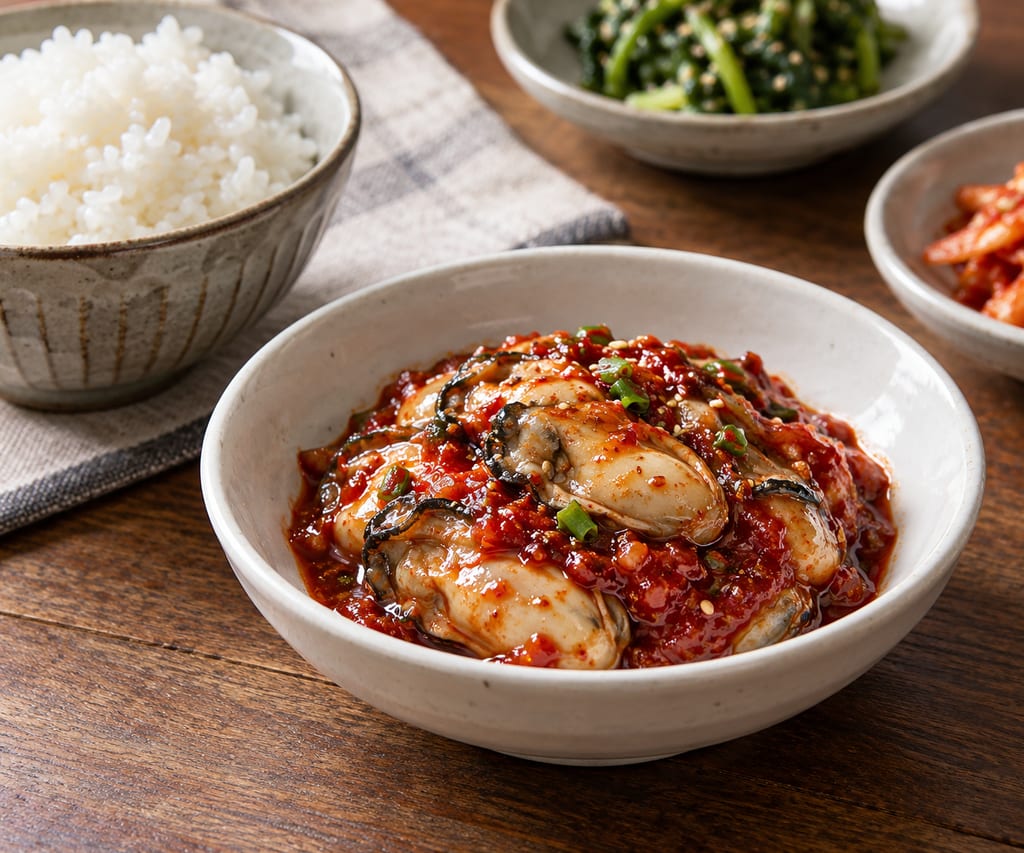
A Korean salted-oyster jeotgal seasoned with chili, associated especially with Seosan and Ganwoldo. This page records its food culture, not a household preparation method.
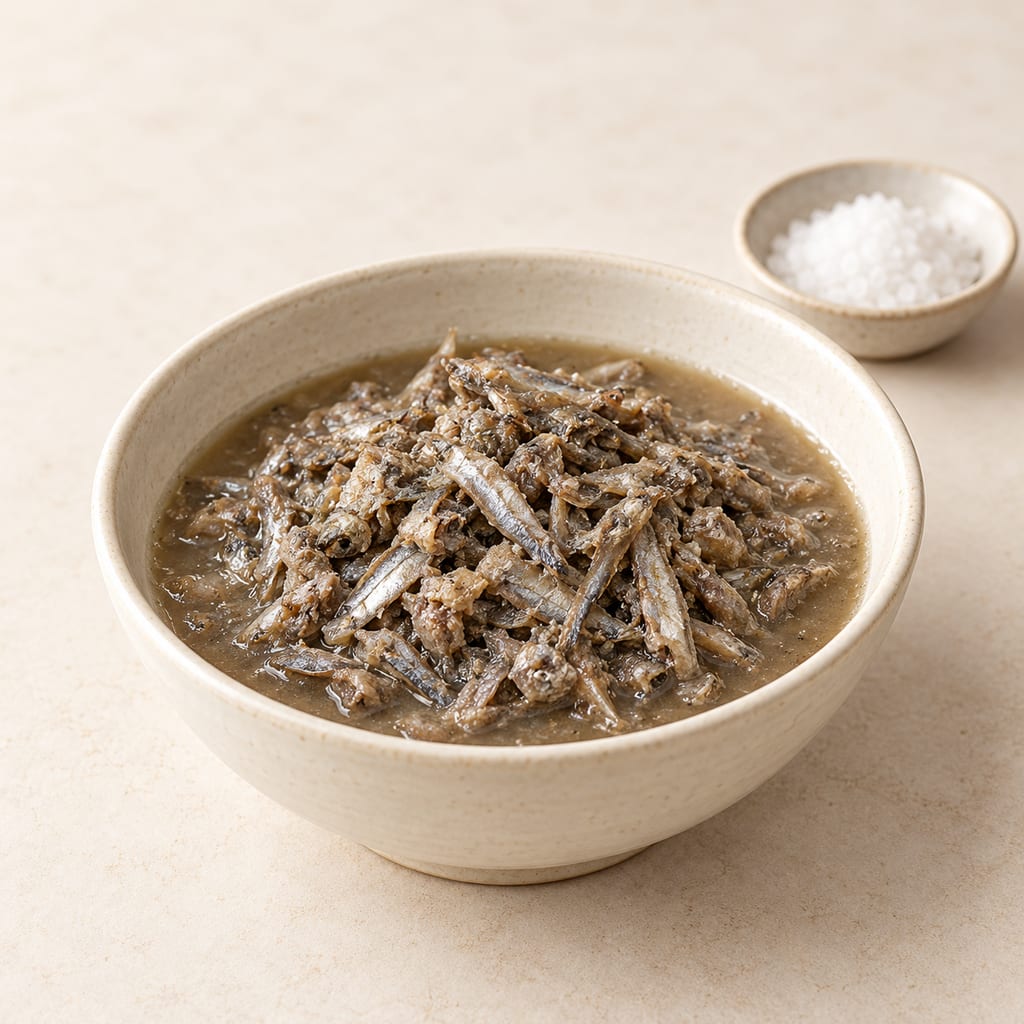
Salted anchovies mature in a covered jar with brine. The fish can be seasoned for a meal, while the expressed liquid seasons kimchi and other dishes.
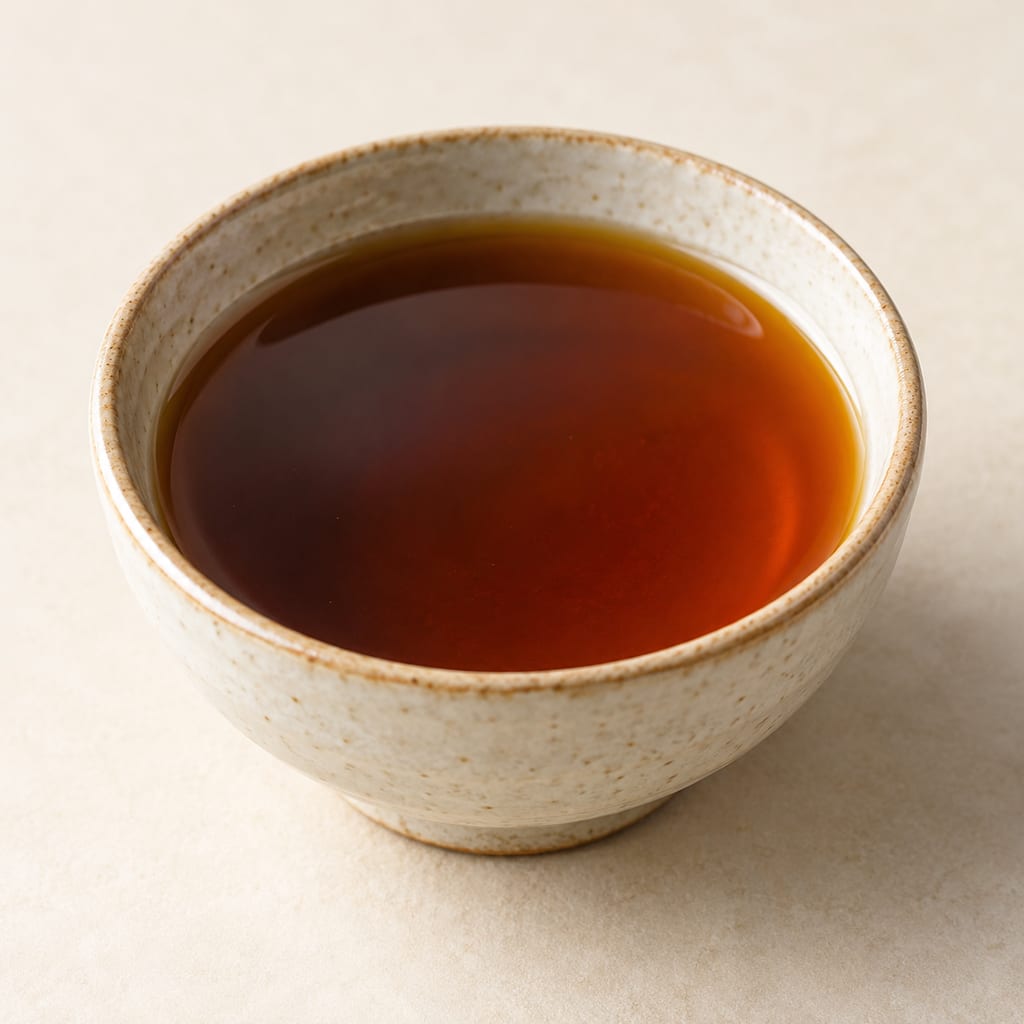
Myeolchi-aekjeot is Korean anchovy sauce: whole anchovies salted to about 25 percent brine, fermented for months to years and filtered; its main use is as a kimchi seasoning.
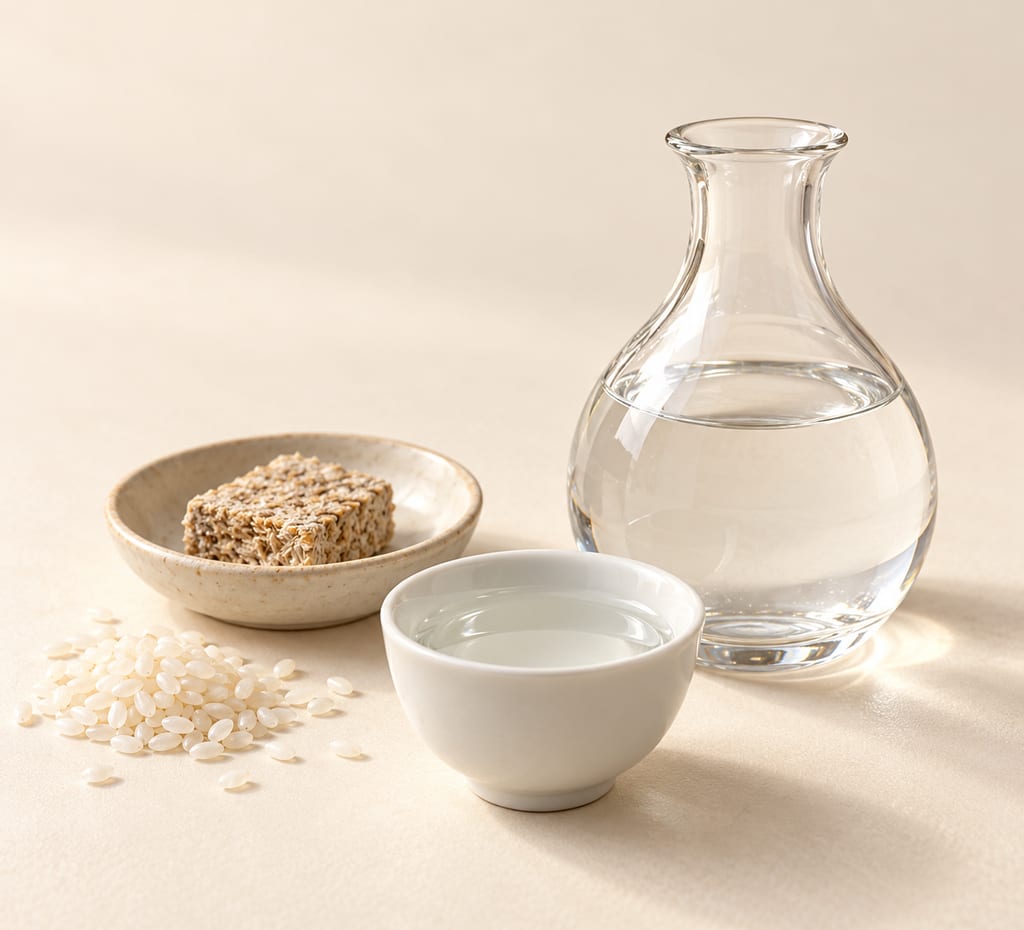
Andong soju is a rice spirit from North Gyeongsang, distilled from steamed rice and wheat nuruk. This method makes the starter before fermenting the rice mash in a jar.
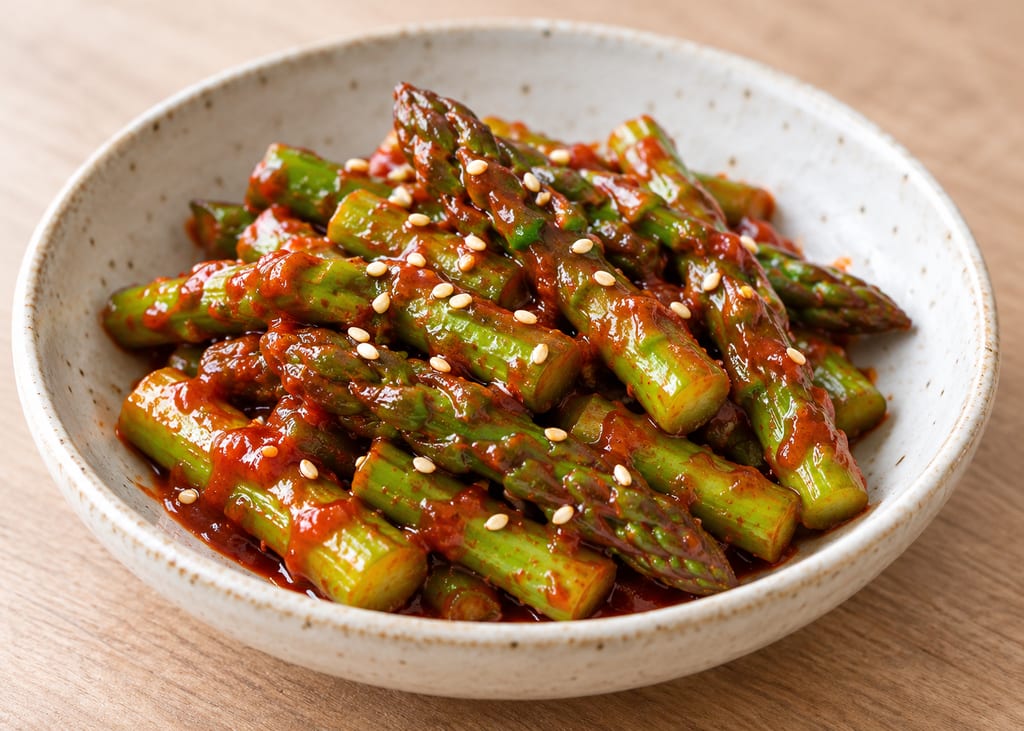
A Korean banchan of blanched asparagus dressed with a sweet-sour cho-gochujang sauce; Hyosun's version cools the spears in ice water before tossing.
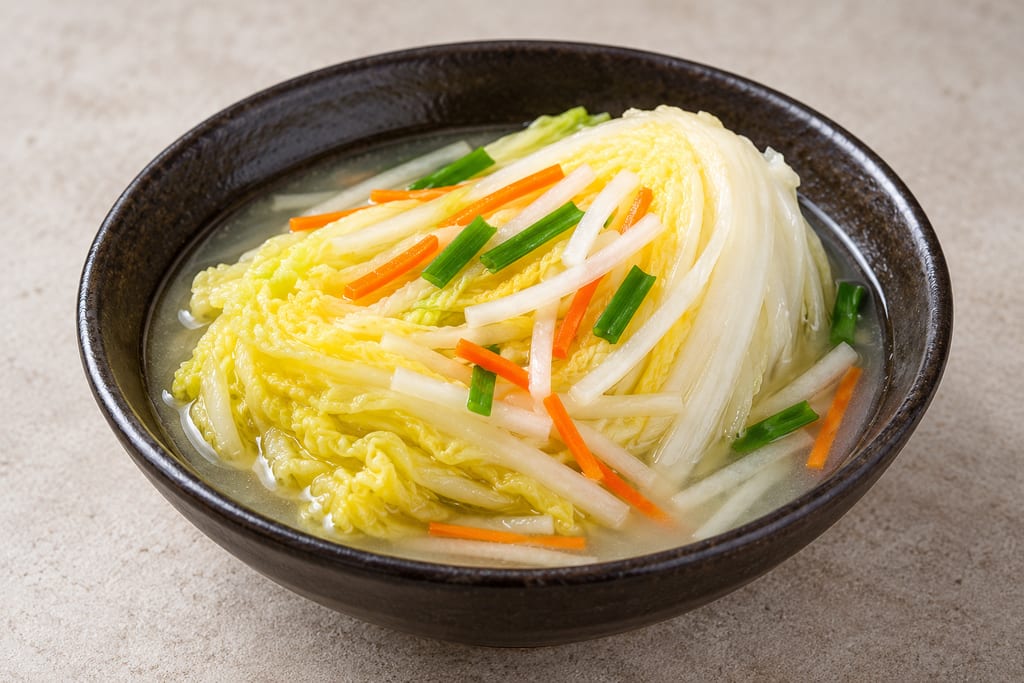
Napa cabbage is brined and filled with pear, radish, alliums, chives and fruit; this Korean kimchi omits red pepper flakes.
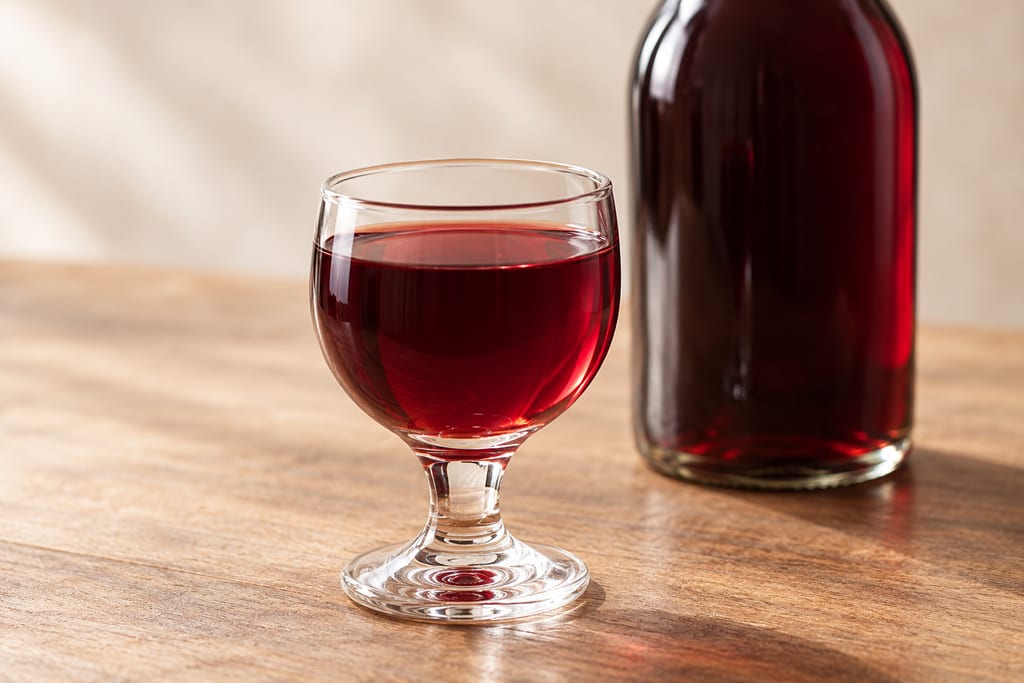
Korean black raspberry wine: crushed bokbunja berries with their seeds, sweetened to 20 °Brix, fermented 15 days at 25 °C with wine yeast, filtered and matured three months.
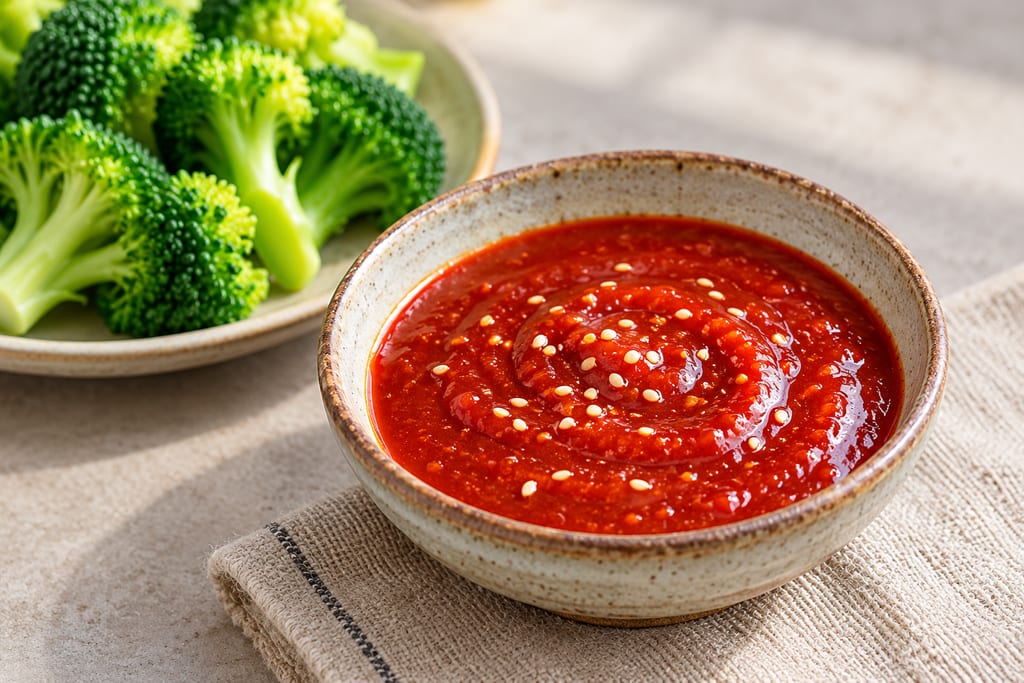
Chogochujang is a Korean sweet-sour sauce made by seasoning gochujang with vinegar and sugar. This development batch adds water and toasted sesame seeds, with optional garlic for the portion being served.
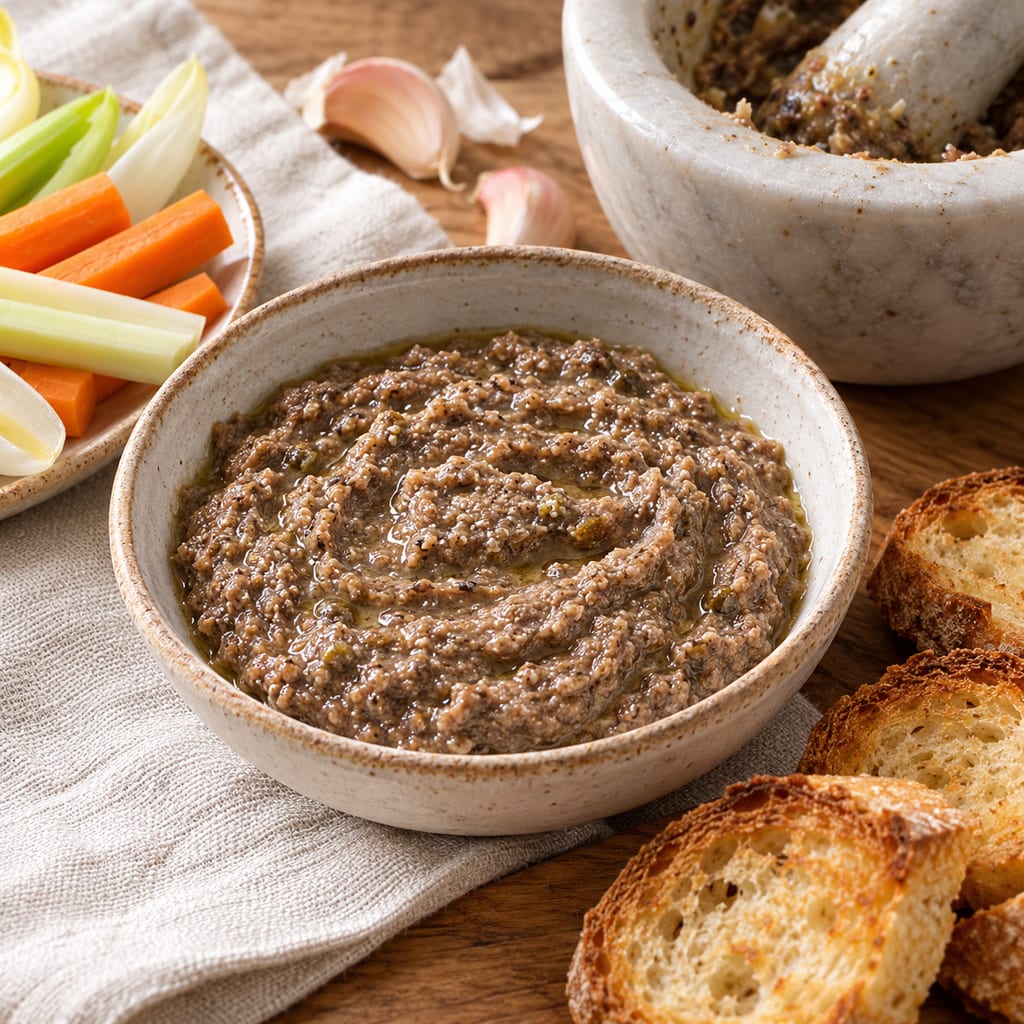
A Provencal dip of anchovies, garlic, capers and olive oil, pounded or blended to a creamy paste and served with raw vegetables, bread and eggs.
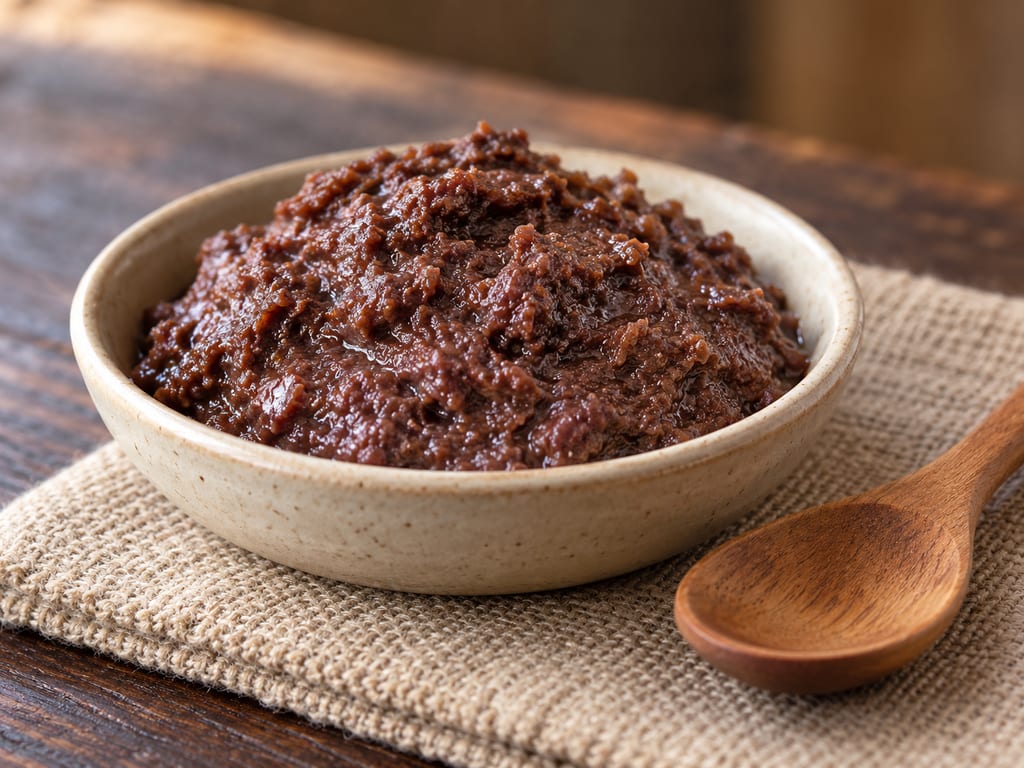
Bagoong isda is a Philippine fish paste: whole small fish salted and left to ferment for a month or more in earthen jars. It is the fish counterpart of bagoong alamang.

Colatura di alici is the amber liquid drained from salted anchovies matured in wooden containers in Cetara, on the Amalfi coast of Campania, and sold under a protected designation of origin.
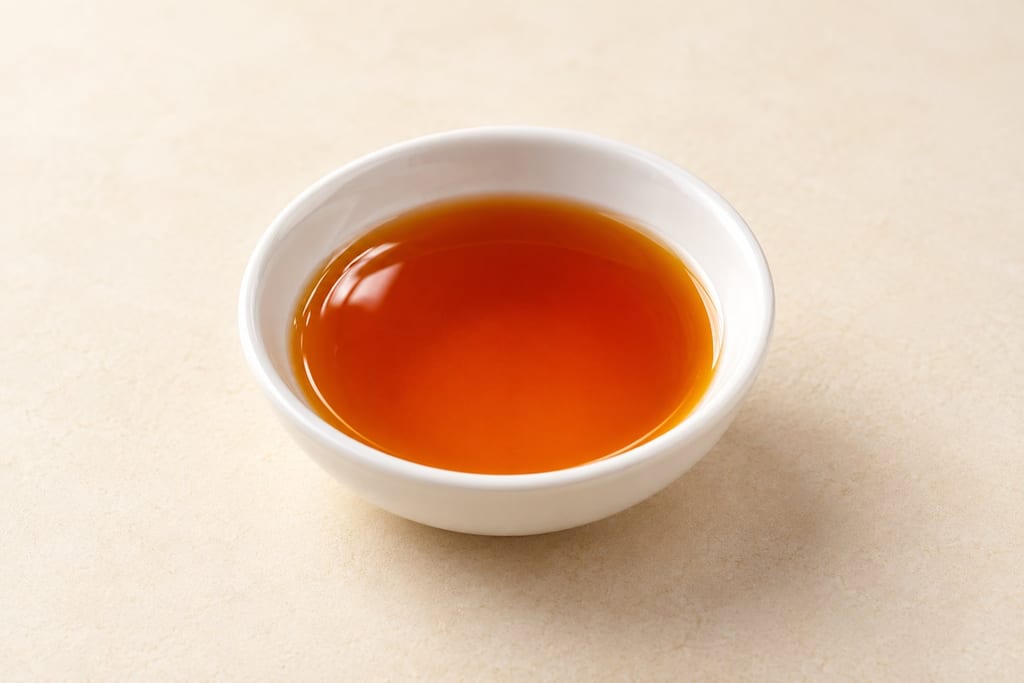
Fish sauce is a clear, salty seasoning made by maturing fish with salt and drawing off the liquid. The broad family includes distinct regional sauces rather than one interchangeable method.
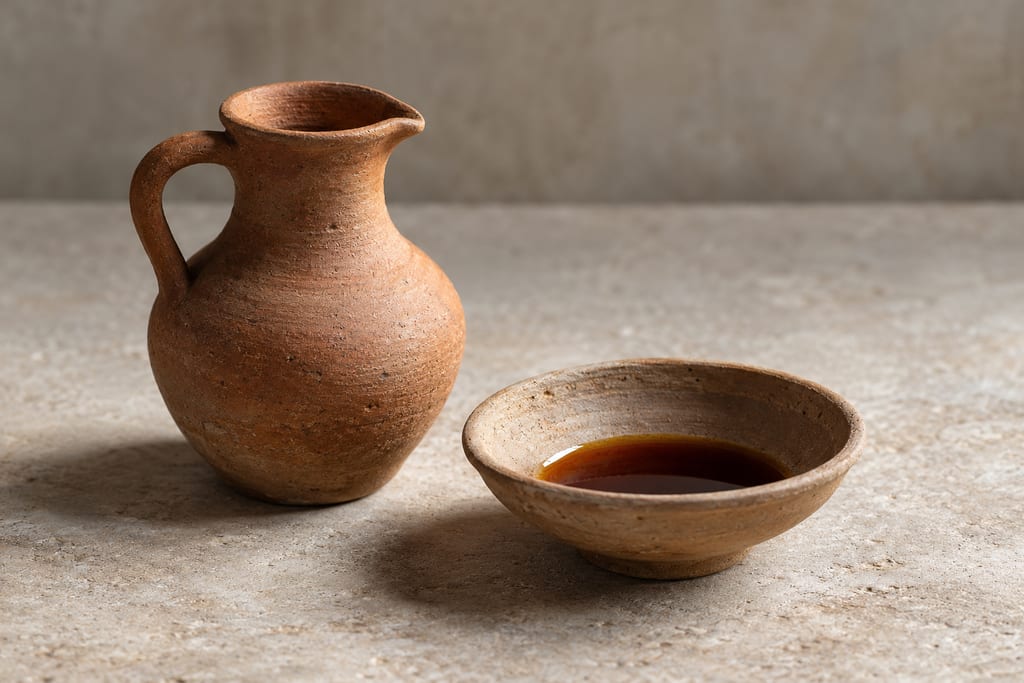
Garum, Greek garos and Latin liquamen, was the fish sauce of the ancient Mediterranean: fish and viscera salted and left in the sun, then drained off as a savoury liquid.
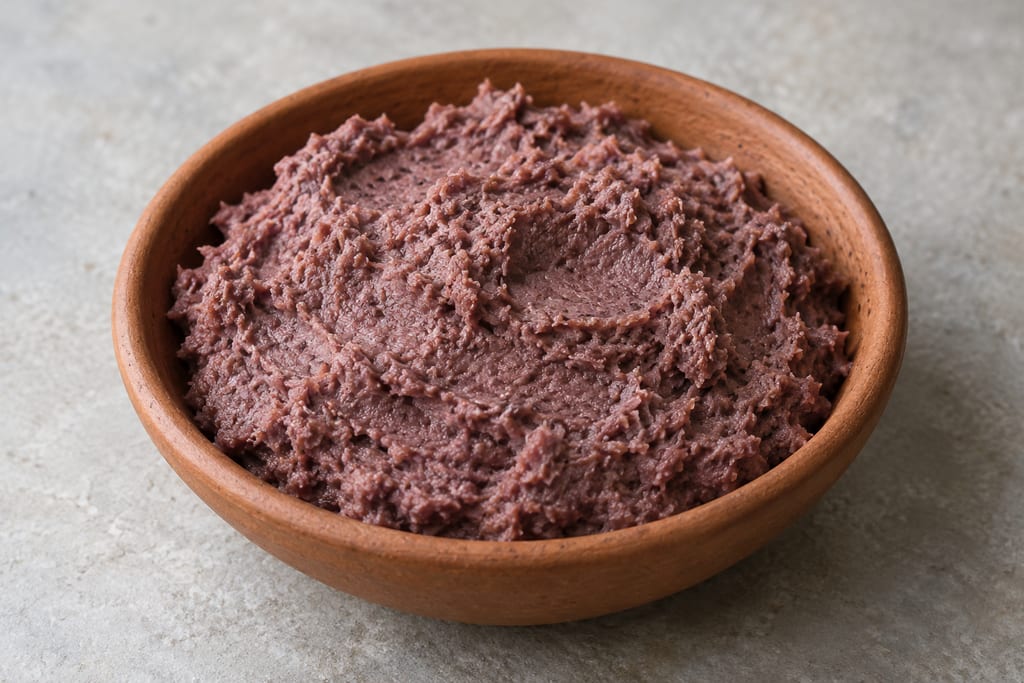
Guinamos is a shrimp paste made on Guimaras in the Philippines: small shrimp salted by hand, sun-dried and trodden by foot until it turns smooth.
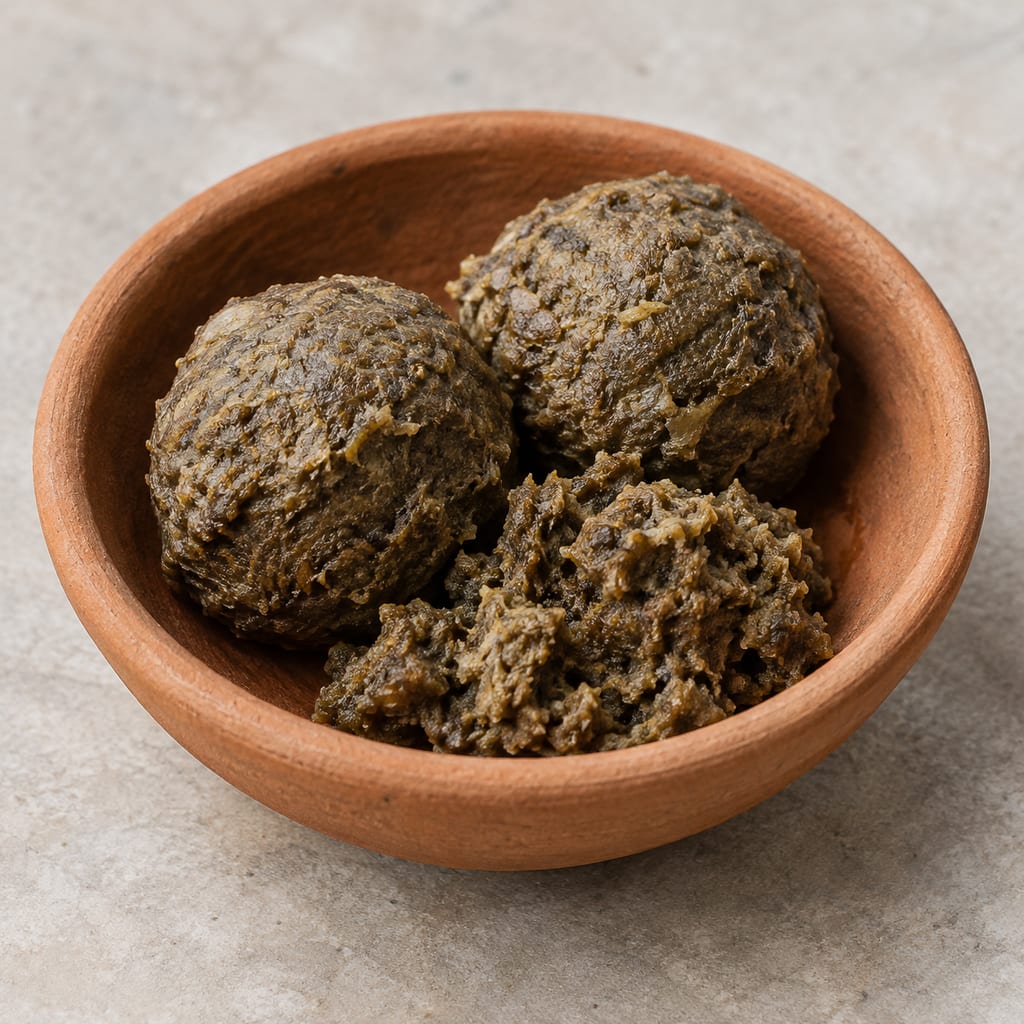
Manipuri fermented fish-and-aroid paste, formed into balls or kept in an earthen pot, used to season Manipuri dishes. Its method is documented in outline only.
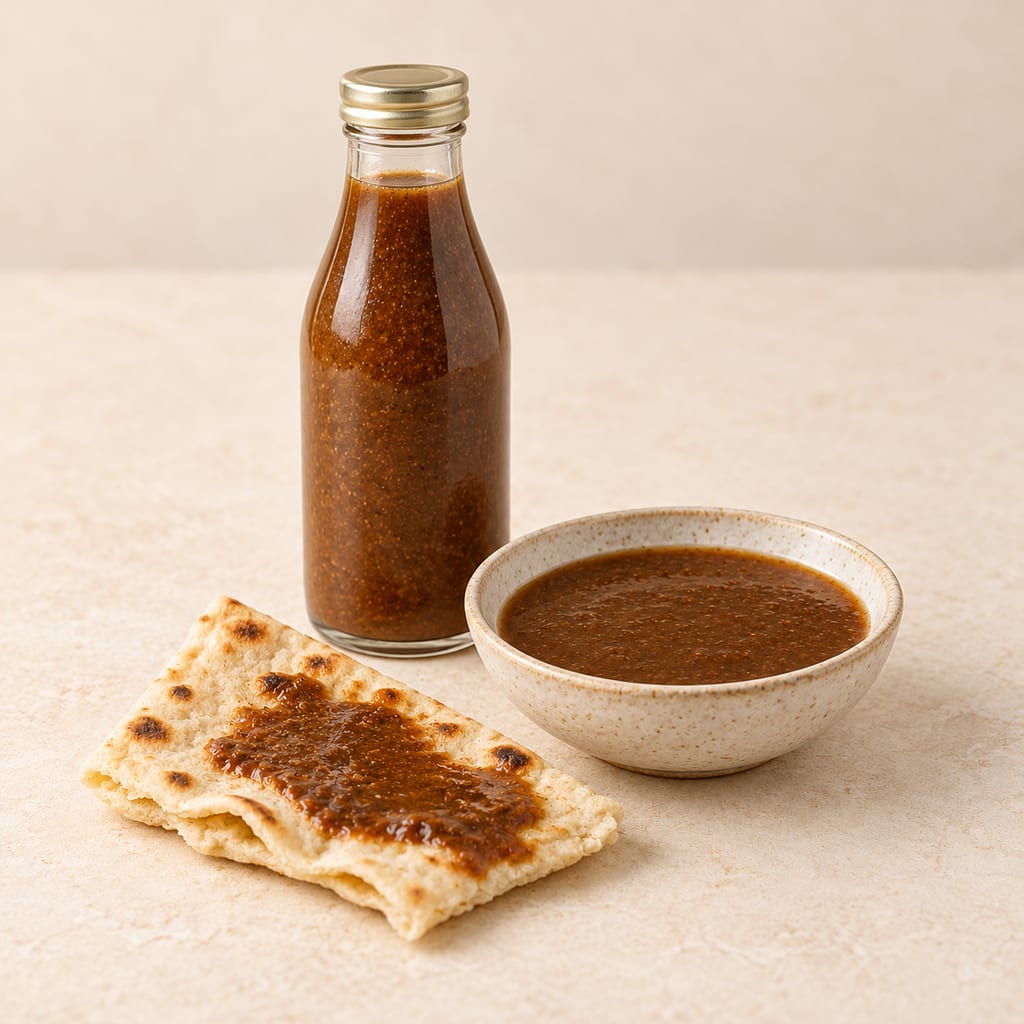
Mahyawa, also written mahyaveh, is a traditional fish sauce from southern Iran, made by salting small sardines or anchovies in water, maturing them in jars and seasoning the filtered liquid with mustard and spices.

Protected Italian vinegar made only from cooked grape must, fermented and aged in a battery of wooden barrels for at least 12 years: sweet, sharp and syrupy.

Airag is Mongolia’s fermented mare’s-milk drink, traditionally churned with saved starter in a reusable cowhide khokhuur.

Appam, or hoppers, are South Indian and Sri Lankan rice pancakes made from a fermented coconut-and-rice batter and cooked in a curved pan to a crisp lacy rim and a soft, spongy centre.

Auricularia tremellosa is a wood ear fungus of the genus that supplies most dried wood ear sold in China; its own food record is thin, and the culinary practice described here comes from the closely related wood ear species.

Ayran is Turkey’s cold, savoury yogurt drink: plain yogurt is loosened with water and lightly salted, then whisked smooth or aerated into a soft cap of foam.
A thin stone griddle used over an open hearth. Norwegian archaeology documents the established tradition from the early Middle Ages; a Viking-period origin is only a cautious suggestion linked to Shetland.

Crushed or milled barley cooked in water until the starch softens and the mixture thickens, the plainest way a northern household turned stored grain into a meal, here with apple and hazelnut.

Black carrot is the anthocyanin-pigmented Eastern carrot (Daucus carota var. atrorubens), the purple root that preceded orange types and still colours kanji and şalgam.
No community contributions have been published for this entry yet.
Sign in to contribute. Published comments and photos are free to read.
Heliyon, 2024, 10(4), e26006; Korea Food Research Institute and Dong-eui UniversityEvidence
Safety, quality, and microbial community analysis of salt-fermented shrimp (Saeu-jeot) in South KoreaPeer-reviewed publication available online from 12 February 2024
Investigation of traditional commercial saeujeot aged in an underground tunnel
Raw shrimp classified into general grade and special grade
Separate preparation of the two shrimp grades
Starting shrimp-to-sea-salt ratio of 75:25 by weight
Fermentation in an underground tunnel at 15 ± 2°C
Ten-week fermentation observation with weekly sampling from week zero through week ten
Samples supplied by a manufacturer in Gwangcheon, South Korea
Measurement of pH, salinity, total nitrogen and amino nitrogen
Measurement of volatile basic nitrogen and biogenic amines
Testing for aerobic bacteria, faecal indicators, halophilic bacteria and selected foodborne pathogens
Measured pH generally around 5.5–6.5 in the studied products
Measured finished salinity generally around 15–20%
Initial salt addition distinguished from finished-product salinity
Increasing amino nitrogen during maturation
Increases in volatile basic nitrogen during maturation
Cadaverine detected in the later stages of fermentation
Maximum reported cadaverine concentration around 83.13 mg/kg in the special-grade samples
Histamine not detected in the tested samples
Staphylococcus aureus and Vibrio species not detected in the tested sample groups
Microbial communities including Psychrobacter, Salinicoccus and Halomonas
Differences in microbial and chemical characteristics between shrimp grades
Need for standardised manufacturing and hygiene procedures
No complete household recipe, starter-culture inoculation protocol or validated ambient shelf life established
Cited in: How it works; How it is made; Regional and historical variations; Reading results and problems
Fishes, 2024, 9(4), 118; Korea Food Research InstituteEvidence
Microbiological Analysis of Manufacturing Processes and Microbial Hazard Assessment of Quality and Safety of Commercial Salted Shrimp (Saeu-jeot)Peer-reviewed commercial-saeujeot microbiological safety investigation
Publication dated 28 March 2024
Study of fifty-six commercially available salted-shrimp samples
Samples associated with Korean, Chinese and Vietnamese commercial markets
No E. coli, coliforms or Vibrio parahaemolyticus detected in the tested commercial samples
Staphylococcus aureus detected in the commercial survey
Reported total viable counts and staphylococcal counts
Raw small shrimp identified as an important potential source of S. aureus contamination
Investigation of contamination at different processing stages
Experimental use of saltwater immersion and ultraviolet treatment for reducing microbial counts
Description of traditional and modern manufacturing arrangements
Contemporary production including raw-material inspection and removal of foreign materials
Commercial salting and maturation commonly occurring under low-temperature conditions
Importance of raw-material quality and sanitary processing
The absence of pathogens from tested samples is not proof that all commercial or homemade saeujeot is free from those hazards
Cited in: What it is; History; How it is made; Reading results and problems
PLOS ONE, 2014, 9(2), e90115; Chung-Ang UniversityEvidence
Microbial Successions and Metabolite Changes during Fermentation of Salted Shrimp (Saeu-Jeot) with Different Salt ConcentrationsControlled laboratory study published on 28 February 2014
Use of fresh Acetes japonicus shrimp sourced near the Korean Yellow Sea
Shrimp length reported at approximately 4–6 cm
Four treatment groups with approximately 20%, 24%, 28% and 32% salt expressed as weight per volume
Experimental preparation using 1.5 kg shrimp in each container
Salt additions of 307 g, 381 g, 461 g and 548 g, depending on treatment
An additional 600 mL of matching salt solution added to each experimental container
Incubation at 15°C for 142 days
Measured salt concentrations maintained near the intended laboratory targets
Comparison of bacterial and archaeal communities
Initially abundant marine bacterial genera including Vibrio, Photobacterium, Psychrobacter, Pseudoalteromonas and Enterovibrio
Microbial succession depending strongly on salinity
Halanaerobium dominance in some lower-salt treatments
Salimicrobium predominance in the approximately 28% salt treatment
Greater persistence of initial bacterial communities in the approximately 32% treatment
Increases in acetate, butyrate and methylamines associated with lower-salt late fermentation
Authors' experimental preference for approximately 24–28% salt
The weight-per-volume salt concentrations cannot be substituted directly for initial shrimp-to-salt mass ratios
The laboratory formulation included added brine and differs from the Gwangcheon 75:25 commercial process
Observed microbial genera were not deliberately inoculated as starter cultures
Study published under Creative Commons Attribution
Cited in: What it is; How it works; How it is made; Reading results and problems
Food Microbiology, 2014, Volume 38, pages 16–25Evidence
Effects of Temperature on Microbial Succession and Metabolite Change during Saeu-jeot FermentationControlled comparison of saeujeot fermentation temperature
Experimental treatment temperatures of 10°C, 15°C, 20°C and 25°C
Salt concentration of approximately 25% weight per volume
Use of Acetes japonicus shrimp
Microbial and metabolite changes monitored during fermentation
Greater late-stage changes in the higher-temperature samples
Halanaerobium-associated increases in acetate, butyrate and methylamines
Differences in pH behaviour between lower- and higher-temperature treatments
Authors' conclusion that approximately 15°C was favourable within the experimental system
This finding is not a universal consumer safety temperature
The experimental formulation and vessel conditions differ from the 2024 Gwangcheon commercial study
Food Microbiology, 2013Evidence
Analysis of the Bacterial Community during Fermentation of Saeu-jeot, a Traditional Korean Fermented SeafoodStudy of bacterial succession during long-term salted-shrimp fermentation
Monitoring extending to approximately 183 days
Early prominence of marine-associated Pseudoalteromonas
Subsequent community changes involving Staphylococcus, Salimicrobium and Alkalibacillus
Prominence of Halanaerobium in later fermentation
Bacteria considerably more abundant than archaea
Evidence of microbial succession rather than a single fixed fermentation organism
Detected genera do not establish safe purchased starter cultures
Cited in: How it works
Fermentation, 2023, 9(10), 889; Korea Food Research InstituteEvidence
Changes in the Quality and Nontargeted Metabolites of Salt-Fermented Shrimp (Saeu-jeot) Based on Fermentation TimeControlled commercial saeujeot maturation study published on 30 September 2023
Use of Acetes japonicus
Starting mixture of 75% small shrimp and 25% sea salt by weight
Sea salt sourced from Sinan
Maturation by Guldari Food in Asan
Controlled room temperature of 10–15°C
Reported relative humidity of 85%
Fermentation observed for 360 days
Samples collected on days 15, 30, 45, 60, 90, 120, 180, 270 and 360
Measured pH falling from approximately 7.61 at day 15 to 6.86 at day 360
Increasing amino nitrogen and total nitrogen during maturation
Increasing volatile basic nitrogen
Measured amino-nitrogen concentration rising from approximately 382 to 778 mg per 100 g between day 15 and day 360
Nontargeted metabolite profiling of changing amino acids and other compounds
No pathogenic bacteria detected in the tested batches
No substantial elevation of biogenic amines reported in the studied samples
The 360-day process is different from the ten-week Gwangcheon tunnel study and has not been merged with it
Cited in: How it works; How it is made; Reading results and problems
Food Microbiology, 2019, Volume 82, pages 465–473Evidence
Tetragenococcus halophilus MJ4 as a Starter Culture for Repressing Biogenic Amine (Cadaverine) Formation during Saeu-jeot (Salted Shrimp) FermentationIsolation of a Tetragenococcus halophilus strain designated MJ4 from fermented anchovy sauce
Laboratory verification that the selected strain did not produce the tested biogenic amines
Strain-specific investigation of its use during saeujeot fermentation
Inhibition of cadaverine-producing Tetragenococcus muriaticus in the experimental process
Reduced cadaverine formation in MJ4-inoculated fermentation
Similar overall metabolite profiles between inoculated and non-inoculated treatments
Evidence that some carefully selected starter strains may influence fermentation safety
The result does not establish that all Tetragenococcus strains are safe or suitable starters
Cited in: How it works; Reading results and problems
National Folk Museum of KoreaEvidence
새우젓 — Korean Folk Culture EncyclopediaTraditional definition of salted and fermented small shrimp
Historical Korean terminology for different kinds of shrimp and salted shrimp
Association with the western and southern coasts
Historical documentation in Sinjeung Dongguk Yeoji Seungnam, Yeojidoseo and Hanguk Susanji
Descriptions in Seo Yu-gu's Nanho Eomokji
Traditional salting of shrimp aboard fishing vessels
Sorting the catch, seawater washing, applying salt and storage in jars
Historically recorded shrimp-to-salt ratios of 10:3 and 10:4
Traditional storage in shaded locations with relatively stable temperatures
Some historical maturation periods exceeding one year
Seasonal terms including chunjeot, ojeot, yukjeot, chujeot and dongbaekhajeot
Importance of saeujeot in kimchi-making
Use with pork and in soups
Historical ratios and maturation methods are descriptions of traditional practices, not modern validated safety specifications
Cited in: What it is; History; How it is made; Regional and historical variations; How it is eaten and used
National Folk Museum of KoreaEvidence
Saeujeot — Encyclopedia of Korean Folk CultureOfficial English-language account of saeujeot
Explanation of the jeotgal family
Seasonal shrimp categories
Regional coastal production
Use as a condiment and kimchi ingredient
Use alongside pork
This is the English-language counterpart of the Korean museum entry and not an independent historical investigation
Academy of Korean StudiesEvidence
새우젓 — Encyclopedia of Korean CultureKorean scholarly encyclopaedia account originally compiled in 1995 and updated in May 2024
Joseon-period references to salted-shrimp production
Reference to baekhajeot and jahajeot in Sejong Sillok
Historical salted-shrimp exchange with Ming China
Description of preparing salt and jars aboard fishing vessels
Salt preservation following capture
Traditional seasonal and regional shrimp distinctions
Role in kimchi and Korean cuisine
Evidence for documentary history without proving a single invention date
The article does not contain a validated modern consumer manufacturing specification
Cited in: What it is; History; Regional and historical variations; How it is eaten and used
Korean Traditional Knowledge Portal; Rural Development Administration local-food recordsEvidence
Saeu Jeot (Salted/Fermented Shrimp) — Chungcheongnam-do Local FoodsPublished local-food entry based on historical recipe material
Ingredient list specifying 5 kg shrimp and 2 kg salt
Written method separately specifying shrimp-to-salt ratio of 3:1
Internal disagreement between listed ingredient quantities and the written ratio
Sorting impurities and washing the shrimp
Draining in a basket
Mixing shrimp and salt
Packing and pressing into a crock
Applying additional salt and sealing
Shaded fermentation
Reference to historical Korean cookbooks published in 1942 and 1943
The record does not provide validated temperature, salinity, pathogen or shelf-life controls
Cited in: History; How it is made
Korean Traditional Knowledge PortalEvidence
Saeu Jeot (Salted/Fermented Shrimp) — Usual DishesSeparate recorded household-style saeujeot preparation
Ingredient list specifying 1 kg shrimp and 130 g salt
Selection and rinsing of light-coloured small shrimp
Use of a jar with salt on the bottom and more salt above the shrimp
Fermentation in a shaded, cool place
Recommendation in the historical recipe that shrimp intended for kimchi be matured for more than two weeks
The much lower starting salt addition differs from historical high-salt ratios and modern research formulations
The 2024 study provides no validated process-specific pathogen controls
The lower-salt recipe must not be assumed safe or interchangeable with the selected Gwangcheon commercial process
United States Food and Drug Administration, June 2022 editionEvidence
Fish and Fishery Products Hazards and Controls GuidanceFDA seafood HACCP hazard-analysis framework
Assessment of hazards arising from raw seafood
Control of pathogen contamination and bacterial growth
Importance of raw-material history and processing hygiene
Consideration of species-related and processing-related chemical hazards
Validation of relevant salt, temperature and other preservation controls
Packaging and storage as part of a complete hazard analysis
Need for scientifically supported critical limits rather than assuming a traditional process is safe
FDA guidance does not prescribe a universal saeujeot recipe
Food Standards ScotlandEvidence
Managing AllergensCrustaceans identified as a major food-allergen category
Shrimp and shrimp-derived ingredients requiring appropriate allergen declaration
Importance of preventing allergen cross-contact
Requirements for allergen information on packaged and non-packaged foods
Cooking does not establish removal of crustacean allergens
Applicability to saeujeot used as a hidden ingredient in kimchi, sauces and other dishes
World Health OrganizationEvidence
Sodium ReductionPublic-health importance of dietary sodium intake
High salt intake associated with elevated blood pressure and cardiovascular risks
Saeujeot as a concentrated sodium-containing seasoning
Importance of actual finished-product sodium analysis or label information
The WHO guidance does not establish the salt content needed for safe saeujeot fermentation
Cited in: How it is eaten and used; Reading results and problems
pubmed.ncbi.nlm.nih.govSafety
24290621Unsafe fermentation temperature or uncontrolled ageing
Cited in: How it works; Reading results and problems
english.visitkorea.or.krHistory
contentsView dolocations
Cited in: What it is; History; How it is made; Regional and historical variations
english.visitkorea.or.krHistory
contentsView dolocations
Cited in: Regional and historical variations
pmc.ncbi.nlm.nih.govHistory
PMC10733927locations
Cited in: What it is; How it works; Regional and historical variations; How it is eaten and used
www.wikim.re.krHistory
menu essections
Cited in: How it is eaten and used; Reading results and problems
www.food.gov.ukHistory
allergen guidance for food businessessections
Cited in: How it is eaten and used; Reading results and problems