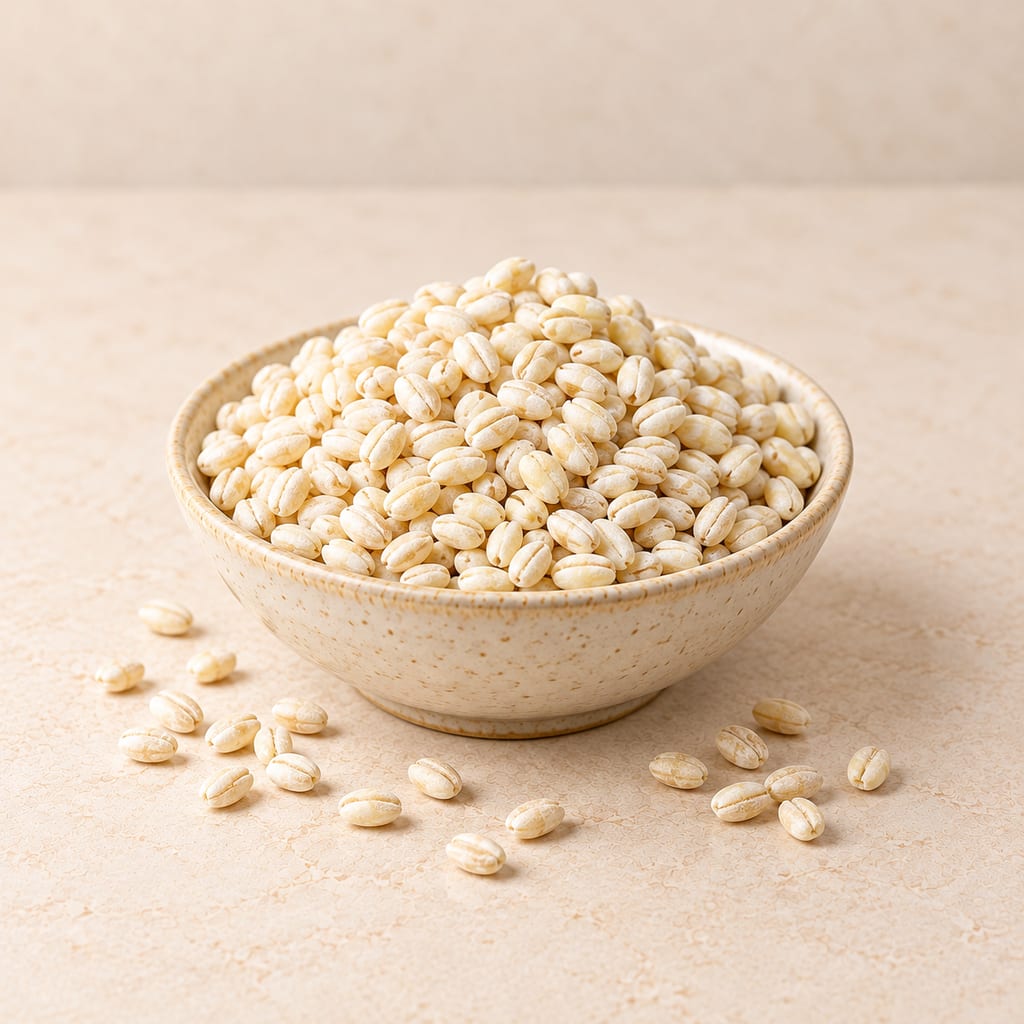
Barley
Barley is a hardy cereal, domesticated in the Middle East over 10,000 years ago, eaten whole, pearled or milled, malted for brewing, and grown with koji mold for barley miso.
 FermenteaWhere food goes to change
Modern adaptation
Grautr · Barley porridge · Barley gruel · Grautr · Bygggrautur · Byggrød
Crushed or milled barley cooked in water until the starch softens and the mixture thickens, the plainest way a northern household turned stored grain into a meal, here with apple and hazelnut.

Barley porridge is a cooked cereal preparation made by heating barley meal, crushed grain or flour in water or another liquid until the starch softens and the mixture thickens.
It was one of the simplest ways to turn harvested grain into a substantial meal.
Unlike bread, porridge does not need dough shaping, baking surfaces or any ability to trap gas. A cooking vessel, liquid, heat and prepared grain are sufficient.
The resulting food can range from a thin, drinkable gruel to a dense preparation that remains almost solid when cool.
Barley was an important cereal in Viking Age Scandinavia, but porridge could also be prepared from oats and other available grains.
The modern reconstruction examined here combines barley with apples and hazelnuts. These are historically relevant ingredients, but their combination and the specific modern cooking procedure should not be mistaken for a recovered Viking recipe.
The names reflect a broad category rather than one standardised dish.
Old Norse — grautr — porridge or thick cereal preparation
Icelandic — grautur, bygggrautur
Norwegian — grøt, bygggrøt
Danish — grød, byggrød
Swedish — gröt, korngröt
English — Barley porridge, barley gruel
Porridge is unusually difficult to identify archaeologically because it is normally eaten from a vessel rather than baked into a recognisable object.
A charred loaf may retain its outline. Porridge usually disappears entirely unless it burns onto a pot, dries in a protected location or survives as part of another deposit.
Archaeologists therefore investigate residues attached to pottery, soapstone and other cooking equipment.
Microscopy can reveal plant tissue, while chemical analysis may provide evidence of fats and other food components.
Cereal remains found in settlement deposits establish that grains were available and processed, although an individual seed cannot reveal whether its intended destination was bread, beer or porridge.
The Swedish History Museum describes analyses of household food residues and coprolites indicating that oat and barley porridge were ordinary foods.
In Denmark, barley and rye were among the most important cereals. Oats and wheat also contributed to the wider cereal economy.
By the Viking Age, grain preparation was embedded in a long-established farming tradition.
The Viking Ship Museum in Roskilde uses archaeological equipment, plant remains and written material to reconstruct cooking practices.
Its barley porridge recipe is an educational experiment designed to explore the ingredients and technology of the period.
The written accounts that occasionally describe meals must be handled carefully. Much surviving Old Norse literature was recorded after the Viking Age, and literary food descriptions are not interchangeable with contemporary household records.
Porridge begins long before the cooking pot.
Barley must first be cultivated, harvested, dried and processed.
The grain heads contain kernels that must be separated from the stalks through threshing. Winnowing and further cleaning remove unwanted plant fragments.
Depending on the barley variety, the outer hull may remain attached to the kernel and require additional treatment.
Dry storage is essential because high-moisture grain can become mouldy or heat through microbial activity.
For a farming household, grain storage was an important form of seasonal risk management.
Crops harvested during the growing season could sustain people when fresh produce was scarce.
Barley has an additional advantage: it can be processed into several foods.
A household might grind some grain for bread, coarsely crush another portion for porridge and use further supplies for brewing.
Such flexibility matters because it allows one agricultural resource to support different meals and activities.
Grain could also be exchanged or purchased. Not everyone living at a trading settlement grew their own food.
The principal transformation in porridge is starch gelatinisation.
Barley kernels contain starch granules embedded in a structural matrix of proteins and cell-wall material.
When water and heat are applied, the granules begin absorbing moisture. As cooking continues, their internal crystalline organisation is disrupted.
The granules swell, and some starch components disperse into the surrounding water.
The mixture thickens.
Barley contains amylose and amylopectin, the principal molecular components of starch, together with soluble beta-glucan fibres.
Beta-glucans contribute viscosity and help give barley preparations their characteristic body.
The size of the grain particles strongly influences cooking.
Finely milled barley flour hydrates relatively quickly because the internal starch is readily exposed.
Coarse meal retains larger fragments requiring more time for water to penetrate.
Whole or lightly processed kernels need substantially longer cooking than flour.
This explains why two recipes both described as barley porridge can have very different cooking times.
The consistency also changes as the porridge cools.
Starch molecules gradually rearrange, and the mixture becomes firmer. This process, called retrogradation, helps explain why leftover porridge can be shaped into cakes.
Ordinary freshly cooked porridge is not a fermented food.
Cooking destroys or inactivates much of the existing microbial population, though some bacterial spores may survive.
If porridge is subsequently left at temperatures favourable to microbial growth, microorganisms may multiply. That is not a controlled or necessarily beneficial fermentation.
A deliberate cereal fermentation requires a suitable microbiological process and defined controls.
The reconstructed Viking barley porridge presented here does not include such a stage.
The cultivated apple, Malus domestica, provides acidity, sweetness and aromatic compounds.
Apples were known in northern Europe during the Viking Age, although archaeological evidence should not be interpreted as proof of modern commercial varieties.
A tart apple changes the flavour of porridge more noticeably than a sweet one.
Its acidity counters the cereal's mild, starchy taste.
Apple tissue also softens during cooking as cell-wall structure changes.
Hazelnuts, produced by Corylus avellana, contribute fat, protein and a different texture.
Their oils make the final dish feel richer, while chopped nuts provide contrast to the gelatinised grain.
Both apples and hazelnuts are plausible ingredients for a Scandinavian cereal dish. Whether they were regularly combined in Viking Age porridge is not established.
The Viking Ship Museum's recipe is particularly useful because it provides a complete cooking sequence and measured cereal and water quantities.
1. Prepare the grain. Use coarse barley flour or meal suitable for cooking. Do not assume that whole barley grains will cook in the same time.
2. Heat the water. Bring 1 litre of water to a boil.
3. Add the meal. Scatter the barley into the water while stirring continuously.
Adding flour gradually reduces the formation of dry lumps surrounded by gelatinised starch.
4. Cook initially. Bring the mixture back to the boil and simmer for 5 minutes.
5. Add fruit and nuts. Add the apples and optional hazelnuts approximately 2 minutes before the end of this initial cooking period.
6. Finish with retained heat. Remove the pot from direct heat and place it near the warmth for 30–60 minutes.
The extended resting period allows coarse particles to continue hydrating and softening.
For modern preparation, keep the food sufficiently hot during this stage rather than leaving it lukewarm for an extended period.
7. Serve. Add butter, honey or dried berries if desired.
This final combination is a museum reconstruction rather than an attested standard breakfast.
The supplied research also gives a second formulation using 180 g coarse barley meal or flour with 1 litre water, 2 tart apples and 30 g chopped hazelnuts.
That version simmers the porridge for approximately 15–25 minutes, depending on the grain.
It is a modern adaptation, not a measurement quoted from the Viking Ship Museum's original recipe.
Its texture may differ substantially from the museum version because the cereal quantity is expressed differently and the cooking process does not use the same extended period beside the fire.
Neither version is inherently more historically correct.
They demonstrate different approaches to making cooked barley edible.
Iron cauldrons, soapstone vessels, pottery and other containers were used in northern European cooking.
Suspending a pot over a fire allows the cook to control its exposure to heat by changing its height or the fire beneath it.
A thick vessel stores and distributes heat, helping reduce localised scorching.
Wooden and leather containers could also hold liquids, although they could not be placed directly over flames.
Historical cooking sometimes used heated stones placed into liquid.
This method transfers stored heat from the stone into the food without exposing the container to the fire.
It is technically possible to cook cereal preparations this way, but the particular porridge recipe does not establish that heated stones were used for it.
For a present-day kitchen, a heavy saucepan is considerably easier to control.
In Danish farming districts, barley and rye were significant cereal resources.
Further north, barley retained an important role in regions where growing seasons were shorter.
Oats were also used across northern Europe, and oat porridge represents a closely related preparation.
In Iceland and other Norse North Atlantic settlements, the balance between local grain production and imported cereal depended on climate, land use and changing economic conditions.
It would be misleading to imagine the same barley porridge served every morning from Ribe to northern Iceland.
The available grain, the proportion of meal to liquid, and additions of dairy or fruit could all vary.
The surviving evidence does not supply a detailed geographical recipe map.
Cooling causes barley porridge to firm up, creating an opportunity to shape and fry it.
Ribe VikingeCenter offers a modern reconstruction called klatkager.
The museum itself treats the Viking Age precedent as uncertain.
The formulation includes 400 g cold barley porridge, 2 eggs, 1 teaspoon salt, 2 handfuls dried cranberries, 3–4 tablespoons wheat flour and butter for frying.
The mixture is formed into spoon-sized portions and cooked in a pan until browned.
The supplied research offers a related version with 400 g porridge, 2 eggs, 35–50 g flour and 25 g butter.
These should be regarded as modern variations of the same basic technique, not two independently documented Viking dishes.
The addition of dried cranberries is particularly modern in this Scandinavian context.
A more historically cautious reconstruction could omit them rather than presenting them as a period ingredient.
Porridge is versatile enough to serve as a complete dish or a foundation for other ingredients.
A thick version can be eaten from a bowl with a spoon.
A thinner gruel can be consumed with less chewing and may be useful when grain supplies need to be stretched.
Butter increases its energy density and changes its mouthfeel.
Honey adds sweetness. Apples or berries contribute contrasting flavours.
Meat juices or savoury additions could produce a different kind of cereal dish, though the precise combinations would need their own supporting evidence.
There is no requirement to interpret barley porridge exclusively as breakfast food. Modern meal categories do not reliably describe Viking Age eating habits.
Porridge that forms lumps usually received flour too quickly or without sufficient stirring.
Porridge that burns onto the bottom of the pot may be too thick, insufficiently stirred or exposed to excessive direct heat.
A gritty texture usually means that coarse barley fragments have not yet hydrated and softened adequately.
Excessive thickness can be corrected with additional water, although no universal amount applies to every barley meal.
If the porridge has an unexplained sour smell, unusual gas production or visible mould after storage, discard it. Such changes should not be interpreted as proof of successful fermentation.
Cooked grain is a perishable food.
Bacillus cereus is particularly relevant because its spores may be present on grains and can survive ordinary cooking. Temperature abuse after cooking allows surviving spores to germinate and cells to multiply.
A pot left lukewarm for a long period should not be treated as safe simply because it was previously boiled.
Cool leftovers promptly and refrigerate within two hours.
Keep the refrigerator at 0–5°C and eat refrigerated leftovers within 48 hours or freeze them. Reheat only once and ensure the food is steaming hot throughout.
For outdoor or campfire cooking, the Viking Ship Museum recommends not keeping its campfire dishes until the following day, reflecting the additional uncertainty associated with outdoor preparation and contamination.
Barley contains gluten and is unsuitable for people with coeliac disease.
The archaeological evidence supports the importance of cereal dishes and porridge in Viking Age food culture.
It does not establish the precise sweetness, thickness or serving temperature preferred in a particular Viking household.
The apple-and-hazelnut recipe is a useful practical interpretation because it combines documented ingredients and plausible cooking technology.
Its real historical value lies in demonstrating how grain, preserved through the winter, could become an ordinary nourishing meal.
Porridge is hard to find archaeologically for a simple reason: a charred loaf keeps its outline, while porridge eaten from a vessel normally disappears unless it burns onto a pot, dries somewhere protected or survives inside another deposit. The evidence therefore comes at one remove, from residues attached to pottery and soapstone, from microscopy that can recognise plant tissue, from chemical analysis of fats and other food components, and from residue and coprolite work indicating that oat and barley porridge were ordinary foods. Behind the pot sits the farming year: barley threshed, winnowed, hulled where the variety required it, and stored dry because grain with too much moisture moulds or heats through microbial activity. One crop could then serve several purposes, some ground for bread, some crushed for porridge, some kept for brewing, and grain could be bought or exchanged by people at a trading settlement who grew none of it. The written record helps less than it appears to: much surviving Old Norse literature was recorded after the Viking Age, and a literary description of a meal is not a household account. The combination of barley with apple and hazelnut on this page is a modern museum interpretation of documented ingredients, not a recovered recipe.
Scaling: source batch only
Spores may be present on grains and can survive ordinary cooking. Temperature abuse afterwards allows them to germinate and the cells to multiply, which is why a pot held lukewarm is the specific risk in this dish rather than the cooking itself.
Hazard sourceThe reconstruction's 30-60 minutes away from direct heat is a deliberate stage, so the method itself creates the holding period in which cooked grain is most vulnerable.
Hazard sourceThe museum recommends not keeping its campfire dishes until the following day, reflecting the extra uncertainty of outdoor cooking and contamination.
Hazard sourceBarley contains gluten, so the porridge is unsuitable for people with coeliac disease; the reconstructed porridge cakes add wheat flour as well.
Hazard sourceKeep the porridge properly hot through the retained-heat stage instead of letting it stand lukewarm
Control sourceCool leftovers promptly, refrigerate and reheat once only
Control sourceDiscard porridge that has developed an unexplained sour smell, unusual gas or visible mould after storage
Control sourceThe 30-60 minute rest beside the fire is the museum's cooking method, not a safe holding time: a pot that has boiled earlier is not thereby safe after standing lukewarm.
An unexplained sour smell, unusual gas production or visible mould after storage means the porridge has spoiled; none of it is evidence of a successful fermentation.
The museum states its barley by volume and supplies no gram conversion, so the 180 g formulation is a separate modern recipe and not a weight equivalent of it.
Barley contains gluten and this porridge is unsuitable for people with coeliac disease.
Dried cranberries in the reconstructed porridge cakes are a modern ingredient in a Scandinavian context and should not be presented as a period one.
A country-level association from the museum's analyses of household food residues and coprolites, which indicate oat and barley porridge as ordinary foods. No locality is claimed, and the research dates no individual find.
A country-level association for the cereal economy behind the dish, with barley and rye among the most important cereals and oats and wheat contributing.
The place that publishes the reconstruction carried here, an educational experiment built from archaeological equipment, plant remains and written material. It is not an excavated Roskilde recipe.
The source of the reconstructed cakes made from cold porridge, which the museum itself presents with an uncertain Viking Age precedent.
Barley is a hardy cereal, domesticated in the Middle East over 10,000 years ago, eaten whole, pearled or milled, malted for brewing, and grown with koji mold for barley miso.
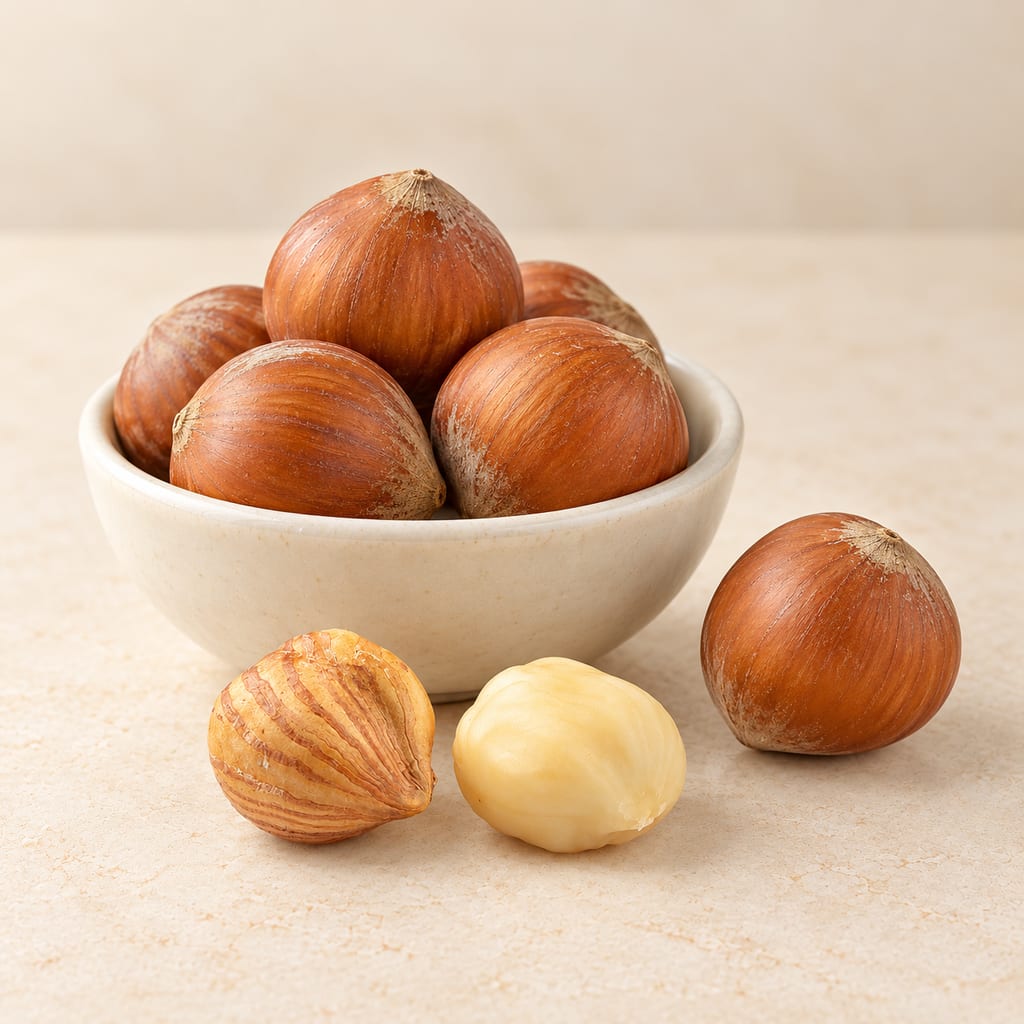
Hazelnuts from Corylus avellana, the common hazel, eaten raw, roasted or ground, with the Piedmont protected product and the limits of regional growing and storage advice.
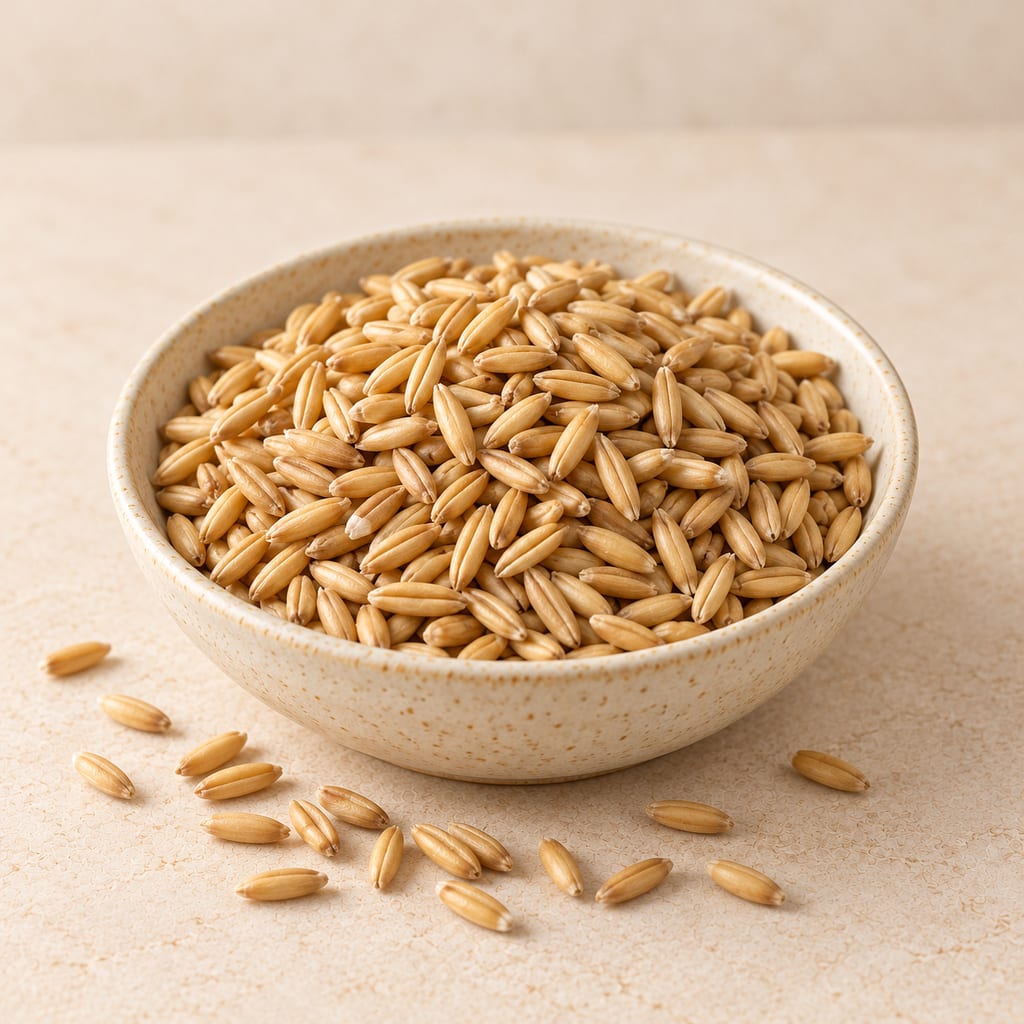
A cereal grain sold as groats, cut pieces, flakes, flour and malt. Oats shape porridge, bread and brewing differently as processing changes hydration, texture, starch, beta-glucan, protein and oil.
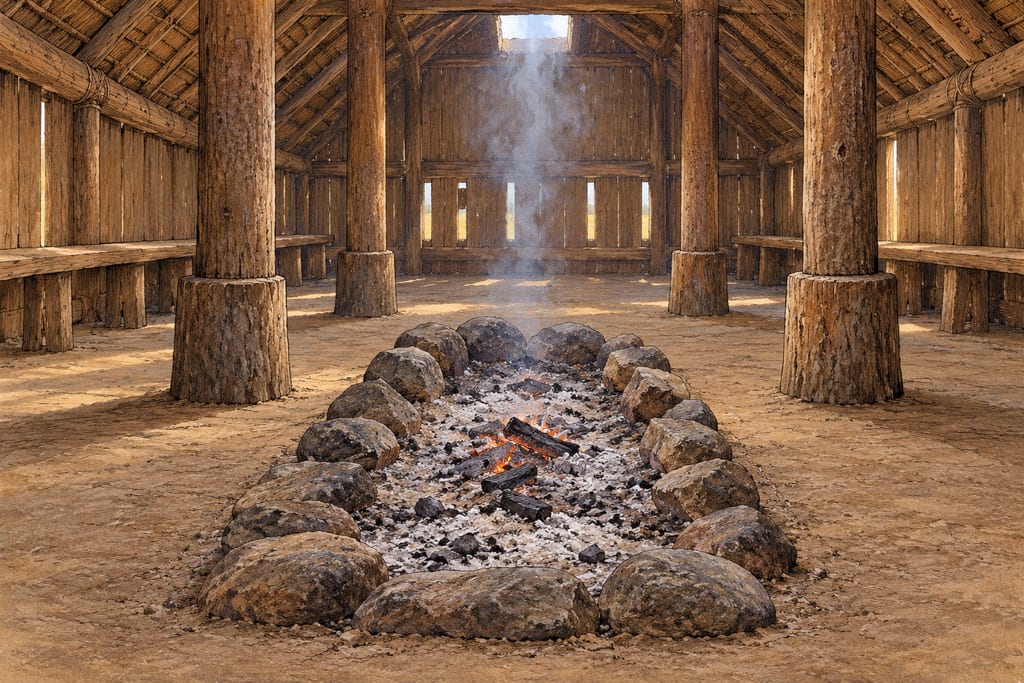
The Danish National Museum describes an oblong central long-fire inside Viking-Age longhouses, used for cooking while smoke escaped through a roof opening.
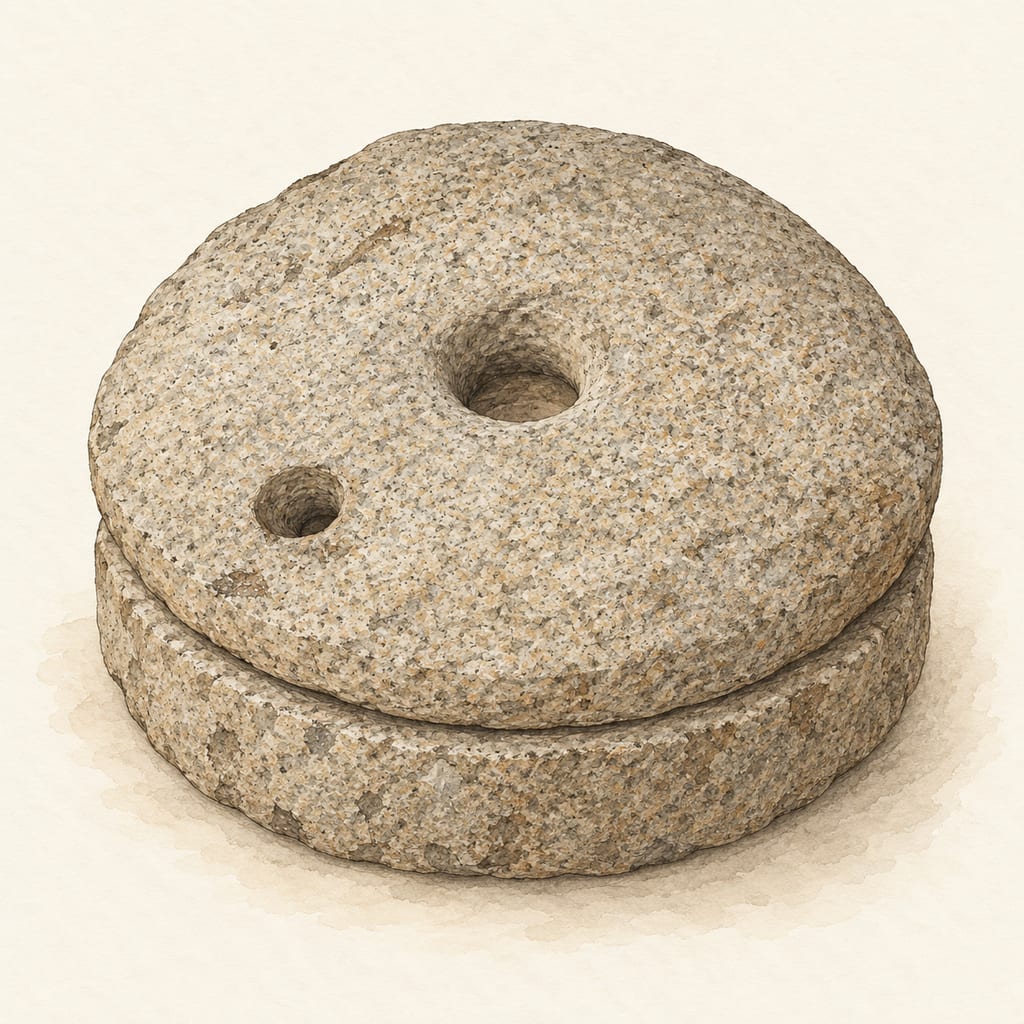
A rotary quern is a hand-operated mill with a runner turning over a fixed bedstone to grind grain. Scandinavian household use of rotary querns increased around the beginning of the Viking Age.
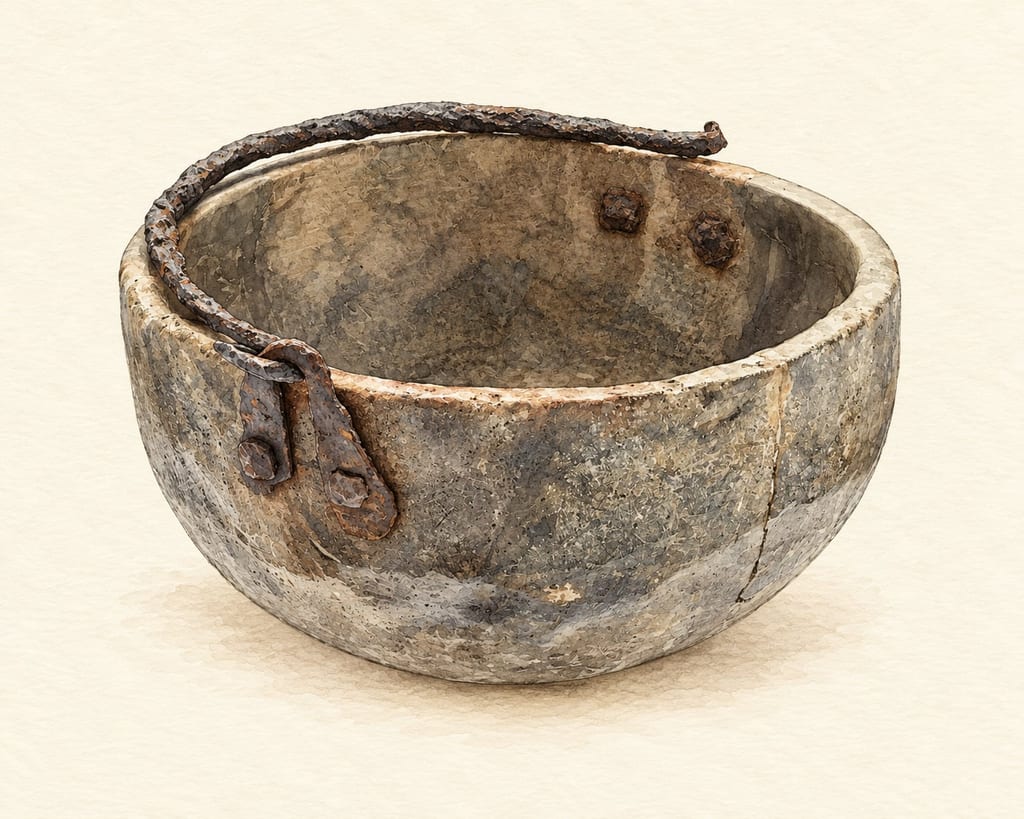
A Viking Age cooking pot carved from soapstone, exemplified by a partly reconstructed Birka grave find with iron handle fittings. Similar vessels were used across Scandinavia, but their forms and later handles changed over time.
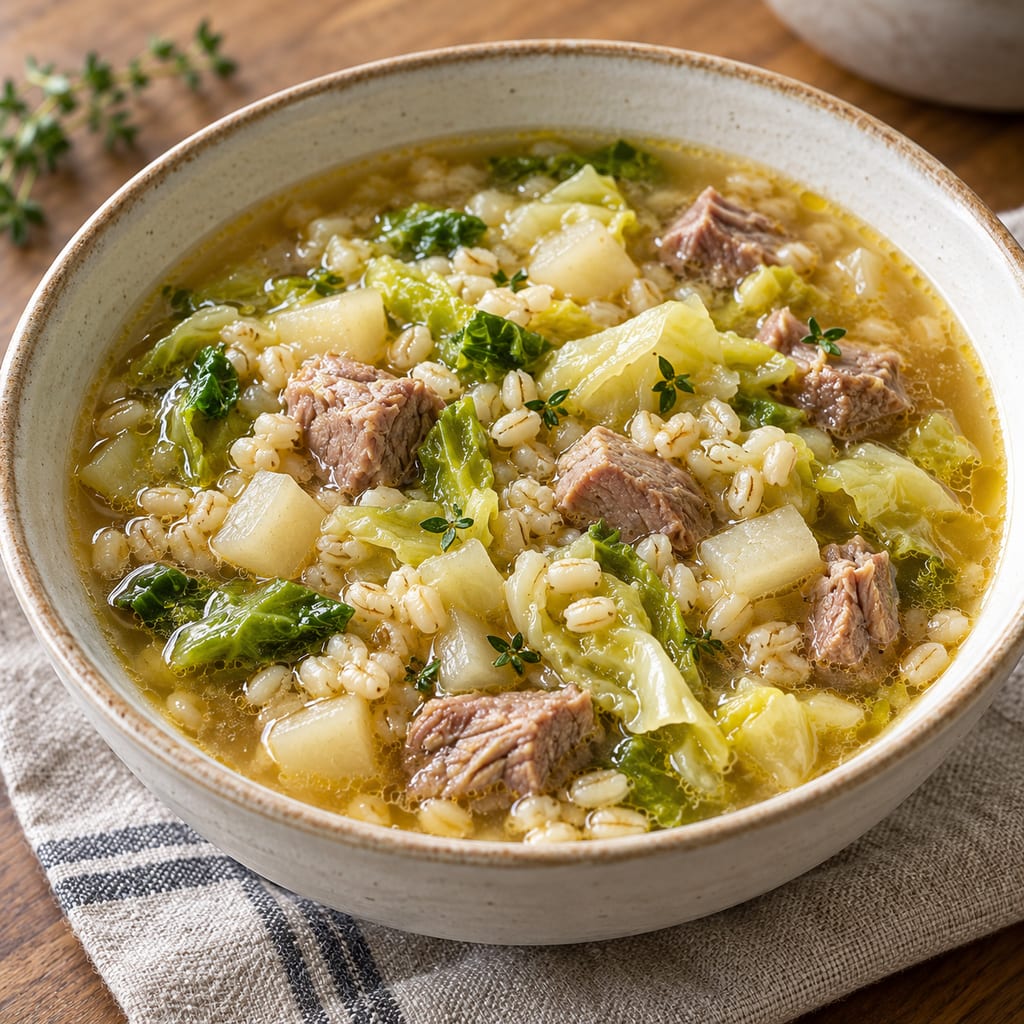
Lamb shoulder simmered with pearl barley, turnip and leafy cabbage in one pot, a present-day reconstruction built from the animals, grains and vegetables of northern European farming.
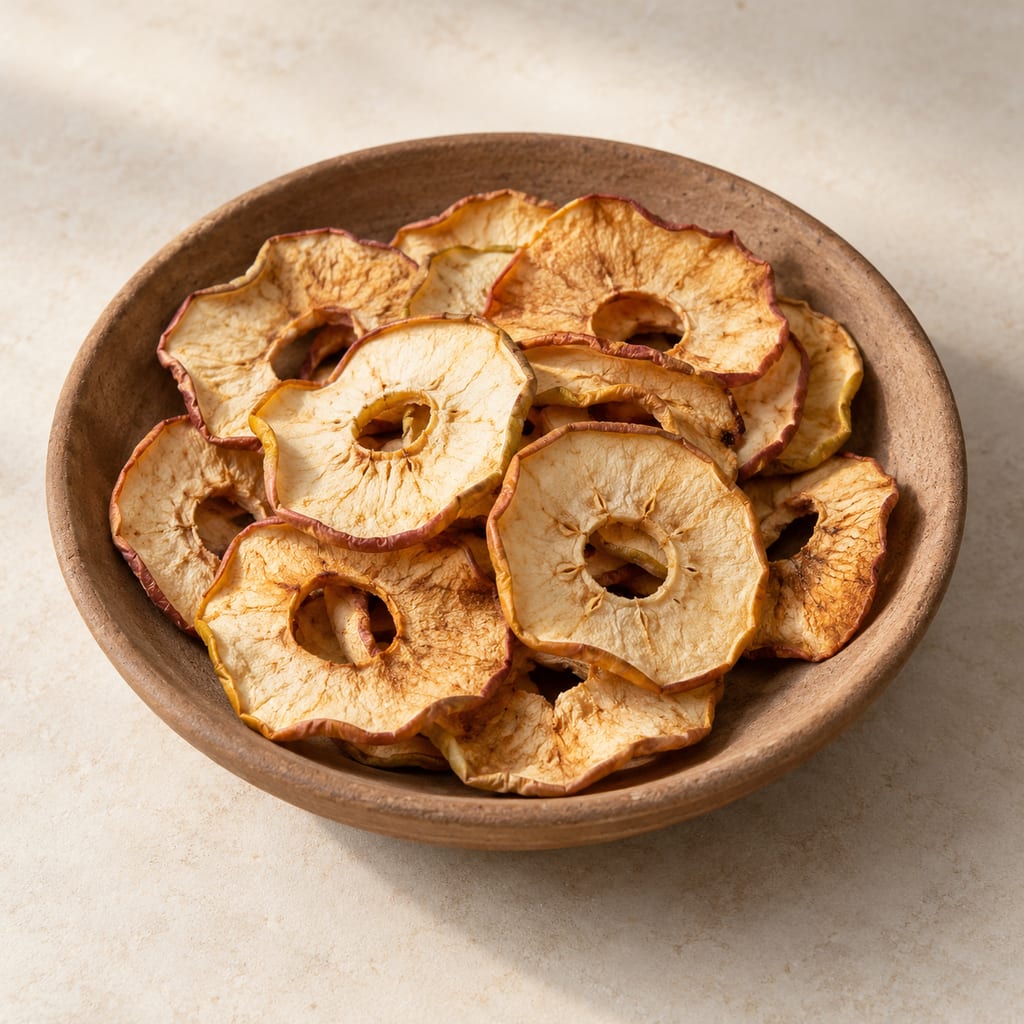
Apple slices dried until most of their water has gone, shrinking and concentrating into leathery or crisp rings, with the modern controls that a plausible old technique turns out to need.
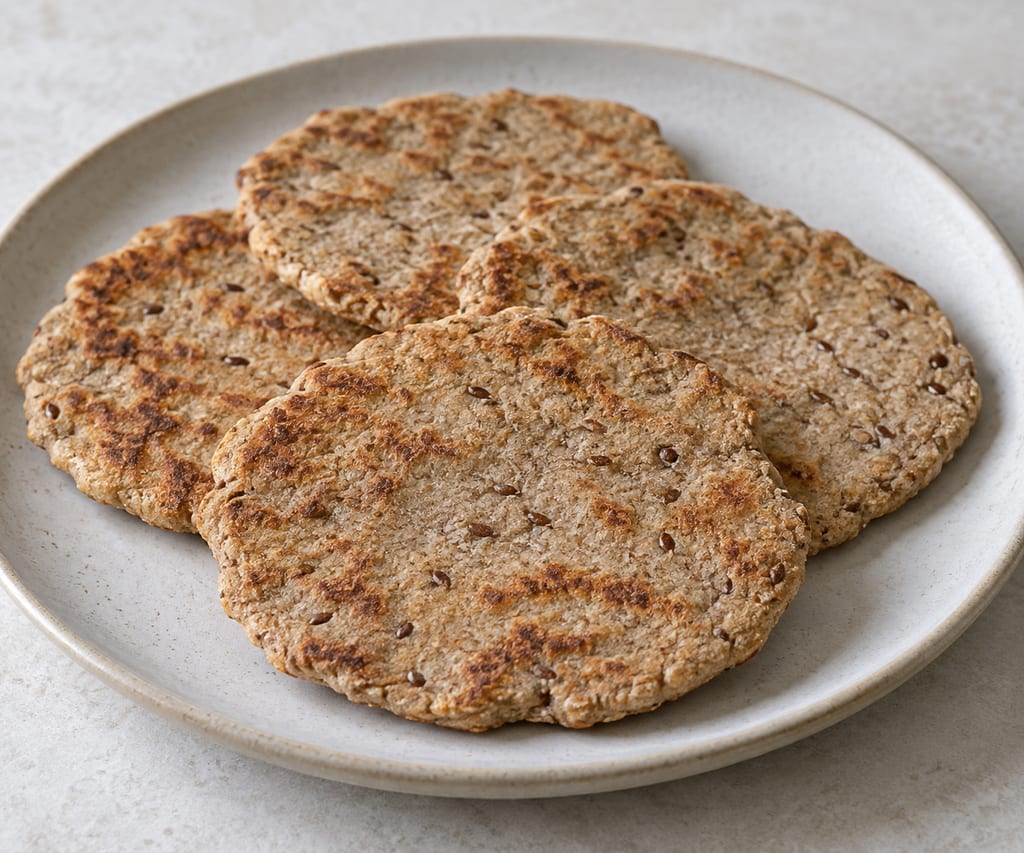
A small, dense cake of ground barley mixed with liquid and cooked against a hot surface, the form a low-gluten northern cereal takes when a household turns stored grain into bread.
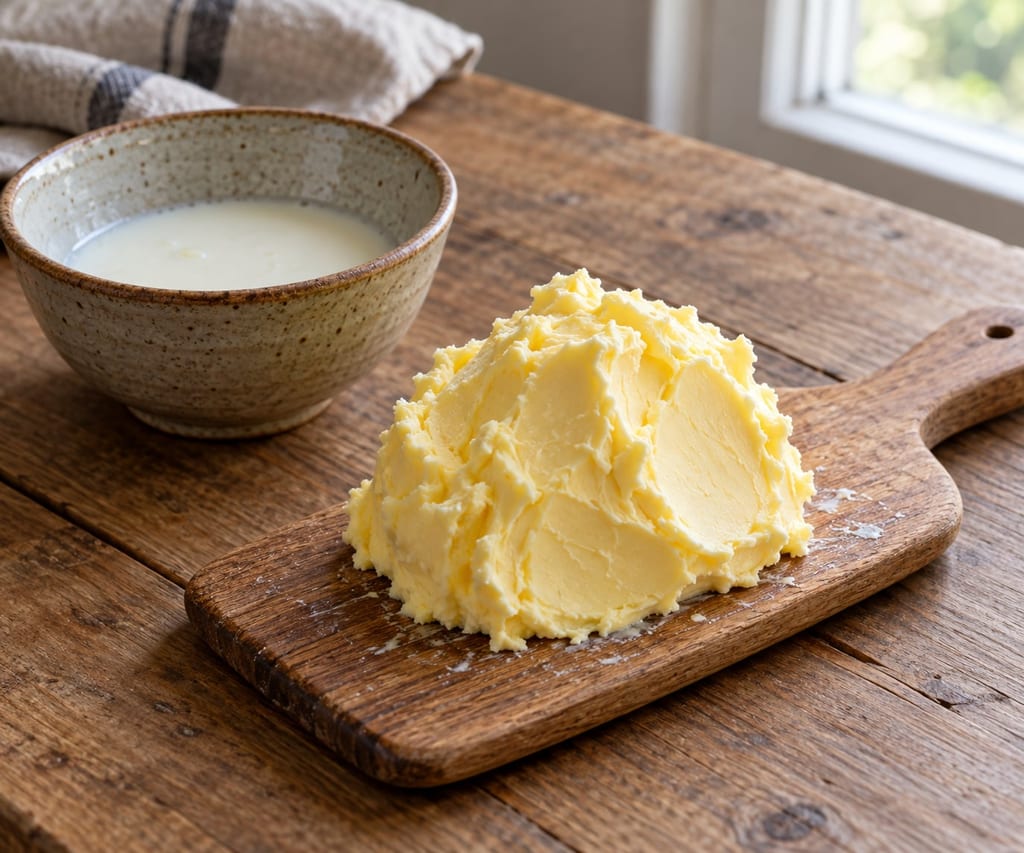
Cream agitated until its fat globules join into a solid mass and release buttermilk, the dairy fat a northern household could concentrate, salt and keep when milk itself would not last.
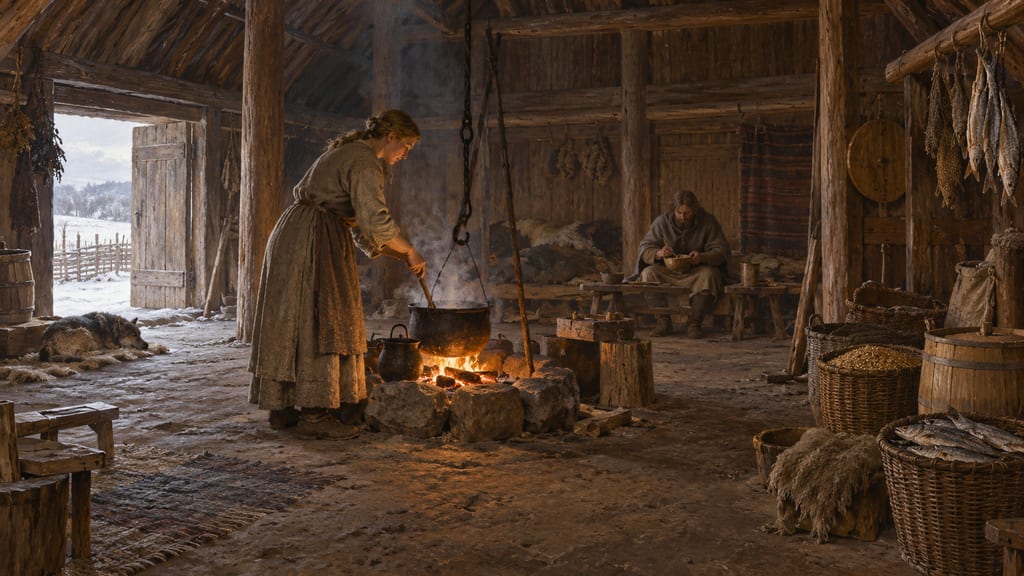
How ordinary Viking-Age households grew, dried, smoked, salted and cooked their food through the northern year, and how to cook their dishes today with supermarket ingredients.
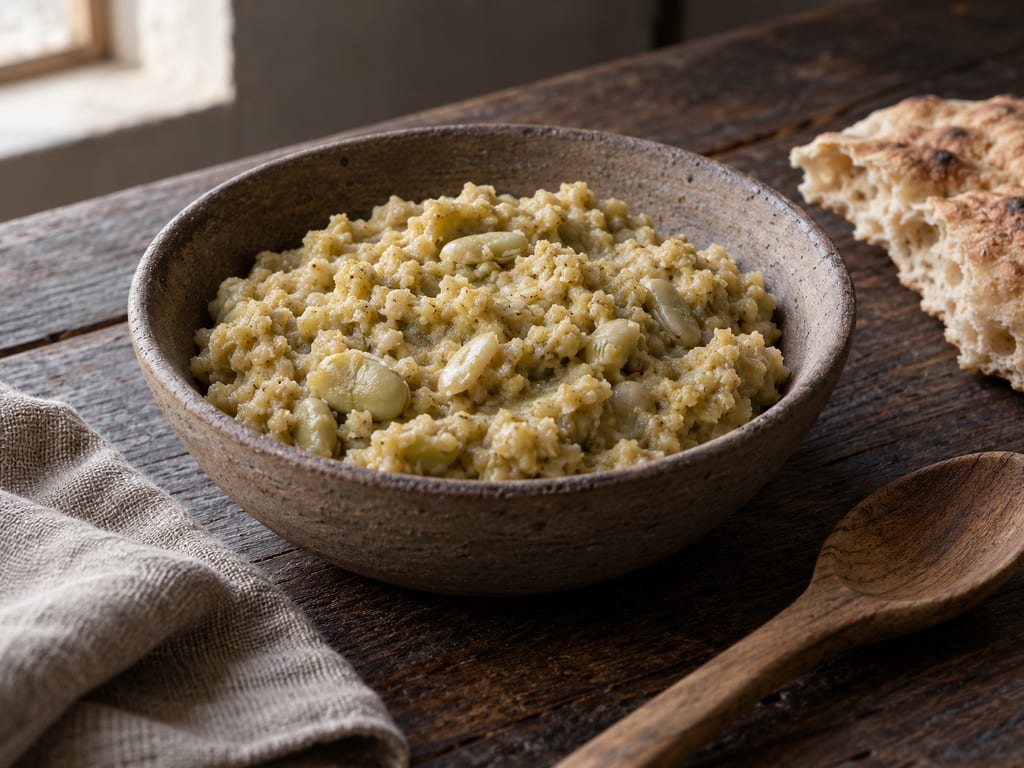
Cooked broad beans crushed to a thick paste with garlic and salt, a museum preparation built on the one European pulse that was already old when the Viking Age began.
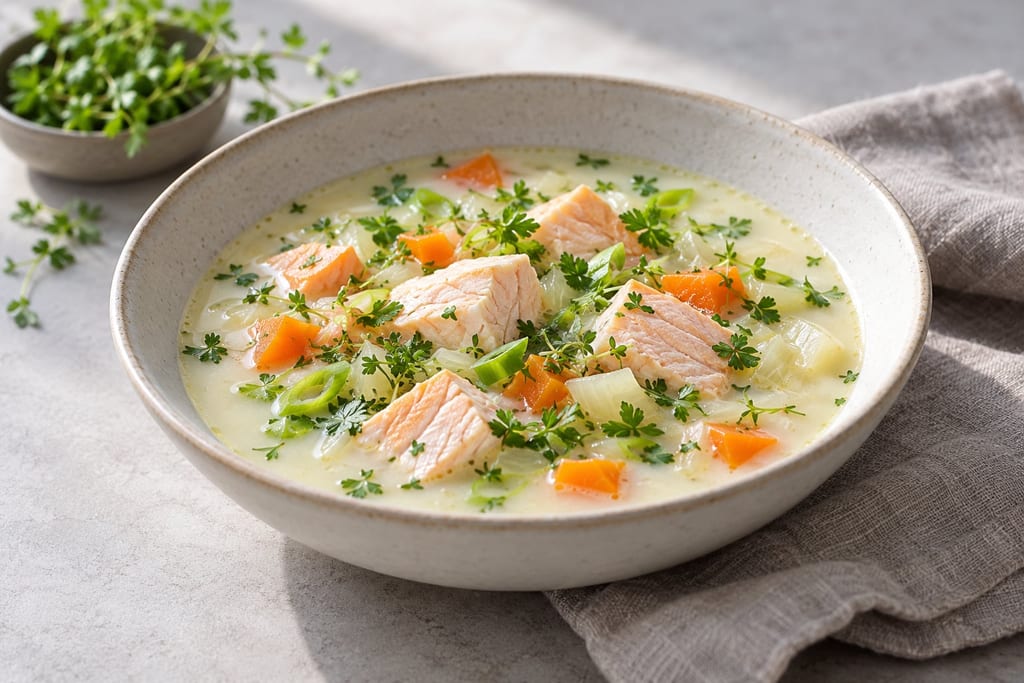
Trout or salmon poached at the end of a simmered broth of onion and root vegetables, a present-day reconstruction of coastal cooking built on excavated fish bones and a boiling pot.
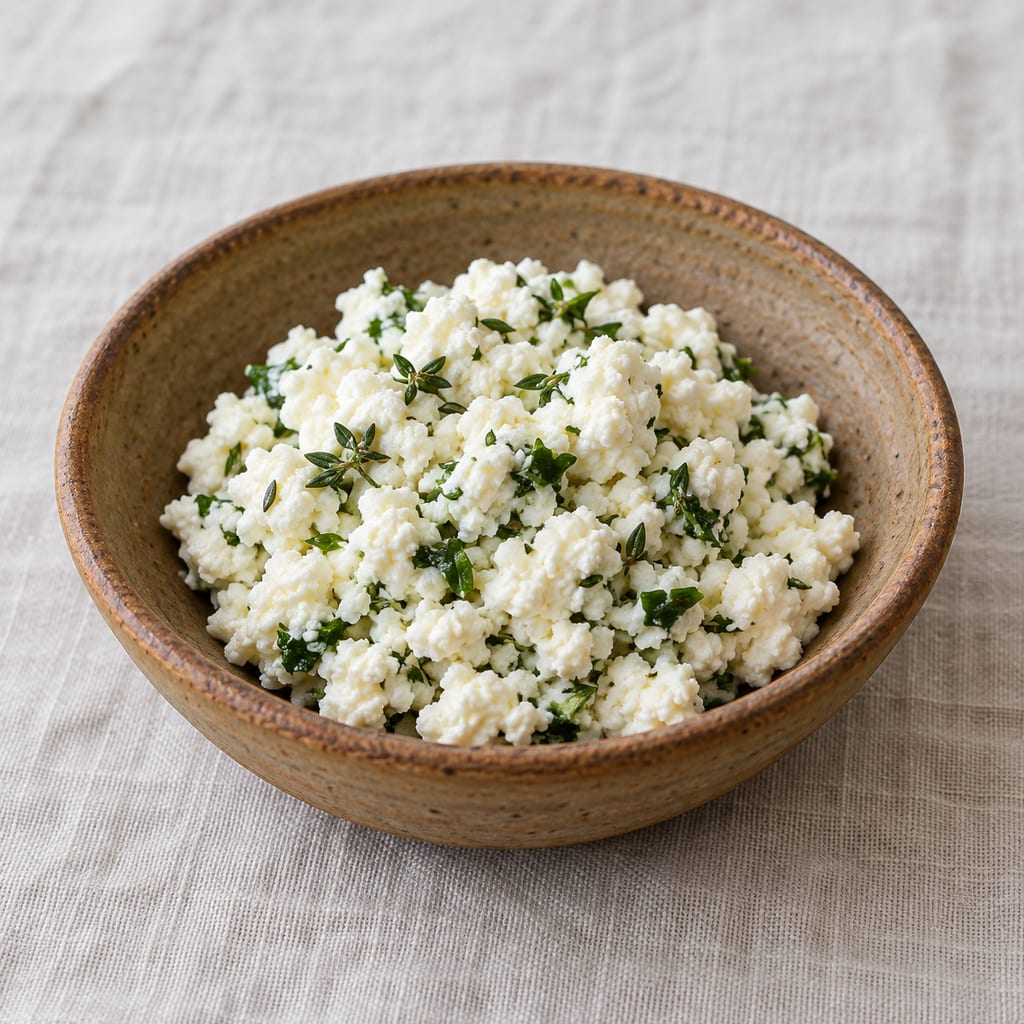
Soft fresh curd made by draining whey from milk already thickened by bacterial acidification, the simplest point in a northern dairy tradition that also produced skyr, ymer and whey itself.
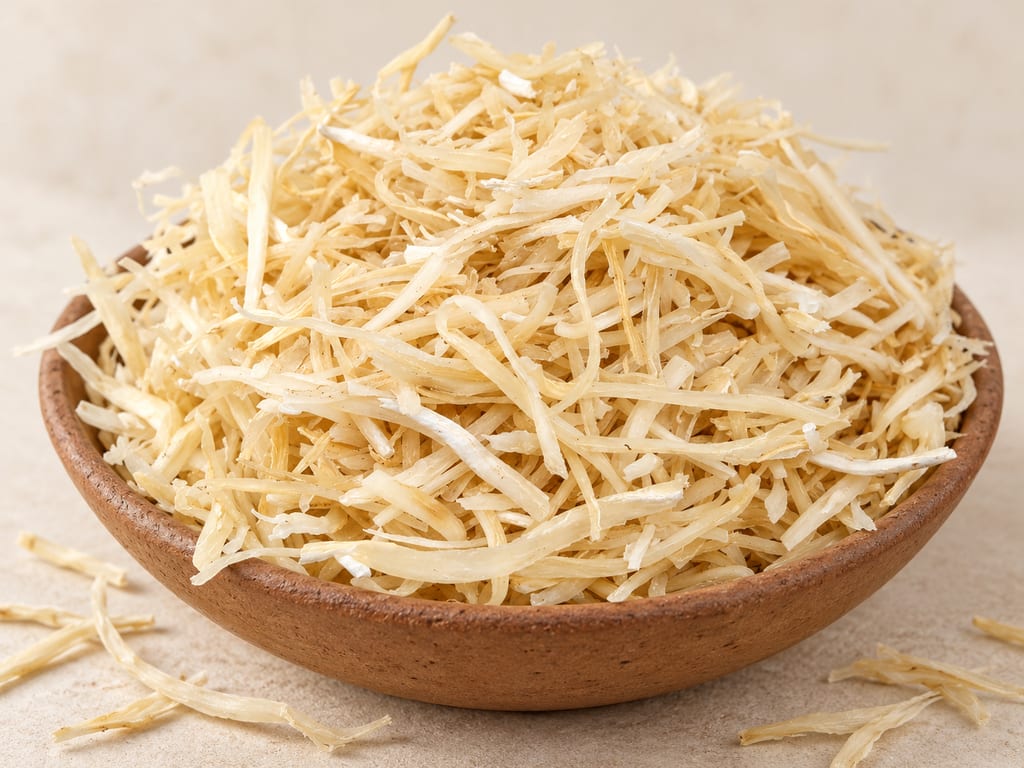
Abacha is a fermented cassava-strip preparation from southeastern Nigeria, sold wet or dried and later rehydrated for meals such as African salad.
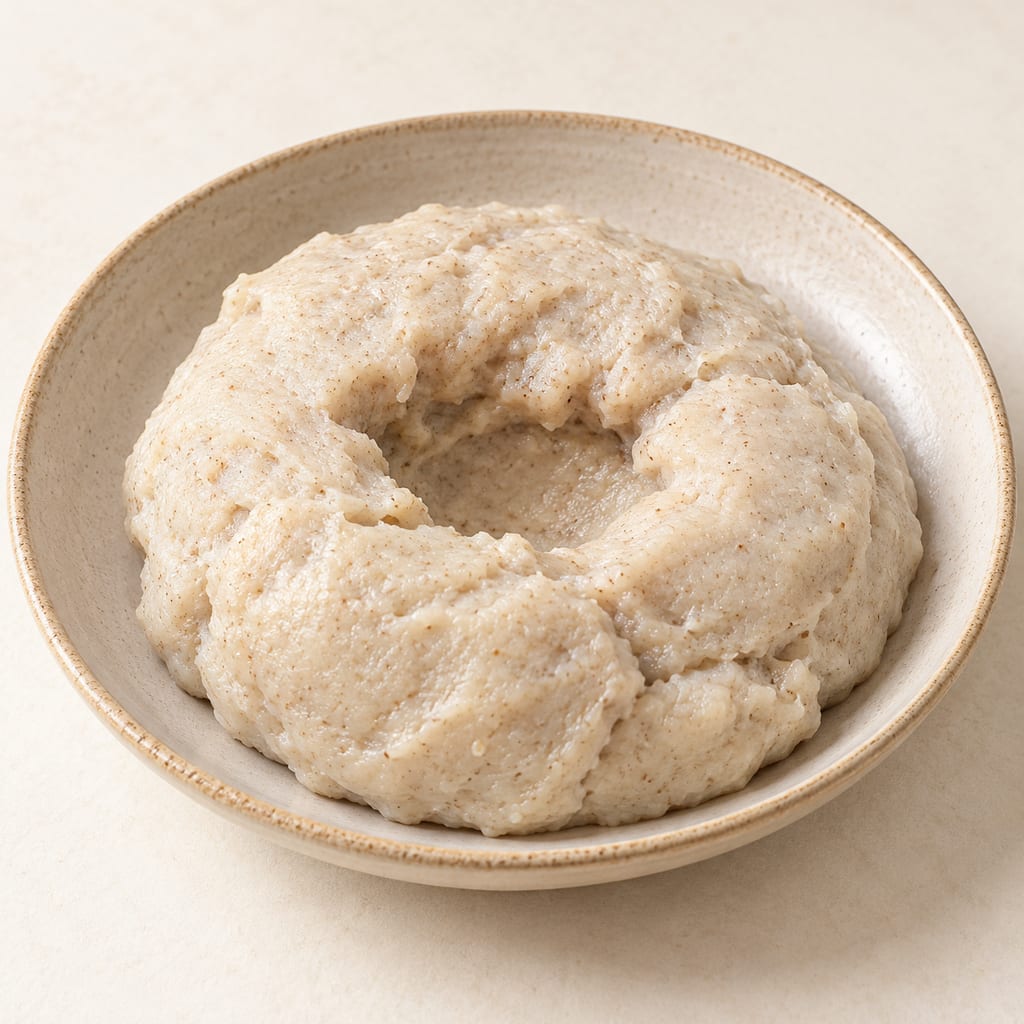
Aceda is Sudan’s firm cereal porridge, commonly made from sorghum and shaped into a smooth mound. Some versions use fermented dough; fermentation is not universal.
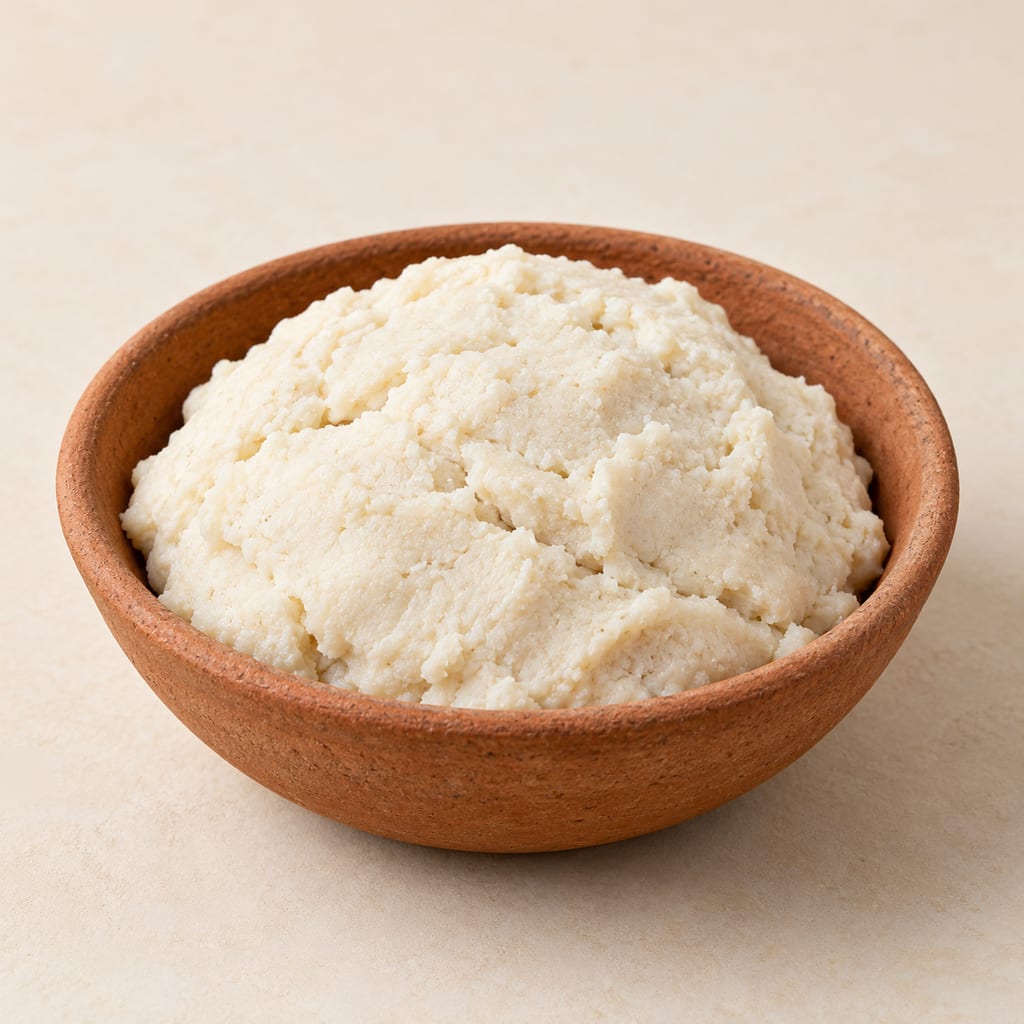
Ghanaian sour cassava dough fermented with traditional inoculum and drained during fermentation. It is used as a base for cooked foods such as banku and akple; process variants and safety outcomes differ.

Appam, or hoppers, are South Indian and Sri Lankan rice pancakes made from a fermented coconut-and-rice batter and cooked in a curved pan to a crisp lacy rim and a soft, spongy centre.
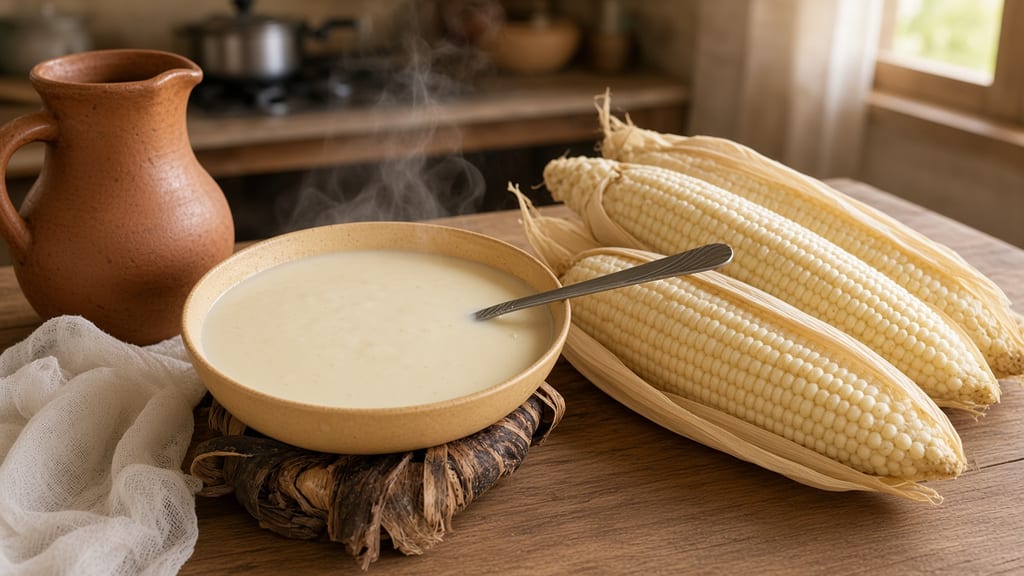
A hot, sour maize drink from Tabasco made from maize that is not lime-cooked. The ground grain sours for half a day, then makers strain it and boil it until thick.
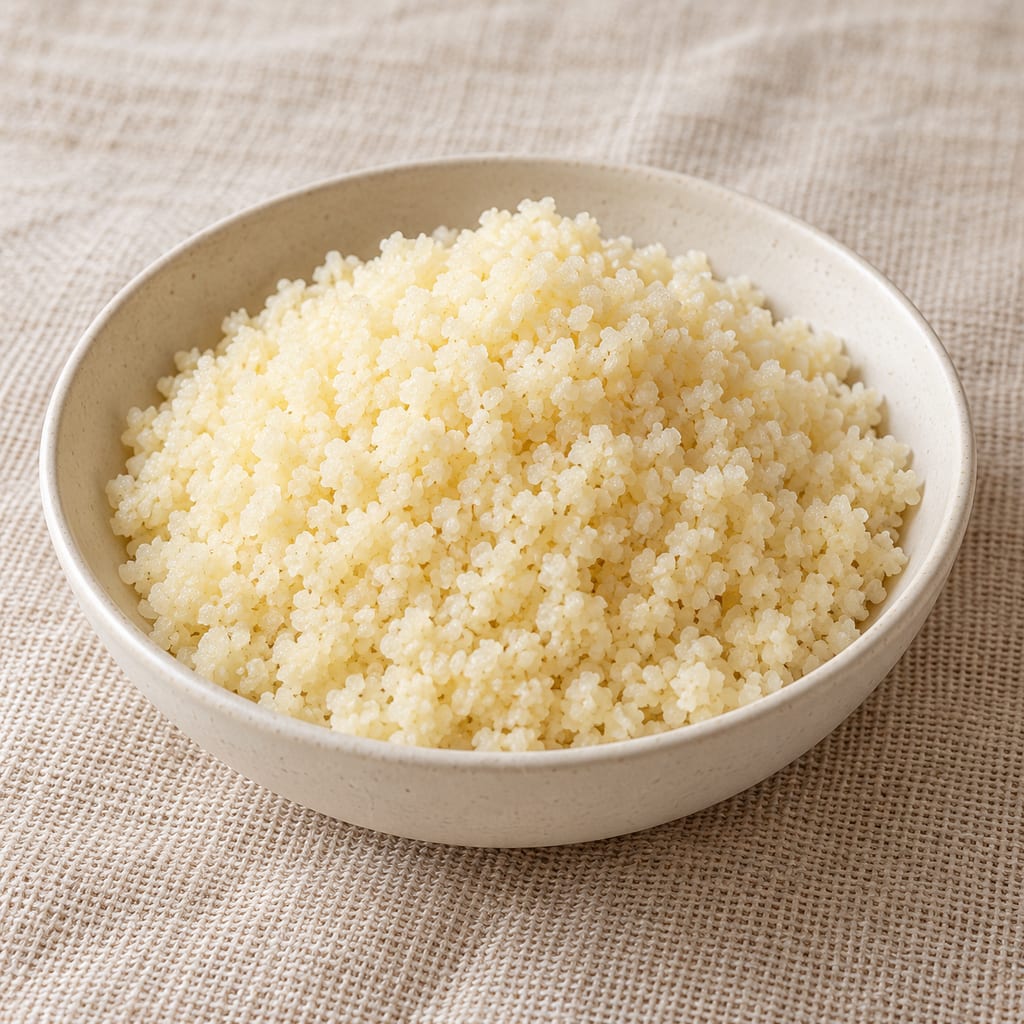
Ivorian cassava semolina: grated cassava is fermented overnight with a traditional inoculum, pressed, sieved into granules, dried and steamed. Documented in a 2006 field study; no sole original process is established.
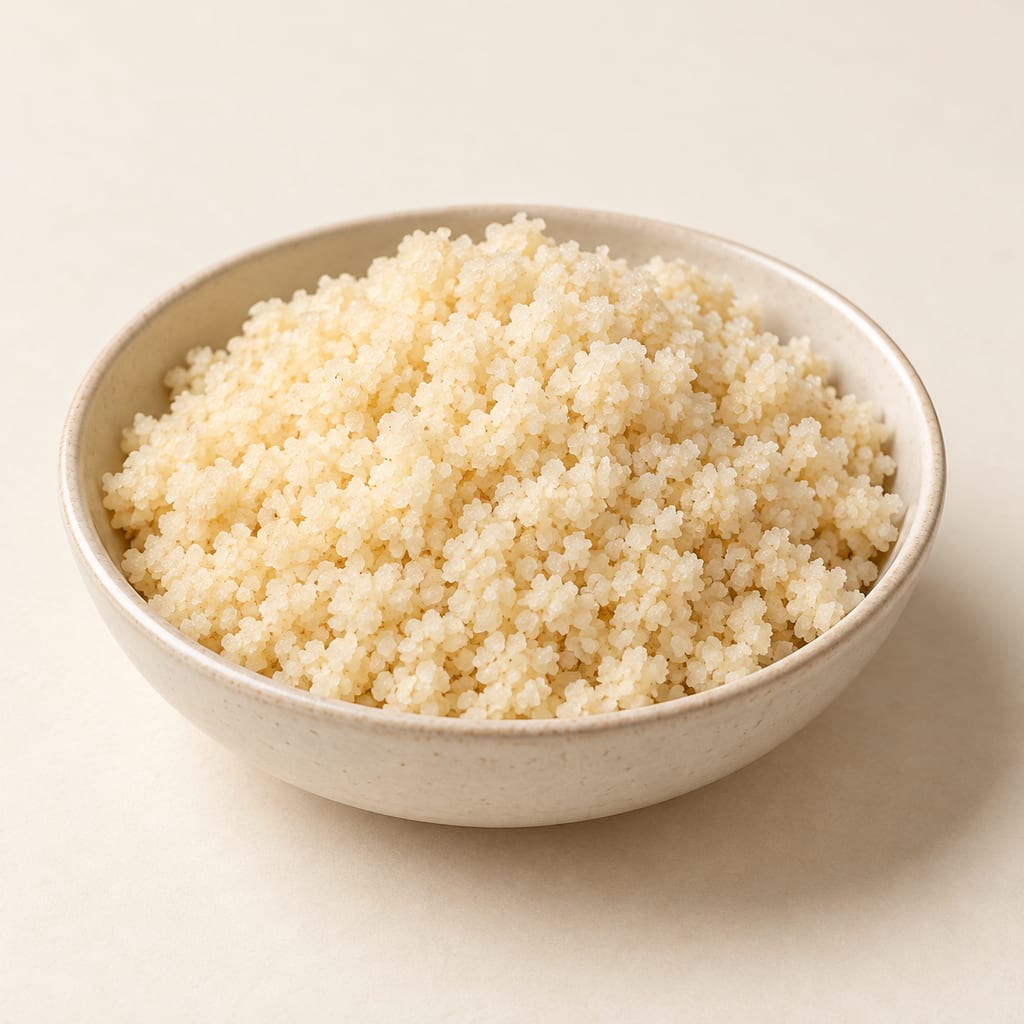
Attiéké is an Ivorian staple of grated cassava fermented with a traditional inoculum, then pressed, sieved, granulated, dried and steamed into fine couscous-like grains.
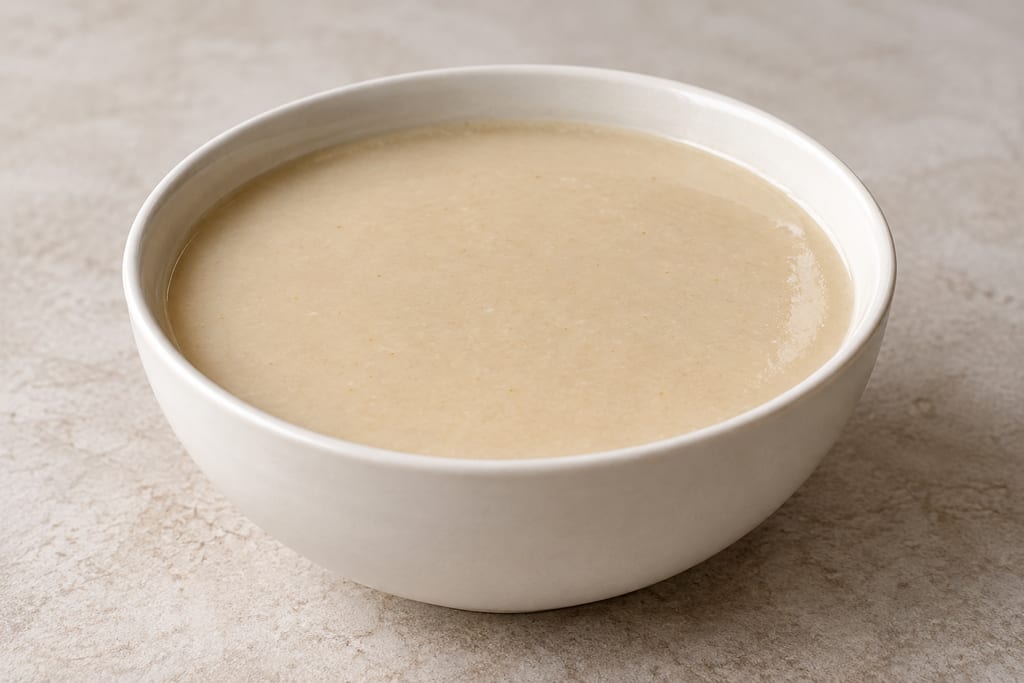
A fermented pearl-millet gruel documented in Ouagadougou, Burkina Faso. Whole grain is soaked, wet-milled and sieved; the settled paste ferments again before it is cooked with its liquid.

Protected Italian vinegar made only from cooked grape must, fermented and aged in a battery of wooden barrels for at least 12 years: sweet, sharp and syrupy.
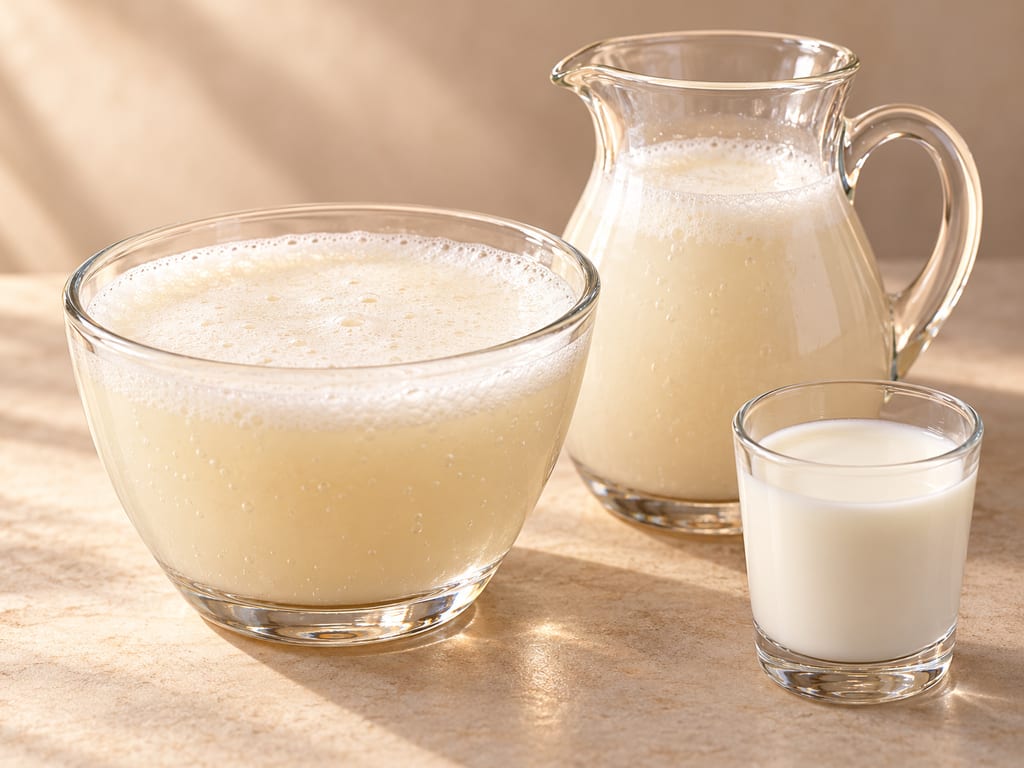
Airag is Mongolia’s fermented mare’s-milk drink, traditionally churned with saved starter in a reusable cowhide khokhuur.
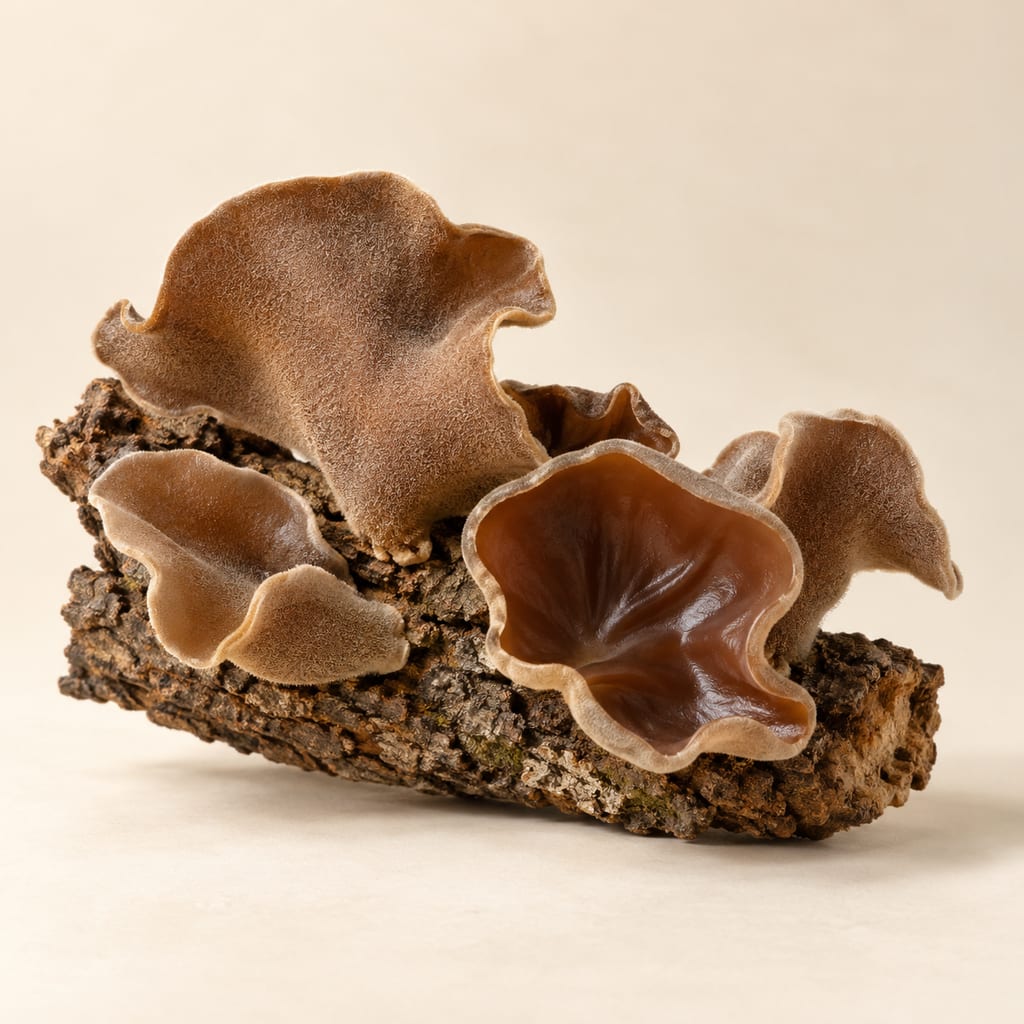
Auricularia tremellosa is a wood ear fungus of the genus that supplies most dried wood ear sold in China; its own food record is thin, and the culinary practice described here comes from the closely related wood ear species.

Ayran is Turkey’s cold, savoury yogurt drink: plain yogurt is loosened with water and lightly salted, then whisked smooth or aerated into a soft cap of foam.
A thin stone griddle used over an open hearth. Norwegian archaeology documents the established tradition from the early Middle Ages; a Viking-period origin is only a cautious suggestion linked to Shetland.
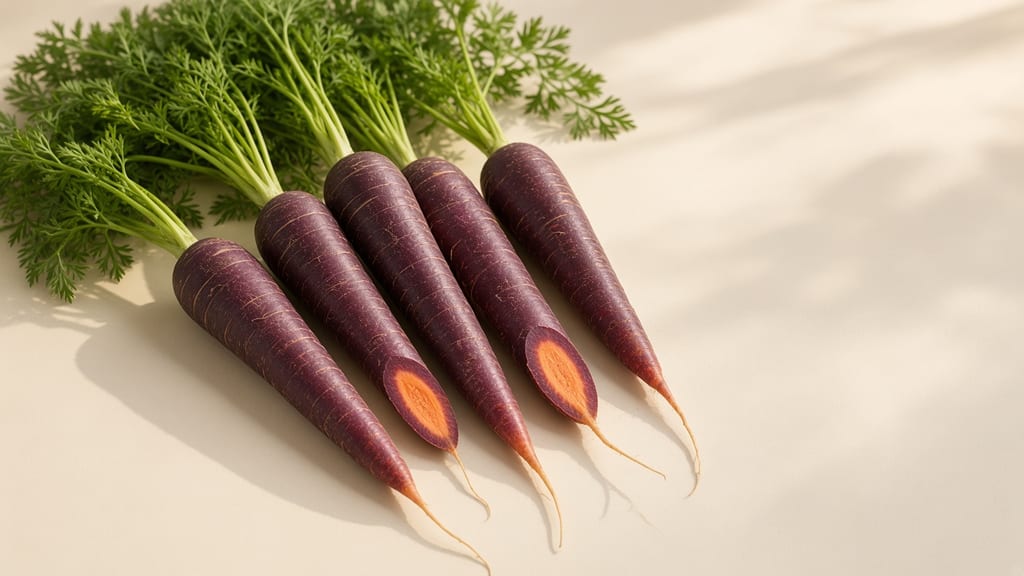
Black carrot is the anthocyanin-pigmented Eastern carrot (Daucus carota var. atrorubens), the purple root that preceded orange types and still colours kanji and şalgam.
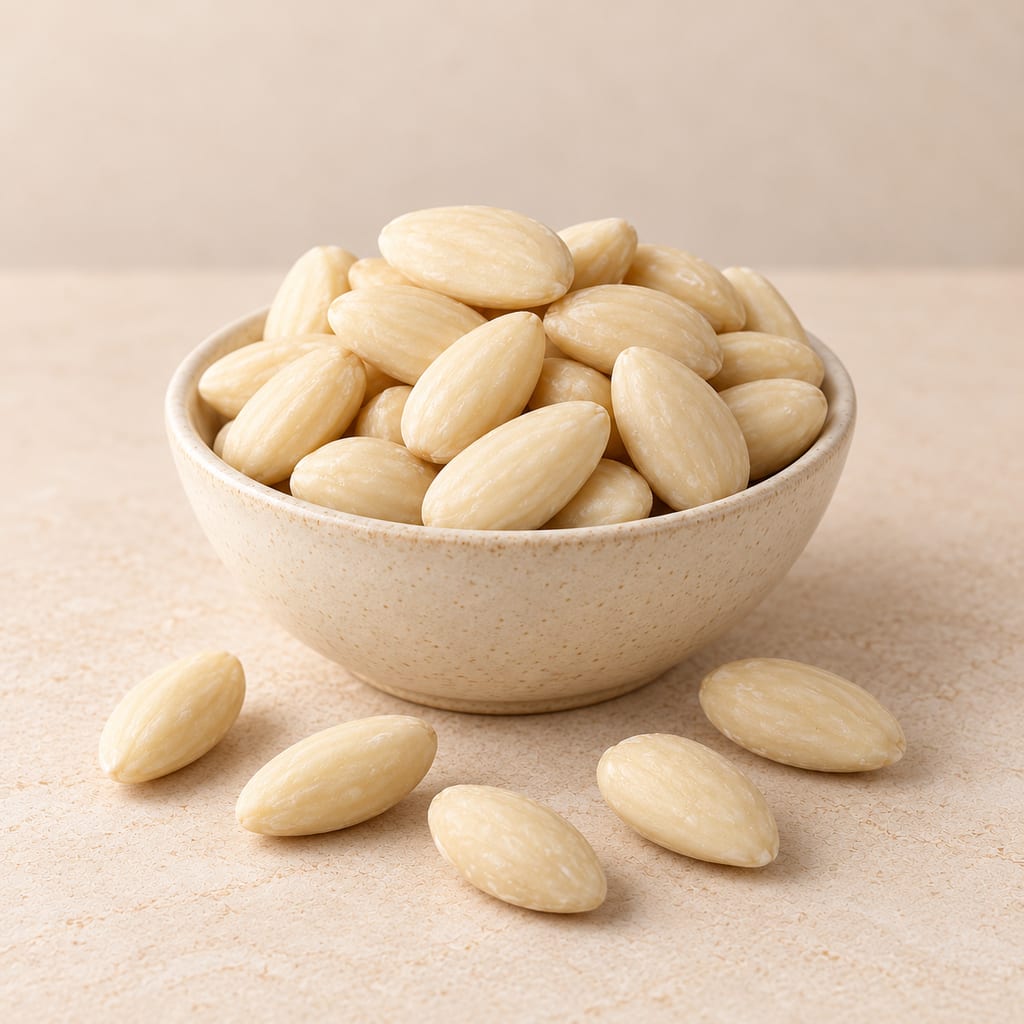
Blanched almonds are sweet almond kernels with the brown seed coat removed. A documented amla murabba cooks ten optional slivered kernels into the finishing syrup with spices and saffron.
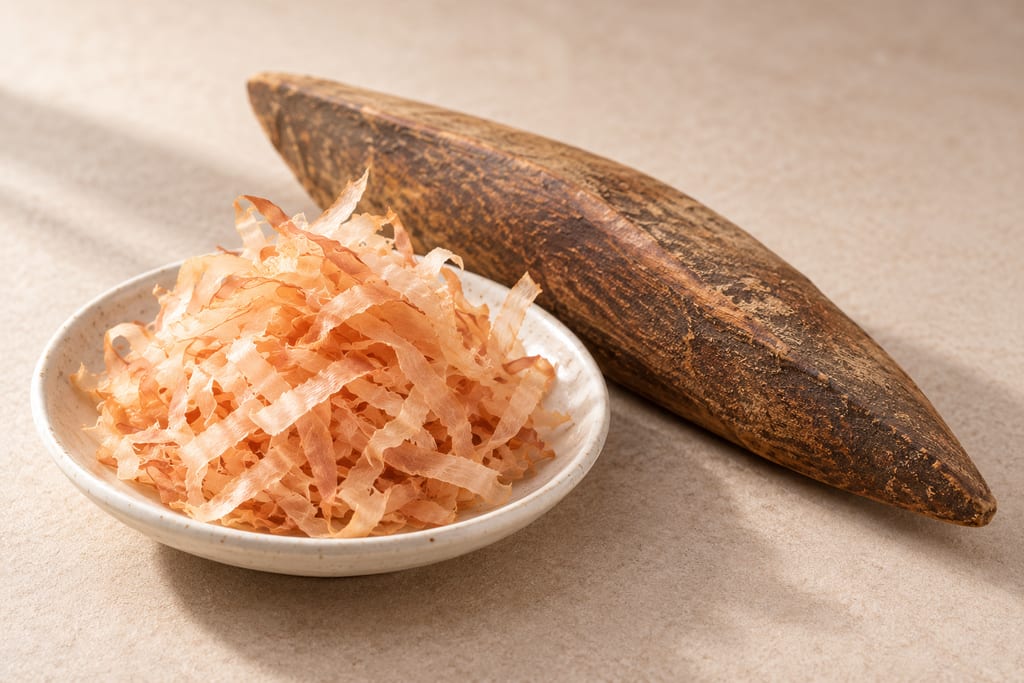
Katsuobushi is skipjack tuna cooked, smoked and dried into a hard block that is shaved into flakes for dashi and toppings. Some styles stop at the smoke-dried stage; others receive carefully managed mold maturation.
No community contributions have been published for this entry yet.
Sign in to contribute. Published comments and photos are free to read.
Viking Ship Museum, RoskildeMethod · History
Viking Ship Museum, Roskilde — Food in Viking TimesThe museum's barley porridge reconstruction: 300-400 ml coarse barley flour, 1 litre water, 2 apples, optional hazelnuts, a little salt, and optional butter, honey or dried berries for serving, for approximately four people.
The sequence: boil the water, scatter the meal in while stirring continuously, return to the boil and simmer 5 minutes, add the apples and optional hazelnuts about 2 minutes before the end, then stand the pot away from direct heat near the warmth for 30-60 minutes.
The museum states the barley by volume and gives no gram conversion, and does not specify the quantity of hazelnuts.
Hearth technology and vessels: iron cauldrons, soapstone, pottery, suspension over a fire to control heat, wooden and leather containers that cannot go over flames, and cooking with heated stones placed into liquid.
The museum recommends not keeping its campfire dishes until the following day.
Cited in: What is barley porridge?; Evidence from Viking Age households; What happens when barley cooks?; Does barley porridge ferment?; The role of apples and hazelnuts; Museum reconstruction: barley porridge with apple; Preparation; Alternative modern stovetop formulation; Cooking vessels and hearth technology; How porridge was eaten; Troubleshooting; Safety; Historical limits
Swedish History MuseumHistory · Science
Swedish History Museum — Food for the poor and the richAnalyses of household food residues and coprolites indicating that oat and barley porridge were ordinary foods.
Cereal remains in settlement deposits establish that grains were available and processed, while a single seed cannot show whether it was destined for bread, beer or porridge.
Cited in: Evidence from Viking Age households; Grain production and winter provisioning; Regional differences; Historical limits
National Museum of DenmarkHistory
National Museum of Denmark — Bread and porridgeCereal history: barley and rye among the most important cereals in Denmark, with oats and wheat contributing to the wider cereal economy, and grain preparation embedded in a long-established farming tradition by the Viking Age.
Cited in: What is barley porridge?; Names; Grain production and winter provisioning; Regional differences
Ribe VikingeCenterMethod
Ribe VikingeCenter — KlatkagerA reconstructed use for cold porridge, klatkager: 400 g cold barley porridge, 2 eggs, 1 teaspoon salt, 2 handfuls dried cranberries and 3-4 tablespoons wheat flour, with butter for frying, formed into spoon-sized portions and cooked until browned.
The museum itself treats the Viking Age precedent for the cakes as uncertain.
Cited in: Leftover porridge cakes
Food Standards ScotlandSafety
Food Standards Scotland — Cooking food safelyModern household guidance used here for cooked cereal: cool leftovers promptly and refrigerate within two hours, keep the refrigerator at 0-5°C, eat refrigerated leftovers within 48 hours or freeze them, and reheat only once until steaming hot throughout.
Cited in: Does barley porridge ferment?; Troubleshooting; Safety