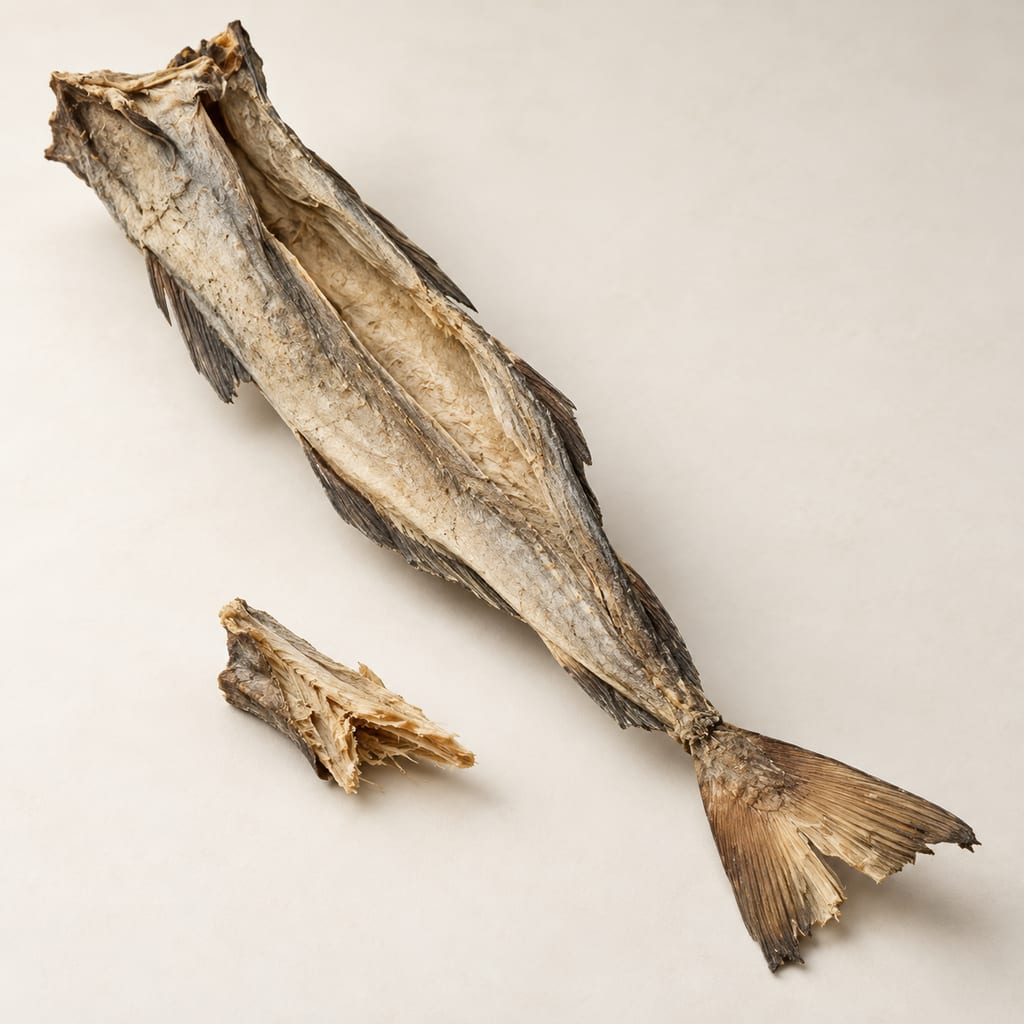
Stockfish
Cod hung on open racks in cold northern air until most of its water has gone, leaving a hard, light, unsalted fish that keeps and travels and must be soaked for days before cooking.
 FermenteaWhere food goes to change
Modern method
Thurrkud epli · Dried apples · Dried apple slices · Thurrkud epli · Tørrede æbler · Torkade äpplen
Apple slices dried until most of their water has gone, shrinking and concentrating into leathery or crisp rings, with the modern controls that a plausible old technique turns out to need.
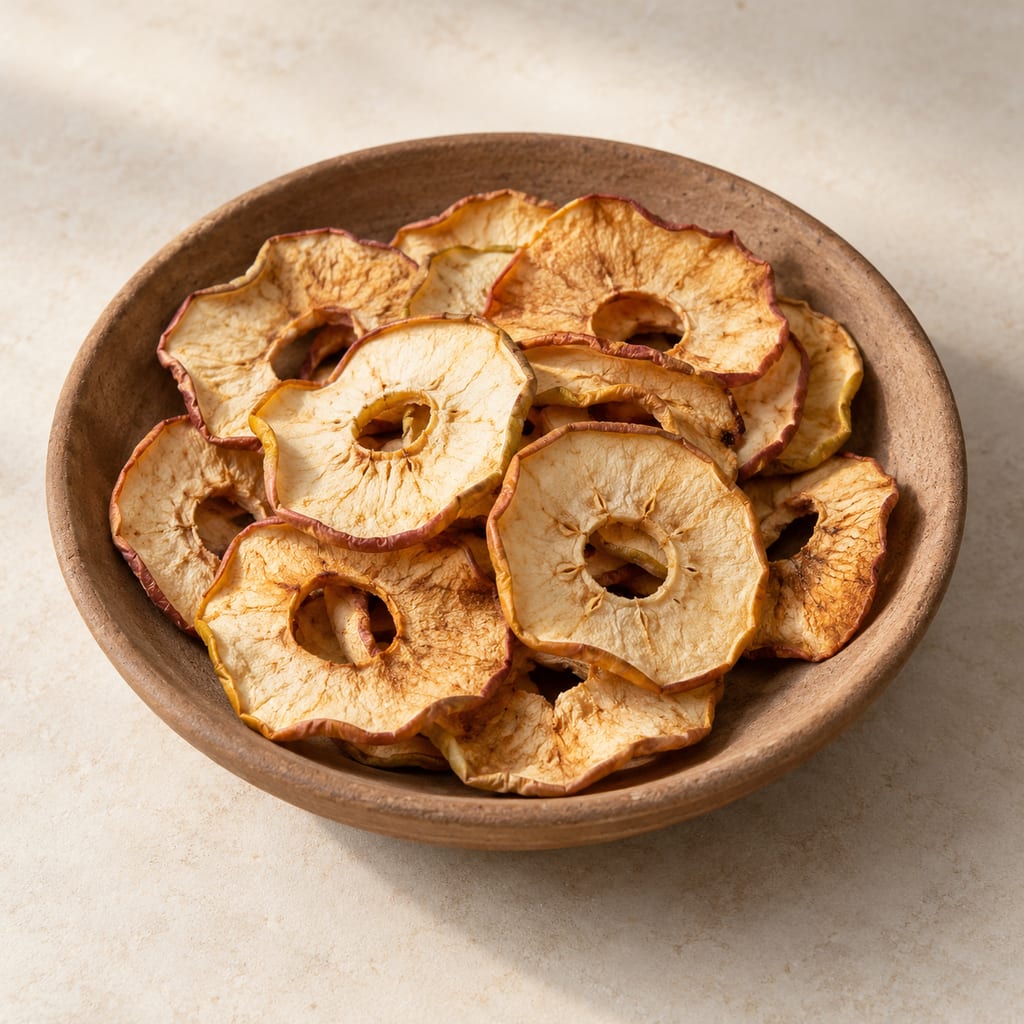
Dried apple rings are slices of apple from which much of the original water has been removed.
The simplest preparation begins with fresh fruit, which is washed, cored, sliced and exposed to conditions that gradually evaporate its moisture.
As water is removed, the slices shrink, their texture changes and the flavours of the remaining ingredients become more concentrated.
The finished fruit may be leathery, pliable or crisp, depending on the type of apple, slice thickness and degree of drying.
Drying is one of the oldest broad categories of food preservation because it changes a fundamental condition required by many microorganisms: the availability of water.
Yet not every dried-looking apple is shelf-stable.
Insufficient drying, uneven moisture distribution or poor storage can allow mould to develop.
The reconstructed method below combines a historically plausible fruit with modern dehydration controls.
The distinction is essential: apples were known in Viking Age Scandinavia, but the evidence does not establish the precise process of slicing them into rings and drying them at a particular temperature.
These modern terms describe the fruit and its dried form. They do not identify a documented ninth-century recipe title.
Botanical — Malus domestica Borkh.
Old Norse — Epli — apple
Icelandic — Epli, thurrkud epli — dried apples
Norwegian — Eple, tørkede epler
Danish — Æble, tørrede æbler
Swedish — Äpple, torkade äpplen
English — Apple, dried apple
Apples were known in northern Europe well before and during the Viking Age.
However, the term apple can refer to a diversity of fruits and plant populations.
Modern commercial apples are products of a long history of domestication, cultivation and selective breeding.
The exact varieties available to Viking Age households should not be imagined as identical to those sold in a contemporary supermarket.
Small cultivated apples, crab apples and exchanged fruit may have contributed to the broader food landscape.
Archaeological plant remains can preserve seeds, fragments and other botanical evidence.
But the existence of apple remains does not identify every method of preparation.
A fruit could be eaten fresh, cooked, stored whole or processed.
Without additional evidence, a seed does not reveal which happened.
Apples also appear in later Scandinavian mythology and literary tradition, where they can carry symbolic significance.
That cultural importance does not establish a specific preservation recipe.
Literary symbolism and archaeological food history need to be kept distinct.
Fruit availability is seasonal.
A household fortunate enough to have access to apples during harvest faced a practical problem: what to do with fruit that could not all be eaten immediately.
Some apples can remain edible for a period when stored under suitable conditions.
But bruising, pest damage, unsuitable temperature and excessive humidity shorten storage life.
Drying offers another possibility.
Removing water reduces the weight and volume of fruit and changes its susceptibility to spoilage.
The finished product can be used in dishes prepared after fresh apples are no longer available.
However, the presence of apples in a Viking settlement does not prove that dried apple rings were an established winter provision.
This is a plausible reconstruction rather than a documented practice.
Fresh apples contain a large proportion of water.
Some of that water is readily available for microbial activity, while some is associated with dissolved sugars and other constituents.
Microorganisms require water in a usable form to grow.
Food scientists describe this using the concept of water activity, written a_w.
Water activity is not identical to total moisture percentage.
Two foods can contain similar quantities of water while making different amounts available for microbial processes.
As an apple dries, its remaining sugars and solids become more concentrated.
Its water activity decreases.
If water activity is sufficiently low, many bacteria, yeasts and moulds cannot grow.
The precise safe threshold for a particular product cannot be inferred from appearance alone.
A modern dehydrator set to the correct temperature is useful, but temperature and elapsed time do not by themselves establish the finished food's water activity.
The size of the slices, airflow and initial moisture all matter.
Drying involves the movement of water from inside the apple to its surface, followed by evaporation into the surrounding air.
At the beginning, surface moisture can evaporate relatively readily.
As drying continues, internal water must migrate through the fruit's tissue.
This becomes progressively slower.
Thin slices shorten the distance water must travel.
A steady supply of appropriately dry moving air carries moisture away.
If the surrounding air is too humid, the driving force for evaporation is reduced.
If slices overlap, air cannot contact their surfaces evenly.
This is why food-preservation instructions typically call for pieces to be arranged in a single layer.
It also explains why hanging apples in a damp room is not equivalent to drying them under validated modern conditions.
Cutting damages the apple's cells.
Compounds that were previously separated inside the tissues can come into contact with enzymes and oxygen.
Polyphenol oxidase is one important enzyme involved in enzymatic browning.
It promotes reactions involving phenolic compounds, leading to brown pigments.
This is why freshly cut apples can darken before they are dried.
Browning is not the same as spoilage.
A brown apple slice may be perfectly edible if it has been processed and stored safely.
Nevertheless, the change can affect appearance and sometimes flavour.
Modern recipes may use ascorbic acid to slow this reaction.
That is a contemporary quality-control measure, not evidence that Viking households used a chemically equivalent treatment.
Different apples behave differently during drying.
A firm apple may hold recognisable slices.
A softer apple may break down more readily.
Sweet and tart varieties produce different flavour balances.
Sugar becomes more concentrated as water is removed, which can make the dried fruit taste sweeter than the original fresh apple.
Acids also remain and influence the flavour.
A tart apple may therefore produce a pleasantly sharp dried fruit.
Damaged or mouldy fruit should not be selected for drying.
Drying does not reliably neutralise toxins that may be associated with mould-contaminated food.
Start with sound fruit and clean preparation equipment.
The supplied research uses a food dehydrator to create a manageable small batch.
1. Wash the fruit.
Wash the apples thoroughly.
Inspect for damaged or decayed areas and reject unsuitable fruit.
2. Peel and core.
The reconstruction specifies peeling and coring.
Some modern dried apple preparations retain the peel, but that is a variation.
3. Slice.
Cut the fruit into rings approximately 3 mm thick.
Even thickness helps the pieces dry at a similar rate.
4. Pretreat if desired.
Apply the commercial ascorbic-acid treatment according to its label.
This limits browning; it is not intended to recreate a Viking Age treatment.
5. Arrange for drying.
Place the slices in a single layer in the dehydrator.
Avoid overlapping them.
6. Dehydrate.
The supplied modern reconstruction uses approximately 60°C and suggests that thin slices commonly require 6–12 hours.
These values belong to the reconstruction and will vary with the equipment and fruit.
They should not be interpreted as a universal guarantee of safe dryness.
7. Test a cooled sample.
Allow a piece to cool before examining its texture.
It should be pliable without a moist centre.
Continue drying if necessary.
8. Cool the batch.
Allow the dried apples to cool fully before packaging.
For this cautious small-batch demonstration, refrigerate for prompt consumption or freeze for longer keeping.
The Viking Ship Museum in Roskilde also includes dried apples among its historical cooking experiments.
Its oven demonstration specifies a temperature no higher than 50°C for approximately 6 hours.
It also describes an alternative involving about 24 hours in a warm room.
These numbers differ from the supplied dossier's 60°C, 6–12-hour dehydrator recipe.
They should not be blended into a single fictional historical specification.
The museum method is an educational demonstration of what can be done with fruit, not a validated Viking Age preservation protocol.
The warm-room alternative is especially sensitive to modern conditions.
A dry, well-ventilated environment behaves differently from a humid kitchen.
Simply leaving wet apple slices out for 24 hours does not prove that they are safe for long-term storage.
University food-preservation services provide additional instructions intended for present-day kitchens.
Utah State University Extension describes drying sliced apples using approximately 130–135°F.
The thickness of slices in its procedure differs from the 3 mm reconstruction.
Therefore, the times and temperatures from separate sources should not be treated as equivalent experimental results.
Illinois Extension discusses apple preparation, pretreatment and checking the final moisture.
Its guidance also recognises that dried apples require conditioning before ordinary dry storage.
This introduces a stage absent from the simple Viking-themed demonstration.
Conditioning is the process of allowing moisture to redistribute among dried pieces.
One slice may leave the dehydrator drier than another.
If all the pieces are sealed together immediately, moisture can migrate from wetter pieces to drier ones.
The National Center for Home Food Preservation recommends loosely packing cooled dried fruit into plastic or glass jars and sealing them for 7–10 days.
The containers should be shaken daily to separate the pieces.
They should also be checked for condensation.
If condensation appears, the fruit needs further drying.
This step reduces the risk of pockets of excessive moisture supporting mould.
Conditioning does not rescue fruit that was fundamentally spoiled or contaminated before drying.
It is a component of a complete modern preservation procedure rather than an alternative to appropriate dehydration.
Apple-drying traditions exist across many parts of Europe and beyond.
They differ in fruit variety, slice thickness, whether the peel is retained and the source of drying heat.
Some dried apples are produced as rings.
Others are prepared as wedges or irregular slices.
These differences can affect texture and storage.
Northern European climates, especially in autumn, may make open-air drying more difficult than in a reliably dry environment.
Access to a warm hearth or ventilated drying space would influence what was technically possible.
However, we cannot assign named Viking regional dried-apple recipes to Denmark, Norway, Sweden and Iceland on the basis of the evidence considered here.
Any such map would require more direct archaeological documentation.
Dried apples can be eaten as a snack.
They can also be added to porridge, where they absorb liquid and soften.
This creates a useful connection between fruit drying and stored grain.
A barley porridge made during winter might be enriched with previously dried fruit rather than fresh apples.
Dried apple pieces can contribute sweetness and acidity to baked goods.
They can also be simmered or soaked to restore some of their original softness.
Rehydration does not return the fruit to its original fresh structure.
Its cell walls and internal organisation have changed during drying.
The resulting texture may be tender but noticeably different from fresh apple.
They may not have been dried sufficiently.
Thickness, airflow and fruit variety can affect the process.
Moisture has not been removed evenly.
Continue drying rather than assuming the external surface establishes preservation.
Enzymatic browning may have occurred before or during drying.
This alone is not a safety diagnosis.
Return the fruit for further drying, as described by the National Center for Home Food Preservation.
Discard the affected batch.
Visible mould indicates failed storage or contamination.
Do not attempt to make mouldy dried fruit safe by reheating it.
Modern safe drying requires adequate dehydration and appropriate packaging.
The museum's short demonstration does not establish unrefrigerated shelf life.
Likewise, a homemade batch that feels leathery is not necessarily comparable with a commercially validated dried fruit.
When a complete food-preservation procedure has not been followed, refrigeration or freezing is a prudent approach.
The historical status of dried apple rings remains uncertain.
The apple itself is historically relevant, and drying is an ancient preservation technique.
But no specific Viking Age temperature, slice thickness, drying duration or storage life can be recovered from the evidence used here.
That uncertainty should remain visible on the finished page.
The honest shape of this subject is a plausible technique attached to a documented fruit, with nothing joining them. Fruit availability was seasonal, and a household with apples at harvest faced the ordinary problem of fruit it could not eat at once: some apples keep for a while in suitable conditions, but bruising, pest damage, unsuitable temperature and humidity all shorten that, and drying offered another route, reducing weight and volume and changing how readily the fruit spoiled so it could be used after fresh apples were gone. That is a reasonable inference from the properties of apples and of drying rather than a documented winter provision. The term apple itself needs care, since it covers a diversity of fruits and plant populations and modern commercial varieties are the outcome of long domestication and selective breeding. Against that, the science of why drying works is well understood and modern: microorganisms need water in a usable form, and as an apple's sugars and solids concentrate its water activity falls until many bacteria, yeasts and moulds cannot grow. Water activity is not the same as total moisture percentage, two foods with similar water content can make quite different amounts available, and no safe threshold for a particular product can be read off its appearance. The reconstruction on this page therefore pairs a historically relevant fruit with modern dehydration controls, and the uncertainty between the two is part of the subject.
Scaling: source batch only
Not every dried-looking apple is shelf-stable. Insufficient drying, uneven moisture distribution or poor storage can allow mould, and a slice whose outside is dry may still hold a moist centre because internal water migrates ever more slowly.
Hazard sourceA dehydrator at the right temperature for the right number of hours still does not establish the finished food's water activity, which depends on slice size, airflow and initial moisture as well; and water activity is not the same as total moisture percentage.
Hazard sourceLeaving wet apple slices out for about 24 hours is the most condition-dependent method on the page: a dry, well-ventilated environment behaves quite differently from a humid room, and the elapsed time proves nothing about long-term storage.
Hazard sourceVisible mould indicates failed storage or contamination, drying does not reliably neutralise toxins associated with mould-contaminated food, and reheating mouldy dried fruit does not make it safe. Damaged or mouldy fruit must not be selected for drying in the first place.
Hazard sourceCut even slices and arrange them in a single layer with air reaching every surface
Control sourceJudge dryness on a cooled sample rather than a warm one, and continue drying if the centre is moist
Control sourceCondition the cooled fruit before ordinary dry storage and return it to the dryer if condensation appears
Control sourceTreat this small batch as a demonstration rather than a preserve: refrigerate for prompt use or freeze for longer keeping
Control sourceElapsed time and a dehydrator setting do not establish water activity: fruit that looks and feels dried is not thereby shelf-stable.
The three drying systems here, about 60°C for 6-12 hours, no higher than 50°C for about 6 hours, and 130-135°F, come from separate sources with different slice thicknesses and must not be blended into one specification.
Leaving wet apple slices in a warm room for about 24 hours does not show that they are safe for long-term storage; a humid kitchen is not a dry, ventilated drying space.
Browning is not spoilage, and the ascorbic-acid pretreatment is a modern quality measure rather than evidence of any equivalent Viking Age treatment.
Discard mouldy dried fruit rather than reheating it, and never dry damaged or mouldy fruit in the hope that drying will correct it.
Conditioning redistributes moisture between pieces; it cannot rescue fruit that was spoiled or contaminated before drying.
No Viking Age temperature, slice thickness, drying duration or storage life can be recovered from this evidence, and the rings themselves are a plausible reconstruction rather than a documented provision.
A region-level association and nothing narrower. Apples were known in northern Europe well before and during the Viking Age, with small cultivated apples, crab apples and exchanged fruit all plausibly part of the picture, but archaeological plant remains identify the fruit rather than the method of preparation. Autumn conditions in northern Europe can make open-air drying harder than in a reliably dry climate.
The place that publishes the oven and warm-room variation, an educational demonstration of what can be done with fruit rather than a validated Viking Age preservation protocol.
Cod hung on open racks in cold northern air until most of its water has gone, leaving a hard, light, unsalted fish that keeps and travels and must be soaked for days before cooking.

Crushed or milled barley cooked in water until the starch softens and the mixture thickens, the plainest way a northern household turned stored grain into a meal, here with apple and hazelnut.
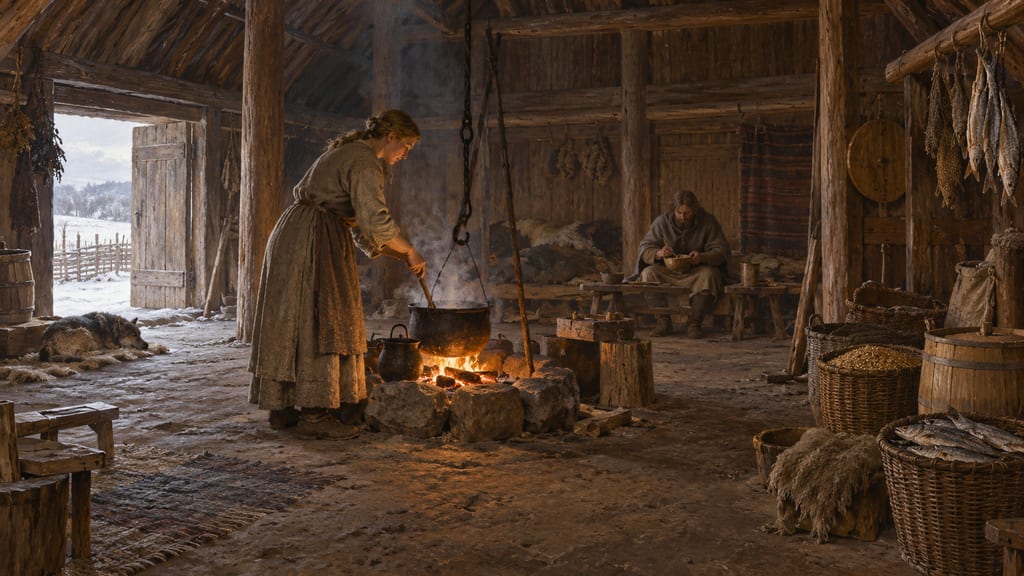
How ordinary Viking-Age households grew, dried, smoked, salted and cooked their food through the northern year, and how to cook their dishes today with supermarket ingredients.
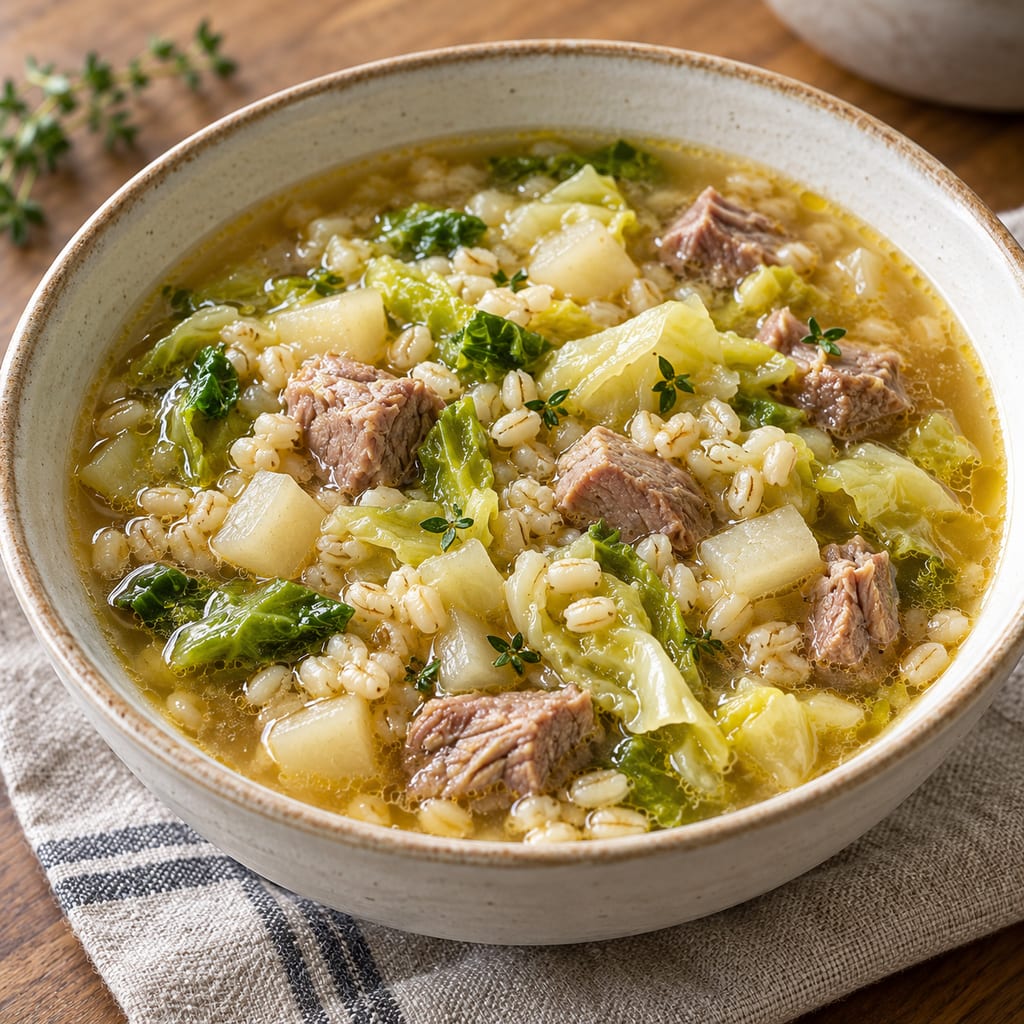
Lamb shoulder simmered with pearl barley, turnip and leafy cabbage in one pot, a present-day reconstruction built from the animals, grains and vegetables of northern European farming.
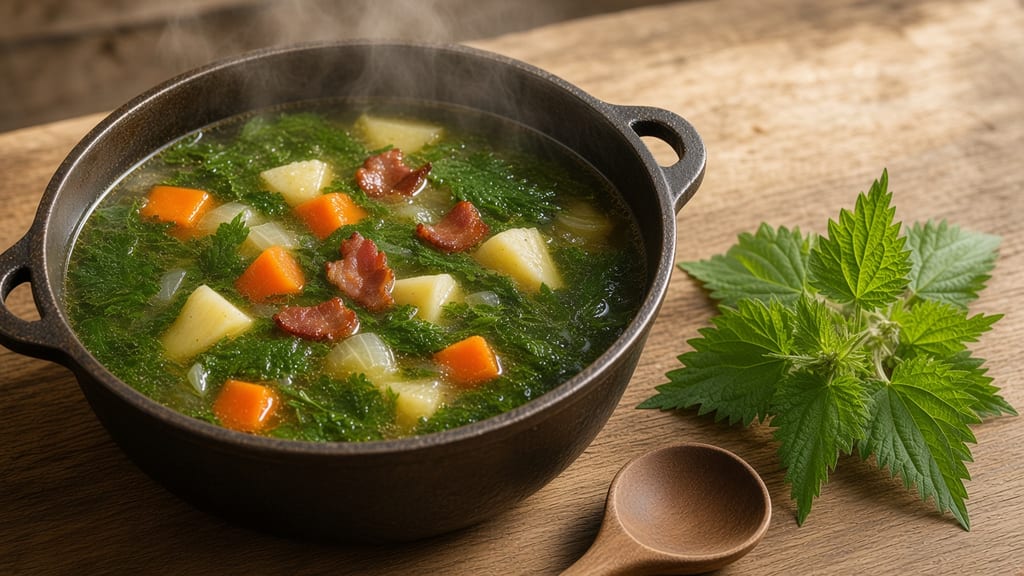
Young stinging nettle shoots cooked with bacon, onion, garlic and three roots into a thick spring soup, from a Danish Viking museum's recipe, with a meat-broth variation and ember-baked turnips.
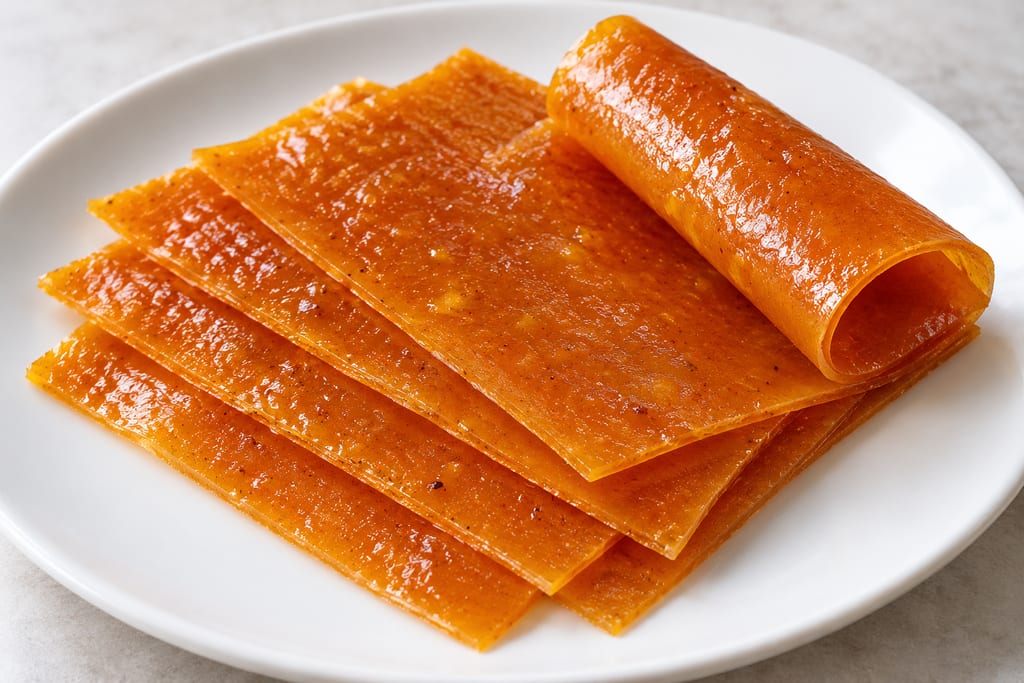
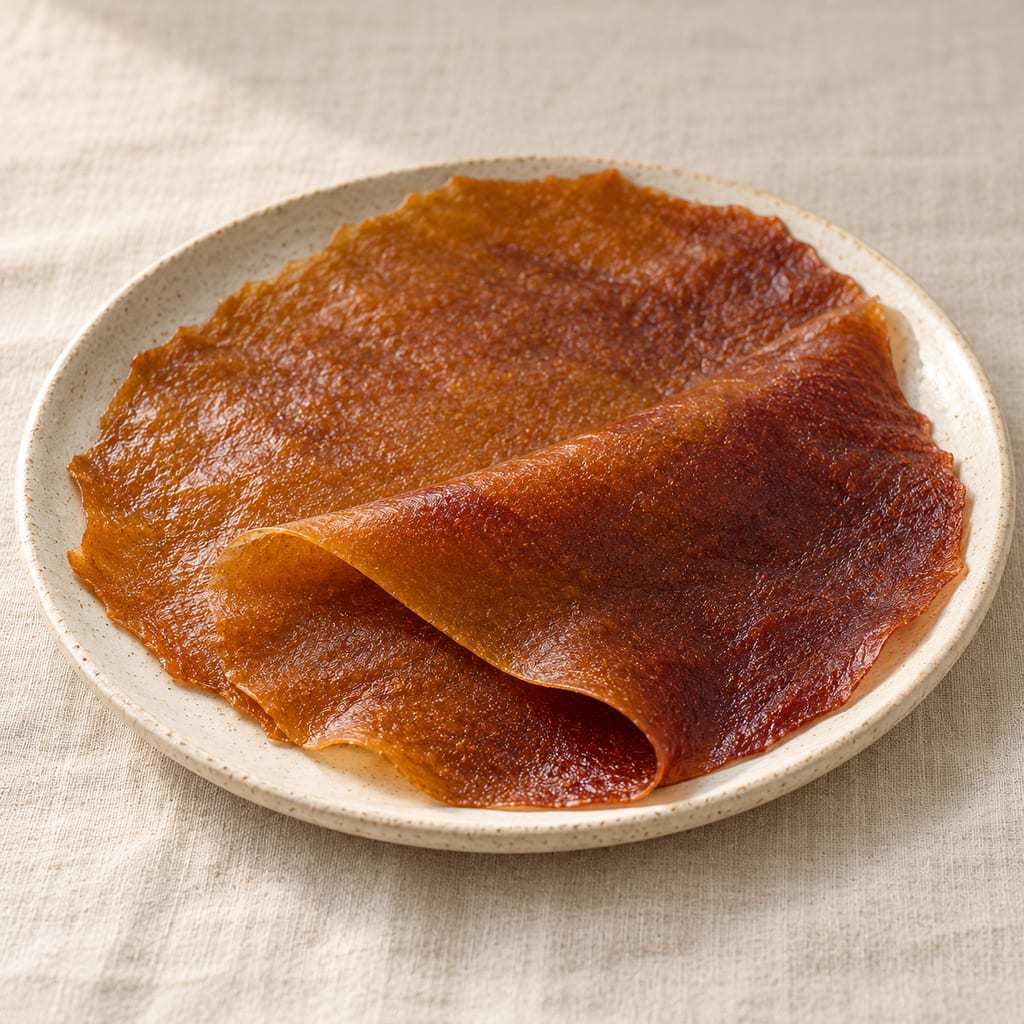
Ripe mango pulp spread thin and dried as a chewy fruit leather. This entry records one controlled unsweetened experiment and distinguishes it from Bengali sun-dried aamshotto and sweetened or spiced variants.
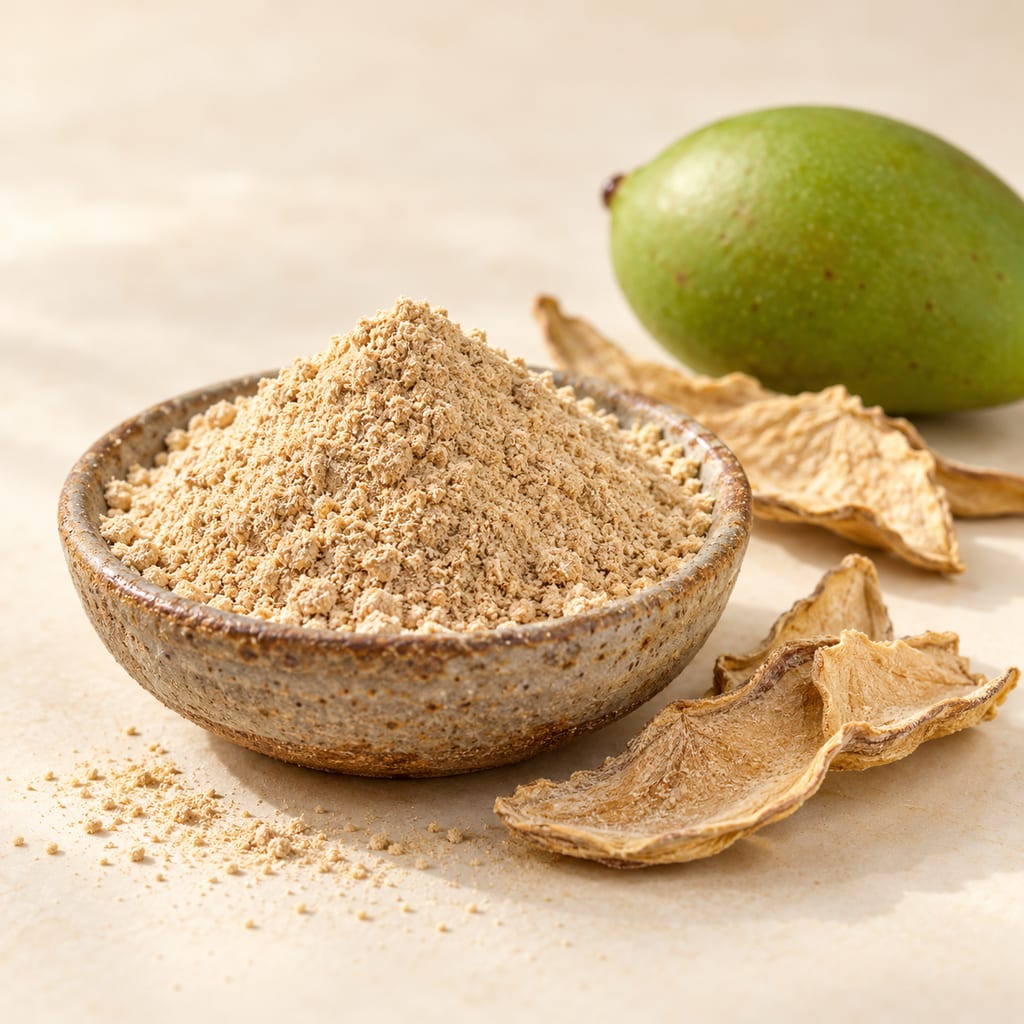
Thin slices of sour unripe mango are sun-dried over four days and ground into a tangy powder, following a five-fruit account published with an Indian mango study.
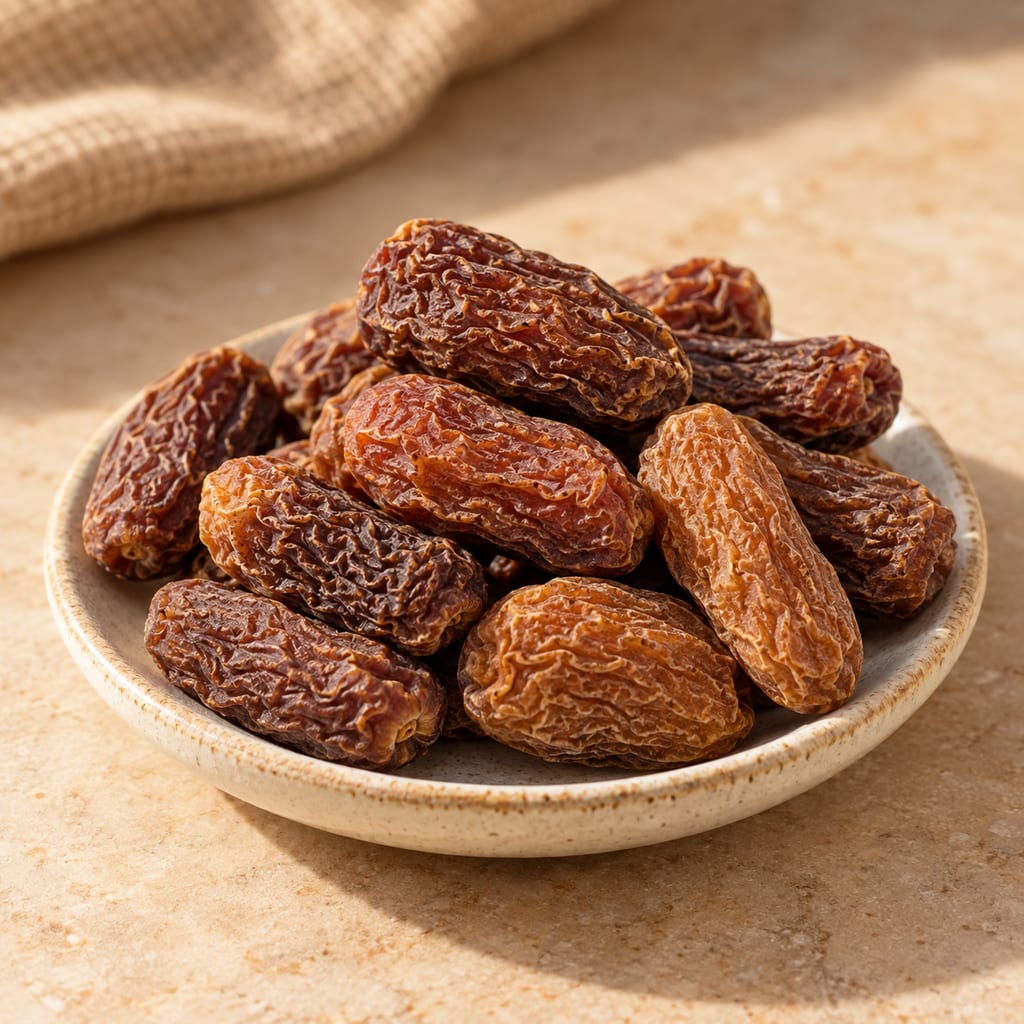
Chuhara is a processed dried-date product named in Pakistani date-production studies, distinct from other dried dates. Its household method is not established.
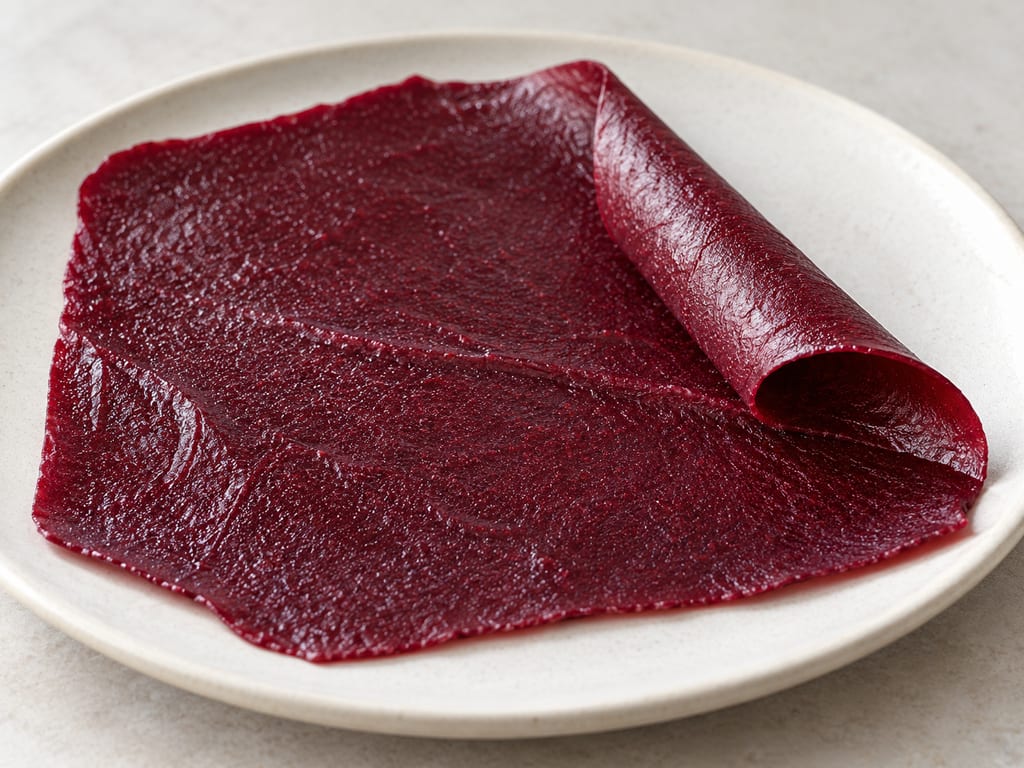
Fruit pulp spread into thin sheets or shaped into cakes and dried, a compact, portable way of keeping fruit in western and central Asia and among Indigenous North Americans.
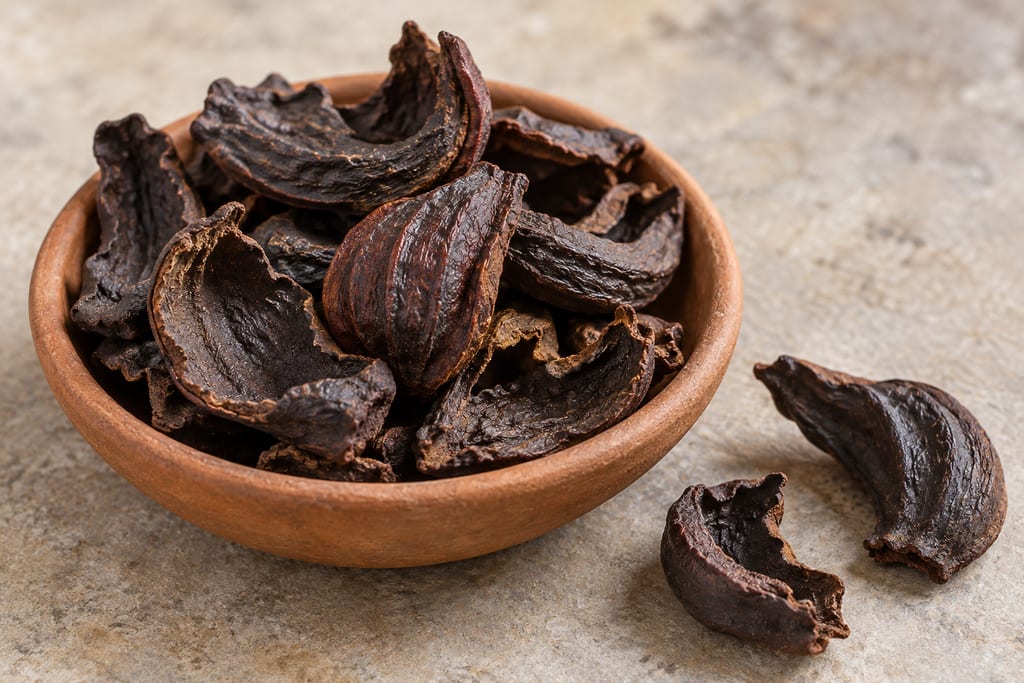
Goraka is the dried rind of Garcinia quaesita, a souring ingredient for Sri Lankan curries. Its drying is documented, but no complete household method is.
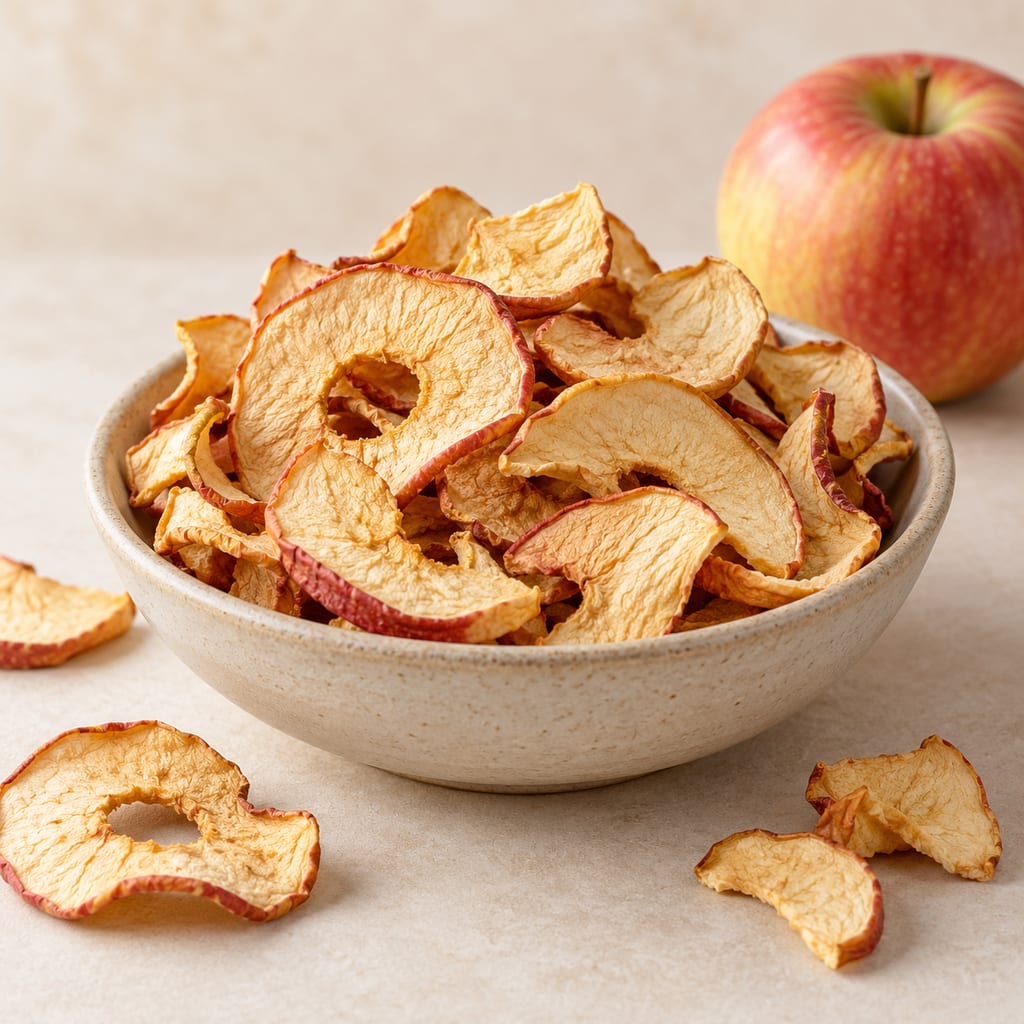
Křížaly are Czech dried apple or pear pieces. The name has regional meanings beyond apple slices, and drying practice varies by place and dryer.
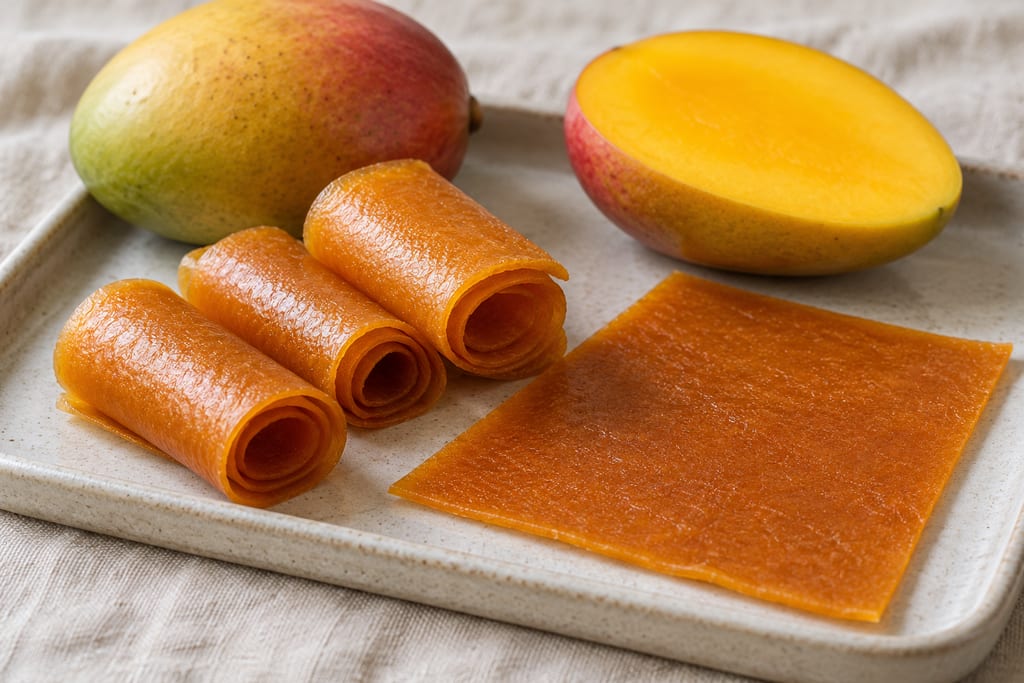
Sieved mango purée with honey and warm spices, spread a quarter inch thick and dried at 140 °F (60 °C) for about 10 hours into a flexible fruit sheet.
A reported Khizabavra household method cooks mulberry juice with wheat flour into a thin porridge before drying it on cloth; batch measures and a measured endpoint are absent.
No community contributions have been published for this entry yet.
Sign in to contribute. Published comments and photos are free to read.
Viking Ship Museum, RoskildeMethod · History
Viking Ship Museum — Food in Viking TimesThe museum includes dried apples among its historical cooking experiments, with an oven demonstration specifying a temperature no higher than 50°C for approximately 6 hours and an alternative of about 24 hours in a warm room.
The museum method is an educational demonstration of what can be done with fruit, not a validated Viking Age preservation protocol, and it establishes no unrefrigerated shelf life.
Cited in: Why preserving fruit mattered; The Viking Ship Museum variation; Using dried apples; Safety and historical interpretation
University of Missouri ExtensionMethod · Science
University of Missouri Extension — Food dehydrationModern dehydration guidance used here for the physics of drying: water must move from inside the fruit to its surface and evaporate into the surrounding air, a process that slows as internal water has further to travel, and which depends on a steady supply of appropriately dry moving air.
Pieces are arranged in a single layer so air contacts their surfaces evenly, since overlapping slices dry unevenly.
Cited in: What are dried apple rings?; How drying preserves food; Heat and mass transfer; Modern reconstruction: dried apple rings; Method; Slices remain sticky and wet; Outside seems dry but the centre remains moist
Utah State University ExtensionMethod
Utah State University Extension — ApplesDrying sliced apples at approximately 130-135°F, in a procedure whose slice thickness differs from the 3 mm of the reconstruction carried here, so the two sets of times and temperatures are not equivalent experimental results.
Cited in: Apple choice and preparation; Modern extension guidance; Regional differences
University of Illinois ExtensionMethod · Safety
University of Illinois Extension — ApplesApple preparation, pretreatment and checking the final moisture, including the use of ascorbic acid to slow enzymatic browning as a contemporary quality-control measure.
Dried apples require conditioning before ordinary dry storage, a stage absent from the simple Viking-themed demonstration.
Cited in: How drying preserves food; What causes apple browning?; Apple choice and preparation; Method; Modern extension guidance; Using dried apples; Apples become very dark; Mould appears
National Center for Home Food PreservationMethod · Safety
National Center for Home Food Preservation — Packaging and storing dried foodsConditioning: pack cooled dried fruit loosely into plastic or glass jars, seal them for 7-10 days, shake the containers daily to separate the pieces and check for condensation.
If condensation appears the fruit needs further drying; conditioning lets moisture redistribute between drier and wetter pieces and reduces the risk of pockets of excessive moisture supporting mould, but it cannot rescue fruit that was spoiled or contaminated before drying.
Cited in: Conditioning dried fruit; Condensation develops in the container; Mould appears; Safety and historical interpretation
National Museum of DenmarkHistory
National Museum of Denmark — Viking foodThe broader fruit and food context of the Viking Age, in which seasonal availability and storage shaped what a household could eat outside the harvest.
Cited in: What are dried apple rings?; Names and botanical identity; Apples in the Viking world; Why preserving fruit mattered; Regional differences