
Aam panna
Aam panna is a tart Indian summer drink made by cooking unripe green mango until its flesh softens, then blending the pulp with sweetener, salt and spices and diluting it with water.
 FermenteaWhere food goes to change
Modern method
আমসত্ত্ব · amsotto · amsattva
Ripe mango pulp spread thin and dried as a chewy fruit leather. This entry records one controlled unsweetened experiment and distinguishes it from Bengali sun-dried aamshotto and sweetened or spiced variants.
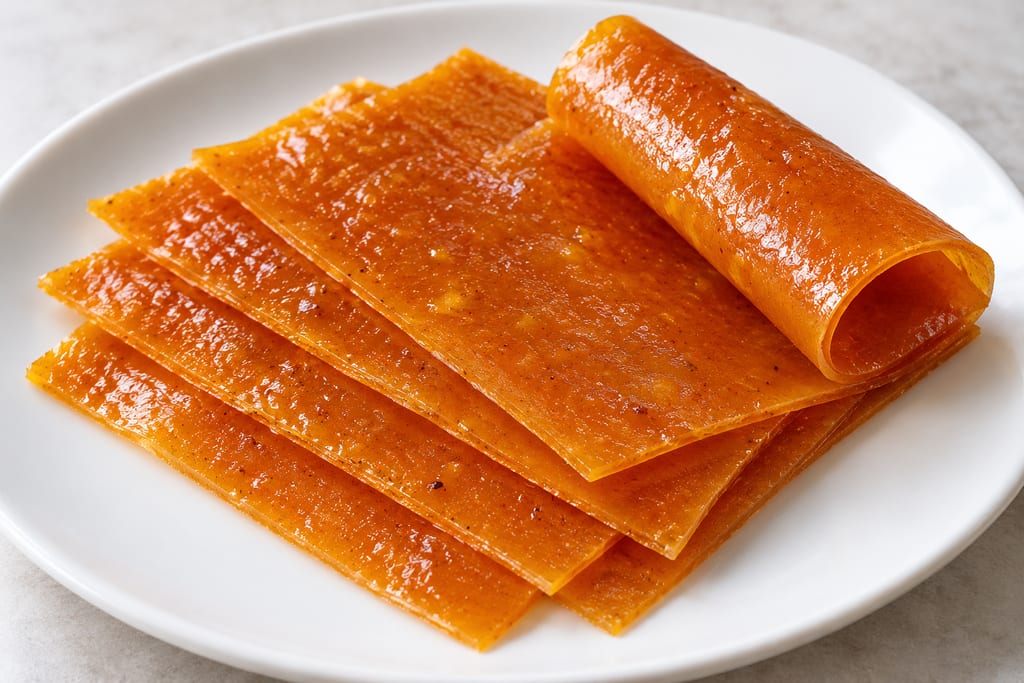
Aam papad is mango pulp spread thin and dried into a flexible or firm sheet, then cut, folded, rolled or layered for eating. The Bengali name আমসত্ত্ব, commonly transliterated aamshotto or amsotto, is more than a spelling variant: a Samsad Bengali–English dictionary defines it as a thin cake of sweet ripe mango juice dried in the sun, while Bangladesh’s Accessible Dictionary describes dried mango pulp preserved in cake form. These definitions point to the product’s material form and preservation method, rather than a single fixed formula.
The name aam papad is widely used in Indian English and commercial descriptions, while aamshotto is a Bengali form. Aam papad can be sold as a simple sweet sheet, a layered cake, a roll or a cut piece. The shared principle is concentrated ripe-mango pulp dried into a chewable product; color, sweetness, firmness and seasoning vary with cultivar, ripeness, pulp preparation, added ingredients, layer thickness and drying conditions. A label alone does not tell you whether a product contains only mango or also sugar, spices, acid or preservatives.
Mango is strongly seasonal across much of India, and the Uttar Pradesh State Biodiversity Board’s account connects its summer season with markets, home meals and orchard memories. Preserving part of a ripe-fruit harvest as a dried sheet turns a short season into a product that can be eaten later, but this seasonal context is not a date for the invention of aam papad. The sources consulted here do not establish when the preparation began, who first made it, or a single place of origin.
The dictionary entries establish Bengali naming and a familiar sun-dried form, not an ancient chronology. Contemporary trade and household recipes show the product in many parts of South Asia, while factory profiles describe small-scale production as well. It is more accurate to say that aam papad belongs to a broad mango-preservation practice with documented regional names and current forms than to attach an unsupported origin story or century to it.
Fresh mango pulp contains abundant water. Spreading it into a thin layer and removing water concentrates its soluble fruit solids and turns the puree into a sheet that can be lifted, stacked or cut. This is a physical preservation operation, not fermentation: no culture is added and no fermentative stage is specified in the mango-leather experiment or the technical descriptions. The resulting texture depends on the fruit, solids content, thickness, drying rate and final residual moisture; these are process variables, not interchangeable guarantees.
Azeredo and colleagues studied mango leather made without sugar or preservatives and compared drying conditions. Their selected experimental condition used a pulp loading of 0.5 grams per square centimetre and 80°C for 120 minutes. The resulting sample had 17.2% moisture and water activity of 0.62, with pH 3.8. Those are measured results for that fruit, equipment and experiment; they are not a universal target or proof that a home-made sheet is shelf stable. The paper also reports that panelists found its texture harder than ideal, showing that a technically successful dry sheet can still be tougher than a preferred eating texture.
This page records one reproducible research condition rather than claiming a universal household formula. The study used ripe Tommy Atkins mangoes, prepared puree, and spread it at a controlled loading before drying. No whole-fruit weight is stated, so this entry records the research method’s area-based loading instead of inventing a batch-size formula. The ingredient line therefore identifies mango pulp and preserves the study’s area-based loading in a note.
Use a controlled drying cabinet or equivalent laboratory-grade dryer capable of holding the stated condition; an ordinary oven’s dial, fan and tray geometry may not reproduce it. The article’s chosen condition is 80°C with 0.5 g of puree per cm² for 120 minutes. A flat layer with that mass loading is central to interpreting the result: a much deeper pool, a thinner smear or another cultivar changes the drying behavior. The paper’s condition is not a validated conversion for every domestic dehydrator, tray liner or mango puree.
Wash ripe mangoes, remove the peel and stone, and puree the flesh until smooth; the study’s fruit was prepared as a puree and passed through a fine sieve. Spread a weighed layer on a flat tray at 0.5 g/cm², keeping the layer even. Dry in controlled equipment set to 80°C for 120 minutes, the selected condition in the paper. These steps describe the experimental preparation and its stated conditions, not an all-purpose food-safety schedule. The research article reports characteristics of its finished leather, but does not validate every fruit lot, appliance or home storage practice.
Cool the sheet before handling so that its texture can be assessed without confusing warm softness with the cooled result. In the study, samples were placed in polypropylene buckets and held at 25°C for a six-month storage investigation; the researchers reported stability under those specific test conditions. Do not read that result as a home shelf-life promise: the study’s measured moisture, water activity, pH, packaging, sample preparation and microbial checks belong together. If you cannot match the controlled process and packaging, refrigerate promptly and use a conservative short interval rather than assuming room-temperature stability.
Commercial and household formulations differ. FAO’s technical fruit-bar chapter describes formulations using added sugar and acid, brief heating and controlled drying; it also includes a metabisulfite option. Its appendix gives a different process profile. KVIC’s project profile likewise presents pulp cooked with sugar or jaggery and layers dried in shade, sunlight or an electric dryer. These are useful evidence that mango bars are made in more than one way, but they do not supply ingredients for the unsweetened Azeredo experiment.
A separate 2004 paper by Patel and Patel evaluates a formulation containing sugar, citric acid and potassium metabisulfite, with comparisons of drying and packing. That is another study, not a reason to add those ingredients to the trial above. Mixing the sugar and preservative proportions from one source with the time and temperature from another would create an untested method. Metabisulfite is a food additive with labeling and sensitivity implications; the commercial process should be followed only under its relevant technical and regulatory controls.
Sun drying is the familiar form named by the Bengali dictionary, but outdoor drying is exposed to local weather and the cleanliness of the drying surface. A sunny, dry spell and a protected, clean surface are not equivalent to a measured drying endpoint. Humidity, cloud, night dew, dust, insects and animals can alter both the rate and the cleanliness of the product. A sheet that feels dry at its edge may still contain wetter areas if it was spread unevenly.
Technical fruit processing replaces some weather uncertainty with measured heat, airflow, loading and packaging. FAO discusses controlled drying for fruit bars, while the KVIC profile includes shade, sun and electric drying as equipment choices in small-scale production. Those alternatives are not interchangeable settings: industrial layer thickness, additives, heating steps and packaging all matter. The controlled 80°C research trial cited here is distinct from the traditional sun-dried form; it does not prove that sunlight can be replaced by a particular number of hours in any household appliance.
Ripe fruit sweetness is the starting point, but added sugar is not universal. The household account in Indian Cooking Manual describes sugar as optional and dependent on the mango’s sweetness. Commercial profiles allow sugar or jaggery, which changes the balance of soluble solids and the finished chew. Very ripe, fragrant mango and a more tart fruit will not produce the same flavor even when handled identically. The additive-free research sample should therefore not be described as a sweetened candy recipe.
Contemporary Indian descriptions distinguish sweet, sour-sweet and spiced forms. NDTV Food describes aam papad served with combinations such as black salt, roasted cumin, chili, pepper, lemon or chaat masala, and reports regional variations including Andhra-style mamidi tandra. These are serving and formulation variants, not additions required by the plain mango-leather experiment. Additions may change water content, acidity, flavor and drying time, so a seasoned version needs its own method rather than borrowing the trial’s endpoint.
A sheet can be left as a broad layer and cut into squares, folded into a stack or rolled for serving. Finished products in contemporary household and retail imagery show all of these forms, but photographs document presentation rather than a tested process. The plain leather may be chewy, firm or brittle depending on the measured drying outcome; the research panel’s preference for a softer texture is a useful reminder that longer drying is not automatically better.
Aam papad is eaten as a sweet or tart snack, and spiced pieces may accompany chaat or be eaten as a sharp, salty-sweet bite. Regional names, shape and seasoning can signal a familiar style, but they do not define one standardized recipe. If serving from a prepared batch, cut with a clean utensil and keep the remaining sheet protected from moisture and handling. The product’s exact storage life depends on its formulation, final water activity and packaging; the sources do not justify a single duration for all home-made aam papad.
The evidence places aam papad within Indian and Bengali-speaking food contexts, including Bengal and Bangladesh. The lexical sources confirm the Bengali word and its dried-mango meaning, and the KVIC project profile locates production within India’s small-enterprise food-processing context. That supports a regional association and documented contemporary preparation; it does not identify a birthplace. A dish can have a strong regional identity while still circulating widely and changing across households and markets.
Names travel with migration and commerce. Aam papad is easily recognized in many Indian markets, while aamshotto and amsotto identify Bengali usage. The product can be prepared at home, sold by sweets makers or processed as a fruit bar. The distinctions matter: commercial production may standardize acidity, solids, drying and packaging, whereas a household version follows fruit, weather and local preference. A single modern recipe should not be used to flatten those different traditions.
Drying reduces water, but appearance and touch alone do not establish a safe storage life. The selected experiment reports its sample’s moisture and water activity and tests the samples under defined packaging and storage conditions. Those laboratory observations do not certify a different batch. FAO’s commercial descriptions use additional controls, including formulation and packaging, which should remain tied to those specific processes.
For a home batch, use clean fruit, clean tools and a controlled appliance, avoid leaving wet puree exposed to contamination, and do not claim room-temperature shelf stability unless a validated process and suitable packaging support it. This recipe page intentionally provides no universal shelf-life number. The historical sun-dried form is described as preserved fruit, but the dictionary definition does not state a moisture endpoint or safety test. This distinction protects the reader from treating tradition, a laboratory trial and a commercial process as if they were one validated method.
Bengali dictionary entries define aamshotto as dried ripe mango juice or pulp, but the consulted sources do not date the preparation or establish one origin.
Scaling: source batch only
Moisture and water activity depend on fruit, layer loading, equipment and packaging; the trial’s six-month observation applies only to its tested samples.
Hazard sourceUse clean ripe fruit and controlled drying equipment; do not infer room-temperature shelf life for a home batch.
Control sourceThe 80°C/120-minute condition and six-month storage observation are specific to one research study, not a validated home preservation schedule or general shelf-life guarantee.
Do not combine the sugar, acid or sulfite formulations from other mango-bar methods with this unsweetened experimental method.
Indian technical and enterprise sources document mango-bar preparation; this is not a claim that the product originated in India.
Bengali dictionary definitions document the name and dried-mango form; this region-level association does not assert a birthplace.
The government dictionary documents the Bengali term and its meaning; it does not date the preparation or identify a locality.
Aam panna is a tart Indian summer drink made by cooking unripe green mango until its flesh softens, then blending the pulp with sweetener, salt and spices and diluting it with water.

Adrak murabba preserves young ginger in sugar syrup, a sweet South Asian preparation recorded in Indian cookery and food-processing sources.
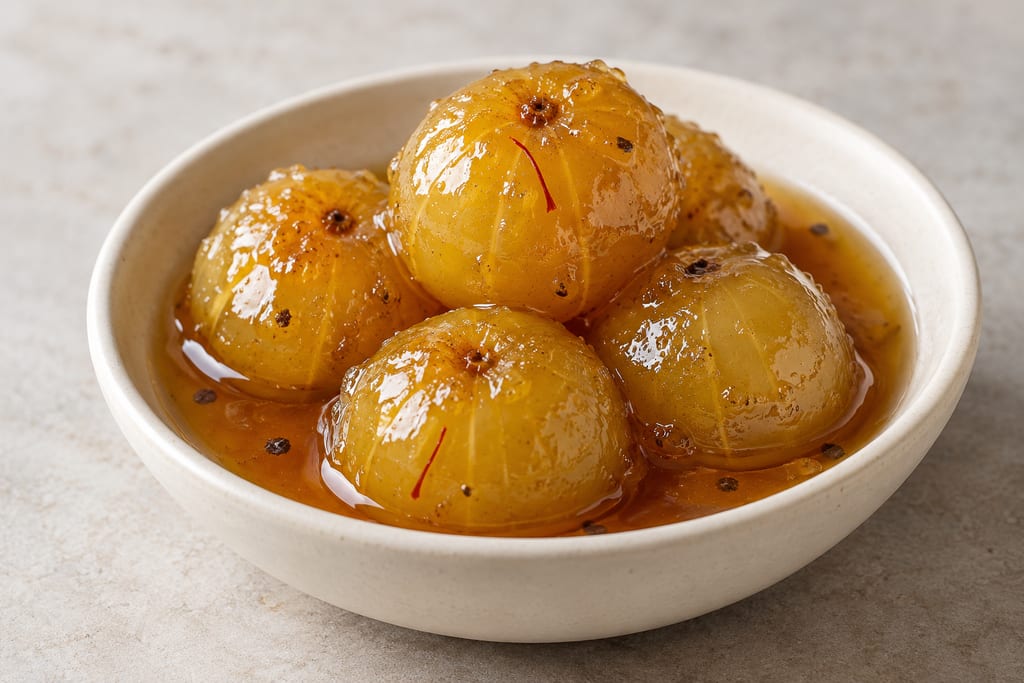
Amla murabba preserves whole Indian gooseberries in a heavy sugar syrup scented with cardamom and sharpened with pepper and black salt. This household method soaks the fruit before cooking.
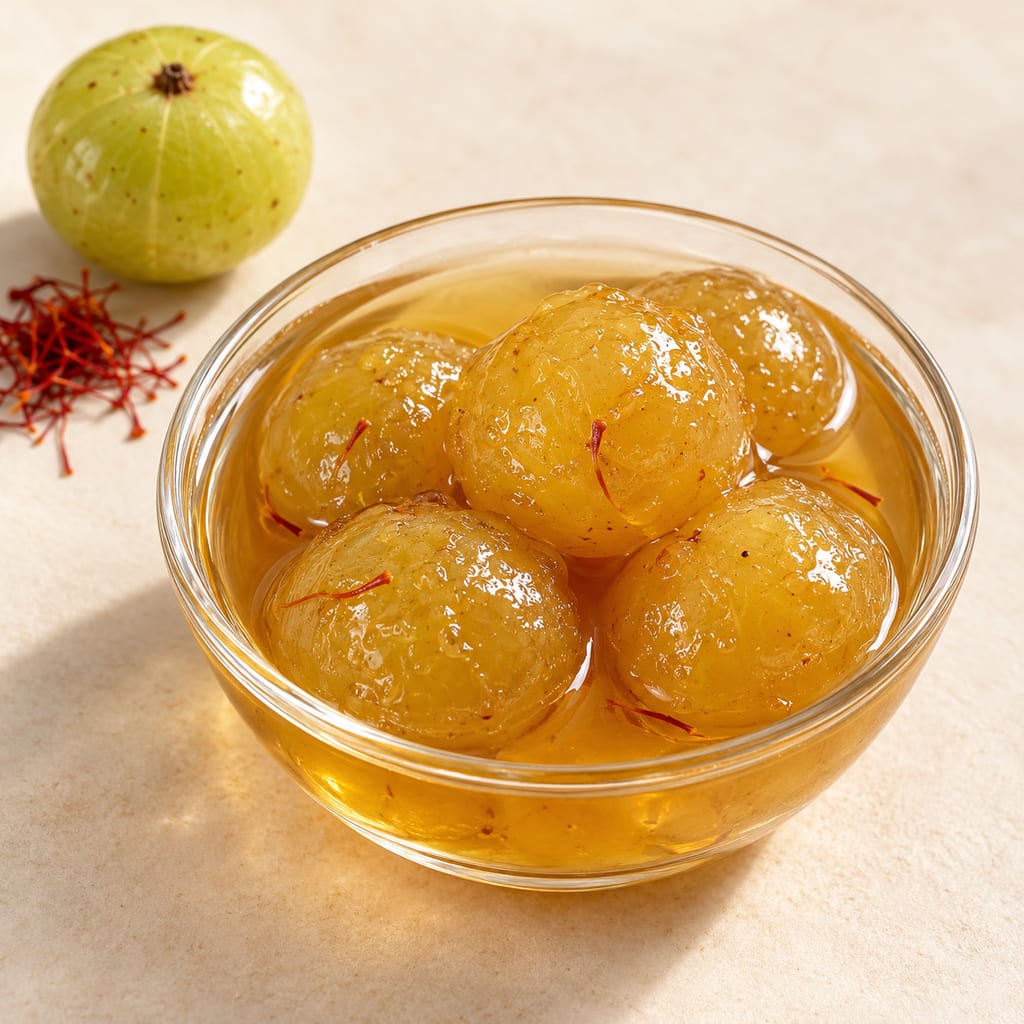
Whole amla simmer in sugar syrup with saffron, black cardamom and pepper in this chef's version of the Indian fruit preserve. The fruit is soaked overnight before cooking.
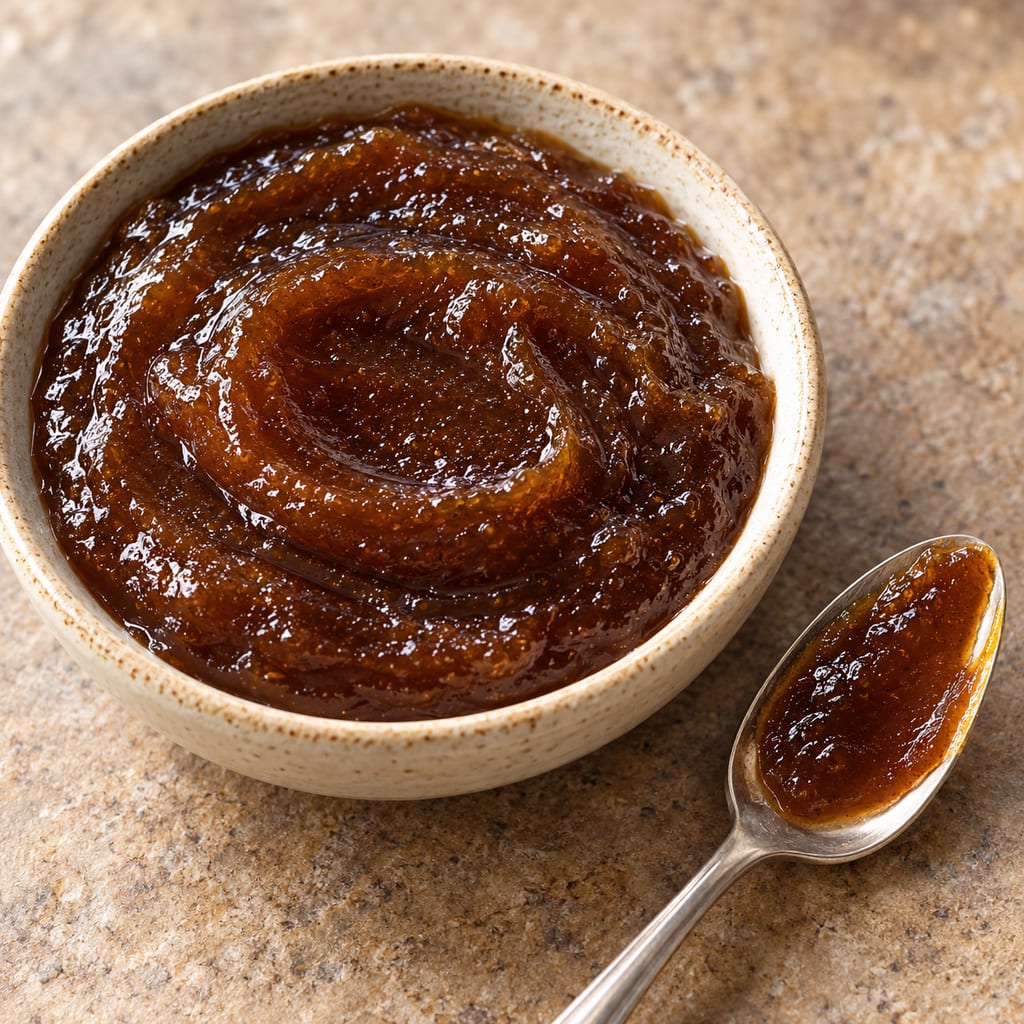
An experimental sweet mushroom preserve developed in Indian food-processing research, made by cooking mushroom pulp with sugar, added pectin and citric acid until concentrated into a thick, spreadable jam.
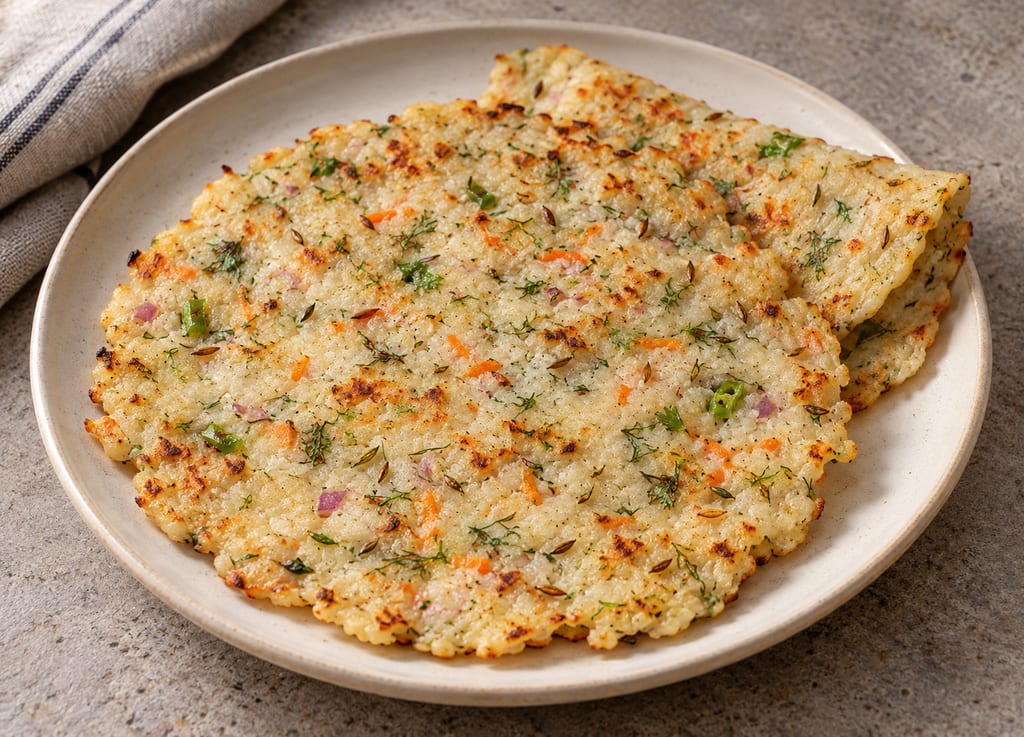
This Karnataka-style akki rotti mixes fine rice flour with vegetables, coconut, herbs and spices, then hand-pats and griddle-cooks the dough.
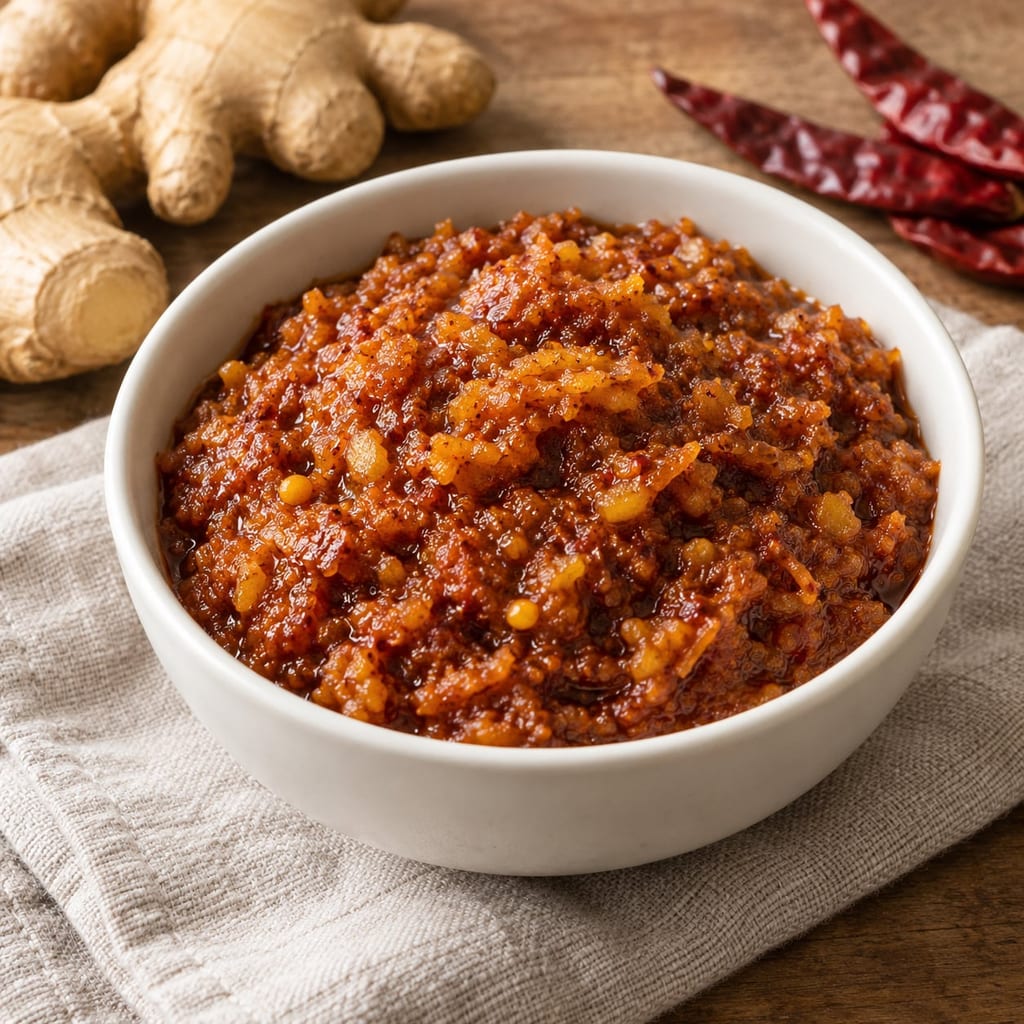
An Andhra ginger-and-urad chutney in which browned dal and briefly fried ginger and chillies are cooled, then ground with jaggery to a coarse paste.
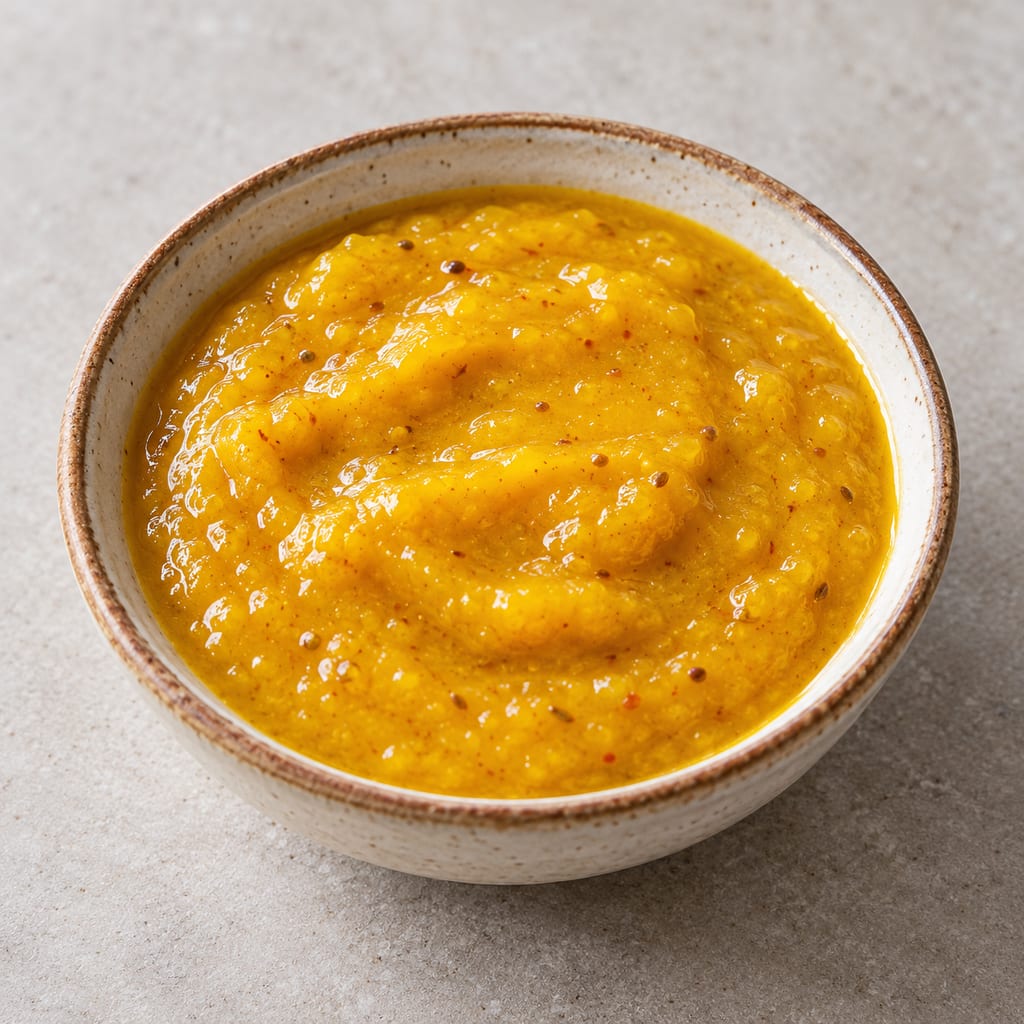
This cooked amba follows a Jewish Food Society recipe that simmers ripe mango with onion, garlic, mustard seed and warm spices into a tangy Middle Eastern condiment.
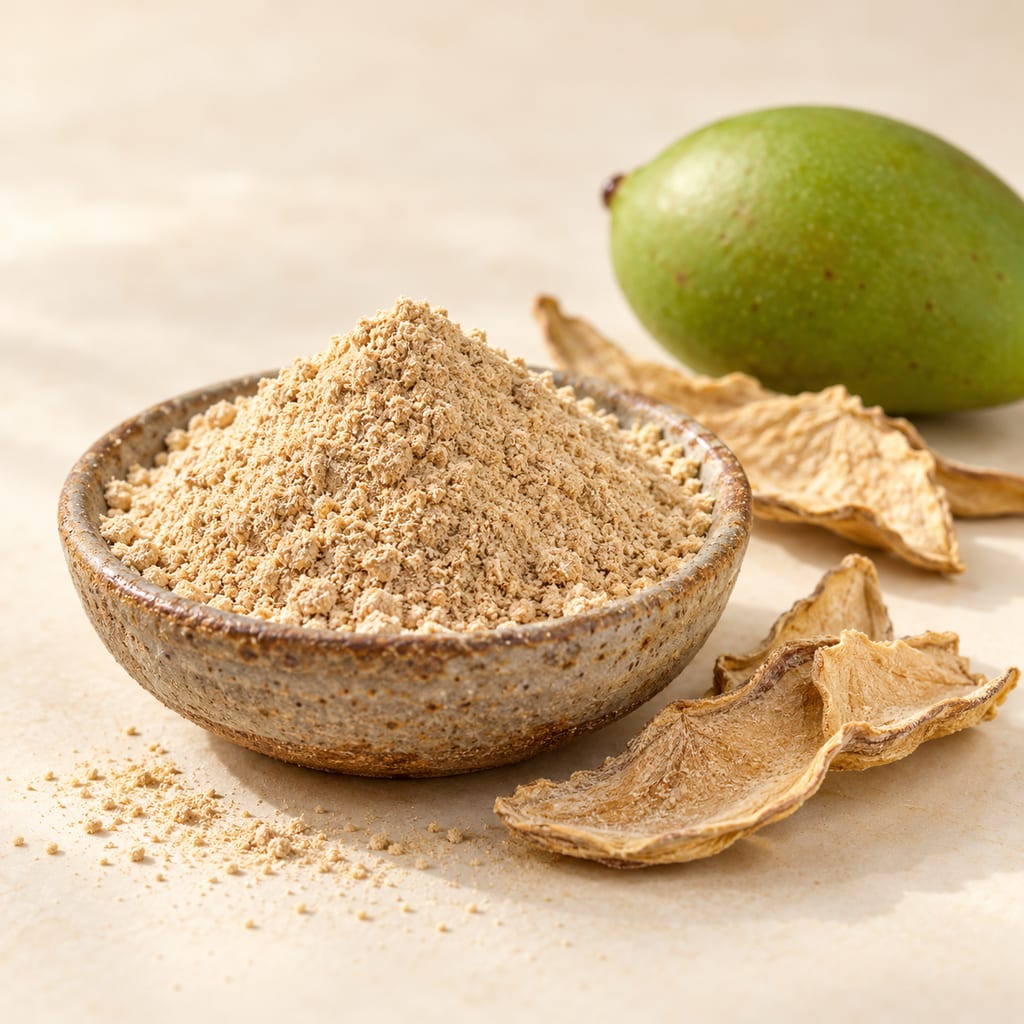
Thin slices of sour unripe mango are sun-dried over four days and ground into a tangy powder, following a five-fruit account published with an Indian mango study.
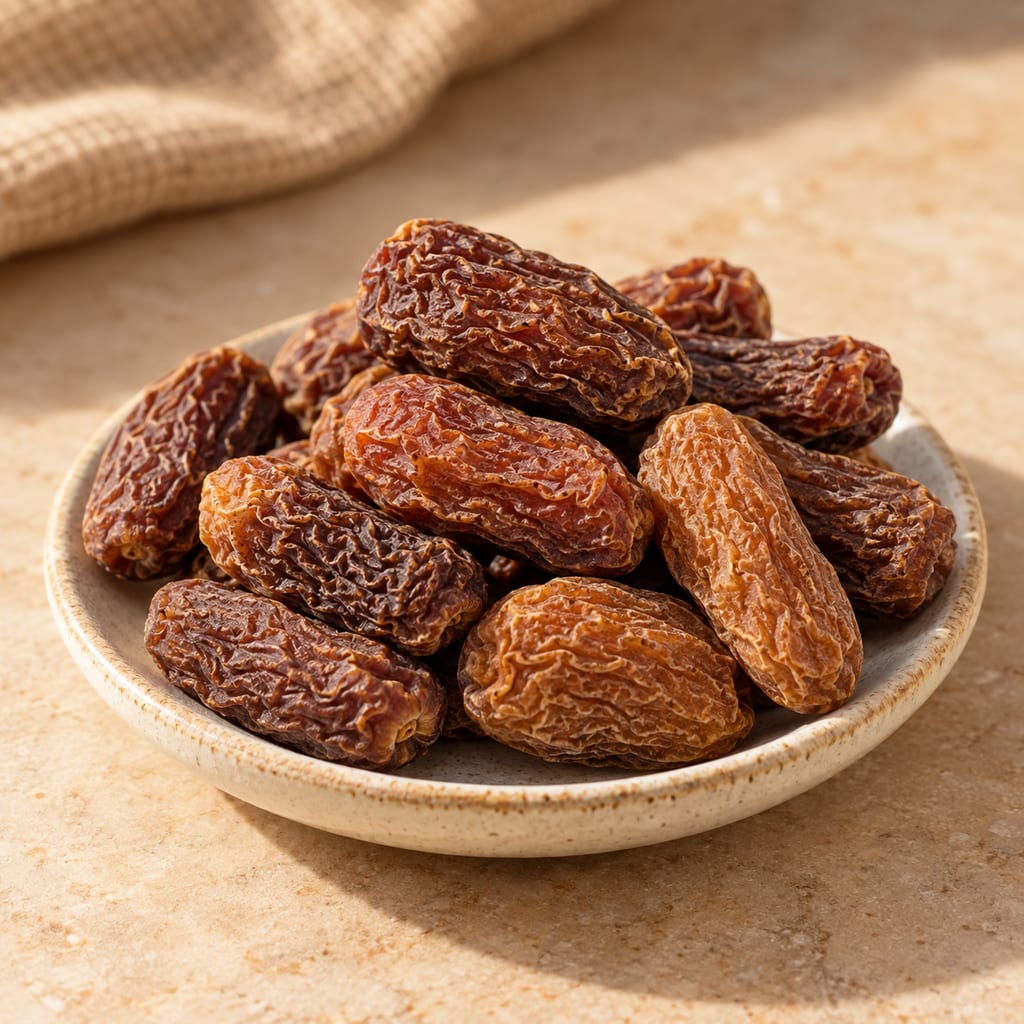
Chuhara is a processed dried-date product named in Pakistani date-production studies, distinct from other dried dates. Its household method is not established.
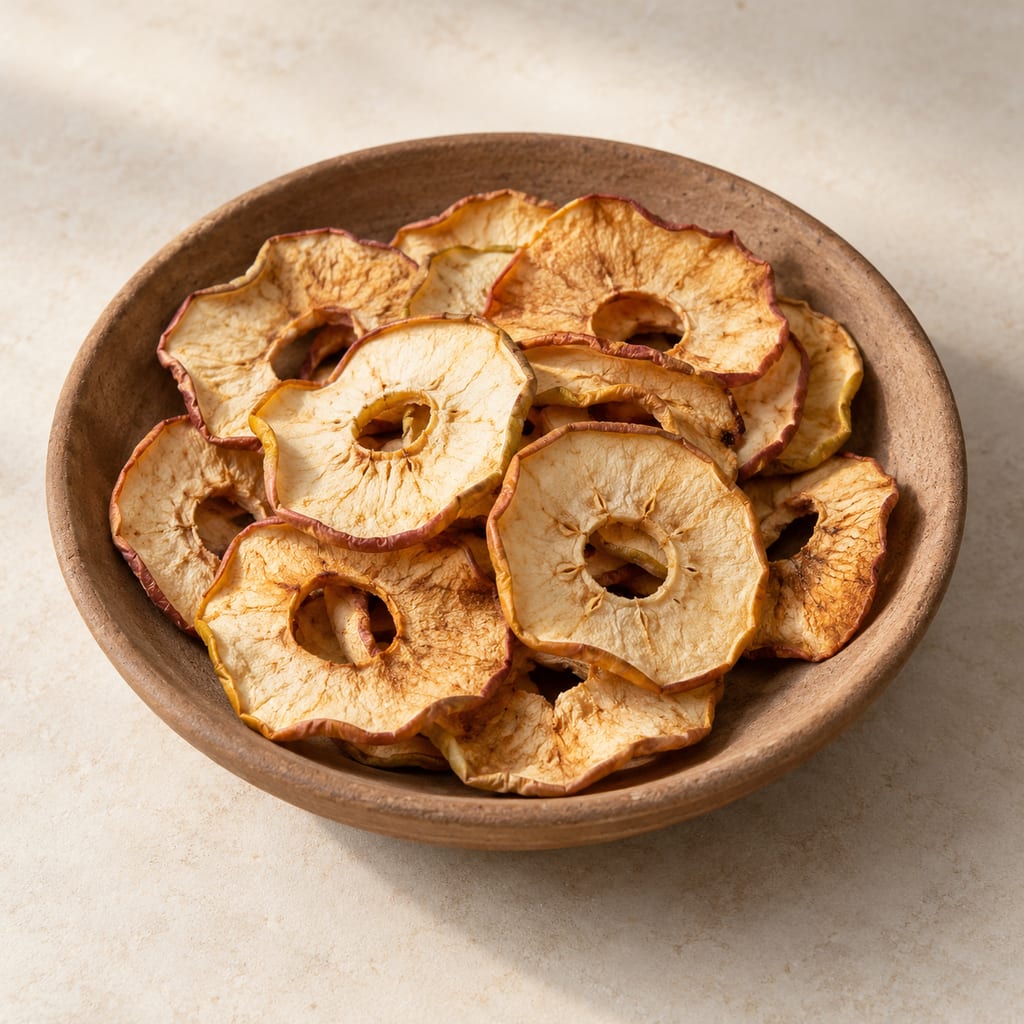
Apple slices dried until most of their water has gone, shrinking and concentrating into leathery or crisp rings, with the modern controls that a plausible old technique turns out to need.
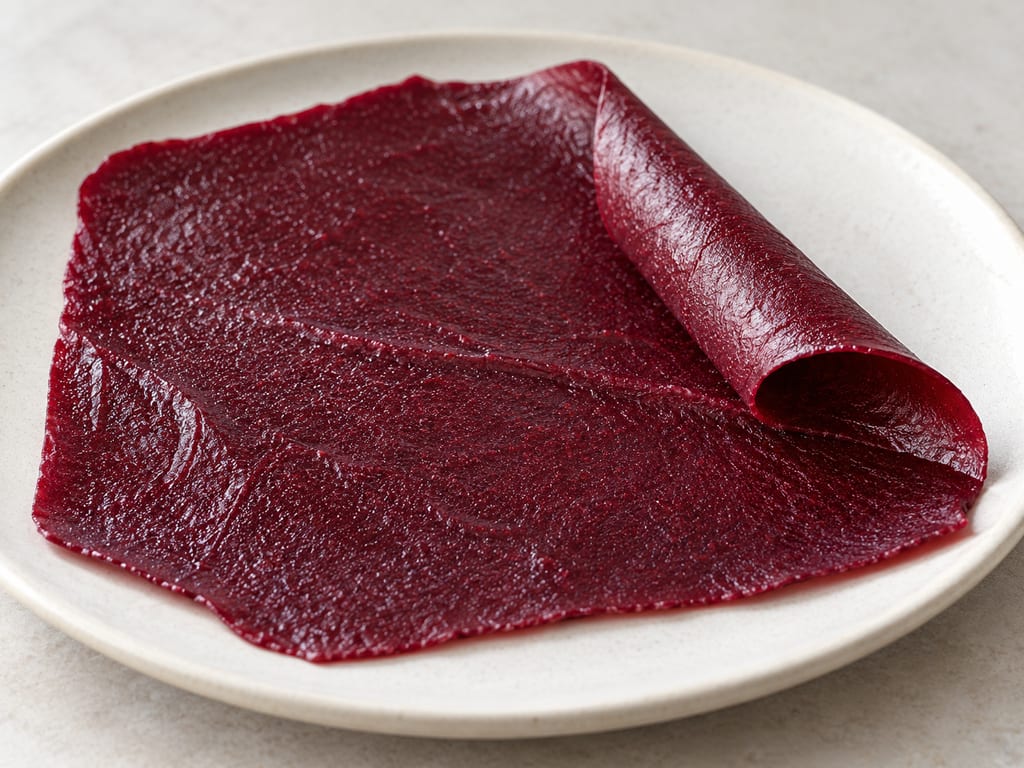
Fruit pulp spread into thin sheets or shaped into cakes and dried, a compact, portable way of keeping fruit in western and central Asia and among Indigenous North Americans.
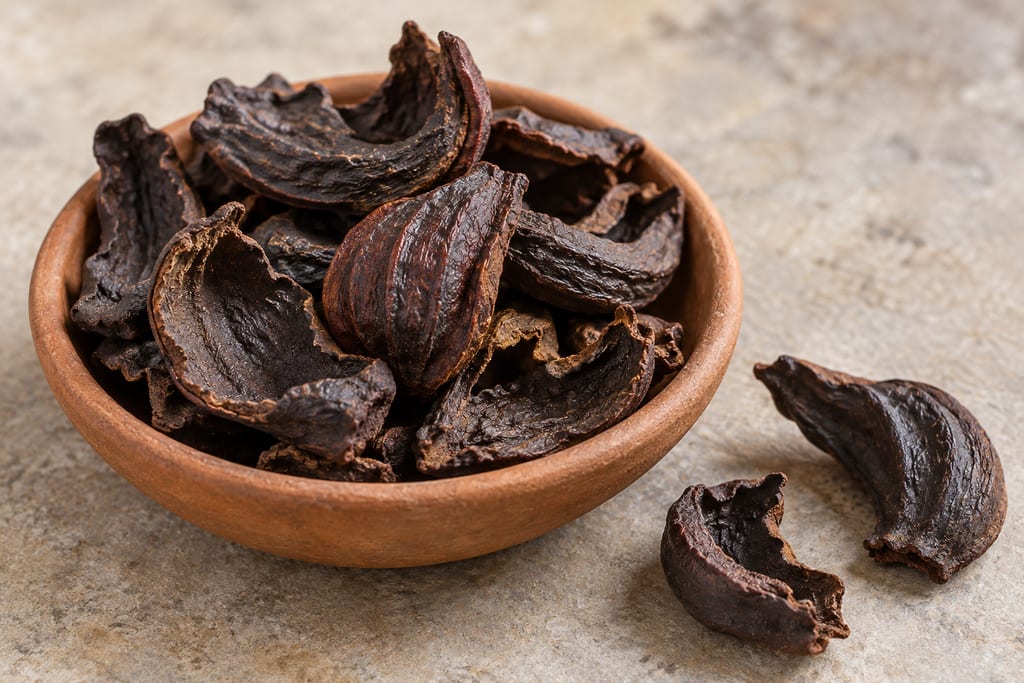
Goraka is the dried rind of Garcinia quaesita, a souring ingredient for Sri Lankan curries. Its drying is documented, but no complete household method is.
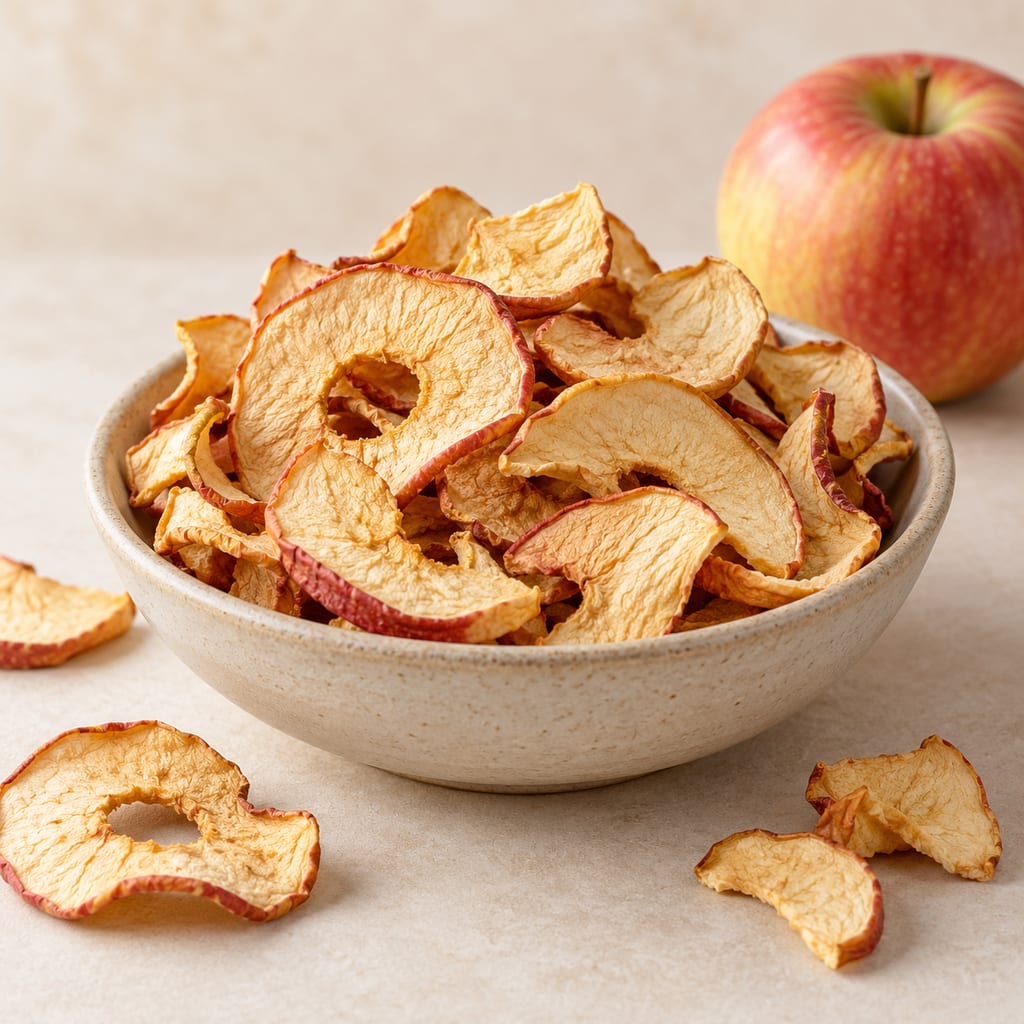
Křížaly are Czech dried apple or pear pieces. The name has regional meanings beyond apple slices, and drying practice varies by place and dryer.
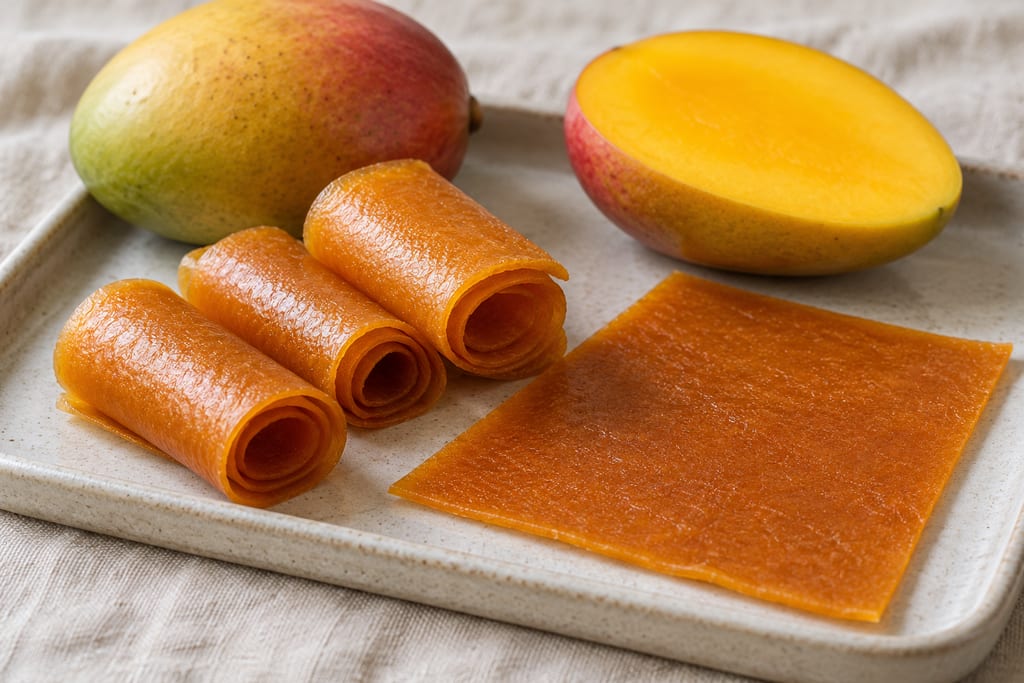
Sieved mango purée with honey and warm spices, spread a quarter inch thick and dried at 140 °F (60 °C) for about 10 hours into a flexible fruit sheet.
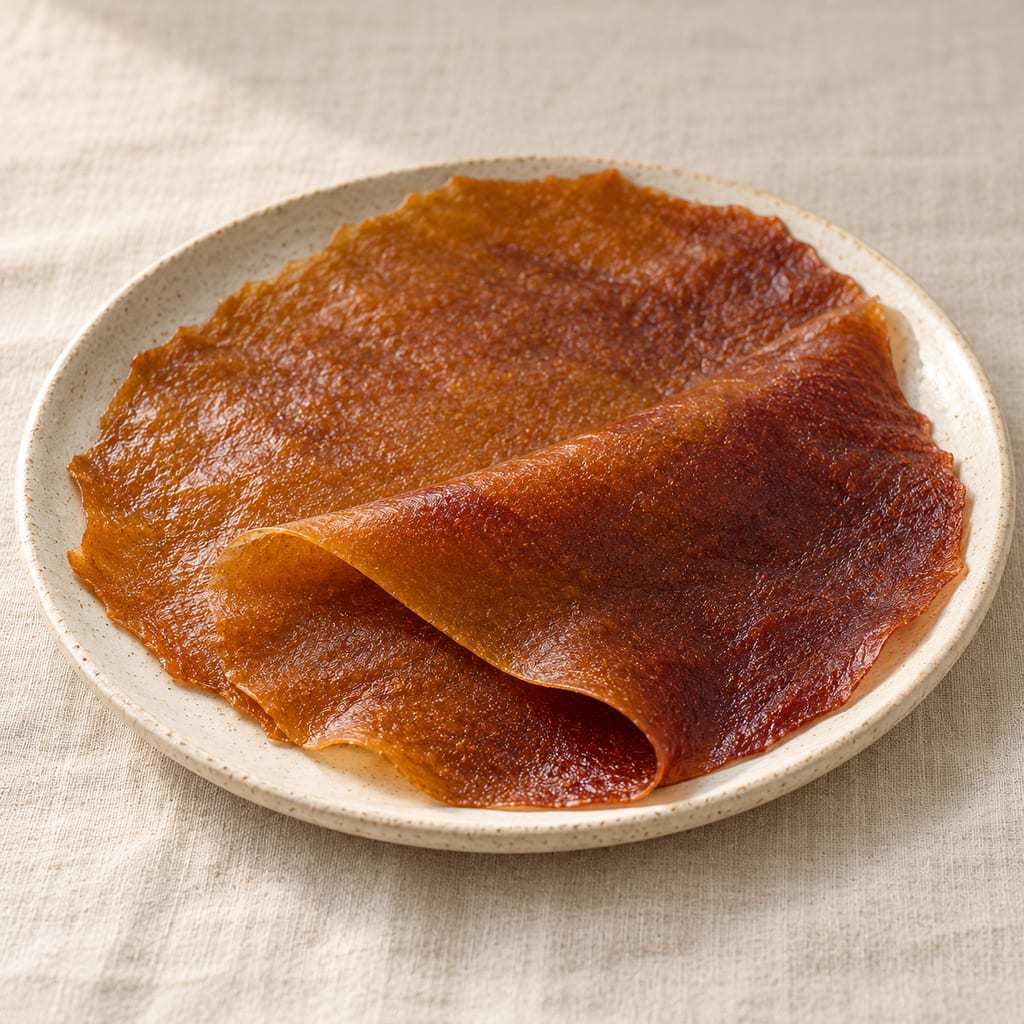
A reported Khizabavra household method cooks mulberry juice with wheat flour into a thin porridge before drying it on cloth; batch measures and a measured endpoint are absent.
No community contributions have been published for this entry yet.
Sign in to contribute. Published comments and photos are free to read.
Bangla-Tangla (Samsad dictionary transcription)History · Identity
Samsad Bengali–English Dictionary entry: আমসত্ত্বDefines aamshotto as a thin cake made from sweet ripe mango juice dried in the sun; gives no historical date.
Cited in: A name for mango made portable; A seasonal fruit and a preserved form; Sun, shade and controlled dryers; Geography without an origin myth; A careful note on storage and food safety
Government of BangladeshIdentity · Geography
Accessible Dictionary entry: আমসত্ত্বDefines the Bengali term as mango pulp dried and preserved in cake form.
Cited in: A name for mango made portable; A seasonal fruit and a preserved form; Geography without an origin myth
Food and Agriculture Organization of the United NationsMethod · Context
Fruit and vegetable processingTechnical reference on fruit processing and preservation; its mango-bar appendix describes a commercial formulation and drying approach.
Cited in: Geography without an origin myth
Food and Agriculture Organization of the United NationsMethod · Safety
Fruit-specific preservation technologies: mango fruit barSeparates commercial mango-bar formulations, acidification, heating and controlled drying from traditional home descriptions; includes sulfite as one optional commercial control.
Cited in: What drying changes; Why other recipes do not combine into this one; Sun, shade and controlled dryers; A careful note on storage and food safety
Food and Agriculture Organization of the United NationsMethod
Appendix I: fruit products and mango barDescribes ripe mango pulp as a fruit bar dried to a leather-like texture in a technical processing process.
Cited in: Why other recipes do not combine into this one; Sun, shade and controlled dryers
International Journal of Food Science & TechnologyMethod · Safety · Technique
Effect of drying and storage time on the physico-chemical properties of mango leathersA controlled study of unsweetened mango leather; the selected experimental condition was 80°C and 0.5 g/cm² for 120 minutes. The reported leather had 17.2% moisture, water activity 0.62 and pH 3.8; sensory panel found it harder than ideal. Six-month stability was reported only for study samples packed in polypropylene at 25°C.
Cited in: What drying changes; The documented experimental method; Structured method and interpretation; Texture, cutting and ways to eat it; A careful note on storage and food safety
Journal of Agricultural EngineeringMethod · Safety
Effect of Drying Temperature and Packing Material on Microbial Quality of Mango BarA separate mango-bar experiment compared two drying temperatures and packaging; the tested formula included sugar, citric acid and potassium metabisulfite, so it is not the same recipe as the additive-free study.
Cited in: Why other recipes do not combine into this one
Khadi and Village Industries CommissionMethod · Context
Project Profile on Mango Jelly/Aam PapadSmall-enterprise profile describes pulp preparation, sugar or jaggery formulations, layered spreading and drying in shade, sun or an electric dryer.
Cited in: A name for mango made portable; A seasonal fruit and a preserved form; Why other recipes do not combine into this one; Sun, shade and controlled dryers; Sweet, tart and spiced versions; Geography without an origin myth
NDTV FoodUses · Variation
Aam Papad: The Sweet and Spicy Relish We All LoveReports contemporary sweet, sour-sweet and spiced forms, regional variation and serving with chaat spices.
Cited in: Sweet, tart and spiced versions; Texture, cutting and ways to eat it
Indian Cooking ManualMethod · Variation
Aam Papad (Aam Pappadam/Amawat): Mango Fruit LeatherA household account describes ripe mango pulp dried in layers and treats added sugar as optional depending on fruit sweetness.
Cited in: Sweet, tart and spiced versions; Texture, cutting and ways to eat it
Uttar Pradesh State Biodiversity BoardGeography · Context
Biodiv News, April–June issue: mango in Indian seasonal lifePlaces mango within seasonal Indian summer foodways and orchard culture; it does not date aam papad or establish its origin.
Cited in: A seasonal fruit and a preserved form