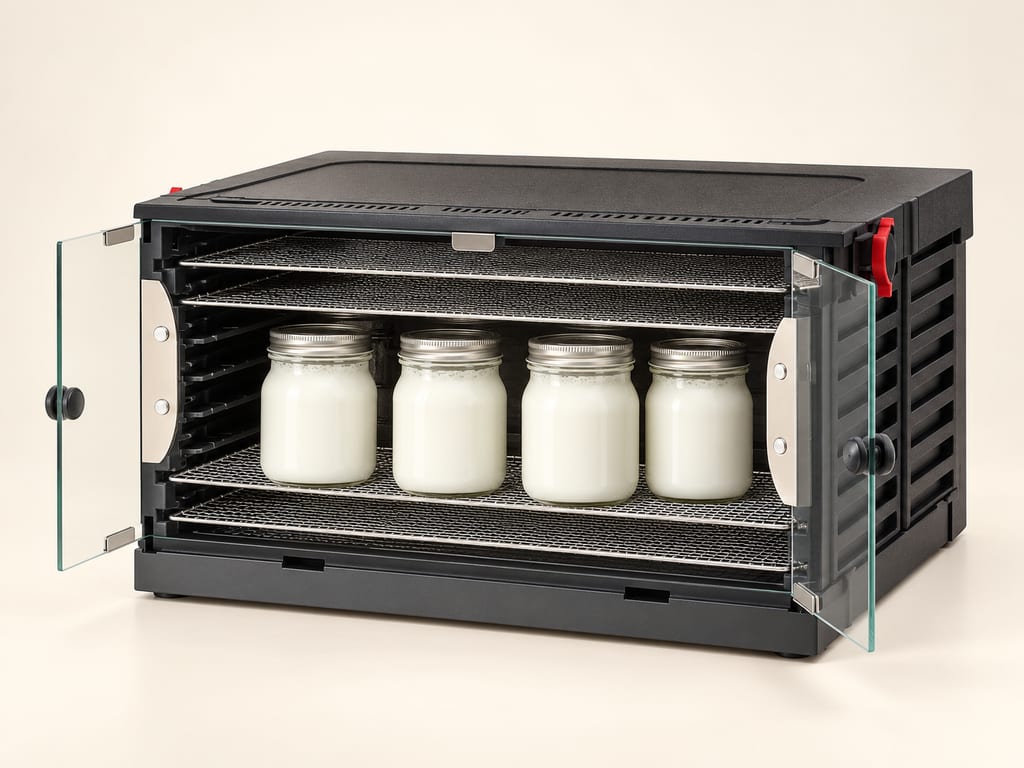
Brød & Taylor Sahara dehydrator
A folding electric food dehydrator with glass front doors, mesh shelves, filtered circulating air and two programmable time-temperature stages. Brød & Taylor also documents its use as a chamber for sealed yogurt jars.
 FermenteaWhere food goes to change
fruit roll · pestil-type fruit leather · Persian-style fruit leather
Fruit pulp spread into thin sheets or shaped into cakes and dried, a compact, portable way of keeping fruit in western and central Asia and among Indigenous North Americans.
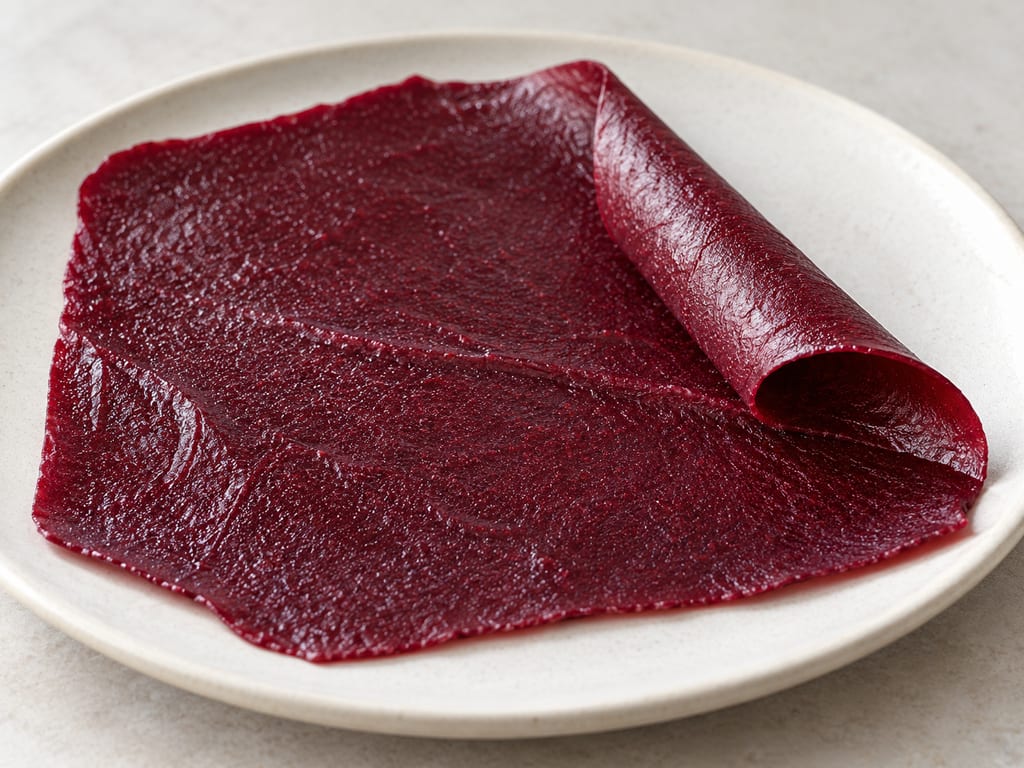
Fruit leather is fruit pulp dried into a thin sheet, or into a cake, so that a bulky seasonal crop becomes light and compact. The form is the point: a sheet packs and carries where fresh fruit would bruise and rot.
The same principle appears across regions. The catalogue places Persian-style sheets in western and central Asia and berry cakes among Indigenous peoples of North America.
Pulp can be spread flat or formed into cakes before drying. Sheets suit fruit pulped into a smooth purée; cakes suit fruit that is pressed or shaped by hand.
Either form is dried until it can be stored. The catalogue does not give drying times or temperatures for either.
The catalogue notes that these leathers preserve fruit without requiring a large addition of sugar. Keeping depends on how dry the finished sheet or cake becomes, and the sources do not give a shelf life.
A dried fruit sheet is a different product from a moist fruit paste, and storage should follow the dry form.
The catalogue gives no fruit list, pulp ratios, drying times or storage periods, and it does not name a single origin for the form. Home use needs a validated drying method, which this page does not supply.
Pulp dried into sheets or cakes makes fruit compact and portable. Persian-style leathers and northwestern American berry cakes show related ways of keeping fruit without adding much sugar.
Scaling: source batch only
Persian-style fruit leathers are the catalogue's example; no single locality is given.
Northwestern American berry cakes are the catalogue's example.
A folding electric food dehydrator with glass front doors, mesh shelves, filtered circulating air and two programmable time-temperature stages. Brød & Taylor also documents its use as a chamber for sealed yogurt jars.
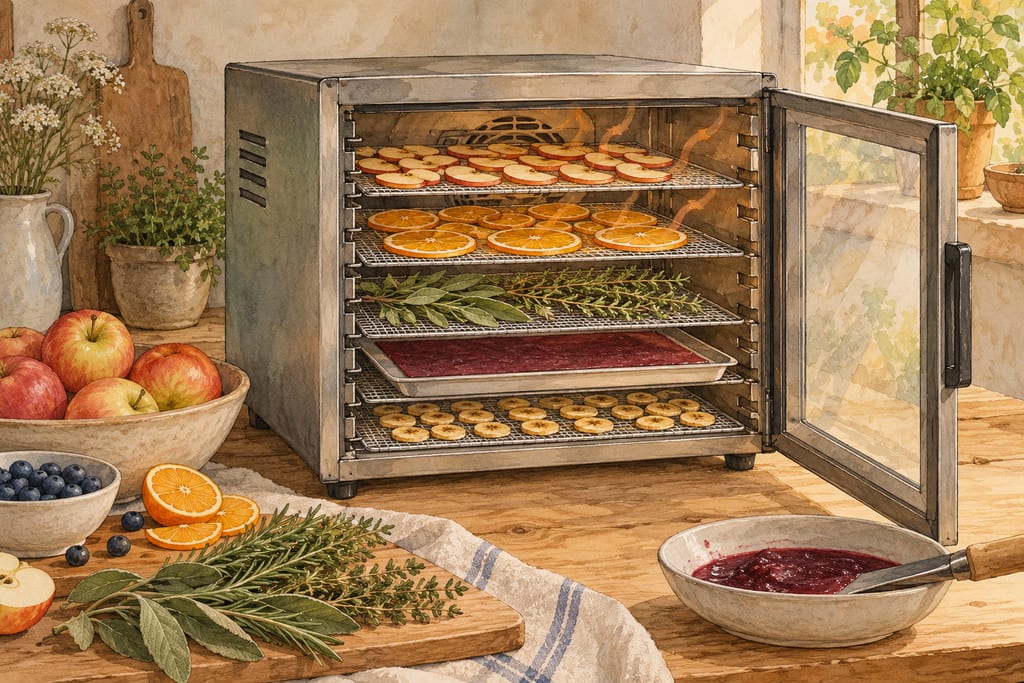
A dehydrator or drying box set up with mesh trays for slices and herbs and solid liners for purées, drying by warm moving air to a recipe's own endpoint.
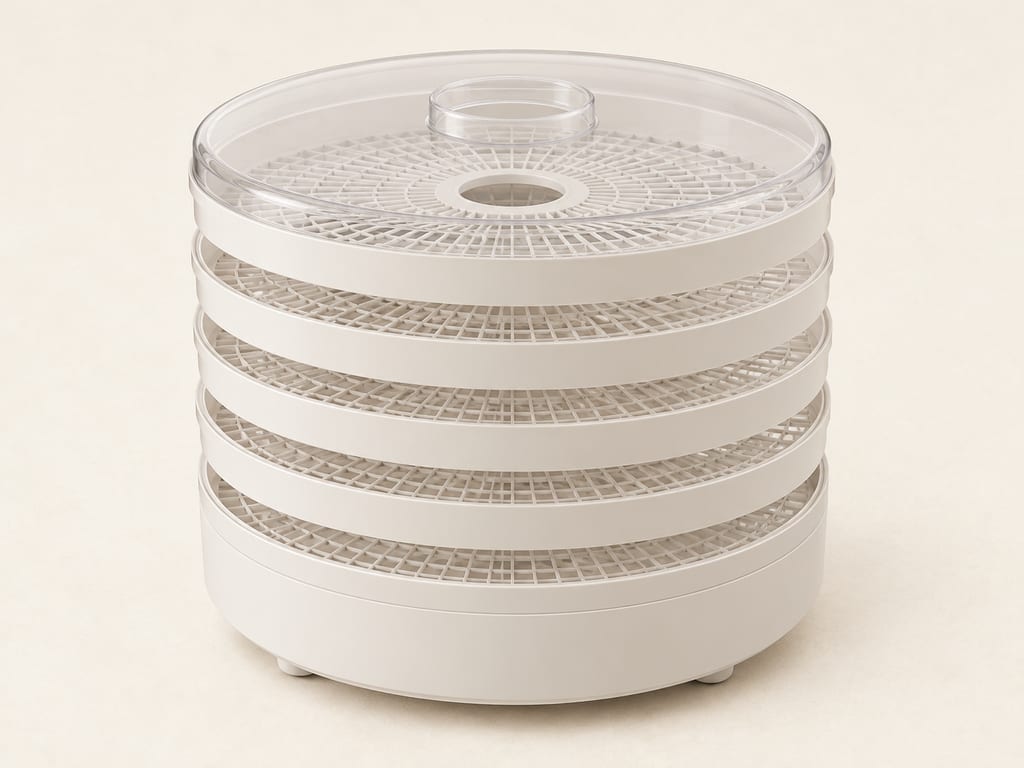
A countertop electric appliance circulates warmed air across food on open trays to remove moisture. Round stackable and rectangular cabinet designs use different airflow paths; materials, capacity and controls vary by model.
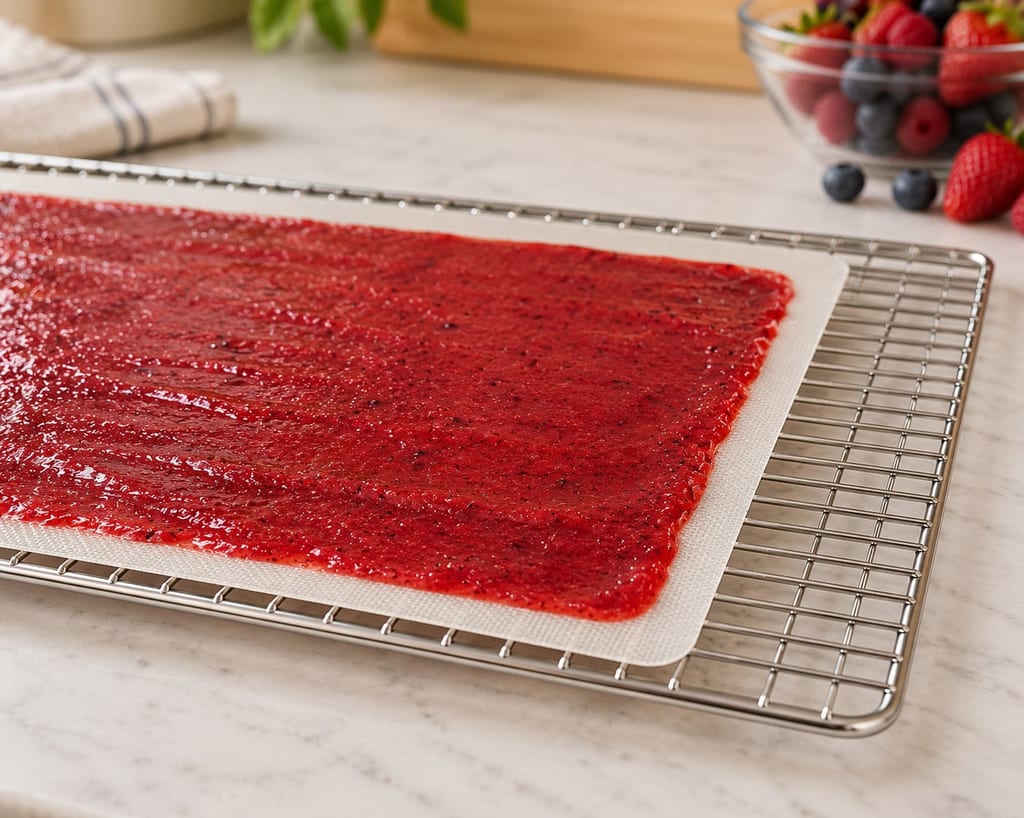
A removable food-contact sheet fitted to a dehydrator shelf holds purée and small sticky foods that would otherwise pass through an open tray. Materials and fit vary; a solid liner changes airflow at the covered surface.
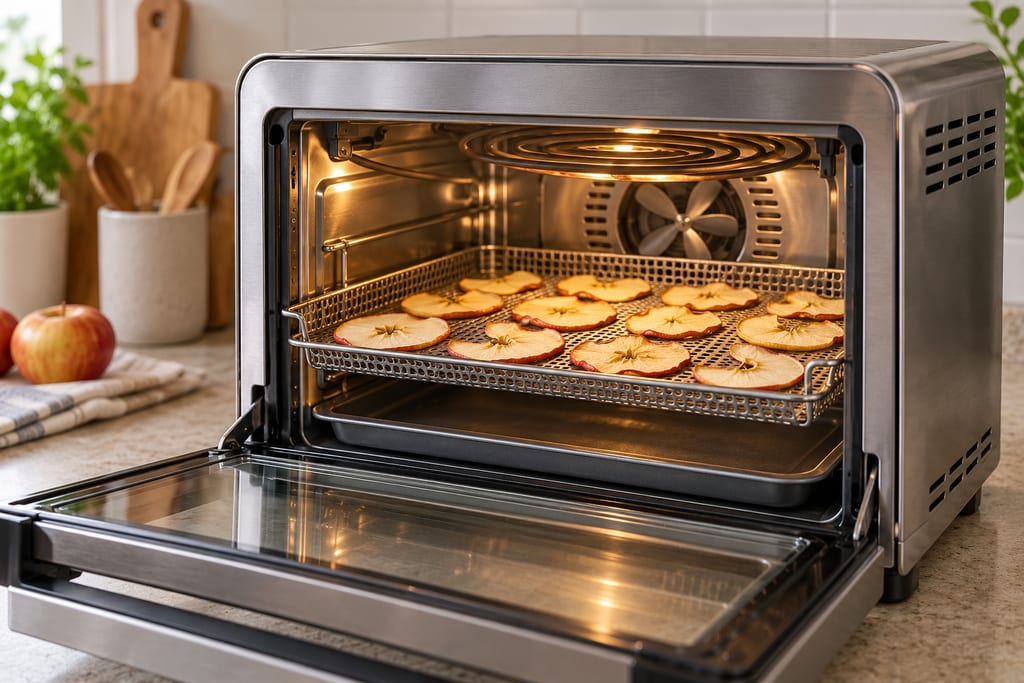
Some countertop ovens and air fryers combine cooking with a dedicated low-heat dehydration programme. The feature varies by model; an ordinary oven or air fryer without it is a different, less controlled adaptation.
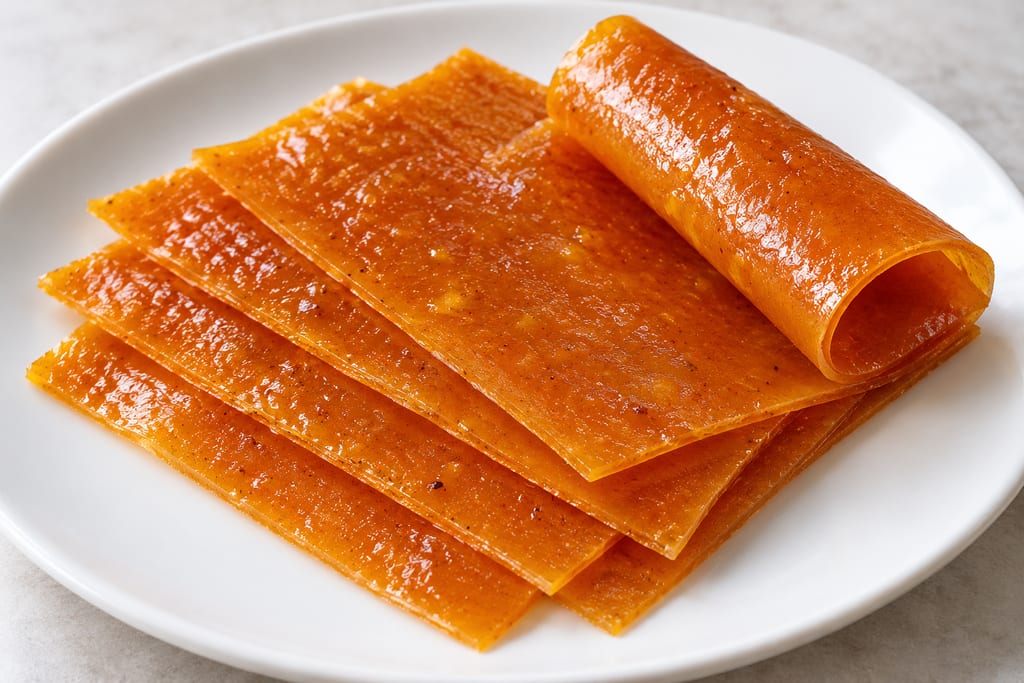
Ripe mango pulp spread thin and dried as a chewy fruit leather. This entry records one controlled unsweetened experiment and distinguishes it from Bengali sun-dried aamshotto and sweetened or spiced variants.
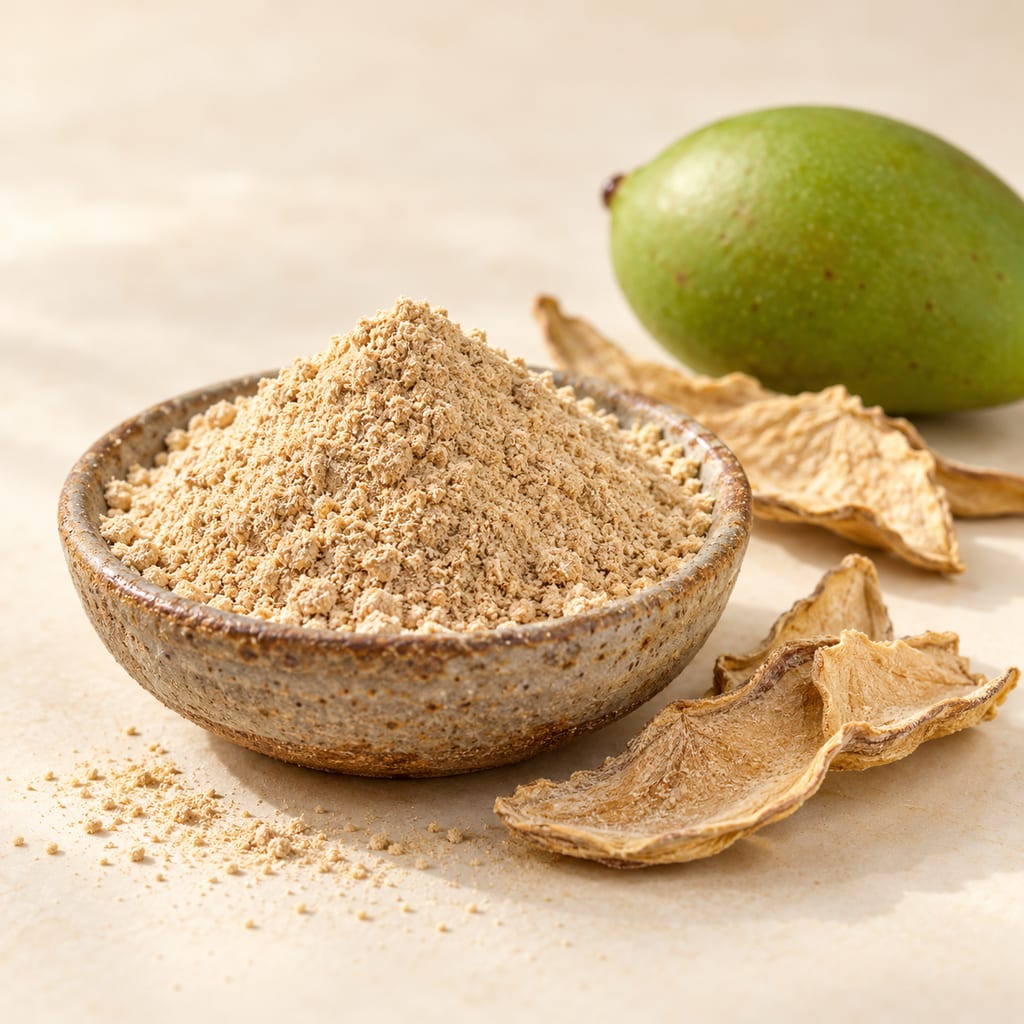
Thin slices of sour unripe mango are sun-dried over four days and ground into a tangy powder, following a five-fruit account published with an Indian mango study.
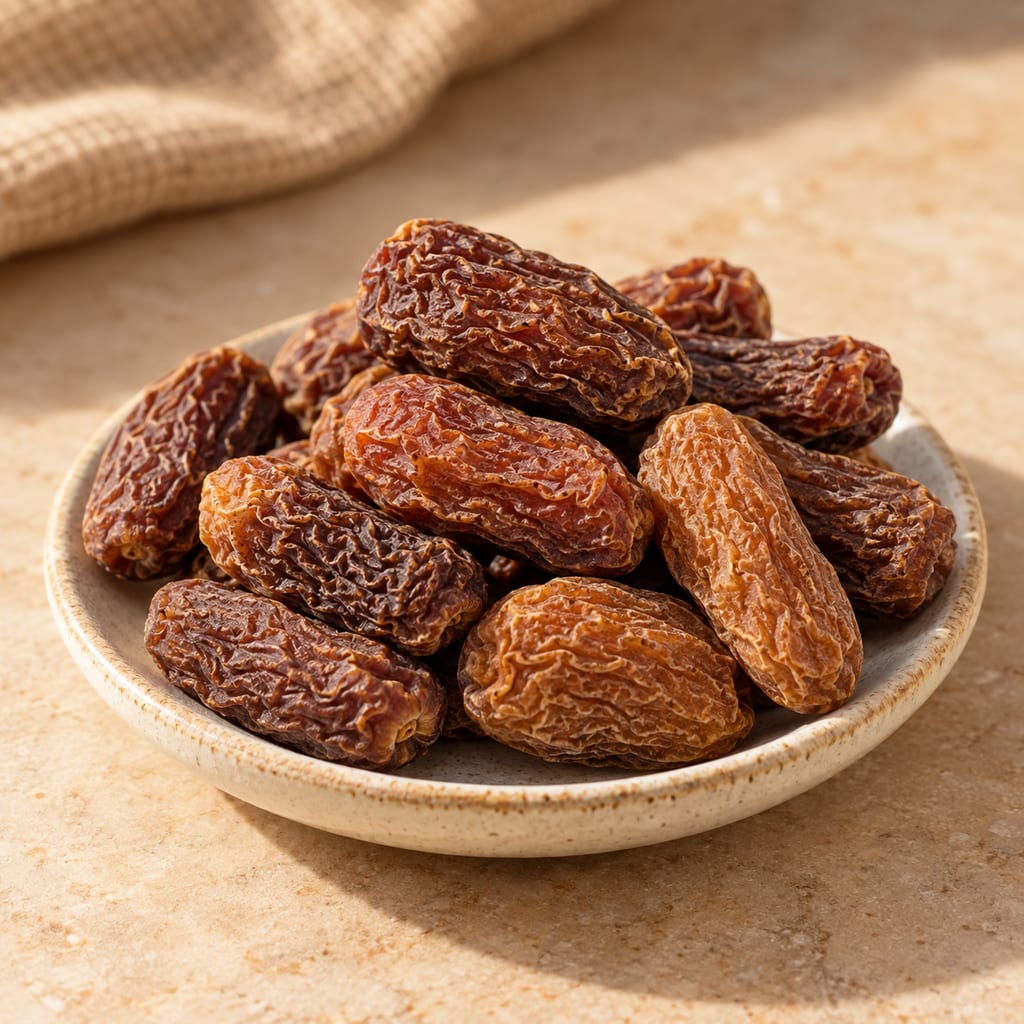
Chuhara is a processed dried-date product named in Pakistani date-production studies, distinct from other dried dates. Its household method is not established.
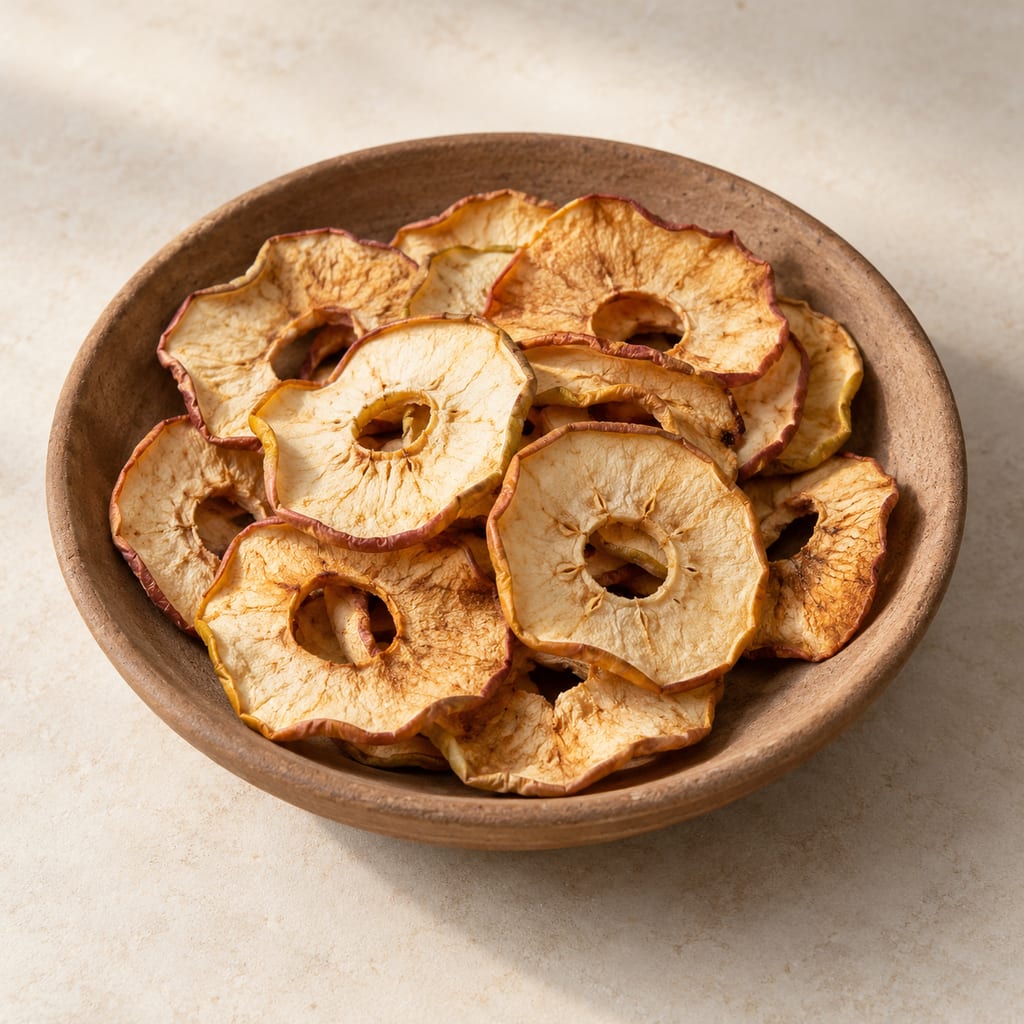
Apple slices dried until most of their water has gone, shrinking and concentrating into leathery or crisp rings, with the modern controls that a plausible old technique turns out to need.
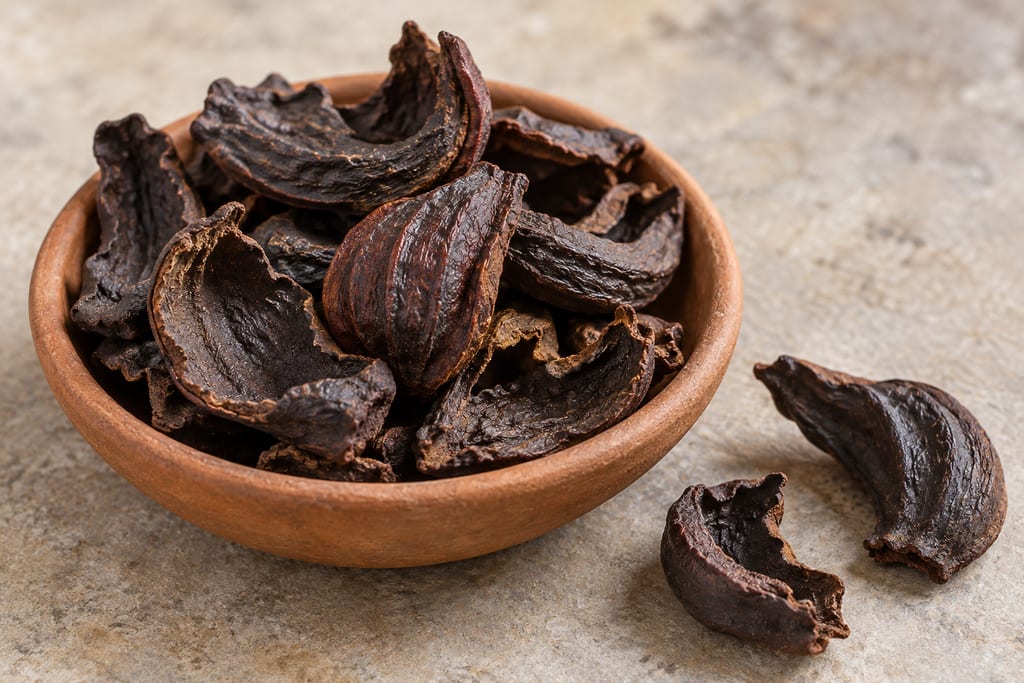
Goraka is the dried rind of Garcinia quaesita, a souring ingredient for Sri Lankan curries. Its drying is documented, but no complete household method is.
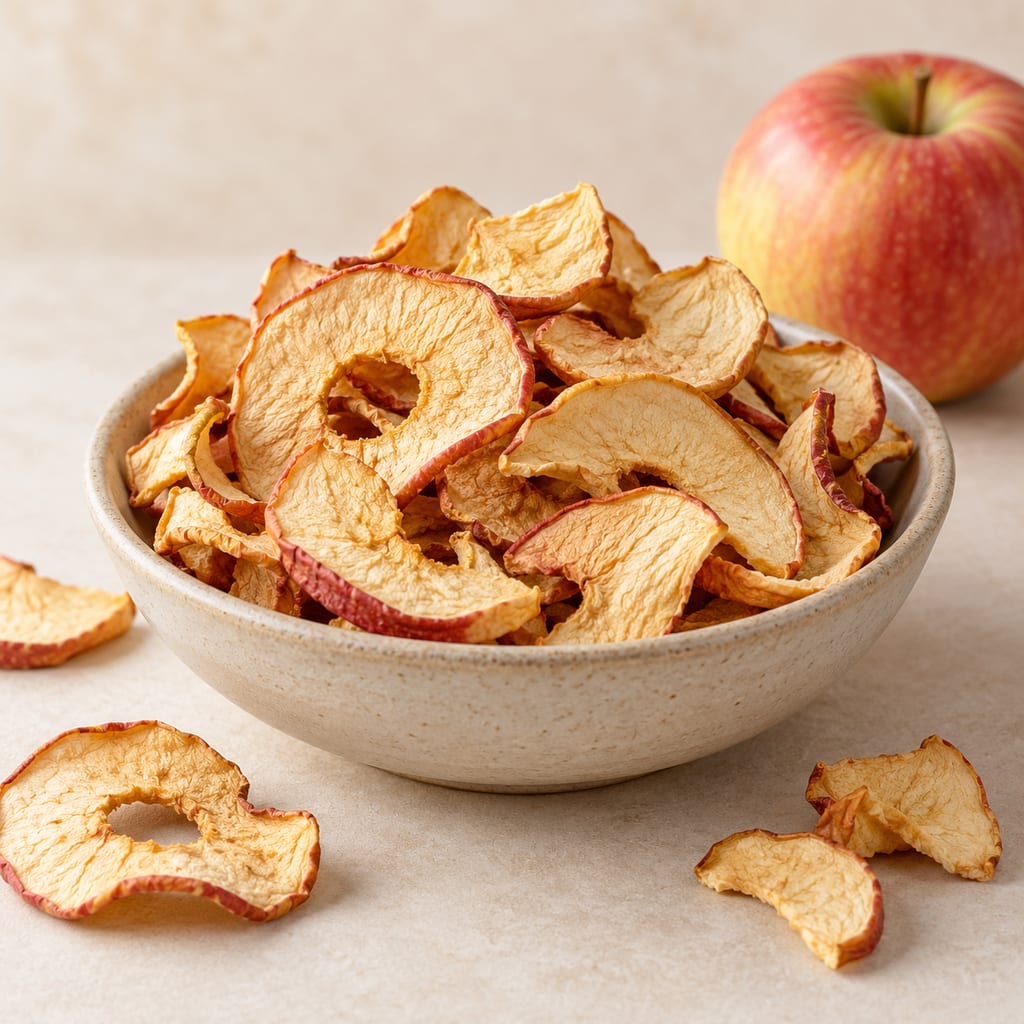
Křížaly are Czech dried apple or pear pieces. The name has regional meanings beyond apple slices, and drying practice varies by place and dryer.
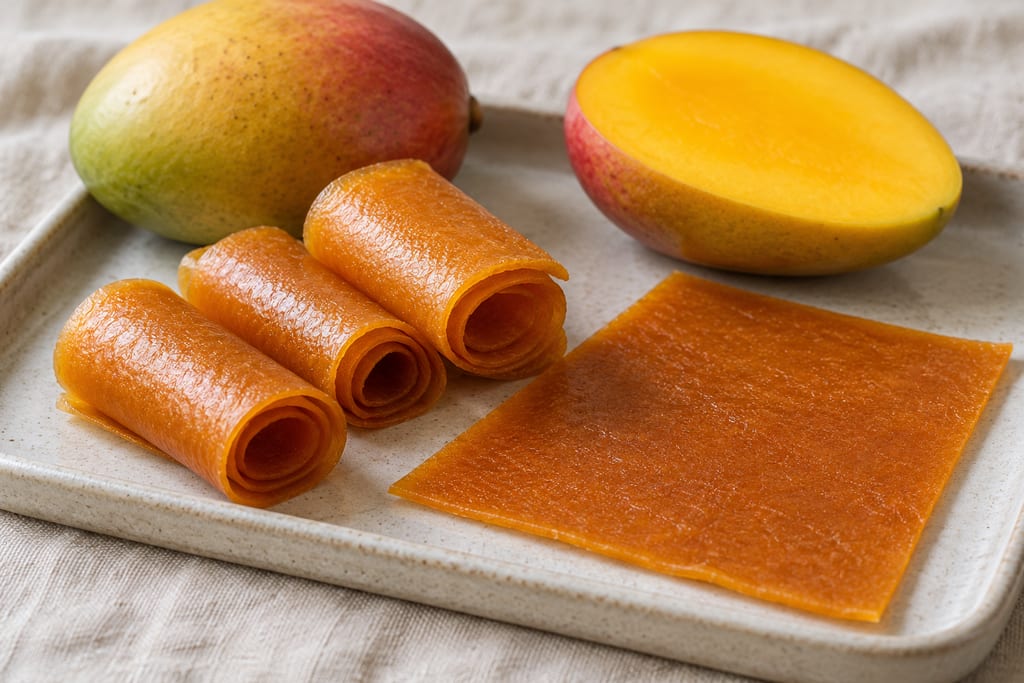
Sieved mango purée with honey and warm spices, spread a quarter inch thick and dried at 140 °F (60 °C) for about 10 hours into a flexible fruit sheet.
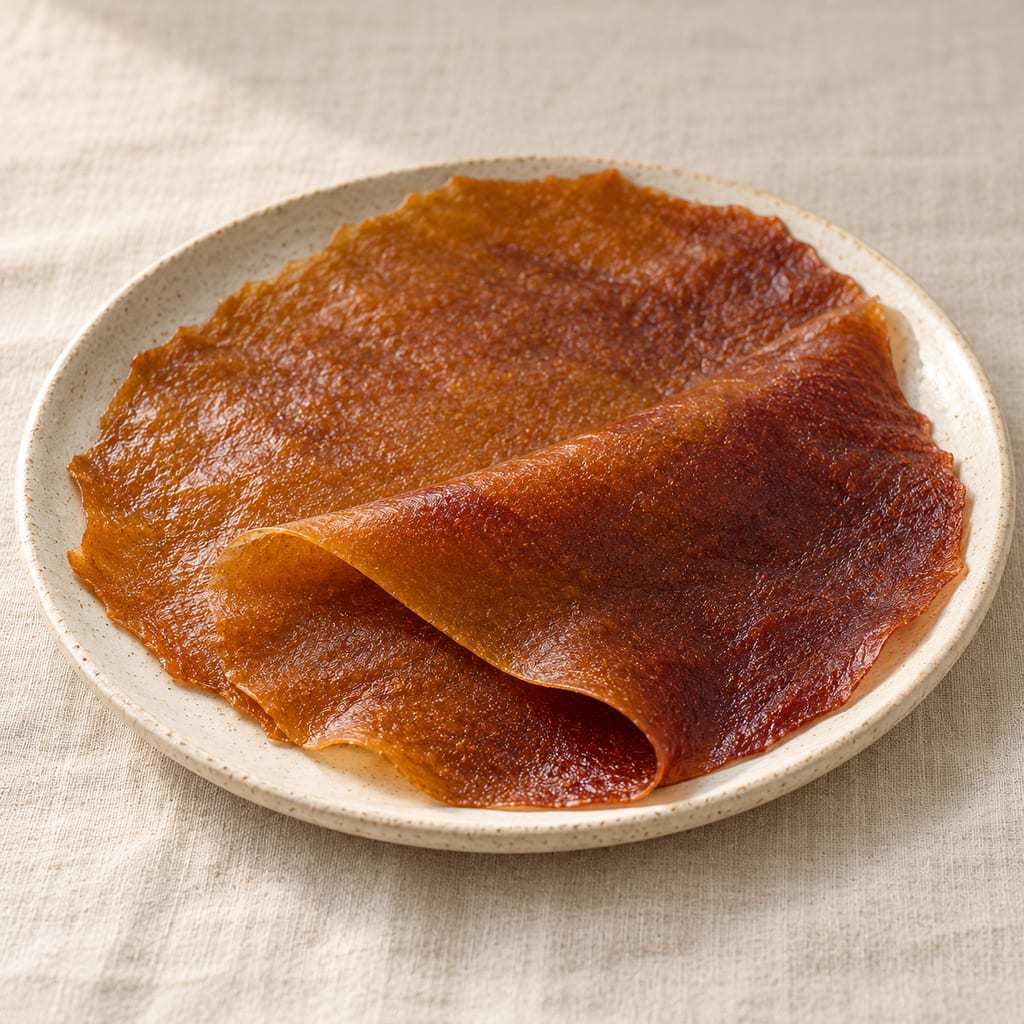
A reported Khizabavra household method cooks mulberry juice with wheat flour into a thin porridge before drying it on cloth; batch measures and a measured endpoint are absent.
No community contributions have been published for this entry yet.
Sign in to contribute. Published comments and photos are free to read.
Food and Agriculture Organization of the United NationsMethod · History
FAO fruit drying (w6864e05)Pulp spread into sheets or formed into cakes and dried
Persian-style fruit leathers preserve fruit without a large sugar addition
Cited in: Fruit made portable; Sugar and keeping
Food and Agriculture Organization of the United NationsMethod
FAO fruit and berry processing (V5030E0j)Related fruit leathers and berry cakes
Cited in: Sheets and cakes; What the record does not settle
Burke MuseumHistory
Storage (Burke Museum, Indigenous baskets and use)Northwestern American salal and berry cakes
Cited in: Fruit made portable