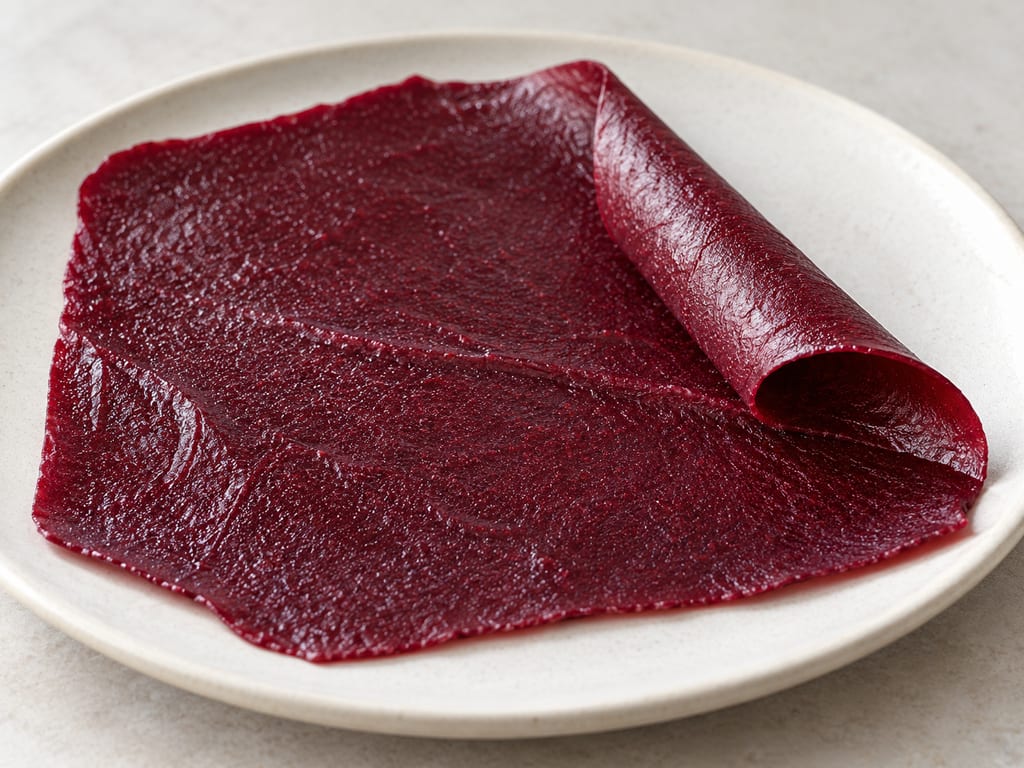
Fruit leather
Fruit pulp spread into thin sheets or shaped into cakes and dried, a compact, portable way of keeping fruit in western and central Asia and among Indigenous North Americans.
 FermenteaWhere food goes to change
Equipment · Baskets, trays and beds
A removable food-contact sheet fitted to a dehydrator shelf holds purée and small sticky foods that would otherwise pass through an open tray. Materials and fit vary; a solid liner changes airflow at the covered surface.
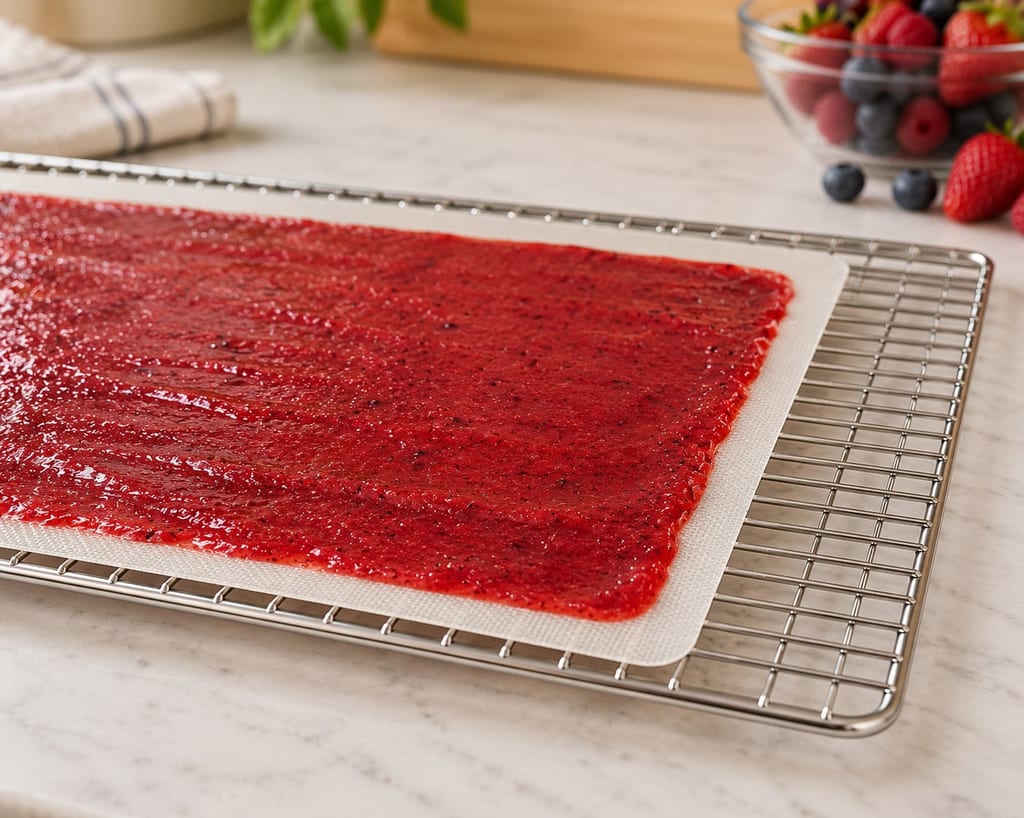
A lined dehydrator tray is a food-contact sheet laid over an open drying shelf. It gives loose pieces or a wet purée a continuous surface so they do not fall through the mesh or wire openings. It is an accessory, not the dehydrator itself and not a rigid tray. Its useful shape follows the shelf it fits, which is why a mat sold for one machine or shelf size should not be assumed to fit another.
The name covers different constructions. NCHFP's fruit-leather guidance describes specially designed plastic sheets and plastic wrap on plastic trays. Manufacturers also sell reusable silicone or silicone/fiberglass mats for particular dehydrators. These are documented alternatives, not interchangeable materials: use only a liner whose maker identifies it for the food-contact and drying conditions at hand.
Open mesh supports slices while allowing air to pass through the shelf. Smooth purée would run through it, so a solid liner acts as a shallow working surface until the puree dries enough to peel away. Small or sticky foods can also benefit from a sheet when they would otherwise sag or drop through. The mat remains separate from the food dehydrator's heater, fan, cabinet and trays.
A solid sheet covers the openings directly under it, unlike an open mesh liner. Dehydrator designs differ, and airflow needs a clear path through the appliance; avoid assuming that a fully covered stack performs like open trays. This is one reason liners are used where a supported surface is needed, rather than treated as universal replacement shelves.
For its general fruit-leather method, NCHFP spreads purée evenly to about 1/8 inch and gives an approximate dehydrator drying time of six to eight hours at 140°F. It says the leather dries from its outside edge toward the centre and checks the middle for an indentation. A separate mango recipe uses fruit-roll liners lightly sprayed with vegetable oil, a roughly 1/4-inch layer and about ten hours at 140°F. These examples show why drying time belongs to the recipe, layer thickness and conditions, not to the sheet alone.
The manufacturer Brød & Taylor describes a food-safe silicone/fiberglass baking mat that also fits specified Sahara shelves and holds liquids, sticky foods and small items. Its sizing differs for stainless-steel and plastic shelves. The inspected product photograph shows mats supporting sliced produce on those racks; it documents the liner and shelf relationship, not every possible use or a fruit-leather batch.
Check the shelf dimensions and the exact dehydrator instructions before choosing a liner. NCHFP names purpose-designed plastic sheets and plastic wrap for dehydrator trays, while product makers specify their own mat materials and compatible shelves. Do not infer food-contact suitability or heat tolerance from a sheet's appearance, and do not substitute waxed paper or foil where NCHFP explicitly advises against them for fruit-leather pan lining.
Wash and store reusable sheets according to their manufacturer's directions and check them for wear before use. This accessory does not control temperature, humidity or food safety; the drying method and final food condition still matter. The sources document modern home-drying applications and do not establish a single historical origin, standard sheet dimension or universal liner material.
The National Center for Home Food Preservation describes plastic sheets or plastic wrap for fruit-leather trays, while appliance manufacturers document reusable silicone mats for particular dehydrator shelves.
NCHFP documents specially designed plastic sheets or plastic wrap for fruit leather. It does not establish that all plastic films are interchangeable or suitable for every dehydrator temperature.
Source →A solid liner supports purée but covers the tray openings beneath it; air circulation remains a property of the dehydrator layout and uncovered area. Do not treat a solid sheet as an open mesh liner.
Source →Drying times are method- and product-specific. NCHFP gives about 6–8 hours for its general 1/8-inch fruit leather guidance and about 10 hours for its mango recipe at 1/4 inch; neither is a universal liner rating.
Source →Country-level context for National Center for Home Food Preservation advice on fruit-leather tray liners, not a claim of product origin or exclusive use.
Fruit pulp spread into thin sheets or shaped into cakes and dried, a compact, portable way of keeping fruit in western and central Asia and among Indigenous North Americans.
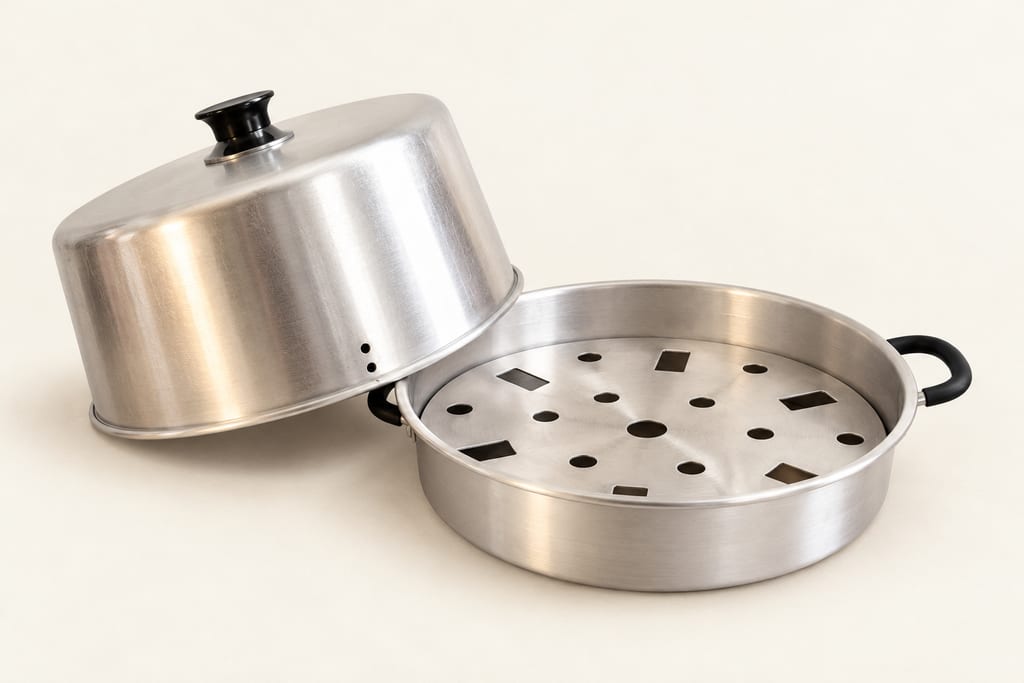
A shallow rack base and tall vented cover process jars in atmospheric steam. NCHFP limits the method to tested high-acid or acidified recipes requiring no more than 45 minutes, including altitude adjustment; this is not pressure canning.
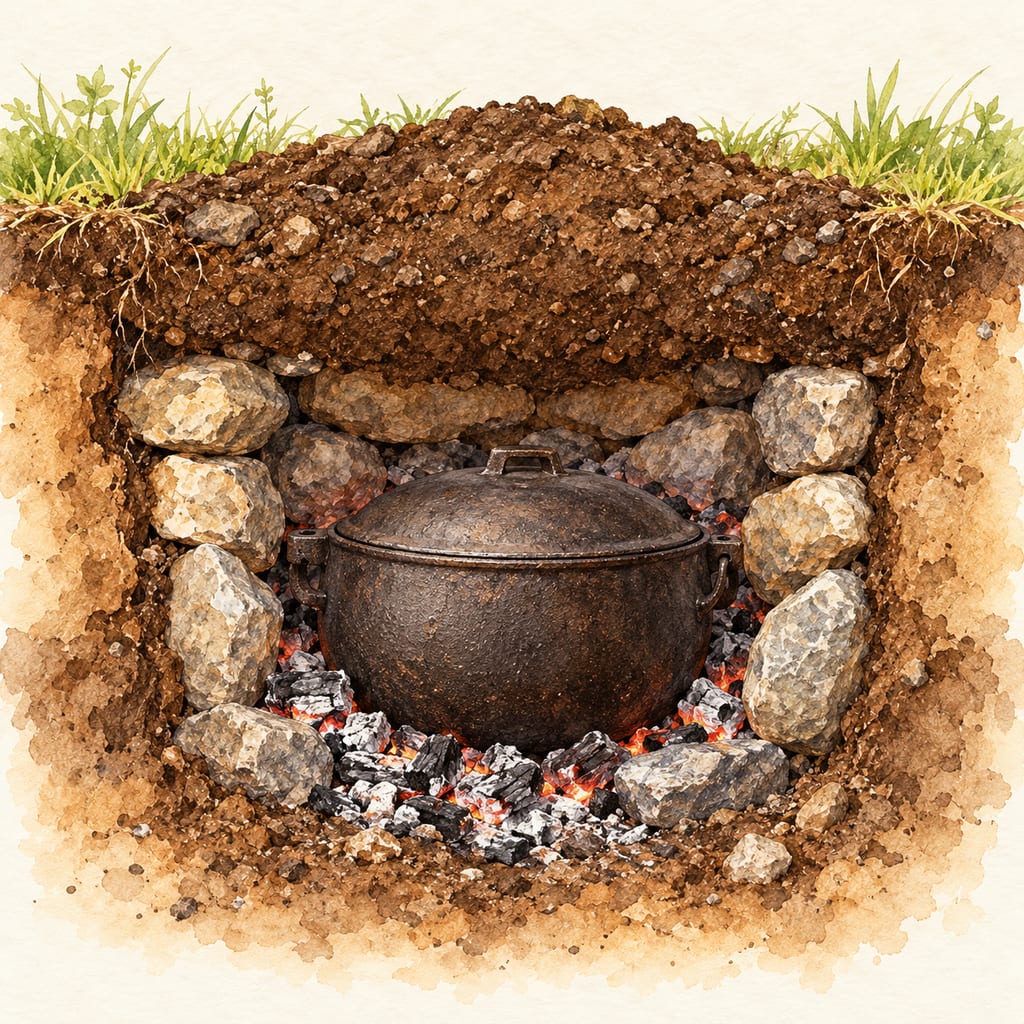
A covered iron vessel used in Maine bean-hole cooking, set into a preheated stone-lined pit and buried for a slow cook.
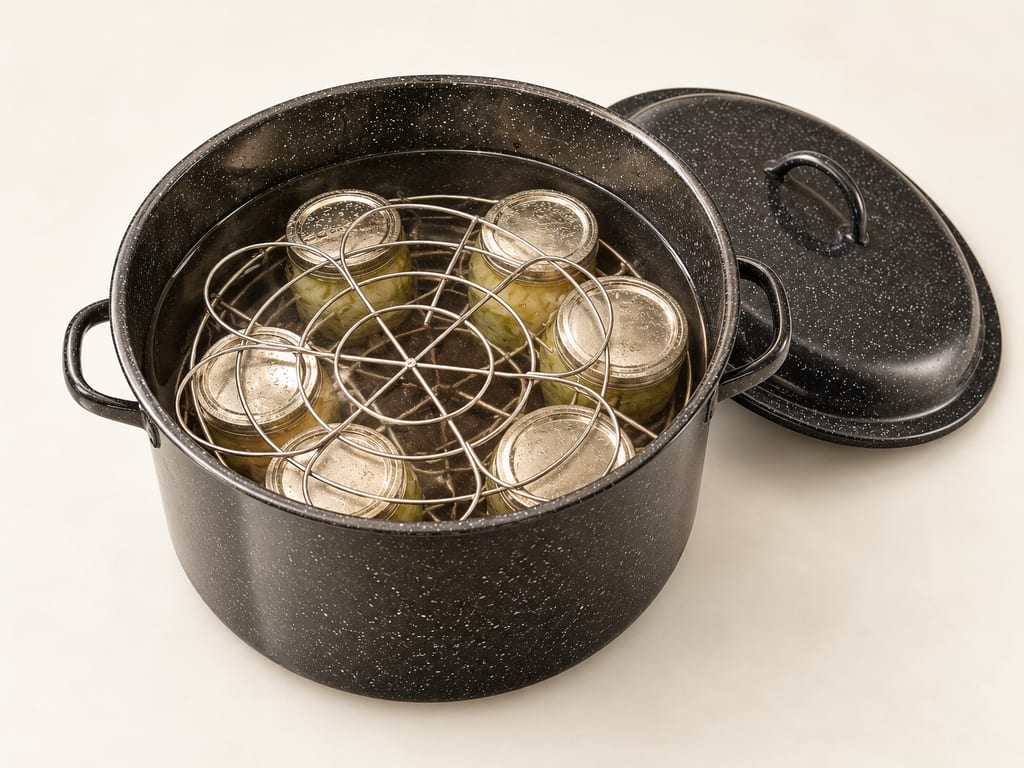
A deep, lidded pot with a removable rack processes jars beneath boiling water. It is intended for foods with tested boiling-water processes; low-acid foods require pressure canning.
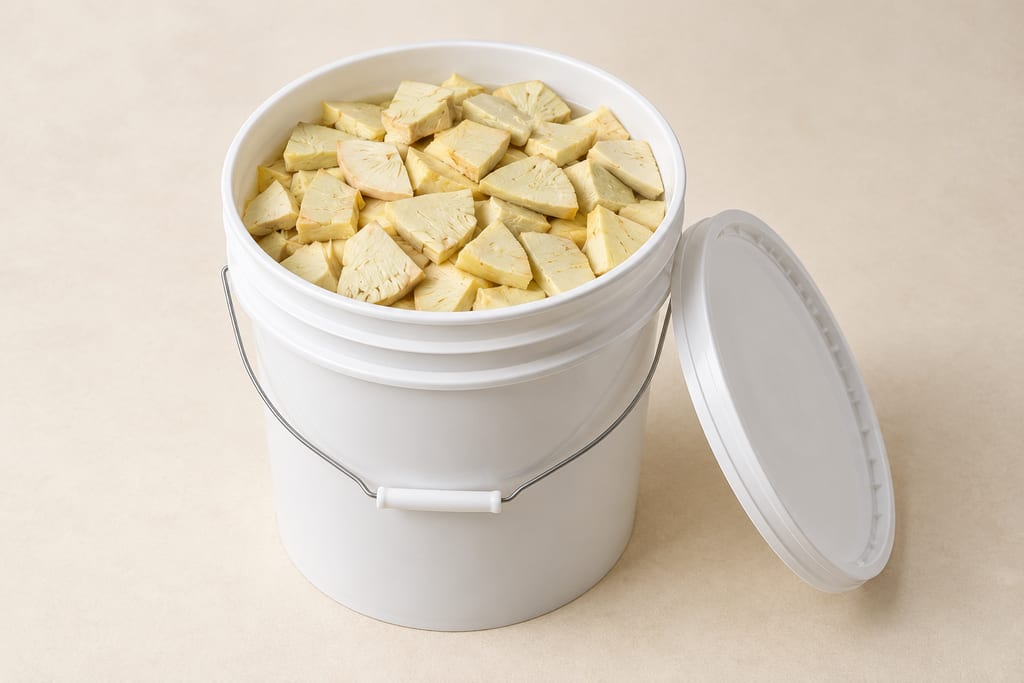
A contemporary household enclosure for preparing mā, fermented breadfruit, documented in Hawai‘i using food-safe buckets, coolers or large sealable bags in place of a pit.
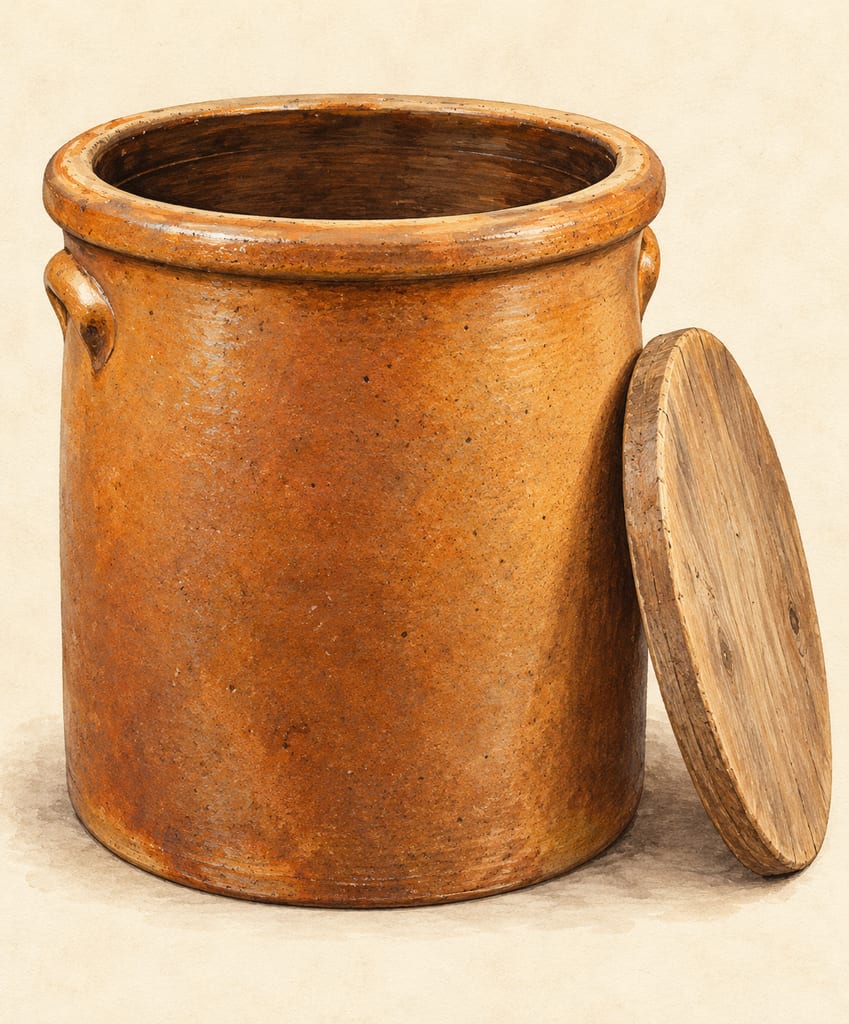
Containers for salt-curing fish and meat range from broad-mouthed stoneware crocks to tubs, cut-down barrels and chests. Their material, depth, cover and ability to retain or drain liquid shape how the food sits in salt or brine.
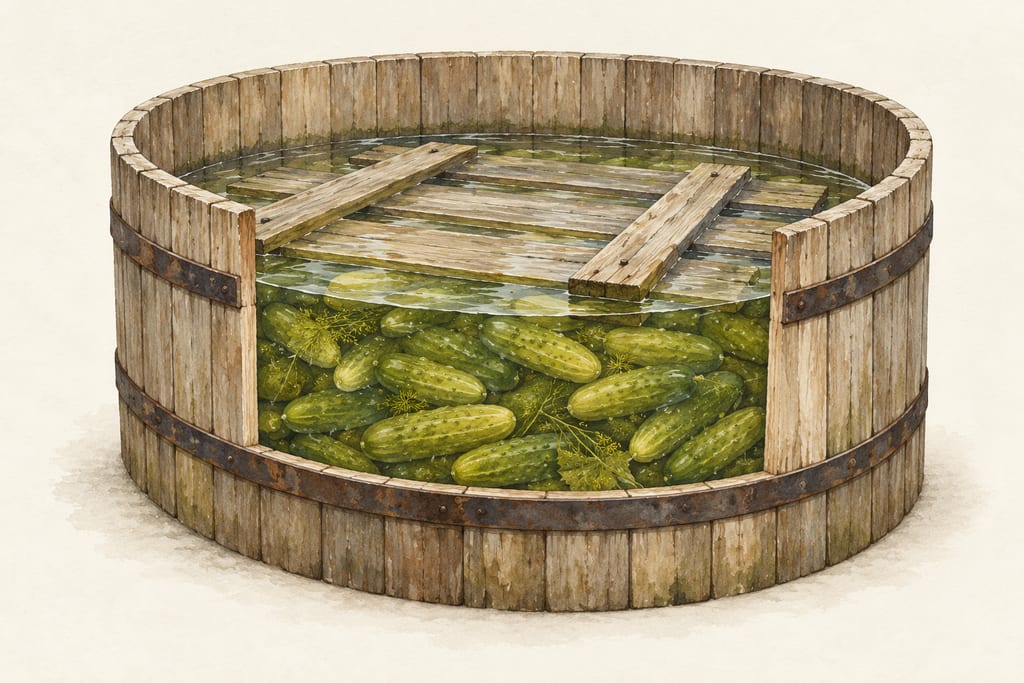
A bulk brining vat holds cucumbers and other vegetables under cover brine for fermentation and storage. North Carolina sources document a mid-century wooden tank yard and later outdoor fiberglass systems.
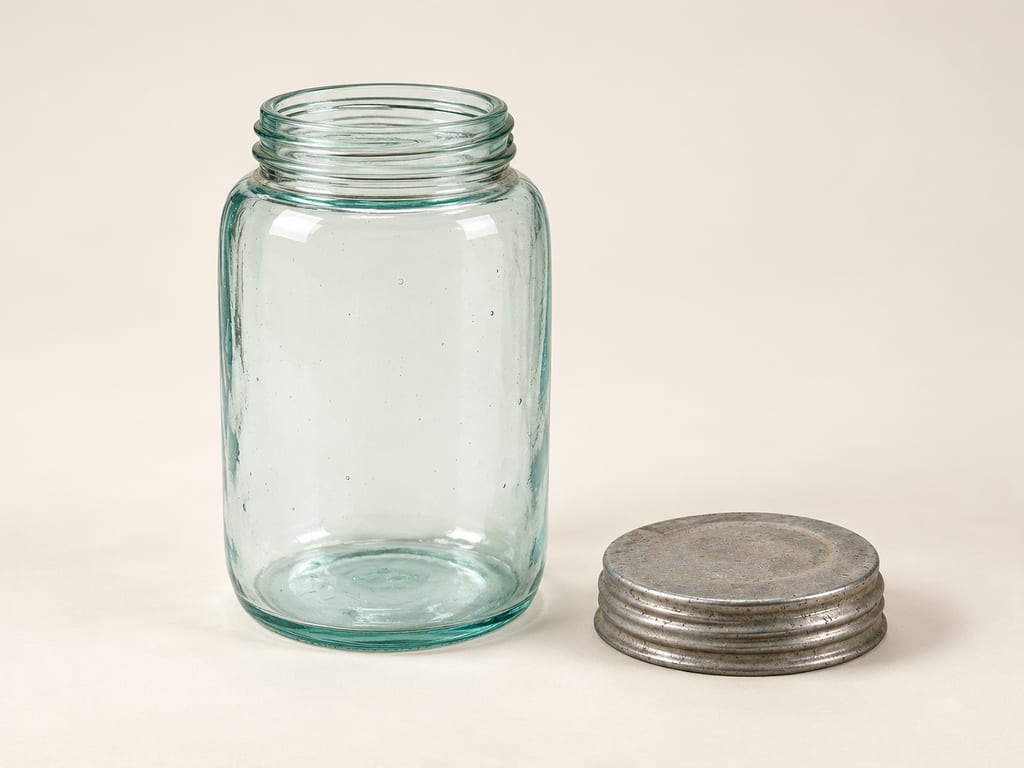
Threaded, heat-processing jars hold food and a fitted lid during a tested canning process; jar size and process belong to the specific recipe.
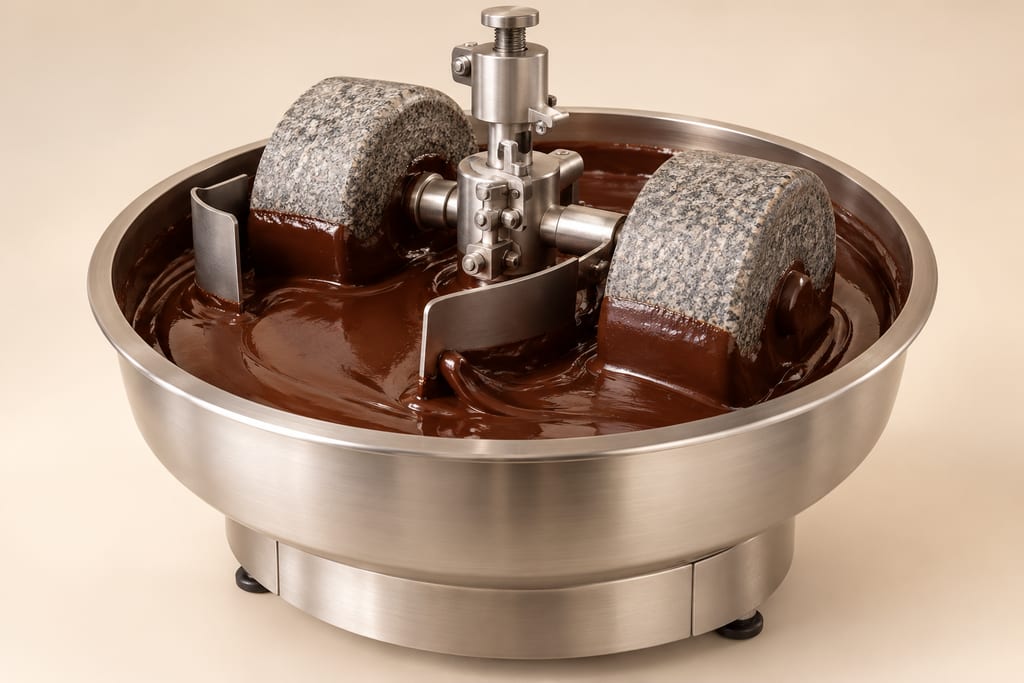
A chocolate refiner or melanger uses powered rotation and stone rollers to refine cocoa mass. Some models also process nut and seed pastes; design, material and operating limits vary.
No community contributions have been published for this entry yet.
Sign in to contribute. Published comments and photos are free to read.
National Center for Home Food Preservation, University of GeorgiaMethod · Tray liner material · Limits
Fruit LeathersFor dehydrator fruit leather, NCHFP says specially designed plastic sheets can be purchased or plastic trays can be lined with plastic wrap.
Its general method spreads purée about 1/8 inch thick, dries at 140°F, and checks the centre for indentation; approximate dehydrator time is 6–8 hours.
The guidance distinguishes oven pan lining from dehydrator tray lining.
Cited in: A removable support on the shelf; Fit and method change the result; Choose and care for the right sheet
National Center for Home Food Preservation, University of GeorgiaMethod variant · Tray liner use
Mango LeatherThe recipe directs lightly spraying fruit-roll tray liners with vegetable oil, spreading mango mixture about 1/4 inch thick, and drying continuously at 140°F for about 10 hours, with timing dependent on room humidity.
It demonstrates a particular dehydrator liner method; these conditions are recipe-specific rather than a standard capacity or universal drying schedule.
Cited in: Fit and method change the result
Brød & Taylor CanadaProduct example · Materials · Image reference
Non-Stick Silicone Baking MatThe manufacturer describes a silicone/fiberglass mat used with Sahara dehydrator shelves to hold liquids for fruit leathers, sticky foods and small items that could fall through.
Its two sizes fit named Sahara stainless-steel or plastic shelves; dimensions vary by shelf type.
The product photograph shows mats on dehydrator racks with sliced produce, not purée fruit leather.
Cited in: A removable support on the shelf; Why fruit purée needs a solid surface; Fit and method change the result; Choose and care for the right sheet
Utah State University ExtensionAirflow · Limits
Home Drying FoodsUSU describes cabinet dehydrators as controlled heat with forced air and says prepared food should be placed so air can circulate around food and between trays.
It identifies intake and exhaust as necessary features and notes that dehydrator designs vary.
Cited in: Why fruit purée needs a solid surface