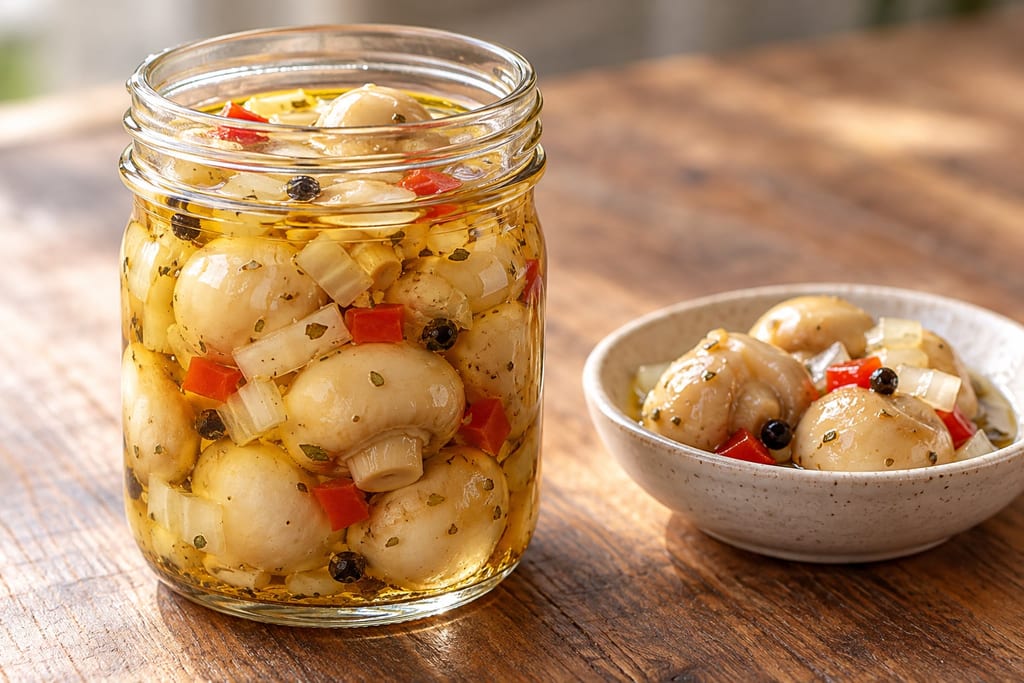
Eastern European Vinegar-Pickled Mushrooms
Small edible mushrooms are briefly cooked and packed in a seasoned vinegar marinade, a sweet-sour preserve served cold in Poland and neighbouring cuisines.
 FermenteaWhere food goes to change
Equipment · Kettles, coppers and boilers
A deep, lidded pot with a removable rack processes jars beneath boiling water. It is intended for foods with tested boiling-water processes; low-acid foods require pressure canning.
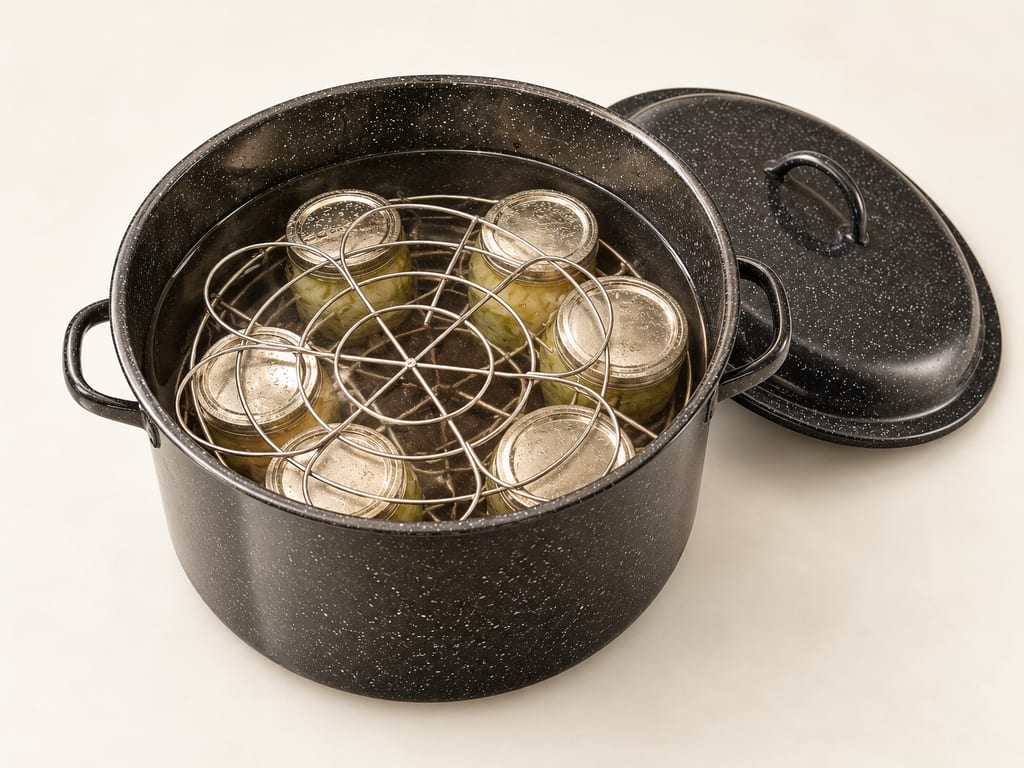
A boiling-water canner is a large covered pot whose working parts are simple but specific: a fitted lid and a removable rack that keeps jars off the bottom. In the NCHFP description, the rack is perforated metal or shaped wire. Most models are aluminum or porcelain-covered steel; at least one stainless-steel model is also available. These are documented materials, not a claim that every canner has the same gauge, handles, finish or capacity.
The pot must be deep enough for water to cover the jars during the full process. NCHFP specifies at least one inch of briskly boiling water over the jar tops, and two inches for processes longer than 30 minutes. That depth leaves space above the jars for vigorous boiling while keeping the load immersed. A fitted lid helps retain heat and manage splashing; it does not make the vessel airtight or pressurized. This is a boiling-water bath, distinct from a pressure canner and from an atmospheric steam canner.
The canner transfers heat through boiling water surrounding the jars. The rack keeps the glass from resting directly on the hot pot floor and allows water to circulate around the load. A process begins only after the water reaches a full boil; the validated time belongs to the particular food, jar size, preparation and altitude adjustment, not to the canner alone. If boiling stops during the timed process, NCHFP directs the user to restore a vigorous boil and restart the full timing.
The canner is not a universal preservation machine. Boiling-water processing is used for foods with tested high-acid or properly acidified procedures. Low-acid foods need a pressure canner because ordinary boiling water does not supply the method specified for those foods. A jar that seals after cooling is not evidence that an untested process was safe. Follow a current tested recipe and the instructions for the precise canner and range.
Size and bottom shape matter at the heat source. NCHFP says some canners do not have completely flat bottoms; these are unsuitable for smooth-top ranges, while gas burners can accommodate flat or ridged bottoms. On electric ranges, the bottom should be fairly flat, and the canner should not extend more than two inches past the element on any side for uniform processing. Smooth-top range makers may set additional limits, so check the appliance guidance before use.
These conditions explain why a stockpot that looks large enough is not automatically equivalent. It needs enough depth, a stable rack, an appropriate lid and a compatible bottom, and it must hold the required water level through the process. Capacity and dimensions vary by model; the source material does not establish a single standard volume.
The National Center for Home Food Preservation's current guidance documents boiling-water canners as established home-preservation equipment in the United States. Its companion overview distinguishes them from pressure canners and describes typical jar loads, rather than assigning one capacity to every vessel. The materials and design vary, and the sources consulted here do not establish an inventor, an origin place or the earliest date of use.
The method is useful for tested fruit preserves, pickles and other suitable acid foods, but each food's process is its own. The vessel supplies controlled immersion and heat; it cannot correct a recipe, jar preparation or process that has not been validated. For the relevant food and altitude, use the current tested directions and confirm that the canner and burner work together as their makers specify.
NCHFP's 2014-revised guidance describes current boiling-water canners; this documents the equipment in modern use, not its invention or earliest history.
Use only a tested process intended for boiling-water canning. Low-acid foods require a pressure canner; a boiling-water canner is not a substitute.
Source →The vessel must be deep enough to keep at least 1 inch of briskly boiling water over the jar tops during processing; processes longer than 30 minutes call for 2 inches in NCHFP guidance.
Source →A smooth-top range may impose canner-size limits; check the range manufacturer's guidance and use an appropriate flat-bottom canner.
Source →Country-level location for guidance published by the U.S.-based National Center for Home Food Preservation; not a claim of invention or exclusive use.
Small edible mushrooms are briefly cooked and packed in a seasoned vinegar marinade, a sweet-sour preserve served cold in Poland and neighbouring cuisines.
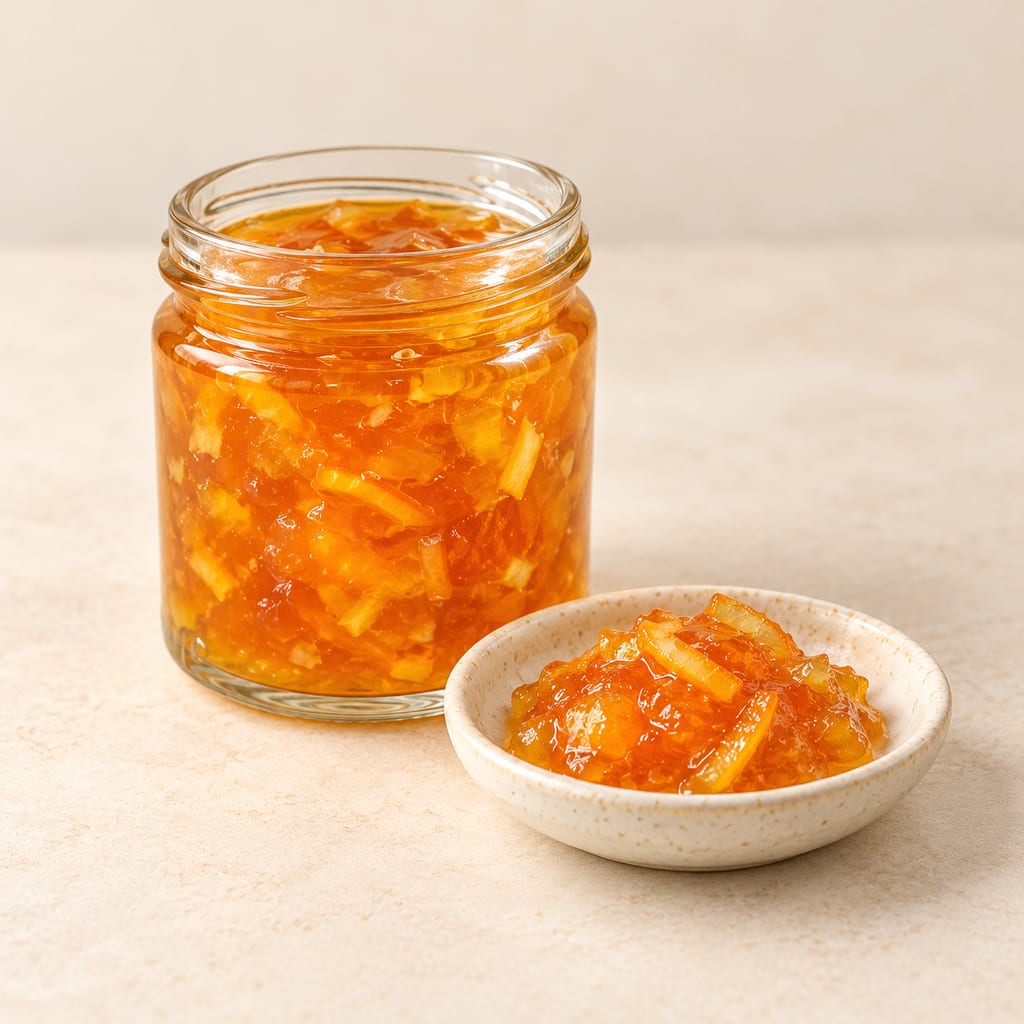
Orange marmalade suspends thin strips of citrus peel in a sweet gel. This navel-orange batch includes pulp and lemon and is preserved in a boiling-water canner.
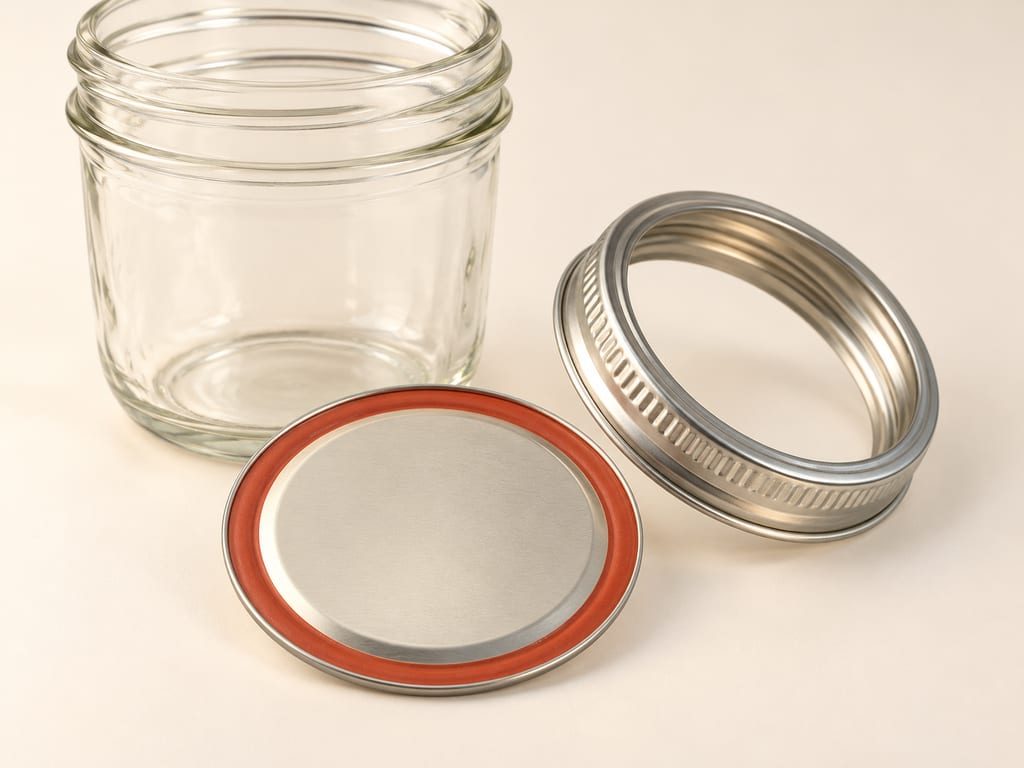
A two-piece canning lid pairs a flat metal disk, whose edge carries sealing compound, with a separate threaded screw band. The band holds the disk during processing; the disk seals against a compatible jar as it cools.
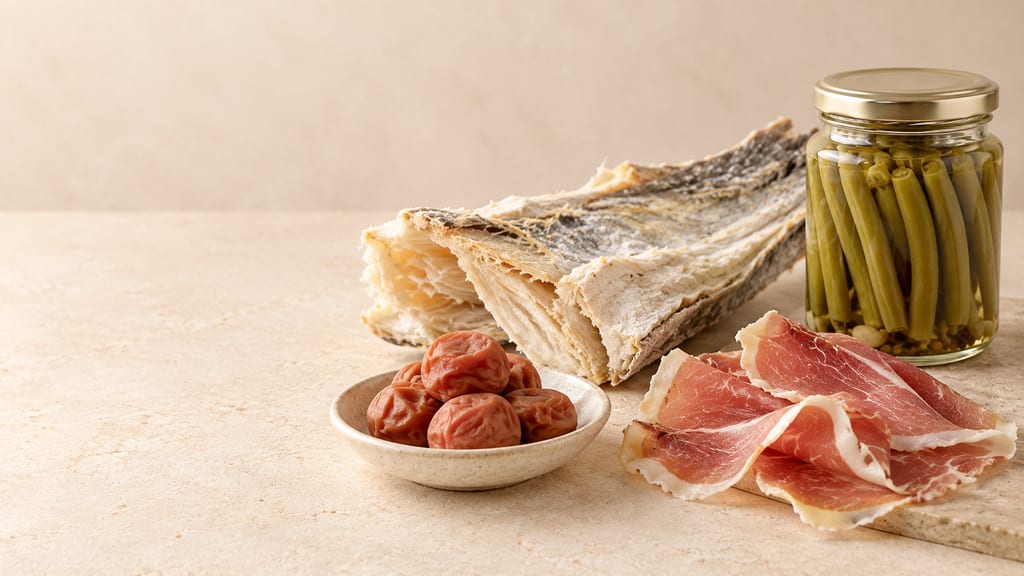
Every preserved food is a stack of barriers against microbes, enzymes, air and time. This is how they work, what a recipe's numbers measure, and how cooks worldwide build them.
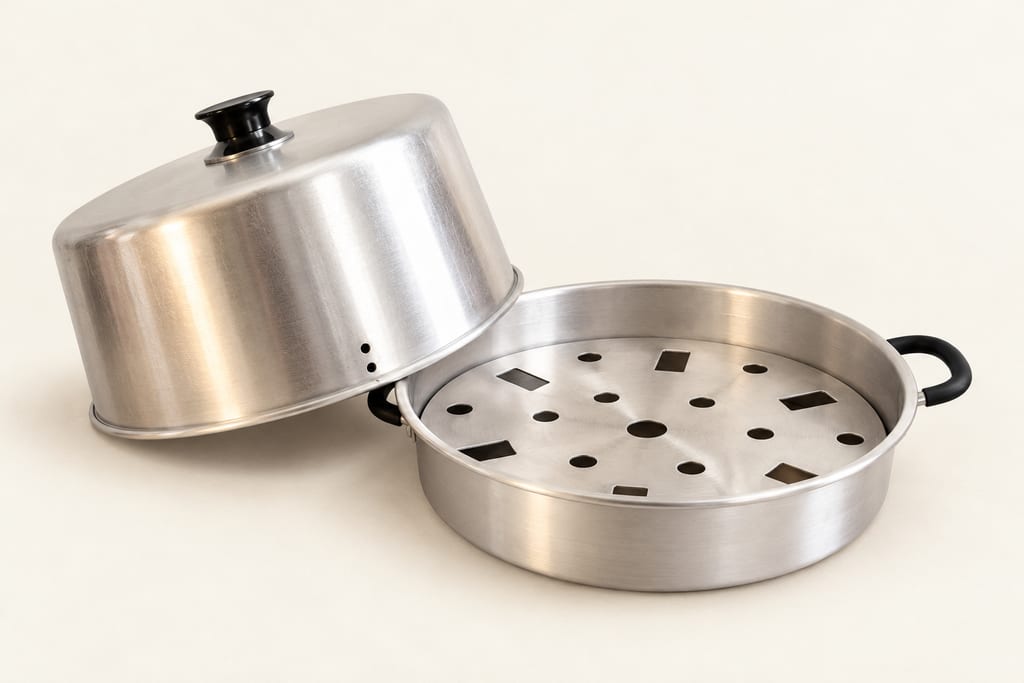
A shallow rack base and tall vented cover process jars in atmospheric steam. NCHFP limits the method to tested high-acid or acidified recipes requiring no more than 45 minutes, including altitude adjustment; this is not pressure canning.
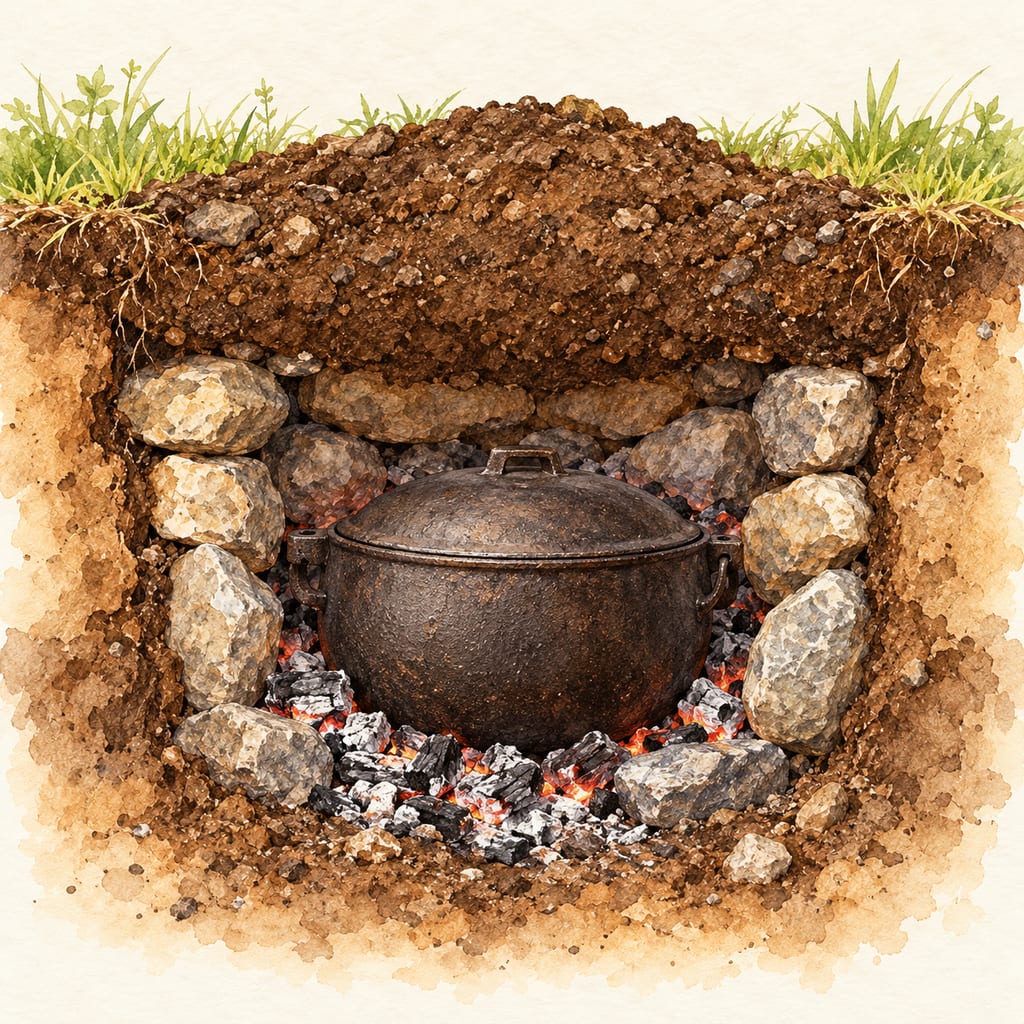
A covered iron vessel used in Maine bean-hole cooking, set into a preheated stone-lined pit and buried for a slow cook.
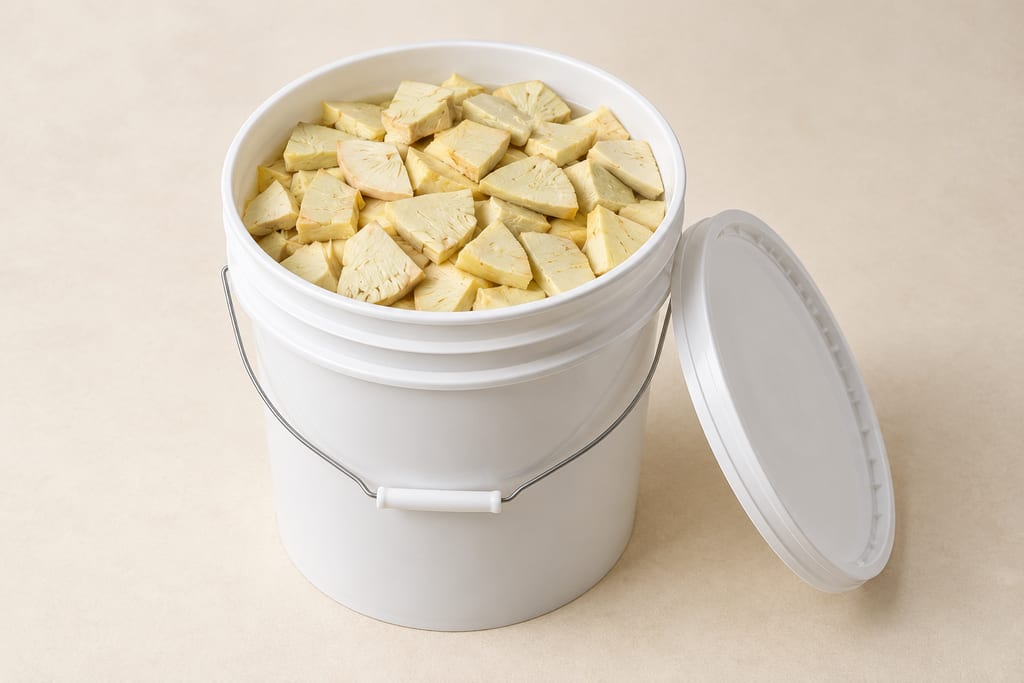
A contemporary household enclosure for preparing mā, fermented breadfruit, documented in Hawai‘i using food-safe buckets, coolers or large sealable bags in place of a pit.
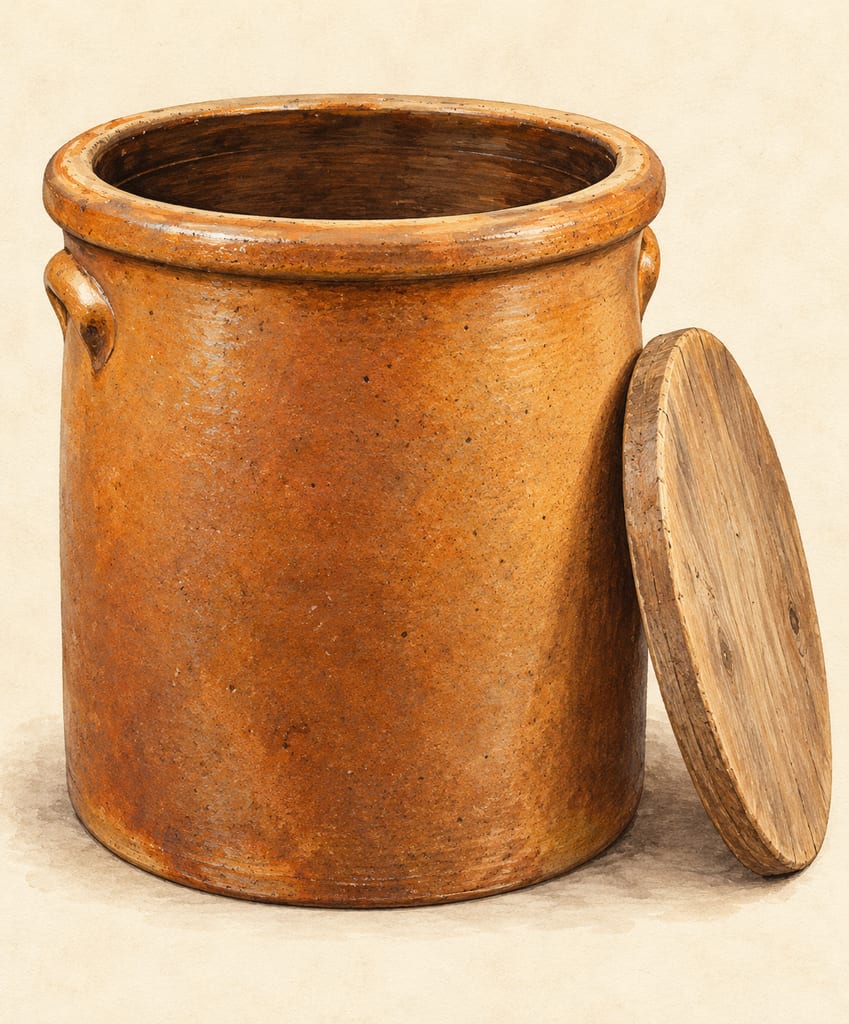
Containers for salt-curing fish and meat range from broad-mouthed stoneware crocks to tubs, cut-down barrels and chests. Their material, depth, cover and ability to retain or drain liquid shape how the food sits in salt or brine.
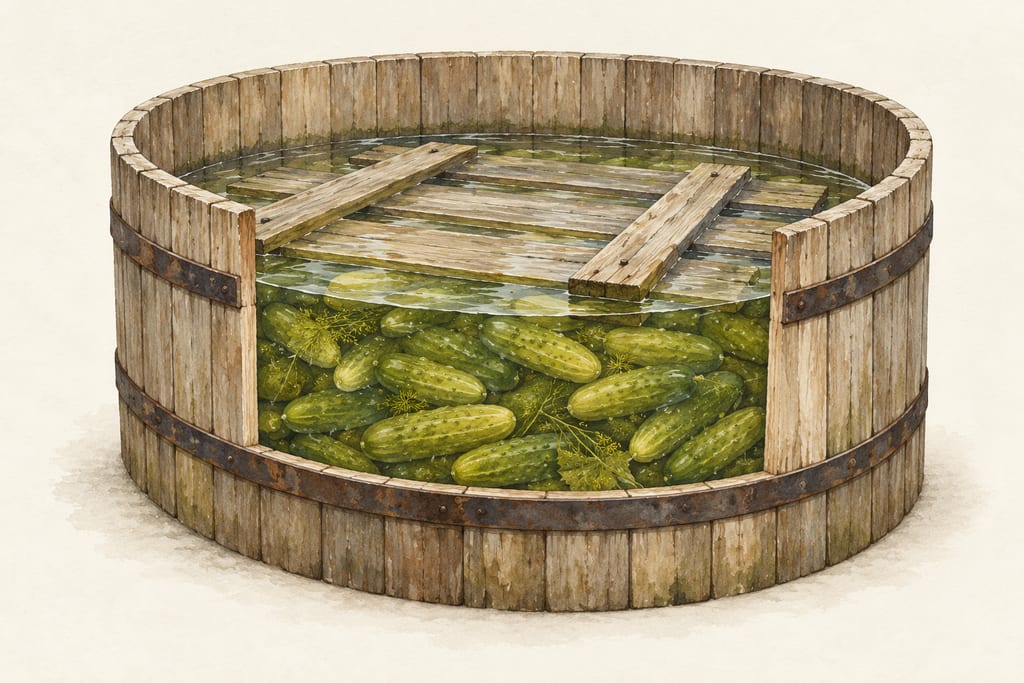
A bulk brining vat holds cucumbers and other vegetables under cover brine for fermentation and storage. North Carolina sources document a mid-century wooden tank yard and later outdoor fiberglass systems.
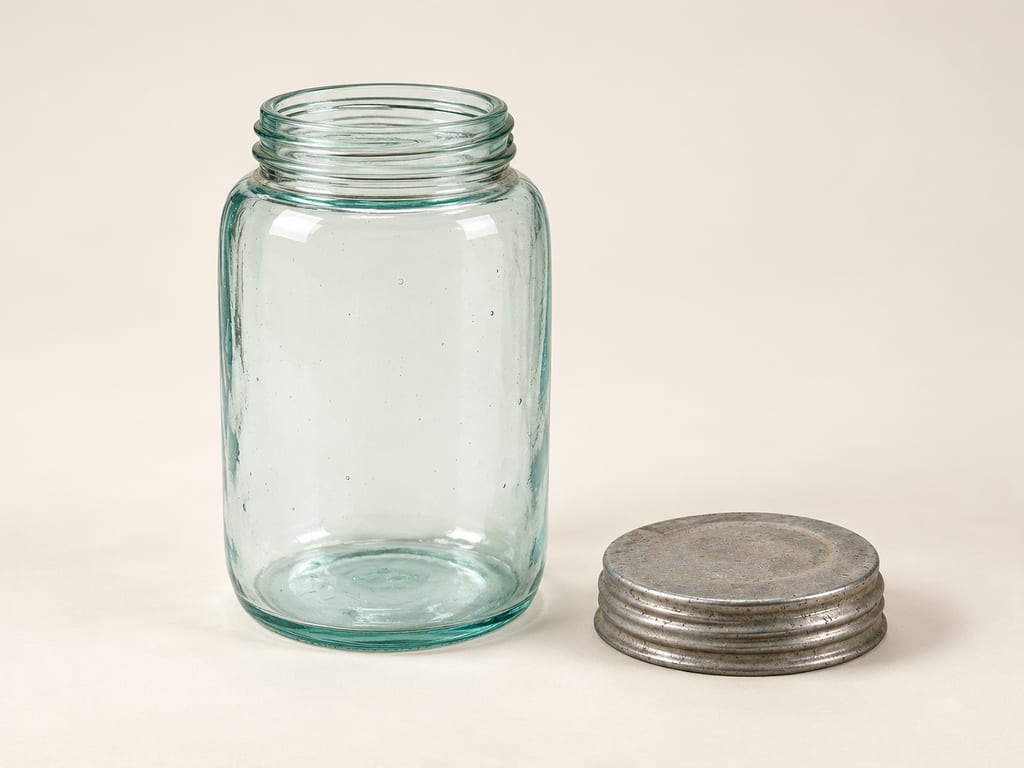
Threaded, heat-processing jars hold food and a fitted lid during a tested canning process; jar size and process belong to the specific recipe.
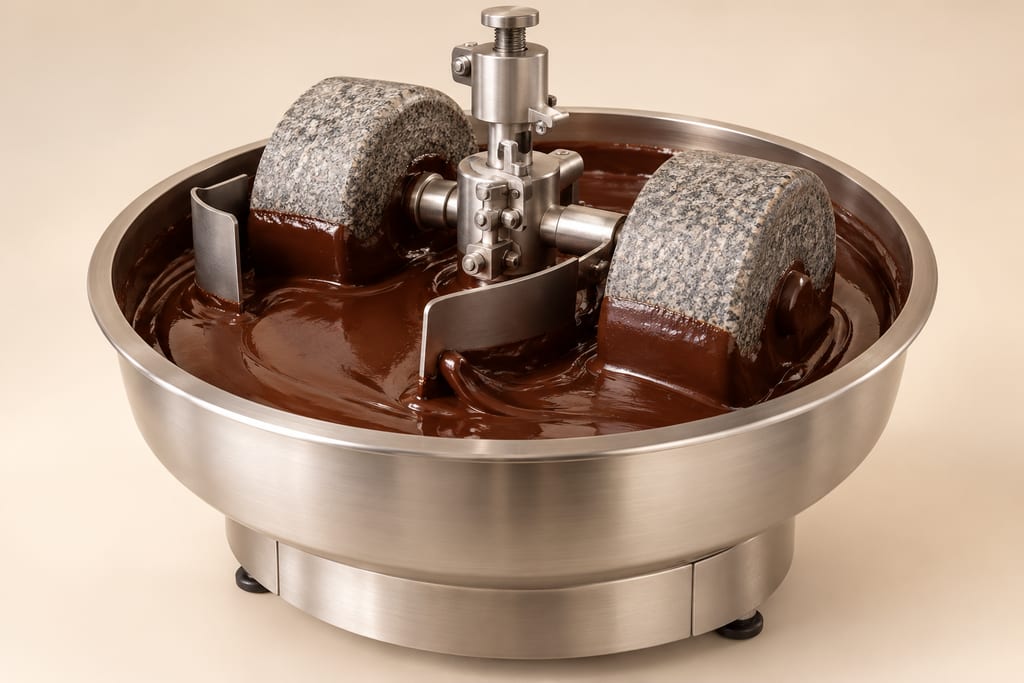
A chocolate refiner or melanger uses powered rotation and stone rollers to refine cocoa mass. Some models also process nut and seed pastes; design, material and operating limits vary.
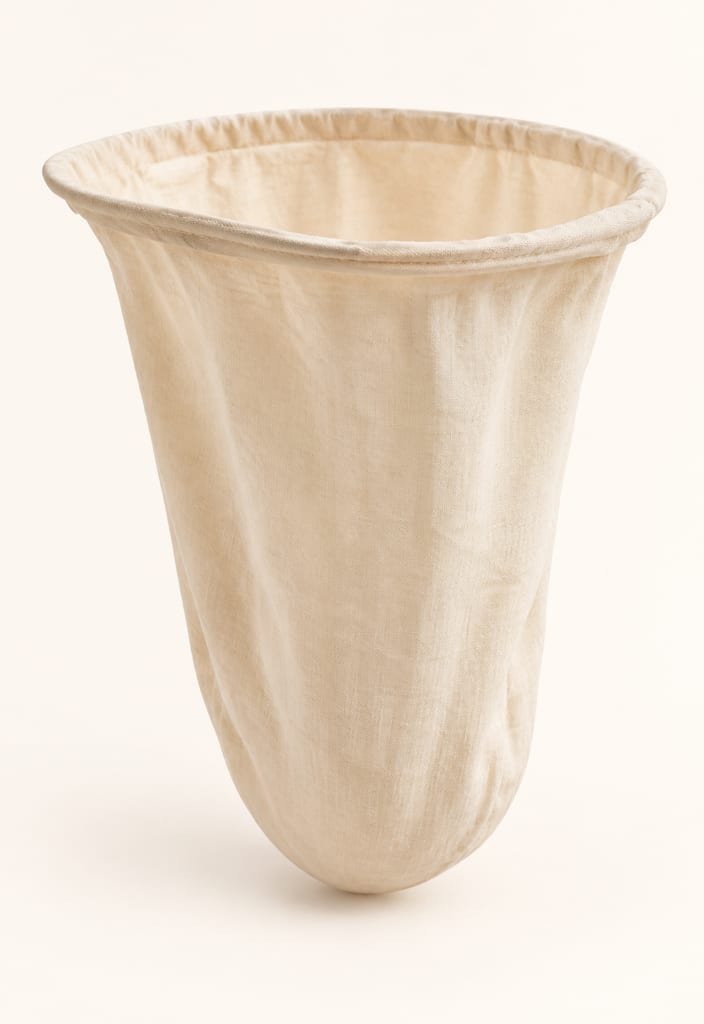
A cloth bag that strains cooked fruit pulp by gravity; jelly-making guidance says not to press it when clear juice is wanted. The sources do not define a standard bag material or size.

Soft, spreadable Calabrian pork sausage made with a great deal of red chilli and fatty pork, stuffed into natural casings, sometimes smoked and matured while staying soft.

A way to add independent temperature logging to an existing food dehydrator without changing its built-in controls or protections. It is a monitoring method, not a rewiring plan.

Pleurotus cystidiosus is the abalone mushroom, a cultivated oyster-type fungus with dark brown caps that grows more slowly and is more demanding than other Pleurotus species.

A dark, balanced vinegar from Emilia-Romagna made by combining cooked or concentrated grape must with wine vinegar, then acetifying and refining it in wood under a protected specification.

A living dairy inoculum that starts controlled cream fermentation, developing acidity and aroma before sour cream or cultured butter is finished.

A small electric incubator holds jars at a selected temperature for yogurt and other documented warm food preparations. Controls, capacity and vessel arrangement vary by model.

Adygean salt is a seasoned table salt associated with Adygea and the wider North Caucasian culinary tradition. Salt is blended with garlic and a variable selection of herbs and spices; the exact mix depends on the named style and maker.

The African Caesar-group mushroom, Amanita masasiensis, is a wild ectomycorrhizal species of central and southern African woodlands, eaten locally. The genus contains deadly poisonous species, so identification needs care.
No community contributions have been published for this entry yet.
Sign in to contribute. Published comments and photos are free to read.
National Center for Home Food Preservation, University of GeorgiaEquipment · Use · Safety
Using Boiling Water CannersMost models are aluminum or porcelain-covered steel; at least one stainless model is available.
Canners have fitted lids and removable perforated or shaped-wire racks.
The vessel must allow at least one inch of briskly boiling water above jar tops; longer processes require two inches.
Canner bottom and size must suit the range; NCHFP advises checking smooth-top range manufacturer guidance.
If the boil stops during processing, the total timing restarts from the beginning.
Cited in: A deep pot built around the jar; How the water bath heats a jar; A range-compatible vessel; A modern preservation tool, with a defined reach
National Center for Home Food Preservation, University of GeorgiaEquipment · Safety
How to Use Boiling Water and Pressure CannersBoiling-water and pressure canners are distinct equipment types.
Low-acid foods require pressure canning; boiling-water canners are for suitable acid foods.
Typical equipment is described by jar load rather than one universal capacity.
Cited in: A deep pot built around the jar; How the water bath heats a jar; A modern preservation tool, with a defined reach
University of Minnesota ExtensionEquipment · Safety
Preserving food at home: CanningCurrent home-canning guidance treats heat-processing method as dependent on food acidity and tested directions.
Range suitability and the canner's construction matter for even processing.