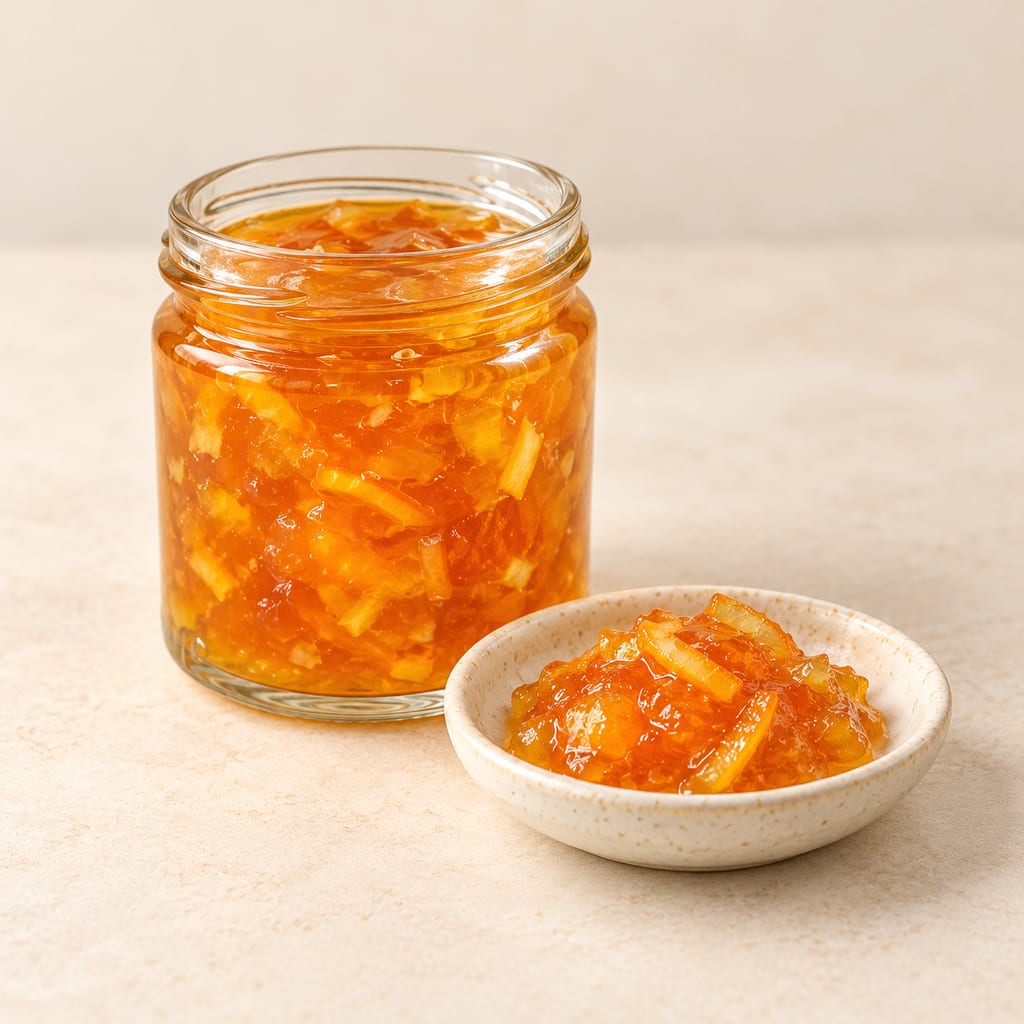
Orange marmalade
Orange marmalade suspends thin strips of citrus peel in a sweet gel. This navel-orange batch includes pulp and lemon and is preserved in a boiling-water canner.
 FermenteaWhere food goes to change
Equipment · Lids, seals and airlocks
A two-piece canning lid pairs a flat metal disk, whose edge carries sealing compound, with a separate threaded screw band. The band holds the disk during processing; the disk seals against a compatible jar as it cools.
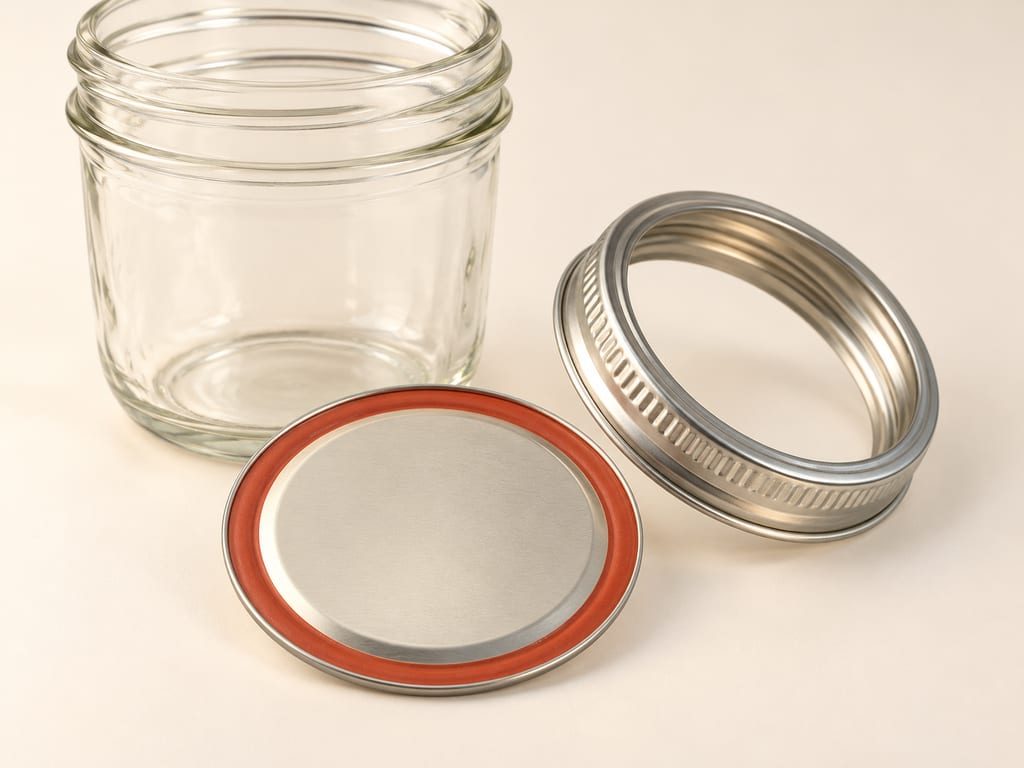
A two-piece home-canning lid consists of a flat metal disk and a separate metal screw band. The disk's crimped edge forms a narrow trough containing sealing compound. The band threads onto the jar and holds the disk against its rim. A jar is the vessel beneath the closure, not a third part of the lid system.
Matching matters: the disk and band must fit the threaded mouth of the jar. Standard and wide-mouth Mason-type jars use corresponding closures; a lid that merely sits on the mouth is not a compatible canning closure. Follow the jar and lid maker's sizing and preparation instructions. The common name describes the two-part design, not one universal diameter or a promise that every jar or brand will fit every other.
The screw band holds the flat disk in place during a tested heat-processing method. The sealing compound warms and softens; the sealant spreads slightly against the jar's sealing surface while air can vent from the headspace. When the jar cools, its contents contract and the lid is drawn tightly against the rim, forming the seal. The band is a temporary part of this process: once jars have cooled and their seals have been checked, it can be removed.
This sequence is why a lid's fit and condition matter. A clean, sound jar rim gives the compound a surface to contact. A bent disk, a defect in the gasket or the wrong mouth size can interfere with that contact. The hardware does not measure the temperature reached inside the food, determine whether an acidity level is adequate, or select a safe processing time.
Choose a closure made for the jar's mouth and inspect the flat disk before use. The National Center for Home Food Preservation advises against old, dented, deformed or defective lids and says unused lid gaskets work well for at least five years from manufacture. Use a new flat disk for each canning process; Penn State explains that the compound has already been pressed into a jar rim after first use. Do not reuse a lid removed from a previously canned jar.
Prepare the disk according to the current maker's directions. Some older instructions called for heating lids, but manufacturers' guidance differs and heating may not be recommended for modern products. Set the disk onto a clean jar rim, then apply the screw band as directed. Tighten it only to the specified level: if too loose, liquid may escape and the seal may fail; if too tight, air may not vent and the lid can buckle or the jar may break. Do not retighten the band during cooling.
After the jar has cooled, remove the band and test the seal using the method in the canning guidance. Wash and dry sound bands and store them separately in a dry place. A band left on the jar is not needed to keep a correctly sealed disk in place and may become rusty or difficult to remove.
Two-piece lids are the recommended closure in the cited U.S. home-canning guidance, but equipment alone does not make a preserved food shelf-stable. Use a current tested recipe, the jar size it specifies, and the complete boiling-water or pressure-canning process appropriate to the food. A lid that appears sealed cannot compensate for an unsuitable recipe, inadequate processing or a jar that did not seal.
The National Center's orange marmalade recipe is one specific example: it uses prepared lids on hot-filled jars and then processes those jars in a boiling-water canner with the recipe's altitude-dependent schedule. The lid and canner work together with that tested method; neither one replaces the other. For the same reason, do not transfer processing times from marmalade to a different fruit mixture, jar size or product.
University Extension and National Center for Home Food Preservation guidance documents the two-piece metal lid in current U.S. home canning. These sources do not date its introduction or identify a birthplace.
A two-piece lid is a closure system, not a preservation process. A sealed jar is not evidence that the food received the correct tested time, temperature or pressure.
Source →The flat disk is single-use for canning; screw bands are reusable only when in good condition.
Source →National and state Extension guidance documents use of the two-piece metal lid system in U.S. home canning; this is documented use, not an origin claim.
The sources describe present-day U.S. use but do not establish the closure's place of origin or first date.
Orange marmalade suspends thin strips of citrus peel in a sweet gel. This navel-orange batch includes pulp and lemon and is preserved in a boiling-water canner.
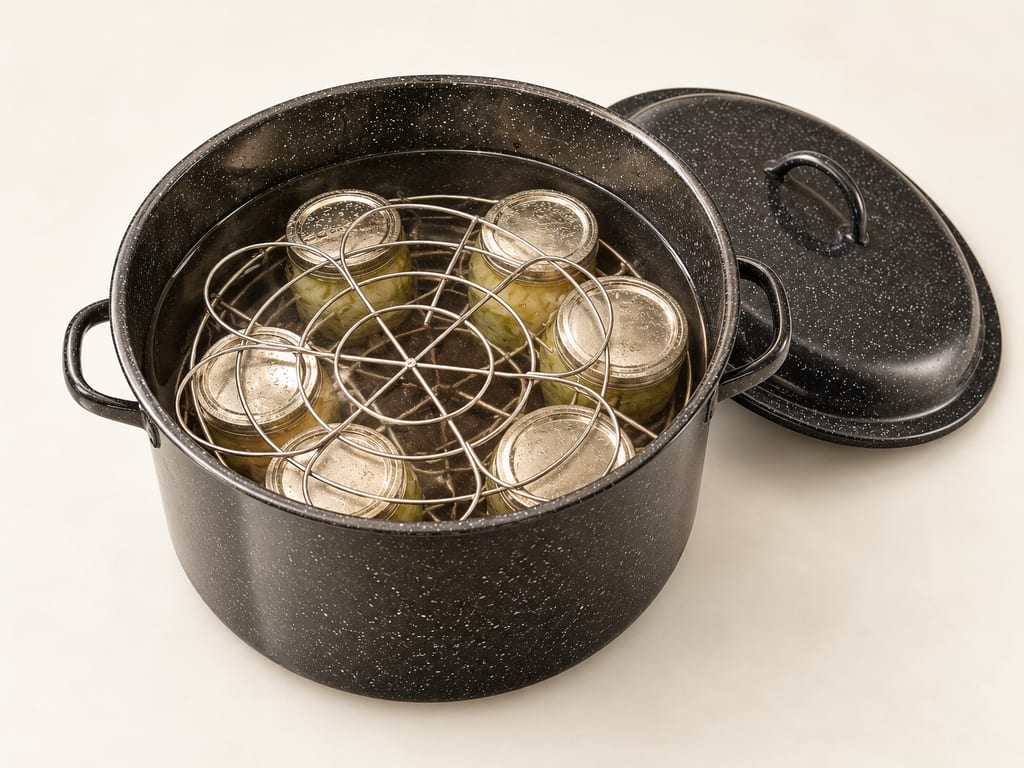
A deep, lidded pot with a removable rack processes jars beneath boiling water. It is intended for foods with tested boiling-water processes; low-acid foods require pressure canning.
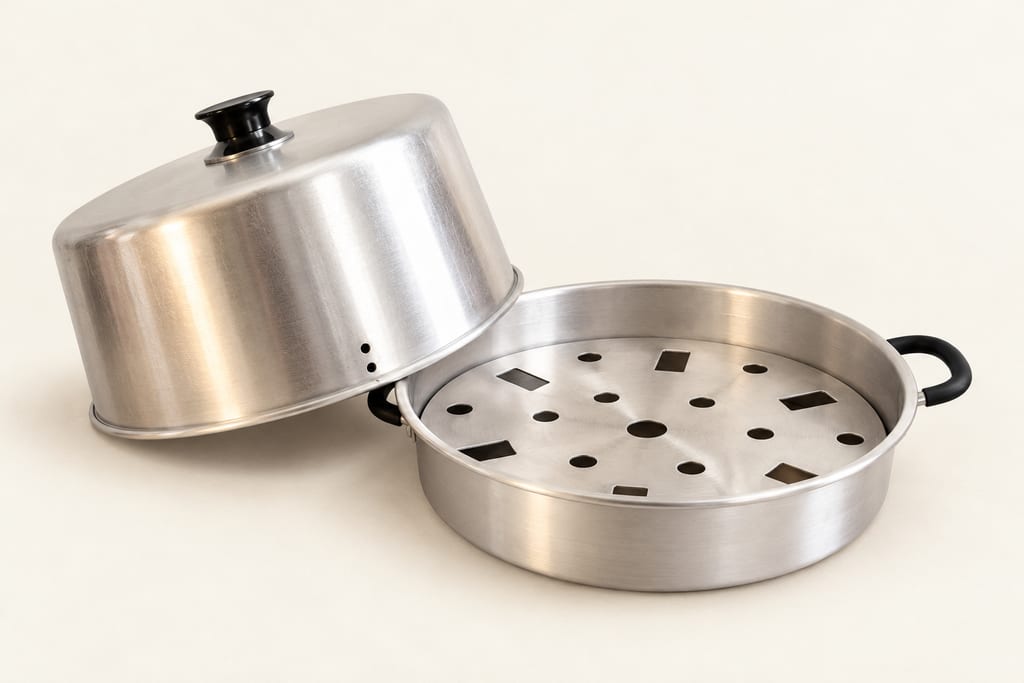
A shallow rack base and tall vented cover process jars in atmospheric steam. NCHFP limits the method to tested high-acid or acidified recipes requiring no more than 45 minutes, including altitude adjustment; this is not pressure canning.
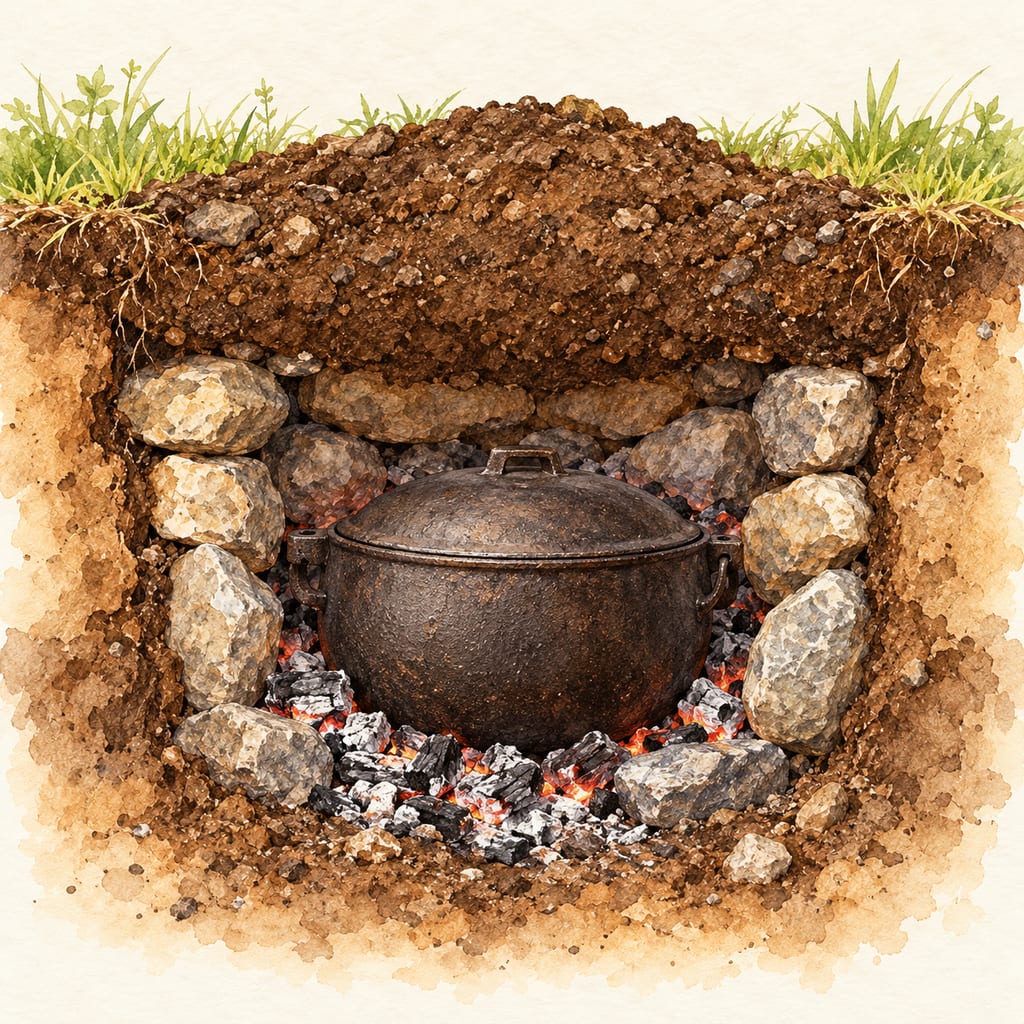
A covered iron vessel used in Maine bean-hole cooking, set into a preheated stone-lined pit and buried for a slow cook.
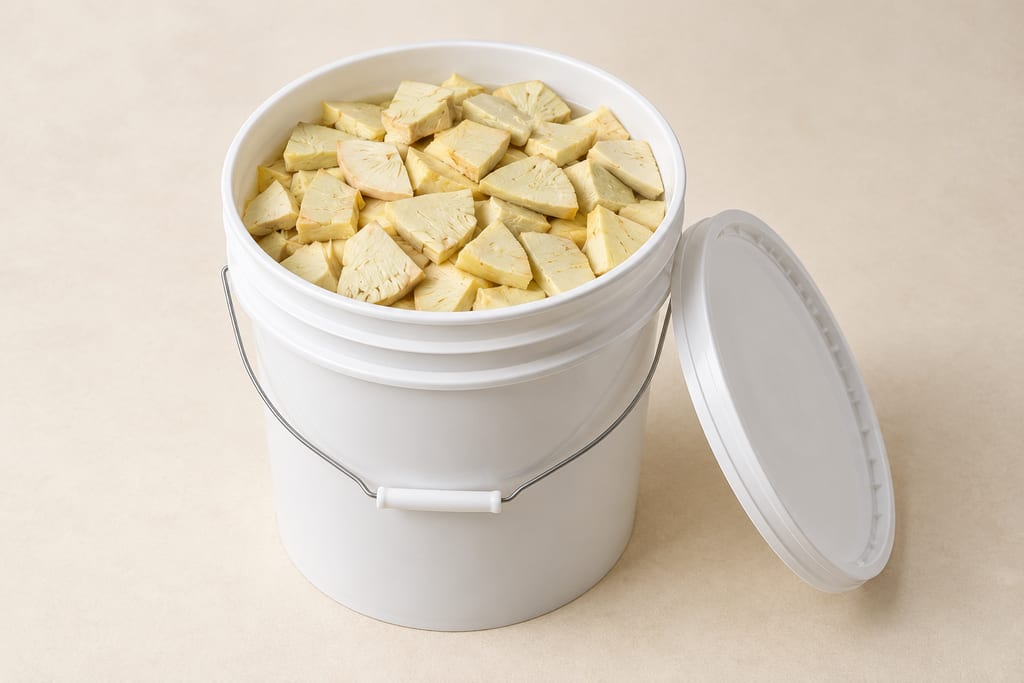
A contemporary household enclosure for preparing mā, fermented breadfruit, documented in Hawai‘i using food-safe buckets, coolers or large sealable bags in place of a pit.
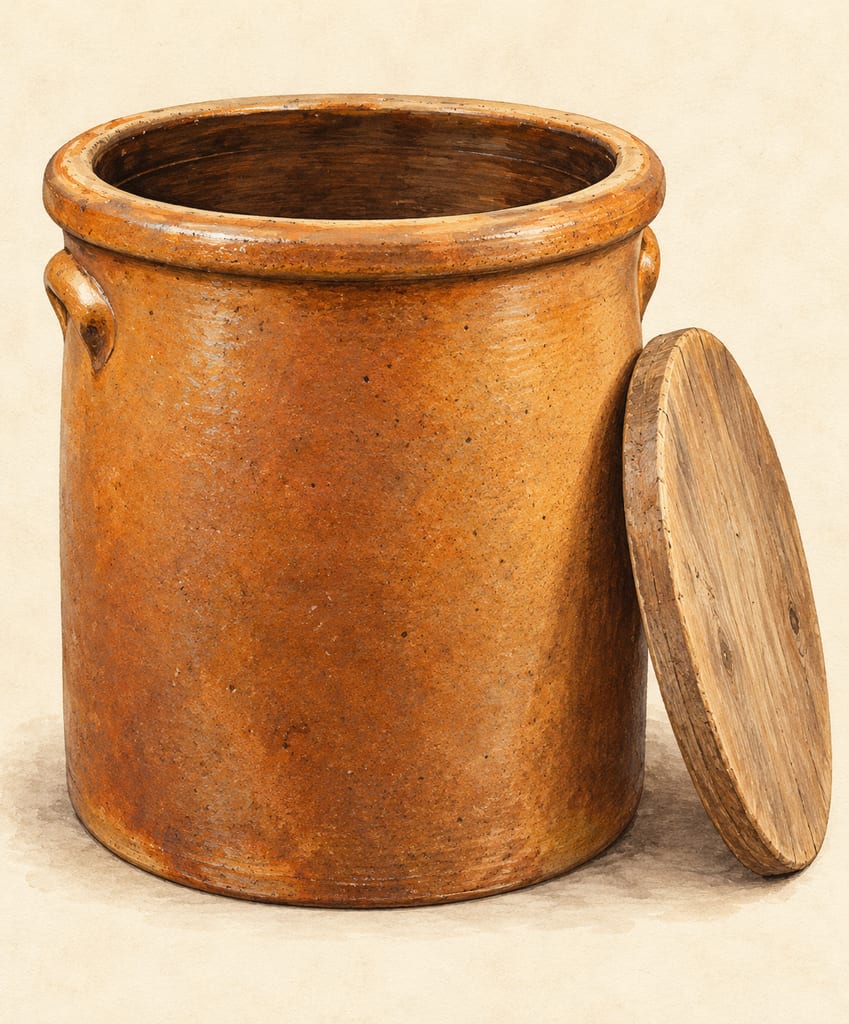
Containers for salt-curing fish and meat range from broad-mouthed stoneware crocks to tubs, cut-down barrels and chests. Their material, depth, cover and ability to retain or drain liquid shape how the food sits in salt or brine.
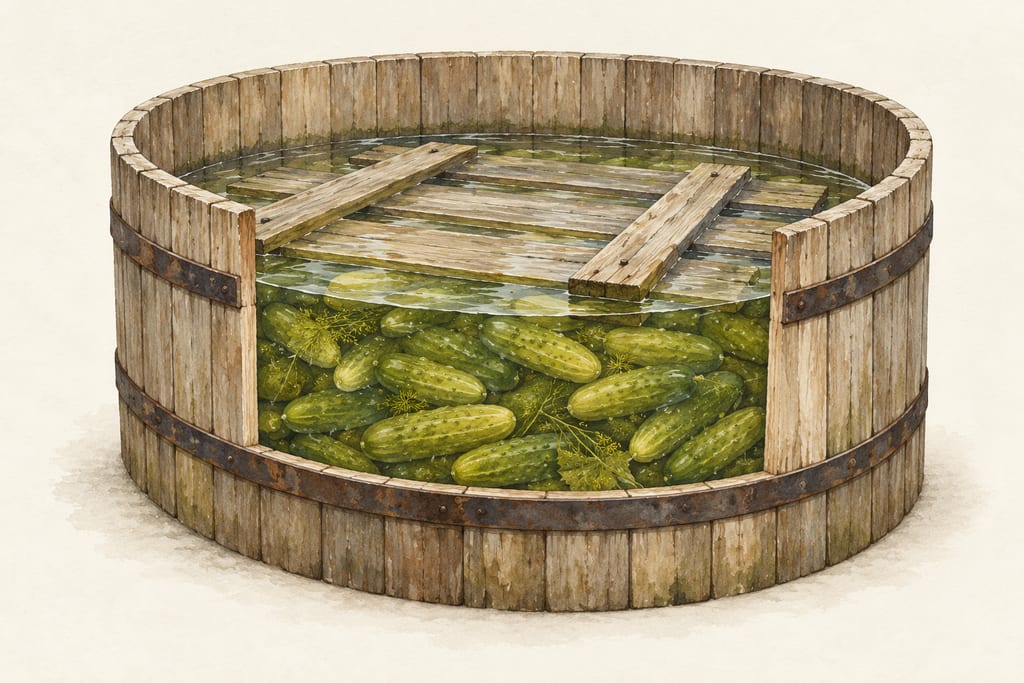
A bulk brining vat holds cucumbers and other vegetables under cover brine for fermentation and storage. North Carolina sources document a mid-century wooden tank yard and later outdoor fiberglass systems.
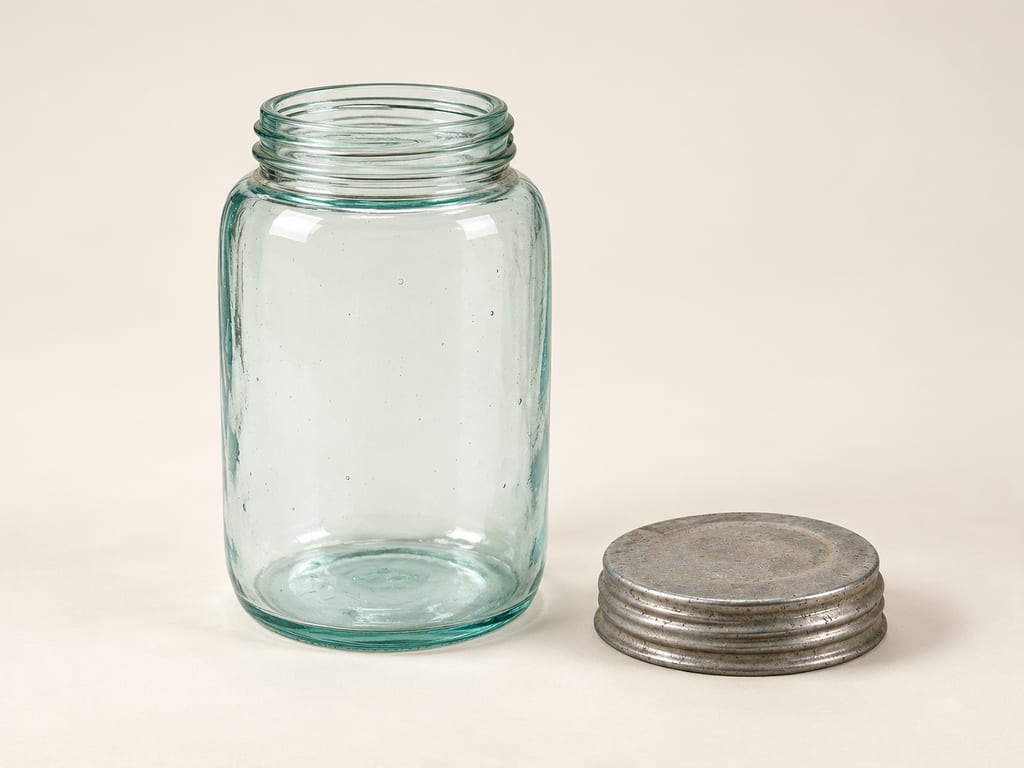
Threaded, heat-processing jars hold food and a fitted lid during a tested canning process; jar size and process belong to the specific recipe.
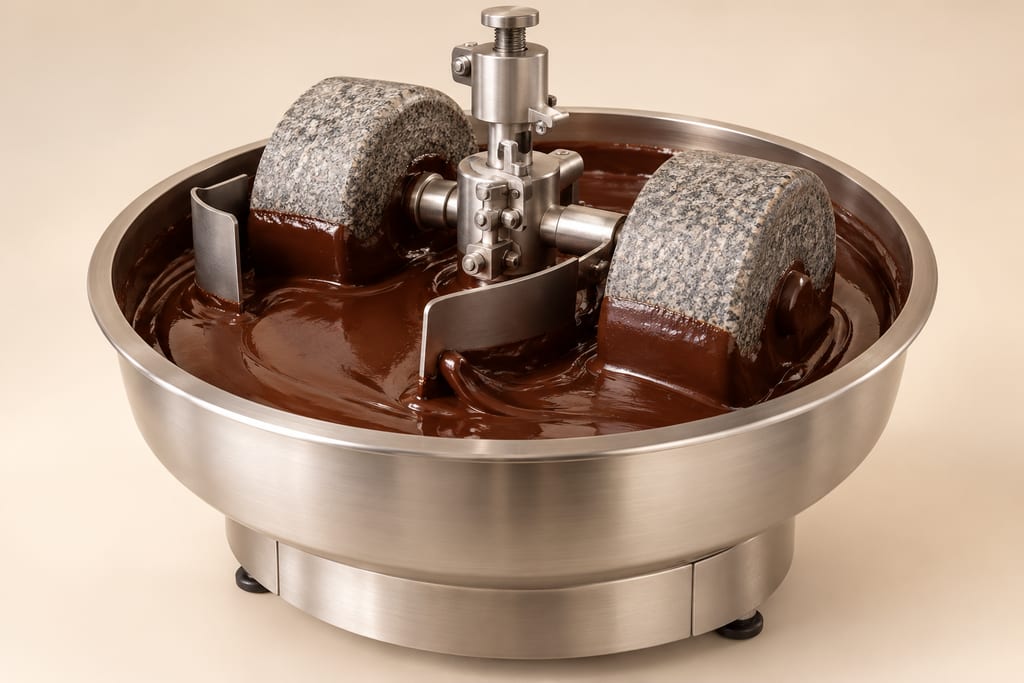
A chocolate refiner or melanger uses powered rotation and stone rollers to refine cocoa mass. Some models also process nut and seed pastes; design, material and operating limits vary.
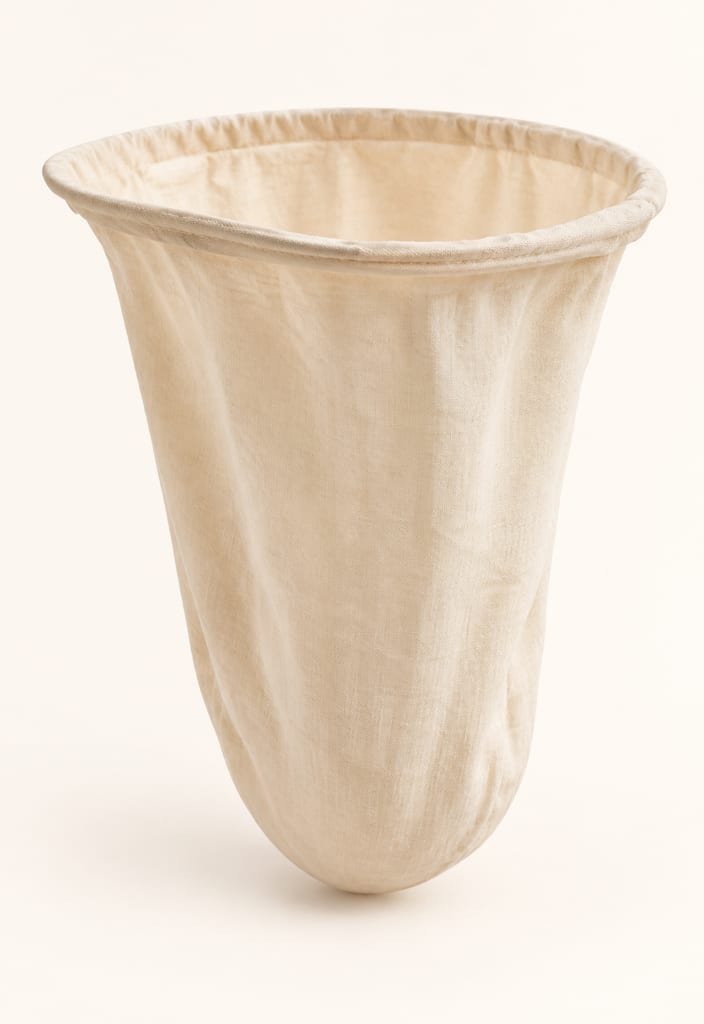
A cloth bag that strains cooked fruit pulp by gravity; jelly-making guidance says not to press it when clear juice is wanted. The sources do not define a standard bag material or size.
No community contributions have been published for this entry yet.
Sign in to contribute. Published comments and photos are free to read.
National Center for Home Food Preservation, University of GeorgiaForm · Mechanism · Use · Care · Safety
Recommended Jars and LidsThe common self-sealing system is a flat metal disk held by a separate metal screw band; a crimped trough in the disk carries sealing compound.
During processing the gasket softens and permits air to escape; as a jar cools the lid forms a seal.
Use compatible Mason-type home-canning jars and follow manufacturer instructions for lid preparation and tightening.
New flat lids are used for each canning; old, dented, deformed or defective lids may fail; excessively loose or tight bands create specific problems.
The guidance describes standard and wide-mouth jar openings and emphasizes matching equipment to the intended home-canning process.
Cited in: Two pieces make the closure; How the seal forms; Choosing, applying and reusing the parts; A closure is not a canning process
National Center for Home Food Preservation, University of GeorgiaCare · Storage
Storing Home Canned FoodsFor two-piece metal lids, the band can be removed after the jars have cooled and seals checked.
The screw band is not needed on a stored sealed jar; washed, dried bands can be reused, while leaving them on may make them harder to remove and can lead to rust.
Cited in: Choosing, applying and reusing the parts
National Center for Home Food Preservation, University of GeorgiaProcess context · Safety · Cross link
Using Boiling Water CannersThe source gives the tested handling, processing and cooling procedure for boiling-water canning; the lid system is only one part of that complete method.
It instructs users not to tighten bands or press flat lids while jars cool, and to remove bands after cooling and check the seal.
Cited in: A closure is not a canning process
Penn State ExtensionForm · Mechanism · Care · Current practice
Canning Jars and Lids—An UpdateA standard two-piece lid has a flat metal disk and a screw band.
Penn State recommends a new disk each time because its sealing compound is intended to seal once; bands can be reused when sound.
The source distinguishes two-piece home-canning lids from one-piece commercial closures and reusable systems.
Cited in: How the seal forms; Choosing, applying and reusing the parts
Iowa State University Extension and Outreach, AnswerLineDocumented use · Mechanism · Reference image
Are Two-Piece Lids Really Necessary?The source explains that the flat metal lid has a trough containing sealing compound and is held by a separate metal screw band.
It describes air venting during processing and a seal forming as the jar cools, and recommends using new flat lids and following manufacturer directions.
Its image is credited in the page caption to University of Wisconsin–Madison Extension; reuse rights for the image are not stated, so it is linked to its origin page only.
Cited in: Two pieces make the closure; How the seal forms; Choosing, applying and reusing the parts
National Center for Home Food Preservation, University of GeorgiaDocumented recipe use · Cross link
Orange MarmaladeThe tested orange marmalade recipe directs users to prepare and apply canning lids, fill jars, and process the jars in a boiling-water canner.
This provides a specific published recipe for which the canning lid and canner work together; it does not make the lid a substitute for the recipe's full process.
Cited in: A closure is not a canning process