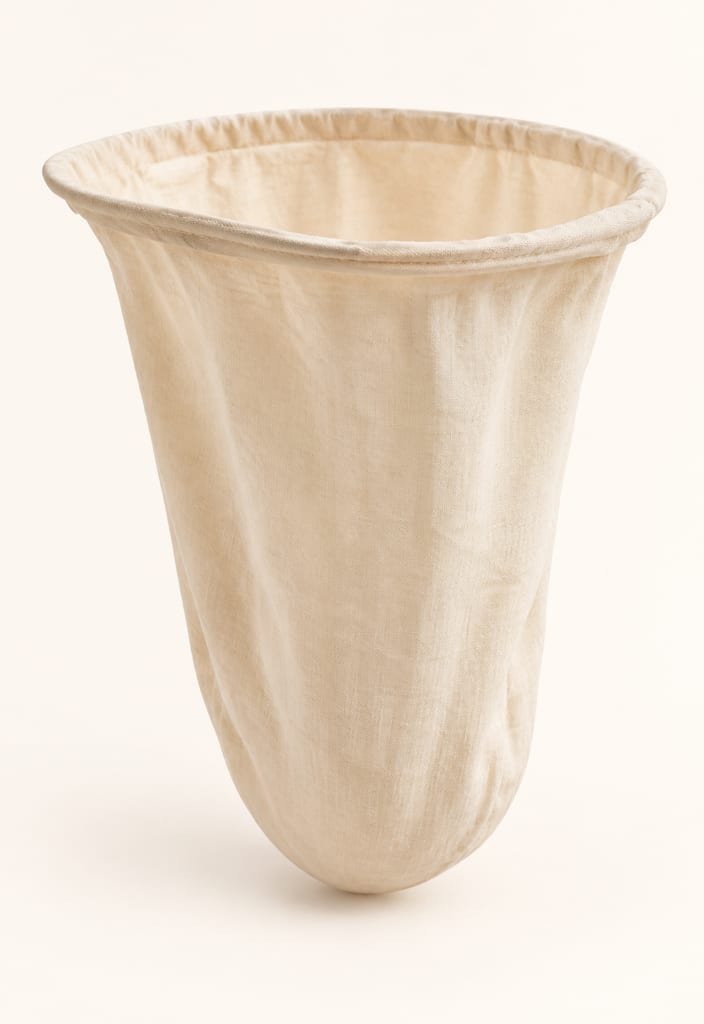
A portable alternative to the pit
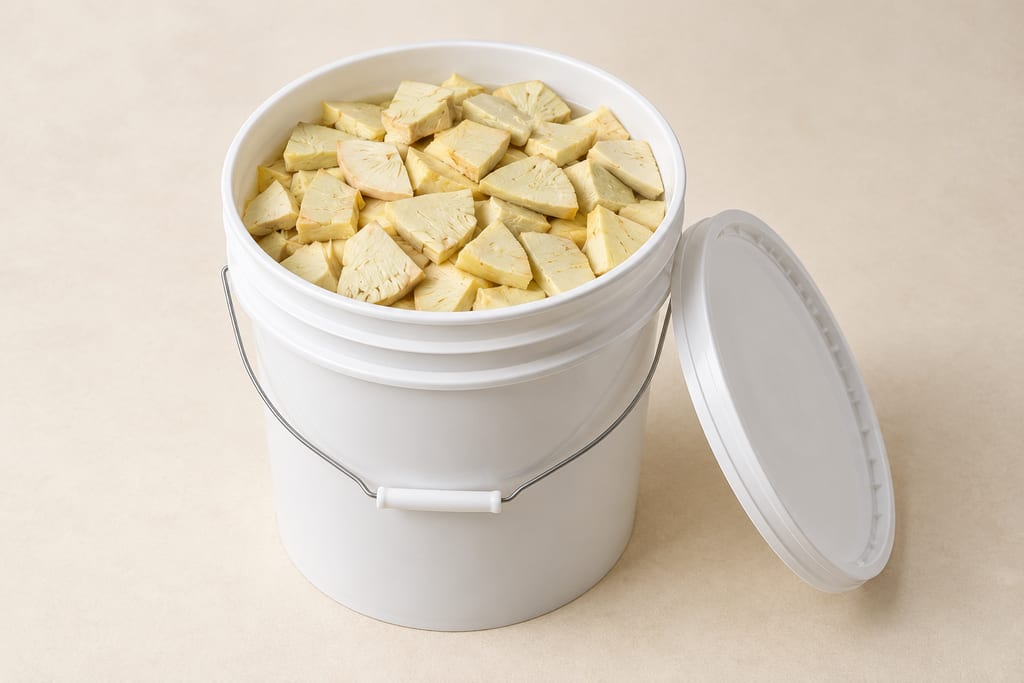
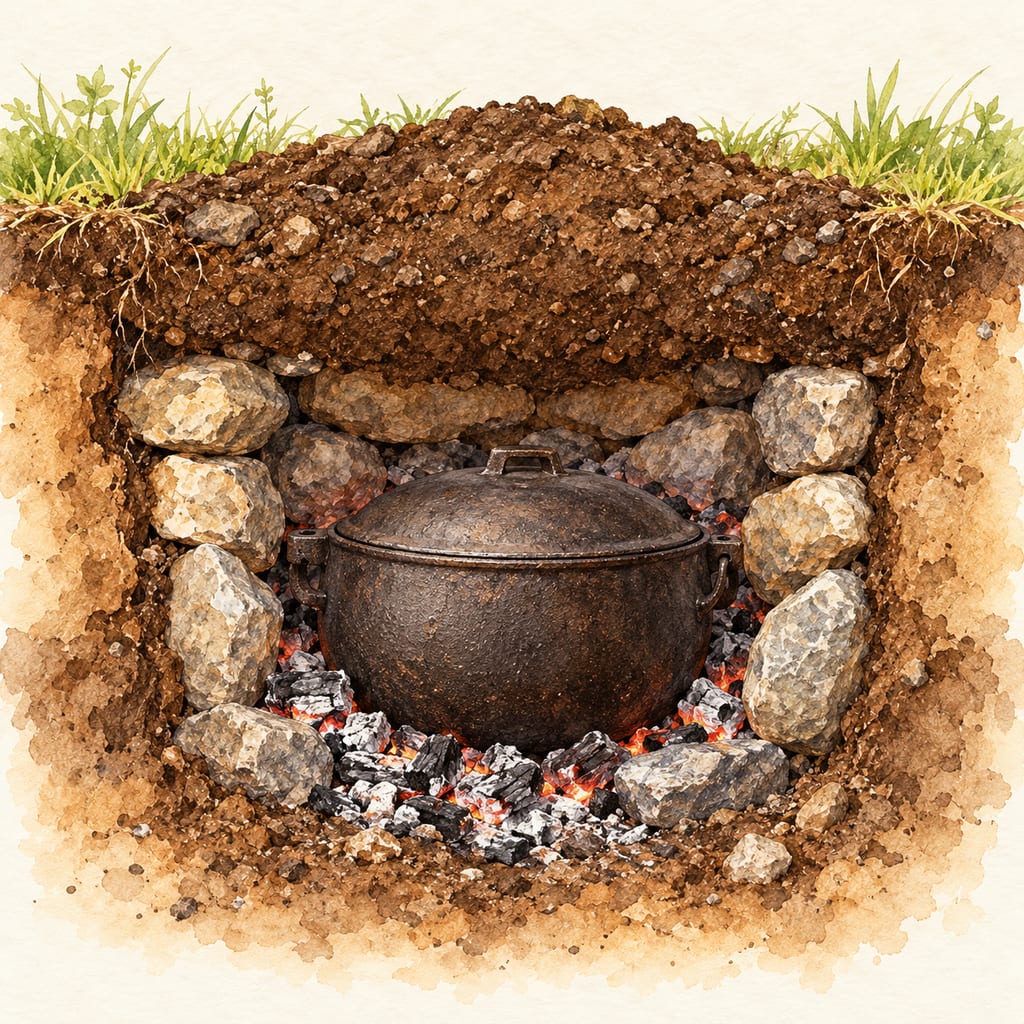
Mā is fermented breadfruit. Its traditional Pacific form is associated with leaf-lined pits, but contemporary households may use a movable container instead. A University of Hawai‘i CTAHR guide names clean, sealable, food-safe containers and gives five-gallon buckets, coolers and large sealable bags as examples. These are practical alternatives in the guide, not evidence that a modern bucket is the historical vessel or that every container behaves like a pit.
The container changes the enclosure and its portability. The source archive describes the adaptation as making the batch easier to access and move, while noting that leaves may still touch the breadfruit. Keeping leaves in contact does not turn the bucket, cooler or bag into a pit; the forms remain distinct. The guide does not establish equivalent results across the alternatives or across household conditions.
Sources for this section
Sealing and managing headspace
The CTAHR guide emphasizes a clean, sealable, food-safe container. A lid closes the container; where a large amount of air remains above the breadfruit, the guide describes placing plastic sheeting over the surface to reduce airspace. This is a response to the particular headspace in a container, not a claim that every bag or cooler needs the same arrangement.
The guide describes liquid release as the breadfruit begins to break down. After one to two weeks, its method drains excess water, mixes and recompresses the fruit to remove air pockets, with an option to refill the container. The same handling is repeated at one- to two-week intervals until the product stabilizes. These are the guide’s instructions for its mā process, not a universal schedule for every Pacific breadfruit fermentation.
Sources for this section
What the documentation leaves open
The source documents use in Hawai‘i and supports a modern-adaptation association there. It gives a five-gallon size for the bucket example but no dimensions, capacity for the cooler or bag, material specifications for every form, or procurement advice. It also does not supply a first-use date for the adaptations. Those absences do not erase the documented practice; they limit what can responsibly be said about a particular vessel.
The photographed buckets in the Hawai‘i ʻUlu Cooperative page accompany a contemporary mā guide and show breadfruit at preparation stages. They are useful evidence of the modern container form, but the photograph does not by itself demonstrate fermentation or establish the history of bucket use. Traditional pit fermentation and contemporary portable-container adaptations should therefore be read as related ways of enclosing breadfruit, not as interchangeable historical evidence.
Sources for this section
History
A February 2026 University of Hawai‘i CTAHR guide documents buckets, coolers and large bags as contemporary alternatives to pits for making mā. It does not date the introduction of these adaptations.
Equipment details
CapacityThe guide identifies five-gallon buckets as a common option; it gives no capacity for the cooler or bag alternatives.
SizeDimensions are not specified.
PowerNo power The container is a passive enclosure and uses no powered mechanism.
How you get oneNot established The cited guide describes container types but does not specify where or how to obtain them.
CareUse a clean, sealable, food-safe container. The guide does not set out a separate cleaning or between-batch care regimen.
Limits
The guide does not establish that buckets, coolers and bags perform equivalently in every household or under all conditions.
Source →Places
Hawai‘i
Documented use · Region evidenceA documented modern use, not a claim that the container form originated in Hawai‘i.