A vessel is part of the curing method
A crock, tub or chest does more than contain fish or meat. It determines how deeply pieces can be layered, whether liquid released from the food remains around it or drains away, and how a cover or follower can hold the load below brine. These are related forms, not one standard vessel with interchangeable details.
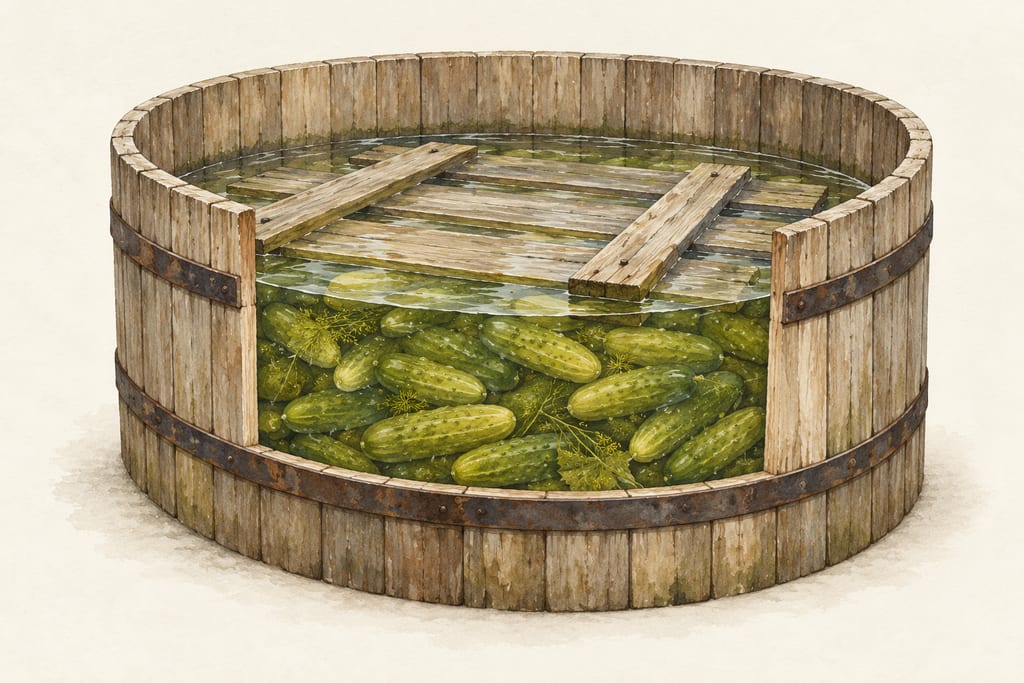
The distinction between dry salt packing and brine salting matters. In dry packing, salt lies between layers and liquid may drain or collect. In a brine-retaining cure, exuded liquid stays with the food and changes the surrounding solution. A weighted board or plate can keep food below the liquid where that method calls for submersion. A drain or tap belongs only to a vessel and process designed to remove liquid; adding one to a retaining setup changes its operation.
Sources for this section
Stoneware, wood and the broader container family
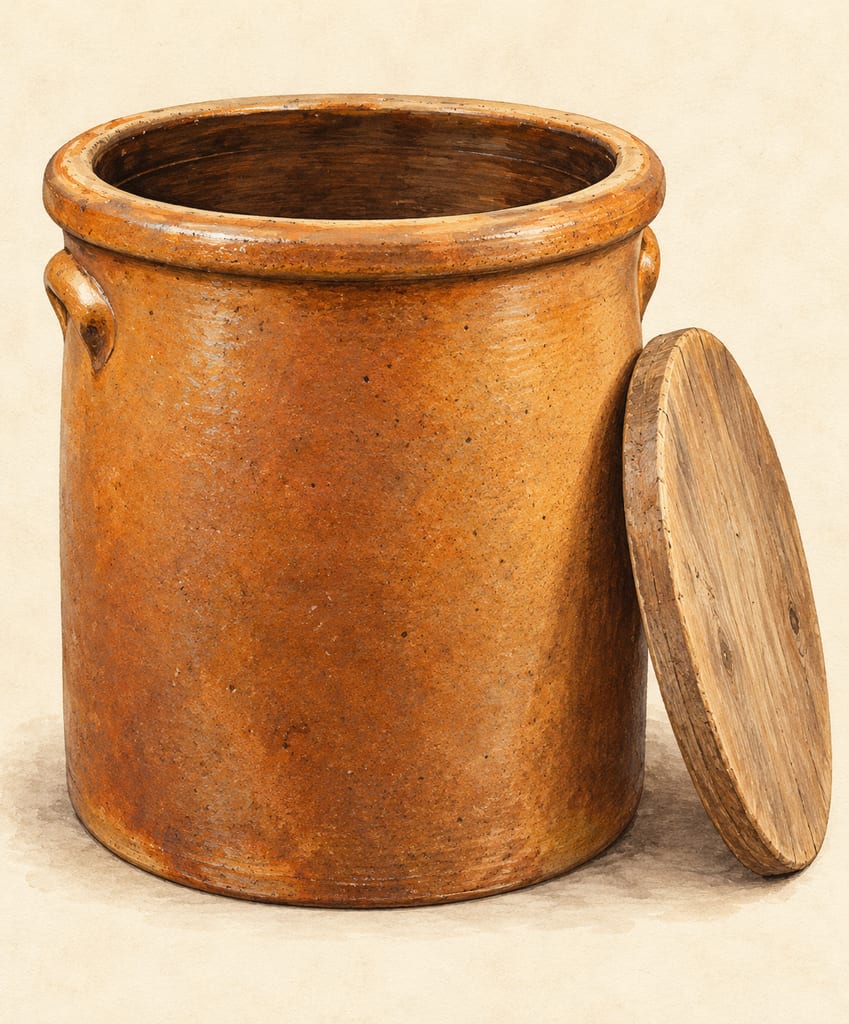
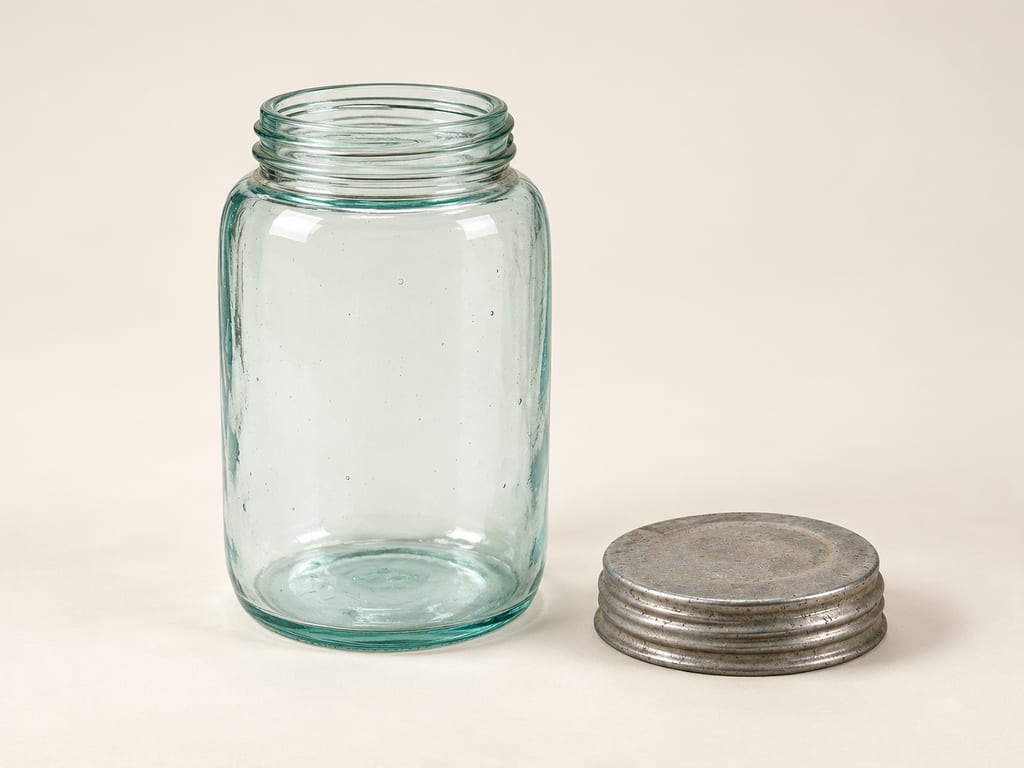
The U.S. Fish and Wildlife Service’s 1945 home-curing leaflet describes a set of small stoneware crocks for brine salting and larger tubs or cut-down barrels for washing or preliminary brining. It recommends stoneware on the stated grounds that it is unlikely to leak and does not absorb foreign flavors through its walls. The leaflet gives examples from one to five gallons, including two two-gallon crocks for a household preserving less than fifty pounds of fish. Those figures describe that leaflet’s home-use scenario, not a general sizing rule for meat, fish or commercial batches.
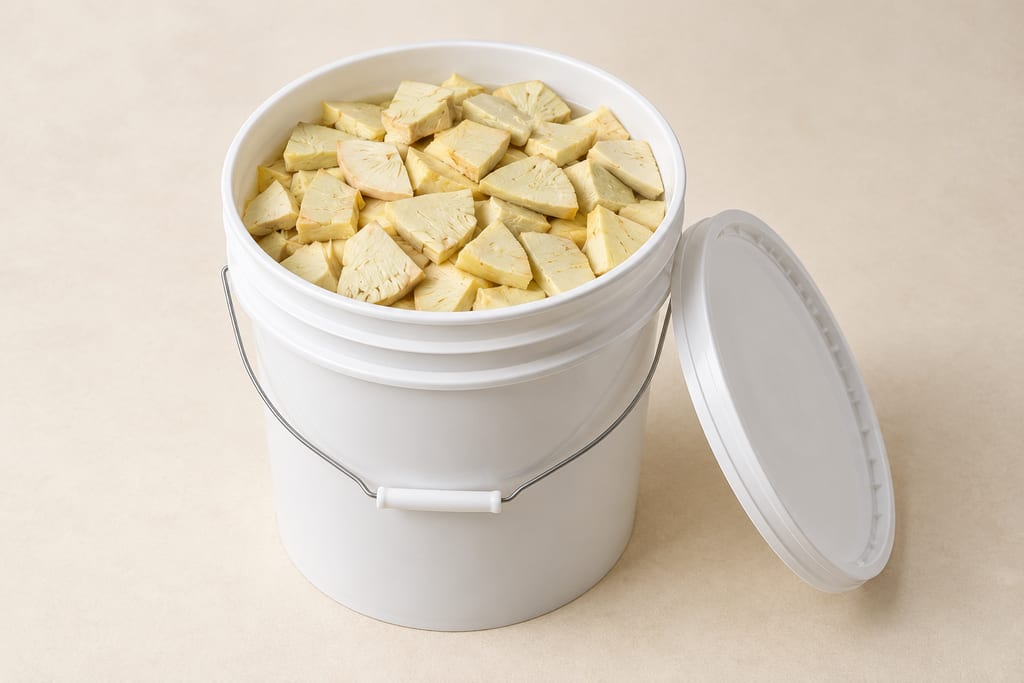
Other forms in this family include rectangular chests and contemporary polymer totes. They are not interchangeable with stoneware crocks or wooden barrels: their materials, construction and capacity differ. A lid, follower board, plate, weight, drain or tap should appear only where the particular vessel and method support it.
Sources for this section
Use in different places
The American government leaflet is a historical record of household fish curing in the United States, not evidence that this vessel family originated there. A separate photograph documents fish packed between coarse sea-salt layers in a bucket at Guet Ndar in St. Louis, Senegal. The image identifies the salt-packing vessel but not its material, and it shows fish after removal from the bucket as well as fish inside it. It is evidence of one documented practice, not a universal Senegalese vessel form.
The two records also describe different stages and containers. The historical U.S. guide explicitly names stoneware crocks, tubs and cut-down barrels; the Senegal photograph describes a bucket for coarse-salt packing. Neither source licenses collapsing dry salt packing, brining and later fermentation into one process. Salt curing may be followed by fermentation or drying, but salting by itself does not establish that fermentation occurred.
Sources for this section
Choosing and interpreting a vessel
Start with the documented job and the vessel’s material and construction. A shallow container may suit washing or preliminary brining; a deeper crock can hold layered food and liquid. A follower or cover matters when the described process requires the food to remain submerged. Whether liquid is retained or drained is a method choice, not a decorative feature.
Historical equipment descriptions are useful for understanding the kinds of vessels people used, but the 1945 leaflet’s instructions are not current validated food-safety guidance. The container alone cannot establish a safe salt concentration, cure time, temperature or storage life. Those decisions belong to a current, validated process for the specific food and method.
Sources for this section
History
A 1945 U.S. Fish and Wildlife Service leaflet documents home use of stoneware crocks, tubs and cut-down barrels. A 2015 photograph documents fish being packed with coarse salt in a bucket in Guet Ndar, St. Louis, Senegal. Neither source establishes the first use of this family.
Equipment details
CapacityThe 1945 NOAA leaflet lists 1–5 gallon stoneware crocks and says a household salting less than 50 pounds of fish could use two 2-gallon crocks. Those are historic home-curing recommendations, not a universal capacity range.
SizeNo general dimensions are established for this family. Vessel dimensions vary by type and intended load.
PowerNo power The container is passive; it does not control the curing environment.
How you get oneNot established The sources document vessel forms and uses but do not establish current makers, supply or availability.
CareThe NOAA leaflet favored stoneware because it described little danger of leakage and no absorption of foreign flavors by the walls. It called for a tight-fitting cover. These are historical observations, not a current cleaning or food-safety standard.
Made of
- Stoneware — Vessel body
The 1945 U.S. Fish and Wildlife Service leaflet recommends stoneware crocks for home brine-salting. - Wood — Vessel body and cover
Tubs and cut-down barrels are documented for washing or preliminary brining; a wooden cover can be weighted to keep food below the brine. - Polymer — Contemporary vessel body
A contemporary container option, distinct from the historical stoneware and wooden forms.
Limits
The 1945 home-curing instructions are historical and are not a validated current recipe or food-safety procedure.
Source →Places
United States
Historical attestation · Country evidenceThe 1945 national Fishery Leaflet documents home brine-salting with stoneware crocks and tubs or cut-down barrels; this does not claim a U.S. origin for the vessel family.
St. Louis
Documented use · Locality evidenceThe source describes fish packed between coarse sea-salt layers in a bucket at Guet Ndar, St. Louis; it does not identify the vessel material or claim a local origin for the vessel family.