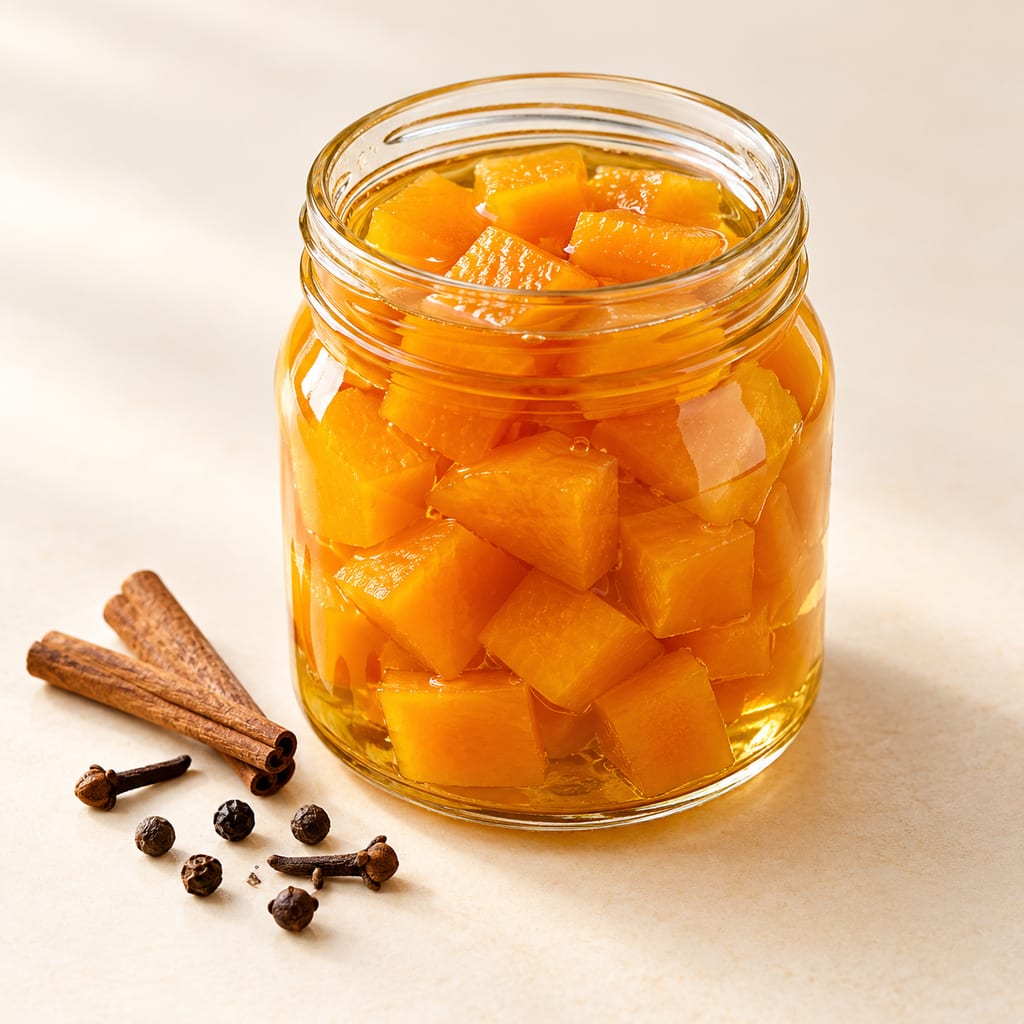
Ball sweet pumpkin pickles
Ball sweet pumpkin pickles: Cupboard: exact published Ball formulation and water-bath process.
 FermenteaWhere food goes to change
Equipment · food-and-preserving-jars
Threaded, heat-processing jars hold food and a fitted lid during a tested canning process; jar size and process belong to the specific recipe.
Home-canning jars are containers used with a compatible closure during a recipe-specific heat process. The National Center for Home Food Preservation recommends regular- or wide-mouth threaded Mason-type jars with self-sealing lids. Their familiar form includes a glass body, threaded neck and replaceable lid system; the tested recipe determines which jar size and closure to use.
The jar does not preserve food on its own. Preservation depends on the complete product-specific recipe and its specified fill, headspace, canner, processing time and cooling instructions. A hot fill, an old lid or a vacuum observed after cooling is not a substitute for that process.
NCHFP lists half-pint, pint, one-and-a-half-pint, quart and half-gallon home-canning jars. Its guidance limits half-gallon jars to very acidic juices. The page also says most commercial pint- and quart-size mayonnaise or salad-dressing jars can be used only for acid foods, with greater risk of seal failure and breakage than purpose-made jars.
Use the size named in a current tested recipe. Process schedules can change with the food, pack style, jar size and altitude. A recipe that allows pints does not automatically authorize a larger jar, and one jar's successful seal does not establish a safe process for another food.
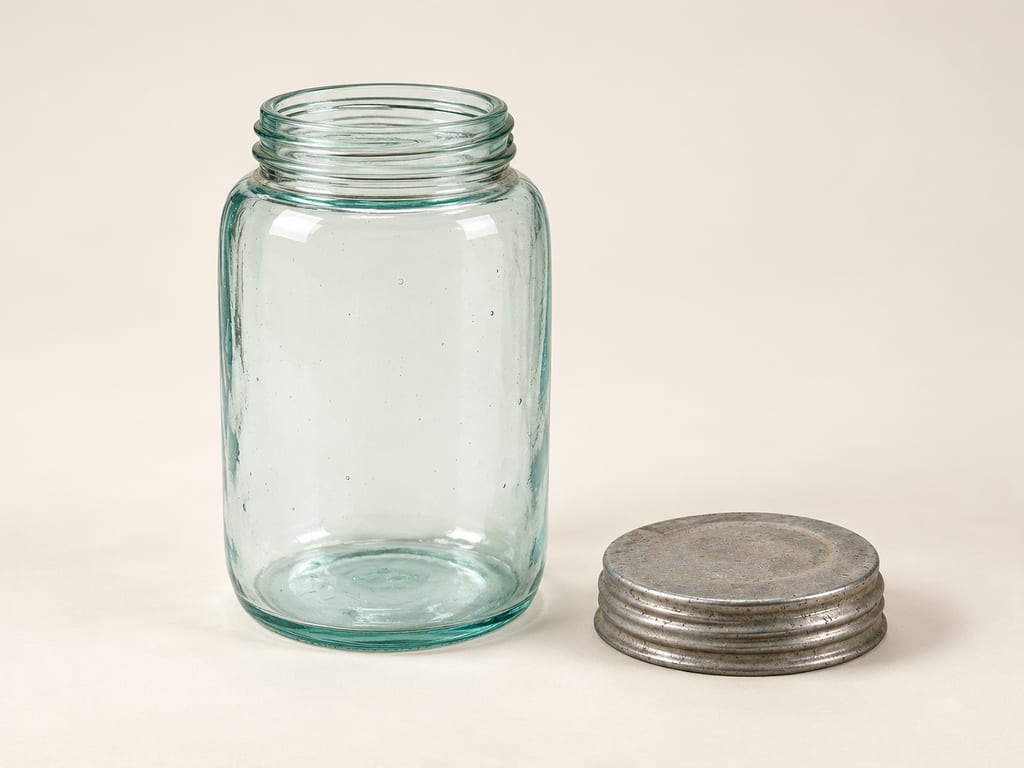
Auckland Museum records an Atlas Mason's preserving jar associated with New Zealand and made in the United States. Its catalog describes an aqua glass body, a metal screw-top lid, a screw-top lip, square shoulders and a circular base. The museum supplies measurements for this particular object but no manufacture date; these details should not be read as standard dimensions for all canning jars.
Te Ara describes household bottling of surplus apples, pears, plums and tomatoes in New Zealand for winter use, when fresh fruit was expensive and difficult to find. It identifies a University of Otago home-science pamphlet from 1953 and cites M. A. Cushen's 1957 book. This evidence places domestic fruit bottling in a New Zealand historical context; it does not make the museum jar the specific vessel shown in the pamphlet.
The museum jar is an object-history example, not proof that its original cap meets present-day home-canning guidance. For current work, choose a jar and lid intended for the named process, check the vessel and closure, and follow a current tested recipe for the food and jar size. Manufacturer and recipe directions govern handling and preparation.
The New Zealand historical source records bottling as a domestic preservation practice but does not provide the page's operating instructions. It also warns that its historical images may require separate permission; this page uses text facts only and attributes the independently licensed Auckland Museum photograph in the gallery.
Te Ara describes domestic fruit bottling in New Zealand and cites a University of Otago pamphlet from 1953. Auckland Museum records an Atlas Mason preserving jar manufactured in the United States and associated with New Zealand, without a date. Current NCHFP guidance describes threaded home-canning jars and matched lids.
A generic preserving jar, an old metal screw cap or a vacuum after cooling does not validate a canning process.
Source →Processing time and method are specific to the food, pack style, jar size and altitude; do not infer a schedule from the jar itself.
Source →Te Ara's historical bottling account describes New Zealand domestic practice; it is not current canning instruction.
Source →Te Ara documents household fruit bottling for winter use; Auckland Museum records one Atlas Mason jar associated with New Zealand. Neither source establishes class origin.
The museum records the place of manufacture for its Atlas Mason example; this is not an origin claim for all canning jars.
Ball sweet pumpkin pickles: Cupboard: exact published Ball formulation and water-bath process.
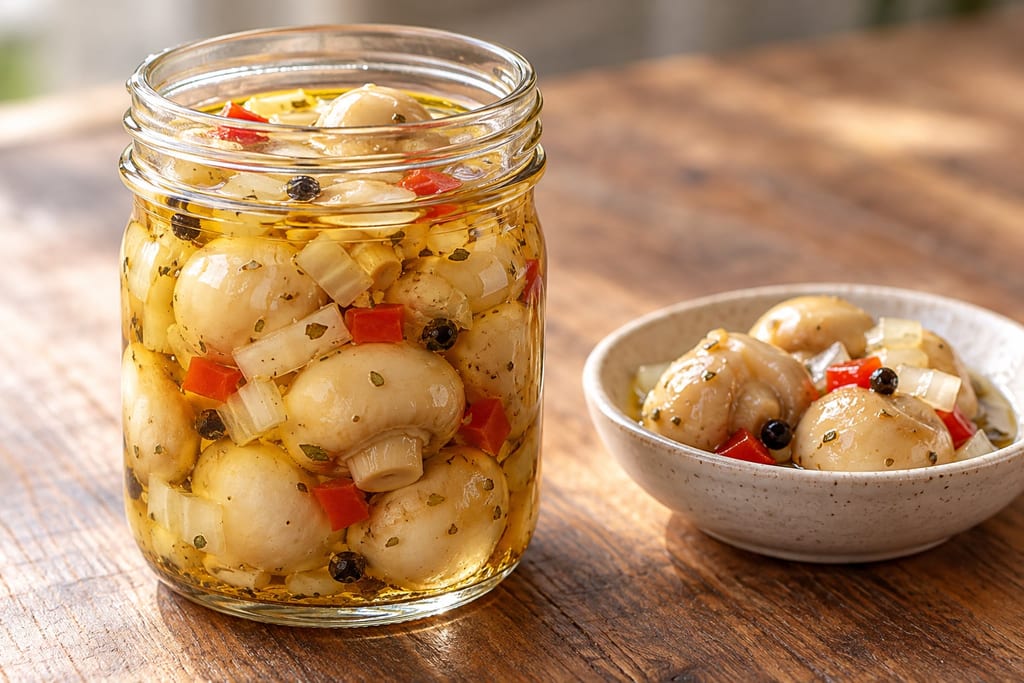
Small edible mushrooms are briefly cooked and packed in a seasoned vinegar marinade, a sweet-sour preserve served cold in Poland and neighbouring cuisines.
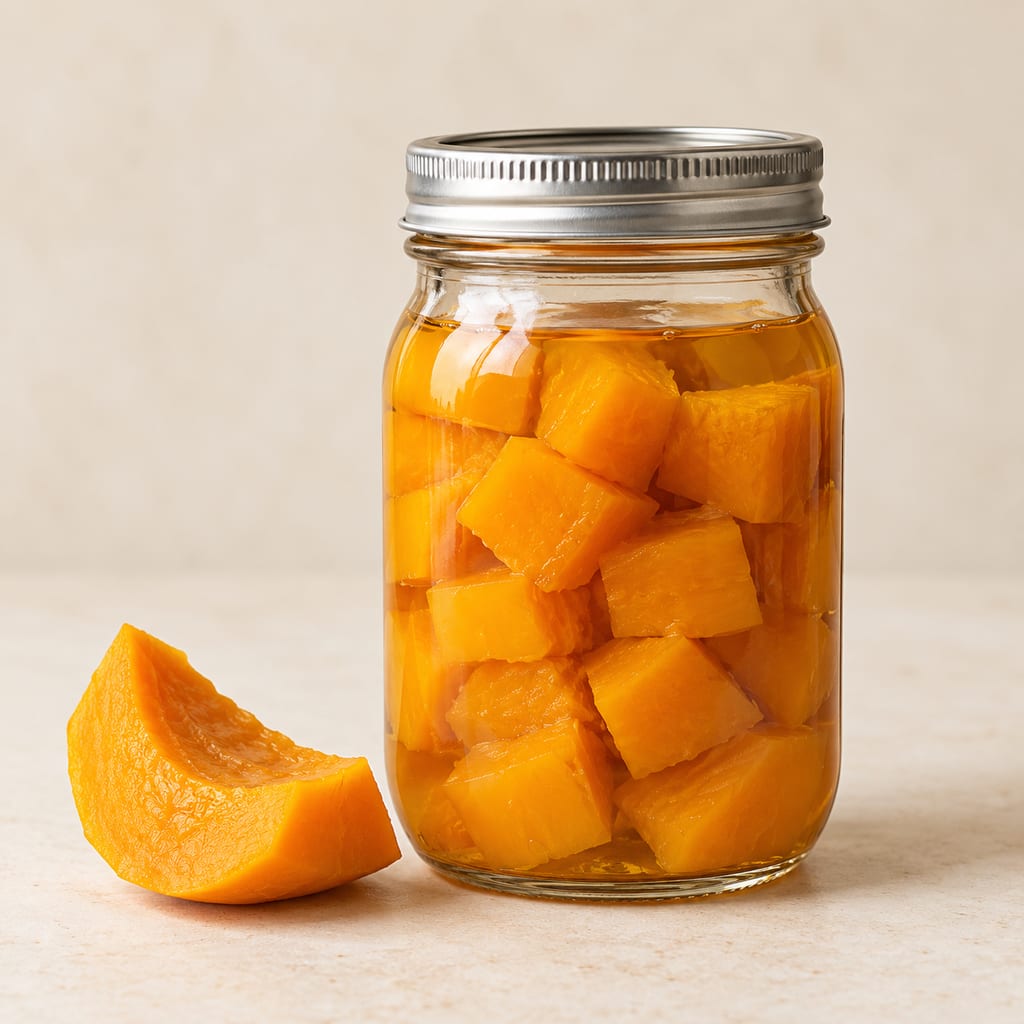
Plain pumpkin cubes hot-packed in water and pressure-canned for later cooking. The pieces stay intact during canning; mash them only after opening.
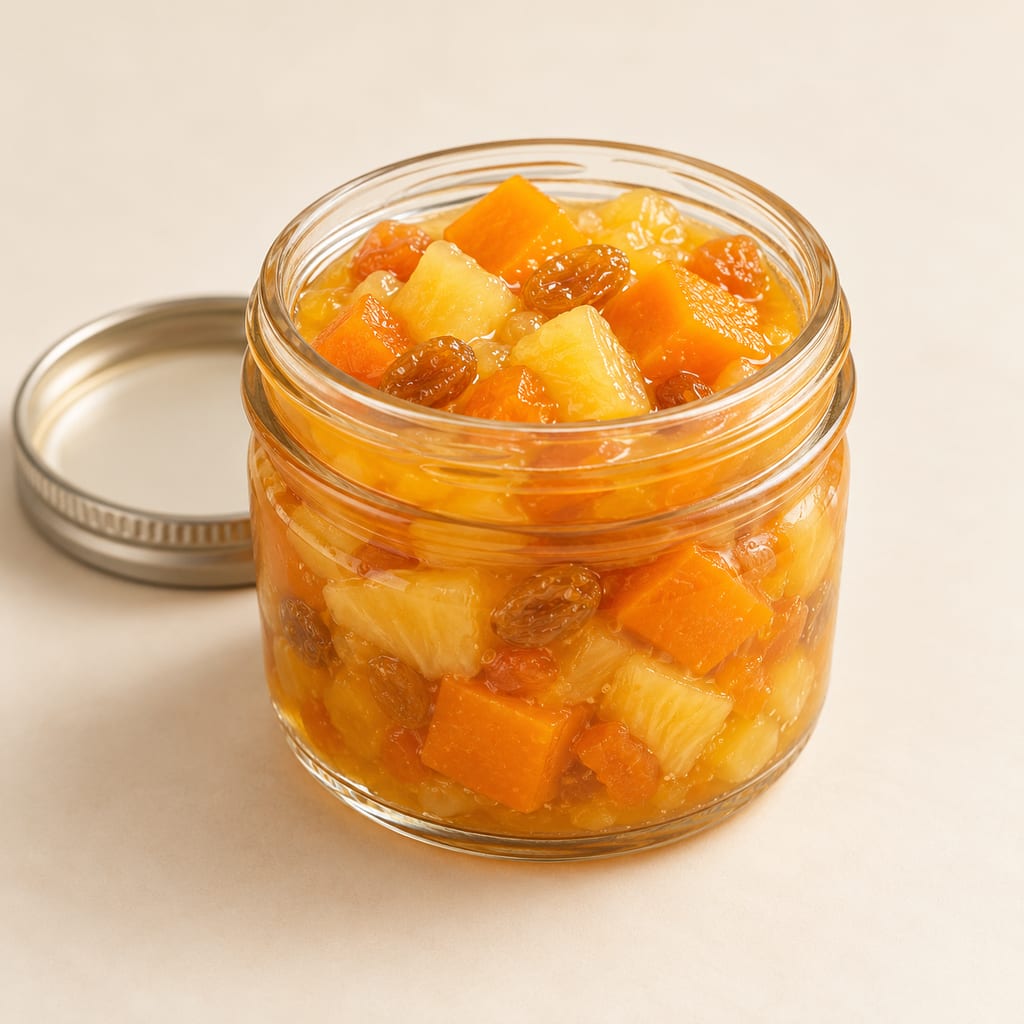
Pumpkin and pineapple Autumn Glory compote: Cupboard: exact Bernardin formulation and water-bath process.
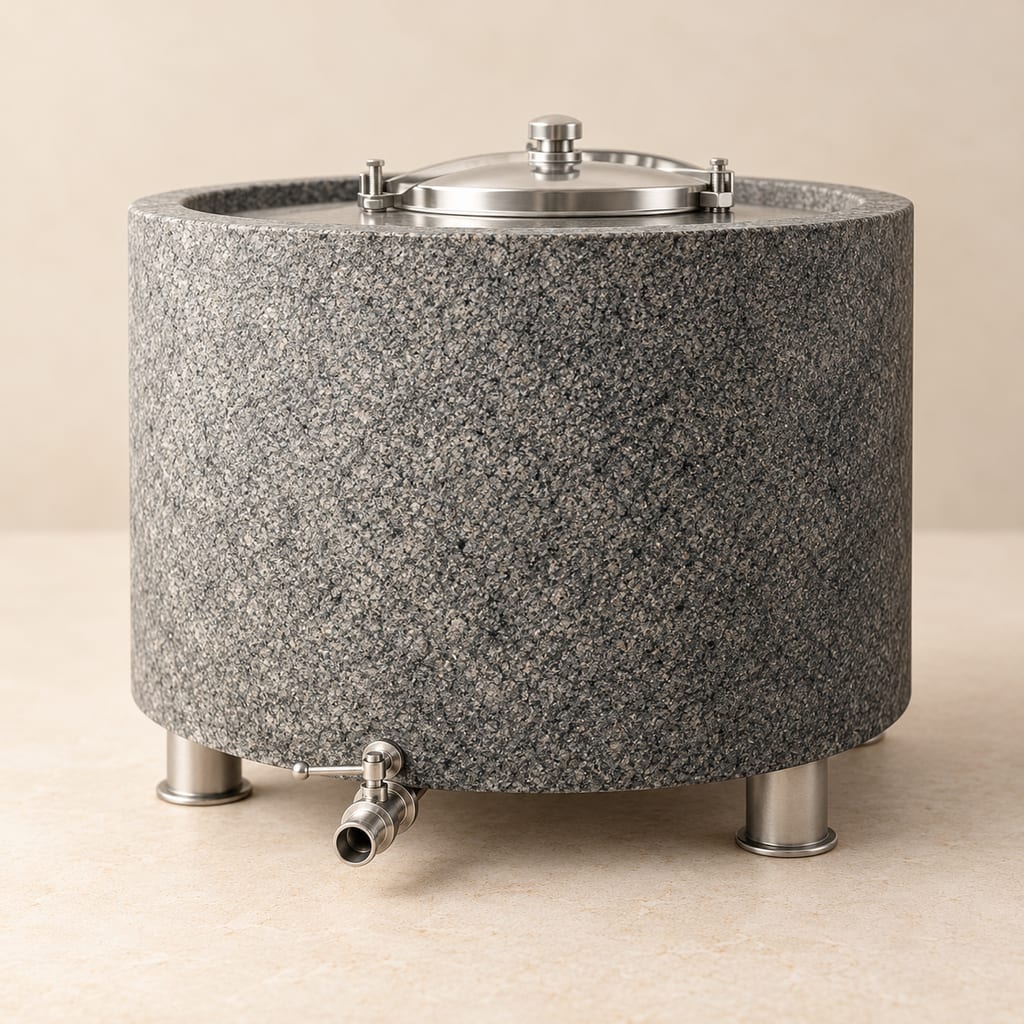
A wine fermentation and maturation tank carved from a single granite block, with a thick mineral shell and fitted metal closures and taps.
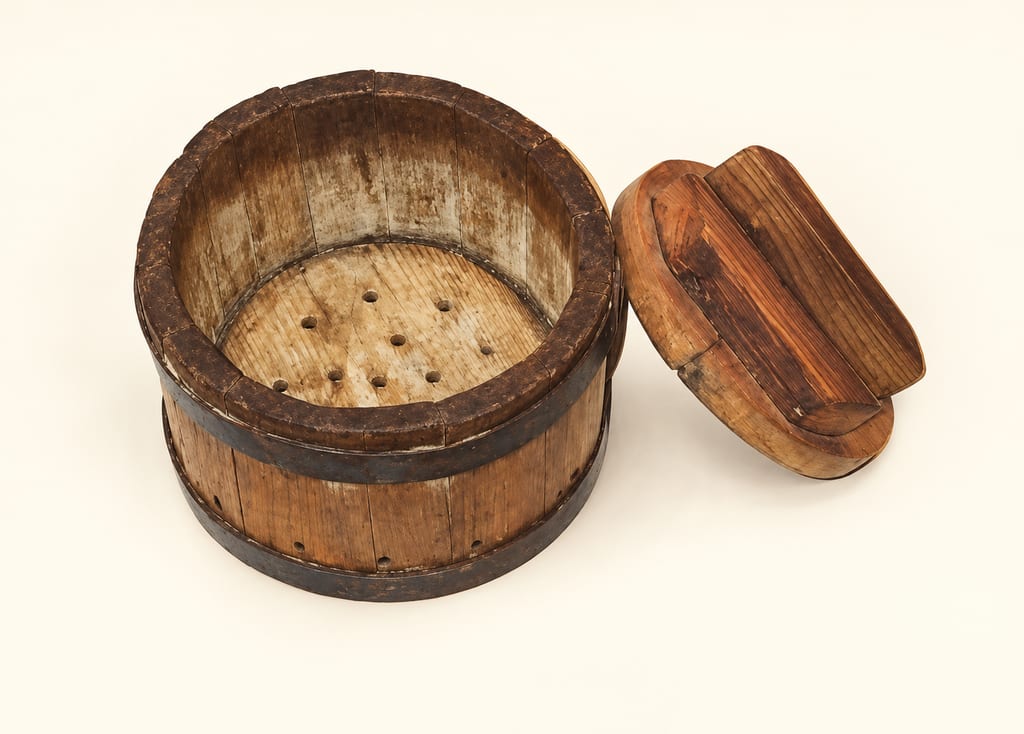
A cheese press applies weight or mechanical force to curds in a draining vat or mould. Tiree’s wooden fiodhan, stone weights, screw presses and a documented New Zealand lever press show distinct forms, not one standard design.
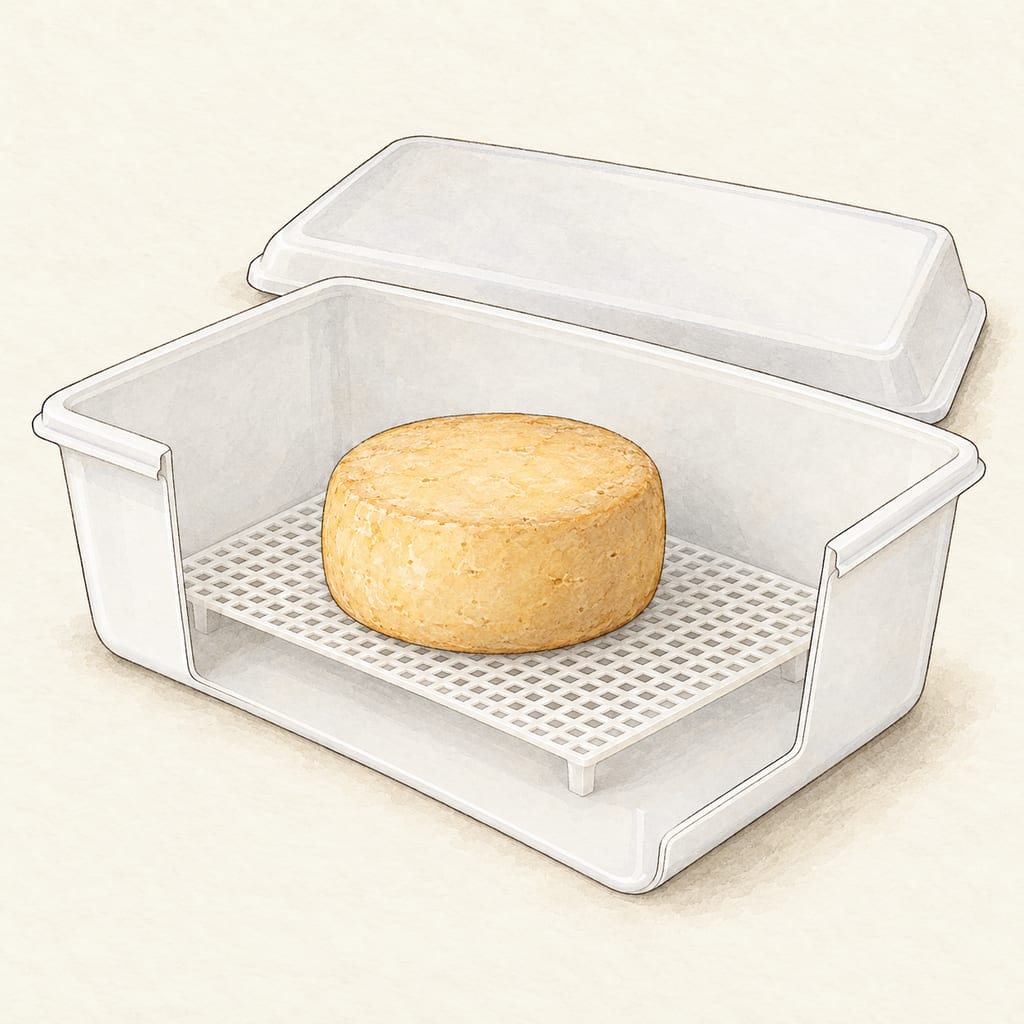
A lidded box used inside a cheese cave or cool cellar to create a small humid ripening space. A raised mat keeps cheese off the base so its underside can breathe and drain.
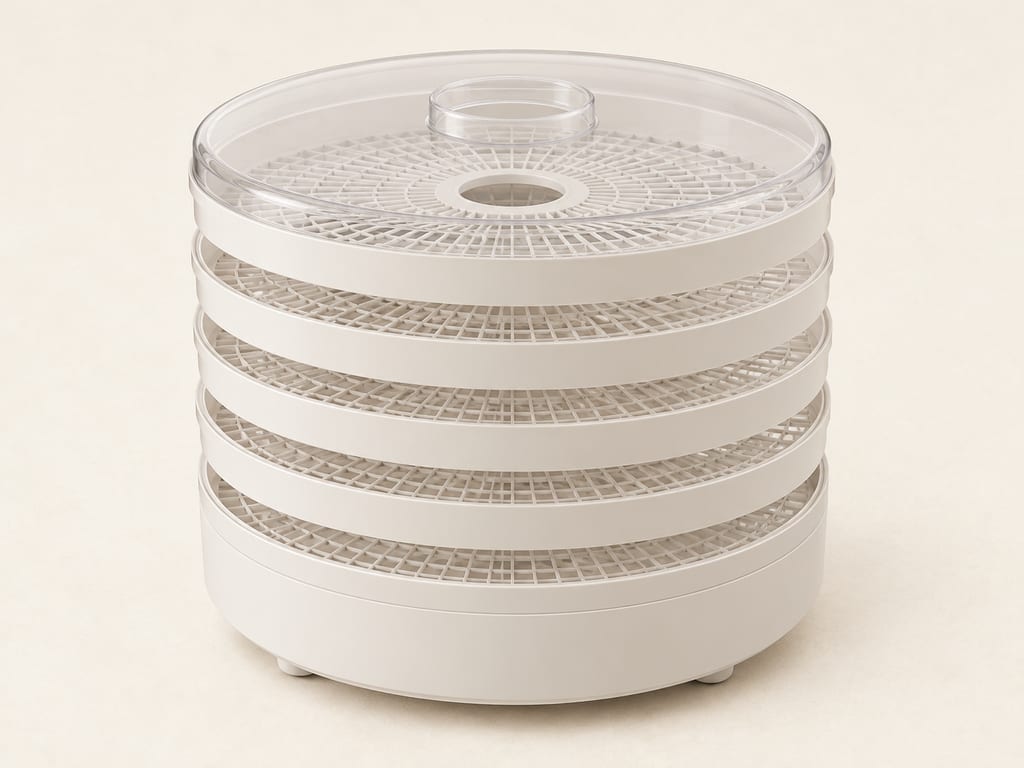
A countertop electric appliance circulates warmed air across food on open trays to remove moisture. Round stackable and rectangular cabinet designs use different airflow paths; materials, capacity and controls vary by model.
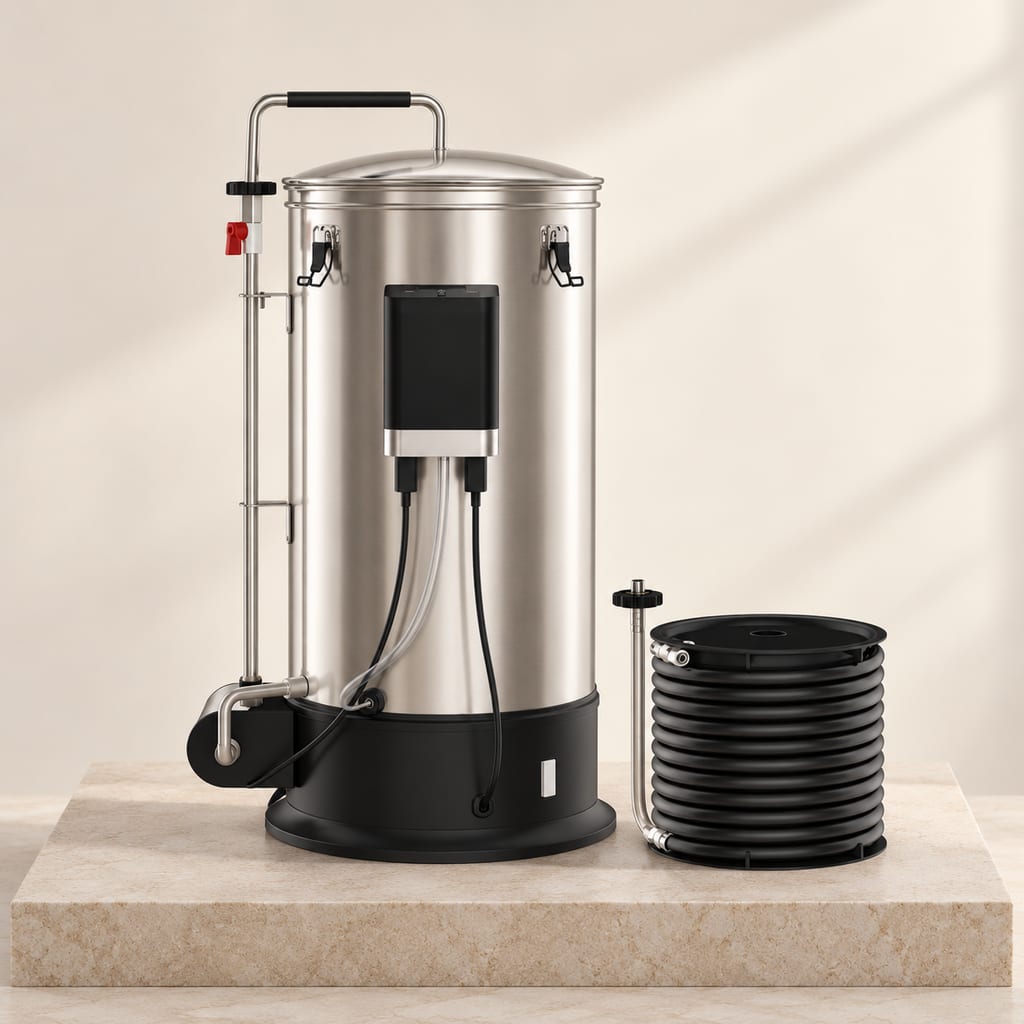
A 30-litre stainless electric all-grain brewing system with a removable grain basket, controlled heat, pump-driven wort recirculation and counterflow chilling. Electrical ratings and controls vary by revision.
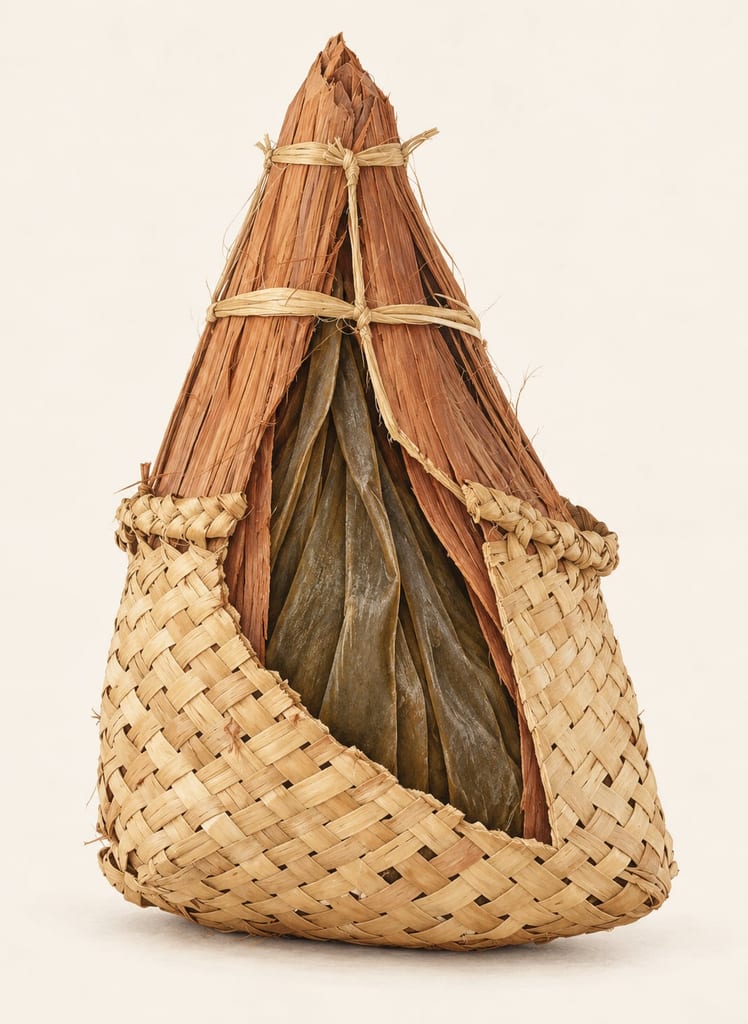
Pōhā are traditional southern Māori storage bags made from bull kelp. Ngāi Tahu accounts describe tītī stored in the kelp bag, with bark and a woven kete protecting some documented examples during transport.
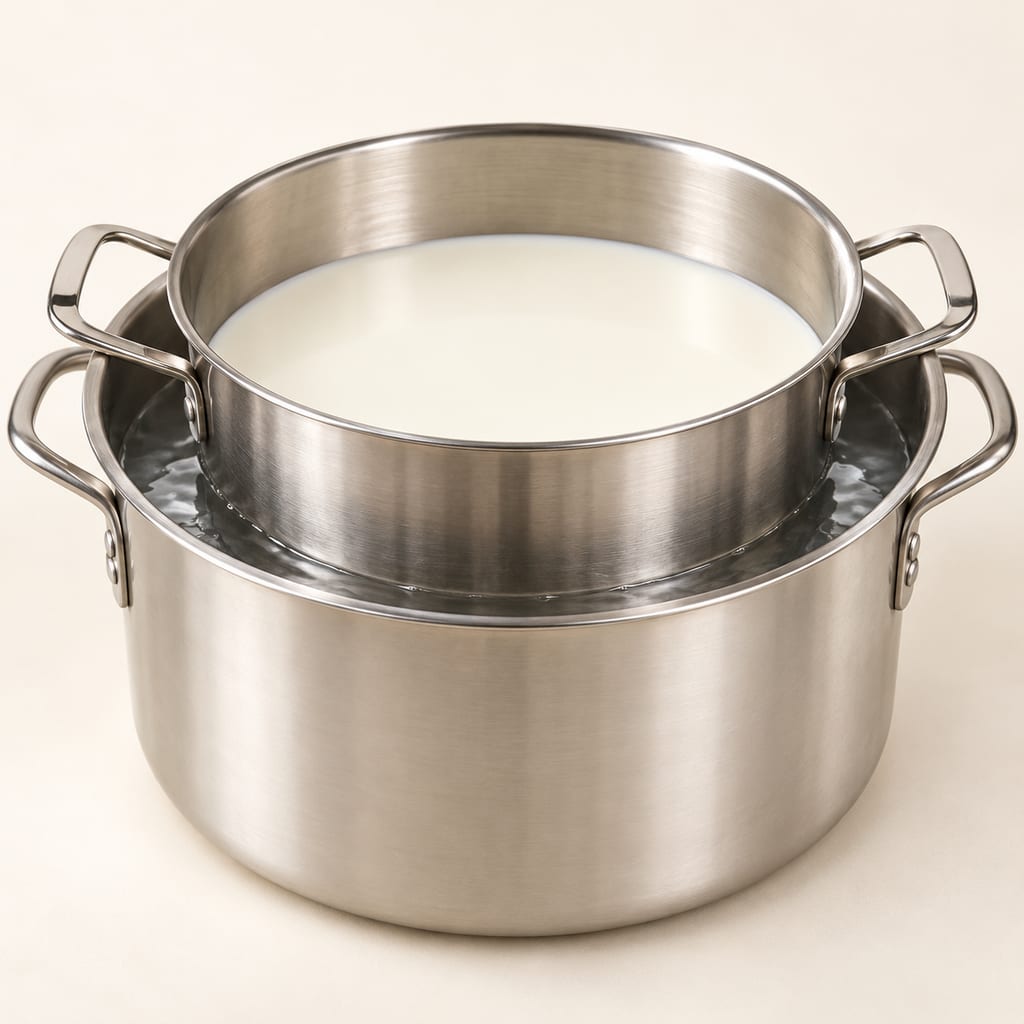
A separate inner pot holds milk or curd while a larger vessel holds hot water. In a documented cheesemaking setup, the inner pot’s handles rest on the outer vessel’s rim; this differs from a rack or trivet bearing a pot from below.
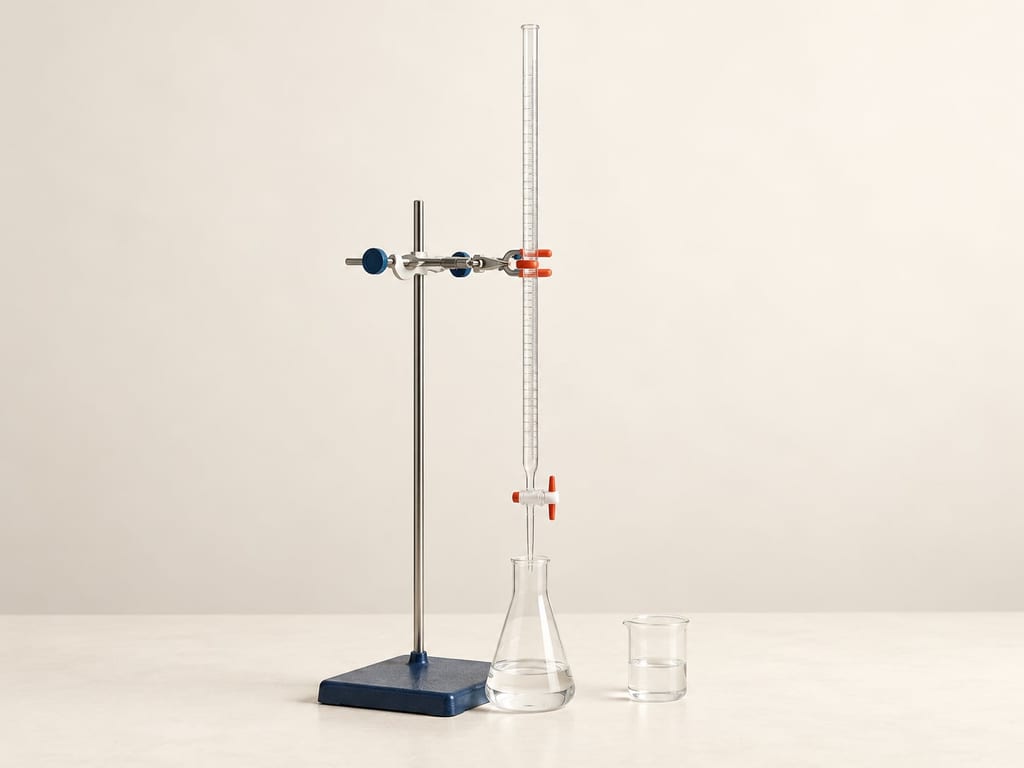
Titration equipment measures how much reagent reacts with a sample to reach a defined endpoint. Glassware, indicators and electronic endpoint detection vary; titratable acidity and pH are related but distinct measurements.
No community contributions have been published for this entry yet.
Sign in to contribute. Published comments and photos are free to read.
National Center for Home Food Preservation, University of GeorgiaCurrent equipment guidance · Jar forms · Sizes · Closures
Recommended Jars and LidsNCHFP recommends regular- or wide-mouth threaded Mason-type home-canning jars with self-sealing lids as the best choice.
Its listed capacities include half-pint, pint, one-and-a-half-pint, quart and half-gallon jars; half-gallon jars are restricted to very acidic juices.
It notes that most commercial pint- and quart-size mayonnaise or salad-dressing jars may be used only for acid foods, with more seal failures and breakage expected.
Cited in: A jar built for the canning process; Sizes and closures are not interchangeable; Use current instructions
National Center for Home Food Preservation, University of GeorgiaProcess dependence · Jar size limits
Selecting the Correct Processing TimeCurrent process schedules depend on the product, pack style, jar size and elevation; the correct recipe schedule must be followed.
NCHFP notes that quart jars generally need more time than pint jars for boiling-water processing, while the schedule remains food-specific.
Cited in: A jar built for the canning process; Sizes and closures are not interchangeable; Use current instructions
Te Ara – The Encyclopedia of New ZealandHistorical use · Geography · Domestic history
Bottling fruitTe Ara describes bottled surplus apples, pears, plums and tomatoes used in New Zealand during winter when fresh fruit was expensive and scarce.
The page identifies a University of Otago home-science pamphlet published in 1953 and cites M. A. Cushen's 1957 book Preserving.
Te Ara warns that reproduction of its images may require separate permission; no Te Ara image is reused here.
Cited in: A New Zealand preserving-jar example; Use current instructions
Auckland Museum Tāmaki Paenga HiraForm · Materials · Manufacture · Documented use · Image reference
Jar, preserving (accession 1982.39)The museum records an Atlas Mason's preserving jar, manufactured in the United States and associated with New Zealand, with no date supplied.
The object has an aqua glass body, metal screw-top lid, screw-top lip, square shoulder and circular base; it is marked ATLAS/MASON'S/PATENT.
The museum provides object dimensions of 170 × 92 mm for the jar and 25 × 75 mm for the lid; these are specific to object 1982.39. Its image is CC BY 4.0.
Cited in: A New Zealand preserving-jar example