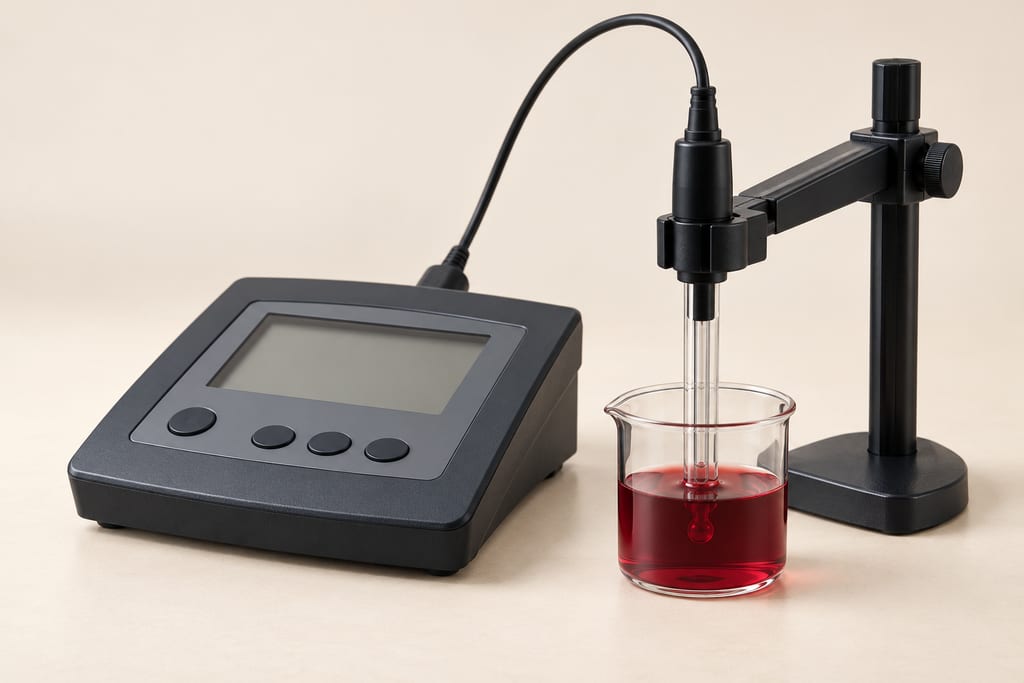
pH meter
A pH meter pairs an electronic readout with a probe to measure a prepared sample. Probe choice, calibration and representative sampling affect the reading, so the model and method must fit the food.
 FermenteaWhere food goes to change
Equipment · Instruments
Titration equipment measures how much reagent reacts with a sample to reach a defined endpoint. Glassware, indicators and electronic endpoint detection vary; titratable acidity and pH are related but distinct measurements.
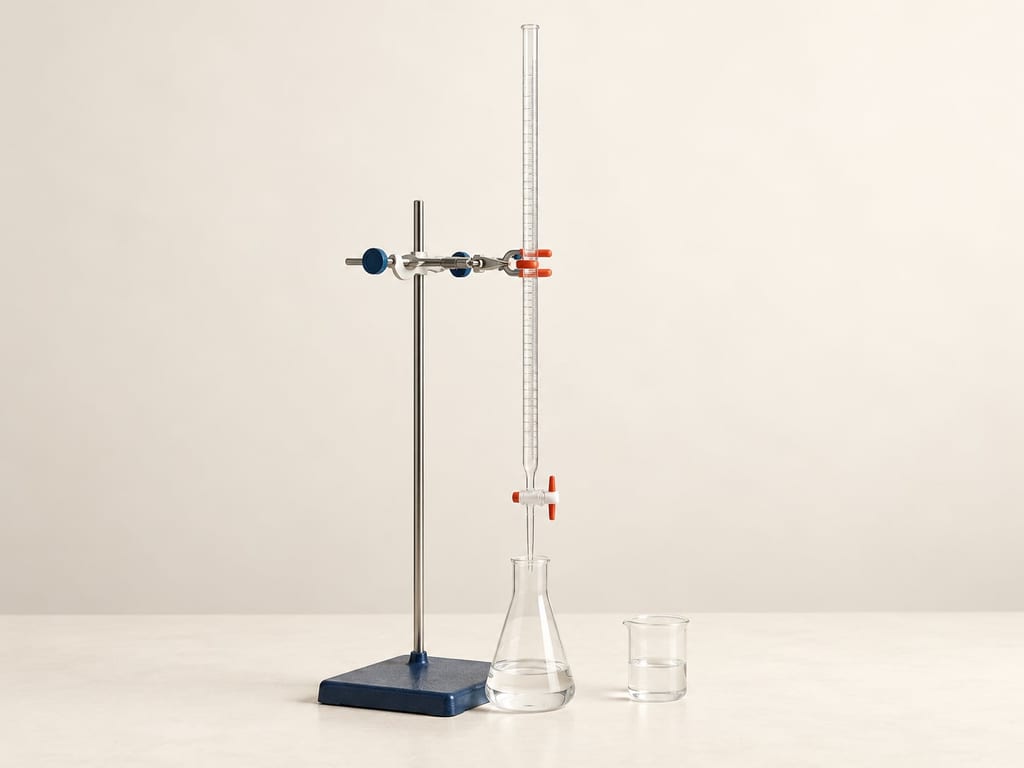
Titration equipment is the set of tools used to add a measured reagent to a sample until a defined reaction endpoint is reached. In a familiar manual arrangement, a graduated glass burette is clamped vertically on a stand above a flask. A stopcock controls the addition; the delivered volume is read from the burette. The sample vessel may be a conical flask, and the endpoint may be recognised by an indicator colour change. This is one practical form, not a universal kit specification.
Some systems use a calibrated electrode and electronic readout to follow the sample as titrant is added. Automated titrators can control dosing and record a changing signal. These approaches share the titration principle but differ in equipment, endpoint detection and the method used to calculate a result. Choose the apparatus to match the written analytical method rather than assuming every setup includes the same glassware or sensor.
Titration can estimate titratable acidity (TA): the quantity of alkali needed to bring a measured sample to a specified endpoint under a stated method. The result depends on sample amount, reagent concentration, endpoint and the way the calculation expresses the acid equivalent. It describes neutralisable acid in the sample under that procedure.
A pH meter answers a different question: it measures hydrogen-ion activity in the prepared sample at the time of measurement. In a published study of six commercial kombuchas sold in New Zealand, researchers measured pH using a glass-electrode meter and measured TA separately by titration. They used a specified sodium-hydroxide concentration and pH endpoint, then expressed the result as acetic-acid equivalent. Another study of Argentine kombucha likewise reports separate pH and TA methods. The two numbers may relate to acidity, but one cannot be substituted for the other.
Food and beverage researchers use titration to compare samples or track a chosen measure over time. UC Davis describes TA assessment in wine and other foods as useful for describing acid content and outlines a common indicator-based approach, while also noting that assessment can be performed in different ways. Kombucha studies provide examples of the method applied to that beverage; their endpoint, sample preparation, units and calculations belong to their specific research designs.
A useful comparison keeps the method consistent: sample preparation, endpoint, reagent standardisation and reporting units all affect the value. Changing any of these can make results difficult to compare, even when the product name is unchanged. A reading is an analytical result, not by itself a universal taste preference, fermentation endpoint, alcohol measurement, or safety validation. No single TA number in this equipment description defines a finished kombucha or other ferment.
The reagent and indicator are part of the analytical method, not interchangeable accessories. The kombucha paper cited here used standardised sodium hydroxide for its own analysis; its concentrations, endpoint and handling details should not be copied as a general home procedure. NIOSH classifies sodium hydroxide as corrosive and warns of skin and eye burns. When working in a laboratory, follow the method, reagent label, safety data sheet and local laboratory controls, including suitable eye and skin protection. Keep analytical samples and apparatus separate from serving equipment, and never treat a titration result as proof that a ferment is safe.
Current food-analysis and fermentation research documents manual titration apparatus and pH-based endpoint measurement, but the inspected sources do not establish an invention date for titration equipment as a class.
University of California, Davis describes titratable-acidity measurement for wine and other foods; this does not identify an origin.
A kombucha study based on retail samples in Auckland documents separate pH and titratable-acidity measurements; this is a research use, not an equipment origin.
A study of kombucha samples from Argentine producers reports titration as an acidity analysis; it does not establish equipment manufacture or origin.
A pH meter pairs an electronic readout with a probe to measure a prepared sample. Probe choice, calibration and representative sampling affect the reading, so the model and method must fit the food.
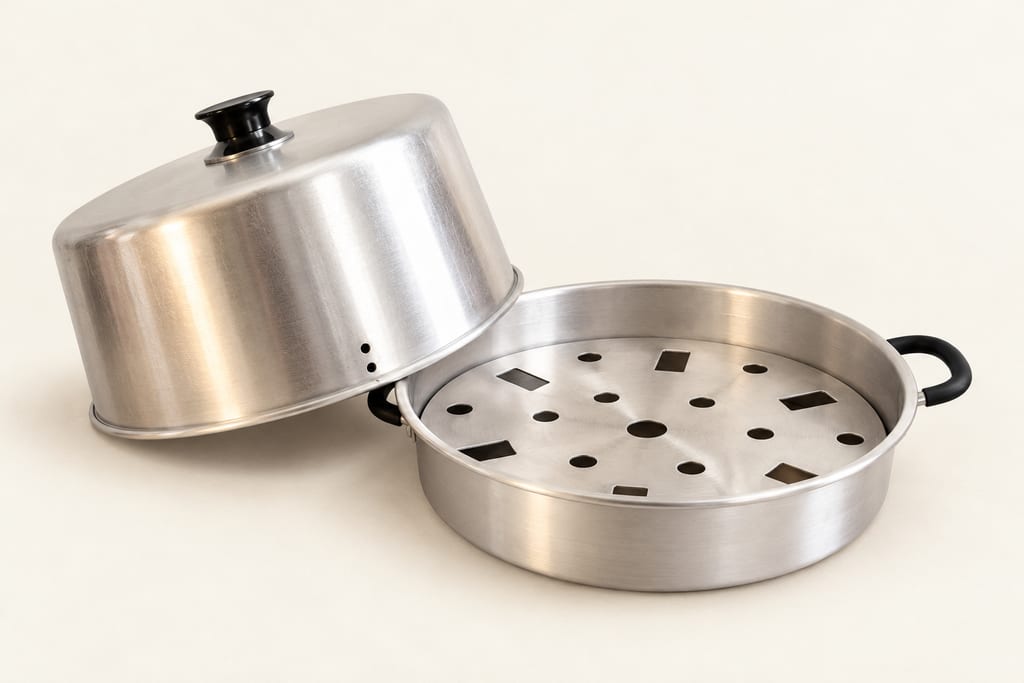
A shallow rack base and tall vented cover process jars in atmospheric steam. NCHFP limits the method to tested high-acid or acidified recipes requiring no more than 45 minutes, including altitude adjustment; this is not pressure canning.
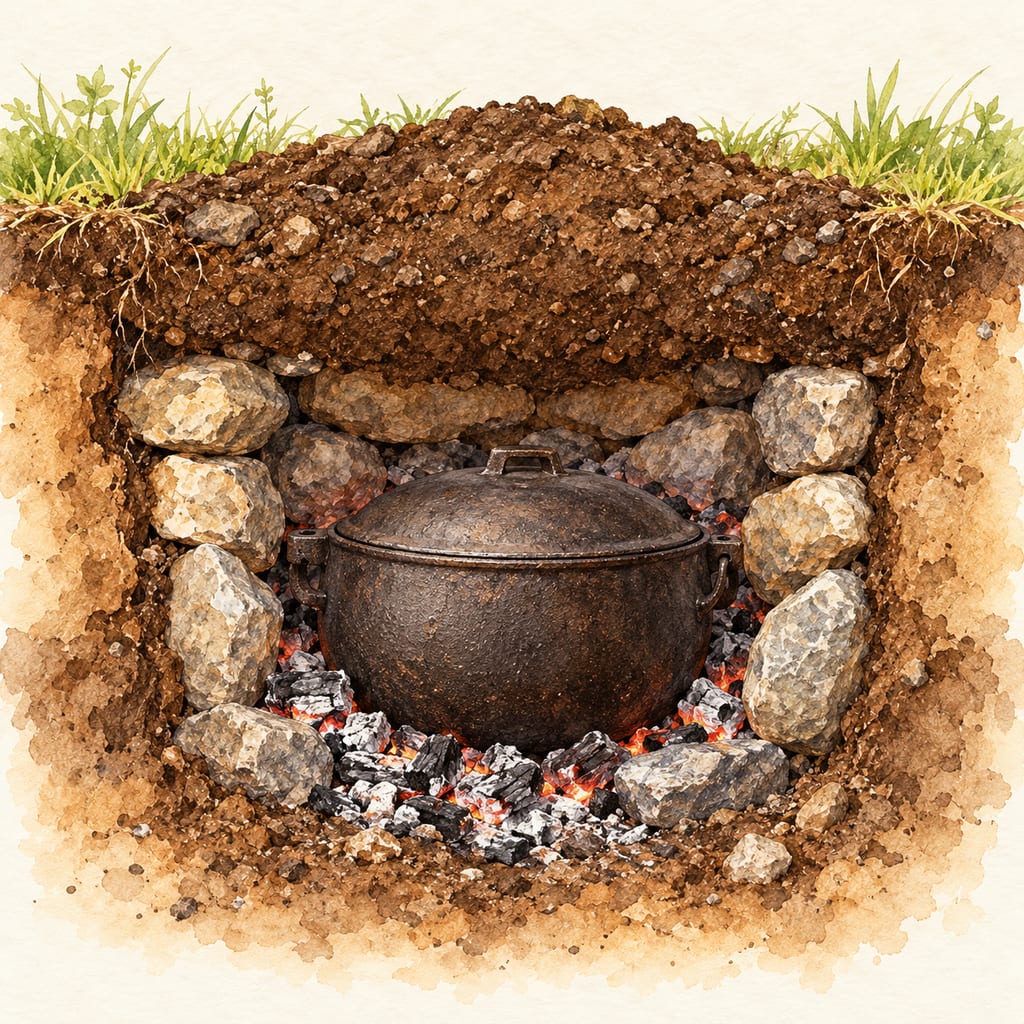
A covered iron vessel used in Maine bean-hole cooking, set into a preheated stone-lined pit and buried for a slow cook.
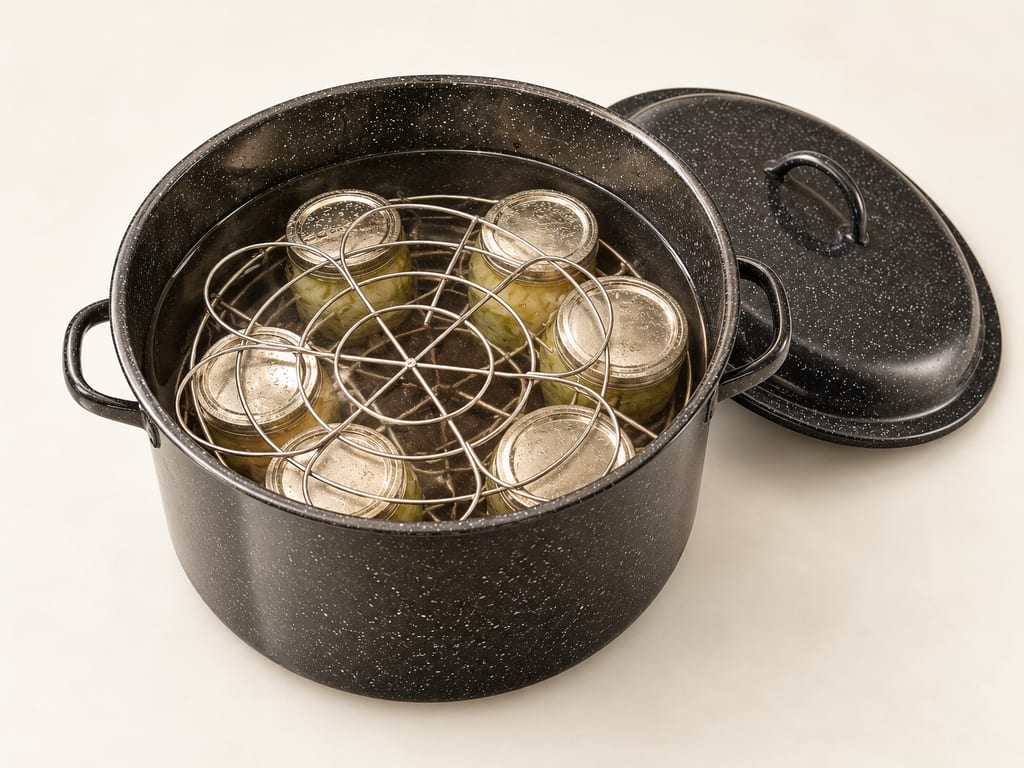
A deep, lidded pot with a removable rack processes jars beneath boiling water. It is intended for foods with tested boiling-water processes; low-acid foods require pressure canning.
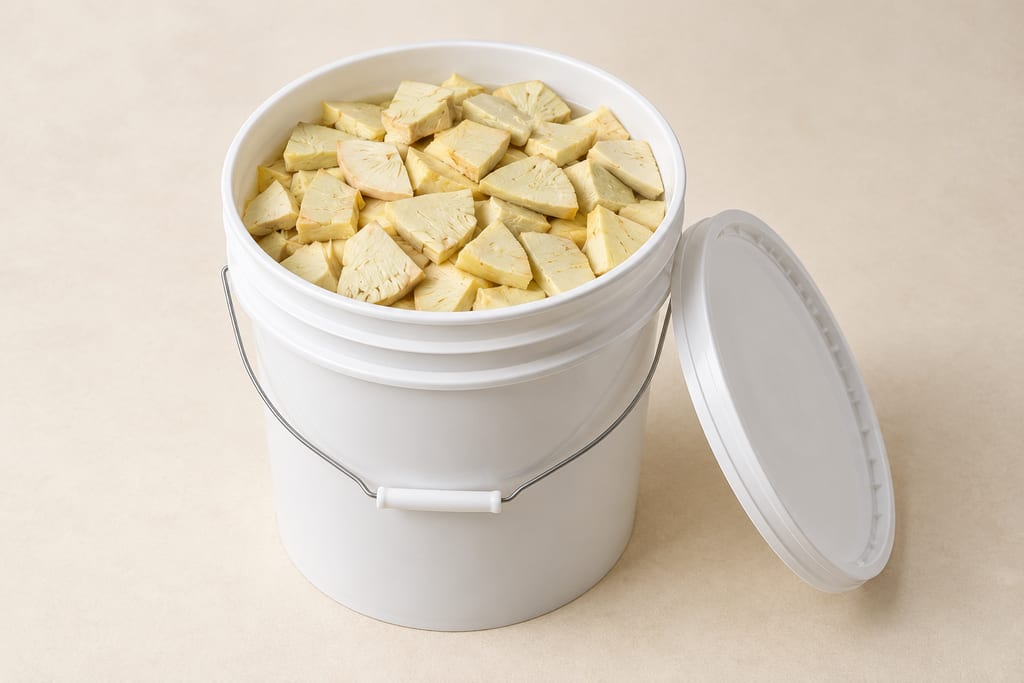
A contemporary household enclosure for preparing mā, fermented breadfruit, documented in Hawai‘i using food-safe buckets, coolers or large sealable bags in place of a pit.
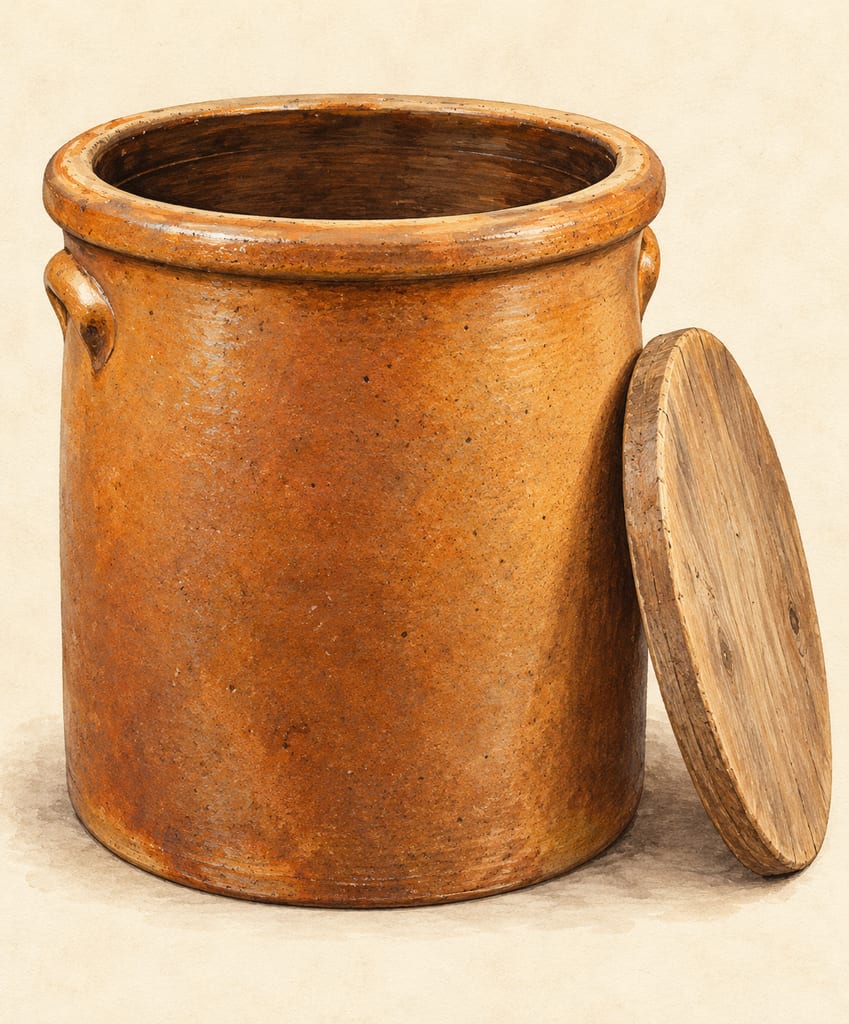
Containers for salt-curing fish and meat range from broad-mouthed stoneware crocks to tubs, cut-down barrels and chests. Their material, depth, cover and ability to retain or drain liquid shape how the food sits in salt or brine.
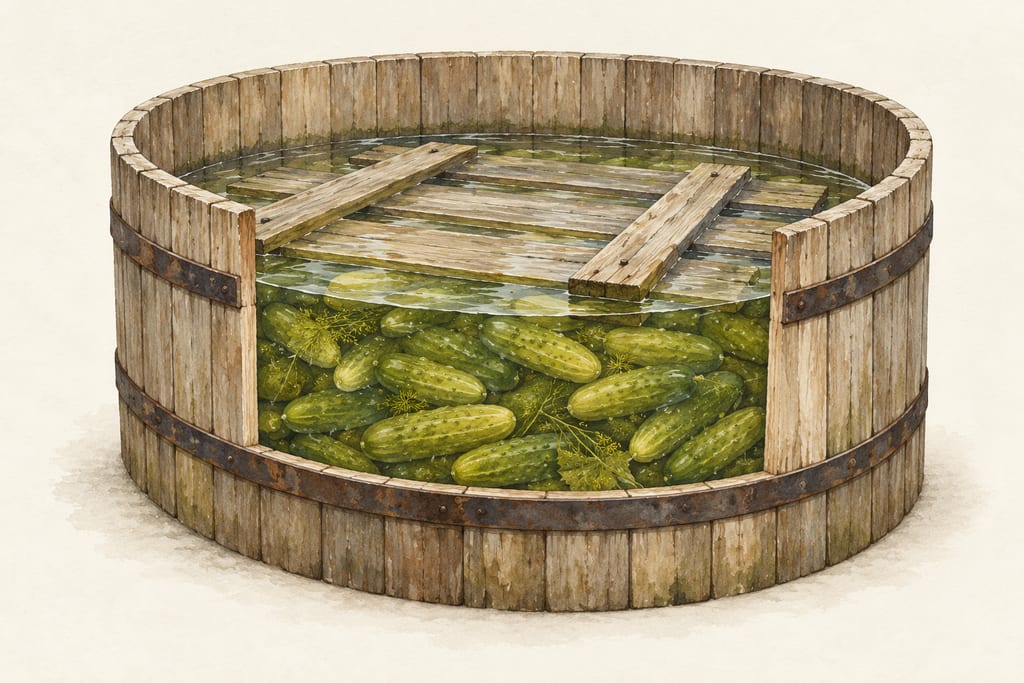
A bulk brining vat holds cucumbers and other vegetables under cover brine for fermentation and storage. North Carolina sources document a mid-century wooden tank yard and later outdoor fiberglass systems.
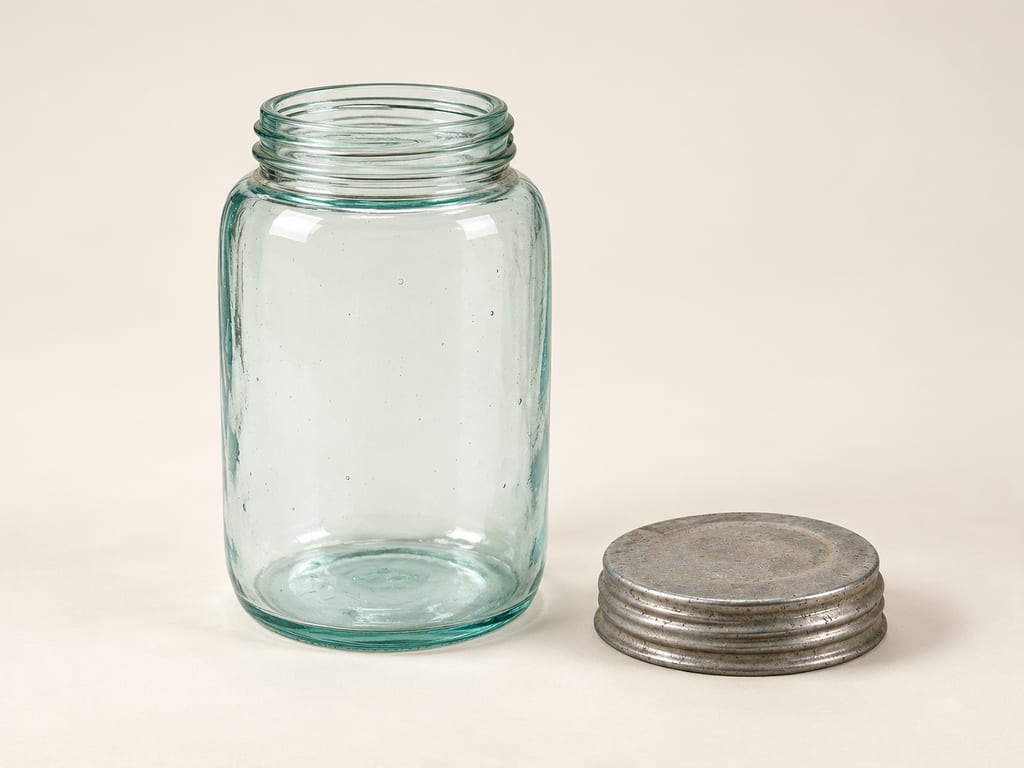
Threaded, heat-processing jars hold food and a fitted lid during a tested canning process; jar size and process belong to the specific recipe.
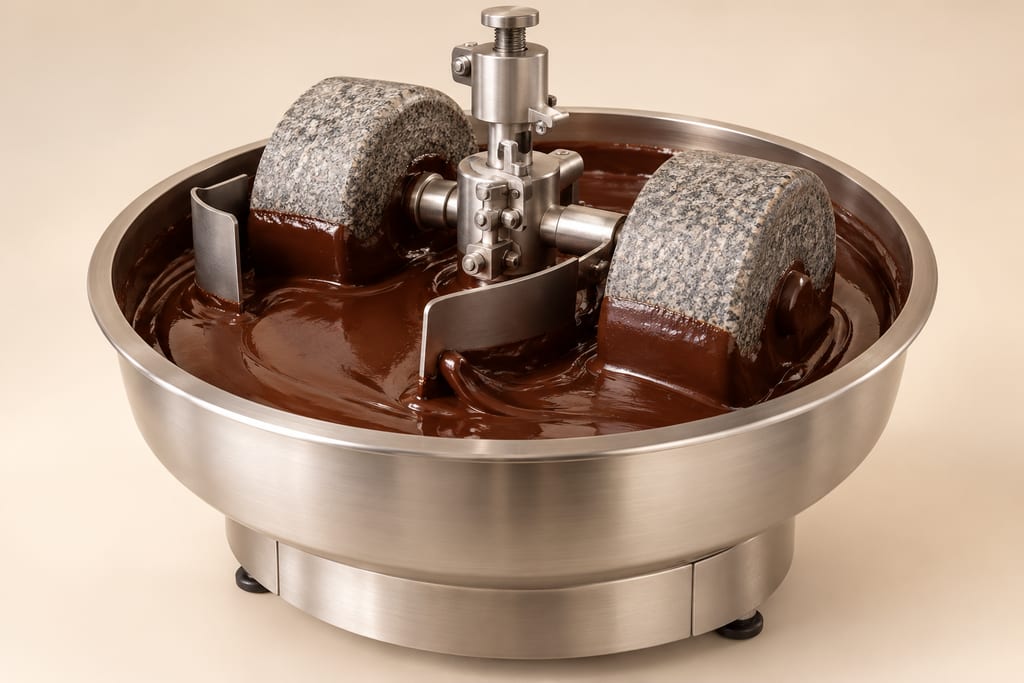
A chocolate refiner or melanger uses powered rotation and stone rollers to refine cocoa mass. Some models also process nut and seed pastes; design, material and operating limits vary.

Soft, spreadable Calabrian pork sausage made with a great deal of red chilli and fatty pork, stuffed into natural casings, sometimes smoked and matured while staying soft.

A way to add independent temperature logging to an existing food dehydrator without changing its built-in controls or protections. It is a monitoring method, not a rewiring plan.

Pleurotus cystidiosus is the abalone mushroom, a cultivated oyster-type fungus with dark brown caps that grows more slowly and is more demanding than other Pleurotus species.

A dark, balanced vinegar from Emilia-Romagna made by combining cooked or concentrated grape must with wine vinegar, then acetifying and refining it in wood under a protected specification.

A living dairy inoculum that starts controlled cream fermentation, developing acidity and aroma before sour cream or cultured butter is finished.

A small electric incubator holds jars at a selected temperature for yogurt and other documented warm food preparations. Controls, capacity and vessel arrangement vary by model.

Adygean salt is a seasoned table salt associated with Adygea and the wider North Caucasian culinary tradition. Salt is blended with garlic and a variable selection of herbs and spices; the exact mix depends on the named style and maker.

The African Caesar-group mushroom, Amanita masasiensis, is a wild ectomycorrhizal species of central and southern African woodlands, eaten locally. The genus contains deadly poisonous species, so identification needs care.
No community contributions have been published for this entry yet.
Sign in to contribute. Published comments and photos are free to read.
Current Research in Food ScienceDocumented use · Measurement distinction
Isolation and characterisation of dominant acetic acid bacteria and yeast isolated from Kombucha samples at point of sale in New ZealandIn six commercial kombucha samples, the authors measured pH with a glass-electrode pH meter and determined titratable acidity separately by acid-base titration.
Their specific method used standardised 0.1 M sodium hydroxide and a pH 8.2 endpoint; the authors reported the calculated acidity as acetic acid equivalent.
The study is an example of a research method, not a universal kombucha protocol.
Cited in: A measurement method with several possible setups; Titratable acidity is not the same as pH; Comparing samples without inventing a universal target; Reagents and careful handling
Department of Viticulture and Enology, University of California, DavisMeasurement · Food and wine analysis
Titratable AcidityUC Davis describes titratable acidity as a measure of acid content in wine and other foods, commonly assessed by titrating a sample with alkali to an endpoint using an indicator.
The page notes that several assessment approaches exist and contextualises the method for wine; it does not define a universal method for every food.
Cited in: A measurement method with several possible setups; Comparing samples without inventing a universal target
FoodsDocumented use · Measurement distinction
First Characterization of Kombucha Beverages Brewed in Argentina: Flavors, Off-Flavors, and Chemical ProfilesThis study reports pH measurement with a pH meter and titratable acidity measurement by titration as separate analyses of kombucha samples.
The study's sample handling, reagent concentration, endpoint and calculation apply to that research method.
Cited in: A measurement method with several possible setups; Titratable acidity is not the same as pH; Comparing samples without inventing a universal target
National Institute for Occupational Safety and Health, Centers for Disease Control and PreventionSafety
NIOSH Pocket Guide to Chemical Hazards: Sodium hydroxideNIOSH identifies sodium hydroxide as corrosive and lists skin and eye burns among exposure effects; reagent handling requires preventing contact and suitable protective measures.
Cited in: Reagents and careful handling