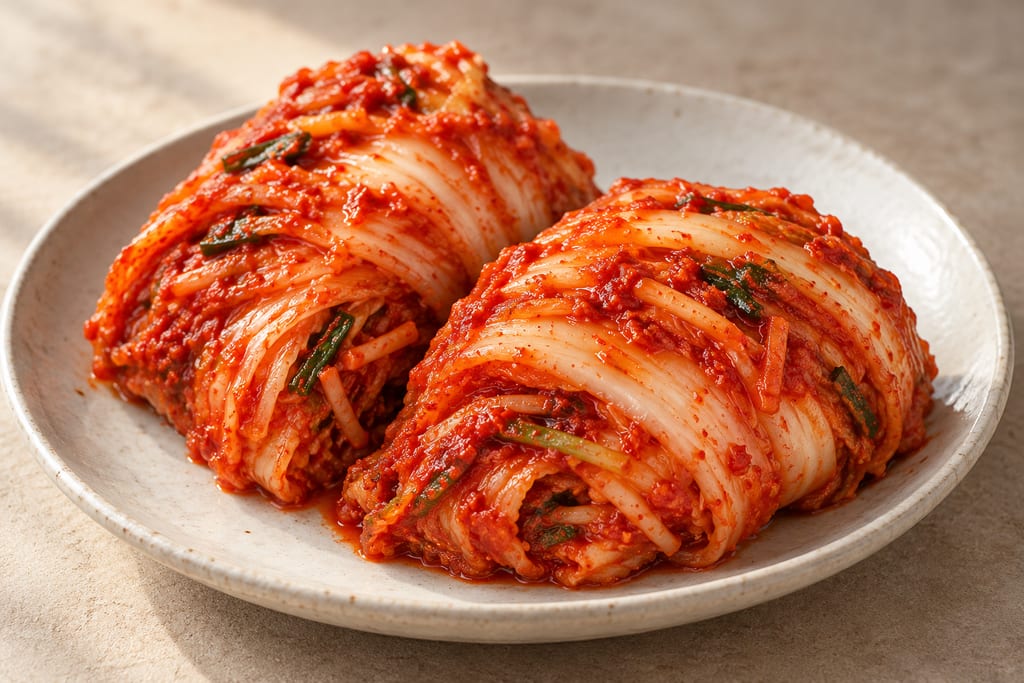
Baechu kimchi
Napa cabbage salted, seasoned with a paste of gochugaru, garlic, ginger and salted seafood, and left to sour through lactic fermentation; Korea's everyday winter preserve.
 FermenteaWhere food goes to change
Equipment · Instruments
A pH meter pairs an electronic readout with a probe to measure a prepared sample. Probe choice, calibration and representative sampling affect the reading, so the model and method must fit the food.
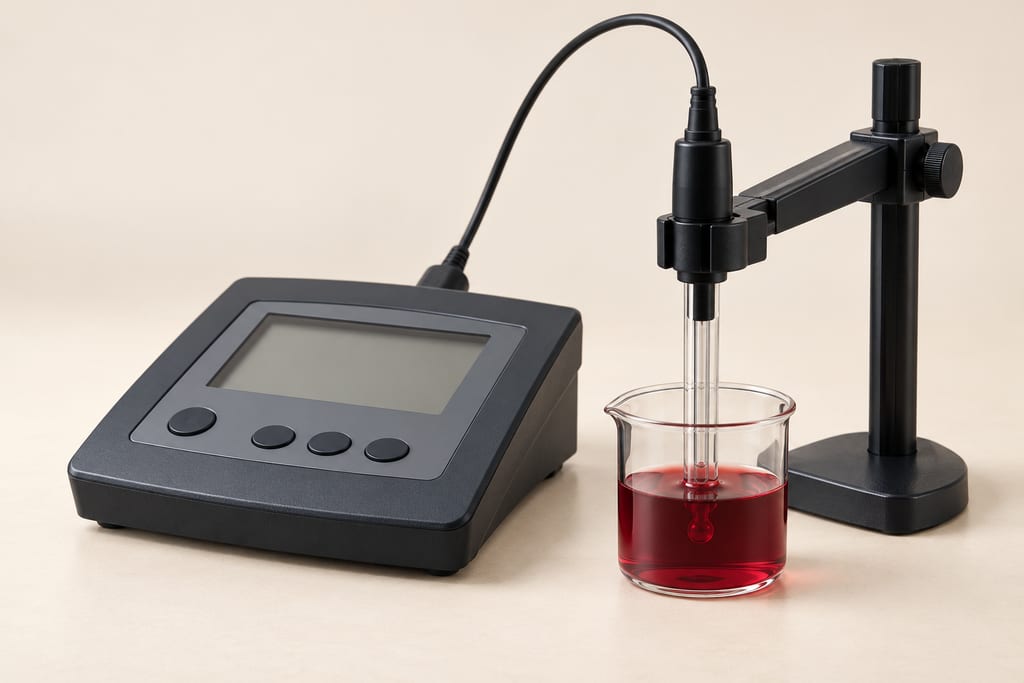
A pH meter is an electronic measuring instrument paired with an electrode, or probe, that contacts the sample. The readout converts the electrode's response into a pH value. The probe is not a one-size-fits-all accessory: food-testing references describe detachable, replaceable probes and compact all-in-one units. Glass-bulb electrodes are common, while solid-state designs also exist. A detachable probe must be compatible with its meter; a probe suited to a liquid may not be right for oily or semi-solid food.
The meter's displayed decimal places do not, by themselves, show how accurate a reading is. Resolution describes the smallest step the display can show; accuracy describes how close a measurement is to the value it represents. Selection depends on the measurement task and required accuracy, as well as whether a probe can be cleaned, stored and replaced appropriately.
A meter needs calibration against standard buffer solutions before its readings can be trusted. Food-processing guidance describes buffers around pH 4 and 7 as common calibration points, but the exact procedure and frequency depend on the instrument and applicable method. For acidified-food production, one extension guide recommends frequent calibration; that advice belongs to that production context and is not a universal schedule for every measurement.
Temperature and sample consistency matter. A meter may include automatic temperature compensation, but that feature does not replace preparing and measuring the sample as the relevant protocol requires. Keep samples at a consistent temperature when comparing results, let the reading stabilize as the meter instructs, and record the instrument and method where the process requires a traceable result.
A meter only measures the portion placed against its electrode. In a liquid-and-solid food, the covering brine or syrup can have a different pH from the pieces inside it. Depending on the product method, the liquid, solids, or a prepared mixture may need to be tested separately. A surface reading should not be treated as a value for the centre of a solid piece unless the method establishes that it represents the whole sample.
Semi-solid foods may need to be made uniform before measurement, while oily material can coat or obstruct some electrode surfaces. This is why a food sample, a compatible probe and the preparation protocol belong together. Changing sample preparation can change what the reading means, even when the meter itself is working correctly.
pH meters appear in contemporary food guidance for acidification, fermented foods and production monitoring. Different jurisdictions describe different measurement and process requirements. Regulatory inspection guidance for acidified canned foods, for example, is specific to that program; a reading or rule from it should not be carried over to an unrelated ferment, recipe or household method.
The instrument reports one property of the sample. It does not make a food safe, establish its shelf life or validate a recipe on its own. Where pH is used as a process control, follow the applicable product specification, sampling method, calibration instructions and other required controls. If a method calls for laboratory testing or a particular protocol, a general-purpose meter is not a substitute.
Probe care affects response and service life. Rinse and clean the electrode as its maker directs, avoid rubbing a delicate glass bulb, and use the storage solution specified for that probe. Some solid-state electrodes have different storage requirements. Dried food, oil, scratches or a depleted electrode can slow or distort readings; a detachable design may allow replacement of the probe without replacing the meter.
This record describes the general pH-meter class, not one manufacturer's kit or a single food-specific model. Compare the sample type, compatible electrode, calibration method, accuracy, replacement parts and care instructions before choosing a device. The sources document food measurement in more than one country, but do not establish a single invention site or one standard instrument form.
Current food-processing and inspection guidance documents electronic pH meters, but the inspected sources do not date the invention or earliest use of the instrument class.
A display increment is not the same as measurement accuracy. Some lower-cost meters show tenths while having a wider stated error; choose by the accuracy required, not decimal places alone.
Source →The reading applies to the sample and preparation used. In a food with solids and liquid, the solid may differ from the covering liquid; oil can interfere with some probes.
Source →A meter reports pH; it does not by itself establish food safety, shelf life or a validated preservation process. Use the product-specific process and measurement protocol.
Source →The cited extension, standards and regulatory sources document pH-meter use and measurement practice but do not establish the instrument class's origin, manufacture or exclusive distribution.
Napa cabbage salted, seasoned with a paste of gochugaru, garlic, ginger and salted seafood, and left to sour through lactic fermentation; Korea's everyday winter preserve.
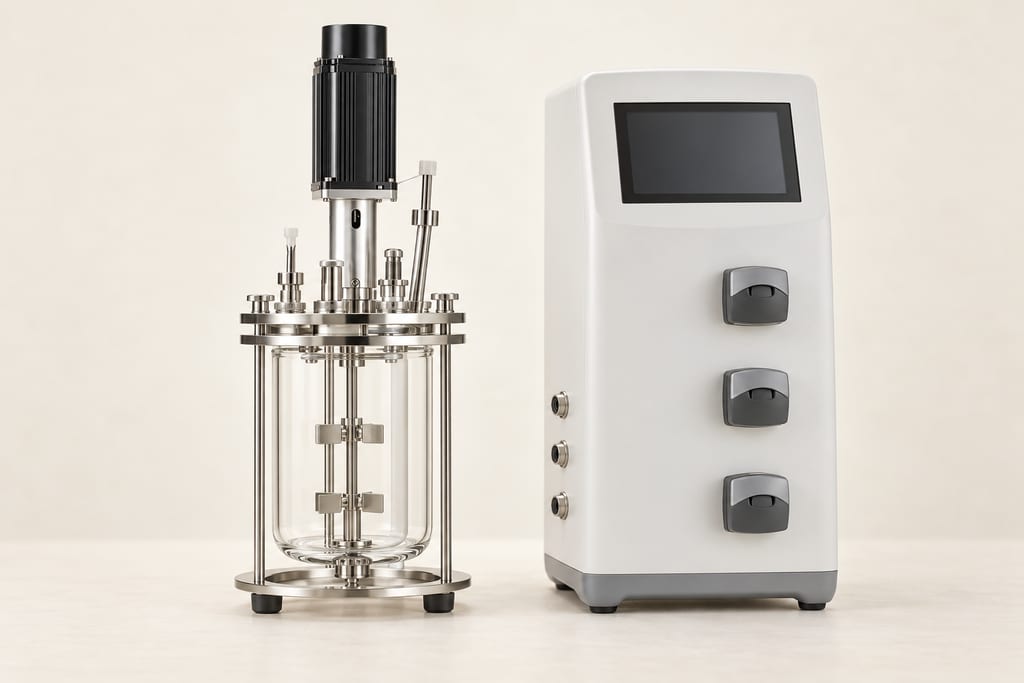
A bench-scale vessel system combines measurement and mechanical control for fermentation research. Vessel materials, fittings and control options vary; a research bioreactor is not a validated food process.
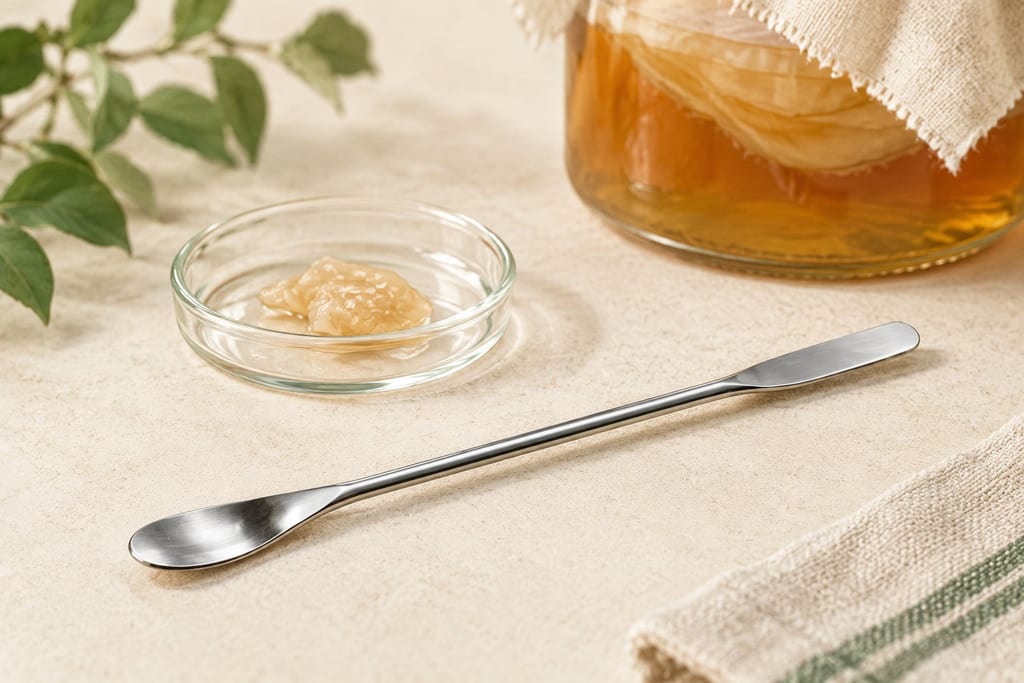
Sampling utensils remove a small portion of a ferment for checking or analysis. Their form depends on the sample and purpose; a household pH check and laboratory microbiology sample do not require the same handling.
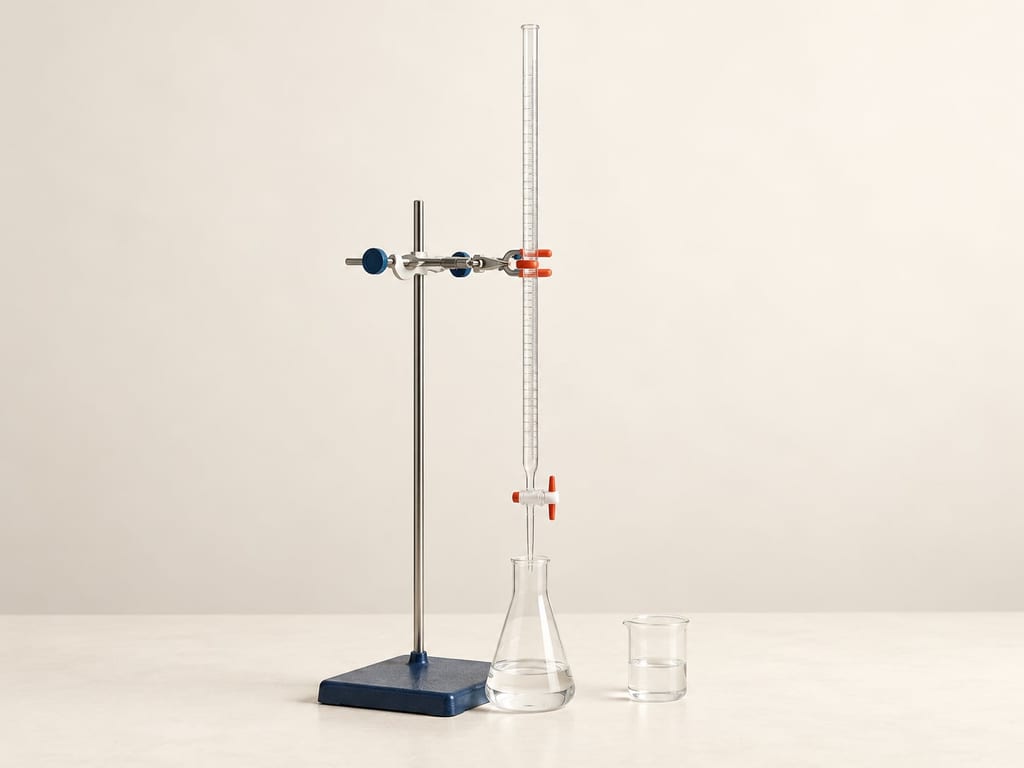
Titration equipment measures how much reagent reacts with a sample to reach a defined endpoint. Glassware, indicators and electronic endpoint detection vary; titratable acidity and pH are related but distinct measurements.
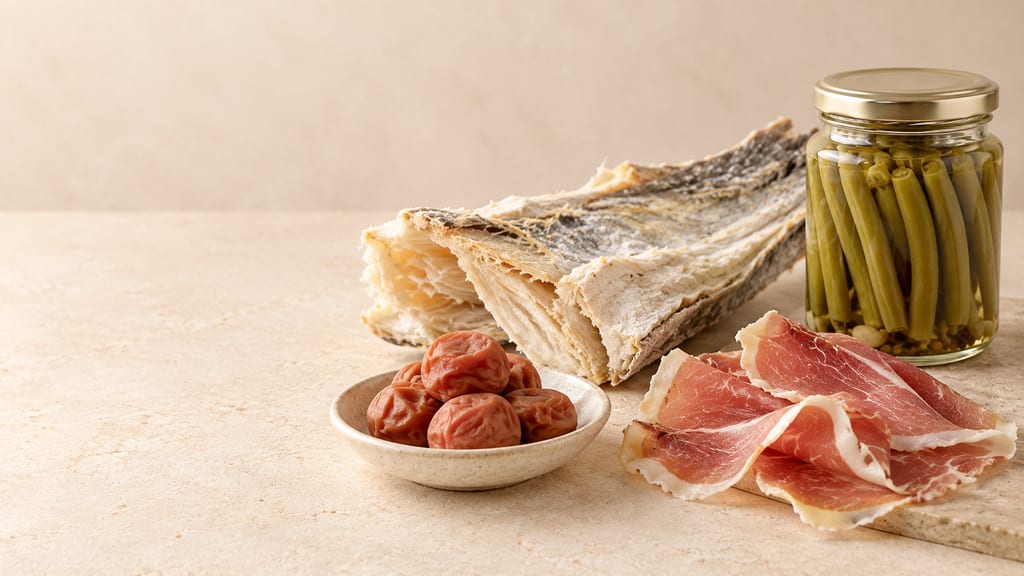
Every preserved food is a stack of barriers against microbes, enzymes, air and time. This is how they work, what a recipe's numbers measure, and how cooks worldwide build them.
No community contributions have been published for this entry yet.
Sign in to contribute. Published comments and photos are free to read.
Oklahoma Cooperative Extension Service, Robert M. Kerr Food & Agricultural Products Center, Oklahoma State UniversityForm · Selection · Calibration · Sampling · Care · Limitations
Choosing and using a pH meter for food products (FAPC-117)Describes detachable and all-in-one meters, common glass-bulb and solid-state probes, and matching an electrode to its meter and sample.
Discusses buffer calibration, sample temperature, and differing pH in solid and liquid portions of a food.
Explains that oil can interfere with some electrode membranes and that storage depends on probe type.
Cited in: The meter and its electrode; Calibration and measurement conditions; The sample is part of the measurement; Care and choosing a model
Thermo Fisher ScientificMeasurement · Electrode selection · Calibration · Maintenance
pH Measurement HandbookManufacturer handbook covers electrode and sample selection, calibration, measurement, maintenance and storage.
General instrument guidance; it is not a food-safety process.
Cited in: The meter and its electrode; Calibration and measurement conditions; The sample is part of the measurement; Care and choosing a model
U.S. Food and Drug AdministrationRegulatory context · Measurement
CP 7303.070, Acidified and Low-Acid Canned Foods Program — Import & DomesticThe inspection program specifies a pH-analysis protocol and records the meter used by the analyst.
This is an inspection procedure for acidified and low-acid canned foods, not a general home-fermentation rule.
Cited in: Calibration and measurement conditions; A tool within a defined process
New Zealand Ministry for Primary IndustriesDocumented use · Food measurement
Making food acidicNational Programme 2 guidance lists a calibrated pH meter or an accredited laboratory as methods for measuring pH in food businesses.
Its criteria are process-specific and should not be transferred to unrelated foods or home methods.
Cited in: A tool within a defined process; Care and choosing a model
Council of the Isles of ScillyDocumented use · Food measurement
Guidance for Jam & Preserves ProductionLocal food-business guidance discusses pH-meter use for batch checks in jam and preserves production.
It concerns its specified food-business context, not a universal recipe or safety standard.
Cited in: The sample is part of the measurement; A tool within a defined process; Care and choosing a model
Wikimedia CommonsImage reference
PH meter test on wine.JPGThe photograph depicts a benchtop pH meter with a separate electrode measuring wine; licensed CC BY-SA 3.0.