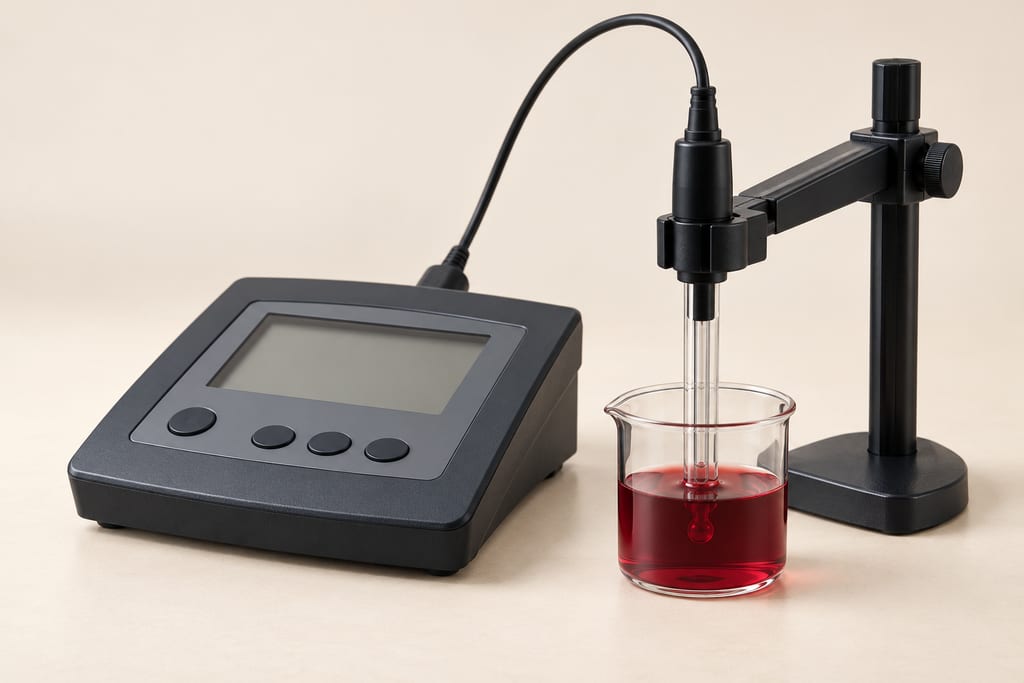
pH meter
A pH meter pairs an electronic readout with a probe to measure a prepared sample. Probe choice, calibration and representative sampling affect the reading, so the model and method must fit the food.
 FermenteaWhere food goes to change
Equipment · Instruments
Sampling utensils remove a small portion of a ferment for checking or analysis. Their form depends on the sample and purpose; a household pH check and laboratory microbiology sample do not require the same handling.
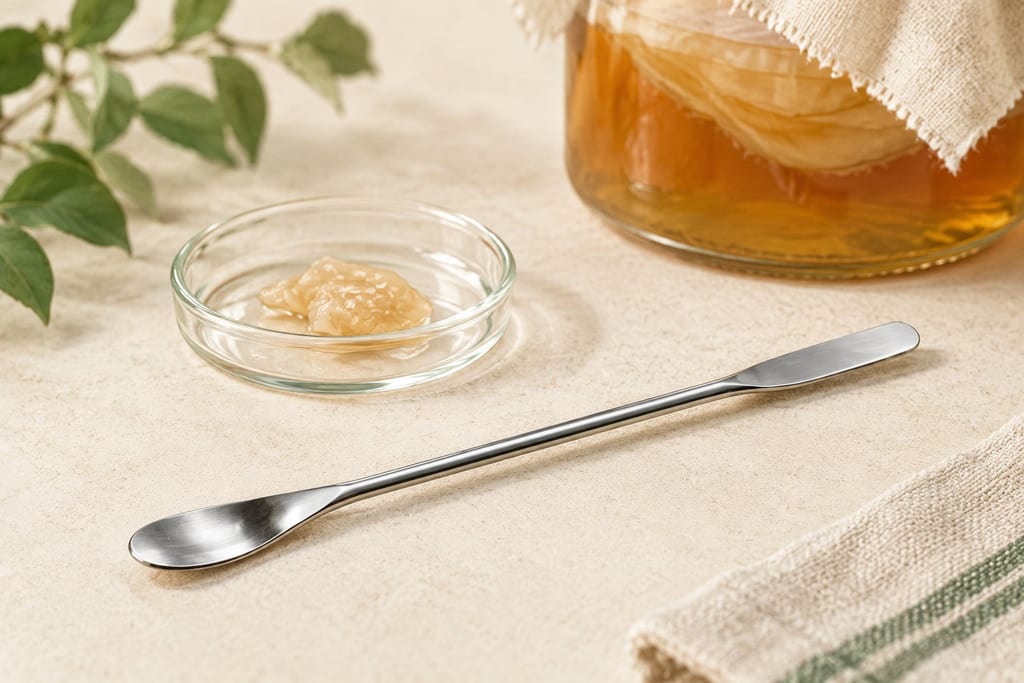
A sampling utensil removes a portion of food or ferment so it can be checked without testing the whole batch. The term covers more than one shape: a household spoon can transfer a small liquid portion to a cup, while a narrow spatula can lift a small solid sample. Research methods may use a beaker, pipette, filter or other transfer tool. There is no single standard material, volume or geometry across these tasks.
This page is grounded in kombucha because its source record names sampling utensils in a kombucha research setup. The utensils do not ferment or preserve the drink; they connect the batch to a measurement or analysis. A [pH meter](/equipment/ph-meter) measures one property of a prepared sample, while the utensil determines how that sample is removed and transferred.
The National Center for Home Food Preservation’s kombucha method shows a simple household example. It directs the maker to put one tablespoon of starter liquid in a small bowl or cup, test that portion with pH paper or litmus paper, and discard it after the test. The spoon and receiver are chosen for a small liquid aliquot; the tested liquid is not poured back into the starter. The same source gives cleaning and sanitizing directions for its recipe equipment, which should be followed as written rather than converted into a universal rule for every ferment.
A published kombucha experiment illustrates a more detailed laboratory workflow: researchers moved the floating pellicle aside, collected broth in a beaker, and divided it into aliquots for pH and other analyses. That example makes clear why the sample’s intended measurement matters. A cup for pH paper, a beaker for a liquid aliquot and a narrow implement for a solid pellicle sample are different solutions to different jobs; the quantities in one study are not a recipe for other batches.
Use a utensil and receiver suited to the sample, and keep the batch’s handling consistent with the method being followed. A food-contact surface should be clean; a laboratory test for microorganisms may require sterile tools and aseptic technique. FDA’s Bacteriological Analytical Manual is explicit about sterile sampling equipment for microbiological submissions and lists stainless-steel spoons, forceps and spatulas as examples. That laboratory requirement should not be confused with the household tablespoon-and-cup step in the NCHFP method.
Sampling is not itself a safety test. A small portion only represents the batch to the extent that the sampling plan and location are appropriate. A pH result applies to the portion measured and does not establish every other control. Sterile transfer for laboratory testing does not validate a fermentation or make an otherwise unsuitable process safe. Follow the exact food method for its process checks, and use a qualified laboratory’s instructions when collecting samples for microbiological analysis.
The consulted sources describe current household and laboratory kombucha sampling; they do not establish an invention date or one universal utensil form.
The NCHFP method documents a U.S. household pH-check sampling step; it does not claim that utensils originated in or are exclusive to the United States.
A pH meter pairs an electronic readout with a probe to measure a prepared sample. Probe choice, calibration and representative sampling affect the reading, so the model and method must fit the food.
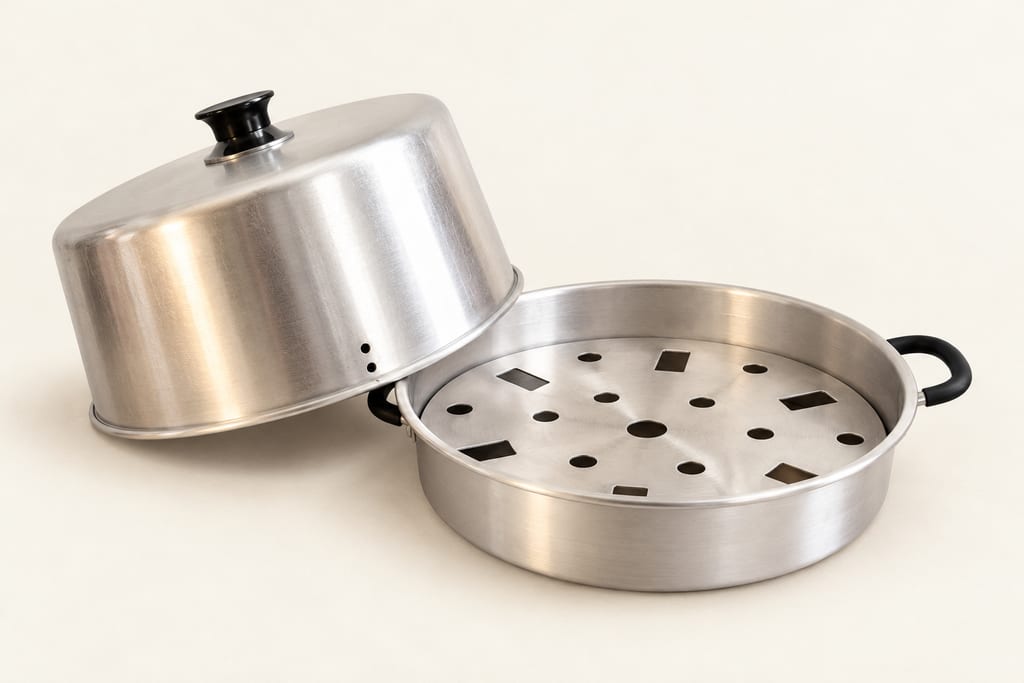
A shallow rack base and tall vented cover process jars in atmospheric steam. NCHFP limits the method to tested high-acid or acidified recipes requiring no more than 45 minutes, including altitude adjustment; this is not pressure canning.
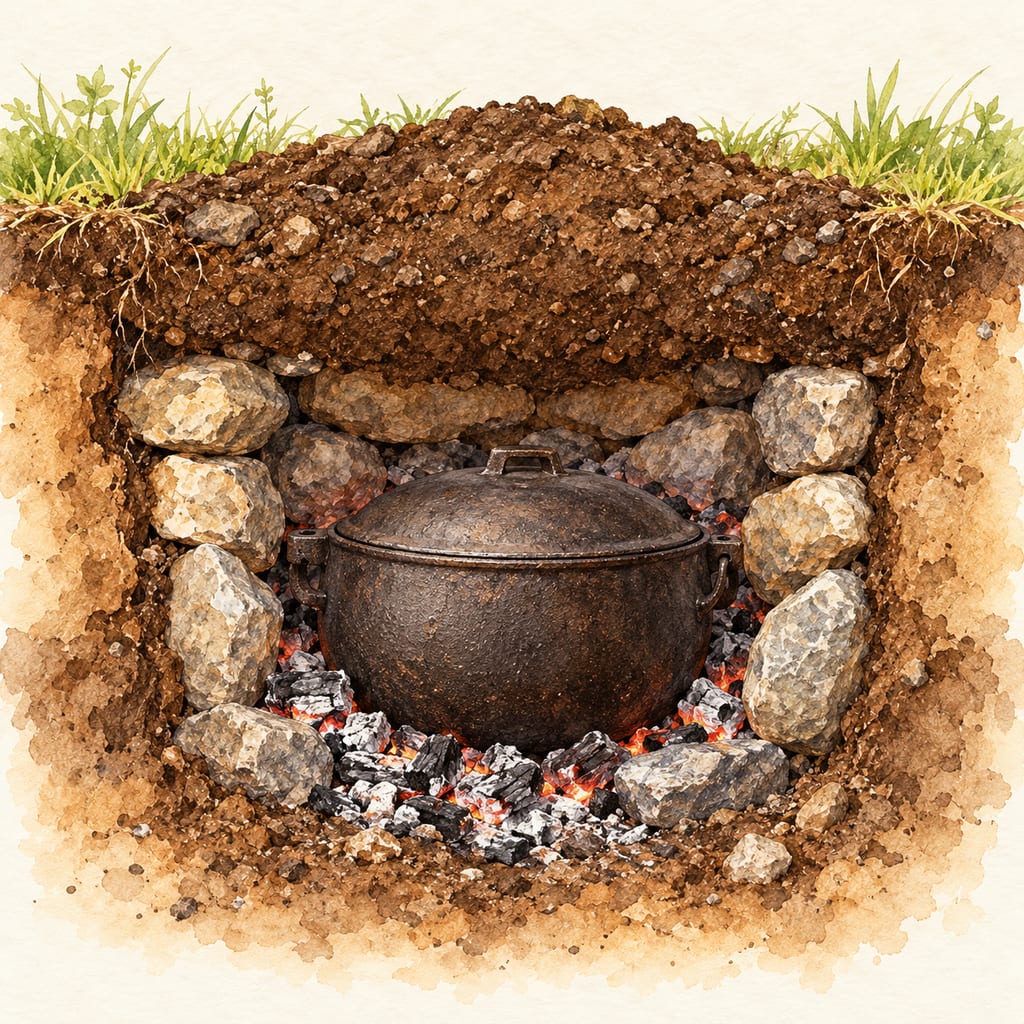
A covered iron vessel used in Maine bean-hole cooking, set into a preheated stone-lined pit and buried for a slow cook.
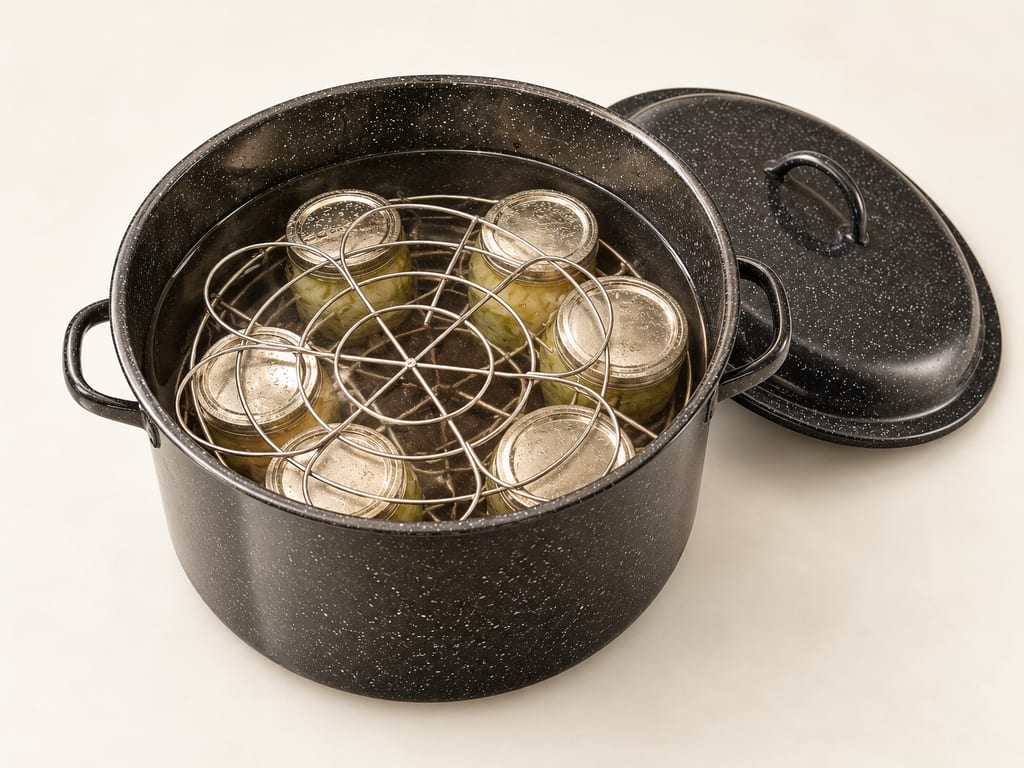
A deep, lidded pot with a removable rack processes jars beneath boiling water. It is intended for foods with tested boiling-water processes; low-acid foods require pressure canning.
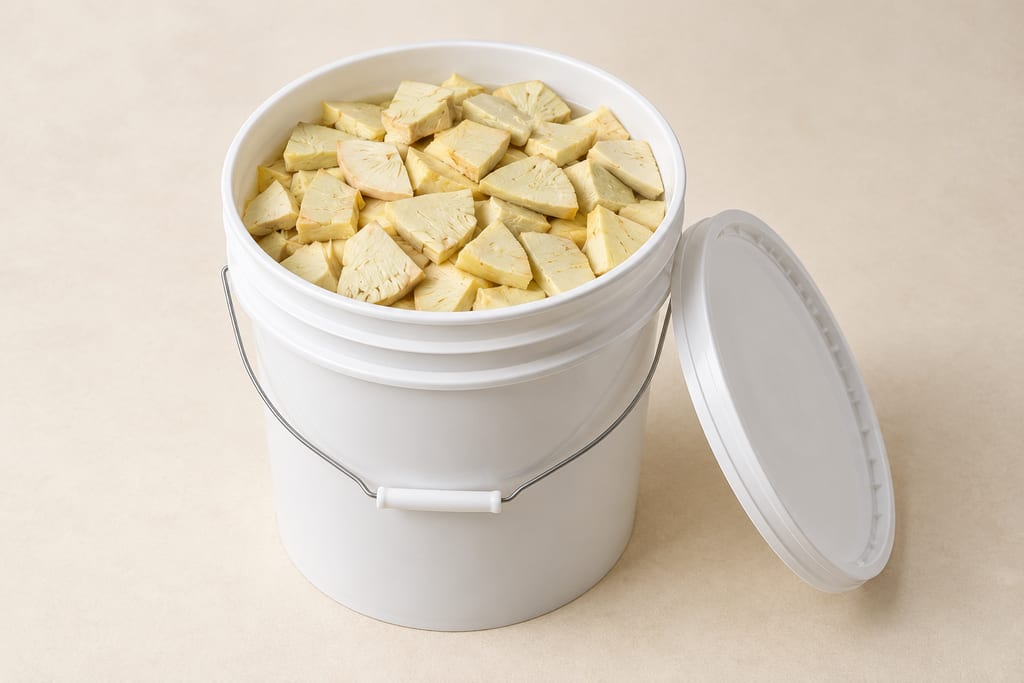
A contemporary household enclosure for preparing mā, fermented breadfruit, documented in Hawai‘i using food-safe buckets, coolers or large sealable bags in place of a pit.
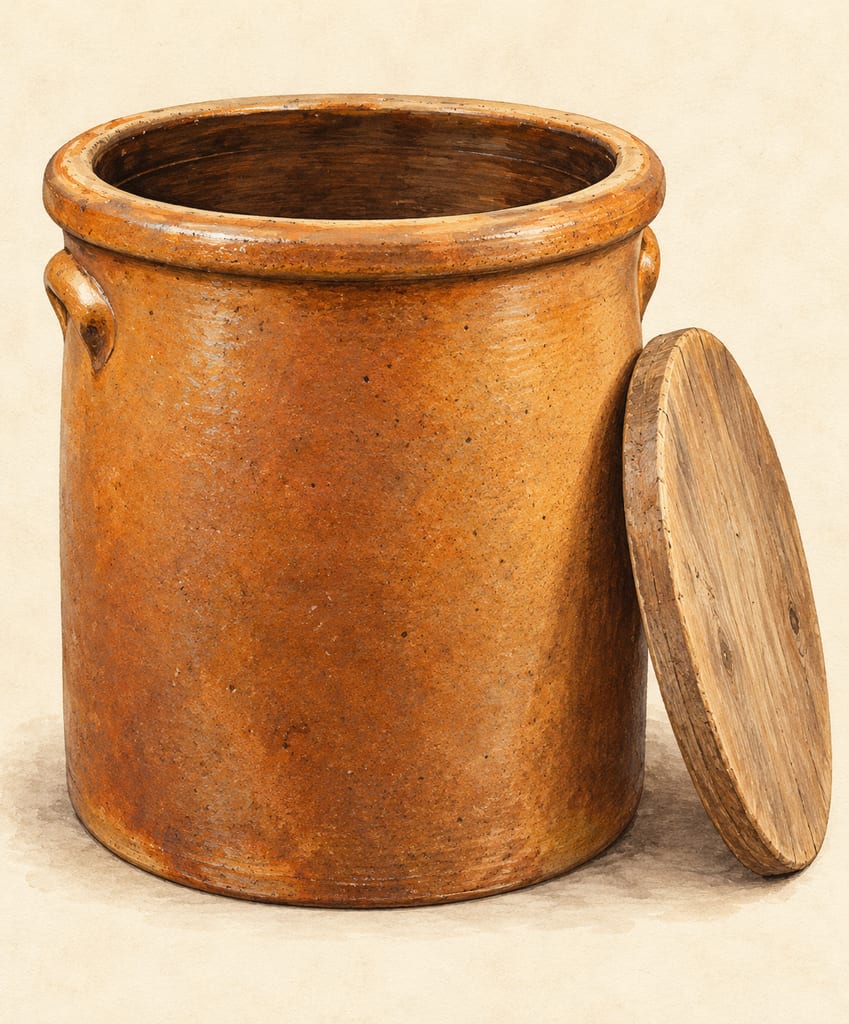
Containers for salt-curing fish and meat range from broad-mouthed stoneware crocks to tubs, cut-down barrels and chests. Their material, depth, cover and ability to retain or drain liquid shape how the food sits in salt or brine.
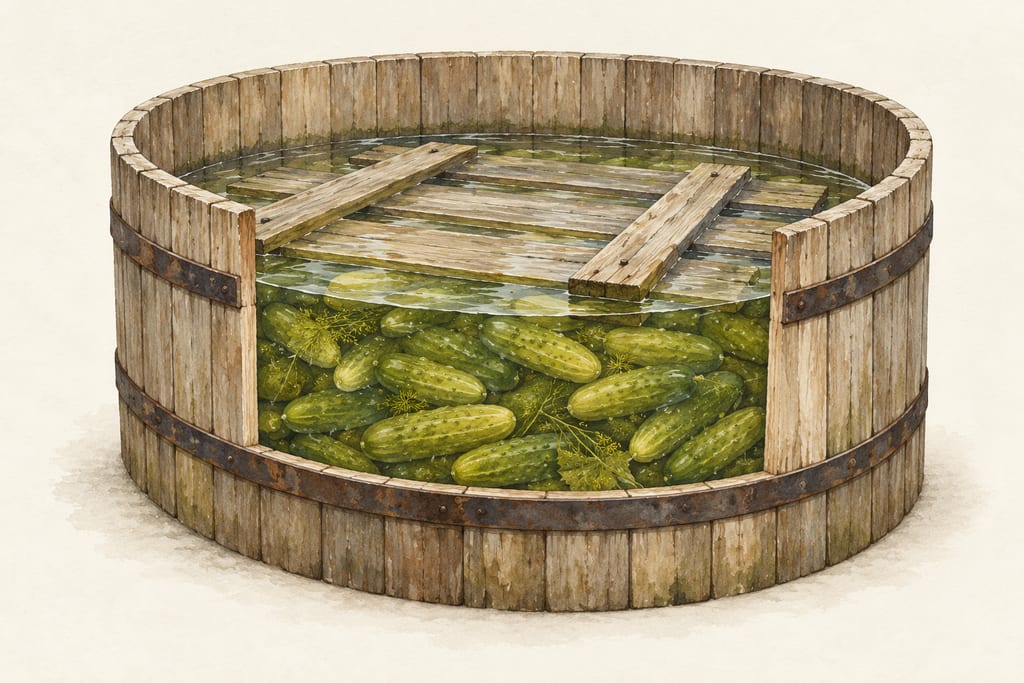
A bulk brining vat holds cucumbers and other vegetables under cover brine for fermentation and storage. North Carolina sources document a mid-century wooden tank yard and later outdoor fiberglass systems.
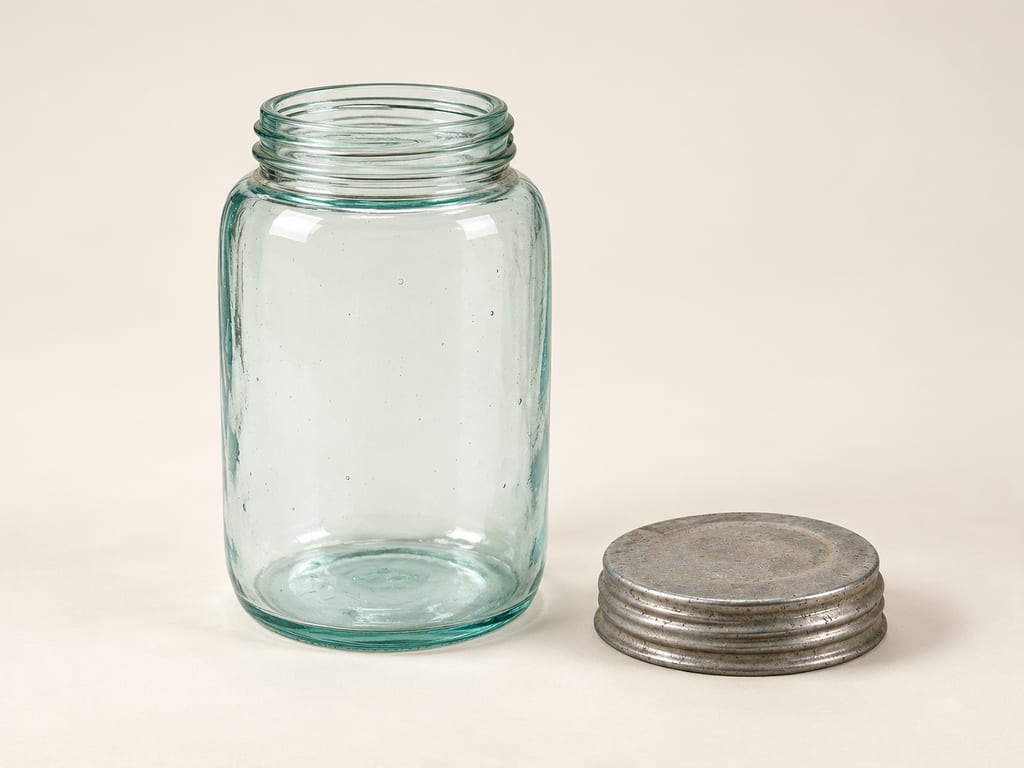
Threaded, heat-processing jars hold food and a fitted lid during a tested canning process; jar size and process belong to the specific recipe.
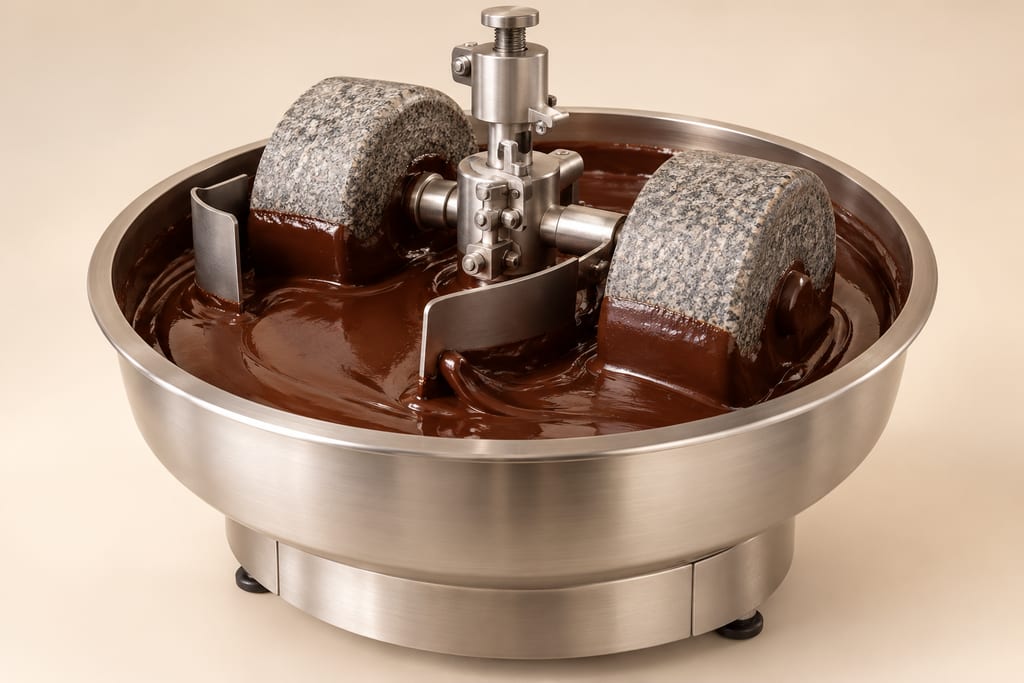
A chocolate refiner or melanger uses powered rotation and stone rollers to refine cocoa mass. Some models also process nut and seed pastes; design, material and operating limits vary.

Soft, spreadable Calabrian pork sausage made with a great deal of red chilli and fatty pork, stuffed into natural casings, sometimes smoked and matured while staying soft.

A way to add independent temperature logging to an existing food dehydrator without changing its built-in controls or protections. It is a monitoring method, not a rewiring plan.

Pleurotus cystidiosus is the abalone mushroom, a cultivated oyster-type fungus with dark brown caps that grows more slowly and is more demanding than other Pleurotus species.

A dark, balanced vinegar from Emilia-Romagna made by combining cooked or concentrated grape must with wine vinegar, then acetifying and refining it in wood under a protected specification.

A living dairy inoculum that starts controlled cream fermentation, developing acidity and aroma before sour cream or cultured butter is finished.

A small electric incubator holds jars at a selected temperature for yogurt and other documented warm food preparations. Controls, capacity and vessel arrangement vary by model.

Adygean salt is a seasoned table salt associated with Adygea and the wider North Caucasian culinary tradition. Salt is blended with garlic and a variable selection of herbs and spices; the exact mix depends on the named style and maker.

The African Caesar-group mushroom, Amanita masasiensis, is a wild ectomycorrhizal species of central and southern African woodlands, eaten locally. The genus contains deadly poisonous species, so identification needs care.
No community contributions have been published for this entry yet.
Sign in to contribute. Published comments and photos are free to read.
National Center for Home Food Preservation, University of GeorgiaHome kombucha method · PH check aliquot · Equipment cleaning
Suitable Containers, Covers, and Weights for Fermenting FoodThe kombucha recipe instructs the reader to place one tablespoon of starter liquid in a small bowl or cup, test it with pH paper, and discard the tested portion.
The recipe gives its own equipment washing and hot-water sanitizing directions; those steps are specific to its instructions.
Cited in: A small transfer tool with a specific job; Household pH checks and research samples; Clean handling is not always sterile handling
FermentationResearch sampling example · Liquid and pellicle samples
Optimizing Oxygen Exposure during Kombucha Brewing Using Air-Permeable Silicone BagsThe study describes moving the pellicle aside, collecting a measured kombucha-broth portion in a beaker, and splitting aliquots for pH and other analyses.
Its sample quantities, filtration and laboratory handling describe that experiment, not a universal home sampling procedure.
Cited in: A small transfer tool with a specific job; Household pH checks and research samples
U.S. Food and Drug AdministrationLaboratory sampling limits · Sterile sample tools
Bacteriological Analytical Manual, Chapter 1: Food Sampling/Preparation of Sample HomogenateFor laboratory microbiological samples, FDA BAM distinguishes sample types and calls for sterile sampling equipment and aseptic technique.
It lists stainless-steel spoons, forceps and spatulas among laboratory sampling tools and cautions against improvised flaming or alcohol-ignition methods.
Cited in: Clean handling is not always sterile handling