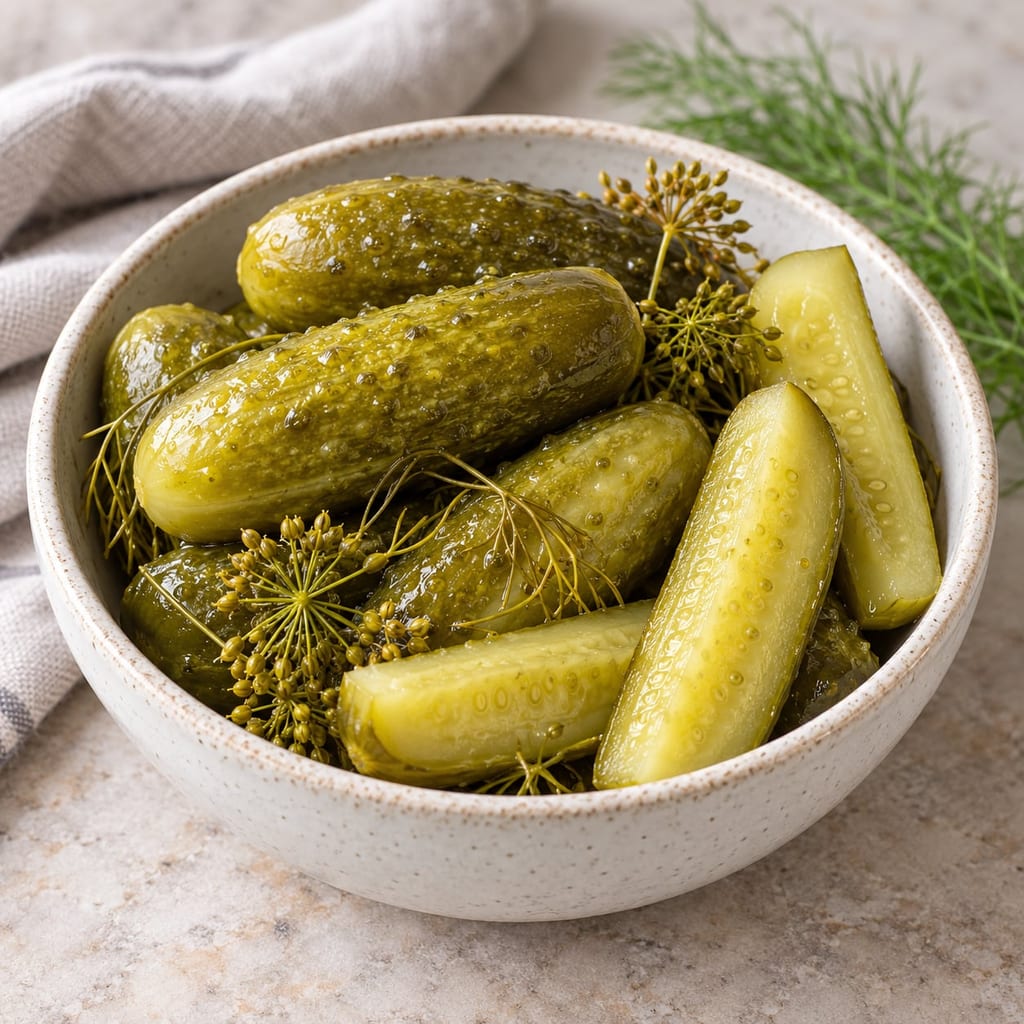
Fermented dill pickles
Trimmed cucumbers layered with dill and covered with a salt brine containing 5% vinegar, weighted and fermented three to six weeks.
 FermenteaWhere food goes to change
Equipment · Tanks and vats
bulk brining tank · pickle brining vat · industrial cucumber vat
A bulk brining vat holds cucumbers and other vegetables under cover brine for fermentation and storage. North Carolina sources document a mid-century wooden tank yard and later outdoor fiberglass systems.
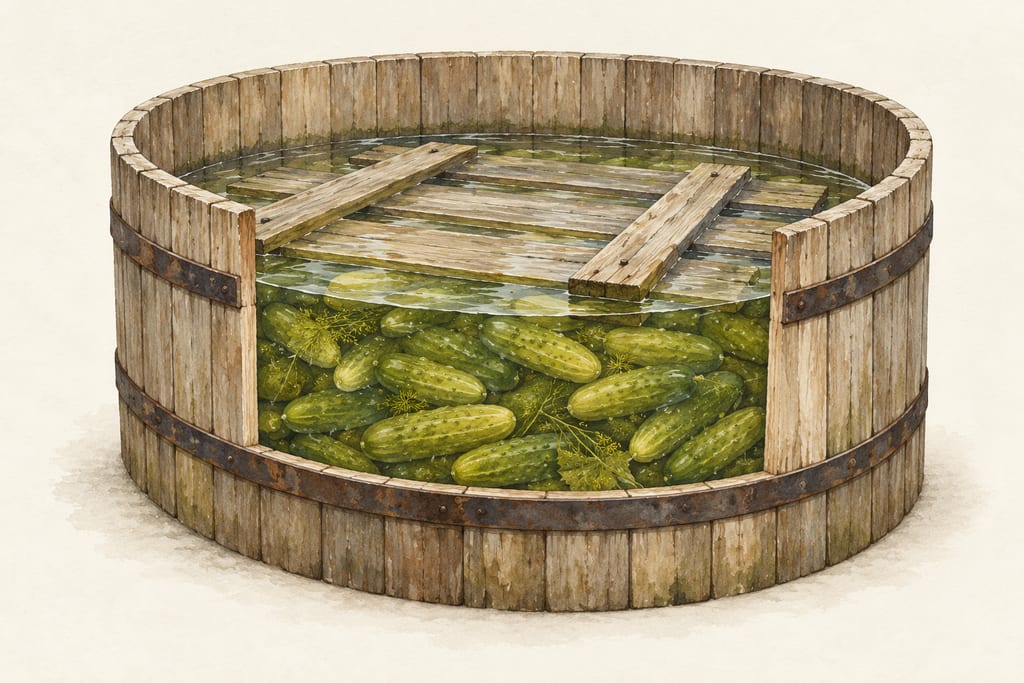
The bulk brining vat belongs to the industrial pickle yard: a broad open tank that holds a large load of vegetables and cover brine while the crop is fermented and stored. A 1947 archive photograph from Mount Olive, North Carolina, shows rows of open wooden vats with boards laid across their rims. The image makes the yard itself part of the object’s story: many vessels stood together so seasonal cucumbers could be held in bulk.
That photograph is an attestation, not a date of invention. An EPA process report from 1975 describes wooden cucumber vats in commercial use, while later engineering papers document outdoor fiberglass tanks. The evidence records a material shift at particular U.S. processing sites; it does not establish that all brining vats followed one timeline or that wooden construction was unique to North Carolina.
The traditional form is a large cylinder assembled from upright wooden staves and held together by external bands. Its wide mouth makes bulk loading and removal possible, and its height leaves room for a substantial mass of produce beneath liquid. The 1947 photograph shows the repeated circular rims and board assemblies, but does not reveal a single standard stave profile, hoop material, lining, or dimension.
The EPA report gives capacities of 200 to 1,200 bushels for wooden commercial vats. That range belongs to the report’s industrial examples, not to every tank or a recommended household scale. Later outdoor fiberglass systems have their own construction and sizes. A modern material should not be drawn as a traditional wooden vat, and a photograph of one plant should not be treated as a universal plan.
Cucumbers can rise, so the tank uses a restraint to hold the crop beneath the cover brine. Historical descriptions name wooden board covers keyed down over the packed cucumbers; a later commercial study likewise describes boards used to prevent fruit from floating above the brine. The board’s job is internal restraint and submersion, not simply to seal the vat.
That distinction matters in an open yard. A removable rain or insulation cover is a separate layer, and some tanks remain open to the air. The historical photograph shows boards on the rims and spanning vats, but it cannot show which board sat below the brine in use. The article therefore describes the restraint from written production sources rather than inferring its position from the photograph alone.
Open tops give workers access for loading, handling and removal, which made them practical for bulk storage across a long processing season. The same opening leaves the brine surface exposed. USDA engineering authors discuss rain dilution, surface growth and environmental contamination as limitations of open vats, and distinguish them from closed-top anaerobic tanks developed as a separate system.
A closed tank requires engineered sealing, gas management and pressure protection. It is not just the wooden vat with a roof added. This entry is about the open-top family and its documented restraint boards; the closed-top pilot vessels described in the engineering literature are a related but distinct design.
Commercial tank yards later adopted outdoor fiberglass vats. A 2017 study examined bulk cucumber storage in open-top fiberglass tanks in Michigan and tested different winterization arrangements. It found that outdoor weather affects heat loss and brine temperatures, but its experimental covers and insulation are specific to that study and climate.
The body, the hold-down and any weather cover have different jobs. A submerged board counters buoyancy; a top cover or perimeter insulation changes exposure to rain, snow or cold. The sources do not identify one arrangement as suitable for every plant. Nor do they supply a single universal cleaning schedule, food-contact specification, capacity, or maintenance plan for both wood and fiberglass.
Mount Olive in Wayne County, North Carolina, is one specifically documented tank-yard example. The archive photograph ties that place to a 1947 industrial pickle operation; EPA and USDA sources place cucumber brining in the wider U.S. processing context. These associations document use, not the sole birthplace of the vessel.
The matching published home recipe for fermented dill pickles uses cucumbers held under brine in a much smaller fermentation container. The bulk vat serves the same broad preservation task at factory scale, but its reported capacities and industrial installation are not transferable to a home batch. No dimensions or present-day purchasing route for the historic wooden vat are established in the sources.
The 1947 Mount Olive image attests to one wooden tank yard, while EPA and USDA sources describe industrial brining and later material changes; the photograph does not date the vat's invention.
Open-top tanks expose brine to weather and the surrounding environment; rain, surface growth and other contamination concerns are among the reasons the 1986 engineering paper distinguishes open-top from closed-top systems.
Source →Outdoor tank temperature changes with the weather. The 2017 study tests specific winterization configurations; it does not establish one cover or insulation arrangement for every site.
Source →A wooden hold-down board is not the same thing as a rain or insulation cover. A closed-top anaerobic tank is a different engineered system, not an open vat with an improvised lid.
Source →This is documented U.S. industrial use, not a claim that the form originated here or is used only in the United States.
A specific historic producer example; it does not date the invention of wooden brining vats.
Trimmed cucumbers layered with dill and covered with a salt brine containing 5% vinegar, weighted and fermented three to six weeks.
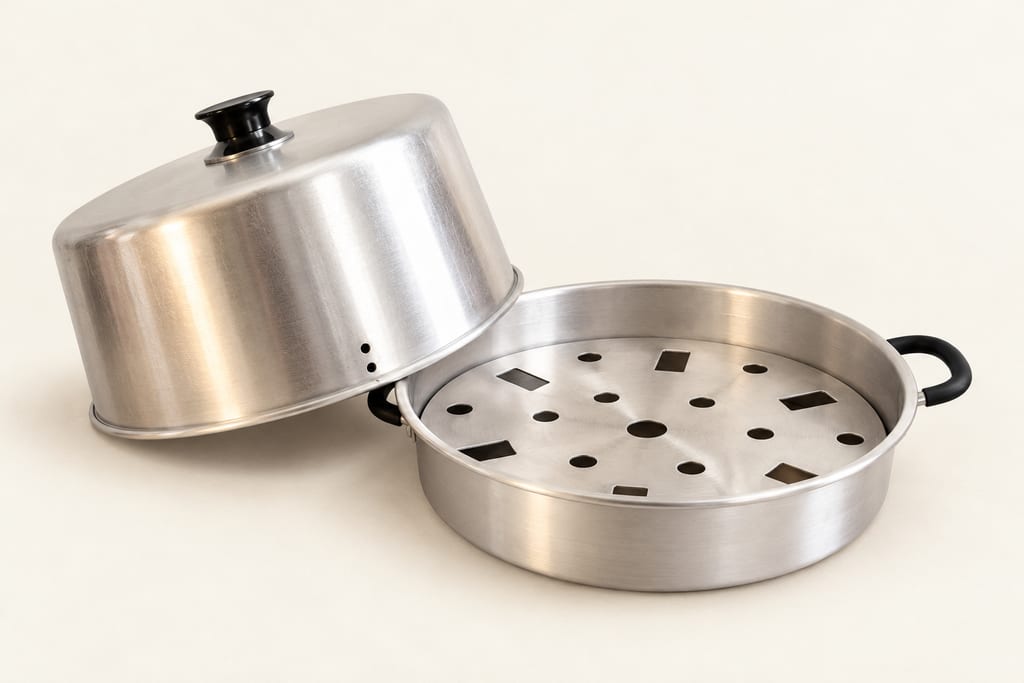
A shallow rack base and tall vented cover process jars in atmospheric steam. NCHFP limits the method to tested high-acid or acidified recipes requiring no more than 45 minutes, including altitude adjustment; this is not pressure canning.
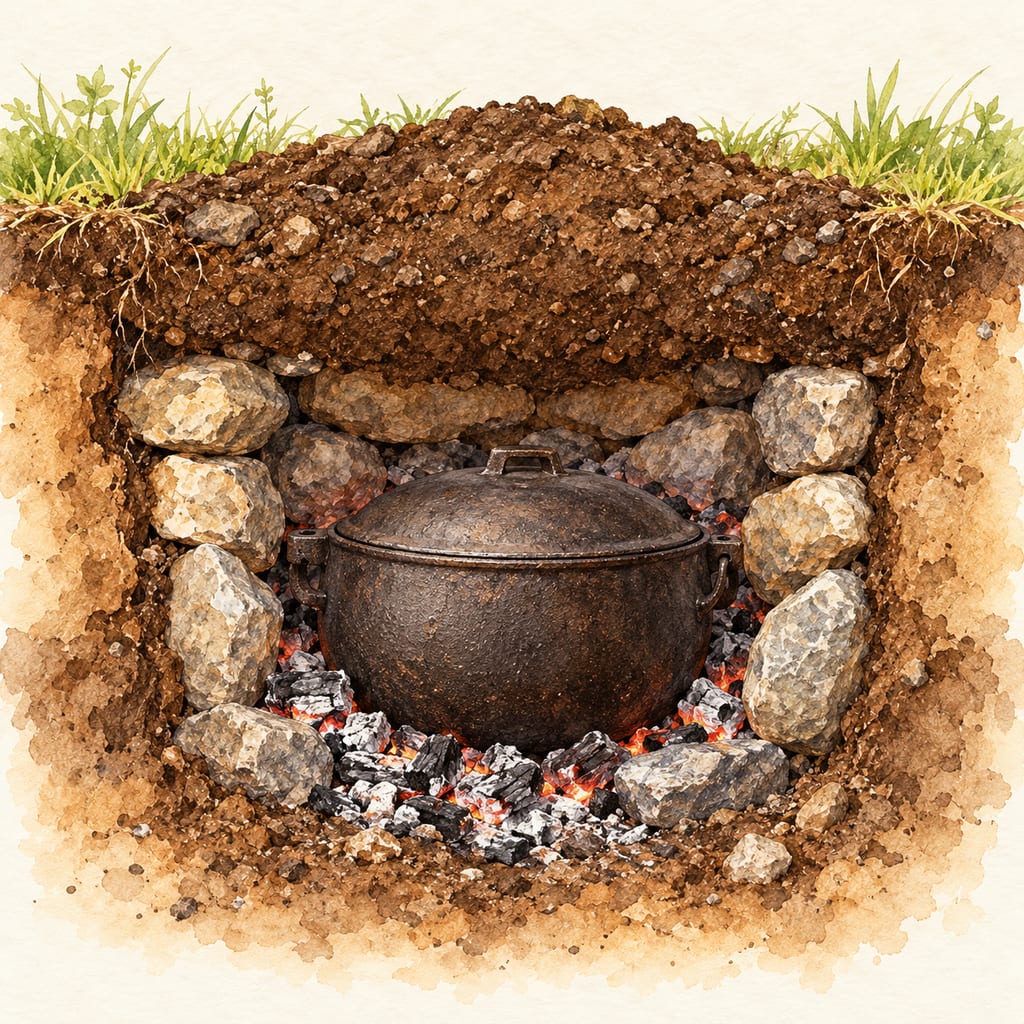
A covered iron vessel used in Maine bean-hole cooking, set into a preheated stone-lined pit and buried for a slow cook.
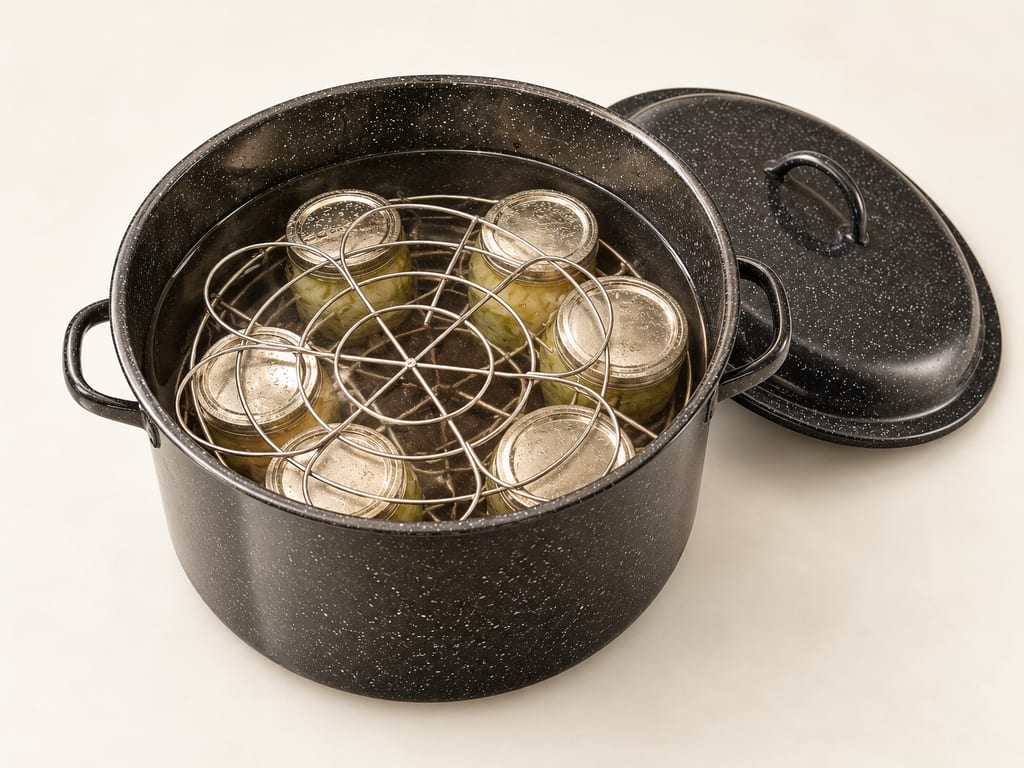
A deep, lidded pot with a removable rack processes jars beneath boiling water. It is intended for foods with tested boiling-water processes; low-acid foods require pressure canning.
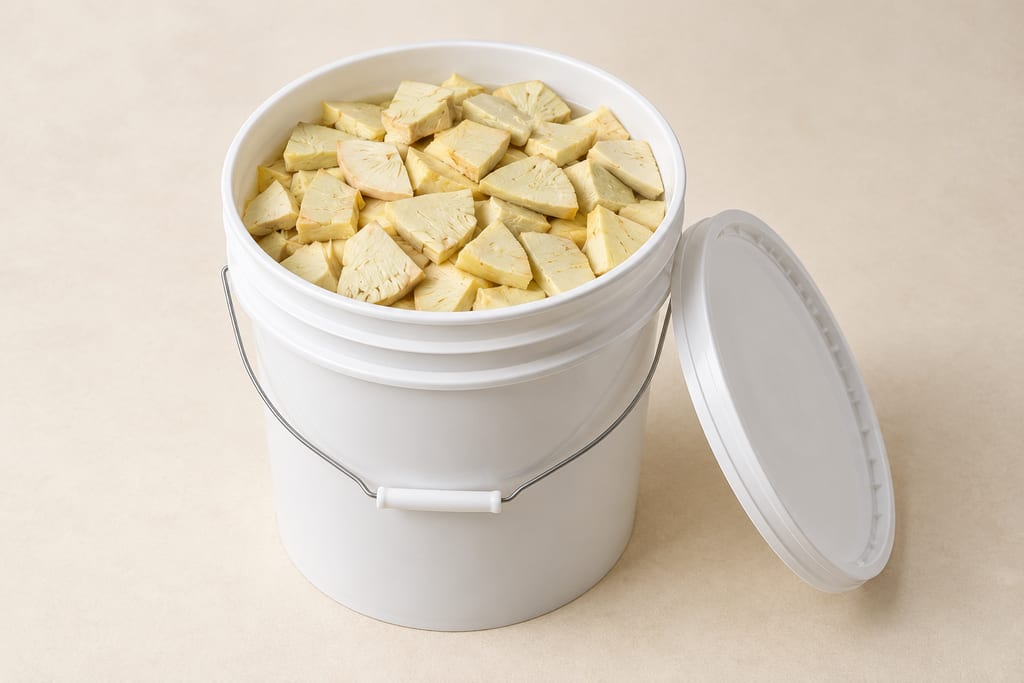
A contemporary household enclosure for preparing mā, fermented breadfruit, documented in Hawai‘i using food-safe buckets, coolers or large sealable bags in place of a pit.
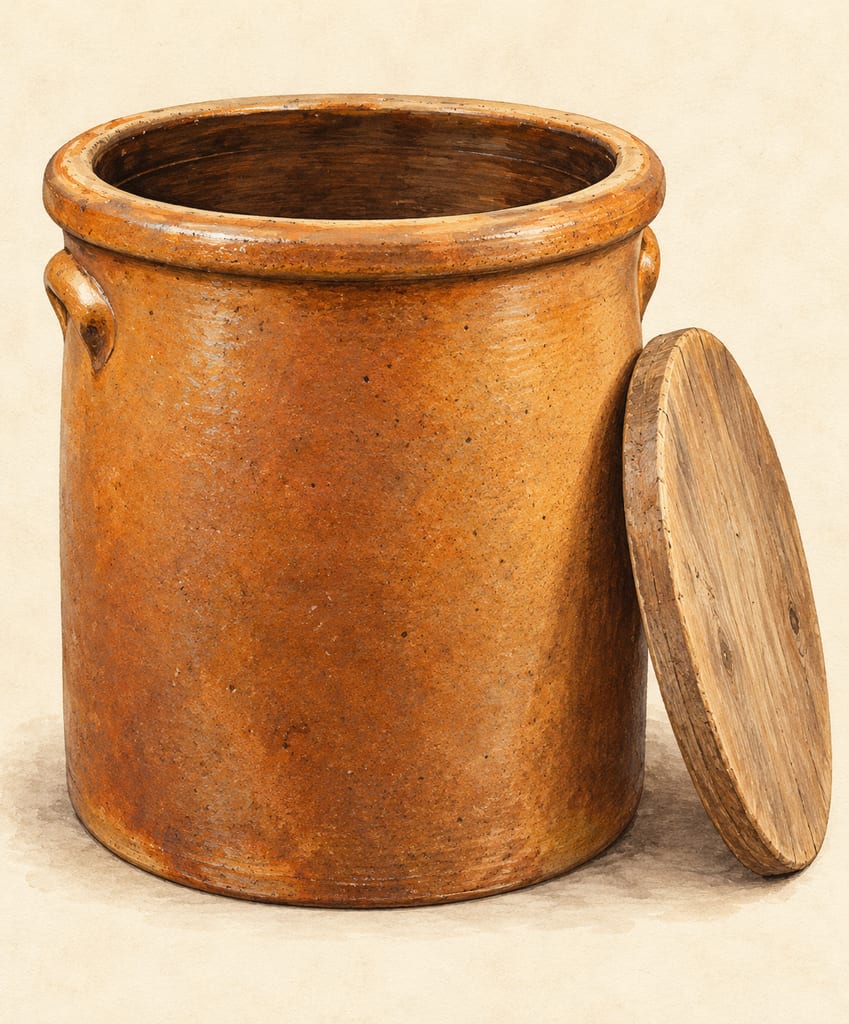
Containers for salt-curing fish and meat range from broad-mouthed stoneware crocks to tubs, cut-down barrels and chests. Their material, depth, cover and ability to retain or drain liquid shape how the food sits in salt or brine.
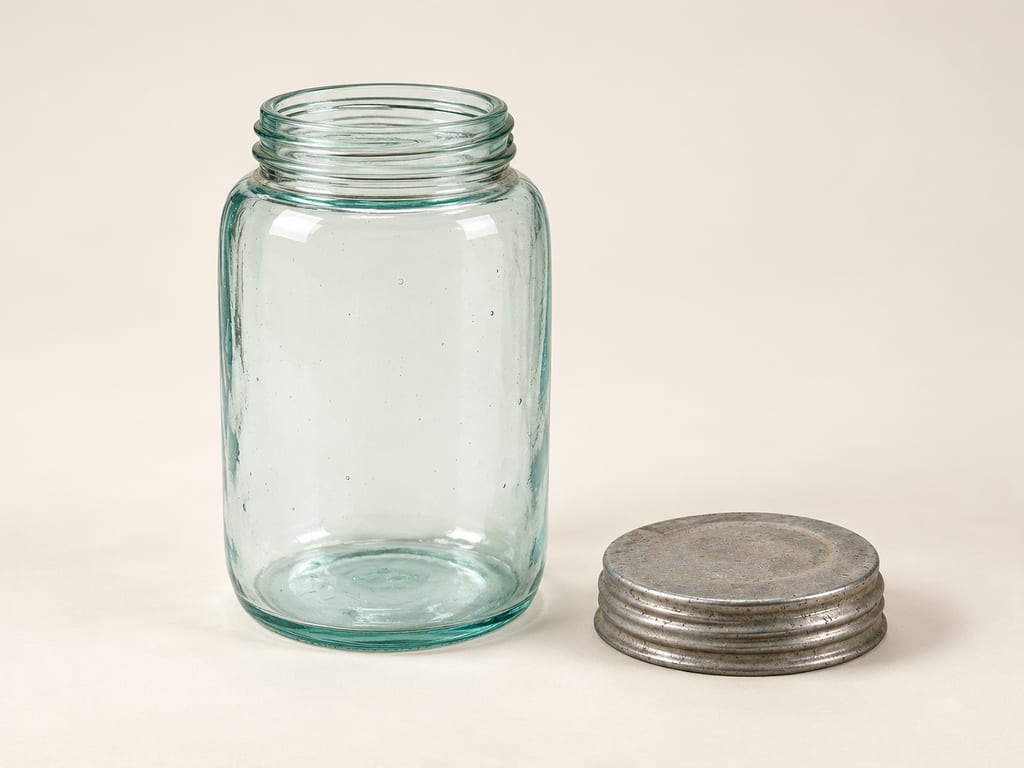
Threaded, heat-processing jars hold food and a fitted lid during a tested canning process; jar size and process belong to the specific recipe.
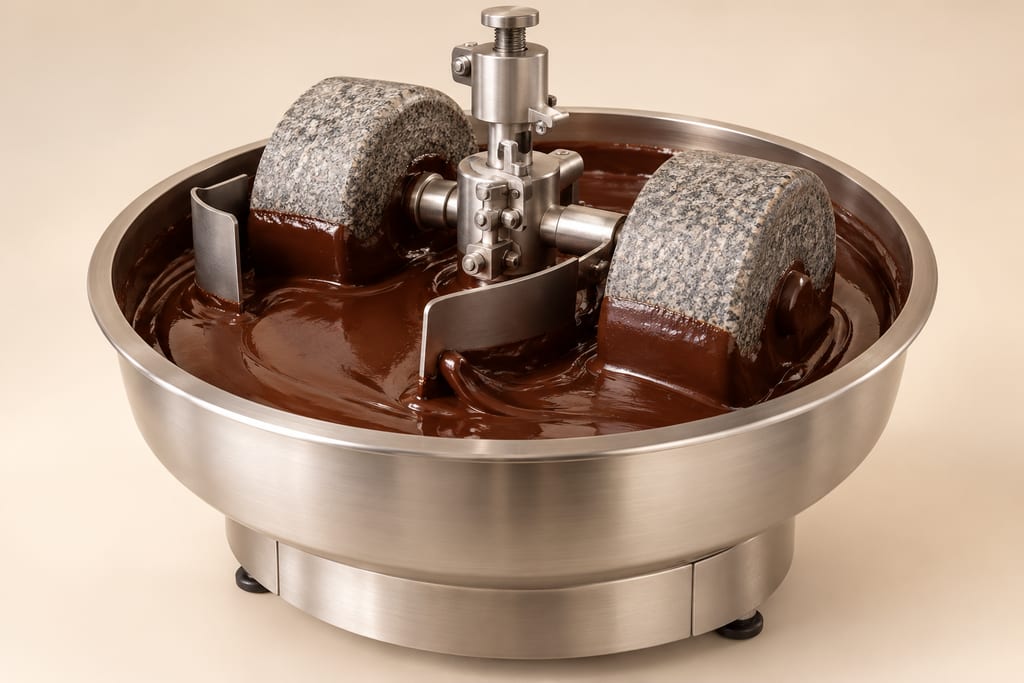
A chocolate refiner or melanger uses powered rotation and stone rollers to refine cocoa mass. Some models also process nut and seed pastes; design, material and operating limits vary.
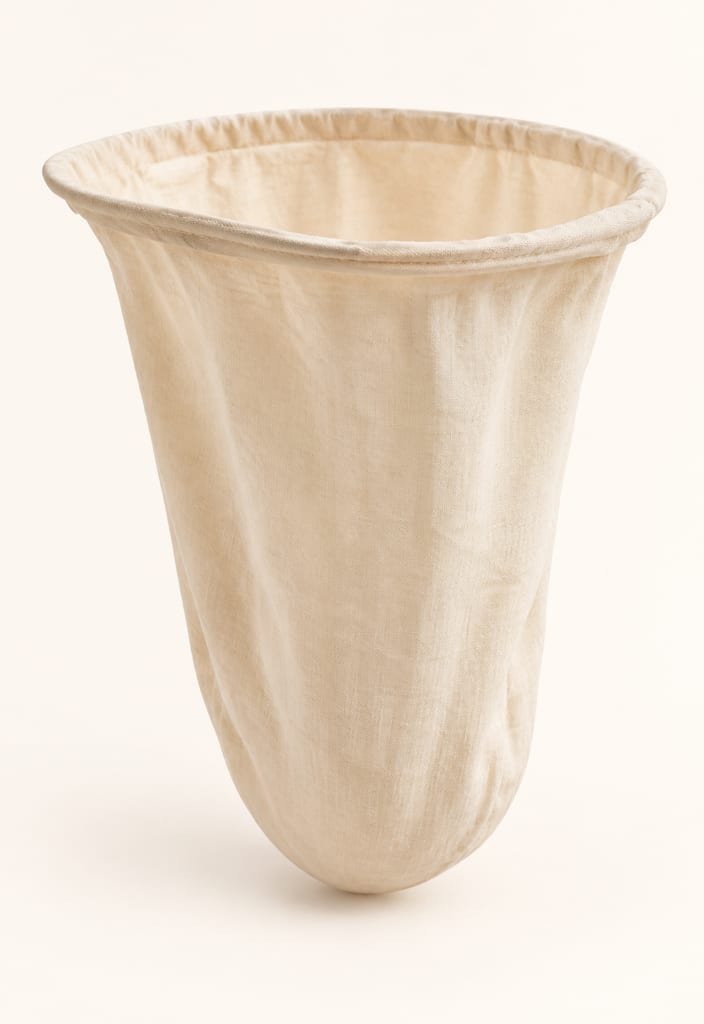
A cloth bag that strains cooked fruit pulp by gravity; jelly-making guidance says not to press it when clear juice is wanted. The sources do not define a standard bag material or size.

A Cap-Pelé boucanière is an Acadian herring-smoking building. The documented Willie Niles example is a one-storey wood-frame structure with a ridge smoke vent and interior bays for hanging fish-bearing cannes.

Achcharu is a family of Sri Lankan vinegar pickles made with mixed vegetables or seasonal fruit and a piquant spice dressing. This version is a quick, refrigerated, non-fermented mixed-vegetable pickle.

The acocote is a long, hollowed and dried gourd used to draw aguamiel from a mature maguey. It is a harvesting tool: the sap is transferred to a separate vessel before it ferments into pulque.

Adrak murabba preserves young ginger in sugar syrup, a sweet South Asian preparation recorded in Indian cookery and food-processing sources.

Parkia biglobosa seeds are fermented into regional West African seasonings, including nététou, iru, dawadawa and soumbala. The yellow fruit pulp is a separate food, and names and methods vary by place.

Japanese reddish-brown vinegar from sake lees matured about three years, turned to vinegar by acetic bacteria; the vinegar of Handa and Edomae sushi rice.

A refined common-wheat flour blended for a broad range of baking; its protein and behavior vary with wheat, milling and market.

The almond mushroom, Agaricus subrufescens, was cultivated in eastern North America in the 1800s, lost its market, and returned as a cultivated mushroom from Brazil, where it is grown under several names.
No community contributions have been published for this entry yet.
Sign in to contribute. Published comments and photos are free to read.
U.S. Environmental Protection AgencyEquipment · History · Method
Development Document for Effluent Guidelines for the Canned and Preserved Fruits & Vegetables Category; Fruits, Vegetables and Specialties SegmentThe report describes commercial cucumbers brined in wooden vats with capacities of 200 to 1,200 bushels.
The described wooden vats use wooden board covers keyed down firmly to keep cucumbers below the brine during fermentation.
The account concerns industrial cucumber processing and does not specify one universal vat design.
Cited in: A yard of wooden vats; An open cylinder built for bulk; Keeping buoyant vegetables below brine; A regional record, not a universal blueprint
USDA Agricultural Research Service; Applied Engineering in AgricultureEquipment · Engineering · History
Closed-Top Fermentation Tanks for CucumbersThe 1986 paper describes conventional open-top commercial cucumber tanks as wood and, more recently, fiberglass.
It distinguishes open-top brining vats from later closed-top anaerobic tank designs and discusses environmental and engineering limits of open tanks.
The paper reports pilot closed-top vessels separately, so their construction details are not treated as the standard open vat.
Cited in: A yard of wooden vats; An open cylinder built for bulk; Open-top storage and later designs; Fiberglass yards and winter weather; A regional record, not a universal blueprint
Journal of Food Engineering; USDA Agricultural Research ServiceEquipment · Engineering · Modern use
Winterization Strategies for Bulk Storage of Cucumber PicklesThe 2017 engineering study describes outdoor open-top fiberglass tanks used for commercial cucumber fermentation and storage.
A 10,000-gallon tank size is specific to the study, not a universal capacity for brining vats.
The study examines weather-related heat transfer and tested winterization configurations; it does not establish one required cover or insulation design.
Cited in: An open cylinder built for bulk; Keeping buoyant vegetables below brine; Fiberglass yards and winter weather
Our StateHistory · Geography · Image reference
Mt. Olive PicklesThe feature identifies Mount Olive in Wayne County, North Carolina, as the setting for the Mt. Olive pickle business and reproduces a photograph of its giant brine tanks credited to the State Archives of North Carolina.
The archive photograph shows rows of large open wooden vats and boards in a commercial tank yard; it documents one historic facility, not a universal construction plan.
The article describes surplus cucumbers and the local brining enterprise but does not date the invention of the bulk vat.
Cited in: A yard of wooden vats; An open cylinder built for bulk; A regional record, not a universal blueprint
Journal of Food Science; WileyEquipment · Method
Bacterial Ecology of Fermented Cucumber Rising pH Spoilage as Determined by Non-Culture Based MethodsThe study describes commercial open-top fiberglass cucumber tanks and wooden boards used to keep the fruit from floating above brine.
Its measurements and tank configuration are study-specific and do not establish a universal vat capacity or construction blueprint.
Cited in: Keeping buoyant vegetables below brine