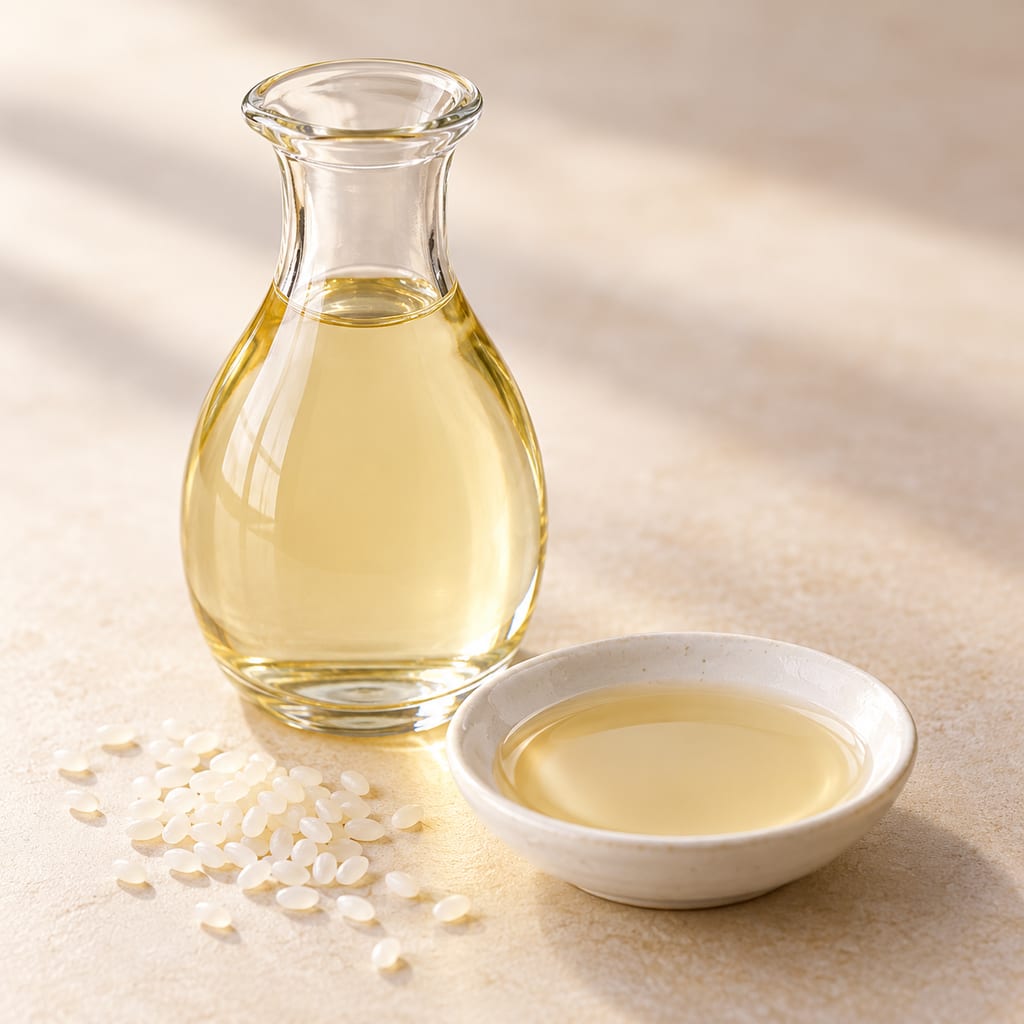
Unseasoned rice vinegar
Japanese komezu is a pale, unseasoned rice vinegar made through alcoholic and acetic fermentation; rice, water, koji and yeast shape its character.
 FermenteaWhere food goes to change
Traditional method
赤酢 · あかず · Red vinegar · Red sake-lees vinegar · Japanese red vinegar · 粕酢 · Kasuzu · 赤シャリ酢
Japanese reddish-brown vinegar from sake lees matured about three years, turned to vinegar by acetic bacteria; the vinegar of Handa and Edomae sushi rice.

Akazu, 赤酢 (あかず), is Japanese red vinegar made from matured sake lees. Sake lees, 酒粕 (sakekasu), are the moist solids left after sake is pressed from its fermented rice mash, and they hold rice material, yeast, koji constituents, alcohol, sugars and peptides. Kept for years, the lees darken and deepen in flavour, and they are then made into a liquid that acetic acid bacteria turn into vinegar.
The wider category is 粕酢 (kasuzu), sake-lees vinegar. Akazu is the reddish, amber or brown kind made from matured lees, while a sake-lees vinegar can be fairly pale. Mizkan defines its own red vinegar as one that colours sushi rice reddish and uses a set amount of sake lees, a company rule and not a legal requirement for every maker.
The colour is not from red yeast rice or red Monascus mould. It develops in the lees themselves, mainly through Maillard reactions between reducing sugars and amino compounds, which move the lees from pale cream to ochre and reddish brown, and the coloured substances are extracted when the lees are prepared for vinegar.
Akazu is valued for more than colour. The lees add nitrogen compounds that taste savoury and fill out the mouthfeel, and the balance of acetic acid, amino compounds, residual sugar and aroma sets it apart from paler rice vinegars. It is usually a clear brown or reddish-brown liquid and not a thick paste.
Its best-known home is Handa on the Chita Peninsula in Aichi. From the nineteenth century Handa vinegar went to Edo and became tied to the growing nigiri-sushi trade, giving the rice a pale brown or red tint, 赤シャリ (aka-shari). Products vary: Mizkan's Mitsuban Yamabuki lists sake lees as its only raw material, MIKURA's Akane uses aged sake lees and alcohol, Mizkan's Mitsuban Jōbi has sake lees, alcohol and salt, and ready-made sushi vinegars add sugar and salt or blend rice vinegar. Akazu is also unrelated to Chinese red rice vinegar made with red koji, such as some Fujian vinegars.
Akazu's history is tied to sake brewing, the use of its by-products and the change in Japanese sushi. Earlier Japanese vinegars came from rice and other fermentable materials, and the best-documented start of commercial red sake-lees vinegar is Handa in the early nineteenth century, late in the Edo period.
Mizkan traces its origin to Matazaemon Nakano I, a sake brewer in Handa, who visited Edo in 1804, saw the market for quickly made sushi and recognised that the lees could make vinegar. The company dates its vinegar business to 1804 and its first dedicated vinegar brewery to 1811. These are corporate dates and do not prove that nobody had made vinegar from lees before.
The later milestone is Yamabuki, a premium sake-lees vinegar from lees matured for three years, which Mizkan dates to about 1845. A newspaper advertisement for it from 1888 is reproduced by the company.
There is material evidence from Handa. Aichi Prefecture records a collection of 323 implements once used by the Nakano family for preparing raw materials, pressing, heating, acetification, storage, filtration and filling, which the family gave to Handa City in 1984.
The rise of akazu went with sushi. Old narezushi acidified fish and rice by microbial fermentation, and later hayazushi used vinegar and was far quicker. Nigiri developed in Edo in the first half of the nineteenth century, and Mizkan says Handa sake-lees vinegar was shipped by coastal cargo vessels to Edo, where sushi makers took it up. That supports an important trade link and not the claim that red vinegar invented nigiri or displaced rice vinegar.
Koizumi Seizaburo's sushi manual Katei Sushi no Tsukekata recommends Handa's Yamabuki, and the food writer Kitaōji Rosanjin praised high-quality Aichi red vinegar, as cited by Mizkan. Their wording and dates should be checked in the books before they are quoted as primary evidence.
Production spread beyond Handa. Yokoi's vinegar business in Tokyo grew in the twentieth century, and craft makers appeared in Mie, Okayama and Hiroshima. Kono Vinegar and Miso Manufacturing in Maniwa began making three-year-aged red vinegar in 2018 and launched it in 2021, though its older vinegar business dates to 1888.
Three processes lie behind akazu: brewing the sake, maturing the lees, and turning a lees-derived alcoholic liquid into vinegar. Sake is brewed from rice, rice koji and yeast: koji mould, usually Aspergillus oryzae, makes amylases that turn rice starch into sugars, and sake yeasts, usually Saccharomyces cerevisiae, turn them into ethanol and carbon dioxide. Pressing separates the sake from the moist residue.
The pressed lees keep rice solids, proteins, peptides, sugars, enzymes, yeast material and some ethanol, depending on the sake and the pressing. During maturation, enzymes and chemical reactions change them: proteolysis frees peptides and amino acids and starch gives smaller sugars, which flavour the lees and supply the reactants for browning.
The reddish-brown colour comes largely from the Maillard reaction. Reducing sugars react with free amino groups from amino acids, peptides and proteins, and later condensation and polymerisation give coloured substances called melanoidins, along with aroma compounds. It is not one reaction making one red pigment, and darker lees do not necessarily hold more of every good flavour compound.
A 2024 study comparing sake lees of different colour found more Maillard products from sugars and dipeptides in the darker samples, while some other compounds were more plentiful in pale lees. Colour is therefore an incomplete measure of quality: a dark batch is not automatically the best flavoured, richest in amino acids or safe.
The matured lees are made into a liquid for acetification, by different routes. Kono in Okayama ferments the sugars of three-year-matured lees with yeast into a moromi liquid, while other traditional accounts hydrate the lees and inoculate the alcoholic extract directly with an established vinegar culture. A new alcoholic fermentation is not required in every case.
Acetic acid bacteria oxidise the ethanol: membrane alcohol dehydrogenase makes acetaldehyde and aldehyde dehydrogenase makes acetic acid, with oxygen as the final electron acceptor, C2H5OH + O2 giving CH3COOH + H2O. Traditional static fermentation lets the bacteria grow at the air-liquid interface, and other processes spread oxygen through the liquid. Acetobacter and Komagataeibacter are the usual genera, though species-level evidence for the historical Handa culture was not located.
The flavour reflects acetic acid, amino compounds, residual sugar, esters and aromas from maturation. A Mizkan technical publication reports markedly more total amino acids in one pure sake-lees red vinegar than in its rice vinegar comparison, a product-specific result. That explains how akazu tastes savoury and rounded with a lot of acid.
Production starts with sake lees pressed from fermented rice mash. They supply the rice-derived substance that sets akazu apart from ordinary rice vinegar. Kono in Okayama prefers junmai sake lees for their grain content, and Kisaichi Brewing in Chiba takes ginjo lees from Niigata breweries. Neither is required.
The lees are matured first. The traditional Handa Yamabuki account has lees aged for three years, and MIKURA's Akane and Kono's red vinegar use lees matured for about three years. The lees soften and darken and develop the compounds that give the colour and taste. No universal temperature, moisture or vessel is set.
The matured material then has to become a liquid. The agriculture ministry describes adding water to aged lees, then introducing vinegar mother and letting it ferment statically. The water depends on the lees and the alcohol of the extract, and alcohol already in the lees helps supply the acetic substrate. It is not dry rice dropped in vinegar, nor fresh sake from raw grain.
Some makers add another alcoholic fermentation. Kono describes a moromi liquid made in three stages called sandan-jikomi over about a month, which it presses to recover the liquid before acetification. That is a documented modern method and not a rule for every Handa maker.
Acetic fermentation follows, with an established vinegar culture or seed vinegar (種酢, tanezu) supplying the bacteria. In static fermentation a film forms on the surface where there is oxygen, and the ethanol is oxidised to acetic acid. Kono reports an average of two to three months, varying with volume and season, and MIKURA reports two to three months of surface fermentation for Akane.
The ministry's account of MIKURA describes old wooden vats with established acetic cultures, kept in use and not replaced by sterile vessels and isolated cultures. Kono likewise transfers culture from an earlier fermentation. A continuing system needs active management, and an open container alone does not reproduce it.
After acetification the liquid may be matured, transferred, clarified and filtered, and lots may be blended. The three-year figure for akazu usually refers to maturing the sake lees before acetification and not to ageing the finished vinegar for three years.
Some products add ingredients: MIKURA's Akane declares sake lees and alcohol, Mizkan's Jōbi sake lees, alcohol and salt, and MIKURA's Gekka is a pale sake-lees vinegar made by decolourising a red base with food-grade activated carbon. Pure akazu and blended or salted products need separate ingredient records, and quantities, alcohol adjustments, temperatures and yields are producer-specific.
The historical centre is Handa in Aichi, where the Chita Peninsula's sake breweries supplied lees and coastal shipping linked it with Edo. The original Handa tradition is represented by Mizkan's Yamabuki, dated to about 1845 with lees matured for three years. Today's Mitsuban Yamabuki is pure sake-lees vinegar, while the name Yamabuki also appears on a different product of 1957 that blends rice vinegar and sake-lees vinegar.
Other Aichi makers continue red vinegar. Mitsui Vinegar in Agui describes its Yosomatsu as made with lees matured over three summers and also sells a general Akasu. Tokyo's Yokoi Vinegar Brewing sells several akazu such as Shugyoku and Kohaku with different published acidities and richness.
In Mie, MIKURA Vinegary makes Akane from lees matured about three years by surface fermentation in wooden vats with sake lees and alcohol declared, and also Gekka, which shows that sake-lees vinegar and red vinegar are not exact synonyms.
Okayama's Kono began its three-year red vinegar in 2018 and released it in 2021, with lees from a local brewery, staged alcoholic fermentation, pressing, static acetification and further maturation. Hiroshima's Onomichi Zosu makes a pure red vinegar from lees matured at least three years, and its company age should not be assigned to the recipe.
A patent published in November 2025 describes speeding up lees maturation with controlled heat and moisture, then filtering and fermenting the liquid with acetic bacteria. It is a modern technological adaptation and not evidence that Handa makers hastened ageing.
Japan's JAS 0801:2024 counts sake lees among grain-derived materials in brewed vinegar and defines grain vinegar as at least 40 g of grain-derived material per litre and a minimum acidity of 4.2 percent. It is a general standard and not a protected geographical specification for Handa akazu or a rule of three years of maturing, and no nationwide geographical protection for akazu was established.
Akazu is most closely tied to Edomae nigiri sushi. Mixed into cooked rice it gives 酢飯 (sumeshi) a pale reddish-brown colour, called 赤シャリ (aka-shari), with acidity and savoury compounds from mature lees. The balance suits fish toppings without as much sugar as sweeter modern sushi rice seasonings.
Mizkan publishes a sushi rice recipe with three Japanese rice cups of uncooked rice, four and a half tablespoons of its Mitsuban Yamabuki sake-lees vinegar and two teaspoons of salt, with no sugar in the main version and sugar only for a sweeter variation. It is a recipe for one commercial akazu and not proof that every Edo sushi maker used those quantities.
The sushi link is supported by Mizkan's archive and the work of the sushi historian Mitsutoshi Hibino. The company describes Handa red vinegar going by coastal cargo ship to Edo for sushi businesses, and later writers praised Yamabuki for sushi, so its suitability for sushi rice is a documented culinary tradition and not just marketing.
It is also used in 酢の物 (sunomono), dishes of vegetables or seafood dressed with vinegar. Mizkan recommends its pure sake-lees vinegar for them and advises cutting other strong seasonings because it is already flavourful, and the dish comes out darker than with pale rice vinegar.
Producers describe other uses. Kono recommends its three-year red vinegar for dumpling dipping sauce, sweet and sour chicken and salad dressings. MIKURA also makes a seasoned vinegar for sushi and sunomono from red-vinegar-derived grain vinegar, raw sugar and salt, which is not unseasoned akazu. Mizkan's Senya page adds dressed vegetables, fish, meat, marinades and vinaigrettes, and some recipes use it in desserts or drinks, which are modern uses.
Check whether a bottle is pure sake-lees vinegar, a rice-and-lees blend or a ready-seasoned sushi vinegar, since the same volume gives different acid, salt, sweetness and aroma and dark colour does not show the composition. A historical reconstruction should start from unseasoned matured sake-lees vinegar.
Vinegar in sushi rice does not make raw fish free of parasites or pathogens, and a commercial red vinegar should not replace the specified vinegar in a tested shelf-stable canning recipe unless acidity and the recipe agree.
The first question concerns the matured lees. Fresh lees are generally pale, and lees for red vinegar become ochre, amber or brown. That is enzymatic and Maillard change, but darkening alone does not show the intended maturation: the smell, condition and history of the lees also matter.
Lees vary with the source brewery, pressing and storage, in residual ethanol, sugars, protein and solids, so no universal extraction water or liquid composition can be set. The alcohol has to be enough for acetification and not so strong that it stops the bacteria. The National Research Institute of Brewing explains that ordinary sake of around 15 percent alcohol does not turn into vinegar with age, because typical acetic acid bacteria cannot grow at that concentration.
Whether the liquid needs another alcoholic fermentation depends on the maker. Some extract and adjust matured lees, others ferment a new lees mash, as Kono does for about a month. Judge it by measured alcohol and residual sugar and not by an alcoholic smell or elapsed time.
Acetic acid bacteria need oxygen. In static surface fermentation the film forms where liquid meets air, and MIKURA and Kono both report about two to three months, depending on the liquid, culture, vessel and surroundings. An unidentified film does not show a suitable starter.
Colour and acidity are separate. A dark liquid made by heating sake lees is not akazu, since the acid must come from fermentation, and a genuine brewed vinegar can be too pale for a maker's idea of red. Judge a batch by total titratable acidity, pH, residual alcohol and composition as well as taste, and remember that titratable acidity and pH differ.
JAS 0801:2024 sets a minimum acidity of 4.2 percent for grain vinegar and defines it by the grain-derived starting material, with normal appearance and no abnormal taste or smell. It is not a household fermentation safety protocol. Mizkan lists Mitsuban Yamabuki at 4.5 percent acidity and Yokoi publishes other figures for its products, so one brand's numbers are not universal for akazu.
Sake lees stored for years can spoil. Unwanted growth, abnormal smells and poor hygiene can ruin the raw material, and lees from an alcoholic fermentation are not safe forever. The final vinegar is not safe just because it smells acidic or is several years old.
The 2025 patent describes accelerated ageing of lees at raised temperatures with restricted evaporation, a possible shorter route to a red substrate that is not shown to match traditionally aged lees in every respect.
Labels show the variation: pure Mitsuban Yamabuki declares sake lees, MIKURA's Akane sake lees and alcohol, Mizkan's Jōbi sake lees, alcohol and salt. Record each by its ingredient list and acidity. For an experiment, record the lees source and maturation, any water or alcohol added, extraction and pressing, starter, oxygen exposure, progress, final acidity and finishing. Homemade red vinegar of unknown acidity must not replace specified commercial vinegar in shelf-stable preserving.
Mizkan traces its start to Matazaemon Nakano I, a Handa sake brewer who saw the market for quick sushi in Edo in 1804 and began making vinegar from sake lees, with a first dedicated vinegar brewery in 1811. Its premium Yamabuki, from lees matured for three years, dates to about 1845, and an 1888 newspaper advertisement for it survives.
Aichi Prefecture records 323 Nakano family implements given to Handa City in 1984. Handa vinegar went by coastal ship to Edo for nigiri sushi, and later craft makers appeared in Mie, Okayama and Hiroshima.
Years of storage can allow unwanted growth, off smells and poor hygiene, and lees from an alcoholic fermentation are not safe indefinitely.
Hazard sourceOrdinary sake at about 15% alcohol will not turn to vinegar because typical acetic bacteria cannot grow at that strength.
Hazard sourceA film does not identify the culture or show enough acid.
Hazard sourceColour and sourness do not show the acid; JAS grain vinegar needs at least 4.2%.
Hazard sourceHomemade vinegar of unknown acidity can leave food under-acidified.
Hazard sourceMature the sake lees before vinegar making (MIKURA and Kono).
Control sourceAcetic fermentation (MIKURA and Kono).
Control sourceMeasure total acidity.
Control sourceUse eligible grain-derived material.
Control sourceFor canning use commercial vinegar of the acidity a tested recipe specifies.
Control sourceDo not use sake lees with fuzzy mould or a putrid smell. Years of storage can spoil the raw material.
Ordinary sake at about 15% alcohol will not turn into vinegar; the alcohol of the liquid has to be low enough for the bacteria.
A surface film and a sour smell do not show enough acid. Measure total acidity (at least 4.2% for grain vinegar under JAS).
Do not use homemade akazu of unknown acidity in canning or pickling; use commercial vinegar of the acidity the tested recipe specifies.
Vinegar in sushi rice does not make raw fish free of parasites or pathogens.
Corporate archive dates; not proof of earlier makers.
Where Handa vinegar was used for nigiri sushi.
A modern craft maker.
Japanese komezu is a pale, unseasoned rice vinegar made through alcoholic and acetic fermentation; rice, water, koji and yeast shape its character.
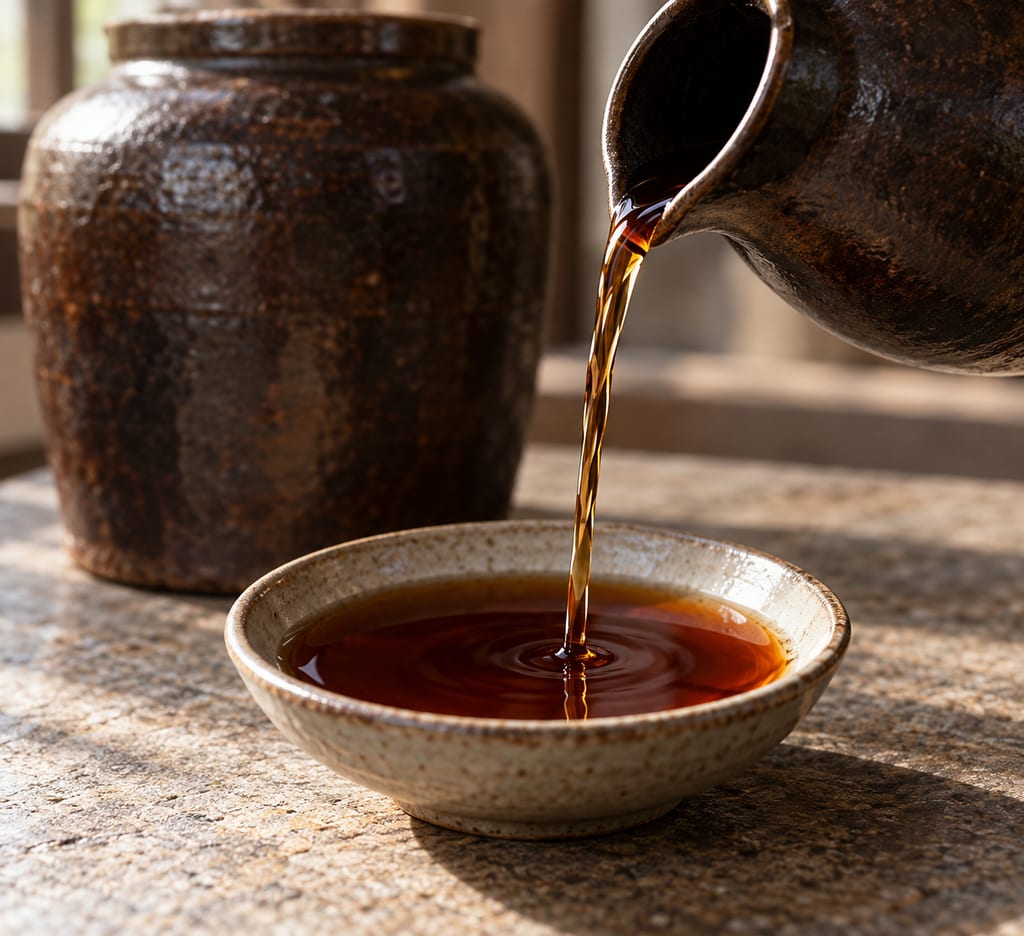
Dark Fujian rice vinegar: glutinous rice and red Monascus koji make a red rice wine, liquid acetification turns it to vinegar, and it ages at least three years.
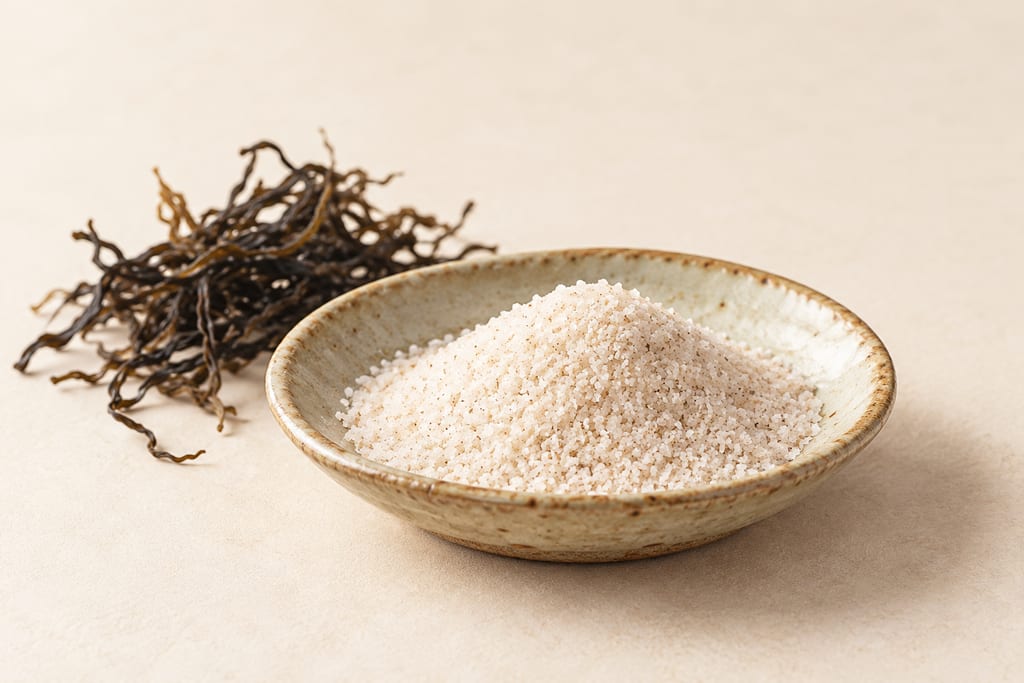
Amabito no Moshio is a modern, pale beige Japanese seaweed salt made from Seto Inland Sea water and hondawara seaweed. Its documented factory method concentrates filtered brine in kettles, then separates and dries the salt.
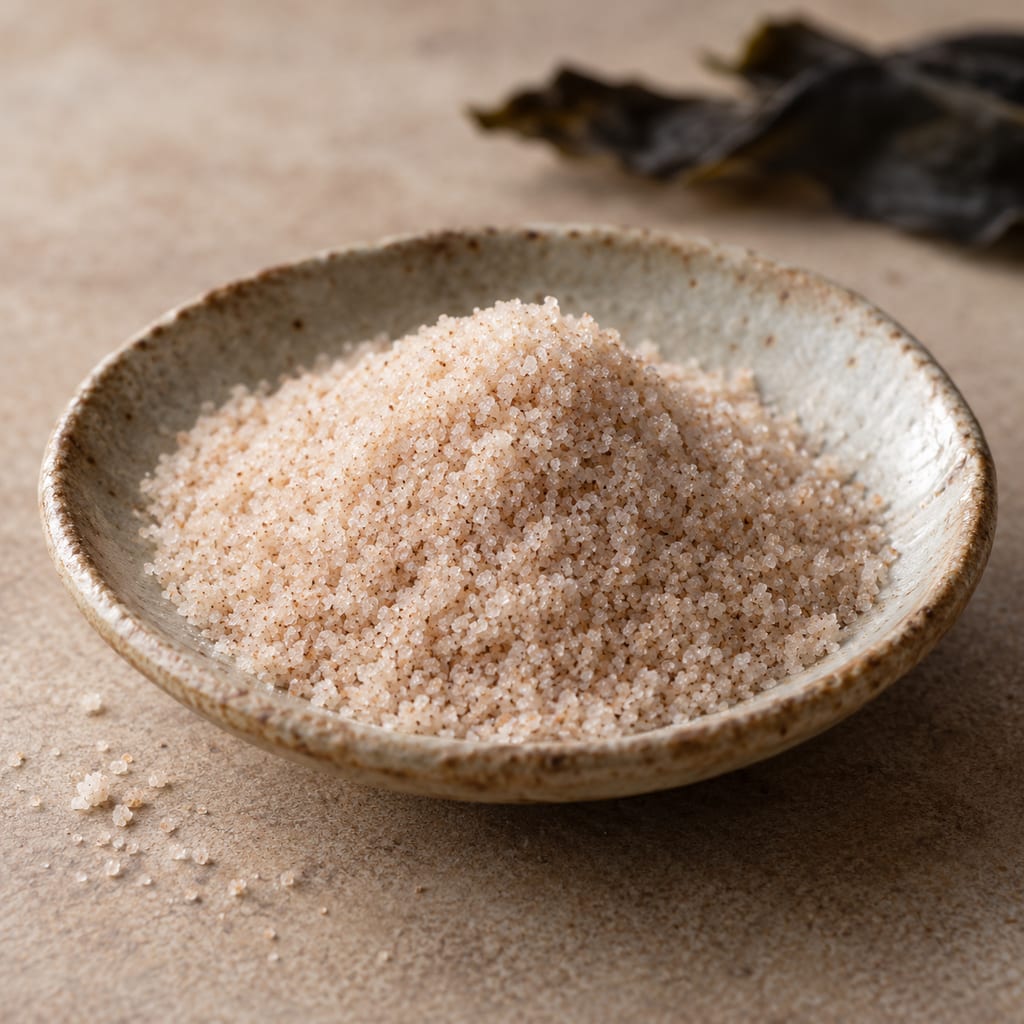
Awaji moshio is a modern Japanese seaweed salt made by TaDa PHILOSOPHY from Awaji Island seawater and seaweed. Its premium process concentrates brine, extracts seaweed flavor, then crystallizes, separates, dries and grades the salt.
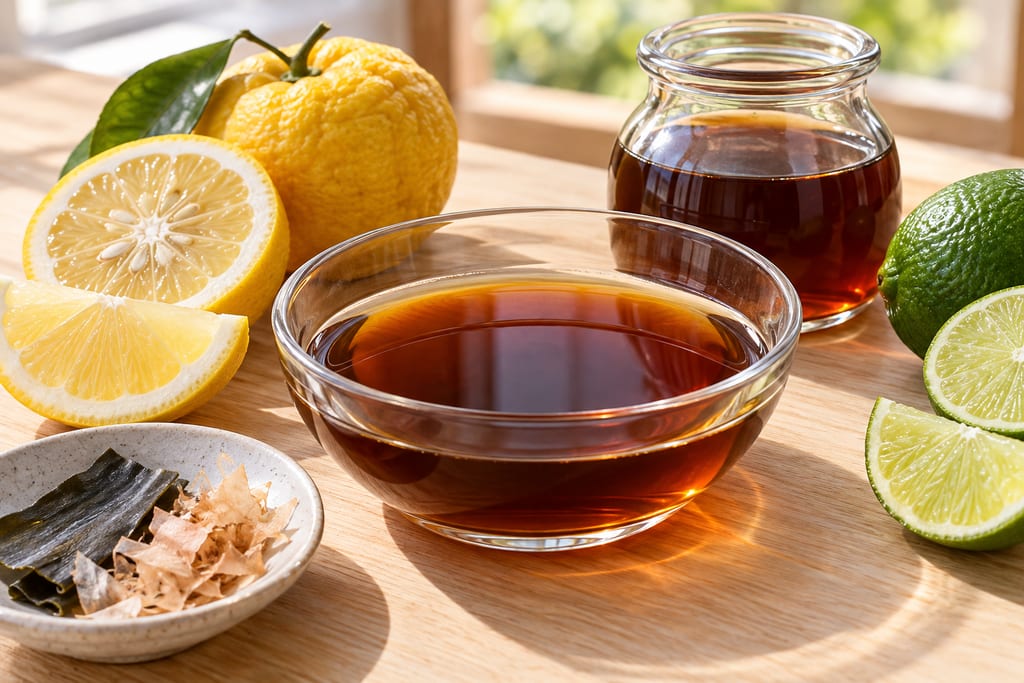
This fresh ponzu-shoyu mixes Japanese koikuchi soy sauce with yuzu or a lemon-lime blend, rice vinegar, water and sugar; optional kombu and bonito give a short chilled infusion.
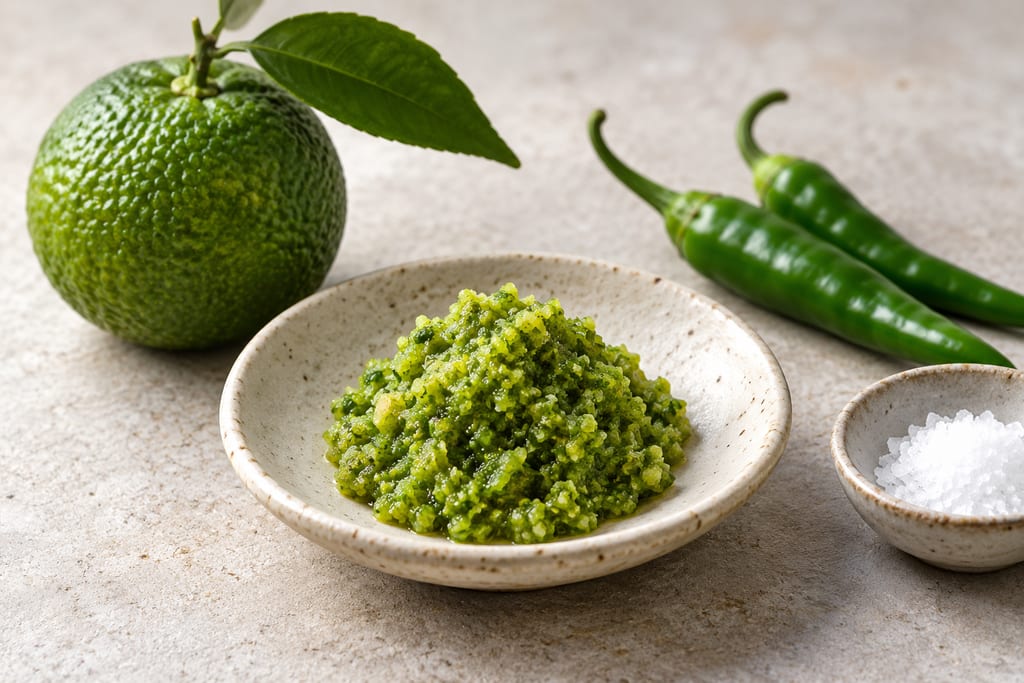
A fresh, uncooked yuzu and green chilli paste inspired by Kyushu’s yuzu kosho, made here as an untested small-batch seasoning rather than a preservation formula.
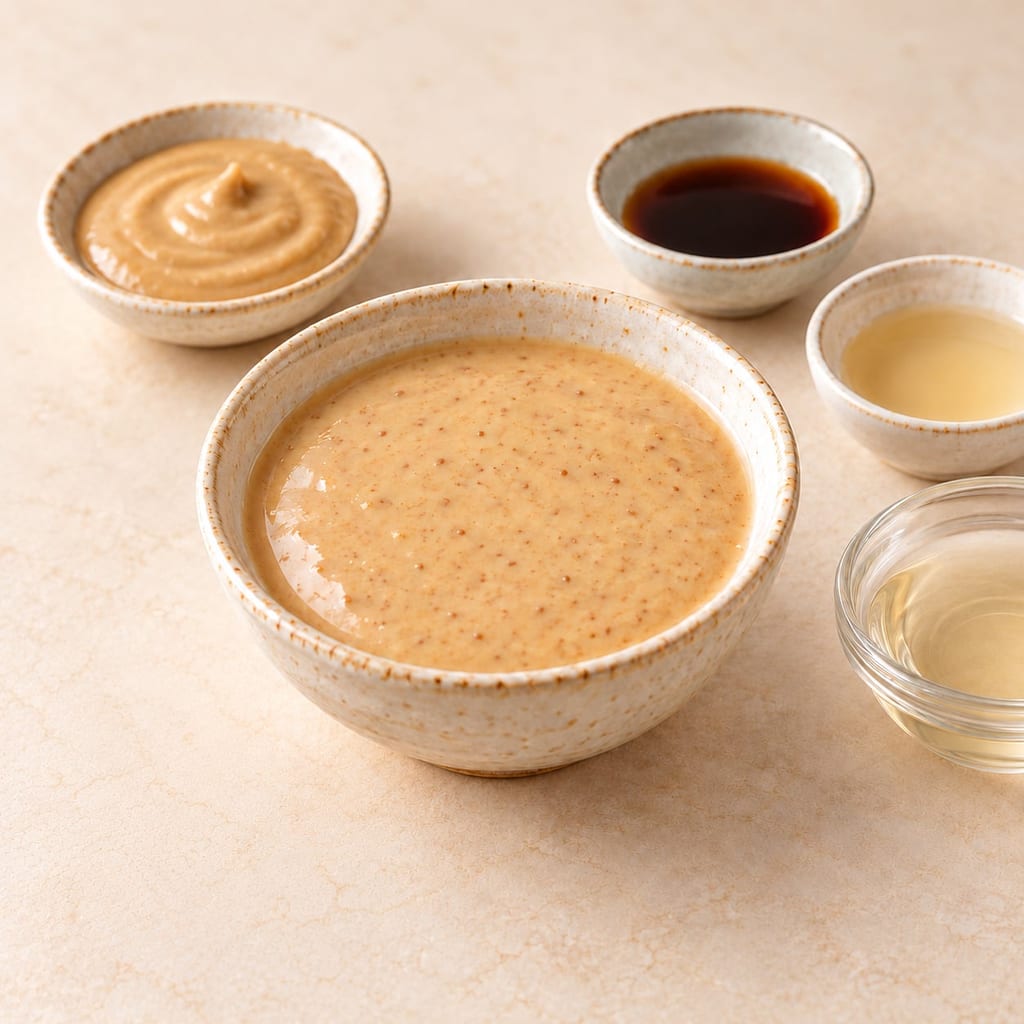
A creamy Japanese sesame dipping sauce with soy, rice vinegar and dashi. Gradual mixing turns the thick sesame paste into a smooth sauce.
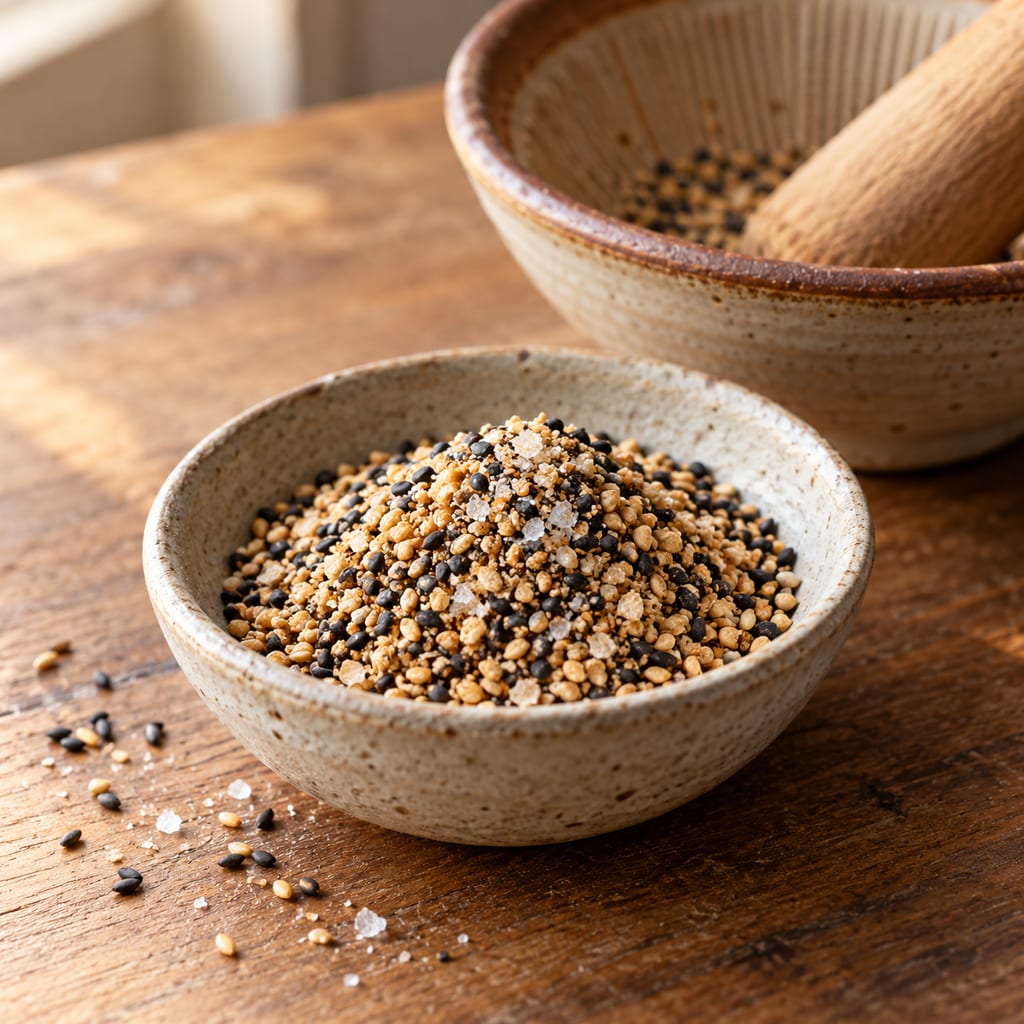
Toasted sesame seeds and sea salt are ground together into a coarse seasoning for rice. This small pan-roasted batch keeps most of the seed texture.
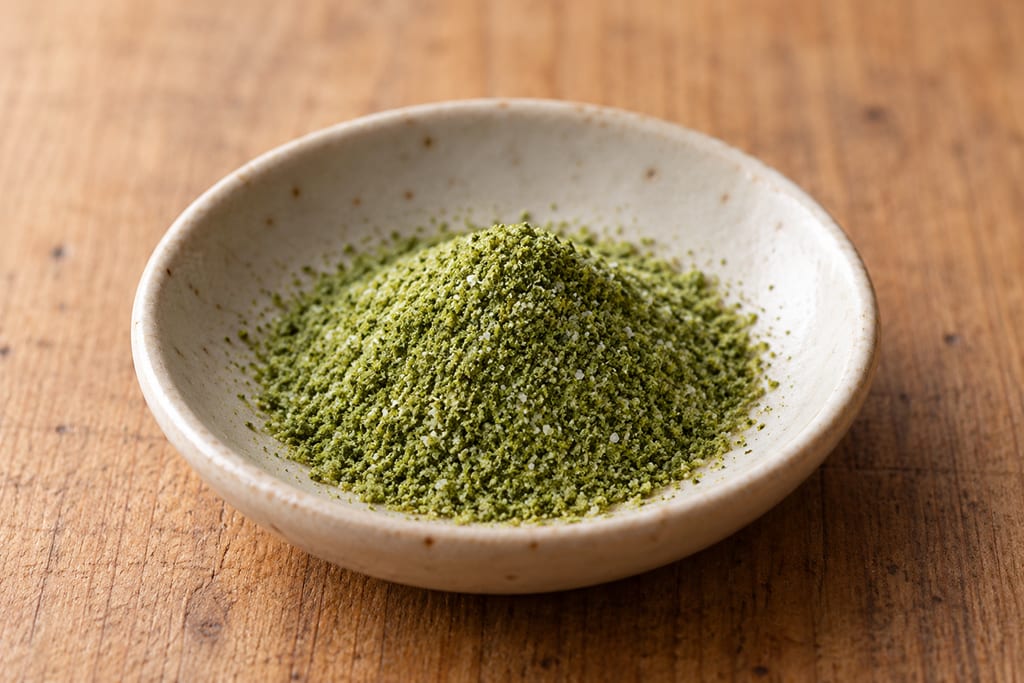
Green tea leaf salt is a dry seasoning made by grinding tea leaves, sieving them and mixing the powder with fine salt. This Japanese-style version follows a documented equal-parts method.
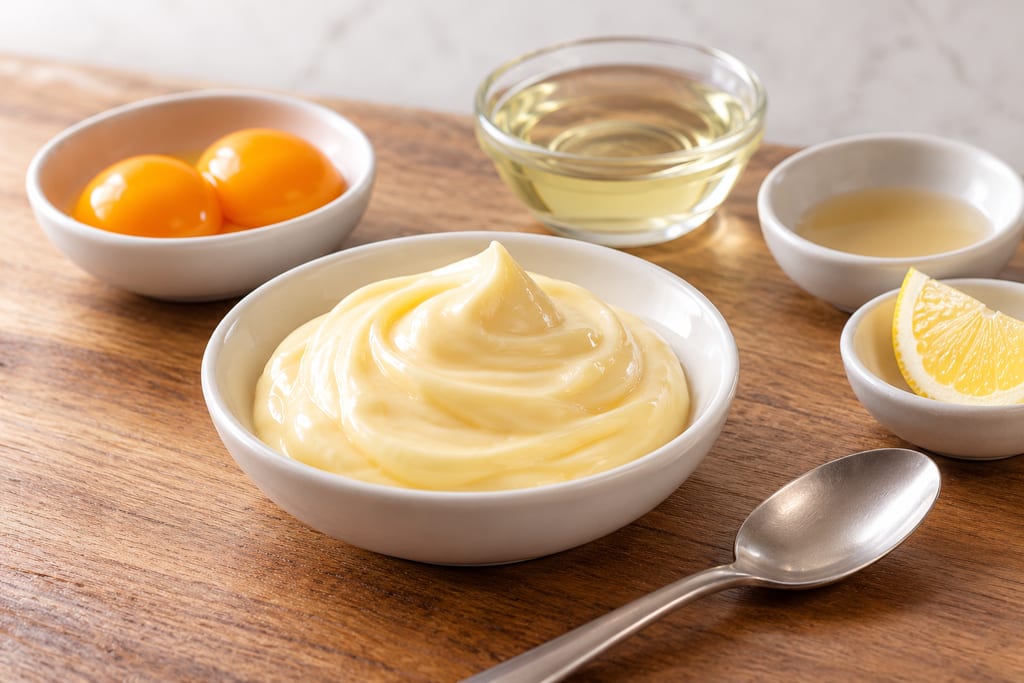
A one-cup Japanese mayonnaise batch made in a small food processor with pasteurized room-temperature egg yolks and oil added in three stages around the seasonings and acids.

Protected Italian vinegar made only from cooked grape must, fermented and aged in a battery of wooden barrels for at least 12 years: sweet, sharp and syrupy.

A Dominican table and seasoning condiment of sour orange juice, mixed with lime and salt and bottled raw; garlic, oregano or a hot pepper may be added for meat or a spicier bottle.

A Swedish-style spirit vinegar made by fermenting neutral alcohol with live vinegar bacteria, with a separate guide to commercial ättika strengths.
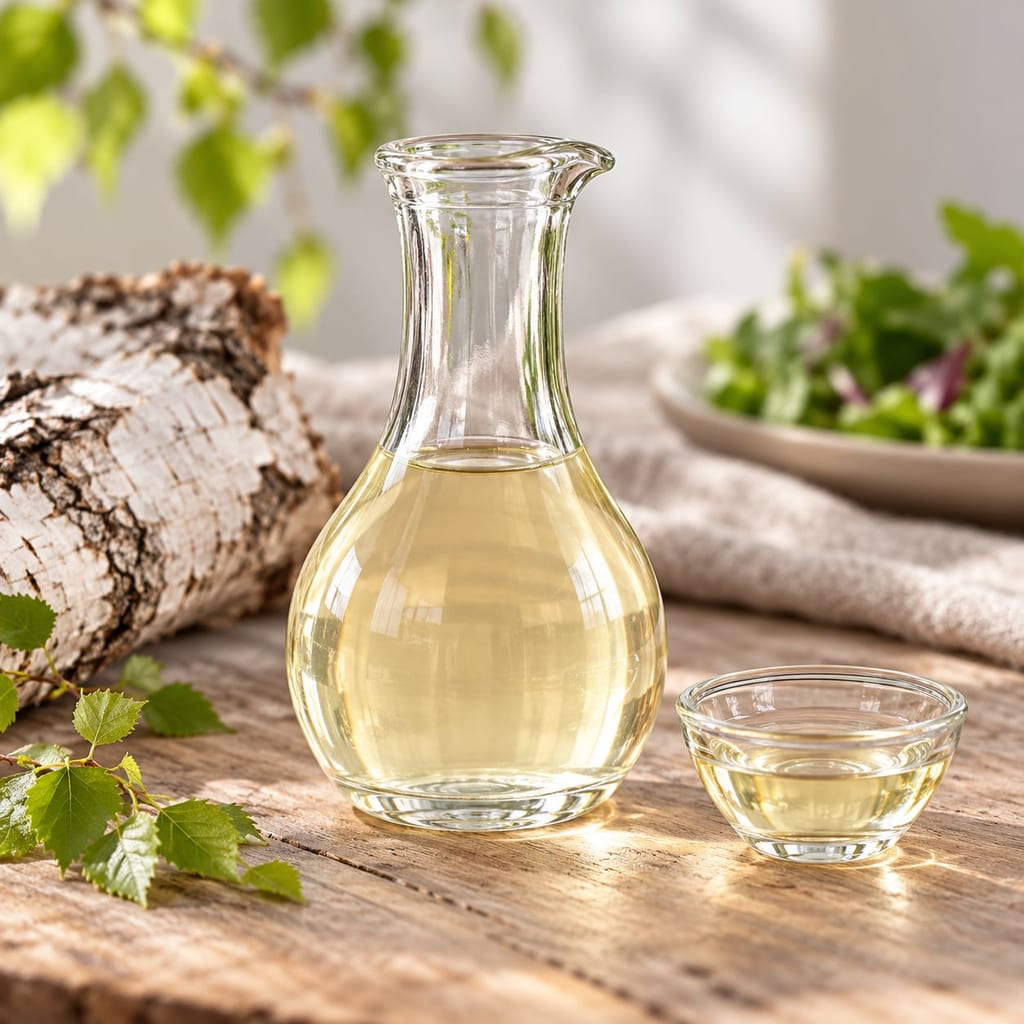
Vinegar from spring birch sap fermented to alcohol and then acetic acid, usually with added sugar or honey because the sap is so dilute; made in Sweden and described in older eastern European accounts.
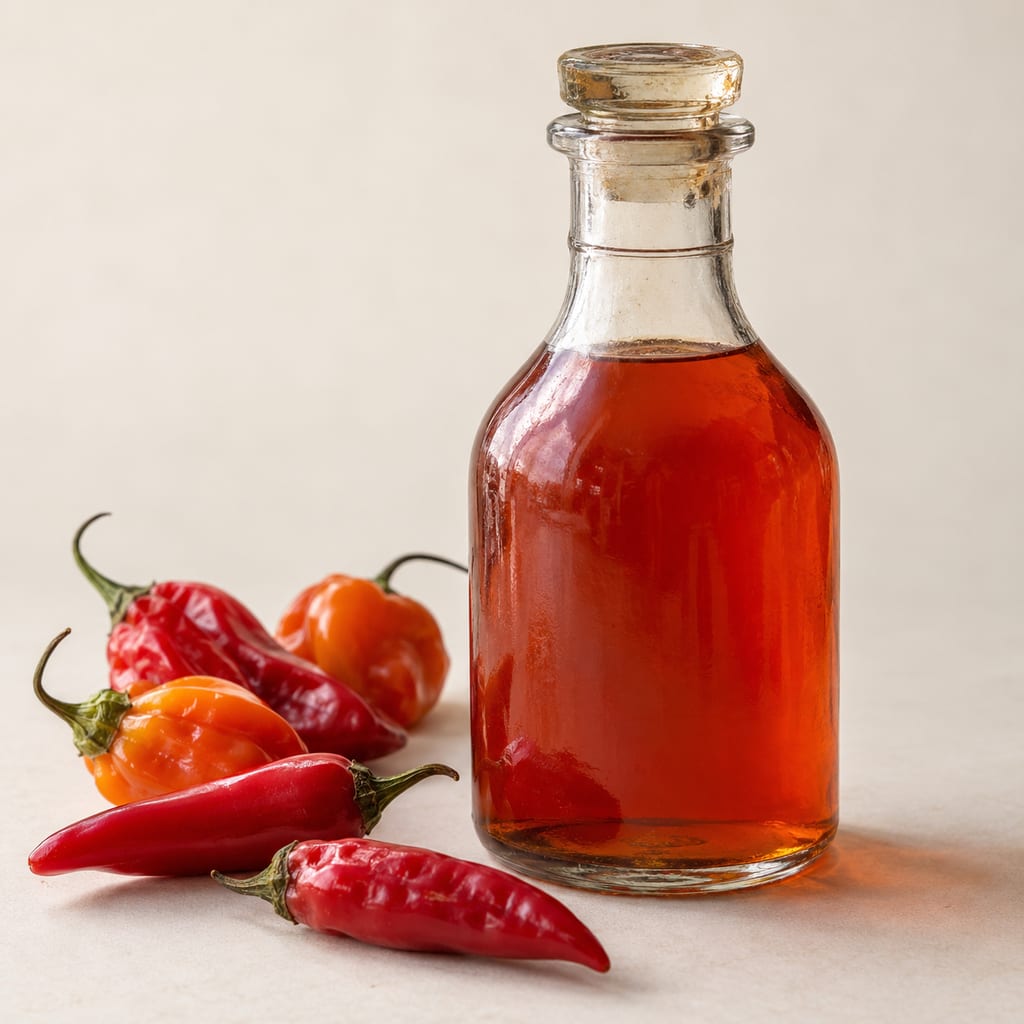
Mary Randolph's pepper vinegar: ripe pepper pods simmered in vinegar until the liquid is reduced to one quart, then strained for use in gravies and catsups. From The Virginia Housewife.
A Japanese mixed seasoning of vinegar, sugar and salt for sushi rice. Ratios vary with the rice batch and style; this version follows Marukan Vinegar's formula for two go of rice.
Vinagre de Jerez is made by acetifying eligible Jerez wines and ageing the vinegar in wood. Its protected name belongs to a defined Andalusian zone and a cellar tradition joining wine, oxygen, acetic bacteria and long ageing.
Sinamak is a Philippine spiced vinegar: white, cane or coconut vinegar steeped with chilies, ginger, garlic, onion and peppercorns for days or weeks until it is ready to use as a condiment.

A Cap-Pelé boucanière is an Acadian herring-smoking building. The documented Willie Niles example is a one-storey wood-frame structure with a ridge smoke vent and interior bays for hanging fish-bearing cannes.

Achcharu is a family of Sri Lankan vinegar pickles made with mixed vegetables or seasonal fruit and a piquant spice dressing. This version is a quick, refrigerated, non-fermented mixed-vegetable pickle.

The acocote is a long, hollowed and dried gourd used to draw aguamiel from a mature maguey. It is a harvesting tool: the sap is transferred to a separate vessel before it ferments into pulque.

Adrak murabba preserves young ginger in sugar syrup, a sweet South Asian preparation recorded in Indian cookery and food-processing sources.

Parkia biglobosa seeds are fermented into regional West African seasonings, including nététou, iru, dawadawa and soumbala. The yellow fruit pulp is a separate food, and names and methods vary by place.

A refined common-wheat flour blended for a broad range of baking; its protein and behavior vary with wheat, milling and market.

The almond mushroom, Agaricus subrufescens, was cultivated in eastern North America in the 1800s, lost its market, and returned as a cultivated mushroom from Brazil, where it is grown under several names.

Anpan is a soft wheat bun filled with sweet red-bean paste and finished with egg wash and black sesame. This dough rises with commercial instant yeast.
No community contributions have been published for this entry yet.
Sign in to contribute. Published comments and photos are free to read.
Ministry of Agriculture, Forestry and Fisheries, TokaiMethod
Traditional wooden-vat vinegar making: MIKURA Vinegary (Toei Co.)Surface fermentation in old wooden vats; adding water to aged lees
Cited in: How it is made
MIKURA VinegaryMethod
Akane sake-lees red vinegarLees matured about three years; two to three months of surface fermentation; sake lees and alcohol
Cited in: What it is; How it is made; Variations; Reading results and problems
JR-West Furusato OkoshiMethod
Red vinegar from matured sake lees, ManiwaKono process and photographs
Cited in: History; How it is made
Kono Vinegar and Miso ManufacturingMethod
Fermentation terroirThree-year lees, sandan-jikomi moromi, two to three months of acetification
Cited in: History; How it works: lees, browning and acetic bacteria; How it is made; Variations; How it is eaten and used
Mizkan HoldingsHistory
Mizkan's history: founding of Nakano Vinegar1804 and 1811; Yamabuki from about 1845; Edo shipping
Cited in: What it is; History; Variations; How it is eaten and used
MizkanMethod · Use
Mitsuban Yamabuki pure sake-lees vinegarSake lees as the only raw material; 4.5% acidity; sushi rice recipe
Cited in: What it is; History; Variations; How it is eaten and used; Reading results and problems
MizkanIdentity
Types of vinegarMizkan's definition of red vinegar
Cited in: What it is; How it works: lees, browning and acetic bacteria
Mizkan Professional ProductsIdentity
Mitsuban Jobi red vinegarSake lees, alcohol and salt
Cited in: What it is; How it is made; How it is eaten and used; Reading results and problems
Ministry of Agriculture, Forestry and Fisheries, JapanIdentity · Safety
JAS 0801:2024 Brewed vinegarGrain vinegar: 40 g grain per litre and 4.2% acidity; sake lees counted
Cited in: Variations; Reading results and problems
Ministry of Agriculture, Forestry and Fisheries, JapanMethod
Types of vinegarAged sake lees plus water and vinegar mother
Cited in: How it works: lees, browning and acetic bacteria; How it is made
National Research Institute of Brewing, JapanChemistry
FAQ about alcoholSake at 15% alcohol does not become vinegar with age
Cited in: How it works: lees, browning and acetic bacteria; Reading results and problems
Mitsui Vinegar Co.Variation
Red vinegars (akazu)Yosomatsu from lees matured over three summers
Cited in: Variations
Yokoi's Vinegar Brewing Co.Variation
Red vinegar (akazu)Shugyoku and Kohaku
Cited in: Variations; Reading results and problems
Japan Science and Technology Agency (J-GLOBAL), 2025 patentMethod
Method for producing red vinegar and aged sake lees for itAccelerated lees ageing
Cited in: Variations; Reading results and problems
Penn State ExtensionSafety
Let's Preserve: Ingredients Used in Home Food PreservationCommercial vinegar of stated acidity
Cited in: Reading results and problems
National Center for Home Food Preservation, University of GeorgiaSafety
General Information on PicklingUnknown-acidity vinegar
Cited in: Reading results and problems