
Akazu (red sake-lees vinegar)
Japanese reddish-brown vinegar from sake lees matured about three years, turned to vinegar by acetic bacteria; the vinegar of Handa and Edomae sushi rice.
 FermenteaWhere food goes to change
Traditional method
永春老醋 · Yongchun Lao Cu · Yongchun Laocu · Yongchun Old Vinegar · Yongchun Mature Vinegar · 永春乌醋 · 红曲老醋 · Fujian Red Koji Vinegar
Dark Fujian rice vinegar: glutinous rice and red Monascus koji make a red rice wine, liquid acetification turns it to vinegar, and it ages at least three years.
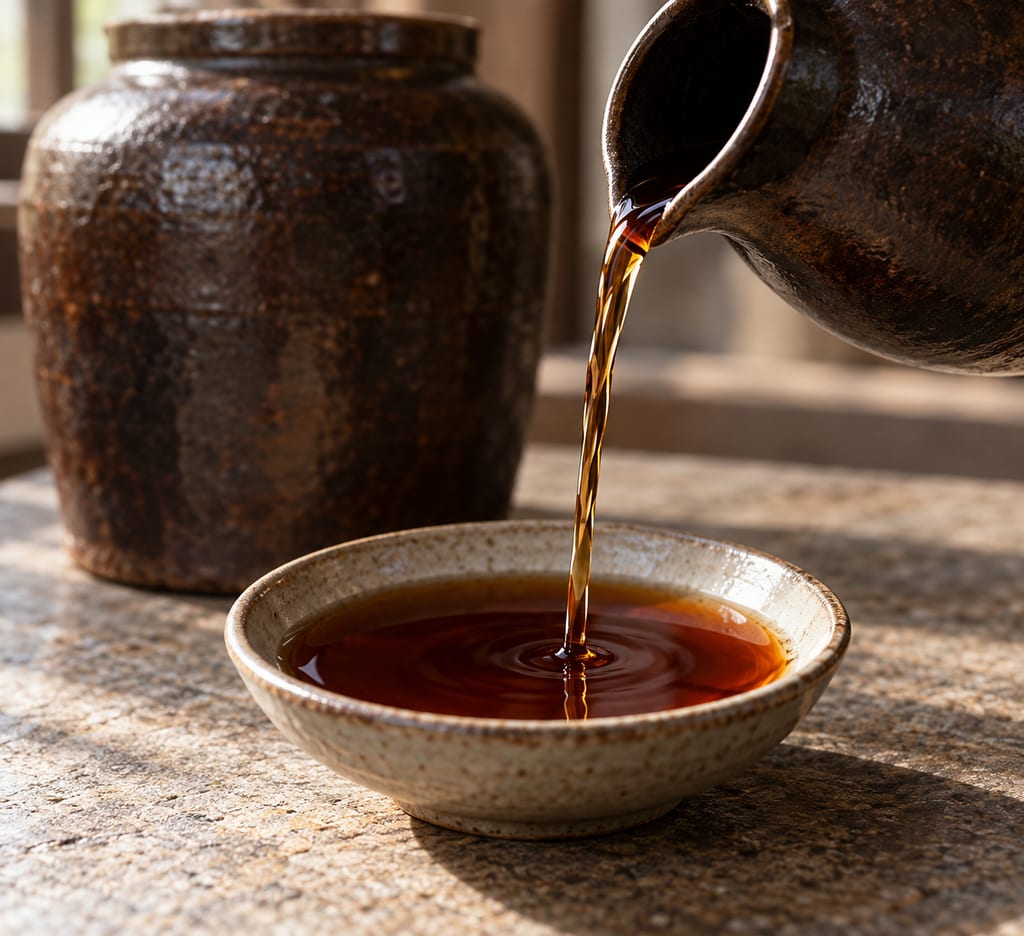
Yongchun aged vinegar, 永春老醋 (Yǒngchūn lǎocù), is a dark rice vinegar from Yongchun County in Fujian, southeastern China. Glutinous rice is fermented with red koji into a red rice wine, the wine is turned into vinegar, and the vinegar is aged for at least three years. It is reddish brown to brown-black, clearly sour with a little sweetness, and carries aromas from the red koji and from its years in the jar.
The grain is glutinous rice. The starter is 红曲米 (hóngqū mǐ), rice grown with Monascus mould, and a local type called 乌衣红曲 (wūyī hóngqū, black-skin red koji) is closely tied to Yongchun. The koji brings enzymes that break cooked rice starch into sugars, and it gives the wine its red colour.
There are three changes. Steamed rice, red koji and water saccharify and ferment into a red rice wine, called 红酒 (hóngjiǔ), which is not grape wine. Acetic acid bacteria then oxidise the wine's alcohol to acetic acid. The vinegar is then aged in earthenware jars or tanks, where its acids, sugars, amino compounds and aromas keep changing.
The protected method makes the acetic stage in liquid, unlike Shanxi aged vinegar and Zhenjiang vinegar, which are usually associated with solid-state grain fermentation. The rice and koji stage can start from solid rice, so the whole process is not liquid from beginning to end.
The Chinese geographical-indication standard GB/T 26531-2011 defines Yongchun aged vinegar as made from rice and red koji, with alcoholic fermentation, liquid acetic fermentation and at least three years of ageing, in four quality grades. Sesame, specially roasted rice colouring and sugar may be added during ageing within set limits. It is a protected name, so a similar red koji rice vinegar made elsewhere is a Yongchun-style vinegar and not the protected product.
Local accounts trace Yongchun vinegar to the early Northern Song, which began in 960. Yongchun County government descriptions say households were making aged vinegar then, and a Quanzhou heritage account gives the Shundetang tradition a founding date of 959 and a vinegar maker named Yan Rengui. These are heritage narratives, with no tenth-century recipe or document behind them.
The Shundetang account also tells of improvements under the Ming Chenghua reign (1465 to 1487) and of imperial favour, and stories link the vinegar with Song court medicine. They belong to local tradition and tell us nothing about the ingredients or microbes of the period.
A real part of the tradition is the family vinegar jar. Households kept an established jar of old vinegar and from time to time added newly made red rice wine, so a jar could last for generations and was valued as a possession and a gift. It works like the continuing systems of other aged vinegars.
The modern industry is clearer. The Ministry of Commerce records that the Taoxi line began in 1953, when the overseas Chinese businessman You Yangzu helped found the Yongchun brewing factory, while a Quanzhou account gives 1954 and an expansion to a brewing and vinegar factory in 1958. Around 1980 Taoxi introduced large fermentation vessels, selected acetic bacteria and aerated liquid acetification, and the phrase four famous vinegars came from industry events in 1983 and 1985.
Yongchun vinegar making entered the Fujian provincial intangible heritage list in 2009, and national geographical-indication protection followed in Announcement No. 81 of 2009. GB/T 26531-2011 took effect on 1 November 2011 and was confirmed on review on 4 August 2025. Association standards for Yongchun aged vinegar (2022) and for Yongchun vinegar generally (2024) came later. Producers in Dapu in 2026 combine hand-prepared rice, red koji and temperature-controlled ageing.
Glutinous rice is mostly starch, largely amylopectin, which yeast cannot ferment directly. Red koji has to break it down first. Monascus makes alpha-amylase, which cuts starch into dextrins, glucoamylase, which releases glucose, and debranching activity to finish amylopectin. Its proteases release peptides and amino acids that feed other microbes and later turn into flavour.
Research on red koji vinegar reports Monascus purpureus. A 2021 study of a starter from a Yongchun producer also describes Monascus species, Aspergillus niger and yeasts in the early saccharification. The mix depends on the starter, and A. niger is not required by the standard.
Once sugar is available, yeast ferments it to ethanol and carbon dioxide. Saccharification and fermentation overlap, since enzymes keep releasing sugar while yeast consumes it. The red rice wine is the base for the vinegar.
The acetic stage is aerobic. Acetic acid bacteria oxidise ethanol to acetaldehyde and then acetic acid with membrane alcohol and aldehyde dehydrogenases, passing electrons to oxygen. Work on Yongchun-related Monascus vinegar has used Acetobacter pasteurianus As1.41, and another study found Acetobacter a significant genus. Not every producer uses the same strain.
The community is wider than Monascus, yeast and Acetobacter. Studies of 2022 and 2023 report Lactobacillus, Bacillus, Rhodococcus, Acinetobacter, Methylobacterium, Yarrowia lipolytica, Candida xylopsoci and others in red koji vinegar. Some may be minor, environmental or present only as DNA.
Ageing keeps changing the vinegar. Acetic acid stays central to the sour taste, while sugars, lactic acid and amino acids shape it, and alcohols and acids form esters such as ethyl acetate. A 2022 metabolomics study of Yongchun Monascus vinegars aged one, five and thirty years found more than a thousand changing metabolites, and a 2025 study of commercial three-, five-, eight- and ten-year vinegars saw soluble solids and glycine rise and arginine fall. Ageing changes the character without making longer always better.
The standard names glutinous rice, suitable red koji and qualifying local brewing water. The rice is washed, soaked and steamed so the starch gelatinises, then spread to cool before the koji is mixed in, since heat would damage the starter. One 2024 Yongchun factory filing gives a rice-to-soaking-water ratio of 1:2, with the rice about doubling in weight, and cools steamed rice to about 25 degrees C in winter and 30 in summer before mixing. Some modern producers add a brewing yeast.
Rice, koji and water go into fermentation vessels. Enzymes make sugars and yeast ferments them to a red rice wine. The technical requirements ask for at least thirty days of red-koji alcoholic fermentation and a wine of 10 to 12 percent alcohol by volume. A 2021 local report describes about six months of first fermentation in large ceramic vessels with periodic stirring, a producer practice and not the standard's minimum.
The red wine is drawn off from the spent rice and goes to acetification. Traditional makers use established vinegar jars and a continuing system of transfers, and modern producers use aerated liquid fermentation. The Ministry of Commerce describes a divided-transfer method in which new red wine is added to established vinegar, liquid is moved to older stages through roughly annual steps, and some old vinegar is always kept. Roasted sesame is added during ageing for aroma and, in some methods, specially roasted rice colouring for colour.
The standard requires at least three years of ageing at 18 to 26 degrees C, in four grades: Jiāniàng (佳酿) three years, Yōuniàng (优酿) three and a half, Jīngniàng (精酿) four and Tèniàng (特酿) five. During ageing, roasted rice colouring may be added up to 4 percent, sesame up to 0.5 percent and sugar up to 3 percent. They are permitted maxima and not required amounts.
Before release the vinegar is tested for acidity, soluble solids, amino acid nitrogen and total sugar, and tasted. It should be brown-red or brown with an ester aroma, balanced acidity and slight sweetness. Rice-to-water ratios, koji amounts, aeration settings and yield are producer records, and the standard is not a complete reproducible recipe.
Yongchun aged vinegar is one of the red koji traditions of southern Fujian and is not interchangeable with every Chinese red rice vinegar. Local makers share the sequence of rice, red koji, rice wine, acetification and ageing, and differ in starters, equipment and ageing.
The four grades also differ in analysis. Total acidity as acetic acid must be at least 5.0 g/100 mL for Jiāniàng, 5.5 for Yōuniàng, 6.0 for Jīngniàng and 6.5 for Tèniàng, with grade-specific soluble solids, total sugars and amino acid nitrogen. A darker or thicker vinegar is not necessarily a stronger or higher-grade one.
Taoxi describes the divided-transfer method in earthenware, and industrial plants use aerated liquid fermentation and closer control. Shundetang makes related products: an aged vinegar from glutinous rice, red koji, sesame and sugar, a fragrant vinegar from wheat bran and red koji with liquid fermentation and sesame, and 醋豆 (cùdòu), soybeans soaked in aged vinegar, a downstream use and not another brewing method.
Starters differ too. A 2021 study compared polished rice, unhusked rice and germinated unhusked rice with a black-skin red koji from a Yongchun company, and the substrate changed filtration and aroma, with germinated rice giving more volatile varieties. That is an experimental adaptation. A 2025 study calls two makers' methods semi-solid-state, which differs from the standard's liquid-state acetification, perhaps because of the solid rice-and-koji stage.
Yongchun differs from Zhenjiang aromatic vinegar, Shanxi mature vinegar and Sichuan Baoning vinegar, the other members of the four famous vinegars, in grain, starter and method. Yongchun makers also sell younger vinegar, flavoured vinegar and vinegar drinks, and the 2024 association standard for 永春醋 does not impose the same ageing or analytical requirements as the older standard for 永春老醋.
Aged Yongchun vinegar is a sour condiment of southern Fujian and the wider Minnan region. It is set out as a dip, stirred into soups and sauces, or cooked into meat and vegetable dishes. Its sourness comes with a little sweetness and the aroma of rice, koji and ageing, and it seasons a dish and is not eaten alone.
Dipping sauces are the best-known use. The Ministry of Commerce describes Taoxi vinegar as suited to meat, above all seafood, because its liquid-fermented flavour leaves the taste of the food clear. In Yongchun a pork hotpot called 咯摊 (locally romanised luōtān) comes with small dishes of aged vinegar against the fat of pork and offal. The characters should be kept, since romanisations vary.
老醋猪脚 (lǎocù zhūjiǎo), pork trotters cooked with aged vinegar, is the best-documented local dish, with the acid balancing the richness. Sweet black vinegar and ginger versions elsewhere should not be assigned to Yongchun without a local recipe. The Taoxi account also lists vinegar pork ribs, fish, noodles, soup, peanuts and cucumber, and aged vinegar in seaweed soup, fish broth and lamb tripe. Long boiling loses volatile aroma while acids and dissolved flavour remain.
It also goes in dressings and marinades, but it is not chemically interchangeable with every Chinese black vinegar. Replacing it with Zhenjiang, Shanxi or plain rice vinegar changes sourness and aroma.
Older accounts keep the vinegar for household medicine and as a gift. Nothing supports the claim that drinking it treats illness: it is an acidic condiment and not a proven medicine.
Start with the rice and koji. The rice must be sound, with no visible mould, insects or odd smell, and the koji must come from an established food fermentation maker. Monascus starter is not unidentified red mould on rice, and strains differ in enzymes, metabolites, colour and harmful by-products.
One concern is citrinin (桔霉素), a mycotoxin linked with kidney toxicity that some Monascus strains make. A 2022 review in the International Journal of Food Microbiology documents citrinin in red fermented rice and the need for strain selection and testing. Monascus does not mean a given vinegar contains it, but starter identity and contaminant controls matter, and acidity and long ageing should not be assumed to remove a toxin already present.
Judge saccharification, alcohol and acetification separately. Weak koji leaves starch unconverted, and weak alcoholic fermentation leaves too little ethanol for acid. The requirement is at least thirty days of red-koji fermentation and a red wine of 10 to 12 percent alcohol by volume. A 2021 experiment used a nine-day alcoholic stage to compare rice, and that shortened method is not the complete standard process.
In acetification the controls are ethanol, oxygen, bacterial activity, temperature and rising acidity. Too little oxygen leaves alcohol and holds back vinegar formation, and acid eventually slows the bacteria. A sour smell or a surface film is no substitute for measurement.
The standard describes brown-red or brown colour, clarity, an ester aroma, a mellow sour taste and slight sweetness, with a little sediment allowed. Sediment is not licence for cloudiness or floating growth, and fuzzy mould, a putrid smell or spoilage need separate investigation. The grade thresholds are 5.0, 5.5, 6.0 and 6.5 g/100 mL total acidity with ageing of three, three and a half, four and five years, and they are not pH.
Ageing does not always improve a vinegar. Studies of commercial three- to ten-year vinegars and of one-, five- and thirty-year vinegars show chemical differences, but starter, formulation and storage also matter. GB 2719-2018 defines vinegar as a product of microbial fermentation, and the market regulator has stated that products made with glacial acetic acid cannot be sold as fermented vinegar. An acidified rice liquid or an unaged red koji vinegar is not the protected Yongchun product.
Do not use homemade vinegar of unknown acidity in place of the specified vinegar in a shelf-stable pickling recipe. The Yongchun grades are product specifications and not home canning validation.
Local accounts date aged vinegar making in Yongchun to the early Northern Song, and the Shundetang tradition gives 959. These are heritage narratives with no tenth-century document. Households kept old vinegar jars and added new red rice wine, handing them down through generations.
A Yongchun brewing factory was founded in 1953 or 1954 with the overseas Chinese businessman You Yangzu, Taoxi introduced aerated liquid acetification around 1980, and the vinegar gained geographical-indication protection in 2009. GB/T 26531-2011 took effect on 1 November 2011.
Some Monascus strains make citrinin, a mycotoxin linked with kidney toxicity, and acidity and ageing do not remove what is already in the raw material.
Hazard sourceUnidentified red mould on rice is not Monascus starter and may carry harmful metabolites.
Hazard sourceCooked rice left warm can grow Bacillus cereus, so cooling and handling must be hygienic.
Hazard sourceAcetic acid bacteria need oxygen; too little leaves alcohol and holds back vinegar formation.
Hazard sourceA sour smell or film does not show the final acid. The grade thresholds are laboratory measurements.
Hazard sourceHomemade vinegar of unknown strength can leave pickles under-acidified.
Hazard sourceRice quality.
Control sourceRed koji rice-wine fermentation.
Control sourceAlcohol of the red rice wine before acetification.
Control sourceAgeing room.
Control sourceMinimum ageing by grade.
Control sourceTotal acidity as acetic acid by grade.
Control sourceOptional additions during ageing.
Control sourceVinegar made by microbial fermentation, not from glacial acetic acid.
Control sourceFor canning use vinegar of the acidity the tested recipe specifies.
Control sourceUse only food-grade Monascus red koji from an established maker. Unidentified red mould on rice can carry citrinin, a kidney-toxic mycotoxin that long ageing does not remove.
Cool steamed rice quickly and handle it hygienically; warm cooked rice grows Bacillus cereus.
A sour smell or a surface film does not show enough acid; measure total acidity (at least 5.0 g/100 mL for the youngest grade).
Do not use homemade vinegar of unknown acidity in canning or pickling; use commercial vinegar of the stated acidity.
Discard a batch with fuzzy mould, a putrid smell or other spoilage.
The protected area; the Northern Song date is a heritage attribution.
A current production centre.
Japanese reddish-brown vinegar from sake lees matured about three years, turned to vinegar by acetic bacteria; the vinegar of Handa and Edomae sushi rice.
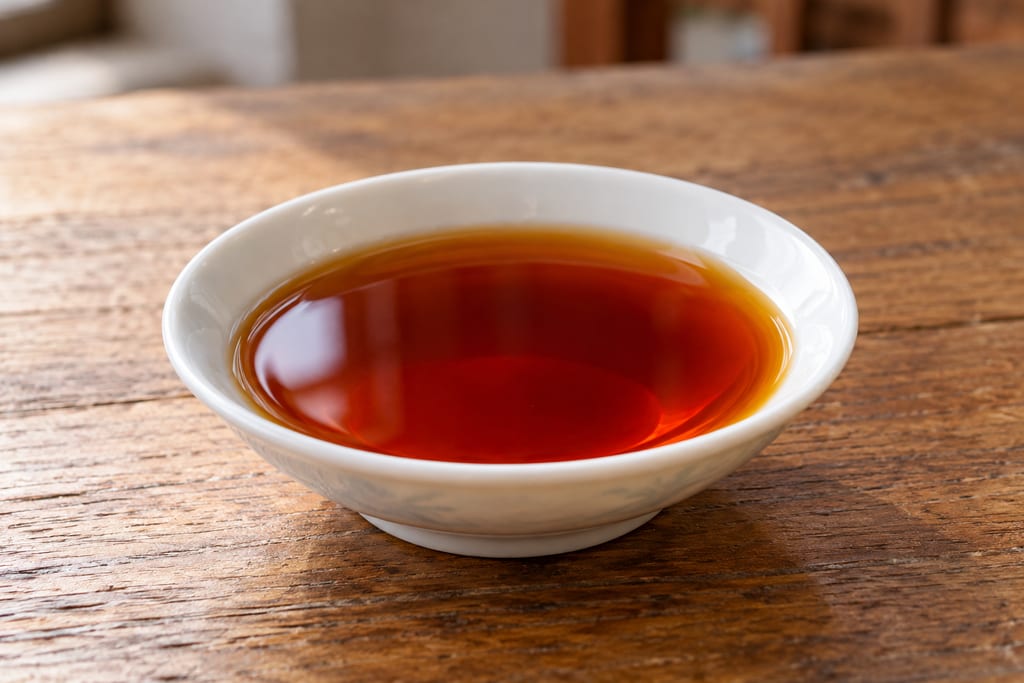
Tianjin grain vinegar of millet and sorghum made with daqu: liquid alcoholic fermentation, two-layer solid-state acetification, and at least three years of outdoor ageing of the grain mash.
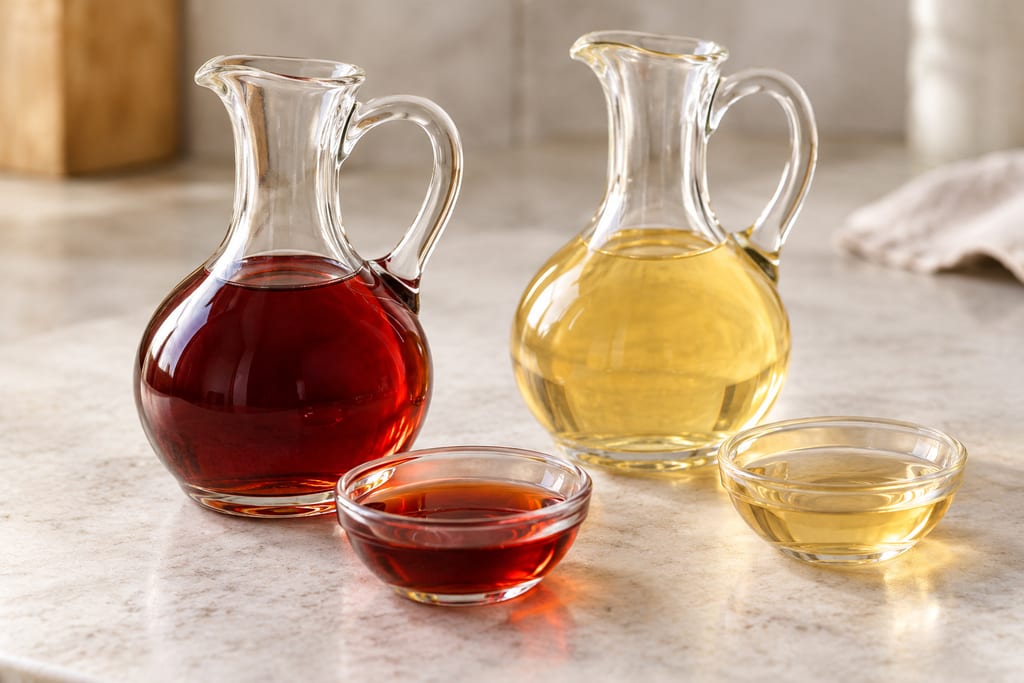
Wine vinegar is made by the aerobic oxidation of wine's alcohol into acetic acid by bacteria, producing a sour, wine-derived condiment used in dressings, sauces, marinades and preserved foods.
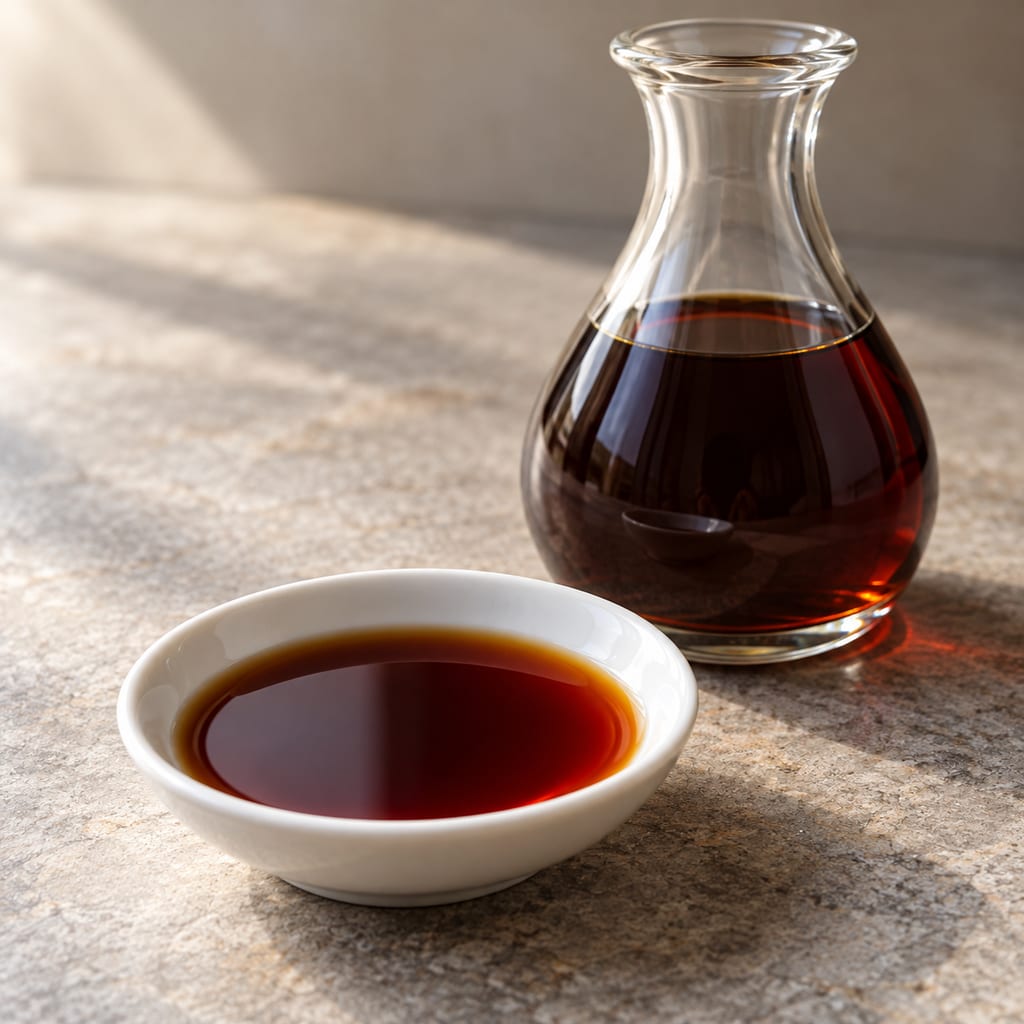
Zhenjiang black vinegar is a Chinese glutinous-rice vinegar made by mixed-culture fermentation, solid-state acetification, roasted-rice extraction and ageing, giving a dark, savoury, mildly sweet condiment.
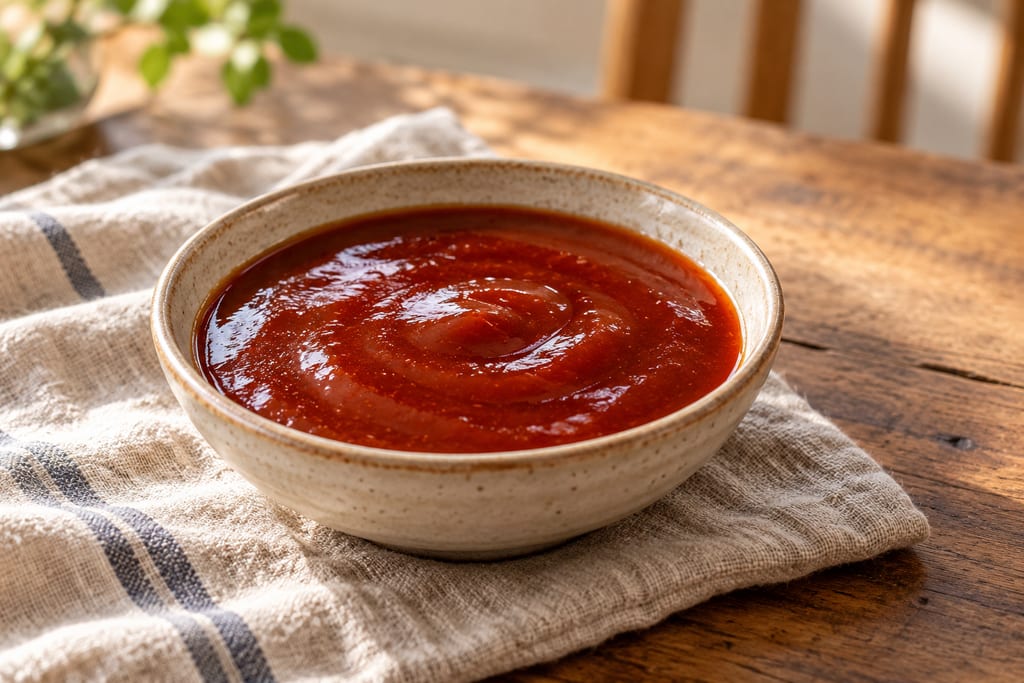
A smooth, tomato-based sweet-and-sour sauce of sugar, vinegar, tomato paste and soy sauce, thickened with starch for dipping or coating; it is not the sauce on Hangzhou's sweet-and-sour ribs.
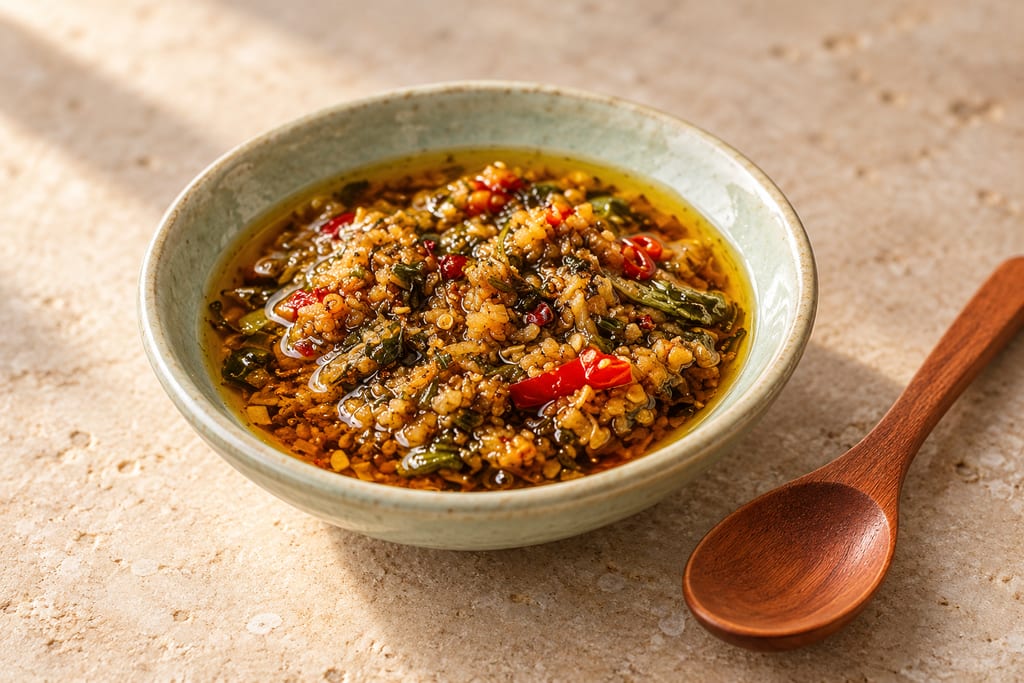
A Cantonese condiment of ginger, garlic, scallion and fresh chilli fried slowly in oil and seasoned with soy sauce, sugar, wine and salt, served over roast meats and poached chicken.
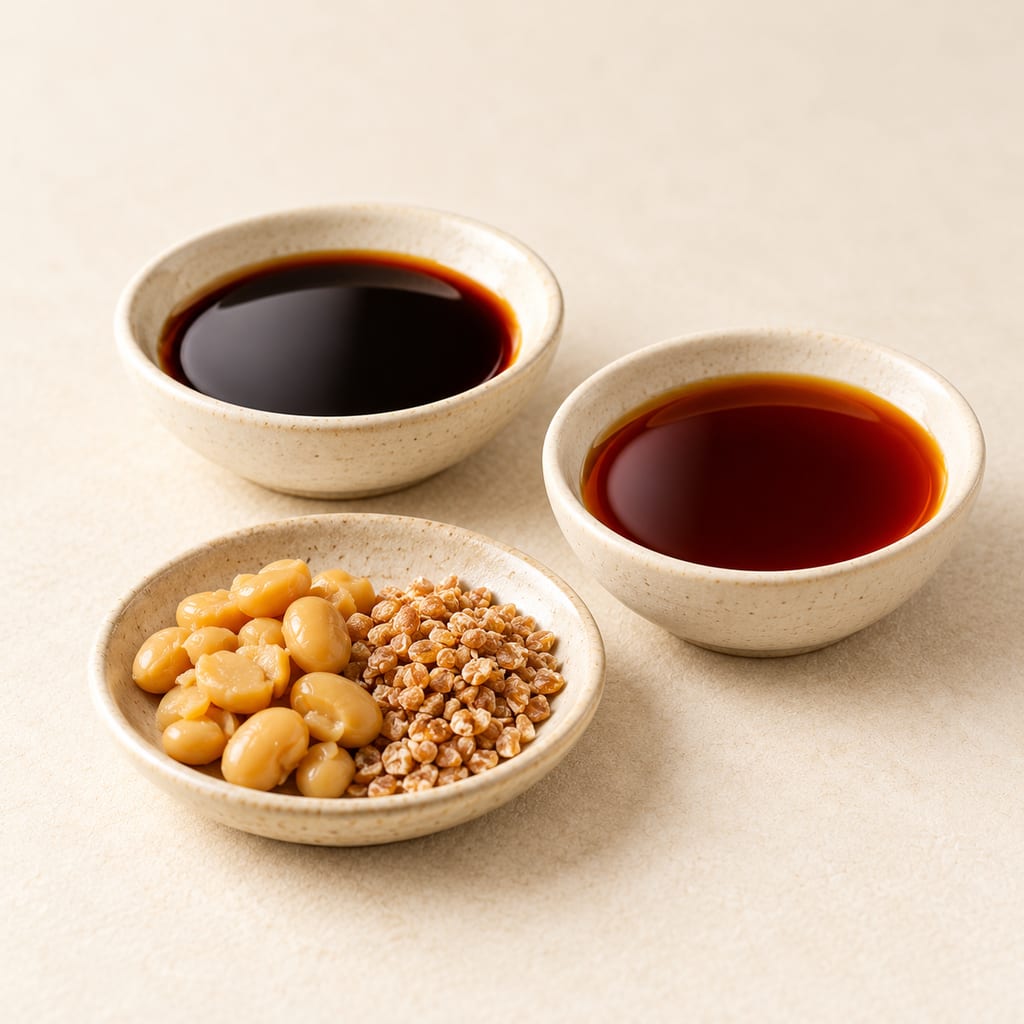
Jiangyou is the Chinese soy sauce family, an umbrella term for light, dark and seasoned sauces made by two main process families: high-salt liquid-state and low-salt solid-state brewing.
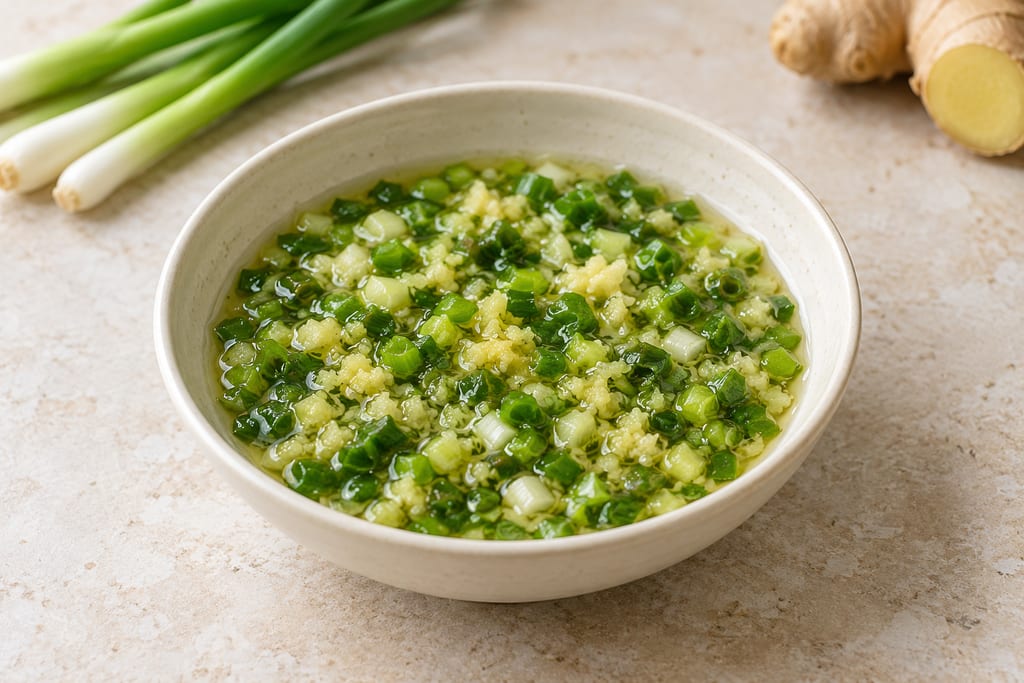
A raw Cantonese-style condiment of minced scallions, fresh ginger, vegetable oil and salt; it is mixed without heating and serves eight.
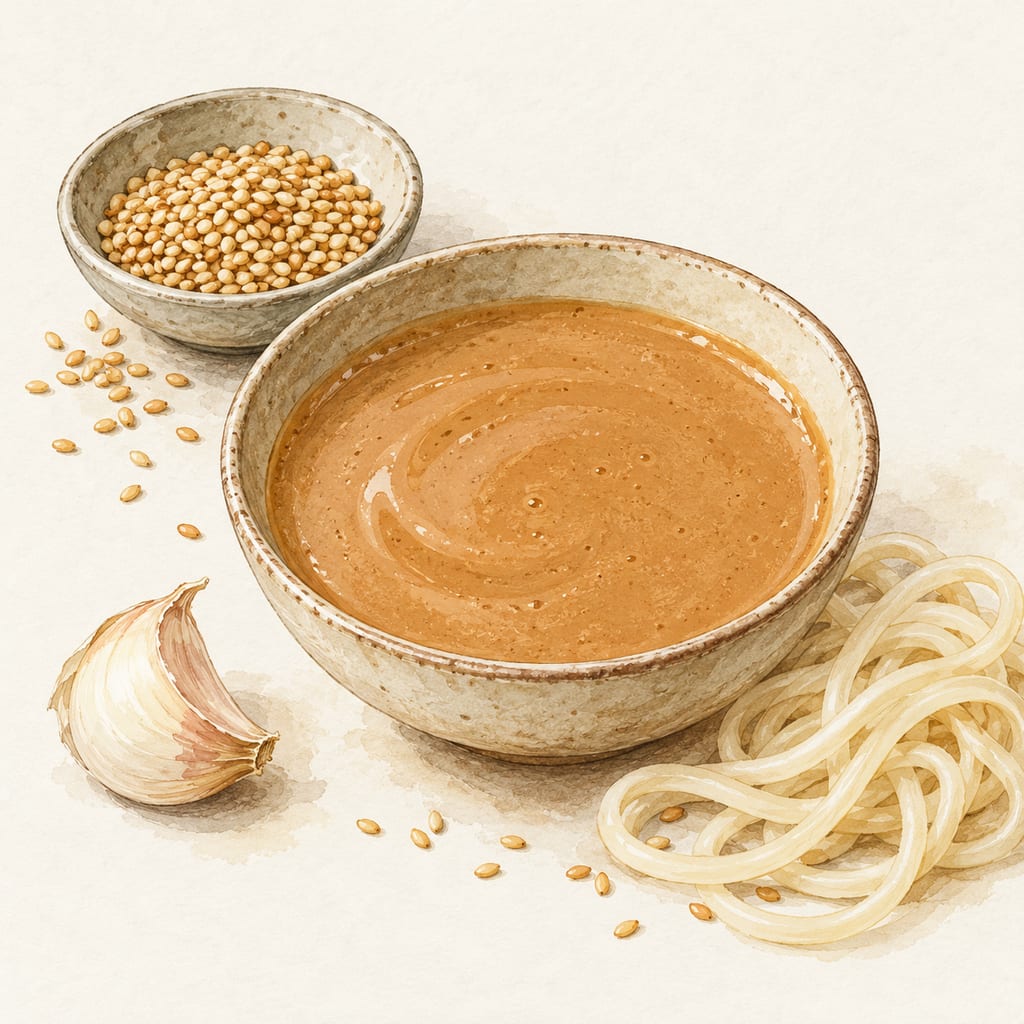
An untested sesame-paste sauce with soy, black vinegar, sugar, sesame oil and garlic, drafted for hot-pot dipping or noodles.
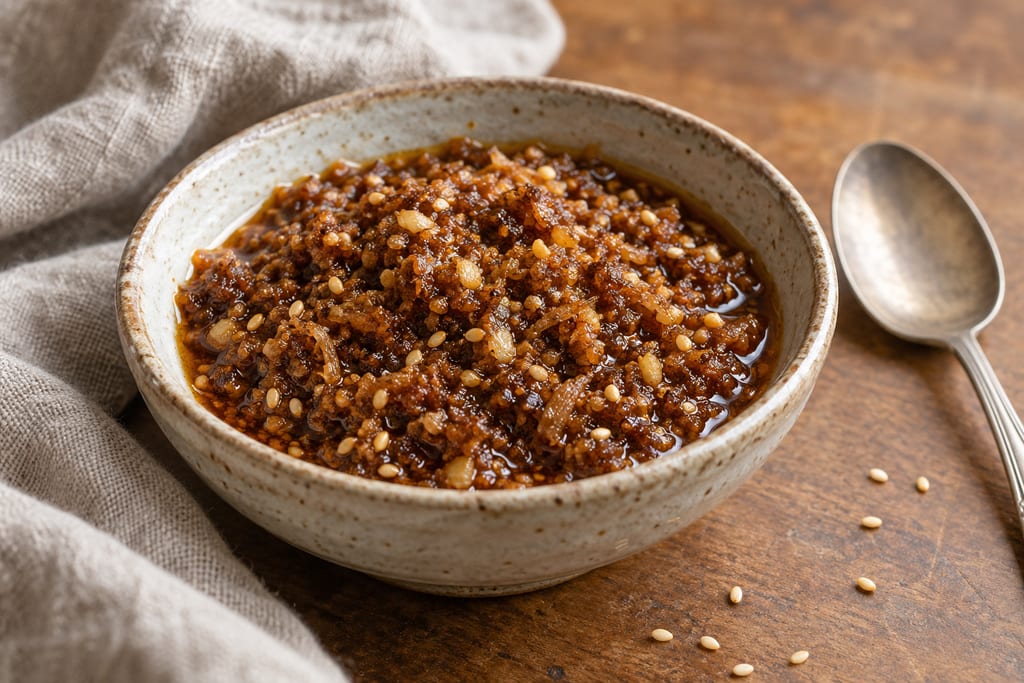
Shacha is a savoury, granular Fujian, Teochew and Taiwanese condiment of oil, garlic, shallot and dried seafood, often sold as Chinese barbecue sauce.
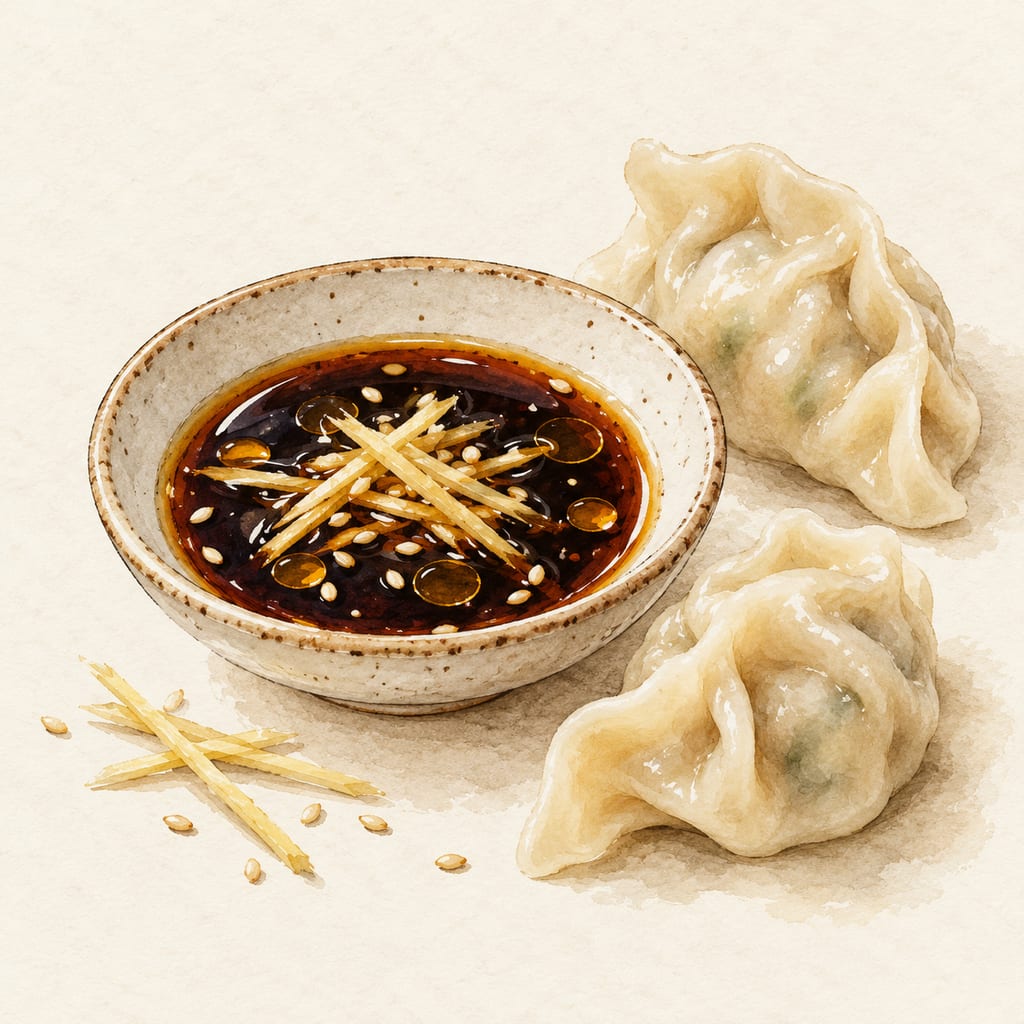
An untested small-batch soy and Zhenjiang black-vinegar dip with ginger and sesame oil, adapted as a modern accompaniment for dumplings or cooked vegetables.
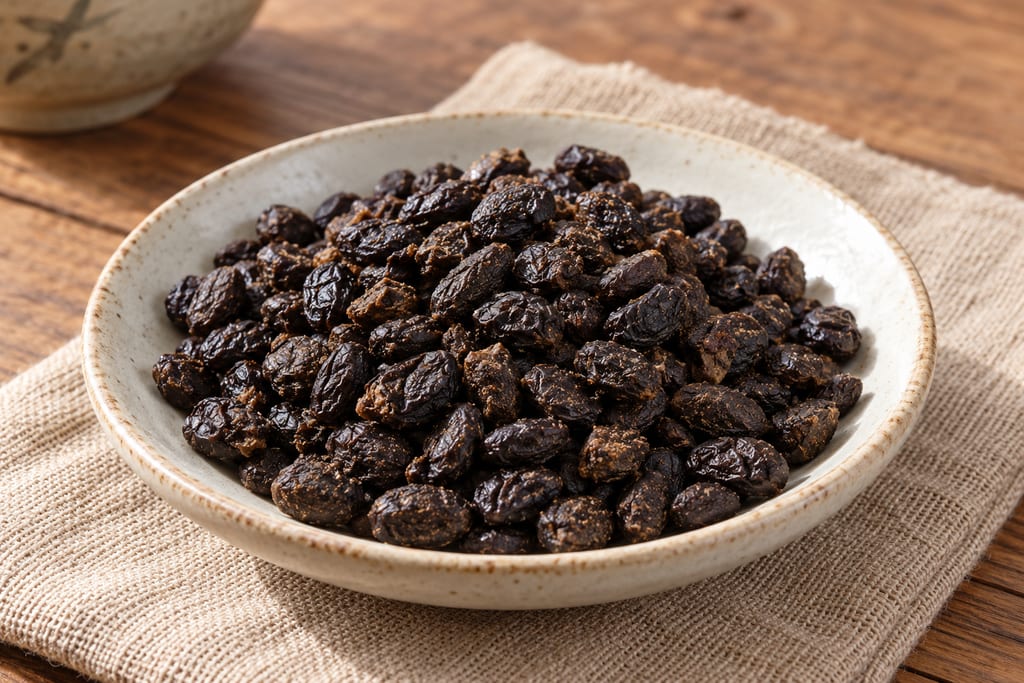
A Chinese fermented soybean condiment in which Bacillus-led bacteria, not moulds, drive the fermentation. Documented in Zunyi, Guizhou, and kept separate from mould-led douchi.

Protected Italian vinegar made only from cooked grape must, fermented and aged in a battery of wooden barrels for at least 12 years: sweet, sharp and syrupy.

A Dominican table and seasoning condiment of sour orange juice, mixed with lime and salt and bottled raw; garlic, oregano or a hot pepper may be added for meat or a spicier bottle.

A Swedish-style spirit vinegar made by fermenting neutral alcohol with live vinegar bacteria, with a separate guide to commercial ättika strengths.
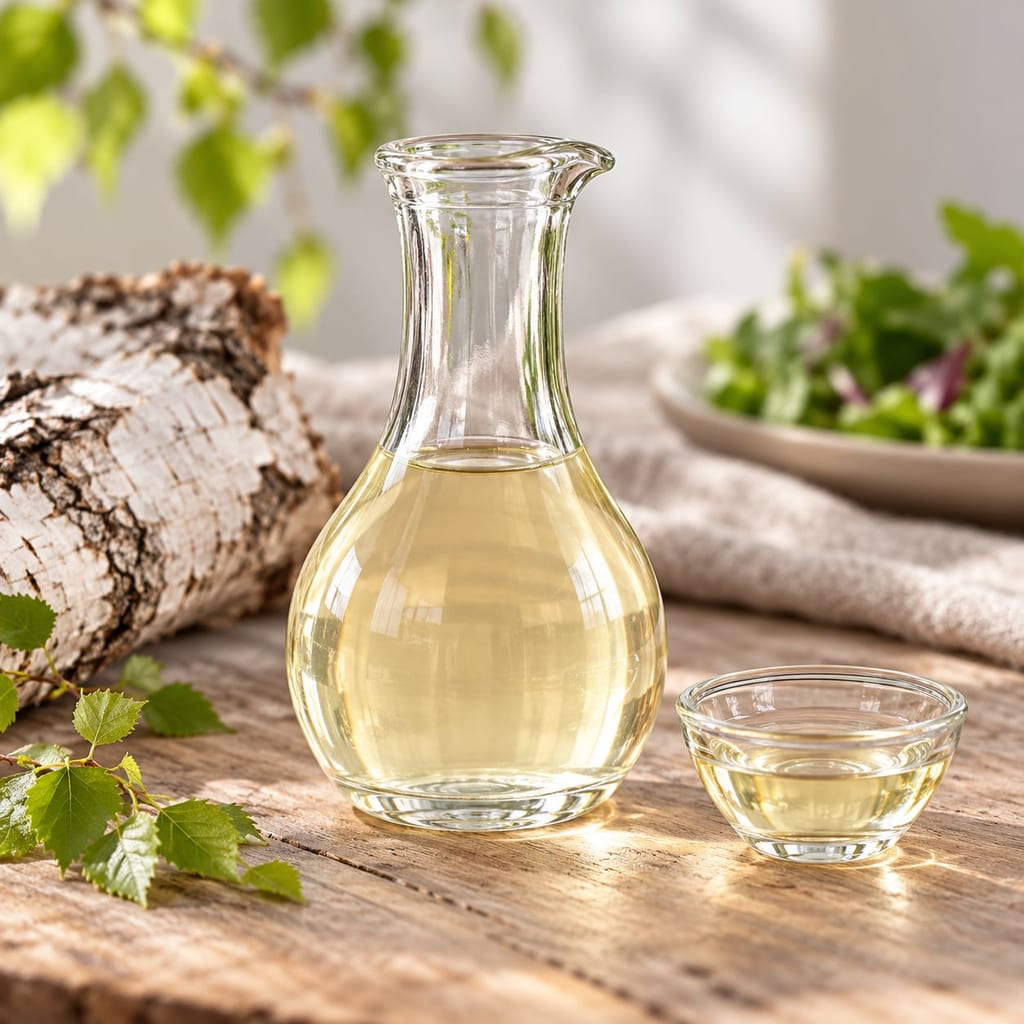
Vinegar from spring birch sap fermented to alcohol and then acetic acid, usually with added sugar or honey because the sap is so dilute; made in Sweden and described in older eastern European accounts.
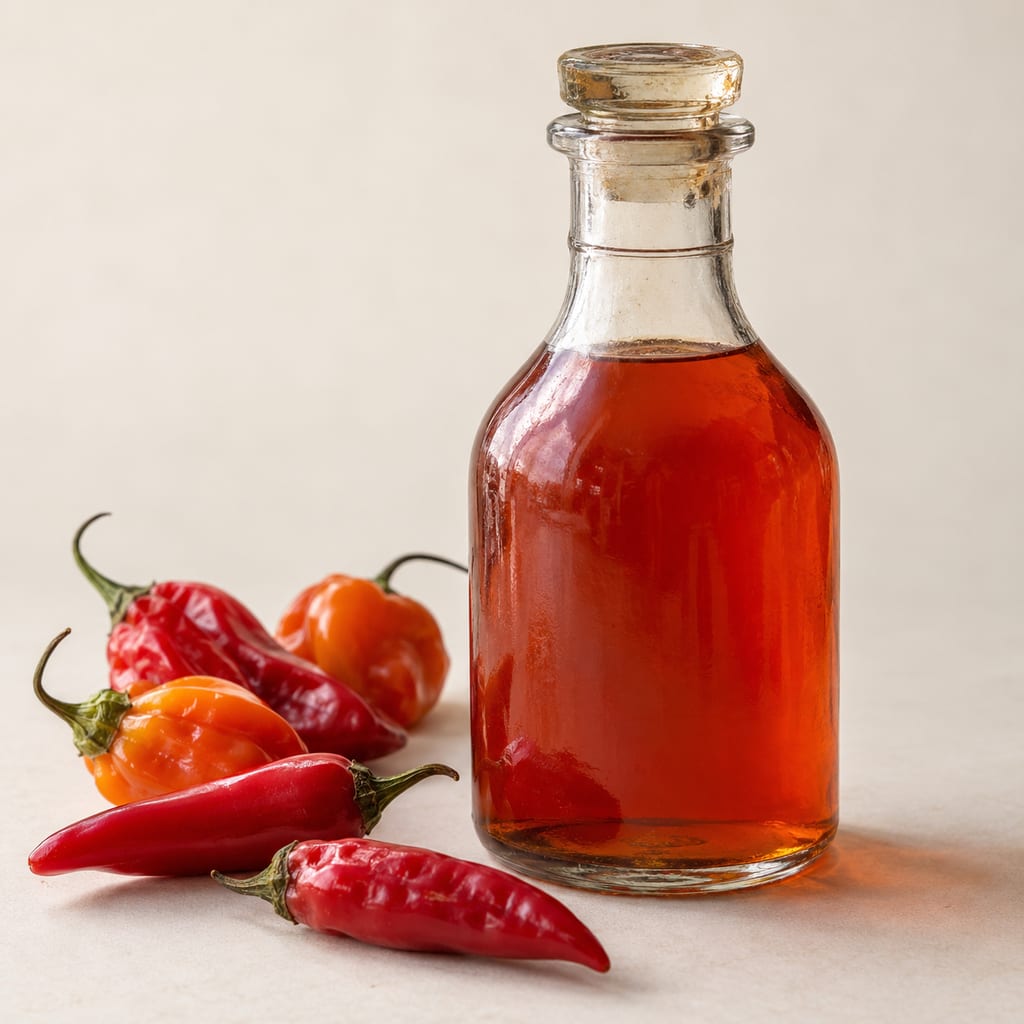
Mary Randolph's pepper vinegar: ripe pepper pods simmered in vinegar until the liquid is reduced to one quart, then strained for use in gravies and catsups. From The Virginia Housewife.
A Japanese mixed seasoning of vinegar, sugar and salt for sushi rice. Ratios vary with the rice batch and style; this version follows Marukan Vinegar's formula for two go of rice.
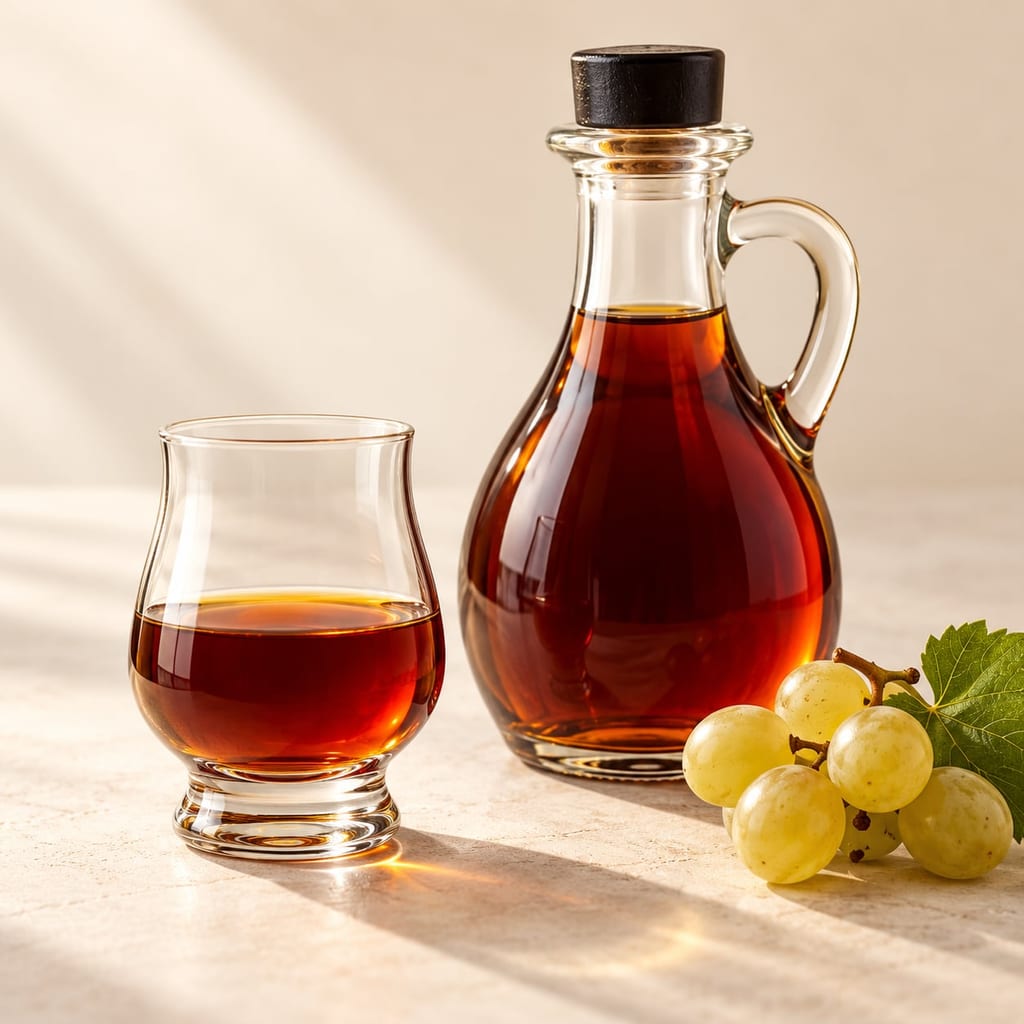
Vinagre de Jerez is made by acetifying eligible Jerez wines and ageing the vinegar in wood. Its protected name belongs to a defined Andalusian zone and a cellar tradition joining wine, oxygen, acetic bacteria and long ageing.
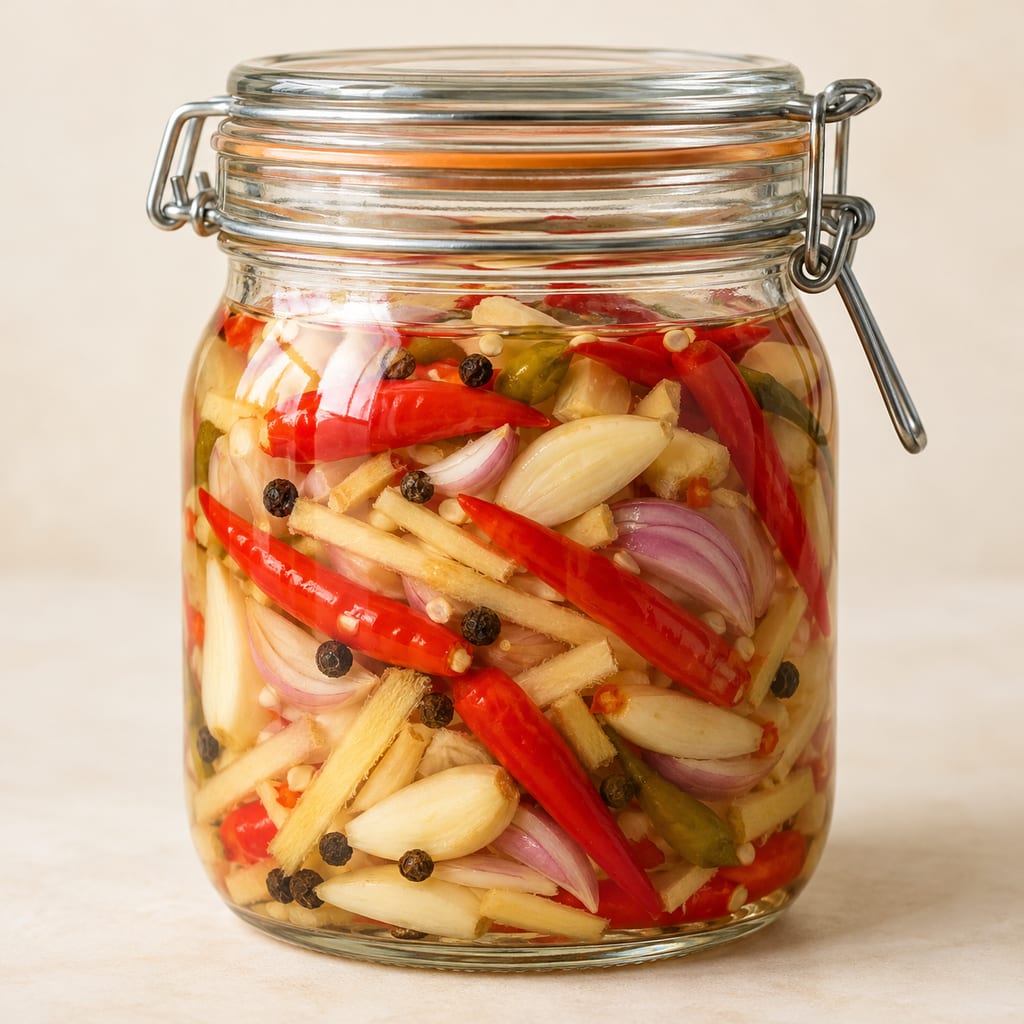
Sinamak is a Philippine spiced vinegar: white, cane or coconut vinegar steeped with chilies, ginger, garlic, onion and peppercorns for days or weeks until it is ready to use as a condiment.

Soft, spreadable Calabrian pork sausage made with a great deal of red chilli and fatty pork, stuffed into natural casings, sometimes smoked and matured while staying soft.

A way to add independent temperature logging to an existing food dehydrator without changing its built-in controls or protections. It is a monitoring method, not a rewiring plan.

Pleurotus cystidiosus is the abalone mushroom, a cultivated oyster-type fungus with dark brown caps that grows more slowly and is more demanding than other Pleurotus species.

A dark, balanced vinegar from Emilia-Romagna made by combining cooked or concentrated grape must with wine vinegar, then acetifying and refining it in wood under a protected specification.

A living dairy inoculum that starts controlled cream fermentation, developing acidity and aroma before sour cream or cultured butter is finished.

A small electric incubator holds jars at a selected temperature for yogurt and other documented warm food preparations. Controls, capacity and vessel arrangement vary by model.

Adygean salt is a seasoned table salt associated with Adygea and the wider North Caucasian culinary tradition. Salt is blended with garlic and a variable selection of herbs and spices; the exact mix depends on the named style and maker.

The African Caesar-group mushroom, Amanita masasiensis, is a wild ectomycorrhizal species of central and southern African woodlands, eaten locally. The genus contains deadly poisonous species, so identification needs care.
No community contributions have been published for this entry yet.
Sign in to contribute. Published comments and photos are free to read.
National Public Service Platform for Standards Information, ChinaMethod · Identity
GB/T 26531-2011 Product of geographical indication: Yongchun aged vinegarDefinition, grades, ageing, additive maxima
Cited in: What it is; History; How it is made; Variations; Reading results and problems
Chinese Geographical-Indication ProductsMethod
Yongchun aged vinegar: geographical-indication technical requirements30 days, 10 to 12% alcohol, ageing, acidity grades, additions
Cited in: What it is; How it is made; Variations; Reading results and problems
Kyoto Electronics Manufacturing ChinaMethod
T/YCLC 001-2022 Yongchun aged vinegar: product standard and analytical methodsAssociation standard
Cited in: How it is made
Yongchun County People's Government, FujianMethod
Yongchun Qiaoxin aged vinegar craft and tourism base expansion: environmental impact assessment (2024)1:2 soaking ratio; cooling to 25 or 30 C
Cited in: How it is made
Ministry of Commerce of the People's Republic of ChinaHistory · Method · Use
Taoxi, Chinese Time-honoured Brand Digital Museum1953 founding, divided-transfer method, uses
Cited in: What it is; History; How it is made; Variations; How it is eaten and used
Quanzhou municipal governmentHistory · Variation
Shundetang Yongchun aged vinegar959 Shundetang tradition; related products, cudou
Cited in: History; How it is made; Variations; How it is eaten and used
Yongchun County People's GovernmentHistory
Yongchun overviewEarly Northern Song attribution
Cited in: What it is; History
Fujian DailyMethod
Yongchun aged vinegar: a taste remembered through generationsAbout six months of first fermentation in ceramic vessels
Cited in: How it is made
Fujian DailyUse
A distinctive taste of Fujian: Yongchun vinegarLocal dishes and jars
Cited in: How it is eaten and used
China Quality NewsHistory
Yongchun aged vinegar: time in the cellarApril 2026 production in Dapu
Cited in: History
Molecules, MDPI, 2021Microbiology · Method
Effects of various rice-based raw materials on enhancement of volatile flavor compounds in Monascus vinegarBlack-skin red koji from a Yongchun company; substrate comparison
Cited in: What it is; How it works: koji, yeast and acetic bacteria; How it is made; Variations; Reading results and problems
Science Paper OnlineMicrobiology
Microbial community analysis of red-koji vinegarCommunity members
Cited in: How it works: koji, yeast and acetic bacteria; Reading results and problems
Food Chemistry: X, 2025Chemistry
Multidimensional flavor analysis of Yongchun aged vinegar: impact of ageingThree- to ten-year commercial vinegars
Cited in: How it works: koji, yeast and acetic bacteria; Variations; How it is eaten and used; Reading results and problems
International Journal of Food Microbiology, 2022Safety
Citrinin formation in red fermented riceCitrinin and strain selection
Cited in: Reading results and problems
National Digital Standards Library of ChinaSafety
GB 2719-2018 National food safety standard: vinegarDefinition of vinegar
Cited in: Reading results and problems
State Administration for Market RegulationSafety
Announcement on strengthening quality and safety supervision of soy sauce and vinegarGlacial acetic acid products are not fermented vinegar
Cited in: Reading results and problems
National Center for Home Food Preservation, University of GeorgiaSafety
General Information on PicklingUnknown-acidity vinegar
Cited in: Reading results and problems