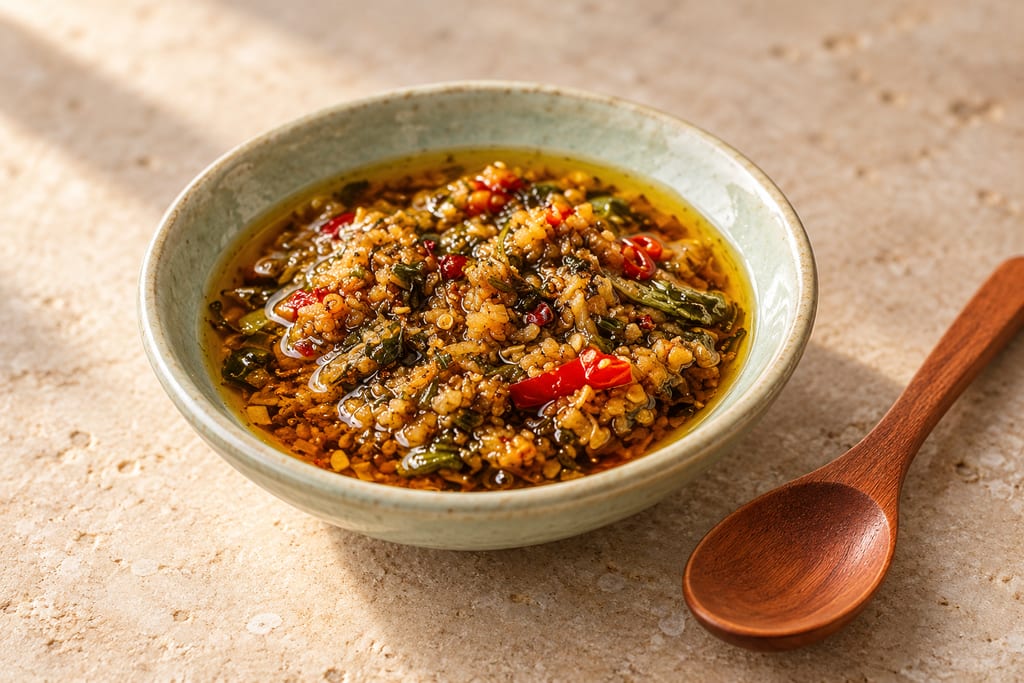
Cooked ginger-scallion oil with chilli
A Cantonese condiment of ginger, garlic, scallion and fresh chilli fried slowly in oil and seasoned with soy sauce, sugar, wine and salt, served over roast meats and poached chicken.
 FermenteaWhere food goes to change
糖醋 · Sweet and sour sauce · Sweet-and-sour dipping sauce
A smooth, tomato-based sweet-and-sour sauce of sugar, vinegar, tomato paste and soy sauce, thickened with starch for dipping or coating; it is not the sauce on Hangzhou's sweet-and-sour ribs.
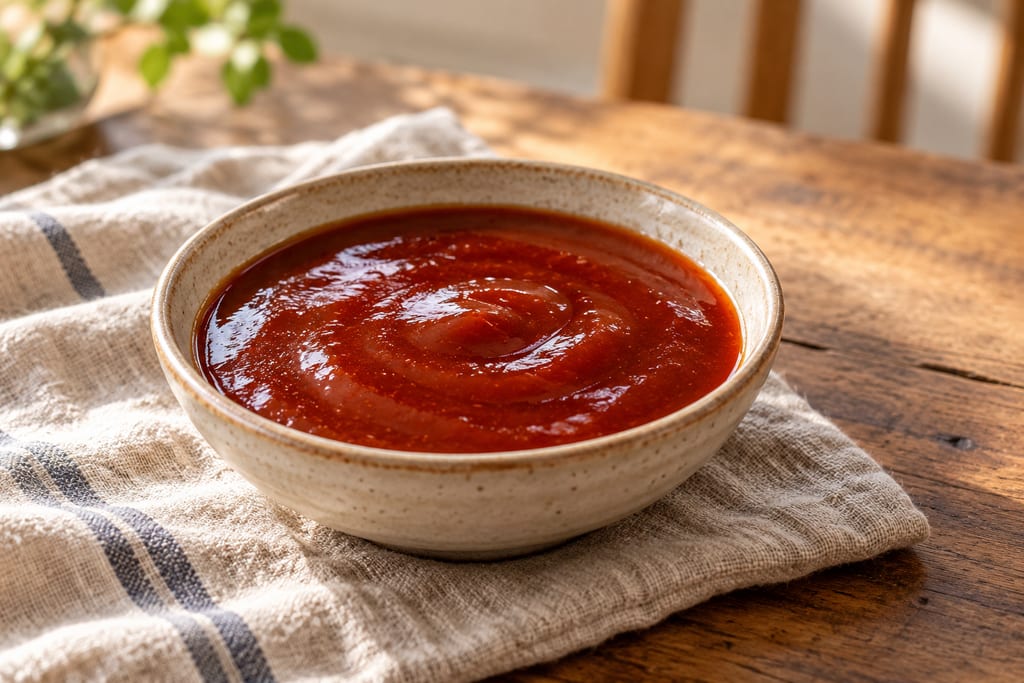
Sweet-and-sour names a taste pattern, not a single master recipe. Two of the sources behind this page show how far apart the sauces can sit. One is a Chinese-American family sauce, smooth and tomato-based, made for dipping fried takeout foods such as egg rolls or for turning into sweet-and-sour dishes. The other is the sauce on a Hangzhou restaurant's sweet-and-sour ribs. Both are sweet and sour. They share a taste and little else, which is why this page gives one recipe in full and describes the other for comparison.
Ginger and star anise are cooked briefly in oil to flavour it, then tomato paste is fried until it starts to caramelize, which deepens its flavour and takes the raw edge off. Sugar, water, vinegar and soy sauce go in next, and the sauce simmers until it just coats a spoon. Sugar and 5 percent white vinegar are close to equal, and the soy sauce adds salt and depth. Pineapple, orange, apple or lemon juice or syrup is optional, with pineapple the most common choice.
The sauce is thickened with cornstarch stirred into water, but only when it is going to be used: the author thickens a dipping sauce at the end and leaves a stored batch unthickened, thickening it just before it meets the other ingredients. Vinegar is acidic enough to attack carbon steel, so the recipe calls for a stainless steel or other non-reactive pan.
A 2022 Hangzhou tourism feature records a cooking lesson in which a local restaurant cook teaches sweet-and-sour ribs (糖醋排骨). He cuts the ribs into pieces of about 5 cm and marinates them for 20 minutes. The coating is flour and starch in a 6:4 ratio, and the sauce uses sugar and vinegar in a 6:4 ratio. The ribs are fried twice and then coated in a sauce made with water, wine, dark soy sauce, sugar and vinegar, thickened with a starch slurry. The article says to add the battered ribs when the oil is at san cheng, three-tenths, and gives no Celsius temperature, total quantities or yield, so the dish cannot be reproduced from it alone. It is a contemporary local cooking lesson, not an earliest record of the dish. The sauce here has tomato paste, ginger and star anise and no wine; the ribs' sauce has dark soy and wine and no tomato. They should not be read as one recipe.
Neither source dates sweet-and-sour cooking or surveys its regional forms, and both describe cooking and starch thickening, not fermentation. The author's storage times are household estimates. The Hangzhou lesson leaves out quantities and a measured oil temperature, and a linked video it mentions was not available to check.
Both sources are contemporary cooking accounts: a family recipe and a 2022 tourism feature. Neither gives an earliest attestation for any sweet-and-sour sauce.
Yield 8 servings · Scaling: source batch only
The author's keeping times (a few weeks in the refrigerator, three to four months frozen) are household estimates and have not been tested for this formula.
Hazard sourceCool the sauce before refrigerating or freezing, store it unthickened in a clean airtight container and use a clean utensil each time. Treat the author's storage times as estimates, not a validated shelf life.
Control sourceCook in non-reactive cookware; the source warns against a carbon steel wok because of the vinegar.
The storage estimates are not independently validated.
The sauce is a Chinese-American family recipe; the source names no place of origin or date.
A 2022 Hangzhou tourism feature documents sweet-and-sour ribs with their own sauce. That is a separate preparation, recorded here for comparison, and does not mean the sauce on this page comes from Hangzhou.
A Cantonese condiment of ginger, garlic, scallion and fresh chilli fried slowly in oil and seasoned with soy sauce, sugar, wine and salt, served over roast meats and poached chicken.
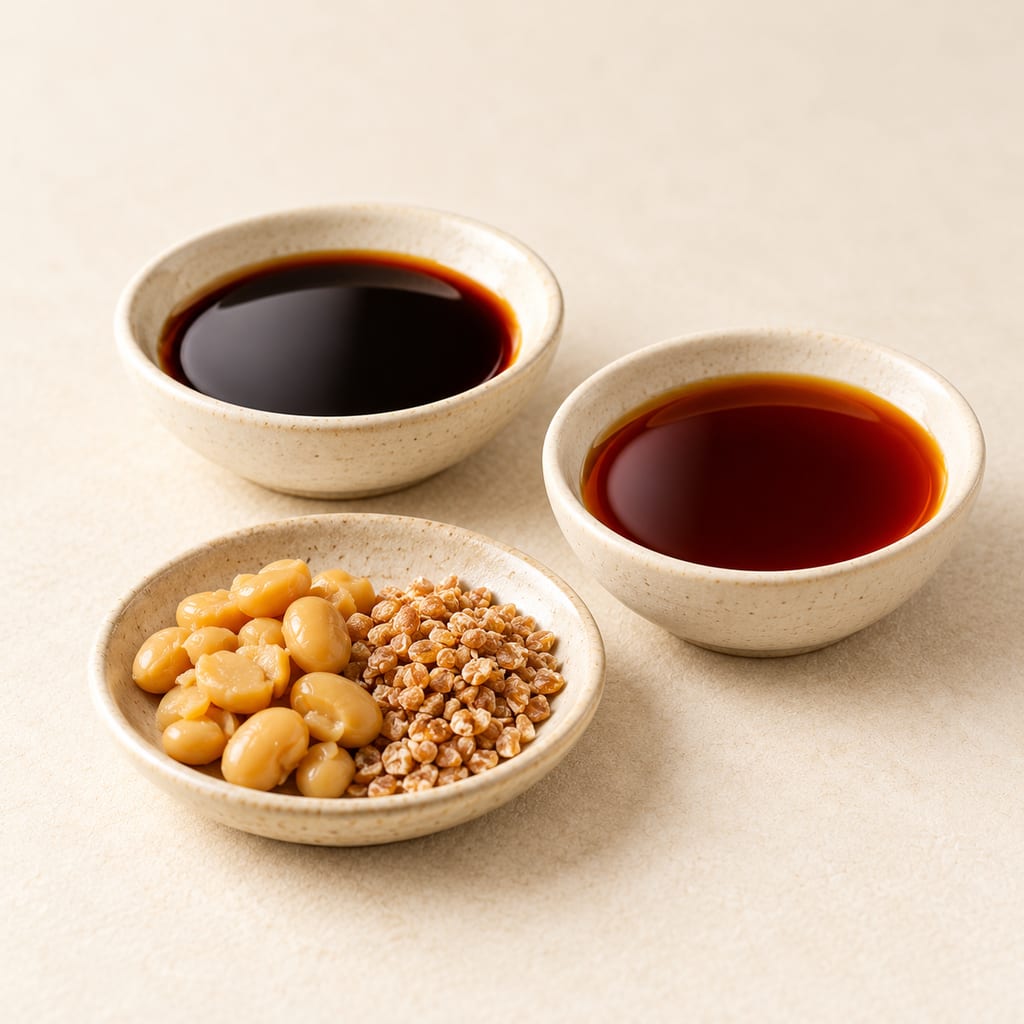
Jiangyou is the Chinese soy sauce family, an umbrella term for light, dark and seasoned sauces made by two main process families: high-salt liquid-state and low-salt solid-state brewing.
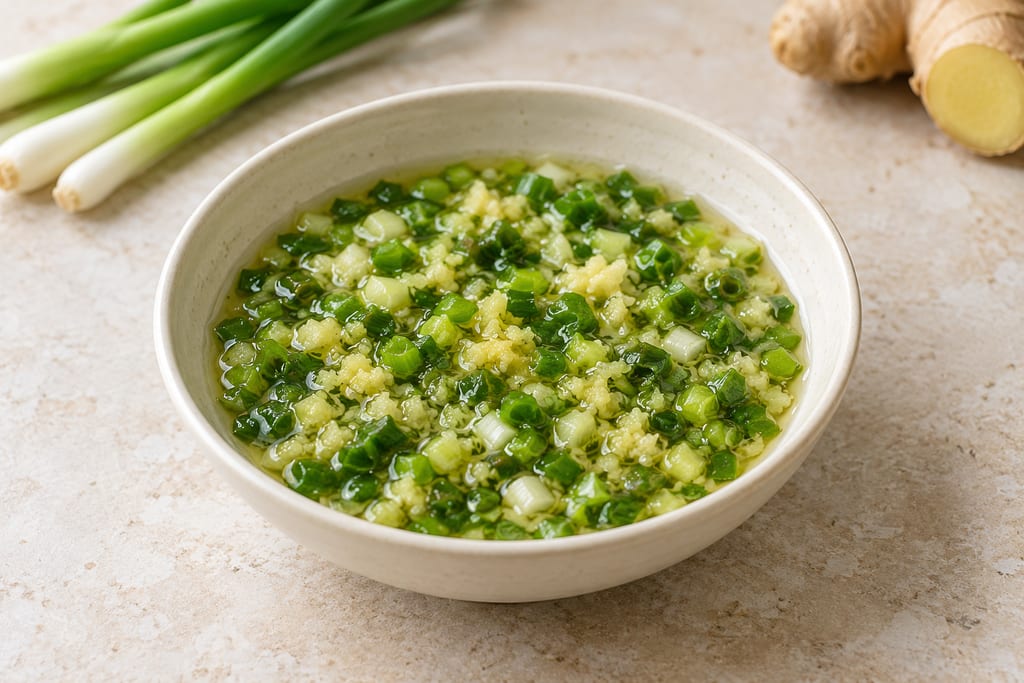
A raw Cantonese-style condiment of minced scallions, fresh ginger, vegetable oil and salt; it is mixed without heating and serves eight.
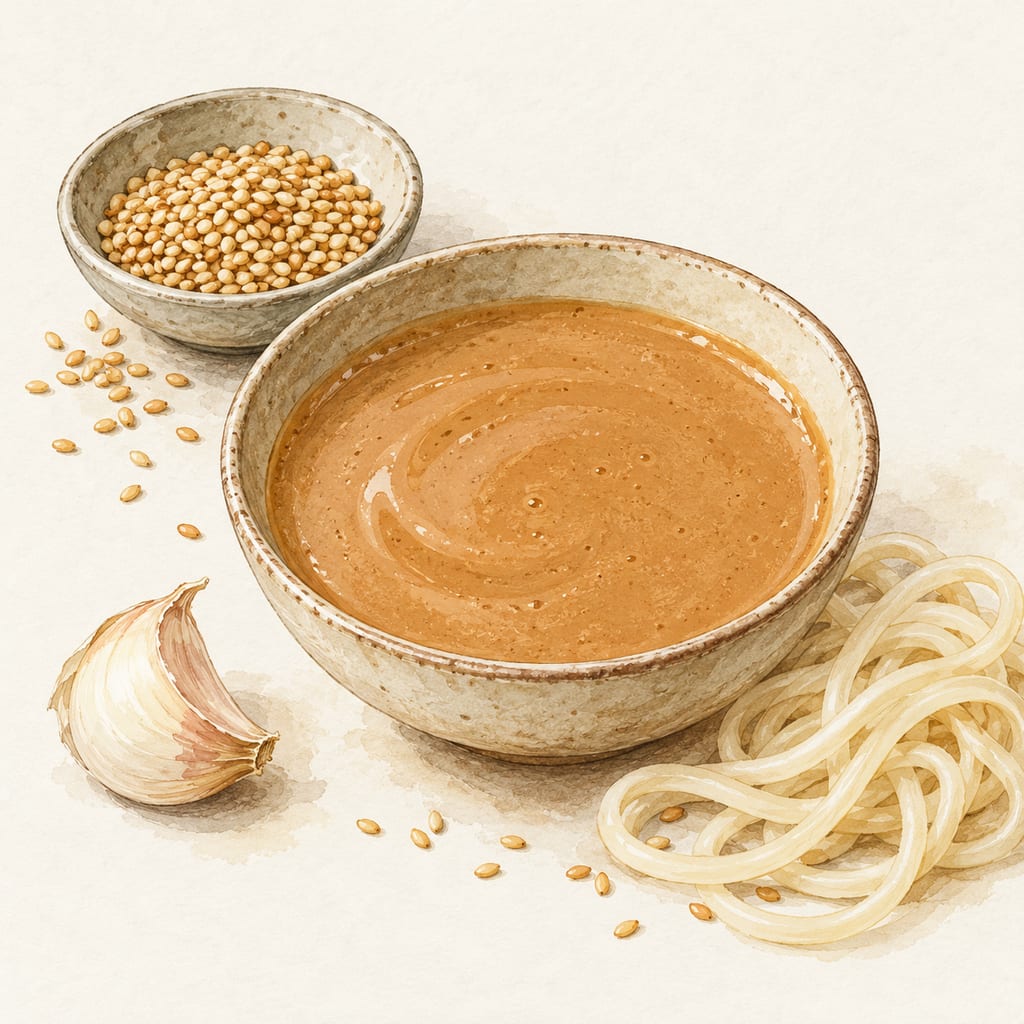
An untested sesame-paste sauce with soy, black vinegar, sugar, sesame oil and garlic, drafted for hot-pot dipping or noodles.
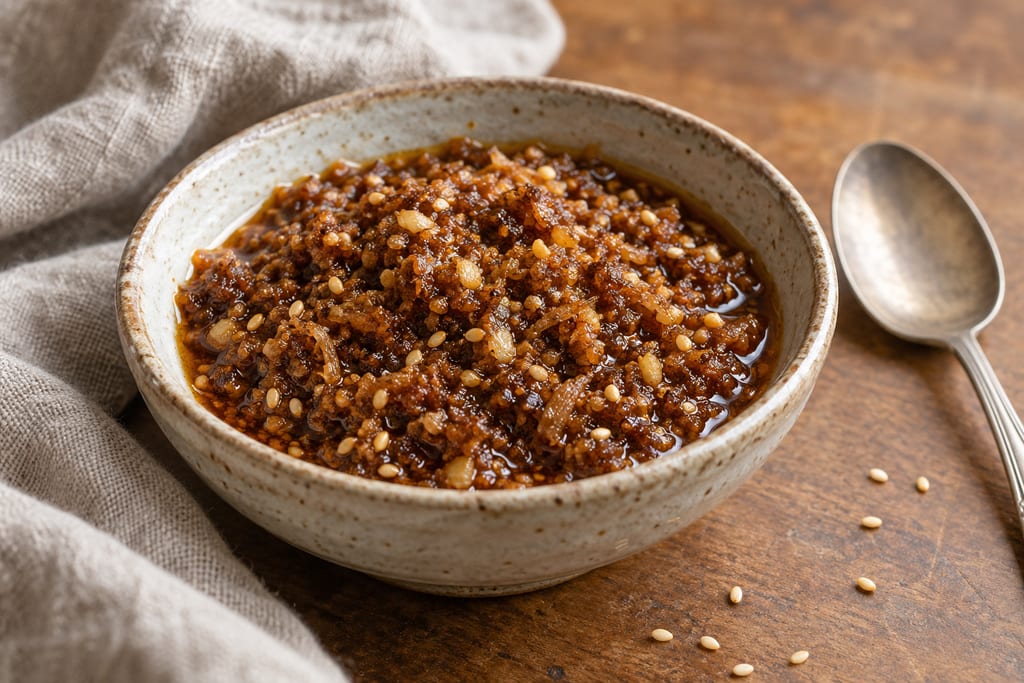
Shacha is a savoury, granular Fujian, Teochew and Taiwanese condiment of oil, garlic, shallot and dried seafood, often sold as Chinese barbecue sauce.
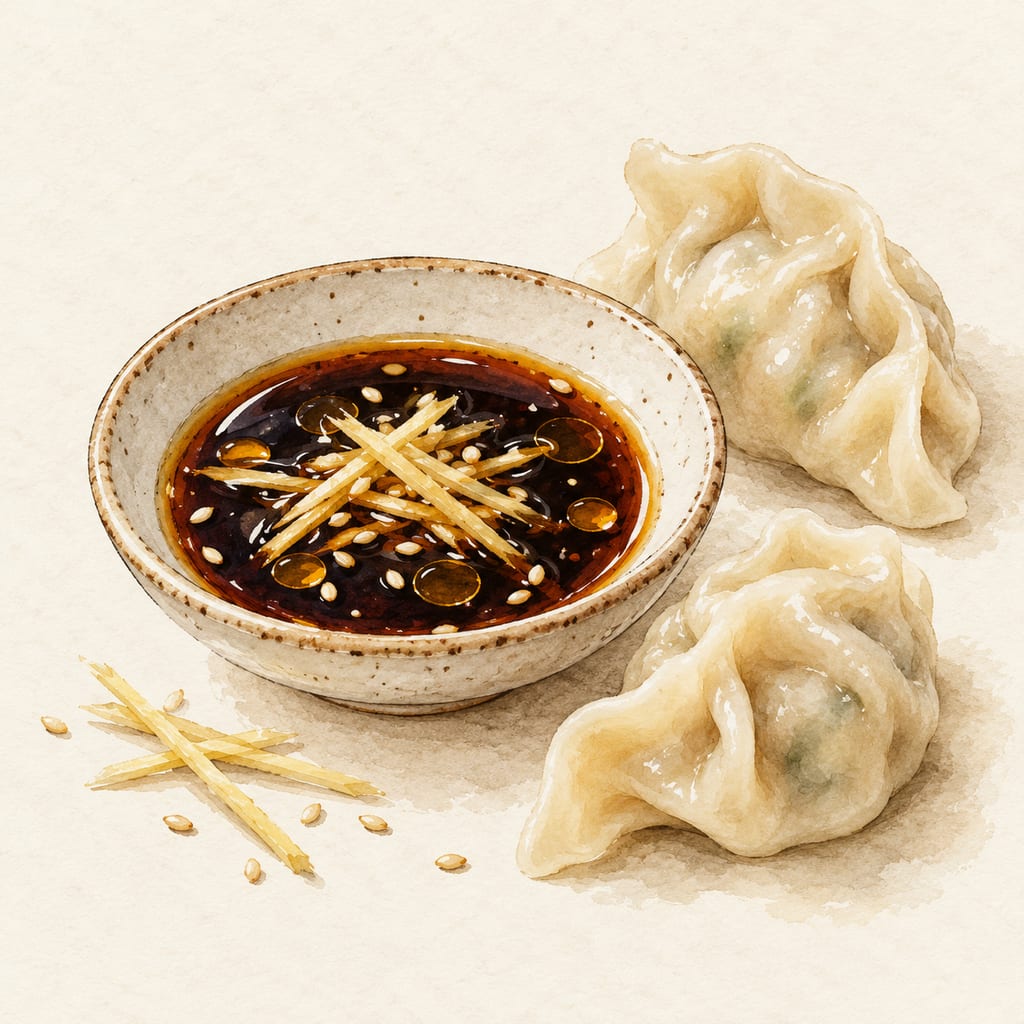
An untested small-batch soy and Zhenjiang black-vinegar dip with ginger and sesame oil, adapted as a modern accompaniment for dumplings or cooked vegetables.
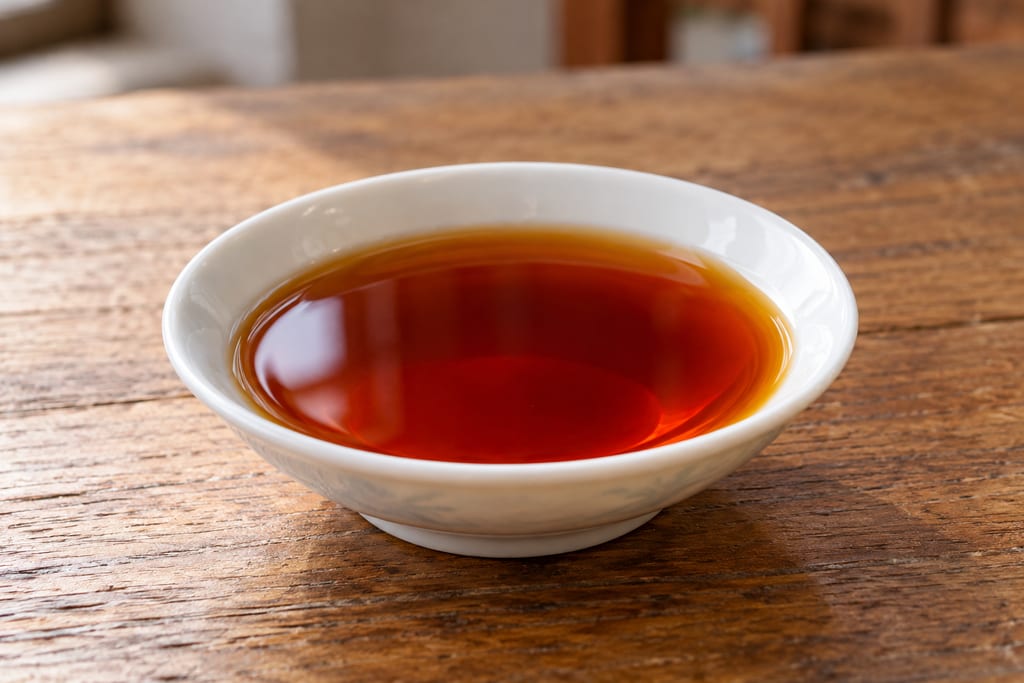
Tianjin grain vinegar of millet and sorghum made with daqu: liquid alcoholic fermentation, two-layer solid-state acetification, and at least three years of outdoor ageing of the grain mash.
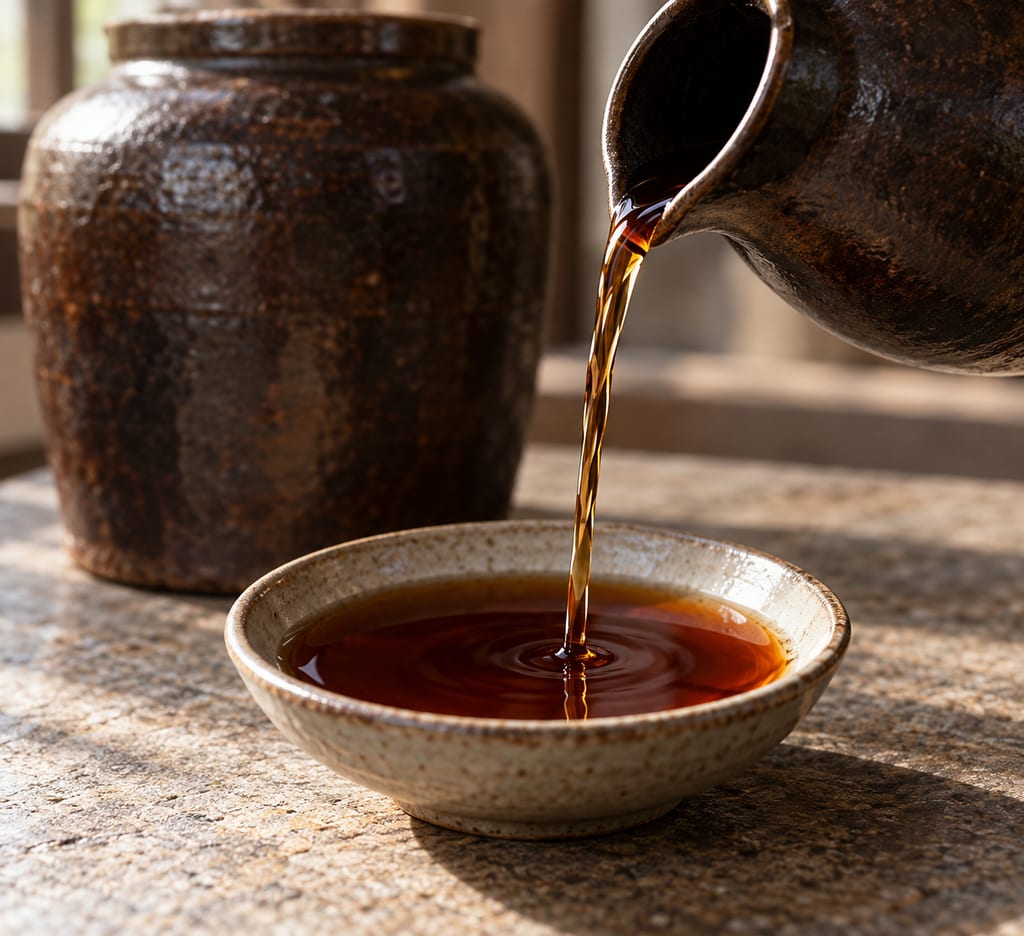
Dark Fujian rice vinegar: glutinous rice and red Monascus koji make a red rice wine, liquid acetification turns it to vinegar, and it ages at least three years.

Ajvar is a cooked Balkan pepper preserve built around roasted red peppers, peeled, drained, ground and slowly fried with oil and seasoning. Leskovac’s protected version is a pepper specialty; regional versions vary.

Amlou is a nutty, lightly sweet Moroccan spread of roasted almonds, culinary argan oil and honey. The almonds are ground first, then loosened with oil and sweetened; the balance can range from a thick spread to a dip.

Apple sauce for goose and pork is a plain English accompaniment: cooked apples pulped with water, then sweetened with sugar and finished with a little butter.

A warm dip of garlic, anchovy and olive oil, often enriched with butter, that Piedmont serves over a flame with raw and cooked vegetables and bread.

A sweet-hot table sauce of ripe banana simmered with vinegar, sugar, onion, garlic and fresh chilli, in the manner of Philippine banana ketchup. An untested development batch of about 500 g.

A Georgian walnut sauce of ground walnuts, garlic, vinegar and spices, thinned with water or broth. It is served with poultry, vegetables and bread, and is the sauce of the dish satsivi.

A pourable dessert sauce of brown sugar, butter and cream, with a little corn syrup and salt. It is the sauce form of the butterscotch confection and is made without water, unlike caramel.

Byzantine murrī is a cooked imitation of murrī from the medieval Arabic repertoire, made from scorched honey, toasted bread, walnuts, quince, carob and spices rather than from a long grain fermentation.
No community contributions have been published for this entry yet.
Sign in to contribute. Published comments and photos are free to read.
The Woks of LifeRecipe · Method · Storage
Sweet and Sour SauceA sauce of oil, ginger, star anise, tomato paste, sugar, water, white vinegar and soy sauce with optional juice, thickened with a cornstarch slurry; serves eight; 5 minutes preparation and 20 minutes cooking.
For dipping, add the starch gradually; for storage, cool and refrigerate or freeze unthickened. The author estimates a few weeks refrigerated and three to four months frozen.
Cited in: One label, several sauces; The household sauce; What the sources do not settle
Hangzhou Net tourism channel / Dushi KuaibaoVariants · Geography
杭州味道第二期:糖醋排骨A restaurant cook teaches sweet-and-sour ribs: ribs cut into pieces of about 5 cm, marinated 20 minutes, coated in flour and starch at a 6:4 ratio, fried twice, then coated in a sauce of water, wine, dark soy, sugar and vinegar (sugar to vinegar 6:4) thickened with a starch slurry.
Battered ribs go in when the oil is at three-tenths (san cheng), with no Celsius figure; total quantities and yield are not given.
Cited in: One label, several sauces; The Hangzhou ribs account; What the sources do not settle