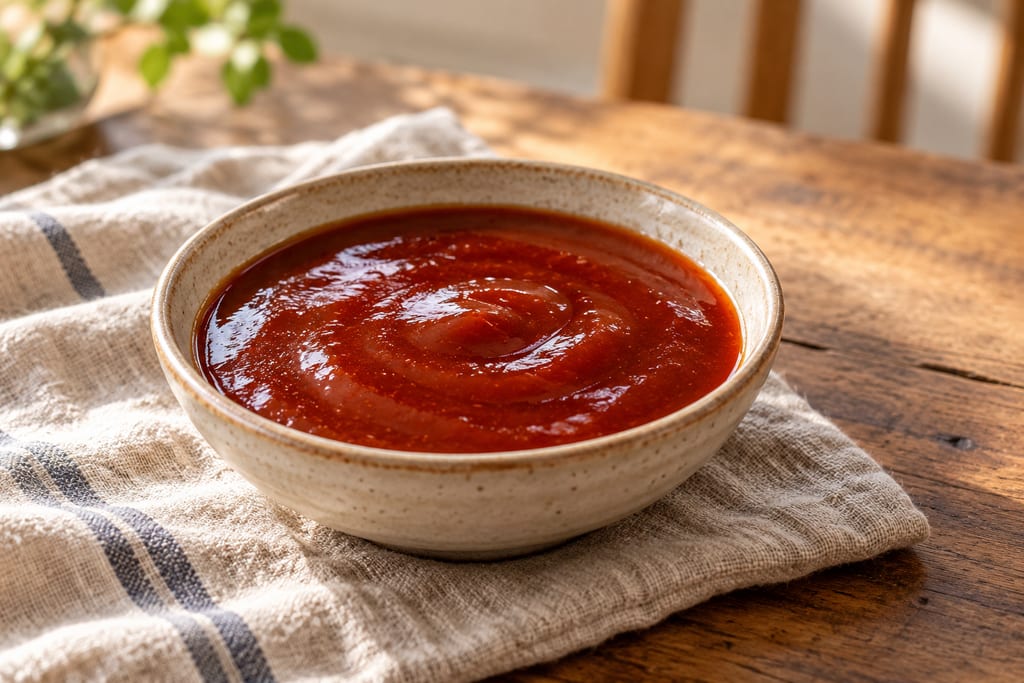
Chinese-American sweet-and-sour sauce
A smooth, tomato-based sweet-and-sour sauce of sugar, vinegar, tomato paste and soy sauce, thickened with starch for dipping or coating; it is not the sauce on Hangzhou's sweet-and-sour ribs.
 FermenteaWhere food goes to change
酱油 (jiàngyóu) · Jiangyou · Chinese soy sauce · Sheng chou · Lao chou · Mushroom soy sauce · Jiàngyóu
Jiangyou is the Chinese soy sauce family, an umbrella term for light, dark and seasoned sauces made by two main process families: high-salt liquid-state and low-salt solid-state brewing.
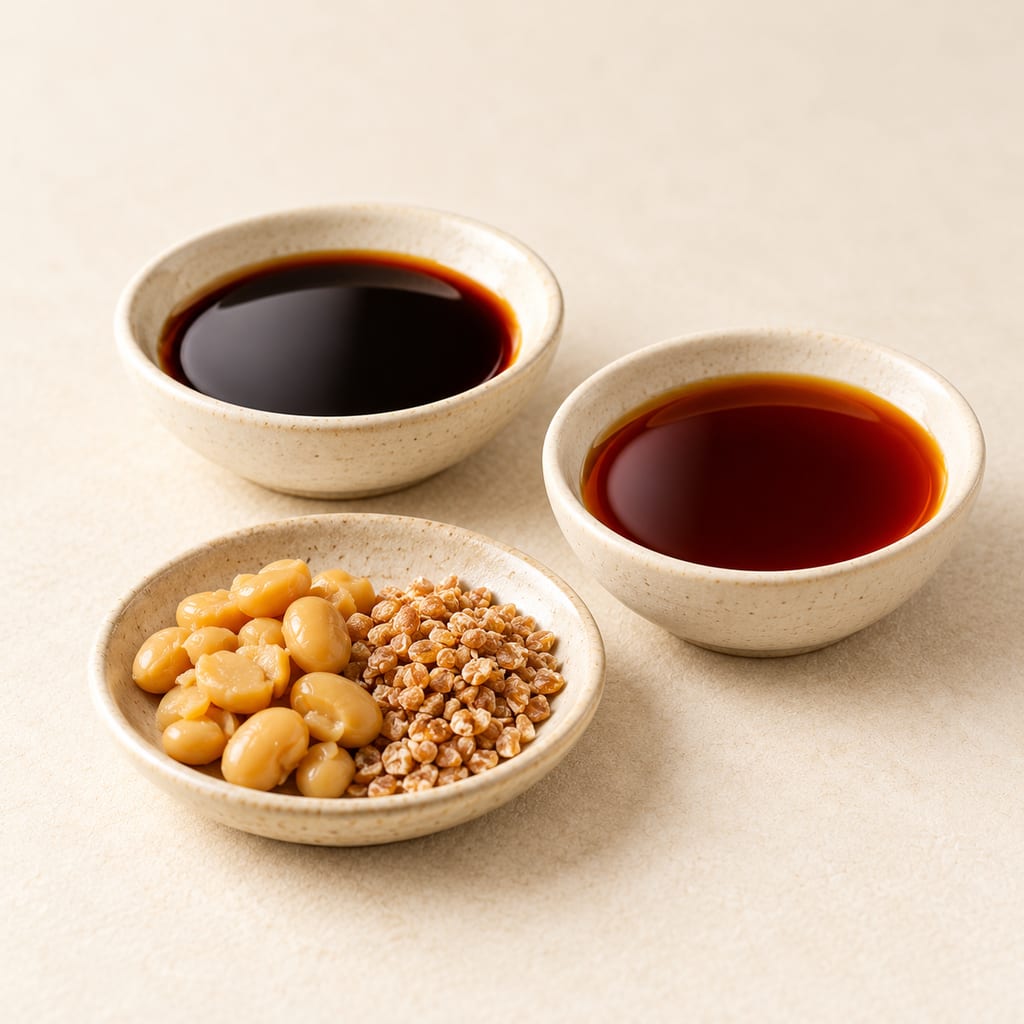
Jiangyou is not one recipe. The name covers light sauces, dark sauces, mushroom and seasoned products, and sauces that are fermented in one place and finished in another. A peer-reviewed review separates the sauces by process, and that separation is the most useful starting point for a reader.
The product label is less help. Dark, mushroom and seasoned sauces can include blending after fermentation or added flavourings, and the sources read here do not give a single ingredient label that fits every product. Colour alone does not establish the category, so the page does not sort products by colour.
The first family is the high-salt liquid-state method. The review gives a brine of 18 to 22 percent sodium chloride, a brine to koji ratio of 2 to 3 to 1, and about six months of brewing. The second is the low-salt solid-state method, with a brine of 10 to 12 percent, a brine to koji ratio of 0.8 to 1 to 1, and about thirty days. The two differ in how much salt the mash carries and how much liquid it holds, and so in how fast and how fully it ferments.
A second review maps light sauce to the low-salt family and dark sauce to the high-salt family. The page records that correspondence as a broad pattern, not as a rule that holds for every label.
Both families begin with mould-based koji made from soybean and wheat, then a brine stage in which the koji and salt water ferment and mature, then pressing and finishing. The industrial scale uses koji trays or a koji chamber and a brine tank, and the review describes the stages at that scale. The pressing, filtering and heat treatment that follow are common operations in the technical literature, and the sources do not give a home version of them.
Because the stages are industrial, the page gives no home vessel, no temperature and no safe handling limit. A reader who wants a home method has to look for a source written for home brewing, and none was read here.
Jiangyou is a family of soy sauces rather than a single recipe. Both main process families begin with a mould koji made from soybean and wheat and end with pressing and finishing. They differ in how much salt the mash carries and how much liquid it holds, which sets how fast and how fully it ferments. A review maps light sauces to the low-salt family and dark sauces to the high-salt family, as a broad pattern rather than a rule for every label.
The review describes these stages at industrial scale. It gives no home vessel, temperature or safe handling limit. The Chinese national standard GB 18186 and product labels remain to be checked for the category of a named product.
The 2023 review reports two process families. It does not date the origin of jiangyou.
A country-level family; the review does not place a single origin.
A smooth, tomato-based sweet-and-sour sauce of sugar, vinegar, tomato paste and soy sauce, thickened with starch for dipping or coating; it is not the sauce on Hangzhou's sweet-and-sour ribs.
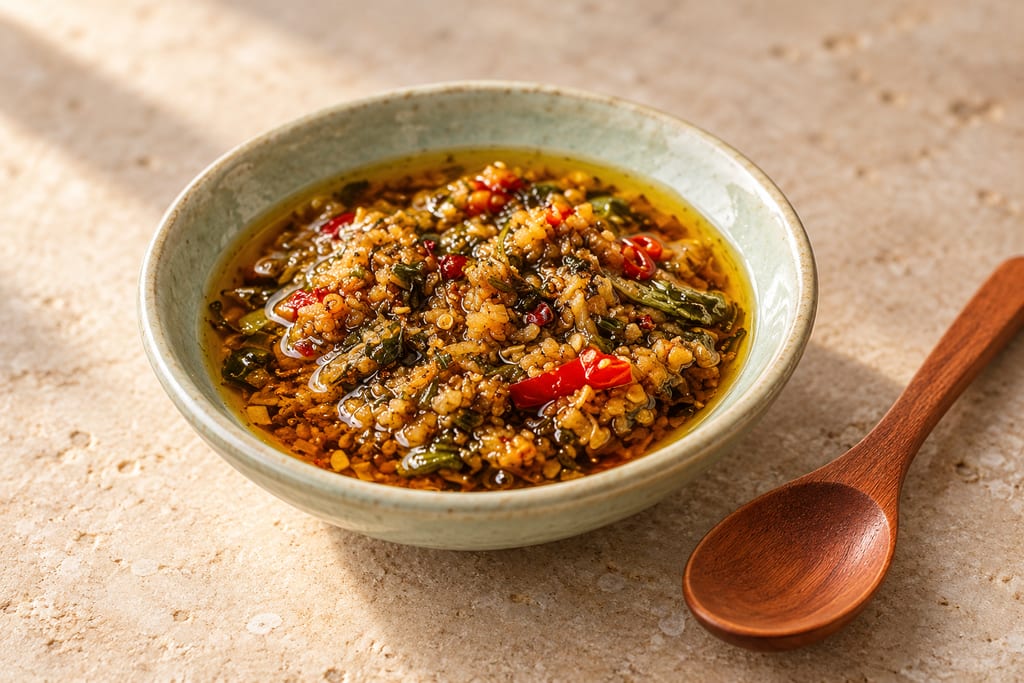
A Cantonese condiment of ginger, garlic, scallion and fresh chilli fried slowly in oil and seasoned with soy sauce, sugar, wine and salt, served over roast meats and poached chicken.
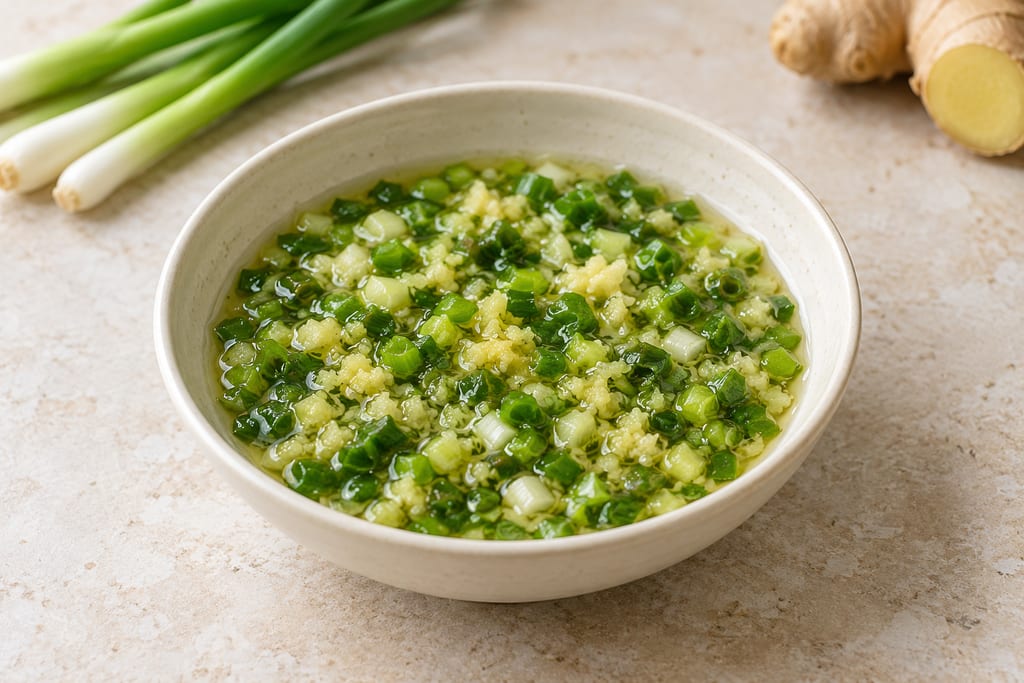
A raw Cantonese-style condiment of minced scallions, fresh ginger, vegetable oil and salt; it is mixed without heating and serves eight.
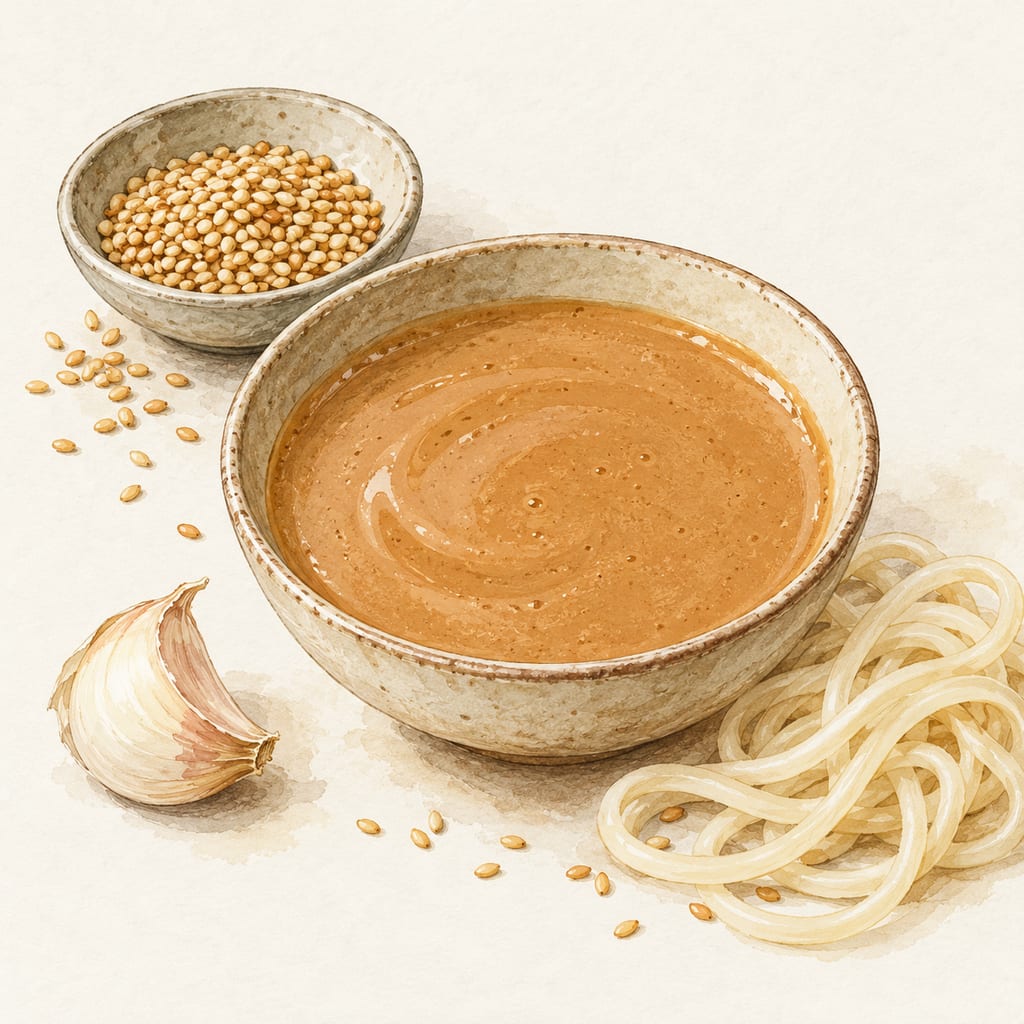
An untested sesame-paste sauce with soy, black vinegar, sugar, sesame oil and garlic, drafted for hot-pot dipping or noodles.
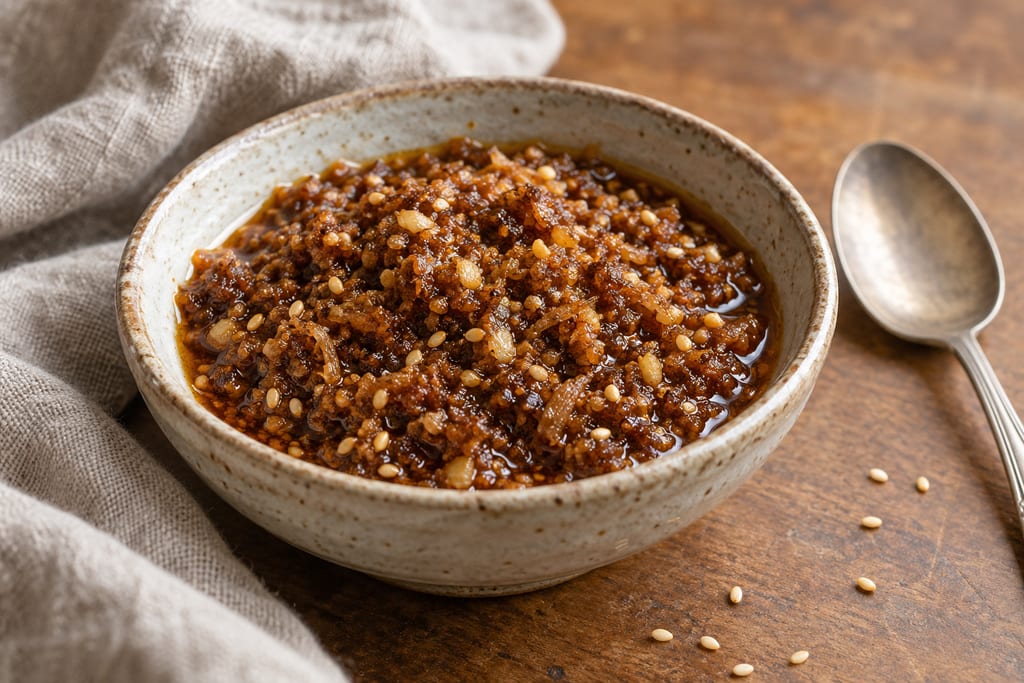
Shacha is a savoury, granular Fujian, Teochew and Taiwanese condiment of oil, garlic, shallot and dried seafood, often sold as Chinese barbecue sauce.
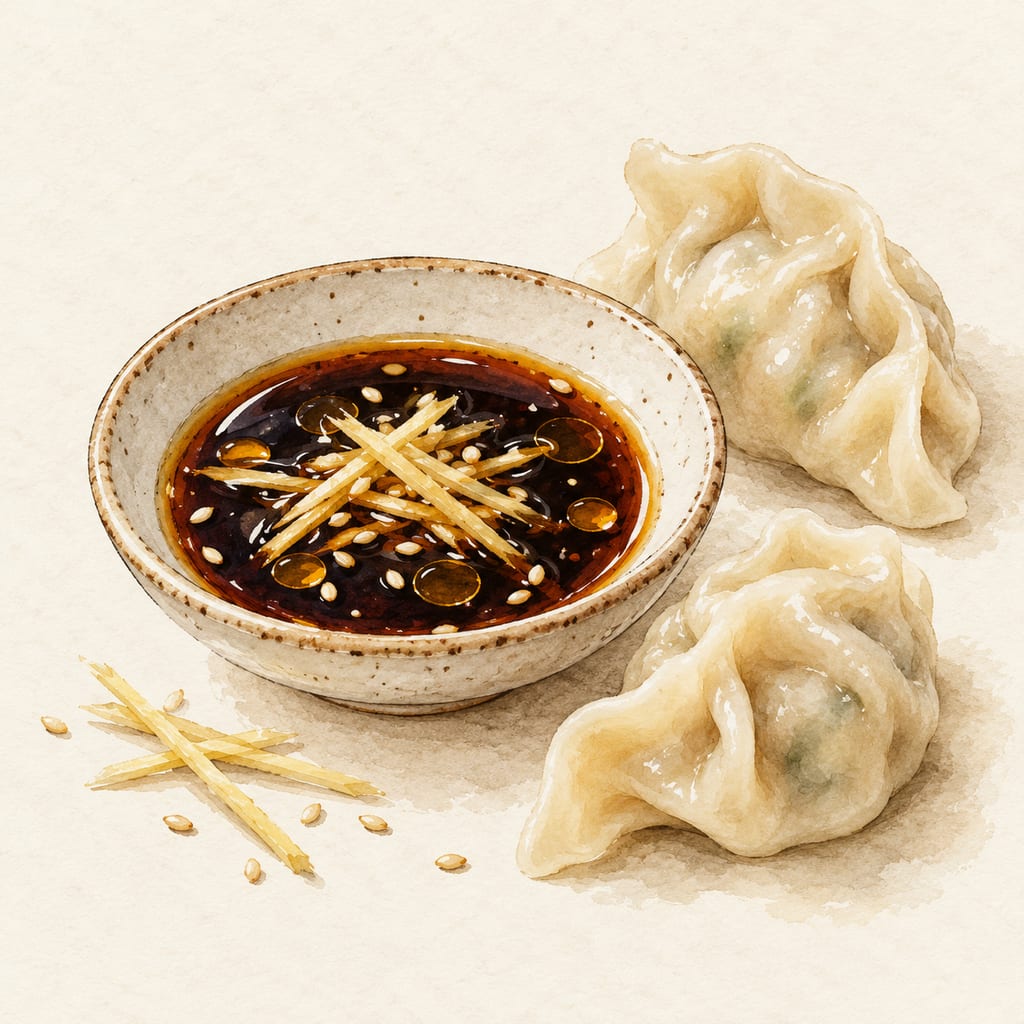
An untested small-batch soy and Zhenjiang black-vinegar dip with ginger and sesame oil, adapted as a modern accompaniment for dumplings or cooked vegetables.
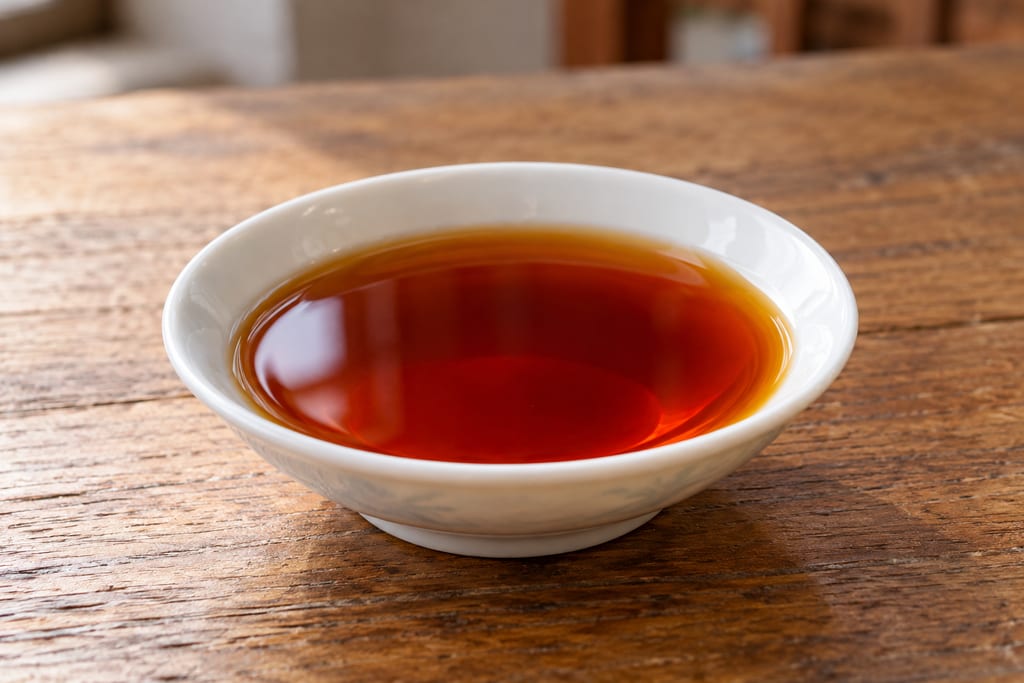
Tianjin grain vinegar of millet and sorghum made with daqu: liquid alcoholic fermentation, two-layer solid-state acetification, and at least three years of outdoor ageing of the grain mash.
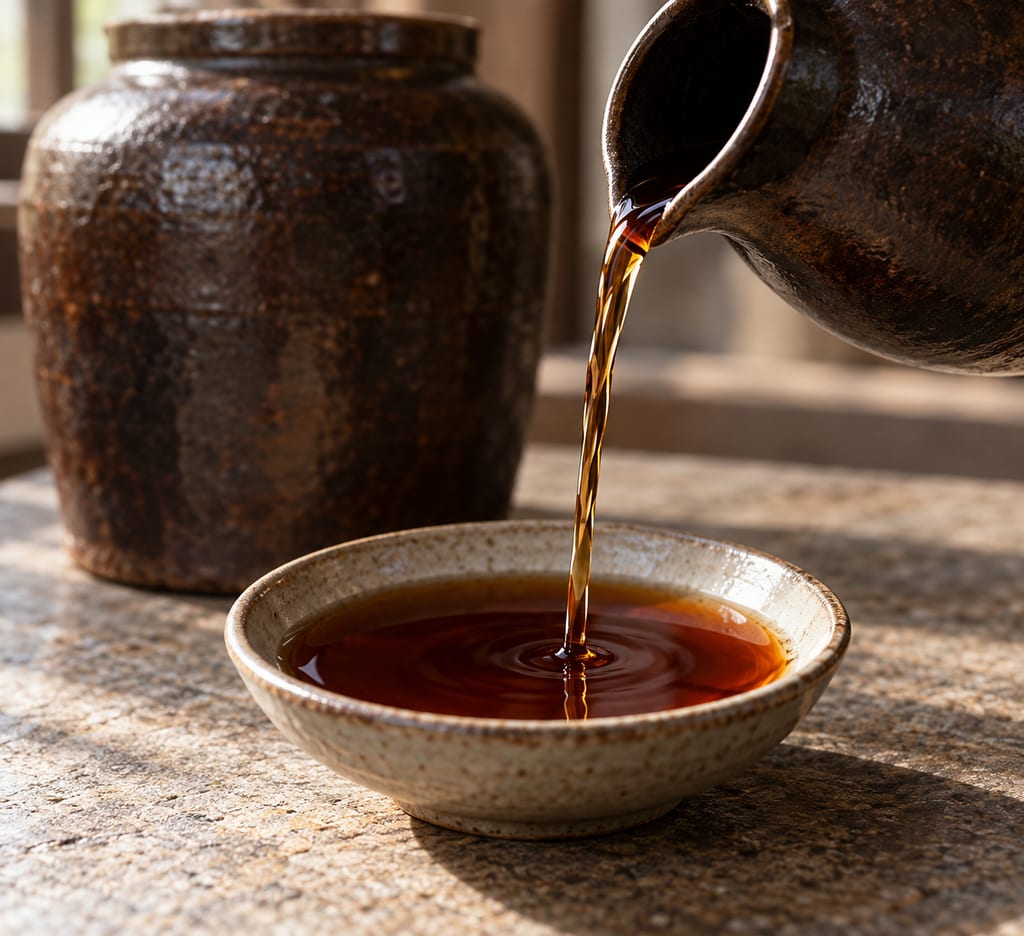
Dark Fujian rice vinegar: glutinous rice and red Monascus koji make a red rice wine, liquid acetification turns it to vinegar, and it ages at least three years.
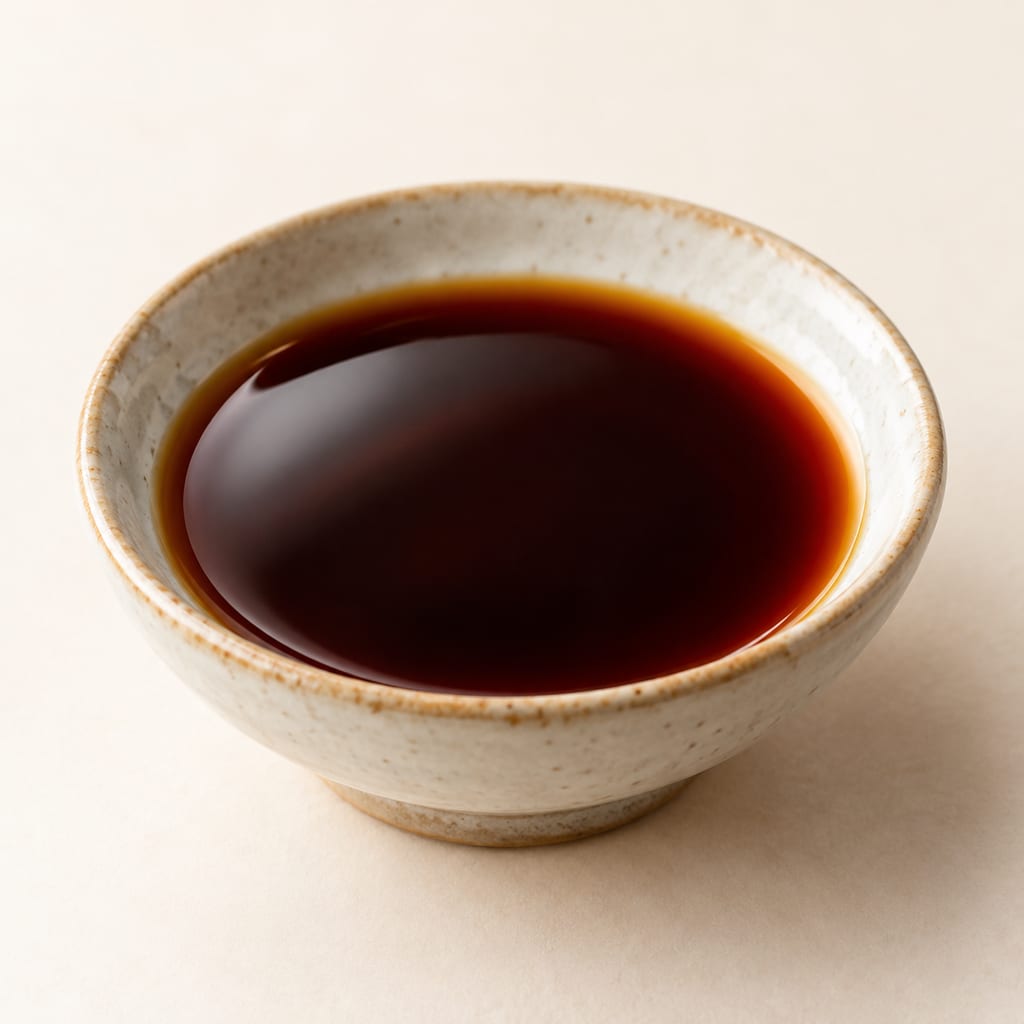
Japan's standard all-purpose soy sauce: soybeans and wheat grown over with koji mould, brined, fermented for months, pressed and usually heated into a reddish-brown, savoury liquid.
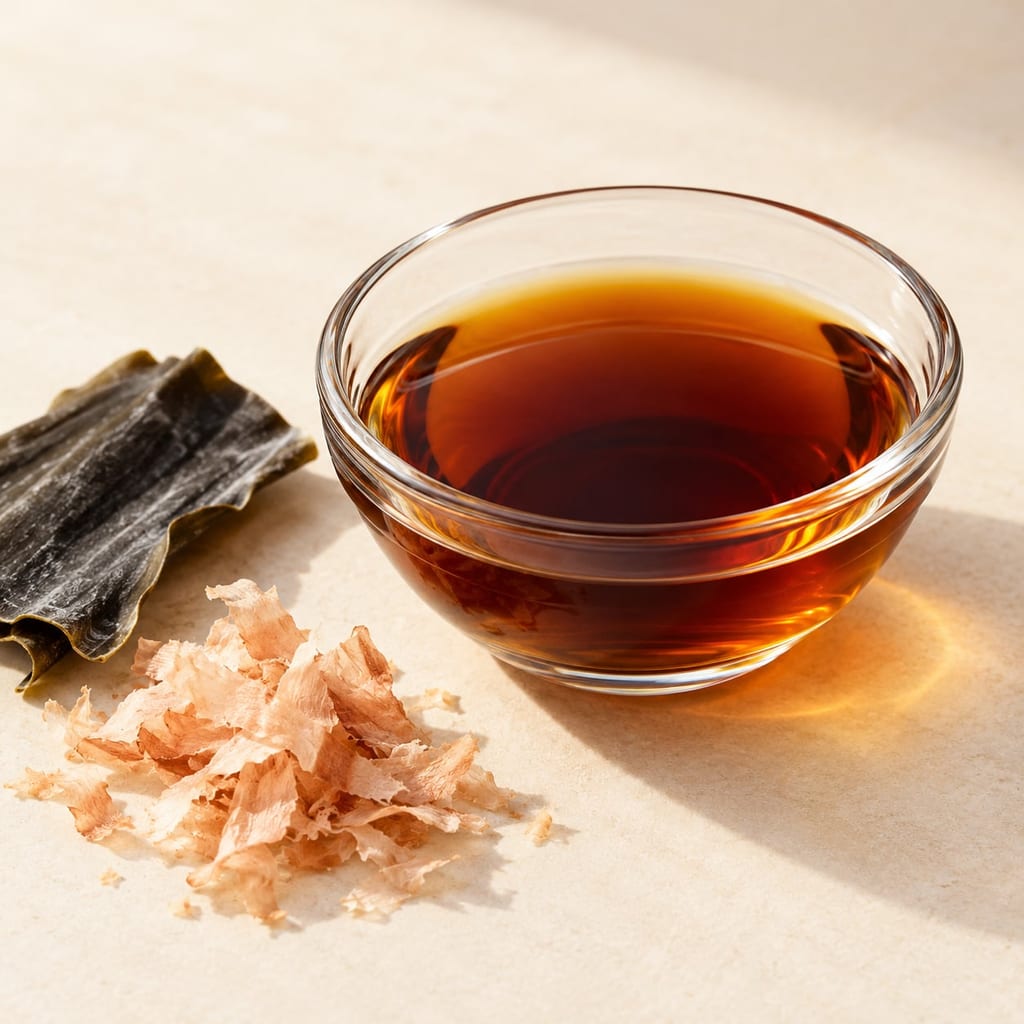
Mentsuyu seasons Japanese noodles with dashi, soy sauce and mirin. Two home formulas are recorded here: a 2012 light-soy and bonito sauce, and a concentrate diluted 1:2 for dipping or 1:4 for hot soup.
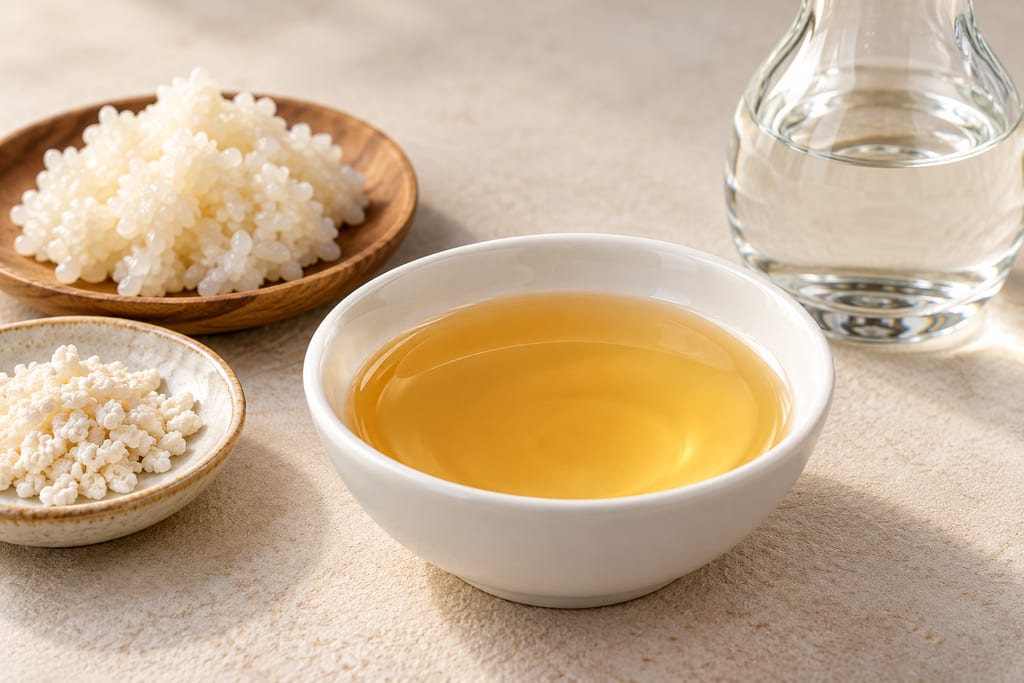
Hon-mirin is a Japanese rice seasoning made by saccharifying glutinous rice with rice koji in shochu, then pressing and usually heating the mash.
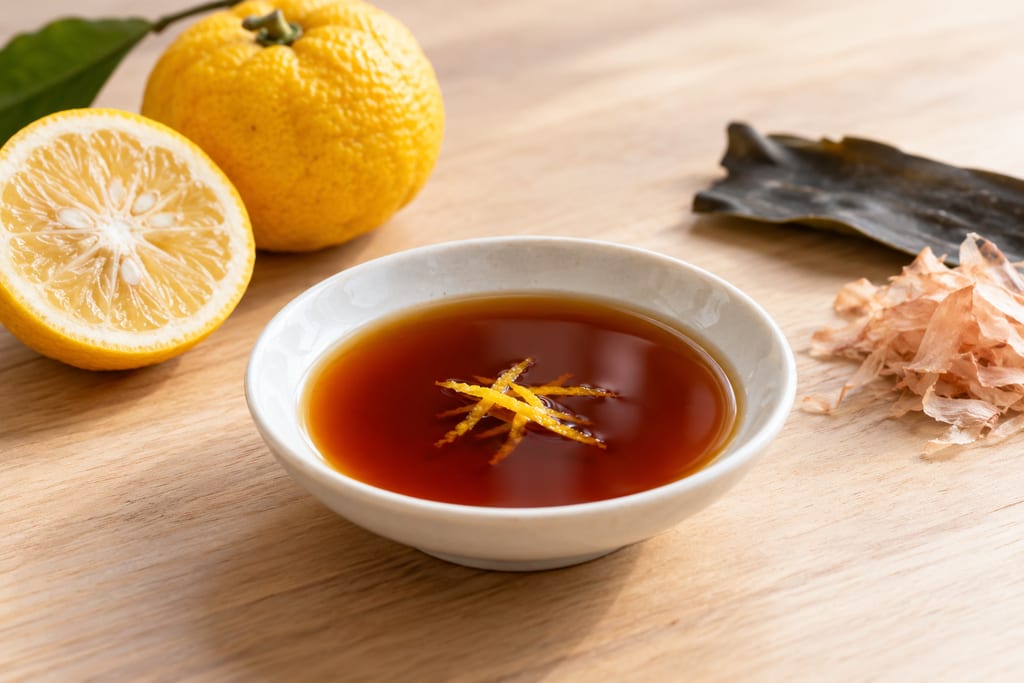
This quick ponzu combines soy sauce, vinegar, hon mirin, kombu, dried bonito and yuzu juice after a brief boil and a warm extraction; the recipe serves five.
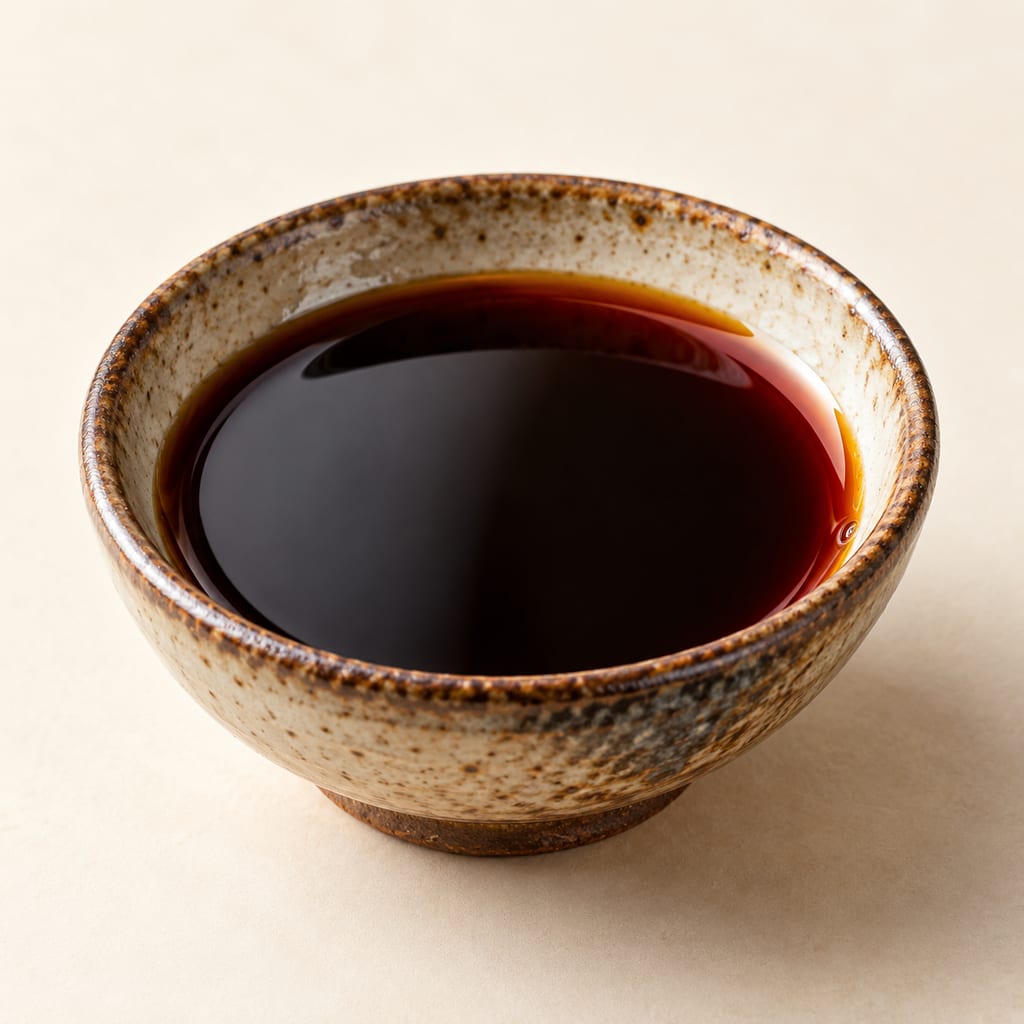
Saishikomi shoyu is a double-brewed soy sauce: a second moromi is made with a finished soy sauce in place of salt water, which makes a dark, concentrated sauce with softer salt.
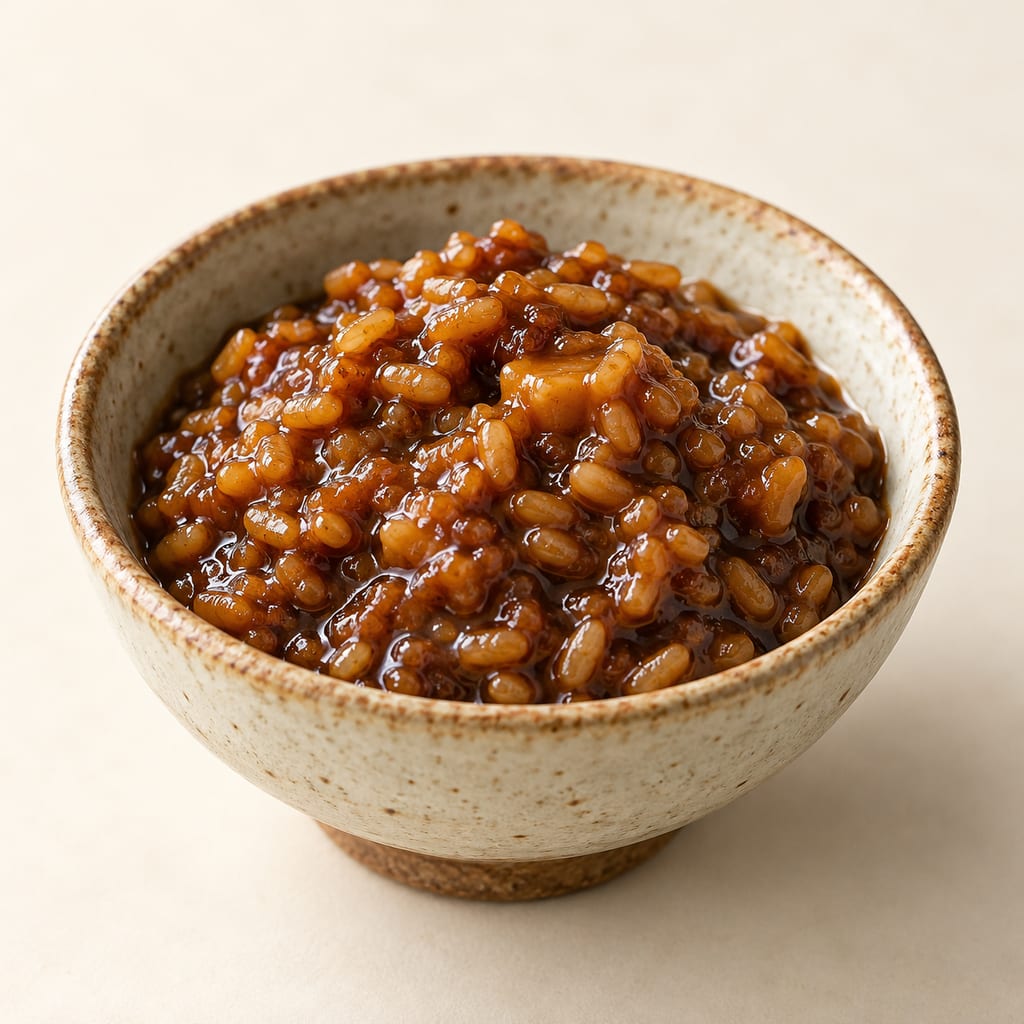
A Japanese kitchen condiment of rice koji matured in soy sauce until the grains turn soft and sweet. The same name also means the mould-grown soybean and wheat used to brew soy sauce.
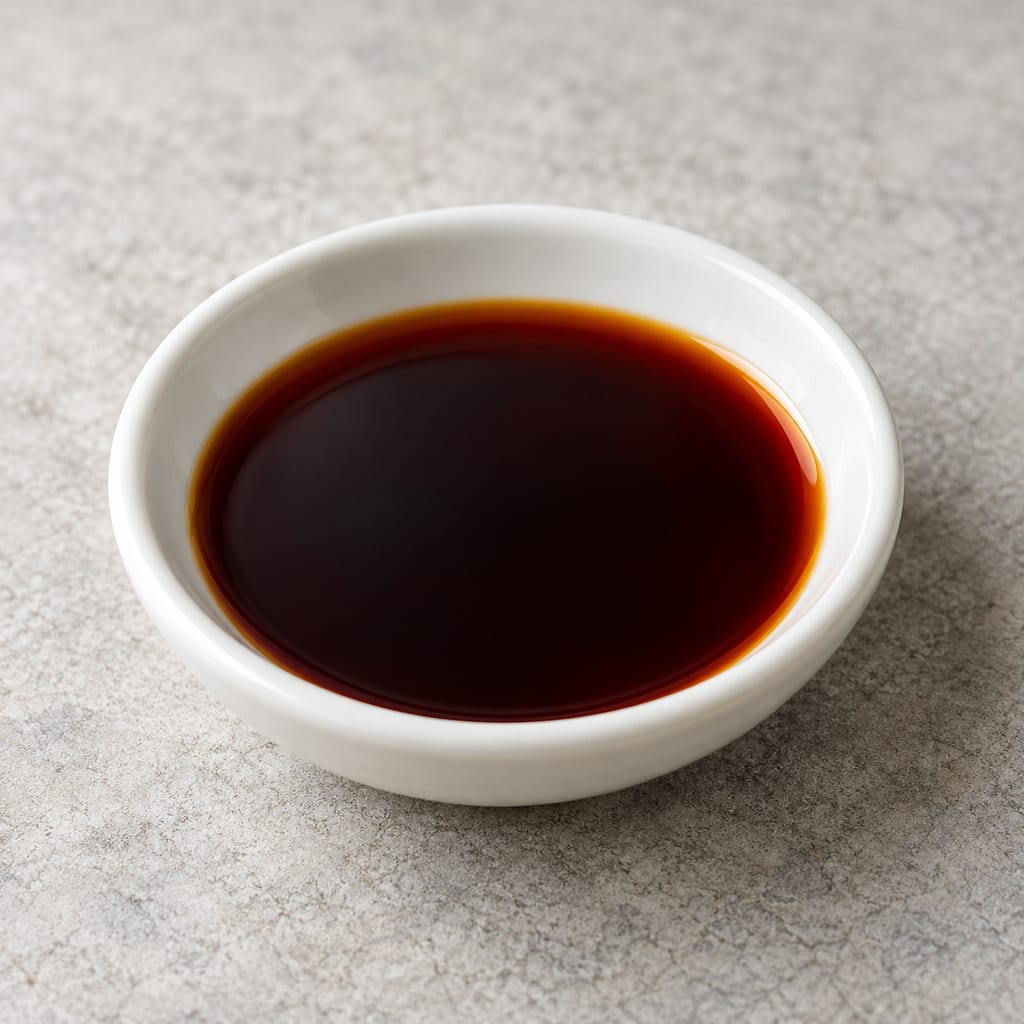
Soy sauce is a salted liquid seasoning made by growing koji mould on soybeans and grain, maturing the mash in brine and pressing out the liquid. Japan's shoyu is the best-documented form.
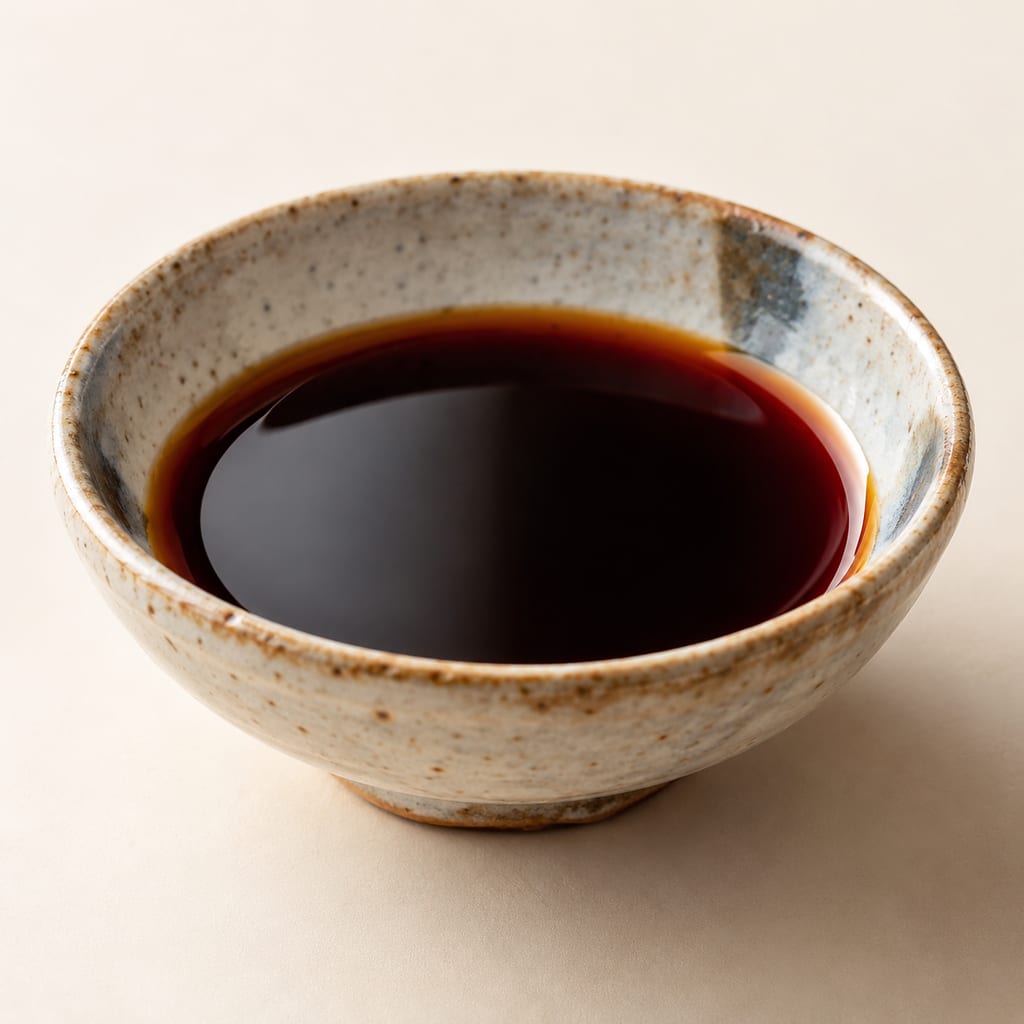
Tamari is the soybean-dominant Japanese soy sauce of the Tokai region, made with little wheat and little brine, and aged longer than koikuchi.
No community contributions have been published for this entry yet.
Sign in to contribute. Published comments and photos are free to read.
ScienceDirectMethod · Classification
2023 review of soy sauce process families (Food Research International)High-salt liquid-state method: 18 to 22 percent NaCl brine, 2 to 3 to 1 brine to koji, about six months.
Low-salt solid-state method: 10 to 12 percent NaCl, 0.8 to 1 to 1 brine to koji, about thirty days.
The process families are the basis for classifying Chinese soy sauce.
Cited in: An umbrella term; Two process families; The shared sequence; Method; Limits