
Akazu (red sake-lees vinegar)
Japanese reddish-brown vinegar from sake lees matured about three years, turned to vinegar by acetic bacteria; the vinegar of Handa and Edomae sushi rice.
 FermenteaWhere food goes to change
再仕込み醤油 (さいしこみしょうゆ) · Saishikomi · Double-brewed soy sauce · Twice-brewed soy sauce · 再仕込み
Saishikomi shoyu is a double-brewed soy sauce: a second moromi is made with a finished soy sauce in place of salt water, which makes a dark, concentrated sauce with softer salt.
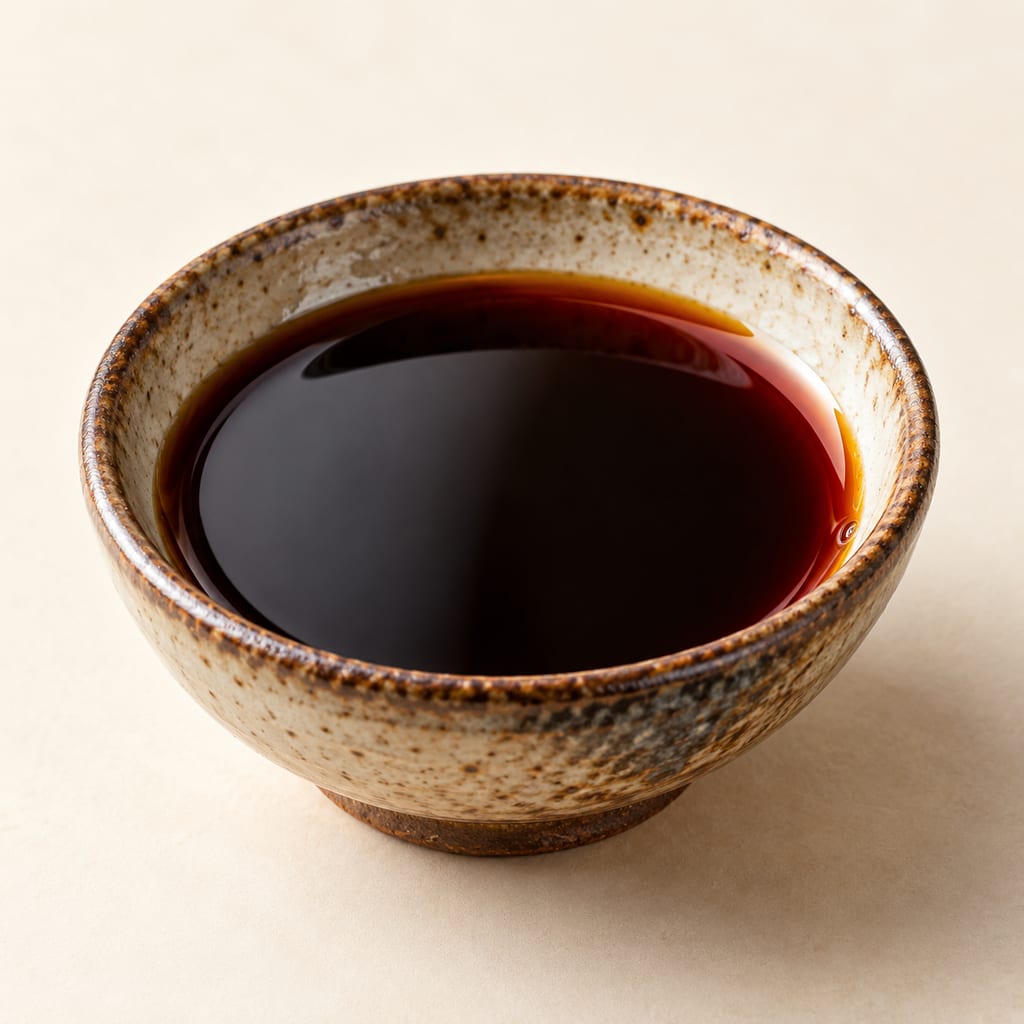
Saishikomi means brewed again, and the name describes the difference. A standard soy sauce is made by mixing koji with salt water, letting the mash ferment and age, and pressing it. A saishikomi is made by mixing the same kind of koji with a finished soy sauce in place of the salt water, so the second batch starts with sauce that has already been brewed.
MAFF reports equal soybean and wheat koji inputs and an ageing period of around one and a half to two years or longer. Its origin is Yamaguchi.
The defining change is the liquid in the second brew. The finished sauce carries the salt, sugar, amino acids and colour of the first brew, so the second brew builds on them rather than starting from brine. The result is darker and more concentrated than a single-brewed sauce, and it is a second brewing stage rather than a darker finish added at the bottle.
The overview does not describe the vessels for the two stages in dimension. The first product's liquid and the second moromi are separate, and that separation is the feature the page explains.
A second brew that uses finished sauce also takes a long time to mature, and the sources give that as the reason for the long ageing. The sauce keeps developing colour and flavour through the ageing, and the length of the ageing is a matter of the product's character. No source read gives a shorter period for a home version.
The second batch is brewed with finished soy sauce in place of brine. A new koji is made from soybeans and wheat, then mixed with liquid that is already soy sauce. Because the liquid carries flavour and colour from the first batch, the second batch adds depth without the strong salt of an ordinary moromi.
Producers' ageing times vary. One guide gives 6 to 8 months for koikuchi and 15 to 18 months for saishikomi; the figures come from a single source and are not a standard.
MAFF reports saishikomi as originating in Yamaguchi. The overview does not date its origin.
MAFF names Yamaguchi as the origin; the region of spread is given as San'in through Kyushu.
Japanese reddish-brown vinegar from sake lees matured about three years, turned to vinegar by acetic bacteria; the vinegar of Handa and Edomae sushi rice.
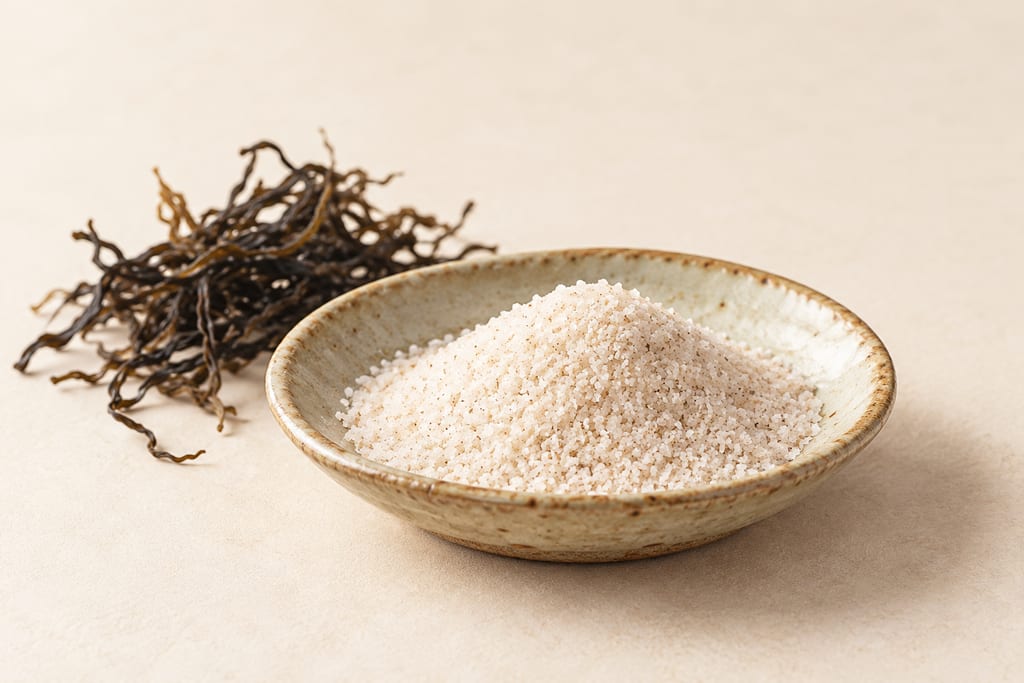
Amabito no Moshio is a modern, pale beige Japanese seaweed salt made from Seto Inland Sea water and hondawara seaweed. Its documented factory method concentrates filtered brine in kettles, then separates and dries the salt.
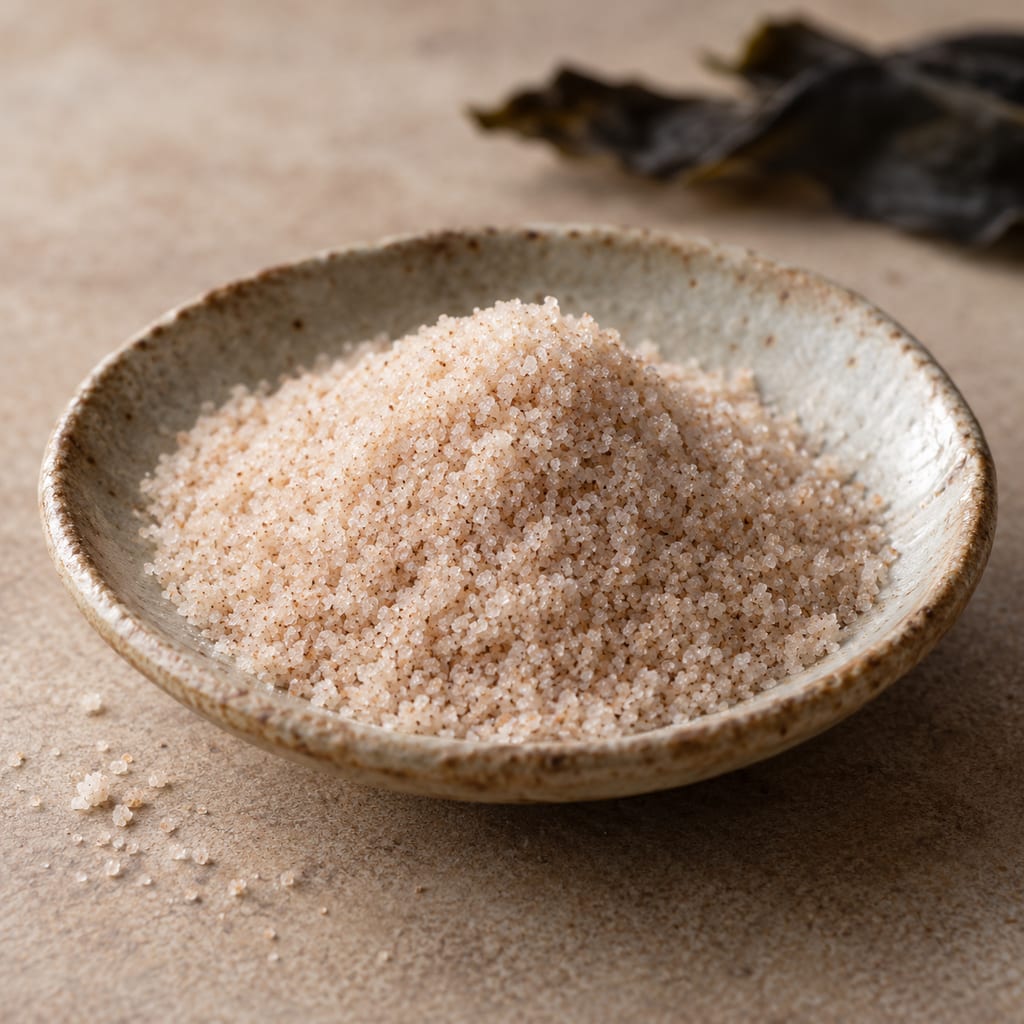
Awaji moshio is a modern Japanese seaweed salt made by TaDa PHILOSOPHY from Awaji Island seawater and seaweed. Its premium process concentrates brine, extracts seaweed flavor, then crystallizes, separates, dries and grades the salt.
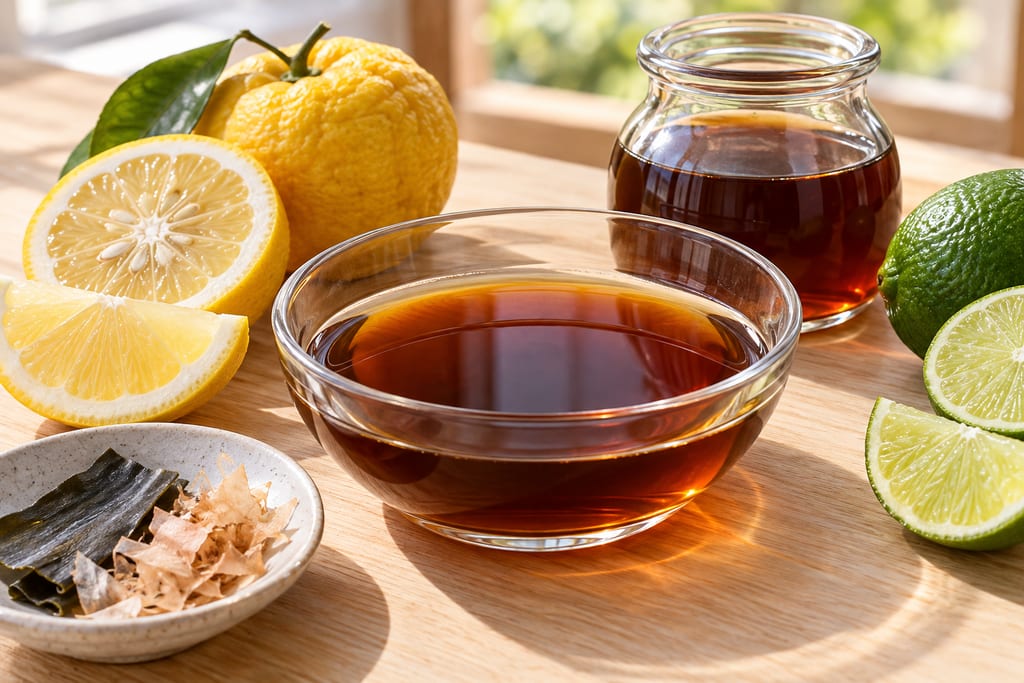
This fresh ponzu-shoyu mixes Japanese koikuchi soy sauce with yuzu or a lemon-lime blend, rice vinegar, water and sugar; optional kombu and bonito give a short chilled infusion.
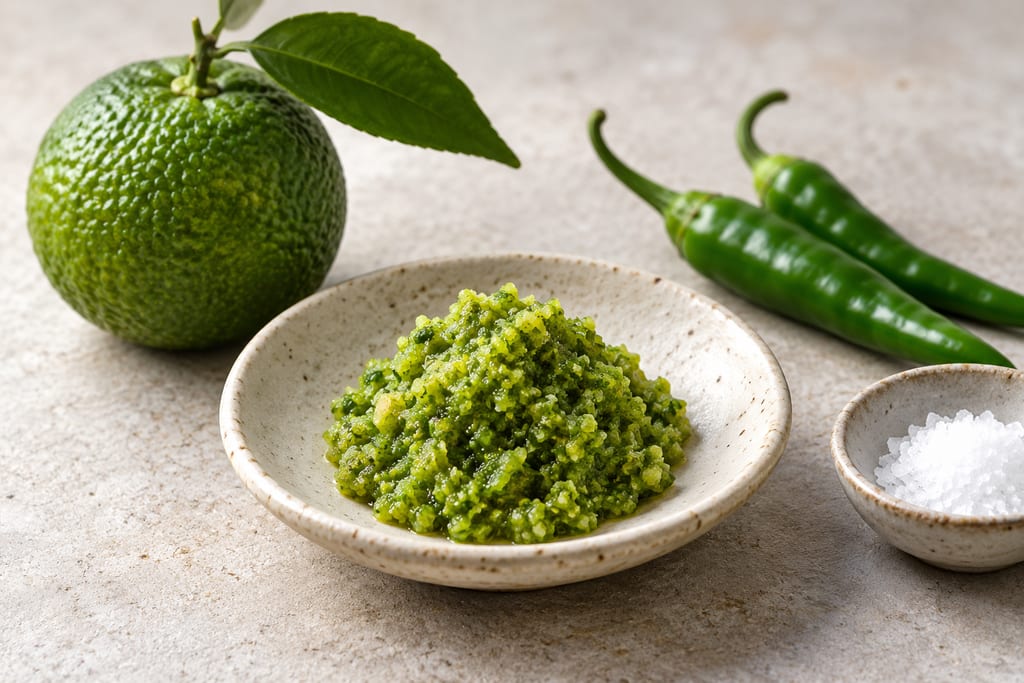
A fresh, uncooked yuzu and green chilli paste inspired by Kyushu’s yuzu kosho, made here as an untested small-batch seasoning rather than a preservation formula.
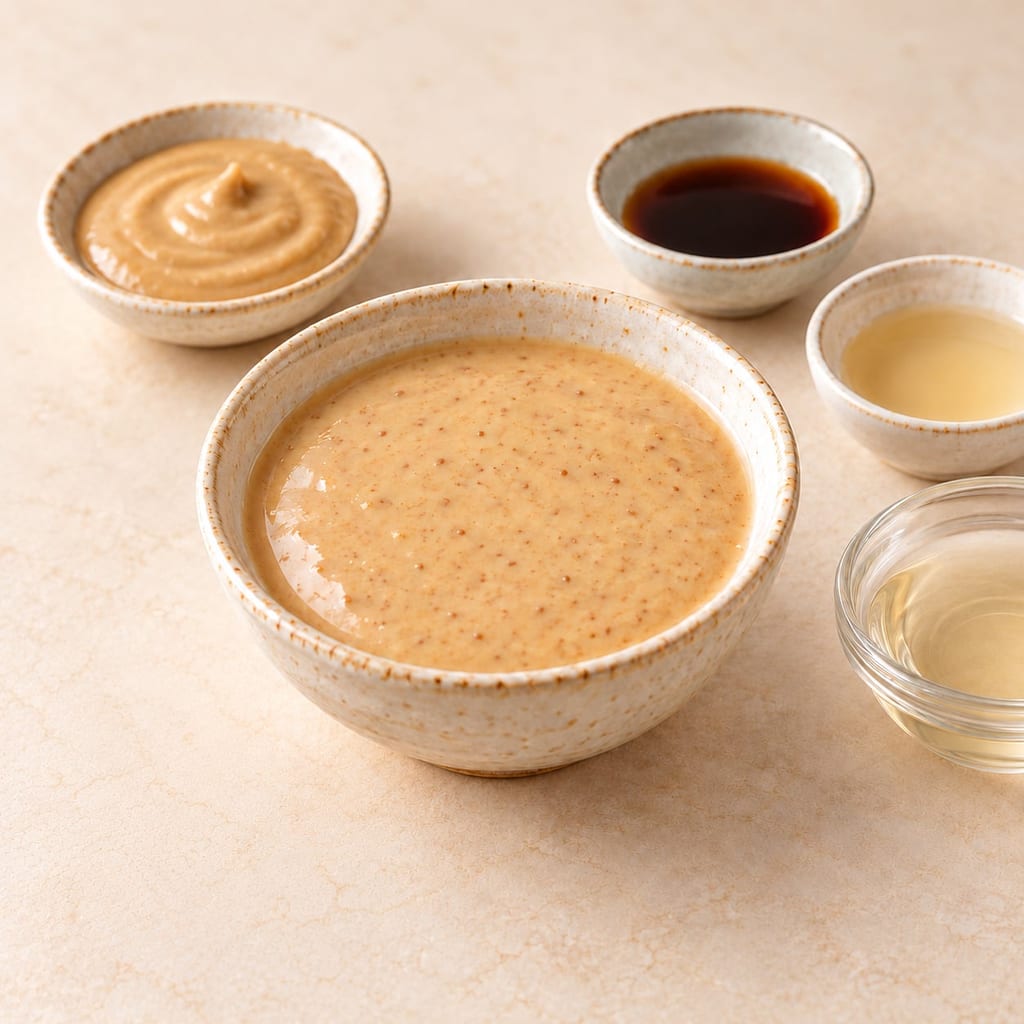
A creamy Japanese sesame dipping sauce with soy, rice vinegar and dashi. Gradual mixing turns the thick sesame paste into a smooth sauce.
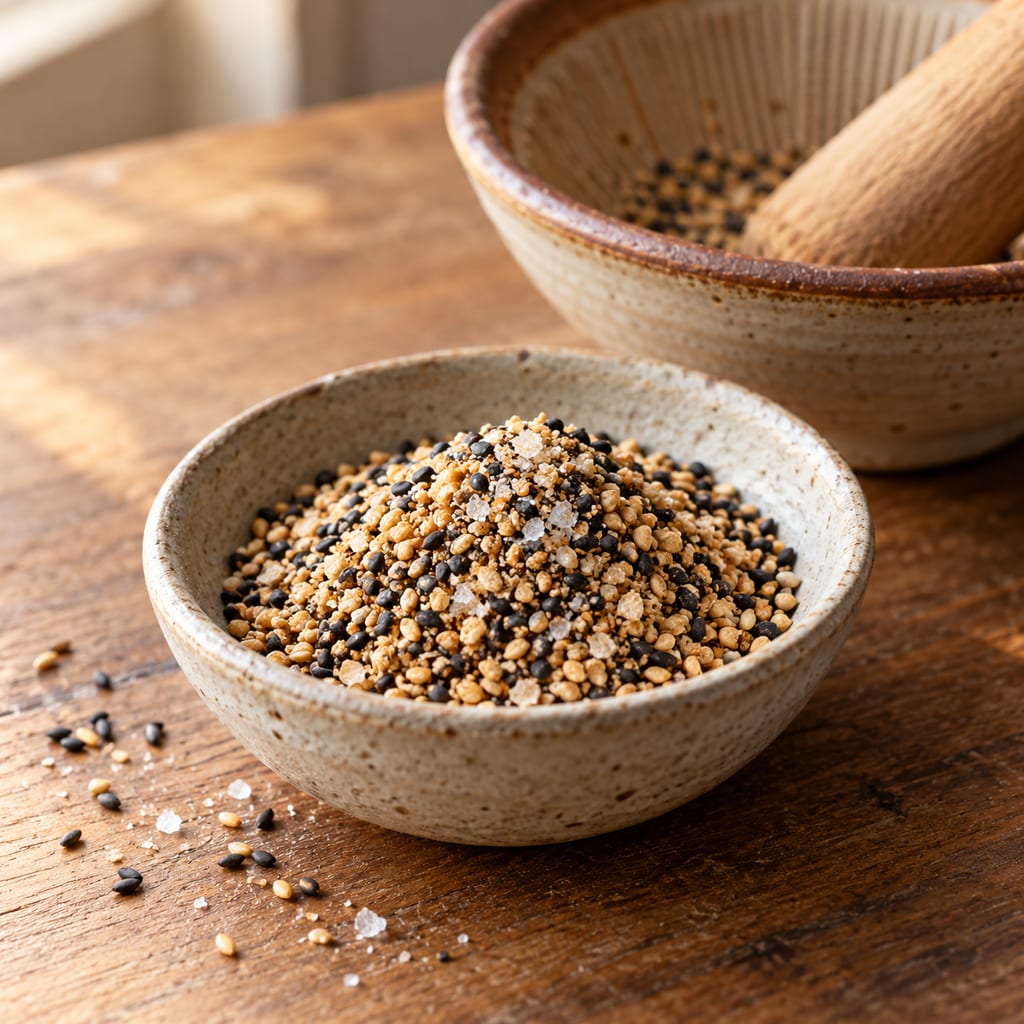
Toasted sesame seeds and sea salt are ground together into a coarse seasoning for rice. This small pan-roasted batch keeps most of the seed texture.
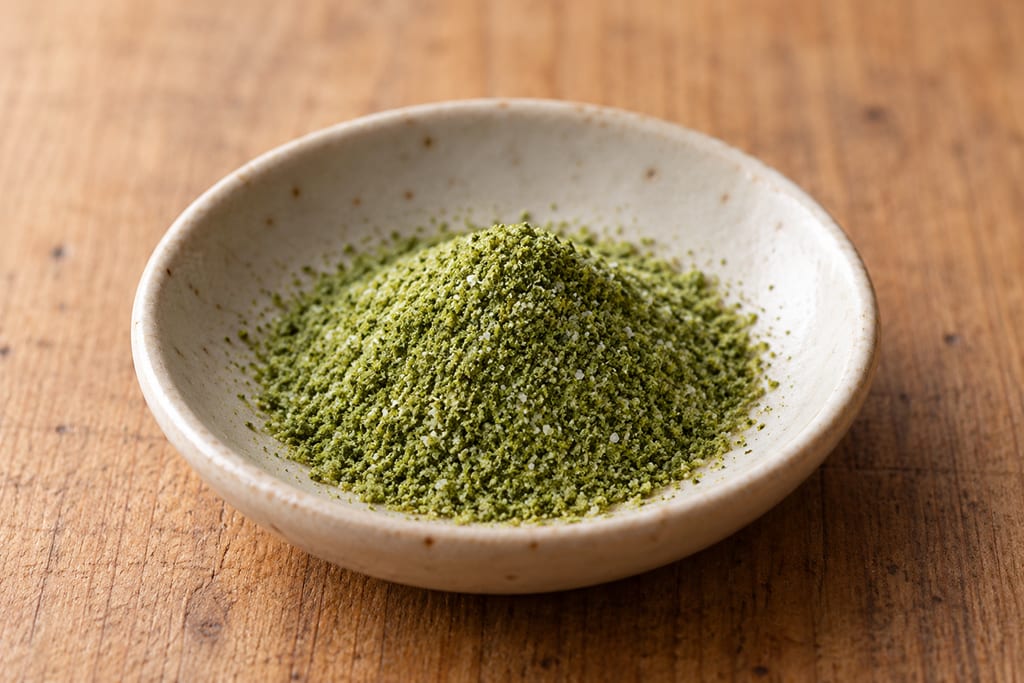
Green tea leaf salt is a dry seasoning made by grinding tea leaves, sieving them and mixing the powder with fine salt. This Japanese-style version follows a documented equal-parts method.
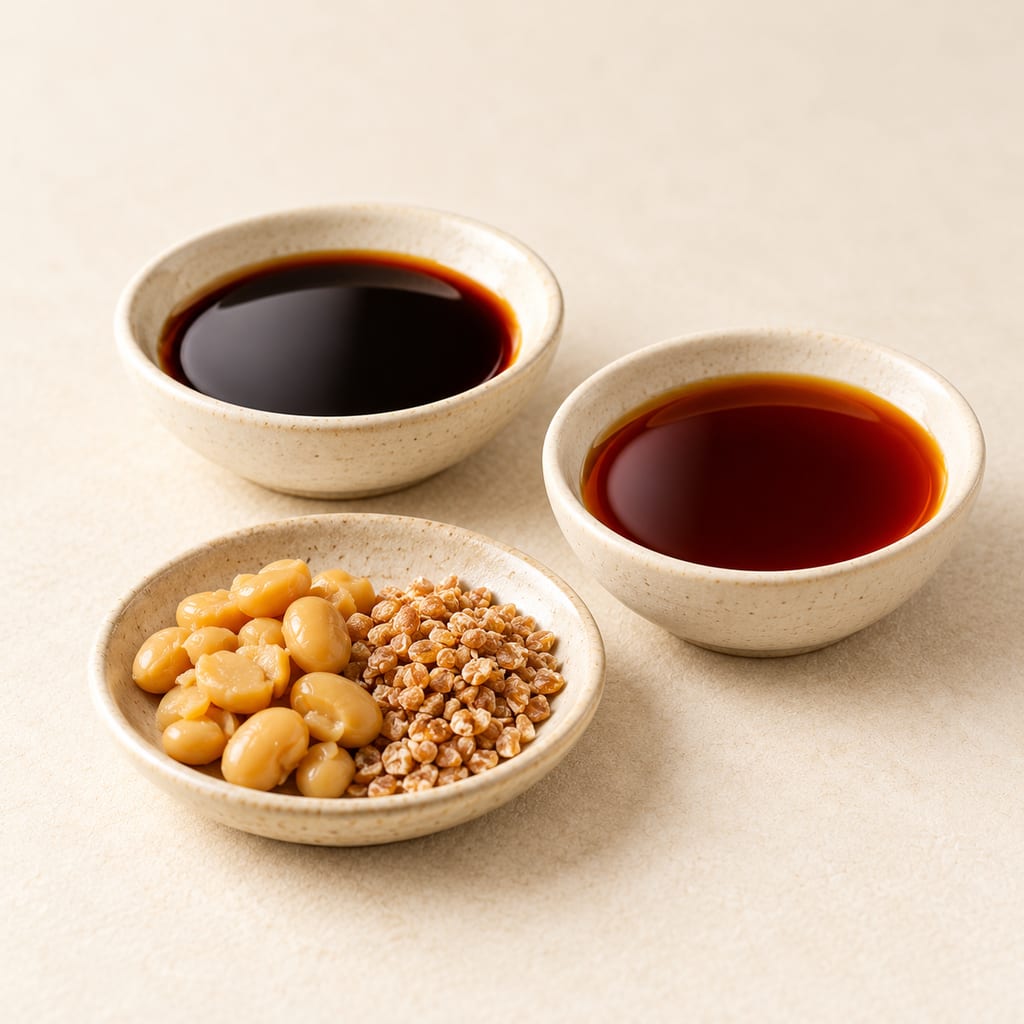
Jiangyou is the Chinese soy sauce family, an umbrella term for light, dark and seasoned sauces made by two main process families: high-salt liquid-state and low-salt solid-state brewing.
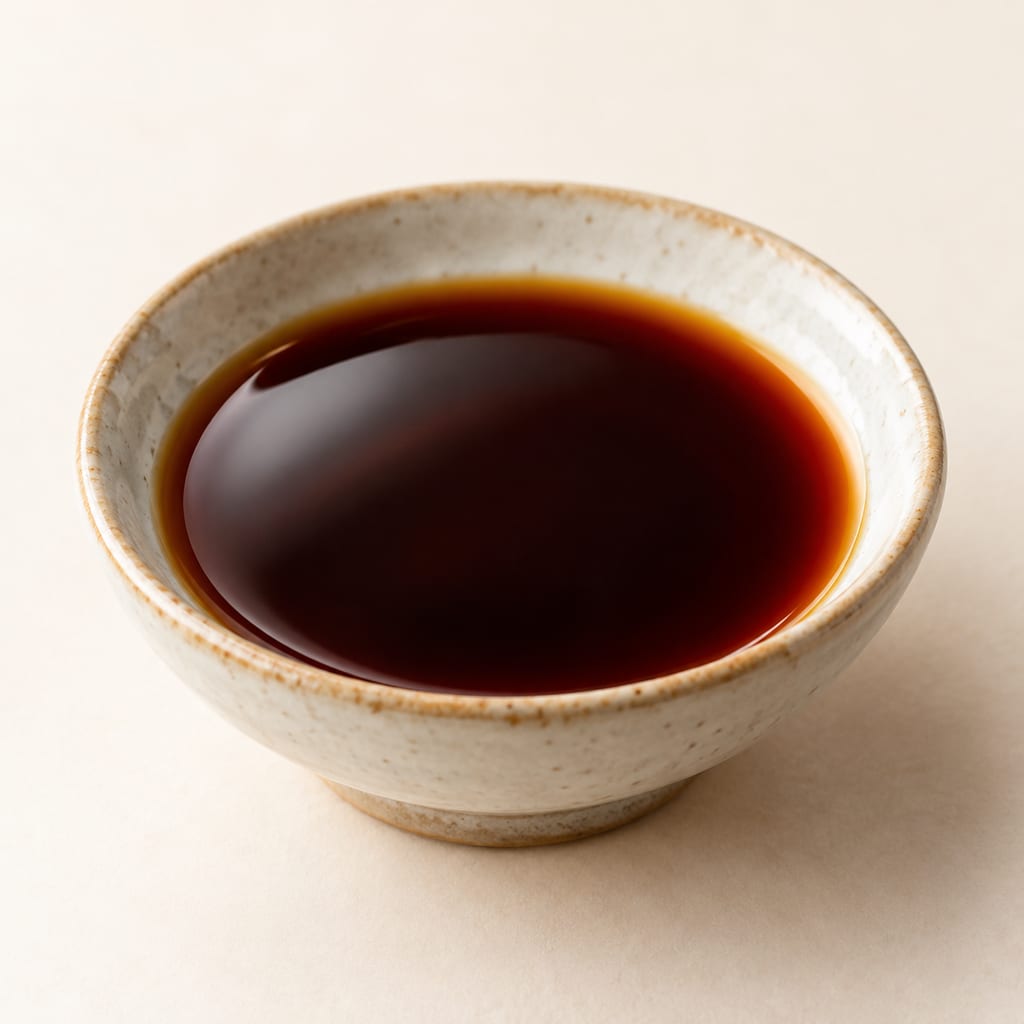
Japan's standard all-purpose soy sauce: soybeans and wheat grown over with koji mould, brined, fermented for months, pressed and usually heated into a reddish-brown, savoury liquid.
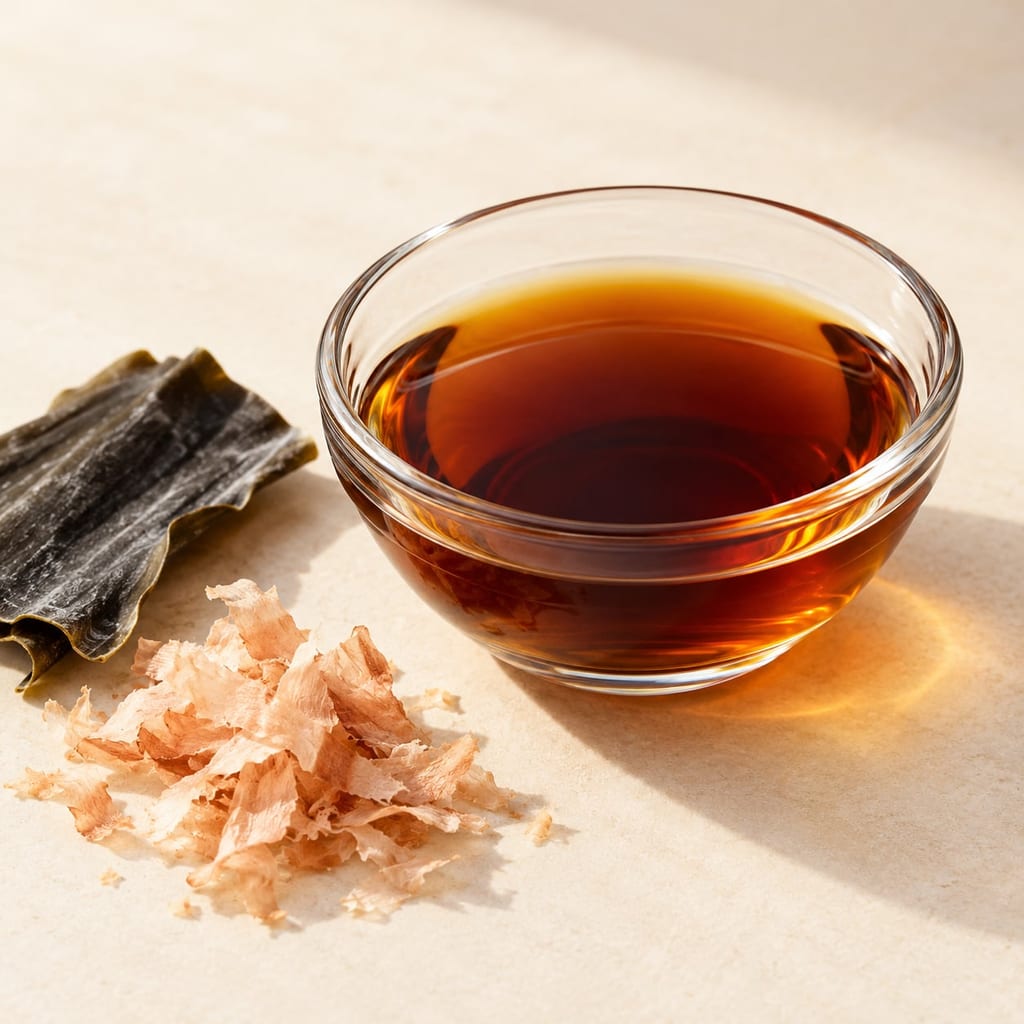
Mentsuyu seasons Japanese noodles with dashi, soy sauce and mirin. Two home formulas are recorded here: a 2012 light-soy and bonito sauce, and a concentrate diluted 1:2 for dipping or 1:4 for hot soup.
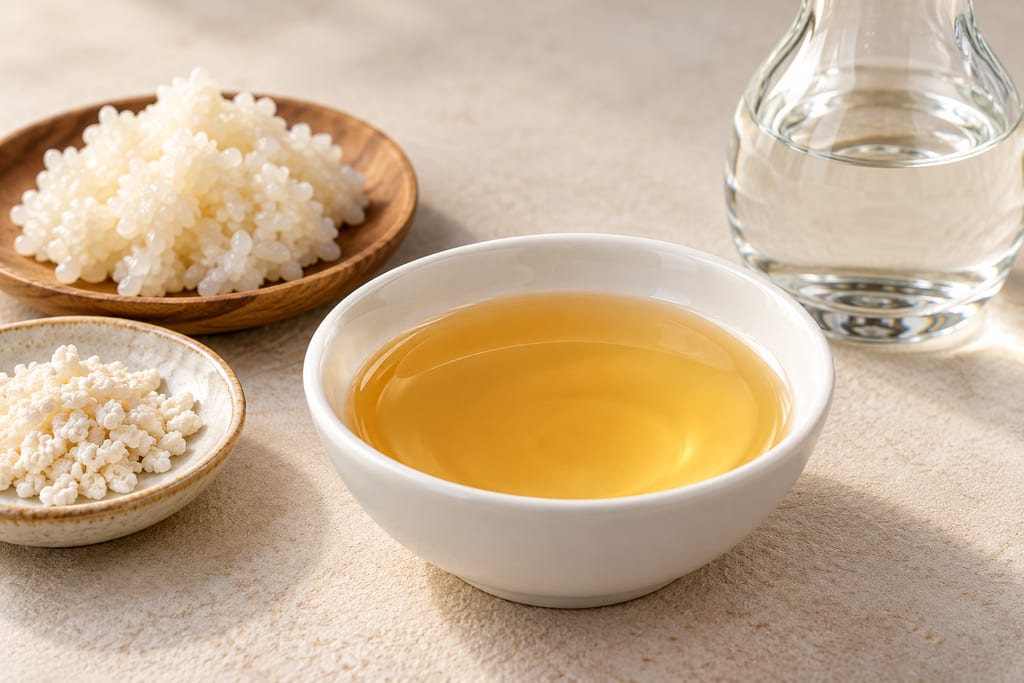
Hon-mirin is a Japanese rice seasoning made by saccharifying glutinous rice with rice koji in shochu, then pressing and usually heating the mash.
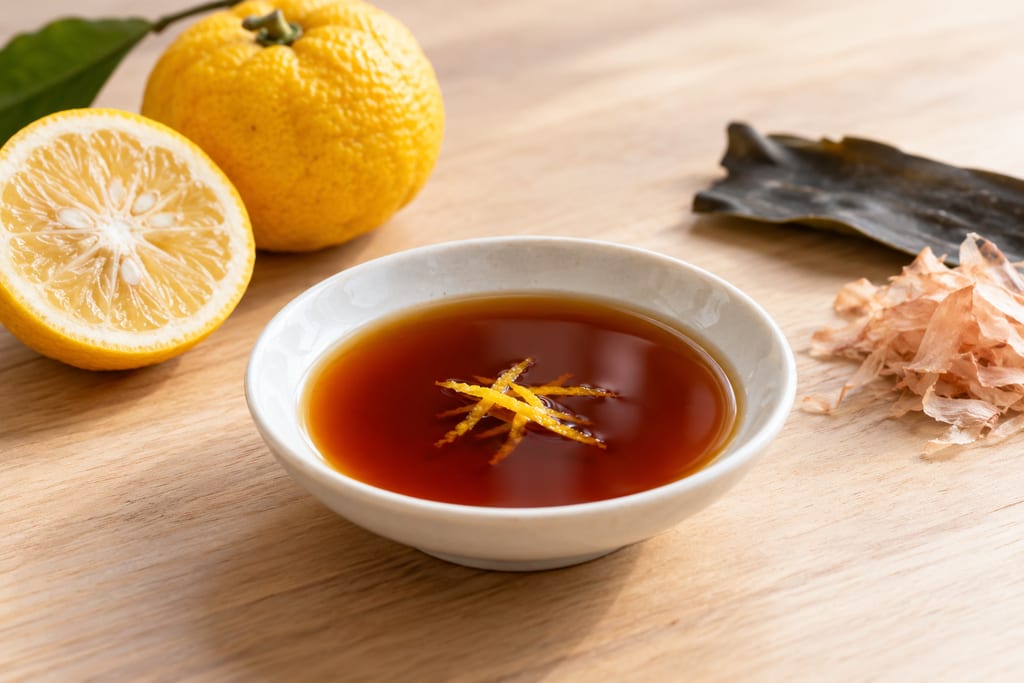
This quick ponzu combines soy sauce, vinegar, hon mirin, kombu, dried bonito and yuzu juice after a brief boil and a warm extraction; the recipe serves five.
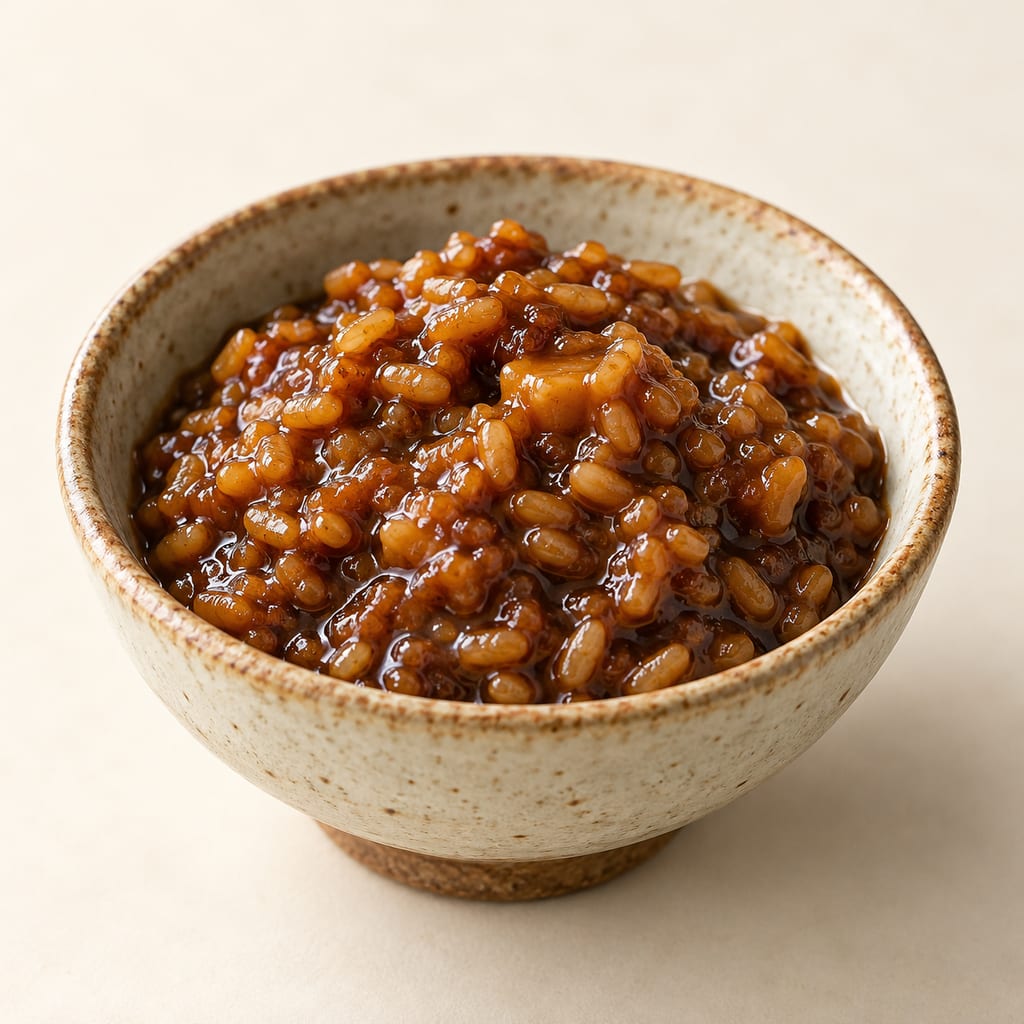
A Japanese kitchen condiment of rice koji matured in soy sauce until the grains turn soft and sweet. The same name also means the mould-grown soybean and wheat used to brew soy sauce.
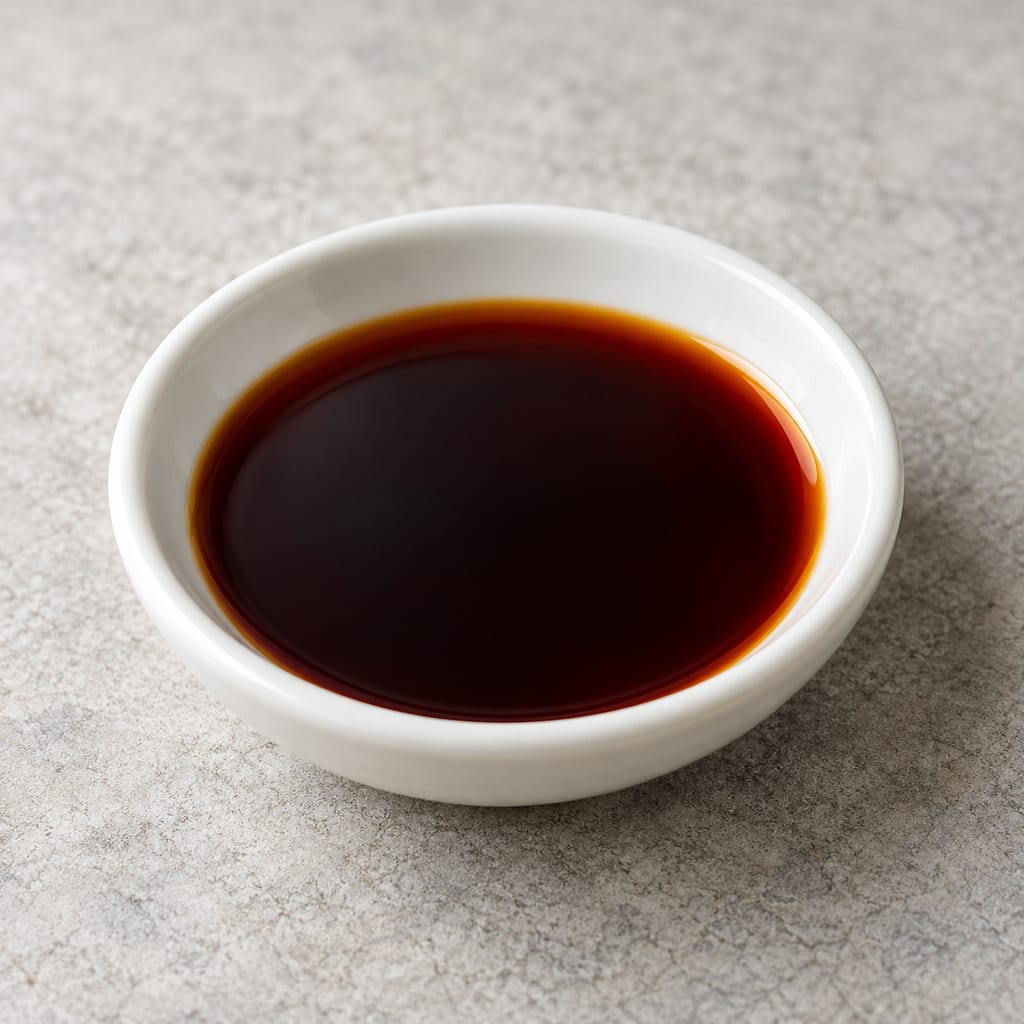
Soy sauce is a salted liquid seasoning made by growing koji mould on soybeans and grain, maturing the mash in brine and pressing out the liquid. Japan's shoyu is the best-documented form.
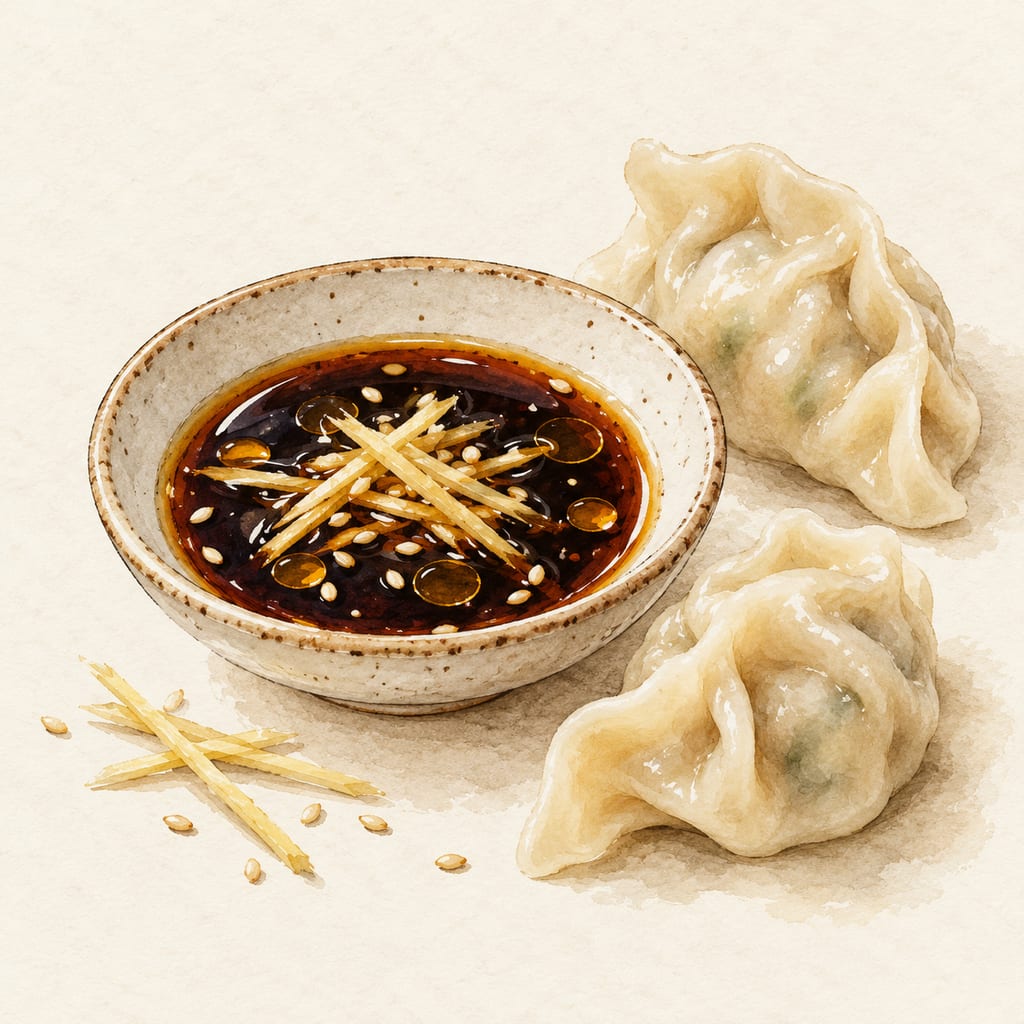
An untested small-batch soy and Zhenjiang black-vinegar dip with ginger and sesame oil, adapted as a modern accompaniment for dumplings or cooked vegetables.
No community contributions have been published for this entry yet.
Sign in to contribute. Published comments and photos are free to read.
Ministry of Agriculture, Forestry and Fisheries (MAFF), JapanDefinition · Method · History
Soy sauce, miso, other seasoningsSaishikomi uses finished soy sauce in place of salt water in the second brew.
Equal soybean and wheat koji inputs; ageing around one and a half to two years or longer.
Origin in Yamaguchi.
Cited in: What saishikomi is; Why it is a second brewing stage; Why it takes so long; Method
WOW NipponMethod
Double-brewed soy sauce (saishikomi shoyu) product listingsDouble-brewed sauce uses finished soy sauce in place of brine for the second batch; deeper colour and umami are reported.
Cited in: Method