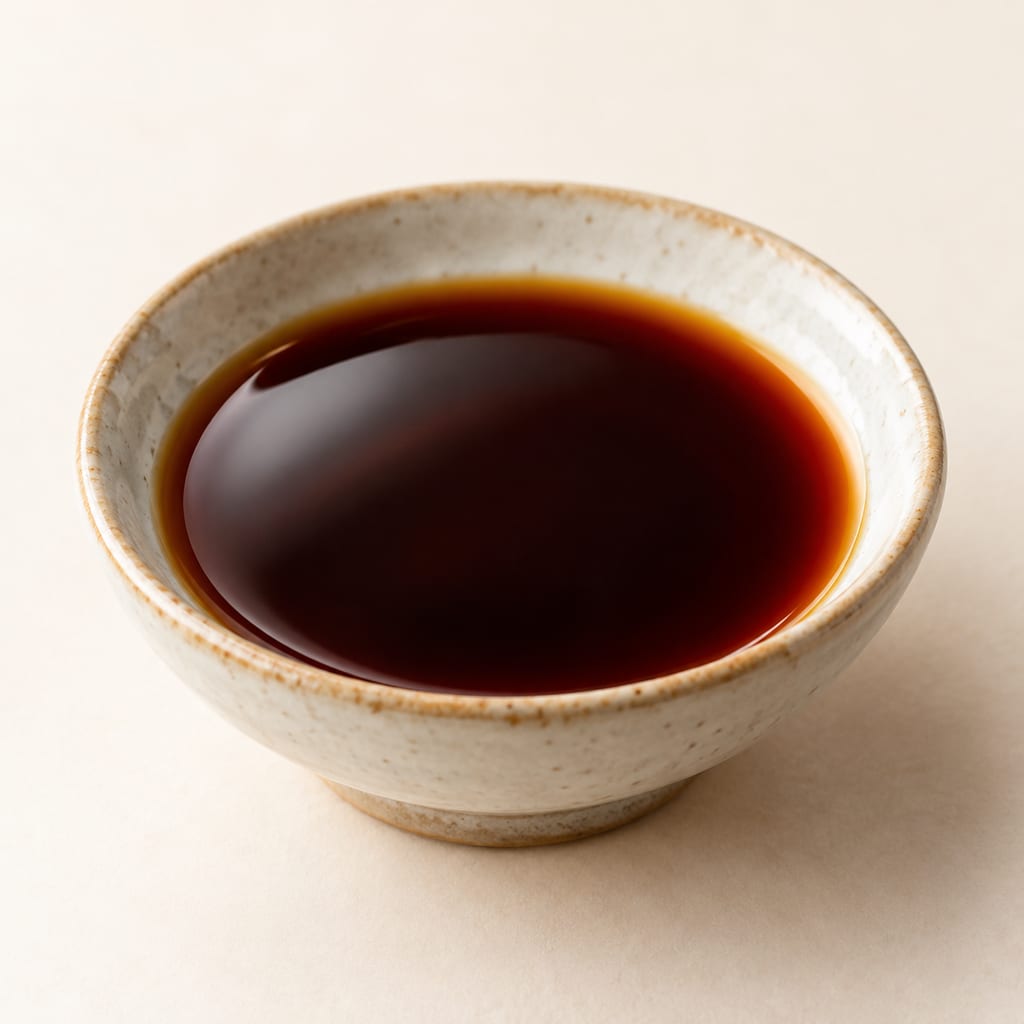
Koikuchi soy sauce
Japan's standard all-purpose soy sauce: soybeans and wheat grown over with koji mould, brined, fermented for months, pressed and usually heated into a reddish-brown, savoury liquid.
 FermenteaWhere food goes to change
Modern method
醤油麹(しょうゆこうじ) · Shōyu-kōji · Shoyu koji · Shoyu kouji · しょうゆ麹 · しょうゆ糀 · 醤油糀 · 生しょうゆ糀 · Soy sauce koji seasoning · Soy sauce rice-koji condiment
A Japanese kitchen condiment of rice koji matured in soy sauce until the grains turn soft and sweet. The same name also means the mould-grown soybean and wheat used to brew soy sauce.
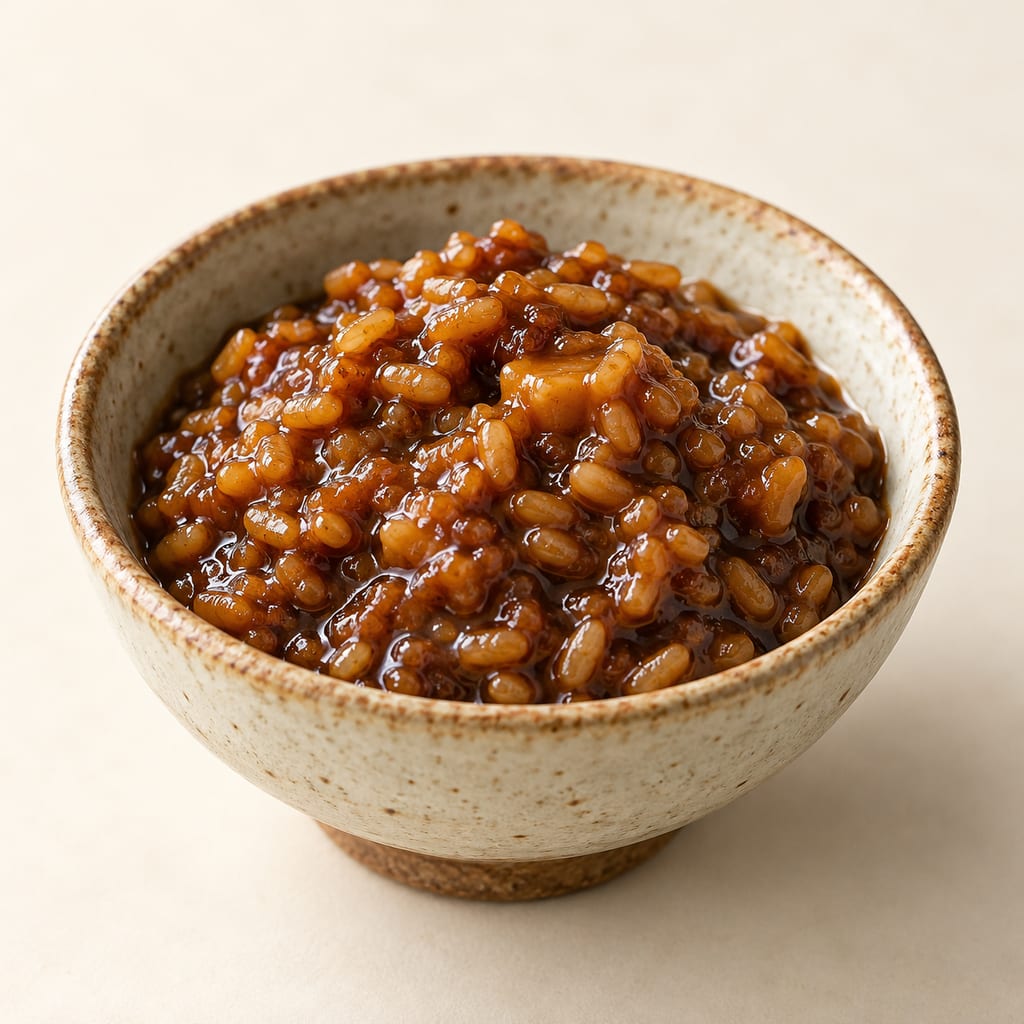
Shoyu-koji is a Japanese seasoning made by soaking prepared rice koji in soy sauce and leaving it to mature. Over days the rice swells, softens and sits in a thick brown liquid. The taste is soy sauce with the edges rounded: salt, acidity and roasted, fermented aroma, plus a sweetness that was not in the sauce to begin with. Unless it is blended or strained, the condiment keeps its grains, so it is a spoonable paste rather than a pouring sauce. Cooks use it at the table, in marinades and in dressings.
The name is a trap, because 醤油麹 has a second, older meaning. In a soy sauce brewery, shoyu-koji is the solid made by growing koji mould on cooked soybeans and roasted wheat. That mould-covered mass is mixed with brine to make moromi, the mash that ferments for months before it is pressed. Brewery shoyu-koji is an intermediate, never eaten as such. Recipes written as しょうゆ麹 or しょうゆ糀 almost always mean the kitchen condiment, while brewing manuals mean the intermediate.
Koji vocabulary adds a third layer of confusion. Koji-kin (麹菌) is the mould itself. Tane-koji (種麹) is the starter, a spore preparation sold to makers to inoculate steamed grain. Kome-koji (米麹) is rice that has already been grown over with the mould, which is what the recipe means when it asks for 100 g of koji. Reading that as 100 g of spores would be wrong by orders of magnitude. Starter makers also sell different cultures for sake, miso and soy sauce, because each product wants a different mix of enzymes.
The mould behind rice koji is Aspergillus oryzae. It does its growing before the jar is filled. Once the koji meets soy sauce, the salt holds back further mould growth, and what continues is largely the work of enzymes the mould left in the grain. So most of what happens in the jar is enzymatic maturation. Yeasts that tolerate salt may add their own activity in a long-kept jar, but that is not guaranteed in any given batch.
Labels hint at processing. 生しょうゆ糀, nama shoyu-koji, is the trade term for a product sold with its enzymes still active rather than heat-killed. It is not the same as 生醤油, a style of soy sauce. Neither the word nama nor the presence of koji proves that a packaged jar holds live organisms of any health-giving kind.
The history has three strands that should not be run together: the old craft of growing koji, the development of Japanese soy sauce brewing, and the recent appearance of rice koji in soy sauce as a household condiment. Mould-grown grain and soybean foods have a long East Asian history. Japan's sake, miso and soy sauce industries each built their own koji practice over many centuries, and professional makers of koji starter were operating by the Muromachi period. Soy sauce brewing selected its own strains, valued for strong protein-digesting activity, and by the Edo period regional soy sauce breweries were substantial businesses. All of this is the technical ground the condiment stands on. None of it dates the condiment.
The firm evidence for shoyu-koji as a food starts in 2012. Shio-koji, a paste of rice koji, salt and water, had become a craze in Japan around 2011 and 2012, and manufacturers looked for further uses of rice koji. On 18 June 2012 the Nagano company Marukome announced Plus Koji Nama Shoyu-Koji, a 200 g product to go on sale across Japan from late July, presenting it as a new member of its koji seasoning line and pointing to the popularity of shio-koji. The next day, 19 June, the publisher Takarajimasha dated a book by Kayo Takahashi devoted to shoyu-koji and shio-koji. In August the publisher Pia announced a third printing of its own recipe book on the two. A makers' recipe from the Kanazawa soy sauce and miso house Yamato followed in June 2015.
These records show a condiment already on shelves and in cookbooks within weeks of each other in 2012. They do not name an inventor, and they do not prove nobody made it earlier at home. Older sources complicate matters, because a brewing text that mentions shoyu-koji almost certainly means the soybean and wheat koji of the brewery, not a jar of rice soaking in finished sauce. Related foods such as hishio, miso, moromi and koji pickles are fair comparisons, but none is this condiment, and their dates cannot be borrowed for it. What can be said is a modern commercial attestation resting on a much older technology.
Before any soy sauce is added, Aspergillus oryzae has already grown through the steamed rice and filled it with enzymes. Some are still active when the koji is dropped into soy sauce. The liquid soaks into the grains, dissolved substances move both ways between rice and sauce, and the enzymes keep cutting large molecules into small ones. Most of the change in sweetness, texture and flavour comes from this, not from a vigorous new fermentation.
Starch is the first target. Alpha-amylase breaks the long starch chains at internal points into shorter dextrins and sugars. Glucoamylase then chips glucose off the ends of those fragments. The rice was steamed before it was made into koji, so its starch is already gelatinised and open to attack. The sugars released give the sweetness, and as starch is dissolved the hard grain softens. How far this goes depends on enzyme activity, how much water the grain takes up, temperature and the state of the koji.
Proteins change too. Endoproteases cut proteins into peptides, and exopeptidases then free single amino acids from the peptide ends. Koji glutaminase turns glutamine into glutamate, the amino acid most responsible for umami. The rice supplies some protein and the soy sauce supplies peptides left from its own fermentation. These reactions are well established in koji and soy sauce science, but the amount of extra glutamate formed in a particular jar cannot be worked out from the ingredient list.
The sauce also brings its own microbial history. In conventional brewing, the koji moulds, Aspergillus oryzae and Aspergillus sojae, supply enzymes first; then salt-tolerant lactic acid bacteria such as Tetragenococcus halophilus and yeasts such as Zygosaccharomyces rouxii work in the moromi, making organic acids, ethanol and aroma compounds. A finished sauce carries the products of that work into the jar. It does not follow that all those organisms are growing again in every batch of shoyu-koji, and they should not be described as if they were.
Salt shapes everything. It lowers the water available to microbes and limits most of them, but it also affects the enzymes: studies of soy sauce koji show amylases and proteases responding differently to sodium chloride, and some proteases lose activity at high salt. Stirring rice koji into soy sauce also dilutes the salt the sauce started with. Some producers mention occasional yeast bubbling in long-kept jars, but that does not amount to a dependable lactic fermentation or a predictable alcohol level. A darker colour with time may come from browning reactions between amino acids and sugars, plus oxidation, and so is not a measure of how much fermentation has happened.
The basic recipe is Marukome's: 100 g rice koji, 8 g salt and 150 ml soy sauce, mixed, put into a clean lidded container, kept at room temperature out of direct sun and stirred once a day. It is ready after roughly one to three weeks, when the mixture smells sweet, has thickened and the rice grains crush easily between the fingers. The maker gives no room temperature in degrees, no final yield, and no measured pH or salt level.
The rice koji is not just filler. Its main contribution is the enzymes the mould put there, with the starch, protein and grain structure that give the finished condiment its body. Fresh and dried koji hold different amounts of water, so they cannot be swapped gram for gram at the same liquid ratio. Yamato's recipe shows this: it pairs 200 g of fresh koji with 300 ml of soy sauce, but 200 g of dried koji with 380 ml. That maker also allows a longer, undisturbed maturation. Both are complete methods of their own.
The soy sauce is the water, the salt and the flavour. It supplies the liquid that rehydrates the koji and carries dissolved salt, amino acids, peptides, sugars, acids and aroma into the jar. Yamato recommends traditionally brewed whole-soybean soy sauce and warns against reduced-salt types, for fear of unwanted microbial growth. In the Marukome formula the extra 8 g of salt is an addition to the sauce, not a feature of every shoyu-koji recipe; it changes seasoning strength and the conditions for enzymes and microbes alike. Adding water or cutting the salt makes a different product.
Breaking up the koji and mixing it well gets the grains into the liquid. During maturation the rice drinks up sauce and softens, and daily stirring redistributes liquid and grains so some do not stay dry. It is not meant to encourage a new layer of mould. Producers differ on whether the jar should be sealed or loosely covered, and a method should be followed whole instead of taking the container advice from one recipe and the timing from another.
The texture can be left grainy or taken further. Ikedaya Jozo describes a version with 200 g of rice koji and 500 ml of soy sauce, with the extra sauce added deliberately so that it can be strained off after about three to four weeks as a pouring condiment, leaving seasoned grains behind. The same maker also publishes a more dilute recipe with salt and water. Handling and storage advice for one formula does not carry across to another.
Completion is a cook's judgement. Soft grains and a sweet smell show that the rice has hydrated and changed, but they do not measure safety. Where a recipe tells the maker to refrigerate once the texture is right, that is a separate storage step with its own reasons.
The condiment is made across Japan, and it has no single historical home region or traditional local recipe. Nationwide sale is recorded in a 2012 announcement from a Nagano City manufacturer. A 2015 recipe from a Kanazawa soy sauce house documents another established practice. These places show where it was made, sold and published, and should not be read as rival claims to have invented it.
Proportions vary. Marukome adds salt to rice koji and sauce; Yamato makes a two-ingredient version with none. The supplier Otamaya gives a fresh-koji method with 500 g of koji with 500 ml of soy sauce, then tops up with more sauce once the rice has soaked up the first lot, and treats fresh and dried koji separately. The mix of moisture, salt and time means the finished sweetness, saltiness and texture of these versions will not match.
The grain can change. A recipe from the Koji Kentei organisation combines 200 g of fresh rice koji and 100 g of barley koji with 350 ml of soy sauce and 40 g of salt, stirred twice daily and matured for a season-dependent five to ten days. That is a rice-and-barley variation, not the original or dominant form. Different grains bring different starch, protein and flavour, and a producer in Aizu sells a brown-rice version. Total koji weight alone does not predict the result.
Soy sauce is the other variable. Koikuchi, the dark all-purpose sauce, is the common base, but commercial sauces differ in wheat content, salt, aroma and acidity. Marukome's original announcement names traditionally brewed whole-soybean sauce; other makers call for unheated nama sauce, and ordinary household methods use pasteurised sauce. An unheated sauce and an unheated finished shoyu-koji are different labels: one describes an ingredient, the other the whole condiment.
Some producers go for a thick paste of grains, others use extra sauce and strain. The strained liquid is a sweetened, aromatic pouring sauce, and the grains can still season food. Commercial jars are made under controlled conditions and may contain added alcohol; Marukome's current product lists rice koji, soy sauce, salt and alcohol. That packaged product is no guide to how long a home batch keeps.
Close relatives include shio-koji, koji pickles, hishio and the brewery's own soybean and wheat koji. They share the same technology of mould-made enzymes, but their ingredients and microbial histories differ, and the earliest known date for any of them has no place in this condiment's history without evidence tying it to this preparation.
Shoyu-koji is used much as soy sauce is, with the difference that its grains and leftover enzymes change how it behaves. It can be spooned over rice, tofu, cooked vegetables or natto. The grains make it more substantial than a clear sauce, and its sweetness can replace some added sugar. Mixed with other ingredients it becomes a dressing, dip or sauce base. Salt content differs between recipes, so add it gradually rather than treating it as a one-to-one swap for soy sauce.
Marukome publishes cooking amounts: about 10 g of shoyu-koji per 100 g of meat for 20 to 30 minutes before cooking, and about two tablespoons per fish fillet for anything from 30 minutes to overnight, wiping the surface before heating. These are the maker's cooking suggestions, not a validated way to preserve raw meat or fish. Marinate in the refrigerator, keep raw food away from other food, and cook it through.
On meat the seasoning does two jobs at once. Salt and soluble flavour compounds season the surface, and protein-digesting enzymes can act on proteins within reach. Marukome measured the effect with its shio-koji, not with shoyu-koji: its enzyme page reports a drop in breaking force of about 38 percent for chicken and beef and about 18 percent for pork. Shoyu-koji has not been measured the same way, so the softening is plausible but not quantified, and it will vary with the cut and the batch.
Vegetables avoid the complications of marinating raw animal products. Marukome gives a dish of cooked spinach dressed with shoyu-koji and ground sesame, and also recommends it on rice. A thick batch works as an uncooked dressing, and a smoother one blends into sauces. Ikedaya Jozo strains a liquid-heavy batch for a pouring sauce on tofu, natto and rice, so a grainy paste and a strained liquid are two accepted ways to use the same jar.
Timing matters. Used cold or in a short marinade, an unheated batch may keep enzymes that can act on food; thorough cooking denatures them. The sugars encourage browning and make coated foods scorch sooner, so Marukome advises scraping off most clinging grains and using gentler heat for grilling or frying. Strong browning is cooking, not more fermentation.
Commercial koji seasonings can contain alcohol: Ichibiki's FAQ gives about 5 percent for its own shio-koji and shoyu-koji, and other makers give other figures. Those numbers belong to those products and not to a home batch. Anyone avoiding alcohol should check the exact product or recipe, particularly for uncooked use. Because it is made with soy sauce, it also normally contains soy and wheat.
A batch is ready when it smells sweet and pleasantly seasoned, has thickened, and the rice grains are soft enough to crush between the fingers. If the centres are still hard, keep stirring and wait a few more days; Marukome allows one to three weeks, and the other published recipes range from about a week to a month depending on the koji and the room. Colour is a poor guide, since the sauce darkens with time through browning reactions whether or not the enzymes have finished.
Grains that float above the liquid dry out and do not soften, which is the reason for stirring daily and bringing the grains from the bottom to the top. Fresh and dried koji take up different amounts of liquid. If you swap one for the other, follow a recipe written for it: Yamato uses 300 ml of soy sauce for 200 g of fresh koji but 380 ml for 200 g of dried.
Some bubbling or a faint alcohol note can appear in a jar kept for weeks, and Yamato mentions yeast activity in long maturation. Bubbles alone say nothing about which organism is responsible or whether the jar is sound. If the smell turns sour, off or putrid, treat the batch as spoiled. Any mould on the surface means the whole batch goes in the bin: the ministry advises discarding mouldy food and not cutting the mould away, and warns that harmful microbes cannot always be detected by taste or smell.
If the result seems too salty, remember that the salt comes from the soy sauce and, in Marukome's formula, from the extra 8 g. Use less of it at the table and add it to food gradually. Do not thin the jar with water or cut the salt to fix it: that changes the conditions the recipe was built on, and Yamato specifically warns against reduced-salt soy sauce. Choose a recipe written without added salt instead.
In the pan, the sugars in the seasoning brown quickly and can scorch. Scrape most of the clinging grains off before grilling or frying and use gentler heat, as Marukome advises. Browning in a dish is a cooking effect and says nothing about the jar.
Move the finished seasoning to the refrigerator, take portions with a clean spoon, and keep marinade that has touched raw meat or fish out of the jar. Marukome gives about two months in the refrigerator after opening for its own commercial product, but that figure does not transfer to a home batch. No tested pH, salt level or shelf life exists for the home recipe, so discard the batch at any sign of spoilage.
One creator uses 200 g of rice koji and 500 ml of regular soy sauce. The mixture is stirred daily at room temperature for about 10 to 14 days, until the grains squash easily. The creator reports refrigeration for up to three months. The caption does not say whether the koji is fresh or dried.
Another creator uses 116 g of rice koji and about 115 to 116 g of low-sodium soy sauce, stirred daily at room temperature for about ten days. The creator recommends low-sodium sauce for personal health and flavour reasons. The caption gives no storage after maturing.
The Yamato Soy Sauce and Miso method specifies brewed whole-soybean soy sauce and advises against reduced-salt sauce, so the two choices are not interchangeable.
A video made in Osaka mixes the rice koji by hand and adds the soy sauce in several additions. The mixture is loosely covered, kept away from direct sunlight at room temperature and stirred daily. The video shows hard grains after one week and softened, thickened grains after two weeks.
The creator estimates about a week in summer and ten to fourteen days in winter, and notes that temperature and humidity change the time. The video gives no quantities and no finished storage.
East Meets Kitchen describes rice koji with soy sauce or tamari and comments on its flavour. The inspected passage gives no ratio, no full maturing method, no duration and no storage.
The producer Yamato Soy Sauce and Miso says its seasoning can be kept at room temperature through the year, but recommends refrigeration if active yeast bubbling lifts the koji grains, and advises using it within six months for flavour. The Living the Koji Life caption instead gives refrigeration for up to three months.
These are attributed statements, not a reconciled shelf life, and no source here establishes a validated safety limit for shoyu-koji.
The condiment is documented in 2012: Marukome announced a nama shoyu-koji for nationwide sale on 18 June 2012, and a book devoted to shoyu-koji and shio-koji appeared the next day. These dates show the condiment in commerce and print. They do not show who first made it, and an older domestic practice is not excluded.
Rice koji dilutes the salt of the soy sauce. Yamato Soy Sauce & Miso warns against reduced-salt soy sauce because the seasoning may then support unwanted microorganisms.
Hazard sourceMould growing on the finished mixture is not the controlled Aspergillus growth used to make the koji. Japan's Ministry of Agriculture advises discarding mouldy food, not removing only the visible mould.
Hazard sourceOrdinary Japanese soy sauce contains soybeans and usually wheat; Marukome declares both in its commercial shoyu-koji. Check the actual soy sauce used.
Hazard sourceCommercial shoyu-koji may contain added alcohol, and Yamato reports yeast activity in extended maturation. The alcohol level of this homemade formula is unmeasured.
Hazard sourceDirty utensils, or contact with raw meat and fish, can introduce unwanted microorganisms. Reusing a condiment that touched raw animal products can pass contamination to ready-to-eat food.
Hazard sourceA published domestic recipe does not establish a tested pH, water activity, microbiological endpoint or shelf life. Commercial shoyu-koji has different formulations and controls.
Hazard sourceUse the documented quantities; do not cut the salt, substitute reduced-salt soy sauce or add water.
Control sourceUse clean equipment and washed hands, and avoid introducing contamination during daily stirring.
Control sourceKeep the container out of direct sunlight during maturation.
Control sourceRefrigerate the finished seasoning and check the refrigerator with a thermometer.
Control sourceDiscard the batch if mould appears; do not remove only the affected surface.
Control sourceKeep marinade that has touched raw meat or fish apart from the main container and from ready-to-eat food.
Control sourceUse food-grade prepared rice koji, not unidentified mould growth or starter spores swapped in by weight.
No validated final pH, salt concentration, water activity or microbial safety endpoint exists for this recipe.
Sweet smell, soft grains and thickening show the texture has developed; they are not safety tests.
Longer maturation does not necessarily improve safety or flavour.
Do not treat shoyu-koji as a proven preservative for raw meat or fish.
The refrigerated shelf life of this homemade formula is not established; do not copy a commercial product's.
Ordinary soy sauce contains wheat, so this is unsuitable for people avoiding wheat or gluten.
Absence of visible spoilage does not establish safety; discard the batch on any unusual sign.
Country-level only: the sources document manufacture, recipes and publishing, not a birthplace.
Seat of the manufacturer that announced the commercial product; this says where it was sold from, not where the condiment began.
A soy sauce and miso maker published its recipe here; it is one documented practice, not a competing origin.
Japan's standard all-purpose soy sauce: soybeans and wheat grown over with koji mould, brined, fermented for months, pressed and usually heated into a reddish-brown, savoury liquid.

Rice koji is steamed white rice through which koji mold has grown. It carries the enzymes that turn rice starch into sugar, and it is the starting point of sake, sweet miso, amazake and shio koji.
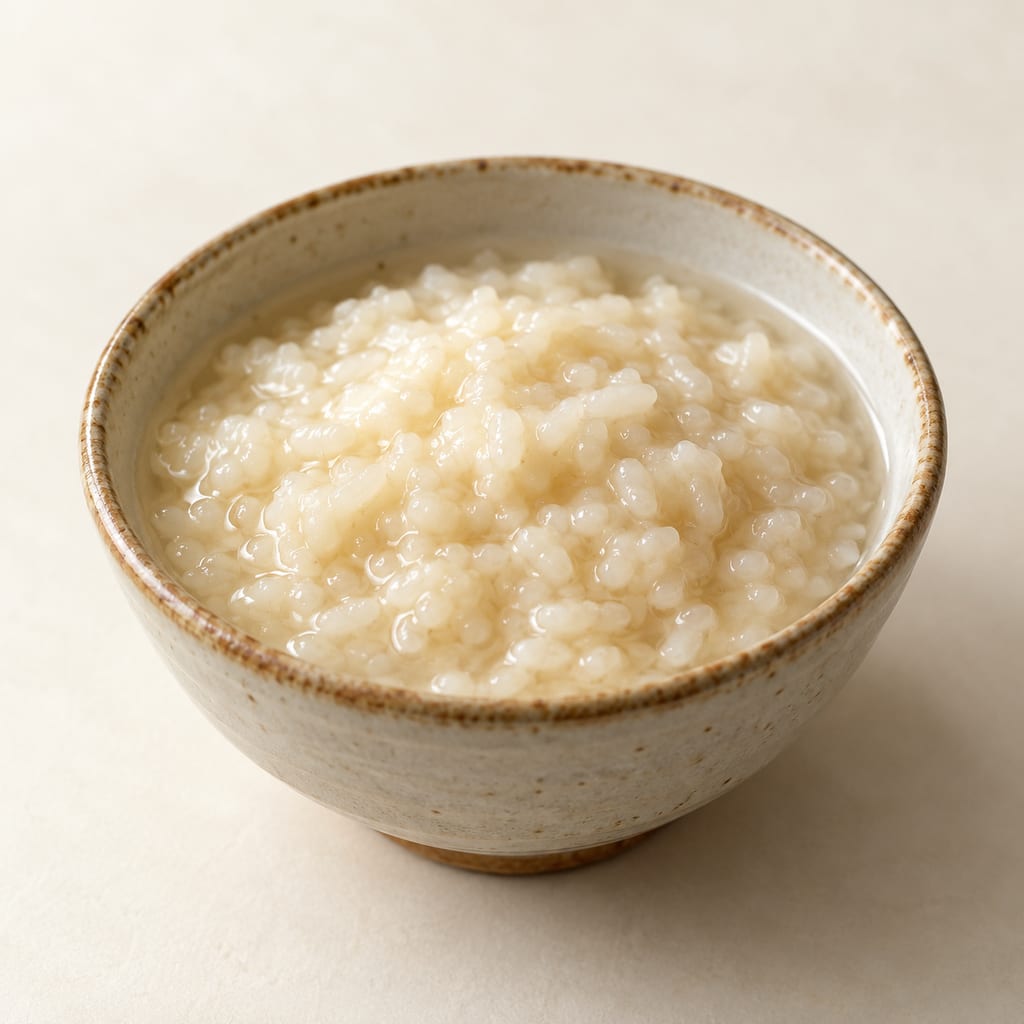
Shio-koji is a Japanese seasoning of rice koji, salt and water, left at room temperature until the grains soften and turn sweet and the mixture thickens.

Japanese reddish-brown vinegar from sake lees matured about three years, turned to vinegar by acetic bacteria; the vinegar of Handa and Edomae sushi rice.
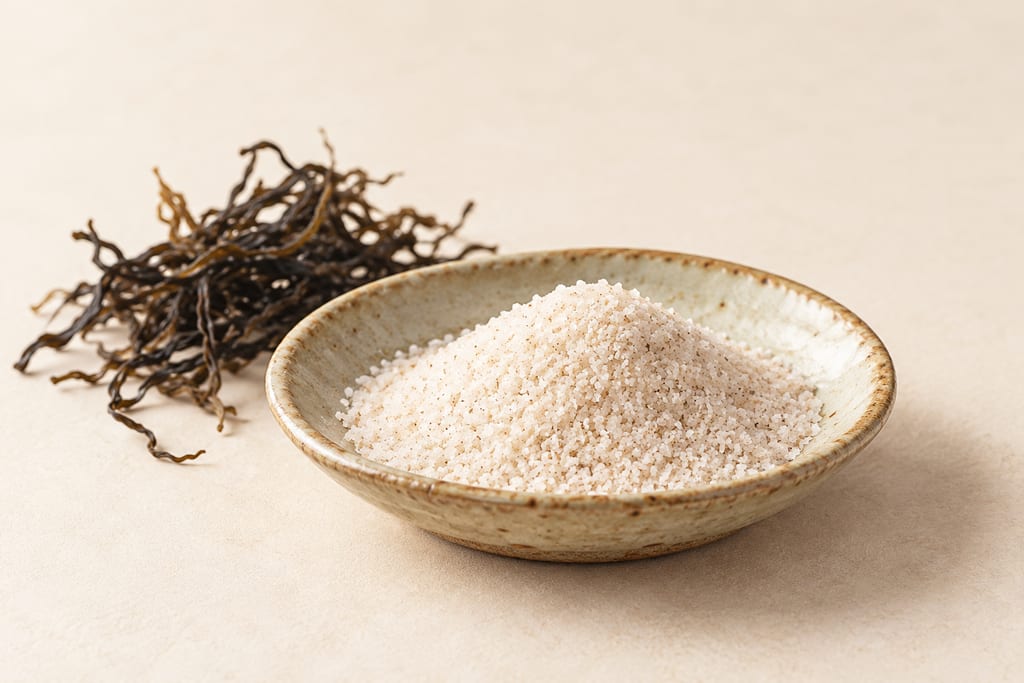
Amabito no Moshio is a modern, pale beige Japanese seaweed salt made from Seto Inland Sea water and hondawara seaweed. Its documented factory method concentrates filtered brine in kettles, then separates and dries the salt.
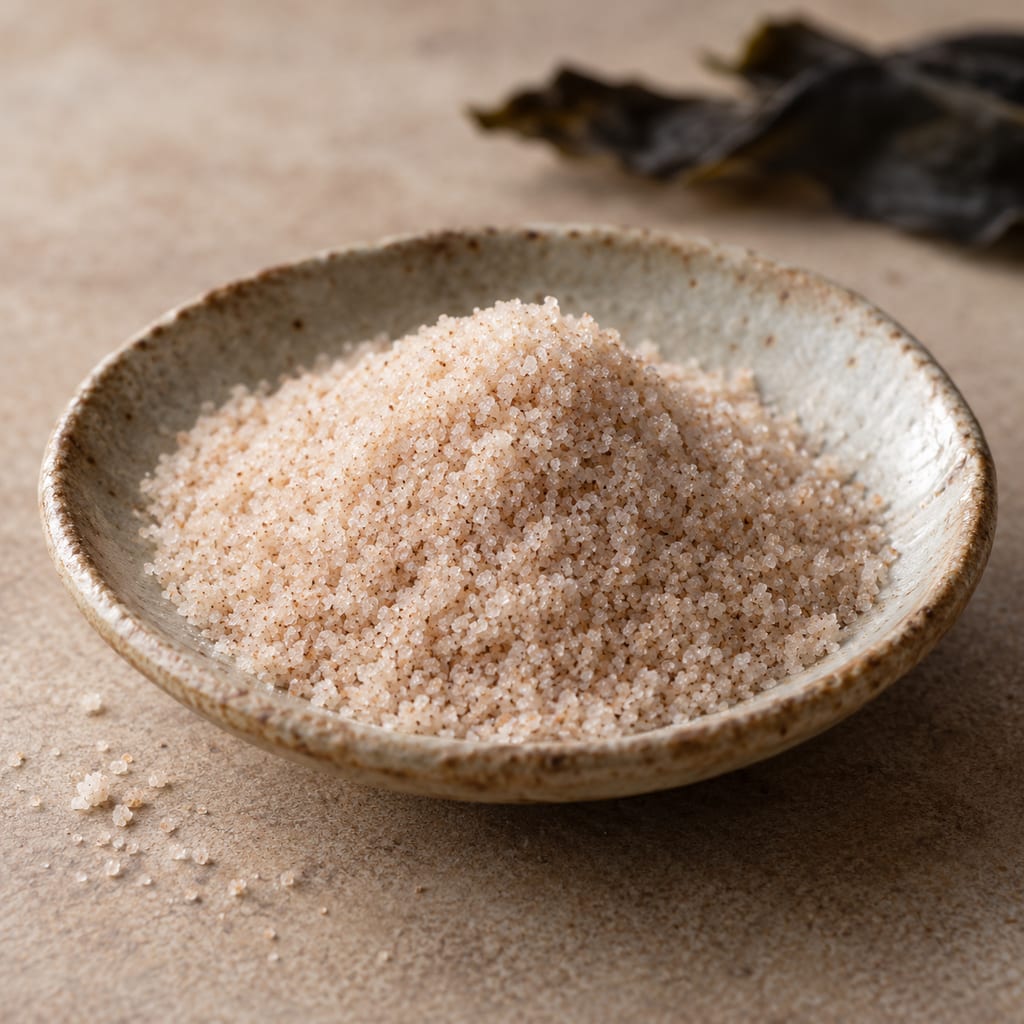
Awaji moshio is a modern Japanese seaweed salt made by TaDa PHILOSOPHY from Awaji Island seawater and seaweed. Its premium process concentrates brine, extracts seaweed flavor, then crystallizes, separates, dries and grades the salt.
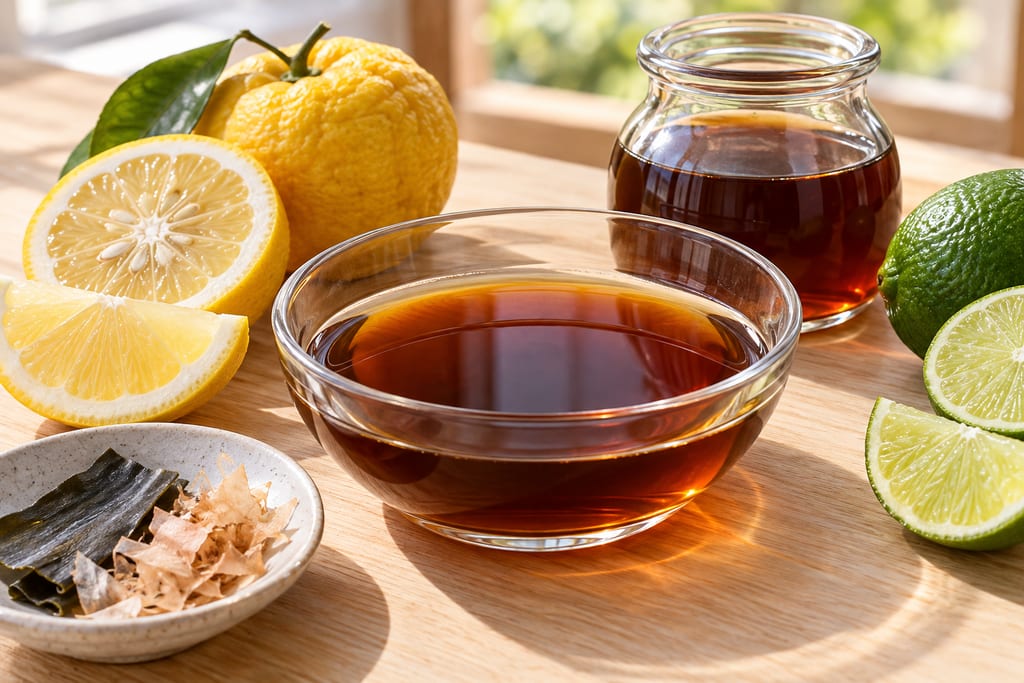
This fresh ponzu-shoyu mixes Japanese koikuchi soy sauce with yuzu or a lemon-lime blend, rice vinegar, water and sugar; optional kombu and bonito give a short chilled infusion.
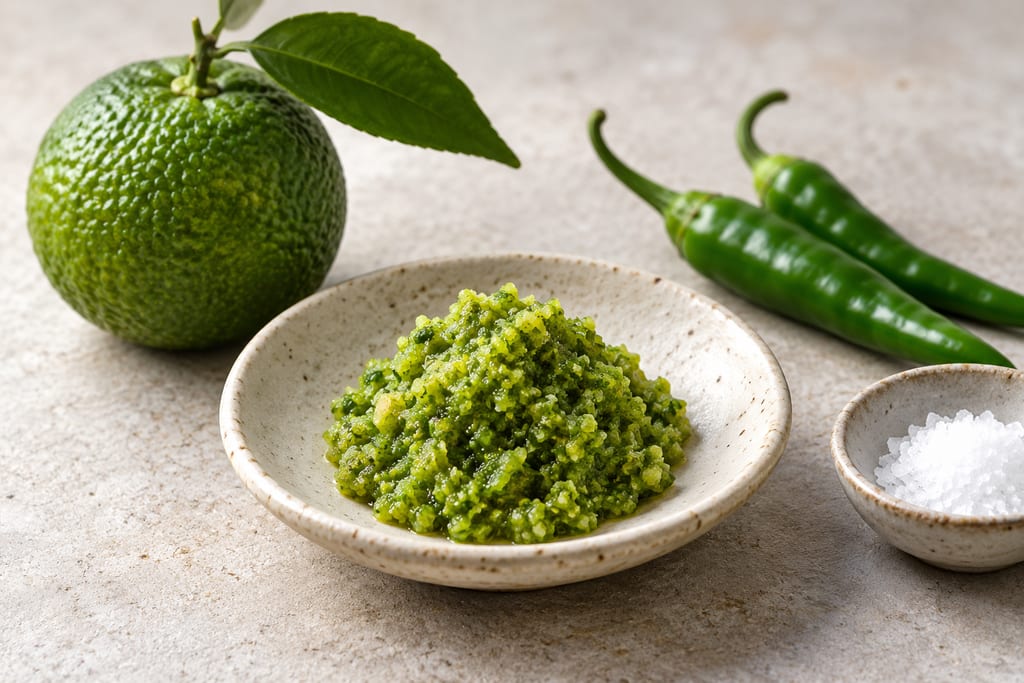
A fresh, uncooked yuzu and green chilli paste inspired by Kyushu’s yuzu kosho, made here as an untested small-batch seasoning rather than a preservation formula.
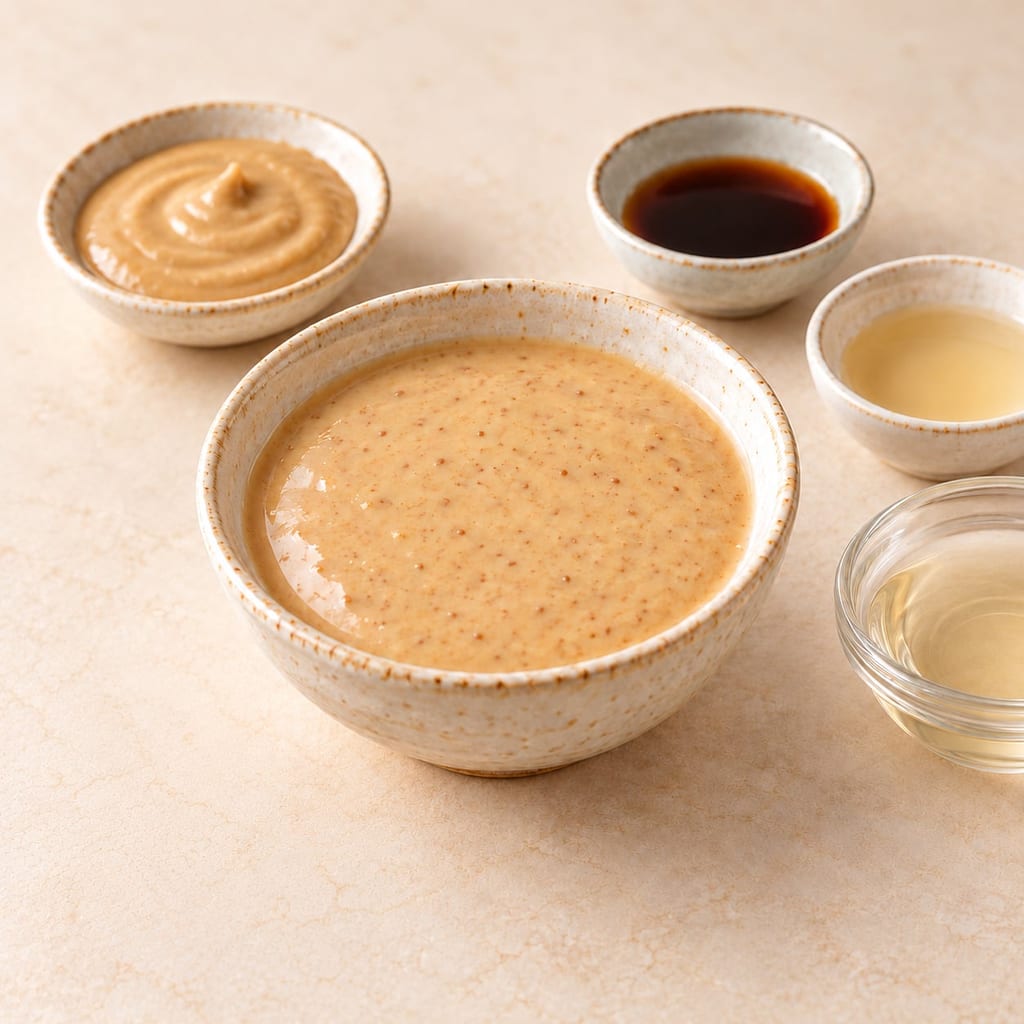
A creamy Japanese sesame dipping sauce with soy, rice vinegar and dashi. Gradual mixing turns the thick sesame paste into a smooth sauce.
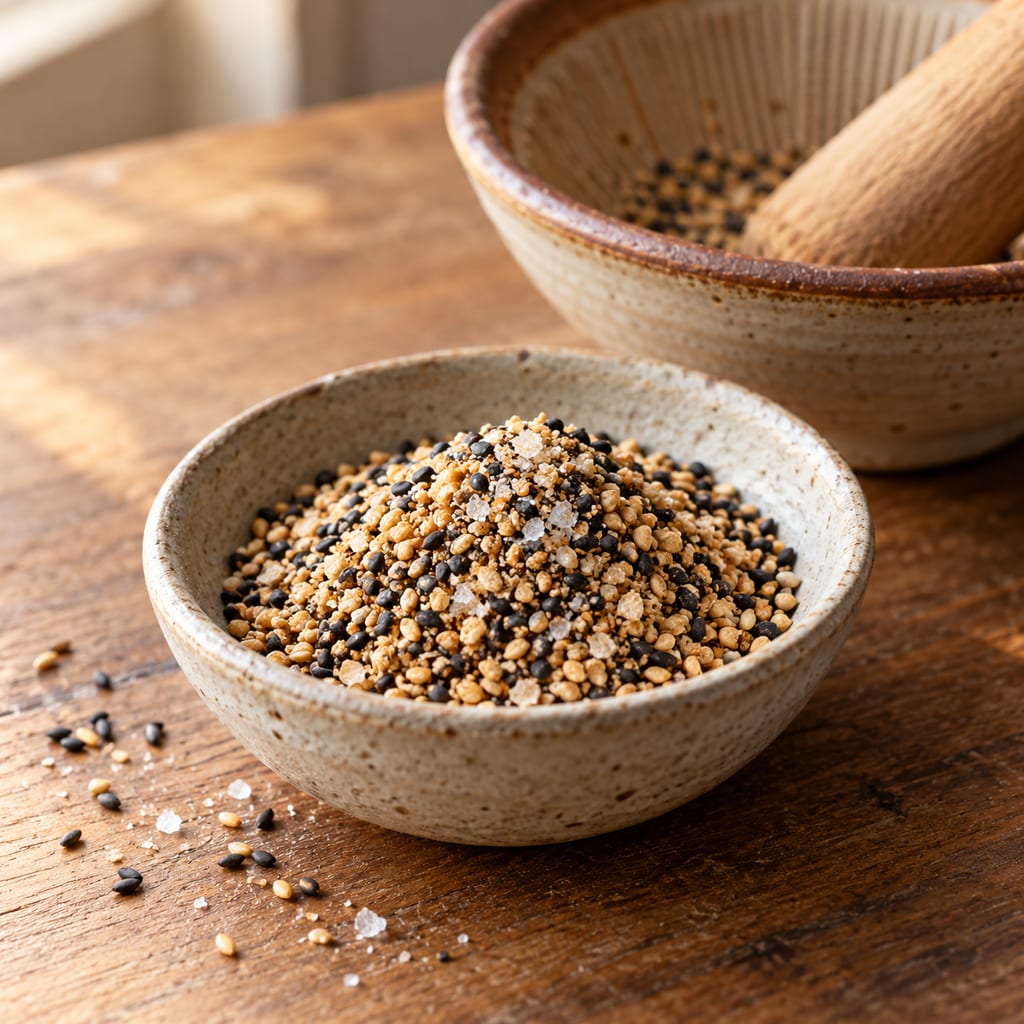
Toasted sesame seeds and sea salt are ground together into a coarse seasoning for rice. This small pan-roasted batch keeps most of the seed texture.
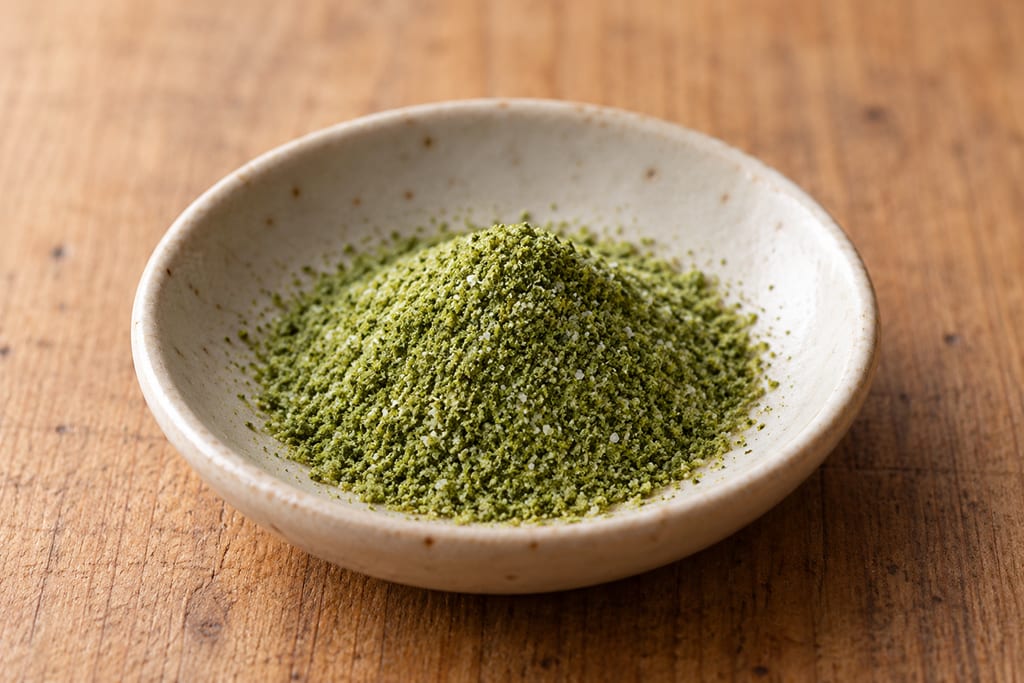
Green tea leaf salt is a dry seasoning made by grinding tea leaves, sieving them and mixing the powder with fine salt. This Japanese-style version follows a documented equal-parts method.
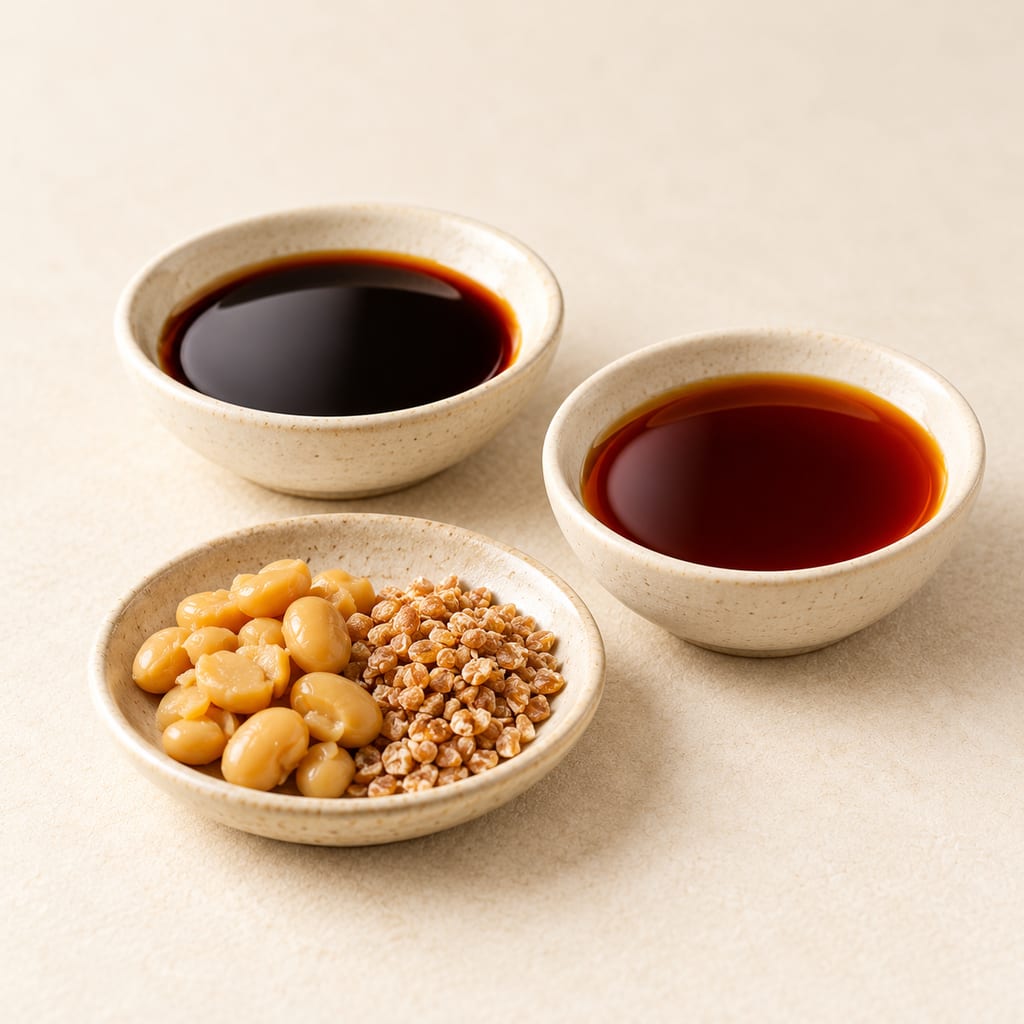
Jiangyou is the Chinese soy sauce family, an umbrella term for light, dark and seasoned sauces made by two main process families: high-salt liquid-state and low-salt solid-state brewing.
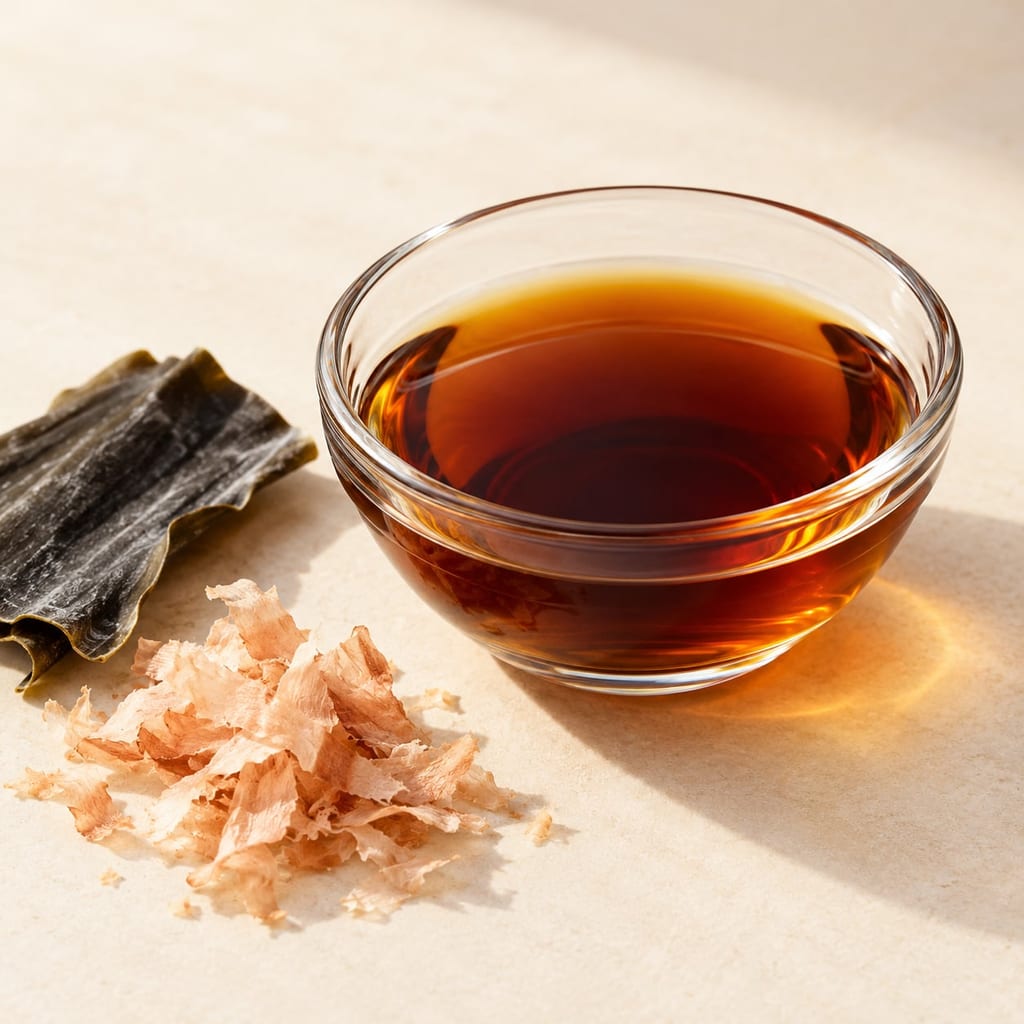
Mentsuyu seasons Japanese noodles with dashi, soy sauce and mirin. Two home formulas are recorded here: a 2012 light-soy and bonito sauce, and a concentrate diluted 1:2 for dipping or 1:4 for hot soup.
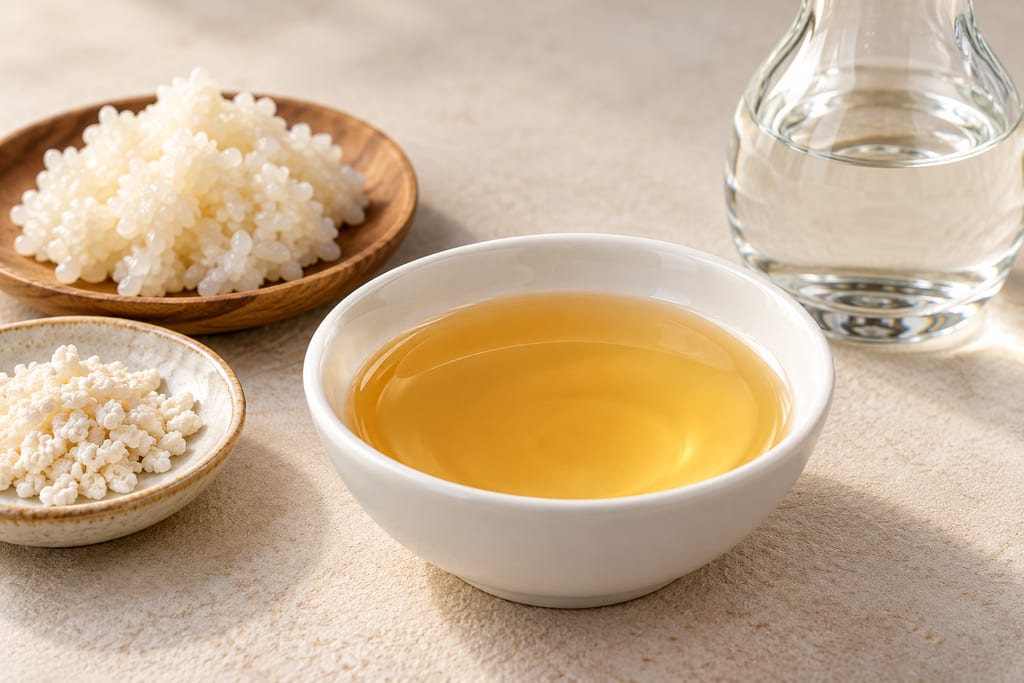
Hon-mirin is a Japanese rice seasoning made by saccharifying glutinous rice with rice koji in shochu, then pressing and usually heating the mash.
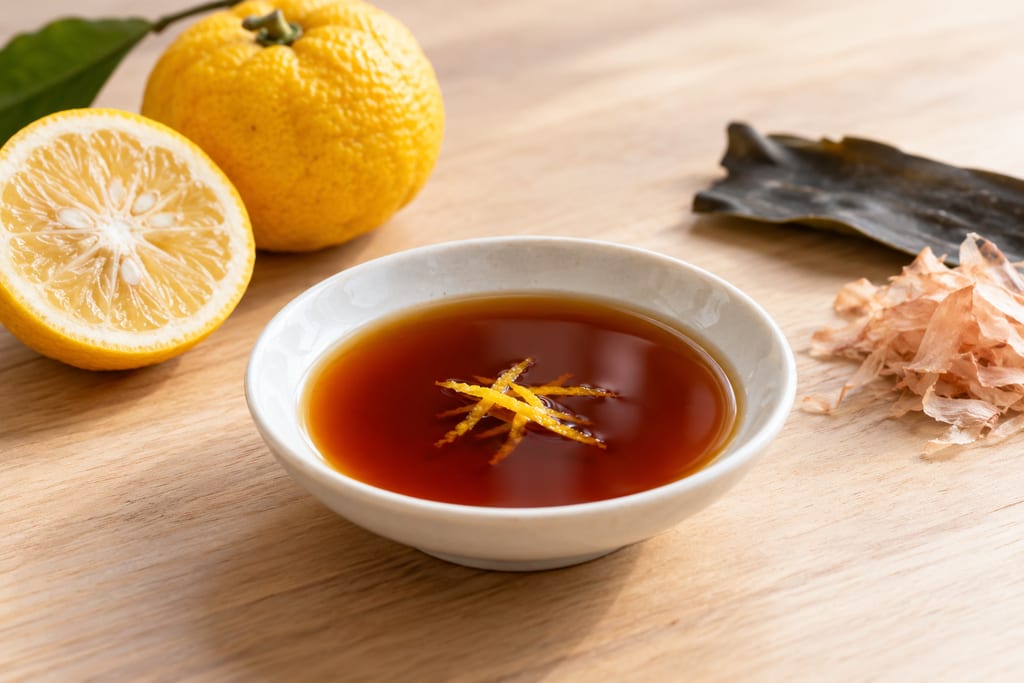
This quick ponzu combines soy sauce, vinegar, hon mirin, kombu, dried bonito and yuzu juice after a brief boil and a warm extraction; the recipe serves five.
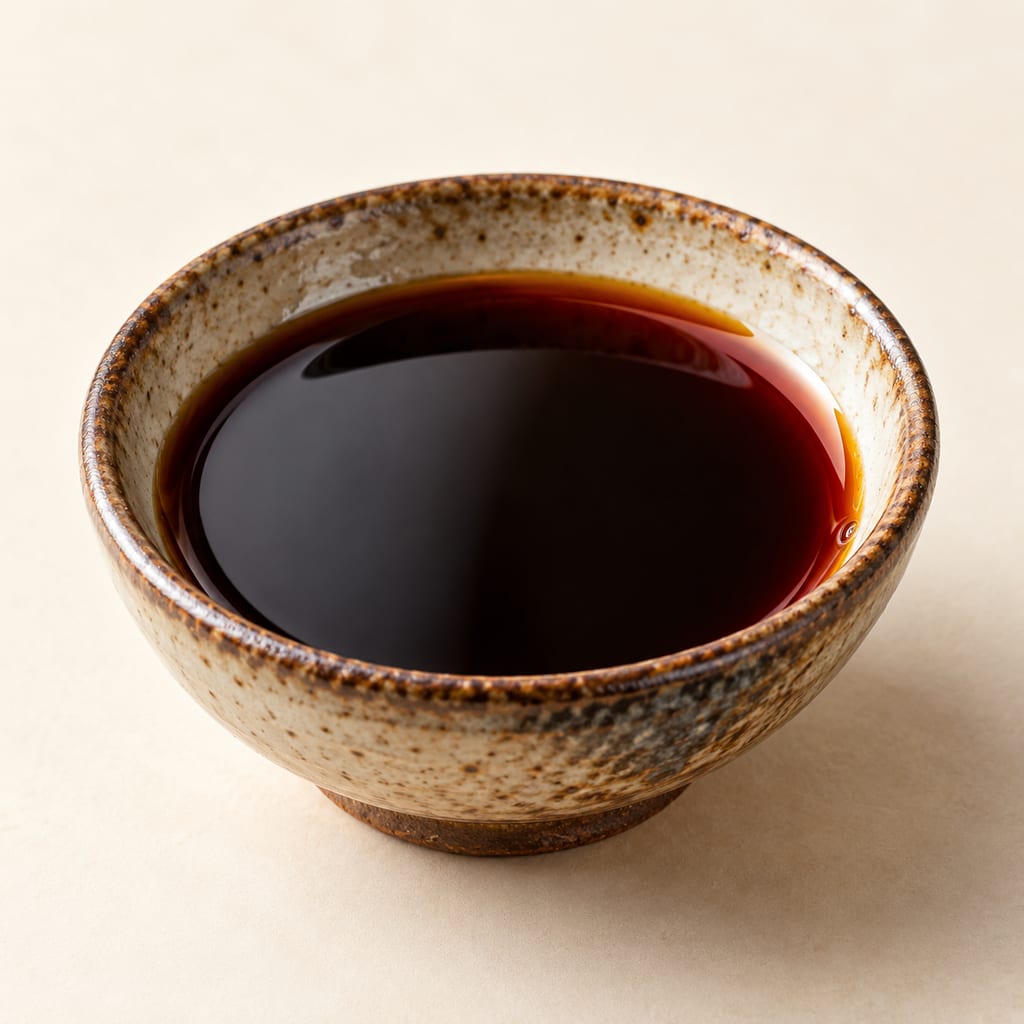
Saishikomi shoyu is a double-brewed soy sauce: a second moromi is made with a finished soy sauce in place of salt water, which makes a dark, concentrated sauce with softer salt.
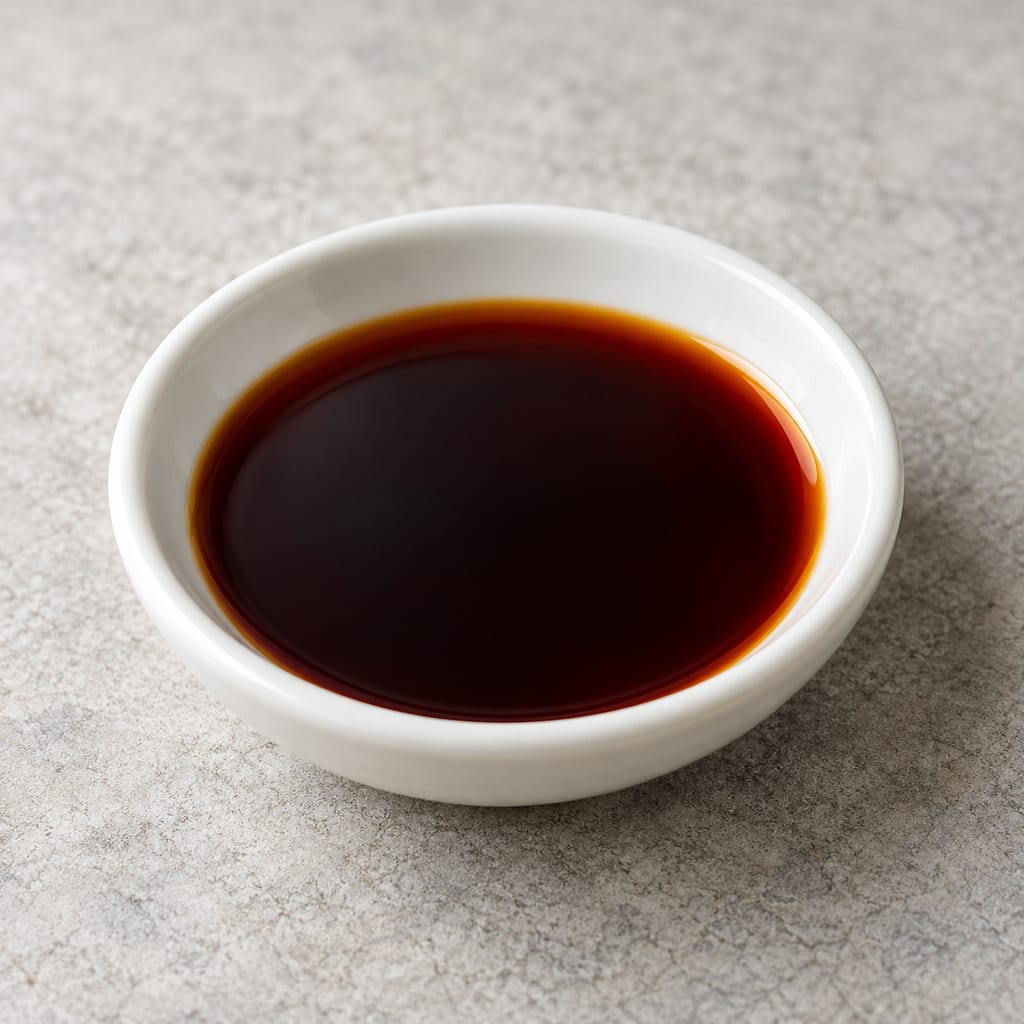
Soy sauce is a salted liquid seasoning made by growing koji mould on soybeans and grain, maturing the mash in brine and pressing out the liquid. Japan's shoyu is the best-documented form.
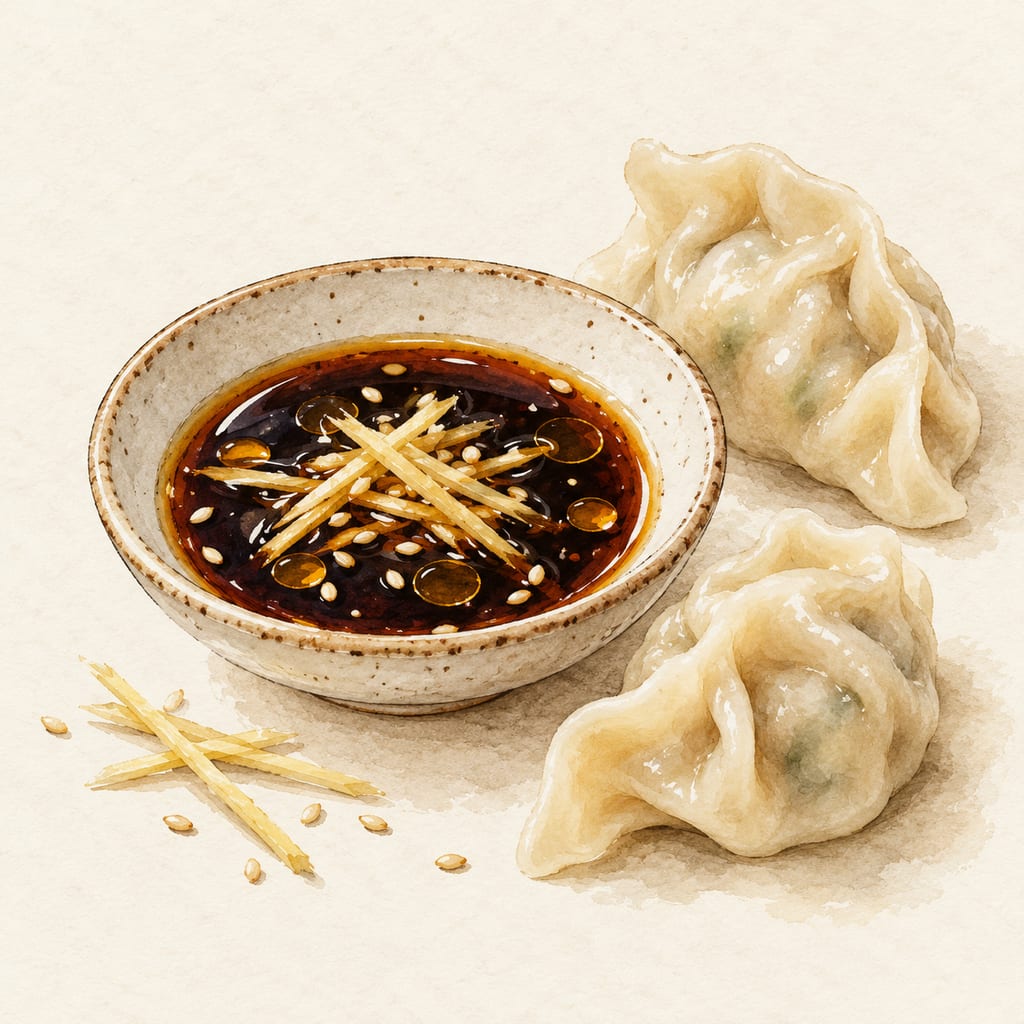
An untested small-batch soy and Zhenjiang black-vinegar dip with ginger and sesame oil, adapted as a modern accompaniment for dumplings or cooked vegetables.
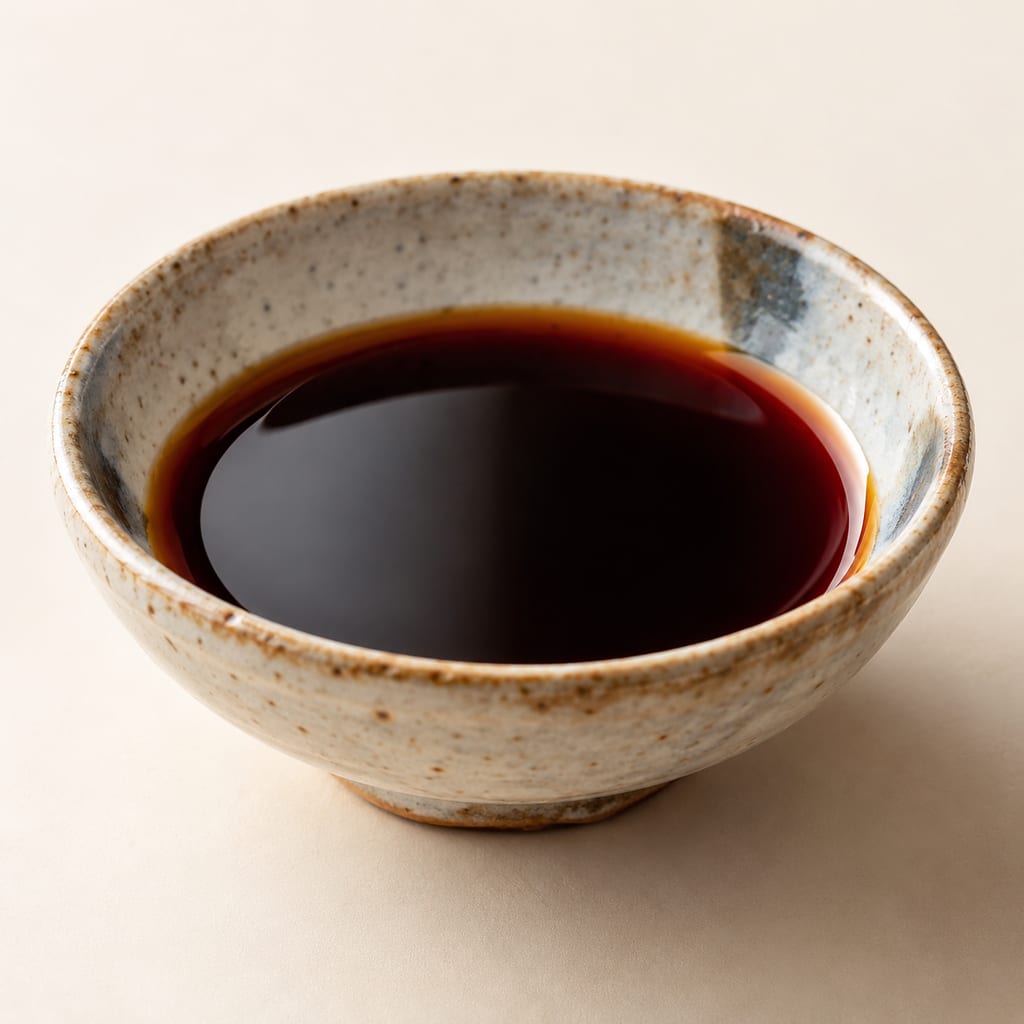
Tamari is the soybean-dominant Japanese soy sauce of the Tokai region, made with little wheat and little brine, and aged longer than koikuchi.

Soft, spreadable Calabrian pork sausage made with a great deal of red chilli and fatty pork, stuffed into natural casings, sometimes smoked and matured while staying soft.

A way to add independent temperature logging to an existing food dehydrator without changing its built-in controls or protections. It is a monitoring method, not a rewiring plan.

Pleurotus cystidiosus is the abalone mushroom, a cultivated oyster-type fungus with dark brown caps that grows more slowly and is more demanding than other Pleurotus species.

A dark, balanced vinegar from Emilia-Romagna made by combining cooked or concentrated grape must with wine vinegar, then acetifying and refining it in wood under a protected specification.

A living dairy inoculum that starts controlled cream fermentation, developing acidity and aroma before sour cream or cultured butter is finished.

A small electric incubator holds jars at a selected temperature for yogurt and other documented warm food preparations. Controls, capacity and vessel arrangement vary by model.

Adygean salt is a seasoned table salt associated with Adygea and the wider North Caucasian culinary tradition. Salt is blended with garlic and a variable selection of herbs and spices; the exact mix depends on the named style and maker.

The African Caesar-group mushroom, Amanita masasiensis, is a wild ectomycorrhizal species of central and southern African woodlands, eaten locally. The genus contains deadly poisonous species, so identification needs care.
No community contributions have been published for this entry yet.
Sign in to contribute. Published comments and photos are free to read.
Marukome Co., Ltd.Method · Safety
麹の調味料を手作りしてみよう!100 g rice koji, 8 g salt and 150 ml soy sauce
Clean lidded container, room temperature away from sunlight, daily stirring
About 1 to 3 weeks; completion judged by sweetness, thickening and soft grains
No numerical temperature or yield given
Cited in: What it is; Why each ingredient and step matters; Reading the jar
Yamato Soy Sauce & MisoMethod · History · Safety
しょうゆ糀Recipe published 4 June 2015
200 g fresh koji with 300 ml soy sauce; 200 g dried koji with 380 ml
About one month before use, longer maturation described
Recommends traditionally brewed whole-soybean soy sauce; warns against reduced-salt
Possible yeast bubbling in extended maturation
Cited in: Where it comes from; How it works; Why each ingredient and step matters; Regional and historical variations; Reading the jar
Ikedaya JozoMethod · Variation
醤油麹の作り方200 g rice koji and 400 ml soy sauce, about 3 to 4 weeks with daily stirring
Refrigerated storage after completion
200 g koji with 500 ml soy sauce, strained into a pouring sauce
Diluted version with salt, water and koikuchi soy sauce
Cited in: Why each ingredient and step matters; Regional and historical variations; How it is eaten and used; Reading the jar
OtamayaMethod · Variation
造り方に関するご質問500 g fresh koji with 500 ml soy sauce, plus 100 ml more after absorption
Daily stirring, about 7 to 10 days at room temperature
Liquid adjusted for dried koji
Cited in: Why each ingredient and step matters; Regional and historical variations
Koji KenteiVariation
しょうゆ麹200 g fresh rice koji, 100 g barley koji, 350 ml soy sauce, 40 g salt
About 15 minutes active preparation, stirred twice daily
Season-dependent maturation of about 5 to 10 days
Cited in: Why each ingredient and step matters; Regional and historical variations
Marukome Co., Ltd.History
『プラス糀 生しょうゆ糀 200g』を新発売Announcement dated 18 June 2012; nationwide launch from late July 2012
Positioned beside the popularity of shio-koji
Commercial ingredients: rice koji, soy sauce, salt, alcohol
Cited in: Where it comes from; Regional and historical variations
Marukome Co., Ltd.Safety · Variation
プラス糀 生しょうゆ糀Declared ingredients: rice koji, soy sauce, salt, alcohol
Wheat and soybean allergen declarations
Cited in: Regional and historical variations; How it is eaten and used; Reading the jar
TakarajimashaHistory
Book listing: shoyu-koji and shio-kojiBook by Kayo Takahashi on shoyu-koji and shio-koji dated 19 June 2012
Cited in: Where it comes from
PiaHistory
Announcement of third printing of a shoyu-koji and shio-koji recipe bookThird printing announced 16 August 2012
Cited in: Where it comes from
Ministry of Agriculture, Forestry and Fisheries of JapanContext
しょうゆはどうやって造られているの?~お家で体験~Soy sauce production: koji grown on soybeans and wheat, then moromi
Brewery shoyu-koji is a separate intermediate
Cited in: What it is; Where it comes from; How it works
Marukome Co., Ltd.Science · Use
麹の酵素とそのはたらきAmylases convert starch to sugars; proteases hydrolyse proteins
Breaking-force reduction of about 38% (chicken, beef) and 18% (pork) measured with shio-koji
Cooking guidance for meat and fish with koji seasoning
Cited in: What it is; How it works; How it is eaten and used
Marukome Co., Ltd.Use
Shoyu-koji recipeSpinach dressed with shoyu-koji and ground sesame
Cited in: How it is eaten and used
IchibikiSafety · Use
Product FAQAbout 5% alcohol in its own shio-koji and shoyu-koji; other makers' koji seasonings differ
Cited in: How it is eaten and used
Food Research InternationalScience
Starter molds and multi-enzyme catalysis in koji fermentation of soy sauce brewing: A reviewRoles of Aspergillus oryzae and Aspergillus sojae in koji
Proteases, peptidases, glutaminases and amylases in hydrolysis
Effect of high sodium chloride on enzymes
Koji-stage hydrolysis separate from moromi fermentation
Cited in: What it is; How it works
Ministry of Agriculture, Forestry and Fisheries of JapanSafety
これで解決!食中毒予防のポイントHand and utensil hygiene
Preventing cross-contamination from raw meat and fish
Discarding mouldy food instead of trimming
Refrigerating foods that need it
Cited in: Reading the jar
UK Food Standards AgencySafety
Storing chilled foods at incorrect temperaturesRefrigerator range of 0 to 5°C
Monitoring actual refrigerator temperature
Living the Koji LifeMethod · Storage
How to Make Shoyu Koji (Soy sauce koji)Living the Koji Life caption: 200 g rice koji and 500 ml regular soy sauce; daily stirring for about 10–14 days until the grains squash easily; refrigeration for up to three months; fresh or dried koji not identified.
Cited in: Creator batches with a fixed sauce measure; Storage claims by source
all day i eat like a sharkMethod
Shoyu koji | recipe for shoyu koji sauce (EASY!)all day i eat like a shark caption: 116 g rice koji and about 115–116 g low-sodium soy sauce; daily stirring at room temperature for about ten days; recommends low-sodium sauce for personal health and flavour; no post-maturation storage.
Cited in: A lower-sodium sauce
Straight Outta OsakaMethod
How to make SHOYU KOJI - Japanese fermented condiment - Japanese Mum CookingStraight Outta Osaka captions: rice koji hand-mixed with soy sauce in several additions, loosely covered away from direct sunlight, stirred daily; hard grains after one week, softened thickened grains after two weeks; creator estimate about one week in summer and ten to fourteen days in winter; no quantities or finished storage.
Cited in: Watching the grains change
East Meets KitchenMethod
2 MASTER JAPANESE CONDIMENTS: SHIO & SHOYU KOJI | 塩麹と醤油麹の作り方East Meets Kitchen caption: rice koji with soy sauce or tamari; flavour comments; no ratio, maturation method, duration or storage in the inspected passage.
Cited in: A passage without a ratio