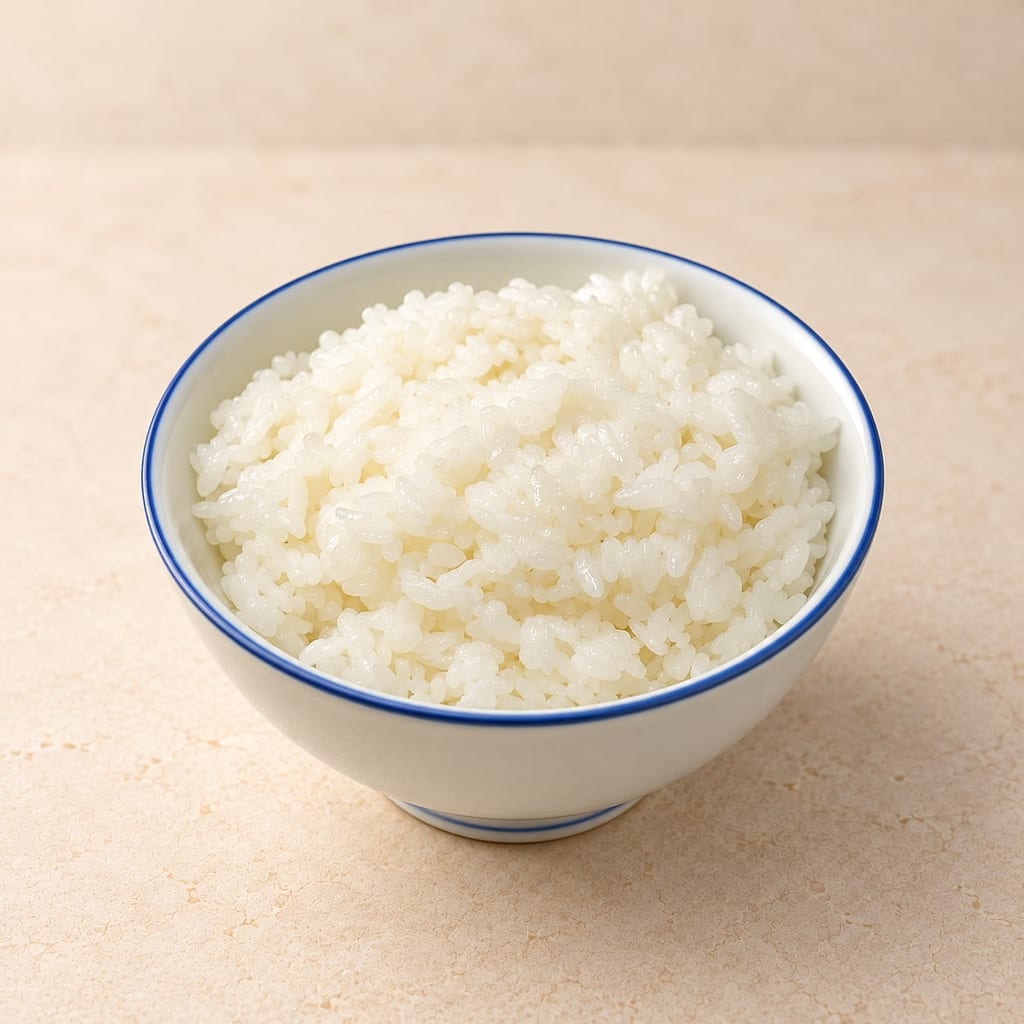
Cooked rice
Cooked rice is rice grain heated in water until its starch gelatinizes; in Thai sour sausage it feeds the bacteria that acidify the meat.
 FermenteaWhere food goes to change
Traditional method
米麹 (kome-kōji) · rice kōji · kome-koji · kome-kōji · 米麹
Rice koji is steamed white rice through which koji mold has grown. It carries the enzymes that turn rice starch into sugar, and it is the starting point of sake, sweet miso, amazake and shio koji.
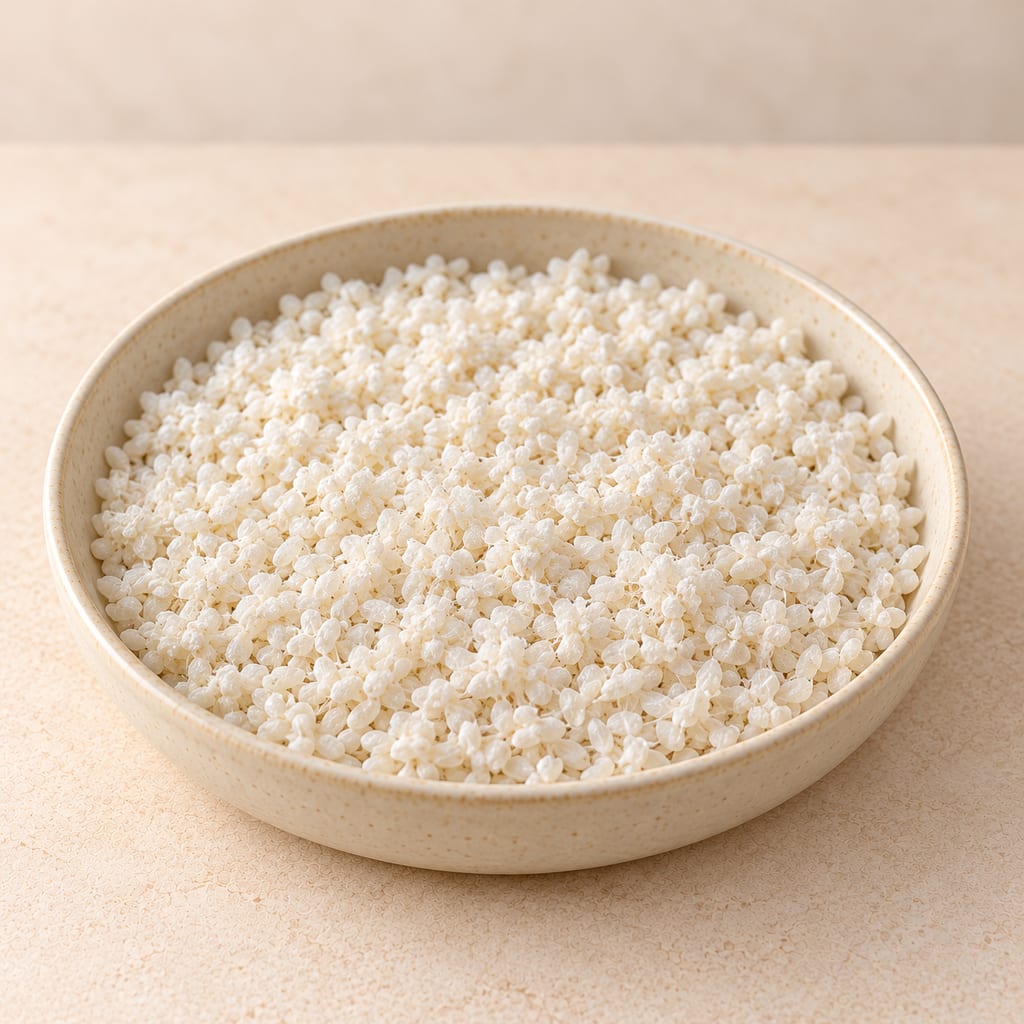
Rice koji is deceptively plain to look at: a layer of steamed white rice whose grains have gone slightly matte, bound here and there by fine white filaments, sometimes dusted with a pale bloom at the surface. It is not a dish and it is not a seasoning in its own right. It is grain that has been used as a growing medium, and what makes it valuable is what is still alive inside it. In Japanese it is kome-kōji (米麹), and in a sake brewery it is usually called simply kōji, because rice is the substrate the trade assumes.
The definition the National Research Institute of Brewing gives is deliberately broad: koji is grain over which a selected food-culture mold has grown, and that one operation sits behind sake, shochu, miso, soy sauce and vinegar. Rice koji narrows it to one grain and, in practice, to one mold. The brewing literature groups the relevant molds under one collective name, kōji-kin: Aspergillus oryzae, Aspergillus sojae and Aspergillus luchuensis, the last covering the black and white shochu molds once written as A. awamori and A. kawachii. Those three were judged important enough that the Brewing Society of Japan designated them the country's national fungi in 2006. The distinction matters practically: the shochu molds carry citric acid and an acid-tolerant amylase, and they acidify the starter and mash in a way that holds back unwanted microbes. A. oryzae on rice brings no such protection, which is one reason the rice koji of sake and sweet miso lives in a narrower temperature and hygiene band than shochu koji does.
What the reader should hold onto is that rice koji is an intermediate. It is made in order to be consumed by something else — a mash, a miso pot, a jar of amazake — and its worth is measured in enzymes rather than in flavour. Finished koji is judged by how far the mold has run through the grain and how far the spores have developed, not by taste. A batch whose spores have been allowed to age and turn black is a failure even though it looks more, not less, dramatic, because those spores will discolour the miso made with it.
Two names that sit next to rice koji cause most of the confusion, so it is worth separating them at the start. The inoculant is tane-koji, seed koji, also called moyashi, tane-moyashi or hana-moyashi — names that come from the way the grain sprouts hyphae and puts out flower-like spores once it is dusted onto a fresh batch. Tane-koji is a product made for one purpose, to supply spores: it is grown on barely polished rice for about a week, roughly three times as long as brewing koji, and then dried so it keeps. Rice koji is the opposite kind of product — grown for a couple of days, used for its enzymes and metabolites rather than for its spores. And shio koji, rice-koji salt seasoning, is a preparation made from finished rice koji blended with salt and left to work; it is a condiment, not a culture.
Koji making in Japan is not folklore with a plausible date attached; it has a paper trail. The oldest record of koji being used to brew alcohol is a report dated 717, sent to the Japanese emperor on the customs of Harima province. A tenth-century dictionary, the Wamyo Ruijusho, carries an entry for kamutachi, a word for koji. The Engishiki of 967 lists production methods for fifteen alcoholic drinks. The BC Centre for Disease Control's guideline puts the development of the koji mold itself in eighth-century Japan, which lines up with those records rather than preceding them by centuries of invisible practice.
The striking thing about the early record is how quickly the work became a trade. Koji making takes real skill, and as breweries multiplied at the end of the Kamakura Period the makers split off into their own shops, koji-ya, and formed local trade associations, koji-za, to defend them. Breweries in Kyoto that began making their own koji drew protests from the association, and in 1419 the government formally granted the koji-za a monopoly on koji making, which effectively barred breweries from producing it themselves. That monopoly lasted twenty-five years. The breweries had ties to the powerful Buddhist temple Enryaku-ji, which successfully petitioned for its abolition in 1444. The guilds themselves faded after the Bun'an Koji Riot, when protesters gathered at Kitano shrine were evicted by government troops. A ingredient so small it can be carried in a cup had become something worth legislating over.
For most of that history the harder problem was not growing koji but keeping a good batch of it. The earliest inoculation was presumably whatever mold arrived on its own; after that a maker carried a successful batch forward as the seed for the next one, the practice called tomo-koji or tomo-tane. Carrying it forward has a limit a premodern brewer would have felt without being able to explain: the microorganisms in a re-used koji drift over time and the quality eventually deteriorates. The solution, said to have been found in the Muromachi Period, sounds almost incidental. Mixing wood ash into the koji raised alkalinity, which discouraged contaminating microbes, supplied minerals that helped the spores form and toughened them for storage, and helped keep the steamed grains from matting together. Reliable spore production is what made a separate seed product possible, and with it a supply chain: specialist ash producers, the hai-ya, sold camellia, oak and evergreen-oak ash to the seed koji houses, who sold to everyone else. Camellia ash was held to be the best; today an artificial ash based mainly on potassium phosphate is used where the real thing risks foreign matter.
By the middle of the Edo Period the split was complete. A secret-technique manuscript, the Geppou Densyo of the Omiya Kichizaemon family, shows that seed koji — also called moyashi — had become a distinct product with its own cultivation methods, and that makers chose their rice by origin rather than by proximity, buying from whichever district gave the best result regardless of distance. Documented Edo-period seed koji houses include Kojiya Sanzaemon, Omiya Kichizaemon and Hishiya Rokuzaemon in Kyoto, with Higuchi Moyashi and possibly Ueda Moyashi in Osaka; another account counts two seed koji shops in Kyoto at the start of the Edo Period and several more by its end. Seed koji was traded across the country, from Michinoku in the north to Hizen in the south. Kojiya Sanzaemon, founded in Kyoto during the Muromachi Period and granted permission to sell seed koji by the Ashikaga shogun Yoshiteru, who ruled toward the end of that period from 1546 to 1565, still operates; it moved to Toyohashi in Aichi Prefecture in 1965 and set up the research company B'ioc in 1992.
Buying the inoculant rather than keeping one became normal only in the Meiji Period, when the sake competitions of the era pushed breweries towards purchased seed koji, and the practice then spread to miso and soy sauce. The number of suppliers rose and has since narrowed: around ten producers from the Meiji Period onward, fifteen still in the Showa Period even as large soy sauce makers brought production in-house, and about six companies serving the whole country today. A Bunka-period note from between 1804 and 1818 marks a change of taste that is easy to miss and important to a modern reader: koji had always produced yellow flowers, meaning spores, but recently white koji without spores was considered superior. From that point brewing koji was being made by methods close to current practice, grown for its enzymes and stopped before it fruited heavily.
The science arrived from outside. A. oryzae was isolated from rice koji and named Eurotium oryzae in 1876 by Hermann Ahlburg, a foreign advisor then working in Japan, and the name was later changed. Attempts at pure culture were led by the large soy sauce houses from the late Meiji into the Taisho Period, and the term koji-kin itself only came into use in the Showa era, once isolates from koji and from seed koji were shown to fall into several taxonomic groups. Seed koji designed around a chosen strain became general after the Second World War. There is also a deeper, still unsettled history underneath all of this: A. oryzae and Aspergillus flavus are reported to have differentiated around 1000 BC, roughly when rice cultivation reached Japan, and whether A. oryzae is a domesticated mold or was simply selected during koji making is an open question. What is not in doubt is the mold's standing today: it is classified at the lowest biosafety level under Japanese regulations and appears on the United States FDA's GRAS list, and the non-production of aflatoxin by A. oryzae and A. sojae has been shown by molecular methods.
The seed koji that a modern maker buys is therefore the end of a long specialisation. It is supplied by dedicated manufacturers to brewers rather than made in the brewery, and it is sold by use — for sake, miso, soy sauce or shochu — with further sub-types sorted by raw material, by taste between sweet and dry, and by colour between red and white series. A home cook choosing a packet is choosing a designed strain, not a generic mold.
Growing koji is an aerobic mold fermentation, and the point of it is enzyme production. Aspergillus oryzae sends hyphae into the rice grain while the mold is still young, and as it grows it secretes enzymes into the substrate. The two groups that matter are amylases, which break rice starch down into glucose and oligosaccharides, and proteases, which break grain protein into amino acids and peptides — the savoury compounds the Japanese literature calls kusumoto, the taste we know as umami. The enzymes, not the mold itself, do the work later in the brewery or the miso pot. This is why koji is treated as an ingredient with a potency rather than a food with a shelf date: a batch is bought and used for how much enzymatic activity it carries.
That single fact explains most of the apparent fussiness of the process. Temperature is not being managed for the mold's comfort; it is being steered towards one enzyme family or the other. Running the incubation warm, at 35 to 40 °C, pushes production towards amylase, which is what a saccharifying koji needs — the koji for sweet miso, for amazake, for a sake mash that has to make its own sugar. Running it cool, with the rice held between 27 and 30 °C, favours protease, which is what a salt-flavoured miso wants, because that style is being grown for protein breakdown rather than for sugar. The baseline in a commercial culture room is around 30 °C, nudged two to five degrees above it for sweet miso koji and below it for salt miso koji. Above 40 °C enzyme development halts, which is why the ceiling is treated as absolute rather than advisory. At 50 °C and above the Aspergillus dies outright.
The mold also generates a great deal of heat as it grows, and a pile of inoculated rice is a poor conductor. Heat begins to build roughly ten hours in, and if the mass is left alone the interior climbs past the ceiling while the outside is still comfortable. Every handling step in the traditional sequence is a response to that. The pile is broken up and re-piled at ten to twelve hours after inoculation to even out the temperature. It is mixed by hand at sixteen to eighteen hours to release heat and to separate the grains so they do not clump into a solid mass the air cannot reach. The mixing is repeated at about twenty-six hours, and only then is the koji spread into shallow trays, where the ratio of surface to volume makes the temperature controllable at all. Even after that, trays are restacked and rearranged because conditions differ between one tray and the next. The traditional names for this work — hikikomi for bringing the steamed rice into the koji room, kirikaeshi for the break-and-repile, morikomi for piling, teire for mixing, tsumikae for rearranging, de-koji for finishing — are a record of hands-on labour, not of a room being left alone.
Humidity follows the opposite arc. The room starts very wet, around 98%, because germinating spores and running hyphae need moisture; the air is then ventilated down to 15% or lower later in the process, which both encourages spore formation and provides the oxygen and carbon dioxide exchange the mold needs. The guideline expresses the same thing from the product's side: humidity and water activity should fall as fermentation progresses, and the finished koji should have reached a water activity of about 0.80 when it is complete at 42 to 48 hours. A koji that stays wet is a koji where bacteria get a chance.
The grain itself is part of the mechanism. Sake rice is milled to expose the shinpaku, the opaque white, loosely structured centre of the grain, precisely because that loose structure lets the koji mold grow into it. Rice that has been polished to a different degree, or a rice with a different starch structure, gives a different koji, and the historical seed koji makers knew this well enough to buy their rice from distant districts chosen for the quality it produced.
One hazard belongs to this section rather than to the method, because it is a consequence of the biology rather than of a step. A maker may be tempted to keep a little of a superb batch and use it to start the next one. The literature advises against it in two registers at once. Operationally, the microbial population of a re-used koji drifts and quality deteriorates. Safety-wise, backslopping can introduce wild strains of Aspergillus that carry toxins, which is why the guideline treats obtaining Aspergillus from an approved commercial source as a critical control point and states plainly that small-scale operators should not be manufacturing their own koji mold. Aflatoxin is not a concern when the starter is commercially sourced.
The published sequence is short to read and long to execute. Rice is soaked, steamed, cooled fast, inoculated, then watched and handled for two days. The quantities are the part the safety and brewing literature does not supply: the BC CDC guideline gives times and temperatures but no batch size and no inoculation rate, and the brewing glossary gives only the traditional unit of work, the koji-buta, a rectangular stackable wooden tray typically filled with about 1.5 kg of koji. A brewery's koji room is a set of those trays, and the scale of a batch is the number of trays it can hold and tend. What the guideline does give is a quality figure for the inoculant itself: commercial starter runs at roughly one thousand colony-forming units per gram of bacterial contaminants against mould spores in excess of five to thirty billion per gram, a deliberately overwhelming dose of the intended mold.
Soaking comes first, at eight to seventeen hours. The reported range is wide because recipes do not state the conditions, and the guideline adds a control for the long end of it: if soaking runs beyond four hours, the rice should be soaked in acidified or refrigerated potable water. The purpose is to bring the grain to the water content at which it steams evenly and, later, at which the mold can run through it. A Japanese producer's home protocol soaks washed rice overnight and steams it for about fifty minutes.
Steaming is the first hard number in the safety guideline. Rice is steamed or boiled for a minimum of one hour at a minimum temperature of 74 °C; soybeans, a denser substrate, need three. The grains have to be cooked through but must stay whole, because a split, pasty grain packs together and starves the bed of air.
Cooling is the critical control point of the whole process, and it is the step home cooks most often treat casually. Cooking methods that eliminate bacteria — steaming, boiling, boiling under pressure — are acceptable, but spore-forming bacteria such as Bacillus survive cooking as spores and can germinate and produce heat-stable toxins while the cereal sits warm. So once the internal temperature of the rice falls below 60 °C, it must be brought to 35 °C within two hours, before any spores go in. Cooking under pressure lessens the risk. The inoculation itself happens at or below 35 °C, because higher temperatures damage the mold on contact; optimal growth thereafter is 35 to 38 °C.
Inoculation is done with tane-koji, and the form of the packet changes how it is handled. The manufacturers sell two: granular seed koji, which is the dried grain bagged as it came out of the culture and is used for koji made by hand, and powder seed koji, in which the spores are separated out by sieve and the count adjusted with gelatinised starch, used for machine koji making. Nearly all miso and soy sauce brewing now takes the powder; sake is mostly powder among the large makers; only shochu keeps a high share of the granular form. After dusting, the rice is kneaded and mixed thoroughly, the step called tokomomi, so the spores sit evenly on every grain rather than colonising one corner of the tray. The one per-weight rate any source here gives is a producer's home example: one to two grams of starter to a kilogram of rice. That packet is sold as a named white koji mold strain called Yukikomachi for amazake and miso work, and the same firm estimates a seventy-gram bag against two hundred kilograms of raw rice, a figure its own per-kilogram example does not quite support.
From there the process is heat management, as described above: hikikomi into the koji room, the rice set on wood and covered with a food-safe cloth, incubation near 30 °C in the band suited to the enzymes wanted, kirikaeshi at ten to twelve hours, hand mixing at sixteen to eighteen hours and again near twenty-six, transfer to shallow trays after the first day, and tray rearrangement as the temperature across them diverges. The room is held below 40 °C throughout, with gas exchange, and the koji is never allowed above that.
Completion is judged on the mold rather than on the clock. Fermentation is finished when the spores have developed, which typically takes 42 to 48 hours but varies with the Aspergillus strain chosen, and the batch is stopped before those spores age and turn black. The finished product is de-koji, taken out of the koji room, and it is perishable from that moment: refrigerated or frozen if it is not used immediately, with a refrigerated starter kept for roughly a month, and a process control that allows holding at 10 to 15 °C at 50% humidity for up to a year. The producer whose home protocol is quoted above keeps finished rice koji about two weeks refrigerated, and home growers who dry koji to keep it report that dried koji cannot be used again to start a new batch.
Since the 1970s most commercial koji has been made on automated, ventilated equipment rather than in wooden trays, which removes the hand mixing but not the underlying problem of metabolic heat and enzyme steering. The tray method survives as the reference case, and the Japan National Tax Agency's brewing sheet presents it as such: steamed rice enters the koji room, spores are worked through it, the growing bed is loosened and divided among shallow trays, and the worker adjusts by feel and by thermometer because conditions differ between trays and within a pile.
Rice koji is one point in a family of koji, and the differences between them are functional rather than cosmetic. Barley koji is the same operation on groats, and the substrate change carries through into the products it serves. Koji made on soybeans, or on a mix of soy and grain, sits on the protease side of the temperature dial. Korean and Chinese counterparts solve the same problem with different apparatus: doenjang and gochujang formulas use rice koji alongside meju or malt, and Chinese qu and Korean nuruk are mixed starter blocks that carry molds, yeasts and bacteria together rather than a single selected Aspergillus. Rice koji is the purified end of that spectrum — one grain, one mold, chosen for a defined enzyme profile — which is exactly why it can be dosed predictably and why it behaves so differently from a wild starter.
Within rice koji itself, the strain is a design decision, and the trade makes that decision for the buyer. Koji strains are bred for the product they are used for, so a sake koji and a miso koji are not interchangeable, and the manufacturers' catalogues are sorted accordingly: separate seed koji for sake, miso, soy sauce and shochu, with miso further split by raw material between rice, soybean and barley miso, by taste between sweet and dry, and by colour between red and white series. The Brewing Society of Japan's national fungi list separates A. oryzae from A. sojae and from the black and white shochu molds for the same reason. A shochu koji of A. luchuensis makes citric acid and an acid-tolerant amylase, and that citric acid acidifies the starter and the mash so that harmful microbes are held back; a rice koji of A. oryzae brings no such protection, which is why the cooling window and the commercial-starter rule matter more in the sake and miso tradition than the equivalent steps look in shochu. Household packets carry strain names rather than species: a well-known Japanese home starter is sold as a pure white koji mold called Yukikomachi, meant for amazake and miso, and its white colour is a strain property rather than a different organism.
Temperature is the second axis of variation, and it is the one a careful home maker can actually control. The same rice, the same strain, run at 27 to 30 °C, gives a protease-rich koji suited to salt-rich miso. Run at 35 to 40 °C, it gives an amylase-rich koji suited to saccharification — amazake, sweet miso, a sake mash. The historical Bunka-period preference for spore-less white koji over spore-bearing yellow flowers is a third axis: growing for enzymes and stopping early, rather than growing on to heavy fruiting. Seed koji production is the deliberate extreme of the other direction, about a week on rice polished to only around 97% — barely milled at all, because the bran carries the potassium, magnesium, phosphorus and protein the mold needs to grow and to set spores — in a very humid room, with all effort spent on conidia instead of on enzymes.
Grain preparation is a fourth axis, and it runs in opposite directions depending on which product is wanted. Sake brewers mill rice hard to expose the shinpaku, the loose white core, because that structure lets the mold penetrate the grain; seed koji makers polish almost not at all because they are farming spores and need the minerals in the bran. A whole-grain, minimally polished rice and a heavily polished sake rice will not give the same koji even under identical conditions.
Rice koji earns its place because it converts starch to sugar on demand, and almost everything it is used for depends on that one capacity. In sake brewing it is the step that makes fermentation possible at all: the koji supplies the amylases that free rice starch as fermentable sugar while yeast turns that sugar to alcohol, and the brewer's formulation expresses how much of the total rice is going to be koji, a ratio the trade calls koji-buai. Enzyme activity is even recycled deliberately — in kumikake, the enzyme-rich liquid drawn from the early starter is poured back over koji and steamed rice to push saccharification further.
In miso, rice koji is the saccharifying half of a two-part system. Rice-koji miso pairs the grain koji with soybean protein, and the temperature choice described earlier decides which half of the reaction dominates: cool-grown, protease-rich koji for a salt-forward miso, warm-grown amylase-rich koji for a sweet one. Longer-holding miso styles use koji starters with higher protease levels. A producer's home formula is straightforward on the point: a kilogram of soybeans, a kilogram of the rice koji just grown, 500 g of salt with 400 g worked into the koji and 100 g dusted over the surface to keep mould off, a little raw miso with live microbes added, then weighted and aged for half a year to a year.
In amazake, rice koji is the entire process: cooked rice and koji are held warm and the koji's enzymes do all the work, producing a sweet, non-alcoholic drink that the Japanese agriculture ministry lists among traditional Japanese beverages. The home version runs on the koji's own temperature envelope rather than the mold's: about 200 g of rice koji with 200 ml of water for a thick one or 600 ml for a drinkable one, held at 58 to 62 °C for six to eight hours with a stir every couple of hours. The producer's warning explains the band. At 65 °C and above the diastatic enzyme can be inactivated and the drink never sweetens; at 50 °C and below contaminating bacteria propagate and it turns sour. Around 60 °C is where the saccharification reaction runs best. Shio koji is the same enzymatic logic turned into a marinade, koji blended with salt.
The quick garum methods that circulate in modern fermentation writing specify rice koji rather than an unspecified koji, and the reason is the same as in miso: the rice koji is supplying amylase and protease activity to a substrate that needs both. Where a recipe names rice koji, substituting a different koji changes the enzyme balance the recipe was written around.
For the reader who wants to taste the finished product rather than make it, amazake is the most direct route, and it is also the clearest demonstration of what koji does: no yeast, no alcohol, only enzymes dismantling starch into sugar. For the reader who wants to cook with it, shio koji is the practical form, and the reason it tenderises and deepens flavour is the protease activity that was deliberately encouraged or suppressed during the two days the koji was growing.
The figures recorded here come from a commercial food-safety guideline and from Japanese brewing and brewing-supply references, and they describe a controlled process rather than a tested household one. No set temperature for a koji muro and no tested home chamber design appears in the sources read, so the timings and temperatures should be read as the parameters of the documented process, not as a verified domestic recipe. Home growers discuss holding 29 to 30 °C in a humid chamber and treating an ammonia smell as a warning sign, but those are anecdotes, not controls.
The one inoculation rate available is a supplier's home example, one to two grams of starter per kilogram of rice, and that same supplier's estimate of how much rice a seventy-gram bag covers does not agree with its own per-kilogram figure. Treat the rate as a starting point from a packet's instructions rather than as a measured standard. The safety guideline's spore counts describe commercial starter quality, not a dose.
The sources also give no water activity figure for storage abuse, no shelf life for koji left at room temperature, and no typical koji-buai percentage. The dating of the wood-ash technique to the Muromachi Period, around six hundred years ago, comes from a producer's account rather than a dated document, and the count of about six seed koji houses serving the whole country is a manufacturer's statement in a 2021 review. The divergence date of roughly 1000 BC for A. oryzae and A. flavus is reported as a finding still under debate, and whether the mold was domesticated or merely selected remains open. The claim that koji mold does not produce aflatoxin is supported by molecular work on A. oryzae and A. sojae as reported in that review, but the review itself is a manufacturer's perspective on its own trade.
Koji mold was developed in 8th-century Japan; the oldest record of koji used to brew alcohol is a report dated 717 on the customs of Harima province.
Scaling: unknown
Spore-forming bacteria such as Bacillus may grow and form heat-stable toxins if the cooked cereal is held too long between 60 °C and inoculation.
Hazard sourceRe-using a previous batch of koji as starter (backslopping), or producing the mold oneself, can introduce wild Aspergillus strains that contain toxins; aflatoxin is not a concern with commercially sourced Aspergillus starter.
Hazard sourceMetabolic heat from the growing mold can push the mass past 40 °C, halting enzyme development; 50 °C and above kills the Aspergillus.
Hazard sourceSteam or boil the rice for at least one hour at a minimum temperature of 74 °C.
Control sourceCool the cooked rice to 35 °C within two hours of its internal temperature falling below 60 °C, before inoculation.
Control sourceInoculate with Aspergillus spores from an approved commercial source.
Control sourceHold the culture room below 40 °C with controlled humidity and gas exchange, and mix the koji to release heat and add oxygen.
Control sourceRefrigerate or freeze finished koji; the guideline's process control also allows 10 to 15 °C at 50% humidity for up to one year.
Control sourceCool the cooked rice within two hours once its internal temperature falls below 60 °C, before any spores are added. Bacillus spores can germinate and form heat-stable toxins if the cooling step is uncontrolled; cooking under pressure lessens the risk.
Use Aspergillus from an approved commercial source. Do not manufacture your own koji mold and do not back-slop a previous batch: wild strains of Aspergillus that carry toxins may be introduced.
Keep the koji below 40 °C throughout. Above that enzyme development stops, and at 50 °C and above the mold dies.
Finished koji is a perishable product: refrigerate or freeze it if it is not used immediately.
Aspergillus oryzae — The yellow koji mold grown through steamed rice; the species the brewing glossary names as the one mainly used for koji making, and the mold used for rice koji in sake, miso and amazake work.
Aspergillus sojae — One of the three species grouped as koji-kin and used mainly in soy sauce rather than in rice koji for sake or sweet miso.
Aspergillus luchuensis — The black koji mold of shochu and awamori, written in older Japanese sources as A. awamori, with A. kawachii as its white mutant; it carries citric acid and an acid-tolerant amylase, and is not the mold for ordinary rice koji.
Finished koji is judged by spore development rather than by a fixed clock; the time varies with the Aspergillus strain. Aged spores that turn black are undesirable because they discolour the miso made with the koji. Refrigerate or freeze finished koji if it is not used at once; the guideline's process control also allows storage at 10 to 15 °C at 50% humidity for one year.
The guideline dates the development of koji mold to 8th-century Japan; the Sakeology report cites a 717 record of koji used to brew alcohol. This is a country-level association, not a claim about a specific locality.
Kyoto is where the koji-za guilds protested brewery-made koji in 1419 and where documented Edo-period seed koji houses worked; it locates the trade, not a particular batch.
Kojiya Sanzaemon, a Kyoto seed koji house, moved to Toyohashi in 1965 and founded the research firm B'ioc in 1992; this locates one supplier of the inoculant, not the preparation itself.
Cooked rice is rice grain heated in water until its starch gelatinizes; in Thai sour sausage it feeds the bacteria that acidify the meat.
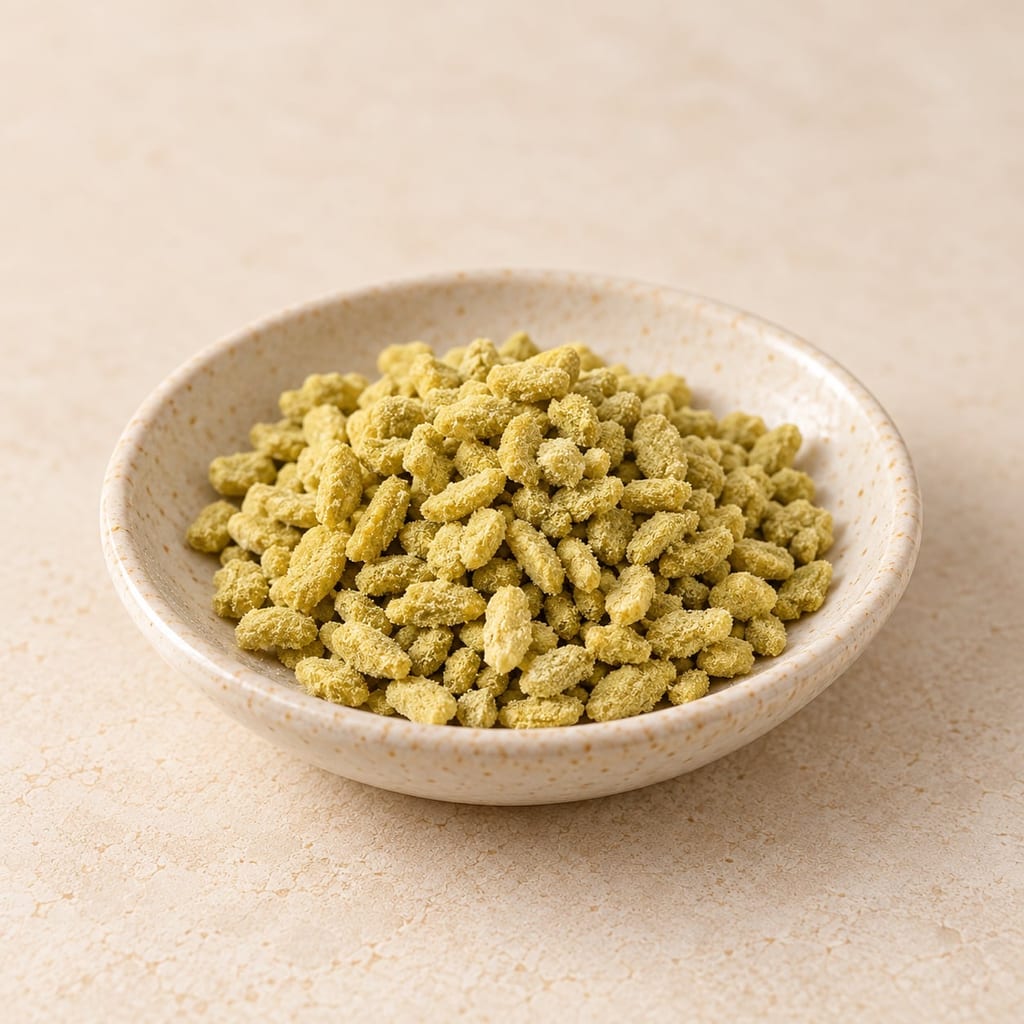
Yellow-koji starter is the spore inoculum of the yellow koji mold — Aspergillus oryzae and the related A. sojae — sold by specialist tane-kōji houses to grow koji for sake, miso and soy sauce.
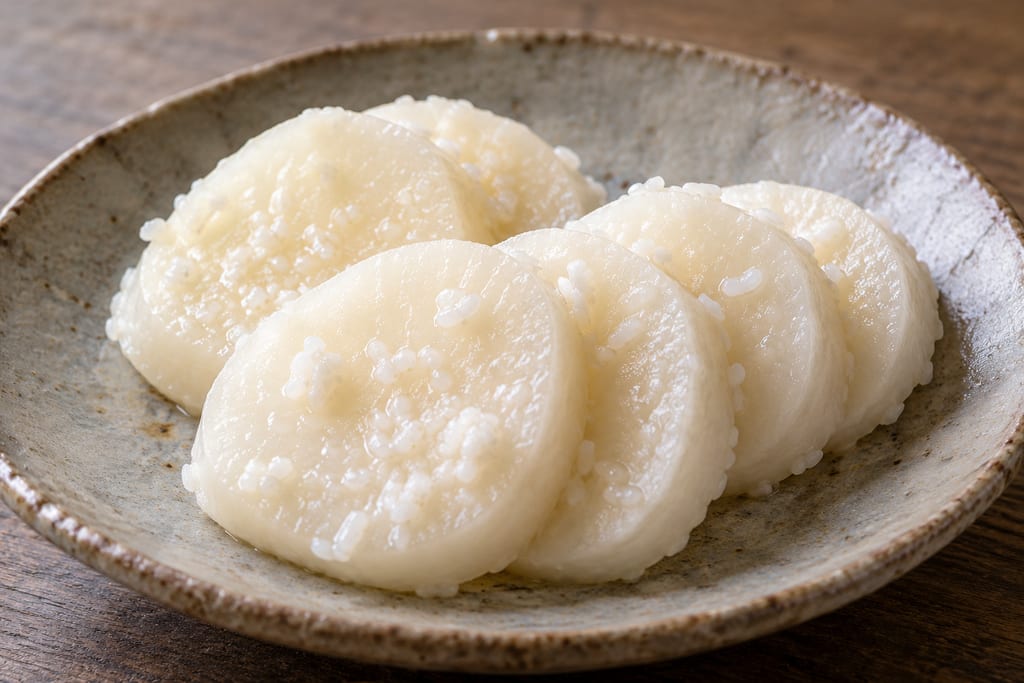
A sweet, crisp Japanese daikon pickle from Tokyo's Nihonbashi district, made by salting fresh radish and dressing it in rice koji, sugar or koji amazake without the heavy drying used for takuan.
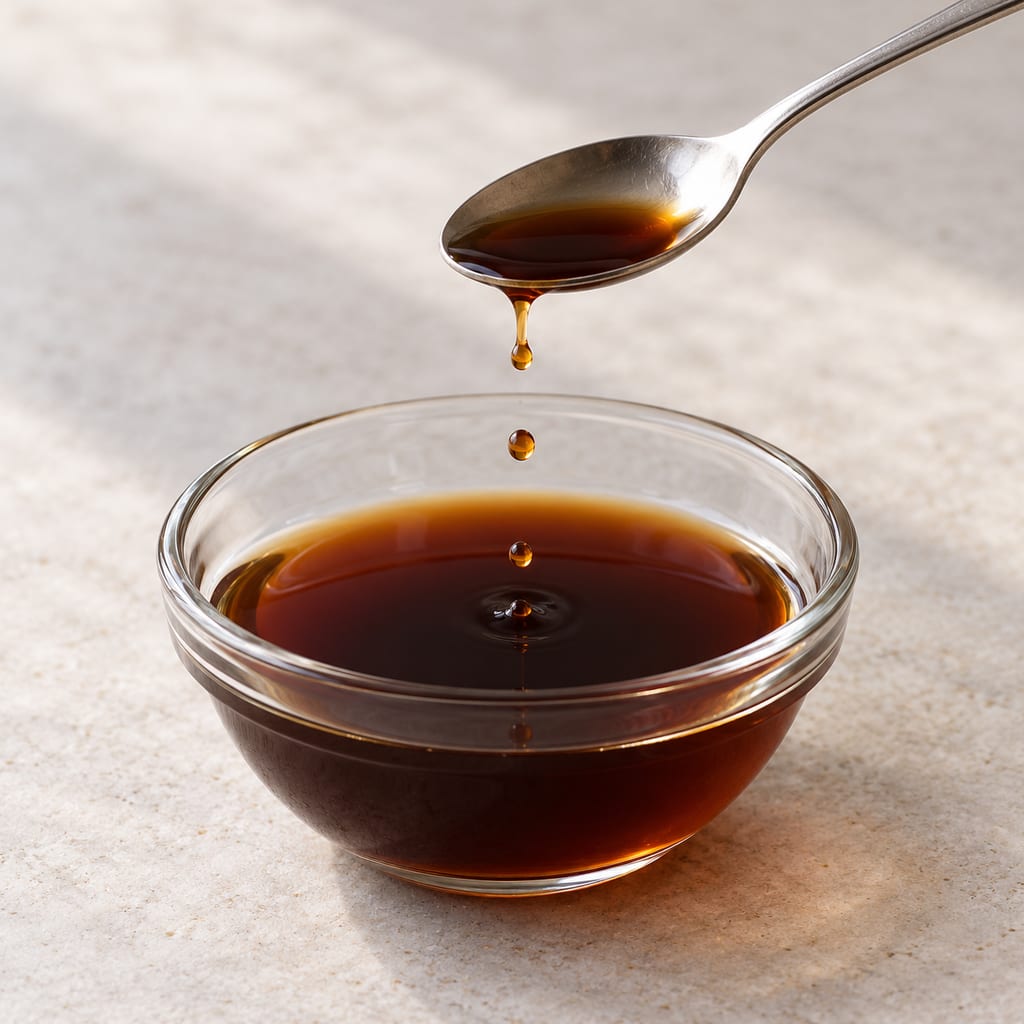
Cooked-bean koji garum is a dark liquid seasoning made from soft-cooked beans, rice koji, salt and water. A long warm hold lets koji enzymes break down the mash.
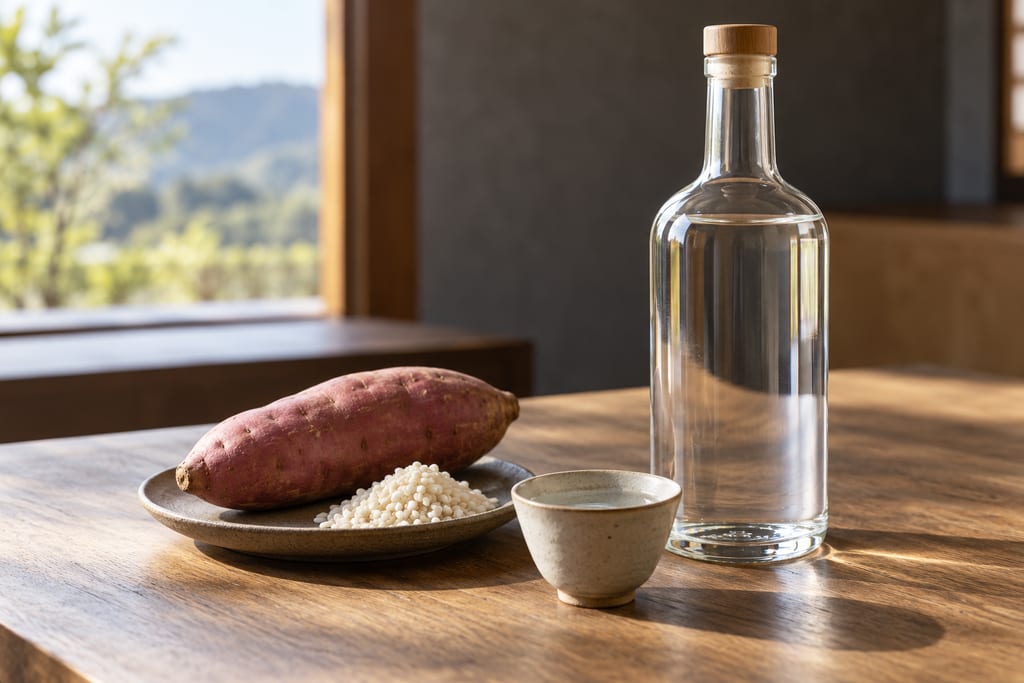
Japanese pot-distilled spirit made by fermenting sweet potatoes, rice or barley with koji and yeast in two stages, then distilling the mash once so the ingredients' aroma survives.
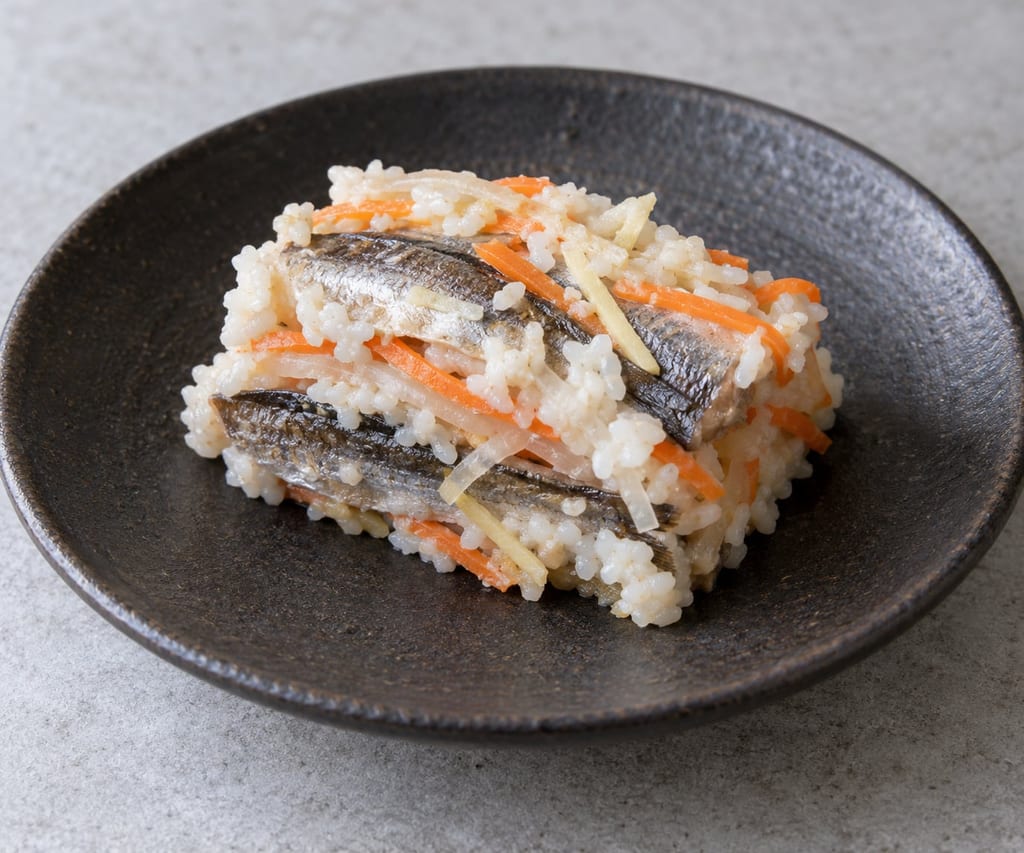
Hokkaido izushi layers fish, vegetables, rice and kōji for cold-season lactic fermentation. This MAFF recipe uses small hatahata with a vinegar pretreatment; it is one regional household formula, not a universal izushi method.
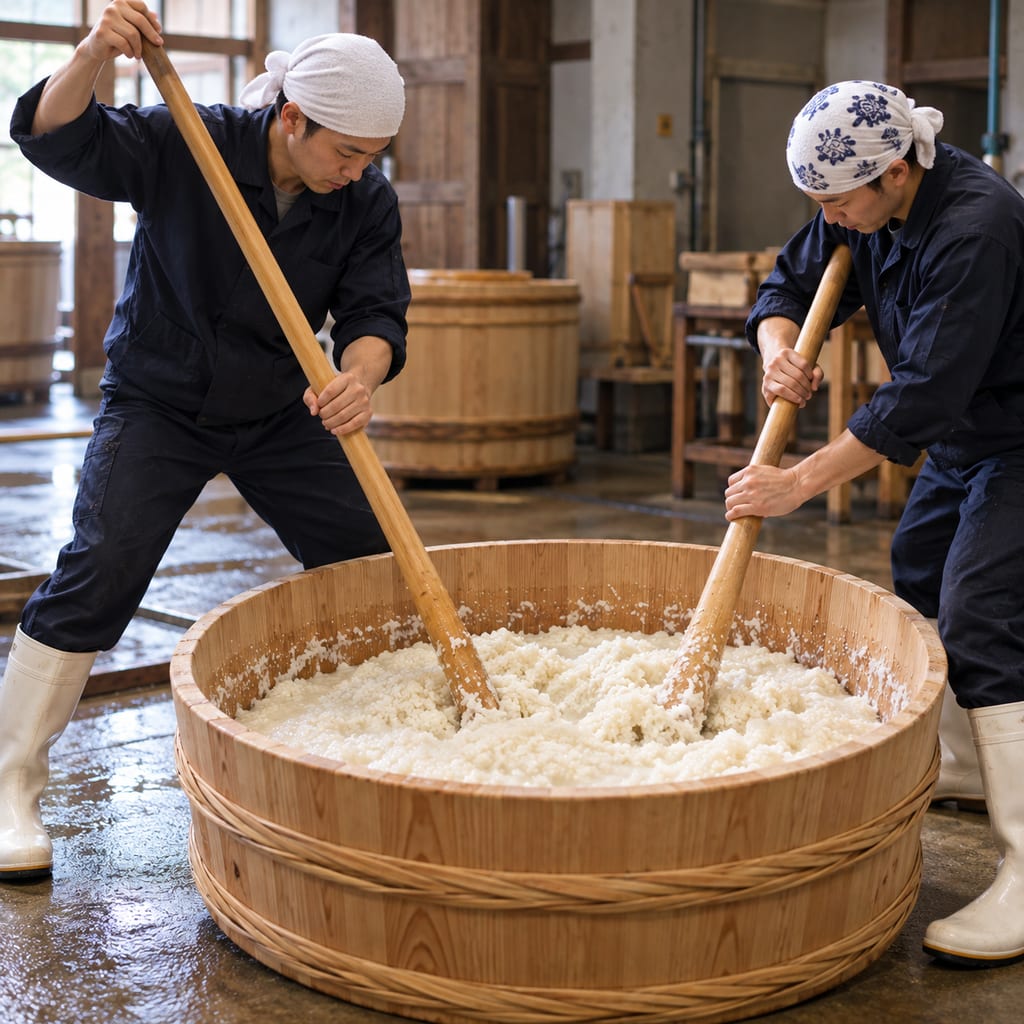
Traditional Japanese sake yeast starters made from steamed rice, rice koji and water, acidified by naturally growing lactic acid bacteria. Kimoto grinds the rice mash with paddles; yamahai omits that step.
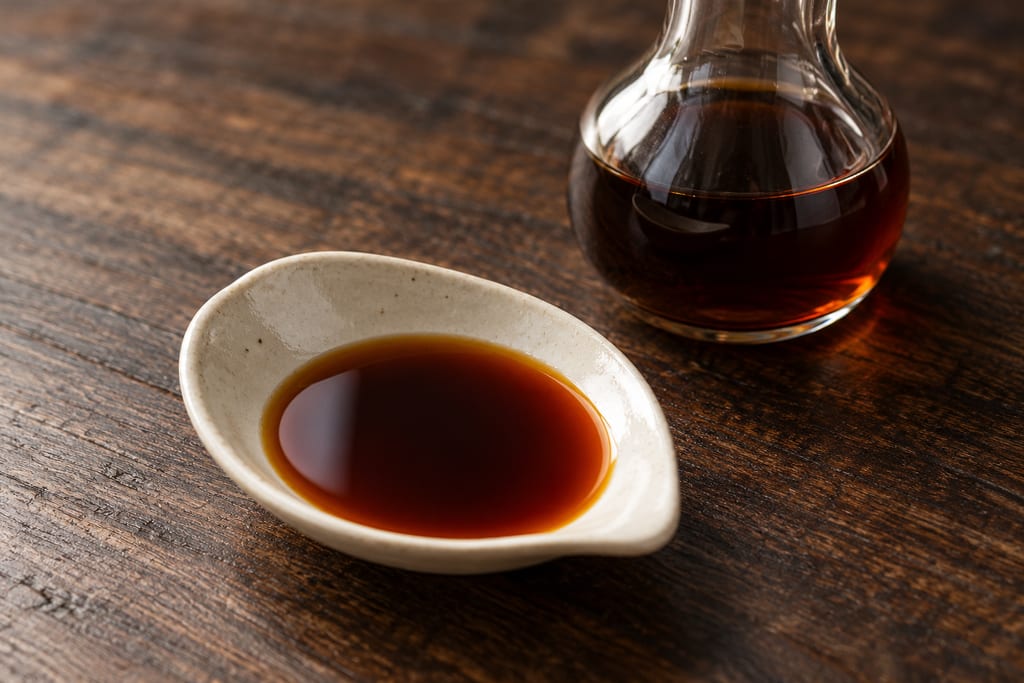
Meat-trim koji garum is a savoury liquid seasoning made by holding meat scraps with rice koji, salt and water at steady warmth before straining the mash.
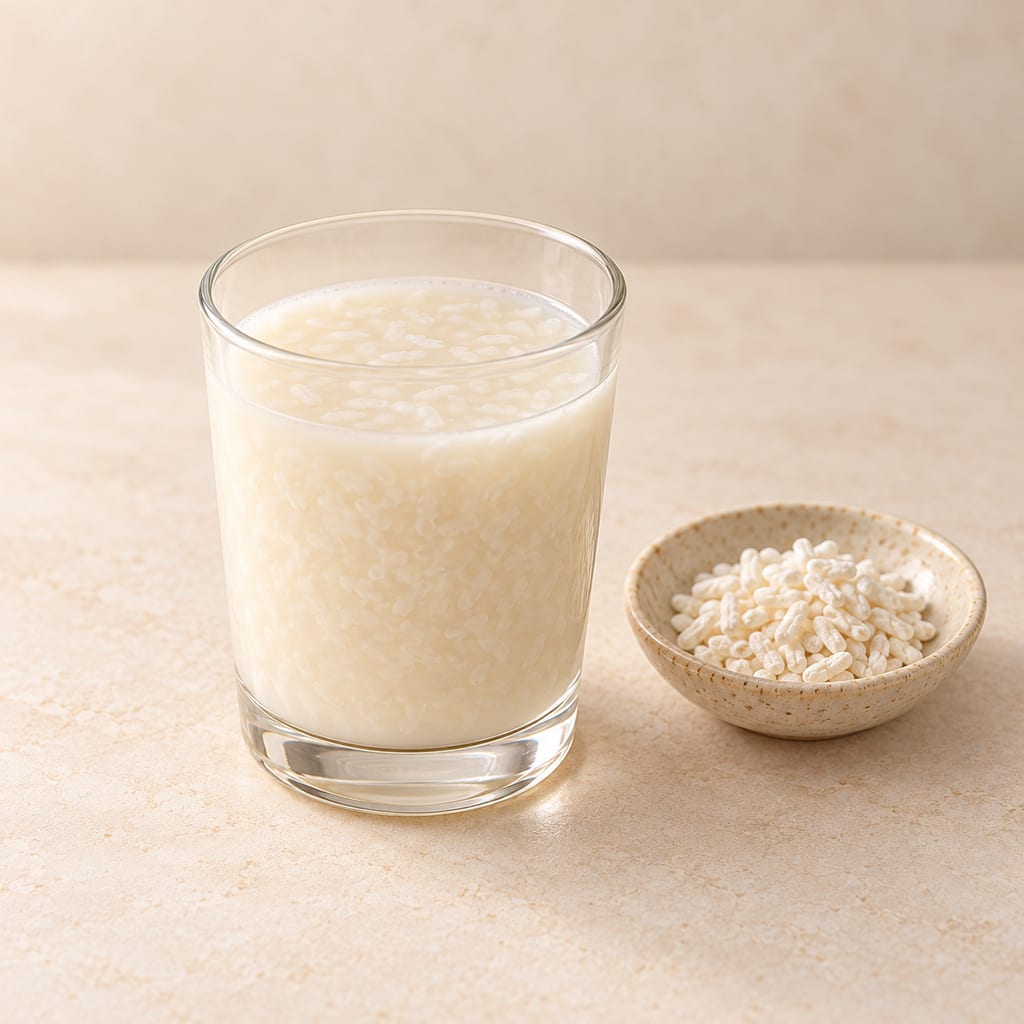
Cooked rice, rice koji and water are held warm for hours so koji enzymes turn the rice starch to sugars, giving a naturally sweet Japanese drink with no added sugar and no second fermentation.
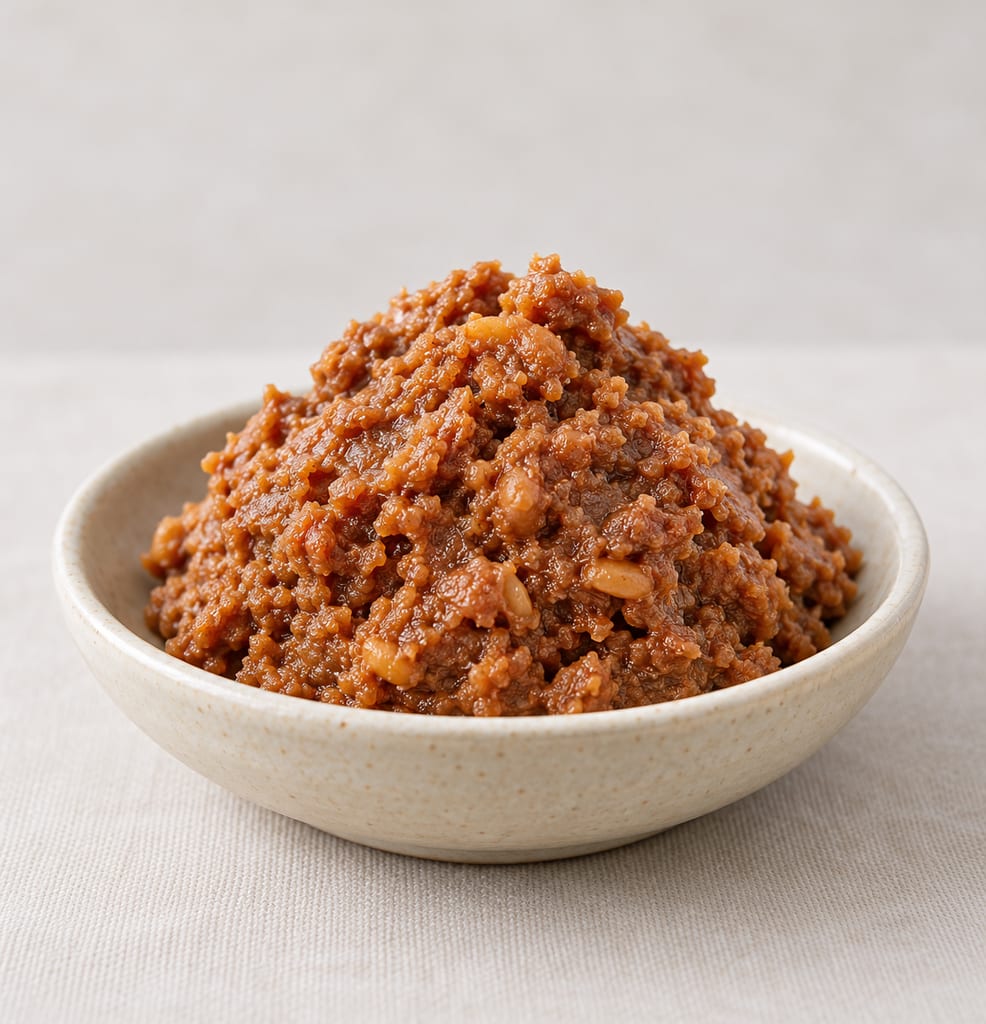
A Korean fermented soybean paste built on rice koji instead of traditional meju blocks, matured warm for thirty days with salt holding the water activity down.
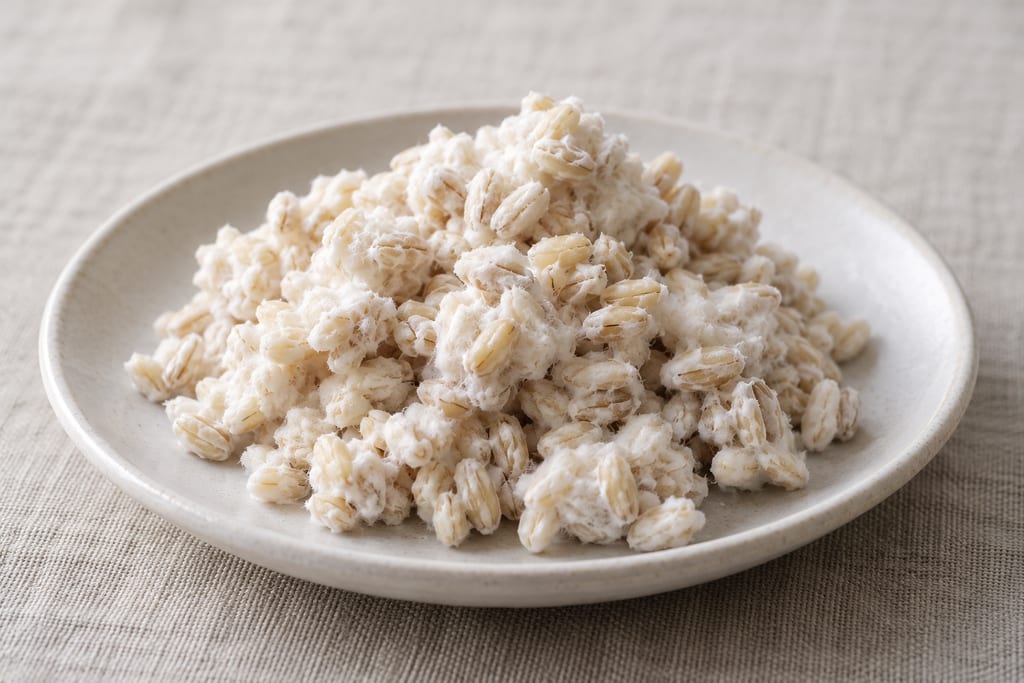
Steamed pearled barley grown into a white koji cake with Aspergillus oryzae over about 36 hours in a 30 °C chamber, turned three times under a damp cloth.
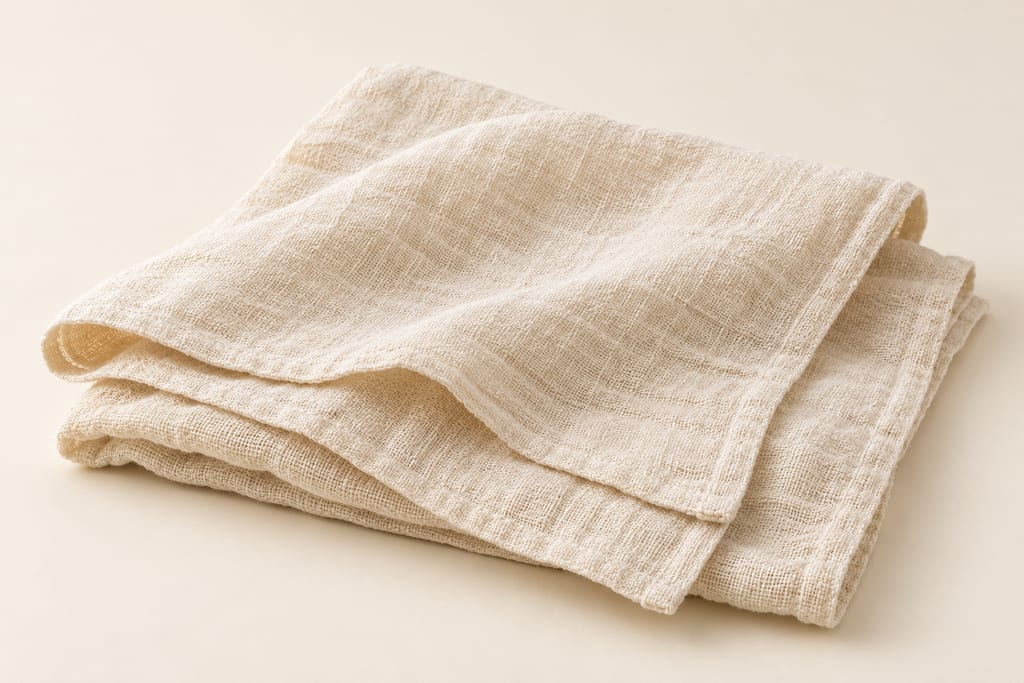
A cloth listed for steaming rice in a rice-koji method and identified as cloth for a koshiki in a brewery-museum caption; its fiber, weave, and size are not specified.
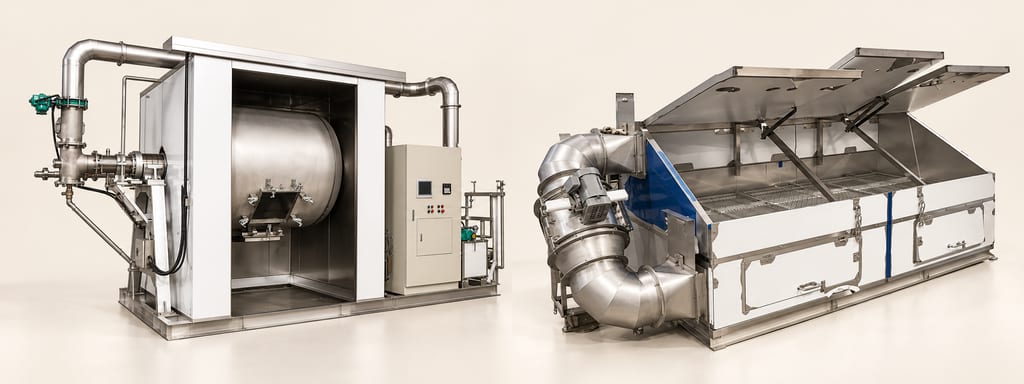
Industrial koji machines cultivate mold on prepared grain before sake, shochu, miso or soy-sauce production. Commercial designs include rotating drums and aerated beds.

A plug-in humidity controller that reads a cabled sensor and switches separate humidifying and dehumidifying loads. It controls relative humidity, not temperature, and is distinct from the ITC-308 temperature controller.
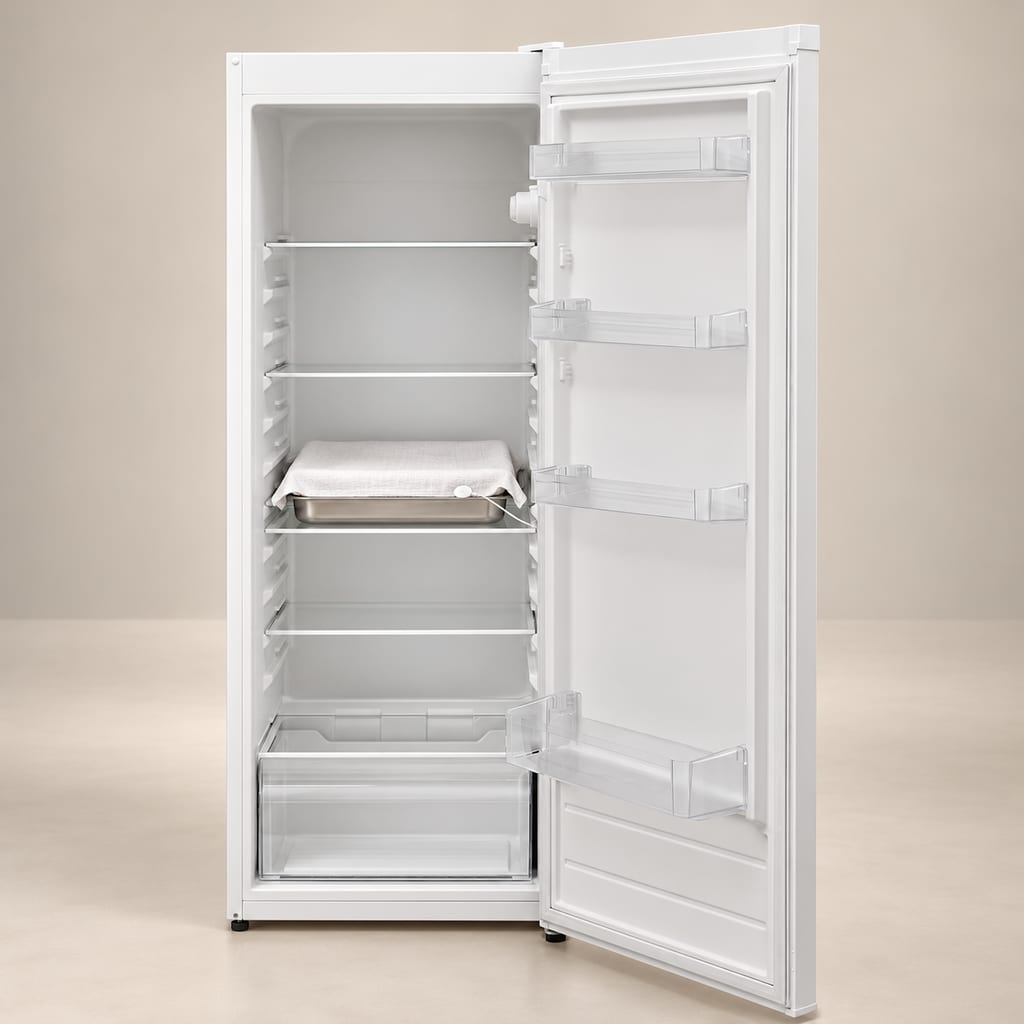
A modified cabinet or switched-off fridge can enclose growing koji. One source documents a heating mat and probe with a PID controller. This modern setup needs monitoring of grain temperature, airflow, condensation and cleanliness.
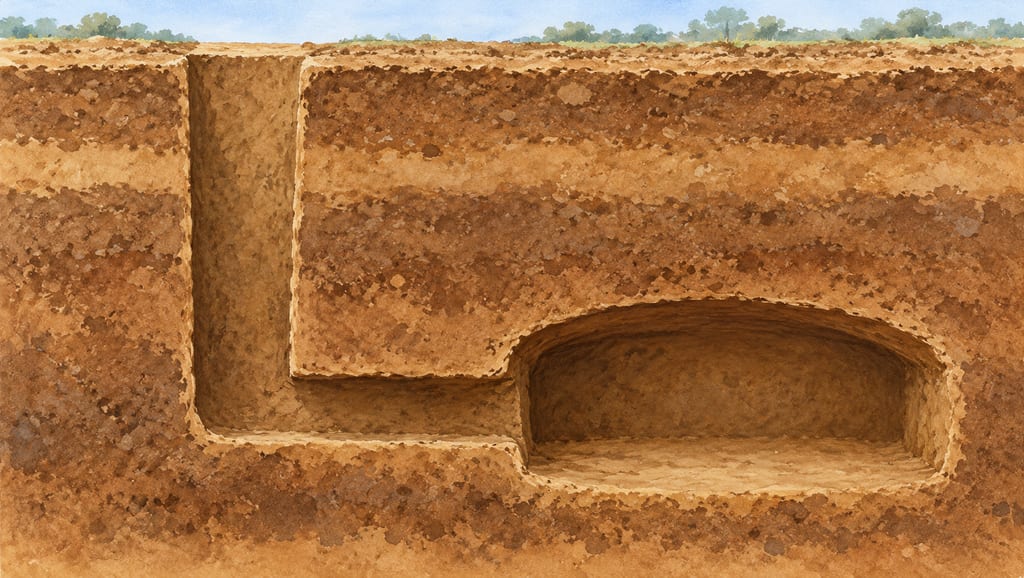
A source-bounded account of Edo’s subterranean kōji chambers: shafts led through narrow passages to low rooms cut into Kantō loam for cultivating kōji. Excavated examples vary by site.
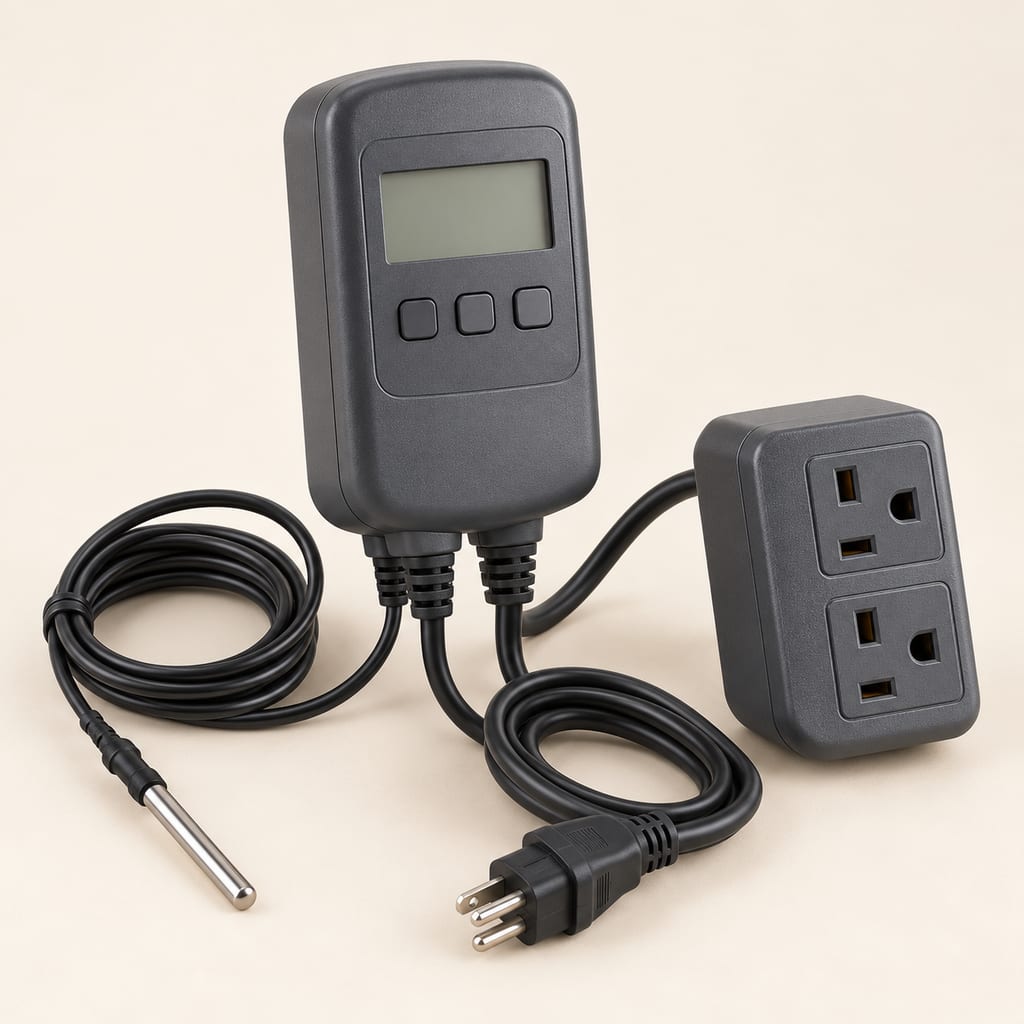
A plug-in controller reads a wired probe and switches compatible heating or cooling appliances around a setpoint. It adds feedback; it is not itself a heater, cooler or validated food process.
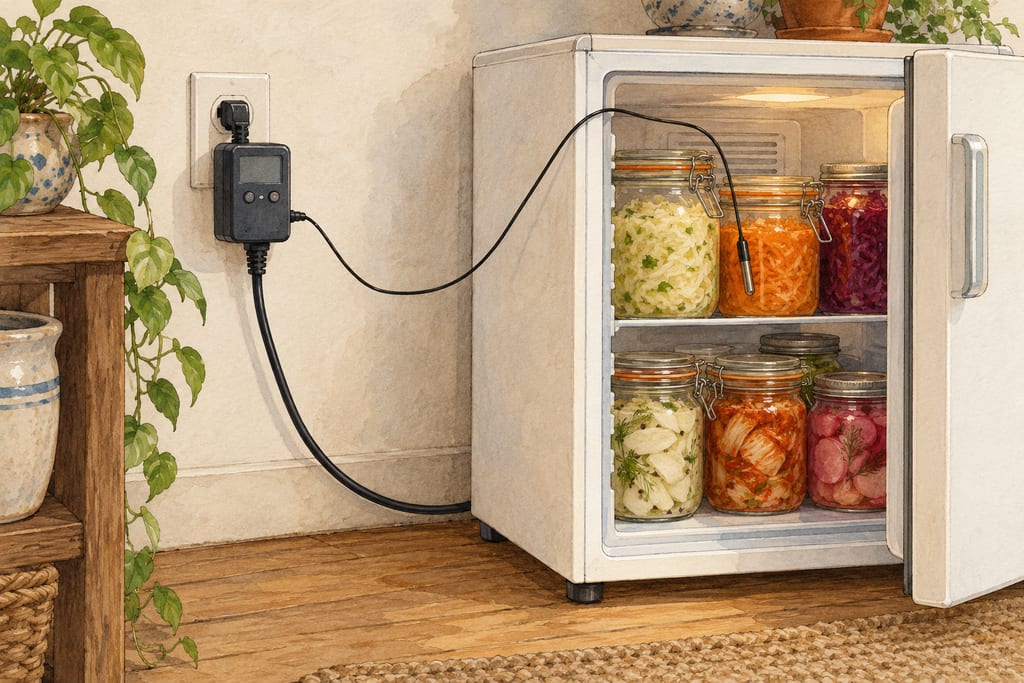
An appliance plugged into an external controller so a probe, rather than the appliance's own dial, decides when it heats or cools.
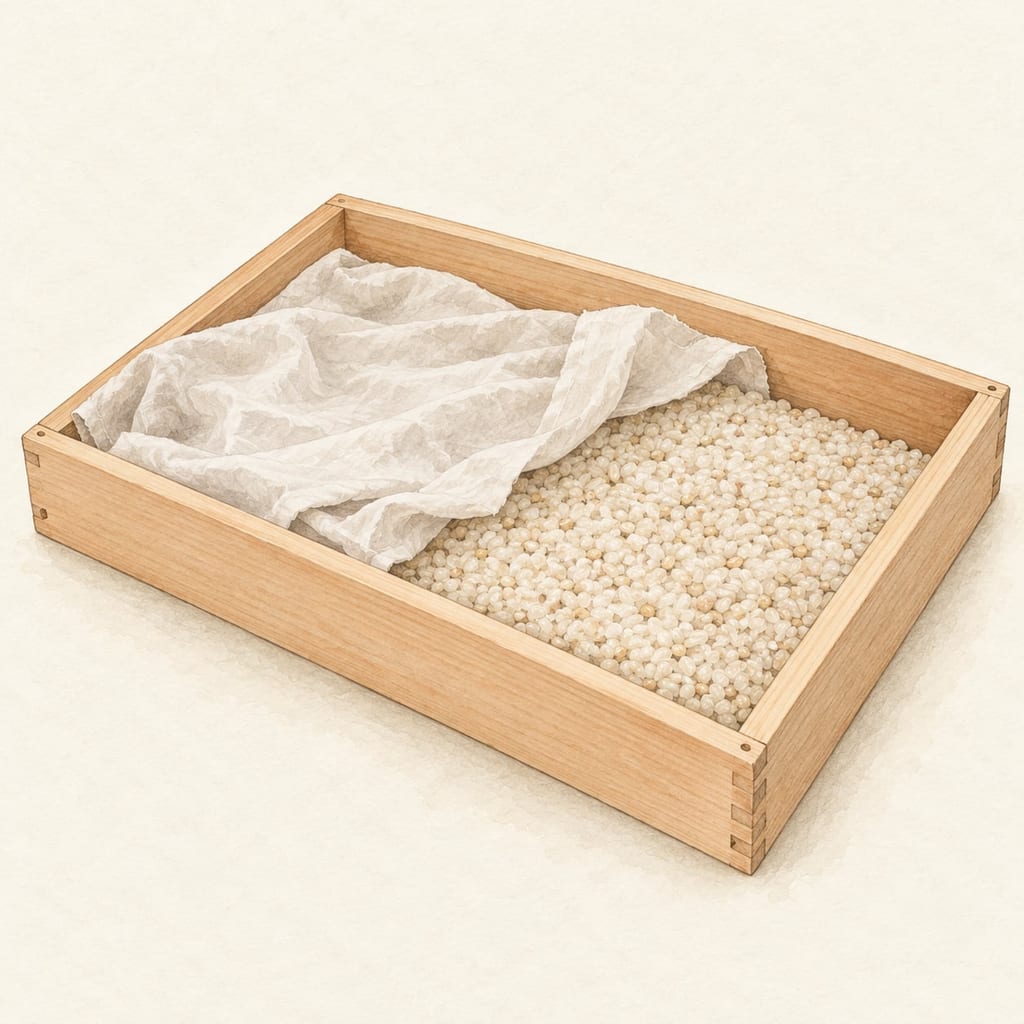
A koji-buta is a shallow wooden tray for spreading grain as it grows into koji. Japanese sources document a traditional form, while modern methods also use cloth-lined or steel trays; size and construction vary.
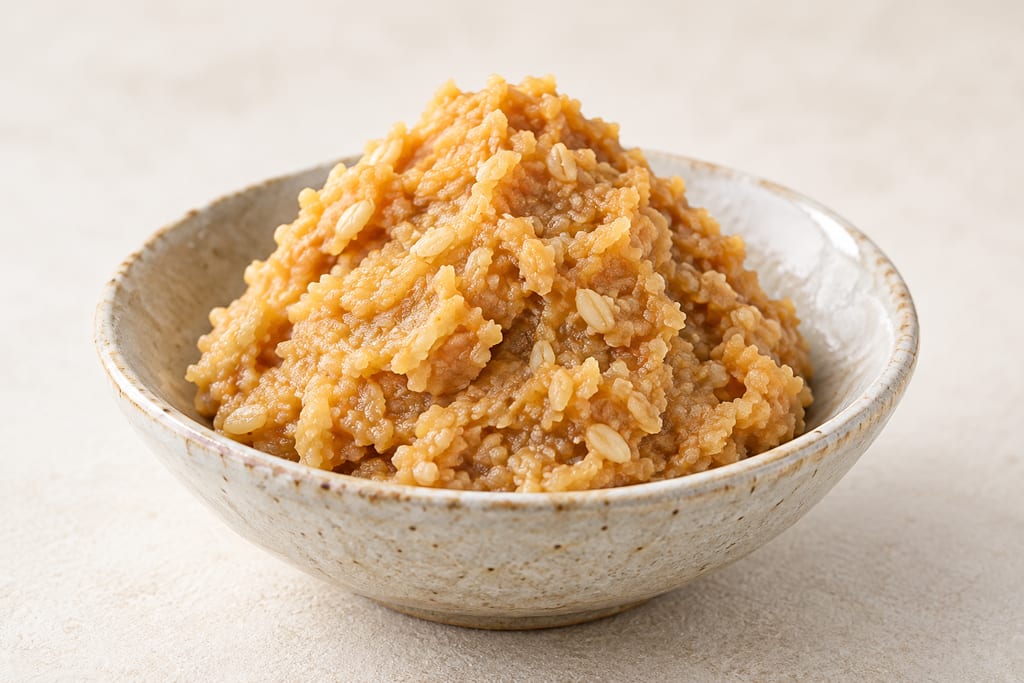
A Japanese soybean paste fermented with barley koji and salt, made mostly in Kyushu, Shikoku and western Japan. It is sweet, savoury and grainy.
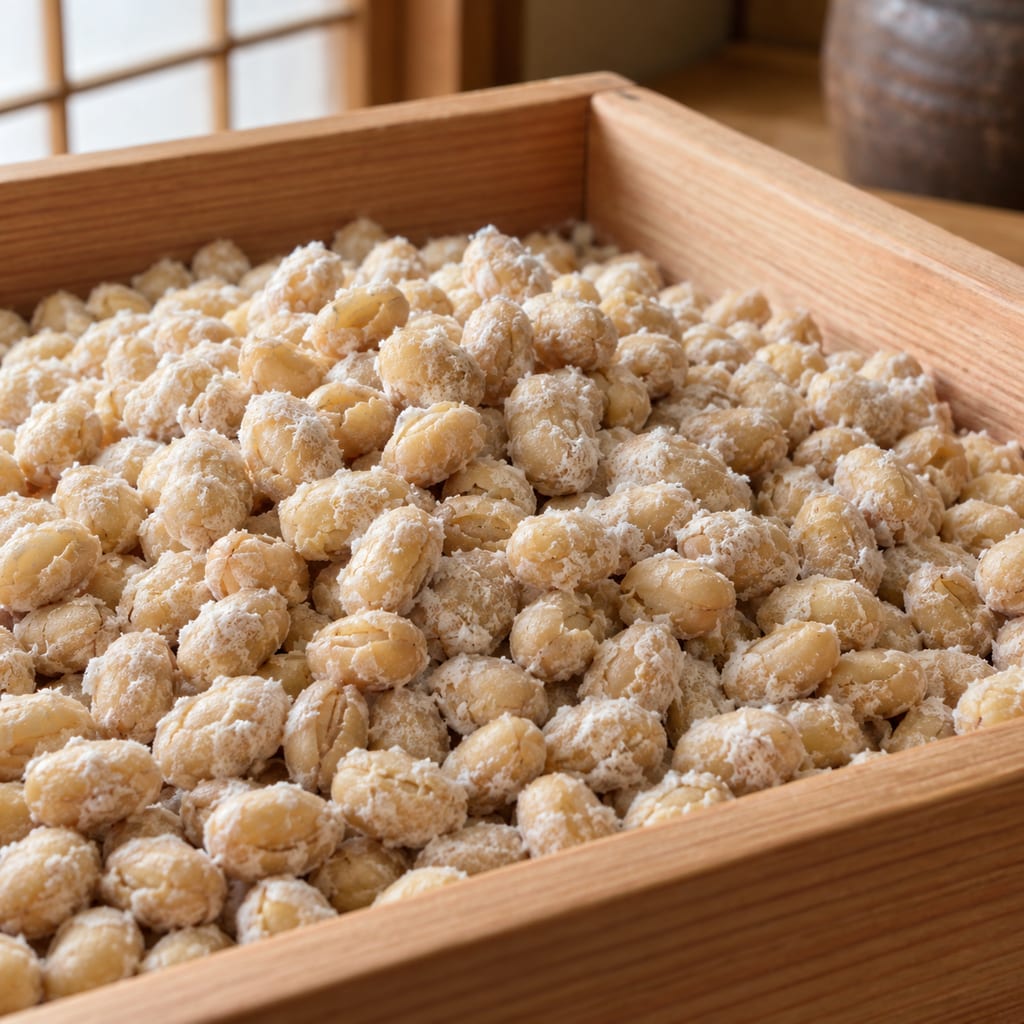
Japanese soybean koji: steamed soybeans, loose or formed into balls, grown over with Aspergillus mould to make the enzymes for mame-miso, tamari and regional soybean condiments.
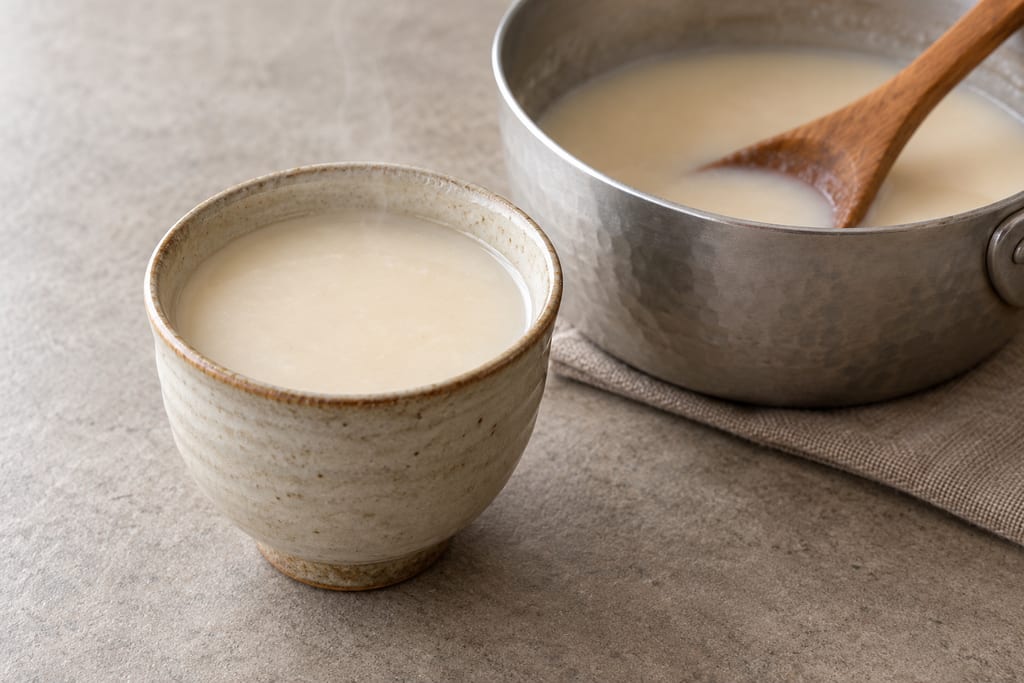
A Japanese sweet drink made by dissolving sake lees in hot water and adding sugar, often with ginger or salt; it carries flavours and alcohol from sake brewing but normally undergoes no new fermentation.
A marula harvest, a rice mash and a bowl of fermented mare’s milk reveal different ways to make alcohol, and different kinds of knowledge behind the drink.
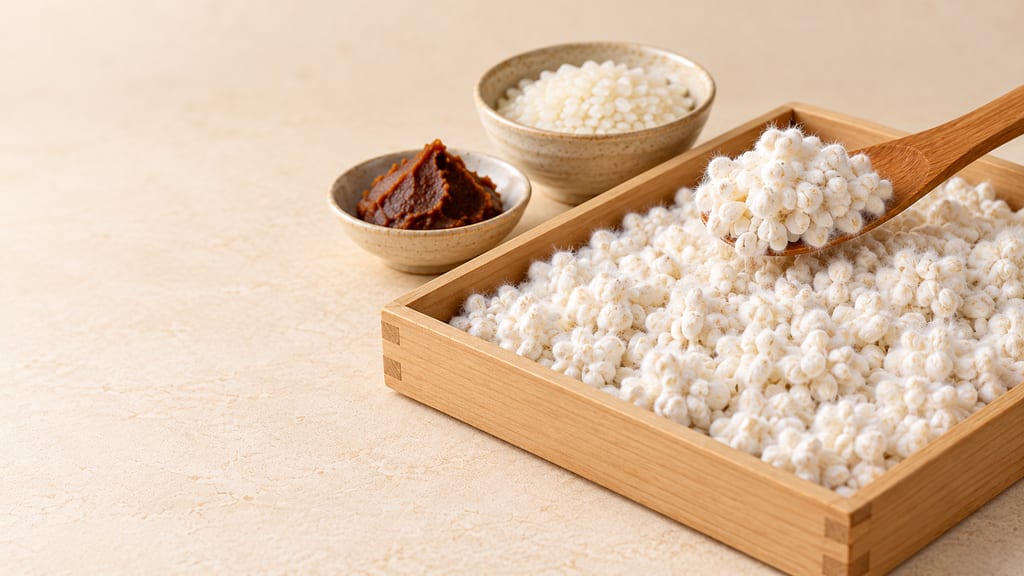
Koji is grain or beans grown with a mould whose enzymes break food down. This guide separates the mould, the starter and the finished koji, and follows them into sake, amazake, miso, soy sauce and shio-koji.
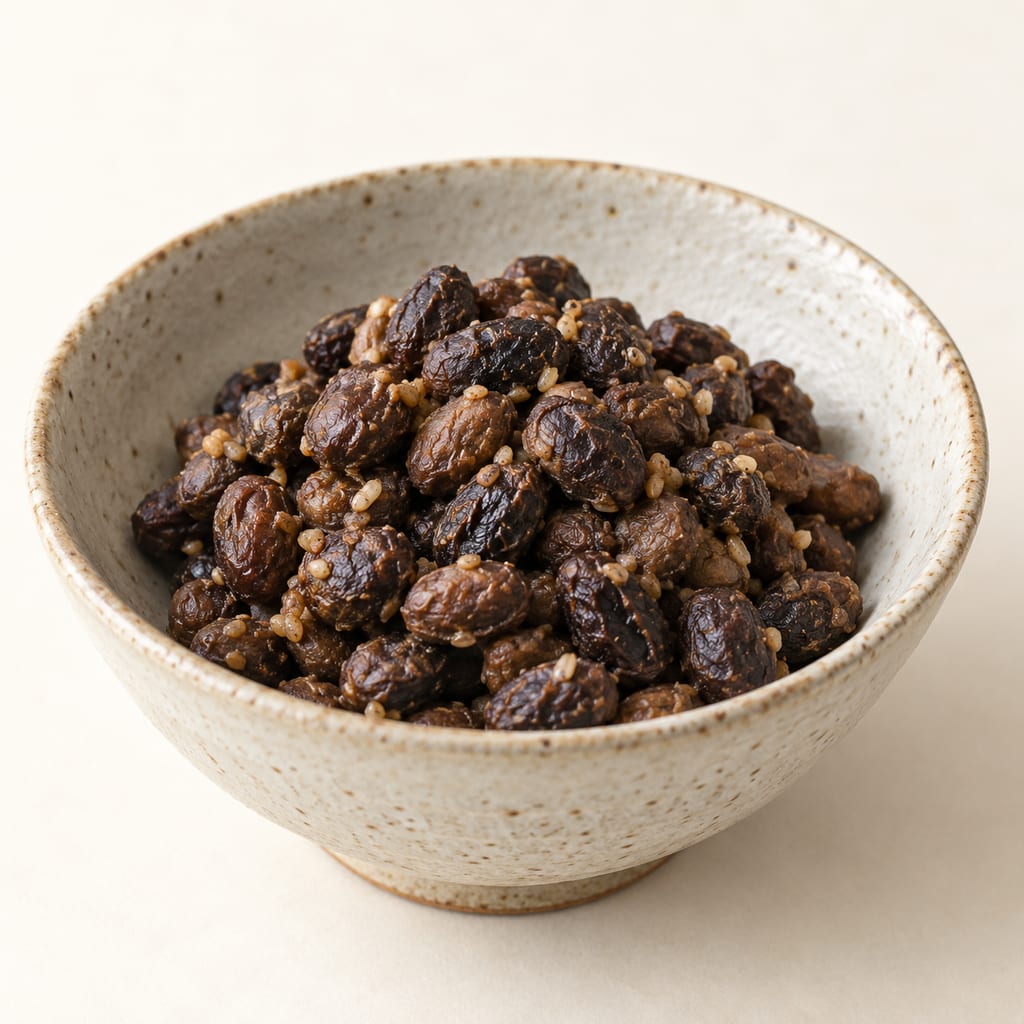
A Japanese family of salted, dark, non-stringy natto made from whole soybeans, roasted grain and salt water, with names such as hama-natto, Daitokuji-natto and tera-natto. Not the sticky Bacillus natto.
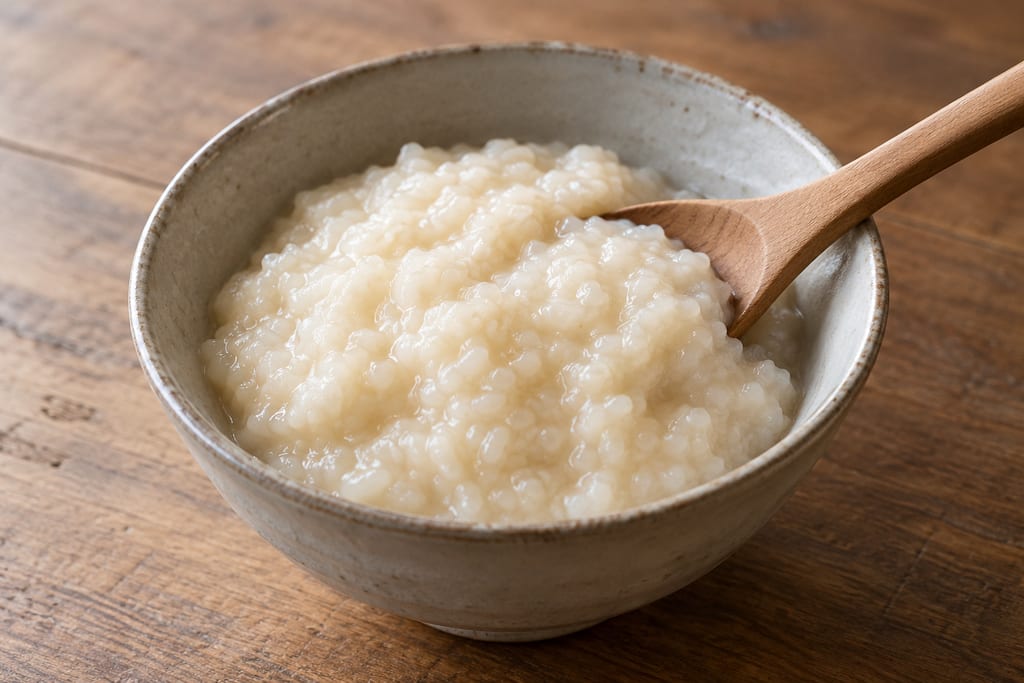
A thick, naturally sweet rice-and-koji preparation used to add body and sweetness to marinades, dressings and sauces. This method follows a published Marukome home recipe and is an enzyme-conversion hold, not a way to grow koji mould.
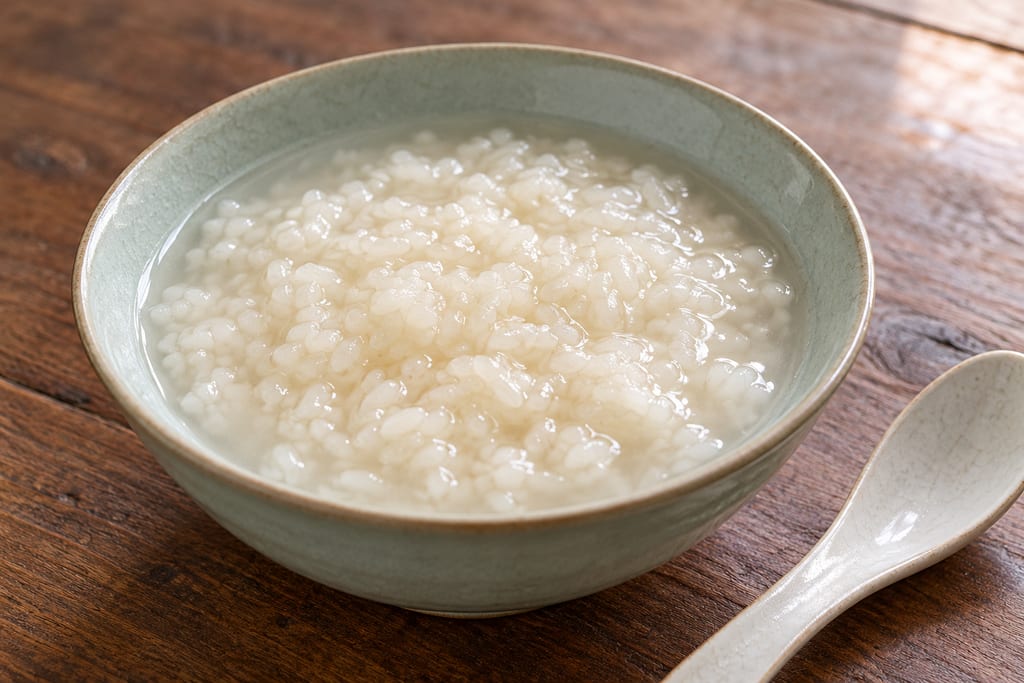
Chinese sweet fermented glutinous rice: steamed rice and a mixed jiuqu starter, where mould enzymes release sugar and yeast makes a little alcohol, eaten with its sweet liquid.
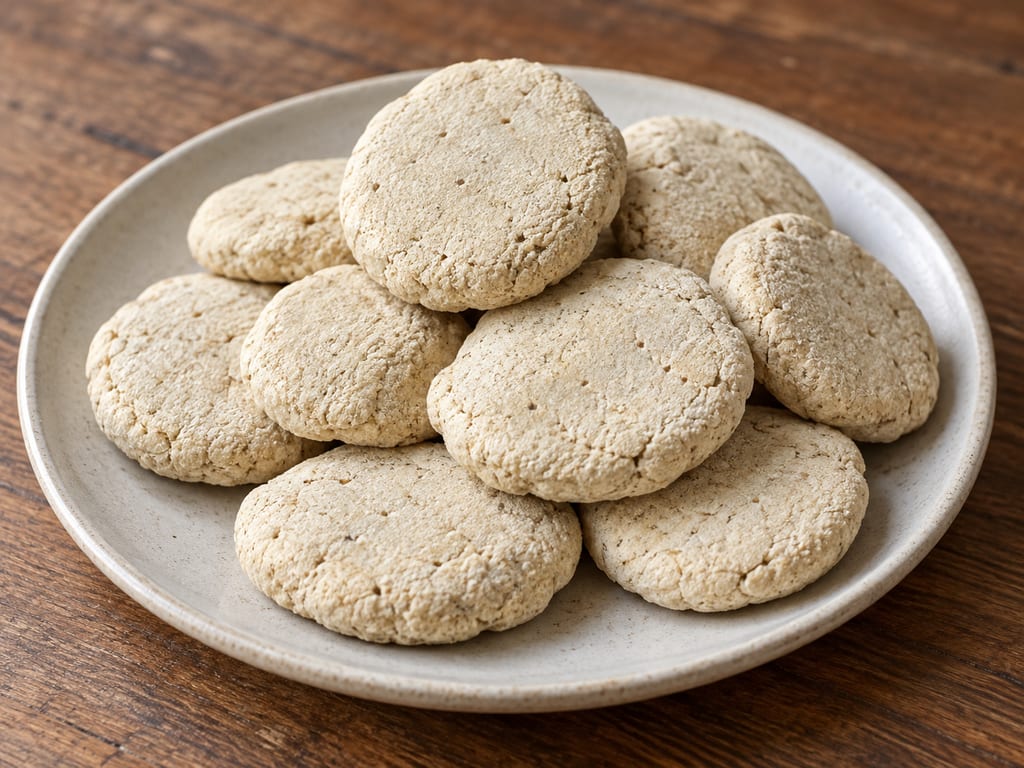
An ethnographic record of marcha (murcha), a dry starter cake used in Eastern Himalayan cereal fermentations. This page documents source-specific community knowledge and is not a recipe for making or storing starter.
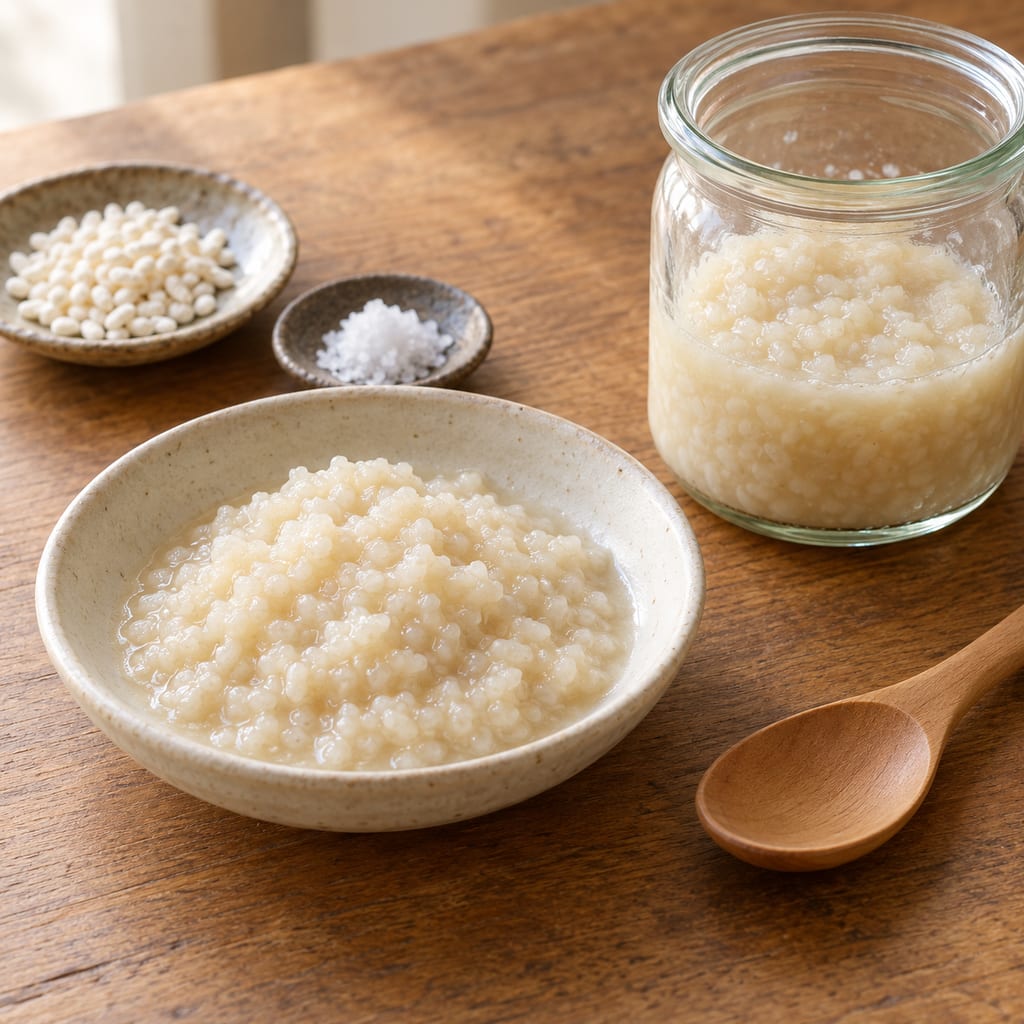
A Japanese seasoning of rice koji, salt and water, left at room temperature until the koji's enzymes and its microbes turn it into a savoury, salty paste for marinades and dressings.
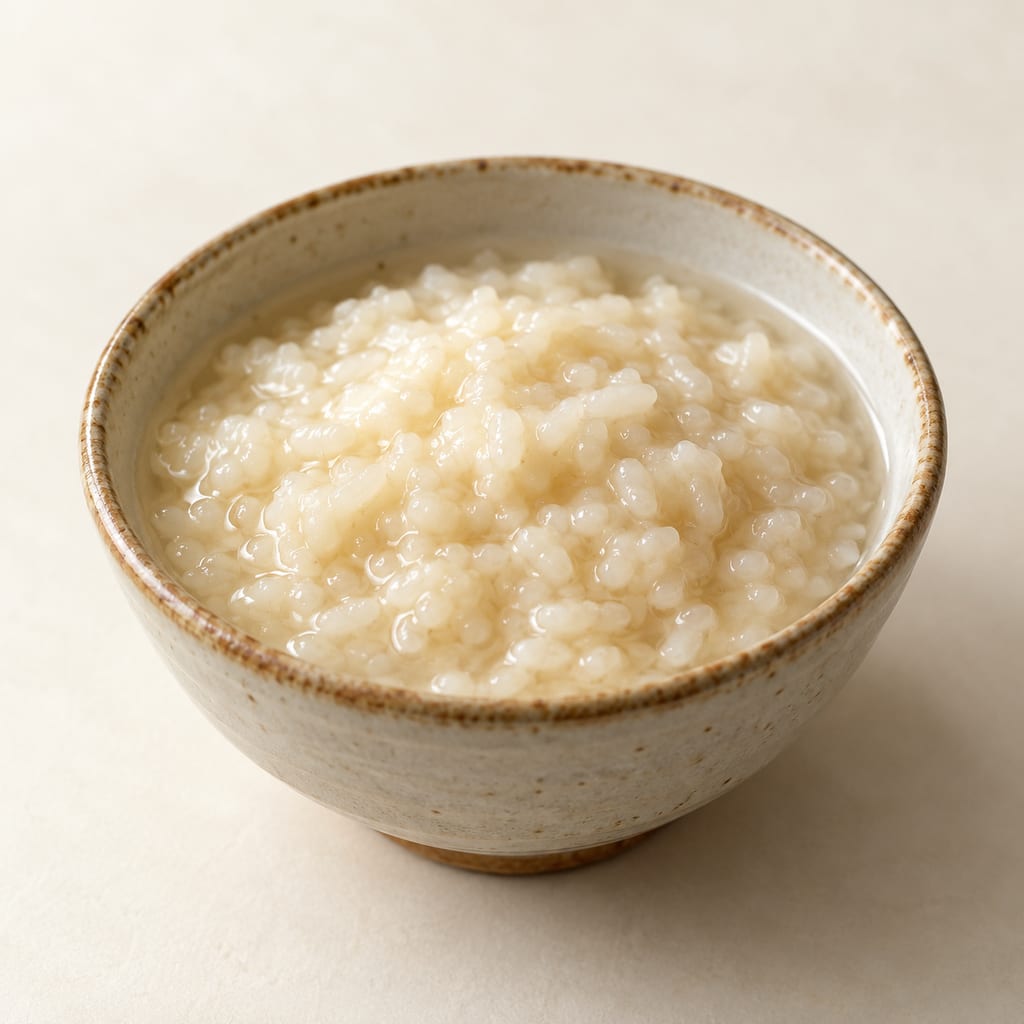
Shio-koji is a Japanese seasoning of rice koji, salt and water, left at room temperature until the grains soften and turn sweet and the mixture thickens.
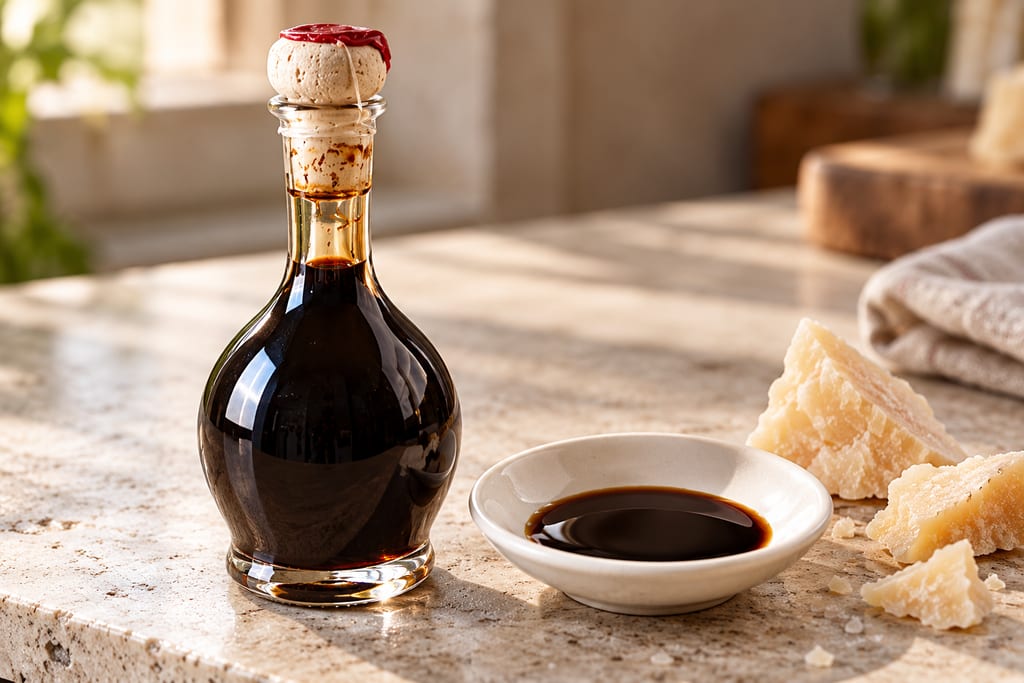
Protected Italian vinegar made only from cooked grape must, fermented and aged in a battery of wooden barrels for at least 12 years: sweet, sharp and syrupy.
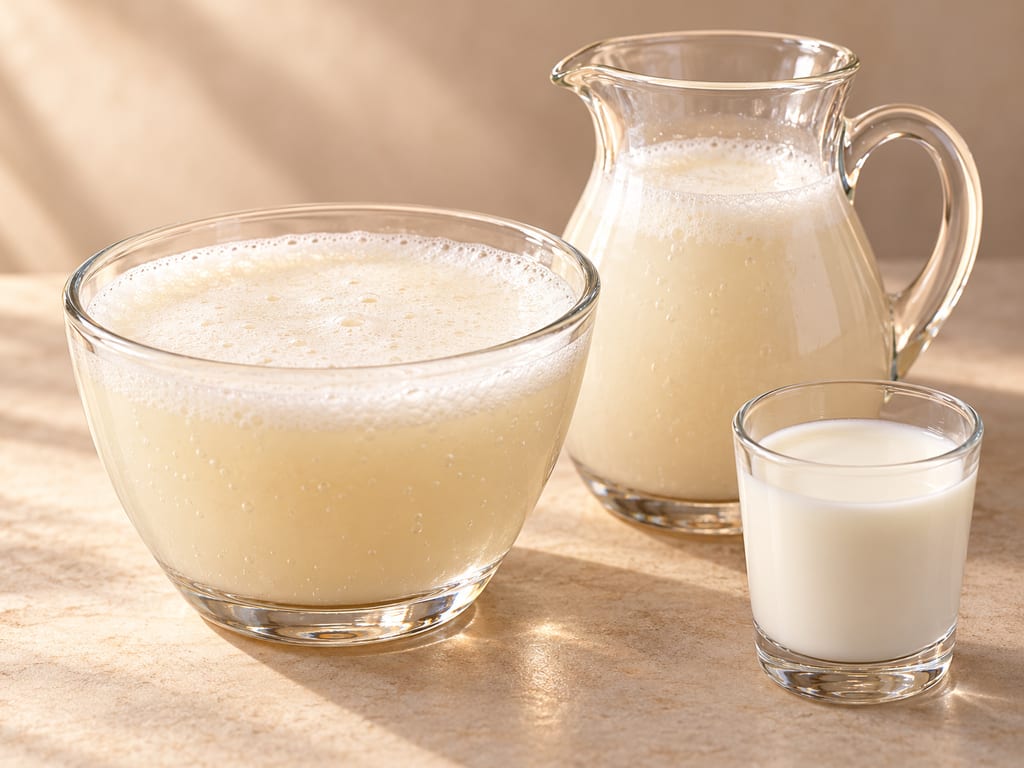
Airag is Mongolia’s fermented mare’s-milk drink, traditionally churned with saved starter in a reusable cowhide khokhuur.
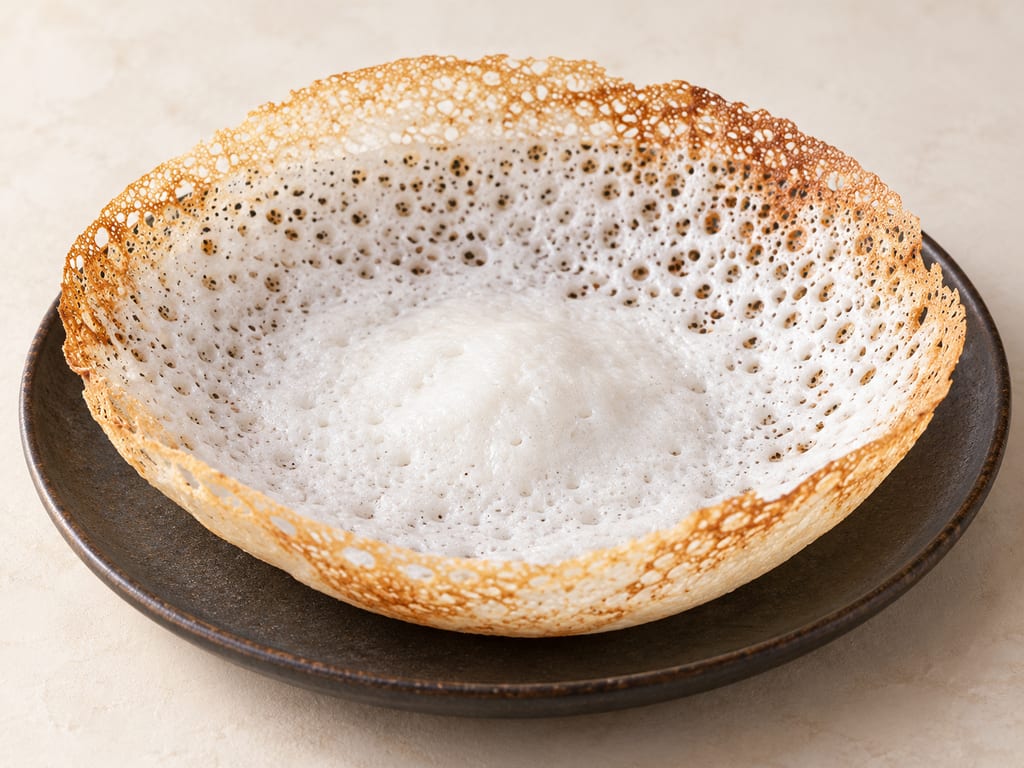
Appam, or hoppers, are South Indian and Sri Lankan rice pancakes made from a fermented coconut-and-rice batter and cooked in a curved pan to a crisp lacy rim and a soft, spongy centre.
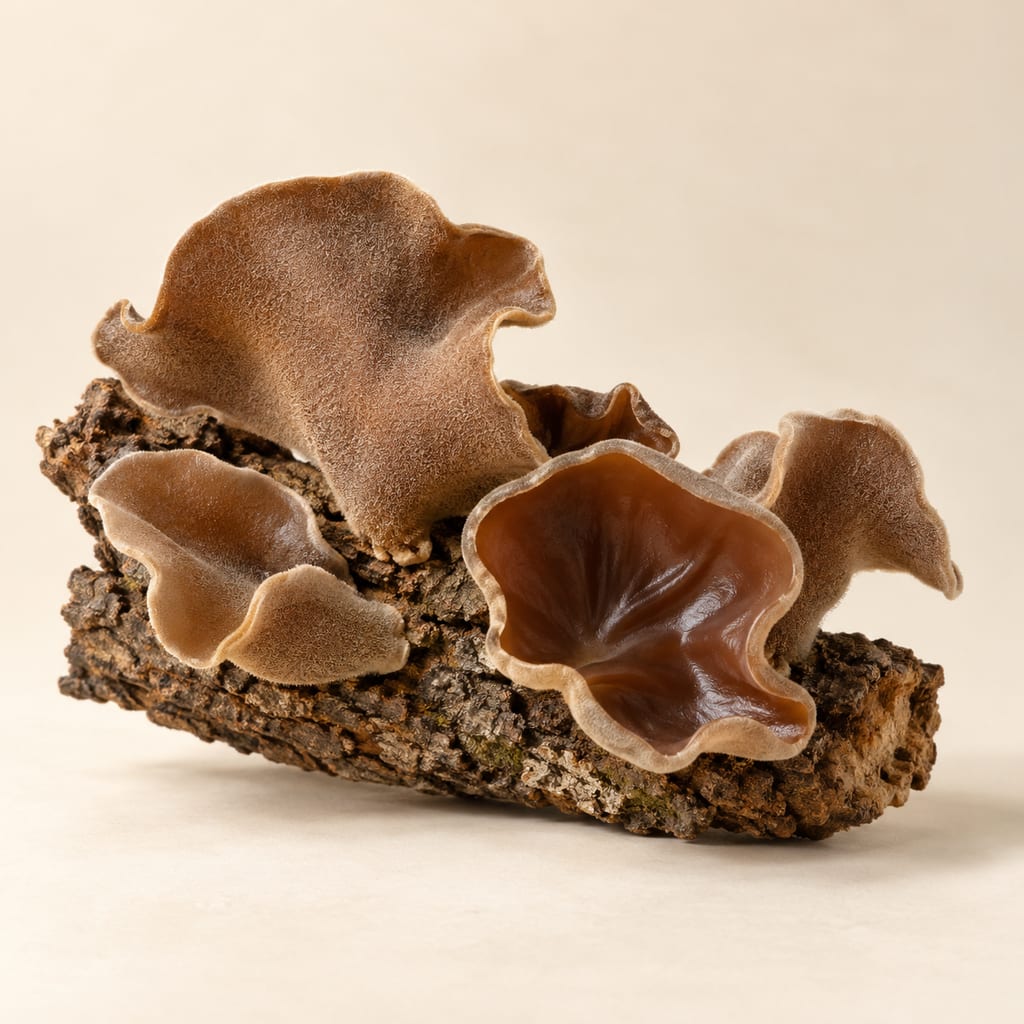
Auricularia tremellosa is a wood ear fungus of the genus that supplies most dried wood ear sold in China; its own food record is thin, and the culinary practice described here comes from the closely related wood ear species.
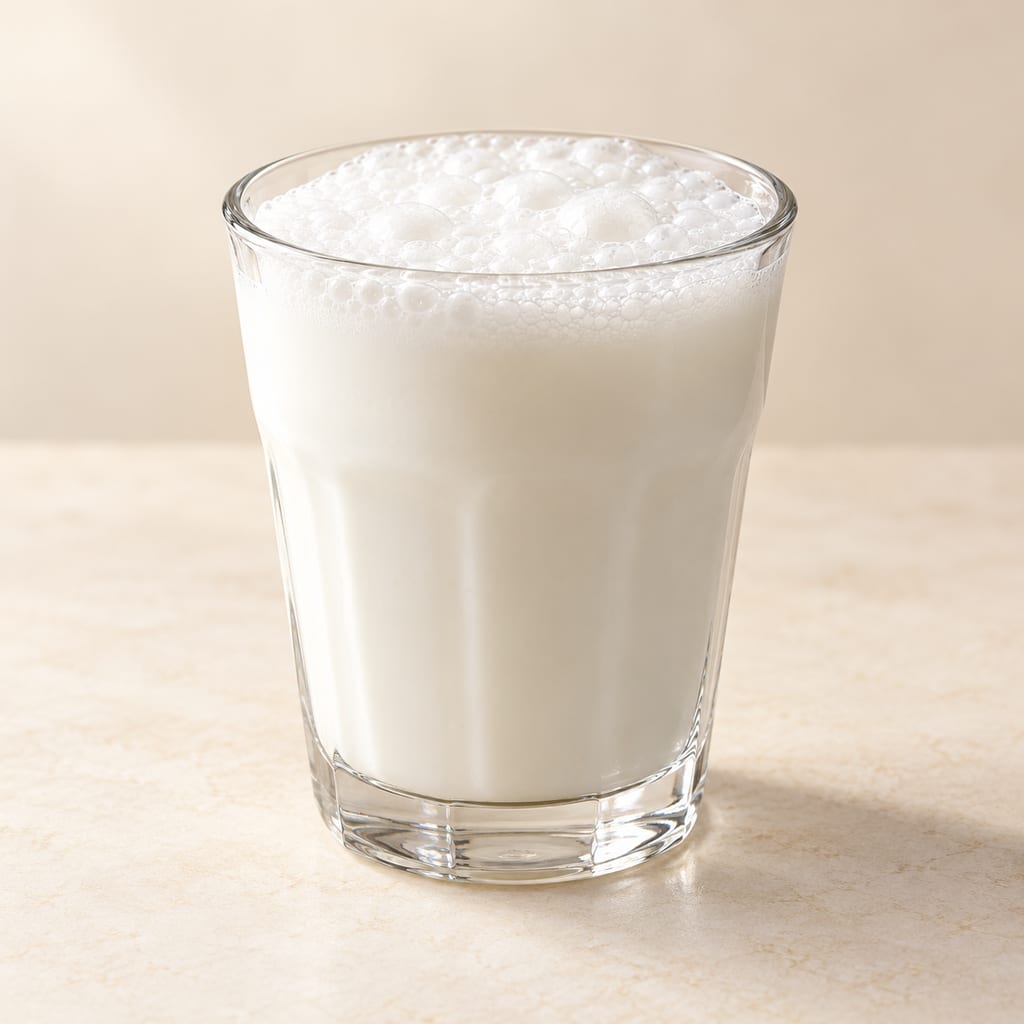
Ayran is Turkey’s cold, savoury yogurt drink: plain yogurt is loosened with water and lightly salted, then whisked smooth or aerated into a soft cap of foam.
A thin stone griddle used over an open hearth. Norwegian archaeology documents the established tradition from the early Middle Ages; a Viking-period origin is only a cautious suggestion linked to Shetland.
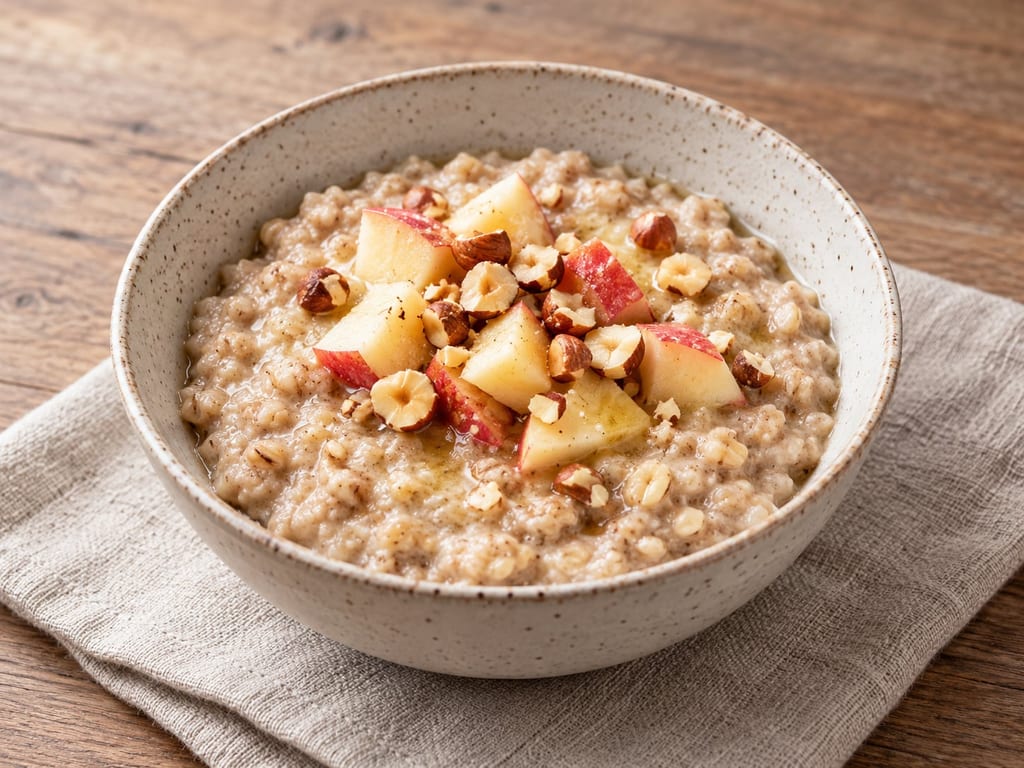
Crushed or milled barley cooked in water until the starch softens and the mixture thickens, the plainest way a northern household turned stored grain into a meal, here with apple and hazelnut.
Black carrot is the anthocyanin-pigmented Eastern carrot (Daucus carota var. atrorubens), the purple root that preceded orange types and still colours kanji and şalgam.
No community contributions have been published for this entry yet.
Sign in to contribute. Published comments and photos are free to read.
BC Centre for Disease ControlMethod · Safety · Process · History
Fermented Foods Guideline 3.10: Koji and MisoKoji mold development dated to 8th-century Japan; three Aspergillus species used (A. oryzae most foods, A. sojae soy sauce, A. luchuensis shochu)
Soaking 8-17 hours; acidified or refrigerated water if longer than 4 hours
Steaming/boiling rice at least 1 hour above 74 °C (soybeans 3 hours)
Cool within 2 hours to 35 °C once internal temperature falls below 60 °C; Bacillus heat-stable toxin risk; pressure cooking lessens it
Inoculate at or below 35 °C; optimal growth 35-38 °C; incubate around 30 °C
35-40 °C favours amylase (sweet miso, amazake-style koji); 27-30 °C favours protease (salt miso)
Never above 40 °C or enzyme development halts; 50 °C and above kills Aspergillus
Heat develops about 10 hours in; hand mixing at 16-18 hours and again at about 26 hours, then transfer to steel or wooden trays
Humidity near 98% initially, ventilated to 15% or lower later for spore formation; aerobic fermentation
Complete when spores develop, 42-48 hours, varying with strain; final aw about 0.80; black aged spores discolour miso
Tane-koji from verified manufacturers; about 1000 CFU/g bacterial contaminants and 5-30 billion mold spores per gram; small operators should not manufacture koji mold
Backslopping not recommended because wild toxin-producing Aspergillus may be introduced; aflatoxin not a concern with commercial starter
Refrigerate or freeze finished koji; refrigerated starter kept about one month; process control allows 10-15 °C at 50% humidity for one year
Traditional manual tray steps per Kusumoto (2021): hikikomi, kirikaeshi, morikomi, teire, tsumikae, de-koji; automated ventilated equipment since the 1970s
Amylase and protease roles: amylases to glucose and oligosaccharides, proteases to amino acids and peptides giving umami
Cited in: Grain carrying a living culture; A craft with a documented history; What the mold is actually doing; The method, and why each stage is there; Variations by grain, strain and temperature; What rice koji is used for; Notes and open questions
Journal of SakeologyHistory · Identity · Culture
Past, Present and Future of Koji and Seed KojiOldest record of koji used to brew alcohol dated 717, a report on the customs of Harima province; 'kamutachi' entry in the 10th-century Wamyo Ruijusho; 967 Engishiki lists methods for 15 alcoholic drinks
Koji-ya shops and koji-za guilds formed after the Kamakura Period; monopoly authorized 1419, abolished 1444 after Enryaku-ji's petition
Wood-ash technique developed around 600 years ago enabled stable conidia production and the discovery of seed koji; ash raises alkalinity, aerates and supplies nutrients
Seed koji (moyashi) distinct from koji with separate cultivation methods by the middle of the Edo Period; Akaban Moyashi manuscript Geppou Densyo
Seed koji production: 6-7 days cultivation, virtually unpolished rice, extremely humid environment; it supplies conidia rather than enzymes
Bunka Period (1804-1818) record notes the shift from spore-bearing 'yellow flowers' to spore-less white koji
Kojiya Sanzaemon founded in Kyoto in the Muromachi Period, granted permission to sell seed koji by Ashikaga Yoshiteru (r. 1546-1565); moved to Toyohashi 1965, B'ioc founded 1992
National fungi of the Brewing Society of Japan: A. oryzae yellow koji; A. sojae and the white mutant of yellow koji; A. luchuensis black koji and A. luchuensis mut. kawachii white koji
A. oryzae and A. flavus reported to have differentiated around 1000 BC, when rice cultivation reached Japan; domestication versus selection still debated
Koji mold recognized as safe in Japan and the US; the paper states aflatoxin production by koji mold has been disproven
Good batches of koji cannot be re-used forever because the microorganisms change and quality deteriorates; seed koji described as Japan's first biotechnology industry
Six seed koji makers operate nationally today, plus two serving only local customers; 15 in the Showa Period per Koizumi (1984)
Cited in: Grain carrying a living culture; A craft with a documented history; What the mold is actually doing; Variations by grain, strain and temperature; Notes and open questions
National Research Institute of Brewing, JapanTerminology · Method · Equipment
Brewing Terms | Japanese Sake Essentialskome-koji (米麹) is a mold grown on rice, called simply koji in sake making
tane-koji (種麴) is the koji spore inoculant; tanekiri-suru is inoculating it onto steamed rice
koji-buta (麹蓋) is the traditional rectangular stackable tray, typically filled with about 1.5 kg of koji
kirikaeshi: 10-12 hours after inoculation the pile is spread and re-piled to keep the temperature even, usually just before transfer to shallow trays
mori: after the first day the koji is transferred into shallow trays for the second day; tsumikae is restacking trays to control temperature
tokomomi: after inoculation the koji rice is kneaded and mixed so spores sit evenly on the rice
hikikomi: bringing steamed rice into the koji-making room
koji-buai is the percentage of koji rice to total rice weight; no typical value given
shinpaku is the opaque white loose centre of a rice grain that makes it easier for koji to grow into the grain
kumikake: enzyme-rich starter liquid poured over koji and steamed rice to enhance saccharification
Cited in: Grain carrying a living culture; What the mold is actually doing; The method, and why each stage is there; Variations by grain, strain and temperature; What rice koji is used for; Notes and open questions
National Research Institute of Brewing, JapanIdentity · Science
製造全般 [Sake brewing FAQ: production]Koji is steamed grain over which koji mold has grown, used in sake, shochu, miso, soy sauce and vinegar
Koji mold colours: yellow, black and white; black and white shochu koji carry citric acid and acid-tolerant amylase, acidifying the starter and mash to hold back harmful microbes
Koji strains are bred for the product they are used for, so sake koji and miso koji differ
Cited in: Grain carrying a living culture; Variations by grain, strain and temperature; What rice koji is used for
Japan National Tax Agency; National Research Institute of BrewingMethod · Terminology
Koji Making: How to Make KojiThe futa-koji tray method as the published sake-brewing example of growing koji on rice, with the named handling operations from loading the rice into the koji room through tray rearrangement
Cited in: The method, and why each stage is there
fermentationculture.euInspiration · Home practice
Which koji should I buy?Home grower reports holding 29-30 °C in a chamber at about 94% relative humidity for koji; an ammonia smell was treated as a warning sign associated with excess moisture
Dried koji cannot be used again to grow koji
Cited in: The method, and why each stage is there; Notes and open questions
Journal for the Integrated Study of Dietary Habits, Vol. 31 No. 4, pp. 217-220Identity · History · Ingredient · Safety
Tane-koji (koji-starter) and koji-moldkoji-kin defined as the collective name for the strains used to make koji in brewing: Aspergillus oryzae, Aspergillus sojae and Aspergillus luchuensis (A. awamori, A. kawachii); designated Japan's national fungus by the Brewing Society of Japan in 2006
the koji mold is distributed as tane-koji from tane-koji manufacturers to each brewer; tane-koji is also called moyashi, tane-moyashi or hana-moyashi
tane-koji is grown on rice polished to about a 97% milling ratio for about a week, roughly three times longer than brewing koji, with wood ash added at cooling or inoculation, then dried at 40 C or below to 10% moisture or less, giving at least six months of room-temperature storage
sold as granular tane-koji (dried grain, bagged as is) for handmade koji, and powder tane-koji (spores separated by sieve and adjusted with alphalized starch) for machine koji making; nearly all miso and soy sauce use is powder
products are sold by use category - sake, miso, soy sauce and shochu - with sub-types by raw material, taste and colour
wood ash from steamed and burned twigs and leaves of camellia, oak, chestnut and evergreen oak; camellia held best; the technique is said to have been found in the Muromachi period; artificial wood ash based mainly on potassium phosphate is now used as needed
inoculation history: natural inoculation, then tomo-koji/tomo-tane carried from a good batch; wood ash used in the Muromachi period to preserve tomo-tane and toughen the conidia marks the start of tane-koji making; koji-za monopoly before that, collapsing after the Bun'an koji disturbance
two tane-koji shops in Kyoto in the early Edo period and several more by its end; purchased tane-koji became general in the Meiji period; about six companies remain
A. oryzae was isolated from rice koji and named Eurotium oryzae in 1876 by Hermann Ahlburg; the term koji-kin came into use in the Showa era; pure-culture work led by large soy sauce makers from the late Meiji to Taisho, and strain-designed tane-koji became general after the war
koji mold is BSL-1 under Japanese regulations and on the US FDA GRAS list; non-production of aflatoxin by A. oryzae and A. sojae shown by molecular methods
Cited in: Grain carrying a living culture; A craft with a documented history; The method, and why each stage is there; Variations by grain, strain and temperature; Notes and open questions
Akita Konno StoreHome practice · Ingredient · Method
Koji starter for amazake and rice koji (for home use)home-use koji starter sold as a pure white koji mold strain named Yukikomachi, for amazake, miso and processing; the starter itself and the koji it grows are white
the producer's home rice-koji example: one kg of rice and 1 to 2 g of koji starter; rice washed and soaked overnight, then steamed about 50 minutes
one 70 g bag is estimated to cover 200 kg of raw rice, priced at 4200 yen; the producer's own per-kilogram example implies a smaller area and the two figures are not reconciled on the page
finished home rice koji kept about two weeks refrigerated
amazake stage: 200 g of the home rice koji with 200 ml or 600 ml water in a thermal container, held at 58 to 62 C for 6 to 8 hours, stirred about every two hours; the producer warns that 65 C and above can inactivate the diastatic enzyme so no sweetness develops, while 50 C and below lets contaminating bacteria propagate and sour the drink
Cited in: The method, and why each stage is there; Variations by grain, strain and temperature; What rice koji is used for; Notes and open questions