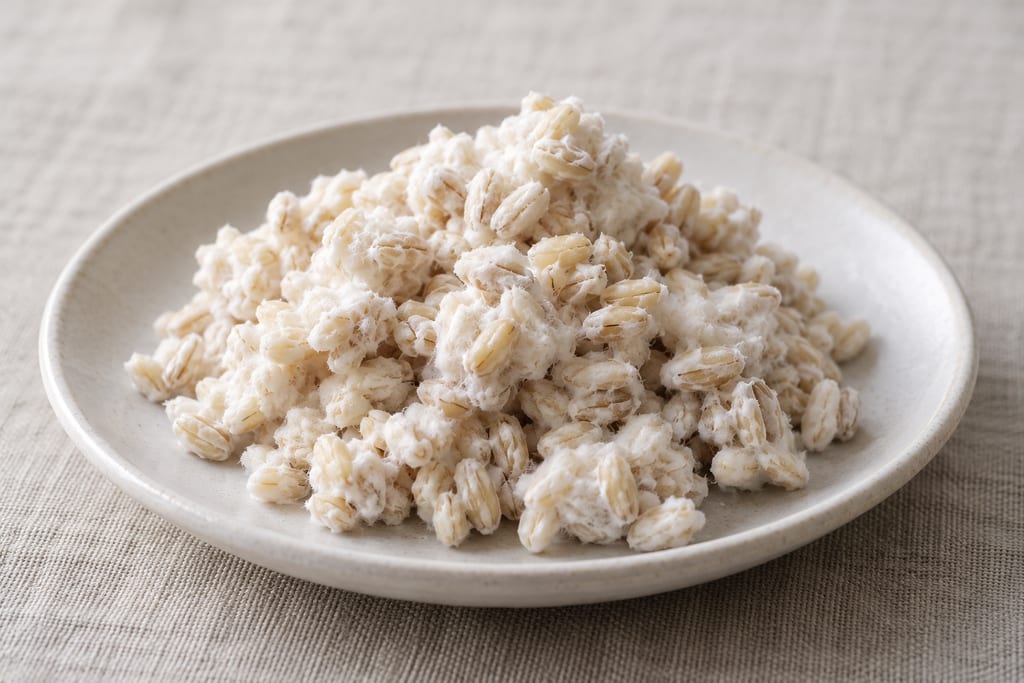
Barley koji
Steamed pearled barley grown into a white koji cake with Aspergillus oryzae over about 36 hours in a 30 °C chamber, turned three times under a damp cloth.
 FermenteaWhere food goes to change
Equipment · Baskets, trays and beds
麹蓋 · koji-buta · morobuta
A koji-buta is a shallow wooden tray for spreading grain as it grows into koji. Japanese sources document a traditional form, while modern methods also use cloth-lined or steel trays; size and construction vary.
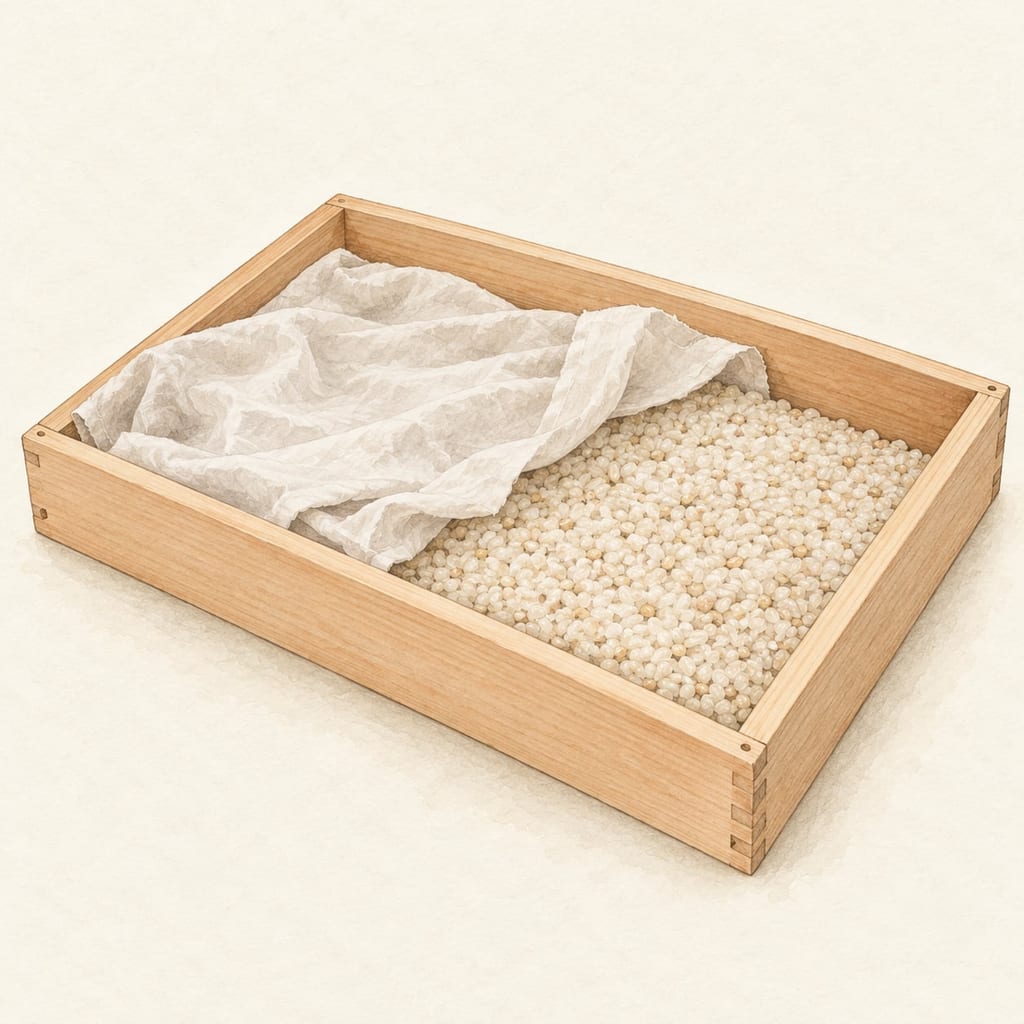
The Japanese name 麹蓋 is read koji-buta. The National Research Institute of Brewing defines it as a traditional rectangular, stackable container for making koji and describes futa-koji as the traditional method of using shallow wooden trays. A 2024 BC Centre for Disease Control guideline likewise says traditional koji methods use wooden trays. These sources establish a Japanese tray tradition, not one ancient date or a single design used everywhere.
A current Japanese retailer calls its cedar example kojibuta or morobuta. Its catalog photographs show a simple low-sided wooden tray; the specific model is a present-day product, not archaeological evidence. The general item here describes the older tray form while keeping modern model details separate.
The tray divides steamed grain into a thin bed while the koji grows. The BCCDC guideline describes a manual tray sequence of loading, kneading, piling, mixing, rearranging and finishing, and notes that mixing releases heat. Those operations matter because the tray is passive: it does not hold a fixed temperature or move heat out of the grain by itself.
Cloth arrangements vary. Fermentation Culture's account describes lining a tray to keep grain from sitting in pooled water, and also describes cloth laid over grain. Its photograph shows a modern wooden tray with a white cloth, while the exact contents are not visible. The wood in that writer's tray is a local choice; the article separately notes cedar's traditional use in Japan.
Not every koji tray is wooden. Nordic Food Lab describes its barley method in a stainless-steel gastronorm tray with a roughly two-centimetre grain layer under a warm, damp cloth. The team loosens the grain into furrows during the process to shed heat. Fermentation Culture also reports using perforated stainless steel with thick cloth, while warning against water pooling below the grain.
These are documented alternatives, not evidence that stainless steel is the traditional koji-buta. A tray made for one batch or cabinet may differ from the low wooden tray used in manual koji methods; the sources give no universal dimensions or capacity.
The sources locate the traditional wooden tray method in Japan. A fermentation writer in Austria describes a modern setup and says spruce was more practical there than cedar. That Austrian example is a documented adaptation, not a claim about the Japanese tray's origin. The retailer's measurements and stated rice capacity apply to its named size only; NRIB's glossary also gives an approximate load for its reference tray, not a standard for all koji-buta.
One retailer advises hand-washing its wooden tray with water, wiping it dry and leaving it in a ventilated room. The other sources do not set a shared cleaning or repair routine. None establishes that every tray is cedar, every cloth has the same role, or that the tray by itself controls humidity, temperature or safety.
A tray does not control temperature or remove heat on its own; sources describe mixing, rearranging or furrowing the grain during koji growth.
Source →Water pooling beneath grain can leave the lower layer soggy; a cloth or tray arrangement is used to avoid pooled moisture in the described methods.
Source →This names the documented Japanese tray tradition; it does not claim every koji practice uses this form.
A modern adaptation documented by one writer, distinct from the Japanese traditional form.
Steamed pearled barley grown into a white koji cake with Aspergillus oryzae over about 36 hours in a 30 °C chamber, turned three times under a damp cloth.

Rice koji is steamed white rice through which koji mold has grown. It carries the enzymes that turn rice starch into sugar, and it is the starting point of sake, sweet miso, amazake and shio koji.
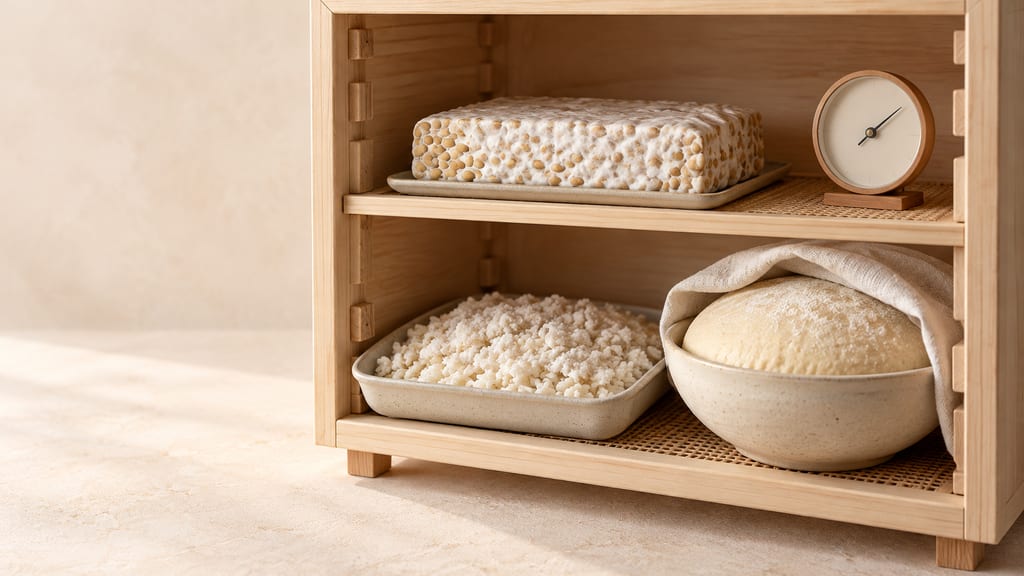
A proofer, a dehydrator with its trays out or an old fridge on a controller can keep cultures at a steady temperature. Whether it works depends on what sits inside: a lidded jar, a vented bag, a shallow tray or a crock.

A small electric incubator holds jars at a selected temperature for yogurt and other documented warm food preparations. Controls, capacity and vessel arrangement vary by model.
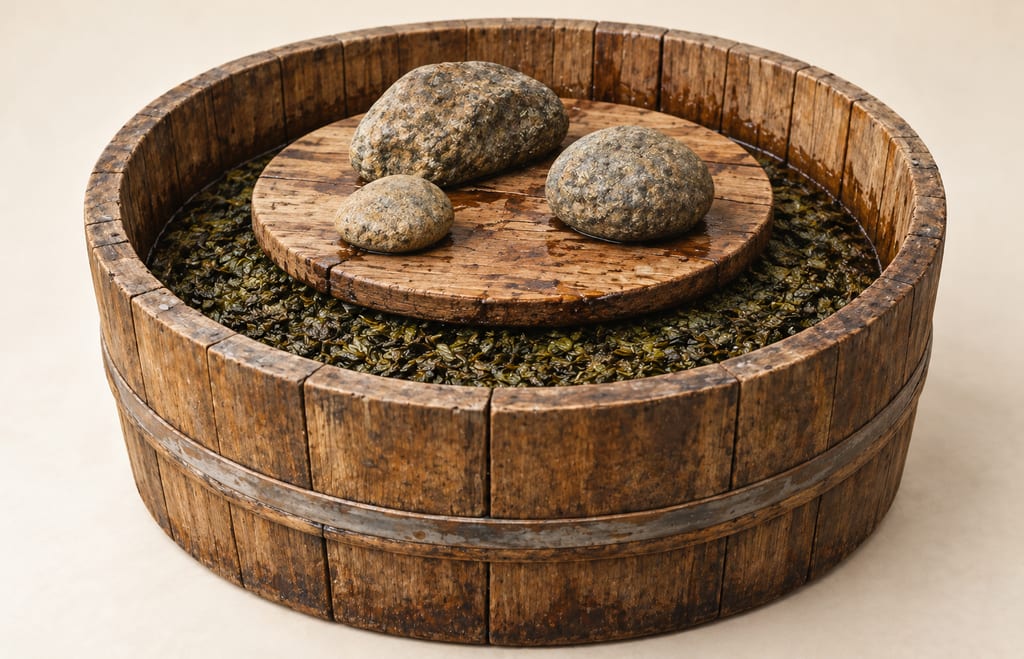
A large wooden tub used in Tokushima to ferment heated, worked Awabancha leaves with their cooking liquor. Its size and construction details are not specified in the sources.
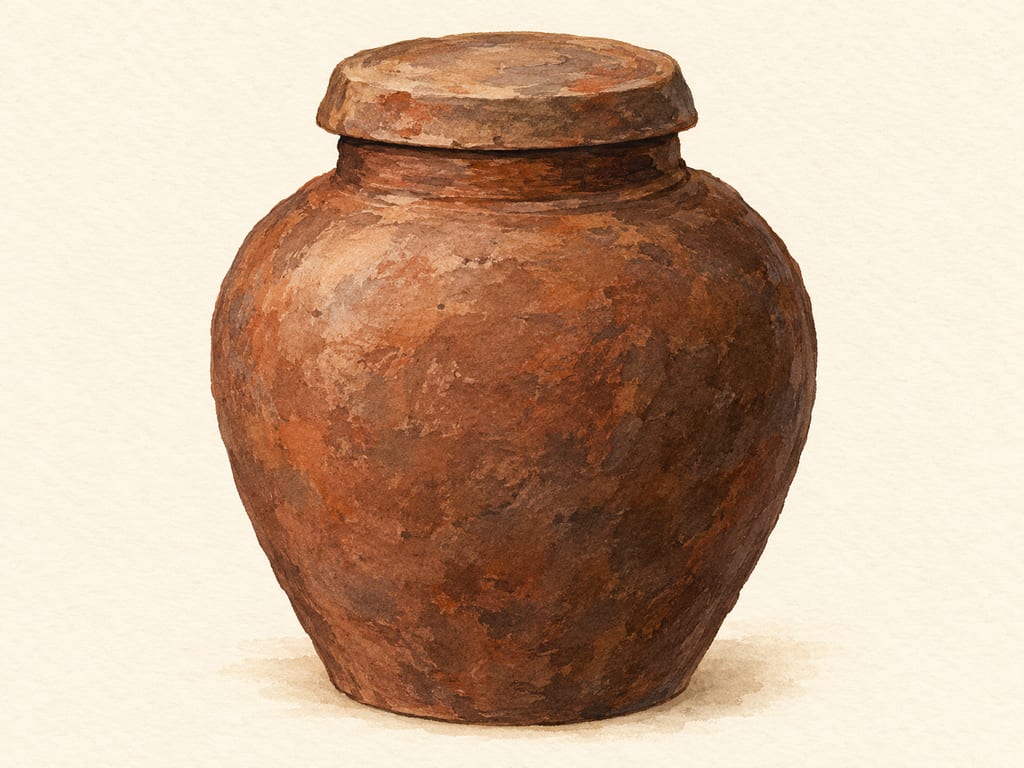
A ceramic jar used in Okinawa to store and mature distilled awamori into kusu; it holds the finished spirit after distillation rather than fermenting the rice mash.
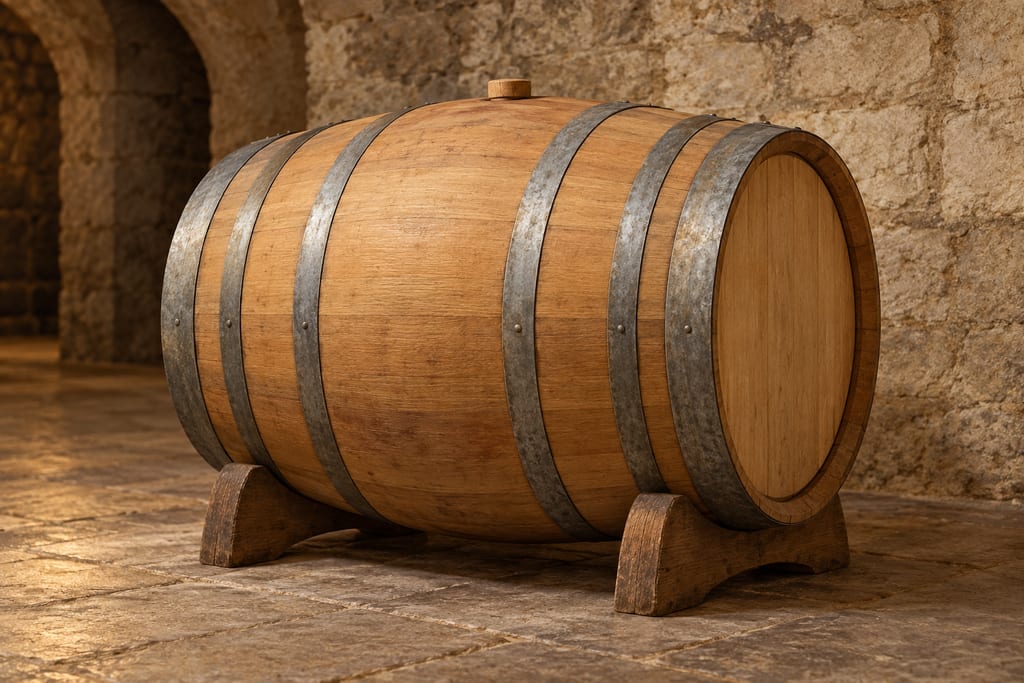
Coopered vessels use shaped staves and hoops, but portable barrels, large foeders and upright wooden vats serve different roles. Materials and uses vary by place and process.
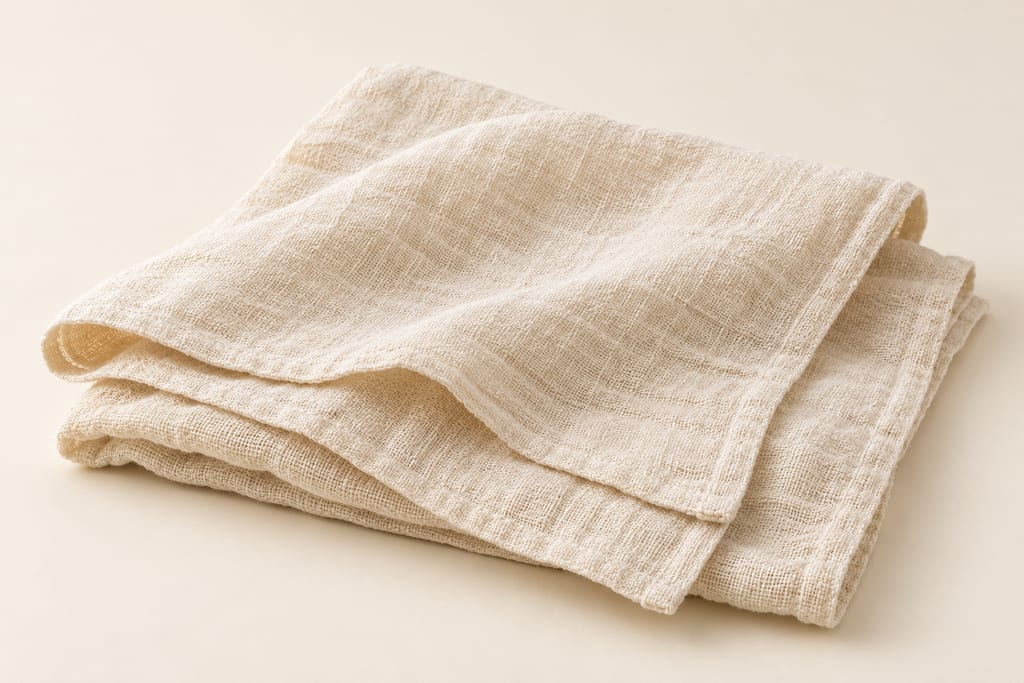
A cloth listed for steaming rice in a rice-koji method and identified as cloth for a koshiki in a brewery-museum caption; its fiber, weave, and size are not specified.
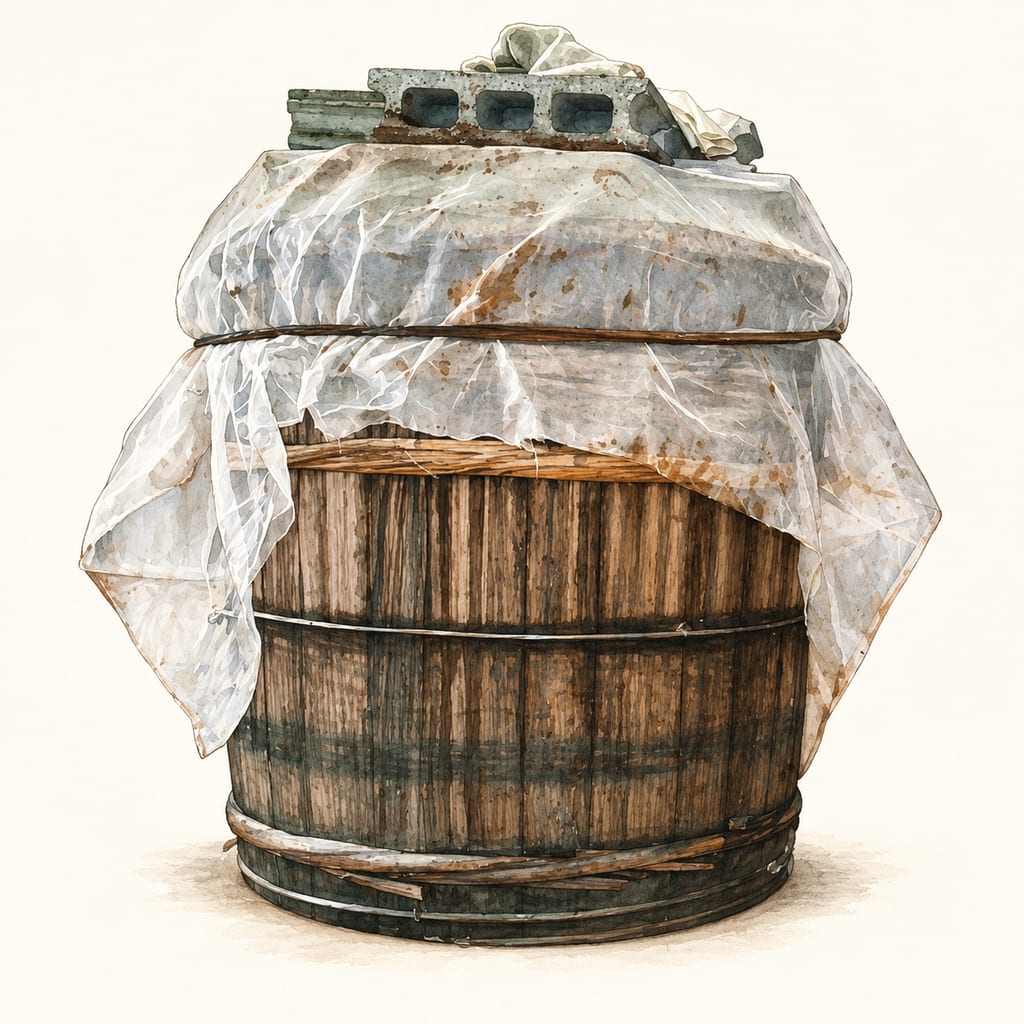
A Goishicha weighted tub holds tea leaves and steaming liquor during the second, wet fermentation stage in Ōtoyo, Kōchi. A current producer photograph documents one covered wooden tub under concrete-block weight.
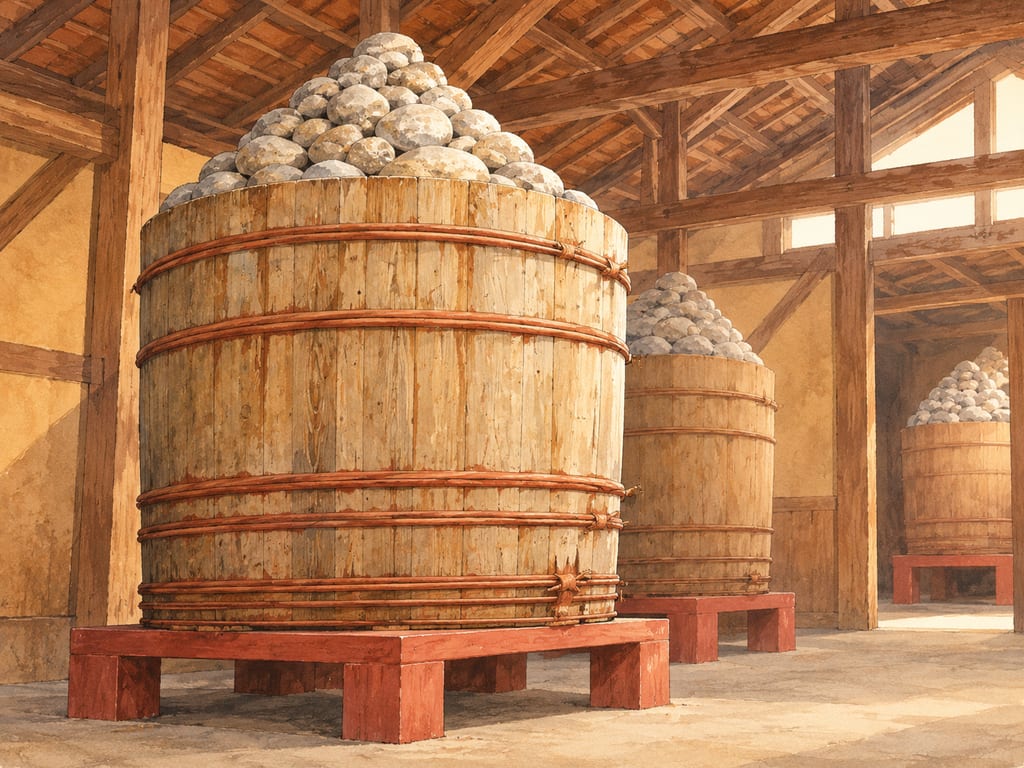
A coopered wooden kioke used by Kakukyu in Okazaki for Hatcho miso: a broad vat capped with a carefully stacked pyramid of river stones during maturation lasting more than two years.
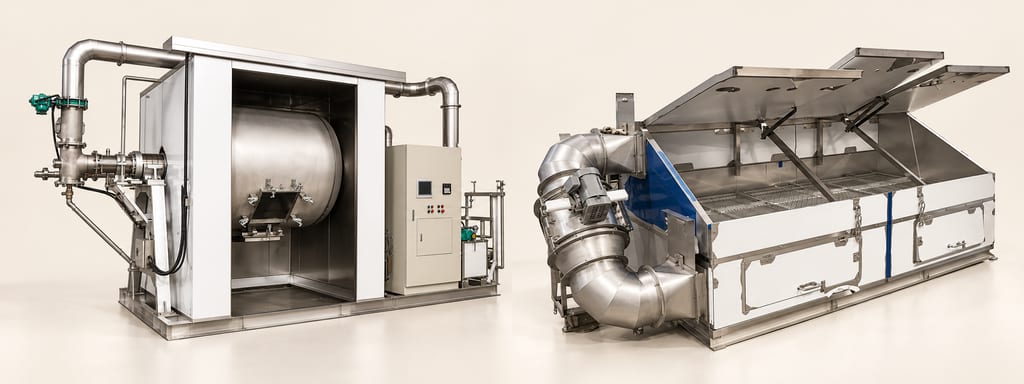
Industrial koji machines cultivate mold on prepared grain before sake, shochu, miso or soy-sauce production. Commercial designs include rotating drums and aerated beds.

Soft, spreadable Calabrian pork sausage made with a great deal of red chilli and fatty pork, stuffed into natural casings, sometimes smoked and matured while staying soft.

A way to add independent temperature logging to an existing food dehydrator without changing its built-in controls or protections. It is a monitoring method, not a rewiring plan.

Pleurotus cystidiosus is the abalone mushroom, a cultivated oyster-type fungus with dark brown caps that grows more slowly and is more demanding than other Pleurotus species.

A dark, balanced vinegar from Emilia-Romagna made by combining cooked or concentrated grape must with wine vinegar, then acetifying and refining it in wood under a protected specification.

A living dairy inoculum that starts controlled cream fermentation, developing acidity and aroma before sour cream or cultured butter is finished.

Adygean salt is a seasoned table salt associated with Adygea and the wider North Caucasian culinary tradition. Salt is blended with garlic and a variable selection of herbs and spices; the exact mix depends on the named style and maker.

The African Caesar-group mushroom, Amanita masasiensis, is a wild ectomycorrhizal species of central and southern African woodlands, eaten locally. The genus contains deadly poisonous species, so identification needs care.
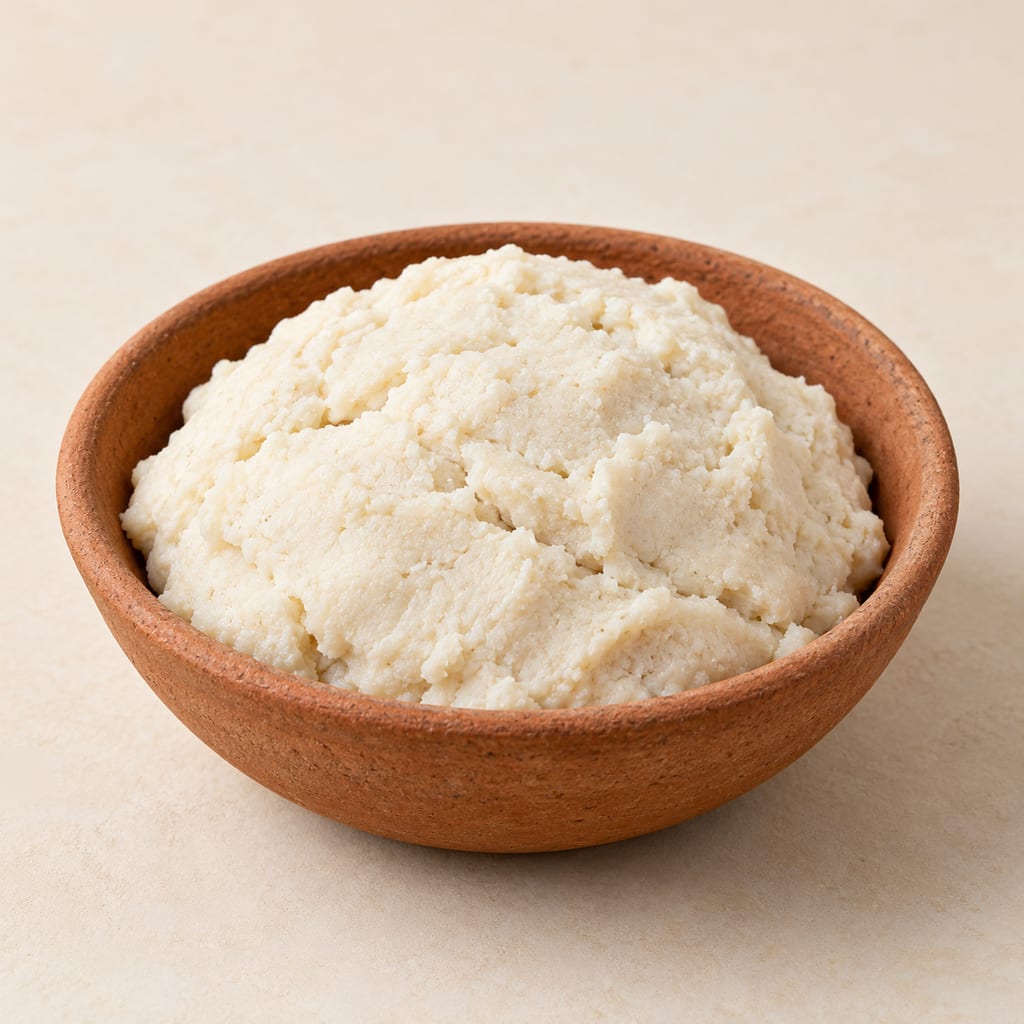
Ghanaian sour cassava dough fermented with traditional inoculum and drained during fermentation. It is used as a base for cooked foods such as banku and akple; process variants and safety outcomes differ.
No community contributions have been published for this entry yet.
Sign in to contribute. Published comments and photos are free to read.
National Research Institute of Brewing, JapanName · Form · Traditional use
Brewing TermsThe NRIB glossary maps 麹蓋 to koji-buta and describes a traditional rectangular stackable koji container.
It defines futa-koji as a traditional koji-making method using shallow wooden trays.
Cited in: The Japanese koji-buta; Places, scale and care
BC Centre for Disease Control, Environmental Health Services; updated December 2024Traditional use · Process · Limits
Safety of Fermented Foods: Section 3.10 Koji & MisoThe guideline states that traditional methods use wooden trays for koji, while modern methods use automated ventilated equipment.
It names manual loading, kneading, piling, mixing, rearranging and finishing stages; mixing releases heat during koji growth.
Cited in: The Japanese koji-buta; A shallow bed, with cloth and air
Nordic Food LabModern method · Tray variant
Koji – history and processThe 2013 process article describes a thin barley layer in a stainless gastronorm tray beneath a warm damp cloth and describes furrowing it to release heat.
This is a modern steel-tray method and is not the same form as a traditional wooden koji-buta.
Cited in: Modern tray variants
Fermentation CultureMaterials · Cloth · Modern adaptation
What Koji needs to grow and how to provide for its needsThe writer says wooden trays absorb excess moisture and help regulate humidity, and describes cloth-lined baking trays and perforated steel as alternatives.
The article says cedar is traditionally used for trays in Japan; its author in Austria chose spruce because cedar was difficult and expensive there.
The article's photograph titled “The tray I use” shows a current cloth-and-wood setup, not a traditional Japanese specimen.
Cited in: A shallow bed, with cloth and air; Modern tray variants; Places, scale and care
Kawashimaya the JapanstoreName · Modern model · Care · Materials
Koji Tray (Morobuta/Kojibuta) Size S – Locally Made, 100% Natural Japanese Cedar WoodThe retailer calls its cedar product kojibuta or morobuta and describes hand-made Japanese cedar construction.
The retailer provides dimensions, capacity and care for this particular size; these are not universal tray specifications.
Cited in: The Japanese koji-buta; Places, scale and care