Built structures
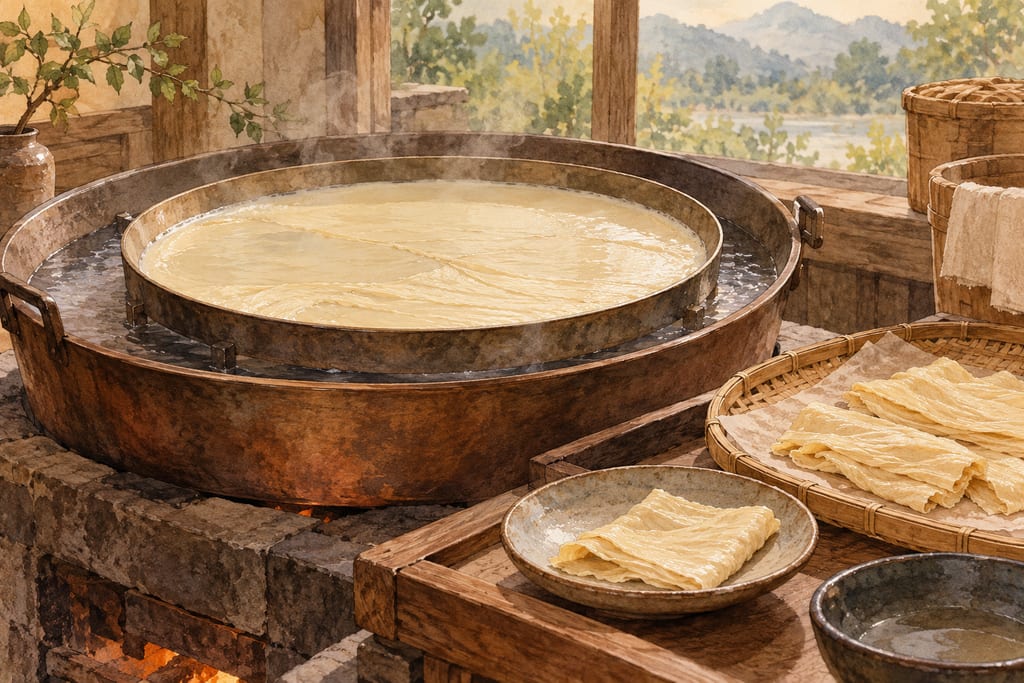
Shallow pan over controlled hot water (yuba pan)
A wide shallow pan of soy milk standing in a controlled hot-water bath, so that the bath heats evenly while the open surface forms film after film of yuba.
 FermenteaWhere food goes to change
626 sourced equipment pages: vessels, tools, appliances and built structures.
A wide shallow pan of soy milk standing in a controlled hot-water bath, so that the bath heats evenly while the open surface forms film after film of yuba.
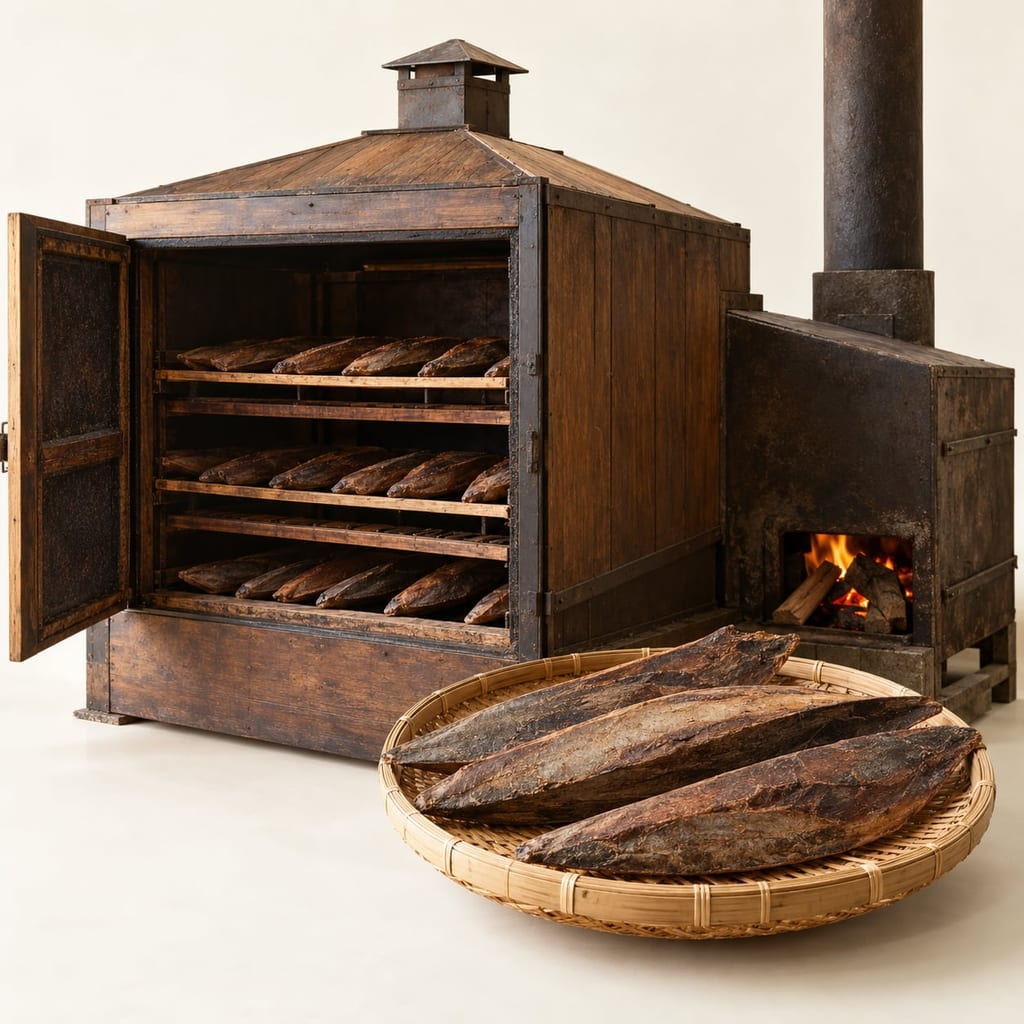
Enclosed cooking, smoking and drying equipment used in the multi-stage process that makes katsuobushi, the dried, smoked and mould-treated bonito of Japan, in repeated stages.
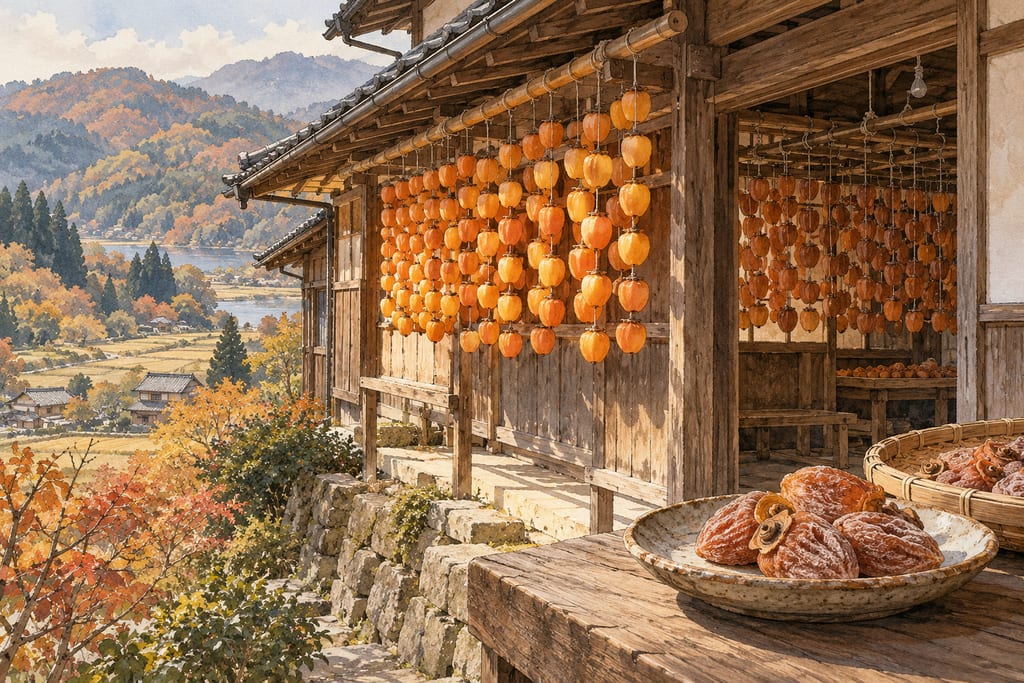
A wooden hut attached to a house in Shimane Prefecture, Japan, where persimmons are hung in the sun and wind and then dried indoors for hoshigaki.
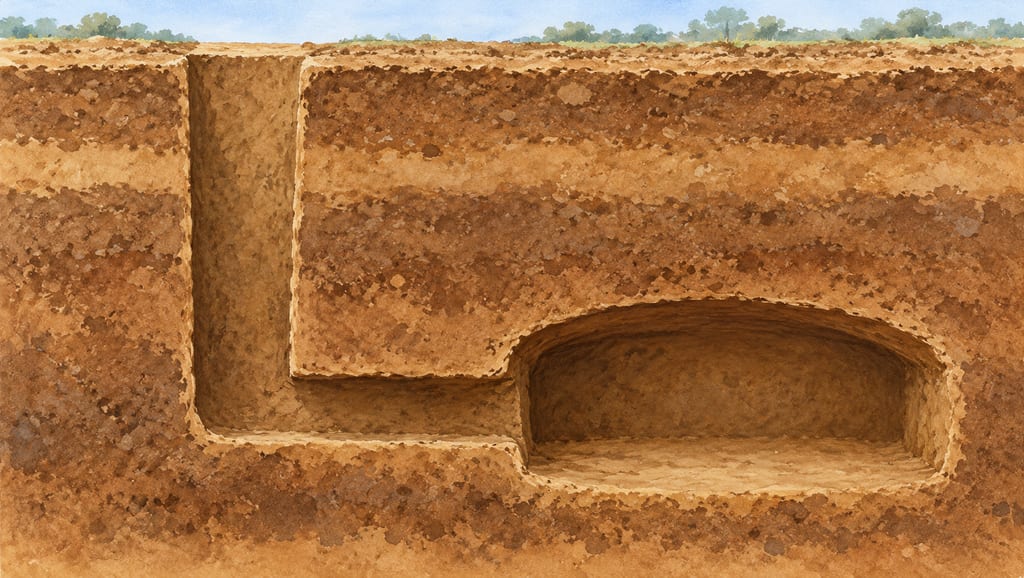
A source-bounded account of Edo’s subterranean kōji chambers: shafts led through narrow passages to low rooms cut into Kantō loam for cultivating kōji. Excavated examples vary by site.
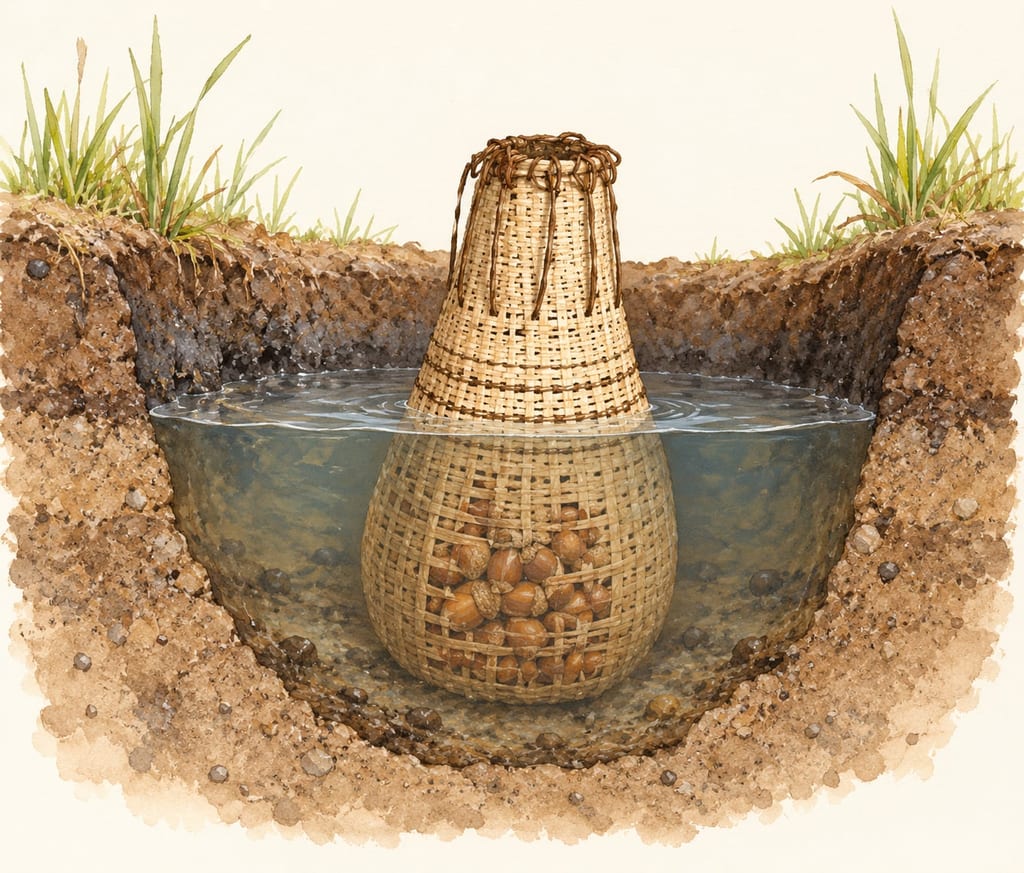
At Higashimyo in Saga, 155 round Early Jōmon storage pits were about 40–70 cm wide and 1 m deep. More than 700 baskets were recovered; Saga City interprets acorn soaking as a possible use, not a documented arrangement.
Show on map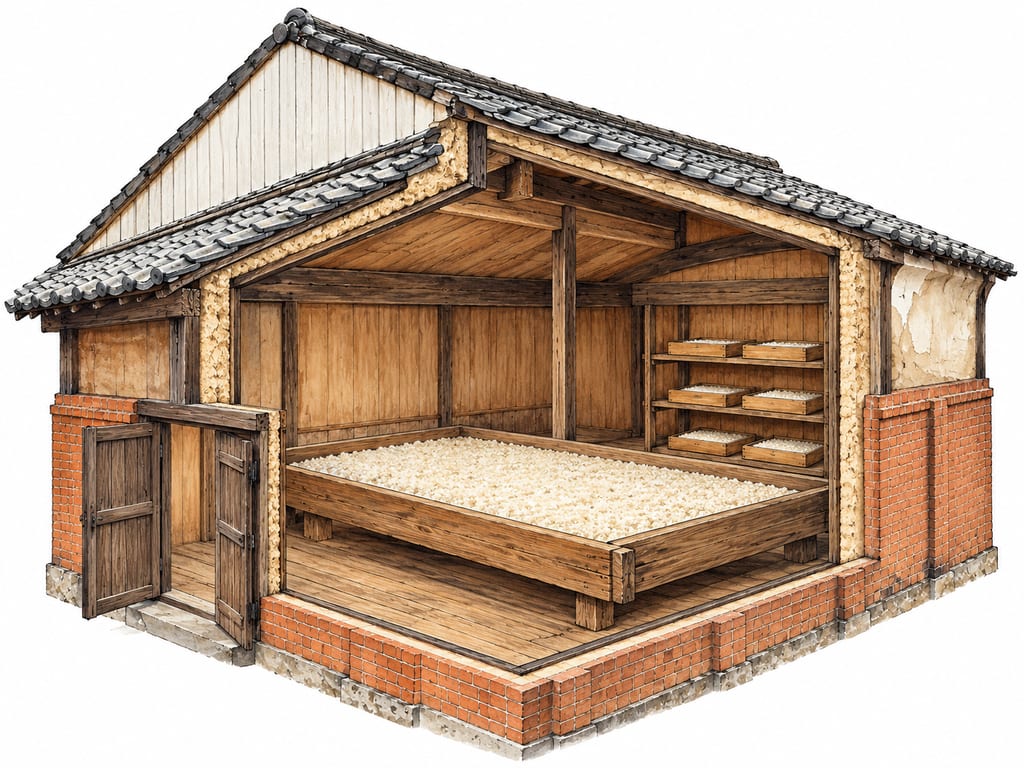
A Japanese koji-making work area may combine a broad toko bed, tana shelves for trays and an insulated koji-muro room. The terms describe distinct scales; sources document more than one working arrangement.
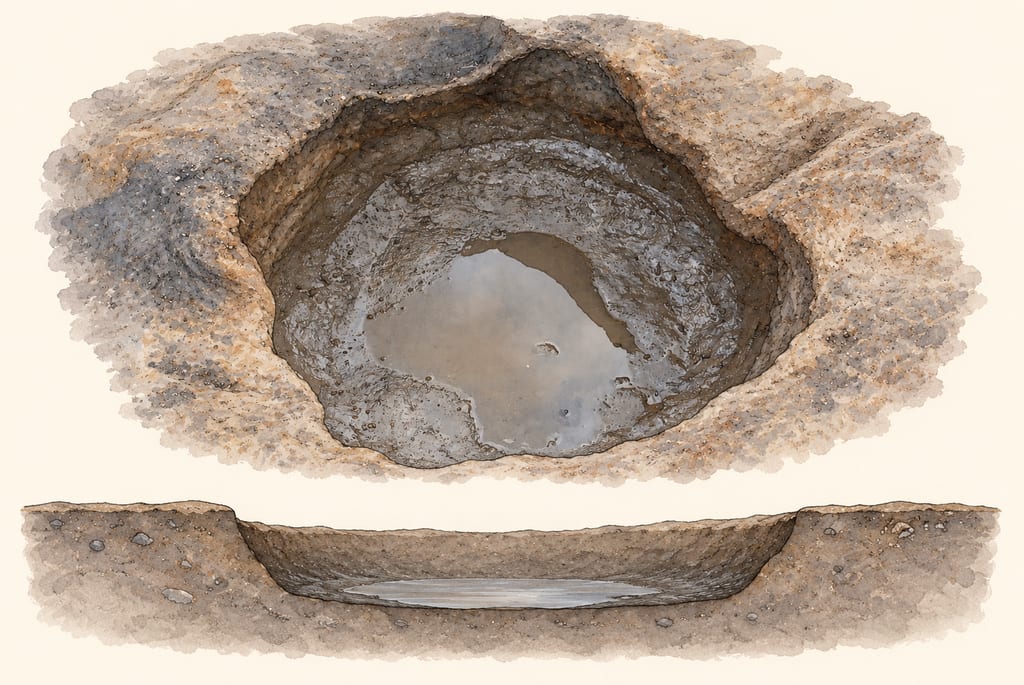
At Maeda Site in Aira, southern Kyushu, a late Middle Jōmon wetland held 72 pits associated with more than 100,000 acorns. The pits were dug in a groundwater-fed valley; their use may have included storage or soaking and sorting.
Show on map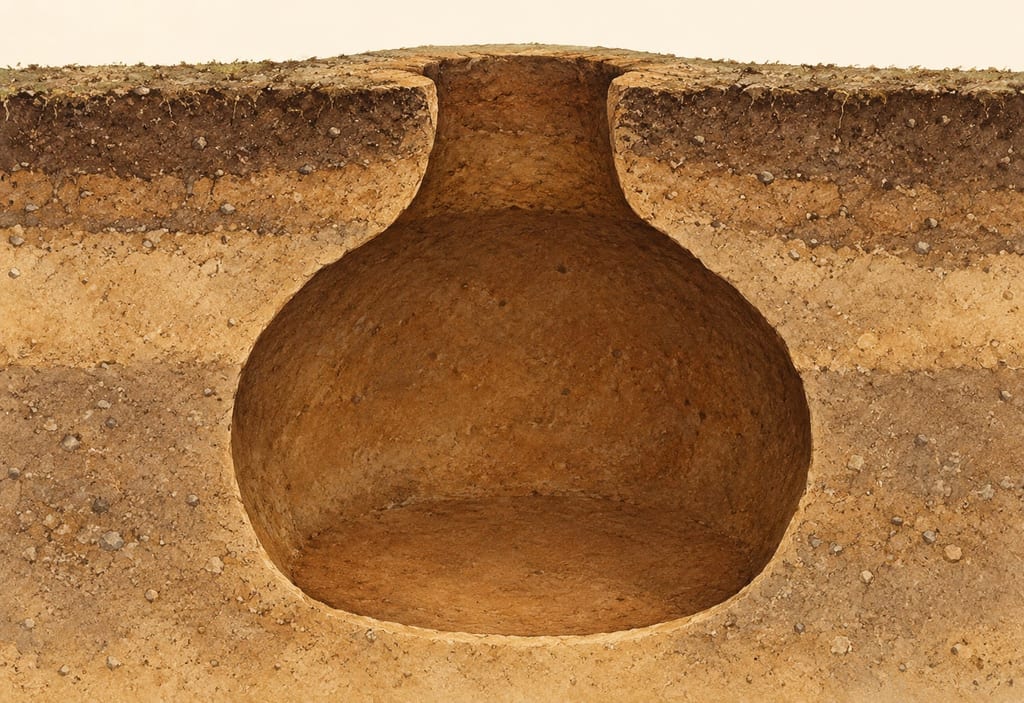
At Sannai Maruyama in Aomori, some Jōmon storage pits had a narrow mouth and broad floor, with larger examples reaching two metres deep; nuts or chestnuts are the proposed stores.
Show on map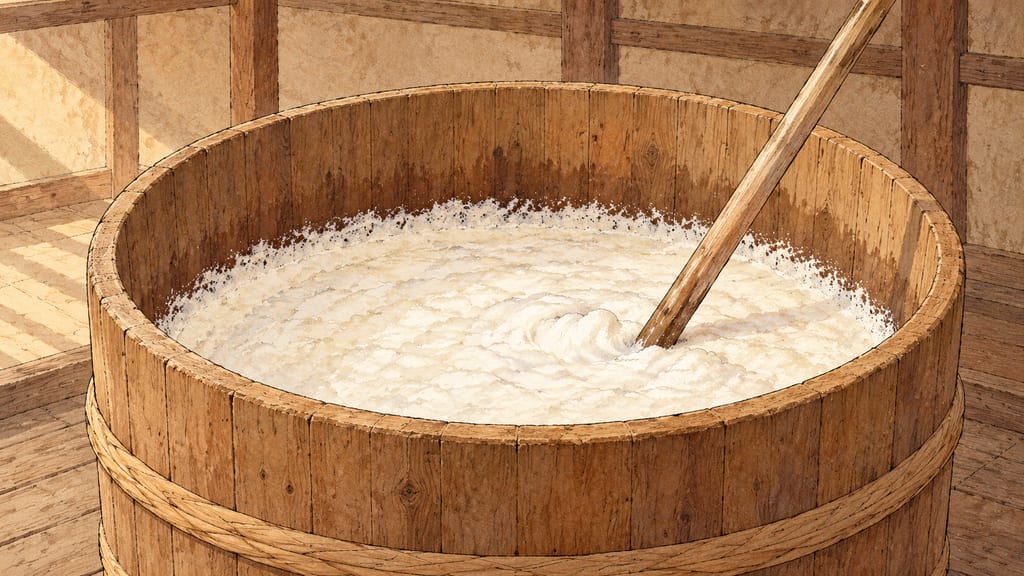
An upright, open-topped stave vat used for fermenting sake mash. Terada Honke documents a current wooden-vat practice and a new Sanbu-sugi cedar vat completed in 2023.

A small electric incubator holds jars at a selected temperature for yogurt and other documented warm food preparations. Controls, capacity and vessel arrangement vary by model.
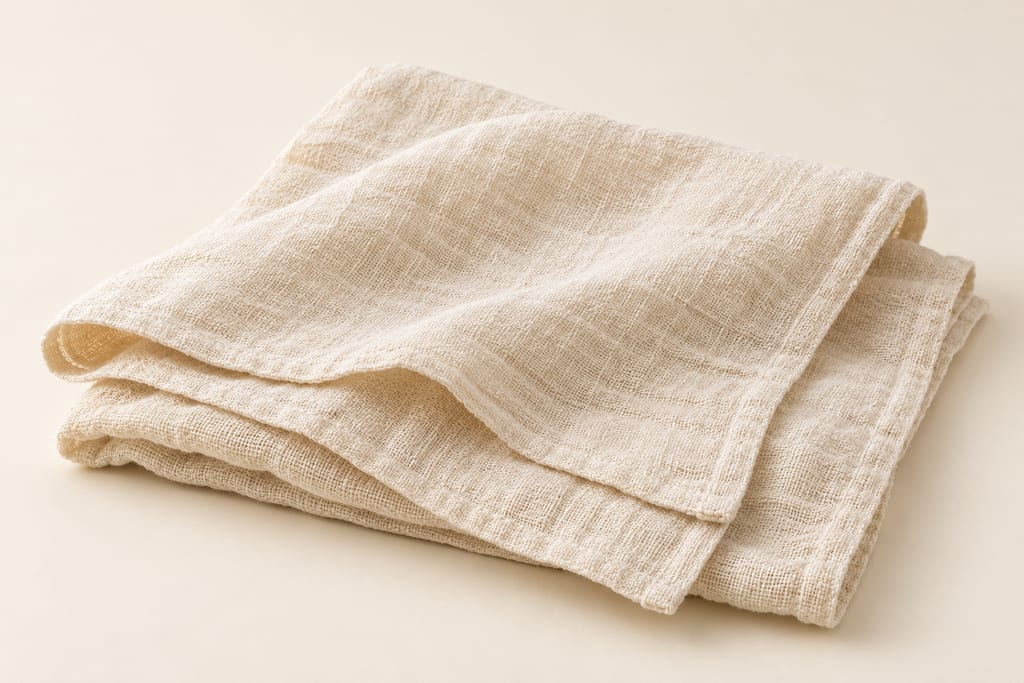
A cloth listed for steaming rice in a rice-koji method and identified as cloth for a koshiki in a brewery-museum caption; its fiber, weave, and size are not specified.
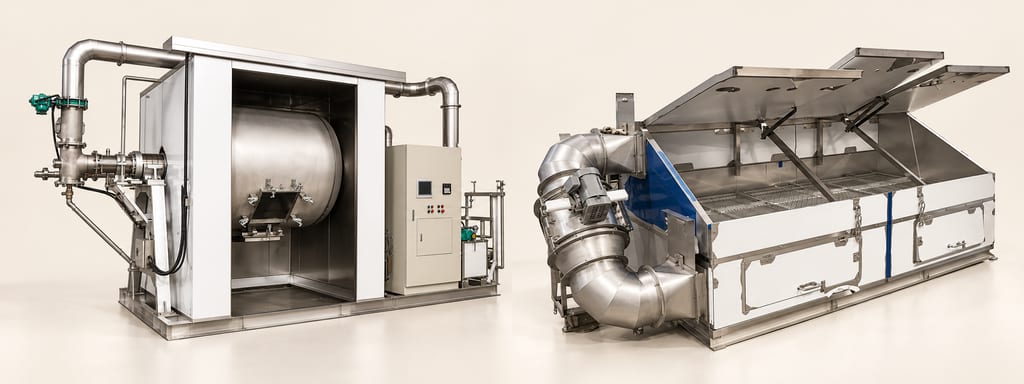
Industrial koji machines cultivate mold on prepared grain before sake, shochu, miso or soy-sauce production. Commercial designs include rotating drums and aerated beds.
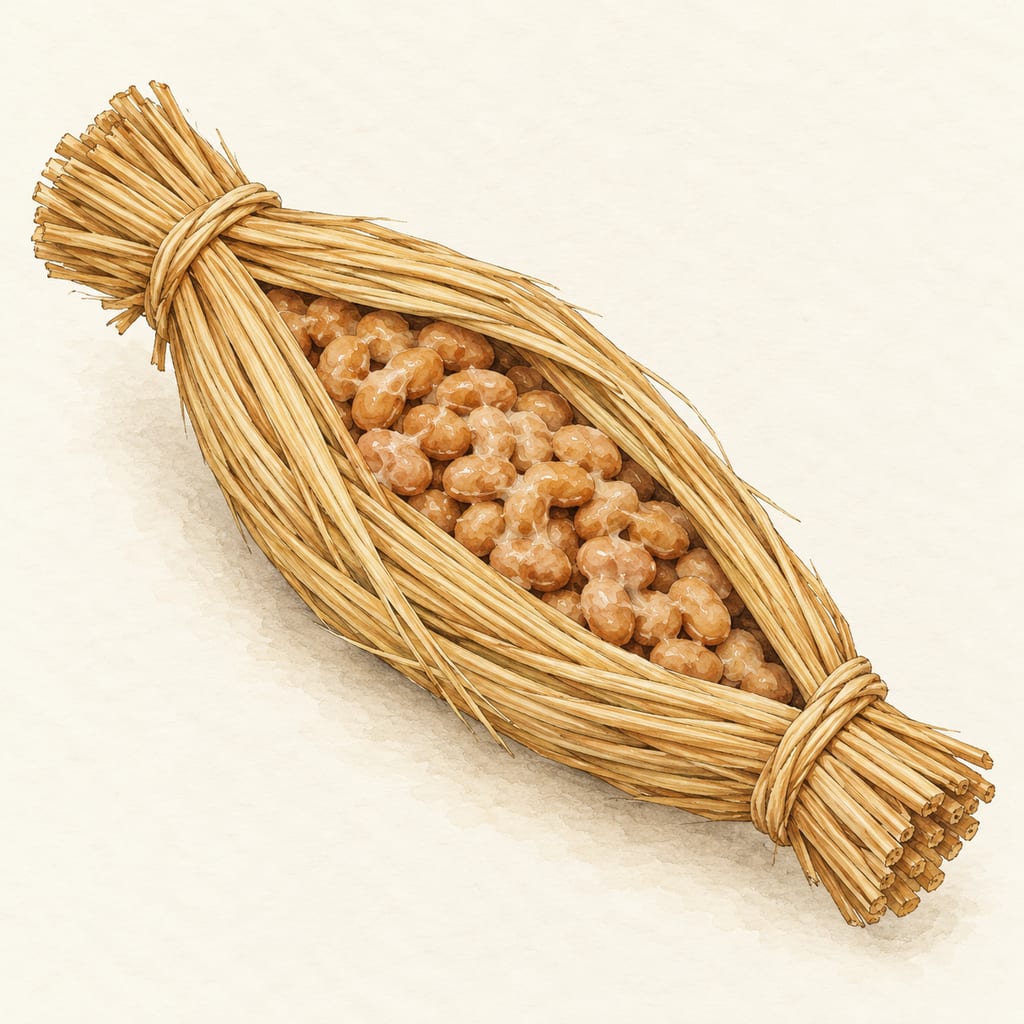
A natto warazuto is a rice-straw bundle that encloses soybeans during natto fermentation. Documented Japanese forms vary by region: Ibaraki examples include boat-like bundles, while Yamagata accounts describe straw tubes.
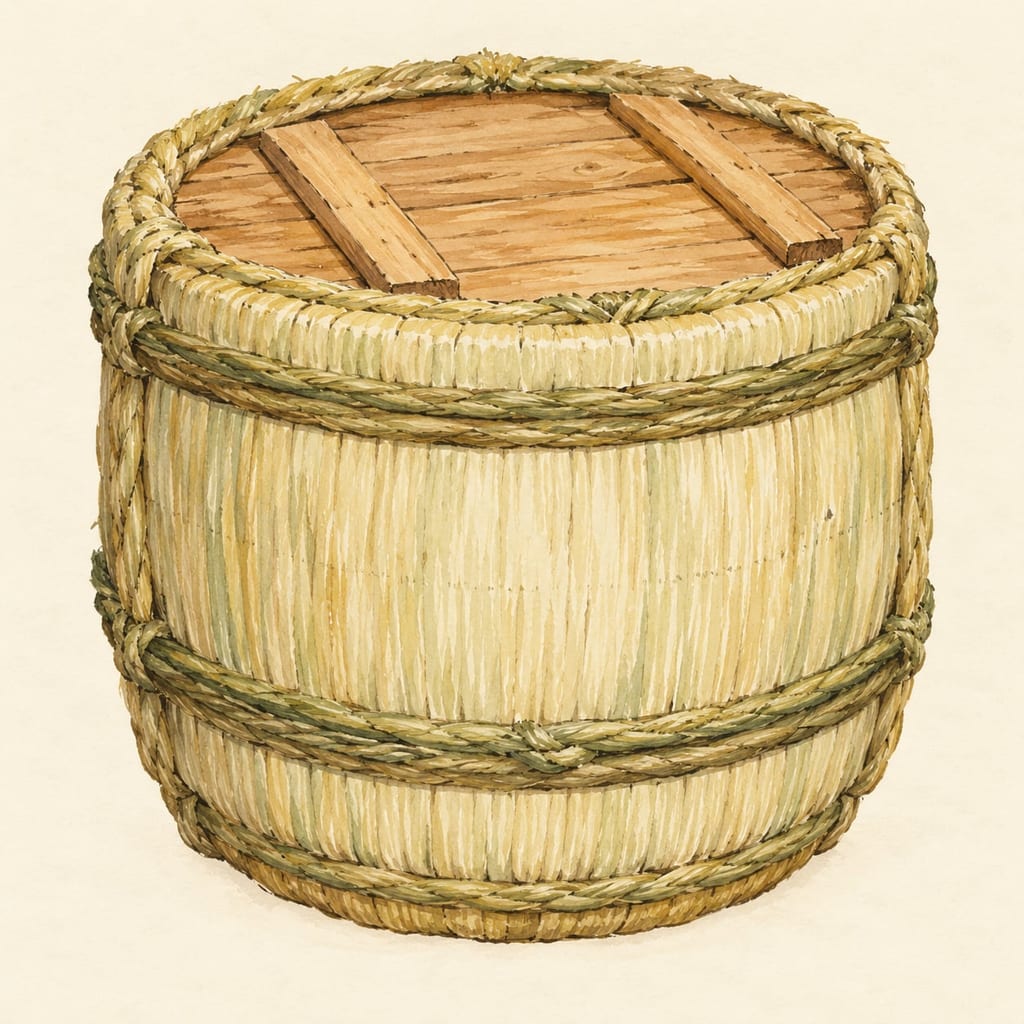
A sake taru is a short wooden cask for holding and presenting finished sake; traditional examples may show bare cedar or a woven-straw covering.
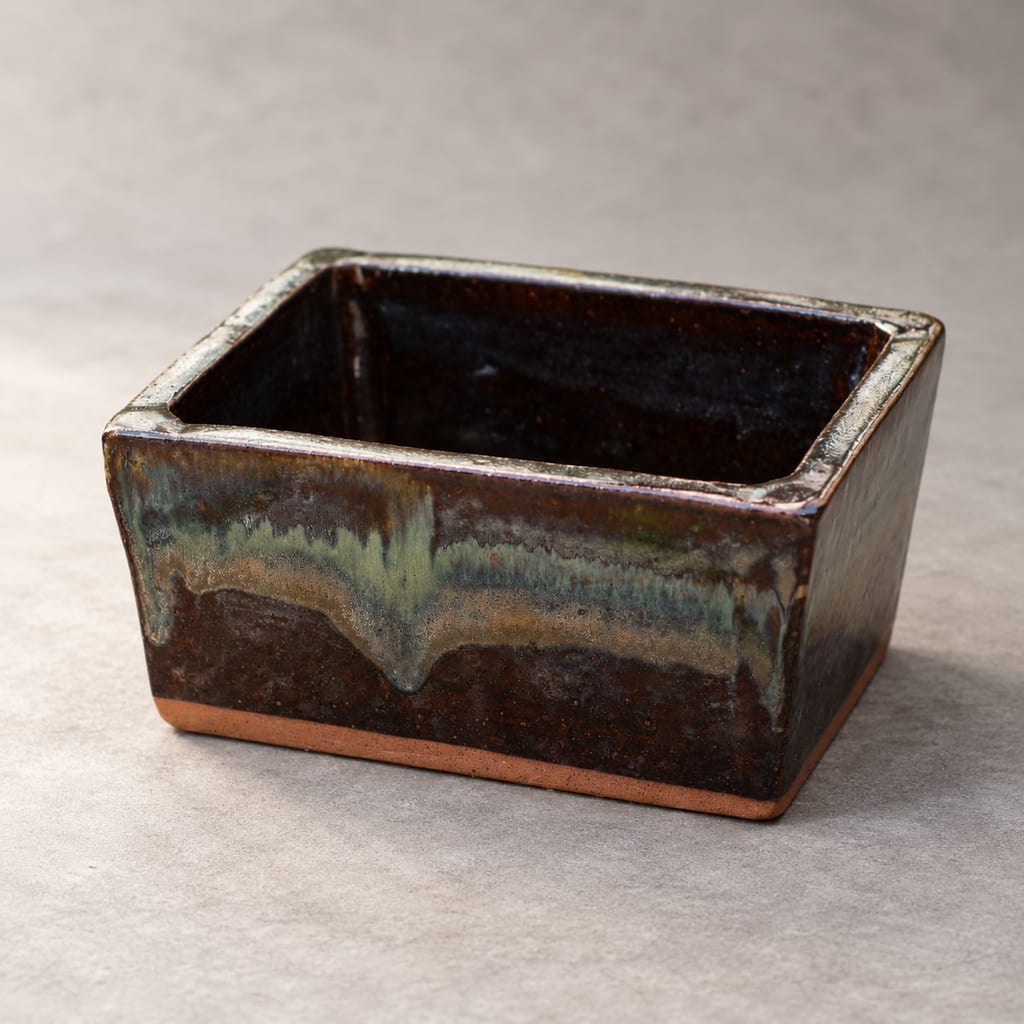
A rectangular Aizu Hongo-yaki ceramic bowl made for layering Hokkaido dried herring with sanshō leaves in Aizu's nishin no sanshōzuke; it is documented as a marinating dish, not fermentation equipment.
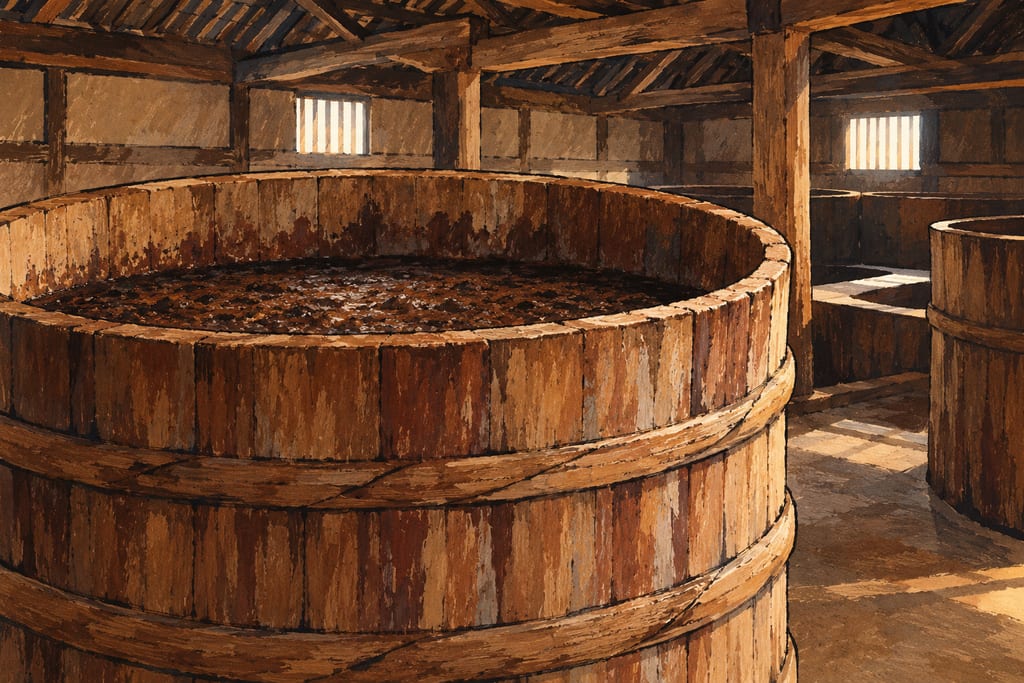
A shoyu kioke is a very large upright wooden vat for fermenting and ageing soy-sauce mash; Japanese sources document cedar-stave examples held together by hoops.
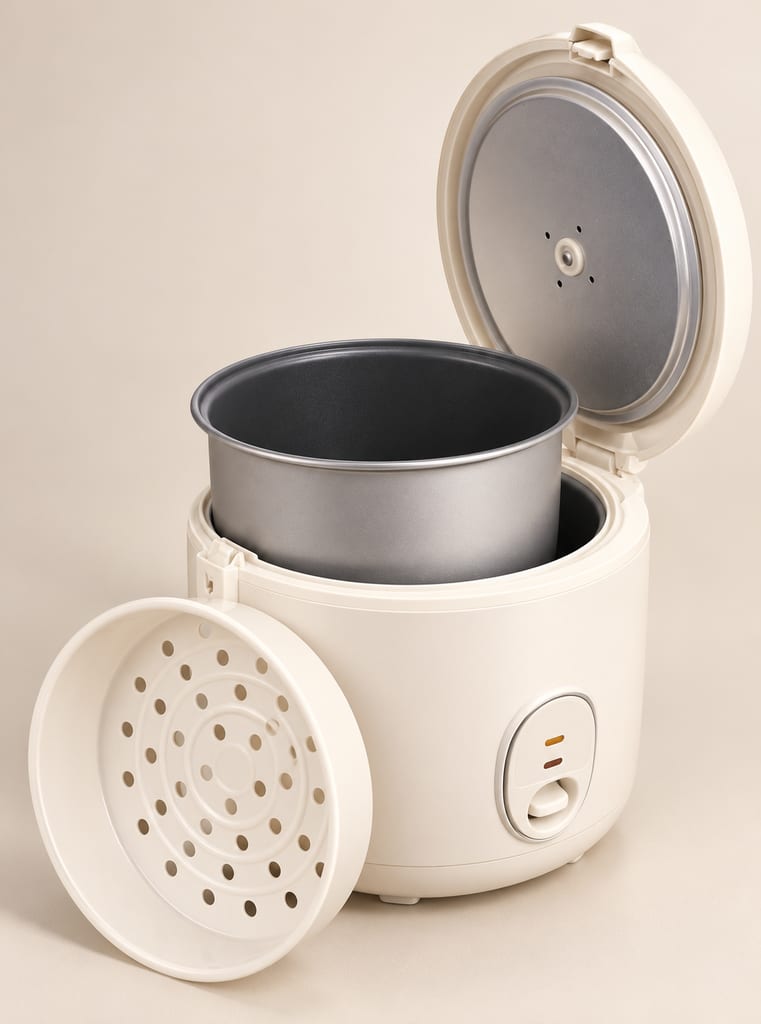
A modern electric pot that cooks rice and may provide a model-specific keep-warm stage. Documented Japanese and Korean recipes use it for koji amazake, sikhye and ssal-jocheong; measure warm settings rather than assume.
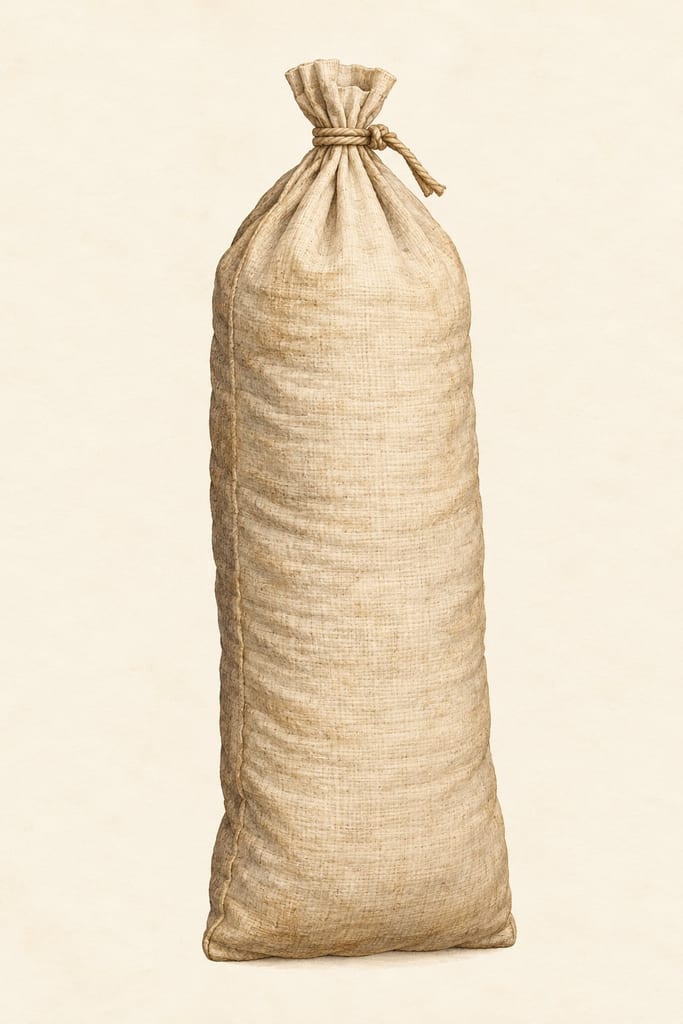
A sake pressing bag holds moromi while cloth separates liquid sake from rice-and-yeast lees. Traditional fune presses stack filled bags; material and shape vary by method and period.
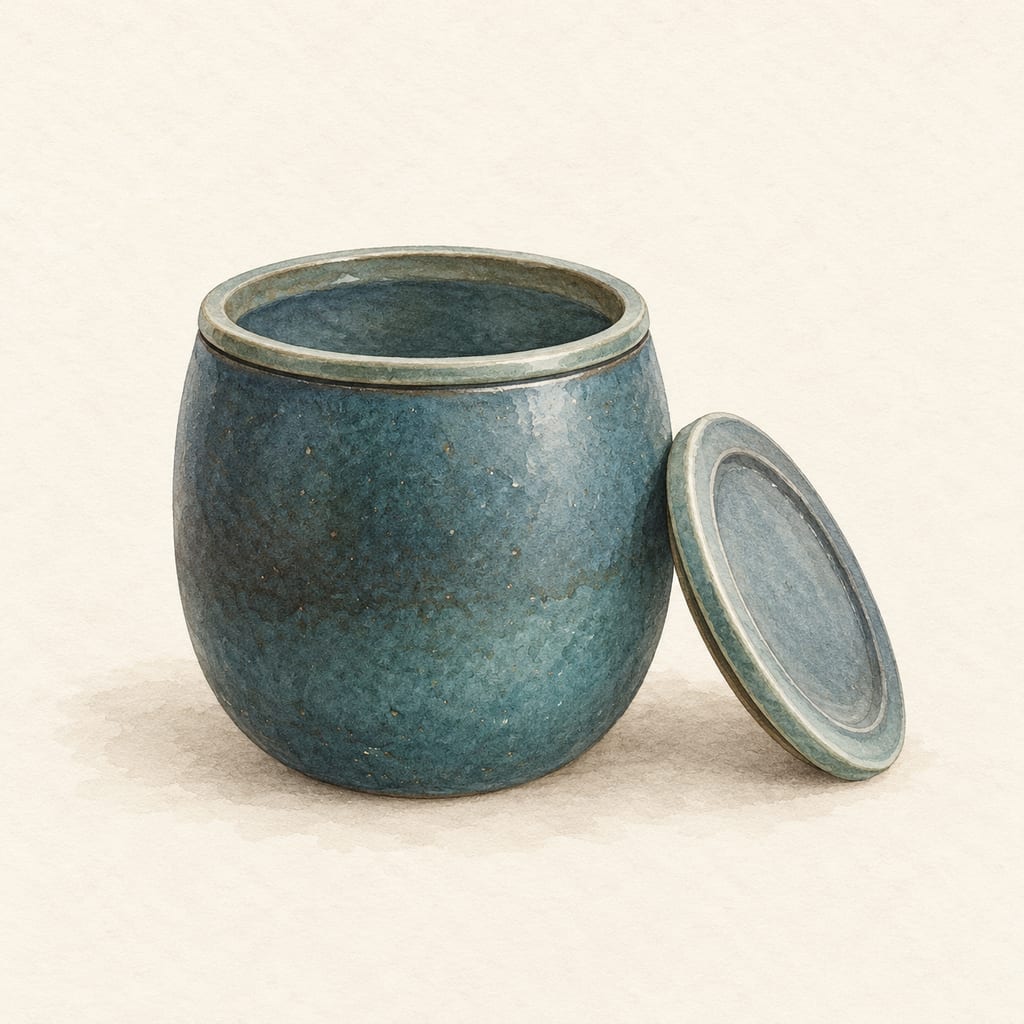
A nukadoko container holds the moist rice-bran bed in which vegetables are repeatedly pickled. Japanese households have maintained these beds in ceramic jars, while contemporary options also include compact ceramic and enamel designs.
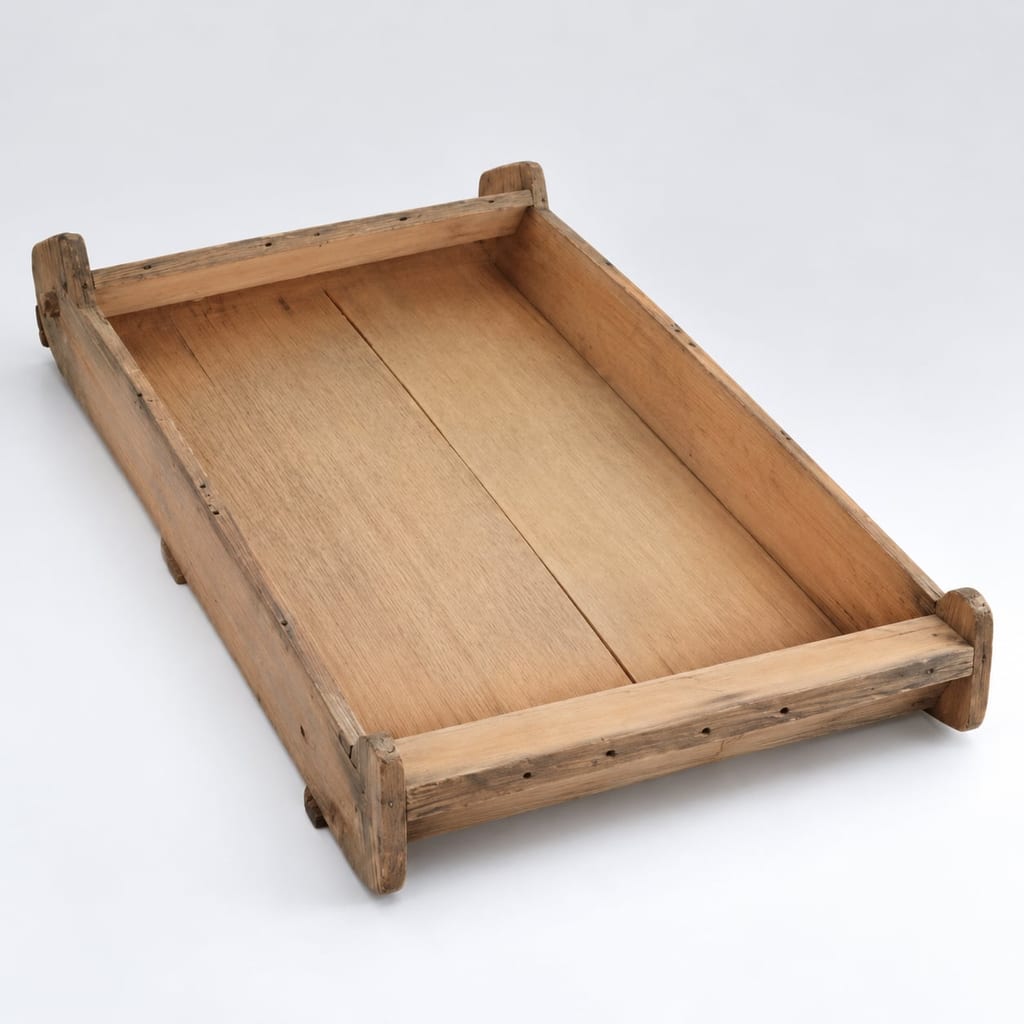
A shallow tray or basket carries grain or another solid food material during a mold-growing stage. Japanese koji trays and Southeast Asian bamboo trays share a broad function, but have distinct forms, histories and local uses.
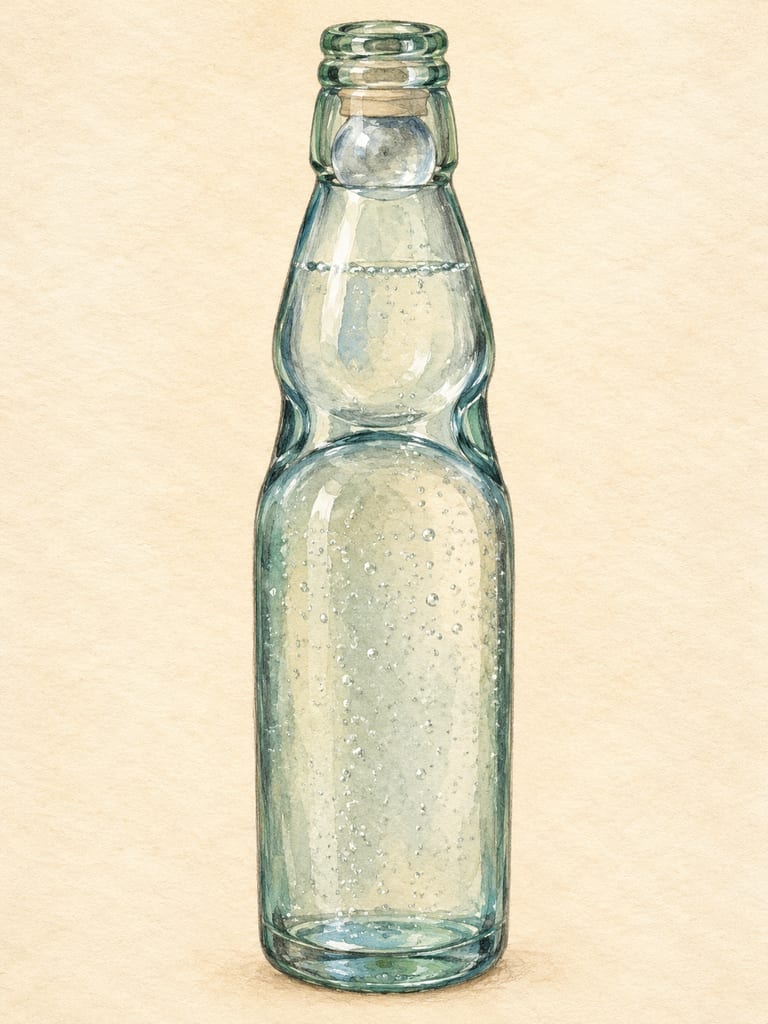
A marble-stoppered bottle is a glass carbonated-drink bottle sealed by a glass marble pressed against a rubber washer. Its Codd neck holds the marble at the mouth when sealed and gives it a side pinch after opening.
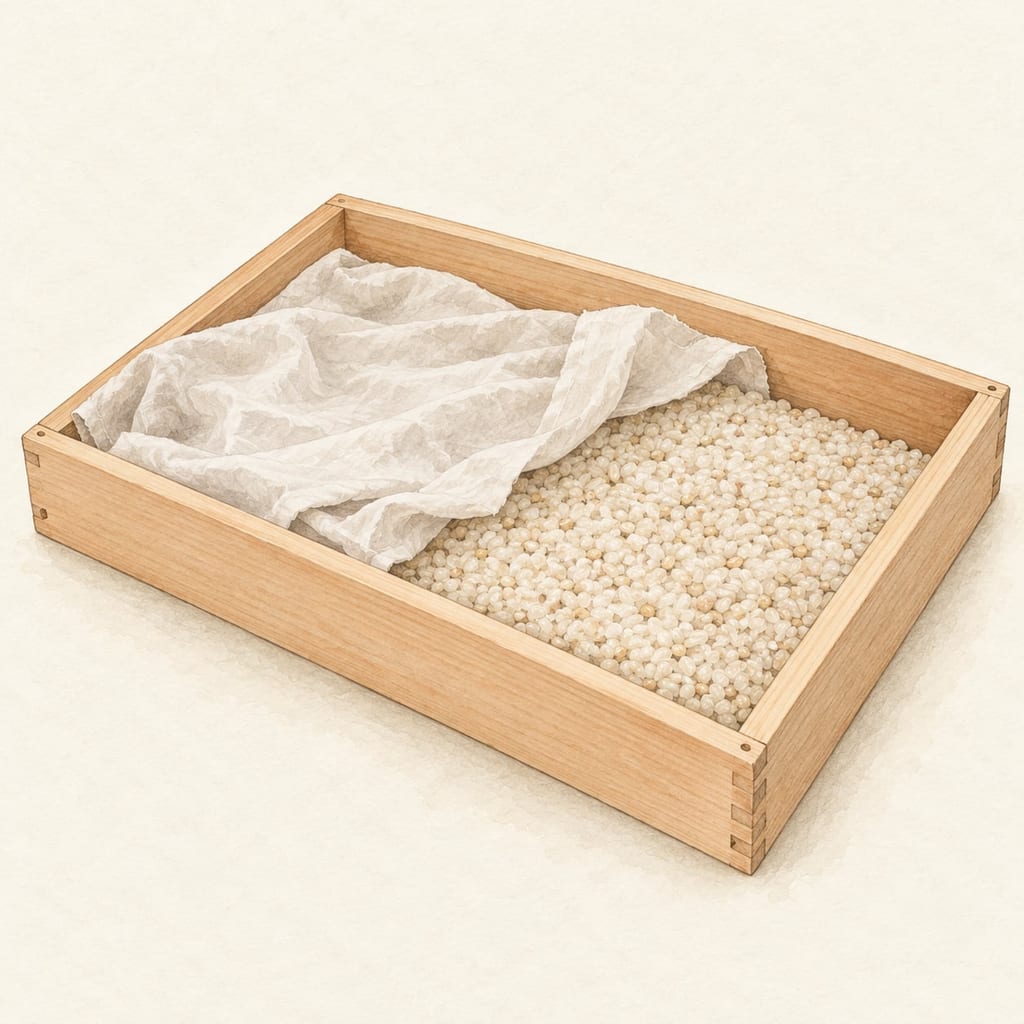
A koji-buta is a shallow wooden tray for spreading grain as it grows into koji. Japanese sources document a traditional form, while modern methods also use cloth-lined or steel trays; size and construction vary.
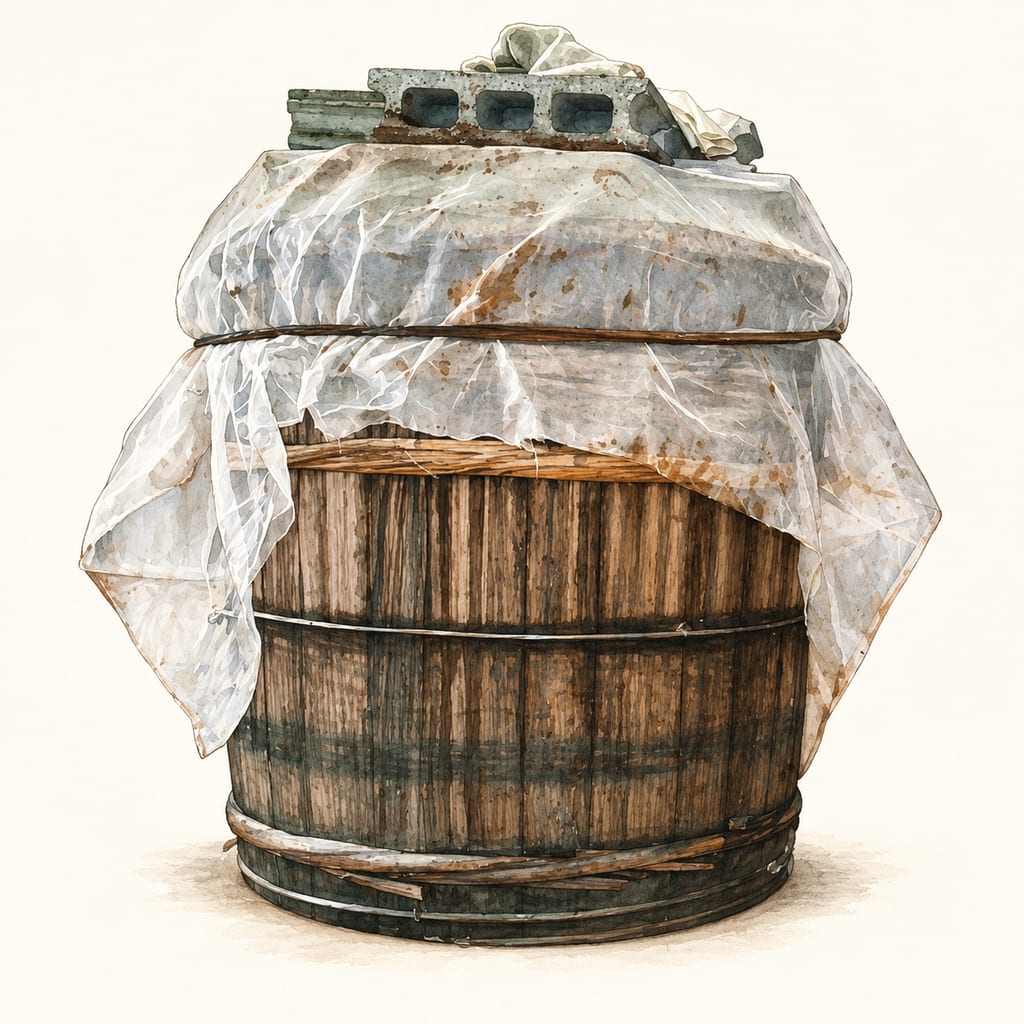
A Goishicha weighted tub holds tea leaves and steaming liquor during the second, wet fermentation stage in Ōtoyo, Kōchi. A current producer photograph documents one covered wooden tub under concrete-block weight.
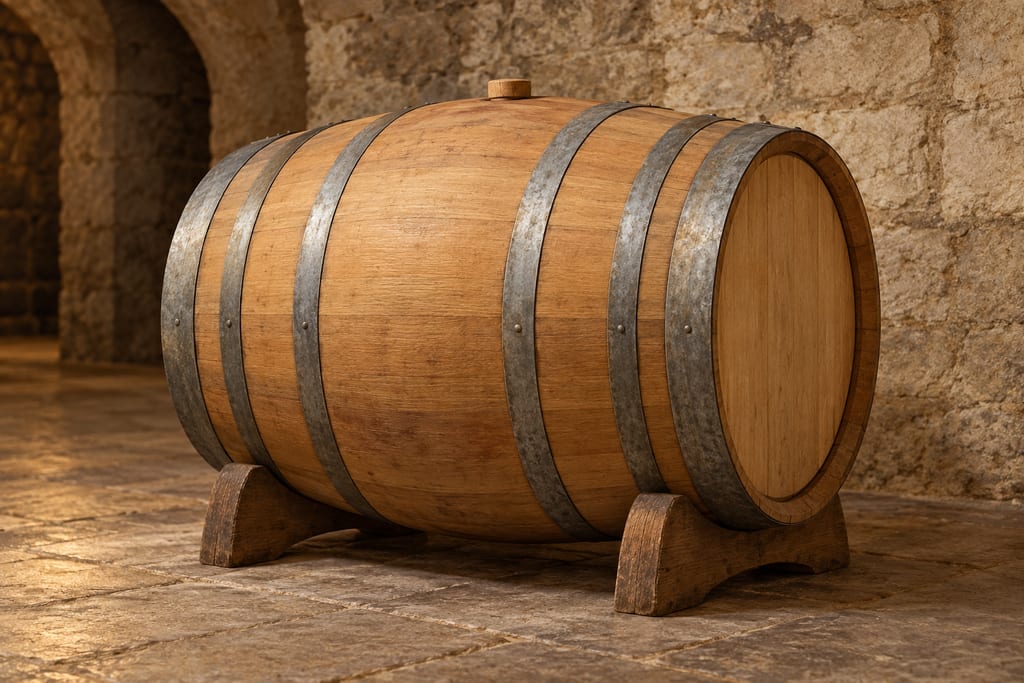
Coopered vessels use shaped staves and hoops, but portable barrels, large foeders and upright wooden vats serve different roles. Materials and uses vary by place and process.
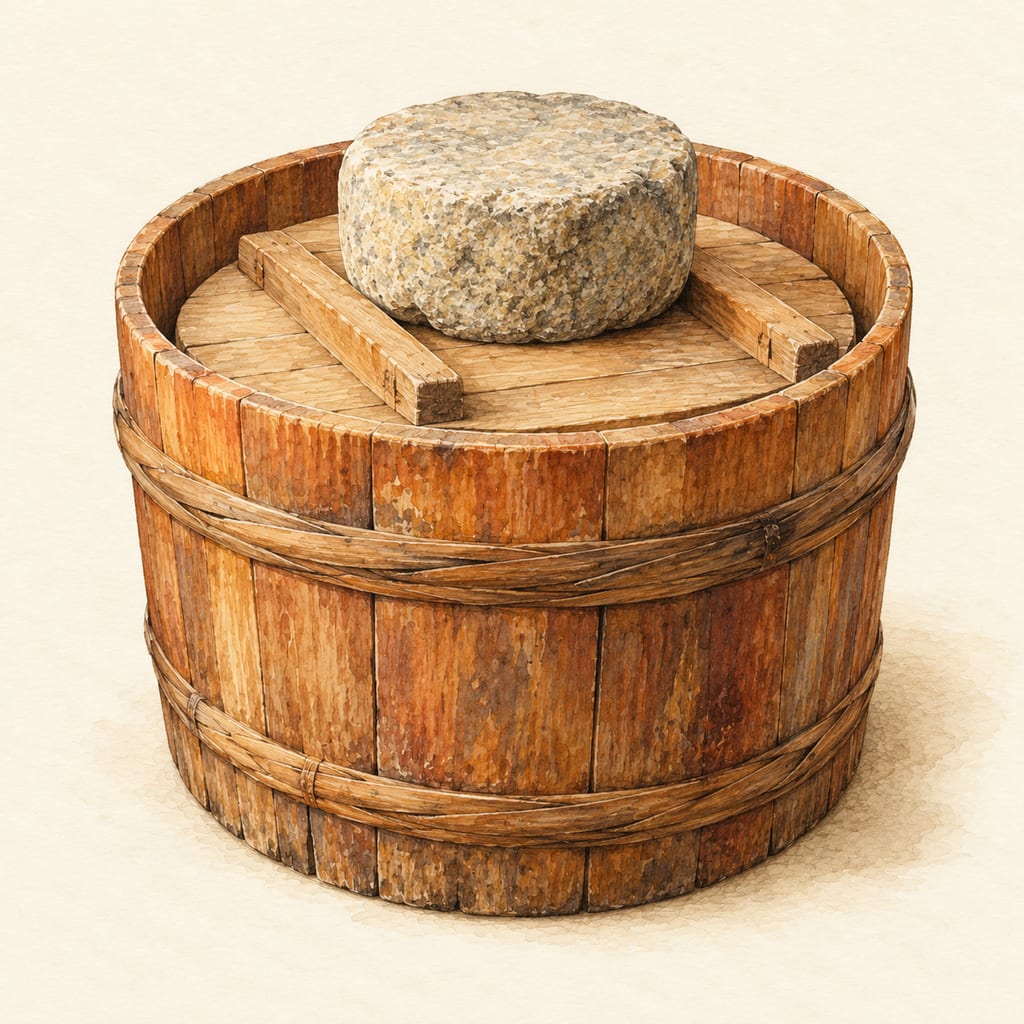
A narezushi pressing tub is a wooden bucket or barrel for packing salted fish and rice under a cover and weight. Regional methods vary; some also water-seal the tub.
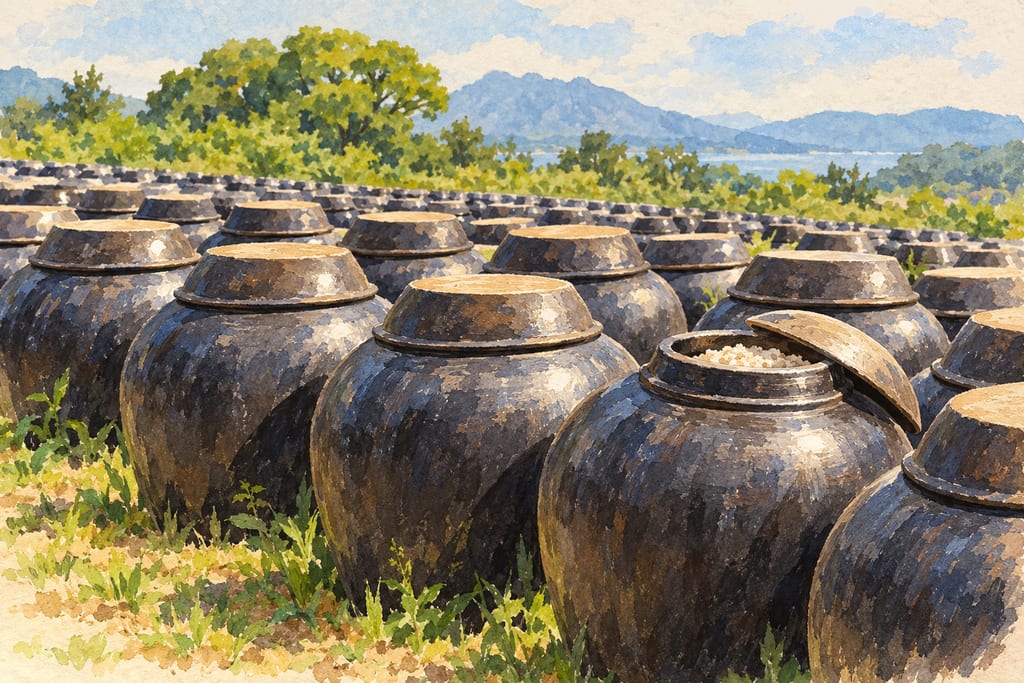
The kurozu kame is a dark ceramic jar used outdoors in Kagoshima to make and mature kurozu. At Sakamoto, the jar serves as the vessel for successive stages from rice conversion through vinegar fermentation and aging.
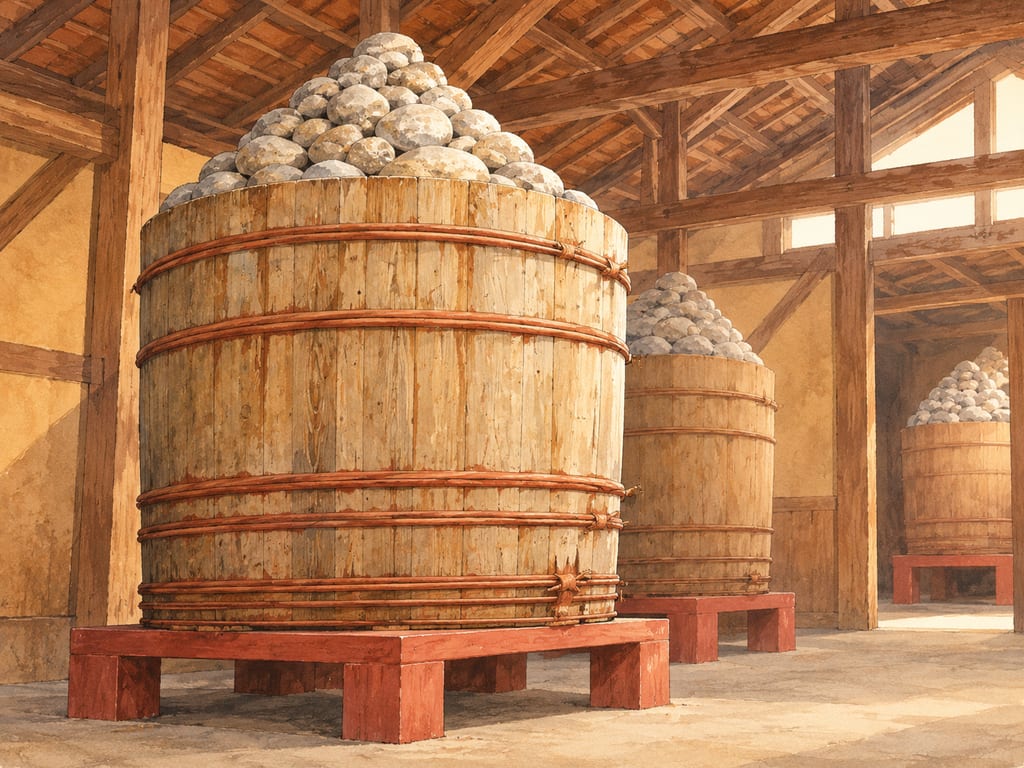
A coopered wooden kioke used by Kakukyu in Okazaki for Hatcho miso: a broad vat capped with a carefully stacked pyramid of river stones during maturation lasting more than two years.
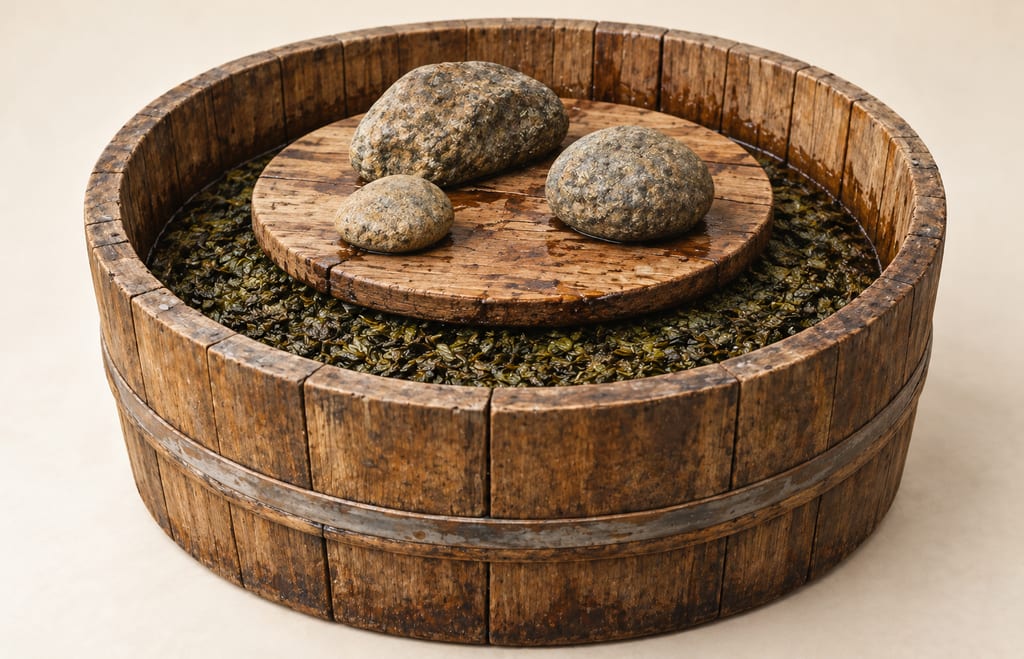
A large wooden tub used in Tokushima to ferment heated, worked Awabancha leaves with their cooking liquor. Its size and construction details are not specified in the sources.
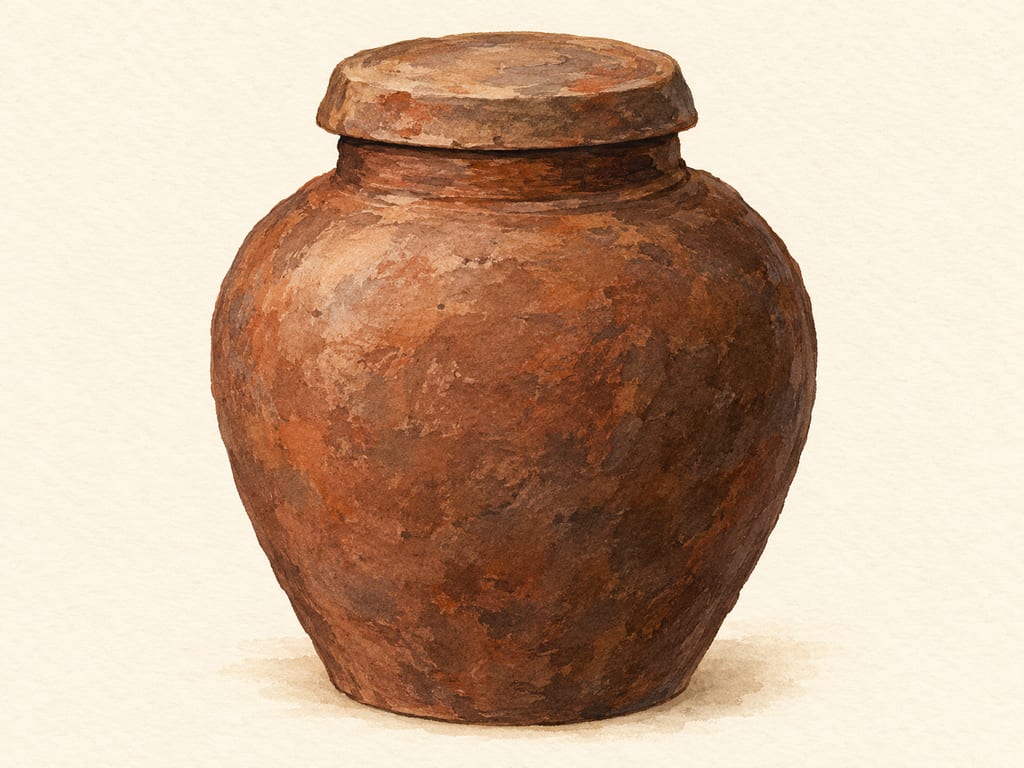
A ceramic jar used in Okinawa to store and mature distilled awamori into kusu; it holds the finished spirit after distillation rather than fermenting the rice mash.