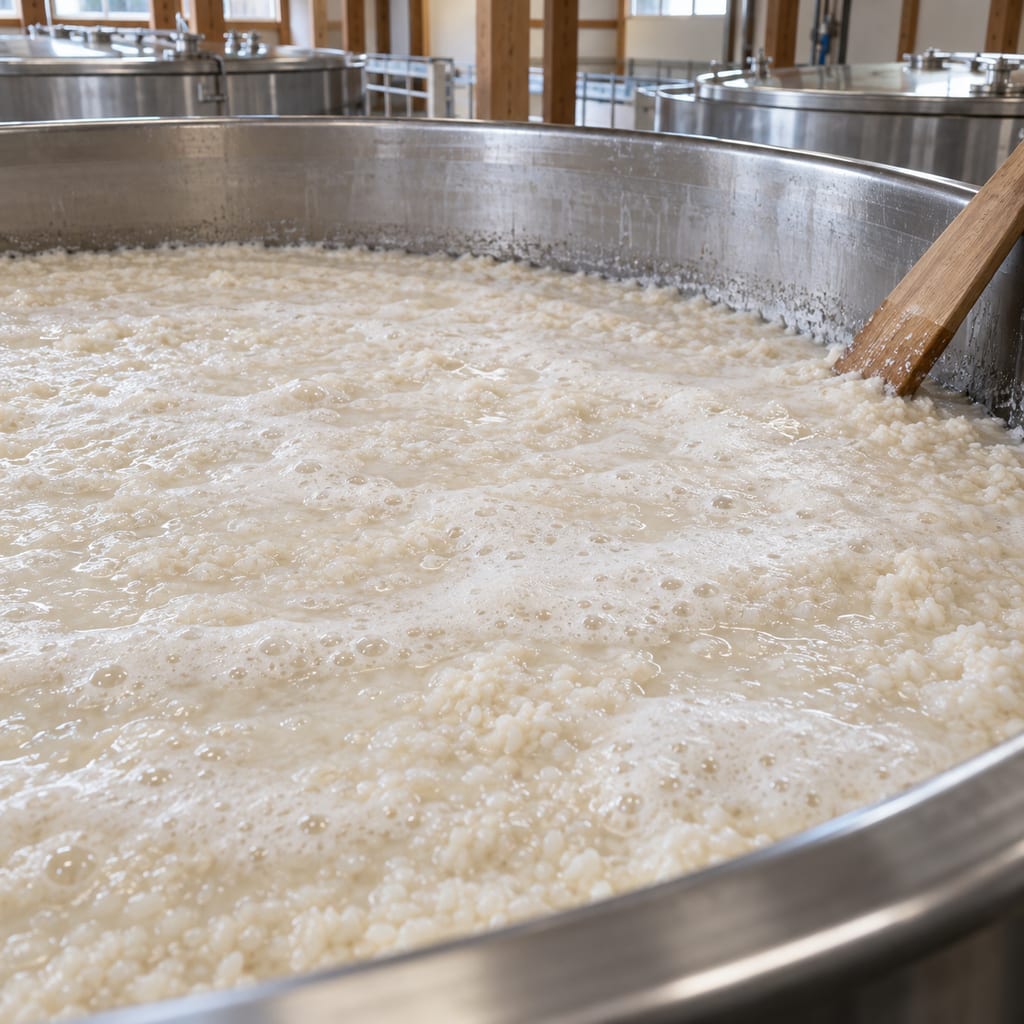
Nihonshu / seishu (Japanese rice sake)
Nihonshu (日本酒), or seishu, is Japanese rice sake: steamed rice, rice koji, water and a yeast starter ferment together in one mash, which is then pressed and finished.
 FermenteaWhere food goes to change
Equipment · Barrels and casks
樽酒 · taruzake cask · 菰樽 (komodaru)
A sake taru is a short wooden cask for holding and presenting finished sake; traditional examples may show bare cedar or a woven-straw covering.
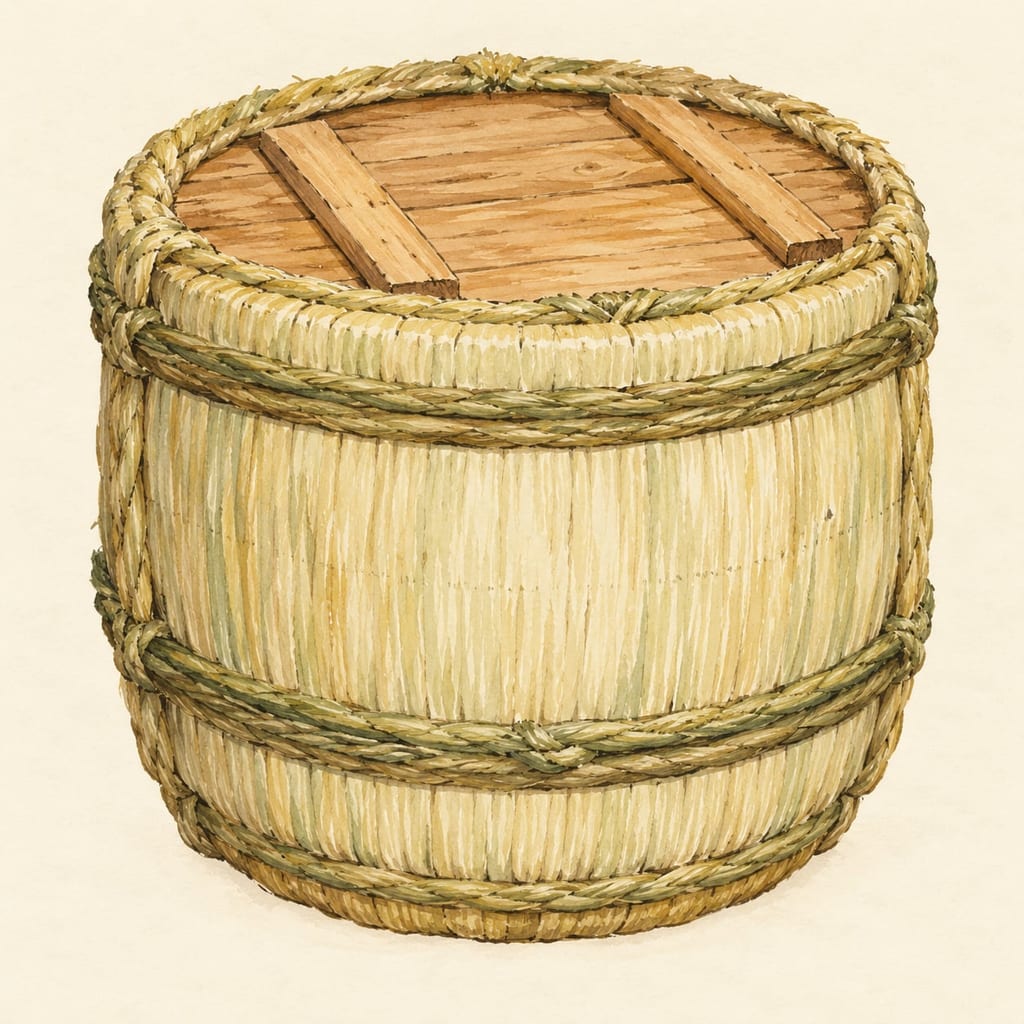
A sake taru is a short, coopered wooden cask used after sake has been brewed. It can hold sake while cedar aroma enters the drink, carry the finished beverage, or serve it at a gathering. It is not the primary fermentation vessel: Kiku-Masamune describes sake aged in a 72-litre cask and then bottled, while Kamoizumi sells finished sake in a cask for celebrations.
This distinction matters because Japanese sake is first brewed through a rice-and-koji process. The taru belongs to the later stage of contact, presentation and service. Its role is closer to a wooden maturation or serving cask than to the large vats in which the mash ferments.
The underlying vessel is made of cedar boards joined as a round cask. Kiku-Masamune describes two visible forms: honnidaru, with colored straw matting wrapped around the outside, and hadaka-taruzume, whose wood remains exposed. The straw wrapping marks a particular presentation style; it is not present on every taru.
Kiku-Masamune identifies Yoshino cedar, grown in the Yoshino area of Nara Prefecture, as a traditional wood for sake casks and attributes the style’s aroma to the wood. Its page distinguishes cask-sold taruzume sake from sake aged in a cask and then sold in bottles. Those are related products, but the vessel remains the same sort of finishing and serving equipment.
A current Kamoizumi example is a 72-litre honkomo-maki cask: its product page lists a diameter of 56.5 centimetres, height of 54 centimetres and weight of 86 kilograms. Those measurements describe that product only. Kiku-Masamune lists 18, 36 and 72-litre sizes, which are examples of current formats rather than universal dimensions.
The cask’s cedar contact is a defining part of taru sake. Kiku-Masamune describes Yoshino cedar as valued for its grain and fragrance, and says its 72-litre cask-aged sake is bottled when the cedar aroma has developed. The producer also uses the names tarunaka for sake at about half a cask and taruzoko for sake remaining at the bottom; these terms describe its account of aroma and color, not separate vessel types.
Casks also serve as a public presentation for celebrations. Kiku-Masamune shows both straw-covered and bare examples at special events. Kamoizumi describes its straw-wrapped 72-litre product for kagami-biraki celebrations and says a spigot can be fitted to draw sake from the lower part. The producer lists that one cask’s dimensions and handling weight; this record does not treat those numbers as general design specifications.
The producer pages show current practice and describe taru as traditional, but they do not date the first sake cask or establish one historical origin. The entry therefore leaves the period unknown. It records a Japanese cask tradition without suggesting that all sake makers use cedar or that every taru has the same shape, wrapping or capacity.
The sources do not provide a standard stave thickness, joinery plan, empty-cask weight, lifting method, or general cleaning schedule. The 86-kilogram figure is Kamoizumi’s listed product weight; the page does not clarify whether it includes the sake. For leftover sake, Kiku-Masamune recommends another container to prevent the cedar aroma from becoming too strong. This is a producer’s serving recommendation, not a universal care specification.
Kiku-Masamune advises moving leftover sake out of the cask to avoid excessive cedar aroma; this is producer guidance for its taru sake, not a universal maximum-contact time.
Source →Kiku-Masamune and Kamoizumi document Japanese sake casks in current production and ceremonial use; this row does not claim one regional origin or a uniform form.
Nihonshu (日本酒), or seishu, is Japanese rice sake: steamed rice, rice koji, water and a yeast starter ferment together in one mash, which is then pressed and finished.

A small electric incubator holds jars at a selected temperature for yogurt and other documented warm food preparations. Controls, capacity and vessel arrangement vary by model.
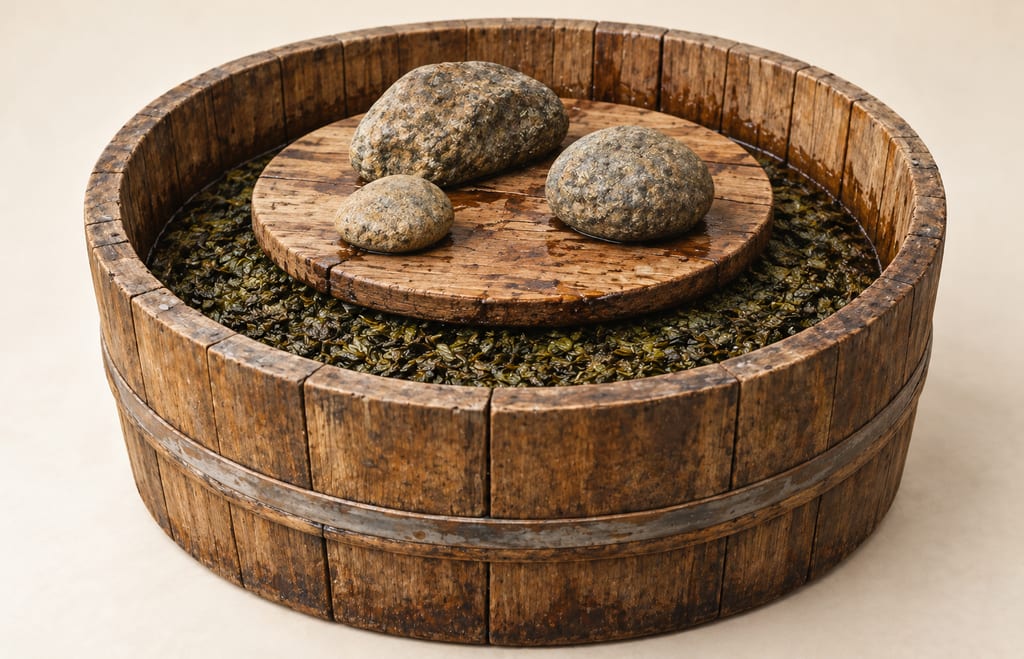
A large wooden tub used in Tokushima to ferment heated, worked Awabancha leaves with their cooking liquor. Its size and construction details are not specified in the sources.
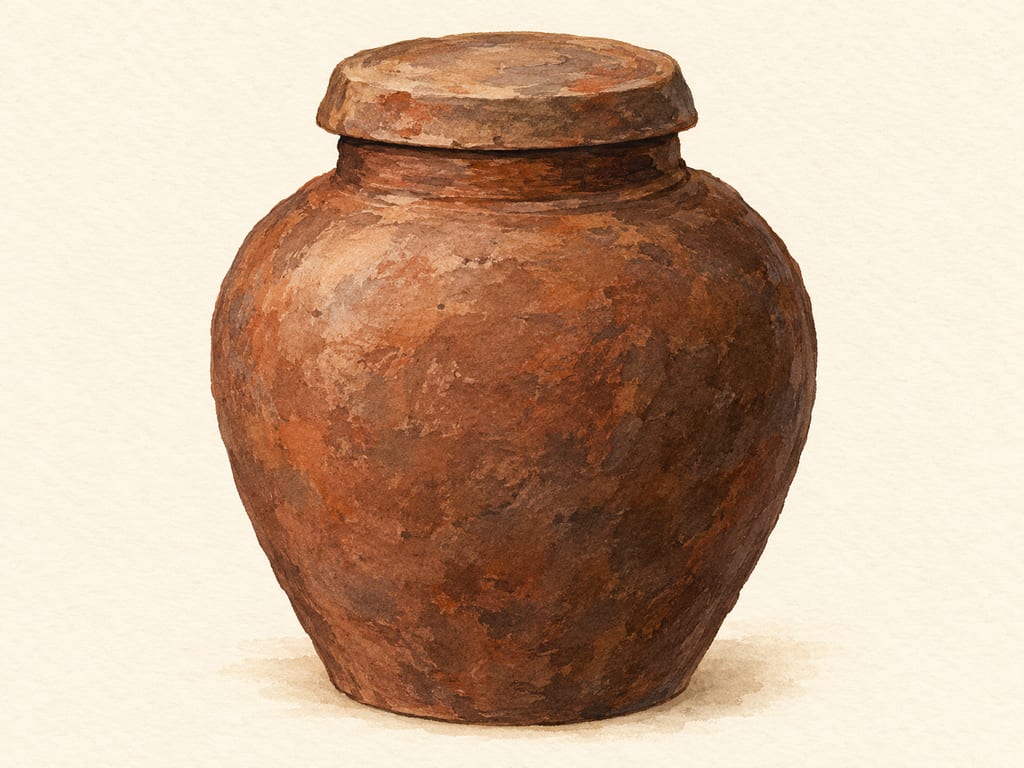
A ceramic jar used in Okinawa to store and mature distilled awamori into kusu; it holds the finished spirit after distillation rather than fermenting the rice mash.
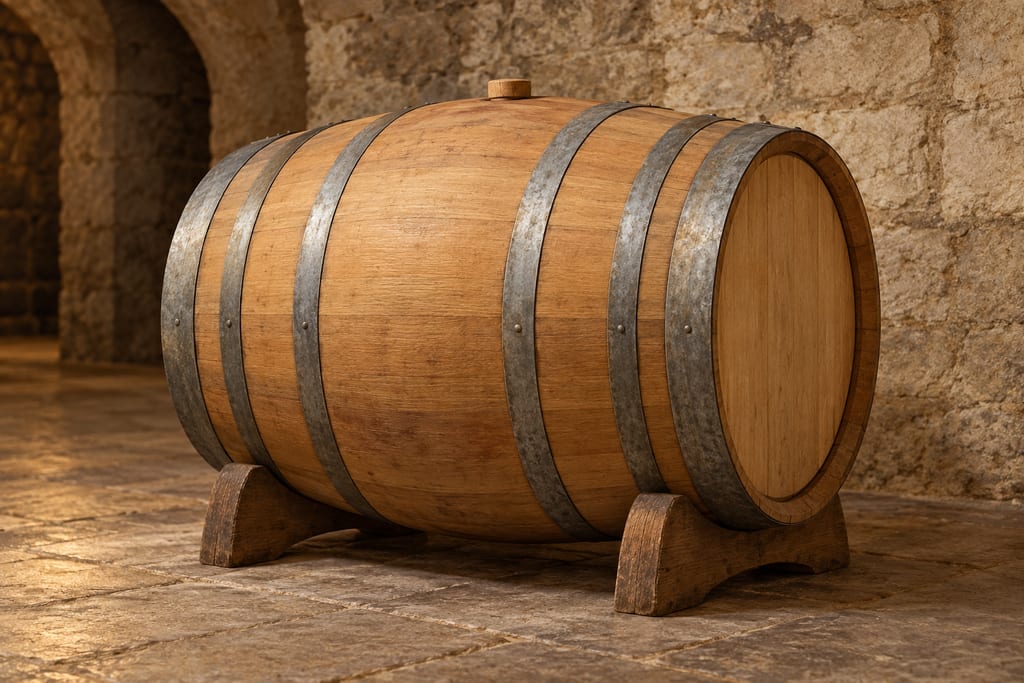
Coopered vessels use shaped staves and hoops, but portable barrels, large foeders and upright wooden vats serve different roles. Materials and uses vary by place and process.
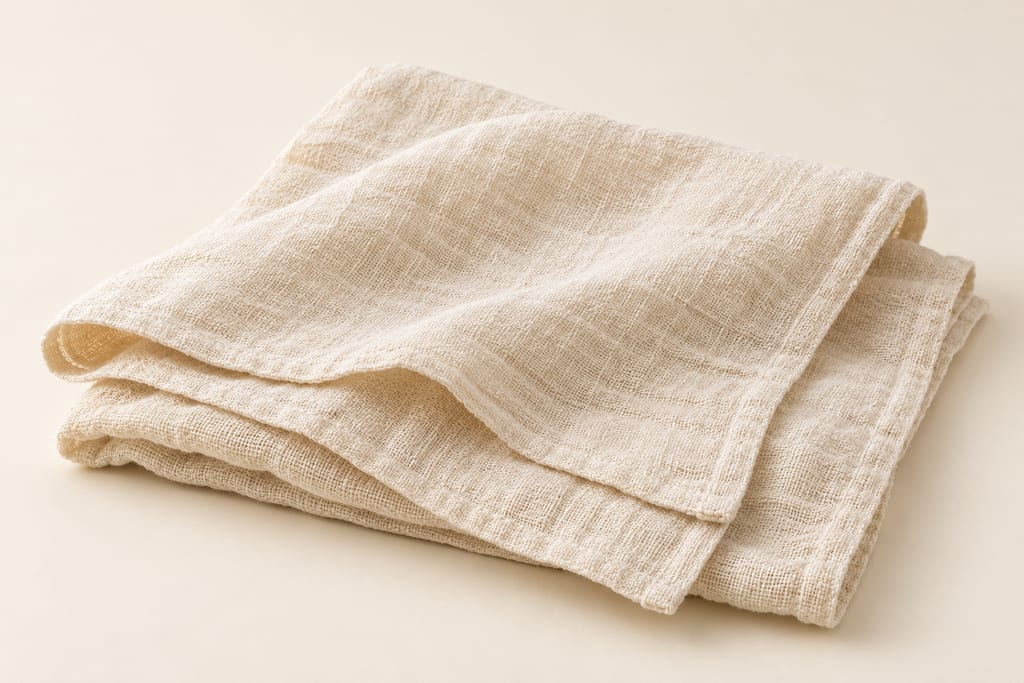
A cloth listed for steaming rice in a rice-koji method and identified as cloth for a koshiki in a brewery-museum caption; its fiber, weave, and size are not specified.
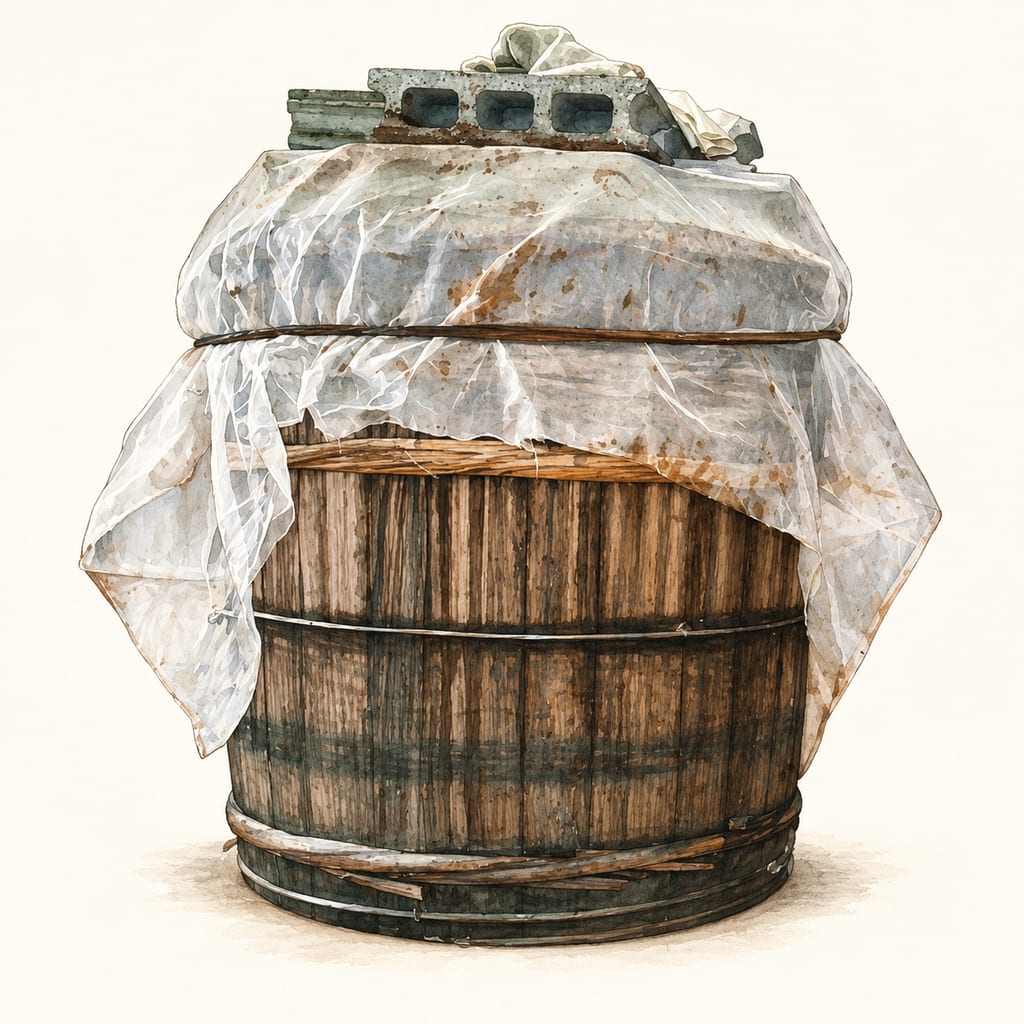
A Goishicha weighted tub holds tea leaves and steaming liquor during the second, wet fermentation stage in Ōtoyo, Kōchi. A current producer photograph documents one covered wooden tub under concrete-block weight.
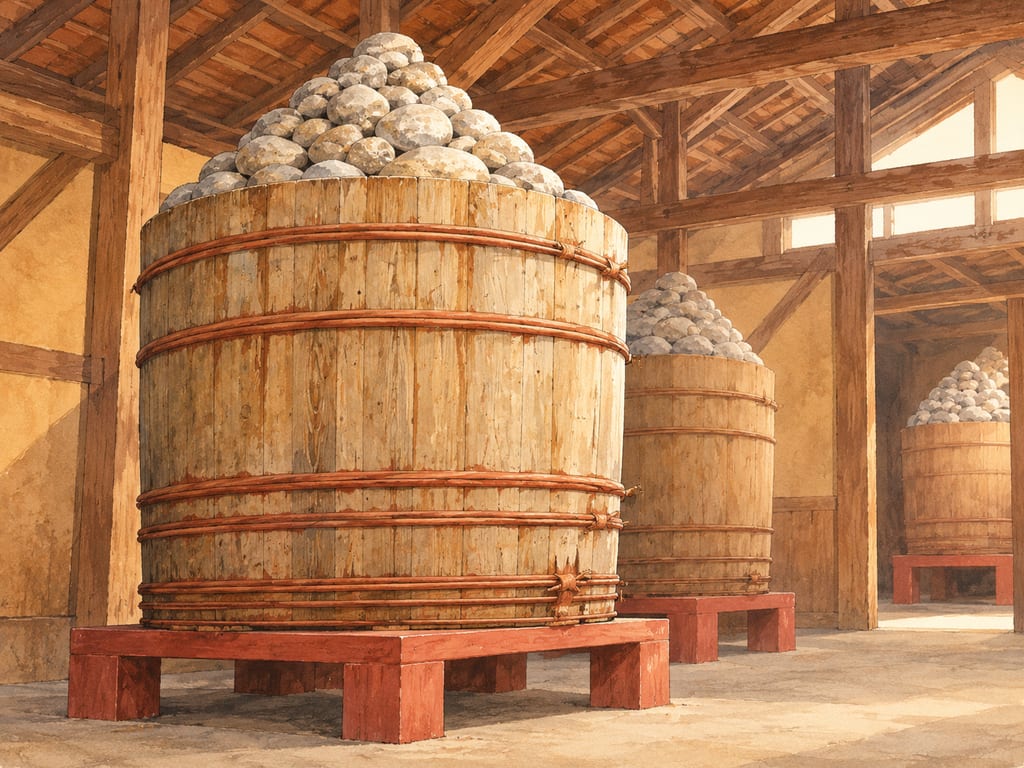
A coopered wooden kioke used by Kakukyu in Okazaki for Hatcho miso: a broad vat capped with a carefully stacked pyramid of river stones during maturation lasting more than two years.
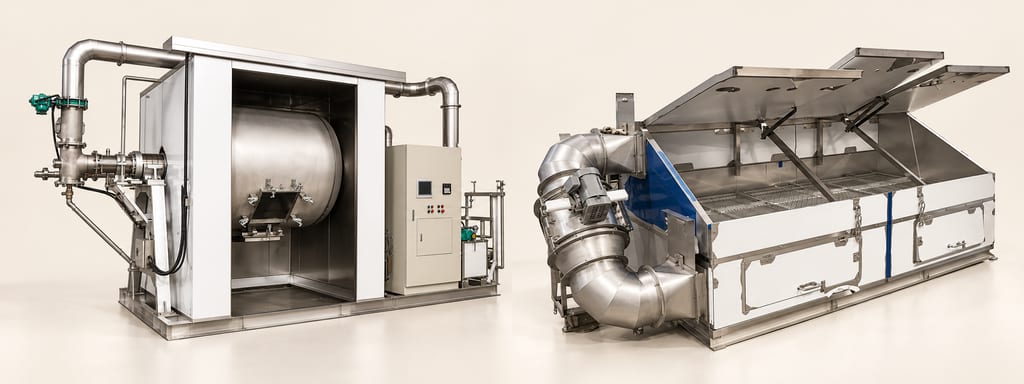
Industrial koji machines cultivate mold on prepared grain before sake, shochu, miso or soy-sauce production. Commercial designs include rotating drums and aerated beds.
No community contributions have been published for this entry yet.
Sign in to contribute. Published comments and photos are free to read.
Kiku-Masamune Sake Brewing Co., Ltd.Form · Materials · Aroma · Use · Capacity
Taru Sake — The Secrets of Kiku-Masamune SakeKiku-Masamune describes taru sake as sake associated with Yoshino cedar aroma and distinguishes cask-distributed sake from sake aged in a cask then bottled.
The producer lists 18, 36 and 72 litre cask formats, and distinguishes straw-wrapped honnidaru from bare hadaka-taruzume.
The page describes cedar aroma, a 72-litre aging cask and the producer's names tarunaka and taruzoko.
The producer advises transferring leftover sake to another vessel to avoid excessive cedar aroma.
Cited in: A cask for finished sake; Bare cedar and straw-covered forms; Aroma, transport and ceremony; What the sources do not establish
Kamoizumi Shuzo Co., Ltd. online shopDimensions · Capacity · Ceremonial use · Current product
Shusen Honkomo-maki Cask, 72 LThe product page lists a 72 litre sake cask with a diameter of 56.5 cm, a height of 54.0 cm and weight of 86 kg.
The producer describes the straw-wrapped cask as suitable for kagami-biraki celebrations and says a spigot can be fitted to draw sake from its lower part.
The cask contains Kamoizumi sake; the page does not establish a purchase route for an empty taru.
Cited in: A cask for finished sake; Bare cedar and straw-covered forms; Aroma, transport and ceremony; What the sources do not establish