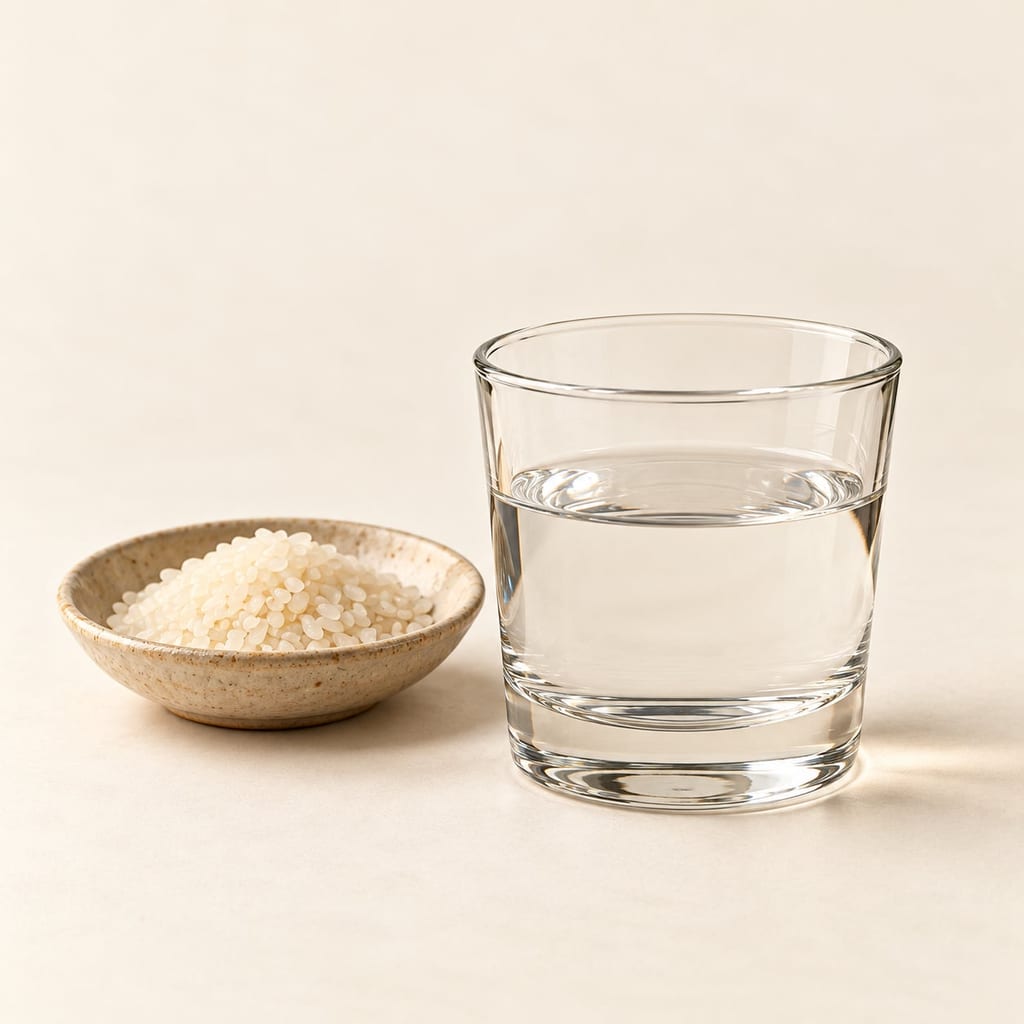
Awamori
An Okinawan rice spirit made by turning all the rice into black koji, fermenting it with water and yeast, then pot-distilling and maturing the spirit.
 FermenteaWhere food goes to change
Equipment · Jars, pots and crocks
泡盛 古酒 甕貯蔵 · kame · kusu jar
A ceramic jar used in Okinawa to store and mature distilled awamori into kusu; it holds the finished spirit after distillation rather than fermenting the rice mash.
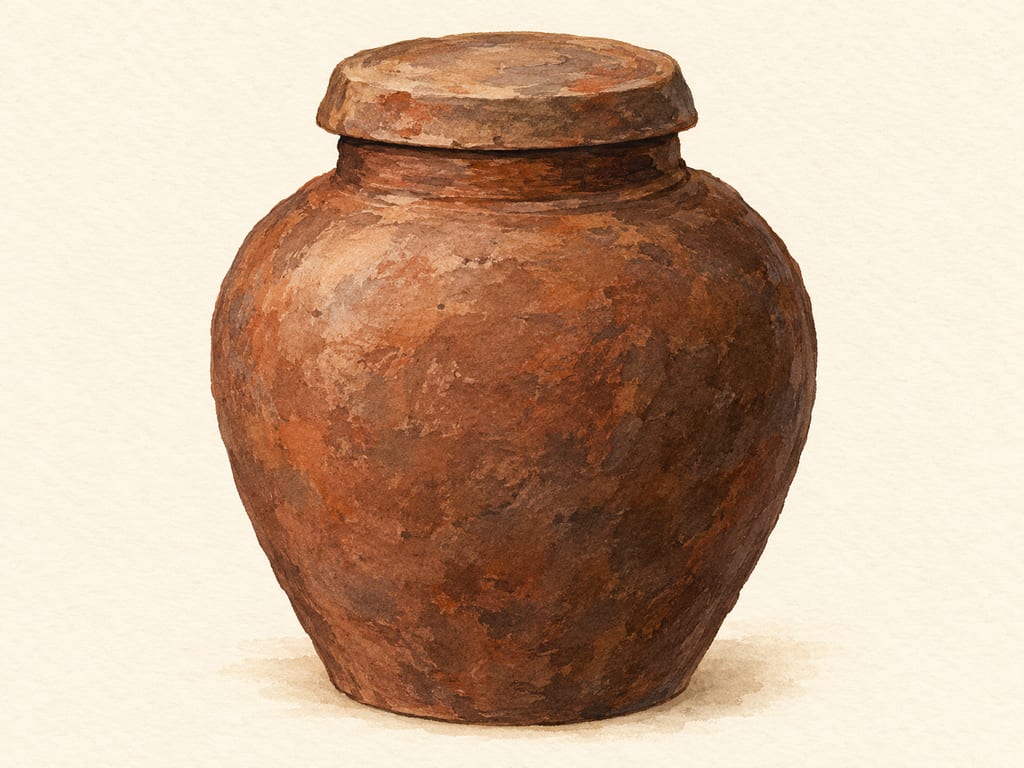
An awamori kame is a pottery jar for holding awamori as it matures into kusu, the aged spirit. The distinction between the storage vessel and the fermenting vessel matters: the kame discussed here receives distilled liquor, after the rice mash has been fermented and distilled. It is not the vessel in which the rice mash is made. Yamakawa Shuzo's process description separates fermentation, distillation and storage, and names both storage tanks and kame pots for the final stage.
The Okinawa Traditional Food Culture Database distinguishes two kinds of awamori jar by use: transport jars and jars for storing kusu. Its description identifies traditional examples as unglazed, fired pottery. The broader kame class varies in clay colour, surface, closure and capacity. The supplied vessel record describes broad, rounded bodies, short necks and substantial covers as useful identifying features, while cautioning that gift-sized decorative pots are poor stand-ins for large working jars. No single size or closure fits every distillery.
Awamori jars were part of how the spirit moved as well as how it matured. The cultural record says Ryukyuan envoys carried awamori to Edo in transport jars during the kingdom period. It also describes Tsuboya, in Naha, as a pottery centre that made storage jars for awamori. Three major kilns were brought together near Shuri in 1682, forming the Tsuboya pottery district; the record connects later growth in jar production with increased awamori exports after the Ryukyu Kingdom was annexed by Japan in 1879.
The same museum account places the arrival of awamori-making knowledge from Thailand by the sixteenth century at the latest, based on historical materials. That is a claim about the spirit's production history, not a dated archaeological record for the kame itself. The jar's exact first date, capacity and maker are not established by the sources used here.
The vessel is part of maturation, not a microbial fermentation stage. Awamori also matures in glass and in storage tanks, so a kame is one documented option rather than a requirement for making the spirit. The Okinawa Prefectural Distillers Association describes jar aging as exposing the spirit to more air than a bottle and says minerals in the pottery may promote chemical change. It recommends traditional unglazed arayachi for kusu storage, while acknowledging that the jar's fit and firing matter.
Those explanations should be read as industry guidance, not as a settled account of every aroma reaction. A 2025 Okinawa Industrial Technology Center report says that the sensory feature called kame aroma is valued but its responsible compounds and formation mechanism remain unidentified. A 2021 sensory study found that shitsugi kusu tended to show stronger aging-flavour characteristics and that kame-stored samples were less pungent than bottle-stored samples. These are findings for the samples evaluated, not proof that all clay jars produce the same result.
For a traditional maturation jar, the distillers' association points readers toward well-fired, unglazed pottery and advises checking for leakage. It notes that a vessel that held liquor without leaking at first may develop a leak years later. This is a practical limitation of the pottery vessel, not a guarantee that a particular repair method or coating is suitable for food contact.
The sources do not establish a standard capacity, dimensional range, price, universal closure, or cleaning and seasoning procedure for awamori kame. Those details depend on the specific maker and vessel. A jar should therefore be identified by its own maker and specification rather than treated as interchangeable with every other storage jar.
The Okinawa cultural record distinguishes awamori transport jars from storage jars used to mature kusu and describes unglazed fired pottery for both. It says historical sources suggest awamori-making technology reached Okinawa from Thailand by the sixteenth century at the latest, but that statement dates the technology claim, not this particular jar form. It also records the use of transport jars by Ryukyuan envoys travelling to Edo and the role of Tsuboya pottery in making awamori jars.
A pottery jar cannot be assumed leakproof: the distillers' association reports that a jar may begin leaking after years of use.
Source →Documented region of awamori kame use; not a claim of a single origin for all ceramic jars.
The cultural record identifies Tsuboya pottery as producing awamori jars; not every jar is attributed to this workshop area.
An Okinawan rice spirit made by turning all the rice into black koji, fermenting it with water and yeast, then pot-distilling and maturing the spirit.

A small electric incubator holds jars at a selected temperature for yogurt and other documented warm food preparations. Controls, capacity and vessel arrangement vary by model.
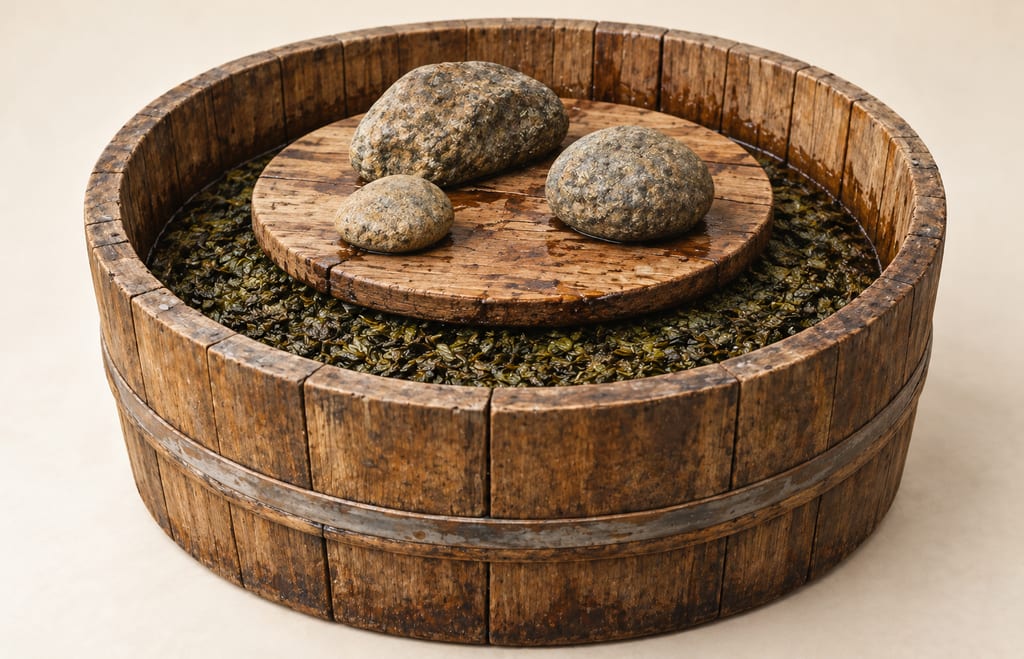
A large wooden tub used in Tokushima to ferment heated, worked Awabancha leaves with their cooking liquor. Its size and construction details are not specified in the sources.
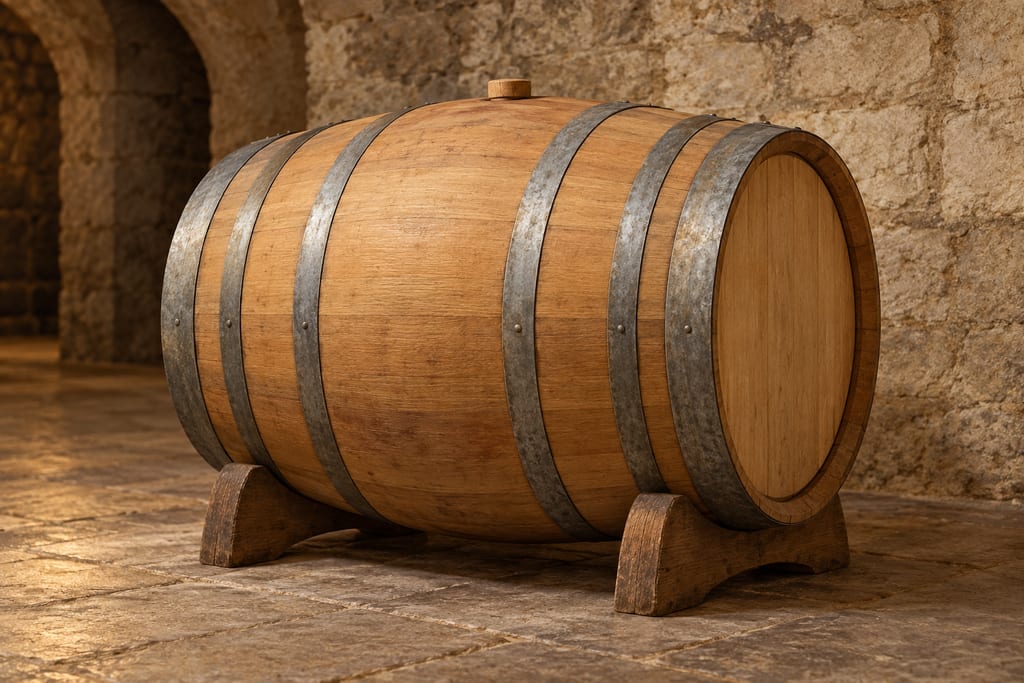
Coopered vessels use shaped staves and hoops, but portable barrels, large foeders and upright wooden vats serve different roles. Materials and uses vary by place and process.
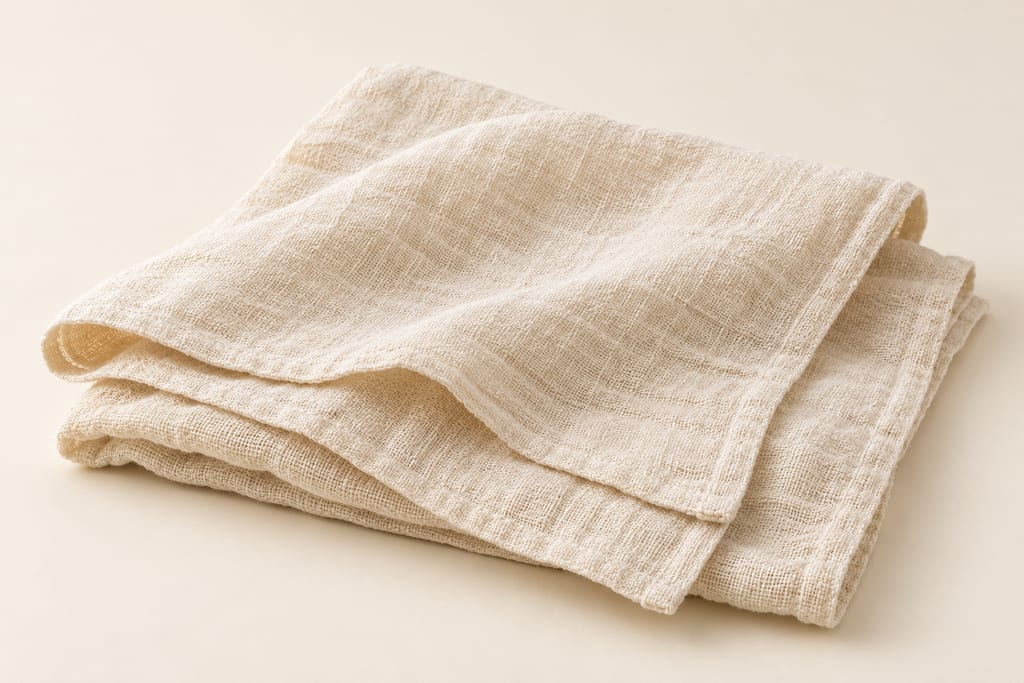
A cloth listed for steaming rice in a rice-koji method and identified as cloth for a koshiki in a brewery-museum caption; its fiber, weave, and size are not specified.
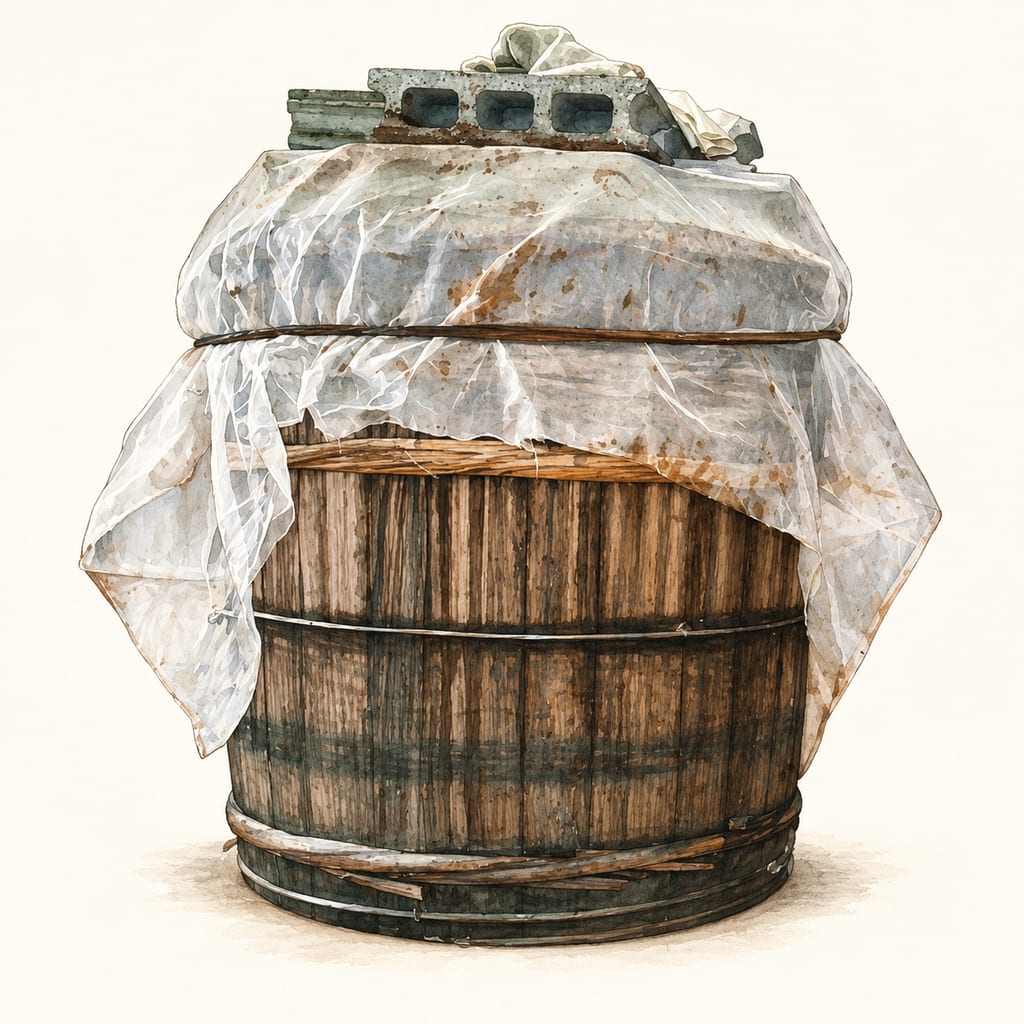
A Goishicha weighted tub holds tea leaves and steaming liquor during the second, wet fermentation stage in Ōtoyo, Kōchi. A current producer photograph documents one covered wooden tub under concrete-block weight.
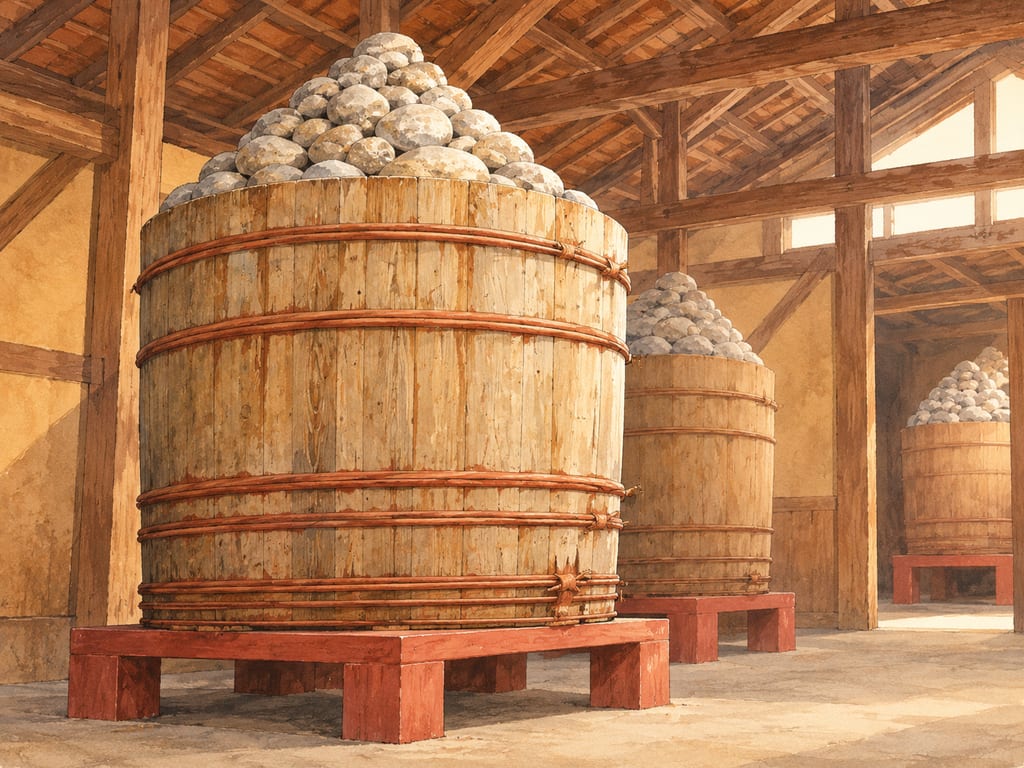
A coopered wooden kioke used by Kakukyu in Okazaki for Hatcho miso: a broad vat capped with a carefully stacked pyramid of river stones during maturation lasting more than two years.
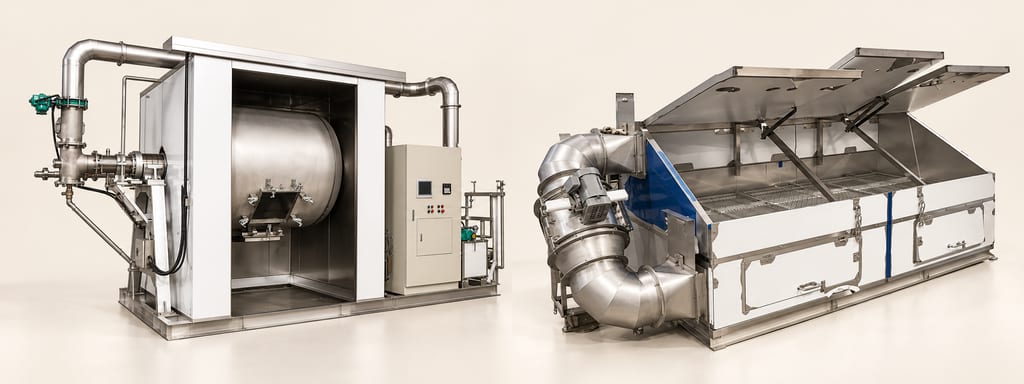
Industrial koji machines cultivate mold on prepared grain before sake, shochu, miso or soy-sauce production. Commercial designs include rotating drums and aerated beds.
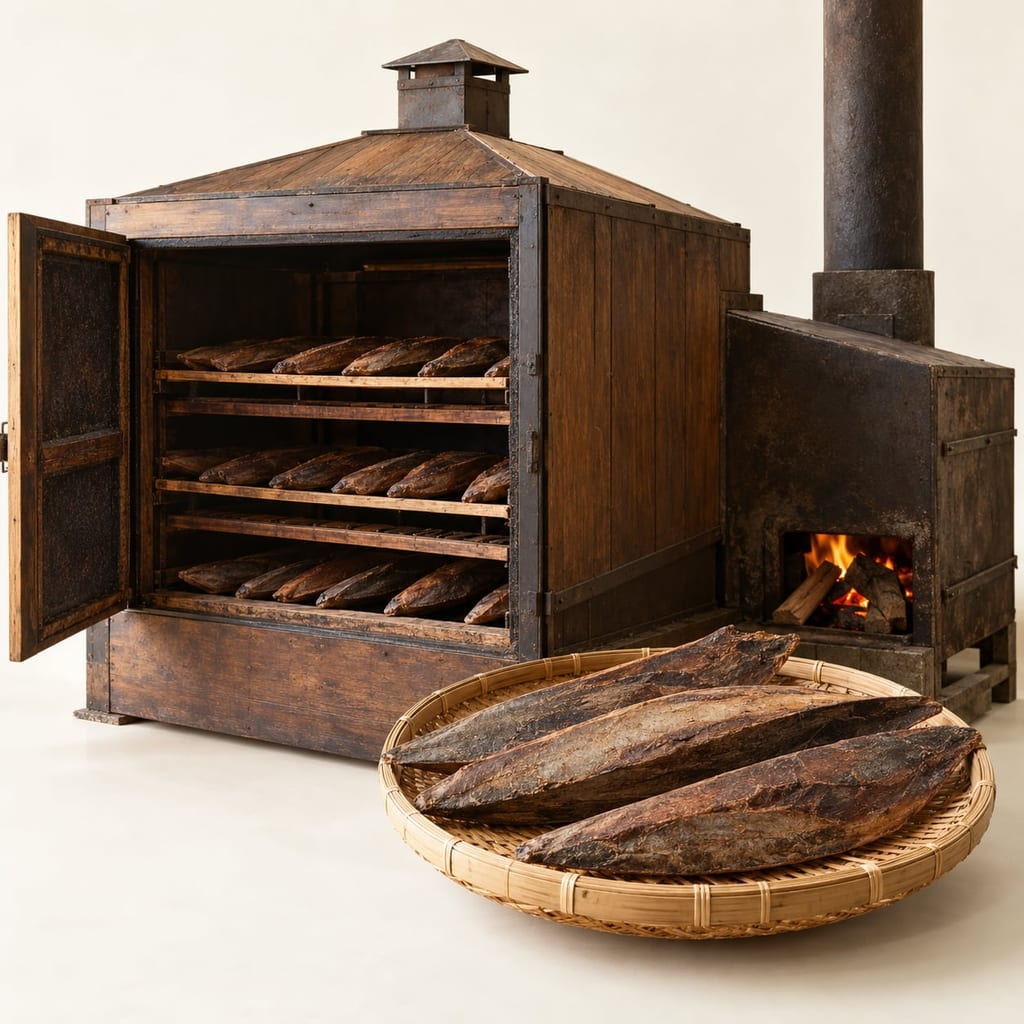
Enclosed cooking, smoking and drying equipment used in the multi-stage process that makes katsuobushi, the dried, smoked and mould-treated bonito of Japan, in repeated stages.
No community contributions have been published for this entry yet.
Sign in to contribute. Published comments and photos are free to read.
Yamakawa ShuzoMethod · Use
Yamakawa, Famous for KusuProcess sequence distinguishes rice fermentation, pot distillation and storage; after distillation, awamori is stored in tanks and kame earthenware pots. The producer describes kame storage as one option, not a universal requirement.
Cited in: An Okinawan jar for spirit that has already been distilled
Okinawa Traditional Food Culture Database, photo provided by Naha City Tsuboya Pottery MuseumHistory · Form · Geography
泡盛の甕 (Awamori storage jars)The cultural record distinguishes transport jars from storage jars for kusu; describes both as unglazed fired pottery; says Ryukyuan envoys used transport jars to carry awamori to Edo; identifies Tsuboya as an awamori jar production area after the kilns were consolidated there in 1682; states the alcohol technology was thought to have arrived from Thailand by the 16th century at the latest, not that this exact jar form began then.
Cited in: An Okinawan jar for spirit that has already been distilled; A vessel in Okinawa's trade and pottery history
Okinawa Prefectural Distillers AssociationMaterial · Care · Limits
甕選び (Choosing a jar)The association says jar aging is thought to involve more air and mineral contact than glass; it cites traditional unglazed arayachi as a choice for aging and warns that pottery may leak, including after years in use. These are association guidance and reported beliefs, not universal material performance guarantees.
Cited in: What the jar changes—and what remains uncertain; Keeping and choosing a storage jar
Journal of the Brewing Society of JapanResearch · Maturation
Evaluation of flavor characteristics of “Shitsugi” AwamoriThe 2021 sensory study overview says submitted shitsugi kusu tended to score higher in aging-flavor characteristics and kame-stored samples were less pungent than bottle-stored samples; it reports sensory tendencies, not a general causal law for every kame.
Cited in: What the jar changes—and what remains uncertain
Okinawa Industrial Technology CenterResearch · Limits
On Awamori's Kame Aroma Formation—Sensory Evaluation and Aroma Component AnalysisThe 2025 report describes kame aroma as valued but says the responsible mechanism and components remain unidentified; this limits claims about exactly how pottery changes aroma.
Cited in: What the jar changes—and what remains uncertain
Wikimedia CommonsImage
Taragawa Cellar.jpgPhotograph depicts already purchased awamori maturing at Taragawa distillery on Miyakojima, Okinawa, in a purpose-built cellar; CC BY-SA 4.0. Used as a visual reference for storage setting, not as evidence for every kame form.