
Arabushi (smoke-dried bonito)
Japanese skipjack tuna cooked, then repeatedly smoked and dried over a wood fire by the hand-fired tebiyama method into a hard block for shaving into dashi: the first stage of katsuobushi.
 FermenteaWhere food goes to change
Equipment · Smoking ovens, kilns and cabinets
Enclosed cooking, smoking and drying equipment used in the multi-stage process that makes katsuobushi, the dried, smoked and mould-treated bonito of Japan, in repeated stages.
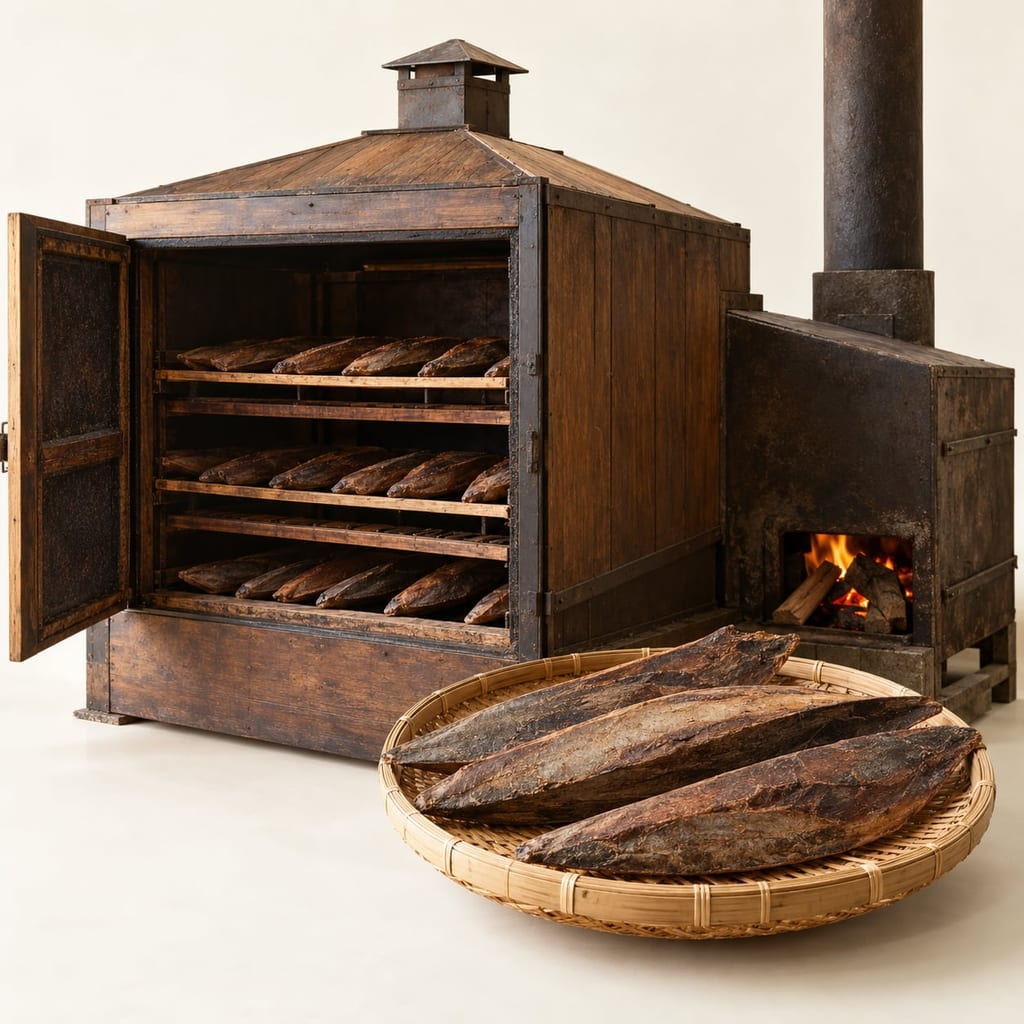
Katsuobushi is made in a chain of stages rather than in one box. Bonito is cooked, then smoked and dried repeatedly until it becomes a hard block, which is the product called arabushi. For the mould-treated grades, the block is inoculated with mould and dried again in cycles.
The equipment therefore has separate parts for cooking, for repeated smoking and drying, and, for some products, a controlled maturation stage. The brief describes a process chain, not a single appliance, and it rates the design as a high-complexity research case rather than a first build.
Smoking uses hardwood, and the sources name oak as typical. The fish must be moved within the smoking chamber so that it dries evenly. MAFF distinguishes smoked arabushi from the mould-treated karebushi and honkarebushi, so the design depends on which grade is made.
Grades are set by the number of mould cycles. According to one source, two cycles make karebushi and three or more make honkarebushi, and honkarebushi takes more than six months in total. The mould is named as Aspergillus glaucus or Eurotium herbariorum. Smoked bonito is not automatically mould-matured, and the page does not encourage growing unidentified mould.
Which named product uses which stages, which cultures are authorised, and what histamine and smoke-contaminant controls apply are not settled in the consulted sources. The brief lists complete specialist validation as a requirement before any build is published as a method.
Not a validated food process: histamine control in fish, smoke contaminant limits and sanitation between stages are unresolved.
SourceBenzopyrene levels in some commercial katsuobushi were reported above EU standards.
Source →Katsuobushi is a Japanese product; the equipment described is Japanese practice.
Japanese skipjack tuna cooked, then repeatedly smoked and dried over a wood fire by the hand-fired tebiyama method into a hard block for shaving into dashi: the first stage of katsuobushi.
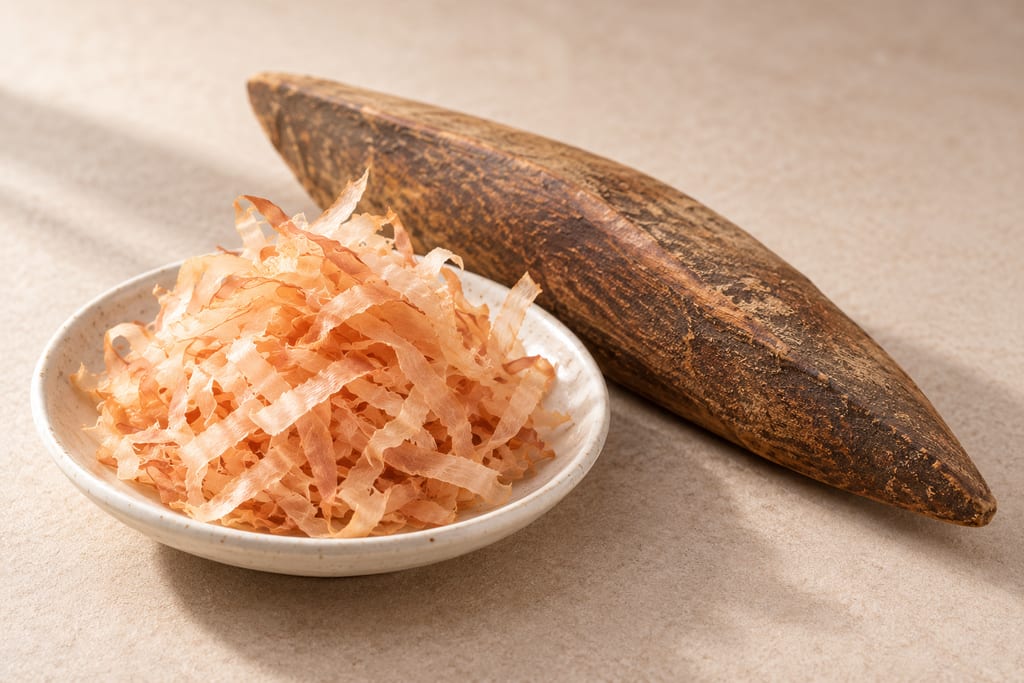
Katsuobushi is skipjack tuna cooked, smoked and dried into a hard block that is shaved into flakes for dashi and toppings. Some styles stop at the smoke-dried stage; others receive carefully managed mold maturation.

A small electric incubator holds jars at a selected temperature for yogurt and other documented warm food preparations. Controls, capacity and vessel arrangement vary by model.
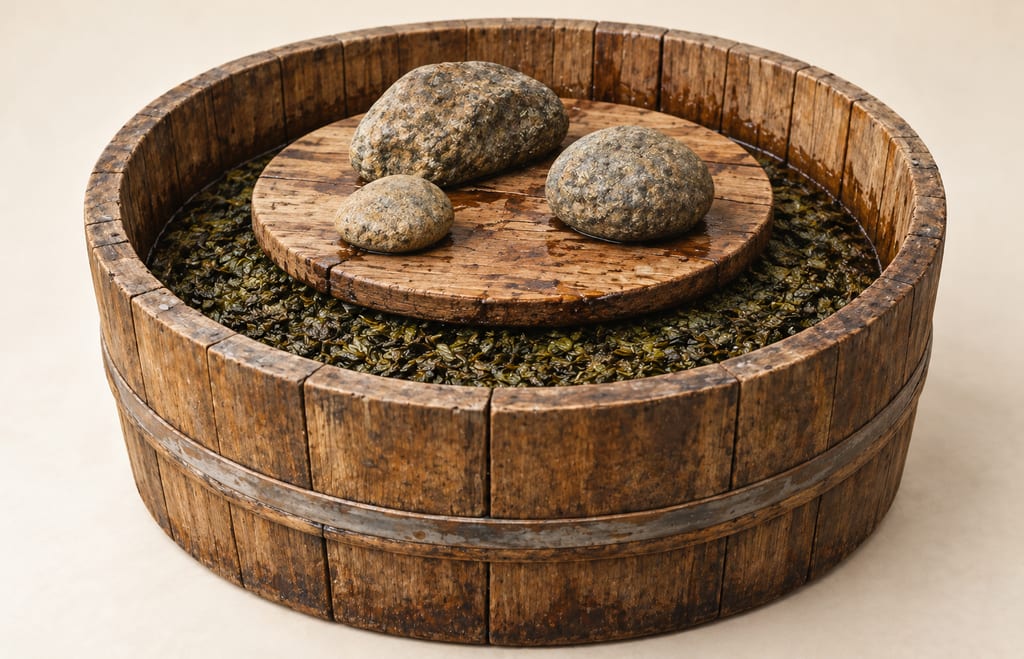
A large wooden tub used in Tokushima to ferment heated, worked Awabancha leaves with their cooking liquor. Its size and construction details are not specified in the sources.
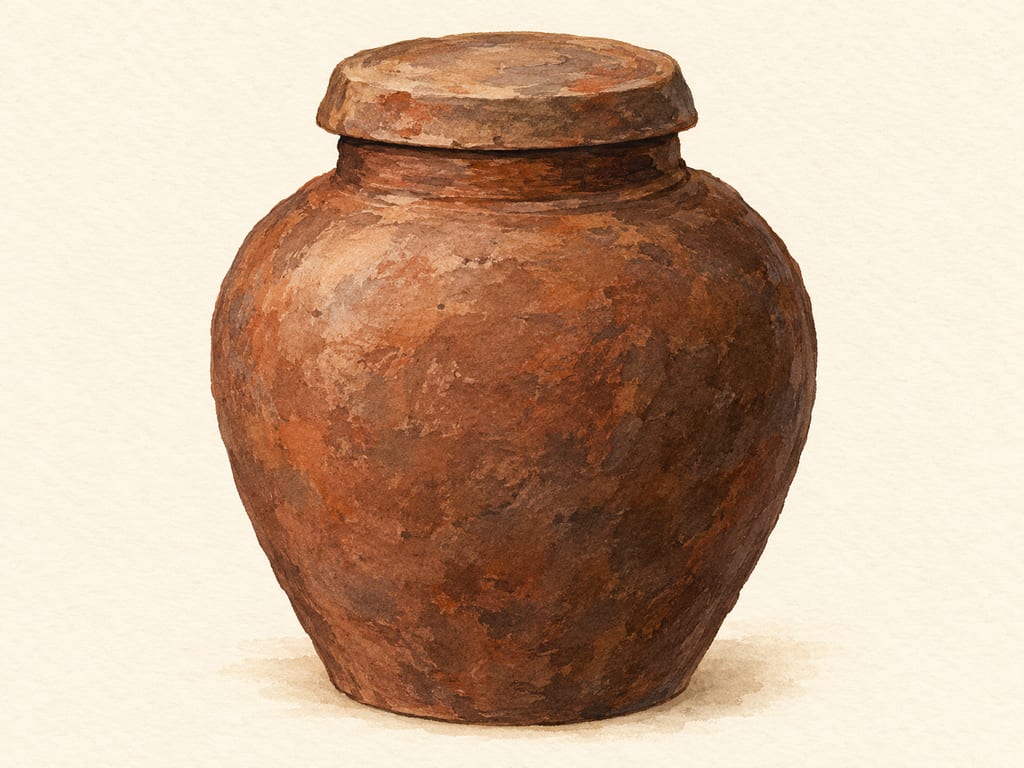
A ceramic jar used in Okinawa to store and mature distilled awamori into kusu; it holds the finished spirit after distillation rather than fermenting the rice mash.
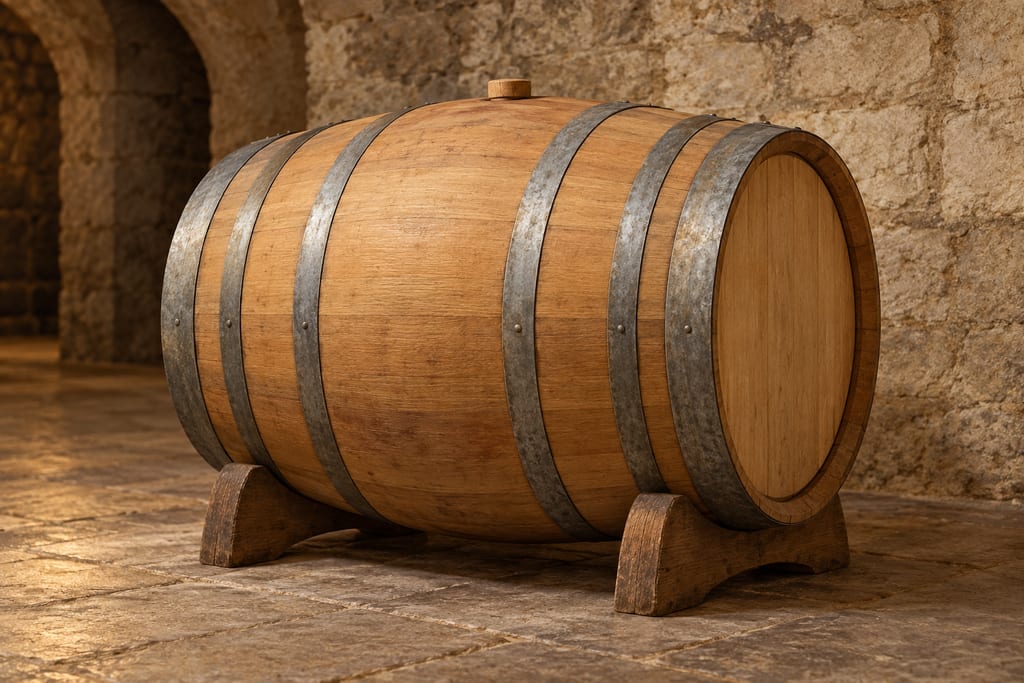
Coopered vessels use shaped staves and hoops, but portable barrels, large foeders and upright wooden vats serve different roles. Materials and uses vary by place and process.
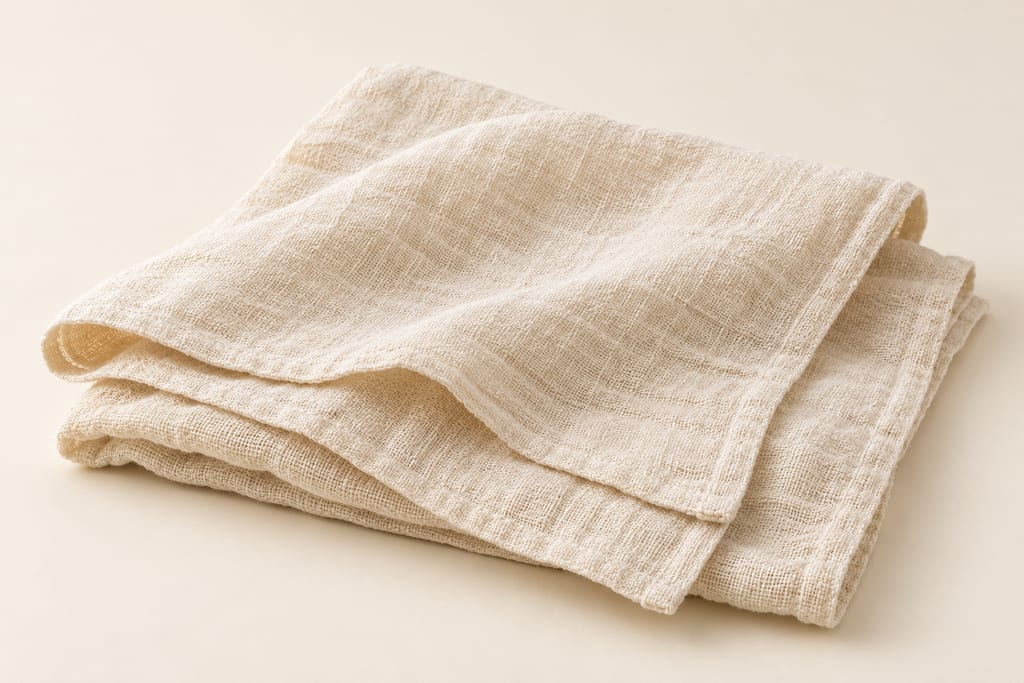
A cloth listed for steaming rice in a rice-koji method and identified as cloth for a koshiki in a brewery-museum caption; its fiber, weave, and size are not specified.
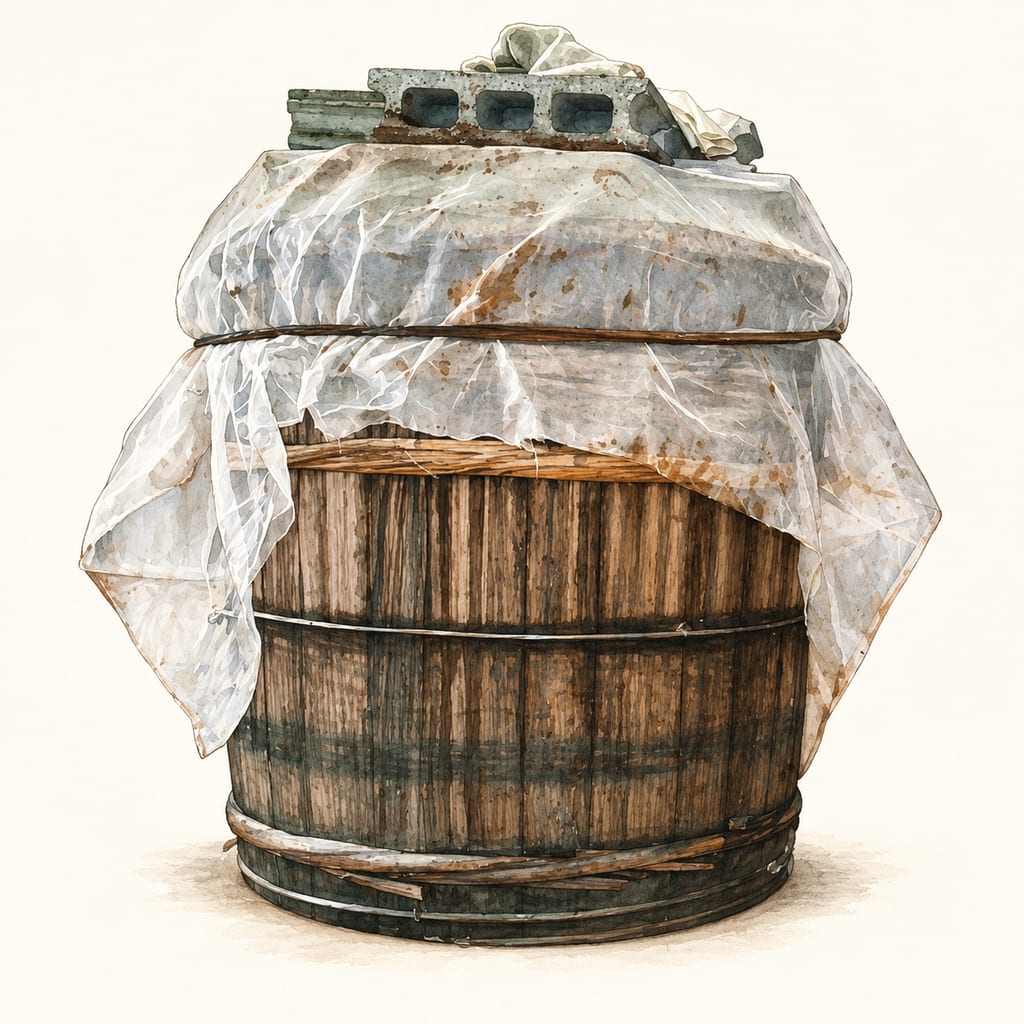
A Goishicha weighted tub holds tea leaves and steaming liquor during the second, wet fermentation stage in Ōtoyo, Kōchi. A current producer photograph documents one covered wooden tub under concrete-block weight.
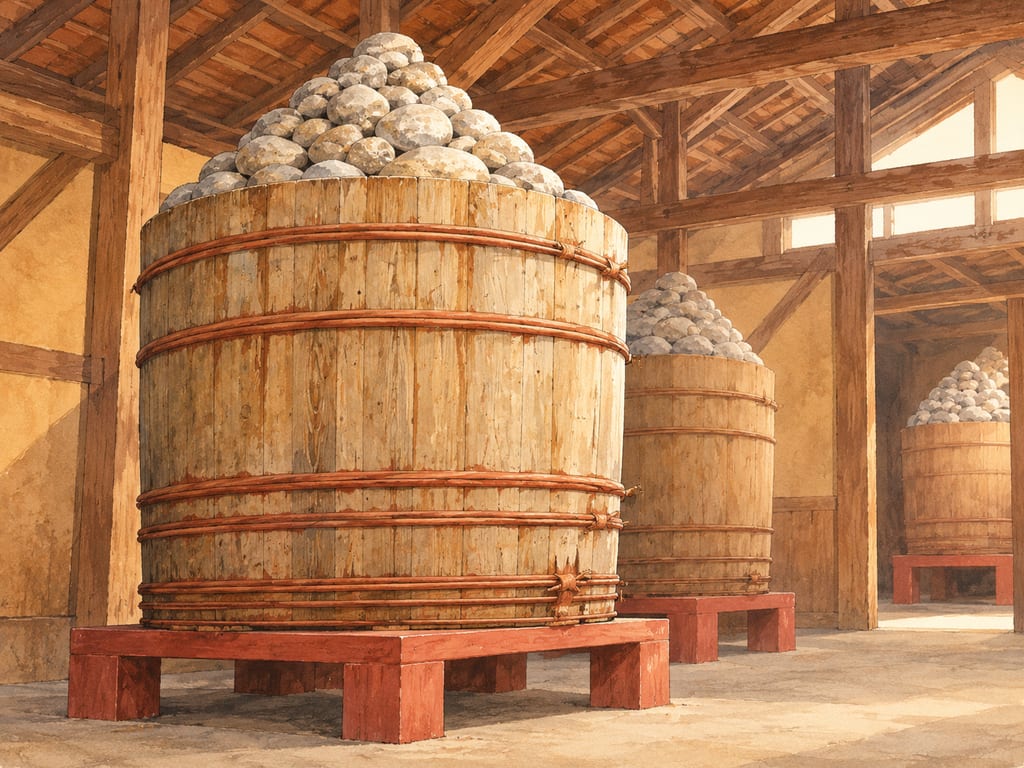
A coopered wooden kioke used by Kakukyu in Okazaki for Hatcho miso: a broad vat capped with a carefully stacked pyramid of river stones during maturation lasting more than two years.
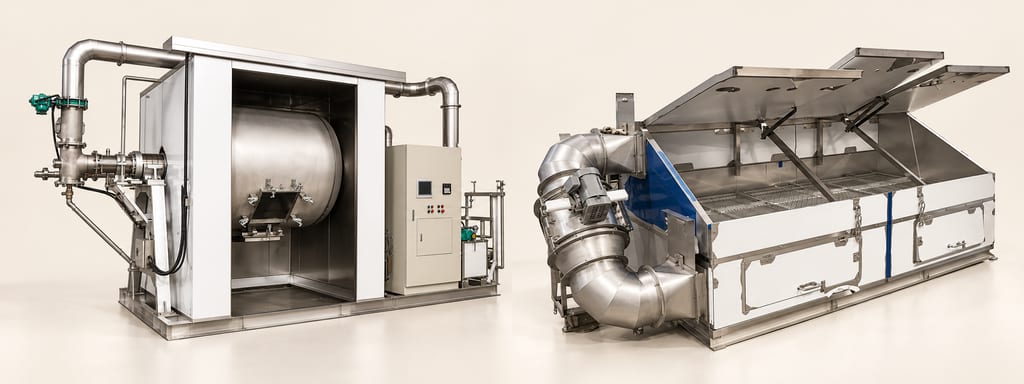
Industrial koji machines cultivate mold on prepared grain before sake, shochu, miso or soy-sauce production. Commercial designs include rotating drums and aerated beds.
No community contributions have been published for this entry yet.
Sign in to contribute. Published comments and photos are free to read.
WikipediaHistory · Method
KatsuobushiKatsuobushi is dried, smoked and mould-treated bonito.
Cited in: What it is
Ministry of Agriculture, Forestry and Fisheries (MAFF), Traditional Foods in JapanMethod · Safety
Dried BonitoArabushi is boiled, smoked and dried repeatedly to a low moisture content.
MAFF distinguishes smoked arabushi from mould-treated karebushi and honkarebushi.
Cited in: What it is; How the stages work; Open questions
katsuobushi-jp.netMethod · Safety
Types and production methodsMould cycles separate karebushi (two) from honkarebushi (three or more).
Benzopyrene levels in some commercial katsuobushi were reported above EU standards.
Cited in: How the stages work