
Adjustable yogurt-maker
A small electric incubator holds jars at a selected temperature for yogurt and other documented warm food preparations. Controls, capacity and vessel arrangement vary by model.
 FermenteaWhere food goes to change
Equipment · Presses and weights
漬け込み桶
A Goishicha weighted tub holds tea leaves and steaming liquor during the second, wet fermentation stage in Ōtoyo, Kōchi. A current producer photograph documents one covered wooden tub under concrete-block weight.
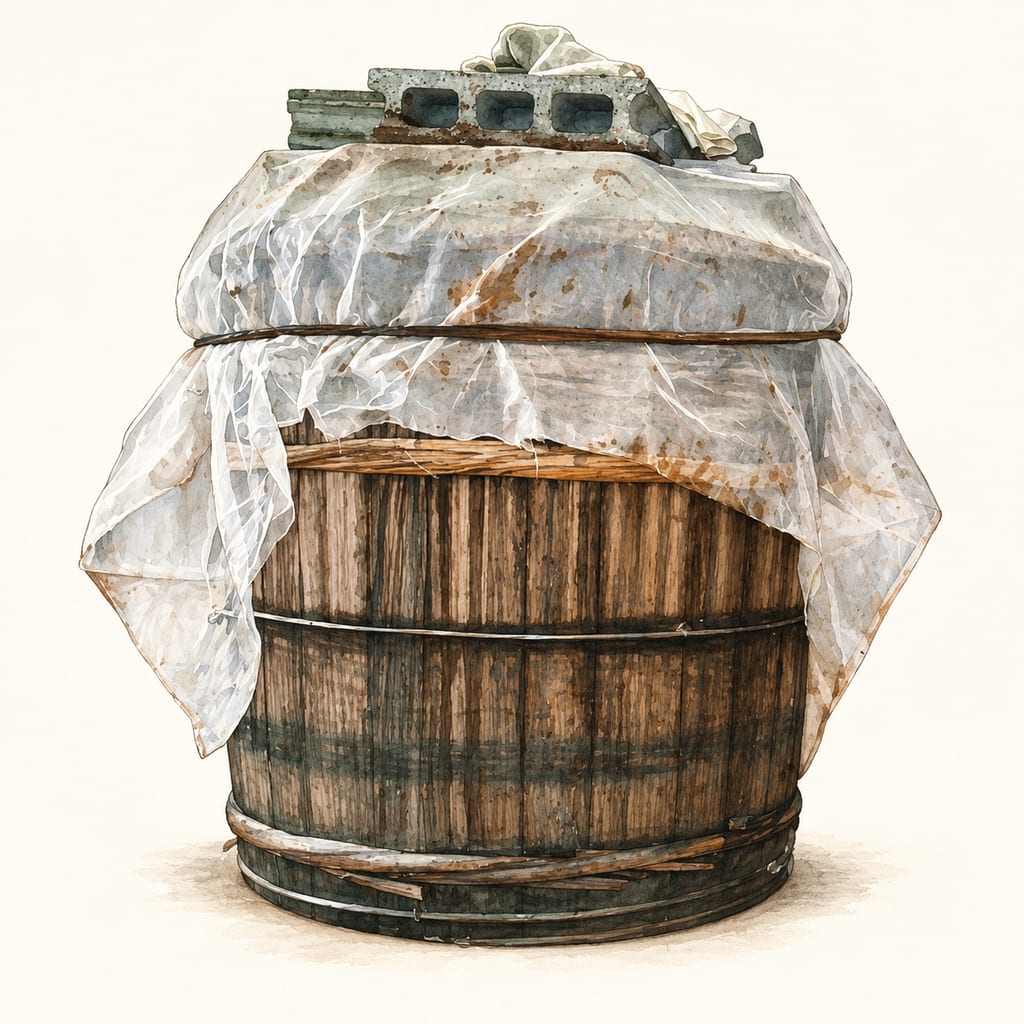
Goishicha production uses several distinct work spaces and vessels. The cooperative's sequence separates a large steamer, the first resting stage in a mat-lined room, and the later weighted tub. This page is about that portable tub. It does not combine the room or the steamer with the equipment record.
After the leaves have rested in the muro, the cooperative says they are put into a tub with broth from steaming. A weight equal to the mass of the leaves is placed above them and the batch remains there for several weeks. The swelling leaves lift the weight as fermentation proceeds. This is a wet fermentation vessel under pressure, not the room where the first stage is prepared.
A current cooperative photograph shows a substantial wooden staved tub, a cover or follower, sheeting and concrete blocks. The Ōtoyo survey also documents soaking tubs in producer work buildings and dates one weighted-tub photograph to 2015. These sources establish a wooden example in contemporary production, not that every Goishicha tub has always been wooden or that concrete is the customary weight.
The cooperative describes the load by its relation to the leaves: the weight is equal to their mass. Its photograph shows one way a current producer applies that pressure. The sources do not give a standard volume, height, diameter, stave joinery or lid design. The Japanese term oke names a tub, but by itself does not identify a material.
This equipment belongs to Goishicha production in Ōtoyo Town, Kōchi Prefecture, Japan. The town survey documents multiple producer work sites, including one in Higashikajigauchi; the cooperative describes the local method. These are places of documented use, not proof that the tub type originated only there.
The equipment evidence reaches back to the town survey's 2015 photograph and continues in the cooperative's current account. The inspected sources do not date the first Goishicha tub or describe a universal historical construction. Nor do they provide an acquisition route or a cleaning schedule. The strongest grounded description is therefore the tub's role in the wet stage and the material of one photographed current example.
Goishicha is a traditional Ōtoyo tea, but the sources consulted do not date the first use of this tub or establish a single historical material. The Ōtoyo survey captions document tub use in 2015; the cooperative's current method page documents the present sequence.
The weighted tub is used for the later wet stage; the cooperative describes steaming in a separate large steaming vessel and the first resting stage in a straw-mat-lined muro room.
Source →The cooperative identifies Goishicha as a local Ōtoyo product, and the town survey captions a weighted tub photograph from Higashikajigauchi. These are documented-use locations, not a claim of exclusive origin.
A small electric incubator holds jars at a selected temperature for yogurt and other documented warm food preparations. Controls, capacity and vessel arrangement vary by model.
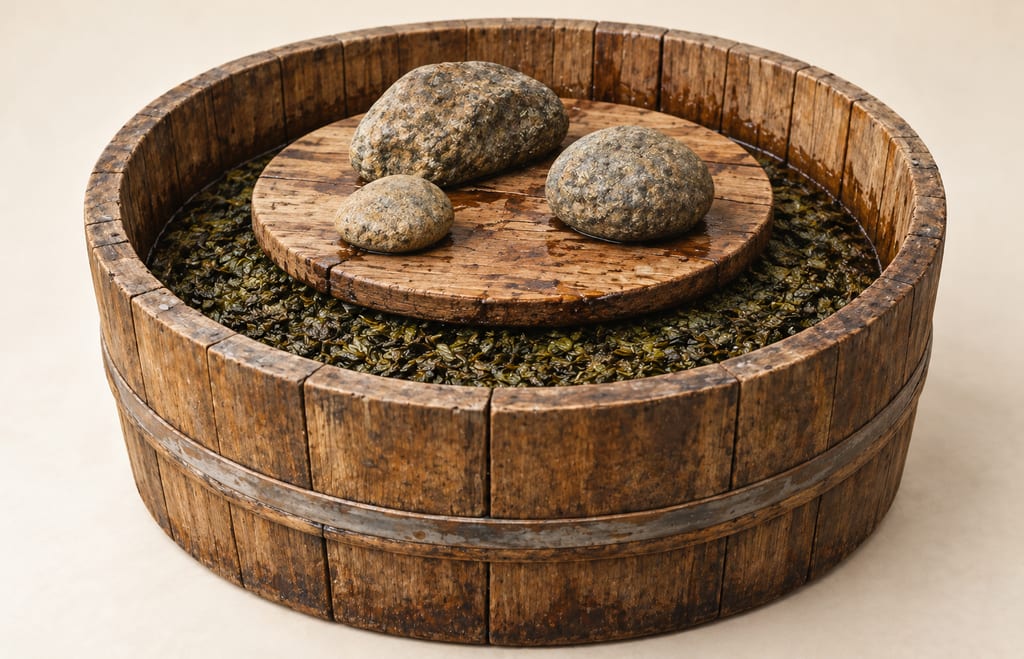
A large wooden tub used in Tokushima to ferment heated, worked Awabancha leaves with their cooking liquor. Its size and construction details are not specified in the sources.
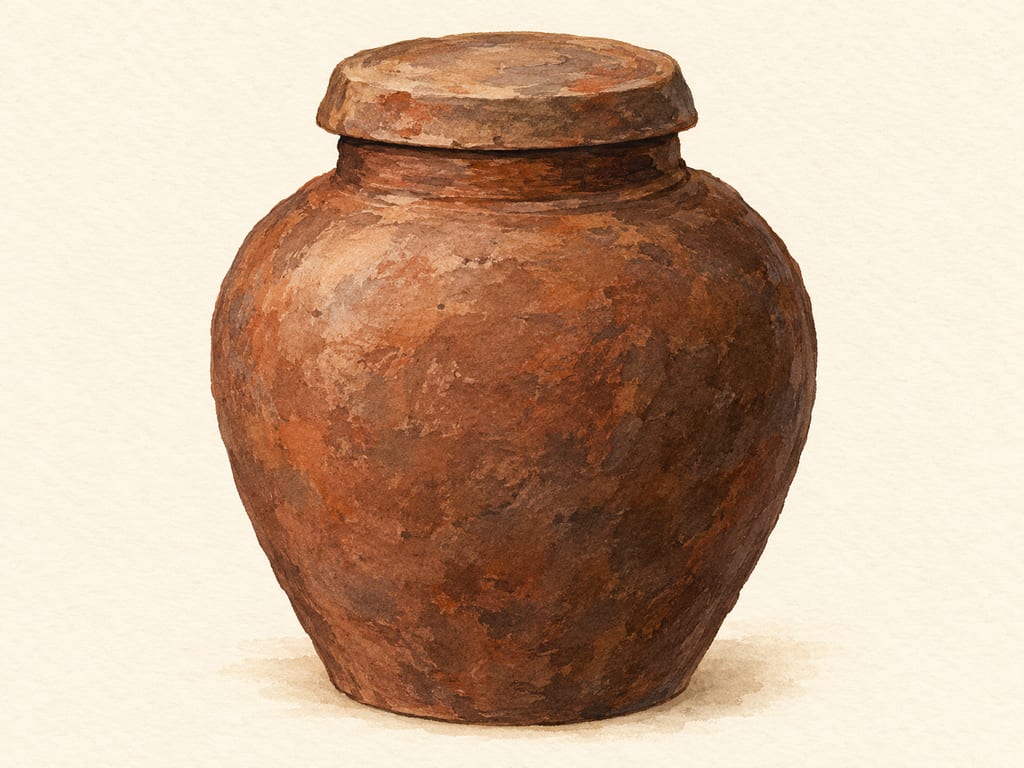
A ceramic jar used in Okinawa to store and mature distilled awamori into kusu; it holds the finished spirit after distillation rather than fermenting the rice mash.
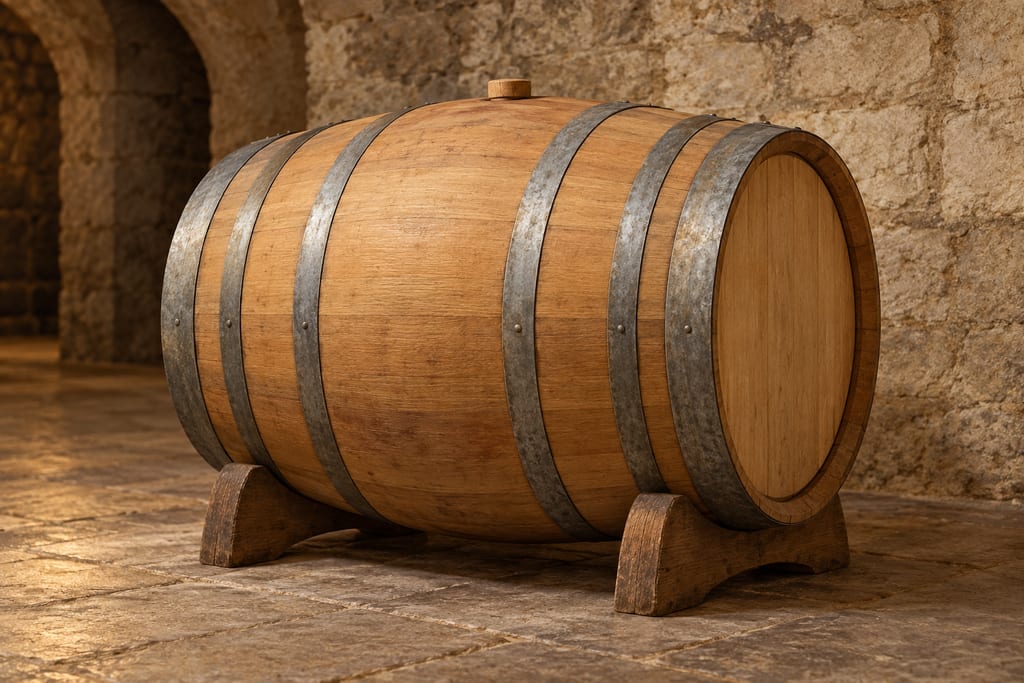
Coopered vessels use shaped staves and hoops, but portable barrels, large foeders and upright wooden vats serve different roles. Materials and uses vary by place and process.
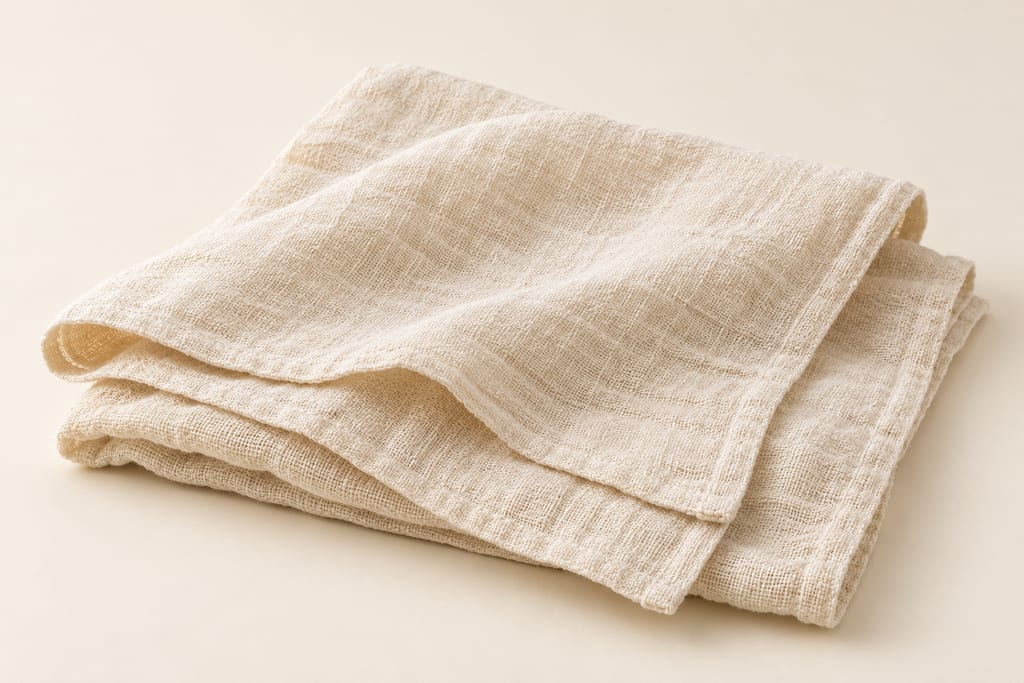
A cloth listed for steaming rice in a rice-koji method and identified as cloth for a koshiki in a brewery-museum caption; its fiber, weave, and size are not specified.
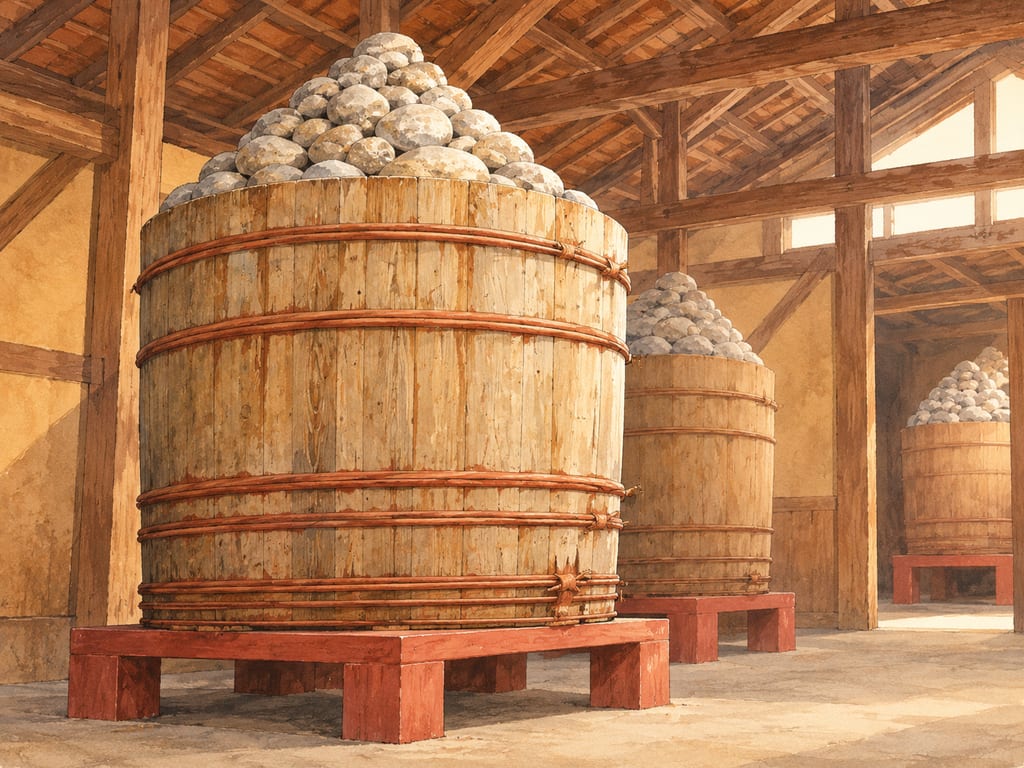
A coopered wooden kioke used by Kakukyu in Okazaki for Hatcho miso: a broad vat capped with a carefully stacked pyramid of river stones during maturation lasting more than two years.
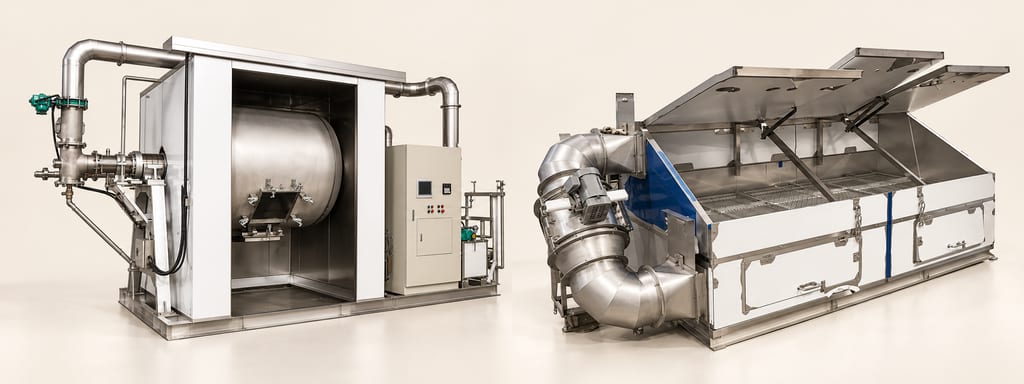
Industrial koji machines cultivate mold on prepared grain before sake, shochu, miso or soy-sauce production. Commercial designs include rotating drums and aerated beds.
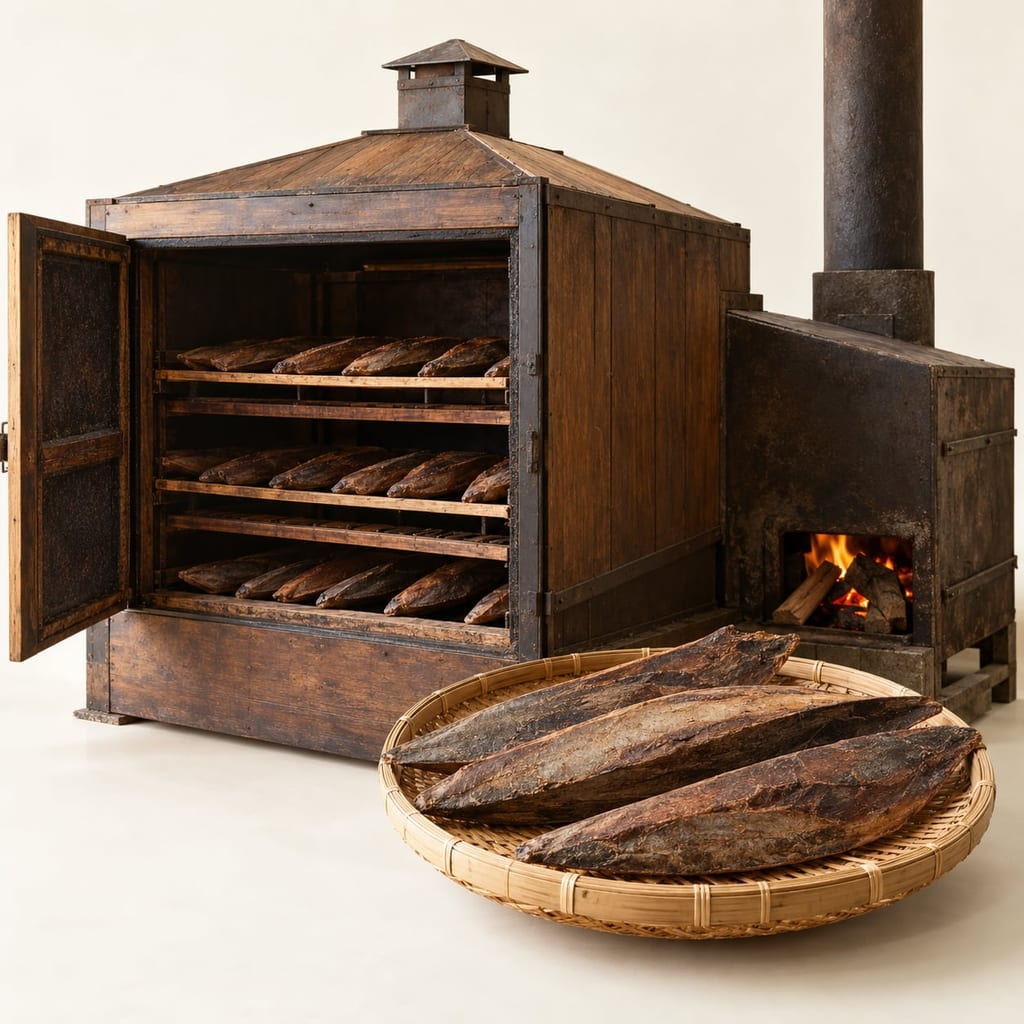
Enclosed cooking, smoking and drying equipment used in the multi-stage process that makes katsuobushi, the dried, smoked and mould-treated bonito of Japan, in repeated stages.

Soft, spreadable Calabrian pork sausage made with a great deal of red chilli and fatty pork, stuffed into natural casings, sometimes smoked and matured while staying soft.

A way to add independent temperature logging to an existing food dehydrator without changing its built-in controls or protections. It is a monitoring method, not a rewiring plan.

Pleurotus cystidiosus is the abalone mushroom, a cultivated oyster-type fungus with dark brown caps that grows more slowly and is more demanding than other Pleurotus species.

A dark, balanced vinegar from Emilia-Romagna made by combining cooked or concentrated grape must with wine vinegar, then acetifying and refining it in wood under a protected specification.

A living dairy inoculum that starts controlled cream fermentation, developing acidity and aroma before sour cream or cultured butter is finished.

Adygean salt is a seasoned table salt associated with Adygea and the wider North Caucasian culinary tradition. Salt is blended with garlic and a variable selection of herbs and spices; the exact mix depends on the named style and maker.

The African Caesar-group mushroom, Amanita masasiensis, is a wild ectomycorrhizal species of central and southern African woodlands, eaten locally. The genus contains deadly poisonous species, so identification needs care.
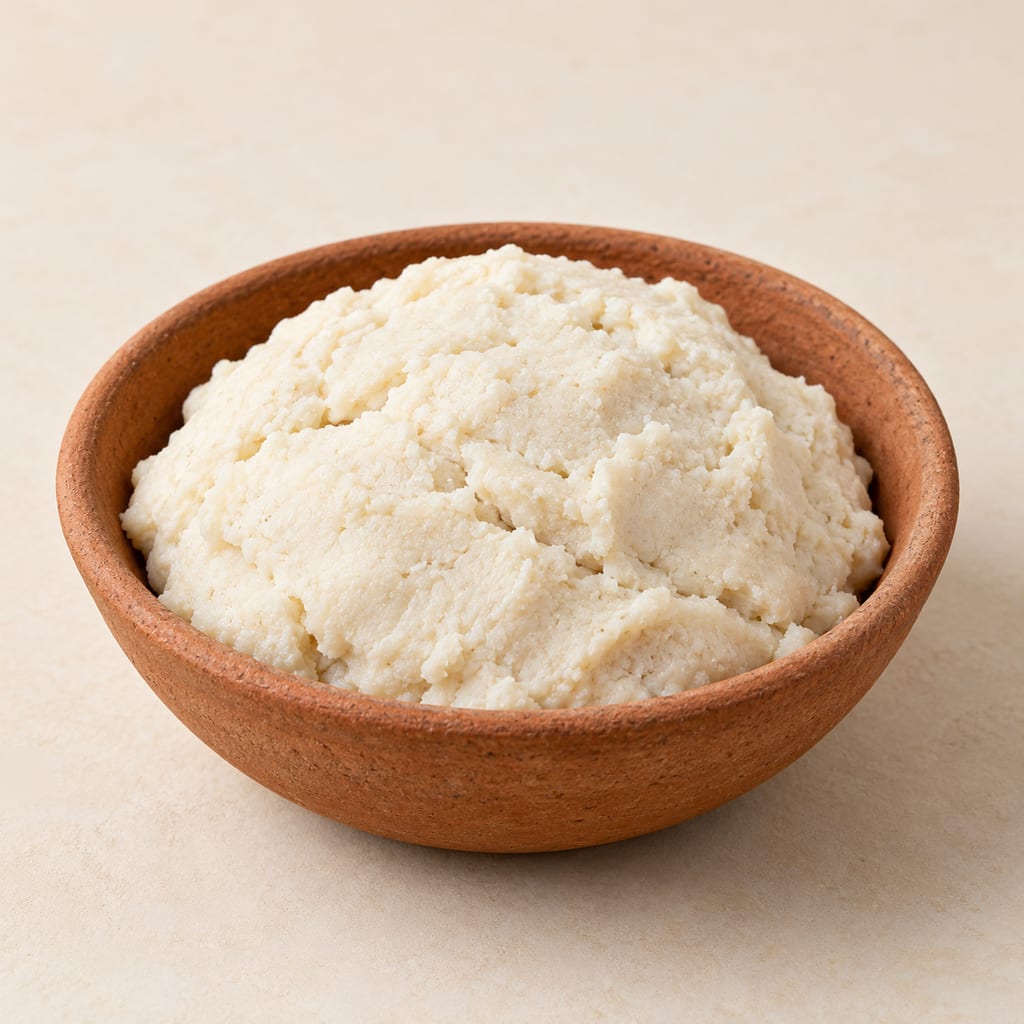
Ghanaian sour cassava dough fermented with traditional inoculum and drained during fermentation. It is used as a base for cooked foods such as banku and akple; process variants and safety outcomes differ.
No community contributions have been published for this entry yet.
Sign in to contribute. Published comments and photos are free to read.
Ōtoyo Goishicha CooperativeEquipment · Method · Geography
製造法 (Manufacturing method)The producer describes the second fermentation as tea leaves and steaming liquor packed in a tub and weighted with a mass equal to the tea; leaves swell and lift the weight.
A current producer photograph shows a wooden tub, cover, sheeting and concrete blocks; it documents one present setup, not a universal tub material.
Cited in: A tub for the second stage; One documented form, not a standard; Place and limits of the evidence
Ōtoyo Town Board of EducationEquipment · History · Geography
碁石茶製造技術調査報告書を公開します (Goishicha production techniques survey report)The 2025 survey identifies large steaming and soaking tubs as distinct pieces of equipment and shows a weighted soaking tub in a 2015 photograph captioned from Higashikajigauchi, Ōtoyo Town.
The report documents multiple producers and workplaces; it does not establish a universal tub material or capacity.
Cited in: One documented form, not a standard; Place and limits of the evidence
Ministry of Agriculture, Forestry and Fisheries of JapanMethod · Regional context
碁石茶(ごいしちゃ)|にっぽん伝統食図鑑The ministry describes Goishicha as produced through successive stages in Ōtoyo, including wet fermentation in a weighted tub.
Cited in: A tub for the second stage