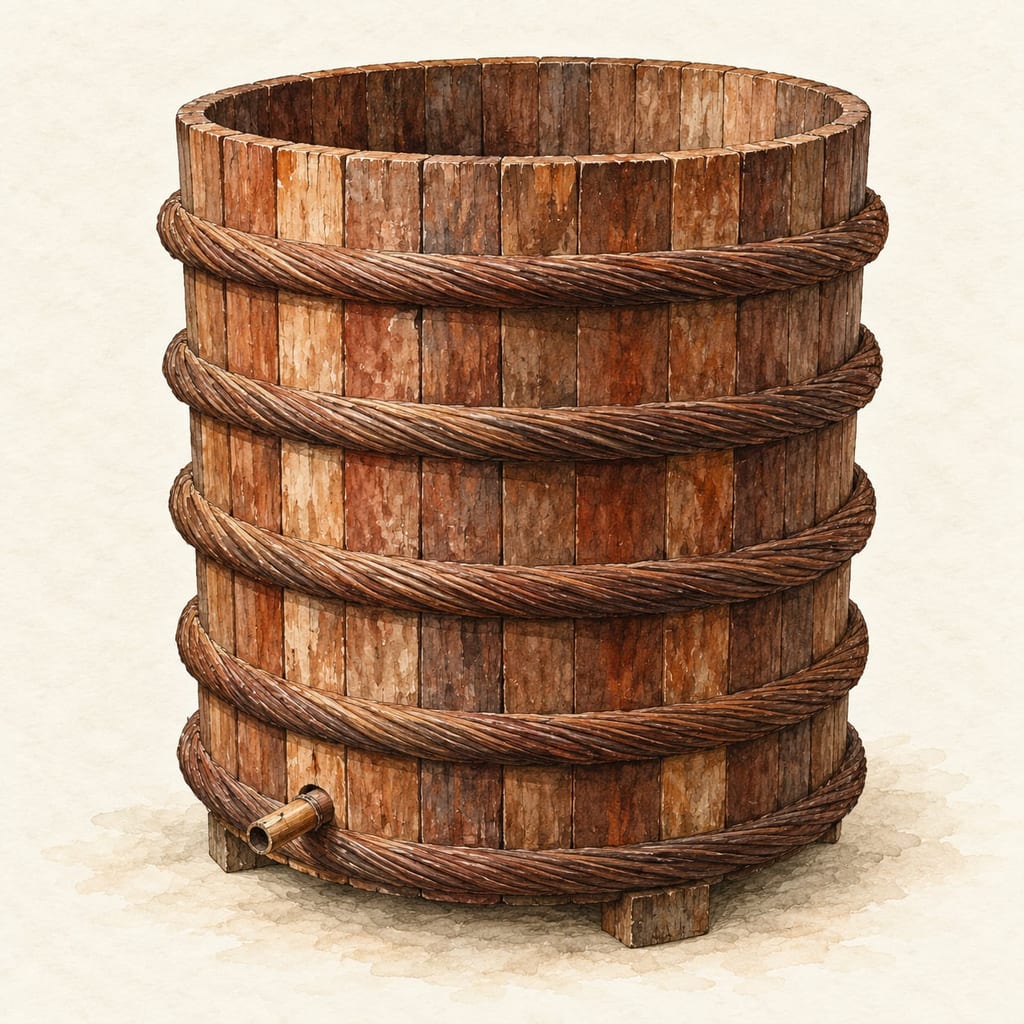
Vietnamese fish-sauce wooden vat
A large upright stave-built vat used in documented Vietnamese fish-sauce production, with a weighted or covered top and a low outlet for drawing liquid; Phu Quoc examples belong to a living regional craft.
 FermenteaWhere food goes to change
Equipment · Barrels and casks
Coopered vessels use shaped staves and hoops, but portable barrels, large foeders and upright wooden vats serve different roles. Materials and uses vary by place and process.
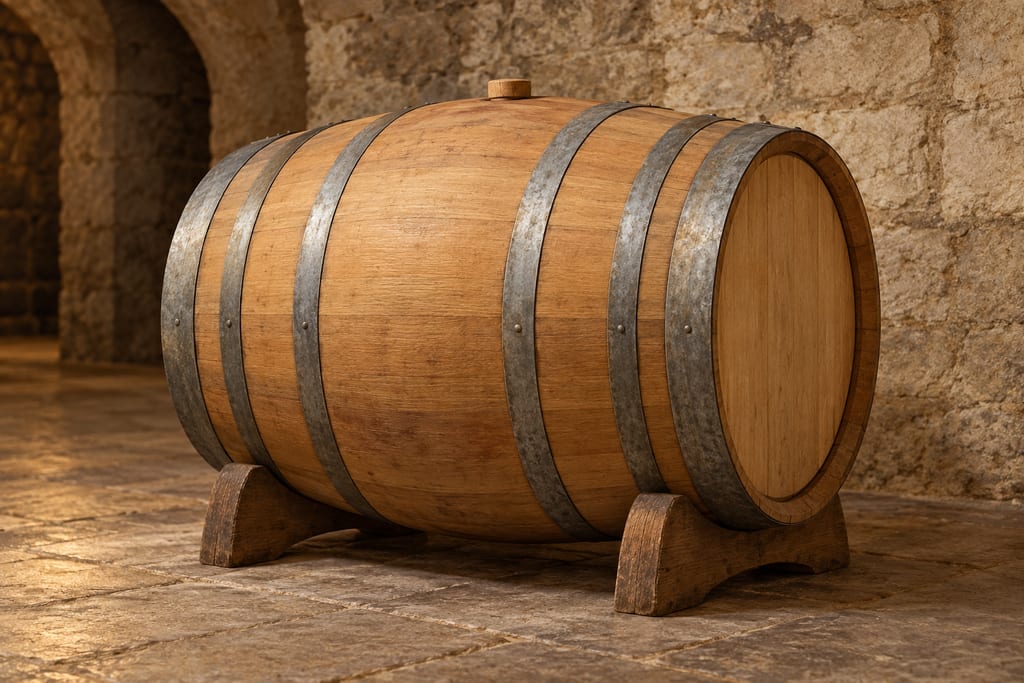
A coopered barrel is a hollow wooden vessel made from lengthwise staves drawn together by hoops. At each end, a groove in the staves seats a separately made circular head. The Jerez Sherry appellation authority describes the convex-sided cask, fitted ends and a bunghole drilled at the widest part. These features describe a closed vessel for liquid; a tap is optional.
Barrel and cask often describe portable horizontal forms, while a foeder or large vat can be much bigger and may stand upright. Their capacities and construction vary. A coopered barrel is not a fixed fermentation tank, and a photograph alone cannot show which food it held or what stage it served.
In Belgium, Brouwerij Boon describes Lambic wort cooling in an open coolship before maturing in large oak foeders. Repeatedly used foeders hold a brewery microculture, and Lambics from different casks and years are blended for geuze. The foeder belongs to this brewery's maturation system; the open coolship is a separate stage.
In Japan, Yamaroku Soy Sauce reports making soy sauce in cedar kioke of 3,000–6,000 litres. These are large wooden fermentation vats, unlike the smaller Bordeaux casks in the linked photograph. Aichi Prefecture documents another upright vat in Okazaki: Hatcho miso matures for more than two years in wooden vats under a cone of river stones. These examples have distinct materials, scale and process.
The linked Bordeaux image documents barrels in a wine cellar and identifies them as ageing for twelve months. It shows one portable cask form and setting, not a cooper at work, an upright vat or a fermentation sequence. This photographed form is useful to compare with larger foeders and vats, but it is not universal.
Wood species, stave thickness, volume, previous contents, lining and closure can differ substantially between new small barrels and old large vats. The cited sources give no single capacity range, build specification or care routine for this family. The generated illustration is a reconstruction of one documented barrel form, not a photograph of a particular brewery.
A barrel photograph does not establish whether it was used for fermentation, maturation or transport; the process must be documented separately.
Source →A small transport barrel, large oak foeder and upright cedar or miso vat are not interchangeable. Capacity, wood species, closure and use vary.
Source →The selected sources document uses in Spain, Belgium and Japan, not one origin or a universal global history.
Source →The Sherry appellation authority documents cooperage craft here; the form is not exclusive to Jerez.
Brouwerij Boon documents oak foeders for Lambic maturation at its brewery; this is one regional use.
Yamaroku documents cedar kioke for soy-sauce fermentation; this large vat differs from a small transport cask.
Aichi Prefecture documents vats in the specific Hatcho miso tradition, weighted by stacked river stones.
A large upright stave-built vat used in documented Vietnamese fish-sauce production, with a weighted or covered top and a low outlet for drawing liquid; Phu Quoc examples belong to a living regional craft.
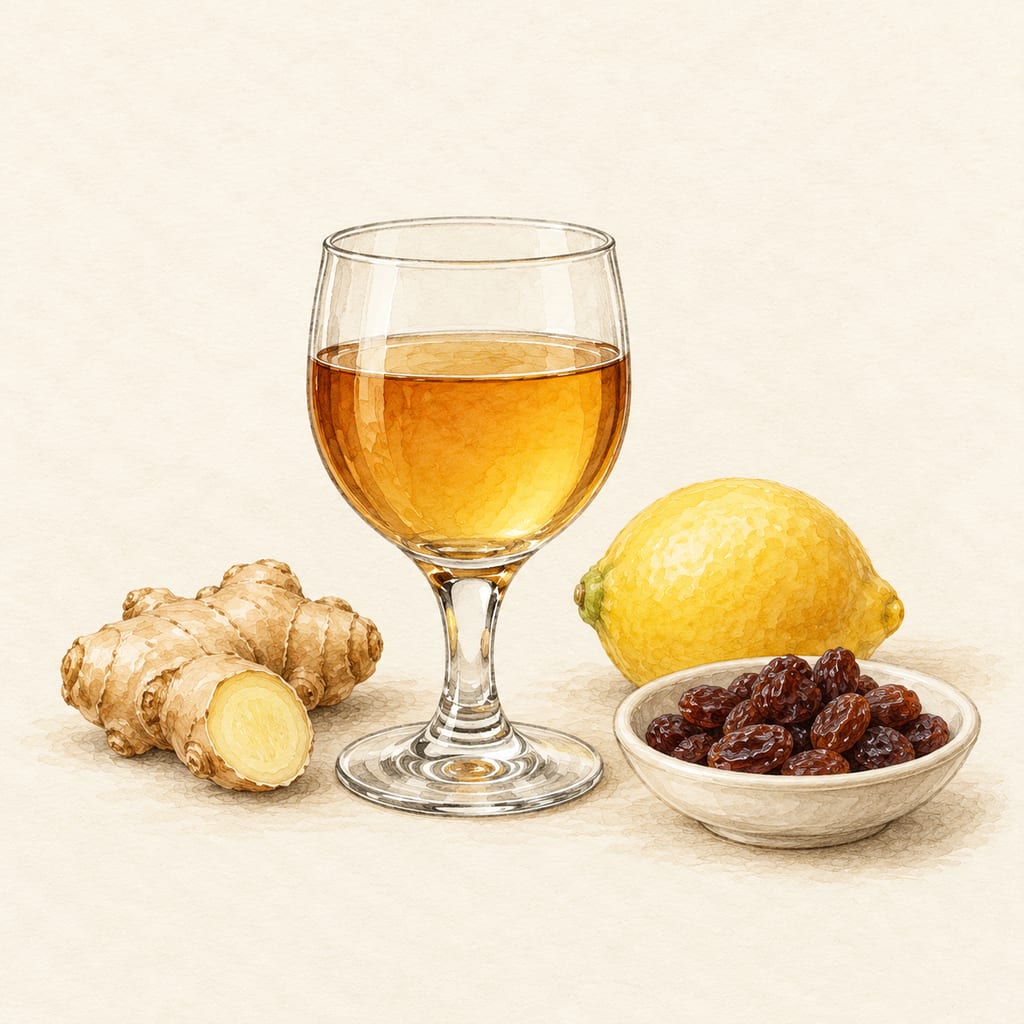
A Victorian household wine of boiled sugar, lemon and bruised ginger, worked on raisins in a cask for a fortnight and finished with brandy, made nine gallons at a time.
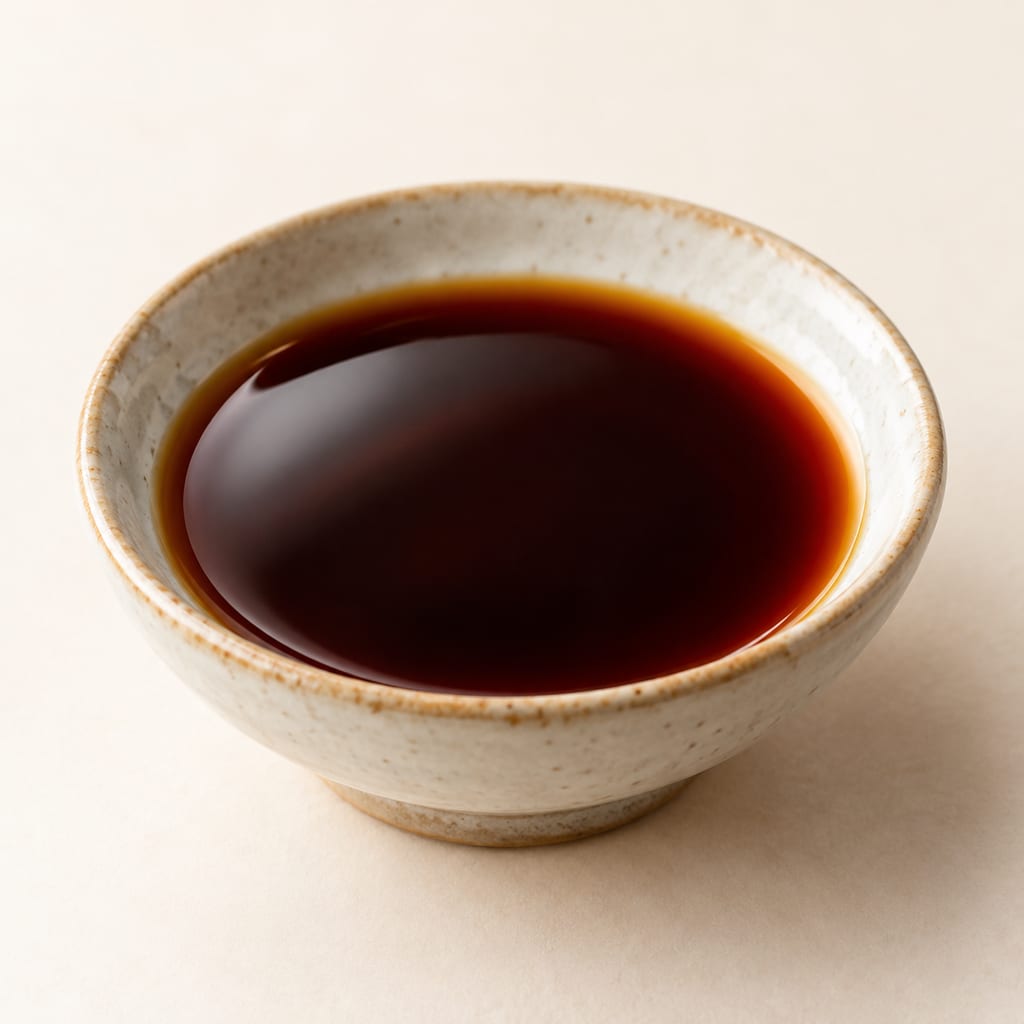
Japan's standard all-purpose soy sauce: soybeans and wheat grown over with koji mould, brined, fermented for months, pressed and usually heated into a reddish-brown, savoury liquid.
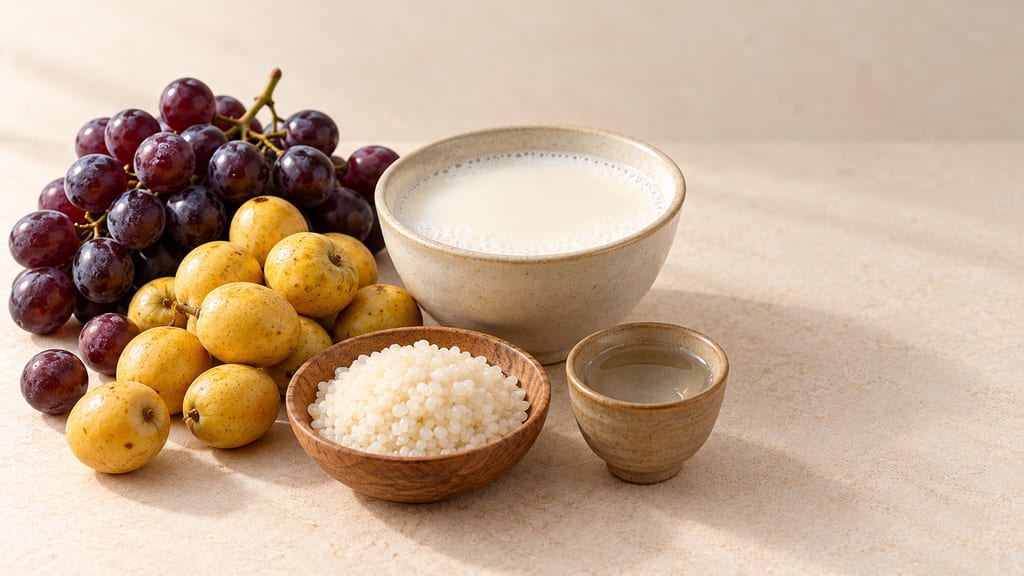
A marula harvest, a rice mash and a bowl of fermented mare’s milk reveal different ways to make alcohol, and different kinds of knowledge behind the drink.
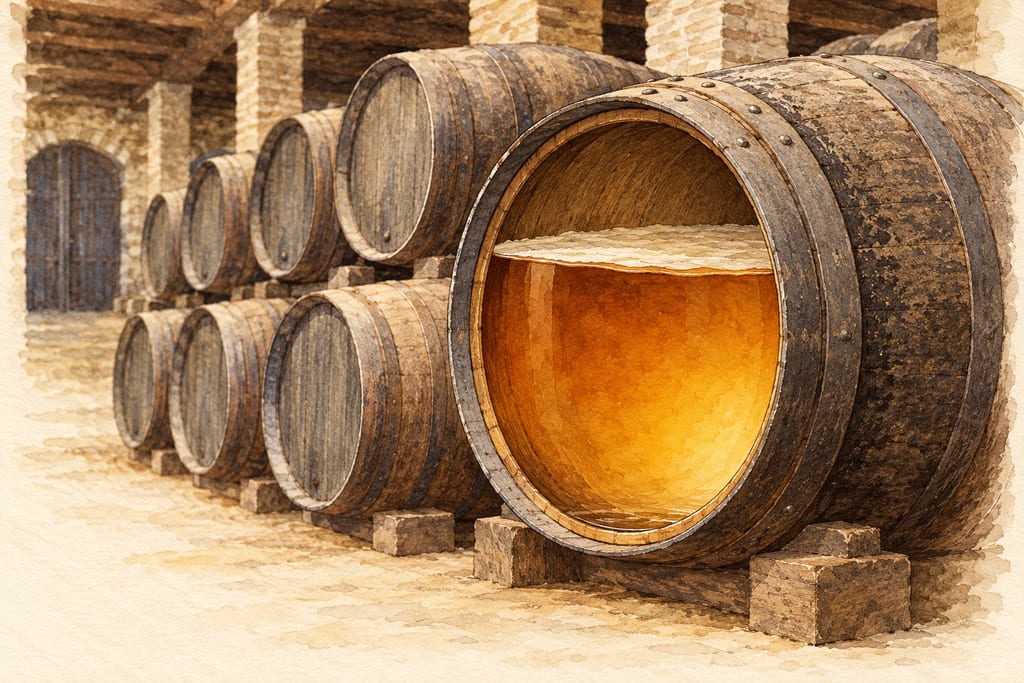
A Jerez bota is a coopered oak butt used for wine ageing. In a criaderas-and-solera array, butts at successive ages are arranged in scales and partly drawn and replenished; the bota's capacity and fill depend on the documented system.
No community contributions have been published for this entry yet.
Sign in to contribute. Published comments and photos are free to read.
Consejo Regulador of the Sherry DenominationsConstruction · Form · Manufacture
The CooperageStaves, hoops, separate heads, end grooves and a bunghole form the coopered cask described by the appellation authority.
Cited in: How a coopered vessel is built; Reading barrel photographs carefully
Brouwerij BoonDocumented use · Maturation
Our unique processLambic wort is cooled in an open coolship before oak foeder maturation; the brewery blends lambics from different vessels and years.
Cited in: Different traditions, different vessels; Reading barrel photographs carefully
Brouwerij BoonDocumented use · Maturation
Lambiek BoonA two-year lambic maturation in oak barrels or foeders is described by the brewery.
Cited in: Different traditions, different vessels
Yamaroku Soy SauceDocumented use · Materials · Capacity
About YamarokuYamaroku reports making soy sauce in 3,000–6,000 litre cedar kioke and says the vessels host microorganisms.
Cited in: Different traditions, different vessels; Reading barrel photographs carefully
Aichi PrefectureDocumented use · Geography · Form
Hatcho MisoTraditional Hatcho miso is made in wooden vats weighted by stacked river stones and matured over two years in Okazaki.
Cited in: Different traditions, different vessels; Reading barrel photographs carefully
Brouwerij BoonCare
HistoryBoon says its oak foeders require a thorough overhaul about every fifteen years; this is specific to its brewery.
Wikimedia CommonsHistorical visual reference
BarriquesThe file page identifies Bordeaux wine barrels stored for twelve-month ageing and lists CC BY 3.0.