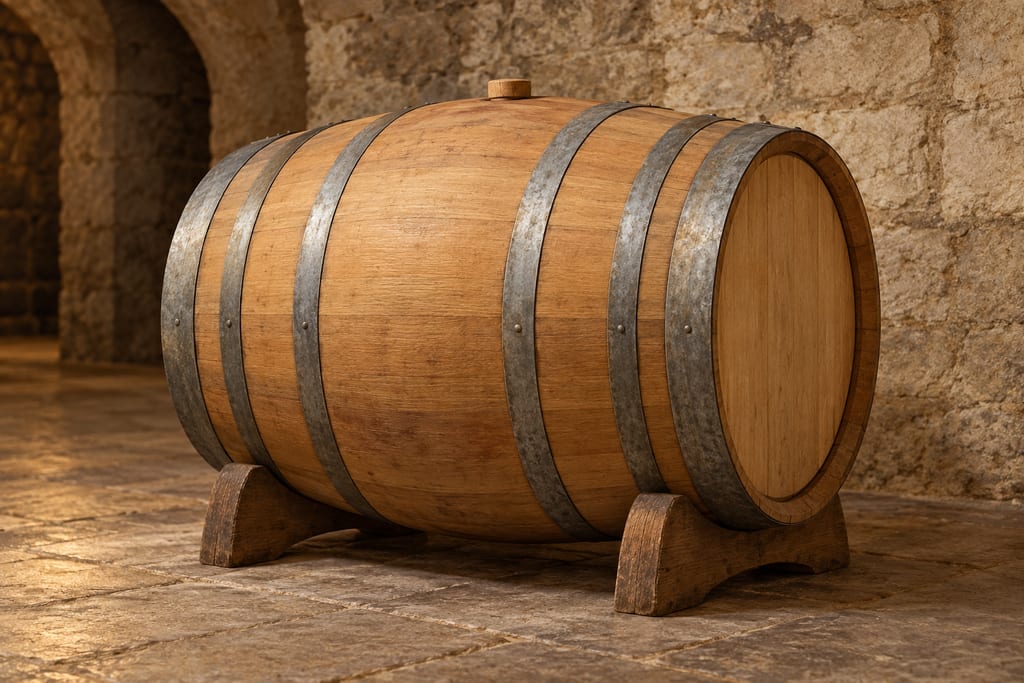
Coopered barrel, cask and large wooden vat
Coopered vessels use shaped staves and hoops, but portable barrels, large foeders and upright wooden vats serve different roles. Materials and uses vary by place and process.
 FermenteaWhere food goes to change
Equipment · Tanks and vats
Phú Quốc fish-sauce vat · thùng gỗ nước mắm Phú Quốc nhà thùng · Vietnamese nuoc mam vat
A large upright stave-built vat used in documented Vietnamese fish-sauce production, with a weighted or covered top and a low outlet for drawing liquid; Phu Quoc examples belong to a living regional craft.
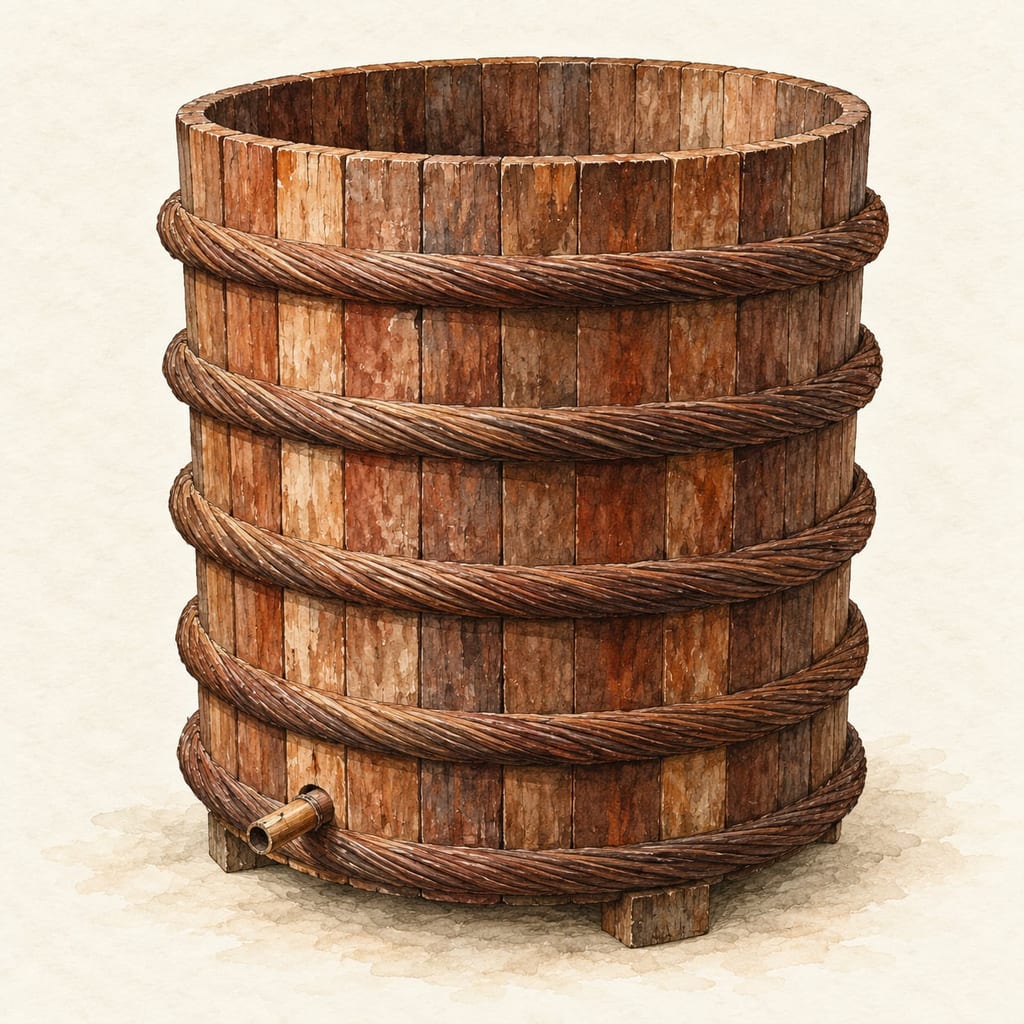
A wooden fish-sauce vat is a large, upright vessel used to mature salted fish and collect the liquid seasoning that develops. Phú Quốc, an island in southwestern Vietnam, is a particularly well-documented centre for this craft. Regional sources describe a living production tradition with dedicated barrel houses and several methods, including stirring, pressing, or combining the two. Vietnam News reports more than two centuries of fish-sauce making on the island and its recognition as national intangible cultural heritage in 2021. Those statements concern the regional craft; they do not date every vat or prove that every Vietnamese fish sauce uses the same vessel.
The vessel is assembled as a tall wooden cylinder from upright staves held together by heavy circumferential bands. In Phú Quốc producer photographs, vats stand in dense rows inside a high barrel house, often taller than a worker. These are fixed workspaces for moving salted fish, accessing the top, monitoring batches and drawing liquid; the vat itself remains equipment, while a purpose-built barrel house is a separate structure. The available sources do not establish one wood species, hoop material, taper, or cover design for all makers, so those features should be read from a specific producer's vat rather than made into a universal model.
Fish and salt are loaded into the vessel, and a cover or weight can hold the mass below its brine. The National Resources Institute manual describes fish sauce vats made of wood or cement and gives a broad maturation range of five to eighteen months for the classic sauces discussed there. Its Vietnamese figures show both the vat arrangement and a low outlet. After maturation, clear liquid can be skimmed or drained through a spigot near the bottom, then filtered and bottled. The manual's general timing is not a Phú Quốc recipe or a safety validation.
The scale of an individual vat is substantial but producer-specific. Red Boat says its barrel holds 13 tonnes of black anchovies and describes a 12-month fermentation before first-press sauce is bottled. A Phú Quốc Tourism account describes wooden barrels reaching four metres high and holding 12–13 tonnes of anchovies and salt, while a local producer Phụng Hưng describes wooden vats holding 10–12 tonnes and a 10–12-month fermentation. These figures come from distinct sources and should not be collapsed into one standard specification. Across the wider craft, producers use stirring, pressing, or a combination, so the vat's fittings and loading practices reflect the method and maker.
The vat supplies a container and drainage path for prolonged contact between salted fish and the liquid that forms as fish proteins break down. It does not itself determine the salt ratio, the species of fish, the maturation schedule, or the final grade. The NRI manual also describes cement vats, which belong outside this wooden-vat entry. Likewise, a coopered wine barrel may share staves and hoops but serves different processes and scales. The meaningful comparison is material and form, not an assumption that all wooden vessels work alike. No pressure rating is documented for these vats; their covered tops should not be read as pressure-vessel closures.
Vietnam News reports more than two centuries of Phu Quoc fish-sauce craft and 2021 national intangible-cultural-heritage recognition. The sources do not establish the first date or an unchanged history of this exact vat construction.
The sources describe vats for maturation and liquid extraction but give no pressure rating; do not infer that a covered vat is pressure-vessel equipment.
Hazard sourceUse the vat only in the producer's documented process and configuration; the cited sources describe drainage or extraction, not pressurized operation.
Control sourceCapacity, wood species, band materials and process duration vary by producer; the Red Boat 13-tonne and 12-month example must not be treated as a universal Phu Quoc specification.
Source →A technical manual also describes cement vats for fish sauce, but this record is limited to wooden vessels.
Source →A documented regional centre for fish-sauce production in wooden vats; this does not claim all Vietnamese fish sauce is made here or that the vat originated here.
Coopered vessels use shaped staves and hoops, but portable barrels, large foeders and upright wooden vats serve different roles. Materials and uses vary by place and process.
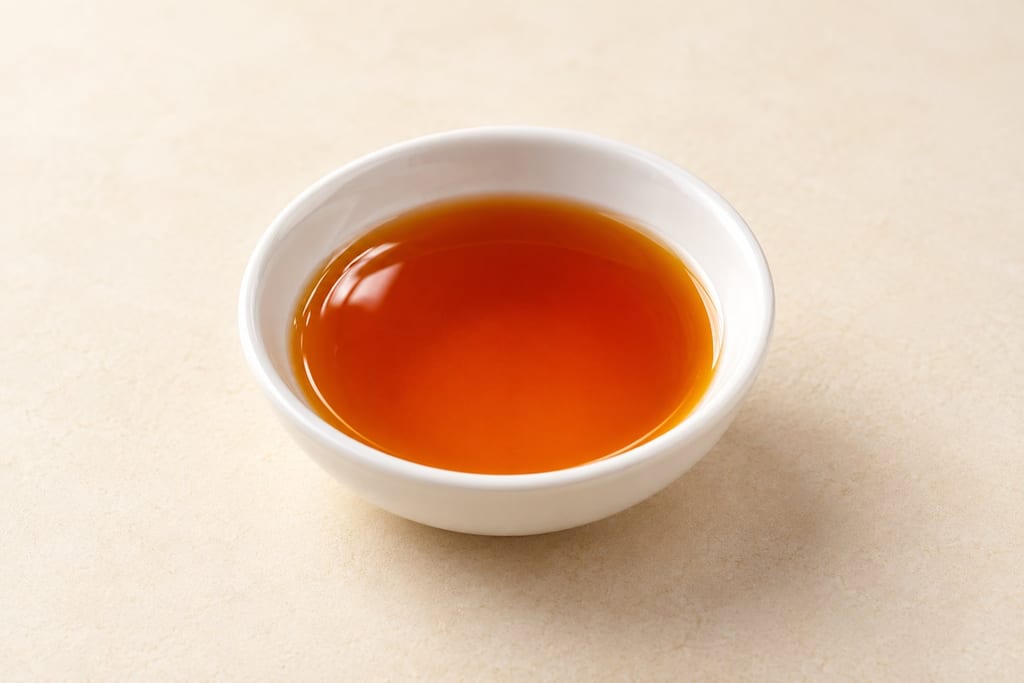
Fish sauce is a clear, salty seasoning made by maturing fish with salt and drawing off the liquid. The broad family includes distinct regional sauces rather than one interchangeable method.
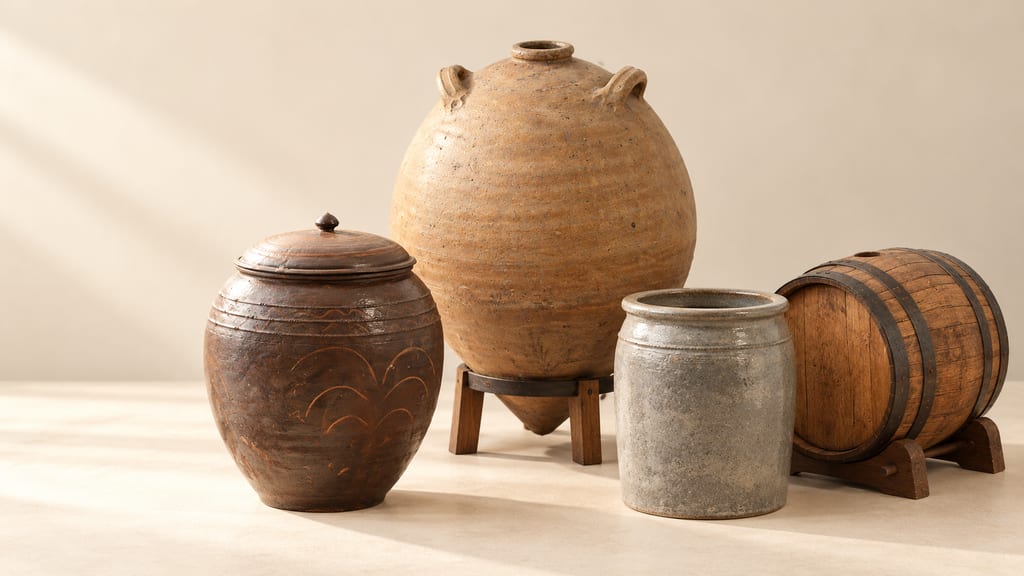
Jars, barrels, skins, leaves, pits and whole rooms decide much of what happens to fermented and cured food. This is how a container works on its contents, and how people in different places chose theirs.
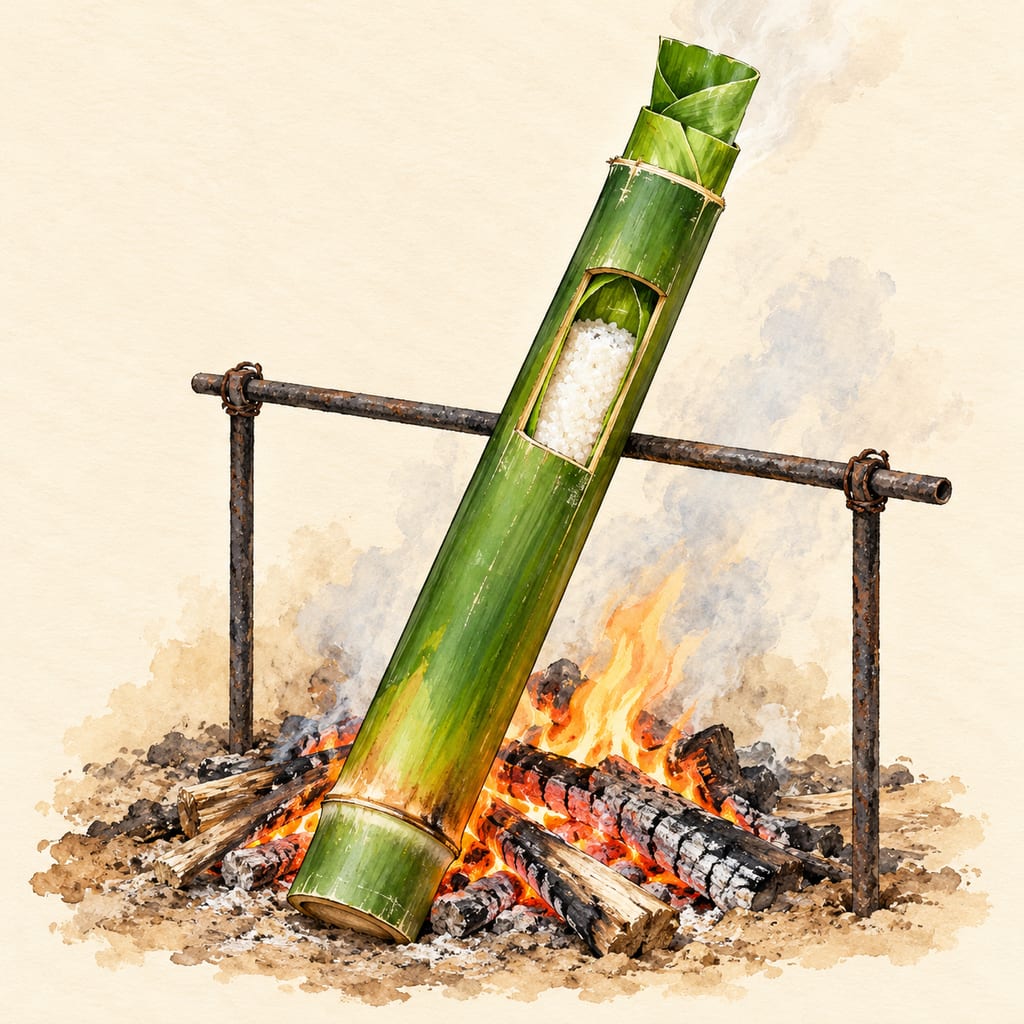
A bamboo internode can serve as the cooking vessel itself: its natural node closes one end while the open end holds food, often with a leaf lining or plug. Regional preparations differ in filling, fire arrangement and handling.
No community contributions have been published for this entry yet.
Sign in to contribute. Published comments and photos are free to read.
Red Boat Fish SauceProducer process · Product example
The Red Boat ProcessRed Boat says it uses black anchovies from Phu Quoc waters, salts them immediately and ferments them for 12 months in a barrel holding 13 tonnes of anchovies; it bottles first-press sauce.
Cited in: Producer examples and regional variation; What the vessel explains
National Resources Institute; digitized mirror CD3WD ProjectTechnical manual · Vessel drawing · Process
Fish Handling, Preservation and Processing in the Tropics: Part 2Manual's Vietnam vat figures show an upright vat and outlet; the general method section describes wood or cement vats, fish and salt, a weighted top, maturation from five to eighteen months, and liquid skimmed or drained through a low spigot. This general range is not specific to Phu Quoc.
Cited in: Staves, bands and scale; Maturation and extraction; What the vessel explains
Phu Quoc TourismGeography · Process · Regional context
Fish sauce craft village in Phu QuocPhu Quoc producers use three traditional methods: stirring, pressing, or a combination. Production takes place in dedicated barrel houses with varying numbers of barrels.
Cited in: Phú Quốc and a continuing fish-sauce craft; Staves, bands and scale; Producer examples and regional variation; What the vessel explains
Viet Nam National Authority of Tourism, rural tourism information portalVisual reference · Regional context
Traditional Essence Linked with Tourism Development: Phu Quoc Fish Sauce Craft VillagePhotograph shows upright wooden fish-sauce vats with circumferential bands in a Phu Quoc production hall; image is used as a visual reference only. The article locates the regional craft on Phu Quoc.
Cited in: Phú Quốc and a continuing fish-sauce craft; Staves, bands and scale
Vietnam NewsHistory · Geography
Phú Quốc fish sauce: A Pearl Island flavourReports a fish-sauce craft on Phu Quoc with more than 200 years of history and notes its 2021 recognition as national intangible cultural heritage; these claims describe the regional craft, not every wooden vat's age.
Cited in: Phú Quốc and a continuing fish-sauce craft
Phụng Hưng Fish Sauce CompanyProducer process · Product example
Ủ chượpPhung Hung describes wooden vats holding 10 to 12 tonnes of salted anchovies and 10 to 12 months of maturation; it describes drawing out liquid for salinity checks and pressing fish with a mat and rattan cord. This is one producer's specification and method.
Cited in: Producer examples and regional variation; What the vessel explains