
Rice koji
Rice koji is steamed white rice through which koji mold has grown. It carries the enzymes that turn rice starch into sugar, and it is the starting point of sake, sweet miso, amazake and shio koji.
 FermenteaWhere food goes to change
Equipment · steaming-cloths
rice-koji steaming cloth · cloth for koshiki
A cloth listed for steaming rice in a rice-koji method and identified as cloth for a koshiki in a brewery-museum caption; its fiber, weave, and size are not specified.
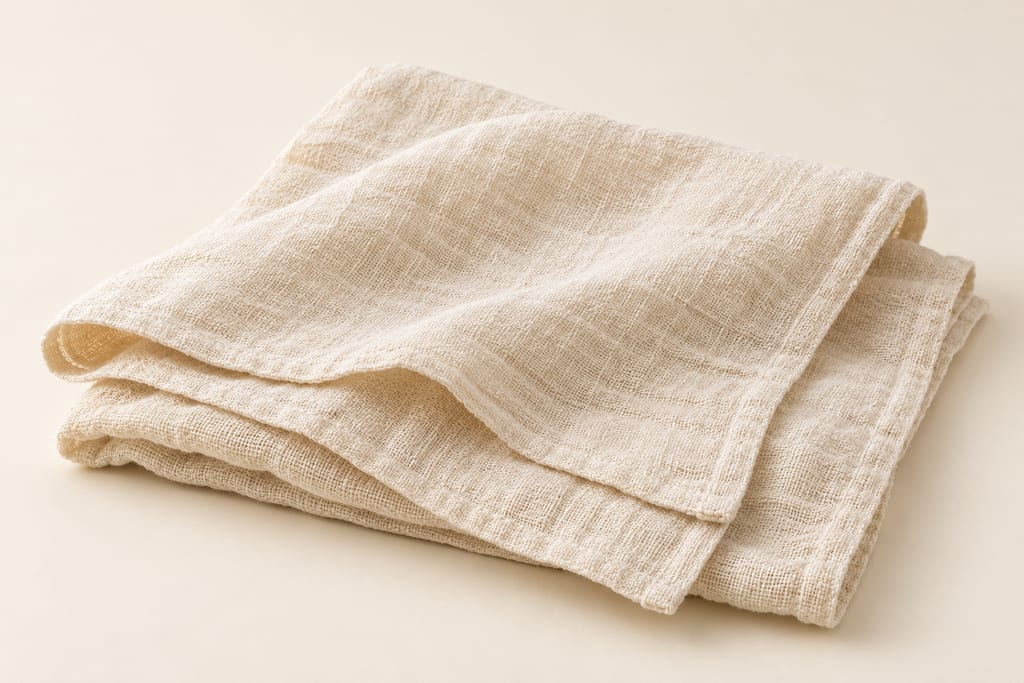
Food-contact cloth is a textile listed as equipment for steaming rice in a rice-koji method. Kojiya Sanzaemon lists one steamer and one cloth “used to steam” among the tools for its recipe. The cloth is distinct from the steamer itself and from the towels used later to handle warm, inoculated rice. The source does not describe the cloth’s exact position in the steamer, its fiber, weave, thickness, or dimensions. Those details should not be inferred from the generic word “cloth”.
This is also a different use from a breathable cover over an open fermentation vessel. A steaming cloth is associated with the heat-cooking stage and direct contact with food; a fermentation cover is held over the vessel during a later open stage. The shared material category does not make the two pieces interchangeable.
Kojiya Sanzaemon’s current method lists rice, its seed koji, a steamer and a steaming cloth. For that manufacturer’s example, the rice is steamed for about 40 minutes and should remain firmer than ordinary table rice; the page says to extend steaming if a white core remains. It also warns that steamed rice is very hot. The timing and handling advice belong to that maker’s method and are not a universal steaming schedule for every grain, steamer or starter.
After steaming, that method places the rice on a tray covered with a hand towel or cloth while it is cooled. It later wraps inoculated rice in a towel to retain warmth. These are additional cloth uses in the same method, but the source lists them separately from the cloth used to steam. They should not be collapsed into a single assumed pattern or specification.
Japan’s National Research Institute of Brewing identifies the koshiki as a traditional steamer in its illustrated account of sake production and contrasts it with an automatic steamer. The sequence moves from rice steaming to cooling and koji making. This places the cloth within documented Japanese rice-processing practice without establishing that every koshiki uses the same cloth or that the textile shown in a museum is a universal model.
A Wikimedia Commons photograph from 2014 shows cloth identified in its caption as cloth for a koshiki at Yoshinogawa Sake Brewery Museum Hisagotei in Nagaoka, Niigata. It is a useful genuine record of the object in a brewery-museum collection, but it shows a display rather than the cloth during a steaming operation.
The references do not establish whether a particular cloth is cotton, linen, synthetic or another fiber. They also do not specify a weave, dimensions, temperature rating, replacement interval, or a single cleaning process for the textile. The manufacturer does advise washing the prepared tools and keeping tools and hands clean, using alcohol on tools as needed, but it does not give a cloth-specific laundering procedure.
Use the directions for the actual rice-koji method and the textile being used. This page records a tool identified by its role; it does not certify an arbitrary household cloth for food contact or steam, and it does not prescribe one material.
Current rice-koji guidance lists a cloth used with a steamer; a 2014 photograph documents a displayed cloth for a koshiki at a sake brewery museum. Neither establishes when this equipment type began.
Wash prepared tools before use; keep tools and hands clean, disinfecting with alcohol as needed as described by the manufacturer’s method.
Control sourceFollow the selected rice-koji method and the cloth maker’s care and heat-use directions; the cited sources do not establish one textile specification.
The steaming cloth’s fiber, weave, dimensions, exact placement inside the steamer, heat rating, and textile-specific care are not specified in the cited sources.
Source →The museum photograph documents a cloth identified as for a koshiki but shows it on display, not during steaming; the image does not prove a specific shape or material.
Source →Records documented Japanese rice-koji and brewery-museum use; it does not claim the cloth originated in Japan or was manufactured there.
Rice koji is steamed white rice through which koji mold has grown. It carries the enzymes that turn rice starch into sugar, and it is the starting point of sake, sweet miso, amazake and shio koji.

A small electric incubator holds jars at a selected temperature for yogurt and other documented warm food preparations. Controls, capacity and vessel arrangement vary by model.
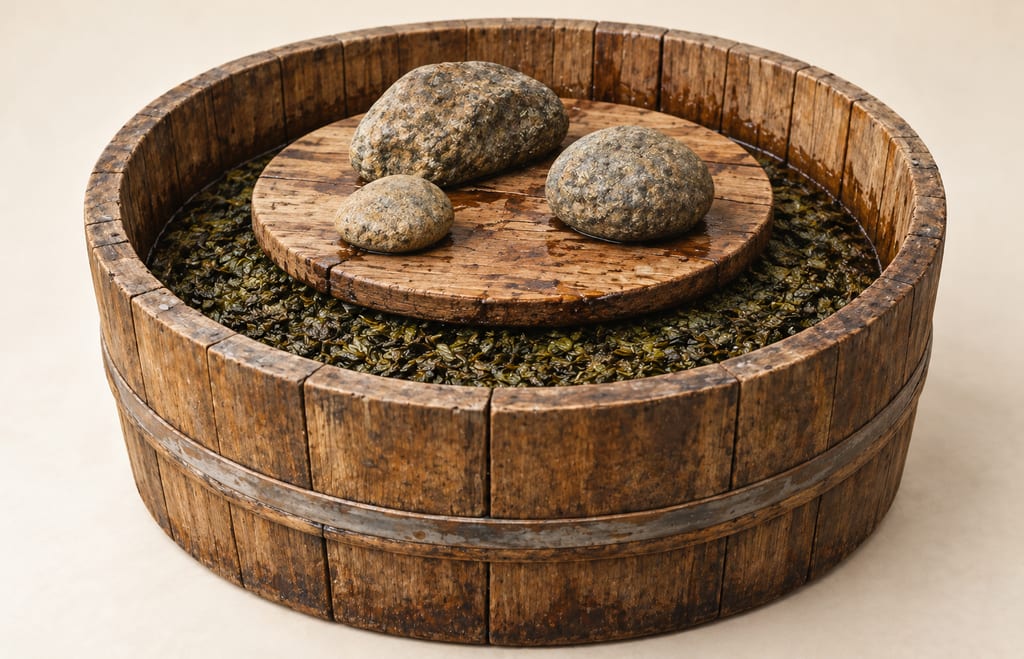
A large wooden tub used in Tokushima to ferment heated, worked Awabancha leaves with their cooking liquor. Its size and construction details are not specified in the sources.
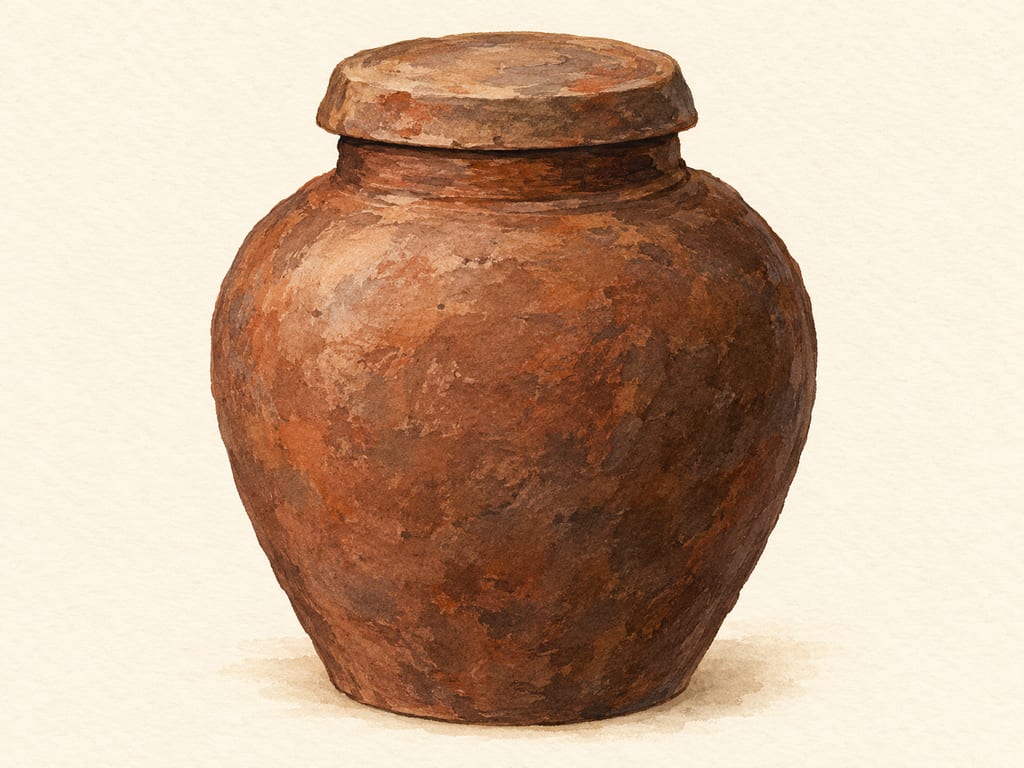
A ceramic jar used in Okinawa to store and mature distilled awamori into kusu; it holds the finished spirit after distillation rather than fermenting the rice mash.
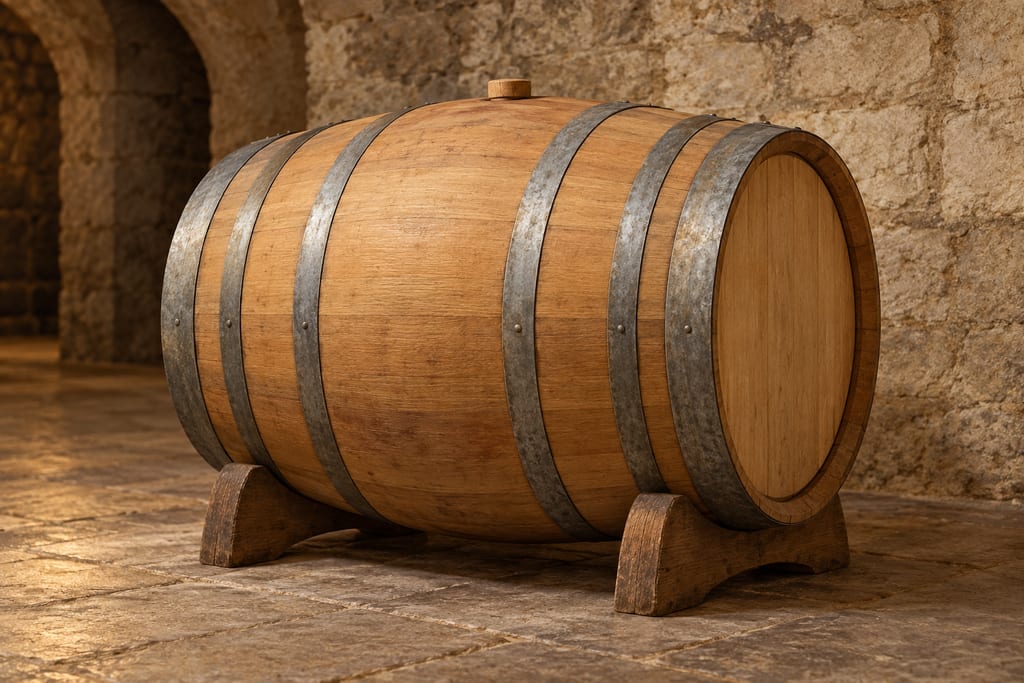
Coopered vessels use shaped staves and hoops, but portable barrels, large foeders and upright wooden vats serve different roles. Materials and uses vary by place and process.
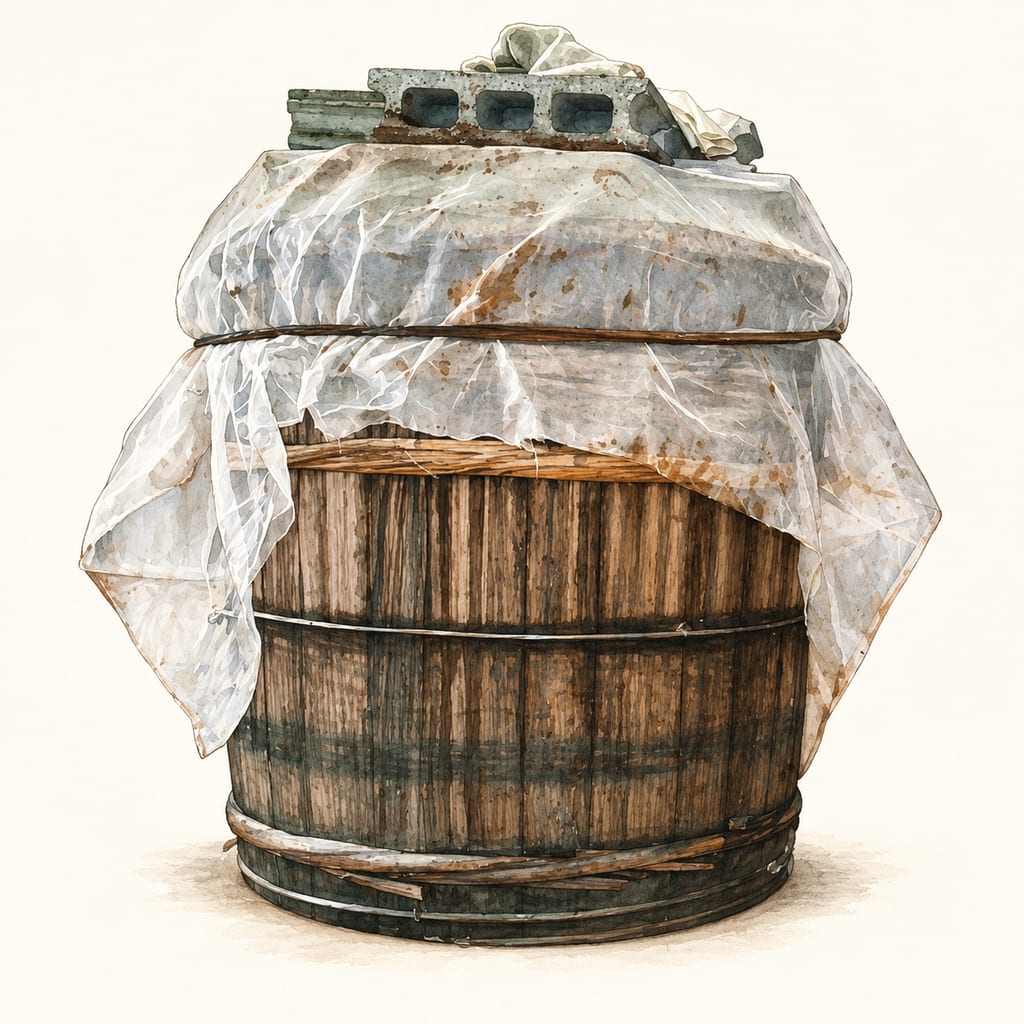
A Goishicha weighted tub holds tea leaves and steaming liquor during the second, wet fermentation stage in Ōtoyo, Kōchi. A current producer photograph documents one covered wooden tub under concrete-block weight.
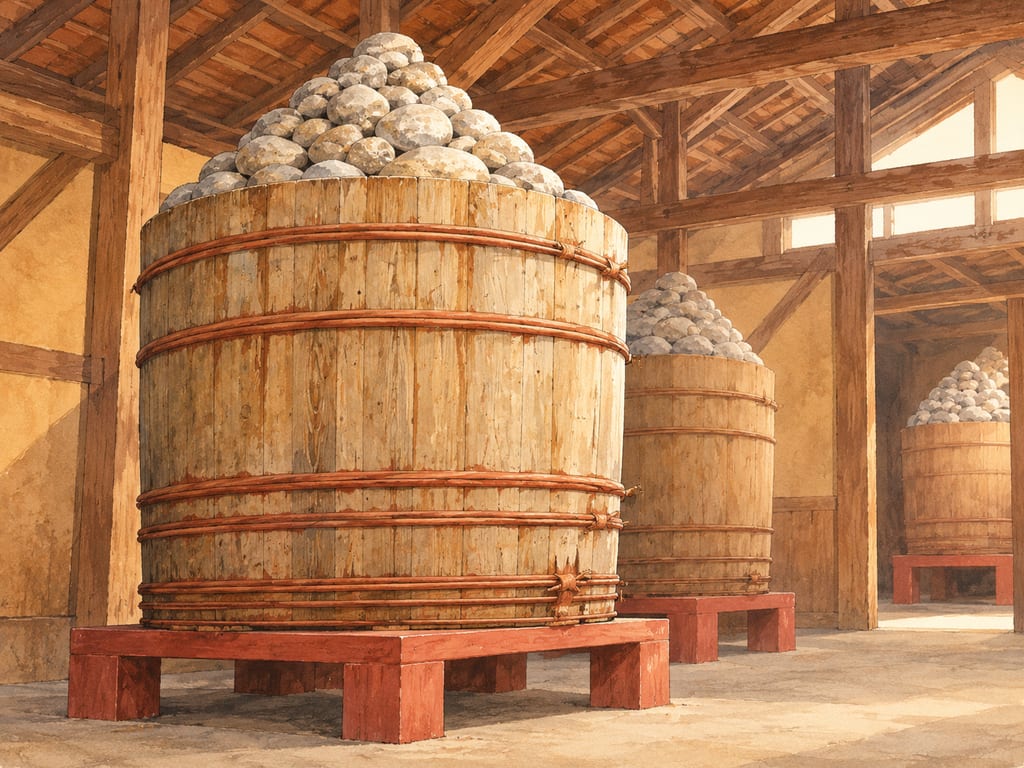
A coopered wooden kioke used by Kakukyu in Okazaki for Hatcho miso: a broad vat capped with a carefully stacked pyramid of river stones during maturation lasting more than two years.
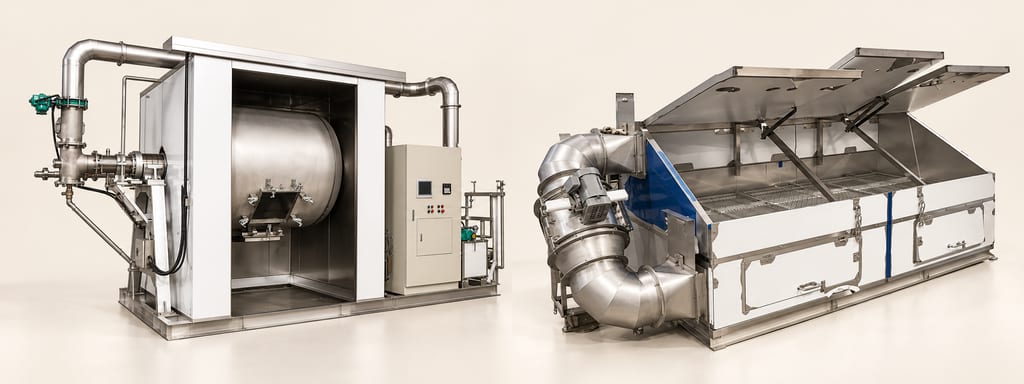
Industrial koji machines cultivate mold on prepared grain before sake, shochu, miso or soy-sauce production. Commercial designs include rotating drums and aerated beds.
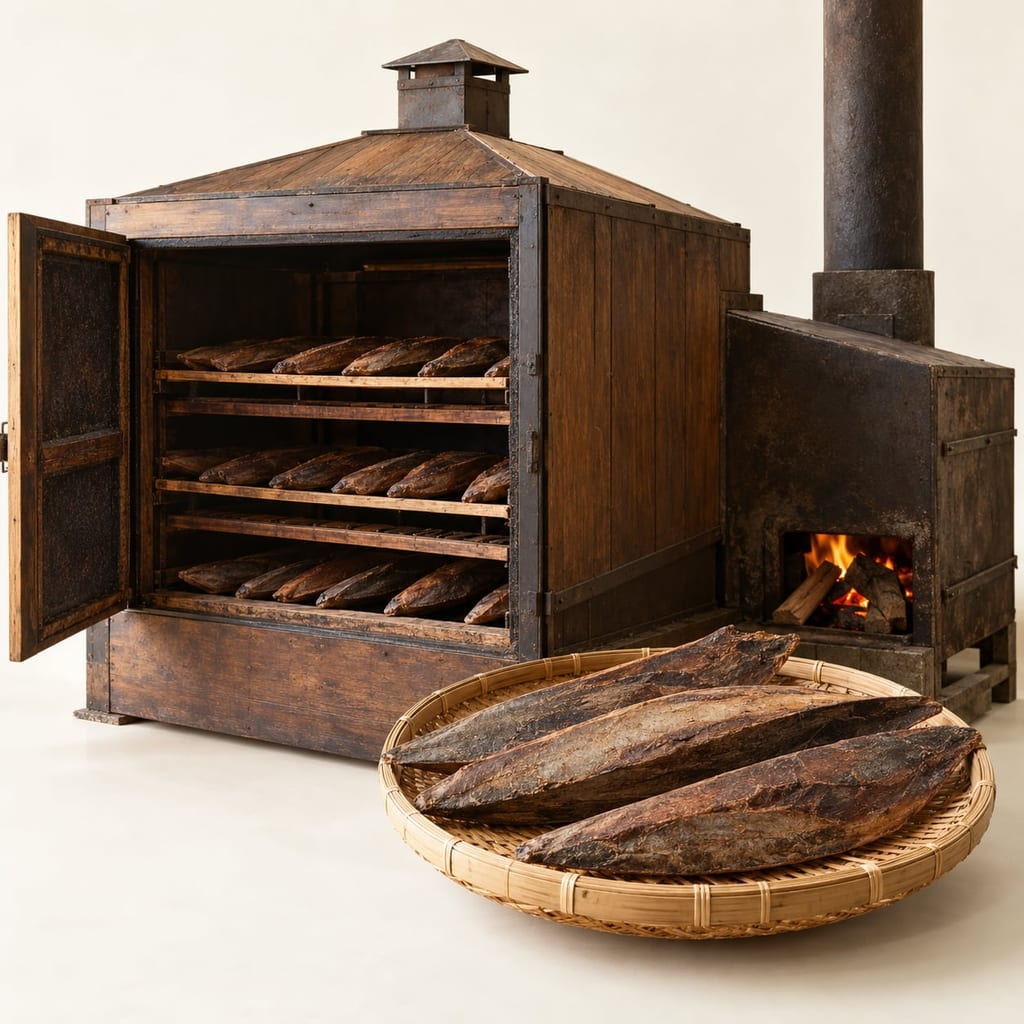
Enclosed cooking, smoking and drying equipment used in the multi-stage process that makes katsuobushi, the dried, smoked and mould-treated bonito of Japan, in repeated stages.
No community contributions have been published for this entry yet.
Sign in to contribute. Published comments and photos are free to read.
Kojiya SanzaemonForm · Function · Process context · Handling · Limits
How to make Rice KojiThe manufacturer lists a steamer and a separate cloth marked “used to steam” among the tools for its rice-koji method.
Its example method steams rice for about 40 minutes and warns that the rice is very hot; this timing belongs to its own method.
It separately lists a hand towel or cloth and later directs the maker to place cooled steamed rice on a towel-covered tray and wrap inoculated rice in a towel.
The page says to wash tools before use and keep tools and hands clean, disinfecting them with alcohol as needed.
The method does not specify the steaming cloth’s fiber, weave, dimensions, exact placement, or a textile-specific care schedule.
Cited in: A cloth used with the steamer; One documented home rice-koji method; What the sources leave open
National Research Institute of Brewing, JapanTraditional form · Process context · Geography · Limits
The Story of SakeThe institute identifies koshiki as a traditional steamer and contrasts it with an automatic steamer.
The account describes sake rice being steamed before it is cooled and moved into koji making.
The text also describes cloth used at other stages, so that use is distinct from the steaming cloth in the candidate record.
The source supports Japanese sake-brewing context but does not date the invention of the cloth or specify its fiber.
Cited in: The traditional brewery context
Wikimedia Commons; original photograph by Norio NAKAYAMAImage reference · Form · Documented use · Geography
Yoshinogawa Sake Brewery Museum Hisagotei 04The Commons description identifies the photograph as Yoshinogawa Sake Brewery Museum Hisagotei in Nagaoka, Niigata, Japan and identifies displayed cloth as for a koshiki steamer.
The photo is dated 24 February 2014 and credits Norio NAKAYAMA.
The page records a CC BY-SA 2.0 license and says the original Flickr license was reviewed by FlickreviewR.
The photo documents a displayed cloth but does not show it in active use or establish exact material and dimensions.
Cited in: The traditional brewery context; What the sources leave open