
Rice koji
Rice koji is steamed white rice through which koji mold has grown. It carries the enzymes that turn rice starch into sugar, and it is the starting point of sake, sweet miso, amazake and shio koji.
 FermenteaWhere food goes to change
Equipment · Industrial and laboratory plant
Industrial koji machines cultivate mold on prepared grain before sake, shochu, miso or soy-sauce production. Commercial designs include rotating drums and aerated beds.
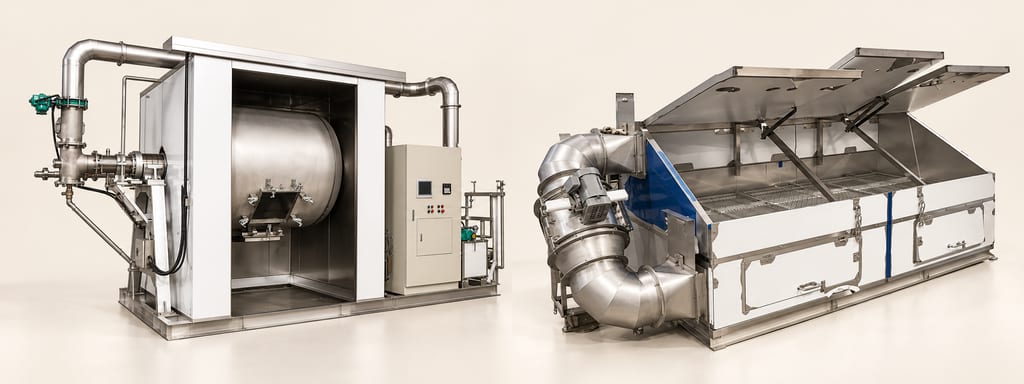
An industrial koji drum or aerated bed is used for the aerobic mold-growing stage upstream of sake, shochu, miso or soy-sauce fermentation. The machine holds prepared material—often steamed rice or another cereal substrate—while koji mold grows through it. It is not the later liquid mash tank. The distinction matters: during solid-state cultivation the grains remain separate or in a shallow bed, and the system must deliver oxygen while managing the heat and moisture produced as the culture grows.
The 2021 review of Japanese miso and koji making explains that mechanical systems supply fresh air around or through the layer to limit heat build-up and exchange oxygen and carbon dioxide. It classifies interior-ventilation machines by loading arrangement: fixed beds, shelf beds, rotating drums and rotating discs. These names describe different engineering layouts; the word “koji machine” alone does not specify a vessel, airflow path or handling sequence.
Fujiwara Techno-Art lists drum and rotary koji machines separately. One manufacturer-listed drum model integrates washing or soaking, steaming, cooling, inoculation, cultivation and discharge in the same container, and uses a board to keep the substrate layer more even. The company says automated tending and leveling are part of that machine’s workflow; sealed versions are available. Those features describe this product family, not a requirement for every koji maker. The visible Fujiwara example is a horizontal enclosed drum within a frame, with an access opening and service connections.
Nagata’s Visser machine is a bed-based alternative. Its published sequence puts inoculated steamed rice on a retractable bed, then onto a mesh shelf in the cultivation box. A fan circulates air through the koji layer and periodically reverses direction. Duct openings alternate exhaust and intake, helping remove humid air and cool the bed. Nagata describes the design as drawing on bed koji. Its image shows a broad shallow shelf chamber and ductwork rather than the horizontal rotating drum shown in the Fujiwara listing.
The machine’s engineering problem is to keep a living, damp grain layer supplied with oxygen without letting respiratory heat accumulate or the surface dry excessively. A drum can rotate or turn its load; a fixed or shelf bed instead relies on air distribution and may use automated handling between surfaces. The exact balance depends on the model, substrate and koji process. The review describes surface and interior ventilation as different approaches and notes that fresh air can be temperature- and humidity-managed. The Visser design illustrates another option: reversing flow and alternating duct openings through the shelf layer.
Air movement is therefore not merely ventilation for the room. It is a way to remove heat and moisture from the material and make conditions more even across the layer. The sources do not establish a single airflow rate, temperature schedule or endpoint for all machines. A setting from one producer’s koji or equipment manual should not be presented as a universal operating specification.
Nagata specifies stainless steel for easy cleaning on the Visser equipment. Fujiwara’s drum listing illustrates a different enclosed production system, but the sources do not give one material specification that applies to every manufacturer or every surface. Likewise, the capacities, dimensions, utility requirements and installation needs are model-specific; this record does not assign one standard size to a class that includes both drums and beds.
Fujiwara Techno-Art and Nagata Brewing Machinery are Japanese manufacturers with listed company addresses in Okayama and Kobe respectively. That establishes a Japanese commercial context for the examples, not a precise birthplace or a claim that the equipment is used only in Japan. The cited material documents contemporary machines but gives no date for their invention or first adoption. A producer choosing equipment would need the maker’s current model documentation for capacity, substrate compatibility, sanitation procedures, airflow controls and electrical specifications.
Fujiwara Techno-Art and Nagata Brewing Machinery list koji-making equipment and give Japanese company addresses. This row locates the cited makers; it does not claim every machine is made or used in Japan.
Rice koji is steamed white rice through which koji mold has grown. It carries the enzymes that turn rice starch into sugar, and it is the starting point of sake, sweet miso, amazake and shio koji.

A small electric incubator holds jars at a selected temperature for yogurt and other documented warm food preparations. Controls, capacity and vessel arrangement vary by model.
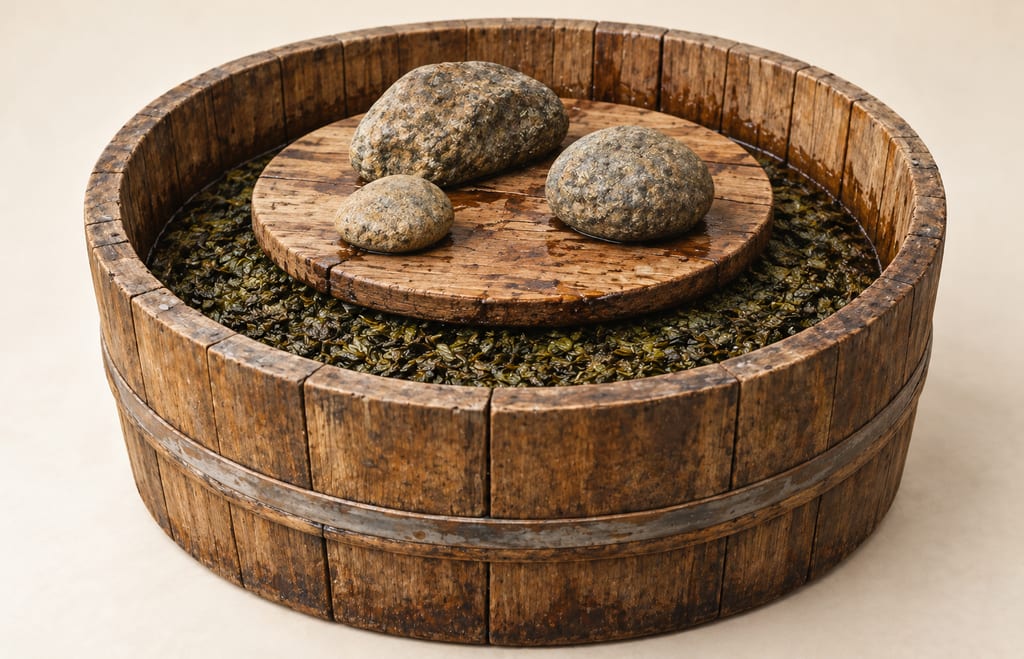
A large wooden tub used in Tokushima to ferment heated, worked Awabancha leaves with their cooking liquor. Its size and construction details are not specified in the sources.
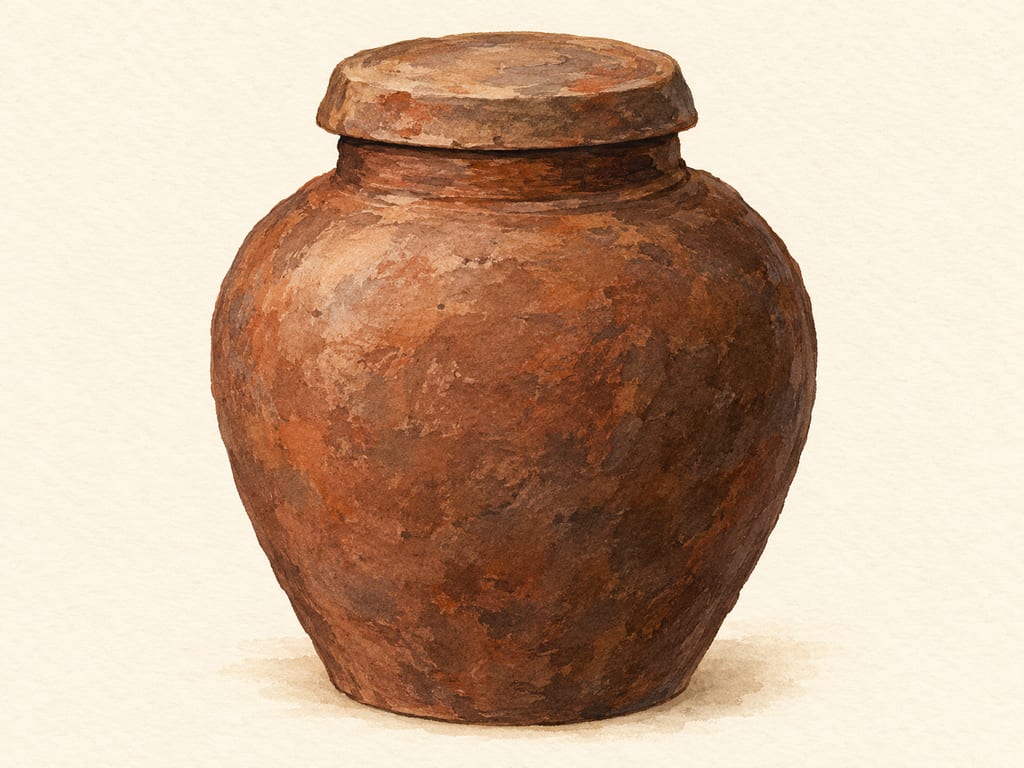
A ceramic jar used in Okinawa to store and mature distilled awamori into kusu; it holds the finished spirit after distillation rather than fermenting the rice mash.
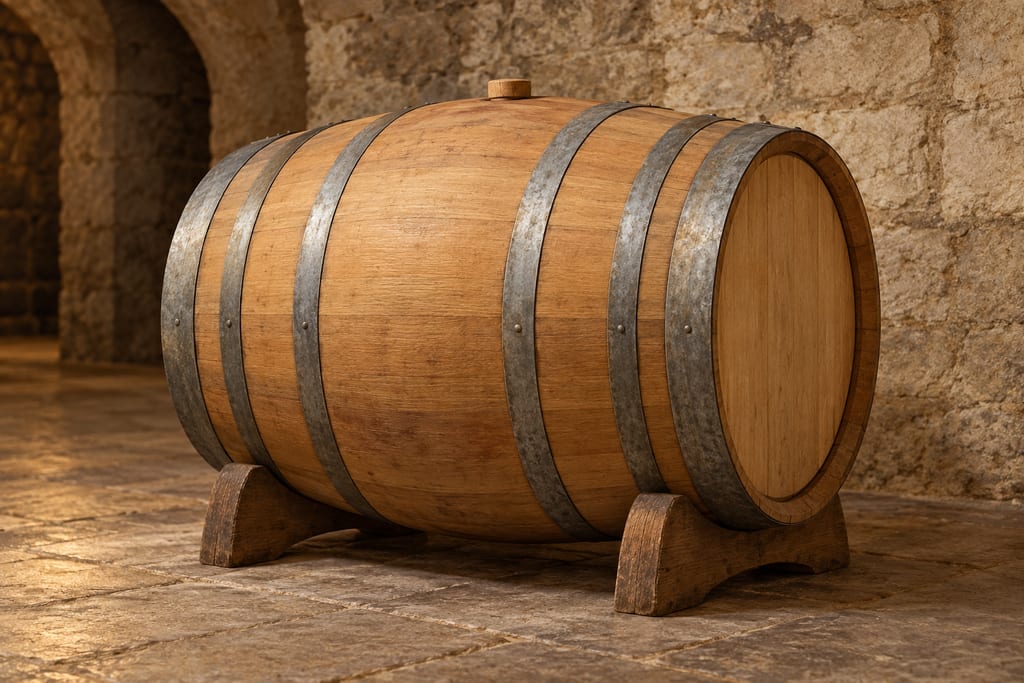
Coopered vessels use shaped staves and hoops, but portable barrels, large foeders and upright wooden vats serve different roles. Materials and uses vary by place and process.
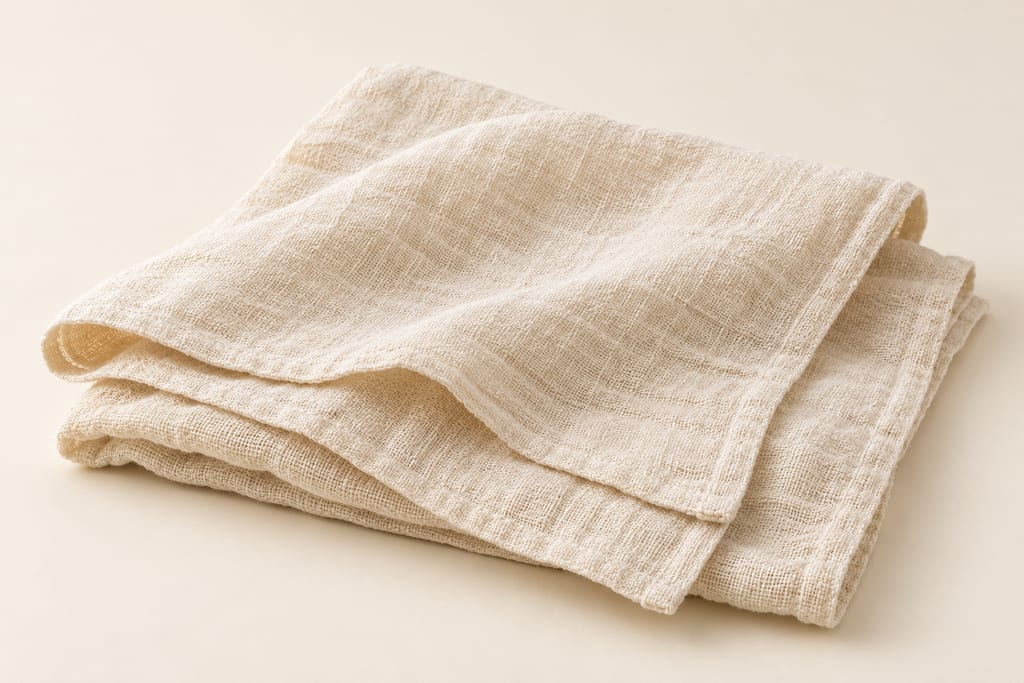
A cloth listed for steaming rice in a rice-koji method and identified as cloth for a koshiki in a brewery-museum caption; its fiber, weave, and size are not specified.
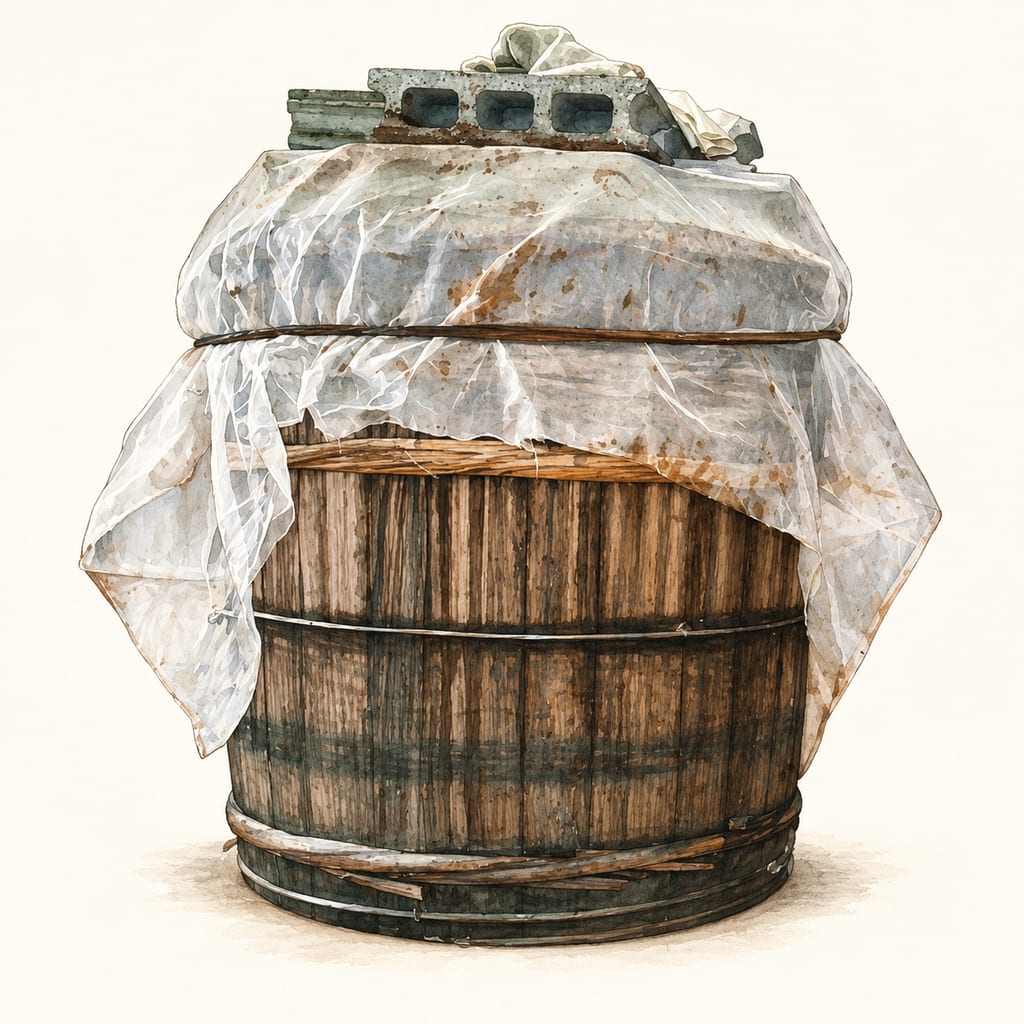
A Goishicha weighted tub holds tea leaves and steaming liquor during the second, wet fermentation stage in Ōtoyo, Kōchi. A current producer photograph documents one covered wooden tub under concrete-block weight.
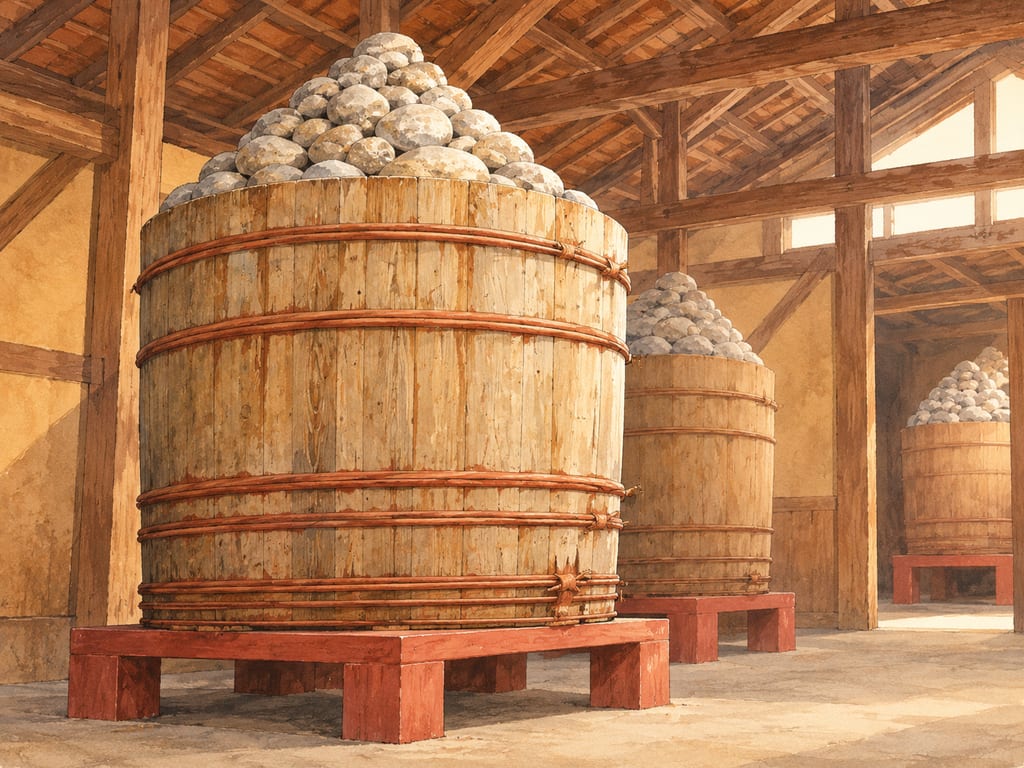
A coopered wooden kioke used by Kakukyu in Okazaki for Hatcho miso: a broad vat capped with a carefully stacked pyramid of river stones during maturation lasting more than two years.
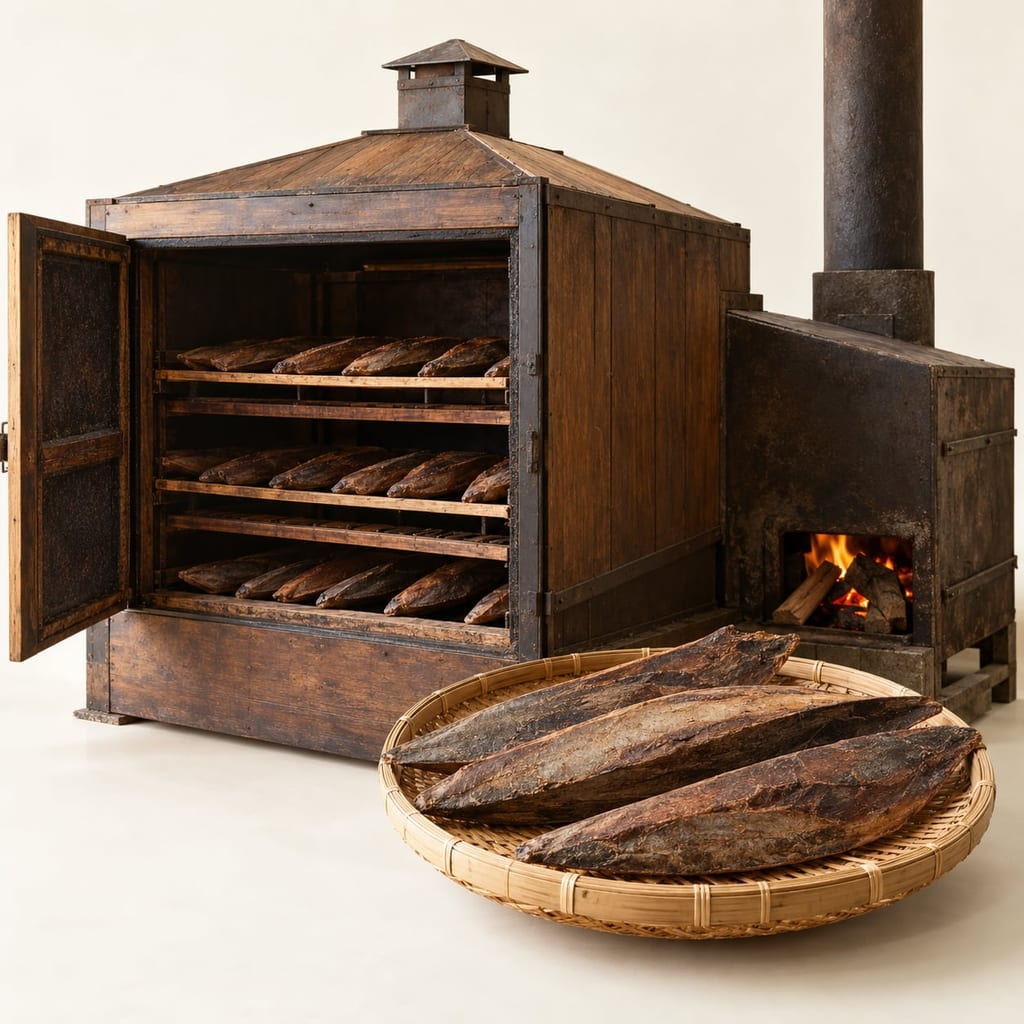
Enclosed cooking, smoking and drying equipment used in the multi-stage process that makes katsuobushi, the dried, smoked and mould-treated bonito of Japan, in repeated stages.
No community contributions have been published for this entry yet.
Sign in to contribute. Published comments and photos are free to read.
Journal of Fungi 7(7), 579Process · Function · System types
Japanese Traditional Miso and Koji MakingMechanical koji machines supply temperature- and humidity-managed fresh air to limit heat accumulation and exchange oxygen and carbon dioxide.
The review distinguishes surface ventilation from interior ventilation and names fixed-bed, shelf-bed, rotating-drum and rotating-disc configurations.
Respiratory heat is an important control issue during koji cultivation; the review gives process context rather than universal settings for every machine.
Cited in: Koji is cultivated before the mash; Airflow and turning control the solid bed
IPROS GMS; product listed by Fujiwara Techno-Art Co., Ltd.Form · Workflow · Image reference
Drum-type automatic koji-making machineFujiwara's drum-type machine performs a documented sequence from soaking through koji making in the same container, avoiding transfer during the described run.
The listing describes a sana board that helps keep the material layer even, with automatic tending and leveling and sealed variants available.
The listing includes a photograph of the manufacturer's drum machine; its visible enclosure, horizontal drum and access hatch identify one commercial model, not all industrial koji equipment.
Cited in: A drum and a bed are different systems; Material, scale and what the records do not establish
Nagata Brewing Machinery Co., Ltd.Form · Workflow · Airflow · Materials · Image reference
Visser Automatic Koji-making MachineSeeded steamed rice is first held on a retractable bed and then placed on a mesh shelf inside the koji box.
A fan circulates air through the layer and reverses direction at intervals; alternating duct openings exchange humid air and room air to assist moisture removal and cooling.
Nagata specifies stainless steel for easy cleaning and says the system was developed from the bed-koji idea.
Cited in: A drum and a bed are different systems; Airflow and turning control the solid bed; Material, scale and what the records do not establish
Fujiwara Techno-Art Co., Ltd.Manufacturer · System range
Products Search: Solid State Cultivation (Koji Making)Fujiwara lists distinct rotary, drum, non-airflow and laboratory airflow solid-state koji-making systems, so the category includes different configurations rather than one universal machine.
The manufacturer lists its Okayama, Japan address; this documents the cited supplier, not the origin of all industrial koji equipment.
Cited in: A drum and a bed are different systems; Material, scale and what the records do not establish