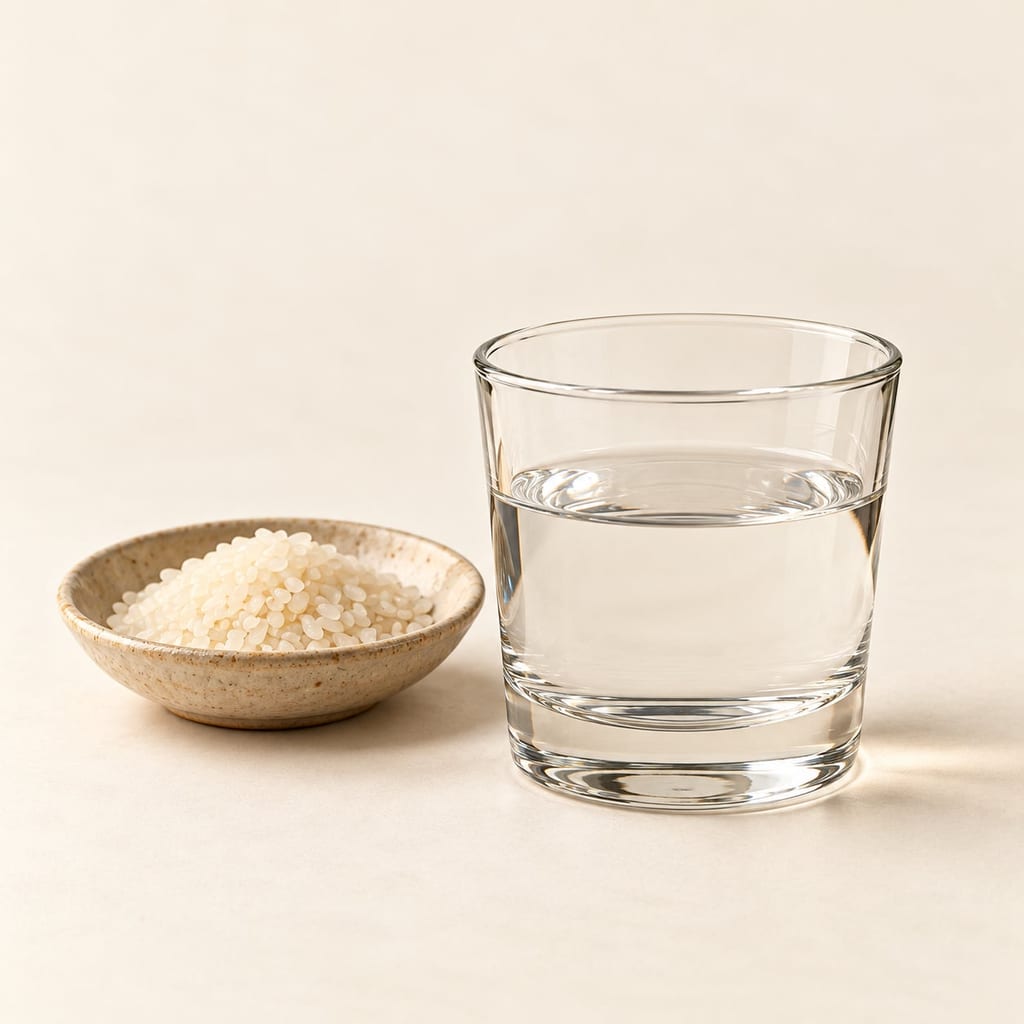
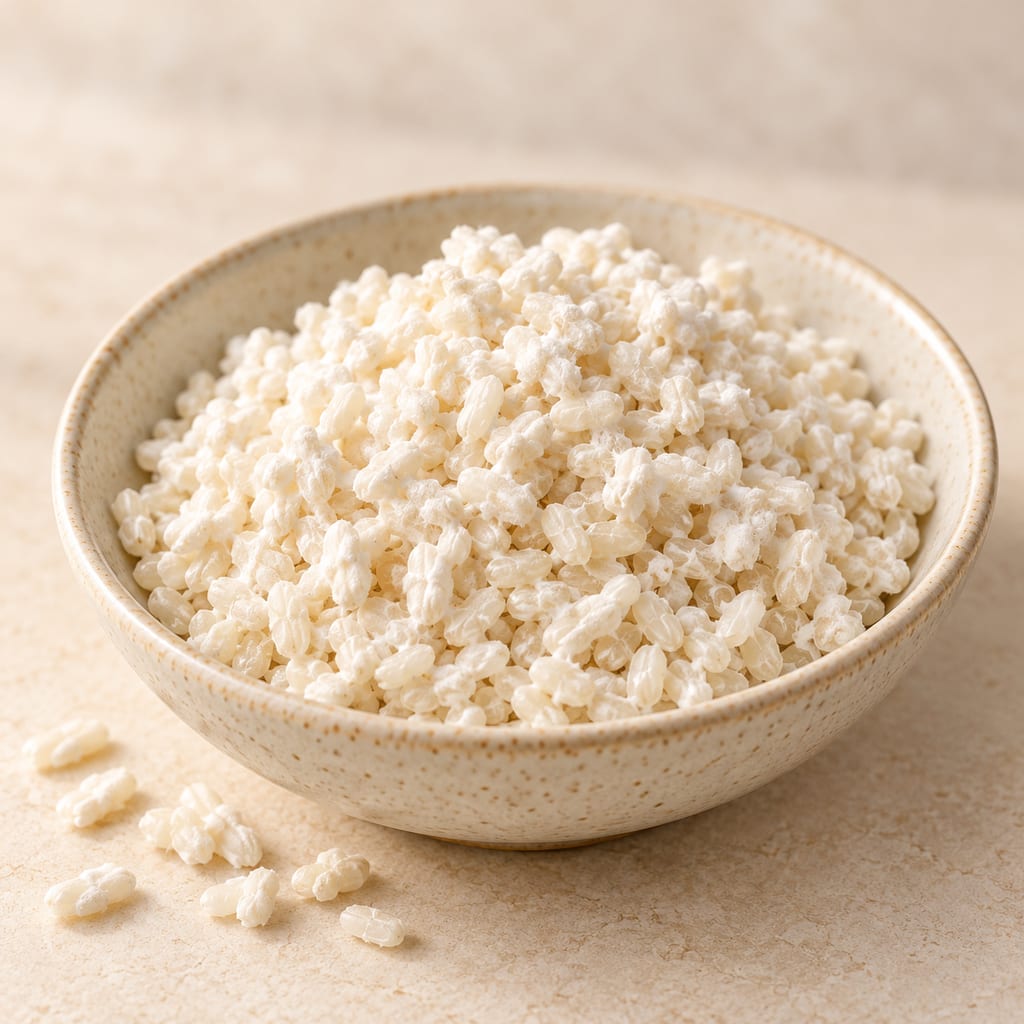
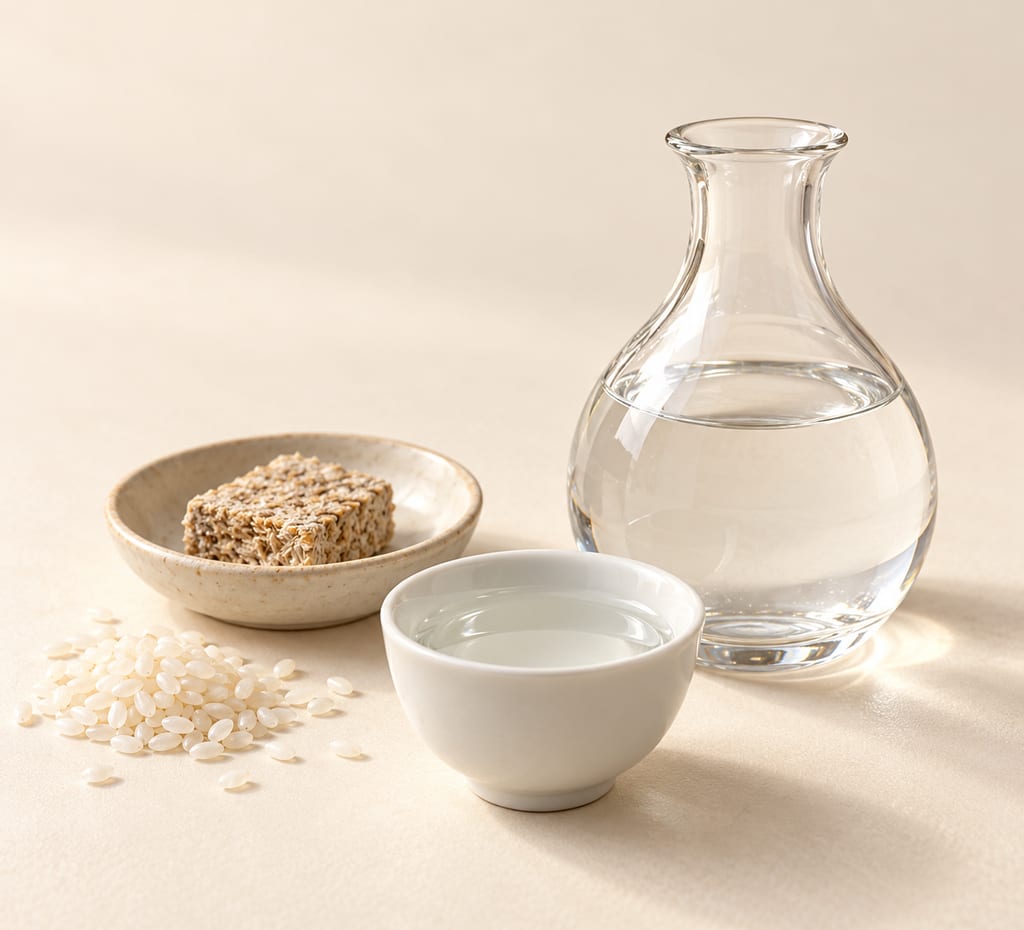
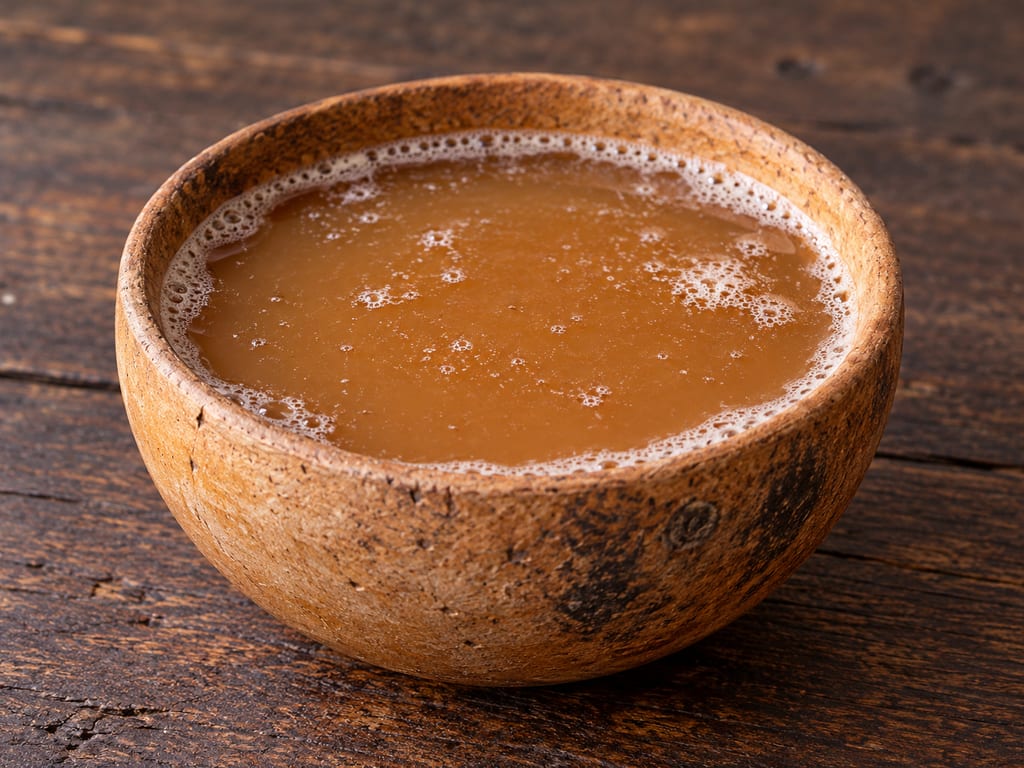
Awamori is an Okinawan rice spirit. Its clear finished form gives little outward sign of the grain from which it began. Between rice and glass lie cultivation of a mold on steamed grain, a yeast fermentation, pot distillation and storage. These are different kinds of work: growing koji prepares the grain for the mash, fermentation produces alcohol, and distillation separates a spirit from the fermented material.
Whole-koji preparation is a defining feature. All the rice is made into koji before water and yeast are added for moromi, the fermented mash. This differs from the common two-stage shochu route in which a koji-based first mash is followed by an additional main ingredient. Awamori puts the character of its rice koji at the centre of one mash, rather than treating koji as a small addition to an otherwise unchanged rice mixture.
A trading kingdom, with more than one origin story
Awamori's history belongs to the maritime world of the Ryukyu Kingdom. Ships, envoys and traded goods connected the islands with neighbouring parts of Asia, making an exchange of drinking practices and distilling knowledge plausible. That setting is more persuasive than a story in which a fully formed modern recipe arrives from one place, unchanged and on a single known day.
The familiar Thai connection is one proposed explanation. A resemblance to Lao Khao encouraged comparisons with Thailand's rice spirit. Other research and cultural interpretation have pointed towards spirits from Fujian in China and towards Ryukyu's Chinese trading relationships. These accounts concern possible routes and influences; resemblance between drinks does not by itself establish descent from one particular recipe.
The name has its own possible history. Pouring a spirit to examine the bubbles has been linked with older ways of judging strength, and 'awamori' has been associated with swelling foam. It is a possible explanation, not a secure measurement method or a settled etymology. A name's story can be part of a drink's cultural life while its exact historical origin remains open.
Royal hospitality and tribute gave awamori a place beyond the ordinary business of making alcohol. Historical accounts describe liquor supplied for the Ryukyuan court, diplomatic occasions and trade. Producing a valued spirit was connected with authority: makers near Shuri worked under restrictions that shaped who could make it and where it circulated.
A National Tax Agency historical survey describes authorised production in the three districts known as Shuri Sanka, near the castle, and a system in which makers surrendered part of their output before selling the remainder. Its account also distinguishes that court-controlled liquor from other locally made drinks. 'Traditional Okinawan alcohol' therefore contains differences in access, ingredients and social position, rather than one drink consumed in the same way by everyone.
Historical production was not necessarily the modern liquid all-koji mash. The same survey discusses older descriptions that appear to involve a relatively solid ferment and notes that the transition to the current method is unclear. This is a useful limit on the claim of continuity: awamori has a long history, but longevity does not mean every vessel, mash texture or stage remained fixed.
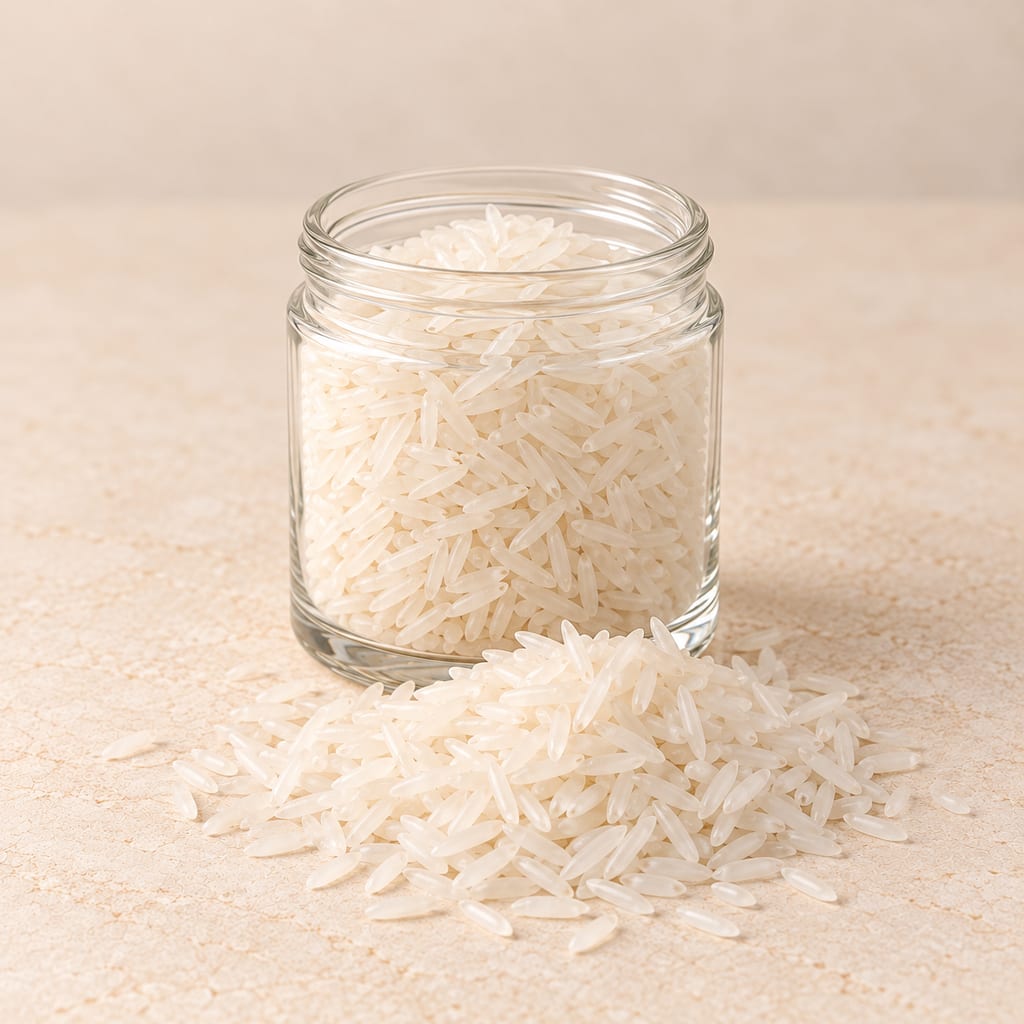
The rice itself has changed within modern production. An Okinawa Prefectural Industrial Technology Center study followed the move from Thai broken rice towards whole polished rice after the contaminated-rice resale incident. Whole-grain imports began in 2010. Distilleries had to reconsider handling, especially how water entered the grain before steaming and koji-making.
The researchers compared rice forms rather than assuming that the same country of origin made them technically identical. In their tested material, whole rice had a wider grain-size distribution, and water absorption was strongly associated with cracks and water entering through those cracks. Soaking conditions affected the process. The result explains why replacing a raw material may require practical adjustment before any yeast is added.
This is an ingredient story as well as a laboratory story. Rice is the mold's substrate and the source of starch for the later mash, so its physical condition reaches forward into brewing. The study's experimental settings are not instructions for the cooperative preparation. Its value here is showing why 'Thai rice' does not specify an invariant grain form, and why a commercial supply change can alter work inside a traditional industry.
Rice starch is not the same material as a readily available sugar solution. Black koji supplies starch-degrading enzymes, including alpha-amylase and glucoamylase, which make glucose available from the rice. In the general awamori process, yeast then takes up that glucose and converts it through its metabolism into alcohol. Saccharification and alcoholic fermentation can therefore proceed alongside one another in moromi.
The scientific literature identifies Aspergillus luchuensis and Saccharomyces cerevisiae in general awamori production. These names describe established organisms in that literature; they do not reveal the cooperative's undisclosed starter and yeast strains. A mold growing on rice and a yeast fermenting the resulting sugars have complementary roles, even when the maker describes their work in a single flowing production account.
Black koji also produces citric acid. Its acid-producing character helps suppress spoilage organisms and is important in accounts of brewing in Okinawa's warm climate. That is a biological contribution, not proof that an arbitrary home mash is protected. The particular culture, conditions and complete process still matter. Acid generation is part of how the system works, rather than a licence to substitute an invented acidity target.
The mold's contribution extends beyond supplying sugars. Researchers have investigated its part in making 1-octen-3-ol, an aroma compound associated with awamori. In a small-scale fermentation experiment, they compared strains with particular fatty-acid-oxygenase genes disrupted against a parent strain. The distillate made with the ppoC-disrupted strain had no detected 1-octen-3-ol under the study's conditions.
That experiment is more informative than simply noticing that a compound and a mold occur together. Changing a defined part of the organism and comparing the resulting ferment helps test the organism's role in producing the molecule. It connects an invisible biochemical pathway in koji with a component that can reach the distilled drink.
The finding does not turn one aroma compound into the whole flavour of awamori, nor establish its concentration in every brand. It shows why the choice and activity of a culture can matter to a spirit after the solids have been left behind. The rice, mold and subsequent fermentation help create material that distillation can carry into a different physical form.
Studies of young and aged awamori make the idea of maturation more concrete. Taira and colleagues examined compounds in the vapour above their samples, a way of approaching material available to the nose rather than treating aroma as an unspecified quality. They found esters associated with fruity notes alongside other compounds, including sulfur-containing substances capable of contributing strong smells.
In the sampled aged spirits, some sulfur compounds tended to be lower and some ethers higher. Their comparison associated the changed profiles with a milder, sweeter aroma. This was a comparison of particular products and storage histories, not a controlled promise that keeping any bottle for a given period produces the same result.
The useful lesson is that maturation can rearrange a mixture of aroma contributors. A finished spirit is not merely ethanol with an arbitrary 'rice flavour' added. Compounds created or carried through production can have different sensory significance as their relative presence changes. This makes time in storage an important part of the drink's character, while leaving room for differences between vessels, makers and individual spirits.
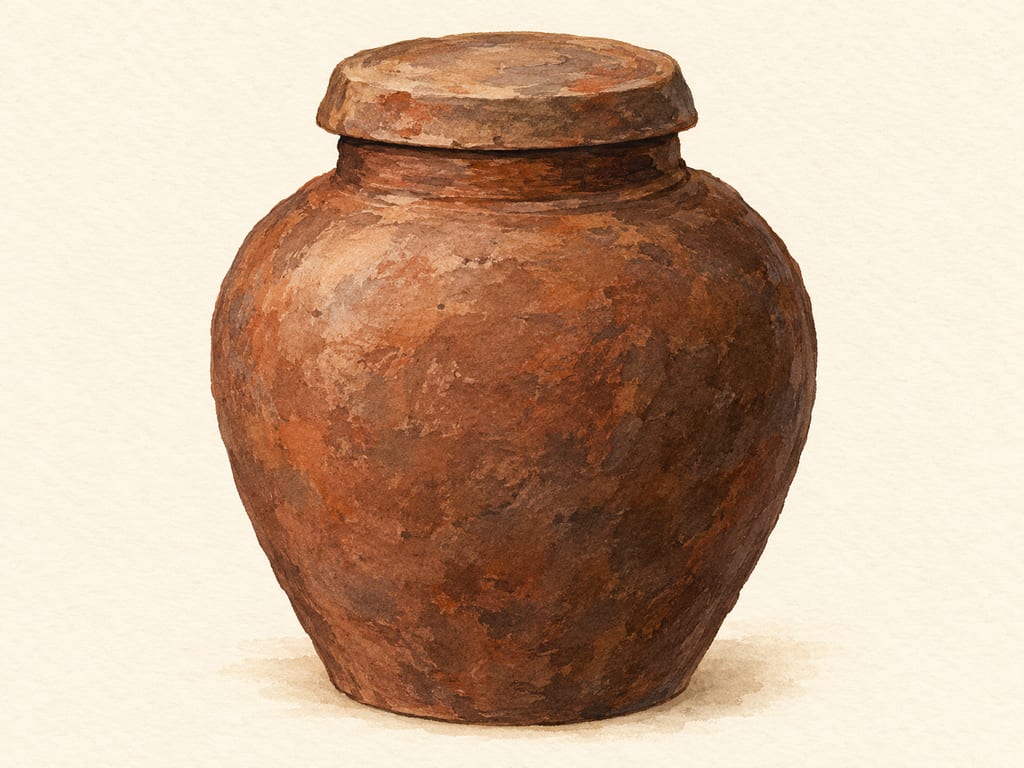
Earthenware, glass and stainless steel need not give identical results over a long storage period. An Okinawan study compared awamori kept for roughly twenty years in those kinds of vessel, measuring phenolic compounds and assessing aroma. It found different relationships between vanillin and sensory scores across the vessel groups; a simple 'more vanillin means better awamori' rule did not describe every group.
The researchers also detected sotolon in jar-stored samples. This added another route into the question of aged aroma, beyond a single familiar vanilla association. Container comparisons therefore ask both what is in the liquid and how the mixture is perceived. A vessel's material can be part of the storage environment, rather than just a neutral shape on a shelf.
Such findings give a reader reasons to pay attention to the difference between tank-matured and jar-stored products. They do not establish pottery as universally superior, or turn a long experiment into the cooperative's maturation schedule. A short general tank-maturation description and a study of decades of storage answer different questions. Both are useful when their scopes remain visible.
Shitsugi, the replenishing of aged awamori, gives storage a social dimension. Instead of treating an old vessel as something opened once and emptied, the practice maintains a succession of stored liquor. Its continuity depends on the relationship between the older stock, what is taken out and what is added back. The vessel becomes part of a household's ongoing care rather than merely packaging a single production batch.
Research on the practice considers both its transmission and the difficulties of maintaining it. It sits between material change and inherited custom: a family may value the liquor's history and identity as well as its current aroma. The care of old awamori can connect celebrations, gifts and the passage of time in a way that a freshly purchased bottle does not automatically reproduce.
This is different from the cooperative's ordinary tank stage. Shitsugi describes a continuing storage practice, not an extra instruction that belongs in every awamori recipe. Its interest is the way people make a durable relationship with a changing drink. The stock persists through deliberate attention, while the liquid itself is neither chemically nor historically untouched.
Awamori's uses include offerings at utaki, household Buddhist altars and family graves, as well as weddings and summer observances for ancestors. The drink can therefore move between hospitality, remembrance and religious life. Its role is not exhausted by the question of how the rice became alcohol.
Cultural accounts also describe liquor placed with the deceased and later used in bone-cleansing ceremonies. These are particular historical and regional practices, not a universal description of every Okinawan funeral today. The relationship with age is striking: a spirit could acquire years of storage while also acquiring a place within a family's remembrance of someone who had died.
The social gathering called otori has another local history, associated especially with Miyako in contemporary cultural interpretation. Participants take turns speaking and drinking within a shared gathering. These accounts show that even a widely recognised Okinawan spirit carries local forms of use. A bottle can belong to a meal, an offering or an occasion of speech and sharing, with the setting giving the drink a different meaning.
The cooperative presents water dilution, hot-water service, ice, soda and cocktails as ways to enjoy finished awamori. Those are contemporary serving choices, separate from the production mash. Adding water at the table changes how a purchased spirit is served; it is not a reason to change the water or culture inputs used to make moromi.
Awamori is Okinawa’s rice spirit, used at weddings, births, housewarmings and other celebrations. Its history is linked to Ryukyu’s trade with Siam, now Thailand, and China; the routes by which distilling reached the islands remain uncertain. Making all the rice into black koji before adding water and yeast is a defining feature of its production. The black mold produces citric acid that helps suppress spoilage organisms in Okinawa’s warm, humid climate.
Ethanol vapour can ignite in the presence of flames, sparks or hot surfaces during a distillation operation.
Hazard source
Still overpressure
A blocked outlet, external fire or cooling failure can overpressure pot-still equipment.
Hazard source
Keep potential ethanol-vapour releases away from ignition sources and provide suitable ventilation as part of a site-specific fire-risk assessment.
Control source
Have a qualified process engineer assess credible overpressure cases and size and select suitable relief equipment for the installation.
Control source
Arrange relief discharge to a safe location in the process-plant design.
Control source
Ethanol-vapour leaks can ignite, and blocked outlets, fire or cooling failure can overpressure still equipment. This industrial process needs site-specific engineering controls before operation.
Wash and drain the Thai rice, then steam it. Inoculate the steamed rice with black-koji starter and make rice koji over about forty hours.
Mix the rice koji with water and yeast to make moromi. Ferment the moromi for about two weeks.
Distill the matured moromi in a pot still.
Mature the spirit in a storage tank for about three months or longer.
Koji is steamed grain — rice, barley, soybean or wheat — grown out with a food-grade Aspergillus mold until the kernels carry working enzymes. It is bought or cultivated, and it converts starch and protein for the foods that follow.
Thai indica rice is the starch-bearing grain Sakimoto steams for Yonaguni awamori koji. The producer names its origin and rice group, but no cultivar, lot or grain grade.
A Yonaguni rice spirit made with two-day koji, a nineteen-day moromi stage and direct-fire pot distillation, followed by filtration and tank maturation.
A ceramic jar used in Okinawa to store and mature distilled awamori into kusu; it holds the finished spirit after distillation rather than fermenting the rice mash.
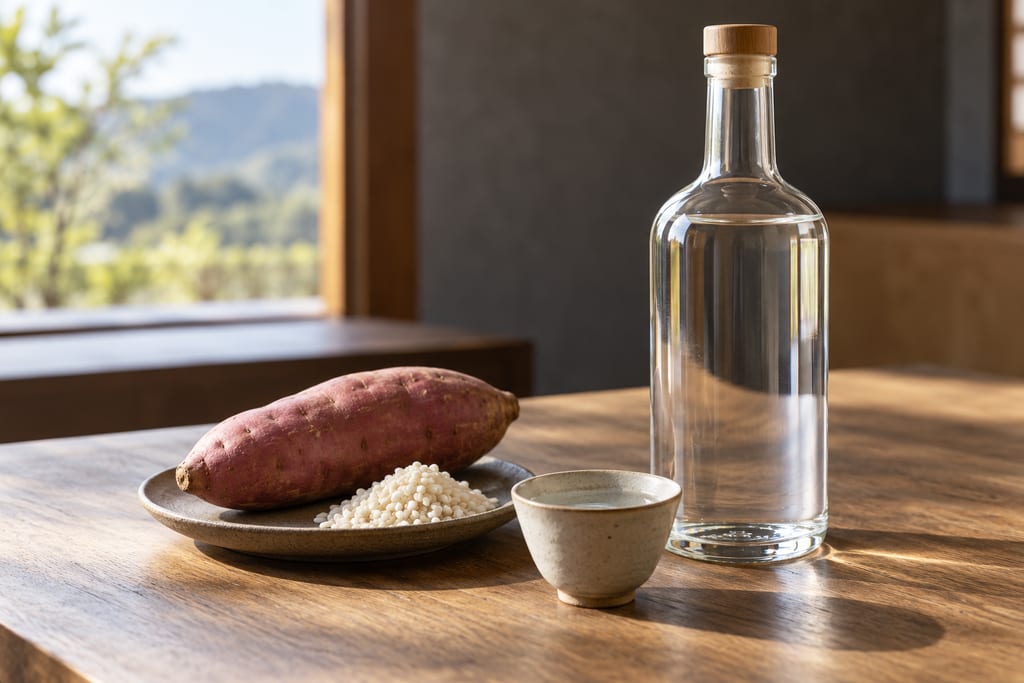
Japanese pot-distilled spirit made by fermenting sweet potatoes, rice or barley with koji and yeast in two stages, then distilling the mash once so the ingredients' aroma survives.
An Okinawan fermented tofu: dried tofu cubes matured in rice koji, awamori and salt, traditionally with red Monascus koji, until the curd turns smooth and intensely savoury.
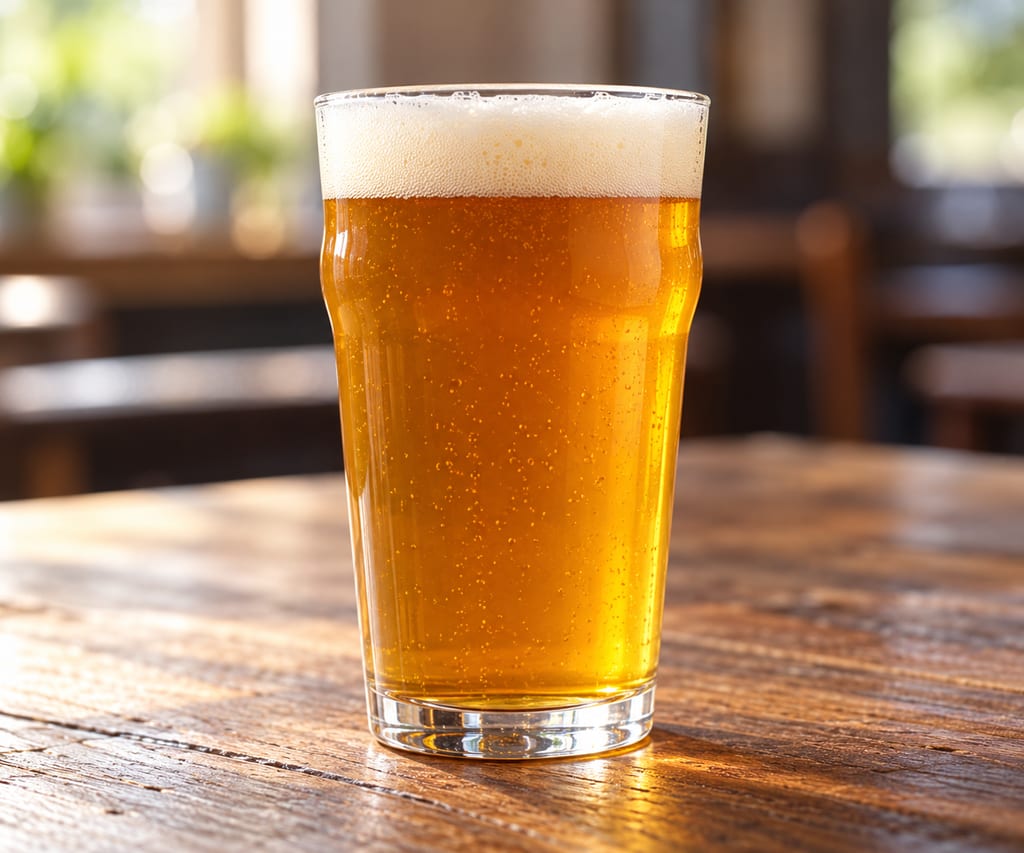
A source-specific modern extract adaptation of Düsseldorf Altbier, with specialty malts, two hop additions and an ale yeast. It is distinct from a brewery's commercial Altbier process and from Kölsch.
Andong soju is a rice spirit from North Gyeongsang, distilled from steamed rice and wheat nuruk. This method makes the starter before fermenting the rice mash in a jar.
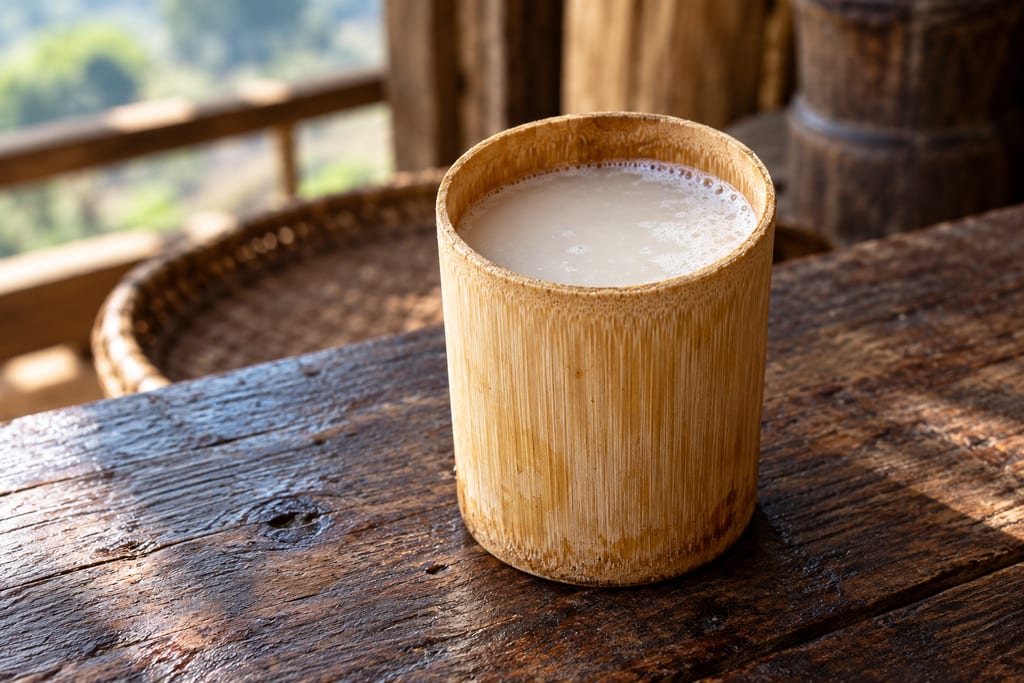
Angami rice beer from Nagaland. A surveyed method mixed cooked rice with piazu, fermented it for about four days in summer or a week in winter, then added water and filtered it. The starter ratio leaves the rice-weight basis unclear.
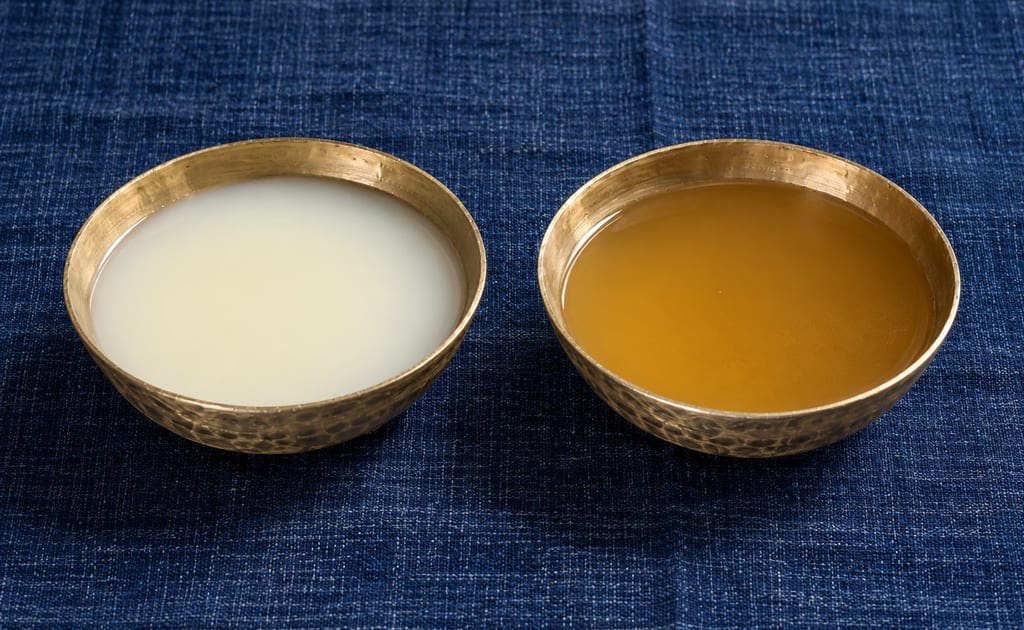
Apong names Mising rice beverages in Assam, including pale Nogin and ash-associated Po:ro. Sources describe distinct preparations and do not establish one unified household recipe or validated safety endpoint.
This is a process overview, not a complete batch recipe: key quantities, yield and packaging directions are absent. The AHA tutorial uses Hop Hammer Imperial IPA as an example; this page is not that full formulation.
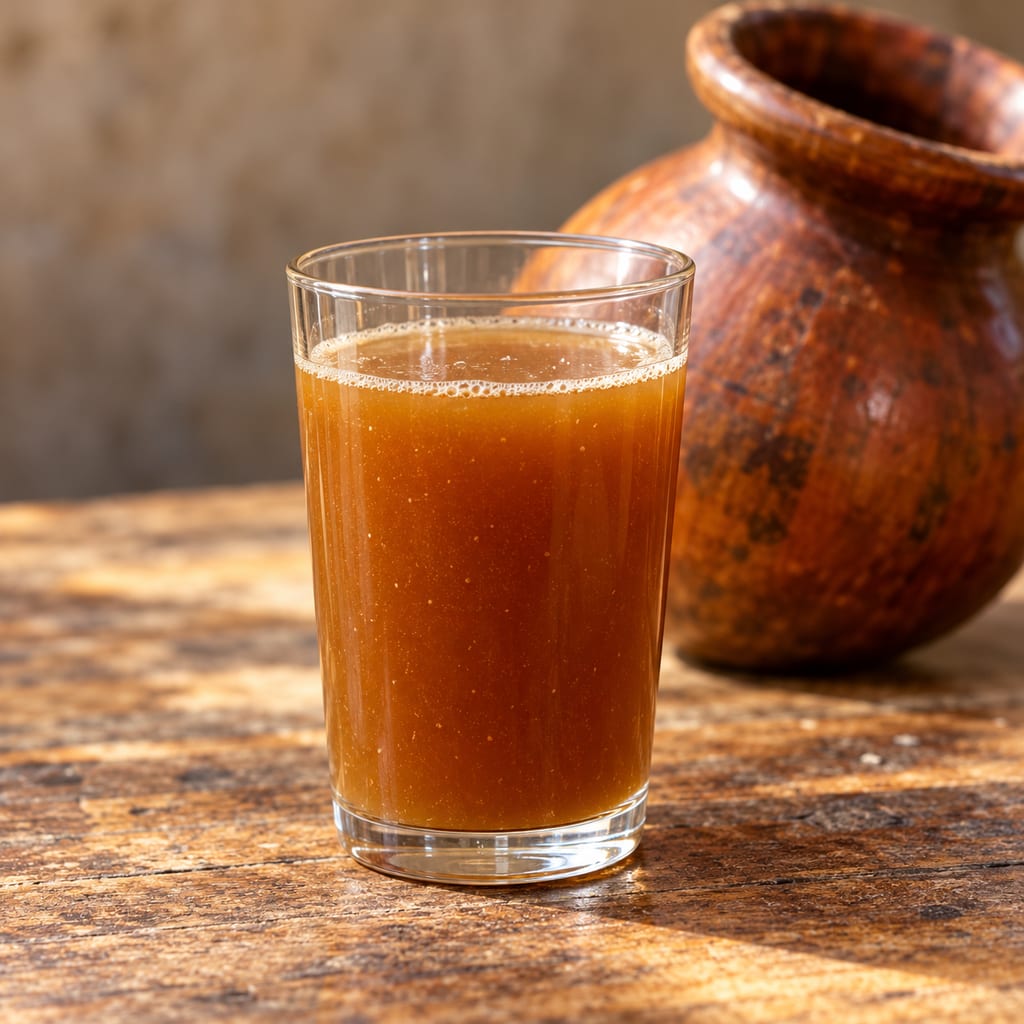
A darker Ethiopian maize tella, brewed from maize baked into a hot, dry kita pancake and then fermented in three stages with barley malt, gesho and water.
Manufacturing section: Thai rice, black koji, water and yeast; approximate 40-hour koji, general 13-day and process-about-two-week moromi wording; single-still distillation and tank maturation.
General maturation description is about three months or more, varying by distillery; 17–18 degrees in moromi lacks an explicit measurement basis. No ingredient amounts or batch yield.
All-koji rice preparation, black koji, water and yeast; distillation and storage outline; contemporary serving choices.
Cited in: A rice spirit whose grain passes through koji; A production outline and a glass at the end
Accessed 2026-10-26
Occupational Safety and Health AdministrationSafety
Sections III.A and IV.A and the distillation subsection: ethanol-vapour ignition, overpressure releases, engineered containment and pressure relief, ventilation and elimination of ignition sources. Industrial ethanol controls; no validation of a household awamori procedure.
Producer page labels its photograph as awamori being poured into a clear open glass. The image is a finished-spirit appearance reference, not evidence for process or ingredient quantities.
Accessed 2026-10-26
Distilled Spirits Council Safety & Risk Management CommitteeSafety
Page 6: blocked outlet, external fire and cooling failure are pot-still overpressure scenarios; a process engineer determines the worst case and selects/sizes pressure-relief equipment. Industrial guidance, not a validated small-scale awamori procedure.
Relief systems protect process plant against overpressure and discharge to a safe location. General process-plant guidance; not a household awamori specification.
Ethanol vapour can create fire or explosion risk; guidance calls for controlling ignition sources and providing cross-flow ventilation. Winery context, applied only to the general ethanol-vapour hazard.
Accessed 2026-10-26
Japan Tourism Agency / Okinawa Distillers Association