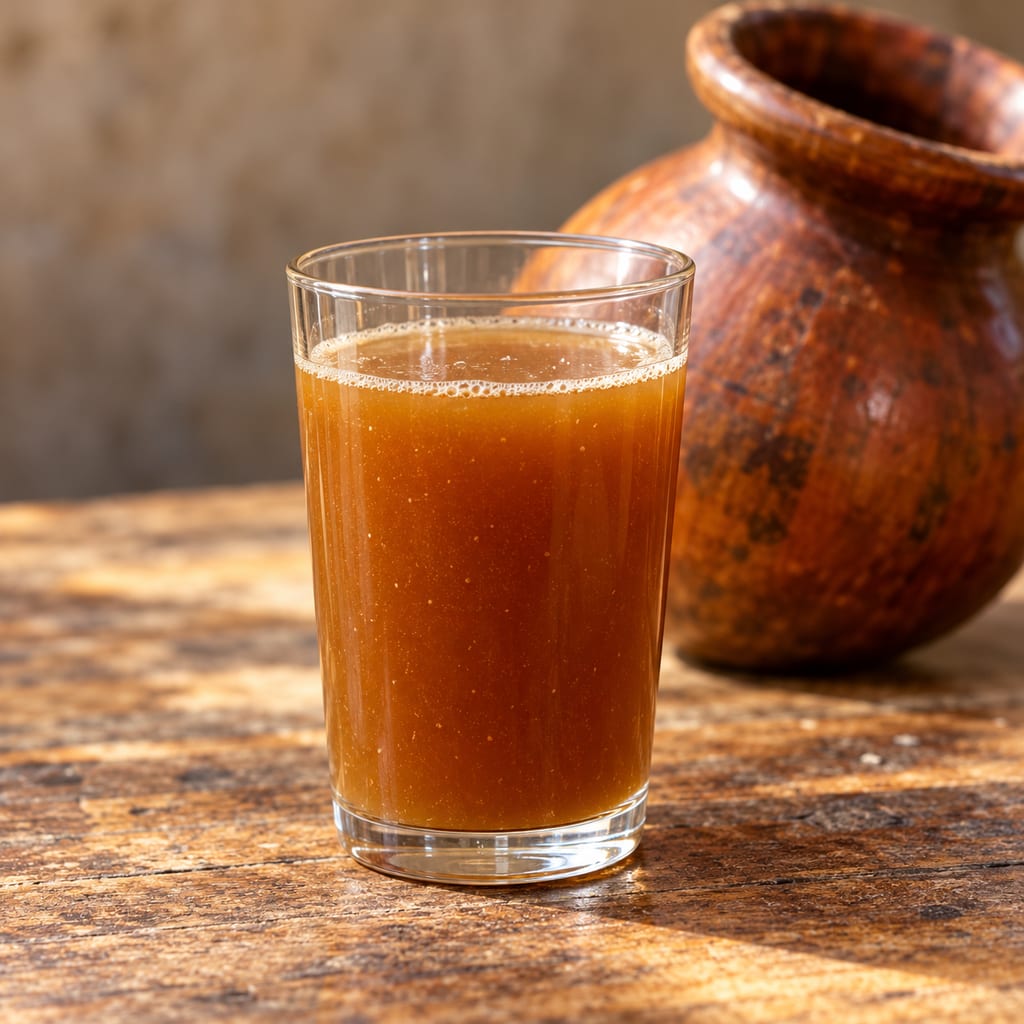
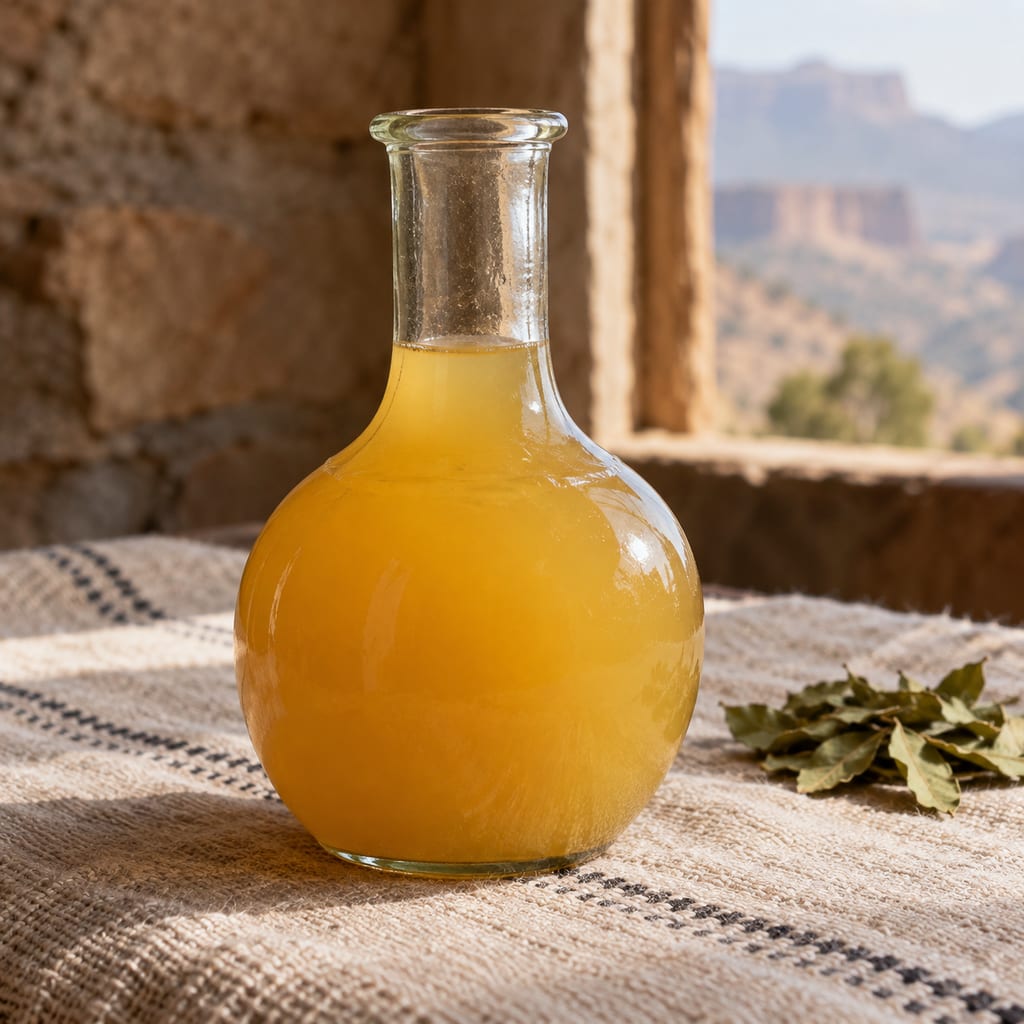
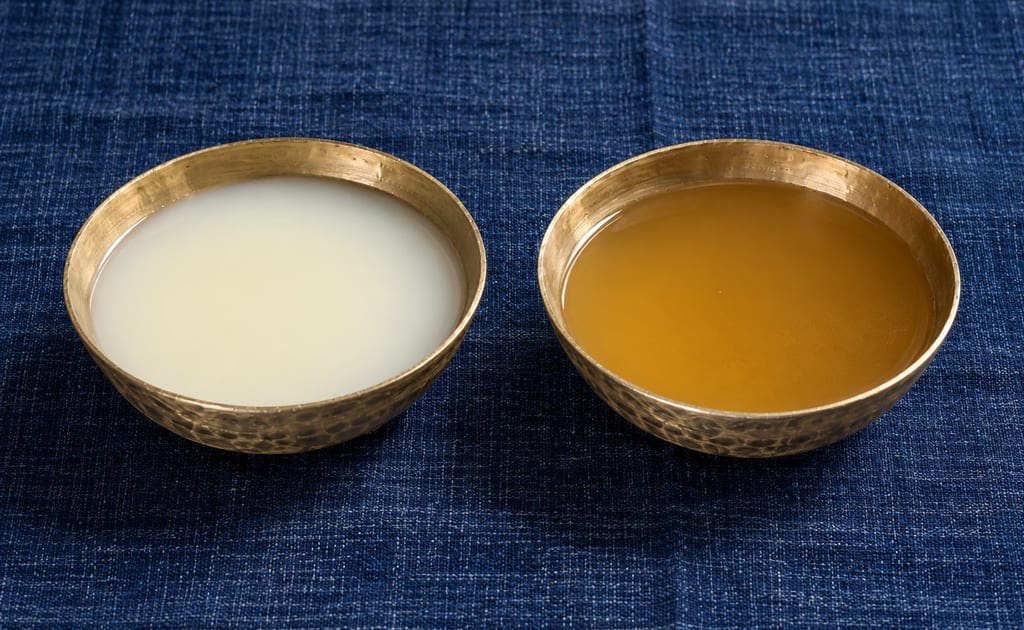
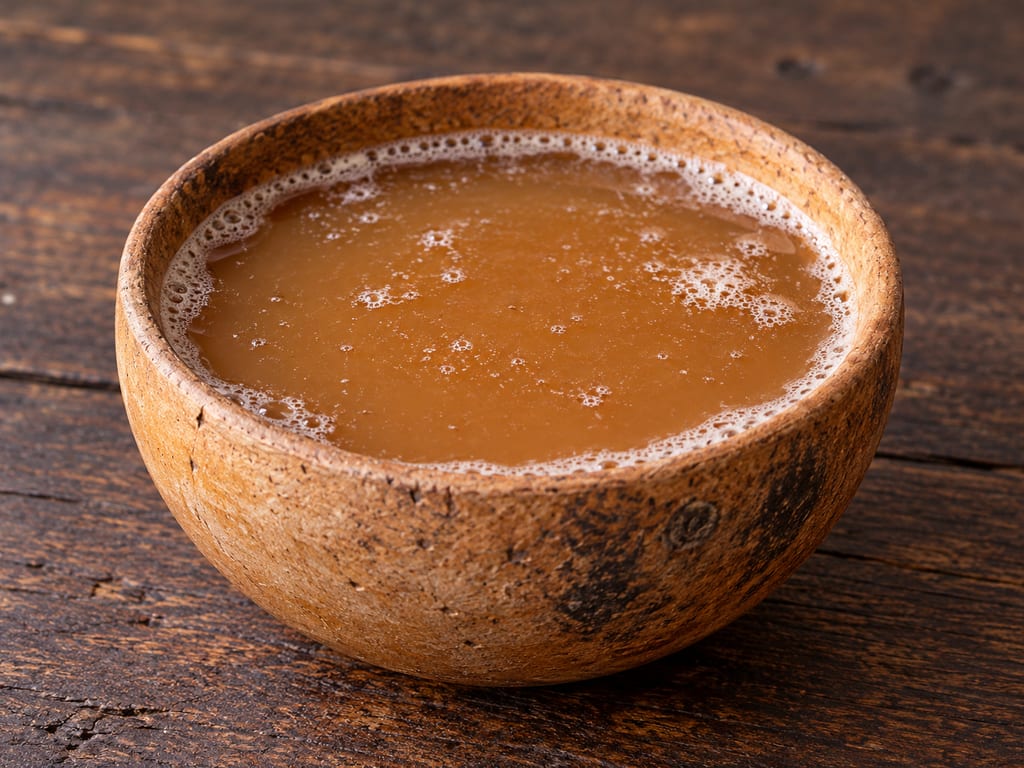
A darker Ethiopian maize tella, brewed from maize baked into a hot, dry kita pancake and then fermented in three stages with barley malt, gesho and water.
Tella is a traditional Ethiopian cereal beer prepared using grain, malt, water and gesho, a locally important bittering plant.
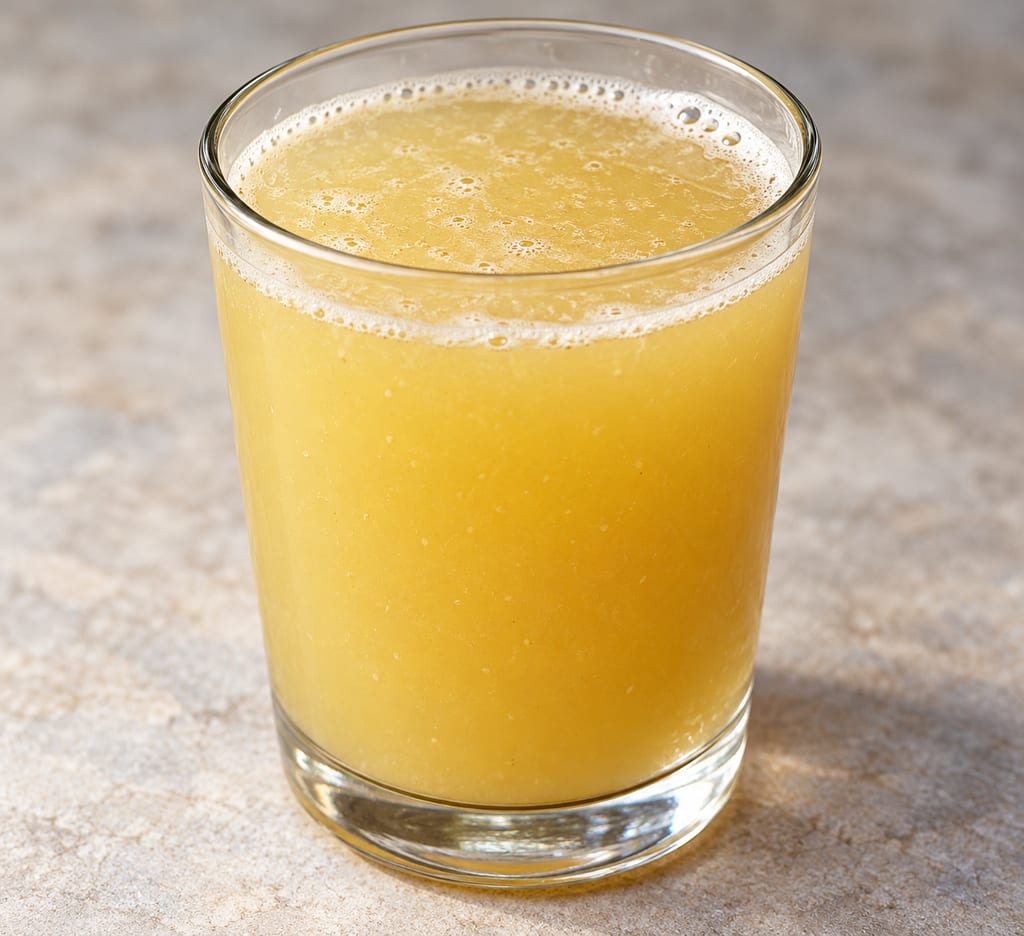
Its colour can range from pale yellow or greyish-white to dark brown. The choice of cereal, roasting treatment and subsequent processing influence its appearance.
Tella is known across Ethiopia and also belongs to the wider food culture of the Horn of Africa. Household and regional techniques vary rather than following one universal brewing specification.
The two forms here were documented in a controlled comparison involving brewers from Mekelle, a city in Ethiopia's Tigray region.
Both use maize, Zea mays, as the principal cereal material, barley malt from Hordeum vulgare, and gesho from Rhamnus prinoides.
The study also examined sorghum, Sorghum bicolor, but these two database records specifically concern maize.
Brown tella is made with a more intensely heated cereal pancake. Light-yellow tella uses a gentler baking treatment.
Their main distinction is therefore not an added colourant or different organism. It is a physical and chemical transformation of the maize before fermentation.
Tella has a long-established role in Ethiopian household food culture.
It is associated with hospitality, ordinary social life, celebrations, family gatherings and religious and community occasions.
The beverage has traditionally been prepared in households, frequently by women whose practical knowledge is transmitted through family and local community practice.
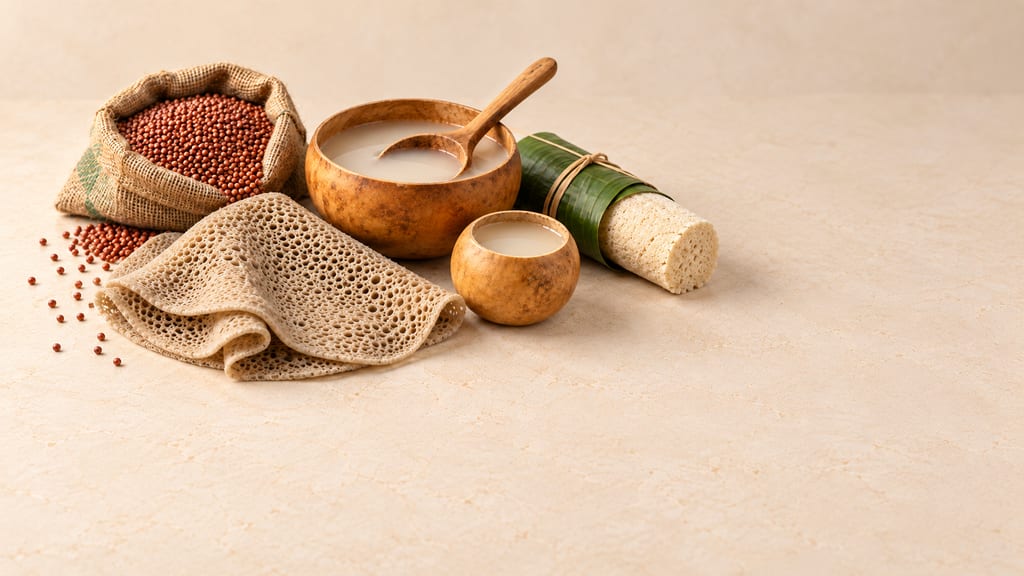
Different regions use the cereals most readily available to them. Barley, wheat, maize, sorghum, millet and teff all appear in documented tella traditions.
This adaptability helps explain why a recognisable beverage family can encompass substantial differences in colour, texture and flavour.
The exact antiquity of the modern maize-based formulations cannot be established from the available study. Maize originated in the Americas and spread to Africa after transatlantic contact, so a maize tella recipe cannot be projected unchanged into an ancient Ethiopian past.
That does not imply that Ethiopian fermented cereal drinks originated with maize. Earlier grain-based fermentations could employ locally available cereals.
Gesho provides a particularly distinctive Ethiopian element. Unlike the European hop, Humulus lupulus, it belongs to the buckthorn family.
Its role is broadly comparable to that of hops in beer because it contributes bitterness and plant-derived compounds, but it is not botanically related to hops.
The Mekelle investigation provides a particularly useful modern documentation of an existing local tradition.
Thirty tella makers were interviewed about preparation practices. Four were subsequently selected to produce experimental batches that allowed the investigators to compare cereal species and baking methods.
The research focused principally on the composition and digestibility of atella, the spent fermentation residue.
This is a limitation as well as a strength. The researchers recorded a real brewing procedure, including equipment and timings, but they were not primarily validating the finished beverage for human consumption.
The particular brown and light-yellow protocols should therefore be treated as documented regional practices, not as universally representative Ethiopian recipes.
Reported ingredient proportions for the nominal 10 L preparations are baked maize flour 0.25, barley malt 0.03, gesho 0.02 and water 0.70.
It does not give a measured mass or volume for each component. The ratio alone does not justify converting these shares into 2.5 kg flour, 0.3 kg malt, 0.2 kg gesho and 7 L water.
The researchers say four brewers prepared 10 L batches, but they do not report a separate measured finished filtered yield or enough mass-balance information to make those converted amounts reliable.
The study does not allocate specific water volumes among the three fermentation phases. A reproducible household batch would need that information; the reported ratio should remain source context rather than an exact shopping list.
To make a cereal beer, starch must first be converted into smaller fermentable carbohydrates.
Barley malt provides the principal enzyme source.
During malting, barley is allowed to germinate. Germination activates and produces enzymes involved in mobilising stored grain carbohydrates.
After drying and grinding, the malt retains enzyme activity that can contribute to starch breakdown during brewing.
Amylases are particularly important.
Alpha-amylase cleaves internal bonds within starch chains, reducing their molecular size. Beta-amylase acts differently, releasing maltose from suitable starch-chain ends.
Additional enzyme activities may contribute to the overall conversion.
The combined result can include maltose, glucose, other sugars and dextrins.
Yeasts subsequently ferment available sugars into ethanol and carbon dioxide.
Not all starch is necessarily converted, particularly in a traditional process where precise enzyme activity, mash pH and temperature are not controlled by a laboratory protocol.
The beverage can therefore retain considerable suspended material and carbohydrate-derived body.
This helps explain why traditional cereal beers often differ in texture from highly filtered modern lagers.
The maize flour is formed into a pancake known as kita (ቂጣ), a term also used for certain Ethiopian flatbreads.
Baking changes the cereal before fermentation.
Heat gelatinises starch where sufficient moisture is present. Gelatinisation disrupts the ordered structure of starch granules, allowing water and enzymes better access to parts of the material.
More intense dry heating also produces browning reactions.
The Maillard reaction involves amino compounds and reducing sugars. It creates a complex mixture of coloured and aromatic molecules that can contribute roasted and toasted characteristics.
Caramelisation and other thermal decomposition processes may also influence flavour depending on the composition and heating conditions.
The hotter process can produce darker material, stronger roasted notes and changes to protein availability.
Baking treatment influenced properties of the spent material, including aspects of protein digestibility.
These findings do not establish that dark tella is intrinsically better or worse as a drink.
They demonstrate that the colour variation corresponds to real chemical and physical differences in the cereal treatment.
Illustrative tella photographs, not authenticated images of the two Mekelle study batches. The specific recorded baking conditions are the reliable means of distinguishing the variants.
The plus-or-minus figures are observed variation around the reported conditions, not arbitrary tolerances that guarantee successful fermentation.
No quantitative baking endpoint based on moisture content or colour measurement is supplied for household replication.
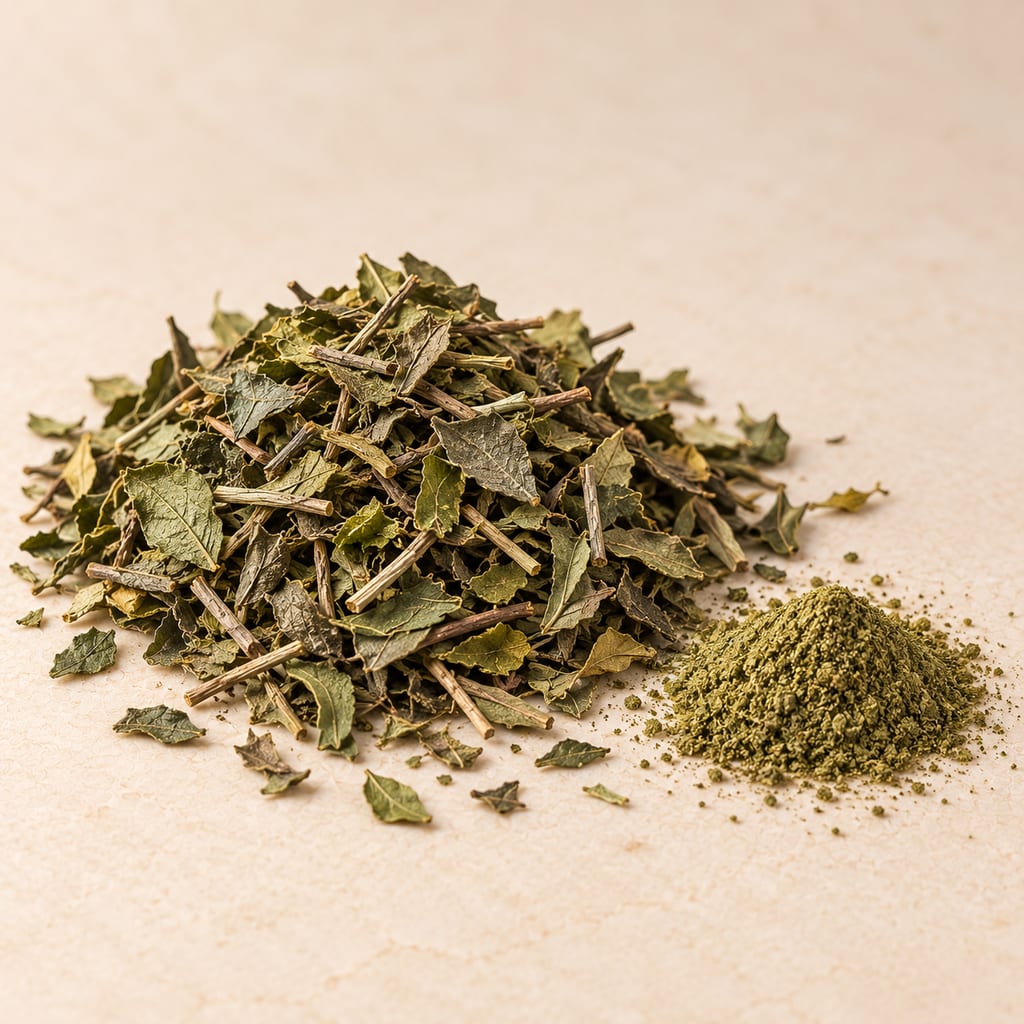
Gesho is widely used in Ethiopian traditional brewing.
Its scientific name is Rhamnus prinoides. Its Ethiopian name is commonly written ጌሾ.
The leaves and stems can be dried and used in brewing, but the precise part and treatment are important because recipes vary.
In the Mekelle method, ground gesho is divided between the first and second fermentation phases.
The plant contributes characteristic bitterness and aroma.
Scientific investigations also describe biological activity associated with gesho extracts, including antimicrobial effects in some settings.
That does not mean adding gesho creates a validated antimicrobial control for a finished household beer.
The concentration, extraction conditions, microbial community and food matrix all influence how any such compounds behave.
Traditional experience and modern laboratory evidence are related but not interchangeable.
Gesho's importance also illustrates why tella should not simply be called an Ethiopian copy of European hopped beer. The botanical ingredient and wider brewing culture are distinct.
The Mekelle process is a spontaneous fermentation.
Unlike an industrial brewery using a selected pure yeast strain, this method relies on microorganisms associated with the ingredients, equipment and brewing environment.
Studies of Ethiopian tella have identified yeasts, including Saccharomyces cerevisiae, and lactic acid bacteria.
Some investigations also identify other yeasts and bacterial groups.
The organisms transform the cereal-derived sugars and produce a mixture of ethanol, carbon dioxide, lactic acid and other metabolites.
Yeasts contribute alcoholic fermentation.
Lactic acid bacteria create acidity and flavour compounds. Their activity helps explain the sour character of many traditional cereal beers.
The fermentation may therefore be both alcoholic and acidifying.
However, the relative contribution of each group varies among batches.
Because the culture is not standardised, the source does not establish that the same organisms occur in exactly the same proportions in every Mekelle preparation.
The absence of a measured alcohol or pH endpoint is especially significant in such a mixed fermentation.
The two tella variants follow the same fermentation sequence after their baked maize is prepared.
1\. Prepare the maize pancake. Form maize flour into kita using water from the overall formulation. The source records the two distinct baking regimes but does not prescribe a numerical flour-to-water dough ratio.
2\. Bake according to the selected variant. For the brown version, the documented process uses the hotter steel plate and wood fire. For the light-yellow version, it uses the lower-temperature clay plate fitted to an electric mitad.
3\. Cool and break up the kita. Allow the baked cereal to cool, then divide it into smaller pieces for subsequent incorporation into the ferment. No exact cooling temperature or fragment size is supplied.
4\. Prepare the first fermentation. Combine ground barley malt with half the total gesho and part of the water.
5\. Ferment for three days. This first stage produces the intermediate preparation called tinsis. The source does not specify a numeric fermentation temperature.
6\. Add the baked maize. Incorporate the broken-up kita into the tinsis, together with the remaining half of the gesho.
7\. Add more water and mix. The source requires further water but does not give a stage-specific quantity.
8\. Ferment for three more days. This second fermentation produces difdif, the thicker intermediate mash.
9\. Dilute for the third stage. Add the remaining water to the difdif.
10\. Ferment for another two days. The final phase produces the beverage ready for separation in the documented study.
11\. Filter through muslin. The fermented liquid is separated from the wet spent cereal material.
12\. Identify the residue. The retained solids are called atella. The publication subsequently examines their composition for animal-feed research.
The total documented fermentation time is eight days, excluding cereal preparation and cooling.
No measured final beverage yield, alcohol concentration, pH or refrigerated shelf life is supplied for these exact batches.
The intermediate names preserve useful process knowledge.
Tinsis is the fermented malt-and-gesho starter mixture created during the initial stage.
Difdif is the thicker cereal mixture following the addition of the baked grain and further fermentation.
Atella is the wet spent material left after the liquid has been separated.
These terms matter because a recipe that simply says “mix everything and ferment” loses the sequential logic of the traditional process.
The phases expose different materials to enzymatic and microbial activity at different times.
The first stage establishes a fermenting environment involving malt and gesho.
The second introduces a substantial starch-rich cereal fraction.
The third adjusts the mixture with more water before separation.
Although the sequence is clearly documented, the precise temperature and biochemical performance of each phase were not specified as validated brewing endpoints.
Tella is commonly described as mildly sour, bitter, grainy and alcoholic.
Its intensity varies by preparation.
The brown version can be expected to show more pronounced roasted-grain colour and potentially stronger toasted notes from its hotter baked maize.
The light-yellow preparation should express less intense thermal browning.
Those are plausible chemical and sensory consequences of the baking regimes, but the study does not supply a full sensory comparison proving a specific flavour profile for every batch.
Tella is consumed socially, in households and at communal occasions.
It may be served with Ethiopian meals and snacks, though the study does not prescribe a specific food pairing.
Traditional presentation may use locally familiar drinking vessels rather than standardized glassware.
The drink is generally associated with relatively fresh consumption and limited stability compared with modern industrial packaged beer.
Fermentation may produce bubbling, changes in grain aroma, sourness and gradual movement of solids.
The drink can remain cloudy because of suspended cereal material and microorganisms.
The brown preparation naturally contains dark material from the baked maize; this should not be mistaken for contamination solely on the basis of colour.
Similarly, the pale version may look different without indicating failed fermentation.
However, colour and smell cannot prove microbiological safety.
Visible mould, putrid odours or other evidence of contamination warrant rejecting the batch.
A ferment that appears inactive may reflect unsuitable organisms, substrates, temperature or sanitation history.
The research does not define a corrective process for stalled fermentation.
No reliable safety diagnosis can be made from the eight-day schedule alone.
Tella contains alcohol. The exact strength of these batches was not reported.
Broader studies give differing alcohol ranges because raw materials and processes vary. Those population-level ranges should not be used as measured results for this specific Mekelle recipe.
The same problem applies to pH.
Spontaneous fermentation can create useful acidity, but the published recipe has no verified finished pH or microbiological control limit.
Traditional brewing vessels and methods deserve accurate documentation, while modern public-facing recipes also require honest disclosure of safety gaps.
The process should not be described as shelf-stable or validated for bottled distribution.
For commercial production, analytical measurements, sanitation protocols, process validation and storage assessment would be needed.
Editorial conclusion: These are two colour variants of the same documented Mekelle process. Keep both IDs linked to this shared page. Preserve the different kita baking conditions and the common three-stage fermentation rather than duplicating nearly identical recipes.
Tella is an Ethiopian household beer. This particular process was prepared with brewers interviewed in Mekelle; it is documented preparation, not a claim of origin.
Ingredients
Scaling: source batch only
Maize flourmake the high-heat-baked kita pancake
source ratio
Study ingredient proportion: 0.25 cereal-flour share; no ingredient mass or water volume is published for the nominal 10 L batch.
Barley maltground
source ratio
Study ingredient proportion: 0.03 barley-malt share; no ingredient mass or water volume is published for the nominal 10 L batch.
Study ingredient proportion: 0.02 gesho share; no ingredient mass or water volume is published for the nominal 10 L batch.
WaterUsed across the three fermentation phases; the source does not give a total volume or stage-specific amounts.
source ratio
Study ingredient proportion: 0.70 water share; no ingredient mass or water volume is published for the nominal 10 L batch.
Method
Risks and precautions · Elevated risk
uncontrolled mixed fermentation and unknown alcohol
Tella production is spontaneous and the process varies by household; the cited review reports variable alcohol and acidity across Ethiopian preparations.
Hazard source
Use this as a documented regional method, not a validated home protocol. The sources provide no safe pH, alcohol, fermentation-temperature or storage endpoint for this exact batch.
Control source
Tella is an alcoholic beverage; its alcohol content is not measured by this recipe.
The three-day and two-day stages describe a documented study method, not proof of fermentation completion or safety.
Make a maize-flour pancake (kita) on a steel plate over a three-stone wood fire. The study’s brown version used a plate at 159°C ± 16.1°C for 17 ± 2.9 minutes. Break the baked pancake into pieces and let it cool.
Mix ground barley malt and half the gesho with water; the study gives no amount for this stage. Ferment for three days to make tinsis.
Break up the cooled kita and add it to the tinsis with the remaining gesho and more water; no stage amount is given. Ferment for three days to make difdif.
Mix the resulting difdif with more water; no stage amount is given. Ferment for two days, then filter through muslin to separate tella from the wet grain residue (atella). The study provides no pH, ABV or storage endpoint.
Conditions
Fermentation8 days
Temperature controlMulti-stage
Places
Mekelle
Documented preparation · Locality evidence
The study recruited tella makers from Mekelle and documented this preparation there; it does not identify a birthplace.
Gesho (Rhamnus prinoides) is used in Ethiopian cereal beers and honey wines for bitterness and flavour. Sources document regional cultivation and use but do not establish one origin, universal brewing measure, starter role or safety limit.
An Ethiopian earthenware vessel used for stages of tella, a traditional cereal-based fermented drink. Sources describe clay insira jars alongside modern plastic alternatives and document washing and smoke preparation before brewing.
A pale Ethiopian maize tella, brewed from maize baked into a kita pancake at a gentler heat and then fermented in three stages with barley malt, gesho and water.
From sour breads and milk to savoury seeds, cassava staples and living beers, African fermentation follows the crop, the community and the work of transformation.
An Ethiopian honey wine of the Tigray highlands, fermented with the leaves and stems of gesho, which supply both bitterness and the microorganisms that carry the ferment.
A round, mildly sweet wheat bread leavened with baker’s yeast and marked with a wheel pattern. This source batch uses raisins, black sesame and cardamom.
A source-specific modern extract adaptation of Düsseldorf Altbier, with specialty malts, two hop additions and an ale yeast. It is distinct from a brewery's commercial Altbier process and from Kölsch.
Andong soju is a rice spirit from North Gyeongsang, distilled from steamed rice and wheat nuruk. This method makes the starter before fermenting the rice mash in a jar.
Angami rice beer from Nagaland. A surveyed method mixed cooked rice with piazu, fermented it for about four days in summer or a week in winter, then added water and filtered it. The starter ratio leaves the rice-weight basis unclear.
Apong names Mising rice beverages in Assam, including pale Nogin and ash-associated Po:ro. Sources describe distinct preparations and do not establish one unified household recipe or validated safety endpoint.
This is a process overview, not a complete batch recipe: key quantities, yield and packaging directions are absent. The AHA tutorial uses Hop Hammer Imperial IPA as an example; this page is not that full formulation.
Primary Mekelle study, proportions, equipment, conditions and stages
Cited in: The ingredients; Malt and the importance of starch conversion; Why the maize is baked as kita; The two documented baking conditions; The three fermentation stages; Understanding tinsis, difdif and atella; Progress and signs of trouble; Safety and editorial limits
Cited in: What tella is; Historical and cultural background; Malt and the importance of starch conversion; Why the maize is baked as kita; Understanding tinsis, difdif and atella; Regional and technical variation; Flavour and serving