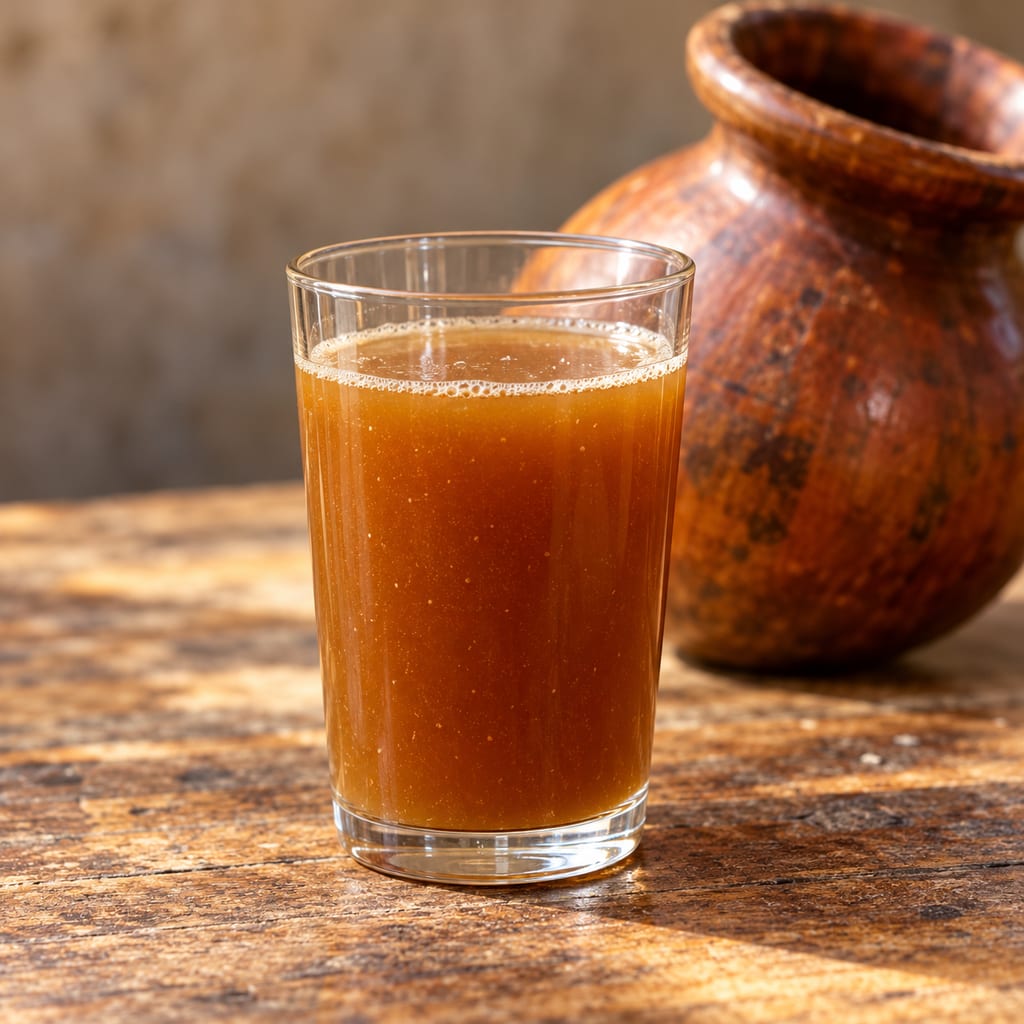
Brown maize tella from Mekelle
A darker Ethiopian maize tella, brewed from maize baked into a hot, dry kita pancake and then fermented in three stages with barley malt, gesho and water.
 FermenteaWhere food goes to change
Spices and aromatics
Gesho (Rhamnus prinoides) is used in Ethiopian cereal beers and honey wines for bitterness and flavour. Sources document regional cultivation and use but do not establish one origin, universal brewing measure, starter role or safety limit.
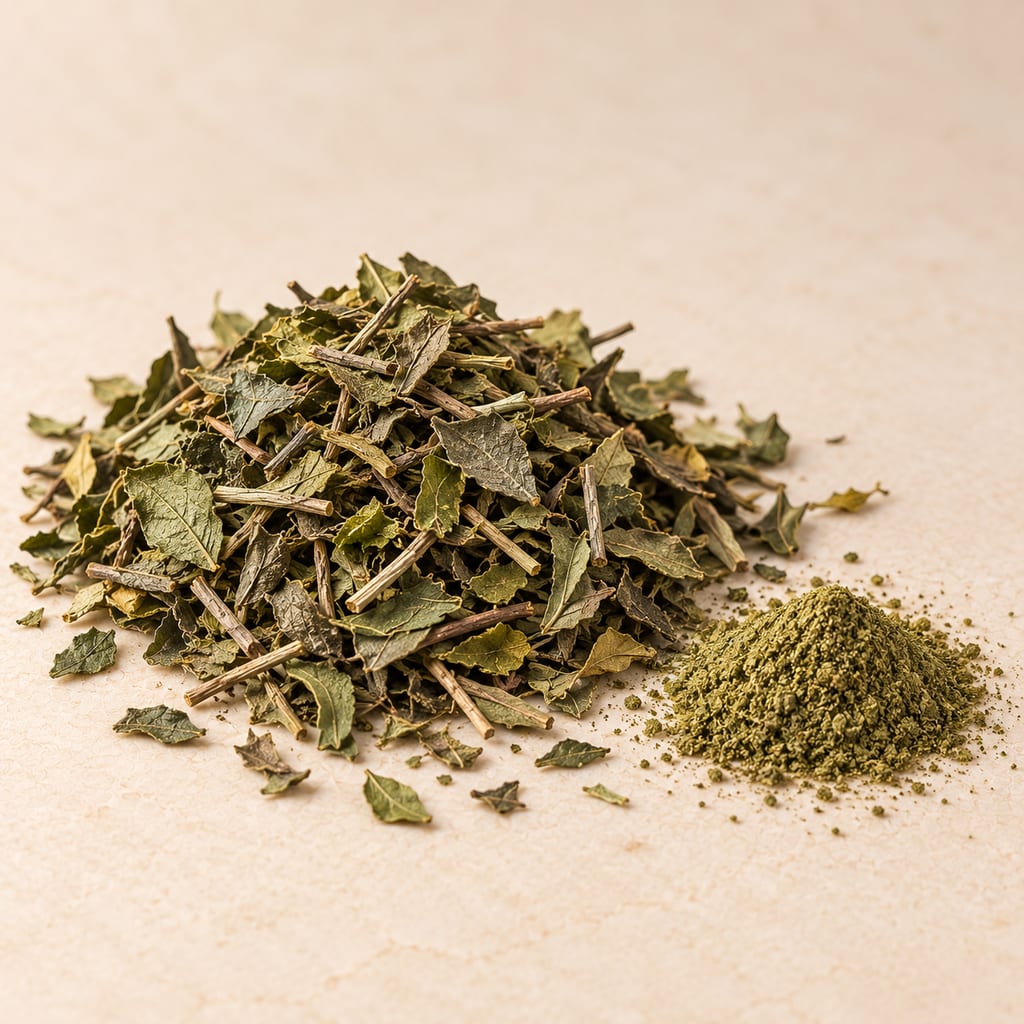
Gesho is the Ethiopian name used for Rhamnus prinoides L’Hér., an accepted species in the buckthorn family, Rhamnaceae. Kew’s Plants of the World Online places its native range in montane regions from Cameroon to Eritrea and south to South Africa. The name is a useful catalogue entry for plant material used in Ethiopian brewing, but it cannot identify a particular branch, dried packet or market lot without a botanical check. It does not mean every plant sold as gesho has been independently authenticated. In Amharic the name is written ጌሾ; Ethiopost’s Forestry Research Center profile uses it for this species. This entry focuses on documented beverage use. It is not an identification key, cultivation manual, medical guide or recipe for brewing beer or honey wine.
Flora descriptions compiled by Kew describe a shrub or small tree with alternate, usually glossy leaves. Leaf blades are elliptic to ovate, with fine teeth on their margins and prominent veins. Small yellow-green flowers grow in axillary clusters. Fruits are small and change from red to purple-black as they ripen. Broad size descriptions vary among regional botanical accounts: an Ethiopian forestry source gives a plant reaching about 7 m, while Kew’s East African flora record allows shrubs or trees up to 8 m. These are not contradictory measurements of one specimen and should not be collapsed into a fixed height. Appearance can guide comparison with identified specimens, but leaf photographs alone do not establish the identity of dried brewing material.
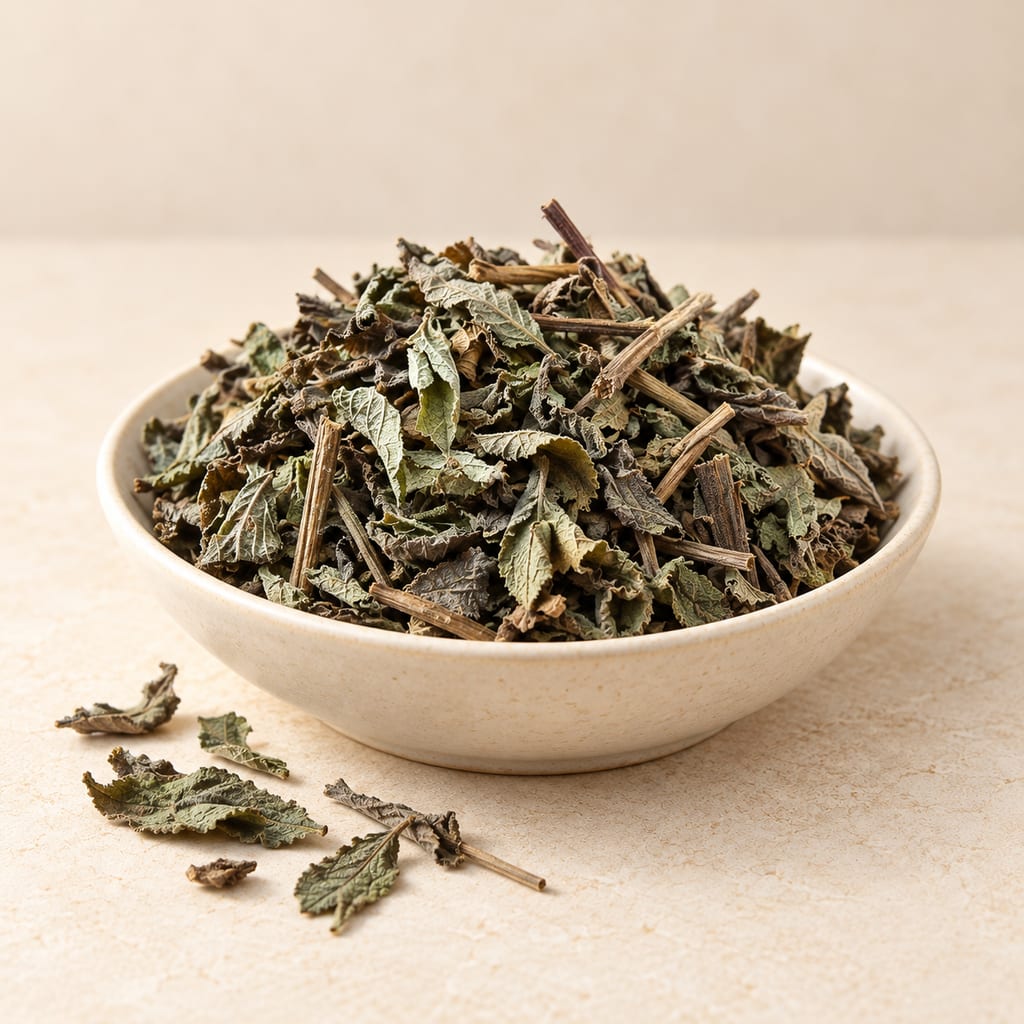
In beverage sources, gesho means plant material added for flavour and bitterness, not a finished fermented food. Published descriptions name leaves, stems and branchlets. A review of tella also illustrates powdered leaves, leaf shreds and stem shreds. These forms matter because the name can refer to broken dried pieces, shredded material or powder. The sources do not provide one universal cut size, moisture level, storage life or household measure. A study analysing powder from prepared samples cannot supply a standard for every market product. Gesho is not hops. Rhamnus prinoides belongs to Rhamnaceae; brewing hops are Humulus lupulus, from a different family. Researchers compare bittering performance in some brewery experiments, but this technical comparison does not make the plants botanically or culturally interchangeable.
Ethiopian forestry profiles describe leaves and stems as flavouring for tella, a fermented cereal beverage, and tej, a honey-based wine. A review of Ethiopian cereal beverages treats gesho as a distinctive bittering ingredient in tella alongside grain materials and fermenting microorganisms. A 2024 study of Mies, a honey wine made in Tigray, likewise describes gesho as a source of bitterness, colour and flavour. These sources show an ingredient used across more than one beverage family; they do not establish one common formulation. Tella and tej are not made from the same base merely because both may use gesho. Research on Mies concerns specific study batches, not every regional honey wine. A Yeki district ethnobotanical survey records gesho use for tella, tej and areki. That documents reported local practice; it does not prove every areki preparation contains it.
The consistent culinary description is bitterness and flavour. Studies also examine colour, antioxidant activity, antimicrobial effects or chemical composition. Those laboratory questions do not establish that gesho starts or controls household fermentation. Malt, cereal substrates and environmental or back-slopped communities can contribute fermenting organisms in tella systems; the literature reviewed here does not establish gesho as a defined starter culture. A Mies experiment may include gesho while controlling or measuring other variables. That cannot isolate the plant as the sole cause of fermentation. This record therefore describes gesho as a flavouring or bittering ingredient and does not say that it inoculates, guarantees acidification, suppresses pathogens or makes a beverage safe.
Tella is discussed as a cereal-based fermented beverage, but literature describes variation in grains, malt, roasted or cooked cereal components, order of addition, vessel treatment and fermentation stages. The name is not one laboratory protocol. Quantities, temperatures, durations or analytical results reported for one tella batch belong to that examined batch and should not be transferred elsewhere without evidence. Tej and Mies are honey-based beverages; reports differ in honey-to-water ratios, gesho form, fermentation time, intended sweetness and strength. An early drink or intermediate stage does not necessarily mean alcohol-free. This ingredient page is not a composite recipe. Combining steps from cereal beer and honey wine sources would invent a process unsupported by either tradition.
The sources distinguish the plant from how a brewer prepares it. A whole leafy branch, dried leaf pieces, stem fragments and milled leaf powder are not the same physical input. Drying, shredding or powdering changes the handling and exposed surface of the material, but the reviewed studies do not establish a universal conversion among those forms. Some sources call the leaves and stems flavouring; some report leaves, stems or branchlets. A particular recipe must say which plant part and condition its source actually used. It would be misleading to fill a missing quantity with a measure taken from another beverage or study.
A 2021 study examined leaves collected at eleven sites in the Amhara region after sun-drying and powdering them. Its objectives included bittering agents, essential oils and antioxidant activity. Such work can help explain why brewers value the plant and why extracts may interest beverage developers. It does not establish one bitterness value for gesho from all regions, seasons or harvests. Plant maturity, source, drying, grinding, storage and extraction conditions differ, and an assay result belongs to its sample and method. A comparative brewing thesis has also evaluated gesho in a modern beer process. A performance comparison with imported hops is an industrial research question, not a traditional recipe equivalence or home dosage recommendation. Claims here stay at the level supported by those study designs.
Ethiopost and an Ethiopian useful-trees publication describe gesho as cultivated or planted in gardens and hedges, with leaves and stems collected for beverage flavouring. The forestry publication gives broad ecological observations for Ethiopian settings, including several agroclimatic zones and elevations. This is not evidence that every point in the range suits commercial planting or that crops will thrive without local assessment. ARARI work from Wag Lasta reports a survey of selected sites and respondent practices. It describes household planting and management such as watering, weeding, mulch, compost or manure, ash, fertilizer use, pruning or pollarding. These observations record what respondents said, not a controlled comparison of cultivation treatments. They do not support a guaranteed yield, fertilizer prescription or standardized harvest schedule.
The Wag Lasta paper reports respondent descriptions of flowering and fruiting seasons, but its table and conclusion do not agree on fruiting months. The discrepancy remains unresolved. A season observed or recalled in one set of districts should not be presented as a calendar for this species throughout its broad African range. The Ethiopost profile notes annual harvesting in its description of cultivated plants but does not give a detailed schedule or measured regrowth interval. The reviewed sources do not provide a verified commercial harvest standard, drying endpoint, maximum branch diameter for food use or post-harvest storage limit. These missing details matter when considering how fresh foliage becomes a stable dried ingredient.
Kew describes the species’ native range across montane Africa, including Ethiopia, Eritrea and South Africa among other countries. Botanical distribution is not the same claim as a beverage’s place of origin. Ethiopian forestry and ethnobotanical sources document culinary use in Ethiopia; this record therefore places a country-level documented-use association there. The Yeki survey supplies a regional example in Southwest Ethiopia. It does not make that district the birthplace of gesho use. The supplied atlas links tella and honey-wine traditions with Ethiopia and Eritrea, but a plant’s presence in a country alone does not prove a specific recipe or historical practice there. The earliest place, date or community of culinary use is not established in these sources. Country-level use remains distinct from wider native range and from an unknown single origin.
The cited sources describe ingredient use and selected laboratory investigations; they do not supply a tested food-safety limit for gesho itself. No amount, alcohol strength, acidity, fermentation time, storage period or sensory sign on this page proves a beverage safe. An antimicrobial assay or changes measured in one fermentation cannot validate an unmeasured home process. Readers need a separately documented, food-safe process for the beverage they intend to make and should not substitute gesho for a validated fermentation control. Some forestry and ethnobotanical publications mention medicinal uses of gesho or other plant parts. Those reports are not clinical evidence and are outside this food entry; no treatment or health benefit is asserted here.
Taxonomic databases establish an accepted name and broad distribution; they do not authenticate market samples. Forestry descriptions document local uses and growing observations; they are not experimental agronomy. A literature review compares reported beverage practices but may inherit uncertainty from studies it summarizes. Chemical analysis characterizes selected samples rather than all gesho. Evidence does not settle the earliest date or locality of beverage use, a universal amount or preparation, whether particular makers use fresh or dried parts, or the plant’s role in fermentation microbiology in each process. No recipe, safety validation or legal collection guidance is inferred from a missing source.
Linked photographs serve as references for the living plant and published depictions of prepared ingredient, each with its own caption, source page and licence record. Botanical photographs document leaves, flowers or fruit, not the taste or brewing performance of a dried lot. An open-access figure from a tella review shows ingredient forms named in its caption. The generated product artwork is editorial art in photographic style, not a field photograph, herbarium voucher, taxonomic key or evidence of a particular preparation. Readers should use cited botanical and beverage sources for factual claims and should not mistake an image for identity verification or a processing instruction.
The publications use different kinds of evidence and labels. A botanical flora can report a species distribution or the structure of its leaves; an ethnobotanical survey can record what respondents in one district say they use; and a fermentation study can characterize a deliberately prepared batch. None of those source types answers every question on its own. Common names may be rendered differently across languages and spellings, so this page keeps Gesho alongside the accepted Latin name and does not treat similarly named plants as synonyms without evidence. A broad range map is not a trail of documented brewing practice. A farmer survey is not a species-wide cultivation trial. An experimental beverage is not a customary recipe unless the authors establish that connection. These distinctions keep the useful records visible while preventing one source’s narrow result from becoming a universal fact.
Ethiopian sources document gesho as flavouring or bittering in tella and honey wines; this country-level use association does not name one origin.
A darker Ethiopian maize tella, brewed from maize baked into a hot, dry kita pancake and then fermented in three stages with barley malt, gesho and water.

A pale Ethiopian maize tella, brewed from maize baked into a kita pancake at a gentler heat and then fermented in three stages with barley malt, gesho and water.
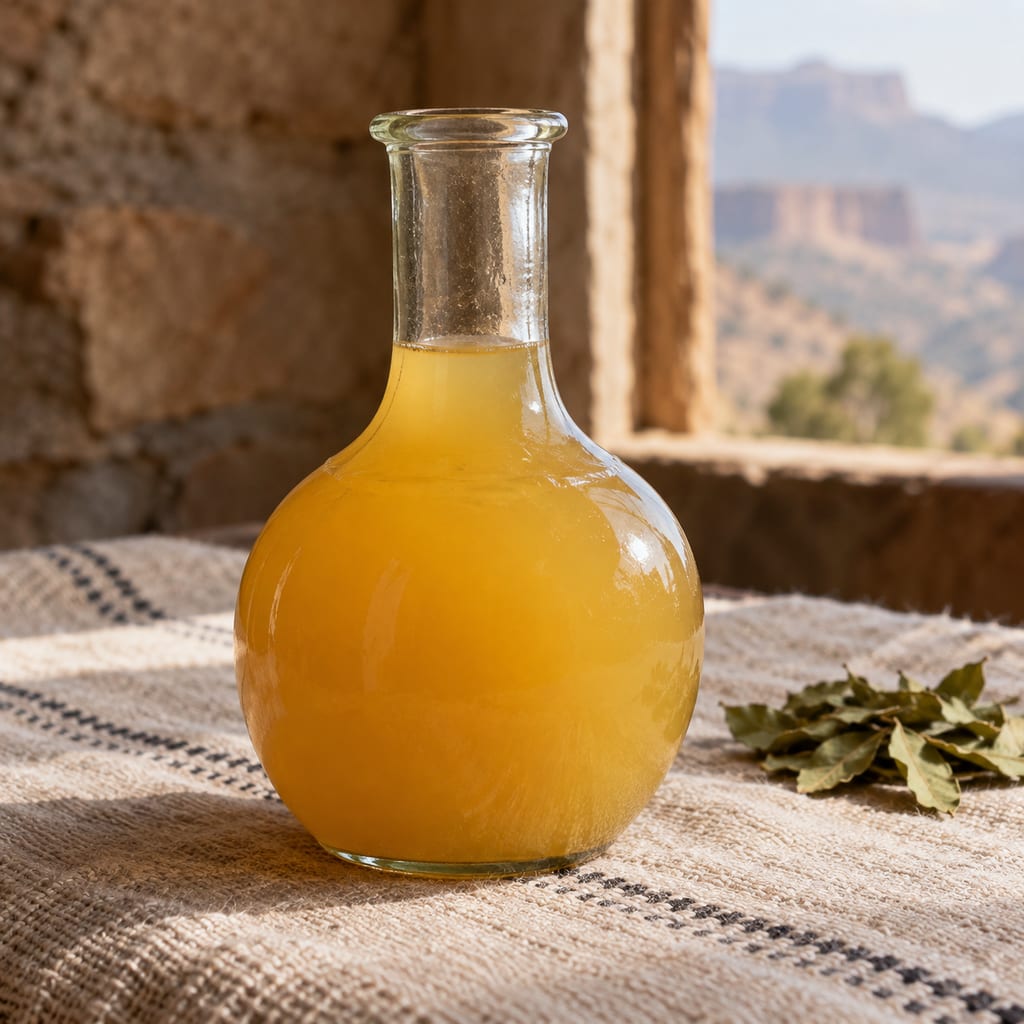
An Ethiopian honey wine of the Tigray highlands, fermented with the leaves and stems of gesho, which supply both bitterness and the microorganisms that carry the ferment.

From sour breads and milk to savoury seeds, cassava staples and living beers, African fermentation follows the crop, the community and the work of transformation.
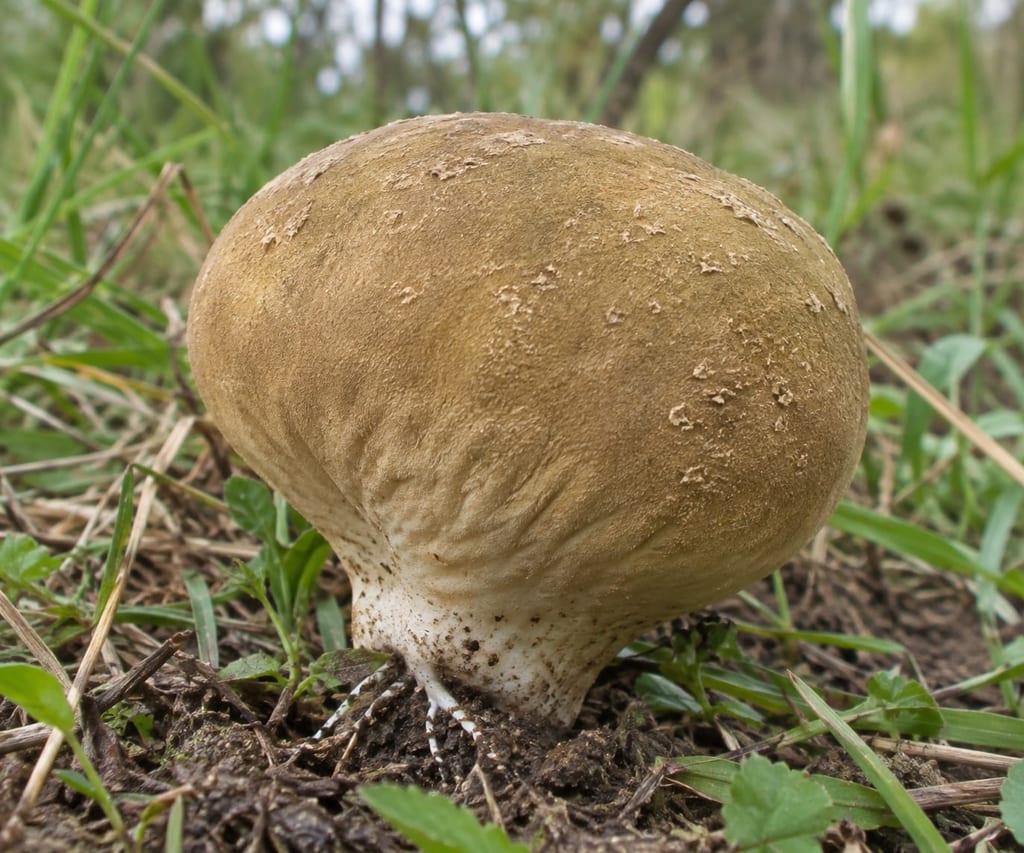
A tropical African puffball recorded in West African range accounts and Ethiopian edible-mushroom studies. Ethiopian use evidence is qualified; Benin identification and safety remain unresolved.

Camel milk from one- and two-humped camels supplies fresh drinks, fermented milks and specialised cheeses across pastoral food systems in Africa and Asia.
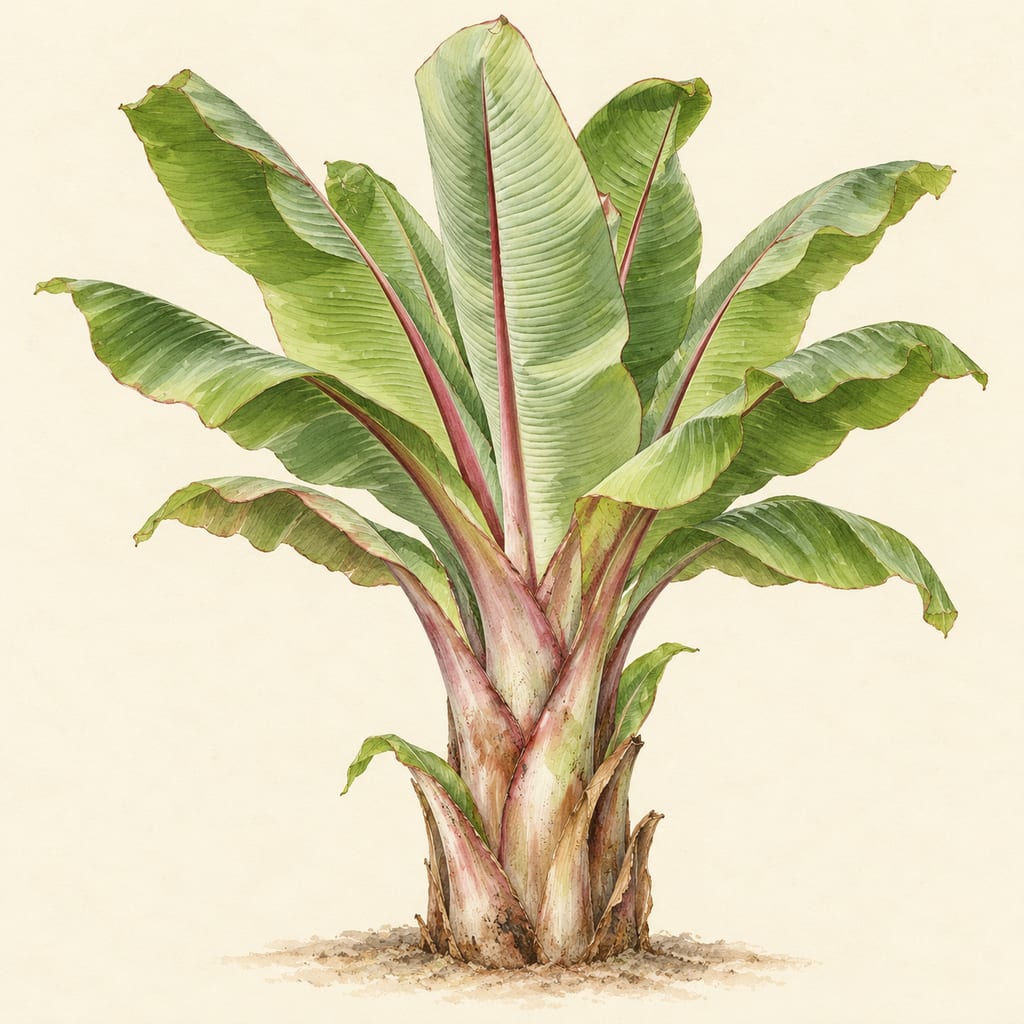
Enset is an Ethiopian staple crop grown for its starchy corm and pseudostem. Fermented kocho, extracted bulla and boiled amicho are distinct foods from the plant.
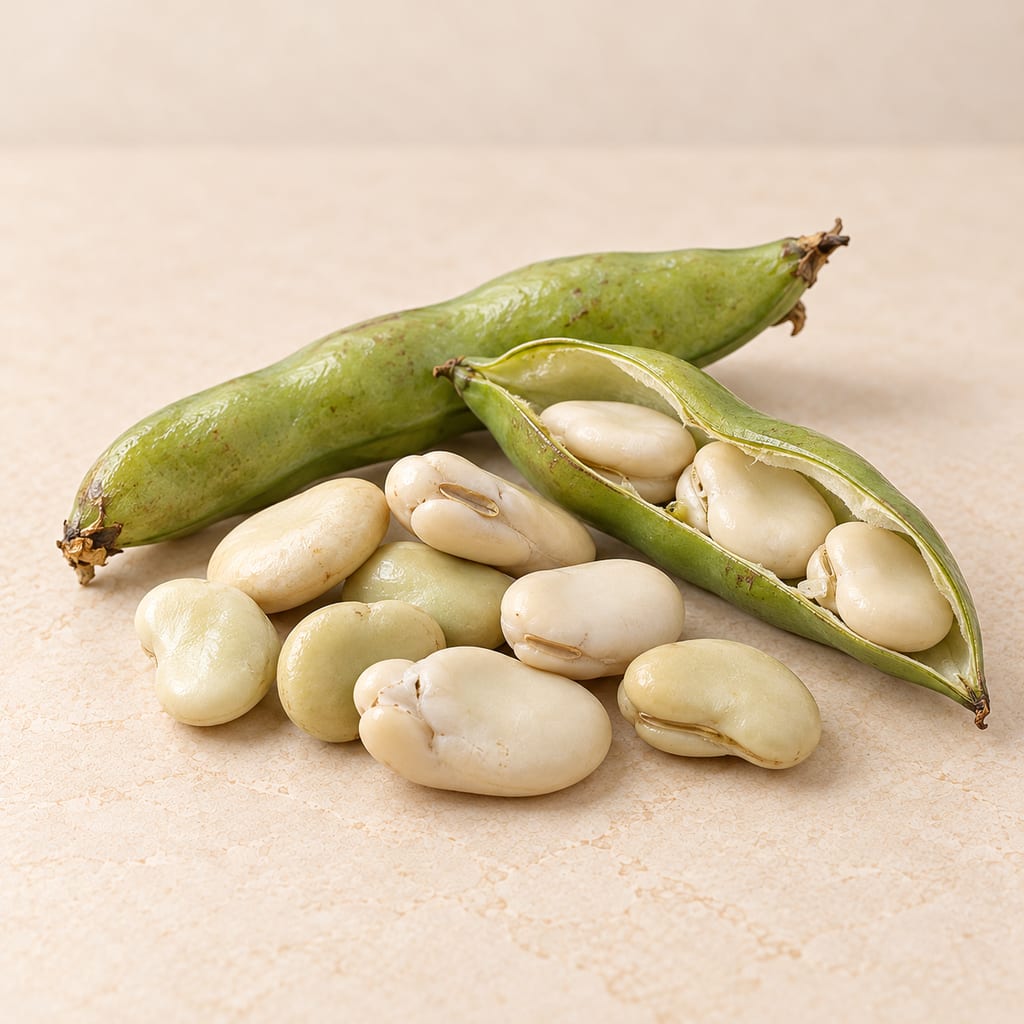
Faba beans are the seeds and edible pods of the cultivated legume Vicia faba L., also sold as broad beans or fava beans. They are eaten fresh or dried and provide the bean flour used in Ethiopian siljo, a sour fermented condiment.
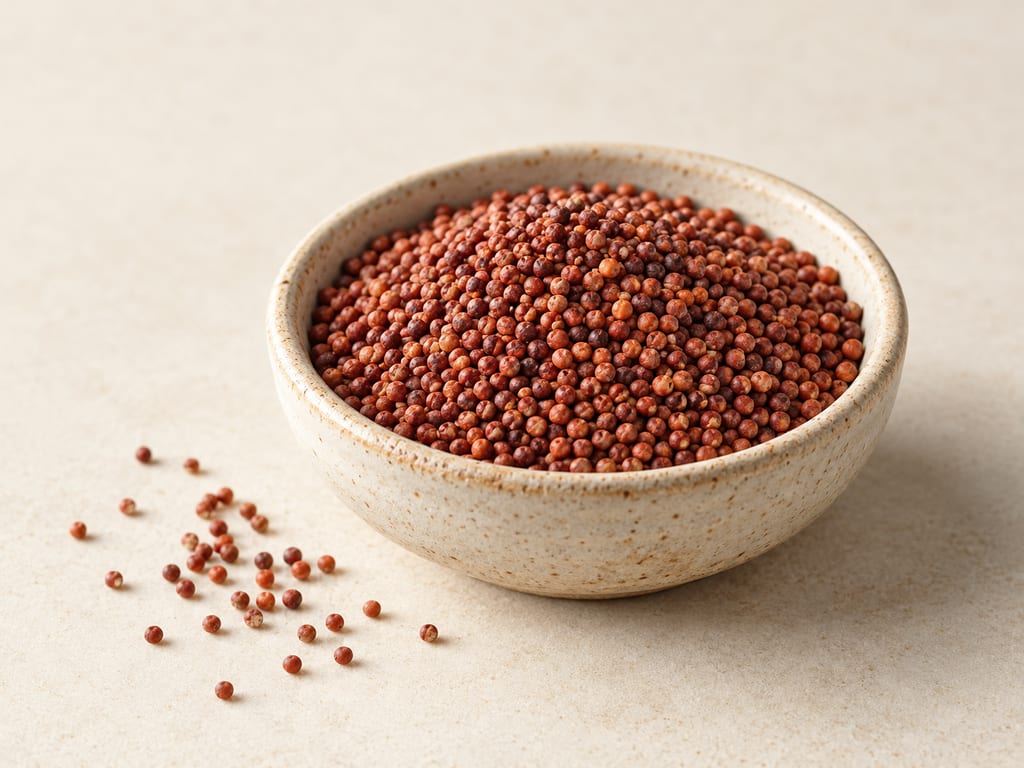
Finger millet (Eleusine coracana) is a small-grained cereal grown across parts of Africa and Asia. It is milled, cooked, malted and fermented in distinct food traditions.
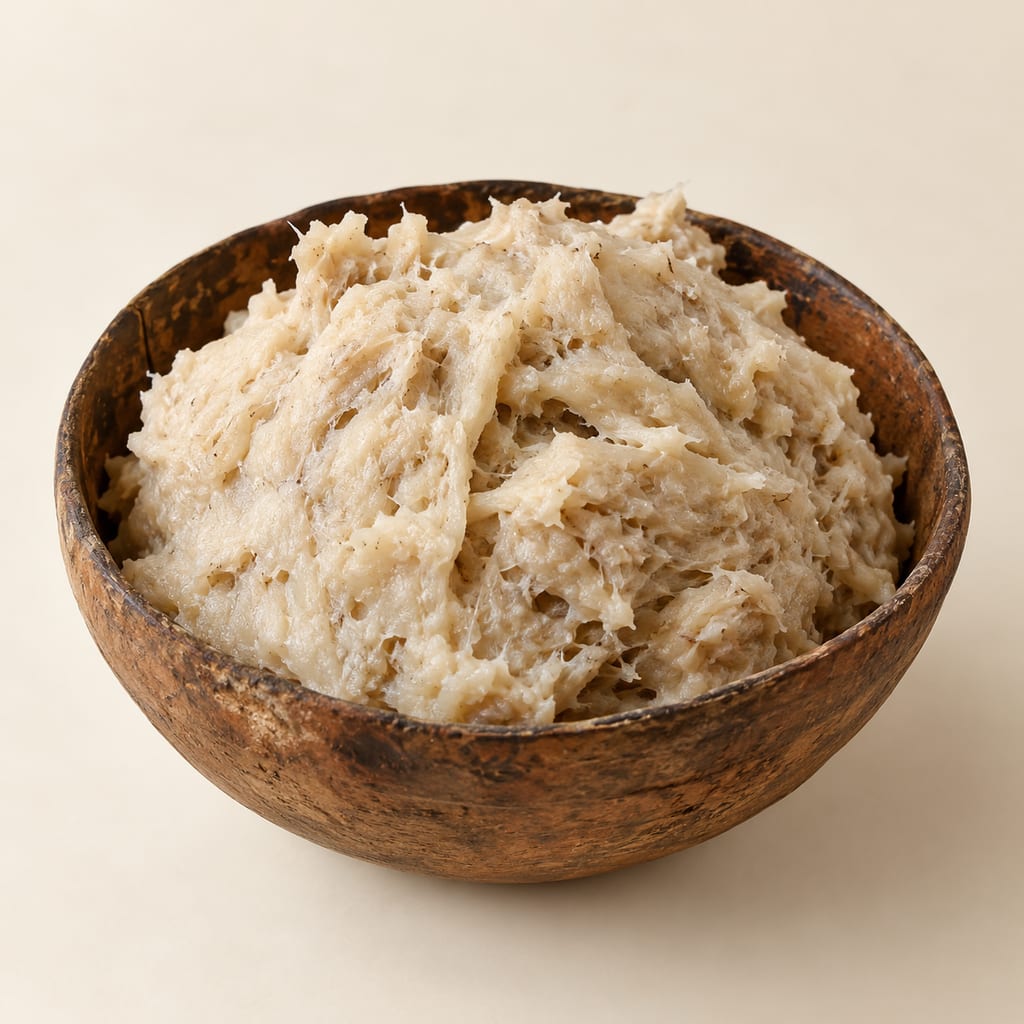
Gamma and gamancho are the names of the enset starter carried from one batch of kocho to the next in southern Ethiopia, made from enset material and dominated by lactic acid bacteria.
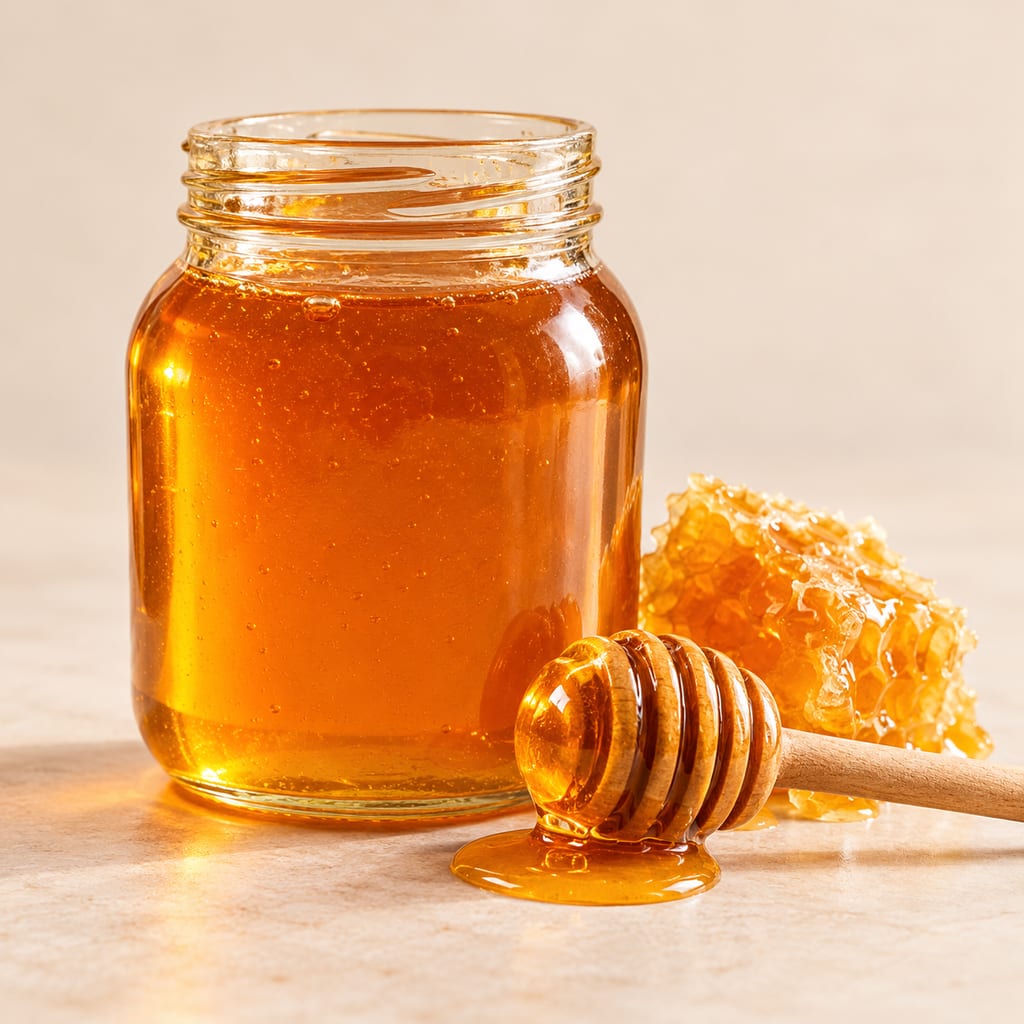
Honey is a bee-made food from floral nectar or honeydew; breads use it in dough or as a syrup served with cooked griddle breads.
Koseret, Lippia abyssinica, is an Ethiopian aromatic herb used in spice blends, spiced butter, dairy and coffee-leaf drinks. Sources record local uses, not one method.
No community contributions have been published for this entry yet.
Sign in to contribute. Published comments and photos are free to read.
Royal Botanic Gardens, KewTaxonomy · Distribution · Botany
Rhamnus prinoides L'Hér. | Plants of the World OnlineAccepted species and family; broad montane African native range.
Flora descriptions record alternate lustrous leaves and fruits that turn red to purple-black.
Cited in: Name, identity and scope; What the plant looks like; Geography: use and native range differ; Evidence limits and open research questions; Reading regional sources carefully
Amhara Agricultural Research Institute, forestry research proceedings; author-uploaded copy hosted by ResearchGateCultivation · Regional observations
Characterization and Traditional Management Practice of Rhamnus prinoides at Wag Lasta DistrictRegional observational survey reports selected sites and farmer practices.
Seasonal responses in the paper conflict about fruiting months.
Cited in: Cultivation and collection in context; Seasonality and unresolved reports; Evidence limits and open research questions; Reading regional sources carefully
Ethiopost; profile credited to the Ethiopian Agricultural Research Organization Forestry Research CenterTraditional use · Botany · Cultivation
ጌሾ • GeshoIdentifies Gesho as Rhamnus prinoides and describes leaves, stems and branchlets as flavouring for tella and tej.
Describes planting in gardens and hedges and propagation by stem layering.
Cited in: Name, identity and scope; The ingredient is not the beer; Documented beverage uses; A plant ingredient across production stages; Cultivation and collection in context; Seasonality and unresolved reports; Geography: use and native range differ; Reading regional sources carefully
Heliyon 10(20), e39272 (2024), DOI 10.1016/j.heliyon.2024.e39272Mies context · Experimental formulation
Process standardization and characterization of Mies: Ethiopian honey wineStudy describes gesho as bittering, colouring and flavouring Mies and evaluates study-specific formulations.
Does not validate a universal home recipe or storage rule.
Cited in: Documented beverage uses; What gesho contributes, and what is not established; Different beverages and variable processes; Food-safety and medical boundaries; Evidence limits and open research questions; Reading regional sources carefully
Food Science & Nutrition (2024)Tella context · Fermentation limits · Safety context
A review of the production, quality, and safety of traditionally fermented cereal-based alcoholic beverages in EthiopiaReviews gesho leaf and stem use as a characteristic bittering ingredient in tella.
Reports powdered leaves, leaf shreds and stem shreds as documented forms.
Discusses variable household processes and safety limits in cereal beverages.
Cited in: The ingredient is not the beer; Documented beverage uses; What gesho contributes, and what is not established; Different beverages and variable processes; A plant ingredient across production stages; Geography: use and native range differ; Food-safety and medical boundaries; Evidence limits and open research questions; Image evidence and attribution
Useful Trees and Shrubs of Ethiopia, World Agroforestry (ICRAF)Botany · Cultivation · Traditional use
Rhamnus prinoidesDescribes local Ethiopian cultivation, broad elevation and agroclimatic observations, morphology and beverage-flavouring use.
Ecological account is not a crop prescription.
Cited in: Name, identity and scope; What the plant looks like; Cultivation and collection in context
Journal of Chemistry (2021), article 2425419Chemistry · Bitterness
Assessment and Determination of Bittering Agents, Essential Oils, and Antioxidants of Gesho (Rhamnus prinoides L. Herit) Collected from Amhara Region, EthiopiaStudies dried powdered leaves collected at eleven Amhara sites for bitterness-related compounds, essential oils and antioxidant activity.
Sample assays are not universal dosing or safety guidance.
Cited in: What gesho contributes, and what is not established; Research on bitter compounds; Food-safety and medical boundaries; Evidence limits and open research questions
Journal of Ethnobiology and Ethnomedicine (2025)Documented use · Geography
Ethnobotanical study of wild and semi-wild edible plants in Yeki district, Sheka Zone, Southwest EthiopiaSurvey records local use of gesho leaves in brewing tella, tej and areki.
Supports a district-level Ethiopian use example, not a national origin claim.
Cited in: Documented beverage uses; Geography: use and native range differ; Reading regional sources carefully
FermenteaResearch provenance
Gesho (Rhamnus prinoides): original plant researchRecords the original plant research and partial source-review scope.