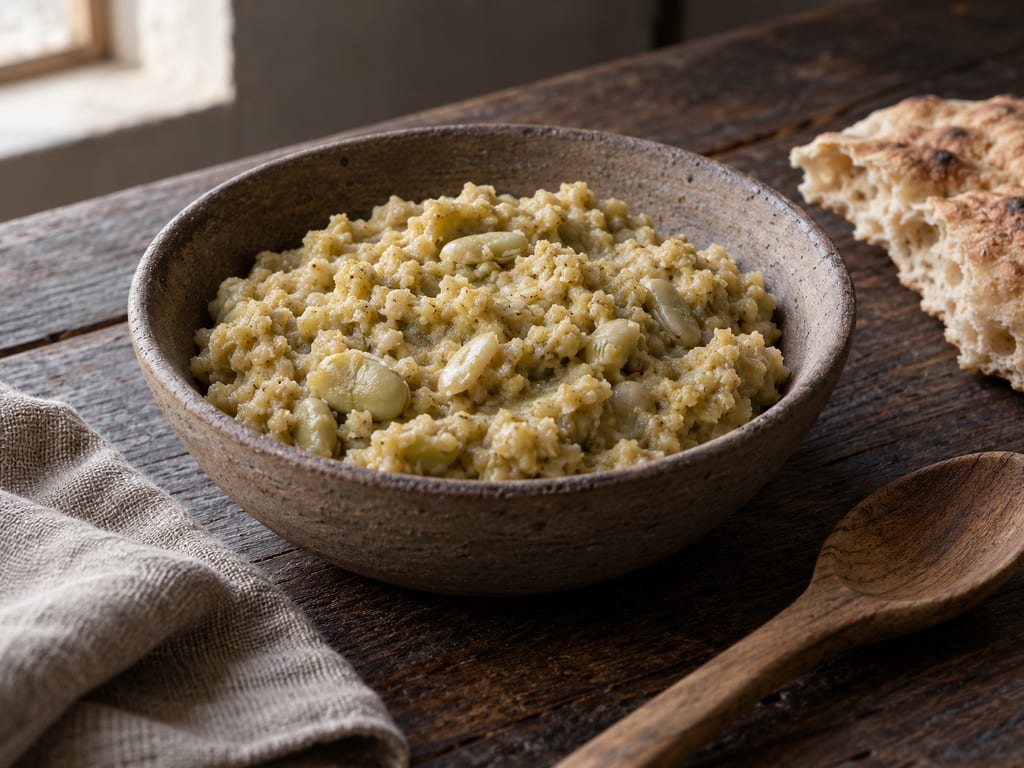
Broad-bean mash (modern reconstruction)
Cooked broad beans crushed to a thick paste with garlic and salt, a museum preparation built on the one European pulse that was already old when the Viking Age began.
 FermenteaWhere food goes to change
Faba beans are the seeds and edible pods of the cultivated legume Vicia faba L., also sold as broad beans or fava beans. They are eaten fresh or dried and provide the bean flour used in Ethiopian siljo, a sour fermented condiment.
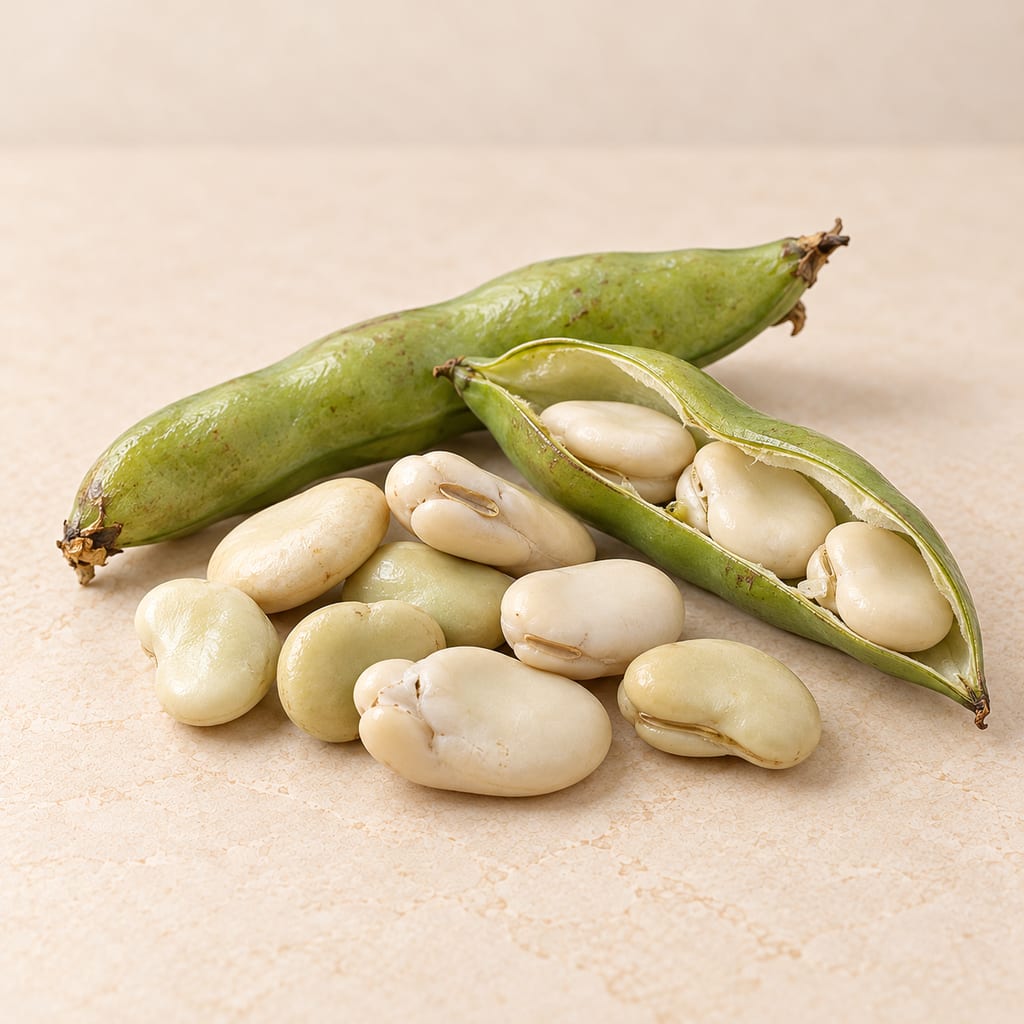
Faba beans are the seeds and edible pods of Vicia faba L., an annual crop in the legume family Fabaceae. Kew accepts the scientific name Vicia faba and records faba bean and broad bean as common names. Fava is another common spelling. In market language, “broad bean” often means a large-seeded food type; “field bean” and “horse bean” are used for smaller, harder-seeded types that are often grown for feed. These are forms within the cultivated crop, not different bean species. Seed colour ranges from green and brown to reddish, and pod size and seed size vary by cultivar.
The plant is an upright, robust herb with hollow stems, a strong taproot and clusters of pea-like flowers. Its flattened pods can hold several seeds. People use both the tender pod and the seed, but the word “bean” usually refers to the mature seed sold fresh, frozen, dried whole, split, or milled. Those forms behave differently in the kitchen: a fresh seed is moist and tender, while a dry seed must be rehydrated and cooked before it can be mashed or milled. Flour has already lost the intact seed's structure and disperses readily into a liquid, the form used in the published study of siljo.
The everyday names can obscure the crop's range. Kew describes broad bean as a larger-seeded type grown for human food and horse or field bean as smaller, harder seed types often used as feed. Those market and agricultural names tell a reader about selection and intended use, but they do not by themselves identify a particular cultivar or prove which one a historical maker had. The siljo study used powdered horsebean and identified it botanically as Vicia faba. That botanical name is more reliable than trying to infer the bean's exact type from the English word “horsebean” alone. When comparing products or research, record whether the material was fresh, mature, hulled, whole, split or milled; these details can change cooking time and the surface available to water and microbes.
Kew describes faba bean as a crop thought to have originated in Western Asia, with an estimated range of roughly 7000 to 4000 BCE, and says people later spread it into Europe, Africa and Central Asia. The estimate is broad; it does not identify a single point of domestication or prove that every food now made with faba beans began in that period. The crop is known in cultivation rather than as a wild food plant. Its long movement reflects a useful combination: edible seeds, adaptable cultivars and a crop cycle that fits temperate and subtropical climates and cooler high-altitude tropical areas.
Faba beans share the nitrogen-fixing habit of many legumes. Bacteria in nodules on the roots convert atmospheric nitrogen into forms the plant can use, while the plant supplies the bacteria with energy from photosynthesis. That relationship explains why the crop can fit into rotations with cereals and contribute to soil fertility; it does not mean every field receives the same benefit, since soils, rhizobia and management differ. FAO Ecocrop records Vicia faba as an annual pulse crop used for food, fodder and soil improvement. Kew's distribution data records cultivation across several African countries, including Ethiopia, Eritrea, Algeria, Morocco, Tunisia and Sudan.
In Ethiopia and Eritrea, Kew describes hulled faba seeds ground into a sauce such as shiro wot, or seasoned and minced with butter for ful. The dry seed can therefore be a flour or meal as well as a whole pulse. It is also eaten in dishes across the Middle East and Mediterranean, while the tender green seed and pod are used as vegetables. Kew notes that fresh green seeds, raw or roasted, are eaten as snacks in many African countries. These uses show how one crop serves as pantry staple, flour, cooked bean and fresh seasonal vegetable; they do not imply that every local shiro is made from faba beans or that every African country shares one recipe.
Siljo is a more specific Ethiopian example. It is a sour legume condiment associated with the central highlands in the supplied African fermentation atlas. A 1995 study identifies its bean as horsebean, Vicia faba. This matters for cataloguing: siljo should not be collapsed into shiro, ful, or a West African alkaline seed condiment simply because each uses pulses. In siljo, the bean is cooked and made into a semi-solid base before a separate fermentation begins. The bean supplies the bulk substrate and nutrients; the mustard powder in the studied formulation supplies the initial microorganisms.
Mehari and Ashenafi's 1995 experiment thoroughly cooked powdered faba beans with safflower extract to make a semi-solid slurry. After cooling it to 50°C, the researchers added untreated black mustard powder. Their microbiological analysis attributed the starter organisms to that mustard powder. Lactobacillus acidophilus, L. plantarum and L. delbrueckii initiated and later dominated the fermentation. That is a measured description of one research preparation, not a complete household formula: the abstract does not provide a reproducible set of ingredient weights or validate a universal schedule.
The researchers reported a pH of 4.5 after 36 hours and 4.0 after 168 hours. They also reported high counts of lactic-acid bacteria and aerobic mesophilic bacteria at the earlier sample, and no Enterobacteriaceae detected in that experiment. These numbers describe the sampled material and conditions. They are not safety limits, a prediction for another batch, or evidence that sourness, smell, bubbles or one home pH reading proves safety. The page records the observations because they explain how the studied siljo acidified, not to offer readers a process to reproduce.
The fermentation distinction is important. Many familiar African fermented seed condiments are alkaline and dominated by Bacillus; the siljo study instead describes acidification and lactic acid bacteria in a cooked faba-bean slurry. This does not mean that all siljo batches have identical microbes or that a mustard powder from another source will behave the same way. It means the bean has a documented role in a distinct Ethiopian fermentation whose starter and process should not be replaced in prose with an assumed West African method.
The study's sequence helps explain why the bean's cooked state matters. Cooking first softened the dry faba material and made a semisolid base; cooling preceded addition of the mustard powder that carried the observed microorganisms. As the lactic acid bacteria grew, the measured pH decreased. This is evidence of acid development in that sample, not a recipe control: pH alone says nothing about every possible pathogen, toxins or handling error. The researchers also reported a slight rise in measured crude protein concentration during fermentation and an increase in protein availability. Concentration changes do not mean that microbes created protein from nothing or that a serving necessarily delivers more protein. The result belongs to their analysis of the fermented mass and should not be generalized to every siljo, flour or bean.
Faba beans also appear in Chinese broad-bean koji and doubanjiang. An official account of Pixian douban names broad beans and chilli in the regional condiment. A 2023 primary study compared broad-bean koji made in laboratory and factory environments. It found that the production environment changed the microbial composition and enzyme activities; scale-up altered the koji rather than merely multiplying the same laboratory process. Koji is an intermediate made by growing mould on prepared substrate, while doubanjiang is a later bean-paste product. The ingredient link to this research is comparative context, not an African origin claim.
A 2024 experiment separately fermented fava-bean flour with Aspergillus oryzae and Rhizopus oligosporus and measured changes in composition, amino acids, acids and functional properties. Such research shows why bean identity and physical form matter to microbial growth and the final material. It does not establish those experimental fungi as traditional starters for siljo, prove a safer product, or give a home method. For this ingredient page, the best-documented African fermentation remains the Ethiopian sour condiment, while the mould-based work shows that faba beans can also serve as a research substrate in other systems.
Fresh faba beans are harvested as immature seeds and sometimes eaten with their pods. The pod protects the seeds but is not the same ingredient as dried faba bean flour. At maturity, seed colour and hardness depend on cultivar and ripeness. Large-seeded food cultivars tend to be selected for eating; smaller, harder types are often grown as field or horse beans. The green seed can be cooked as a vegetable; the mature seed can be used whole, split, hulled or milled. Removing the seed coat changes texture and cooking behaviour, so a recipe that specifies hulled beans should not be silently translated to whole beans.
The plant itself has additional agricultural uses. Its root symbiosis can add nitrogen to a rotation, and the whole crop can be used as animal feed. These are crop functions, not food-fermentation steps. For a fermentation, the bean's practical role depends on whether the tradition uses intact cooked beans, dehulled seeds, meal or flour. In the siljo research, flour dispersed in safflower extract to form the substrate. A whole-bean koji process or a dry-bean alkaline ferment would involve different physical structure and microbial access.
Choose the form named for the intended use. Fresh pods should be judged as a perishable vegetable; fresh seeds can be eaten green or cooked. Dry mature beans keep their shape until they take up water and soften during cooking, while split beans and flour have more exposed surface and behave differently in a mash. Kew documents hulled and ground faba seeds in Ethiopian and Eritrean foods. Flour makes a thick suspension more readily than intact beans, which is why the siljo study's powdered beans form a semi-solid base rather than a dish of whole pulses.
Keep dry beans dry and protect them from insects and moisture; follow the storage directions on the package, since this account has no source for one universal storage period. Once hydrated or cooked, handle and store them as perishable cooked food rather than assuming that a traditional name or later fermentation makes them shelf-stable. The siljo study reports fermentation observations but does not establish storage limits for finished siljo. No shelf life, salt percentage, temperature schedule or home fermentation limit is supplied here.
Faba beans contain glucosides that can cause oxidative damage to red blood cells in people with glucose-6-phosphate dehydrogenase (G6PD) deficiency. A review in the New England Journal of Medicine describes acute hemolytic anemia after fava-bean consumption in susceptible people. This is the specific hazard called favism. It is not a general warning that faba beans are unsafe for everyone, and it is separate from ordinary digestive discomfort or questions about an unfamiliar fermentation.
The siljo study does not test whether fermentation removes the favism hazard. Neither its pH observations nor evidence that some fungi alter other antinutritional compounds can be used to infer that fava beans become safe for someone with G6PD deficiency. EFSA's 2026 assessment also discusses lectins in faba beans and the effect of processing on lectin activity. Adequate cooking and fermentation are different operations; use appropriate established cooking guidance for the beans and do not rely on fermentation to replace it. This page gives no claim that one preparation removes all faba-bean hazards.
Kew describes a broad estimated origin, not a precise domestication locality or date.
The study identifies Vicia faba in Siljo; its country-level setting does not establish a crop-domestication site.
Kew describes faba beans in foods in Eritrea; this row does not attribute Siljo to Eritrea.
Cooked broad beans crushed to a thick paste with garlic and salt, a museum preparation built on the one European pulse that was already old when the Viking Age began.
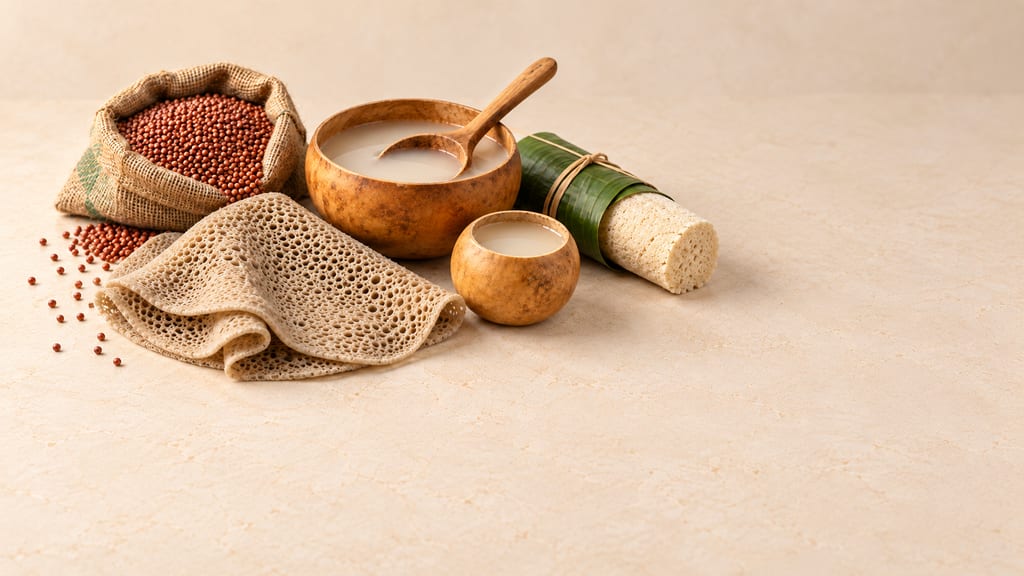
From sour breads and milk to savoury seeds, cassava staples and living beers, African fermentation follows the crop, the community and the work of transformation.
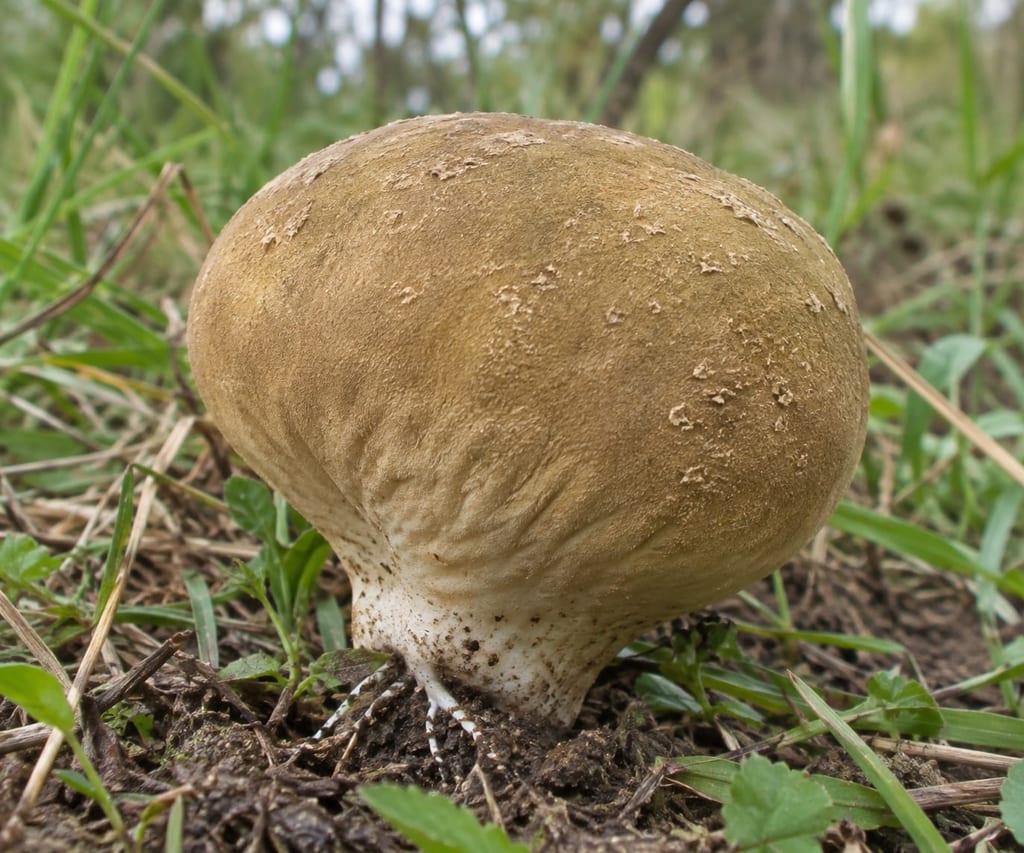
A tropical African puffball recorded in West African range accounts and Ethiopian edible-mushroom studies. Ethiopian use evidence is qualified; Benin identification and safety remain unresolved.

Camel milk from one- and two-humped camels supplies fresh drinks, fermented milks and specialised cheeses across pastoral food systems in Africa and Asia.
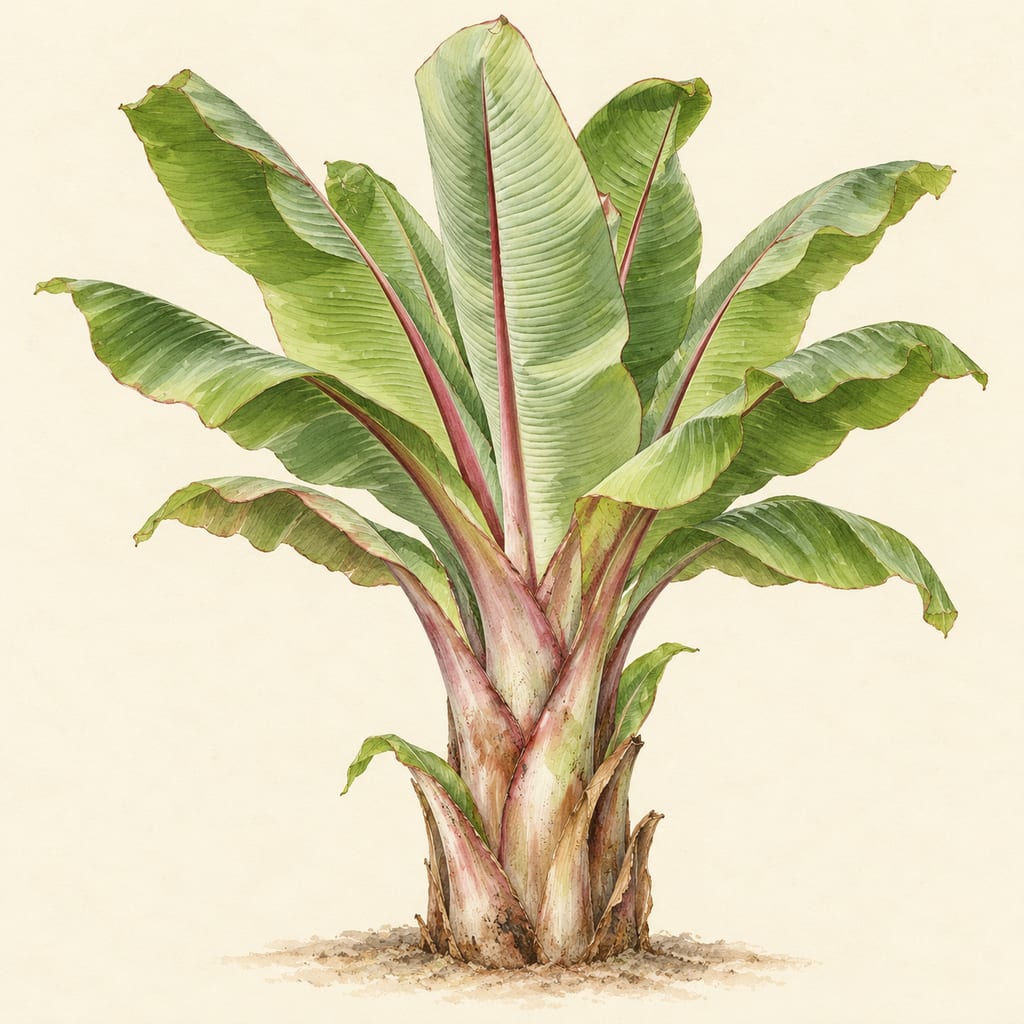
Enset is an Ethiopian staple crop grown for its starchy corm and pseudostem. Fermented kocho, extracted bulla and boiled amicho are distinct foods from the plant.
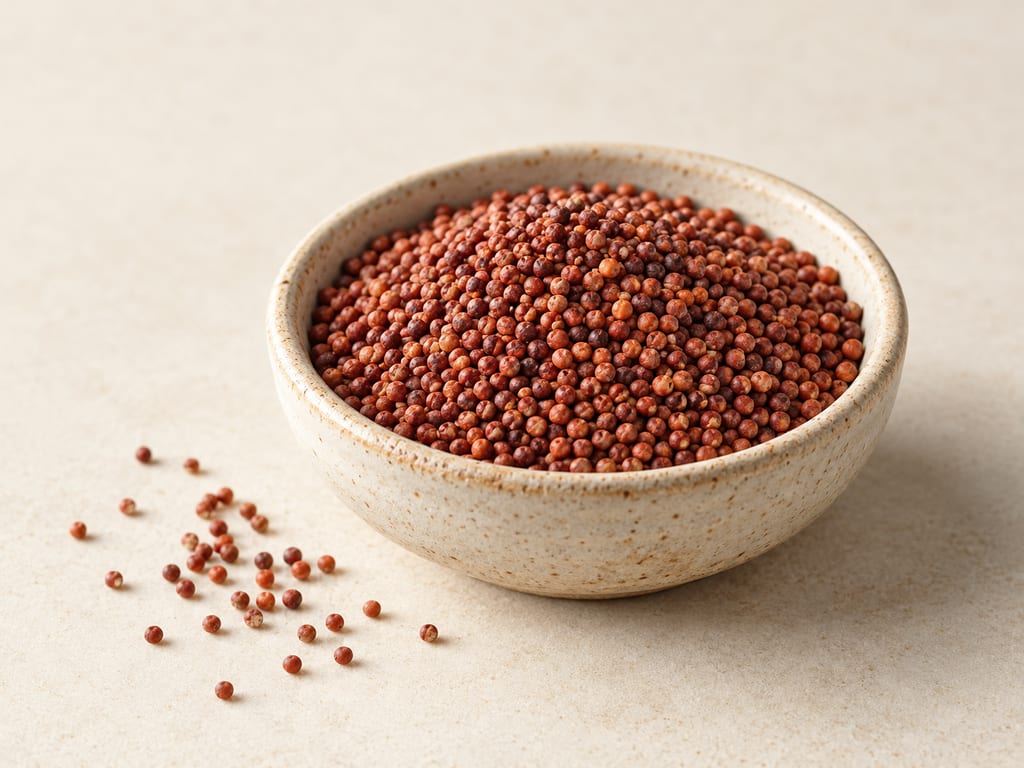
Finger millet (Eleusine coracana) is a small-grained cereal grown across parts of Africa and Asia. It is milled, cooked, malted and fermented in distinct food traditions.
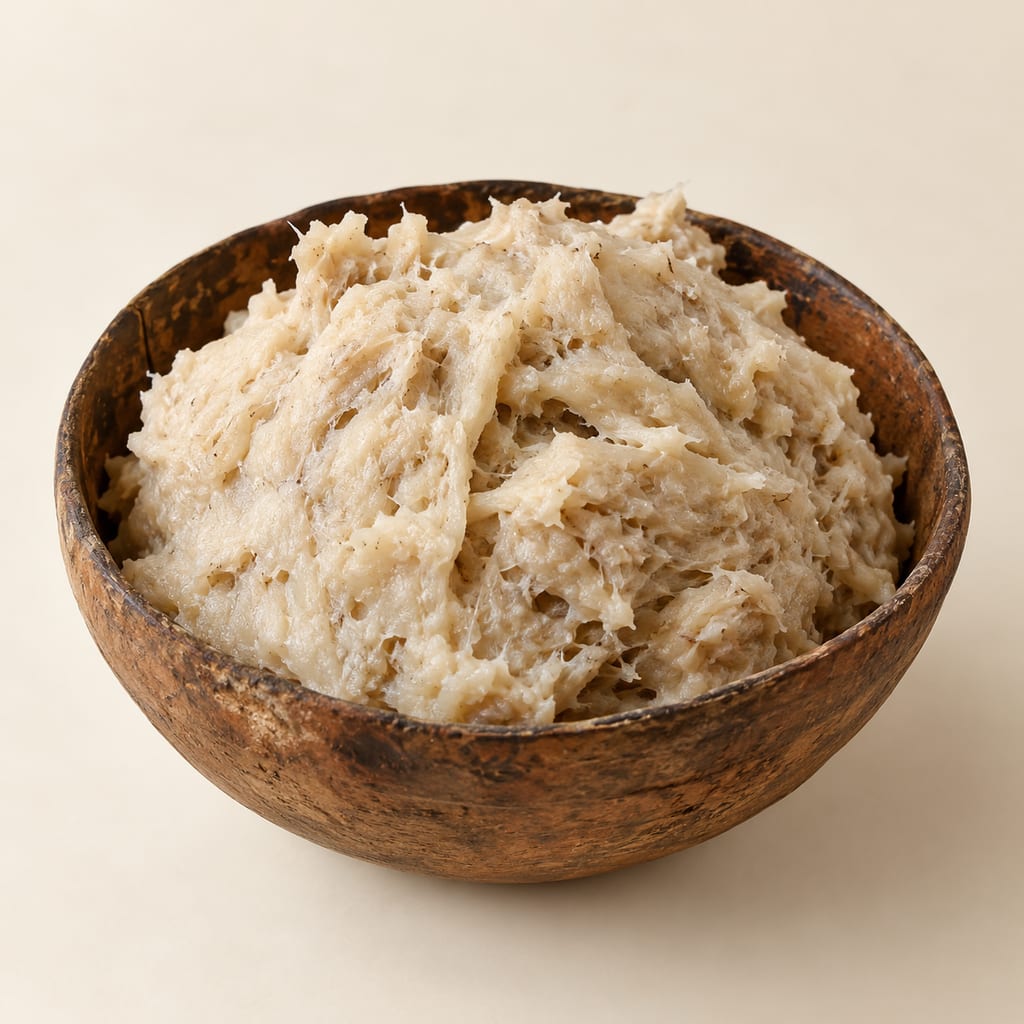
Gamma and gamancho are the names of the enset starter carried from one batch of kocho to the next in southern Ethiopia, made from enset material and dominated by lactic acid bacteria.
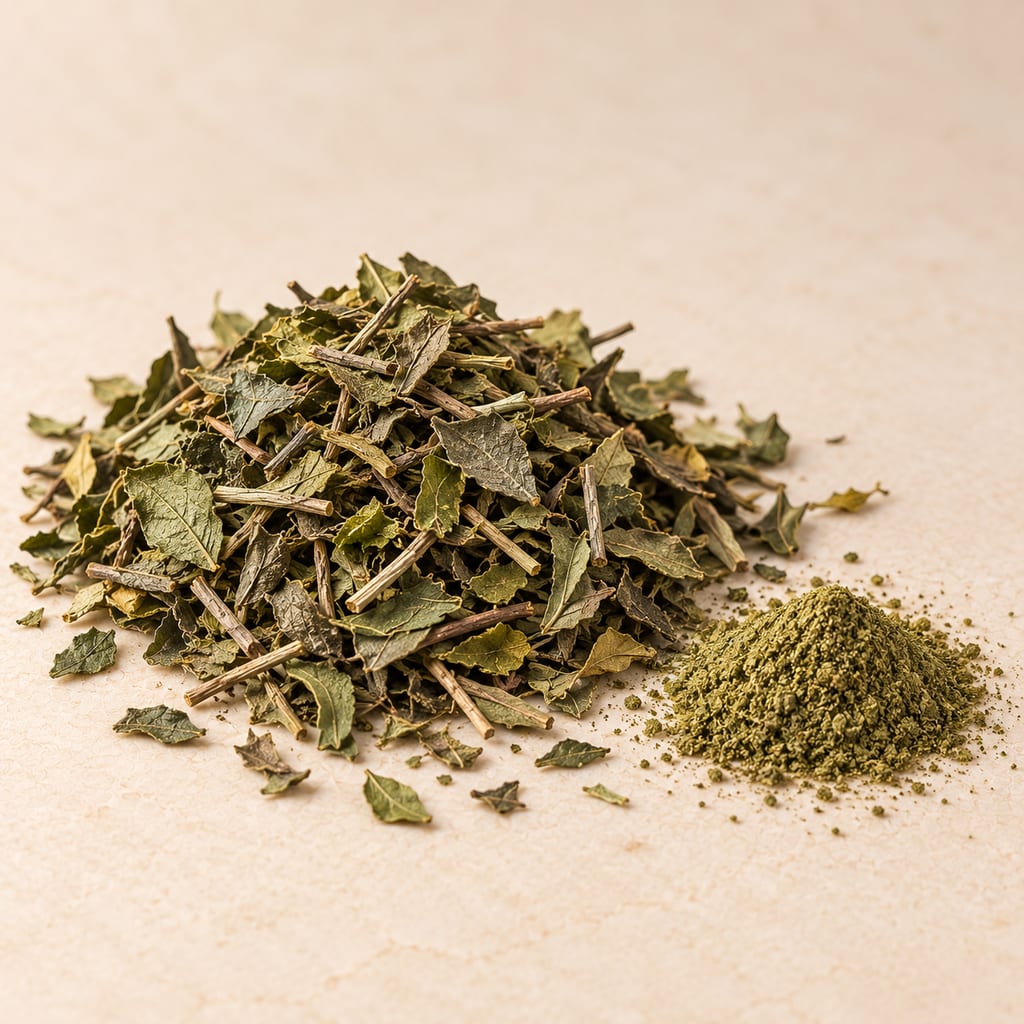
Gesho (Rhamnus prinoides) is used in Ethiopian cereal beers and honey wines for bitterness and flavour. Sources document regional cultivation and use but do not establish one origin, universal brewing measure, starter role or safety limit.
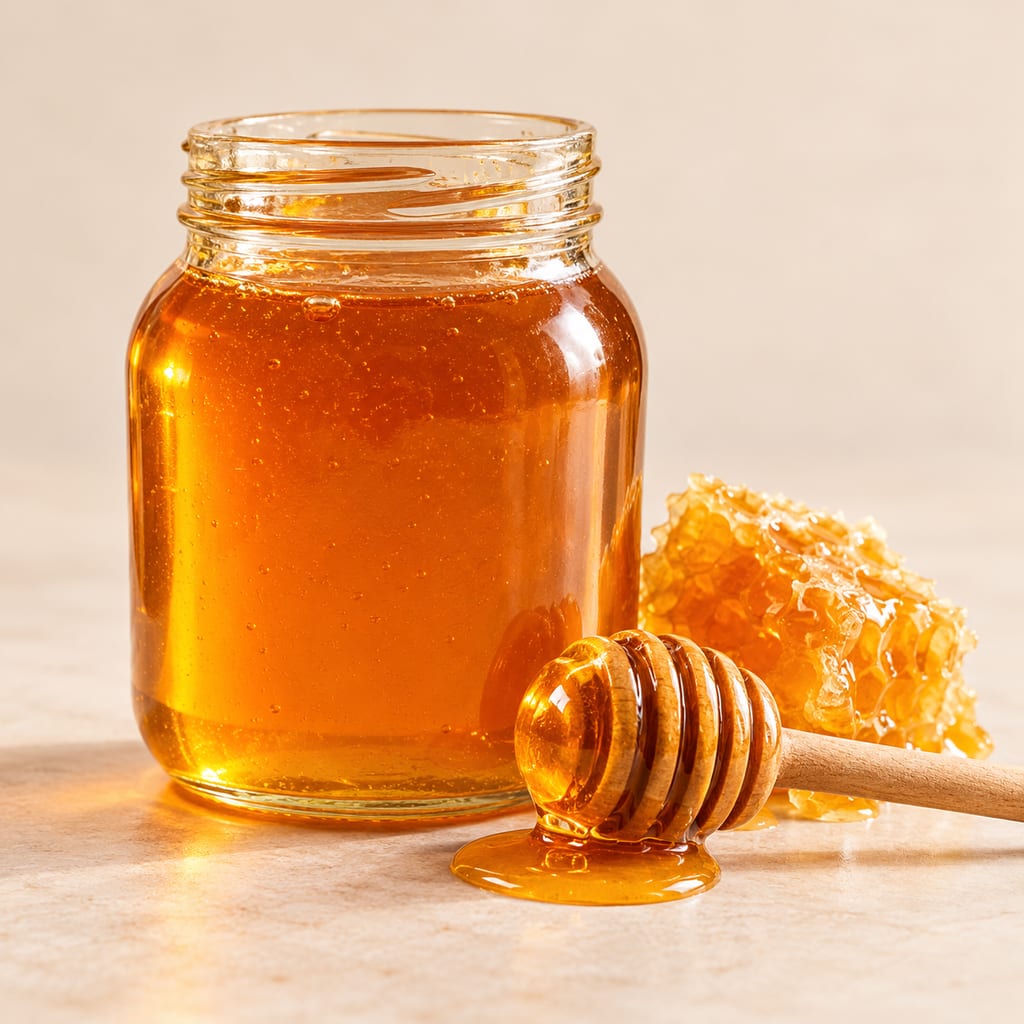
Honey is a bee-made food from floral nectar or honeydew; breads use it in dough or as a syrup served with cooked griddle breads.
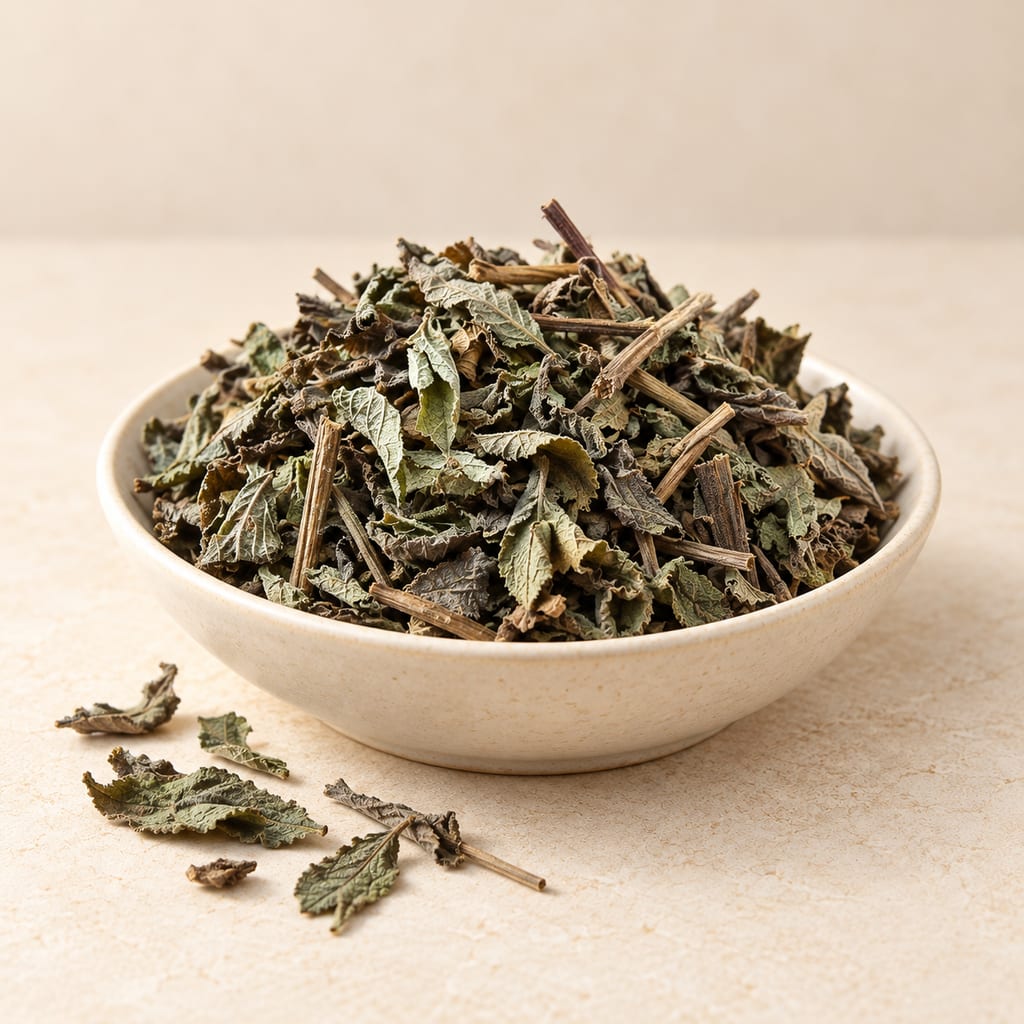
Koseret, Lippia abyssinica, is an Ethiopian aromatic herb used in spice blends, spiced butter, dairy and coffee-leaf drinks. Sources record local uses, not one method.
No community contributions have been published for this entry yet.
Sign in to contribute. Published comments and photos are free to read.
Royal Botanic Gardens, Kew, Plants of the World OnlineIdentity · History · Geography · Cultivation · Use
Vicia faba L.: General information and species profileAccepted name Vicia faba L.; common names faba bean and broad bean; estimated West Asian origin; cultivated annual; variation among broad, horse and field bean forms; seed and pod descriptions; Ethiopian and Eritrean culinary uses; nitrogen-fixing root symbiosis.
Cited in: One species, several seed forms; A crop carried across regions; African foods made with faba beans; From pod to pantry; Buying, cooking and storing
World Journal of Microbiology and Biotechnology (PubMed record)Use · Fermentation · Geography
Microbiology of siljo, a traditional Ethiopian fermented legume productPrimary 1995 siljo study used cooked powdered Vicia faba in safflower extract, cooled the slurry, and added untreated black mustard powder; the mustard supplied starter microorganisms; lactic acid bacteria including Lactobacillus acidophilus, L. plantarum and L. delbrueckii initiated and dominated fermentation; reported pH observations describe that experiment only.
Cited in: African foods made with faba beans; What the siljo study shows about fermentation; From pod to pantry; Buying, cooking and storing; A specific risk: favism
Frontiers in MicrobiologyFermentation · Composition
The differences between broad bean koji fermented in laboratory and factory conditions by an efficient Aspergillus oryzaePrimary research found production environment affected broad-bean koji microbial composition, enzyme activities and metabolites; laboratory and factory outcomes differed, so scale and environment matter.
Cited in: Other fermentation research uses the same bean differently
FoodsFermentation · Composition
Exploring the Impact of Solid-State Fermentation on Fava Bean Flour: A Comparative Study of Aspergillus oryzae and Rhizopus oligosporusPrimary 2024 comparison of fava-bean flour fermented with two fungal species measured changes in composition, protein solubility, sugars, organic acids and functional properties; it is experimental substrate research, not an African traditional process or validated household method.
Cited in: Other fermentation research uses the same bean differently
New England Journal of MedicineSafety
Favism and Glucose-6-Phosphate Dehydrogenase DeficiencyReview describes acute hemolytic anemia in people with G6PD deficiency after fava-bean consumption and the oxidative mechanism involving bean glucosides.
Cited in: A specific risk: favism
European Food Safety AuthoritySafety
Risks for human health related to the presence of plant lectins in foodEFSA's 2026 assessment includes faba-bean lectin data and explains that lectin activity depends on seed type and processing; adequate heat treatment is distinct from fermentation and source-specific instructions should be followed.
Cited in: A specific risk: favism
Food and Agriculture Organization of the United Nations, EcocropCultivation · Use
Vicia faba data sheetFAO Ecocrop describes Vicia faba as an annual pulse crop and records food use of seeds and pods, fodder use, and soil-improving use of the plant.
Cited in: A crop carried across regions; From pod to pantry
Mission of China to the European UnionUse · Fermentation
Pixian DoubanOfficial description identifies Pixian douban as a fermented broad-bean and chilli condiment; this is a separate Chinese tradition, not evidence about siljo.
Cited in: Other fermentation research uses the same bean differently