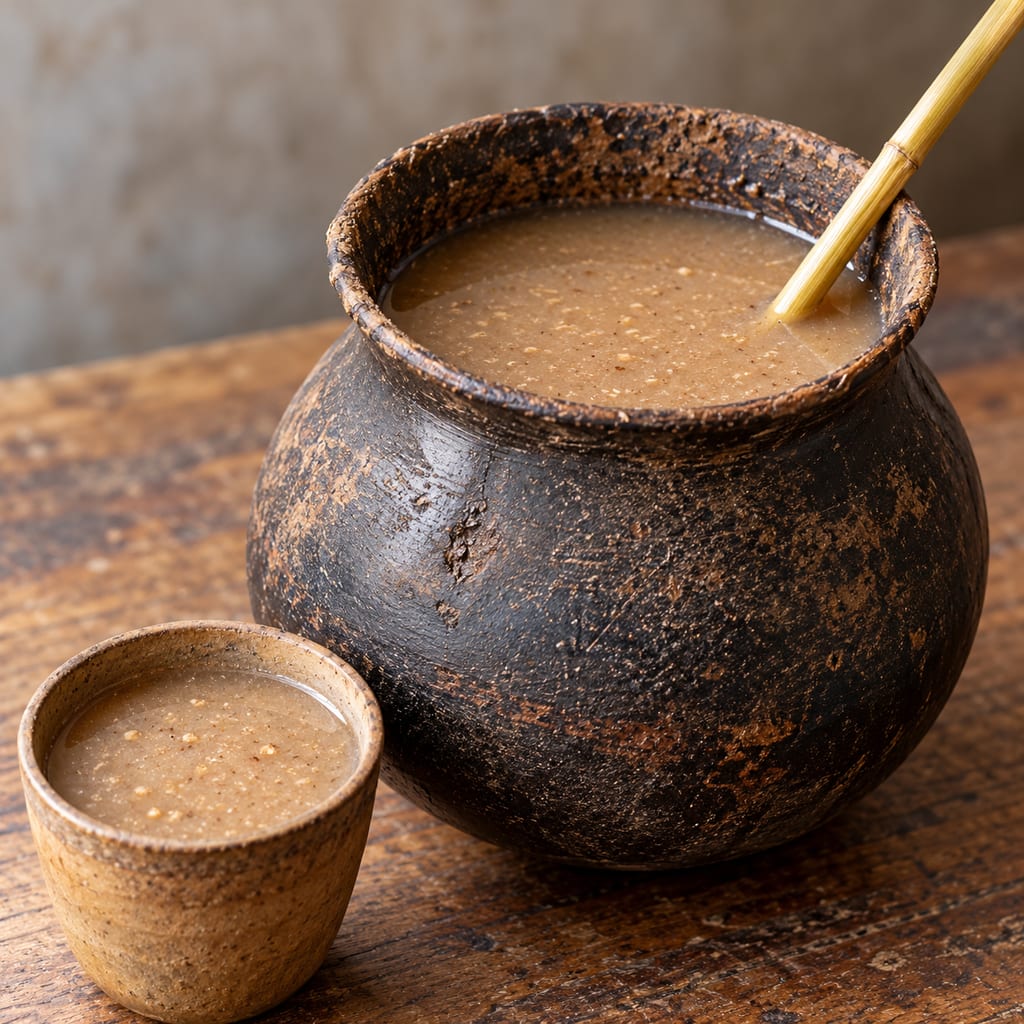
Luhya busaa with roasted maize and finger-millet malt
An opaque Kenyan maize beer: fermented maize paste is roasted into tsimbale, then mixed with finger-millet malt called kimera at ten to one and fermented a second time.
 FermenteaWhere food goes to change
Substrates
Finger millet (Eleusine coracana) is a small-grained cereal grown across parts of Africa and Asia. It is milled, cooked, malted and fermented in distinct food traditions.
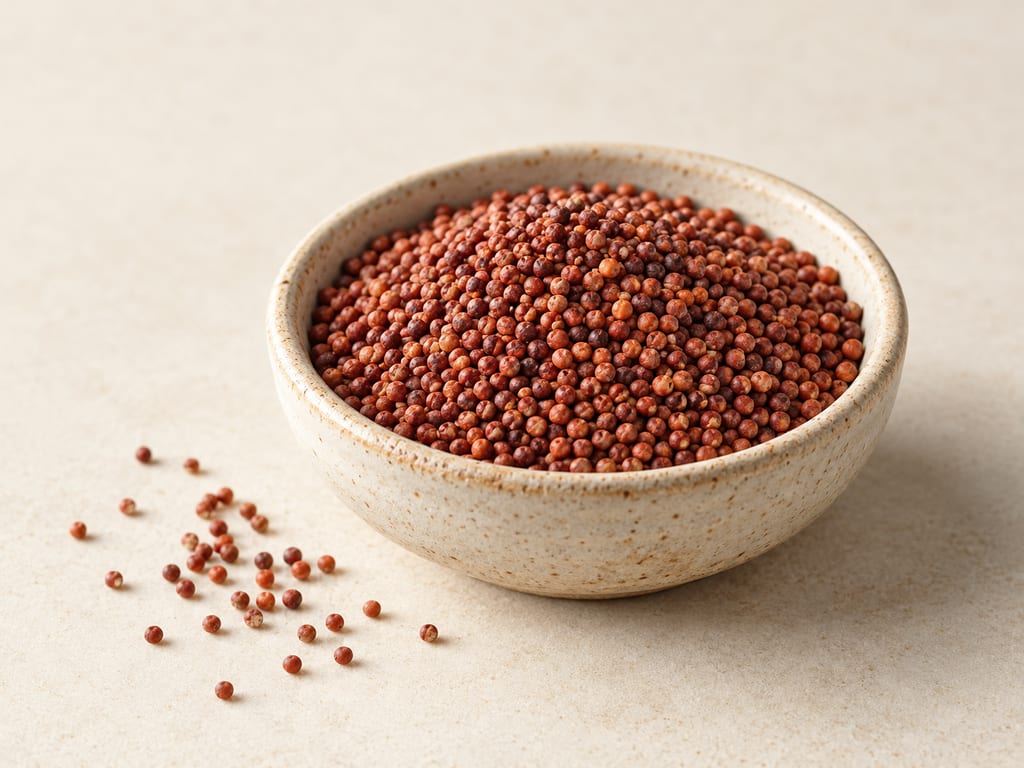
Finger millet is the cereal species Eleusine coracana (L.) Gaertn., a member of the grass family Poaceae. The name describes its mature seed head: several narrow spikes radiate from the top of the stalk. The grain itself is tiny and round. Cultivars and growing conditions produce grains in shades that range from pale to red-brown and dark brown; the ICRISAT genebank describes several cultivated races and subspecies, so one colour or head shape should not be treated as the whole species.
The crop has a distinctive place among small millets because it is grown both for food grain and for malt. Once milled, it becomes a flour used in porridge, flat preparations and other cooked foods. Grain or malt also enters fermented drinks. Stem and leaves have forage uses. These are connected uses of one crop, but they involve different forms and processing stages. Grain used whole, flour and germinated or malted grain are not interchangeable descriptions.
ICRISAT groups cultivated finger millet into four races—Elongata, Plana, Compacta and Vulgaris—and distinguishes them from wild races in the related subspecies africana. This classification is based on inflorescence form, not a scale of culinary quality. Named botanical groupings describe diversity within the species; they do not tell a cook that one race is suitable for every dish or ferment. The source material does not provide a cultivar-by-cultivar sensory guide, so a particular grain's flavour or cooking time should not be inferred from a race name alone.
Common names travel less reliably than botanical names. Ragi is widely used in India; sources also record nachni, kurakkan, rapoko, dagussa and wimbi in different language and regional contexts. ICRISAT's genebank lists a finger-millet accession from Punjab under the local name Kodra. These names are useful search terms, but their scope depends on place and source. This record uses Finger millet as its title and does not register ambiguous names as aliases where another ingredient already owns them.
The most important distinction here is kodo. In the Himalayan beverage name kodo ko jaanr, the supplied atlas and the cited study identify kodo as finger millet, Eleusine coracana. In Indian crop classification, however, kodo millet is Paspalum scrobiculatum. ICAR's small-millet list names these as separate species. The unqualified word kodo can therefore point to different grains; a reader should use the full food name, regional context or scientific name before assuming identity.
ICRISAT describes finger millet as native to the Ethiopian highlands and reports its introduction to India roughly 4,000 years ago. A 2007 ICRISAT review gives a more specific but still approximate account: domestication in eastern Africa, possibly Ethiopia, about 5,000 BCE, followed by introduction to India about 3,000 years ago. These figures are estimates, not a single settled date. The difference between the sources is a reason to preserve the broad history while avoiding a false precision.
Today the crop is cultivated in more than 25 countries across eastern and southern Africa and Asia, according to the genebank. Uganda, India, Nepal and China are named among major producers. FAO's forgotten-foods compendium also identifies east and southern Africa, Kenya's lake region and India as important areas. These statements describe production and use; they do not prove a single birthplace or an uninterrupted shared culinary tradition.
The crop's movement from African cultivation into South Asia is part of a wider history of seed exchange and agricultural adaptation, but the sources consulted here do not trace a single route or identify the people who carried it. It is more accurate to describe long cultivation in India and broad present-day production than to turn an estimated introduction date into a detailed migration narrative. Nor should the names ragi, rapoko or wimbi be treated as evidence that a preparation travelled unchanged between regions.
Finger millet is an annual cereal grass. FAO's crop sheet describes harvesting periods that vary by variety, from short-duration types to long-duration ones; it also records the characteristic small seeds, mature finger-like spikes and cultivation for grain and fodder. The ICRISAT dashboard notes adaptation to higher elevations, including Himalayan cultivation up to 2,300 metres. Such figures describe the cited crop information, not a universal planting guide for every cultivar or location.
The FAO compendium describes a traditional post-harvest sequence: cutting heads, drying them in the sun, threshing and winnowing. It reports very long storage under the conditions referenced by the compendium. That claim should not be converted into an assumed home shelf life: storage depends on grain condition, moisture, pests, packaging and the local environment. For a home cook, use clean, dry grain from a traceable food source, protect it from moisture and pests, and follow the supplier's storage directions. The cited sources do not establish a universal household duration or a validated moisture limit.
ICRISAT describes finger millet as adaptable across elevations and reports growth in the Himalaya; FAO's crop resources also place it in tropical arid and semi-arid settings. These conditions help explain why the crop is important in diverse farming environments, but do not make it a crop that needs no water or care. FAO lists pests and diseases affecting production, including birds and grain or head diseases. Those are field concerns, distinct from the storage and food-safety questions faced after harvest.
The tiny seeds and clustered heads shape post-harvest work: heads are cut, dried, threshed and winnowed to separate grain from the plant. Milling then determines whether the cook handles whole grain or flour. A consumer buying flour cannot use the whole-grain appearance to judge it, and a recipe calling for malt requires germinated grain rather than an arbitrary substitute. The sources document these forms and operations but do not establish a single grade system or universal quality test for retail grain.
Whole grain supplies starch and other grain constituents; milling changes its particle size and makes flour available for porridges and doughs. Germination changes the grain's enzyme activity. In the East African food review, germinated finger millet is described as contributing amylase activity that helps convert starch into fermentable sugars in a cereal beverage. This is a process role, not a claim that every finger-millet ferment uses malt or follows the same sequence.
The grain can be fermented in more than one way, depending on the local food. In uji, finger millet flour may be used alone or blended with other cereal or cassava flours; the review describes a flour-and-water slurry that ferments before it is cooked. In some preparations, malting supplies enzymes; in others, spontaneous fermentation or a retained starter contributes microorganisms. The flour, water, starter and heat stages must be understood from the particular recipe rather than combined into a generic method.
Studies of fermented finger millet report microbial and chemical changes, including acidification in their specific experimental batches. Those findings explain why souring can develop in some preparations, but they do not establish a safe process for an unmeasured household batch. Fermentation history, ingredients, heat treatment and handling are recipe-specific. A sour smell, bubbles or taste cannot verify safety.
Starch is the principal grain reserve relevant to many cereal fermentations. In a germinated grain, enzymes formed during sprouting can make some of that starch available as smaller sugars; the uji and beverage literature specifically discusses finger millet malt as an amylase source. Microorganisms then act on available sugars according to the process and community involved. In a flour slurry, physical breakdown, enzyme activity and microbial growth can overlap, which is why a paper's measured acidity or alcohol content belongs to its own formulation, temperature and sampling schedule rather than to the ingredient in isolation.
A cooked grain or porridge may also be fermented as one step in a longer food sequence. Cooking changes the substrate and handling conditions; adding a starter or relying on spontaneous inoculation changes the microbial source; subsequent dilution or reheating changes the product served. The local names help identify the food, but they are not enough to reconstruct a recipe. For example, the served liquid of kodo ko jaanr is drawn from fermented grain with warm water, while the grain mass itself is a different material. Reporting one measured composition as if it described both would blur those stages.
In parts of southern India, ragi or finger millet flour is cooked into porridges and firm foods; FAO documents porridge and ugali as examples of cooked grain use, while an Indian review identifies ambali as a finger-millet-based fermented preparation associated with Karnataka and Tamil Nadu. The examples belong to different cuisines and should not be reduced to one standard preparation.
In East Africa, finger millet appears in both everyday cooked foods and fermented drinks. The East African review names uji, a fermented cereal porridge that can include finger millet, and Mbege, a banana-and-finger-millet beer associated with northeastern Tanzania. Zimbabwean research distinguishes masvusvu, a sweet preparation made from malted finger millet, from mangisi, its subsequent fermented drink. The names describe related but separate stages, not interchangeable names for the same product.
In the eastern Himalaya, kodo ko jaanr is made from finger millet. The supplied atlas summarizes a study of forty samples from Darjeeling and Sikkim that found yeasts and lactic acid bacteria. It distinguishes the fermented grain from the liquid drawn out when warm water is added in a tongba vessel and drunk through a straw. That evidence supports a regional association, not a universal formulation for all communities or a measured alcohol level for every serving.
Cooking use extends beyond fermentation. FAO records grain ground into flour for porridge and ugali, while finger millet is also used in foods for young children in some settings. Such examples identify food roles rather than making a nutrition or medical claim. Preparation, age suitability, texture and composition vary by flour, recipe and household; none can be resolved by the ingredient name alone.
Some uses combine the grain with other substrates. Mbege joins banana and finger millet; its behavior is not a property of finger millet alone. Uji can use a blend of cereals or cassava, so the fermentation may reflect several flours and a local process. In mangisi, malting is a distinct preparatory stage before fermentation; in Himalayan kodo ko jaanr, the grain and serving liquid are distinguished. These examples show why ingredient records should link readers to the named preparation pages rather than collapsing several processes into a broad instruction to ferment millet. In a documented Luhya Busaa recipe, finger millet is germinated, sun-dried and milled as kimera malt before being combined with roasted maize; this is a malted form of the grain, not a raw-grain ingredient or a synonym for the grain itself.
Finger millet is sold as whole grain and flour, and some food traditions use sprouted or malted grain. The form matters: whole grain needs a different cooking treatment from flour, while malted grain plays an enzyme role in recipes that call for it. Buy the form specified by a recipe and do not substitute kodo millet (Paspalum scrobiculatum) merely because a label uses the word kodo.
The sources support common home uses such as cooking flour into porridge or other foods, but they do not provide one cross-regional preparation method, a universal soaking duration, or a single fermentation schedule for finger millet. Follow a source-backed recipe for the named food. Keep uncooked grain and flour dry and protected from pests; once cooked or fermented, use the process's own handling instructions. The research reviewed here does not establish one storage limit for every preparation. No claim about smell, taste or visible activity can establish that a ferment is safe.
Check the ingredient list and regional name on a package when shopping. If a recipe says finger millet, the botanical identity is Eleusine coracana; if the package says kodo millet, confirm whether it means the South Asian cereal Paspalum scrobiculatum. A local source may use kodo for finger millet in the name of a Himalayan preparation, but that does not make the two crop species interchangeable in a general shopping list.
Whole grain, stone-ground or roller-milled flour, and malted grain can behave differently in cooking. A flour-based porridge disperses quickly into water compared with intact seed, while germination changes the role of grain in a process that relies on its enzymes. These observations explain why process-specific instructions matter; they are not a universal formula or a guarantee about the outcome. Use a documented recipe for each dish and keep its stages intact rather than borrowing times or temperatures from a different millet beverage.
FSSAI guidance describes millets as not containing gluten, and the Celiac Disease Foundation lists millet among naturally gluten-free grains. This applies to the grain itself; it does not certify a particular flour, malt or packaged product. Cross-contact with wheat, barley or rye can occur during harvesting, milling, storage or packing. Anyone who must avoid gluten should use a product with suitable gluten-free labeling and handling information rather than relying on the crop name alone.
This page treats finger millet as a raw agricultural ingredient, not as a method for making one fermented product. The studies cited for uji, Mbege, mangisi and kodo ko jaanr concern different recipes and places. Their measurements and microbial findings belong to those batches and do not become general process limits for grain or home fermentation.
The available sources support a broad history, production regions, cooked uses, malted-grain roles and several named ferments. They do not settle a single domestication date, a complete list of local names, a universal variety profile, or a household storage life. More precise statements should be attached to a named cultivar, food tradition or inspected process source.
ICRISAT sources place domestication in eastern Africa, possibly Ethiopia; estimates differ and do not identify a precise locality.
Sources identify the Ethiopian highlands as a likely native region; no locality is established here.
Sources document long cultivation and current food use; this is not a claim of origin.
Named among major producers in the ICRISAT genebank dashboard.
The crop is cultivated in Nepal; the cited regional study's sampled locations are Darjeeling and Sikkim, India.
Named among major producers by the ICRISAT genebank dashboard.
The cited research documents malted finger millet in masvusvu and mangisi.
The review associates finger millet with Mbege in northeastern Tanzania.
An opaque Kenyan maize beer: fermented maize paste is roasted into tsimbale, then mixed with finger-millet malt called kimera at ten to one and fermented a second time.
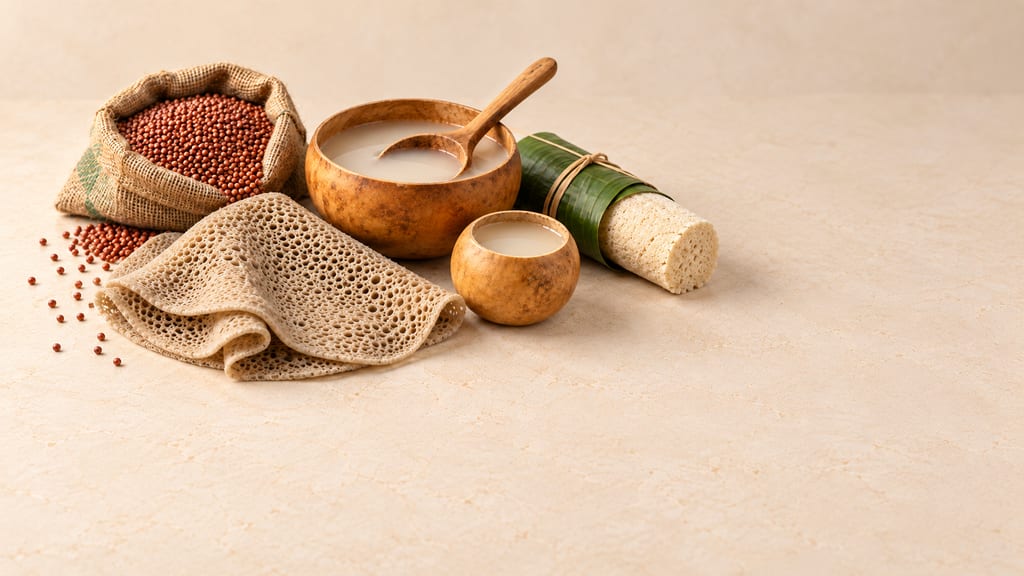
From sour breads and milk to savoury seeds, cassava staples and living beers, African fermentation follows the crop, the community and the work of transformation.
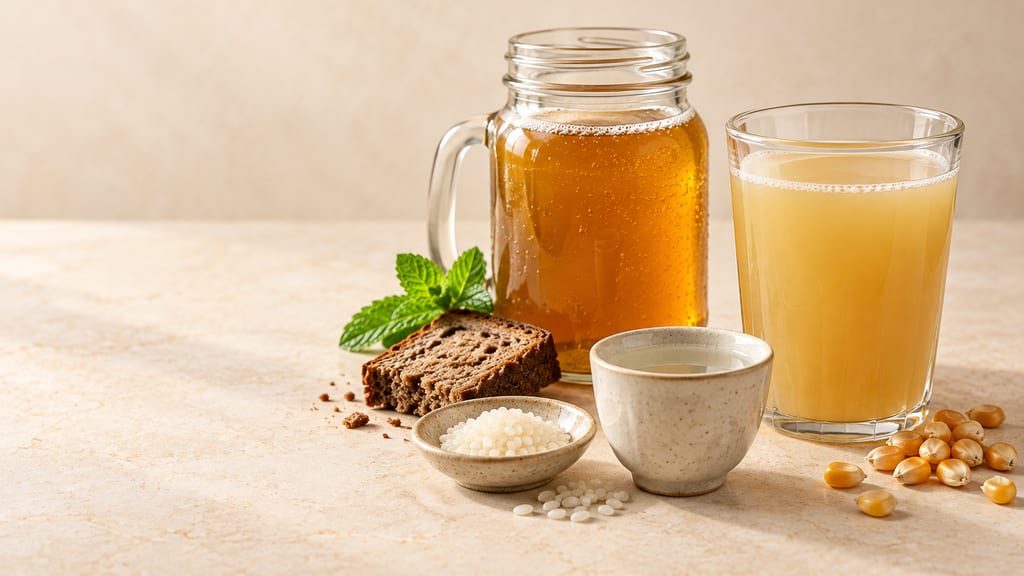
People kept, traded and steered living ferments for thousands of years before anyone saw a yeast cell. This is that history, region by region, and a guide to what a yeast strain is today.
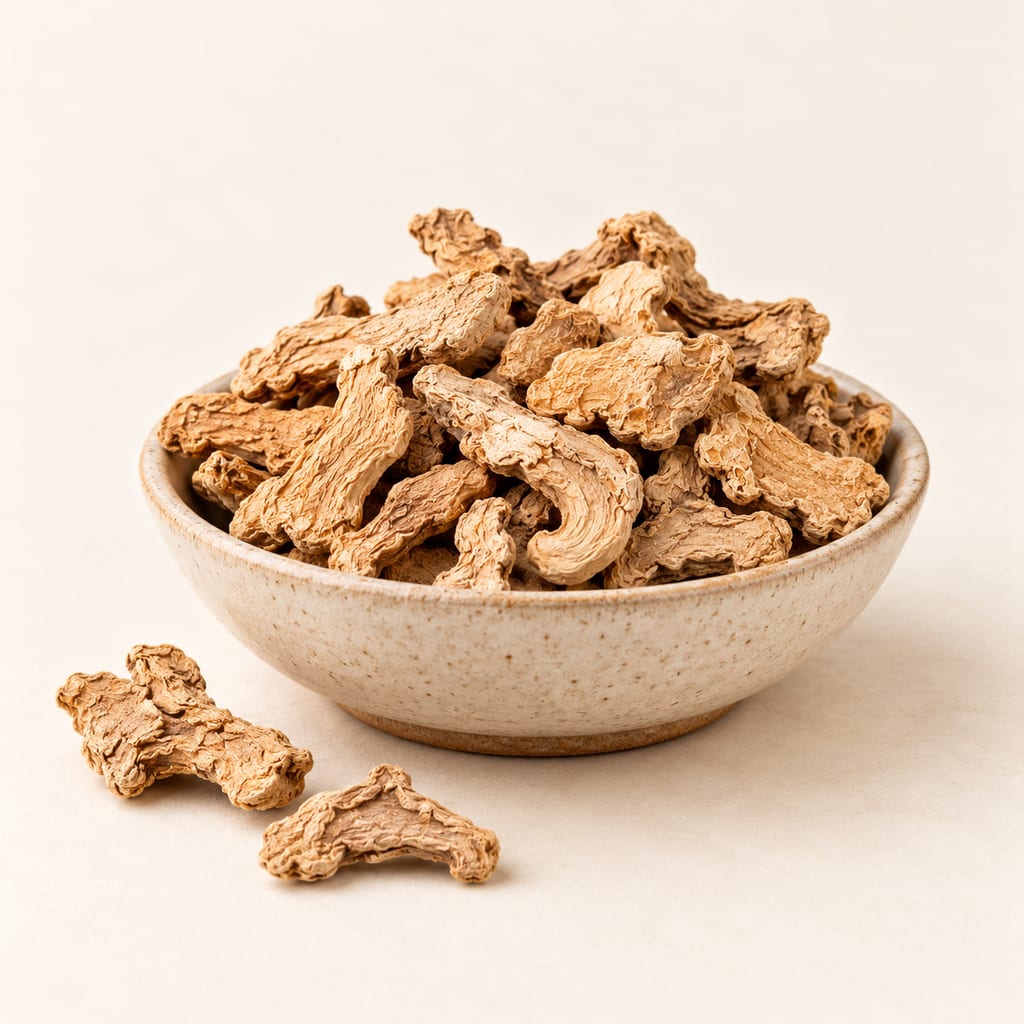
Dried ginger is the mature, dried rhizome of Zingiber officinale; its warm flavor and whole, sliced or ground forms serve different kinds of cooking.
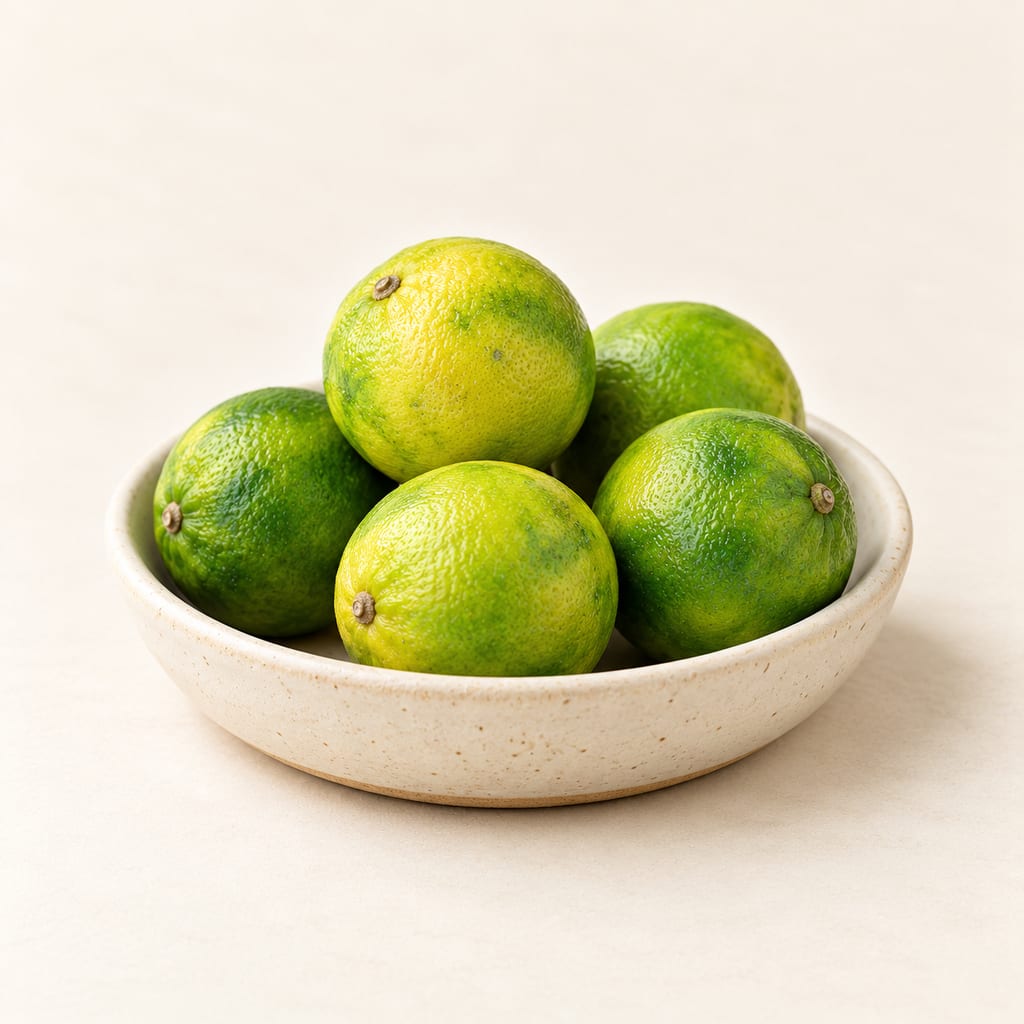
Lime brings sour juice, fragrant peel and firm rind to fresh food and preserved condiments; the fruit named in a recipe may belong to several citrus types.
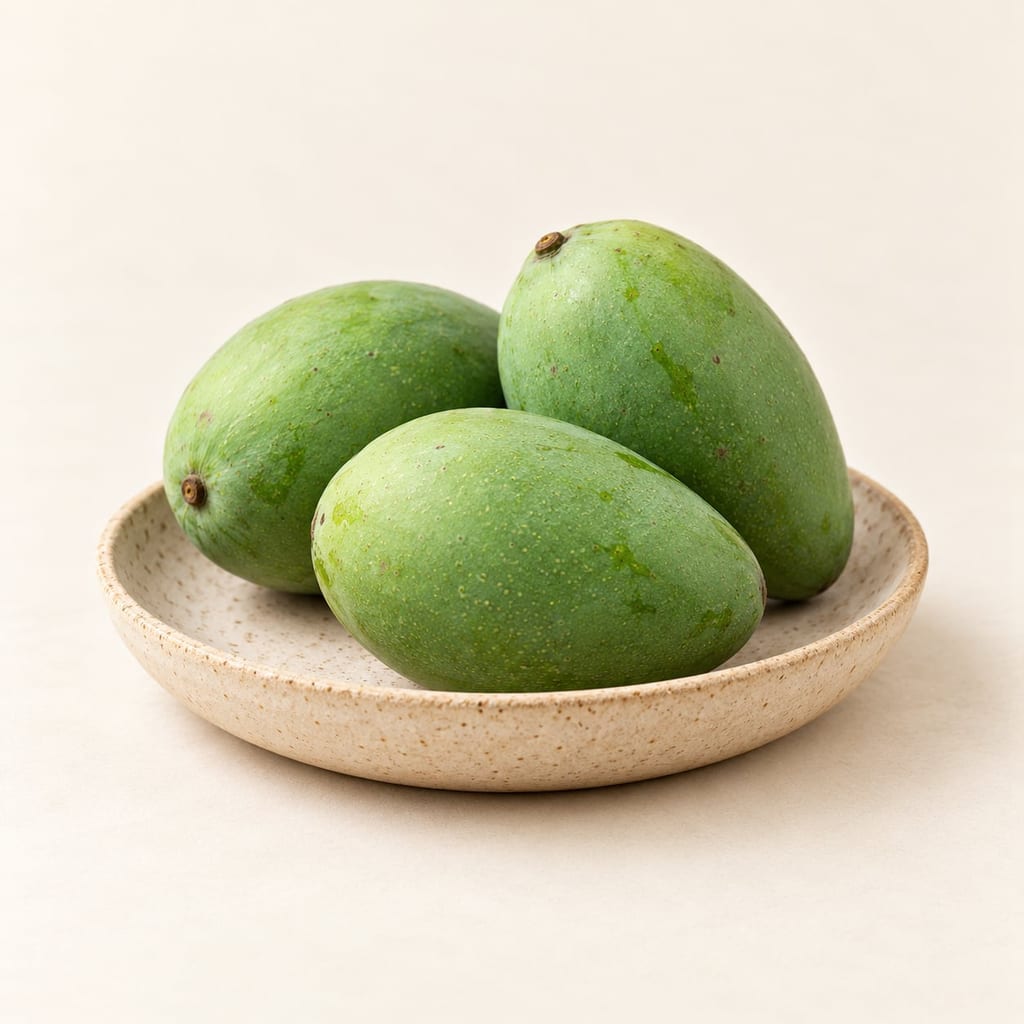
Unripe mango offers sourness and firm texture at several maturity stages, from tender whole pickle fruit to mature-green slices for cooking or drying.
No community contributions have been published for this entry yet.
Sign in to contribute. Published comments and photos are free to read.
ICRISAT GenebankIdentity · History · Cultivation · Geography
Finger millet DashboardAccepted scientific name Eleusine coracana (L.) Gaertn.
ICRISAT reports Ethiopia as native range and introduction to India about 4,000 years ago; the estimate is approximate.
Cultivated in more than 25 countries in eastern and southern Africa and Asia; important producers include Uganda, India, Nepal and China.
Grown in the Himalaya up to 2,300 m; grain stores well.
Cited in: A grain with fingered heads; Domestication and movement; Growing and storing the crop; Limits of the evidence
ICAR–National Academy of Agricultural Research ManagementIdentity
Small MilletsICAR lists finger millet or ragi as Eleusine coracana and kodo millet as Paspalum scrobiculatum.
Cited in: Names need a species check
ICRISATHistory · Cultivation · Uses
Diversity in the small milletsThe review places finger millet domestication in eastern Africa about 5,000 BCE, possibly Ethiopia, and introduction into India about 3,000 years ago; these are estimates that differ from ICRISAT's current dashboard estimate.
The crop is grown for human food in African and South Asian countries.
Cited in: Domestication and movement; Limits of the evidence
Food and Agriculture Organization of the United NationsIdentity · Cultivation · Uses · Storage · Geography
Compendium of Forgotten FoodsFinger millet is Eleusine coracana; the chapter describes foods such as porridge and ugali, grain used in western Kenyan local beer brewing, harvest and post-harvest handling, and long storage.
The compendium places the crop in east and southern Africa, Kenya's lake region and India; its altitude and production statements refer to the cited contexts.
Cited in: A grain with fingered heads; Domestication and movement; Growing and storing the crop; Choosing and preparing it at home
FAO EcoCropIdentity · Cultivation · Uses
View crop: Eleusine coracana ssp. coracanaEcoCrop lists finger millet names including African millet, ragi, kurakkan, nachni, rapoko and dagussa.
Its crop sheet records porridge, malting and beer uses, annual growth, variable harvest durations and fodder uses.
Cited in: A grain with fingered heads; Growing and storing the crop; Choosing and preparing it at home
Food Science & Nutrition (PMC)Fermentation · Uses · Geography
Eastern African traditional fermented foods and beverages: Advancements, challenges, and perspectives on food technology, nutrition, and safetyThe review describes uji made from whole-milled finger millet among other cereals, and Mbege as a banana and finger-millet beer of northeastern Tanzania.
Its reported Mbege measurements belong to the cited study and batch, not to finger millet generally.
Cited in: What it contributes to a ferment; Foods across regions; Choosing and preparing it at home; Limits of the evidence
PubMedFermentation · Uses
Microbial and biochemical changes in masvusvu and mangisiA Zimbabwe study distinguishes the sweet preparation masvusvu from the fermented drink mangisi; malted finger millet is used in the sequence.
The atlas reports the experiment's pH measurements as primary-study results, not universal targets.
Cited in: What it contributes to a ferment; Foods across regions
Food MicrobiologyFermentation · Geography
Product characterization of kodo ko jaanr: fermented finger millet beverage of the HimalayasA study of forty samples from Darjeeling and Sikkim reports yeast and lactic acid bacteria in kodo ko jaanr.
The supplied research atlas distinguishes fermented grain from the warm-water extract drunk through a tongba vessel.
Cited in: Names need a species check; Foods across regions; Limits of the evidence
Foods (PMC)Fermentation · Handling
Varietal and processing influence on nutritional and phytochemical properties of finger millet: A reviewThe review reports research on lactic fermentation of finger millet flour and changes in acidity and microbial populations under studied conditions.
Those findings describe particular experiments and do not establish a home fermentation safety limit.
Cited in: What it contributes to a ferment
Journal of Ethnic Foods (PMC)Uses · Geography
Unlocking the health potential of fermented foods: insights from traditional Indian dietsThe review identifies ambali as a finger-millet-based fermented product consumed in southern Indian states including Karnataka and Tamil Nadu.
Cited in: Foods across regions
Food Safety and Standards Authority of IndiaDietary context
Millets: the Nutri CerealsFSSAI guidance states millets do not contain gluten; this is a general millet statement.
Cited in: Choosing and preparing it at home
Celiac Disease FoundationDietary context · Handling
Gluten-Free FoodsMillet is listed among naturally gluten-free grains; cross-contact can occur during harvesting and processing, so people avoiding gluten should check that products are tested and labeled.
Cited in: Choosing and preparing it at home
University of Embu RepositoryDocumented use · Preparation
The Ark of Taste in Kenya, 2nd edition; entry N. 64 BusaaThe Luhya Busaa entry names finger millet malt called kimera, prepared by sprouting, sun-drying and grinding before combination with roasted maize.
Cited in: Foods across regions