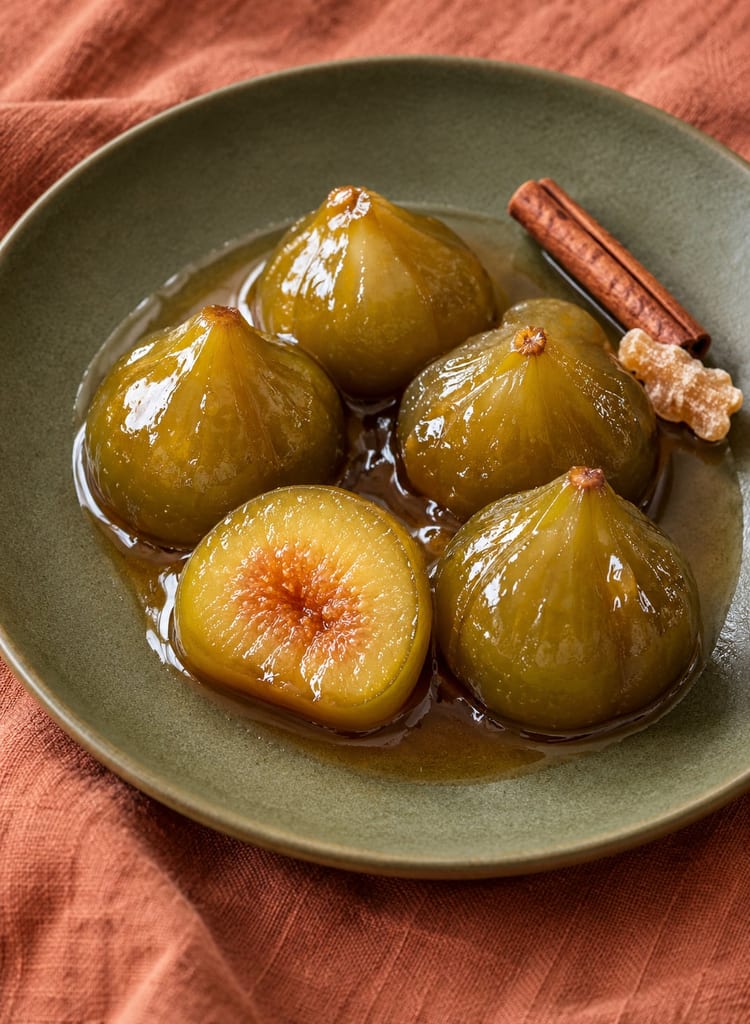
Green-fig konfyt
Whole unripe figs are softened and cooked in cinnamon and ginger syrup as a refrigerator-only South African konfyt; this method does not provide a shelf-stable canning process.
 FermenteaWhere food goes to change
Spices and aromatics
Dried ginger is the mature, dried rhizome of Zingiber officinale; its warm flavor and whole, sliced or ground forms serve different kinds of cooking.
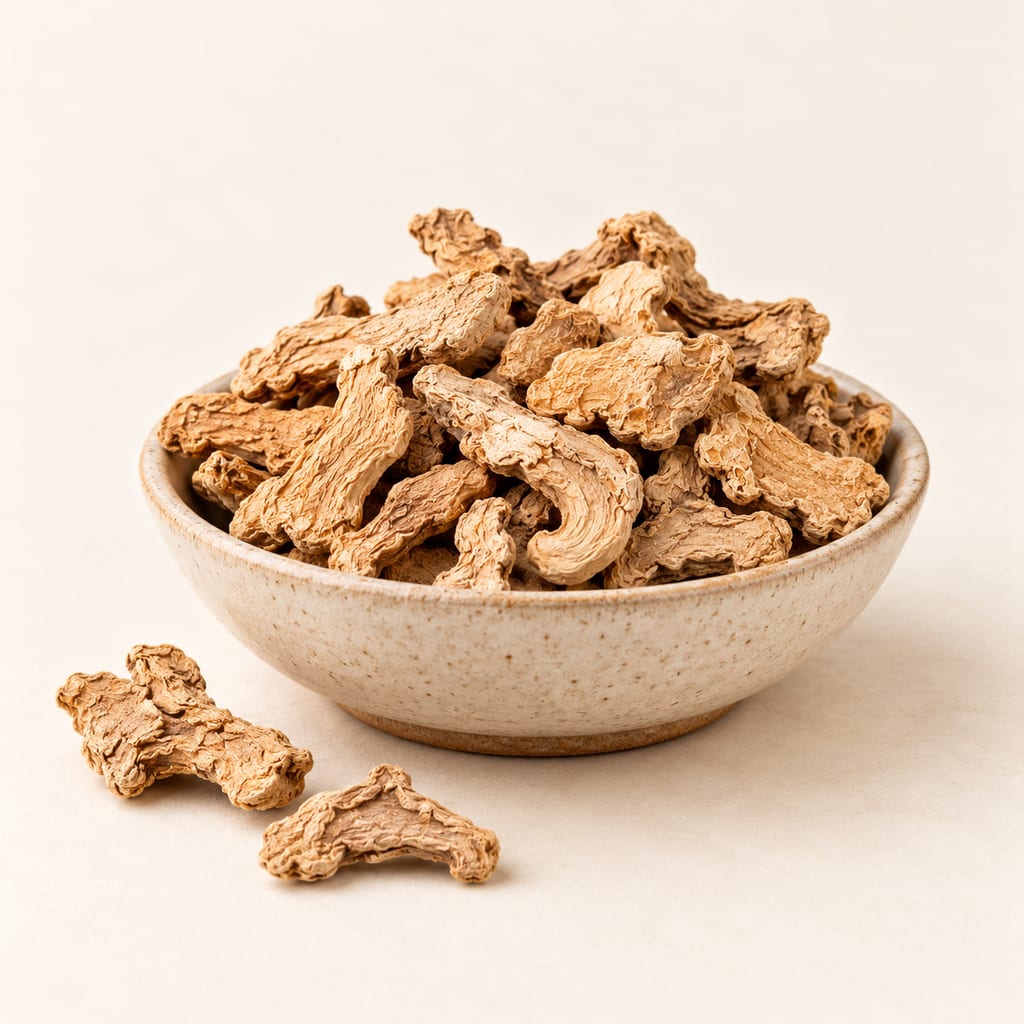
Dried ginger is one of the world’s most recognizable warm spices, yet its beginnings remain partly hidden. The plant, Zingiber officinale, is cultivated for its rhizome: a thick, branching underground stem that stores the plant’s reserves. It has been moved and replanted by people for so long that botanists cannot point to a single confirmed place of domestication. The cultivated plant is not known in the wild, and it is propagated from pieces of rhizome rather than raised true to type from seed. South and Southeast Asia form the broad setting of its early cultivation; India is a plausible origin, but the evidence does not settle the question.
That uncertainty gives ginger a history of routes more than a tidy origin story. Long before it became a familiar baking spice in northern Europe, it was already moving through networks that joined Asian growing regions to ports around the Red Sea and the Mediterranean. In the first century CE, the Roman author Pliny the Elder described ginger as a small plant with a white root, cultivated in Arabia and the region he called the Troglodytes’ country. He noted its pungency, its tendency to decay, and its high price. His account is a record of what Roman readers were told about ginger’s supply and qualities; it does not establish those places as the plant’s botanical homeland.
In the centuries that followed, merchants and migrants carried ginger farther. Arabian trade routes brought this eastern spice westward. It appeared in European commerce by the medieval period, when ginger was among the most familiar imported seasonings. In Britain, it was used in savory dishes as well as sweet preparations; later, as tastes shifted away from heavily spiced savory cooking, dried ginger remained a conspicuous flavor in baked sweets. In the sixteenth century, Iberian empires transported ginger to West Africa and onward to Mexico and Jamaica, extending its cultivation and use across the Atlantic. These movements were neither a single voyage nor a simple transfer from one cuisine to another. Each new setting gave ginger different companions, forms, and meanings.
Drying made the spice easier to store and trade than a fresh rhizome, though it could not preserve it unchanged forever. The dry form was valuable precisely because it concentrated ginger’s force into a durable, transportable ingredient. It could travel as a whole rhizome or piece, be grated when needed, or be ground into a powder that was ready for a cook’s spice box. Its path through food history reflects that usefulness: some ingredients arrive fresh and are used close to where they grow; dried ginger became a spice that could connect kitchens separated by long distances.
Ginger’s harvest is shaped by the intended use. In Indian production guidance, rhizomes for fresh vegetables and preparations such as preserves, candy, soft drinks, pickles, and alcoholic drinks may be lifted earlier than rhizomes intended for drying, oil, or oleoresin. The later harvest allows the rhizome to mature further. Maturity affects fibre, volatile oil, and pungency, so the same species can produce materially different culinary ingredients depending on when it is lifted and what the grower or processor wants from it.
After lifting, clumps are cleaned of soil and dry roots. For many dried products, the mature rhizomes are scraped or peeled before they are washed and dried. Peeling is more than a cosmetic step: removing the scaly outer skin helps moisture escape. The work must be shallow. The aromatic oil-bearing cells lie just beneath the surface, and deep knife cuts or excessive scraping can damage them. This is one reason dried gingers do not all look alike. Some are rough-peeled, with skin remaining in folds and creases; others are clean-peeled. Some products retain the skin. The form reflects a trade practice and a processing choice, not necessarily a difference in species.
Sun drying remains a familiar method, with rhizomes spread so moisture can leave the plant tissue. Other producers use solar tunnels or mechanical driers. A processing study that compared whole ginger with differently sized slices found that slicing shortened drying time, while smaller slices and higher drying temperatures were associated in that experiment with lower retention of measured essential oil, oleoresin, and pungent compounds. Whole rhizomes dried in sun or in a solar tunnel retained the most oil and oleoresin among the tested samples. The result illustrates a practical tension: cutting exposes more surface and speeds drying, but exposure and heat can also carry away or alter some of the compounds that give ginger its aroma and flavor. A trial on one crop and set of driers is not a universal ranking of methods.
Commercial dried ginger appears whole, split, cut into chunks, sliced, or ground. The Codex standard for dried ginger recognizes whole rhizomes, pieces—including cut, diced, or sliced styles—and ground or powdered ginger. Each form behaves differently in a kitchen. A whole piece can be grated or simmered to give a slower, more controlled infusion. Slices can steep in liquid or flavor a long-cooked dish, then be lifted out. Powder disperses quickly through dough, batter, spice mixtures, or a sauce. Its fine particles also expose more aroma to air and moisture, so a closed container matters. These are useful tendencies, not promises about potency: cultivar, maturity, peeling, drying, storage, and age all affect the result.
Bleached ginger is another distinct market form. The Indian Spices Board describes it as scraped fresh ginger dipped repeatedly in a slurry of slaked lime until the rhizomes become uniformly pale. It is not a separate pale variety, and it should not be confused with ordinary drying. Trade preferences vary: some buyers want bleached ginger, while others prefer unbleached product. The point of the distinction is practical as well as visual. Processing choices influence appearance and mineral content, and they can determine whether a product meets the preferences or limits of a particular market.
The flavor of ginger comes from two broad chemical groups. Volatile compounds evaporate readily and reach the nose as aroma; nonvolatile compounds remain in the food and contribute pungency and taste. Ginger’s volatile oil contains many terpene compounds, including zingiberene and related molecules that help create its characteristic spicy, woody, citrusy, and floral complexity. Its pungency comes chiefly from nonvolatile phenolic compounds called gingerols and their relatives.
Fresh ginger tends to taste bright, juicy, and sharp, with green, herbal, floral, and citrus notes. Drying changes the balance. Some of the more delicate volatile aromas are lost or reshaped as water leaves the rhizome. The resulting spice tastes more concentrated and warm, with woody, earthy, and sweet-spicy notes that sit comfortably in baked foods and long-cooked dishes. In a controlled hot-air-drying study, sensory assessors described fresh ginger as pungent, floral, grassy, and herbal; as drying progressed, those qualities declined while roasted and woody notes became more prominent. That work tracked one ginger source under one drying process, so it is best read as an explanation of how drying can move flavor, not as a universal tasting note for every bag of ginger.
The pungent compounds also shift. Fresh rhizome commonly contains 6-gingerol along with other gingerols. Heat, drying, acidity, and time can dehydrate gingerols to form shogaols, related compounds with their own pungent character. This change helps explain why fresh and dry ginger are not interchangeable even when both come from the same plant. It does not mean all gingerols convert, or that every dried ginger is hotter. The chemistry depends on temperature, duration, growing conditions, and the way a sample is measured. Studies of dried ginger do not all show the same direction of change in every measured compound; some report reduced gingerols and shogaols as drying conditions become more intense, while others find shogaol formation under particular treatments. The reliable kitchen-level conclusion is that drying alters the aromatic and pungent profile, not that it creates a predictable medicinal dose or a fixed degree of heat.
This chemistry also explains why a cook chooses one form over another. Powder spreads pungency through a whole dough or mixture and begins releasing aroma as soon as it is stirred in. A piece simmered in a broth or syrup gives flavor more gradually and can be removed when the desired infusion is reached. Fresh ginger brings moisture and livelier top notes to a stir-fry, dressing, or paste. Ginger juice, expressed from fresh rhizome, is a separate ingredient again: it contributes liquid as well as ginger flavor. A recipe written for dried ground ginger, fresh grated ginger, and ginger juice is asking for three different things.
Dried ginger’s best-known modern associations are sweet: gingerbread, biscuits, cakes, puddings, and spice mixtures. In dough, its dry, finely divided form makes it easy to distribute with flour and sugar. It can stand alongside cinnamon, cloves, nutmeg, or pepper, giving a warming note that is both aromatic and sharp. In syrups and fruit preserves, whole or cut ginger lends a slower, more rounded fragrance. With beans, lentils, or vegetables, powdered ginger can contribute warmth without the moisture that fresh root would add. In broths, braises, pickles, chutneys, and drinks, a piece or slice can infuse liquid while remaining easy to remove.
Ginger’s food history reminds us that it was not always confined to cakes. The medieval and early modern European kitchen used it in savory cooking as well as sweets. In many Asian cuisines, ginger remains a savory seasoning, often paired with alliums, soy, chiles, or other aromatic ingredients. In drinks, it can be steeped or simmered for tea-like infusions and used in ginger beer and other beverages. Preserved or pickled ginger occupies a different place again: the rhizome is held in a liquid that contributes acidity, sweetness, or salt, so it should not be mistaken for dried ginger simply because both products can be stored.
The choice of form should follow the job. If the cook wants ginger evenly present in a cake or dry spice blend, ground ginger is direct and convenient. If a preserve should carry fragrance without visible powder, pieces in a syrup are easier to strain or lift out. If a dish relies on the bright bite and moisture of freshly grated ginger, dried powder may give a warmer, more integrated result instead of a true replica. There is no universal substitution ratio implied by the ingredient name alone; a sound substitution depends on the recipe and on whether it needs aroma, moisture, pungency, or a visible texture.
A specific South African use makes the difference between dried and fresh ginger especially clear. Wines of South Africa publishes a green-fig konfyt recipe credited to Cass Abrahams and her book Cass Abrahams Cooks Cape Malay: Food from Africa. It seasons the syrup for 500 grams of green figs with cinnamon and three pieces of dried ginger. The figs are peeled and cross-cut, soaked in a slaked-lime bath, rinsed, simmered until tender, then cooked slowly with the spiced syrup until they are shiny. The preserve is bottled hot in sterilised jars.
Here dried ginger is part of the syrup’s perfume: warming, aromatic, and suited to a long simmer around fruit. The figs supply their own texture and character, while the syrup carries cinnamon and ginger through the preserve. The ginger does not perform the preserve’s setting or preservation work; it is a flavoring. Keeping that distinction clear helps explain the ingredient without overstating its role.
WOSA also publishes another green-fig preserve in its Cape Wine Braai Masters collection, but that is a different preparation. It uses optional fresh ginger with star anise and allspice and gives its own sequence and proportions. The two examples show that ginger is a flexible seasoning in fig preserves, not that every konfyt recipe uses it or that fresh and dried forms are the same choice. The WOSA recipe credits are useful evidence for these published preparations; they do not prove that one formula is ancient, universal, or definitive for South Africa.
Green-fig konfyt has a place on a South African table beyond the preserving pot. WOSA’s braai collection describes preserved fruit among the accompaniments on a cheese platter, alongside local cheeses, olives, chutneys, jams, pickles, and relishes. Sweet, syrupy fig can meet the savoriness of cheese and the sharper notes of other preserves. In that setting, ginger gives the fig a fragrant warmth that helps it hold its own among several strongly flavored foods. It is one example of dried ginger’s broader ability to season fruit, not a claim that all households serve konfyt the same way.
Drying reduces the water in ginger and makes it less perishable than a fresh rhizome, but it does not make the spice immune to deterioration. Its aroma fades with prolonged storage; exposure to moisture can soften the product and encourage mould. Keep dried ginger closed and dry, away from steam, damp cupboards, heat, and contamination. Ground ginger benefits especially from a well-sealed container because its fine particles expose more surface to the air. Whole pieces hold their aroma differently, though they too lose character with time.
Dry spices are not sterile. Ginger dried under poor conditions can support mould growth if it becomes damp, and some moulds can produce mycotoxins. Drying and sound storage are important controls, but neither guarantees that every pathogen or toxin has been eliminated. Buy from sources that handle spices properly, keep the package protected from moisture, and discard ginger that is damp, visibly mouldy, musty, or rancid. Those signs are reasons to reject it; a normal appearance or pleasant smell cannot certify safety. A universal storage life cannot be assigned from the ingredient name alone because package, processing, and storage conditions differ.
Dried ginger is thus more than fresh ginger with the water removed. Harvest maturity, scraping, drying, and storage shape its aroma; the same processing that makes it portable also alters the balance of pungent and volatile compounds. Its forms give cooks different ways to release that flavor, from a quiet infusion in fig syrup to an even layer of warmth in a cake. The long journey of this rhizome is still visible in the pantry: an ingredient that can be carried far, stored in small space, and made at home into something fresh ginger cannot quite reproduce.
Documented use in this place; not a claim of origin.
Documented use in this place; not a claim of origin.
Whole unripe figs are softened and cooked in cinnamon and ginger syrup as a refrigerator-only South African konfyt; this method does not provide a shelf-stable canning process.
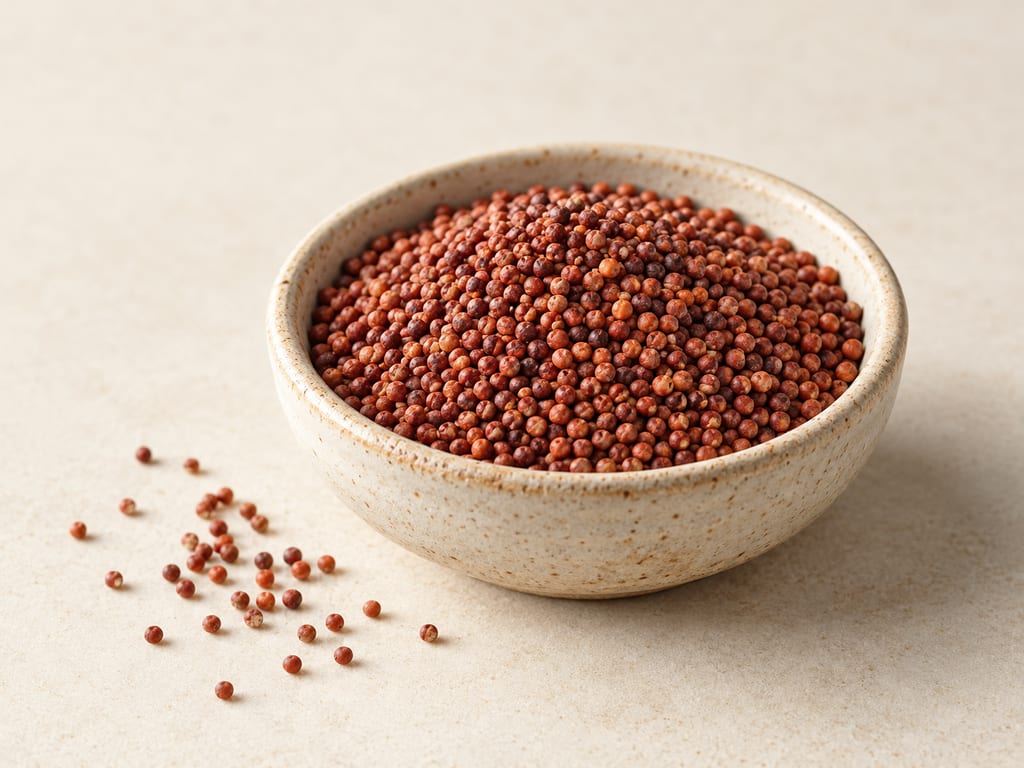
Finger millet (Eleusine coracana) is a small-grained cereal grown across parts of Africa and Asia. It is milled, cooked, malted and fermented in distinct food traditions.
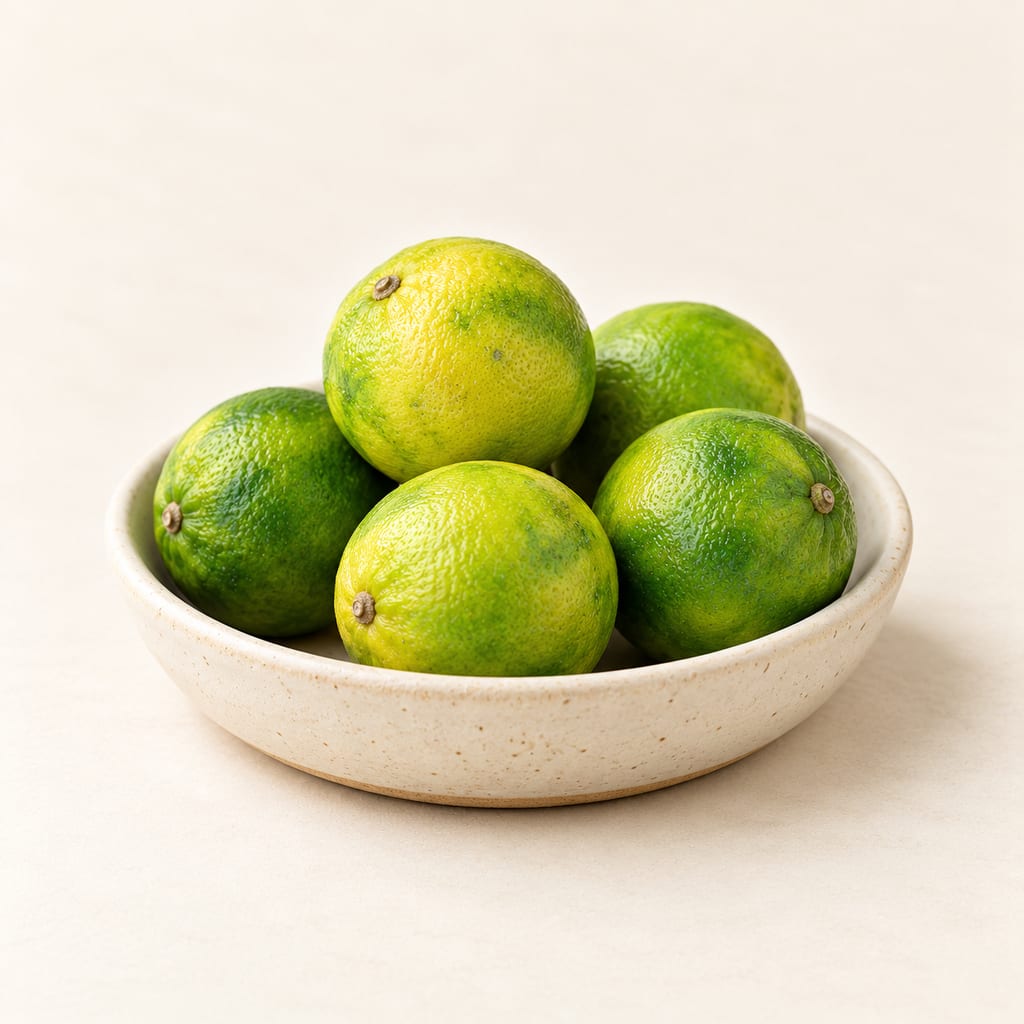
Lime brings sour juice, fragrant peel and firm rind to fresh food and preserved condiments; the fruit named in a recipe may belong to several citrus types.
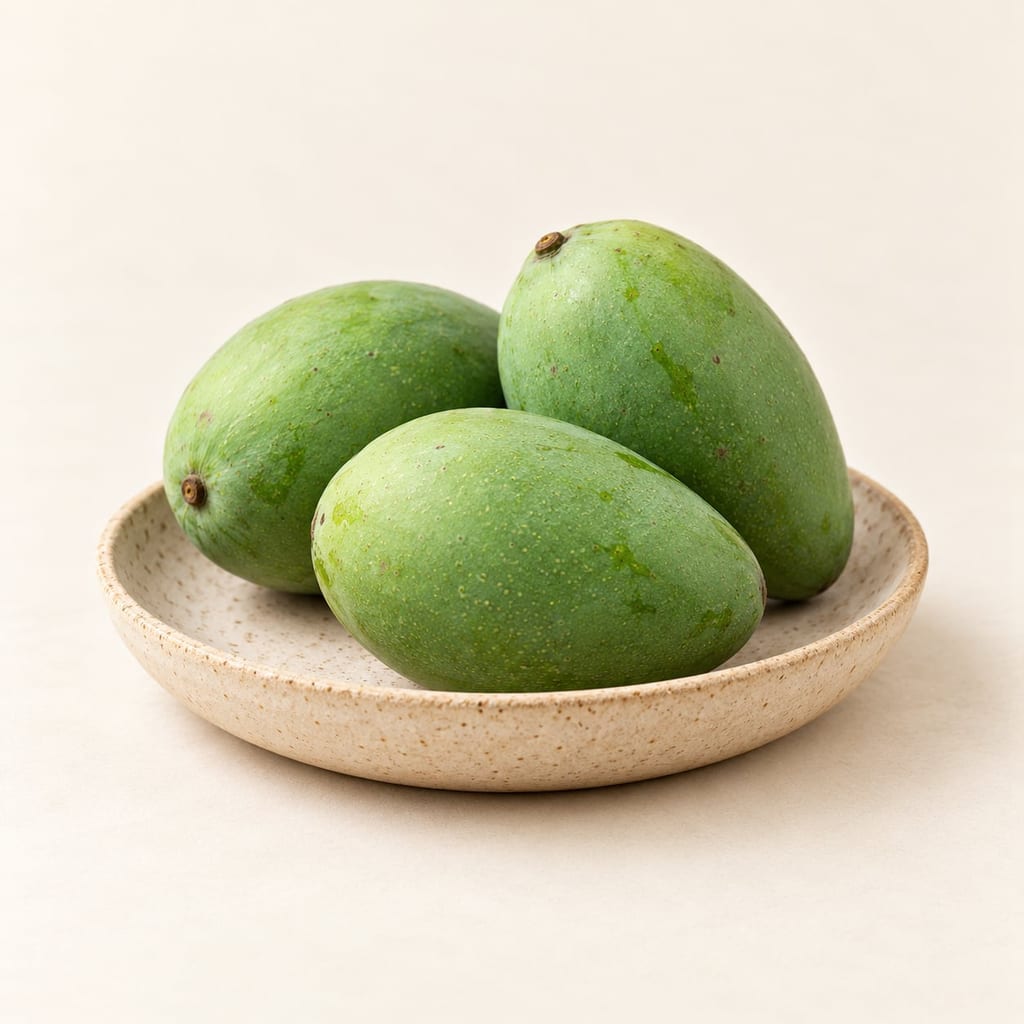
Unripe mango offers sourness and firm texture at several maturity stages, from tender whole pickle fruit to mature-green slices for cooking or drying.
No community contributions have been published for this entry yet.
Sign in to contribute. Published comments and photos are free to read.
Journal of Food Science and Technology, 51, 3190–3198Editorial
Quality of dry ginger (Zingiber officinale) by different drying methodsPeer-reviewed experiment comparing whole and sliced ginger and sun, solar tunnel, and tray drying; supports effects of slice size and drying conditions within that study.
Cited in: From underground stem to dried spice
Food Research International, 160, 111646Editorial
Impact of drying and extractions processes on the recovery of gingerols and shogaols, the main bioactive compounds of gingerPeer-reviewed review of how drying, heating, acidity, and extraction conditions affect gingerols, shogaols, and phenolics. Findings about extracts should not be represented as a fixed composition of culinary ginger.
Cited in: Why dried ginger tastes different
International Journal of Gastronomy and Food Science, 33, 100793Editorial
Ginger: The pungent spicePeer-reviewed synthesis supporting broad culinary history, including changing British savory and sweet uses of ginger.
Cited in: A spice with a long journey; A spice for sweet and savory kitchens
Foods, 15(13), 2377Editorial
Characterization of the Flavor Profiles of Fresh and Hot-Air-Dried Ginger (Zingiber officinale Roscoe) by Molecular Sensory SciencePeer-reviewed controlled sensory and volatile study; supports shift from pungent, floral, grassy/herbal toward roasted and woody under its tested hot-air drying conditions.
Cited in: Why dried ginger tastes different
Oxford University Herbaria, Plants 400Editorial
Zingiber officinaleInstitutional synthesis on unknown wild progenitor, vegetative propagation, uncertainty of domestication, plausible South Asian origin, and broad movement into Europe and the Americas.
Cited in: A spice with a long journey
Spices Board IndiaEditorial
Guidelines on quality improvementSupports bleached ginger treatment with slaked-lime slurry, export forms, moisture/mould concern, packaging and damp-protection guidance, and decline of aroma, flavor, and pungency in prolonged storage.
Cited in: From underground stem to dried spice; Keeping its character
ICAR–Indian Institute of Spices ResearchEditorial
Ginger: Production, Processing and Marketing (English booklet)Supports Indian harvest windows by end use; maturity effects on fibre, volatile oil, and pungency; cleaning, peeling/scraping, oil-bearing cells, rough versus clean peeling, and sun drying.
Cited in: From underground stem to dried spice; Why dried ginger tastes different; A spice for sweet and savory kitchens
Wines of South Africa; recipe credited to Cass Abrahams, Cass Abrahams Cooks Cape Malay: Food from AfricaEditorial
Green Fig KonfytDirect evidence for three pieces of dried ginger with cinnamon in the syrup and the recipe’s green-fig preparation. Supports a particular published recipe, not universal or ancient practice.
Cited in: Ginger in South African green-fig konfyt
Pliny the Elder; translation hosted by AttalusEditorial
Natural History, Book 12, section 28Primary historical text for Roman-era description of ginger, reported cultivation geography, pungency, perishability, and price. Geography is an ancient report, not proof of botanical origin.
Cited in: A spice with a long journey
Codex Alimentarius Commission / FAO and WHOEditorial
Standard for Dried Roots, Rhizomes and Bulbs: Dried or Dehydrated Ginger (CXS 343-2021)Official Codex standard, directly inspected; defines dried/dehydrated ginger and recognizes whole, pieces, and ground/powdered forms, with quality and hygiene provisions.
Cited in: From underground stem to dried spice; A spice for sweet and savory kitchens; Keeping its character
Codex Alimentarius Commission / FAO and WHOEditorial
Code of Practice for the Prevention and Reduction of Mycotoxins in Spices (CXC 78-2017)Official Codex code index; supports general spice handling controls against moisture, mould, and mycotoxins across drying, transport, and storage. The essay avoids ginger-specific numeric targets or universal shelf-life claims.
Cited in: Keeping its character
International Organization for StandardizationEditorial
ISO 1003:2025, Spices and condiments — Whole/pieces and ground dried ginger (Zingiber officinale Roscoe) — SpecificationOfficial standard listing confirms scope and storage/transport recommendations; full standard is paywalled.
Cited in: From underground stem to dried spice
Wines of South AfricaEditorial
Cape Wine Braai Masters: Green Fig PreserveSupports a separate green-fig preserve variant using optional fresh ginger with star anise and allspice, plus preserved fruit among cheese-platter accompaniments.
Cited in: Ginger in South African green-fig konfyt