
Apple sauce for goose and pork
Apple sauce for goose and pork is a plain English accompaniment: cooked apples pulped with water, then sweetened with sugar and finished with a little butter.
 FermenteaWhere food goes to change
Chetney sauce, Bengal receipt · Chetney sauce (Modern Cookery for Private Families)
Eliza Acton's Bengal receipt for chetney sauce: stoned raisins and a hard acid fruit pounded with brown sugar, ginger, salt, cayenne and garlic, then thinned with vinegar to the consistence of thick cream.
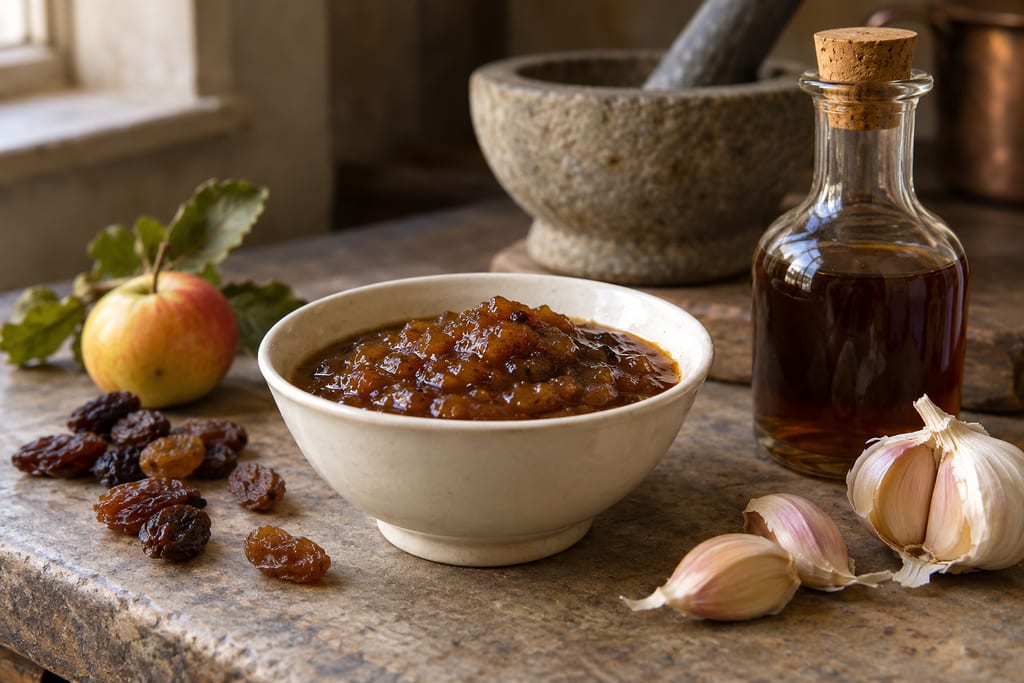
Bengal chetney is Acton's name for a sharp, sweet and hot sauce of raisins and a hard sour fruit, sharpened with vinegar and spiced with ginger, cayenne and garlic. It is one of the chutney-type sauces in the store-sauce chapter of Modern Cookery for Private Families.
The recipe is a British cook's version. Acton does not describe it as an Indian method, and it should not be read as one.
The raisins and the acid fruit are chopped and pounded. The brown sugar, ginger, salt and cayenne are ground separately in a mortar and then worked into the fruit one at a time. Vinegar is added slowly until the sauce has the consistence of thick cream, and the sauce is bottled with the garlic.
The first sentence of the recipe names crab apples or sour apples and unripe bullaces, with a note that any hard acid fruit will do. The mango, which Acton says is used in India, is one of the fruits she lists as an alternative.
Acton gives a second Bengal chetney built on gooseberries, tamarinds, green apples, salt, raisins, brown sugar, ginger, chilies and garlic, with a pint and a half of vinegar and the juice of three large lemons. She also says that ripe red chilies and tomatoes are mixed into the sauce in some versions.
She advises that the sauce keeps better if it is left in gentle heat for a week or two, either beside the fire, in the sun or in a very slow oven, in a jar or in bottles kept well sealed from the air. These are her instructions. This page records them and does not test them.
Acton gives the sauce under the heading Bengal Receipt in Modern Cookery for Private Families. She calls it a favourite oriental sauce compounded in many ways, and says some acid fruit is essential to it. The recipe records a British cookery writer's version of a South Asian style of sauce, not a definitive account of Indian chutney.
Recipe in a British cookery book; it attests Acton's adaptation, not an Indian chutney tradition.
Acton's note says the mango is used for this sauce in India. The recipe itself is not an Indian method.
Apple sauce for goose and pork is a plain English accompaniment: cooked apples pulped with water, then sweetened with sugar and finished with a little butter.
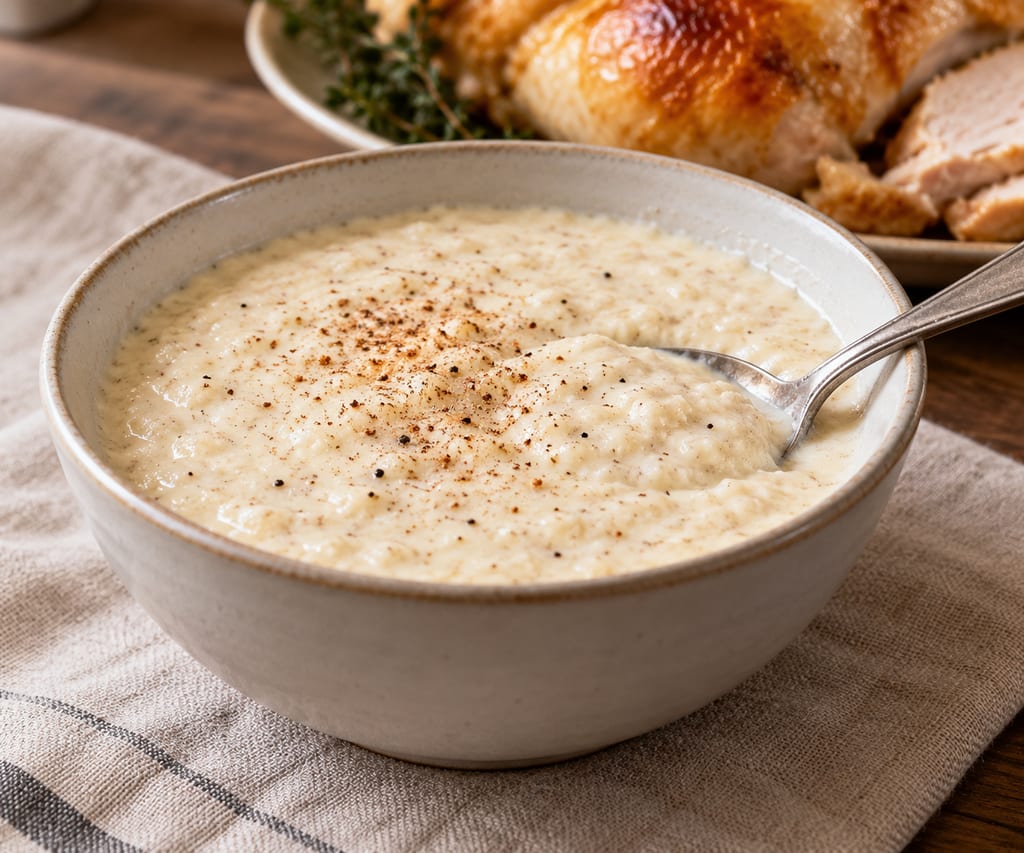
Bread sauce is a British sauce of milk infused with onion, clove and bay, thickened with stale breadcrumbs and finished with butter, served with roast chicken or turkey.
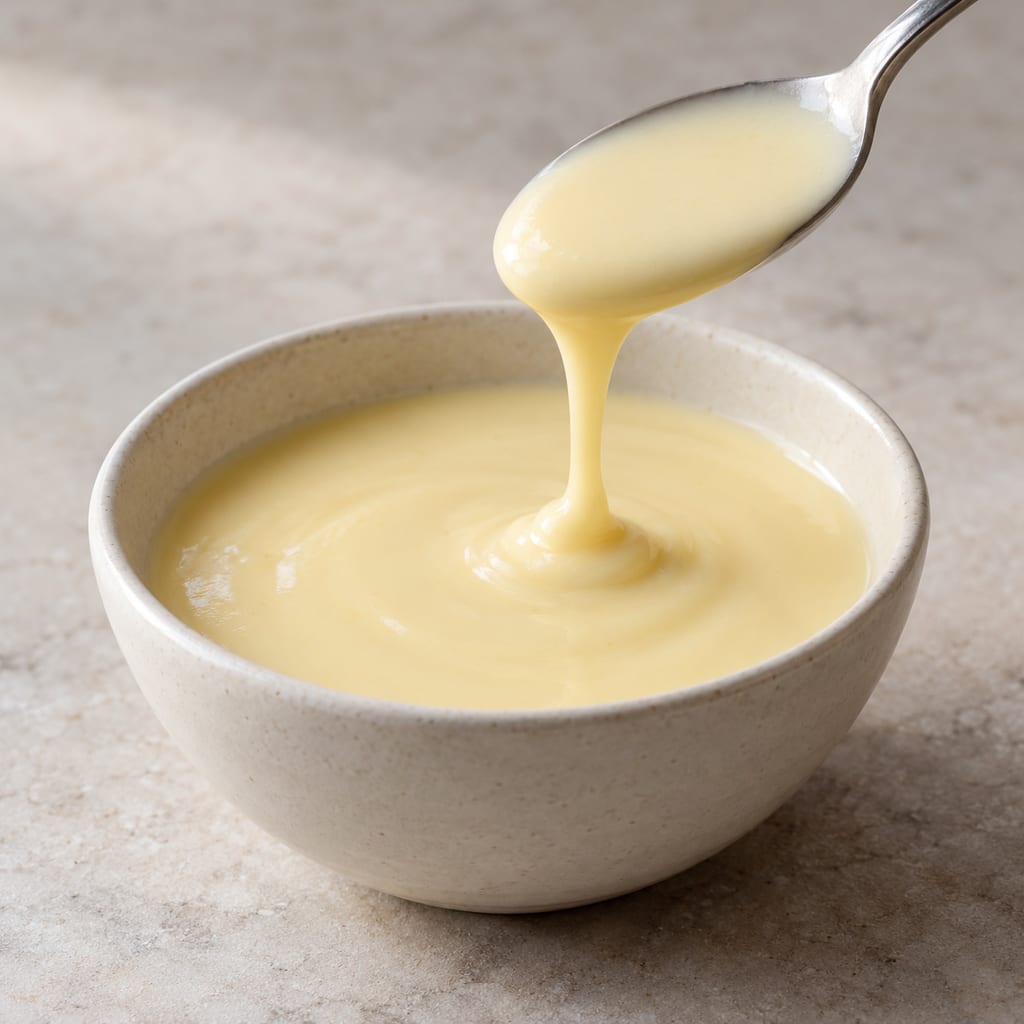
Starch-thickened salad-cream prototype with pasteurised yolk added after cooling; not a Heinz copy. Approximate yield 300 g.

A pourable dessert sauce of brown sugar, butter and cream, with a little corn syrup and salt. It is the sauce form of the butterscotch confection and is made without water, unlike caramel.
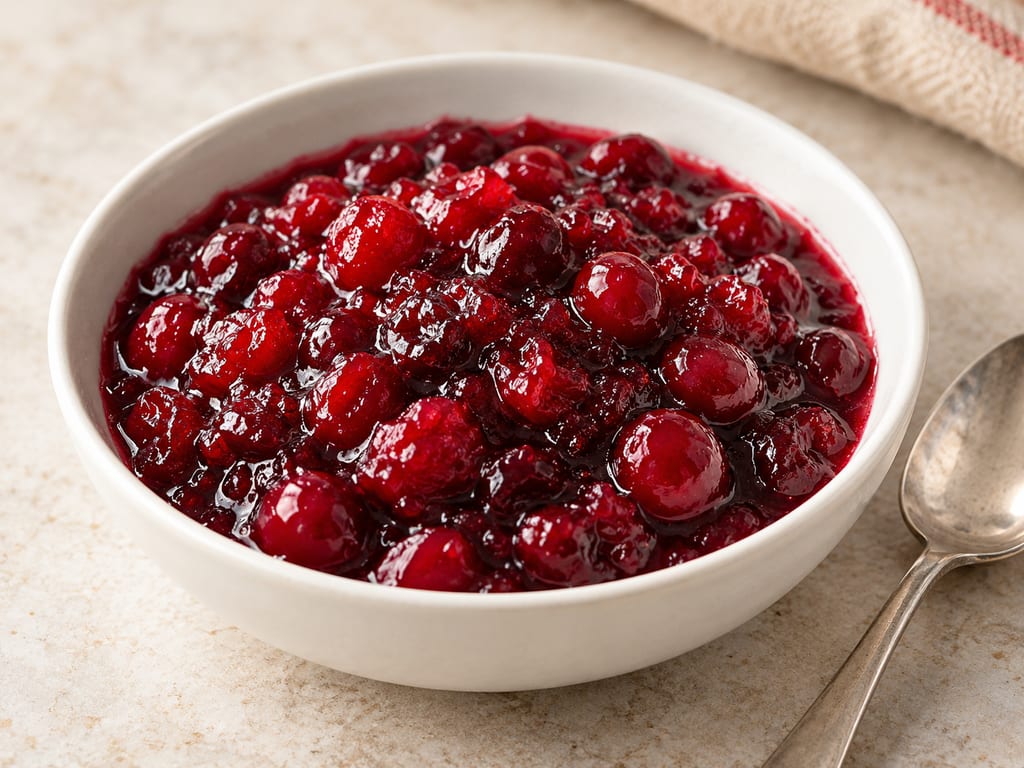
Cranberry sauce is a sauce of cranberries cooked in sugar syrup until the berries burst and thicken, served with roast turkey, pork, chicken and ham.
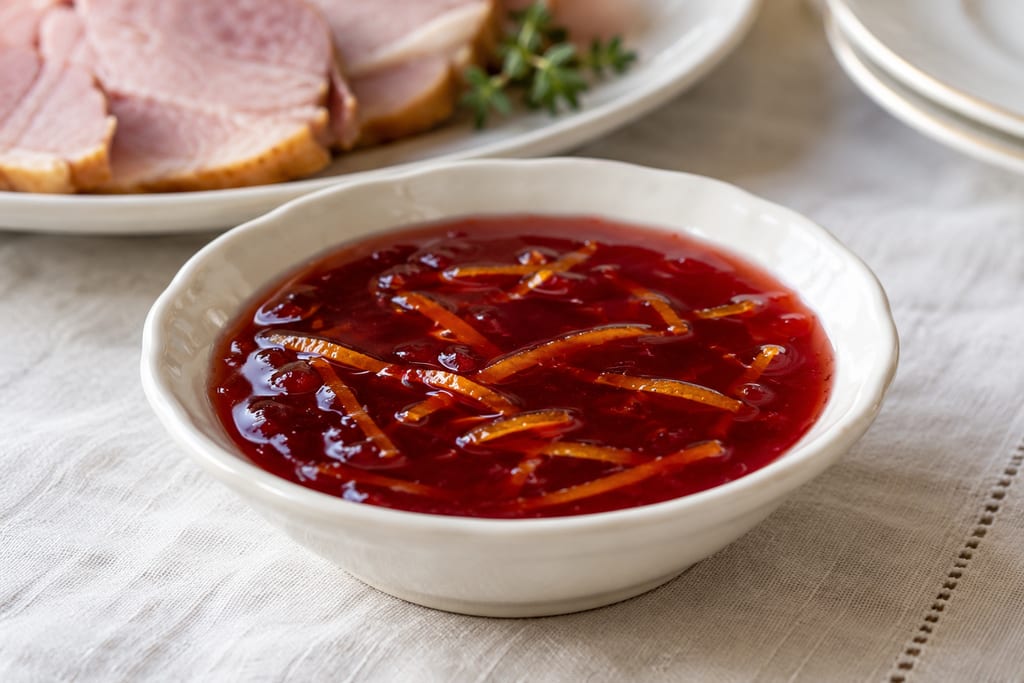
Cumberland sauce is a British condiment of redcurrant jelly, mustard, blanched orange peel and port, traditionally served cold with ham, game and cold meats.
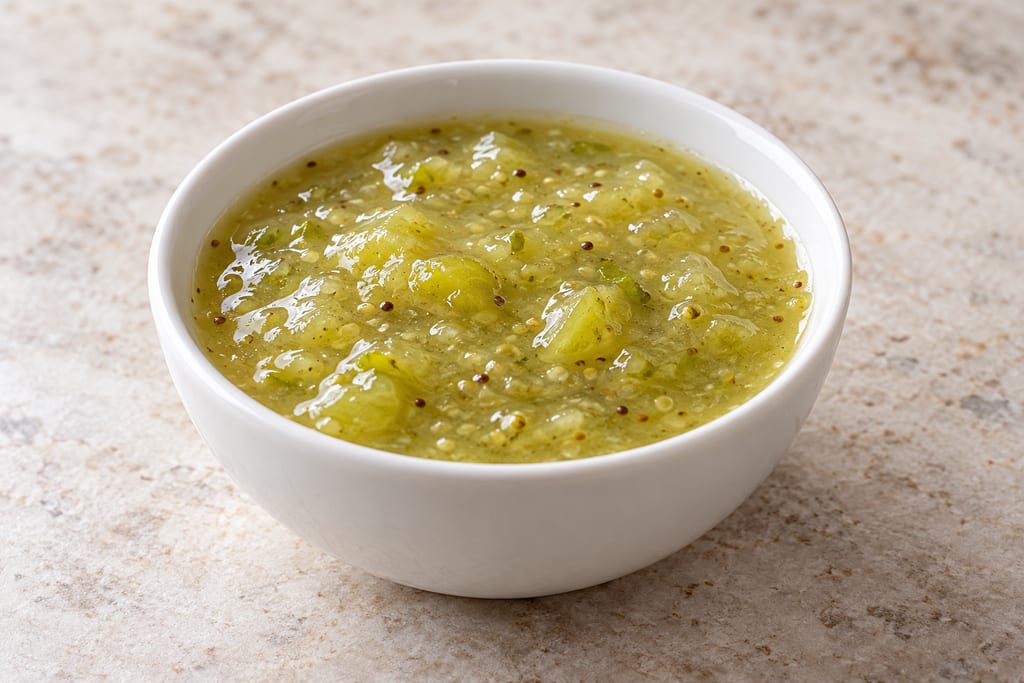
Gooseberry sauce is a soft, tart sauce of cooked green gooseberries, sharpened with wine or vinegar and lightly sweetened, traditionally served with mackerel.
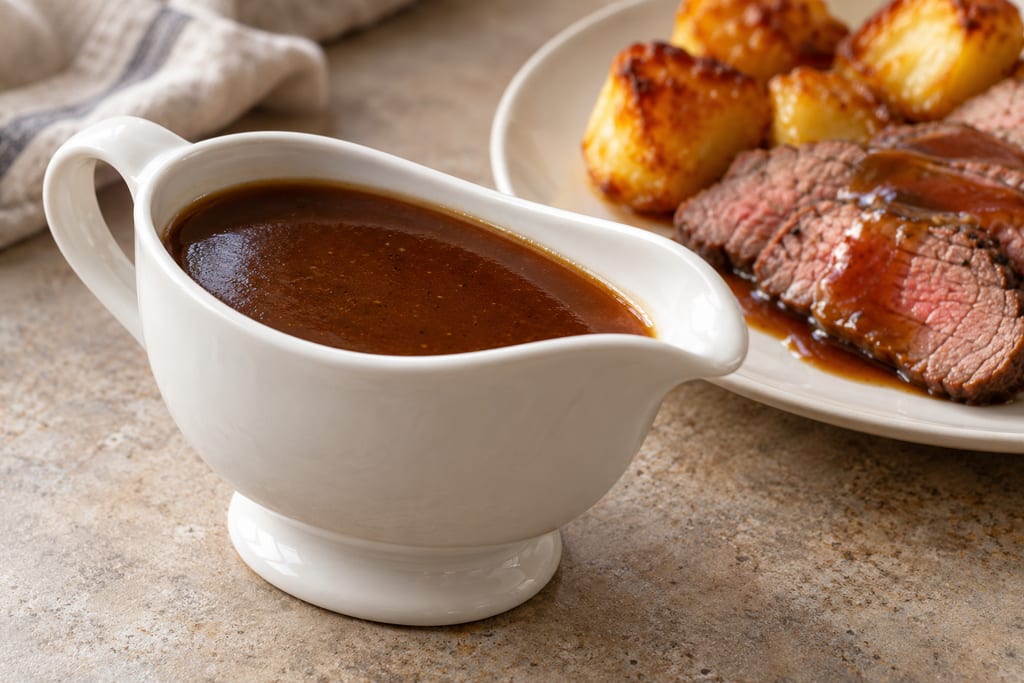
A savoury sauce made from the juices a roast releases in the tin, reduced with stock and thickened, or thickened with flour or starch.
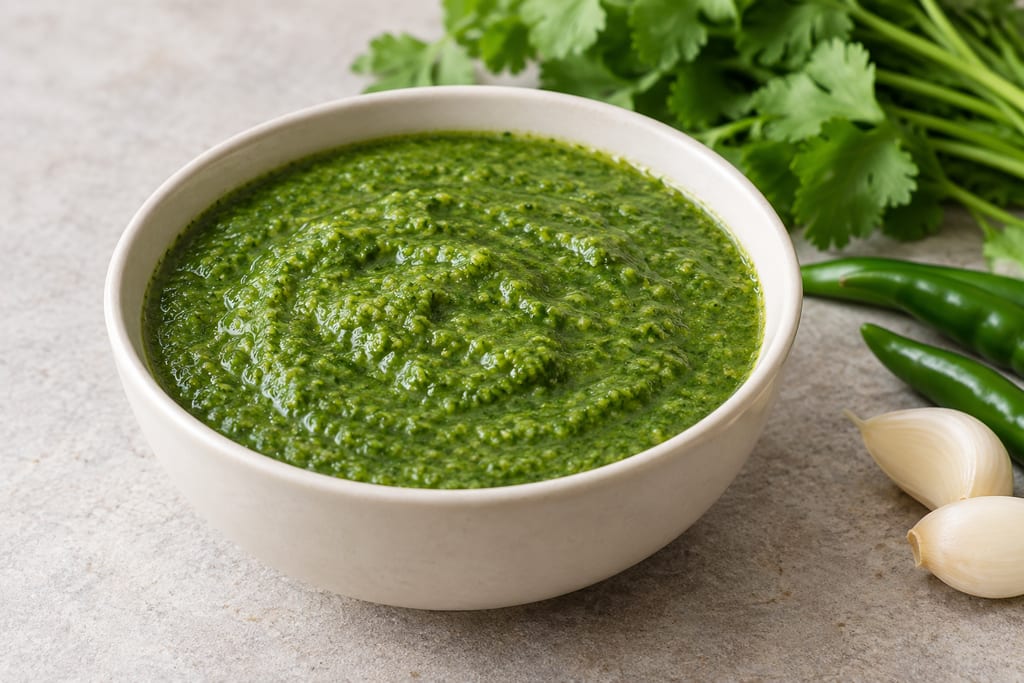
Afghan coriander chatni is a sharp, hot herb sauce with garlic and vinegar. A 2008 Afghanistan manual records green or red pepper and optional walnut; heat and household versions vary.
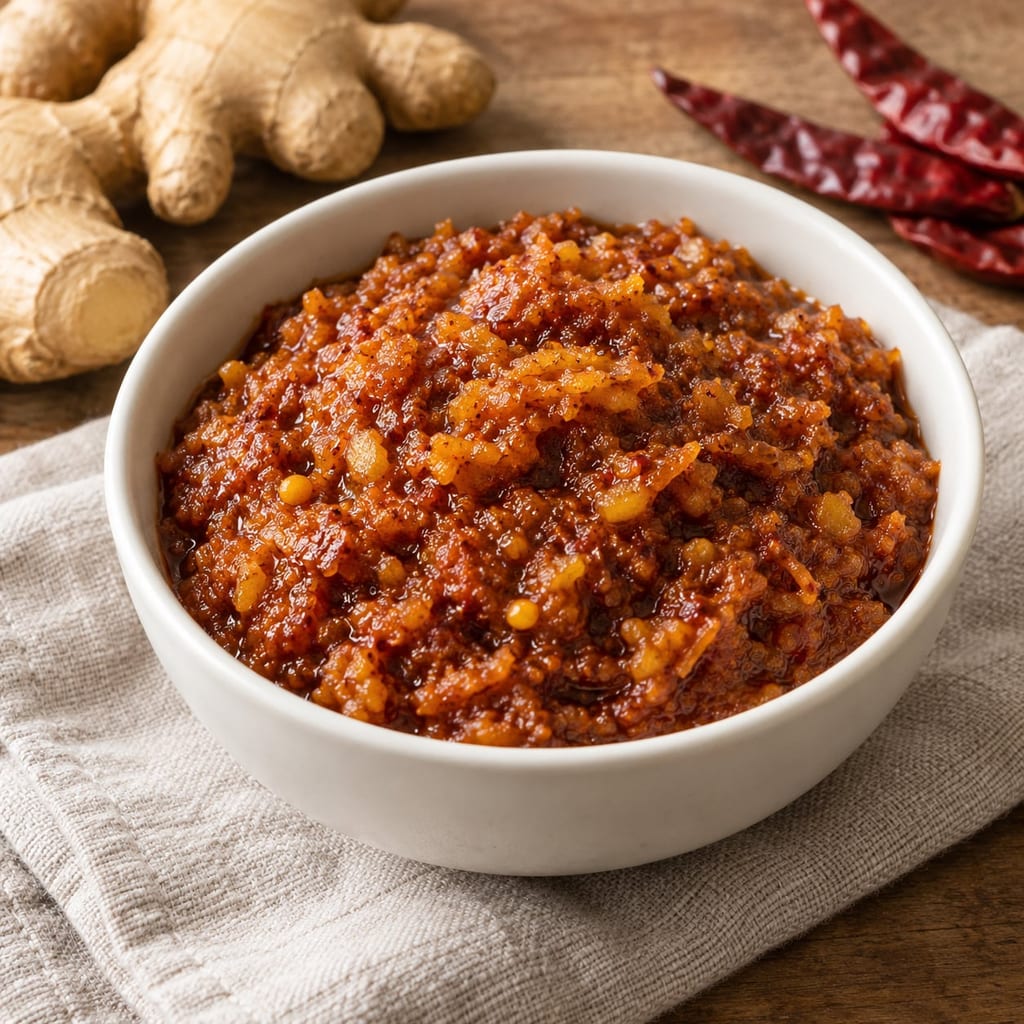
An Andhra ginger-and-urad chutney in which browned dal and briefly fried ginger and chillies are cooled, then ground with jaggery to a coarse paste.
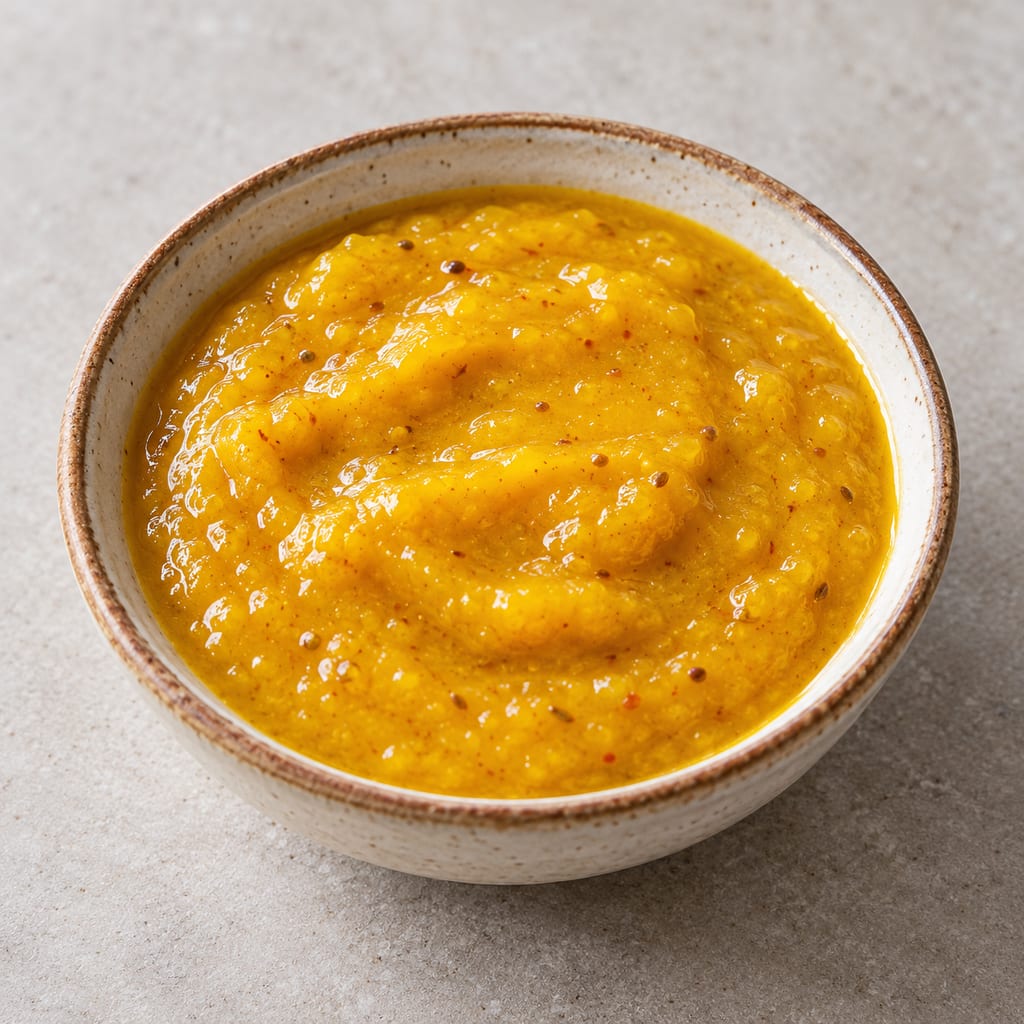
This cooked amba follows a Jewish Food Society recipe that simmers ripe mango with onion, garlic, mustard seed and warm spices into a tangy Middle Eastern condiment.
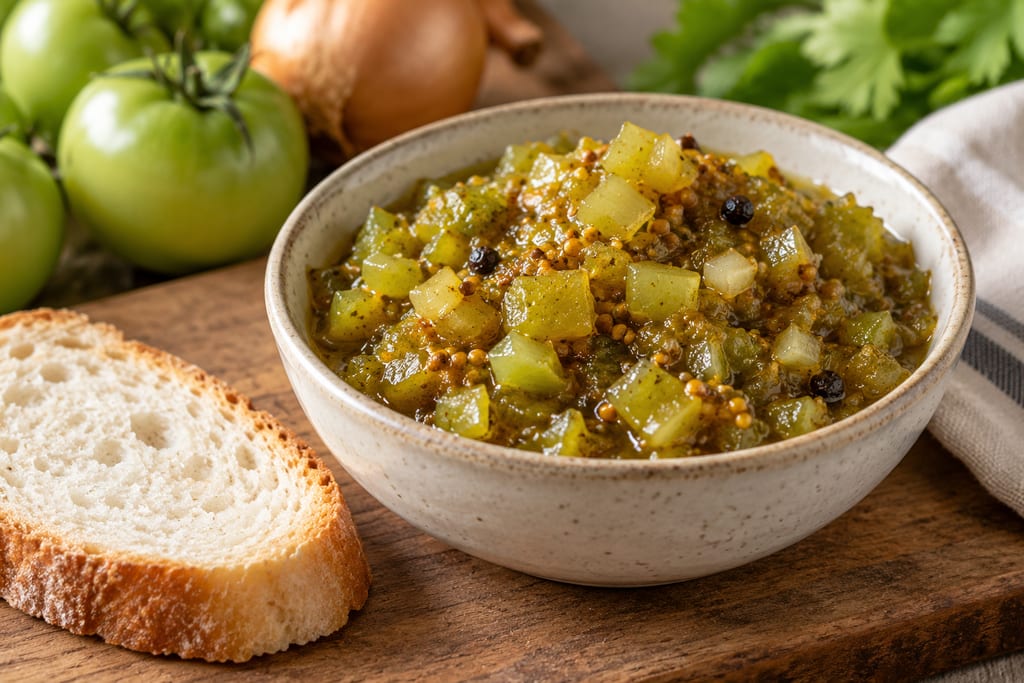
Australian green tomato pickles and relishes vary. This partial version follows ABC Western Victoria’s 2018 pickle recipe, not Beerenberg’s commercial formula. Sources document examples from 1944 onward, not a single origin.
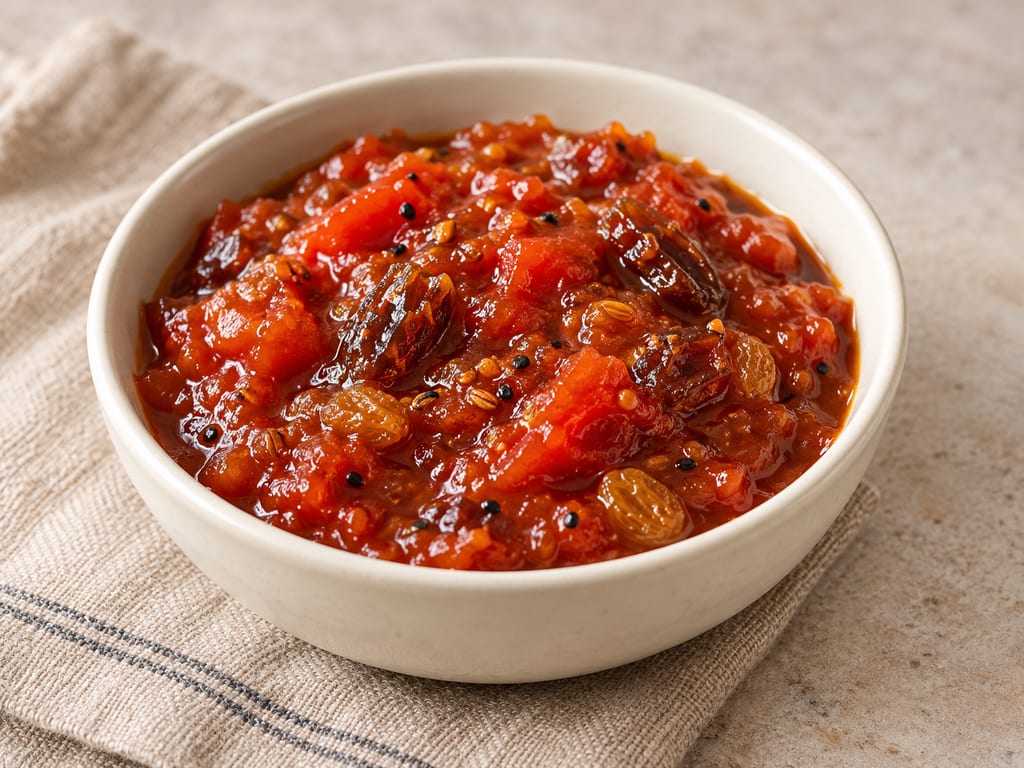
A cooked Bengali meal chutney combining tomatoes, dates, raisins, ginger and panch phoron.

A spicy South African vegetable relish of onion, carrot, pepper, tomato, curry seasoning and beans, cooked briefly and served warm or cold beside pap and grilled meat.
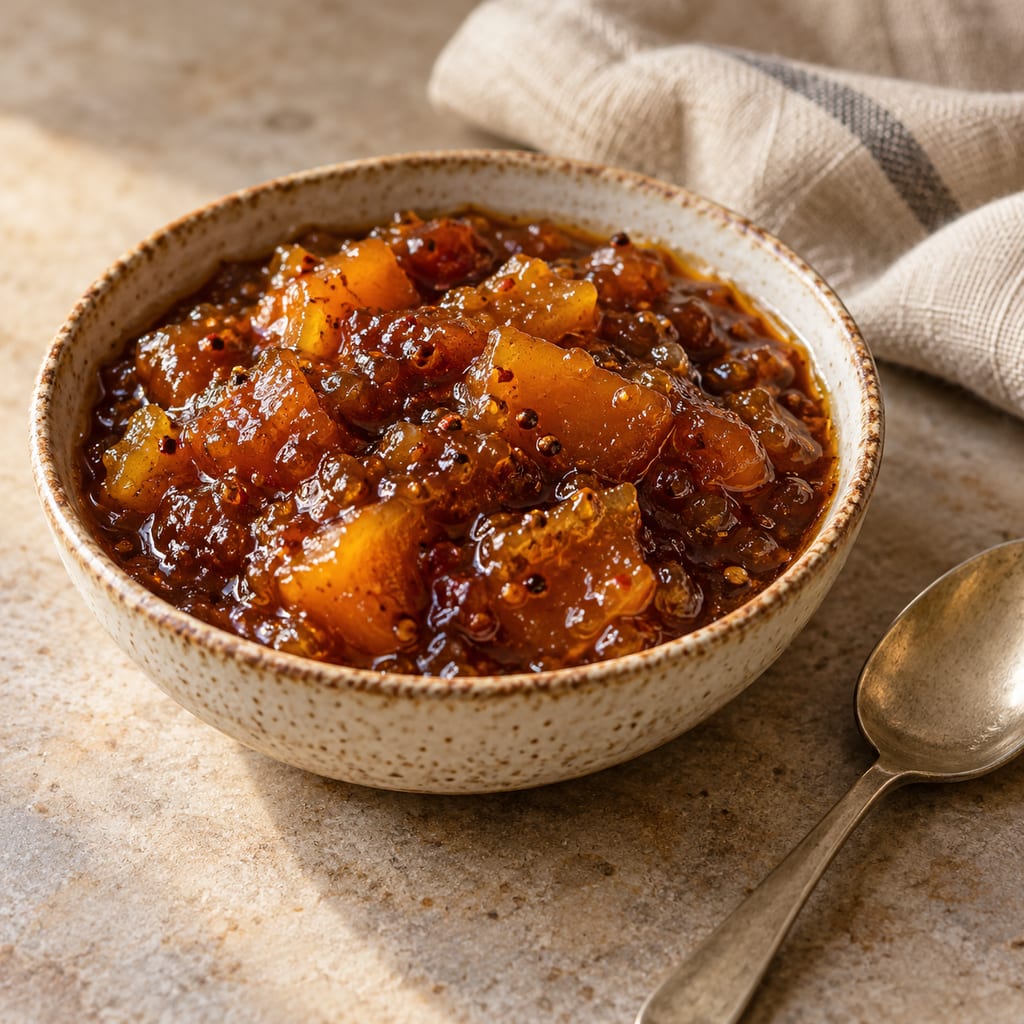
A broad account of cooked chutney traditions: fruit or vegetables combined with sugar, spices and sometimes acid, often boiled into a thick condiment. This record is historical and process context, not a formula or storage recipe.
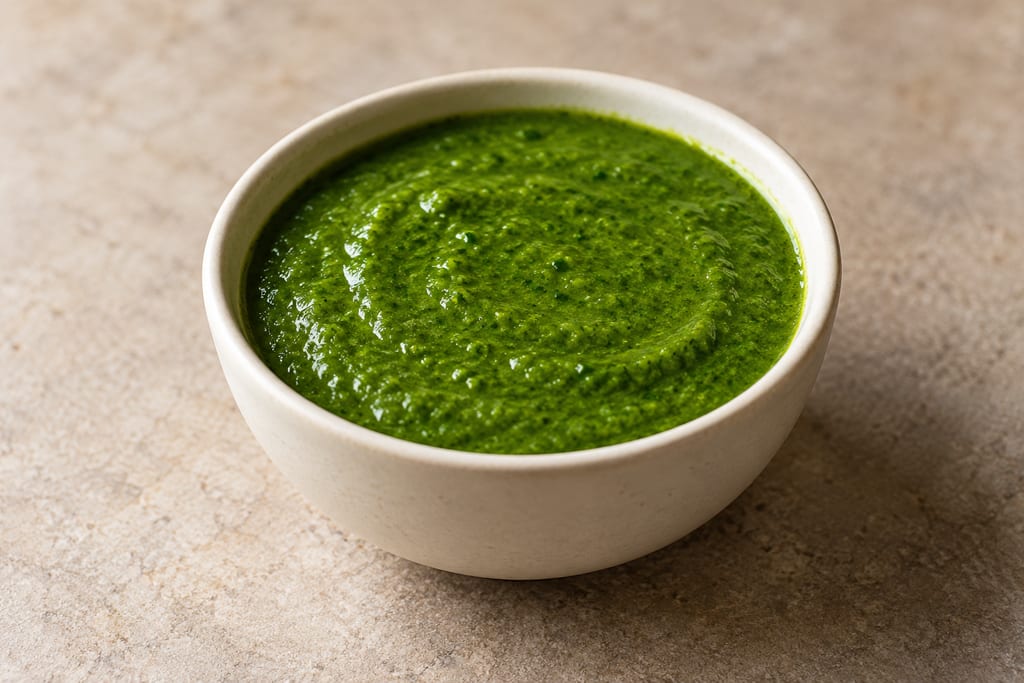
A cold-blended coriander and mint chutney with ginger, green chilli and optional cumin and lemon; the author serves it with snacks, chaat and sandwiches.

A Cap-Pelé boucanière is an Acadian herring-smoking building. The documented Willie Niles example is a one-storey wood-frame structure with a ridge smoke vent and interior bays for hanging fish-bearing cannes.

Achcharu is a family of Sri Lankan vinegar pickles made with mixed vegetables or seasonal fruit and a piquant spice dressing. This version is a quick, refrigerated, non-fermented mixed-vegetable pickle.

The acocote is a long, hollowed and dried gourd used to draw aguamiel from a mature maguey. It is a harvesting tool: the sap is transferred to a separate vessel before it ferments into pulque.

Adrak murabba preserves young ginger in sugar syrup, a sweet South Asian preparation recorded in Indian cookery and food-processing sources.

Parkia biglobosa seeds are fermented into regional West African seasonings, including nététou, iru, dawadawa and soumbala. The yellow fruit pulp is a separate food, and names and methods vary by place.

Japanese reddish-brown vinegar from sake lees matured about three years, turned to vinegar by acetic bacteria; the vinegar of Handa and Edomae sushi rice.

A refined common-wheat flour blended for a broad range of baking; its protein and behavior vary with wheat, milling and market.

The almond mushroom, Agaricus subrufescens, was cultivated in eastern North America in the 1800s, lost its market, and returned as a cultivated mushroom from Brazil, where it is grown under several names.
No community contributions have been published for this entry yet.
Sign in to contribute. Published comments and photos are free to read.
Internet Archive (full-text copy)Method · Variants · History
Modern cookery for private familiesChetney sauce, Bengal receipt: stoned raisins and crab apples, sour apples, unripe bullaces or other hard acid fruit, with coarse brown sugar, powdered ginger, salt and cayenne ground separately, pounded with the fruit, vinegar added to thick-cream consistence, bottled with an ounce of garlic in cloves.
Note: the mango is used in India; gooseberries, tamarinds, green apples, chilies and tomatoes appear in variants; gentle heat for a week or two keeps the sauce better.
Cited in: Overview; Method in the source; Variants and keeping
ckbkIngredients
Chetney Sauce from Modern Cookery for Private FamiliesIngredient quantities as listed: 4 oz stoned raisins, half a pound of acid fruit, 4 oz coarse brown sugar, 2 oz powdered ginger, 2 oz salt, 2 oz cayenne, 1 oz garlic, vinegar to dilute.