
Apple sauce for goose and pork
Apple sauce for goose and pork is a plain English accompaniment: cooked apples pulped with water, then sweetened with sugar and finished with a little butter.
 FermenteaWhere food goes to change
A savoury sauce made from the juices a roast releases in the tin, reduced with stock and thickened, or thickened with flour or starch.
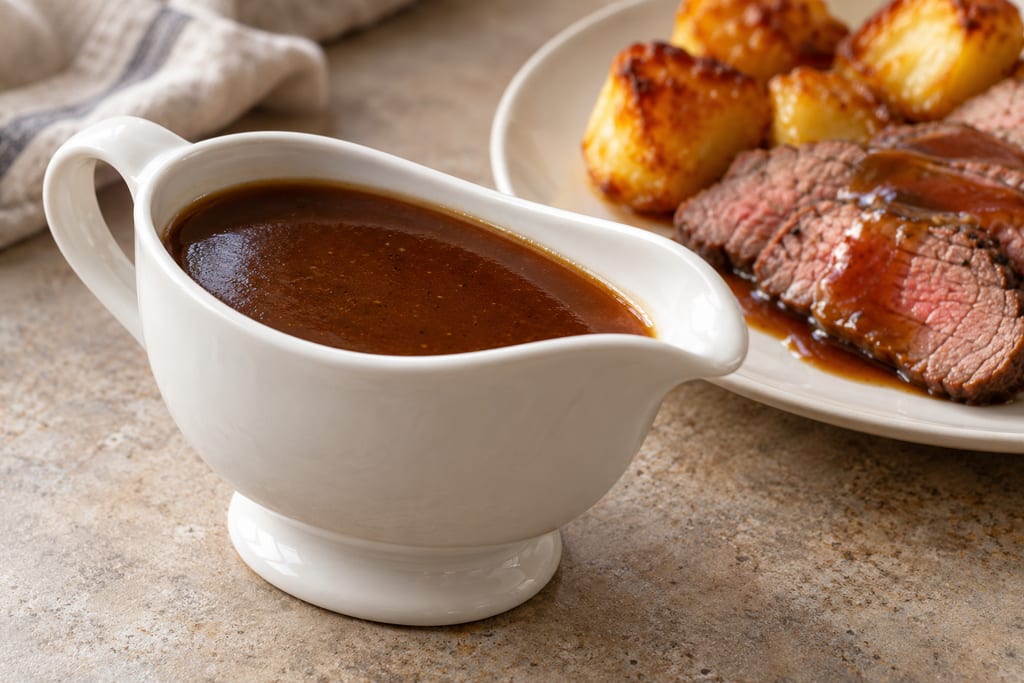
Gravy begins with what the meat gives up while it roasts. The juices that run out of a joint or bird, mixed with the fat and the brown material that sticks to the pan, are the base of a brown gravy. Wikipedia's account of the sauce describes it as made from the juices of meats and vegetables released during cooking, and traditionally starting from the juices that run from meat as it roasts.
Brown gravy made from roasted meat or fowl drippings is cooked over high heat, often with onions or other vegetables. In the Great British Chefs version, the excess fat is poured off first, and the vegetables are caramelised in what is left before the wine and stock go in, so the browning comes from the roasting tin and the vegetables.
The method reduces the wine first, then the stock, to concentrate the flavour. Reducing by two-thirds, as the source directs, changes a thin liquid into a sauce that coats a spoon, and the reduction does much of the work that flour would do in a quicker gravy.
Straining through a fine sieve removes the spent vegetables and the thyme so that the finished sauce is smooth. The butter is whisked in off the heat or at the very end, which enriches and glosses the sauce. The source serves it in a jug alongside the roast.
A quicker brown gravy is thickened with a slurry of water and wheat flour or cornstarch, while cream gravy combines fat and drippings with flour to form a roux, usually with milk as the liquid. These are different routes from the reduced sauce above, and the two can be combined.
Gravy powders, canned and instant gravies are separate products. Wikipedia notes that powders, canned and instant versions can stand in for natural meat or vegetable extracts, and the reduced sauce here is made from fresh roasting juices and stock.
The sources here give no holding temperatures or storage times for the finished sauce, so the page does not state how long it keeps or how to cool it safely. Such controls belong in a separate study of cooling and reheating. The quantities above are for six servings and do not scale without testing.
The word likely comes from Old French words for a meat or fish broth. Instant gravy was first made by Bisto in 1908, and gravy and biscuits, a popular Southern breakfast, originated in Southern Appalachia in the late 1800s.
Yield 6 serves · Scaling: source batch only
The method is a documented British roast-dinner practice; the source records one chef's version, not the only one.
Apple sauce for goose and pork is a plain English accompaniment: cooked apples pulped with water, then sweetened with sugar and finished with a little butter.
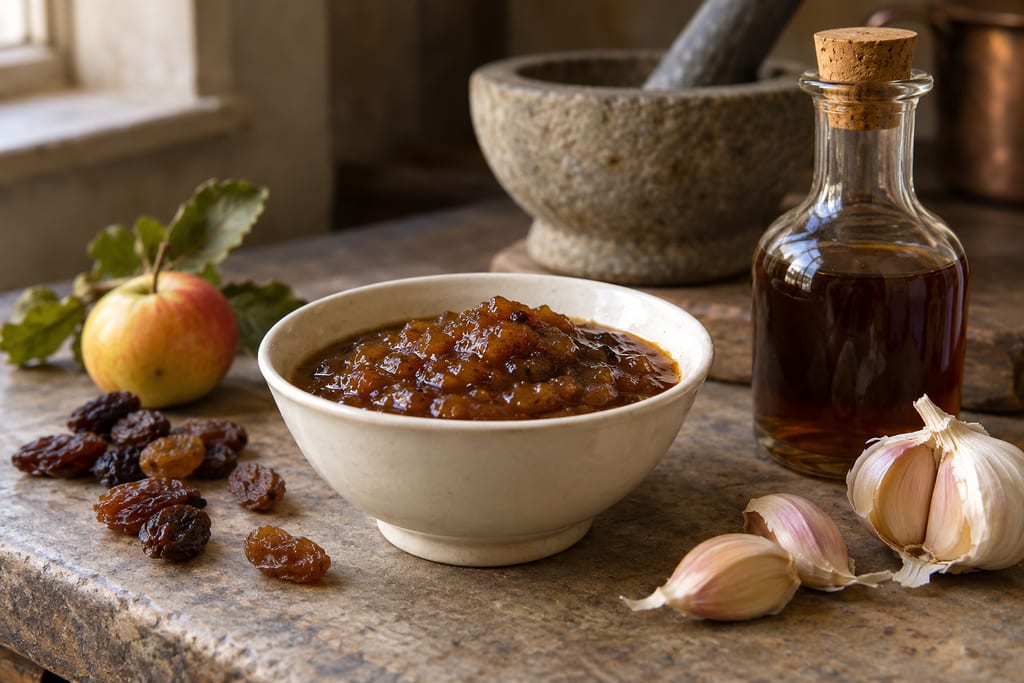
Eliza Acton's Bengal receipt for chetney sauce: stoned raisins and a hard acid fruit pounded with brown sugar, ginger, salt, cayenne and garlic, then thinned with vinegar to the consistence of thick cream.
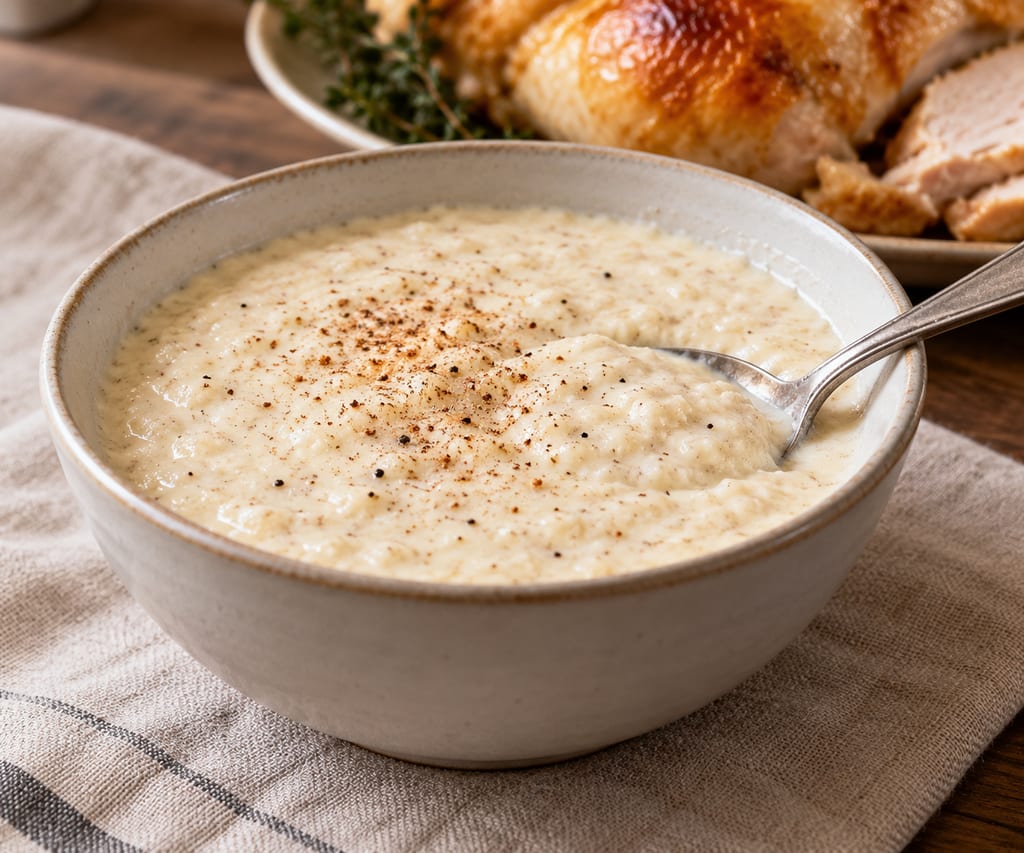
Bread sauce is a British sauce of milk infused with onion, clove and bay, thickened with stale breadcrumbs and finished with butter, served with roast chicken or turkey.
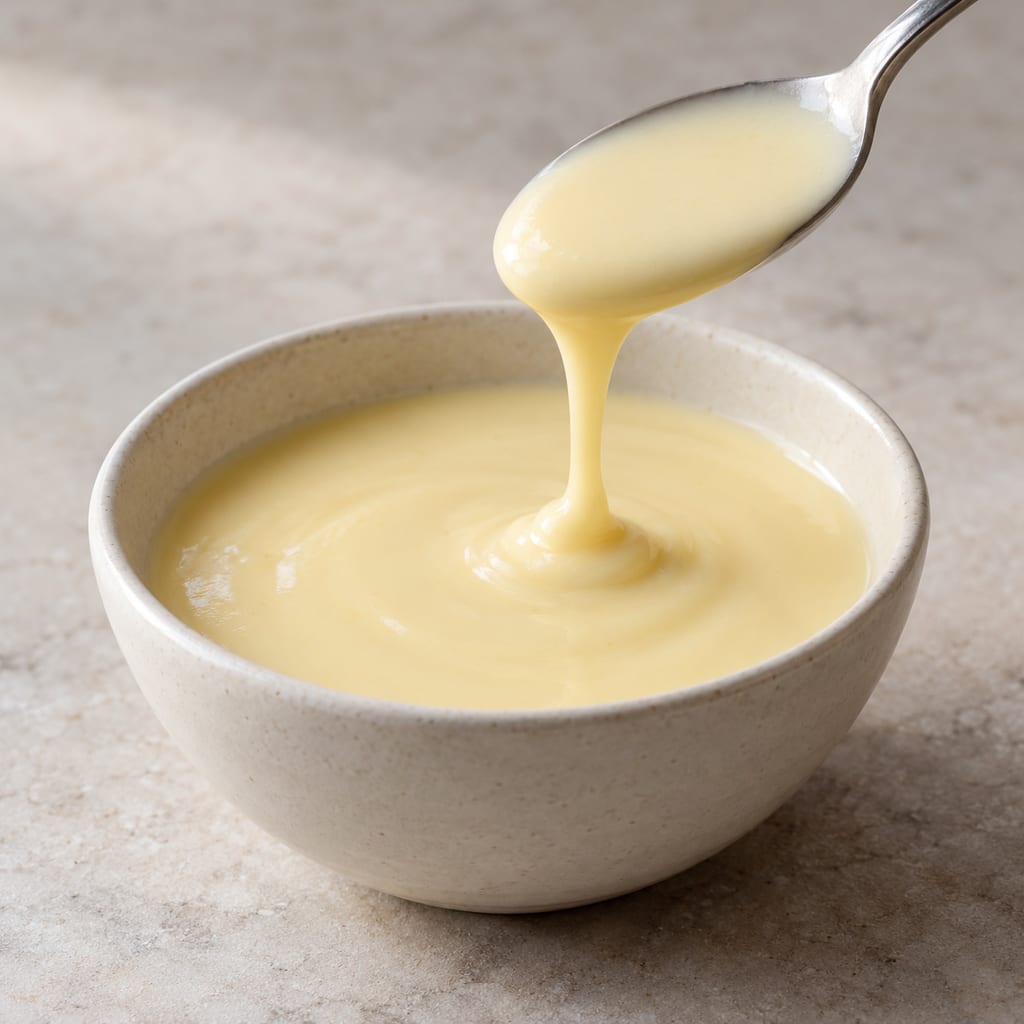
Starch-thickened salad-cream prototype with pasteurised yolk added after cooling; not a Heinz copy. Approximate yield 300 g.

A pourable dessert sauce of brown sugar, butter and cream, with a little corn syrup and salt. It is the sauce form of the butterscotch confection and is made without water, unlike caramel.
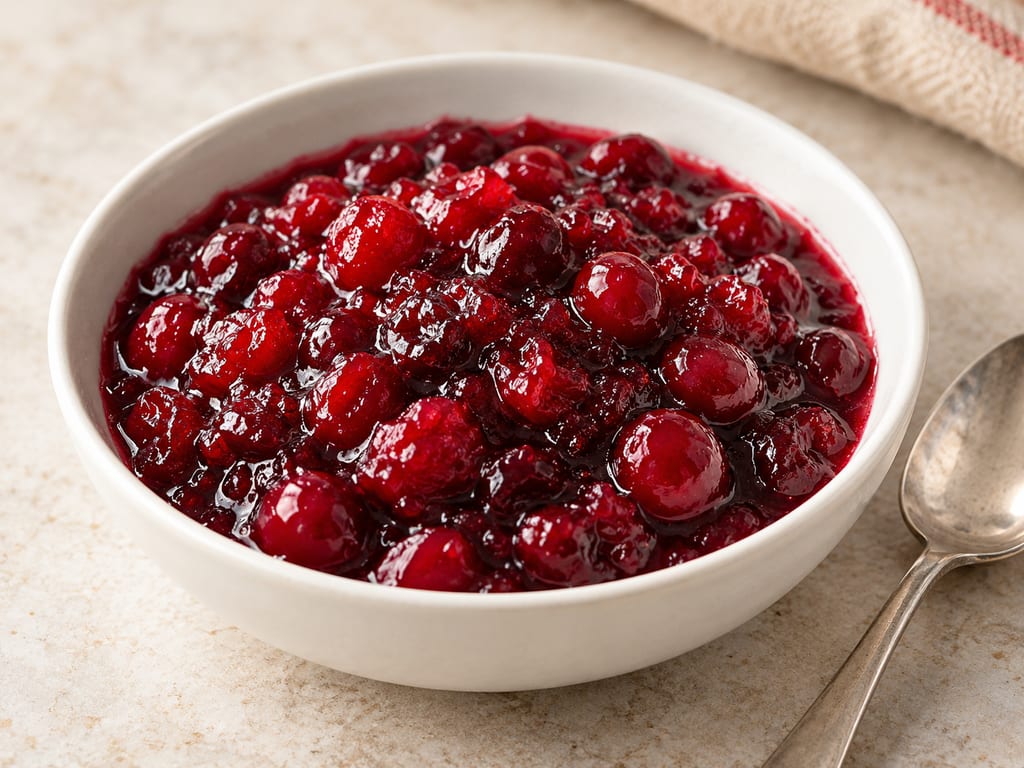
Cranberry sauce is a sauce of cranberries cooked in sugar syrup until the berries burst and thicken, served with roast turkey, pork, chicken and ham.
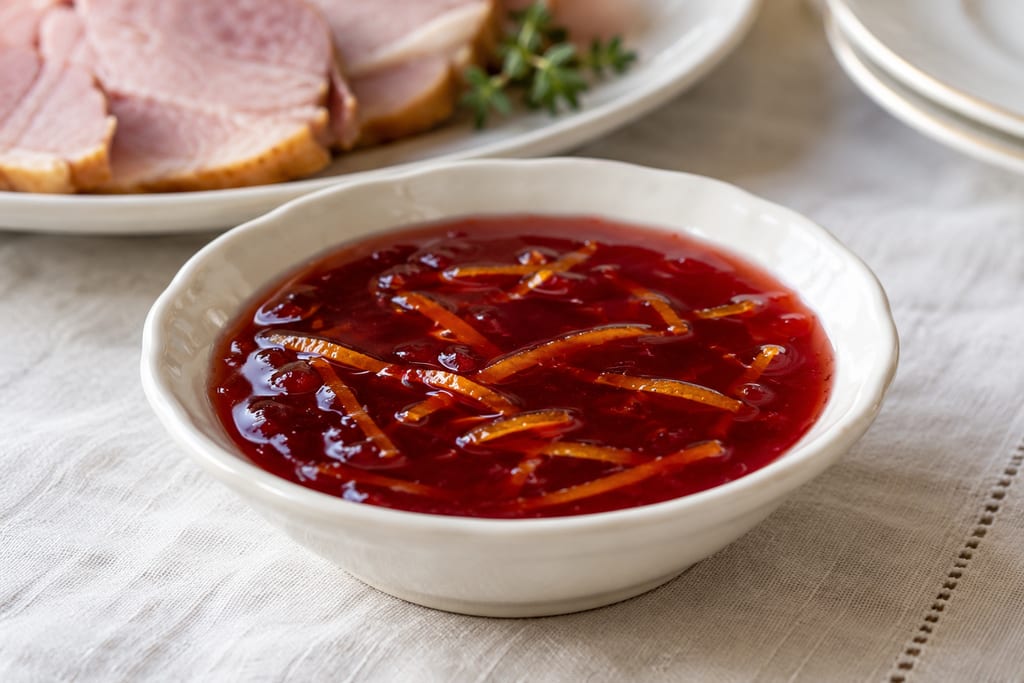
Cumberland sauce is a British condiment of redcurrant jelly, mustard, blanched orange peel and port, traditionally served cold with ham, game and cold meats.
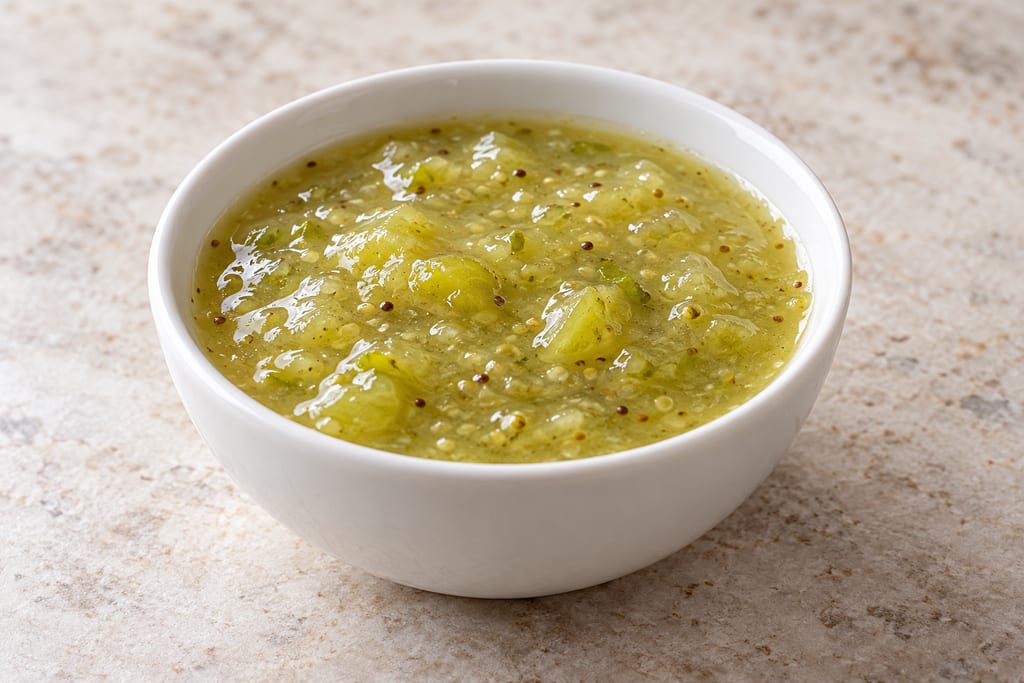
Gooseberry sauce is a soft, tart sauce of cooked green gooseberries, sharpened with wine or vinegar and lightly sweetened, traditionally served with mackerel.
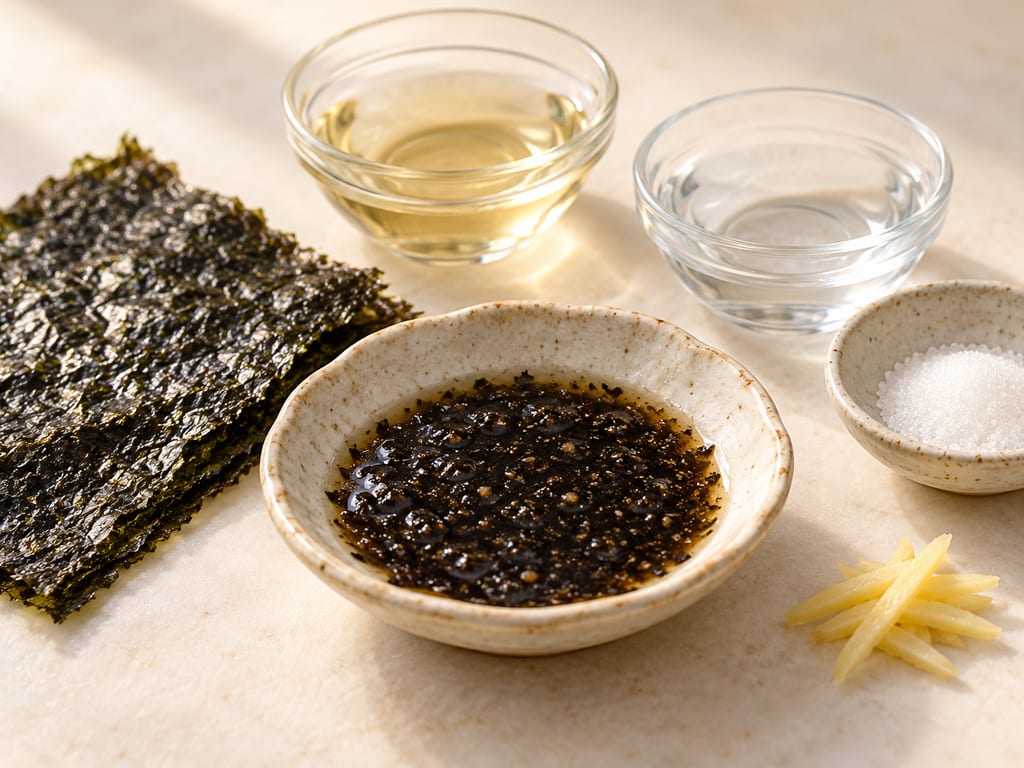
A fresh condiment in which crumbled nori softens in lightly sweetened vinegar and water. It is not vinegar fermented from seaweed.
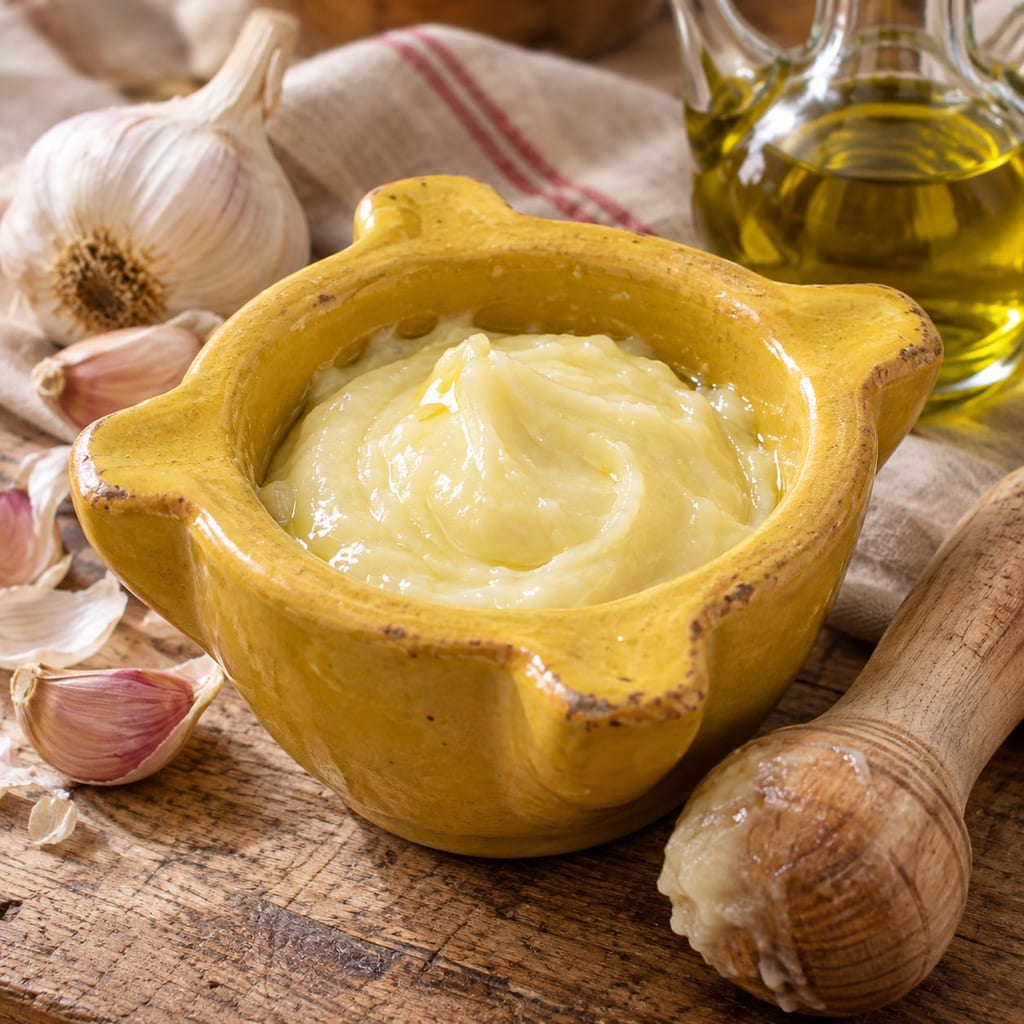
Traditional Catalan allioli is a dense emulsion of garlic, olive oil and salt made slowly in a mortar. This measured Barcelona-style version keeps egg-based garlic mayonnaise distinct.
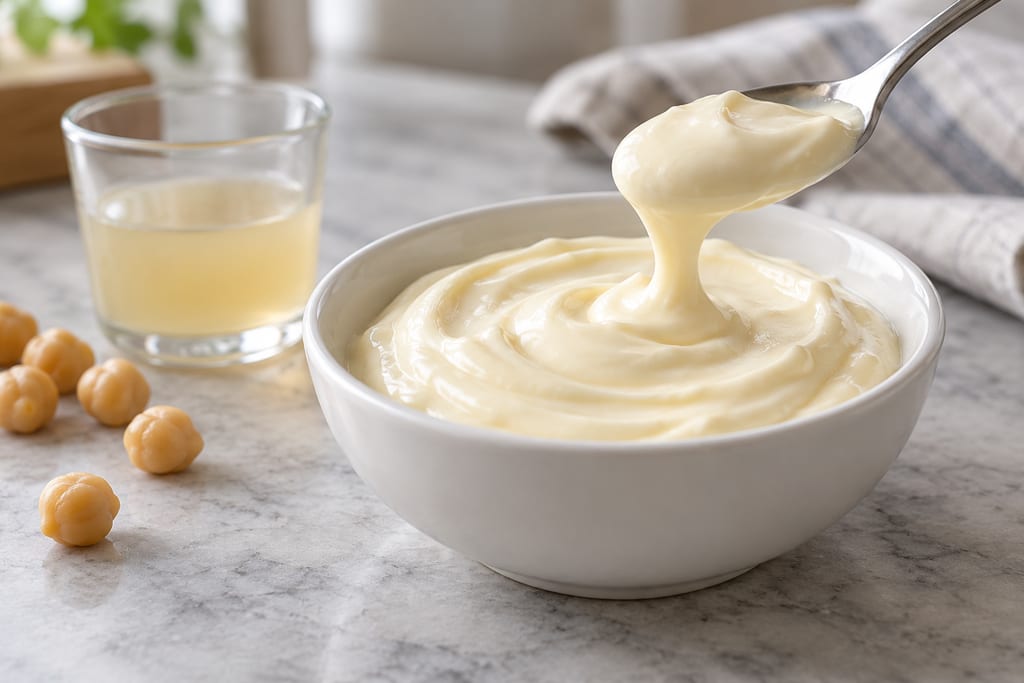
An eggless, untested emulsion made with canned chickpea liquid. Nominal yield 255 g.
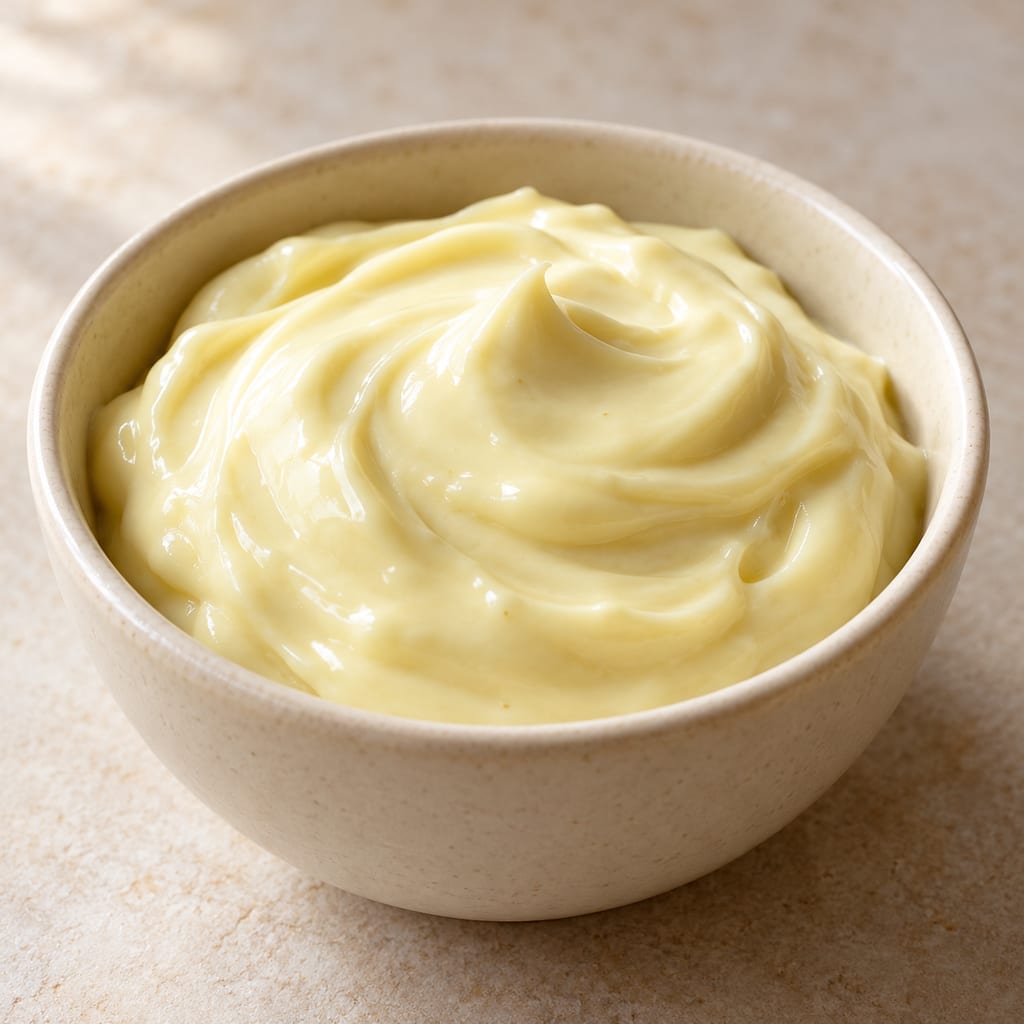
Avocado-oil mayonnaise is an ordinary egg-and-oil emulsion in which avocado oil supplies the oil phase. The oil changes flavour and colour, and it does not preserve the sauce.

Bechamel is a white sauce of milk thickened with a butter and flour roux, one of the French mother sauces, and the base from which Mornay and other cheese and cream sauces are made.
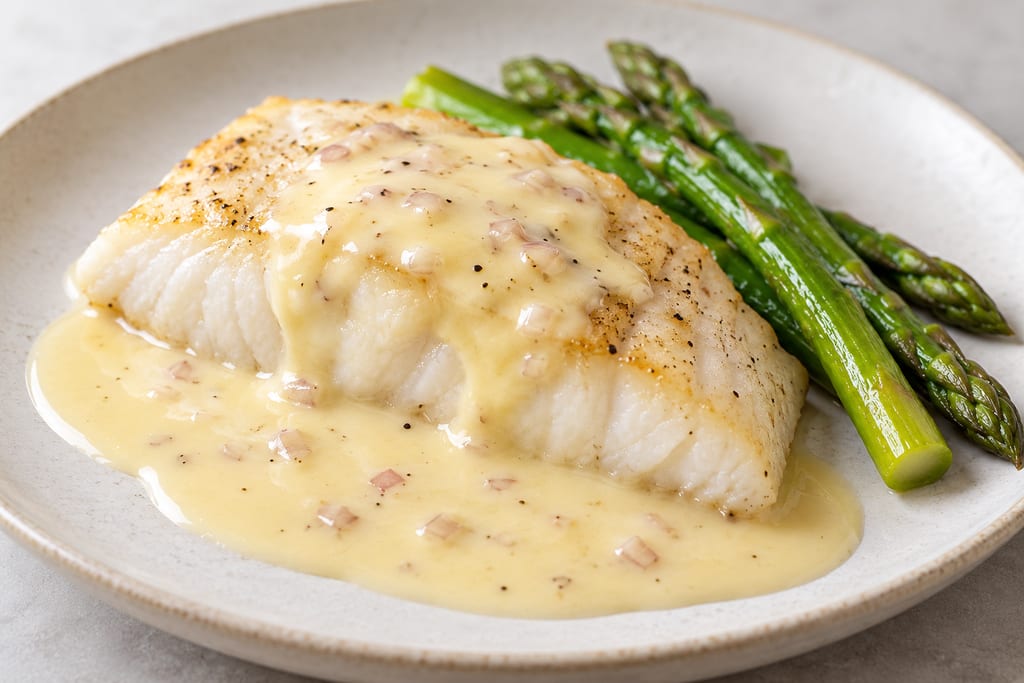
Beurre blanc is a warm emulsion of cold butter whisked into a reduction of white wine, vinegar or lemon juice and shallot, a sauce from the Loire Valley and its red-wine version, beurre rouge.
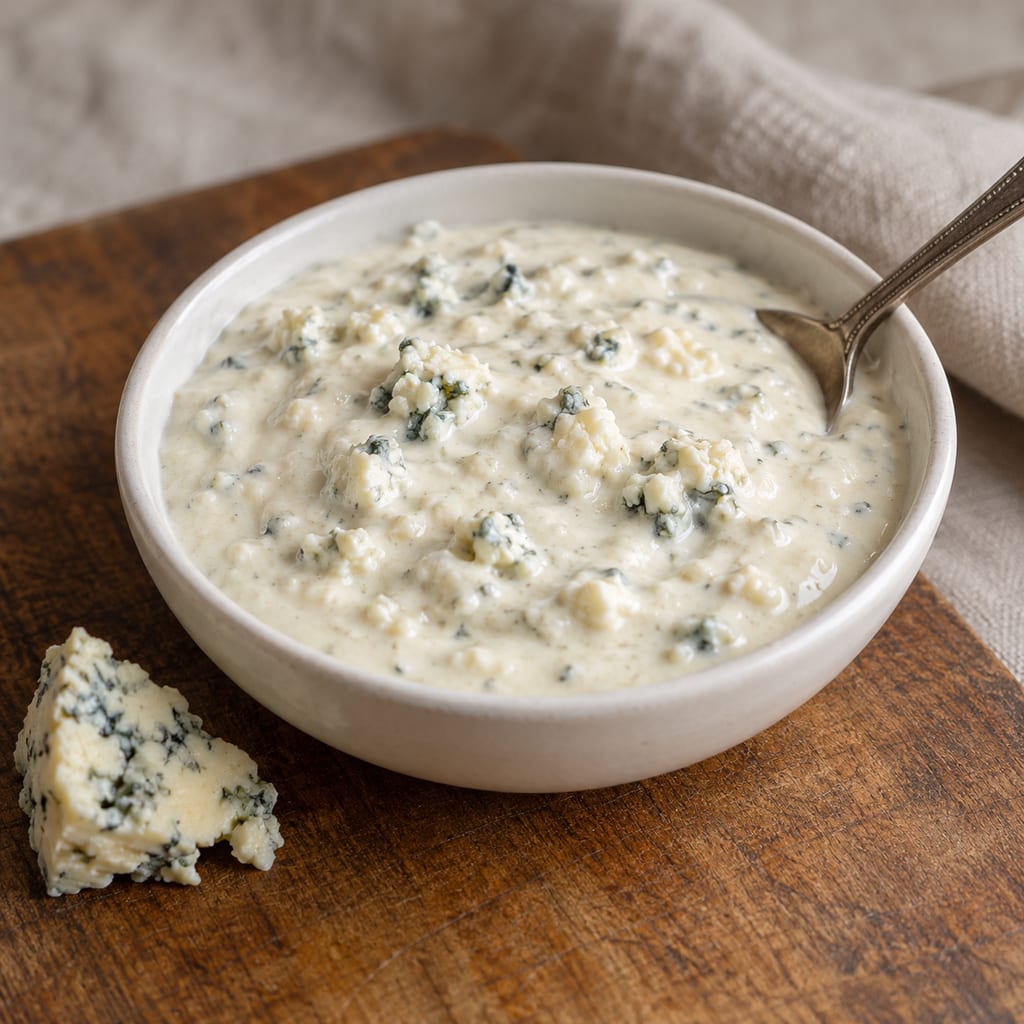
Blue cheese dressing is a creamy dressing built on crumbled blue cheese mashed into buttermilk, with sour cream, mayonnaise, vinegar and seasoning, and kept cold for up to two weeks.
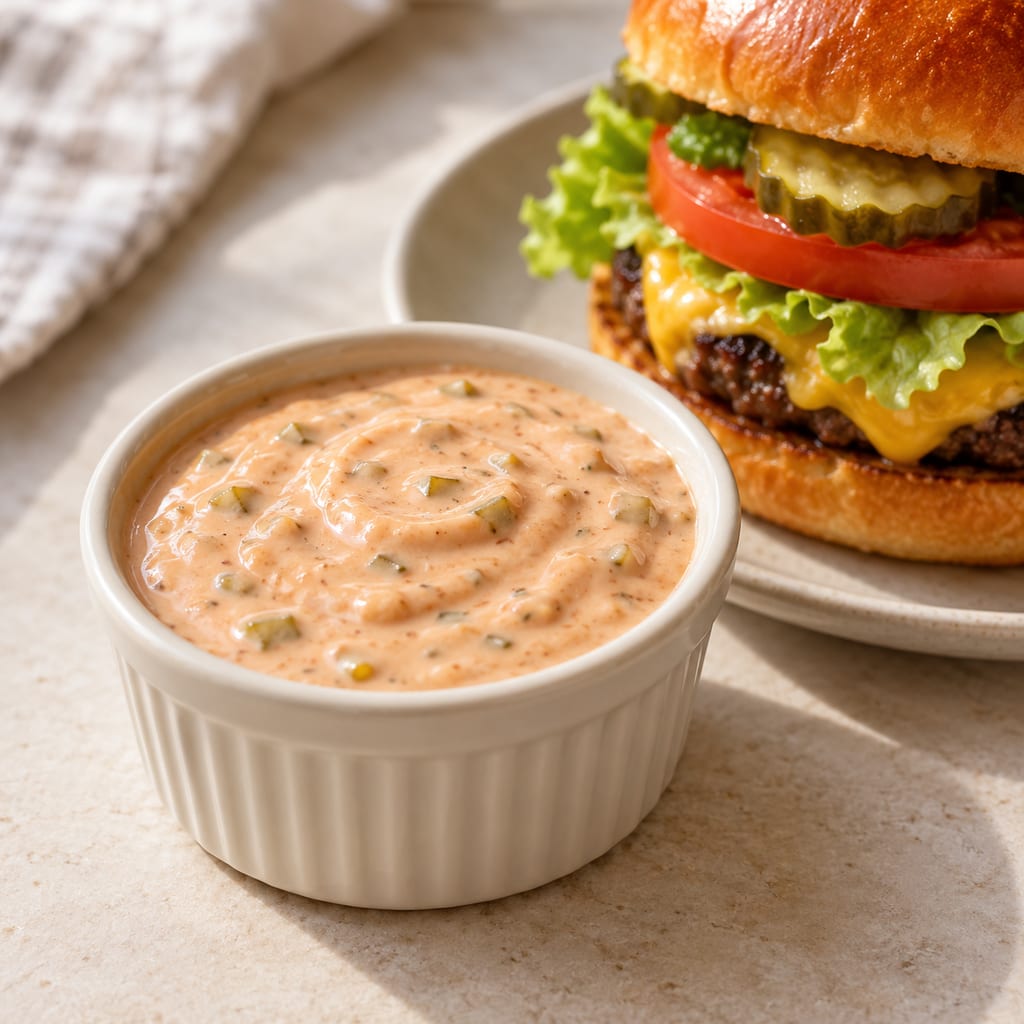
Mayonnaise mixed with ketchup, drained pickle relish and yellow mustard makes a tangy, pickle-flecked sauce for burgers; these proportions are an untested starting point.

Protected Italian vinegar made only from cooked grape must, fermented and aged in a battery of wooden barrels for at least 12 years: sweet, sharp and syrupy.

Airag is Mongolia’s fermented mare’s-milk drink, traditionally churned with saved starter in a reusable cowhide khokhuur.

Appam, or hoppers, are South Indian and Sri Lankan rice pancakes made from a fermented coconut-and-rice batter and cooked in a curved pan to a crisp lacy rim and a soft, spongy centre.
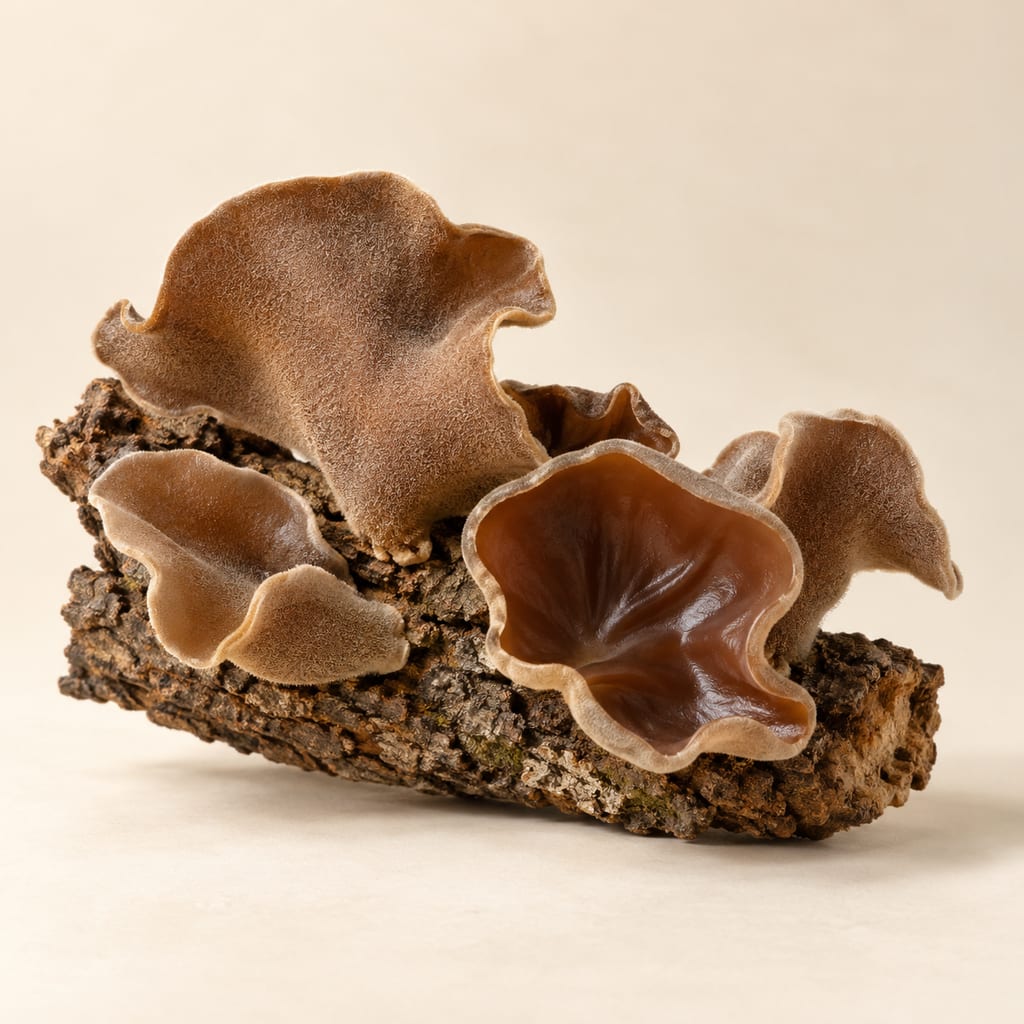
Auricularia tremellosa is a wood ear fungus of the genus that supplies most dried wood ear sold in China; its own food record is thin, and the culinary practice described here comes from the closely related wood ear species.

Ayran is Turkey’s cold, savoury yogurt drink: plain yogurt is loosened with water and lightly salted, then whisked smooth or aerated into a soft cap of foam.
A thin stone griddle used over an open hearth. Norwegian archaeology documents the established tradition from the early Middle Ages; a Viking-period origin is only a cautious suggestion linked to Shetland.

Crushed or milled barley cooked in water until the starch softens and the mixture thickens, the plainest way a northern household turned stored grain into a meal, here with apple and hazelnut.
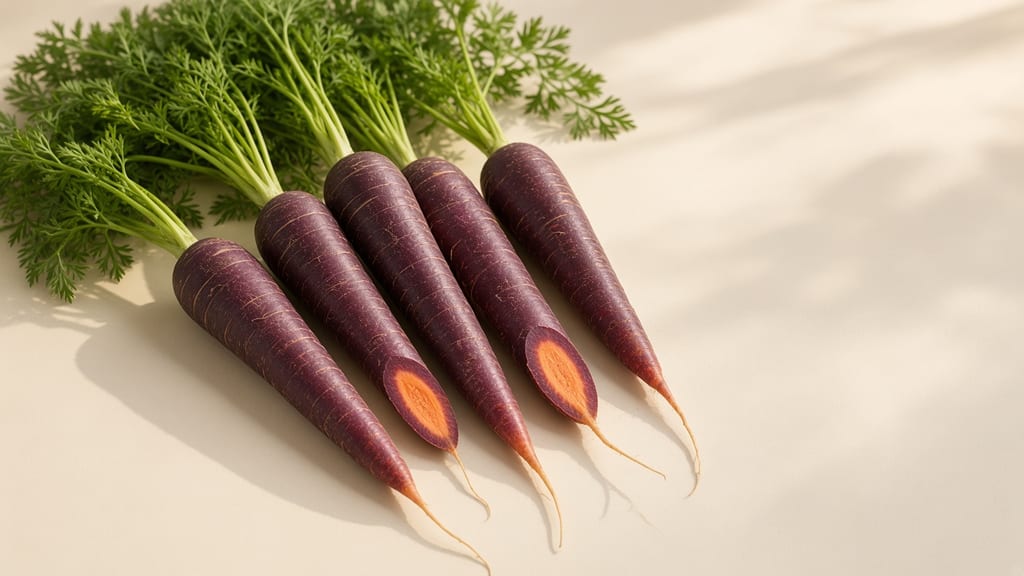
Black carrot is the anthocyanin-pigmented Eastern carrot (Daucus carota var. atrorubens), the purple root that preceded orange types and still colours kanji and şalgam.
No community contributions have been published for this entry yet.
Sign in to contribute. Published comments and photos are free to read.
WikipediaHistory · Method
GravyDefinition and roasting-juice origin
Flour and cornstarch slurry, cream gravy roux
Forme of Cury mention, Bisto 1908, gravy and biscuits in the late 1800s
Cited in: What the tin holds; Thickening with flour or starch
Great British ChefsMethod · Inspiration
Ultimate GravyIngredients and quantities for six servings
Reduction, straining and butter finish
Cited in: What the tin holds; Reducing and straining; Notes and gaps