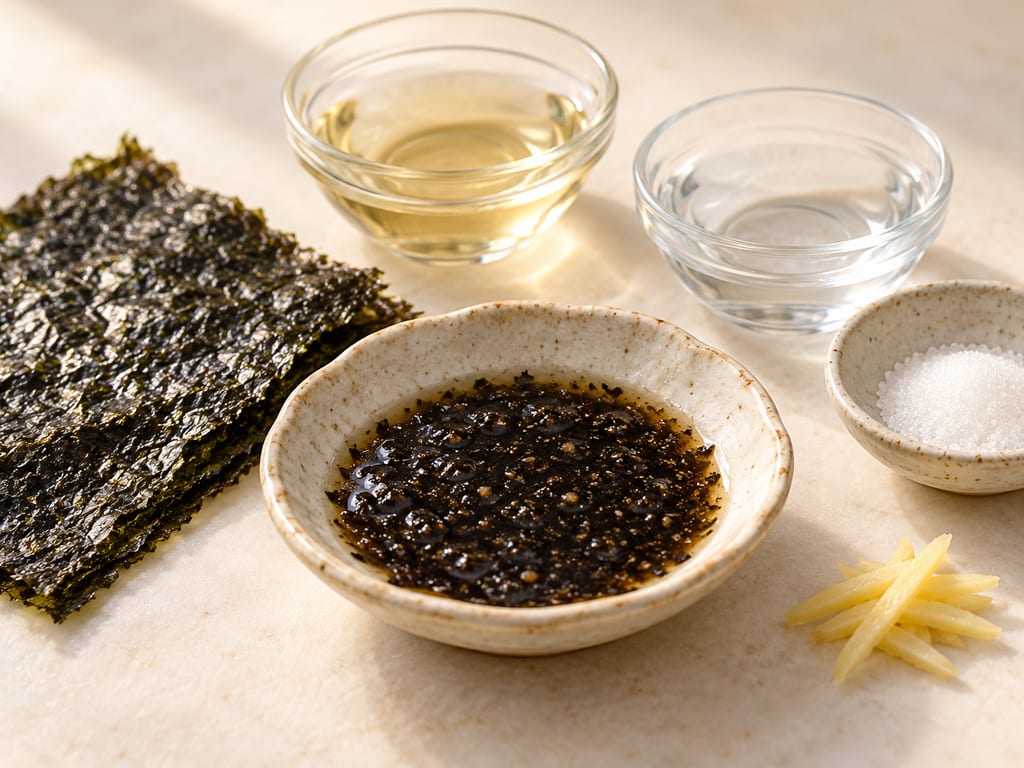
A non-fermented seaweed-and-vinegar dressing
A fresh condiment in which crumbled nori softens in lightly sweetened vinegar and water. It is not vinegar fermented from seaweed.
 FermenteaWhere food goes to change
Allioli · All i oli · Alioli · Catalan allioli
Traditional Catalan allioli is a dense emulsion of garlic, olive oil and salt made slowly in a mortar. This measured Barcelona-style version keeps egg-based garlic mayonnaise distinct.
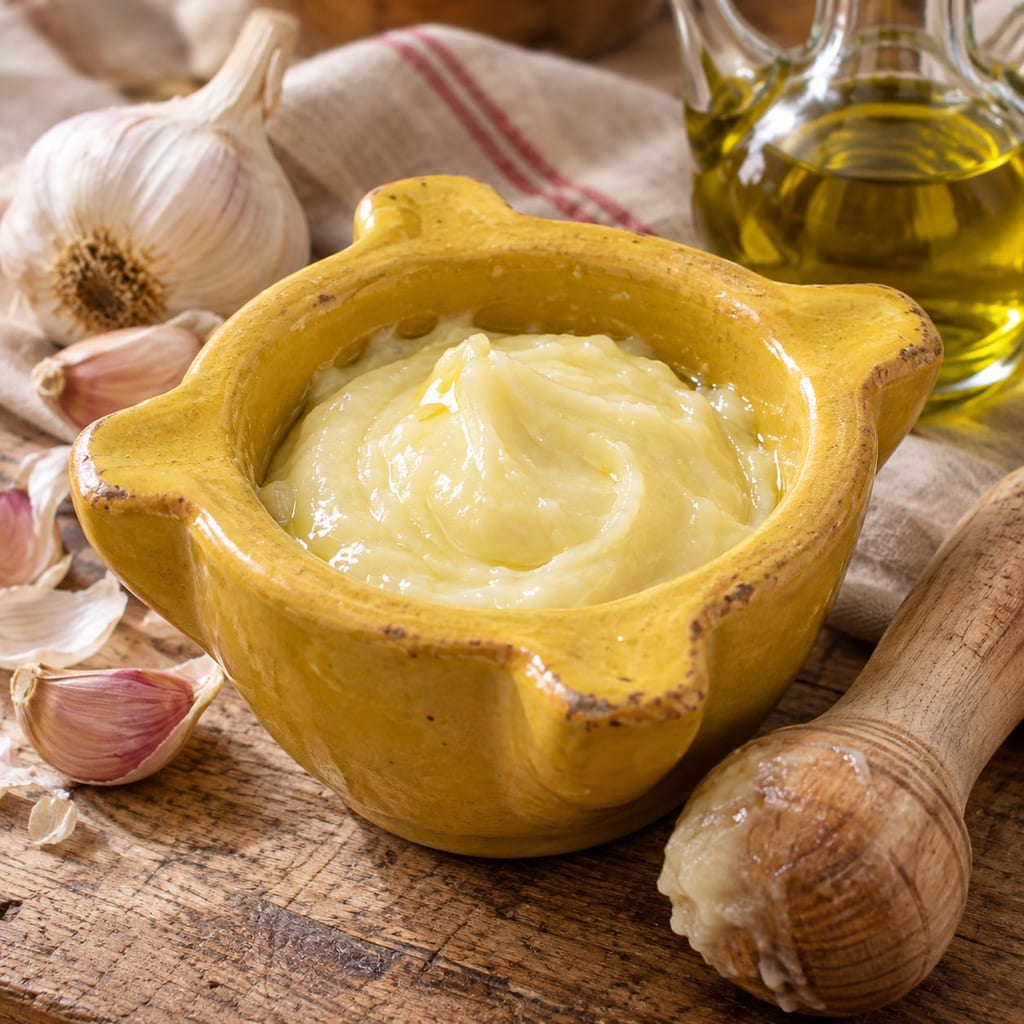
Allioli is named in Catalan from all, garlic, and oli, oil. The short phrase describes its defining ingredients and gives a useful boundary: the traditional sauce is a garlic-and-olive-oil emulsion, seasoned with salt. Pounded garlic becomes glossy and thick when oil is worked into it patiently. It tastes vivid rather than bland: first the fruit or pepper of the oil, then the pungency of raw garlic, with salt sharpening both. The texture can be close and dense enough to hold a pestle upright, though recipes and makers vary.
The term overlaps in everyday conversation with aioli, alioli and garlic mayonnaise. In Catalan culinary usage, egg yolk is a documented easier variant, but it changes the sauce’s structure and flavour. Egg yolk helps hold fat droplets in an emulsion; in eggless allioli, the garlic paste and slow handwork do the binding. This page follows an eggless Barcelona restaurant method, adding a little sherry vinegar as that source does. Many household recipes use just garlic, oil and salt. The measured vinegar version is one documented route, not a universal rule.
Allioli is treated in Catalan food writing as a cornerstone sauce, alongside preparations such as sofregit, samfaina and picada. A mortar and pestle are part of its image and its method: garlic is pounded until its fibres collapse into a moist paste, then oil is fed in little by little. A regional manual describes it as a sauce for rice and noodle dishes, suquets, meat, fried food and grilled food, and recalls it spread on toast. The sauce works both as a dip and as a concentrated seasoning alongside foods whose own juices soften its force.
Claims that allioli began in ancient Egypt, Greece or Rome appear in popular food writing, but similarities between old garlic-and-oil mixtures do not prove a direct line to a present-day Catalan recipe. The record is safer when dates are attached to actual texts. The Catalan dictionary labels the name’s first attestation as the fifteenth century. Researchers of medieval Catalan cookbooks describe a surviving recipe corpus from the mid-fourteenth through late-fifteenth centuries and emphasize that recipes shifted during copying and use. Related garlic sauces appear earlier than a stable modern recipe name; that is context, not proof that every old allada was today’s allioli.
By the twentieth century, the sauce was being codified in published Catalan cookbooks and later in the Corpus del patrimoni culinari català. Contemporary tourist and food institutions still foreground the mortar, garlic and olive oil while also acknowledging egg-yolk and machine-made alternatives. This mix of continuity and adaptation is ordinary food history: the ingredient idea can remain recognizable while tools, oil styles, exact amounts and preferred textures move from kitchen to kitchen.
The sauce’s name is itself a useful culinary note: all i oli literally identifies garlic and oil, a compact ingredient description in Catalan. Its use across the region is better documented than a single point of invention. Barcelona tourism and food archives locate it within a repertoire of sauces and everyday accompaniments, while dictionaries and cookbooks preserve changing spellings and methods. A careful account can celebrate that regional importance without assigning the present recipe to an ancient empire or claiming every Mediterranean garlic sauce is the same preparation.
Oil and water normally separate. Fresh garlic supplies moisture as well as solids, and pounding breaks its cells so the wet paste can surround many tiny oil droplets. Moving the pestle steadily while introducing oil in small amounts disperses those droplets through the paste. The sauce thickens as more oil is divided into smaller droplets and suspended. It is an emulsion formed by physical working, not fermentation and not a cooked sauce.
The mortar’s rough surface helps crush the garlic; salt added at the start seasons it and gives the cloves a little abrasion. A heavy pestle lets the cook apply pressure without needing a motor. As the sauce becomes more viscous, each addition of oil needs more time and movement to disappear. A fast pour can exceed what the paste can incorporate, leaving free oil and a slack, split mixture. The method is therefore governed by texture and pace rather than a fixed stopwatch.
Oil choice matters because the sauce carries its flavour almost undiluted. A soft, balanced extra-virgin oil gives fruit and pepper without overwhelming the garlic; a more bitter or forceful oil produces a stronger sauce. This is preference rather than a chemistry correction. The Barcelona restaurant’s measured version uses 200 ml extra-virgin oil with about 10 g garlic and a teaspoon of sherry vinegar. Other Catalan recipes leave the oil amount open and add it until the mortar accepts no more. That visual stopping point reflects garlic size, moisture and the maker’s chosen thickness.
The recipe below is adapted from the published Barcelona restaurant method in El Comidista. Its 10 g of garlic, 200 ml of extra-virgin olive oil, teaspoon of sherry vinegar and salt give readers a measurable starting point. It stays eggless and uses a mortar. The vinegar adds a little acidity and aroma, but it is not a tested preservation treatment. The batch is deliberately small enough to work by hand; a larger mortar load can be more tiring and harder to emulsify evenly.
Begin by pounding the garlic and salt to a smooth, damp paste. Large garlic pieces remain fibrous and make the emulsion less even. If there is a prominent central germ, removing it is a flavour choice that may reduce a bitter or sharp note; it does not make the sauce safer. Work in the vinegar, then start with only a little oil. Keep the pestle moving and wait until the surface looks cohesive before the next addition.
Once the initial paste takes oil without weeping, add a thread rather than separate drops. The cook should see the sauce gradually turn creamy and dense. If the pestle begins to drag, pause and let the paste catch up; the full 200 ml is an upper guide, not a target to force into the mortar. A cook who learns the response of a particular garlic and oil can vary the final volume. Stop when the sauce tastes and holds the consistency wanted for the meal.
A sauce that suddenly loosens and releases visible oil has split. The common cause is adding oil faster than the garlic paste can disperse it, or attempting to make too much at once. Return to slower additions and continuous movement. El Comidista’s restaurant method suggests a few drops of cold water if the emulsion breaks; that is a small rescue attempt, not a guarantee. Another option found in household cooking is to make a fresh garlic paste in a clean mortar and work the split mixture into it a little at a time. That method can rescue ingredients, but the result is less predictable than a sound first emulsion.
A very firm sauce may simply need a brief pause and gentler working. Do not dilute it automatically: traditional allioli is often intentionally thick. If the taste is too sharp, serve a smaller quantity alongside food, or make a later batch with a milder oil or less garlic. Changing a batch after it is formed can loosen it and make the texture uneven.
These are texture observations, not safety tests. A smooth, pungent sauce is not evidence of a safe storage process, and a split sauce is not necessarily spoiled. Smell and appearance cannot rule out hazards in improperly stored garlic-and-oil mixtures.
Adding egg yolk is a documented variant that can make oil incorporation easier and create a softer, more mayonnaise-like sauce. Egg yolk contains emulsifying compounds that help oil and water remain dispersed. Modern recipes sometimes add whole egg and use a blender, producing a quicker and more stable garlic mayonnaise. These preparations are useful and familiar, but they are not the same method as garlic, salt and oil pounded in a mortar. Food institutions often place both under the allioli or aioli umbrella; the names do not erase the difference.
Other regional versions alter the sauce with produce. Quince allioli, associated in Catalan sources with mountain areas, softens the sharp garlic with cooked fruit. A Barcelona provincial heritage record preserves a preparation in which boiled quince is drained, mixed with pounded garlic, and followed by slow olive-oil addition until thick. It is a distinct fruit-enriched variant rather than a universal addition to the plain sauce. Cookbooks and homes also choose different oils, garlic strength and texture, so the word allioli names a family with a strong basic pattern rather than a single exact gram formula.
The sauce may be served directly in the mortar, which keeps the presentation tied to the making tool and avoids transferring a thick emulsion. It is often offered with grilled meat, potatoes, beans and sausage, or rice and noodle dishes. A little can be stirred into hot food near the end, where warmth and liquid loosen it; it should not be treated as a frying oil or a sauce meant to boil for a long time.
These differences are visible at the table. Eggless allioli tends to be intense and thick; an egg version is generally milder and creamier because its emulsifier is different, not because the garlic has been cooked. Quince brings sweetness and fruit while adding its own solids and water, so its texture is not simply plain allioli with a garnish. A machine changes the work and the degree of incorporation; it may produce a smoother sauce quickly, but it does not make the mortar version obsolete. Calling out these distinctions helps a cook choose a particular sauce for a particular plate.
Raw garlic is moist and low in acid. When garlic sits under oil, oxygen is limited; university extension guidance warns that this combination can support Clostridium botulinum if it is stored improperly. A spoonful of vinegar in this recipe is there for flavour and does not establish a safe pH. Nor does the fact that allioli is traditionally made in homes create a validated shelf-stable process. Do not leave it at room temperature for later, can it, or top it up with fresh garlic and oil.
Make only what is needed for the meal and serve it promptly. Penn State Extension advises fresh garlic-in-oil mixtures be refrigerated at 4°C/40°F or below and used within three days, frozen, or discarded. This recipe’s cautious instruction is to make it fresh and treat leftovers under that guidance; it does not promise that every batch has the same storage life. If the sauce has sat out for an extended period, discard it rather than relying on smell or taste.
The short useful life suits allioli’s character. Its raw garlic aroma is brightest when freshly crushed, and the emulsion is at its most supple just after the oil has been worked in. A small bowl beside hot food provides contrast: cool, rich, garlicky and sharply fragrant, with the olive oil lingering after the bite.
Watch how the paste changes as it accepts oil. At first the crushed garlic looks wet and granular. A few drops of oil make a glossy slurry, which can seem loose before it begins to thicken. Continue at a pace that lets the pestle draw the mixture together. When the sauce coats the mortar and folds around the pestle instead of flowing immediately back, it has reached the dense style described in Barcelona’s regional recipe sources. This is a practical cue, not a required texture: some tables prefer a softer sauce that can be spooned over rice or fish.
Oil colour can shift the finished sauce from pale cream to yellow or greenish gold. That colour comes from the oil and garlic, not from egg or an added dye. A very green, bitter or peppery oil can dominate the sauce, while a mild oil lets the raw garlic lead. The cook can taste a little oil before starting and decide whether its intensity suits the meal. If the sauce is too strong once made, dilution with more oil may disturb the emulsion; choose the oil and garlic balance before pounding.
Allioli also connects the raw ingredients of the pantry to the table. Garlic stores well as a bulb, but once peeled and crushed it releases its pungent aroma and moisture. Olive oil is both the main flavour and the continuous phase of the emulsion. Salt seasons the garlic paste, while a small amount of vinegar, where a recipe includes it, brightens the taste. There is no heat stage to mellow the garlic or evaporate water. That is why fresh grinding, measured oil and immediate service matter to both flavour and handling.
Catalan culinary sources describe allioli as garlic and olive oil emulsified by hand in a mortar. Medieval Catalan cookbooks contain related garlic sauces, while the name allioli is documented in later medieval and early modern writing; exact origin stories that claim an ancient invention are not established by the sources used here.
Yield 1 cup · Scaling: source batch only
Make for immediate service. Refrigerate leftovers promptly at 4°C/40°F or colder and use within three days, or discard; never keep garlic-and-oil mixtures at room temperature.
Control sourceThis fresh, raw garlic-and-oil sauce is not shelf-stable. Do not leave it at room temperature for storage or attempt to preserve it in a jar.
The vinegar is included for flavour and does not constitute a tested acidification process. The recipe makes no acidity or shelf-life claim.
No source in this record establishes a place.
A fresh condiment in which crumbled nori softens in lightly sweetened vinegar and water. It is not vinegar fermented from seaweed.
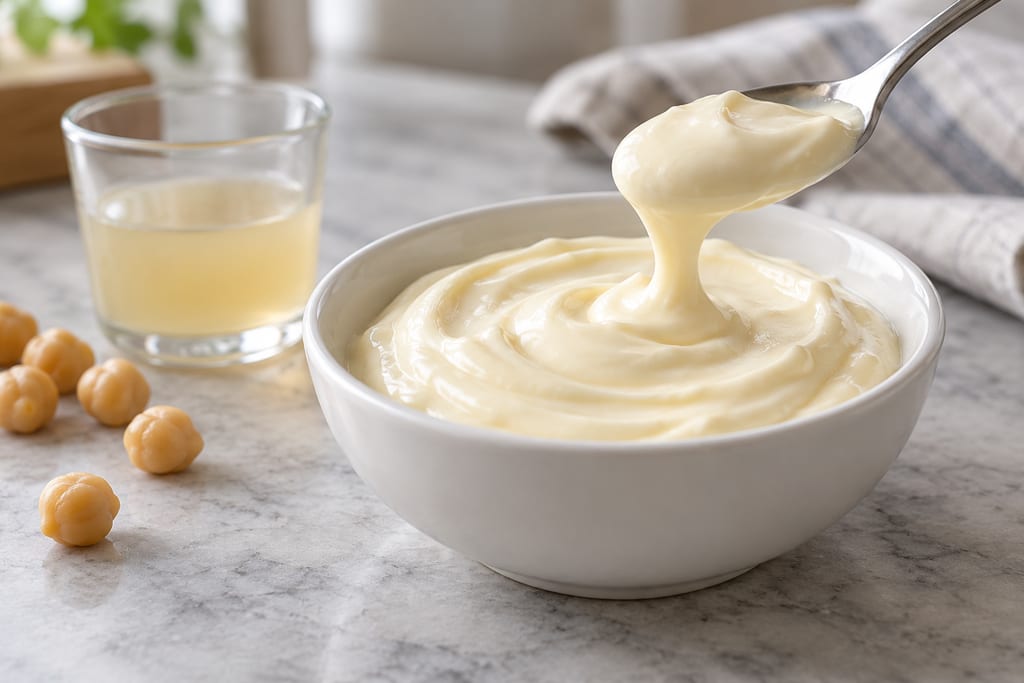
An eggless, untested emulsion made with canned chickpea liquid. Nominal yield 255 g.
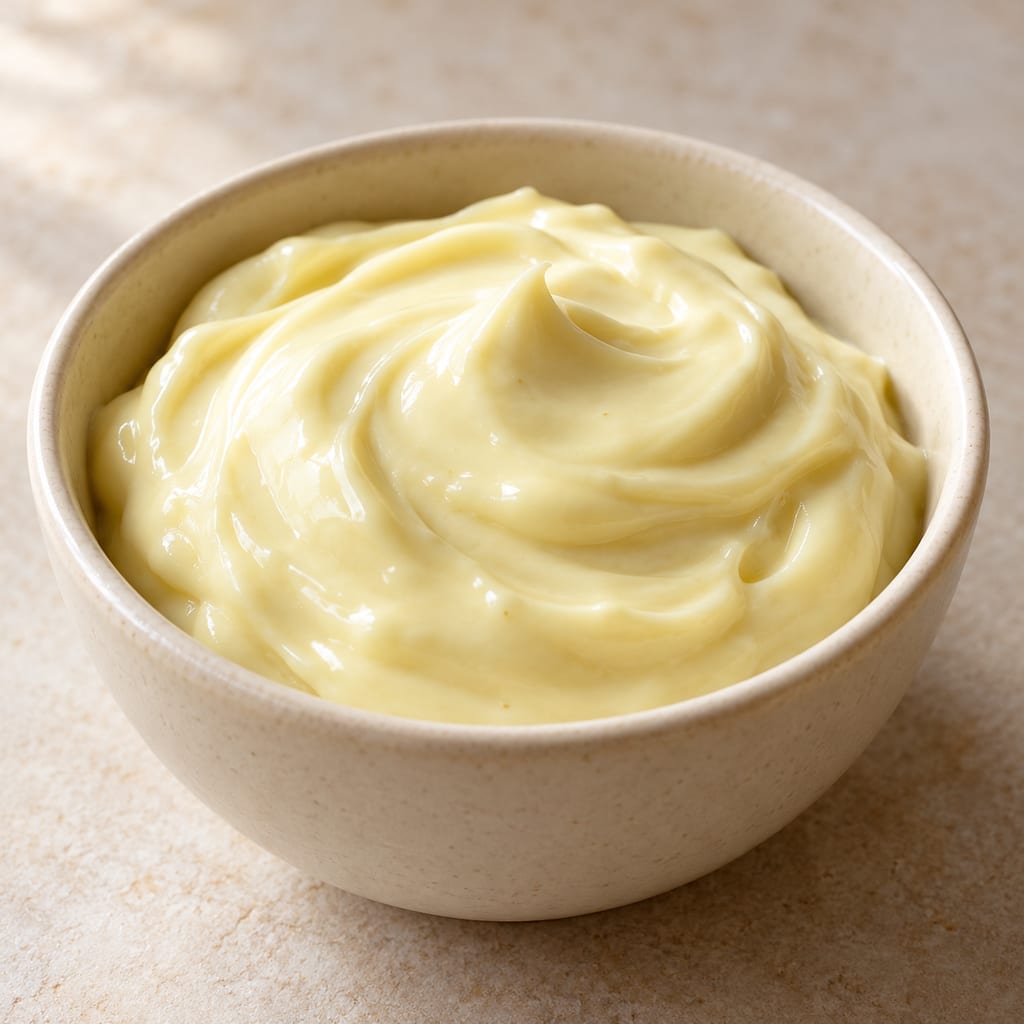
Avocado-oil mayonnaise is an ordinary egg-and-oil emulsion in which avocado oil supplies the oil phase. The oil changes flavour and colour, and it does not preserve the sauce.

Bechamel is a white sauce of milk thickened with a butter and flour roux, one of the French mother sauces, and the base from which Mornay and other cheese and cream sauces are made.
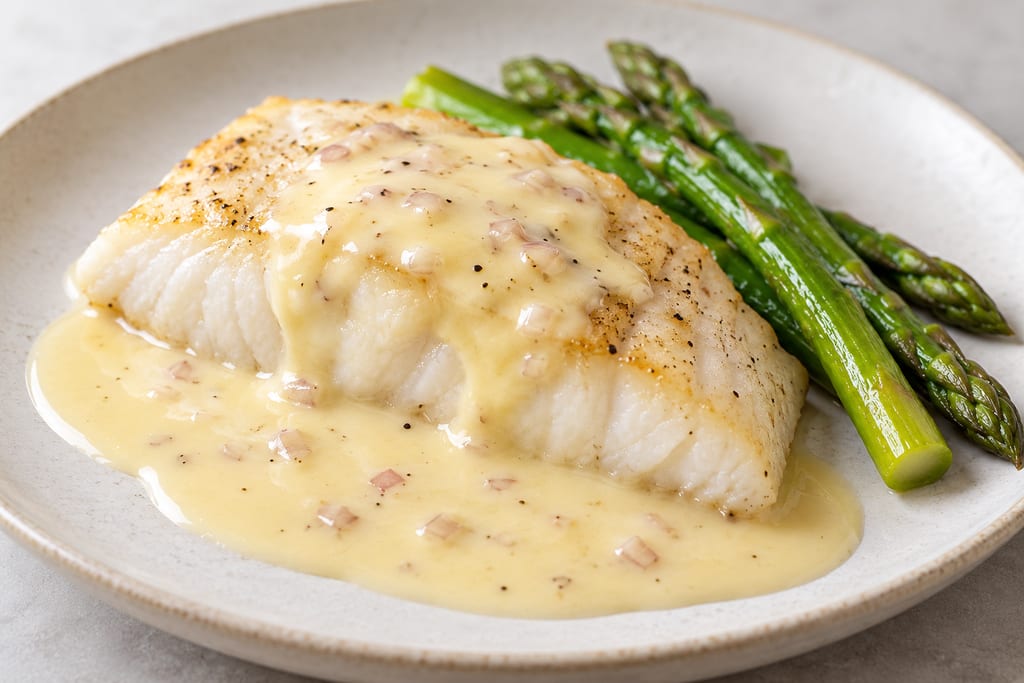
Beurre blanc is a warm emulsion of cold butter whisked into a reduction of white wine, vinegar or lemon juice and shallot, a sauce from the Loire Valley and its red-wine version, beurre rouge.
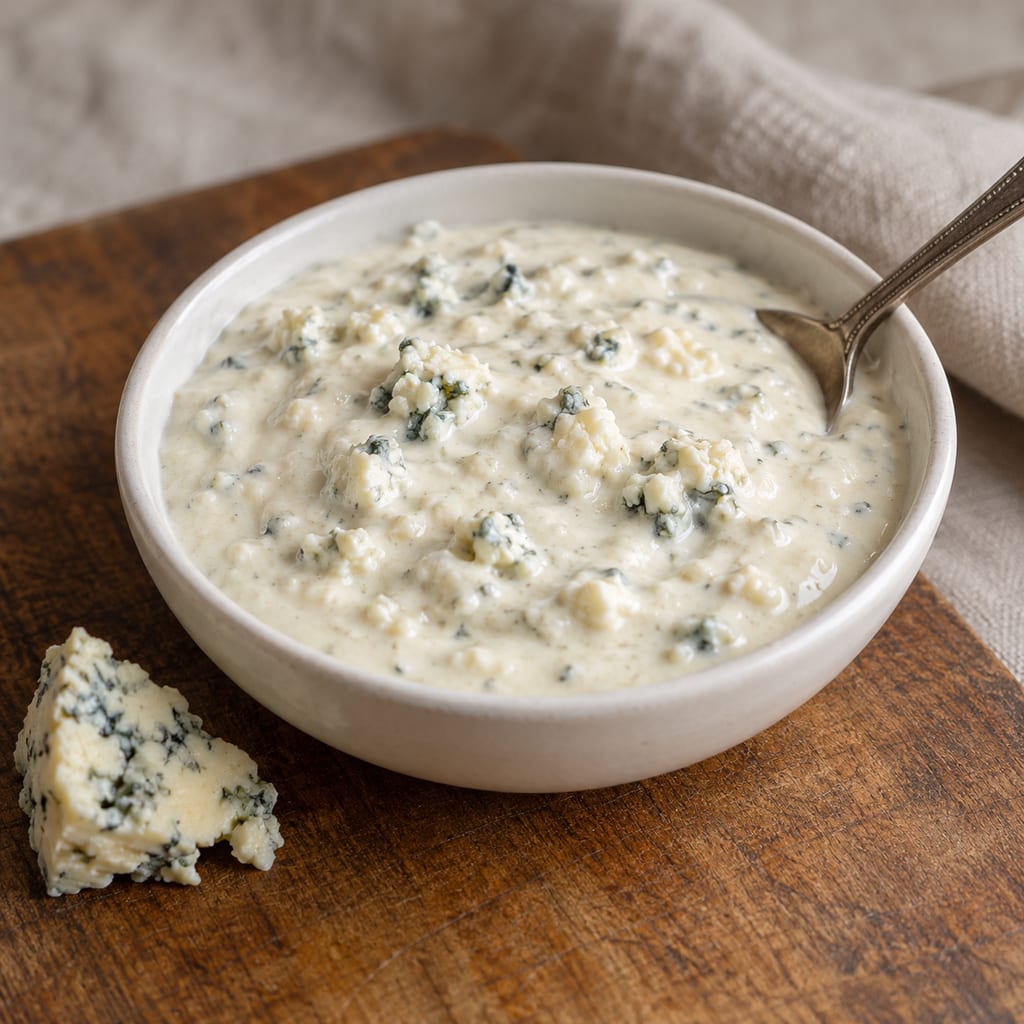
Blue cheese dressing is a creamy dressing built on crumbled blue cheese mashed into buttermilk, with sour cream, mayonnaise, vinegar and seasoning, and kept cold for up to two weeks.
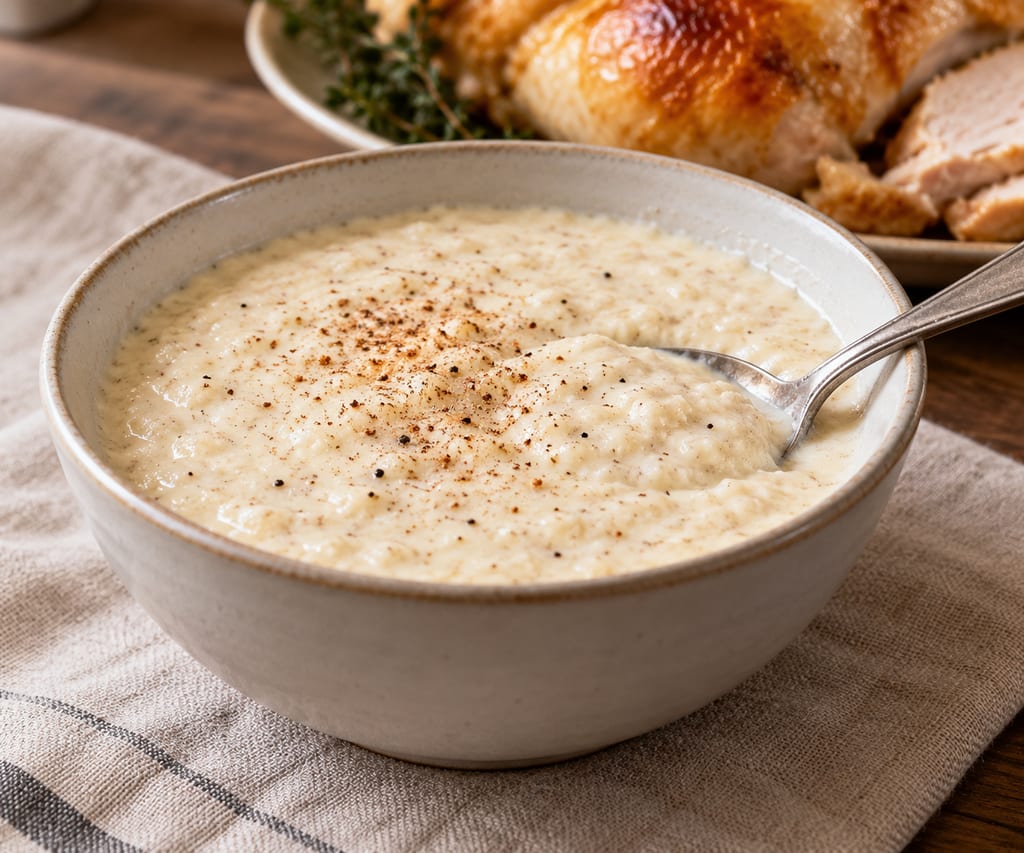
Bread sauce is a British sauce of milk infused with onion, clove and bay, thickened with stale breadcrumbs and finished with butter, served with roast chicken or turkey.
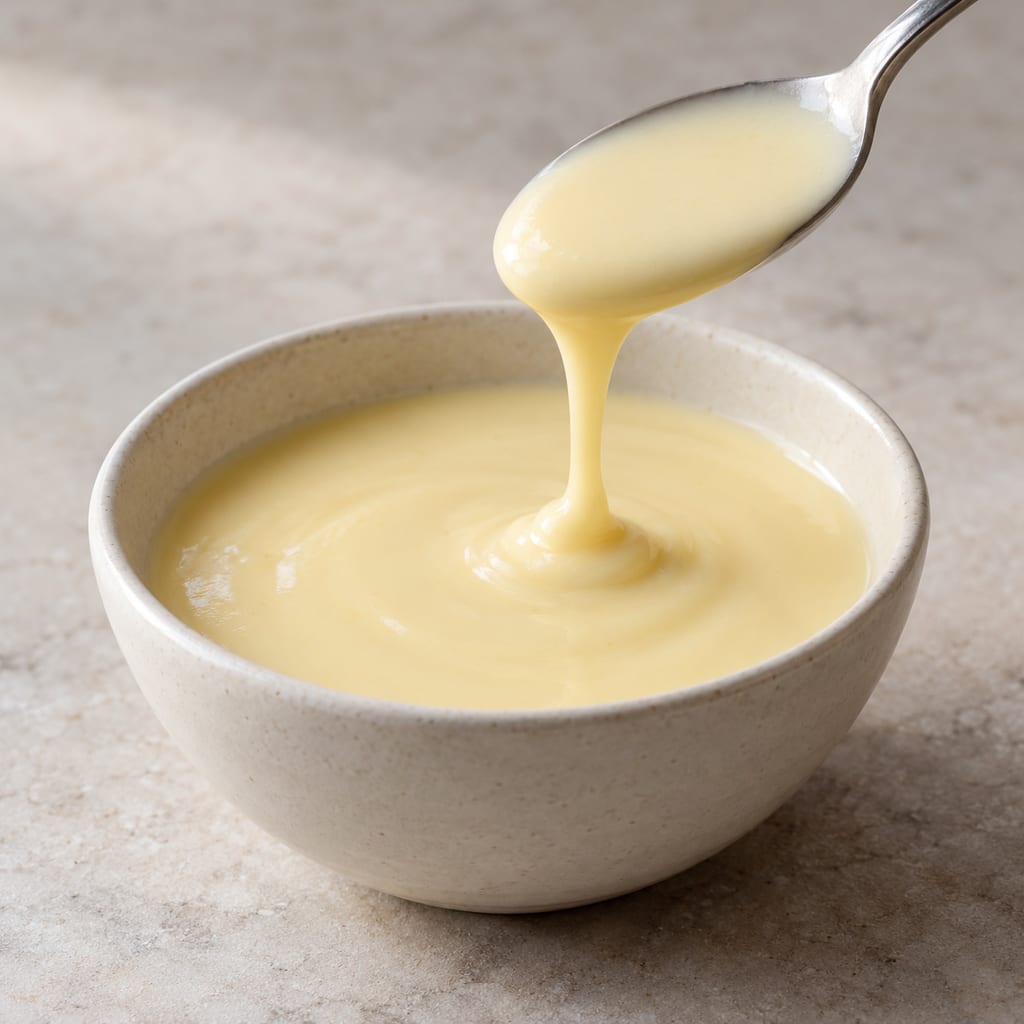
Starch-thickened salad-cream prototype with pasteurised yolk added after cooling; not a Heinz copy. Approximate yield 300 g.
No community contributions have been published for this entry yet.
Sign in to contribute. Published comments and photos are free to read.
Tourism of BarcelonaRegional identity · Method · Variation · Uses
Salsa allioliThe Barcelona tourism office describes pounding garlic and salt in a mortar, then adding olive oil drop by drop while stirring in one direction until a thick sauce forms.
It lists egg yolk and electric blending as variations.
Cited in: Garlic, oil and a name that states the recipe; How a garlic paste holds olive oil; Reading the sauce in the mortar
El País / El ComidistaMethod · Ingredients · History · Distinction
Cómo hacer el alioli perfecto (sin usar huevo y convertirlo en mayonesa)The article gives a Barcelona restaurant method using about 10 g garlic, 200 ml extra-virgin olive oil, a teaspoon of sherry vinegar and salt.
It says to pound garlic with salt, add vinegar, incorporate oil gradually while moving the pestle, and serve the resulting thick paste; it distinguishes eggless allioli from garlic mayonnaise.
Cited in: Garlic, oil and a name that states the recipe; How a garlic paste holds olive oil; A small mortar batch; What to do when the emulsion splits; Fresh sauce, not a preserved condiment; Reading the sauce in the mortar
Gastroteca de CatalunyaRegional history · Uses · Variations
Àpats Catalunya: Manual of Catalan dishesThe manual describes allioli as one of four essential Catalan sauces, traditionally made in a mortar, served with rice, noodles, suquets, meat, grilled or fried foods, and formerly on toast.
It distinguishes the traditional garlic-oil emulsion from common egg-yolk versions and notes quince allioli as a recognized mountain-area variant.
Cited in: Garlic, oil and a name that states the recipe; A Catalan table sauce with a long, careful record; Allioli, egg versions and other branches; Reading the sauce in the mortar
Gran Diccionari de la Llengua CatalanaName · Definition · History
AllioliThe dictionary defines allioli as peeled garlic finely pounded in a mortar, with oil added and beaten into an emulsion.
Its entry gives a 15th-century first-attestation label for the word.
Cited in: Garlic, oil and a name that states the recipe; A Catalan table sauce with a long, careful record
Scripta / Universitat de ValènciaHistory · Historical context
«Que bon dictat era e verdader»: constants i divergències en els llibres de cuina medievals en llengua catalanaThe 2023 study describes a corpus of four surviving medieval Catalan cookbooks dated from the mid-14th through late-15th centuries and explains that practical transmission altered recipes over time.
It supports caution about treating a later sauce name as a single unchanged medieval formula.
Cited in: A Catalan table sauce with a long, careful record
Penn State ExtensionSafety · Handling
Canning and Freezing Questions and AnswersThe extension guidance warns that fresh garlic or vegetables stored in oil may support Clostridium botulinum growth and advises making garlic-oil mixtures fresh, refrigerating leftovers for use within three days, freezing, or discarding.
The sauce recipe does not claim the guidance validates this allioli as a preserved product.
Cited in: What to do when the emulsion splits; Fresh sauce, not a preserved condiment
El Nacional / La GourmeteriaMethod · Regional variation
Allioli autènticThe recipe documents an eggless mortar method with three or four garlic cloves, salt and mild olive oil, pounded to a paste and emulsified by gradual oil addition.
It reports the sauce can split and should be made and eaten immediately; its author recommends a mild rather than very intense olive oil.
Cited in: How a garlic paste holds olive oil; A small mortar batch; What to do when the emulsion splits; Allioli, egg versions and other branches
Diputació de BarcelonaRegional variation · History
Receptari de CuinaThe municipal heritage entry records allioli de codony with quince, garlic, olive oil and salt, prepared by pounding garlic, incorporating softened quince and slowly emulsifying oil in a mortar.
Its biographical note connects a quince-allioli preparation to Catalan cook Ignasi Domènech's book La Teca.
Cited in: Allioli, egg versions and other branches