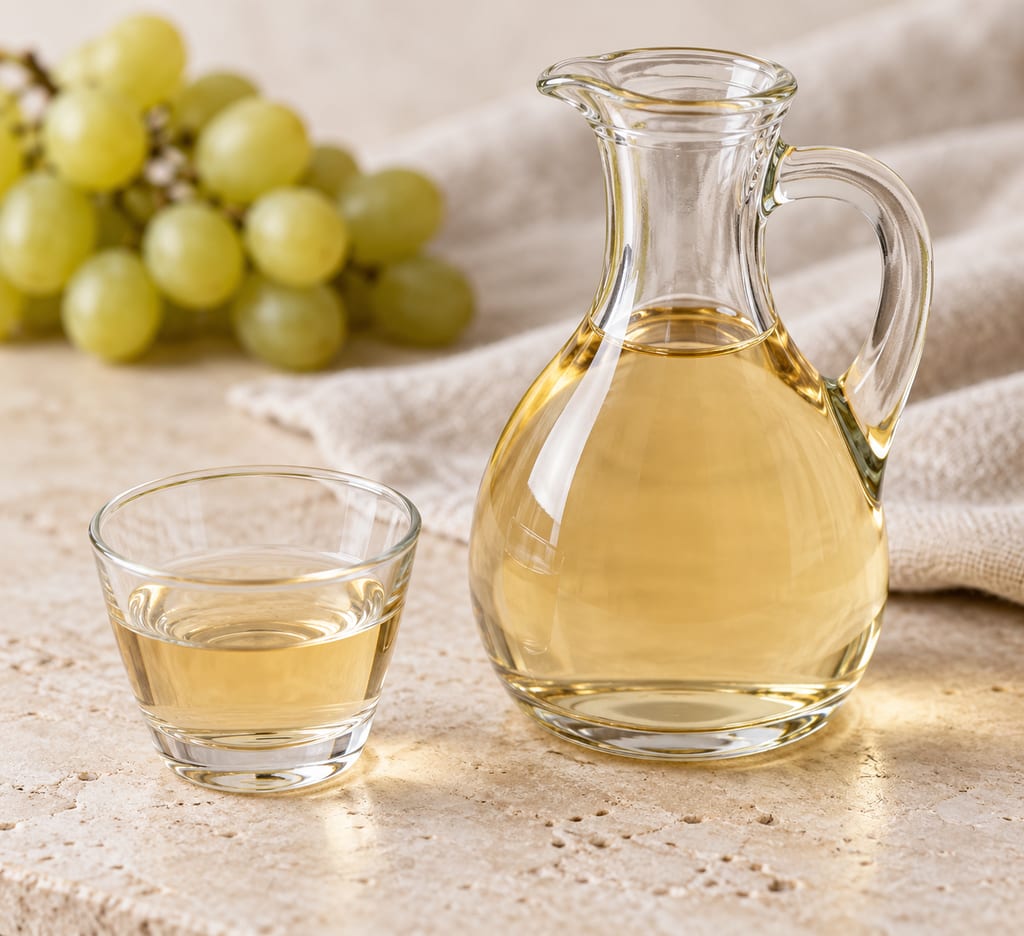
White-wine vinegar
White-wine vinegar is made when acetic acid bacteria oxidise the alcohol in finished white grape wine, yielding a pale, wine-derived souring condiment for dressings, sauces and cooking.
 FermenteaWhere food goes to change
White butter · Beurre rouge (red-wine version) · red butter
Beurre blanc is a warm emulsion of cold butter whisked into a reduction of white wine, vinegar or lemon juice and shallot, a sauce from the Loire Valley and its red-wine version, beurre rouge.
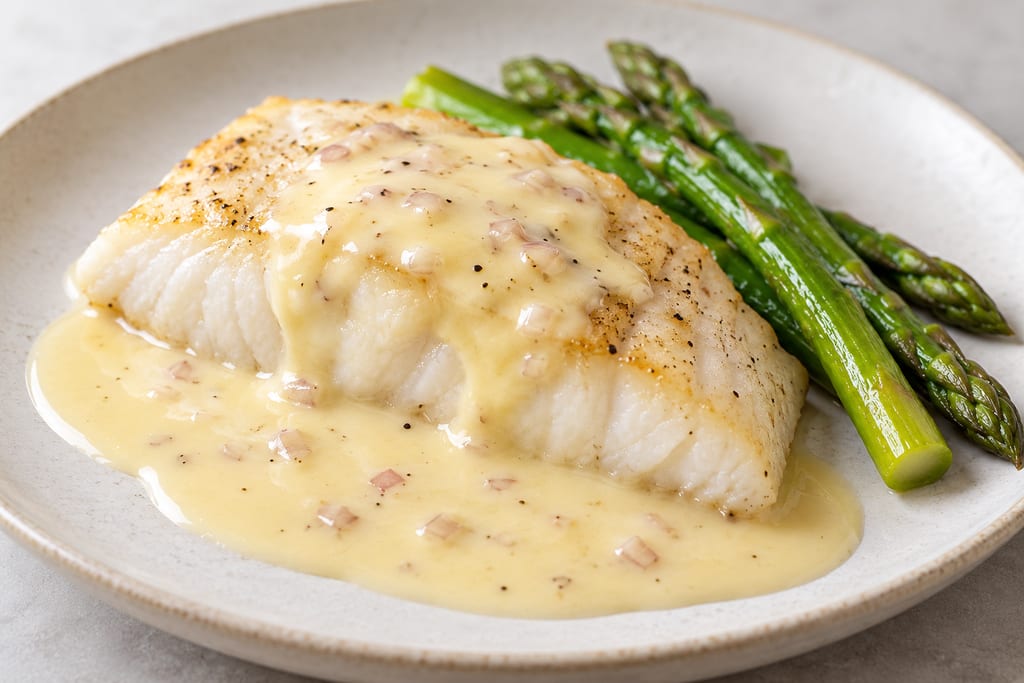
Beurre blanc is a warm emulsion of cold butter whisked into a reduction of white wine, vinegar or lemon juice and shallot. It is a butter sauce, not an egg sauce, and its emulsion is held together by the butter's own emulsifiers, including a trace of lecithin, which form an oil-in-water emulsion.
The reduction of acid keeps the milk solids suspended, which is why the sauce stays creamy instead of turning oily.
The sauce is recorded as early as 1669, when Le nouveau cuisinier francois suggests it with pumpkin. Several towns claim the modern version. In one account a mix-up at the Chateau de Goulaine around 1900 left the sauce without its egg yolk, and the head cook Clemence Lefeuvre was congratulated on her new sauce.
Other accounts place the invention at her restaurant in Saint-Julien-de-Concelles, where a diner's remark led her to add chopped shallots, vinegar and white pepper, according to her grandson, reported in 2014. The food writer Curnonsky called her the high priestess of the beurre blanc.
The reduction is made from white wine and vinegar or lemon juice with very finely chopped shallots, cooked until the acids are concentrated. Cold whole butter is then whisked in gradually, and the sauce is served hot or warm.
The article gives no temperature for the emulsion. The lead specifies cold butter added slowly, so the butter should not be melted before it goes in, and the heat should be kept low enough that the sauce does not separate.
Beurre rouge uses dry red wine in place of the white wine and vinegar. Madame Prunier recommended it for barbel, carp, eel and tench. The white version is traditionally served with pike, and it also suits other fish, vegetables and eggs.
The article does not cover storage or holding. A sauce that is kept warm or stored needs a tested method that this page does not give.
Several towns claim the modern version. In one Nantes-area account, a mix-up at the Chateau de Goulaine around 1900 led the head cook, Clemence Lefeuvre, to serve a sauce without its egg yolk, and she was congratulated on her new sauce. Other accounts place her invention at her restaurant in Saint-Julien-de-Concelles, where, according to her grandson, a diner's remark that it tasted like mussel sauce led her to add chopped shallots, vinegar and white pepper.
Scaling: source batch only
A warm dairy emulsion held at serving temperature supports bacterial growth; the article gives no holding or storage advice.
Hazard sourceServe promptly; use a tested holding method for any batch kept warm or stored
Control sourceThe sources give no storage or holding advice for beurre blanc. Do not treat this page as a holding method.
Named in one account of the modern sauce's invention; the article presents several towns' claims.
The sauce is recorded in Le nouveau cuisinier francois (1669).
White-wine vinegar is made when acetic acid bacteria oxidise the alcohol in finished white grape wine, yielding a pale, wine-derived souring condiment for dressings, sauces and cooking.
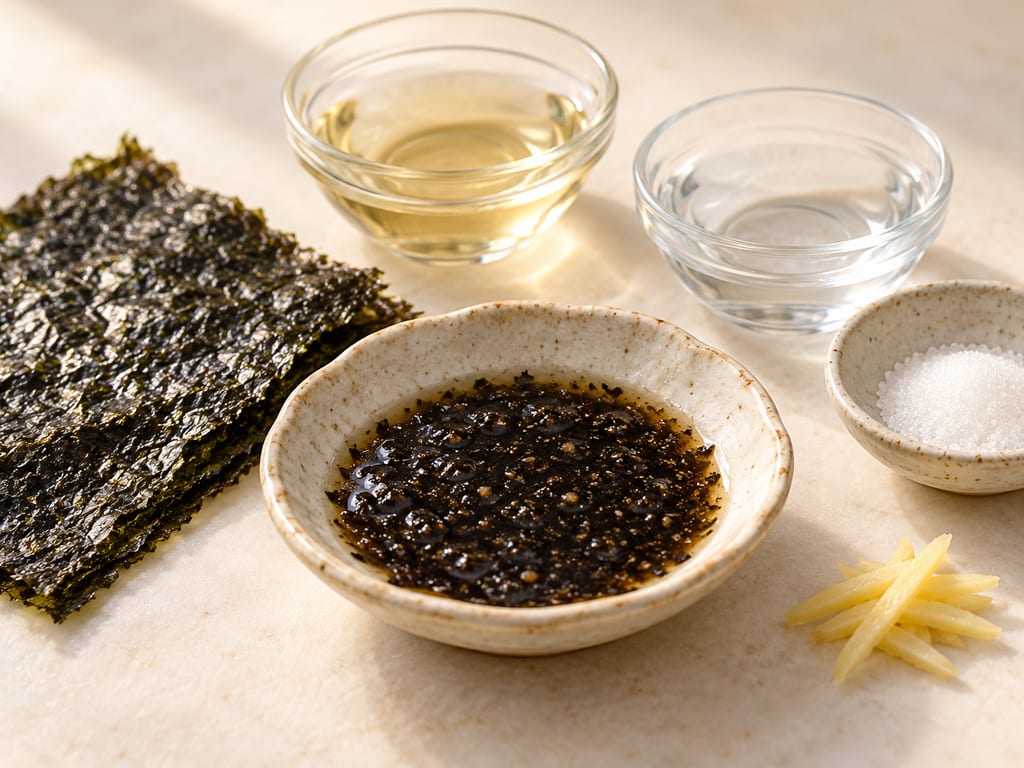
A fresh condiment in which crumbled nori softens in lightly sweetened vinegar and water. It is not vinegar fermented from seaweed.
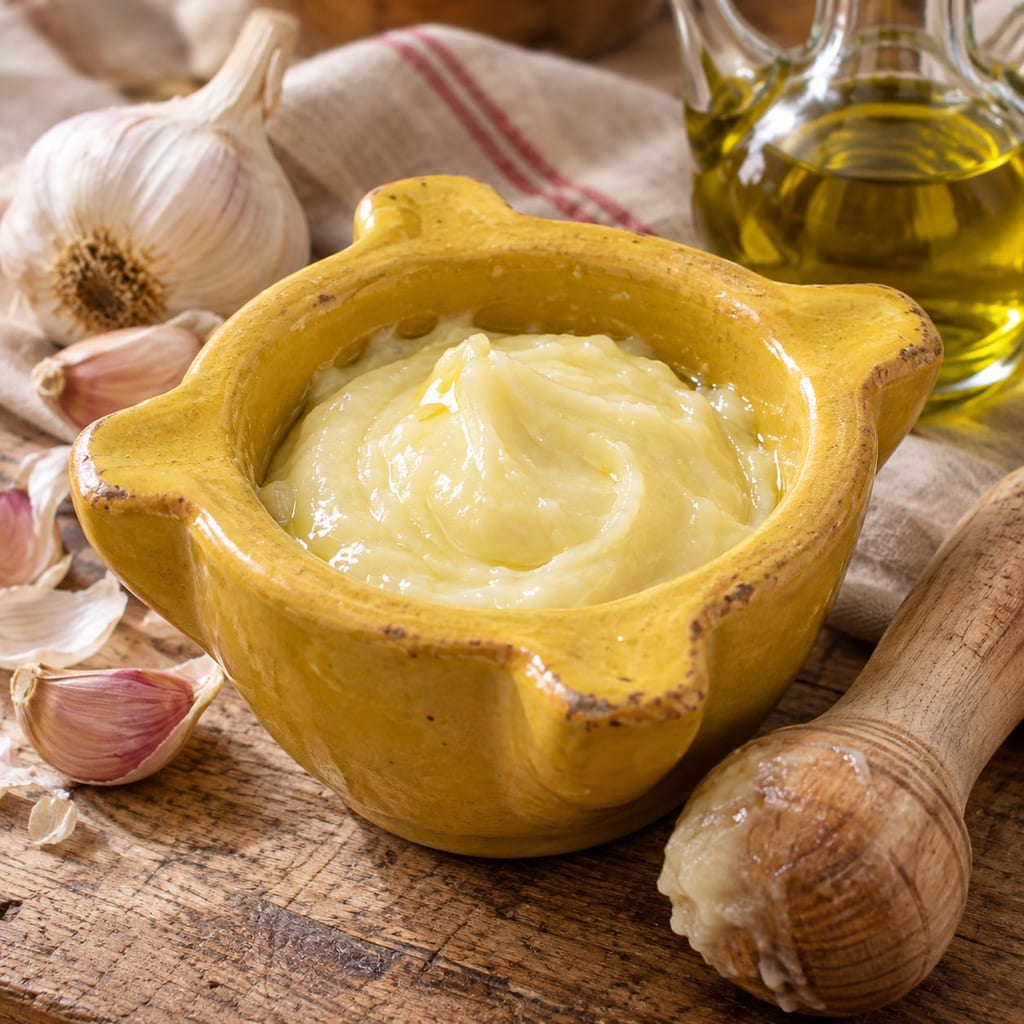
Traditional Catalan allioli is a dense emulsion of garlic, olive oil and salt made slowly in a mortar. This measured Barcelona-style version keeps egg-based garlic mayonnaise distinct.
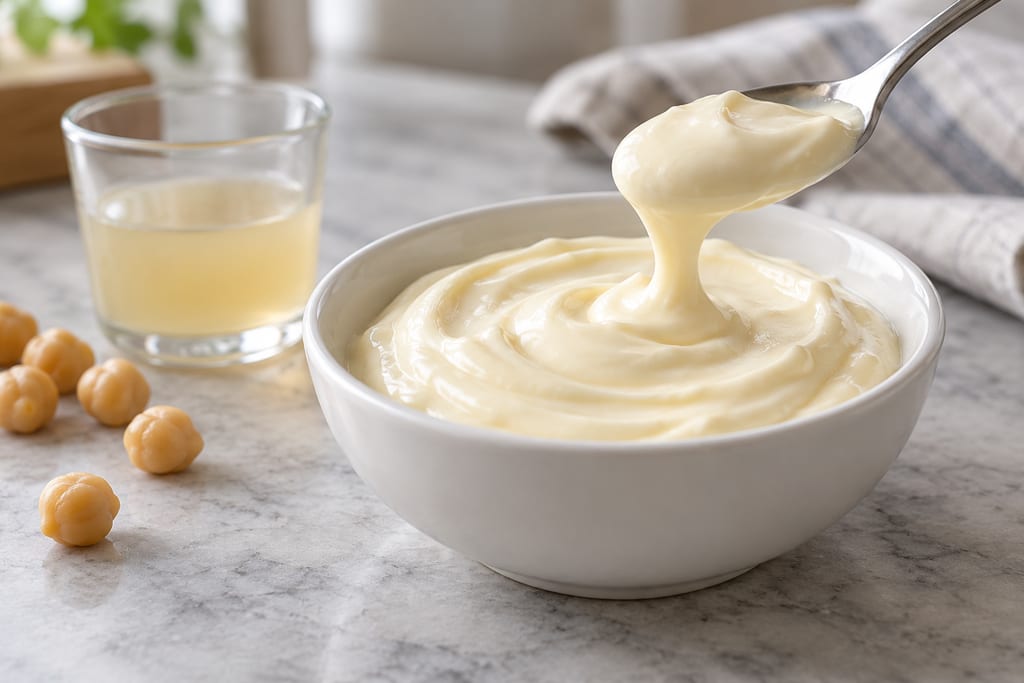
An eggless, untested emulsion made with canned chickpea liquid. Nominal yield 255 g.
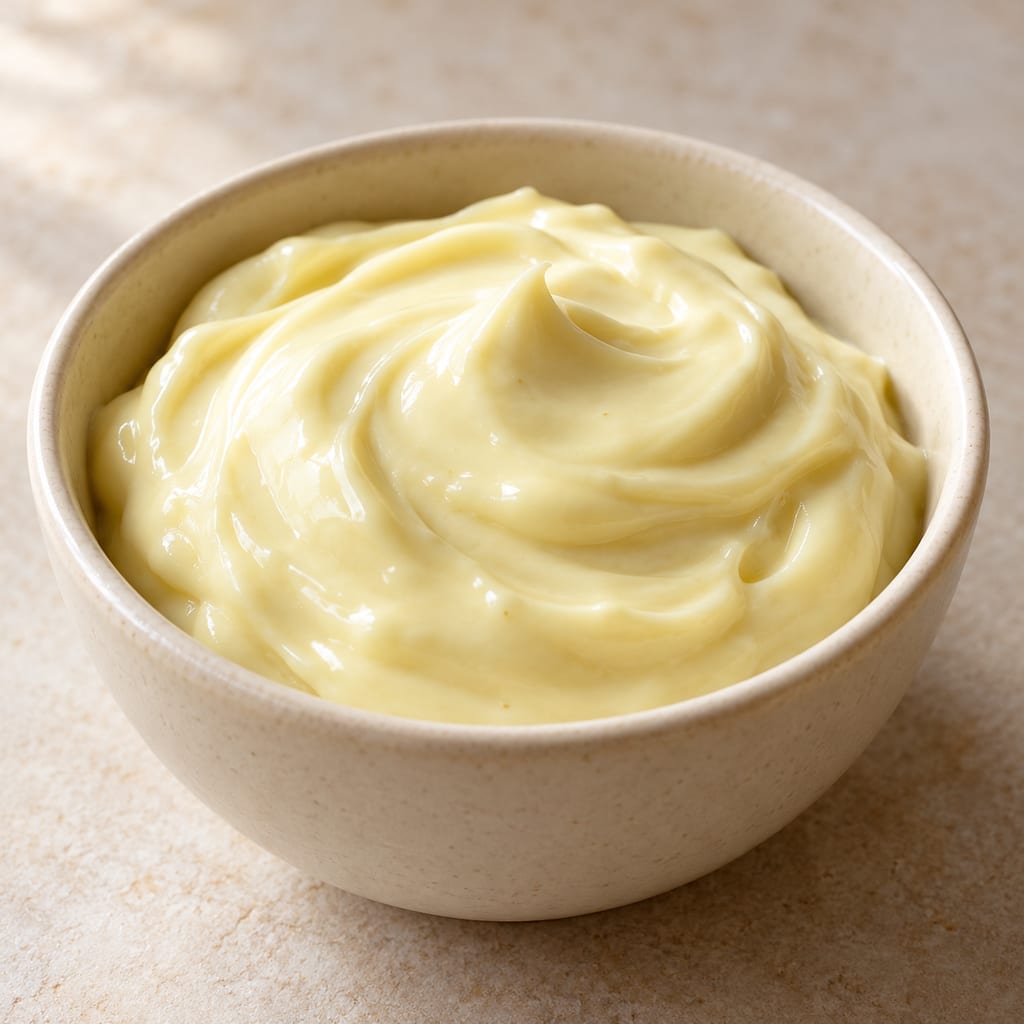
Avocado-oil mayonnaise is an ordinary egg-and-oil emulsion in which avocado oil supplies the oil phase. The oil changes flavour and colour, and it does not preserve the sauce.

Bechamel is a white sauce of milk thickened with a butter and flour roux, one of the French mother sauces, and the base from which Mornay and other cheese and cream sauces are made.
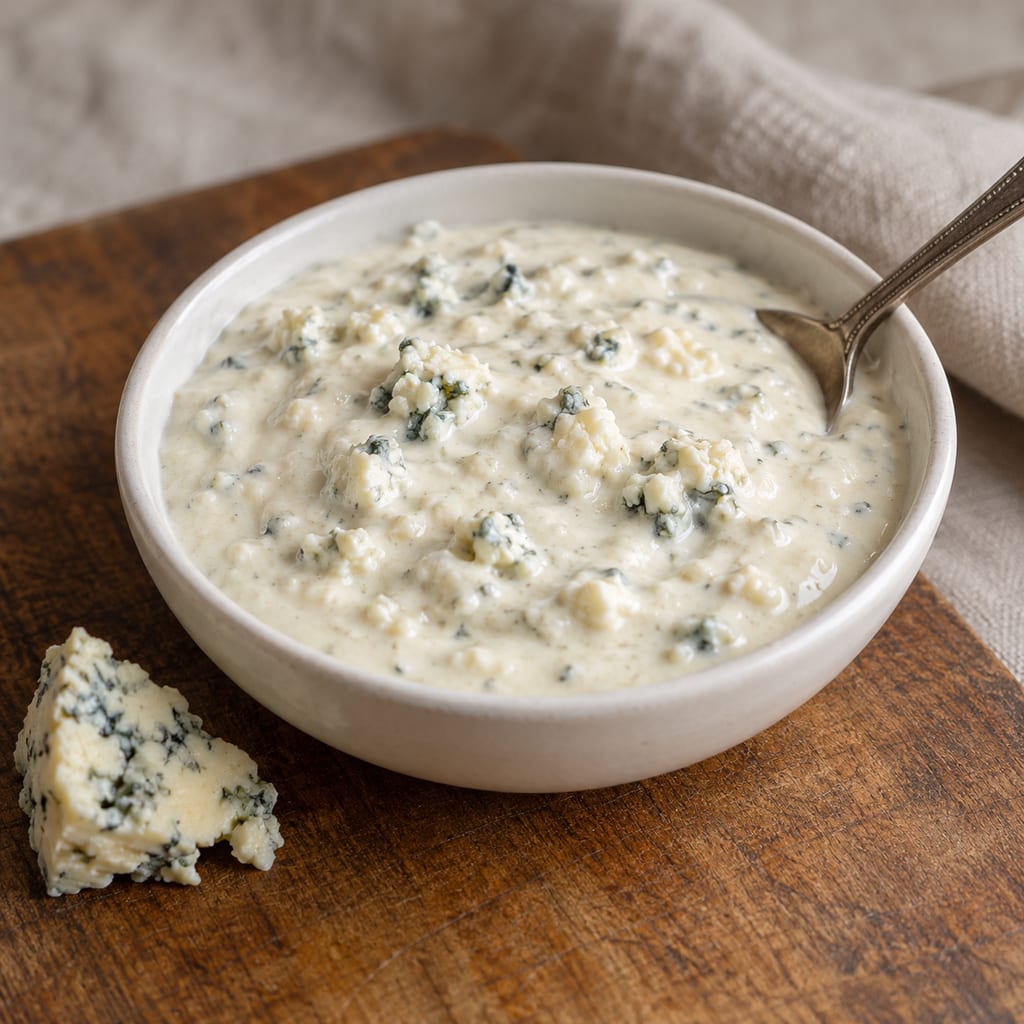
Blue cheese dressing is a creamy dressing built on crumbled blue cheese mashed into buttermilk, with sour cream, mayonnaise, vinegar and seasoning, and kept cold for up to two weeks.
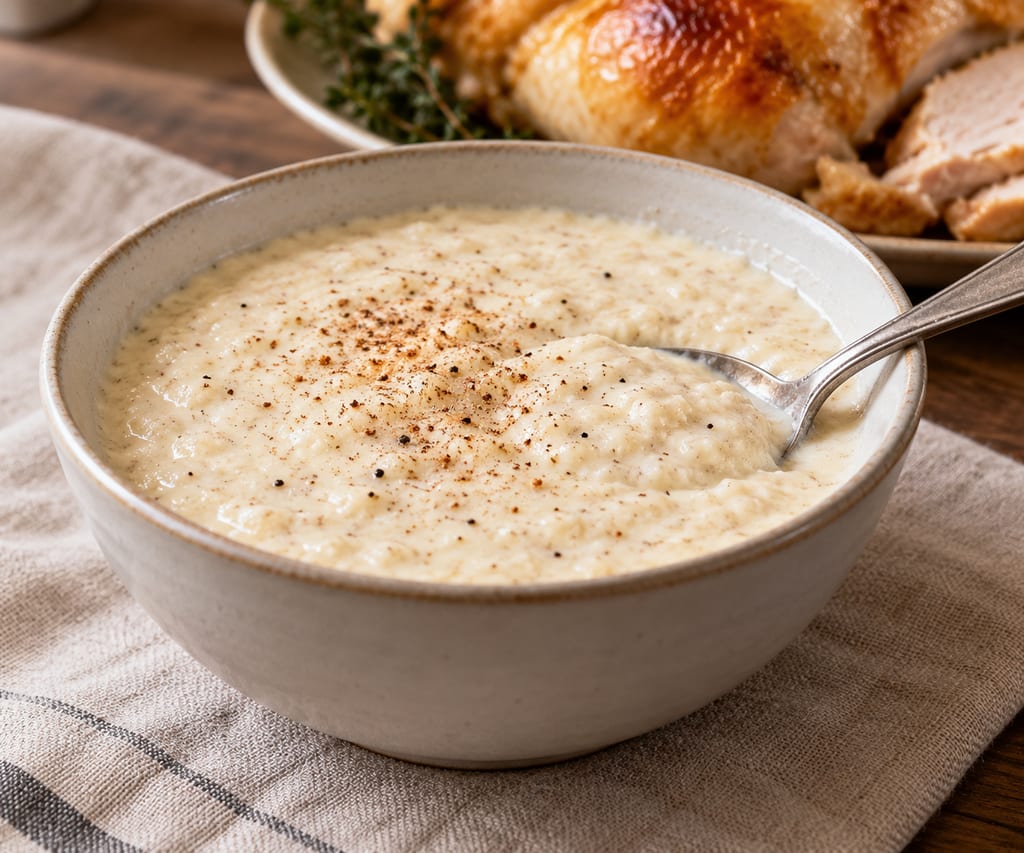
Bread sauce is a British sauce of milk infused with onion, clove and bay, thickened with stale breadcrumbs and finished with butter, served with roast chicken or turkey.
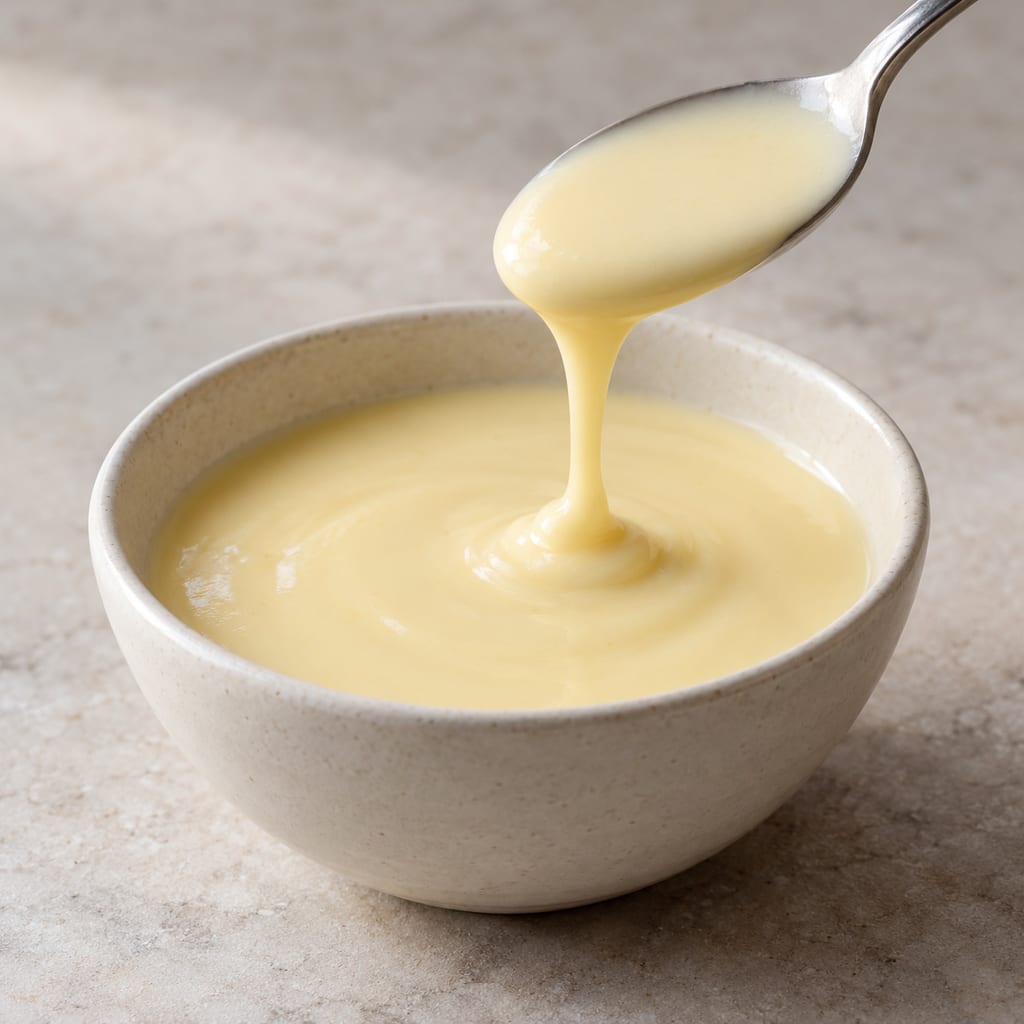
Starch-thickened salad-cream prototype with pasteurised yolk added after cooling; not a Heinz copy. Approximate yield 300 g.

A gelling polysaccharide extracted from red seaweeds, sold as kanten strips or powder; it sets firm at a low concentration and stays solid until about 85 °C.

A Dominican table and seasoning condiment of sour orange juice, mixed with lime and salt and bottled raw; garlic, oregano or a hot pepper may be added for meat or a spicier bottle.

Cicerbita alpina is an alpine perennial whose tender shoots and leaves have been eaten raw or cooked. Sámi milk preparations and modern Carnian dishes are distinct uses, with serious identification and preservation limits.

Japanese skipjack tuna cooked, then repeatedly smoked and dried over a wood fire by the hand-fired tebiyama method into a hard block for shaving into dashi: the first stage of katsuobushi.

A Swedish-style spirit vinegar made by fermenting neutral alcohol with live vinegar bacteria, with a separate guide to commercial ättika strengths.

A yeast-raised wheat ring shaped from a firm dough, briefly boiled and baked. This source-batch formula gives a gently malted crust and a chewy crumb.

A warm dip of garlic, anchovy and olive oil, often enriched with butter, that Piedmont serves over a flame with raw and cooked vegetables and bread.
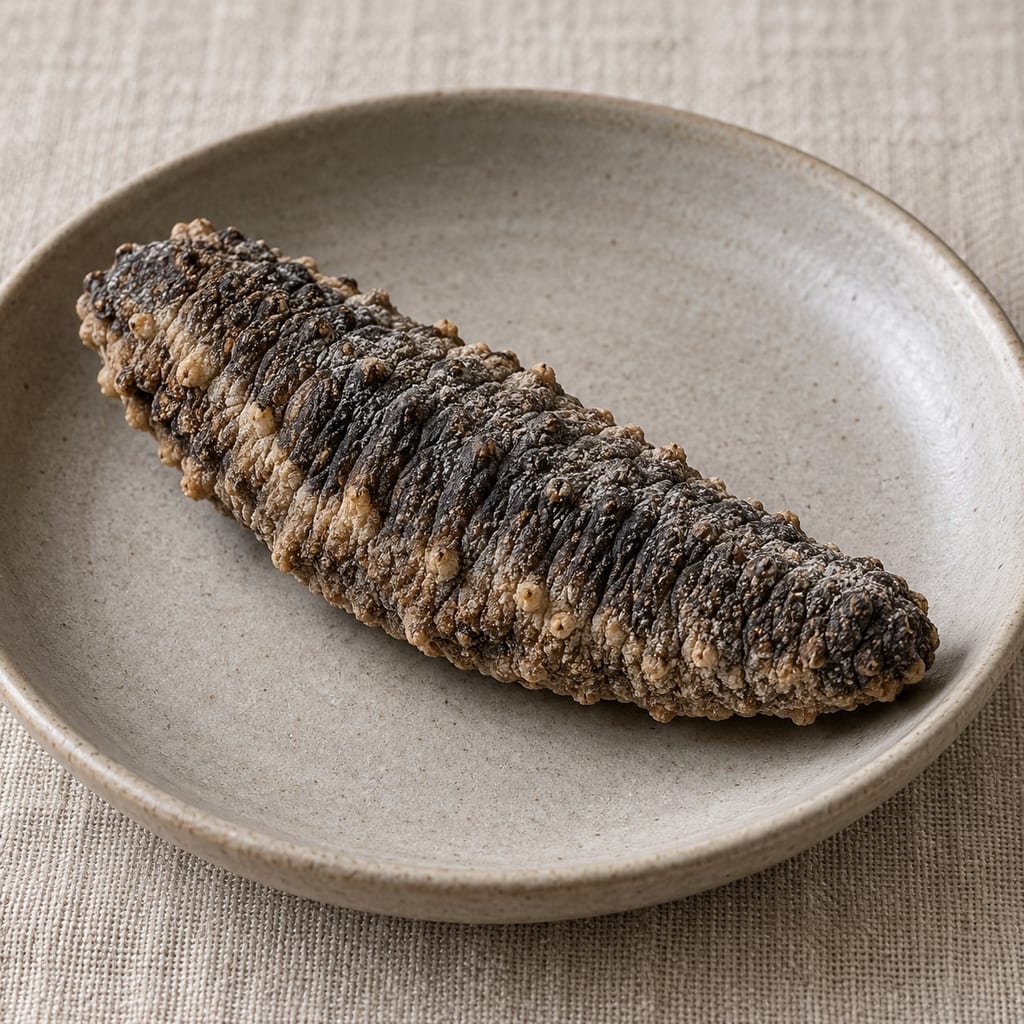
Sea cucumber cleaned, boiled and dried, sometimes with smoke, into a long-keeping trade product; Makassan processing in Arnhem Land is documented from at least the eighteenth century.
No community contributions have been published for this entry yet.
Sign in to contribute. Published comments and photos are free to read.
WikipediaHistory · Method · Variants
Beurre blanc1669 record with pumpkin; Goulaine mix-up around 1900; Lefeuvre; Saint-Julien-de-Concelles; Curnonsky; acid keeps milk solids suspended; cold butter; beurre rouge; Prunier fish; no storage advice
Cited in: A butter emulsion held by acid; Origins and the modern version; Making it; Beurre rouge and serving