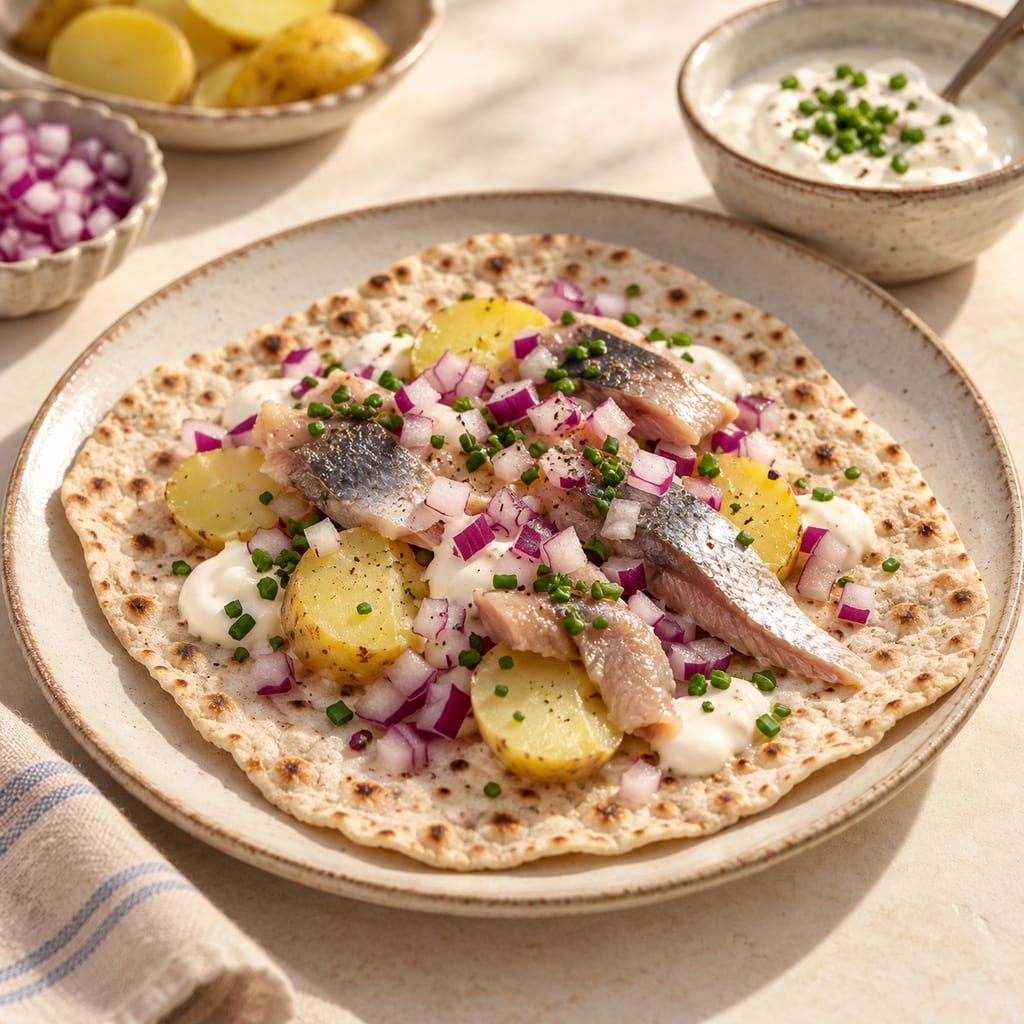
A surströmming meal
A Swedish late-summer meal of commercially prepared surströmming, tunnbröd, potatoes, onion and cultured cream. This is a serving preparation; the specialist fish fermentation is not made at home here.
 FermenteaWhere food goes to change
Substrates
The onion is the bulb of Allium cepa, built from swollen leaf bases, and is eaten raw, cooked, pickled and as a seasoning in ferments. It is known only from cultivation and probably began in Central Asia.
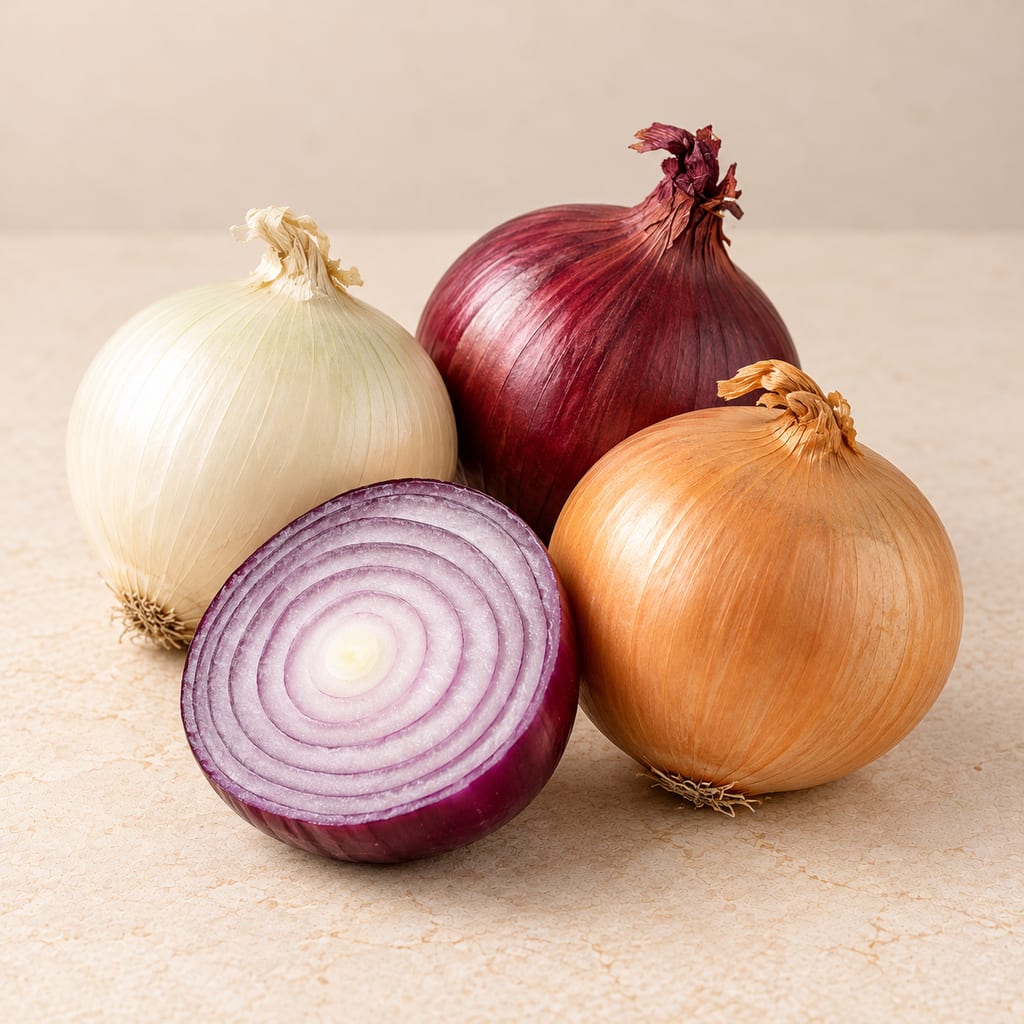
The onion is Allium cepa, a biennial herb that growers treat as an annual. Above ground it sends up three to eight hollow, blue-green leaves, and at flowering a hollow stalk up to a metre tall carries a ball-shaped head of small greenish-white to purple flowers. The part we eat is underground, or half out of it, and is not a root. The bulb is built from thickened leaf bases wrapped around a short, compressed stem, and it reaches up to 20 centimetres across. Some of the swollen layers belong to leaves that also carried green blades; others are bladeless storage leaves formed when bulbing starts. The outermost layers dry into the thin papery skins that protect the juicy tissue inside, and the small leaf initials at the centre can sprout when the bulb leaves dormancy.
Two groups of cultivated onion are recognised. The Common Onion Group has large, usually single bulbs grown from seed or from small bulbs called sets. The Aggregatum Group has smaller bulbs that form clusters from one mother bulb, and a cultivar counts as a shallot when it has more than 200 buds per kilogram of mother bulbs. Green onions are a different stage and sometimes a different plant: onion sets can be grown for green use or allowed to form dry bulbs, and other allium species are also sold as bunching onions. Garlic, leeks and chives are relatives in the same family, with their own forms and flavours, and are not interchangeable with onion.
The plant has a name in every cooking language. In Czech it is cibule, in Hindi pyāz (प्याज़), in Arabic baṣal (بصل), in Korean yangpa (양파), in Turkish soğan, and in Latin cēpa, the source of the species name. The Hindi word was borrowed from Persian. The Korean word is a compound of the Sino-Korean yang, western, and the native pa, green onion, while Turkish soğan covers both the dry bulb (kuru soğan) and the green onion (yeşil soğan).
Onion is known only from cultivation, and Kew treats it as a cultigen of Central Asian range. The most likely region of origin is Central Asia, between Turkmenistan and Afghanistan, where relatives still grow wild. The closest wild relatives are Allium vavilovii of southern Turkmenistan and northern Iran, which crosses with onion to give fertile hybrids, and Allium asarense of Iran. No wild population has been proven to be the ancestor, and no domestication site has been found. Onion tissue rarely survives burial, so the history has to be reconstructed mostly from writing and pictures.
Onion appears in Old Kingdom Egypt as carved scenes of onions on offering tables, which date to about 2700 BC on one estimate, and in Sumerian literature from about 2500 BC in Mesopotamia. A botanical summary instead dates the onion's arrival in Egypt to about 1600 BC, and the two accounts do not agree. From Egypt, onion passed into the Mediterranean and the Roman Empire, and eastward it reached India and South-East Asia. Tropical African cultivars may have come from southern Egypt or from India by way of Sudan. Onion has now been in cultivation for more than four thousand years.
Onions begin to bulb when the days reach a length that suits their variety, and breeders classify them as short-day, intermediate-day and long-day types. The response is a developmental one: two FT-like genes, named AcFT1 and AcFT4, act in opposition to link the light the leaves perceive with the swelling of the bulb. A variety bred for one latitude can fail at another. In tropical Africa, for example, bulbing needs short-day cultivars with a critical day length close to 12 hours, and traditional cultivars there such as Violet de Galmi, Red Kano and Tana bulb below that. In Utah, local variety trials favour long-day storage types selected for yield, maturity, pest tolerance and keeping quality.
Colour, shape and flavour are separate axes. Yellow, white and red onions are the familiar market groups, and growers also choose between flat and globe shapes, between mild and pungent types, and between onions for fresh eating, storage or processing. Named cultivars range from the Mediterranean Valenciana Temprana to the Texas Grano and Granex types, the Creole group, Bombay Red and Red Globe. A colour name on a bag does not tell a cook how long an onion will keep or how sharp it will taste.
Onions grow best in cool, dry conditions with soil above pH 5.6 and plenty of calcium, and they tolerate saline water poorly. Vegetative growth runs from a minimum near 6 °C to an optimum between 20 and 28 °C and a maximum around 34 °C. African cultivars and Texas Grano are ready 120 to 130 days after sowing, later cultivars 150 to 180 days, and shallots in as little as 60 to 75 days. Irrigation stops about 20 days before harvest, and harvest is best finished before daily temperatures exceed 38 °C. Onions can be grown from seed, from sets or from transplants; their roots are shallow, which makes them poor competitors against weeds, and they respond to regular water. The principal insect pest is Thrips tabaci, and the main soil diseases are pink root, white rot, basal rot and stem-and-bulb nematode. Because onion is a biennial, seed production needs a cold period: temperate and Mediterranean cultivars are induced to flower below 10 °C, traditional tropical onions after several nights below 15 °C and tropical shallots below 18 °C. Onion seed stores for years at 7 to 8 percent moisture or less.
A storage onion needs to be cured. Plants are field-dried for some days, then tied in bunches or bagged, and the necks are trimmed about 4 centimetres above the bulb. Where air temperatures exceed 38 °C the onions are dried in shade, because the soil surface can pass 45 °C. Utah guidance frames harvest as a balance: leaving bulbs in the ground adds weight, but it shortens the time left for drying and exposes the crop to rain, cold or frost. Curing dries the outer skins and the neck so that the bulb can sit dormant, and it is a drying process; it is not a microbial fermentation.
Storage temperature matters more than the calendar. Bulbs deteriorate fastest between 5 and 15 °C, the range in which dormancy ends quickly, and keep longer near 0 °C or at 20 to 30 °C, in 65 to 80 percent relative humidity. Bags of 25 to 50 kilograms should allow air to pass, and bulk layers thicker than 40 centimetres need forced air. Storage rots are caused by Erwinia and Pseudomonas bacteria and, above all, by the black mould Aspergillus niger. In 2001 world production of dry onion was about 49 million tonnes, of which China produced about 15 million, India 5 million and the United States over 3 million; Indonesia was the largest shallot producer at 390,000 tonnes.
A bulb onion is about 89 percent water. Per 100 grams of edible portion it holds roughly 1.2 grams of protein, 0.2 grams of fat, 7.9 grams of carbohydrate and 1.5 grams of fibre, with potassium, calcium, phosphorus and small amounts of vitamin C. Dry matter ranges from 7 to 18 percent, shallots usually towards the top of that range. What the carbohydrate is depends on how much dry matter there is: in a bulb with 7.5 percent dry matter, about three quarters of it is free glucose and fructose, while in a bulb with 17 percent dry matter about 90 percent is fructans. Fructans are chains of fructose units. The onion's own fructan fraction has been isolated and described: fructose joined chiefly through beta-2,1 bonds to a glucose end, and breaking down on hydrolysis into fructose and glucose. A sweet, low-dry-matter onion and a hard, pungent storage onion therefore present very different sugars to a cook or a ferment.
The tears come from a second piece of chemistry. When the tissue is cut, sulphur-containing precursors meet enzymes that they are normally kept apart from. The reaction yields a reactive sulfenic acid, and the enzyme lachrymatory factor synthase converts it into (Z)-propanethial S-oxide, the volatile molecule that stings the eye. Crystal structures of the enzyme, including one with an analogue of its substrate, show how it steers the unstable chemistry. This is enzyme chemistry in damaged tissue and has nothing to do with microbes, which is why a milder or sharper onion does not signal anything about fermentation or spoilage.
Onion is more often a seasoning in ferments than the main substance. Kimchi is the commonest example, and a commercial Czech kimchi lists onion (cibule) among its ingredients. The bulb brings free sugars, three quarters of its carbohydrate in a mild, watery onion, and fructans, about nine tenths of the carbohydrate in a dry storage onion, together with the sulphur compounds that give it its sting.
Onion is also the main ingredient of some ferments. Sliced onions tossed with fresh herbs and brine and held under a weight in a jar make a simple home ferment. In parts of West Africa, onion leaves still green at harvest are pounded and made into sun-dried, fermented balls that are used to season dishes; these are leaf ferments and not bulb ferments.
Preserving onions at home needs a method tested for the product. Michigan State University Extension treats freezing and canning of onions as separate procedures and identifies pressure canning as necessary for its canned-onion method because of botulism risk. Its instructions cannot be borrowed for a fermented onion, and a jar cannot be judged safe by sight or smell.
Choose onions that are firm and free of bruising or damage, with dry, papery skins. Michigan State University Extension advises washing hands before and after handling fresh produce, rinsing onions under cool running water without soap, and keeping them away from raw meat and meat juices. The skin belongs on the bulb in dry storage; peeled or chopped onion is a different handling situation.
Onions are used raw, boiled and fried, and they are the base of many sauces and relishes. Their form changes the result: intact layers, slices and a fine chop contribute different textures and different amounts of the cut-tissue chemistry that makes a raw onion sharp. Immature plants, eaten as green onions, are a different vegetable: they contain about 92 percent water and about five times as much vitamin C per 100 grams as the mature bulb.
Onion allergy is uncommon but real, and it can survive cooking. A case report describes a man who had anaphylaxis after eating cooked onion; testing confirmed an IgE-mediated response, and the authors conclude that heat-stable components are probably responsible. Peach extract reduced his onion-specific IgE only slightly, which suggests limited cross-reactivity between the two.
Several points are unsettled in the sources: the wild ancestor and the place of domestication, the date of onion's arrival in Egypt, how onion behaves in a lactic ferment such as kimchi, and the production figures after 2001.
onion
Probable region of origin, between Turkmenistan and Afghanistan; not a domestication site.
Onion is mentioned in Sumerian literature from about this date.
Carved onions on offering tables; estimates for the date of arrival differ, about 2700 BC on carvings and about 1600 BC in a botanical summary. Not the crop birthplace.
Fermented balls of pounded onion leaves are used to season dishes in parts of West Africa.
A Swedish late-summer meal of commercially prepared surströmming, tunnbröd, potatoes, onion and cultured cream. This is a serving preparation; the specialist fish fermentation is not made at home here.
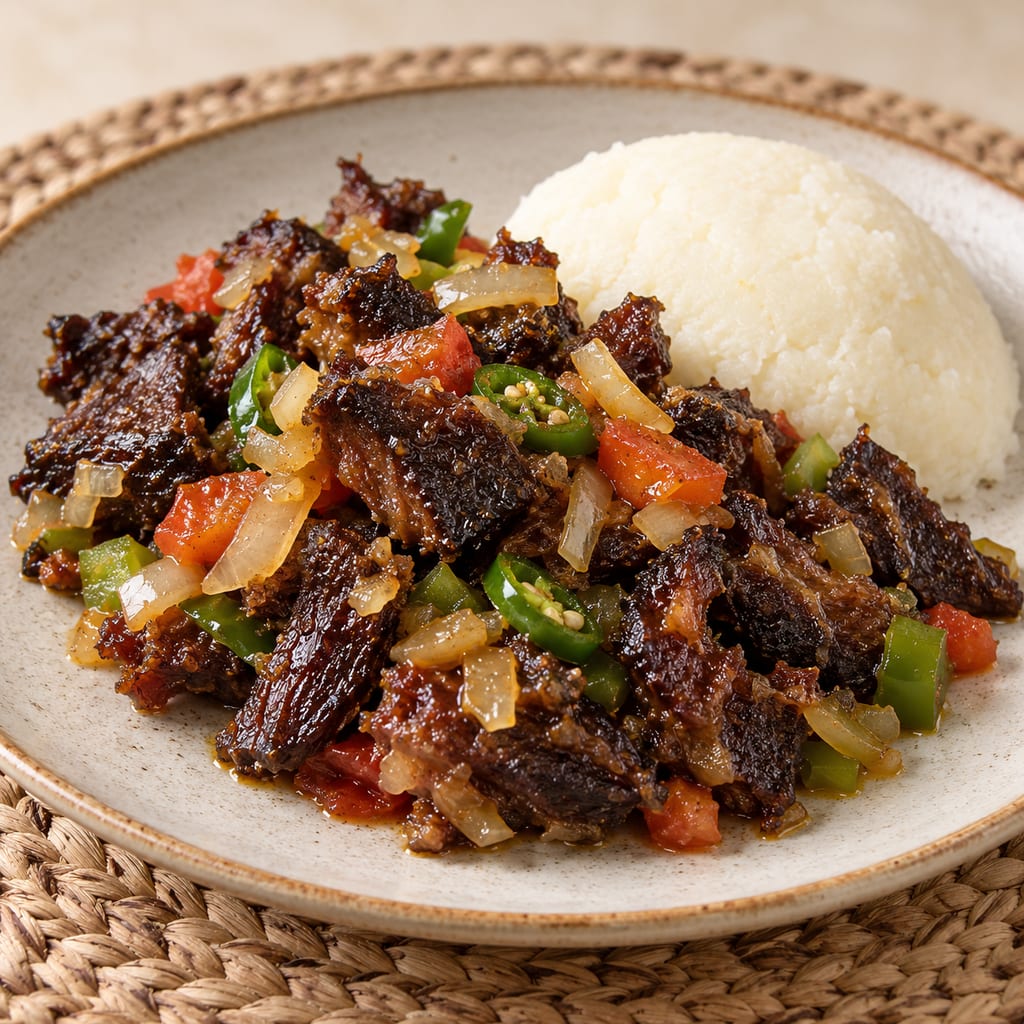
Alina Magano Johannes’s Oondhingu is a family dish from Onyaanya, Oshikoto, in northern Namibia: softened dried beef fried with vegetables and served with pap.
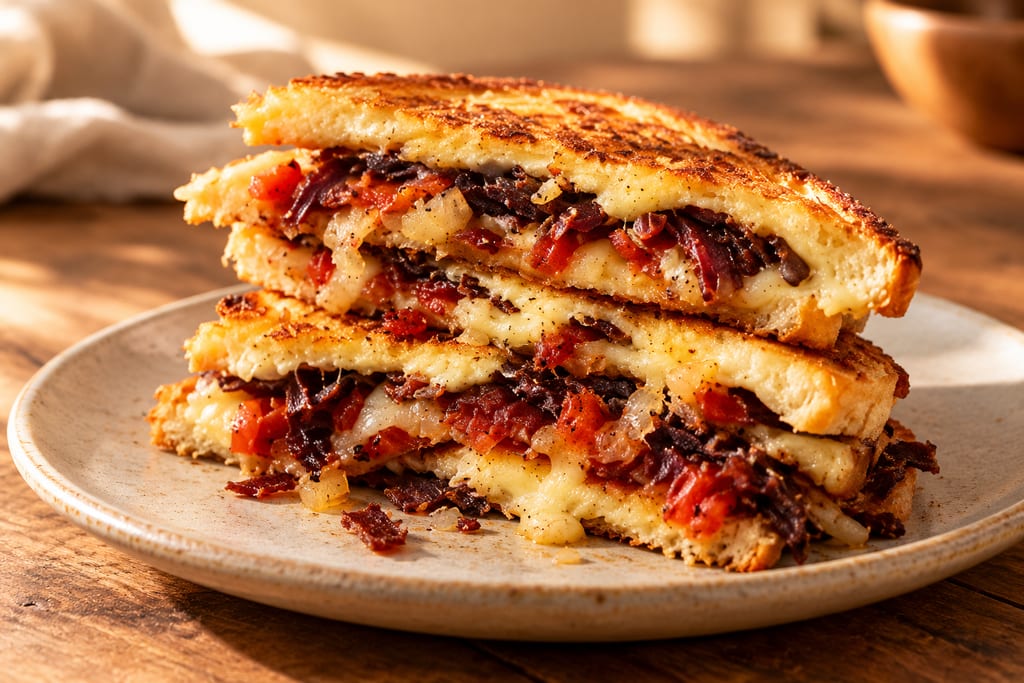
Chopped biltong, sweet onion, cream cheese and Cheddar fill bread toasted in a hinged grid over gentle coals, then finished with biltong dust.
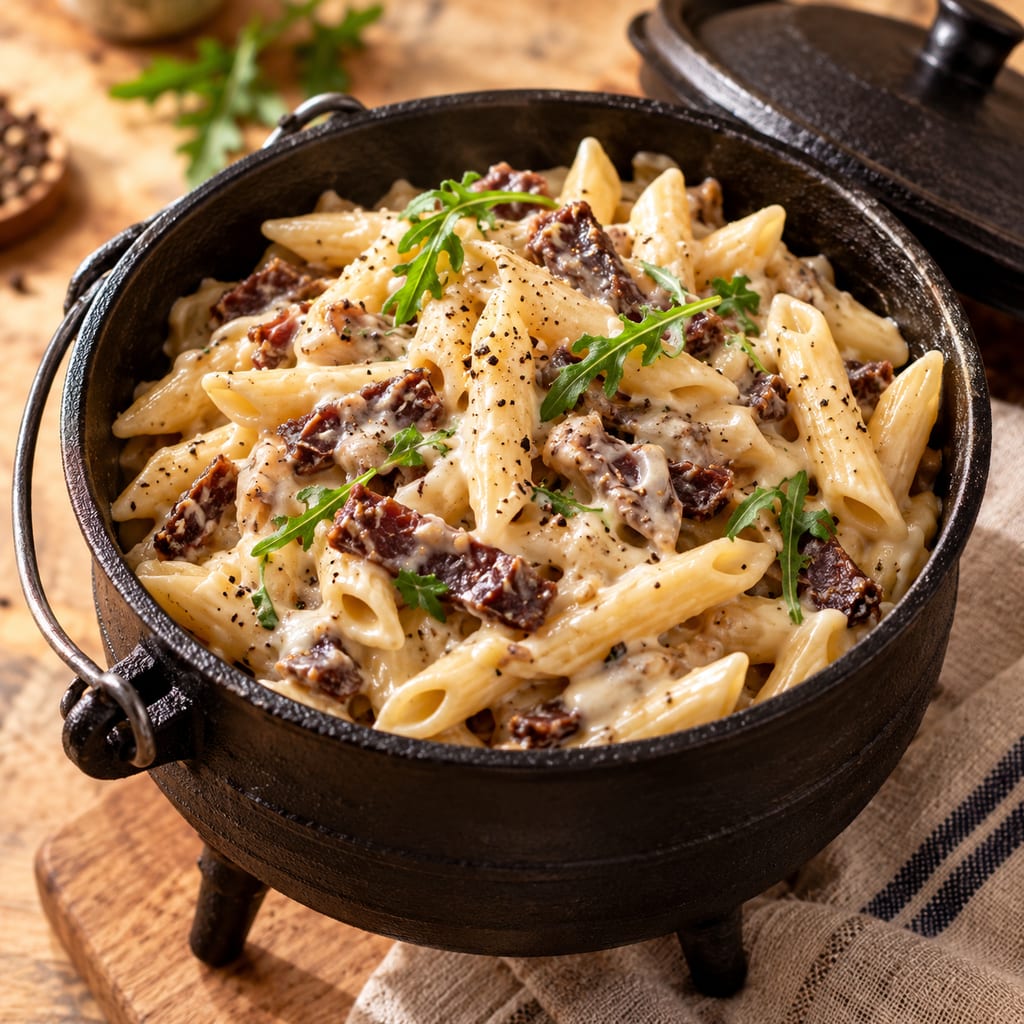
Biltong, bacon and vegetables simmer in tomato-herb stock, then join cooked pasta, milk, cream and Cheddar in this outdoor potjie.
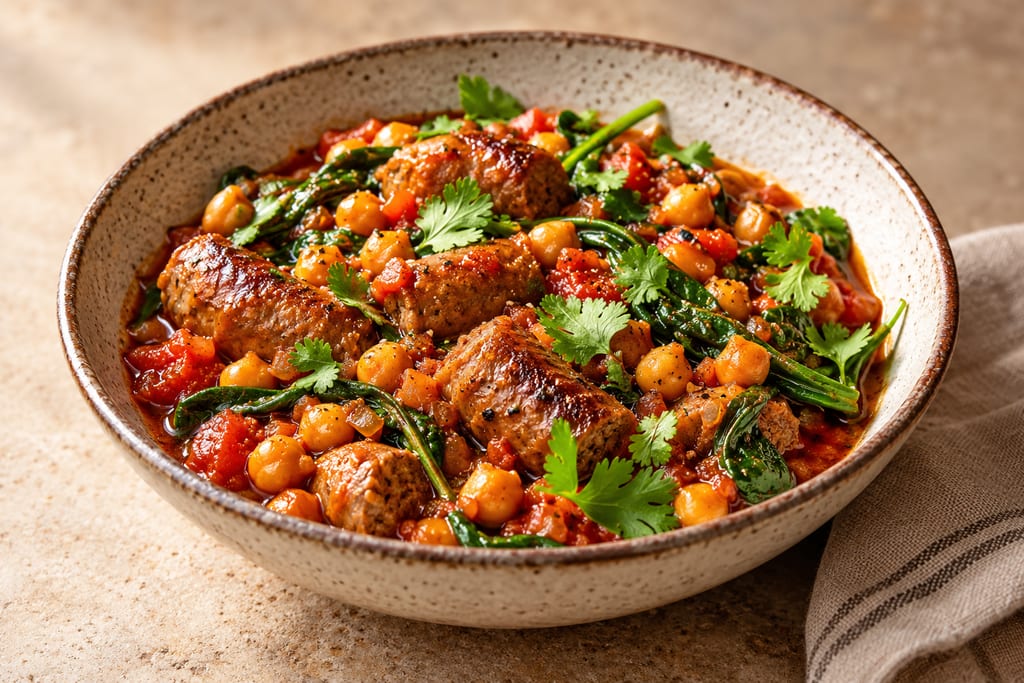
Lesego Semenya’s contemporary South African stew combines browned boerewors, chickpeas, tomato, spinach and warm spices.
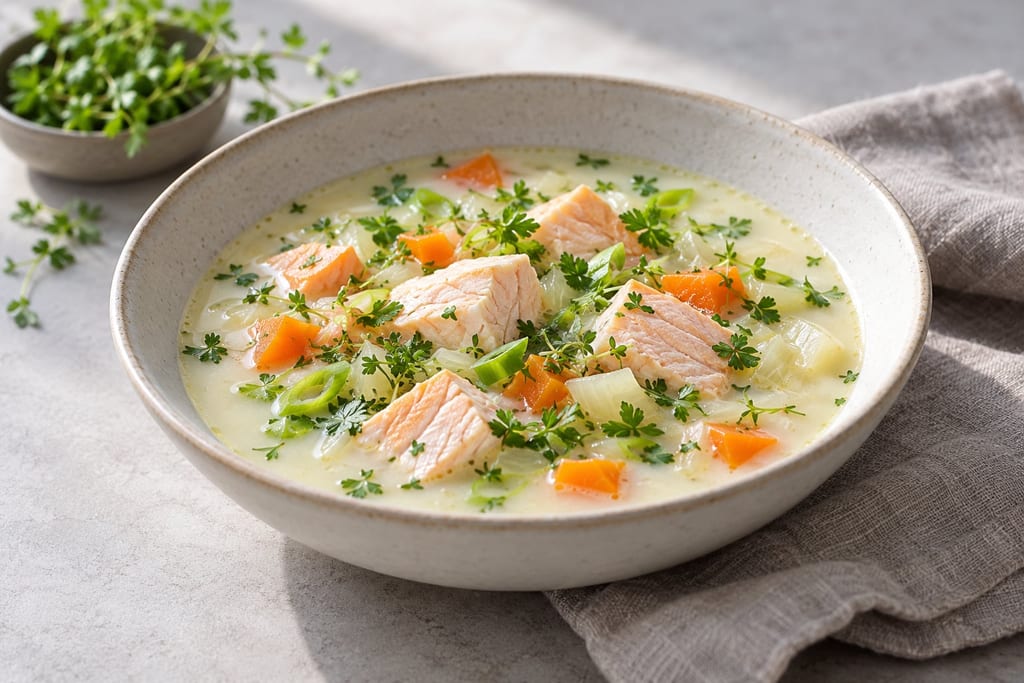
Trout or salmon poached at the end of a simmered broth of onion and root vegetables, a present-day reconstruction of coastal cooking built on excavated fish bones and a boiling pot.
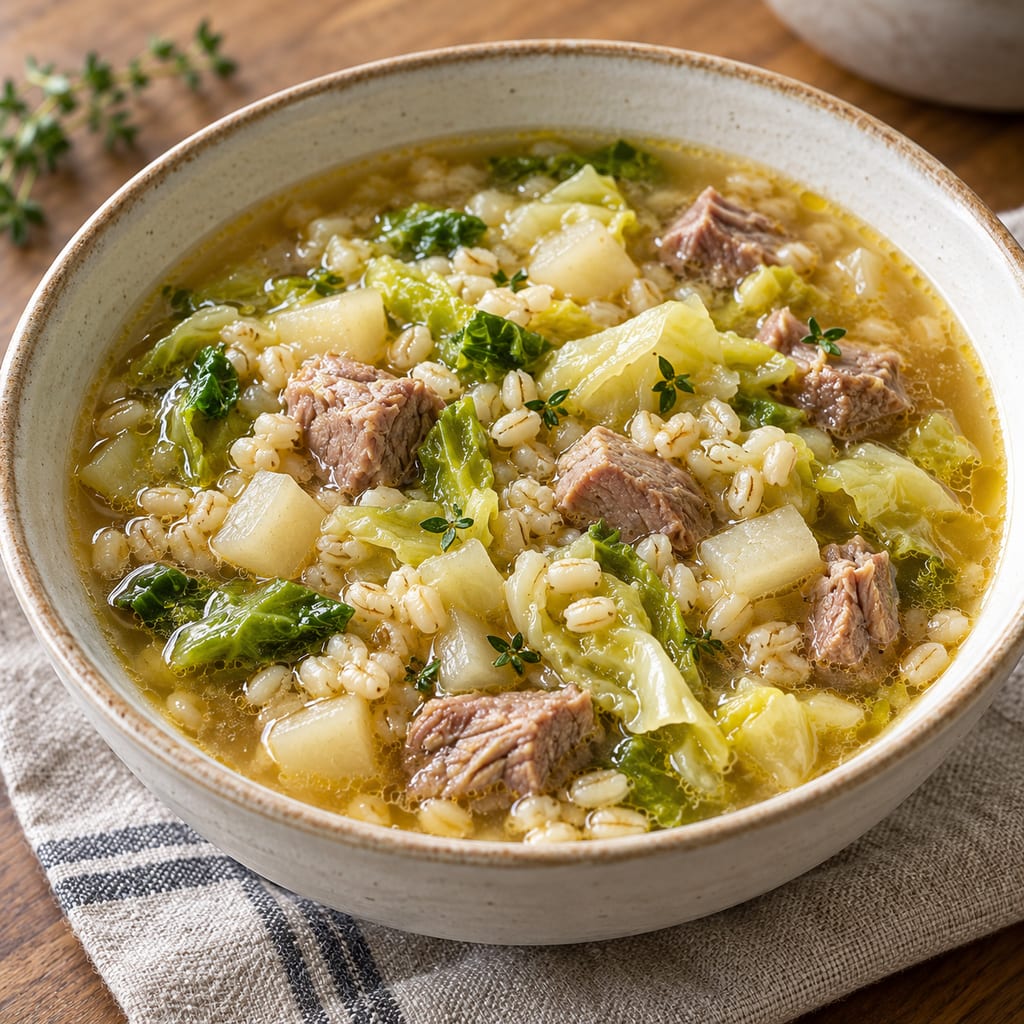
Lamb shoulder simmered with pearl barley, turnip and leafy cabbage in one pot, a present-day reconstruction built from the animals, grains and vegetables of northern European farming.
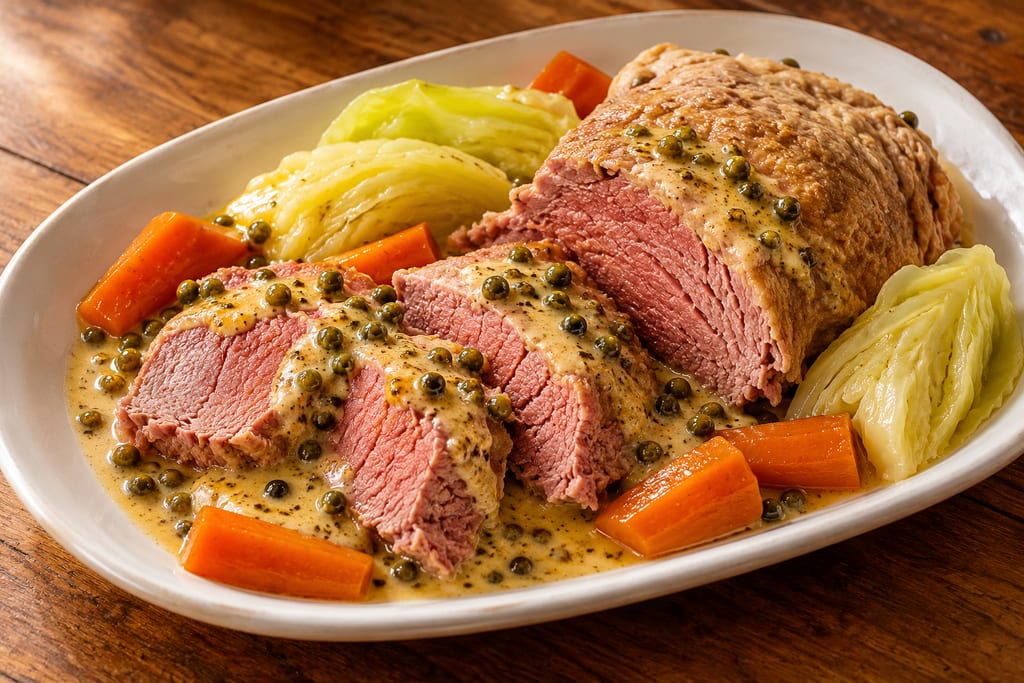
A Karoo-style festive dish of already cured salt beef simmered with vegetables and aromatics, served with a cream sauce of brined green peppercorns and wholegrain mustard.
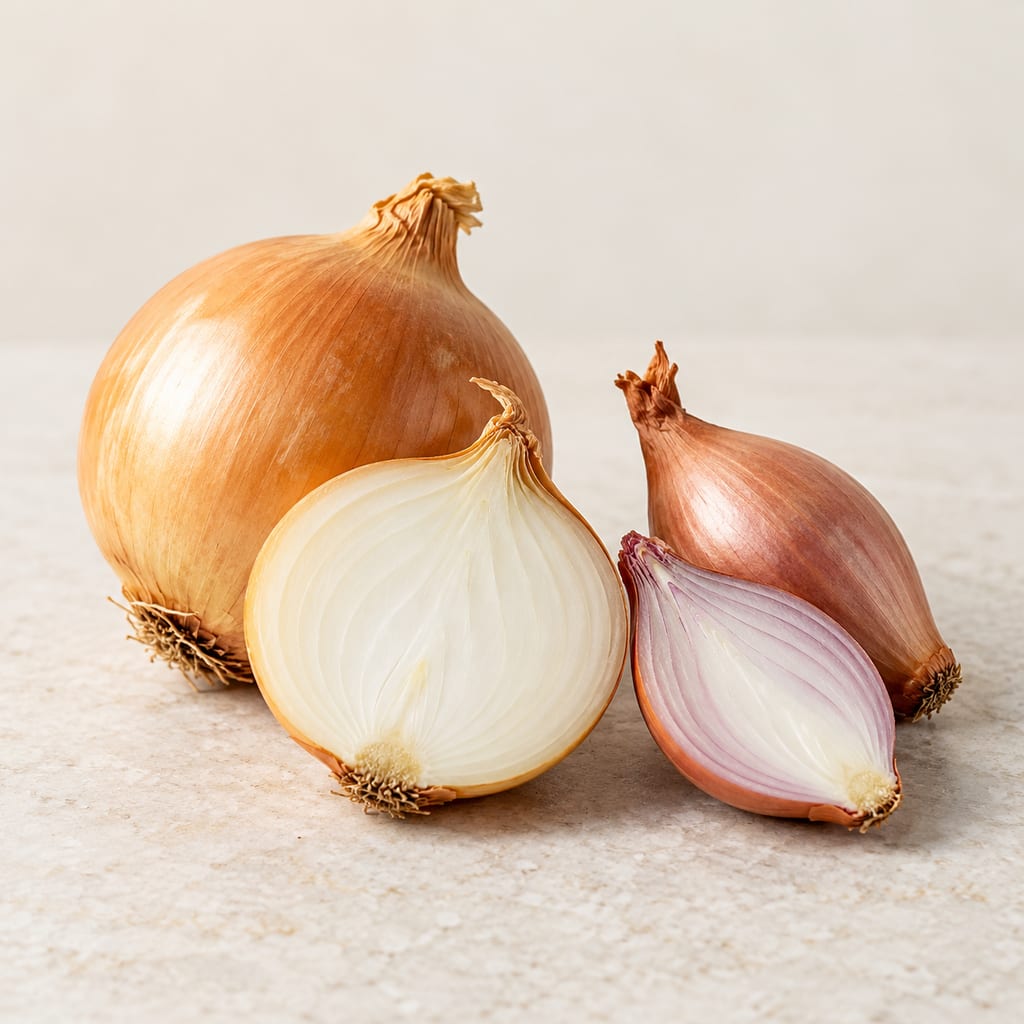
Onions and shallots are aromatic layered bulbs used raw, cooked and in fermented or preserved condiments.
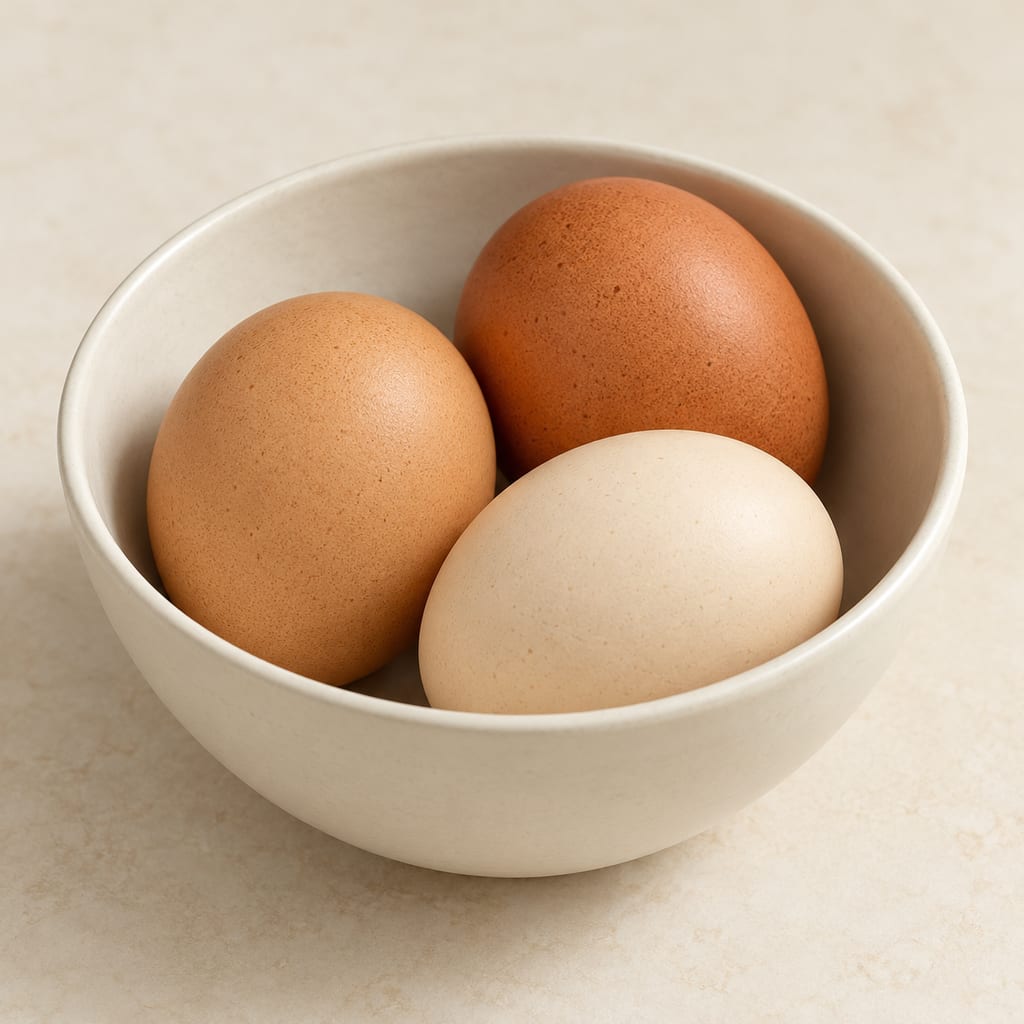
Chicken eggs supply proteins and yolk fats that set and emulsify. Atlas breads use them in enriched doughs, surface washes and a sourdough pancake batter mixed after fermentation.
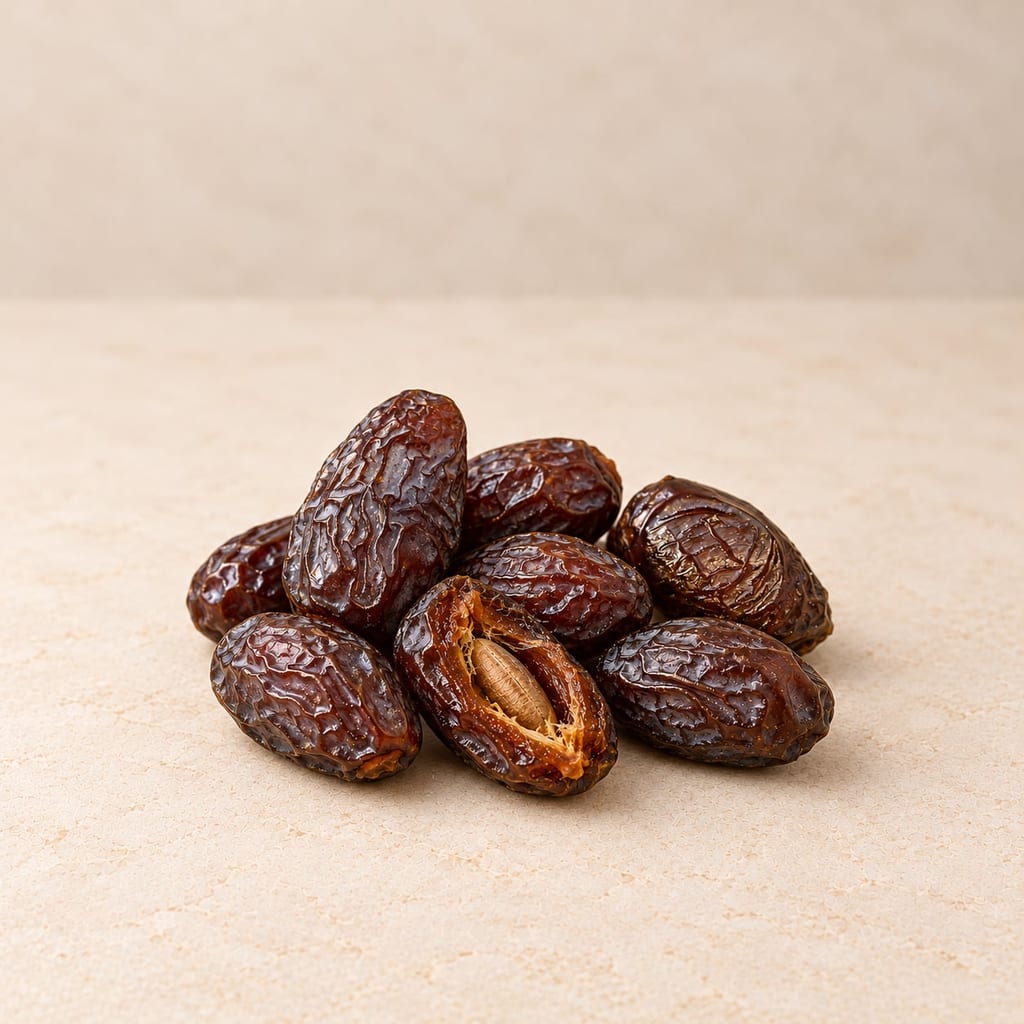
Dates are the sugar-rich fruit of the date palm, eaten soft or dried and used whole, pitted, as syrup or as paste. In sauces and chutneys they add sweetness and body.
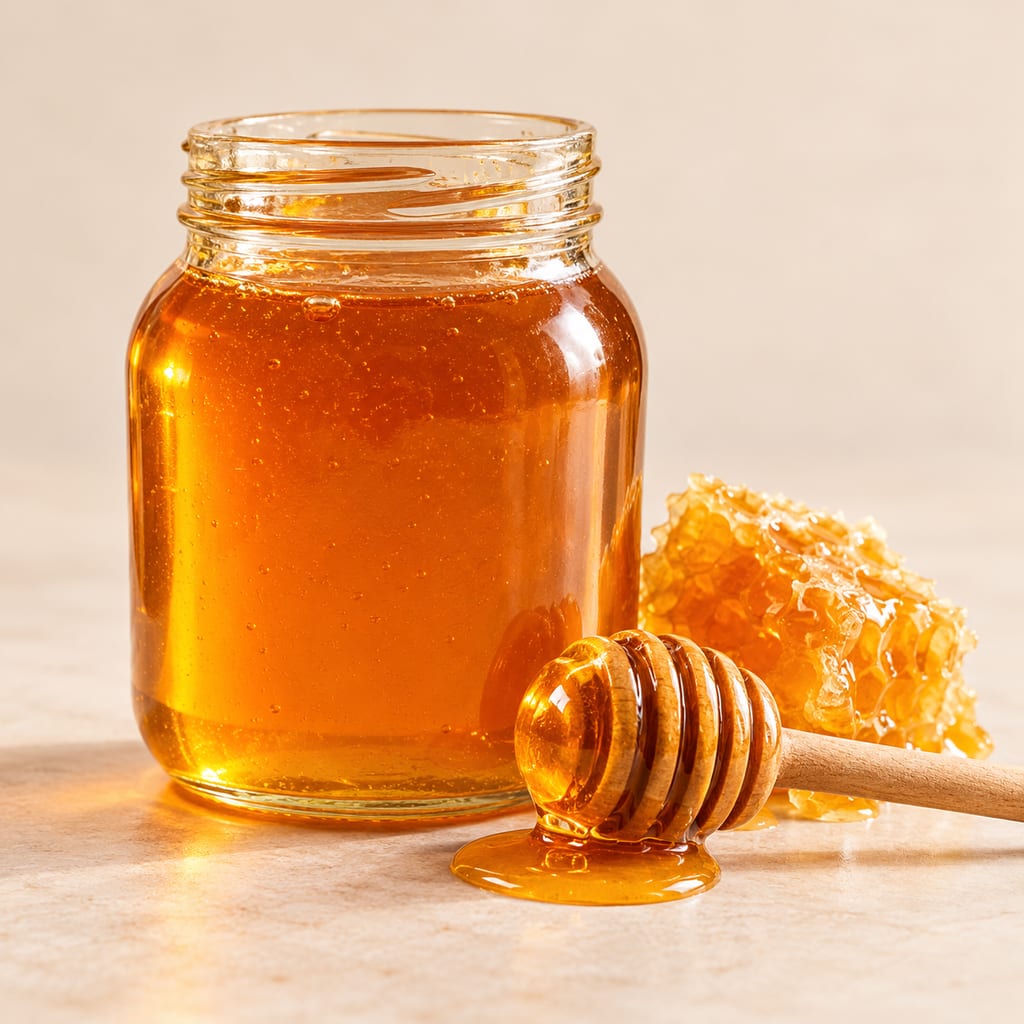
Honey is a bee-made food from floral nectar or honeydew; breads use it in dough or as a syrup served with cooked griddle breads.
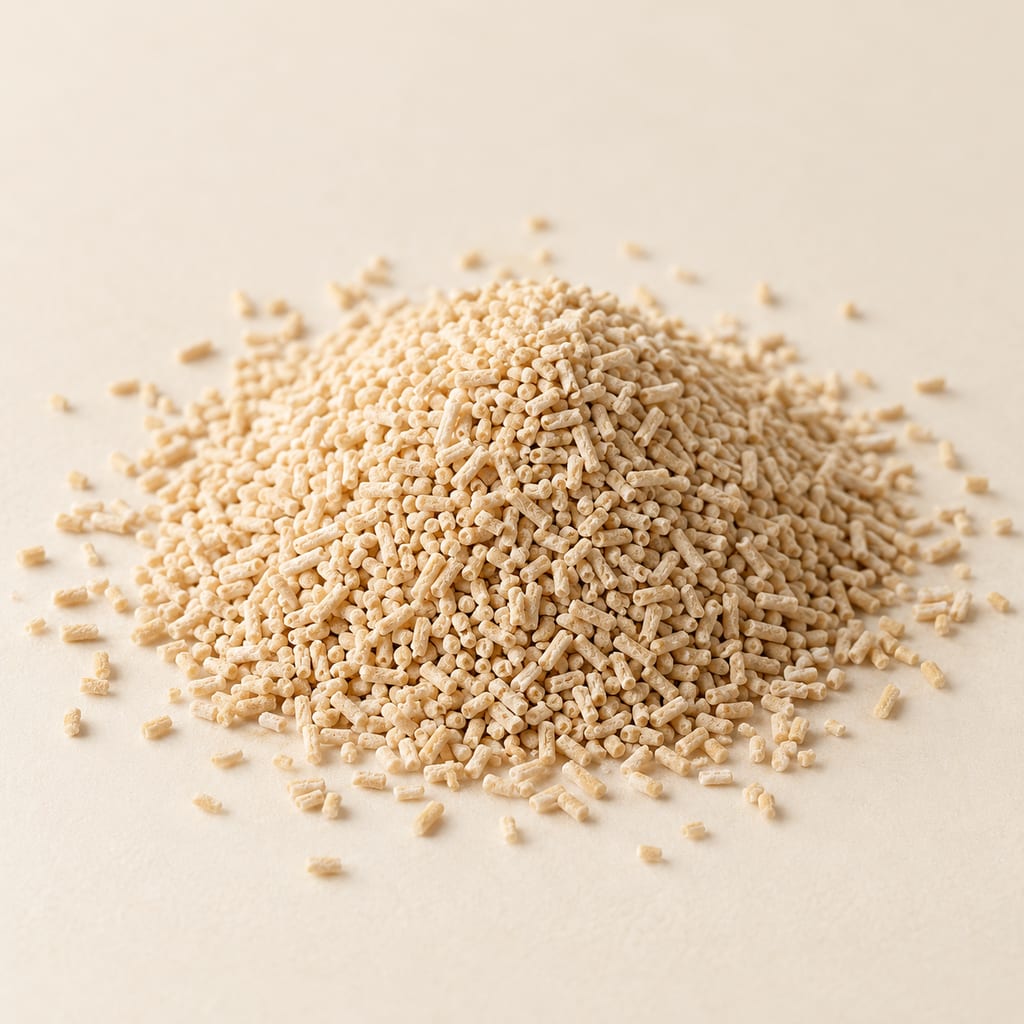
Saccharomyces cerevisiae is the budding yeast that raises bread, ferments most wine and ale, and is sold as named strains whose behaviour in dough or wort differs.
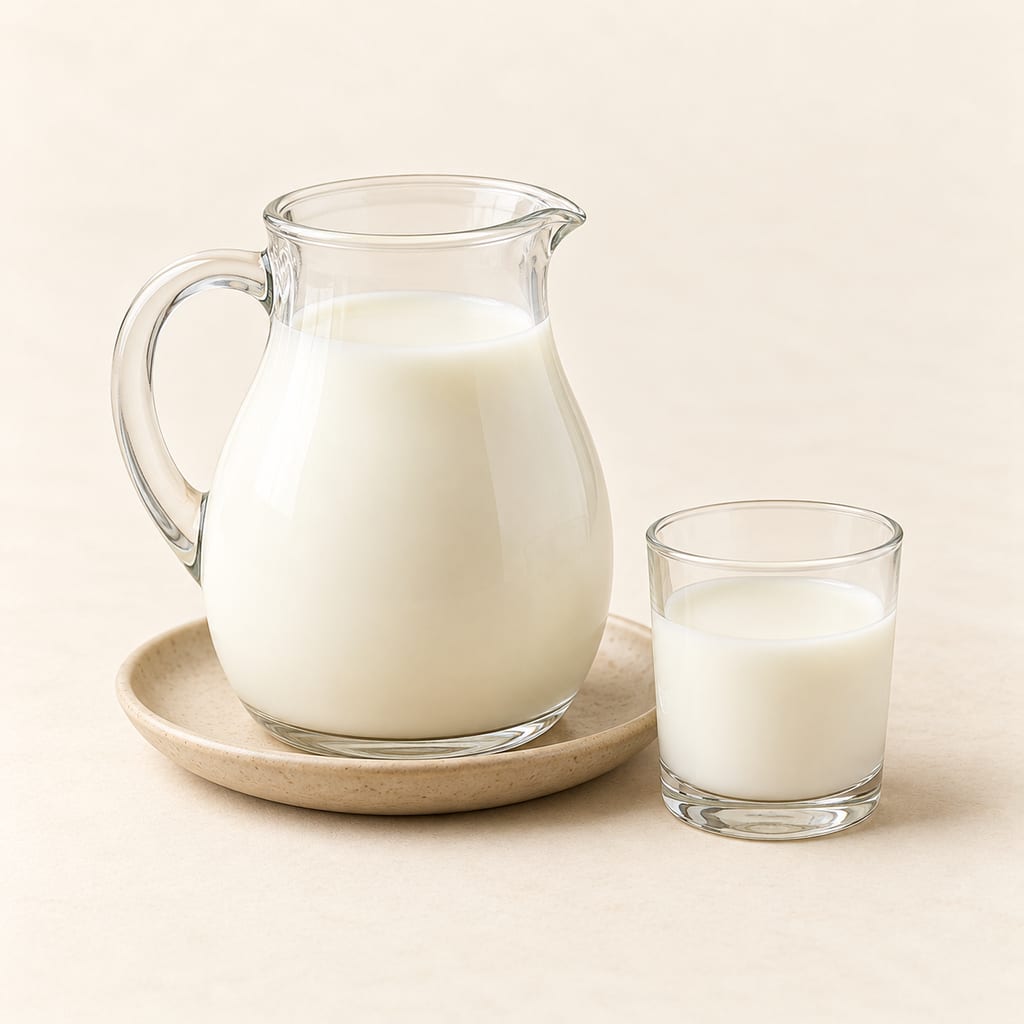
Water buffalo milk comes from Bubalus bubalis and appears in regional dairy traditions across Asia and beyond. Its richer average fat and casein profile affects processing, while composition and raw-milk risk depend on the actual supply.

At North Abydos in Egypt, a fixed early Dynastic brewery comprised parallel semi-subterranean installations with rows of ceramic mash vats; excavation reports revise their number, scale and estimated batch capacity.

Ají amarillo is the orange-yellow Peruvian chilli cultivar group of Capsicum baccatum, used to colour and season huancaína sauce and ají de gallina. Published heat estimates do not establish one range for the named cultivar.

Toasted almonds are whole sweet almond kernels dry-roasted until golden to brown. Heat replaces their marzipan note with a roasted, nutty one; they thicken and flavour romesco.

Kodiak salmon, halibut and cod cut as seg'aq and hung on an initaq rack to become tamuuq, with kac'amaasaq and kupcuunaq named as different results.

Aniseed is the dried ripe fruit of Pimpinella anisum, an aromatic Apiaceae spice commonly called a seed. It adds a sweet, warm aroma to breads such as Moroccan krachel and South African mosbolletjies, and is distinct from star anise.

A fixed Late Chalcolithic installation in Areni-1 cave combined a shallow clay pressing basin with a large jar set into the cave floor and storage vessels nearby.

Ripe avocado flesh is the soft, buttery, fat-rich pulp of Persea americana, eaten raw. It is low in acid, so it is a fresh ingredient that needs care in chilled dishes.

A portable dome and pan used over a hearth, with embers on the lid and heat from below. Regional peka and saç forms share this principle while differing in materials, pan shape and how the food is cooked.
No community contributions have been published for this entry yet.
Sign in to contribute. Published comments and photos are free to read.
Goodlok PlayIdentity · Processing
KimchiA commercial kimchi label names onion (cibule); the quantity and form are not legible or stated
Cited in: Onion in ferments and pickles
Royal Botanic Gardens, Kew, Plants of the World OnlineIdentity · Processing
Allium cepa L.Accepted name Allium cepa L.; Amaryllidaceae in current classification; cultigen of Central Asian range
Cited in: A cultigen from Central Asia
Onions and Allied Crops, volumeI, edited Haim D. Rabinowitch and James L. Brewster; CRC PressIdentity · Processing
Taxonomy, Evolution, and HistoryOnion history rests on writing and depictions; Old Kingdom Egyptian carvings and offering tables (about 2700 BC on one estimate); Greek and Roman use; cultivated for over four thousand years
Cited in: A cultigen from Central Asia; Allergy and what is not settled
Frontiers in Plant Science14:1257707Identity · Processing
Form and contour: breeding and genetics of organ shape from wild relatives to modern vegetable cropsBulb of swollen leaf bases, dry skins, central leaf initials; FT-like genes AcFT1 and AcFT4 in bulbing
Cited in: A bulb made of leaves; Day length decides the bulb
Utah State University Extension, Utah Vegetable GuideIdentity · Processing
Onion TypesDay-length groups, colour, shape, pungency and market use; Utah long-day storage types
Cited in: Day length decides the bulb
University of Illinois Extension, Home Vegetable GardeningIdentity · Processing
OnionSets can be grown for green use or allowed to form dry bulbs; other allium species sold as bunching onions
Cited in: A bulb made of leaves
ACS Chemical Biology12(9):2296–2304Identity · Processing
Enzyme That Makes You Cry–Crystal Structure of Lachrymatory Factor Synthase from Allium cepaLachrymatory factor synthase forms the tear-producing volatile (Z)-propanethial S-oxide from a reactive precursor; crystal structures
Cited in: What is inside: sugars, fructans and the tear-making enzyme
Journal of Applied Glycoscience62(3):95–99Identity · Processing
Structure of Fructan Prepared from Onion Bulbs (Allium cepa L.)An onion fructan fraction: fructose units linked mainly beta-2,1 with a glucose residue; hydrolysis releases fructose and glucose
Cited in: What is inside: sugars, fructans and the tear-making enzyme
Utah State University Extension, Utah Vegetable GuideIdentity · Processing
Harvest and HandlingHarvest balances yield against drying time and risk from rain, cold or frost; curing dries the outer tissues and neck
Cited in: Growing, harvesting and curing
Michigan State University ExtensionIdentity · Processing
Michigan Fresh: Using, Storing, and Preserving Onions (HNI24)Undamaged bulbs, rinsing under cool running water without soap, preventing cross-contamination; separate freezing and canning methods; pressure canning needed for canned onions because of botulism risk
Cited in: Onion in ferments and pickles; Choosing and using onions
Plant Resources of Tropical Africa, via Pl@ntUseBotany · Origin · Composition · Cultivation · Storage
Allium cepa (PROTA)Biennial grown as annual, bulbs to 20 cm; Common Onion and Aggregatum groups; shallot defined by more than 200 buds per kg
Probably originated in Central Asia between Turkmenistan and Afghanistan; A. vavilovii and A. asarense; Sumerian literature about 2500 BC; Egypt about 1600 BC
Per 100 g bulb: water 89 g, protein 1.2 g, carbohydrate 7.9 g; dry matter 7 to 18 percent; carbohydrate mainly free sugars at low dry matter and about 90 percent fructans at 17 percent
Growing, harvest, curing and storage figures; 2001 production; leaf-ferment balls in West Africa
Cited in: A bulb made of leaves; A cultigen from Central Asia; Day length decides the bulb; Growing, harvesting and curing; What is inside: sugars, fructans and the tear-making enzyme; Onion in ferments and pickles; Choosing and using onions
Postepy Dermatologii i Alergologii 36(1):98-103Allergy
Immunological characterization of onion (Allium cepa) allergyCase of anaphylaxis after cooked onion; IgE-mediated; peach extract reduced onion-specific IgE by about 30 percent; heat-stable components probable
Cited in: Allergy and what is not settled
WiktionaryNames
cibuleCzech cibule, from Old Czech and Late Latin cepulla
Cited in: A bulb made of leaves
WiktionaryNames
양파Korean yangpa, from yang (western) and pa (green onion)
Cited in: A bulb made of leaves