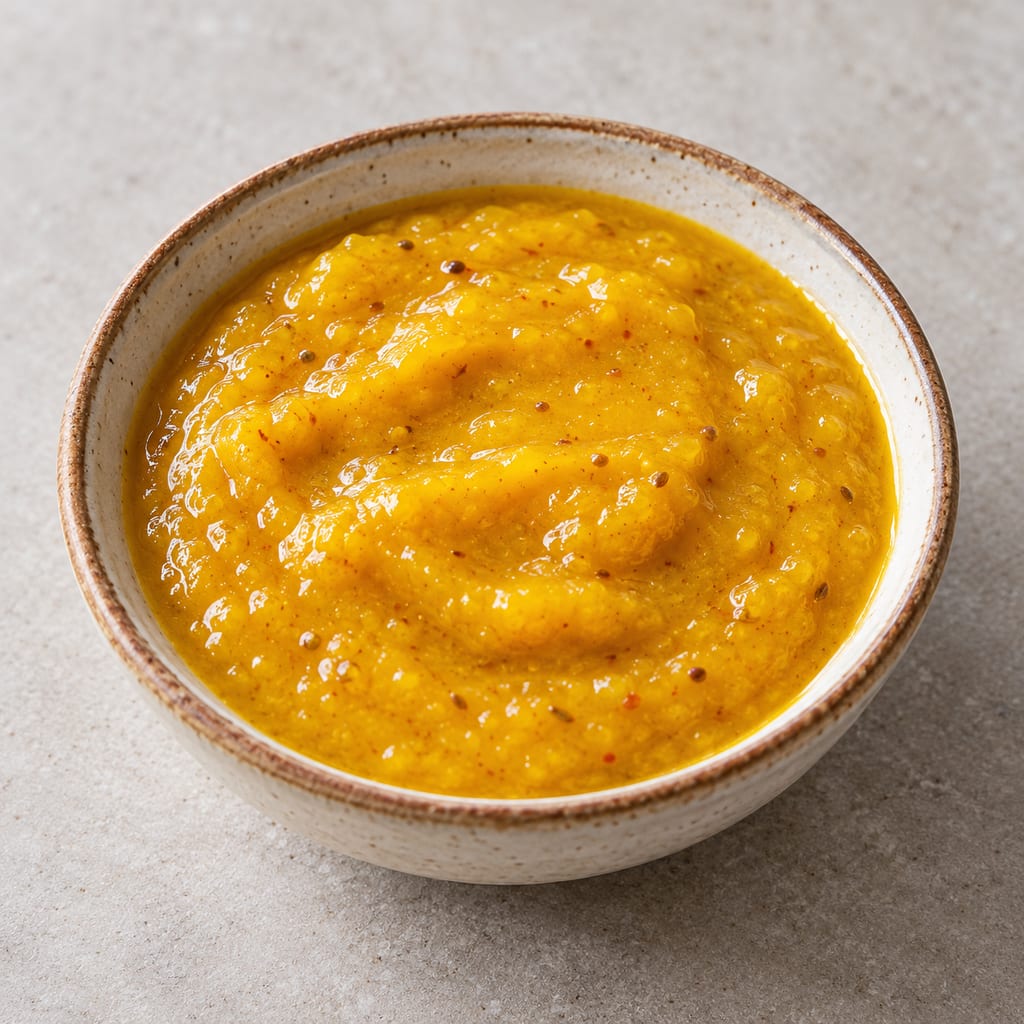
Amba (ripe mango)
This cooked amba follows a Jewish Food Society recipe that simmers ripe mango with onion, garlic, mustard seed and warm spices into a tangy Middle Eastern condiment.
 FermenteaWhere food goes to change
Modern adaptation
NCHFP mango chutney · Green mango chutney for canning
Hard green mango is cooked with vinegar, sugar, raisins, ginger, garlic and chilli in this tested US home-canning recipe.
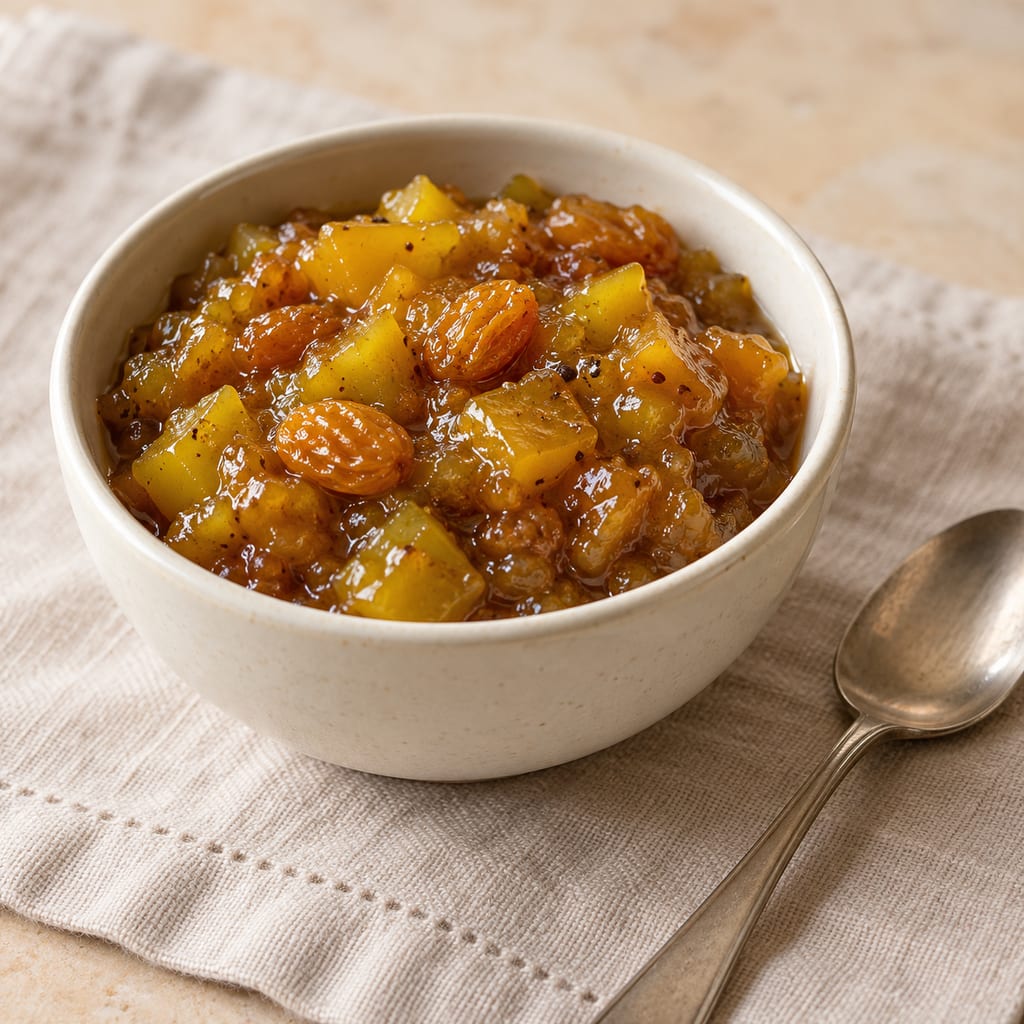
Chutney is a broad name for foods that can differ in texture, ingredients, preparation and place. In an account of Indian food, food historian Pushpesh Pant describes chutney as a small accompaniment that adds a taste missing from a meal. Many Indian chutneys are freshly ground shortly before serving; some are roasted, pounded, tempered, or built from seasonal ingredients. A jarred fruit chutney simmered with sugar and vinegar is one branch of that larger family, not a template for every chutney.
Mango is especially useful in cooked preserves because unripe fruit is firm and sharply sour, while ripe fruit brings sweetness and a softer texture. The NCHFP formula uses hard unripe mango with vinegar, sugar, onion, ginger, garlic, raisins, salt and chili powder. Its intended result is a thick, spoonable sweet-sour condiment with fruit pieces, raisin sweetness and a gentle chili warmth. That taste description follows the ingredients and cooking method; it does not identify a single canonical mango chutney.
The formula here is the National Center for Home Food Preservation's tested mango chutney recipe, developed at the University of Georgia and released in 2003. It calls for 4 lb of prepared mango, 3 cups of vinegar labelled 5% acidity and 4½ cups of sugar, among its other ingredients, and yields about six pint jars. This entry keeps that exact canning formula separate from the Indian Express account of Colonel Skinner's Hot Mango Chutney, which uses green mango, abundant ginger and garlic, raisins, Kashmiri chillies, vinegar and sugar, but gives no measured canning process.
Indian chutneys include distinct regional forms and uses. The Indian Express account places chutneys across many cuisines and reports that the British popularized the word in English while also adapting chutneys with greater sweetness and vinegar. It describes the Major Grey story as uncertain and presents food historian Pritha Sen's account of Colonel Skinner's chutney as one interpretation. These names and accounts do not support a single inventor or a precise birthplace for mango chutney as a whole.
Isabella Beeton's 1861 Book of Household Management prints a “Bengal recipe for making mango chetney.” The list includes sour unripe apples, garlic, onion, ginger, dried chilies, mustard seed, raisins, vinegar, sugar and salt, but no mango. Beeton says the recipe came through an English woman resident in India from an unnamed Indian person. The label and attribution document a Victorian cookbook's account; the unusual ingredient list means it should not be treated as a definitive historical mango recipe or as evidence that this modern canning formula derives from Bengal.
The NCHFP formula has a different, specific documentary history: the University of Georgia developed it and released it in 2003. It establishes one tested US home-preservation preparation, not the origin of the broader food family. The available evidence does not establish the first mango chutney, a date when mango chutney began, or a single place of origin.
NCHFP describes chutney as a condiment that can accompany Indian food, sit beside cheese and crackers, serve as a dip or spread, or add flavor to other dishes. A sweet-sour mango version can balance rich or savory foods, while its raisins and chili make it useful in a small portion. That range of serving ideas belongs to chutney as a category; families and regions serve their own preparations in different ways.
Mango variety and maturity affect the balance of sourness, fruit flavor and softness. This particular recipe specifies hard unripe mango; the sugar and vinegar amounts are part of its tested proportions. Do not swap ripe fruit, reduce the vinegar or sugar, or add extra ingredients and assume that the published canning time still applies. A fresh chutney, a refrigerated cooked batch and a sealed canned jar are different storage situations.
NCHFP explains that fruit chutney preservation relies on several factors working together: the recipe's acidity, concentration during cooking, heat processing of filled jars and exclusion of further contamination. Heating a pot of chutney alone does not validate room-temperature storage. NCHFP warns that insufficient acidification combined with inadequate processing can allow dangerous spores to survive and produce toxin during storage.
Use the tested NCHFP ingredient proportions, jar sizes, packing instructions and boiling-water canner times together. The listed processing time changes with elevation: 10 minutes up to 1,000 ft, 15 minutes from 1,001 through 6,000 ft, and 20 minutes above 6,000 ft. Do not treat a similar-looking recipe, an improvised acidity, or a sealed lid as proof that a changed version is safe for the pantry.
NCHFP also warns that raw green mango can irritate skin in a way similar to poison ivy. Gloves reduce contact during peeling and cutting; wash hands before touching the face. If preparing a version that is not processed by the cited canning method, general FoodSafety.gov guidance is to refrigerate perishable food within two hours and keep the refrigerator at or below 4°C. That is general handling advice, not a tested shelf life for an altered chutney.
Chutney names cover many preparations. An Indian Express account describes fresh, pounded Indian accompaniments alongside sweet-sour cooked preserves shaped by colonial exchange. In 1861, Isabella Beeton printed a recipe under the heading “Bengal recipe for making mango chetney”; its ingredient list, unusually, calls for unripe sour apples and does not list mango. That is evidence for the historical label and a British account of the recipe, not proof of a Bengal birthplace or a continuous formula. The present green-mango canning method is a separate University of Georgia/NCHFP recipe released in 2003.
Yield 6 pint jars · Scaling: source batch only
The NCHFP recipe cautions that handling raw green mango can irritate some people's skin in a way similar to poison ivy.
Hazard sourceChutney preservation depends on acidity, cooking and the specified jar process together. Changing proportions or processing can leave room-temperature stored food inadequately acidified or heated.
Hazard sourceWear plastic or rubber gloves when preparing raw green mango if irritation is a concern; avoid touching the face and wash hands after handling.
Control sourceFor a room-temperature canned product, use the NCHFP formula exactly and process pint or half-pint jars in a boiling-water canner for the time specified for the actual elevation. Do not treat an improvised recipe as shelf stable.
Control sourceIf making or serving a version that is not processed by the cited canning method, refrigerate perishable food within 2 hours; keep the refrigerator at or below 4°C. This general advice does not set a recipe-specific storage life.
Control sourceThe recipe's tested canning process applies only to its stated ingredient proportions, jar sizes, packing style and elevation-adjusted processing times.
This is a cooked, non-fermented chutney. Taste, smell, a vacuum seal or a home pH reading alone does not validate an altered canning process.
The source describes chutney as a wide and varied Indian food category and discusses several distinct regional forms. This entry does not claim that the US canning formula is an Indian traditional recipe or that mango chutney began in one Indian place.
This specific formula and process were developed at the University of Georgia and released through the National Center for Home Food Preservation in 2003.
This cooked amba follows a Jewish Food Society recipe that simmers ripe mango with onion, garlic, mustard seed and warm spices into a tangy Middle Eastern condiment.
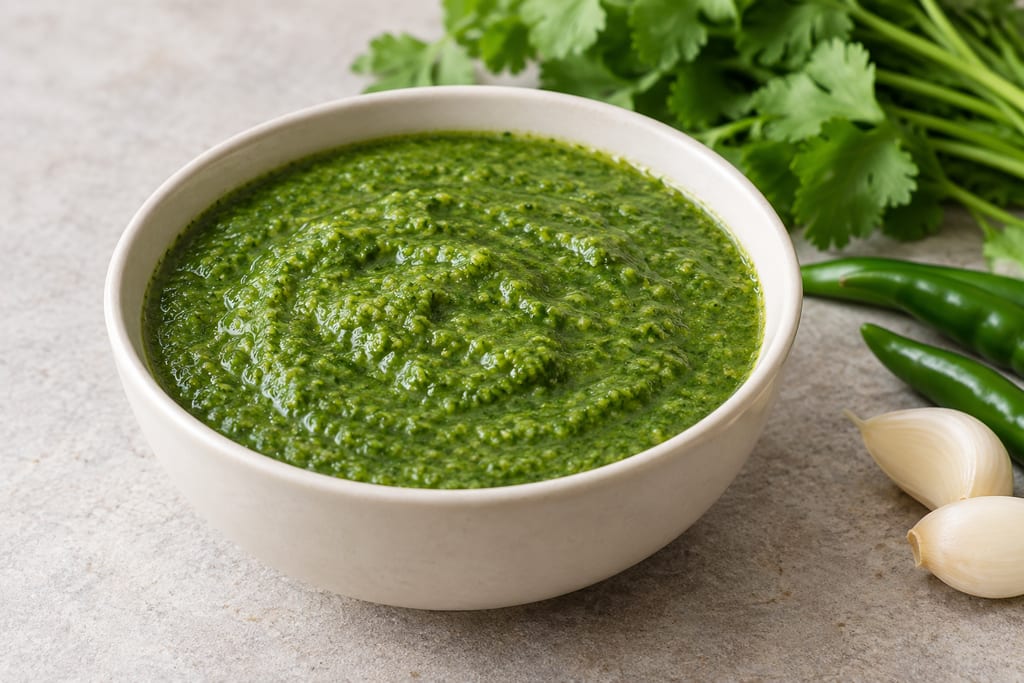
Afghan coriander chatni is a sharp, hot herb sauce with garlic and vinegar. A 2008 Afghanistan manual records green or red pepper and optional walnut; heat and household versions vary.
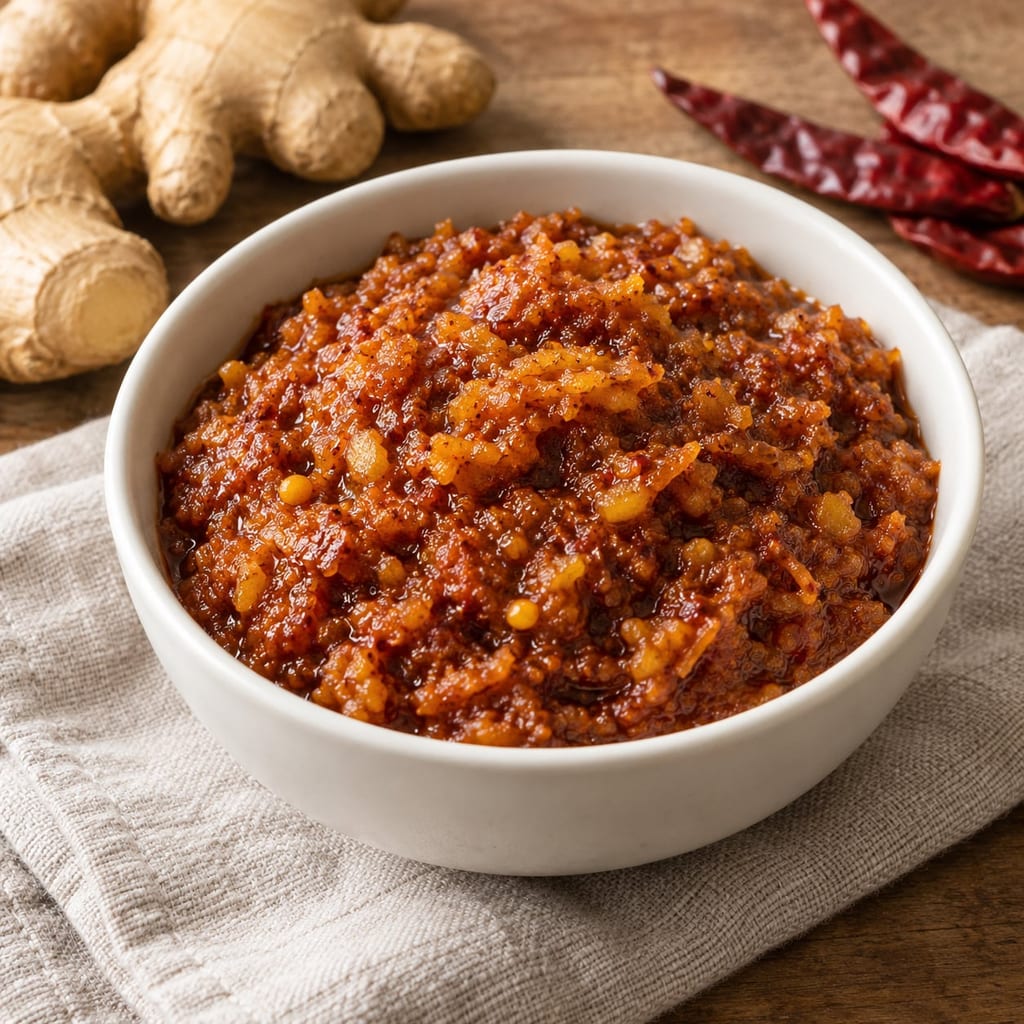
An Andhra ginger-and-urad chutney in which browned dal and briefly fried ginger and chillies are cooled, then ground with jaggery to a coarse paste.
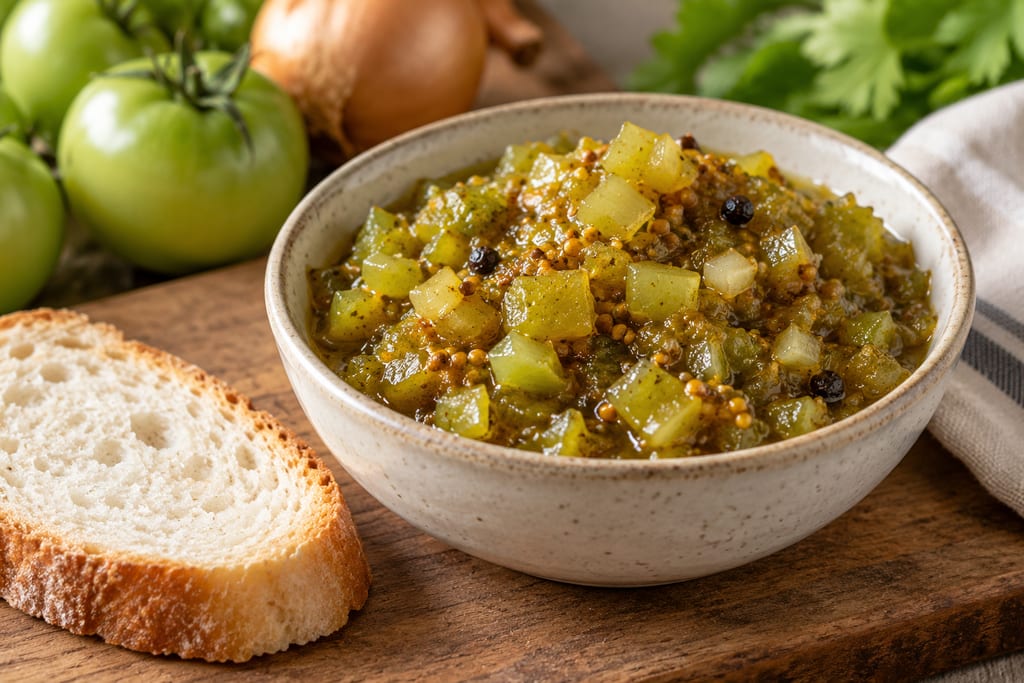
Australian green tomato pickles and relishes vary. This partial version follows ABC Western Victoria’s 2018 pickle recipe, not Beerenberg’s commercial formula. Sources document examples from 1944 onward, not a single origin.
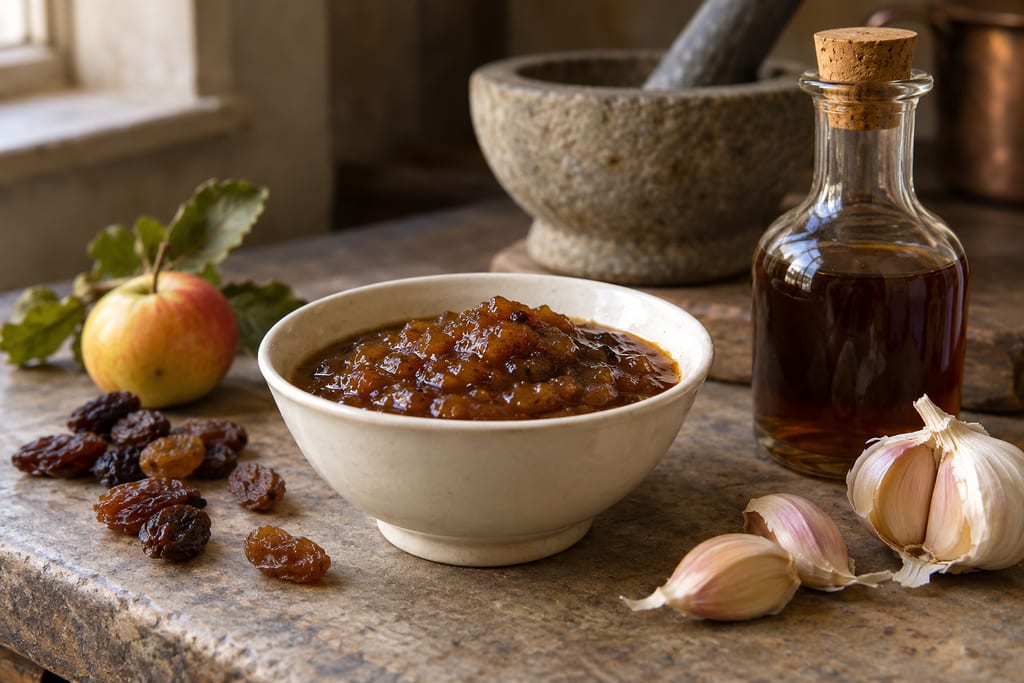
Eliza Acton's Bengal receipt for chetney sauce: stoned raisins and a hard acid fruit pounded with brown sugar, ginger, salt, cayenne and garlic, then thinned with vinegar to the consistence of thick cream.
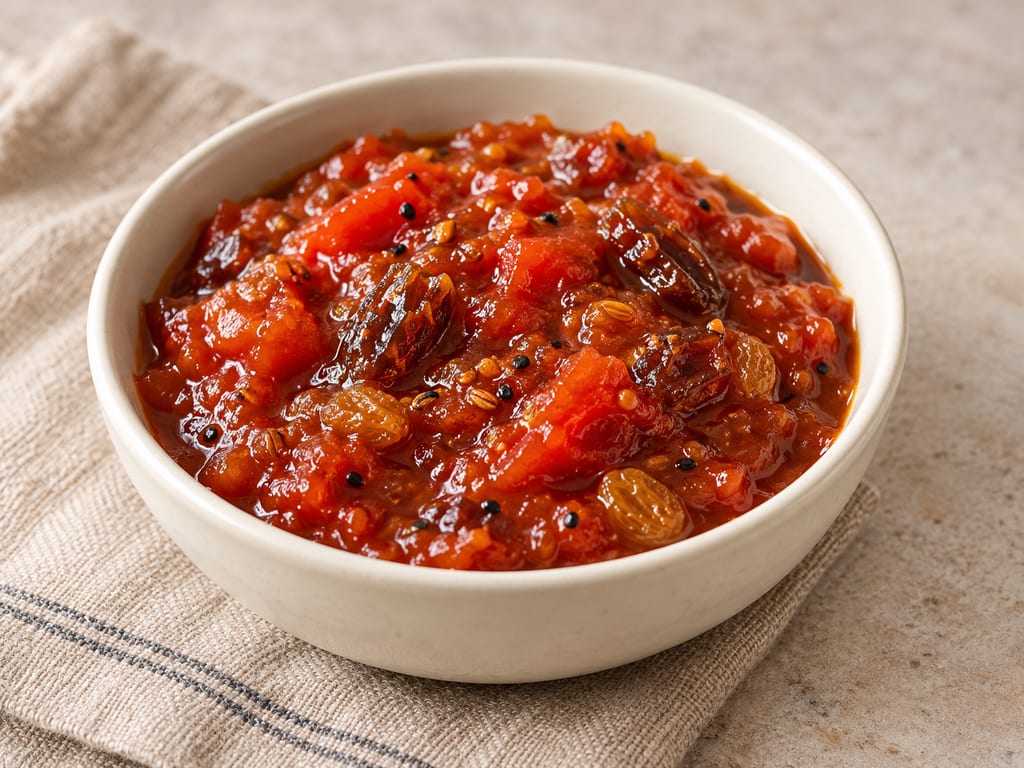
A cooked Bengali meal chutney combining tomatoes, dates, raisins, ginger and panch phoron.

A spicy South African vegetable relish of onion, carrot, pepper, tomato, curry seasoning and beans, cooked briefly and served warm or cold beside pap and grilled meat.
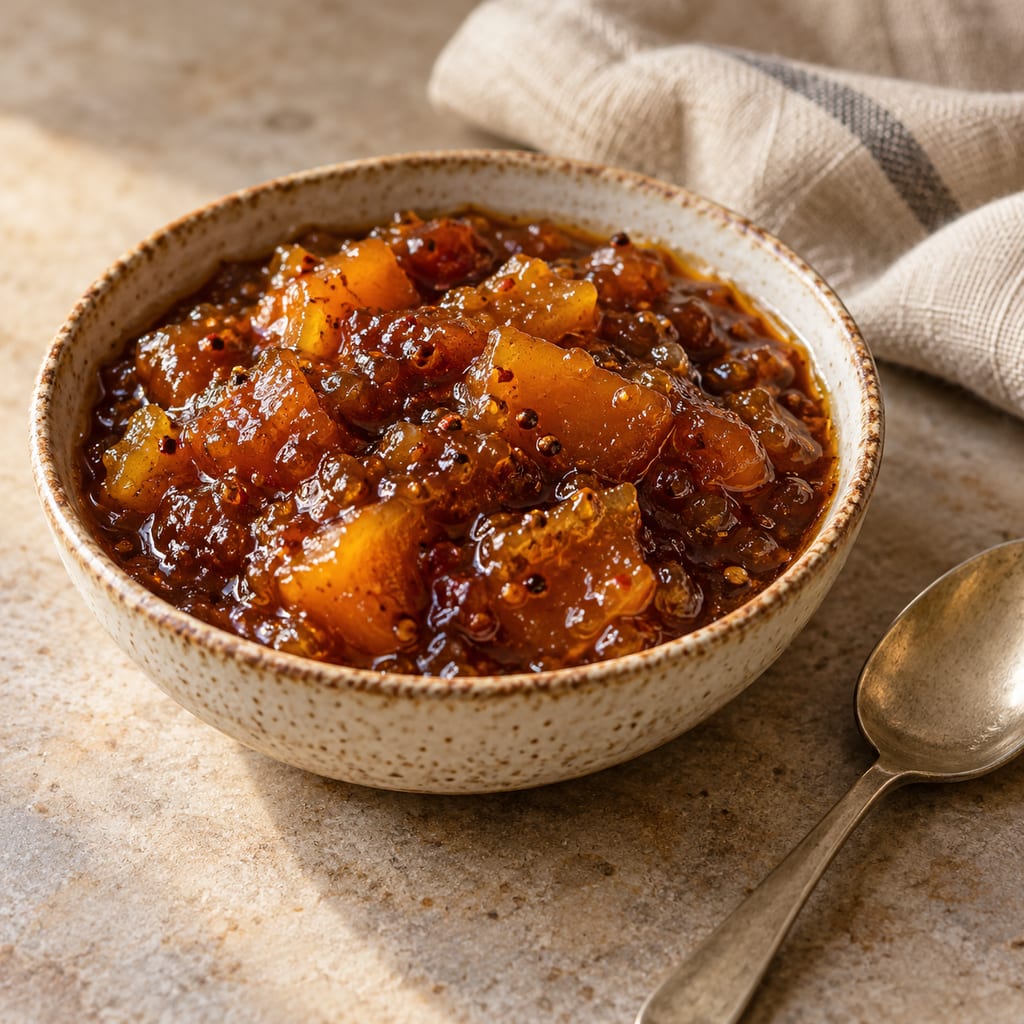
A broad account of cooked chutney traditions: fruit or vegetables combined with sugar, spices and sometimes acid, often boiled into a thick condiment. This record is historical and process context, not a formula or storage recipe.
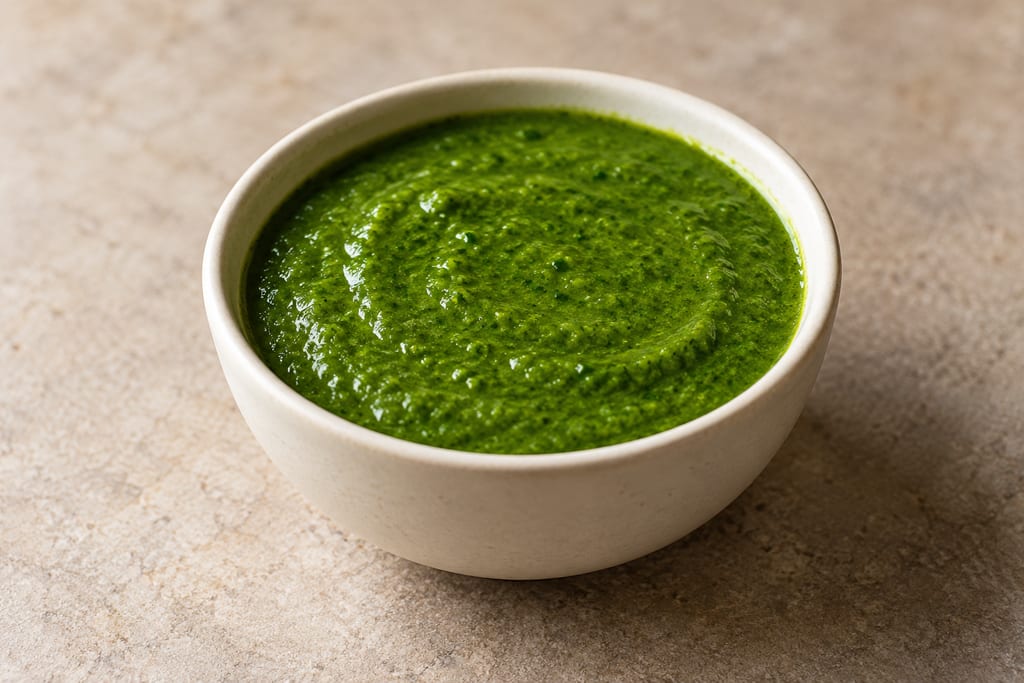
A cold-blended coriander and mint chutney with ginger, green chilli and optional cumin and lemon; the author serves it with snacks, chaat and sandwiches.
No community contributions have been published for this entry yet.
Sign in to contribute. Published comments and photos are free to read.
National Center for Home Food Preservation, University of GeorgiaInspiration · Process · Safety
Mango ChutneyExact ingredient quantities, yield, preparation, simmer and elevation-specific boiling-water canning times for the tested recipe.
Raw green mango handling caution.
Recipe was developed at the University of Georgia and released by NCHFP in October 2003.
Cited in: A family of chutneys, not one formula; A recorded name and an uncertain story; Serve a little beside a meal; Canning depends on the whole recipe
National Center for Home Food Preservation, University of GeorgiaSafety · Technique
Preservation Principles in ChutneyFruit chutneys vary; many combine fruit, spices, onion, sugar and vinegar and may be cooked then canned or refrigerated.
Acidity, concentration, heat processing and limiting recontamination all contribute to preservation; a sufficiently acidic and heat-processed product is necessary for room-temperature storage.
NCHFP links to its tested mango chutney procedure.
Cited in: Serve a little beside a meal; Canning depends on the whole recipe
The Indian ExpressHistory · Geography · Use · Variation
Finger-lickin’ good: The story of chutney in IndiaDescribes chutney as a varied Indian accompaniment, often fresh and pounded, with regionally distinct forms.
Food historian Pushpesh Pant says chutney can contribute a taste missing from a meal and is served in small amounts.
Discusses differences between Indian chutney forms and British sweet/vinegar adaptations, including uncertainty around Major Grey's story.
Pritha Sen's account of Colonel Skinner's Hot Mango Chutney and its ingredients is identified as an Anglo-Indian Bengal variant, not this NCHFP recipe.
Cited in: A family of chutneys, not one formula; A recorded name and an uncertain story
Project Gutenberg; original work by Isabella Beeton, first bound edition 1861History · Variation
The Book of Household ManagementThe heading at recipe 392 reads Bengal recipe for making mango chetney.
Its ingredient list specifies sour unripe apples but no mango, an historical title/list discrepancy.
The note attributes the recipe to an unnamed person in India through an English resident; this is the cookbook's claim, not independently confirmed provenance.
Cited in: A recorded name and an uncertain story
FoodSafety.govSafety
4 Steps to Food SafetyGeneral guidance to refrigerate perishable foods within two hours and keep the refrigerator at or below 40°F (4°C).
This general handling guidance does not set a recipe-specific storage period.
Cited in: Canning depends on the whole recipe