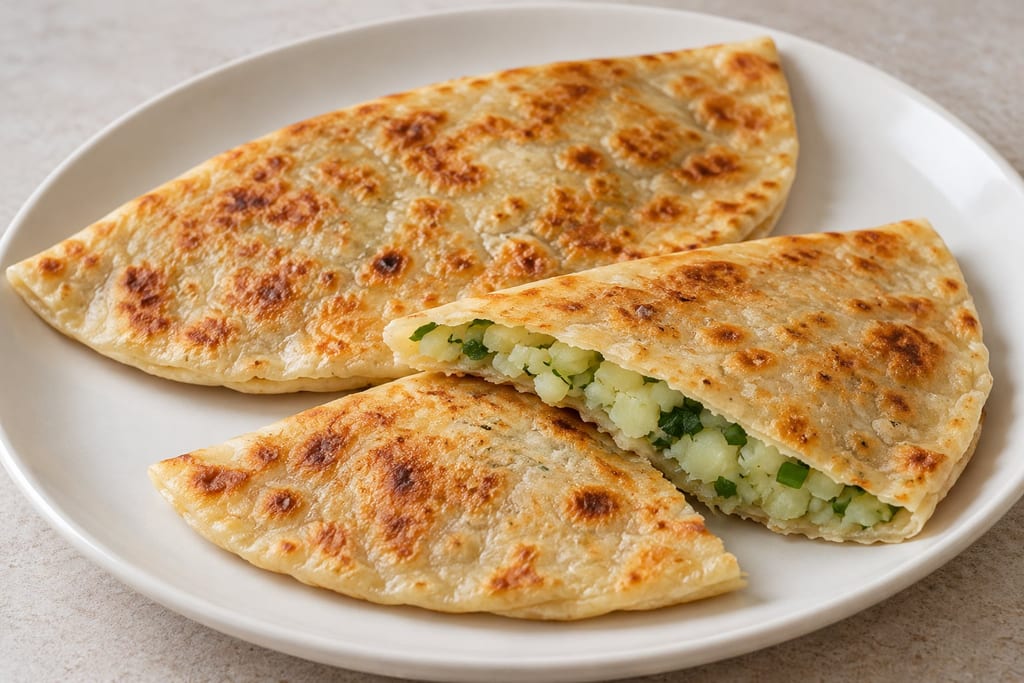
Bolani e kachaloo (potato and scallion)
A thin, unleavened Afghan flatbread filled with mashed potato, scallion and cilantro, folded and pan-browned. This version uses a dough made from scratch.
 FermenteaWhere food goes to change
Modern method
chatni gashnize · chatney · chatni gashnize · Coriander chutney · Afghan green chutney
Afghan coriander chatni is a sharp, hot herb sauce with garlic and vinegar. A 2008 Afghanistan manual records green or red pepper and optional walnut; heat and household versions vary.
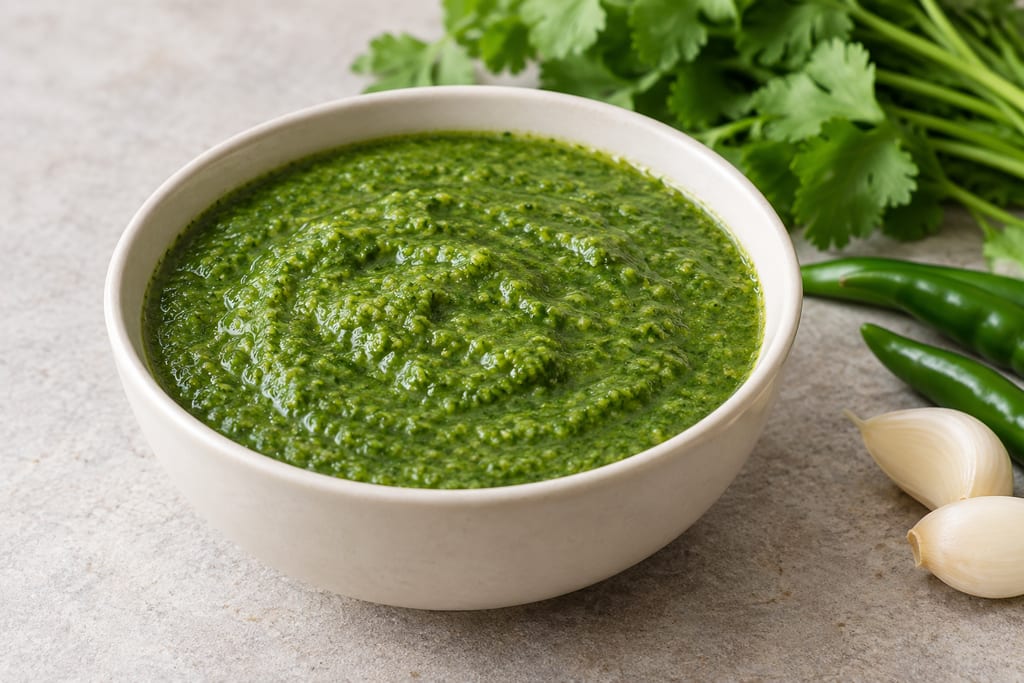
The Ministry of Agriculture, Irrigation and Livestock of Afghanistan published a coriander chutney recipe in a 2008 manual produced by arrangement with the Food and Agriculture Organization of the United Nations. It names the sauce chatni gashnize and describes coriander, garlic and fresh pepper with vinegar; walnut is optional. The manual estimates a batch of 1.5 to 2 kg.
That entry is a documented preparation, not proof of when chutney first appeared in Afghanistan or where within the country it began. It also does not make one set of proportions canonical. The formula below follows the manual's stated quantities while keeping salt to taste because no weight is provided.
The manual's coriander base is balanced by garlic, fresh hot pepper and vinegar. Its optional walnut adds another ingredient but is not needed for the named chatni. The manual gives 500 g of pepper for 1 kg of coriander, but it does not name a cultivar or heat level. Pepper weight alone therefore cannot predict how hot a batch will taste.
Contemporary Afghan cook Mirriam Seddiq describes her chatney as bracing with vinegar and says cooks can make it milder or hotter by changing the jalapeño. Her version uses cilantro, garlic and vinegar, with optional jalapeño. This is one present-day household formula, not a specification for every Afghan chutney. The two sources establish a sharp, green, garlic-and-chile family while showing that pepper choice and vinegar balance vary.
The acidity cuts through rich foods. Seddiq suggests the sauce with meat and describes a yogurt-enriched dip for bolani or salad. The Sajady family version reported by New Hope Network uses ginger, cilantro, lemon, apple cider vinegar and jalapeño, and is served across rice, korma, dal and kabobs. These examples are serving and flavour evidence for specific versions, not fixed pairings for a single national recipe.
The 2008 government manual places one coriander chatni recipe in an Afghan home-processing guide. A later documentary follows Afghan-American sisters and their mother Fatima Sajady. Fatima says she was born and raised in Kabul and remembers chutney as part of her family's table; in the episode, her version contains cilantro, ginger, garlic, lemon and jalapeño. She explains that ginger was her own addition.
The family later took its sauce to market in Minnesota, according to a 2023 interview. That is a documented modern diaspora adaptation. It should not be folded into the 2008 coriander-and-vinegar formula, and neither source identifies a precise birthplace for the broader chutney family.
The Afghanistan manual says its coriander chutney may be eaten immediately or left to ferment in jars, and it gives instructions for that separate storage option. This draft includes only the immediate fresh-use path. The manual does not state a salt mass, vinegar acidity or measured final pH for this recipe, so its jar-fermentation and extended storage guidance cannot be treated as a validated home-preservation process here.
Wash and drain the coriander, prepare the garlic and peppers, blend or pound the herbs with the optional walnut, then stir in vinegar and salt. Serve the fresh batch once made. This record gives no storage duration, room-temperature fermentation schedule or canning method. A sharp taste or visible fermentation activity does not establish safety.
The Afghanistan Ministry of Agriculture, Irrigation and Livestock manual published with FAO includes a recipe called Coriander chutney (chatni gashnize) in 2008. A 2025 family documentary and contemporary Afghan cooking sources show continuing household and restaurant use, with distinct family variations. The available sources do not establish the first attestation, a single origin place or one canonical formula.
Scaling: weigh the listed ingredients; salt remains to taste
The Afghanistan Ministry and FAO manual also describes a sun-associated jar fermentation and extended storage. It gives no salt mass, vinegar acidity or measured final pH for this recipe. Those directions are not treated here as a validated home-preservation process; this item makes no storage-life claim.
The Government of Afghanistan manual documents one coriander chatni formula. It does not locate the preparation in a particular province or establish a birthplace.
The Sajady family's Afghan-American green chutney was taken to a St. Paul-area farmers market; this ginger-led version is a modern family adaptation, not the same formula as the 2008 manual.
A thin, unleavened Afghan flatbread filled with mashed potato, scallion and cilantro, folded and pan-browned. This version uses a dough made from scratch.
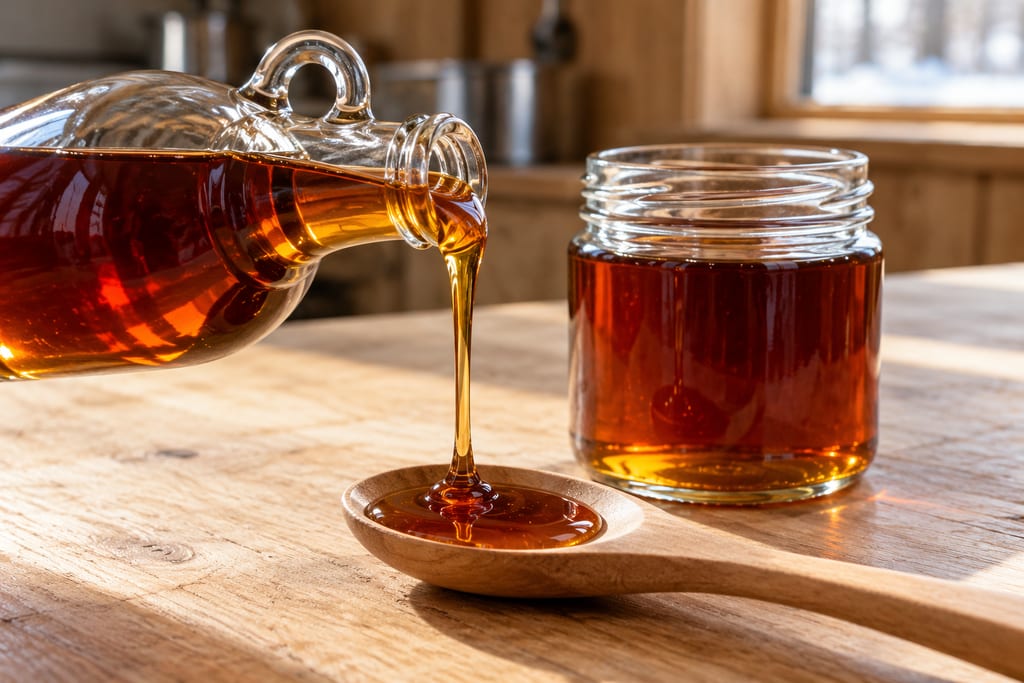
Maple sap of about two percent sugar boiled down in a shallow pan until it reaches syrup density, the sugar concentration the standard defines, then filtered hot and packed hot.
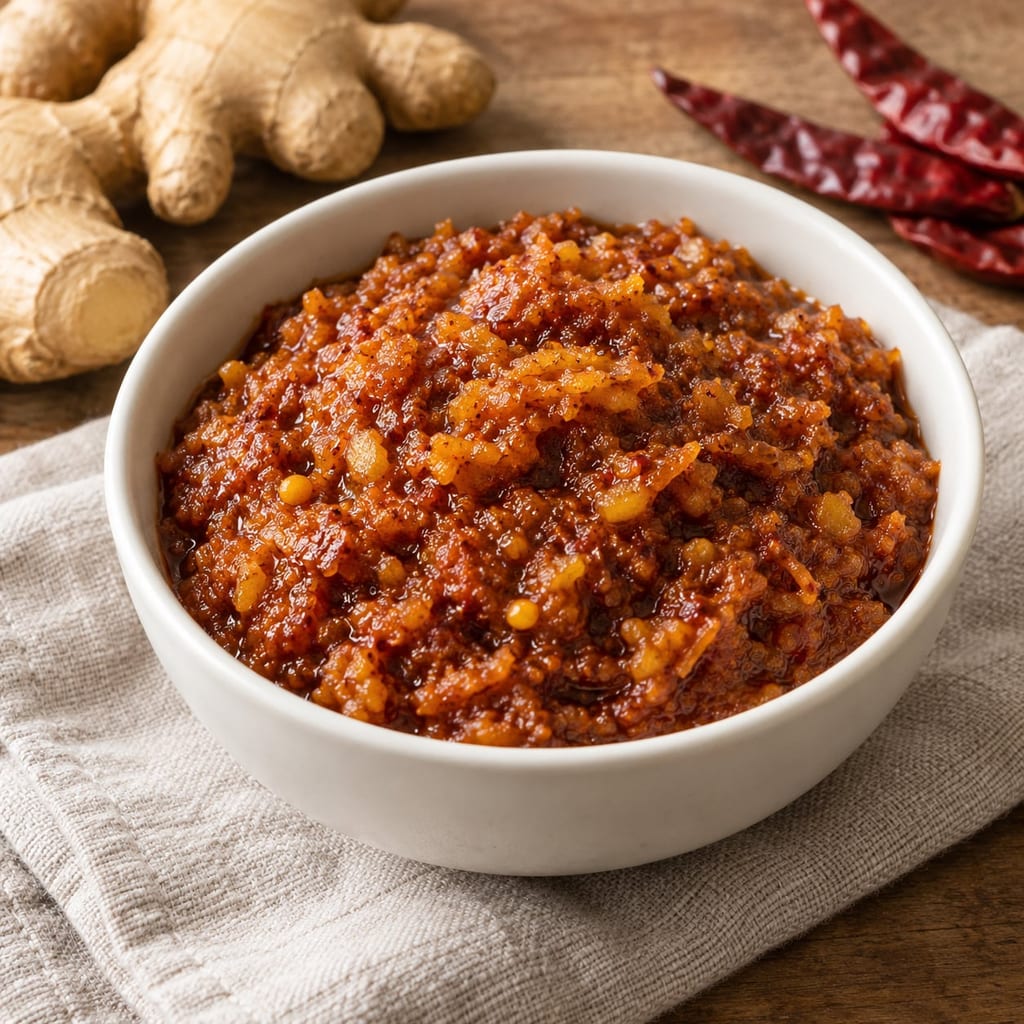
An Andhra ginger-and-urad chutney in which browned dal and briefly fried ginger and chillies are cooled, then ground with jaggery to a coarse paste.
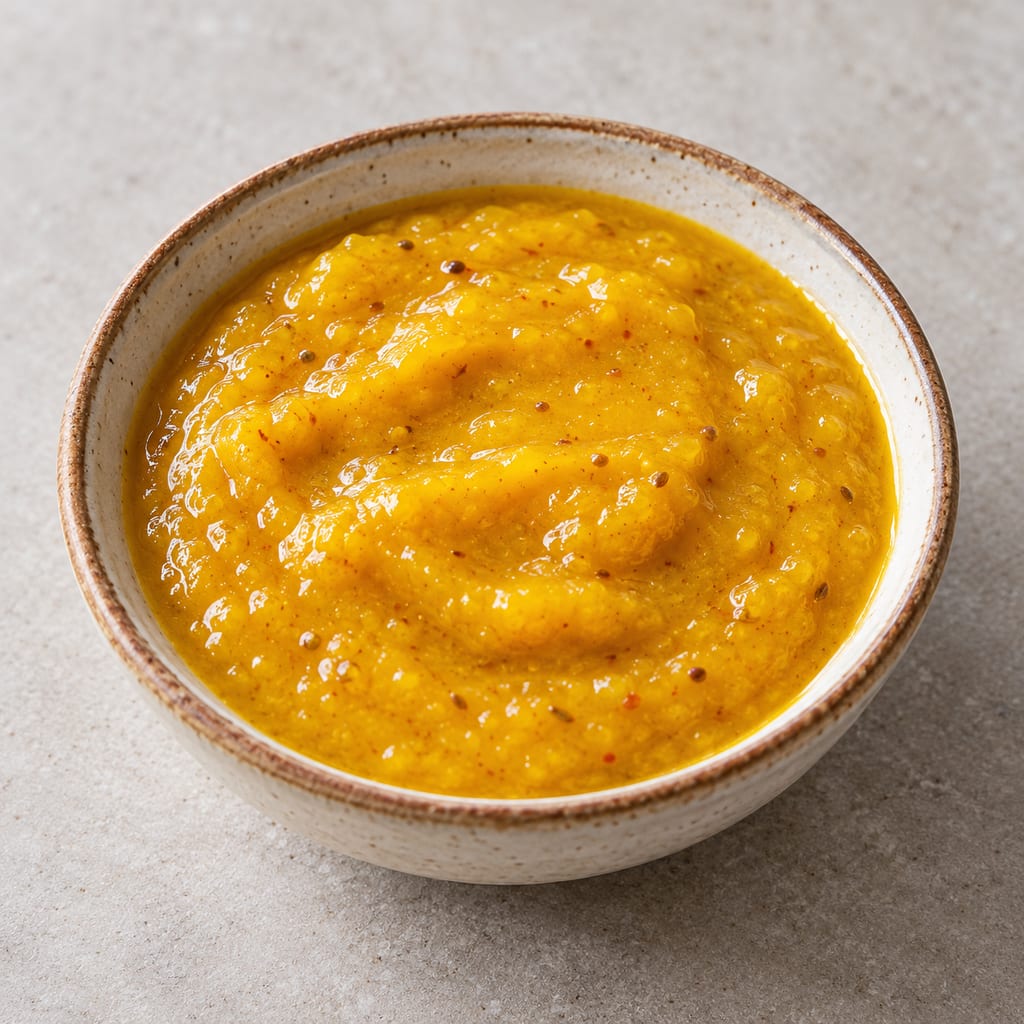
This cooked amba follows a Jewish Food Society recipe that simmers ripe mango with onion, garlic, mustard seed and warm spices into a tangy Middle Eastern condiment.
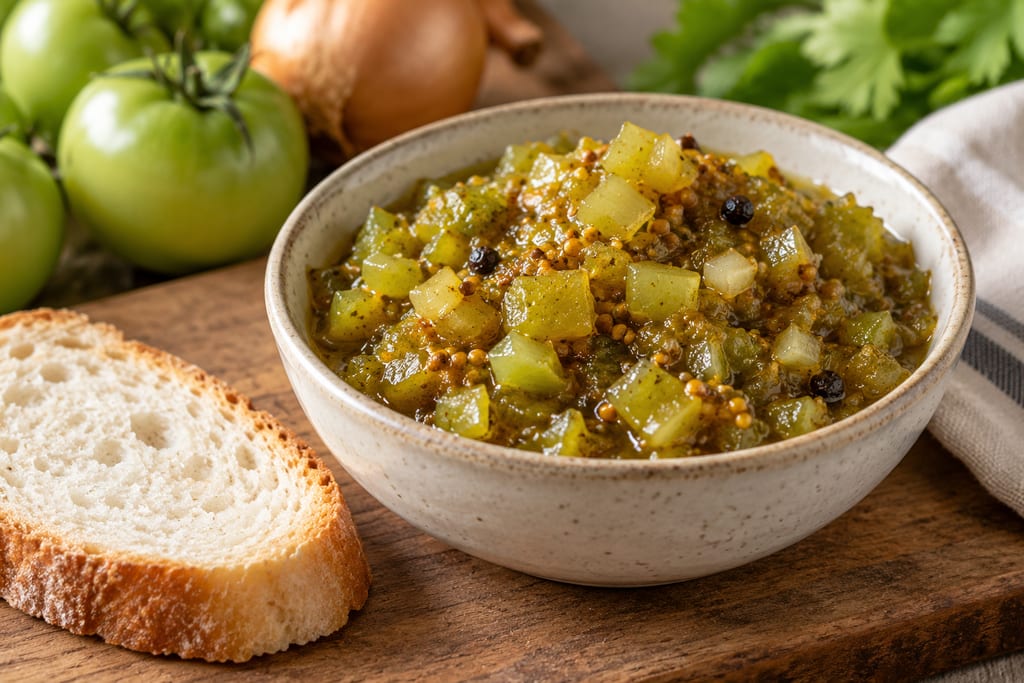
Australian green tomato pickles and relishes vary. This partial version follows ABC Western Victoria’s 2018 pickle recipe, not Beerenberg’s commercial formula. Sources document examples from 1944 onward, not a single origin.
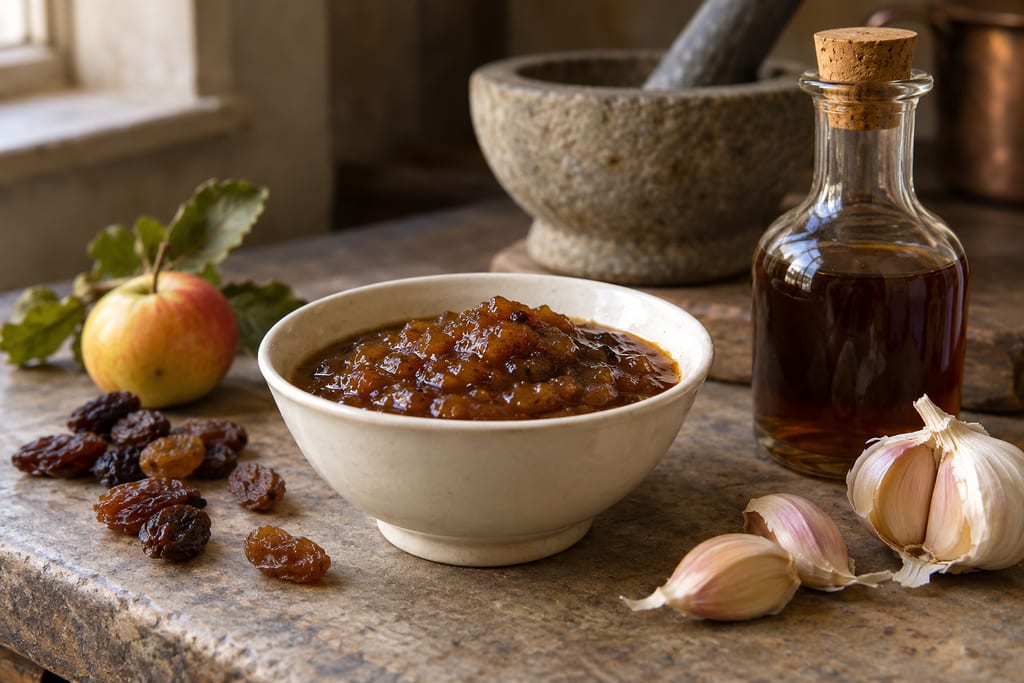
Eliza Acton's Bengal receipt for chetney sauce: stoned raisins and a hard acid fruit pounded with brown sugar, ginger, salt, cayenne and garlic, then thinned with vinegar to the consistence of thick cream.
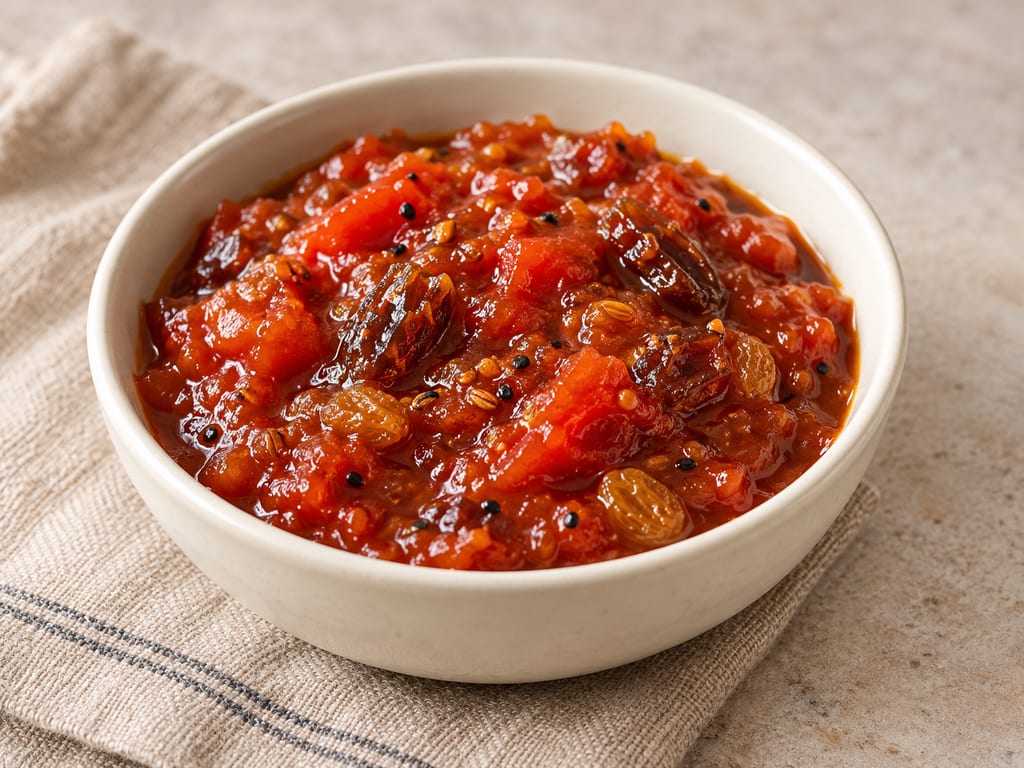
A cooked Bengali meal chutney combining tomatoes, dates, raisins, ginger and panch phoron.

A spicy South African vegetable relish of onion, carrot, pepper, tomato, curry seasoning and beans, cooked briefly and served warm or cold beside pap and grilled meat.
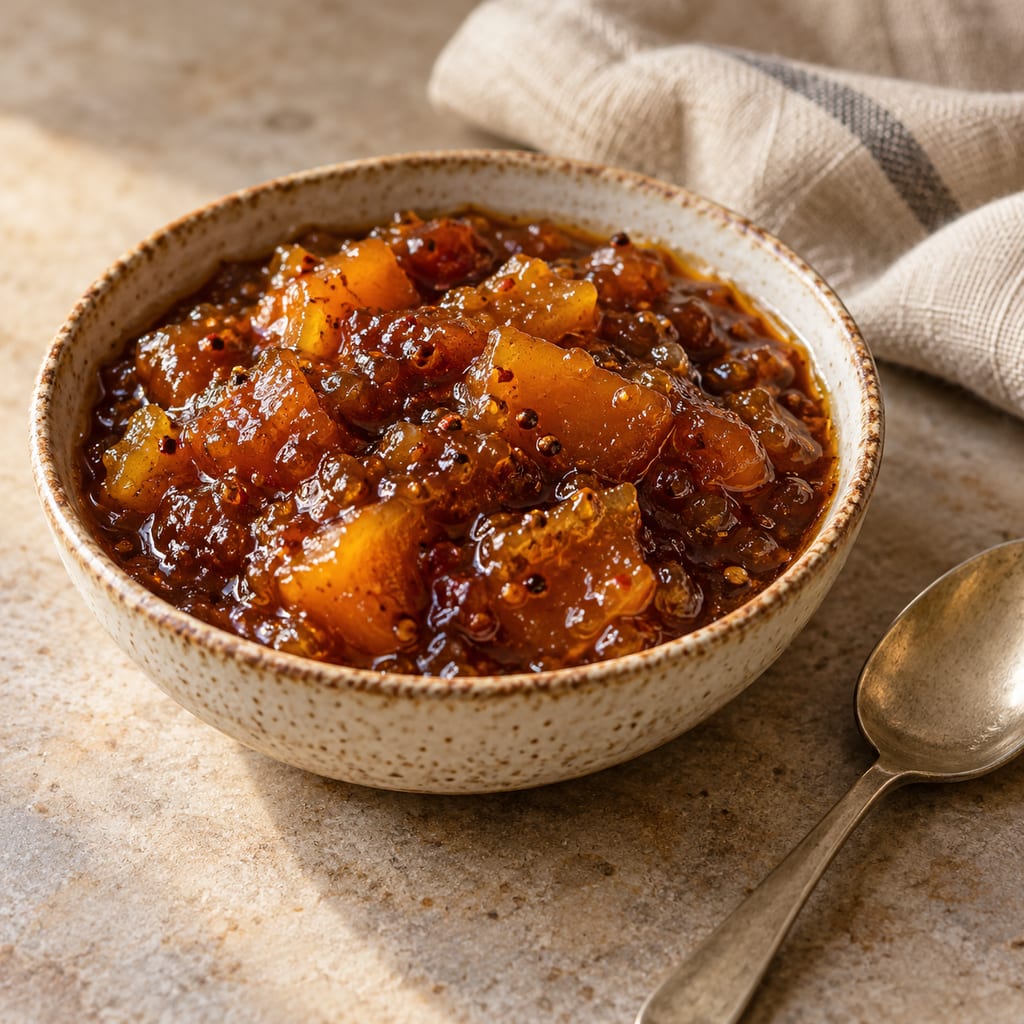
A broad account of cooked chutney traditions: fruit or vegetables combined with sugar, spices and sometimes acid, often boiled into a thick condiment. This record is historical and process context, not a formula or storage recipe.
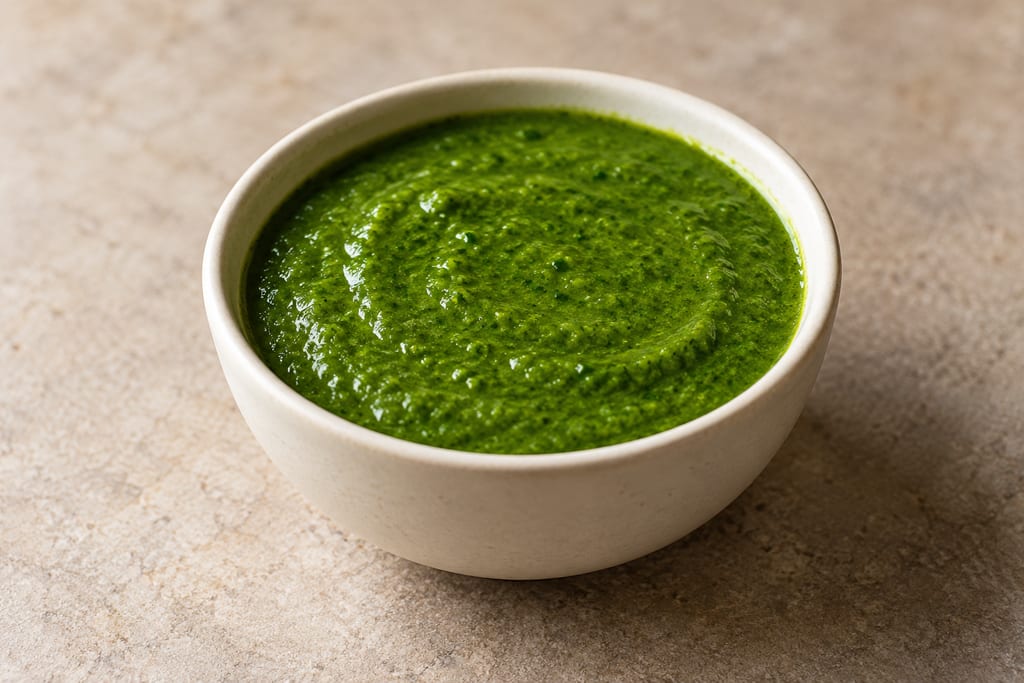
A cold-blended coriander and mint chutney with ginger, green chilli and optional cumin and lemon; the author serves it with snacks, chaat and sandwiches.
No community contributions have been published for this entry yet.
Sign in to contribute. Published comments and photos are free to read.
Ministry of Agriculture, Irrigation and Livestock, Government of Afghanistan, published by arrangement with the Food and Agriculture Organization of the United NationsFormula · Method · Geography · History · Safety context
Home-based Fruit and Vegetable Processing: A Manual for Field Workers and Trainers. Book 2: Practical Guidance and RecipesThe 2008 manual includes Coriander chutney (chatni gashnize) and gives one formula: 1 kg coriander, 200 g garlic, 500 g fresh hot pepper, 250 ml vinegar, salt to taste and optional 100 g walnut; it estimates a 1.5 to 2 kg yield.
The manual says the chutney may be eaten immediately or fermented; it also gives jar and storage guidance, but its recipe does not state vinegar acidity, salt mass or a measured pH. This entry does not treat that guidance as a validated home process.
Cited in: A documented Afghan coriander chatni; Fresh, sour and variably hot; Household use across Afghanistan and the diaspora; Fresh service and limits of the preservation evidence
Afghan CooksTaste · Heat · Modern use
Afghan Green Sauce – Chatney – Cilantro ChutneySeddiq describes this sauce as strongly vinegary and adjustable from mild to hot; her version uses cilantro, garlic, optional jalapeño, salt, vinegar and black pepper.
The source describes it with rich meat dishes and says a yogurt-added variation can be used as a dip for bolani or salads.
Cited in: Fresh, sour and variably hot; Fresh service and limits of the preservation evidence
Relish / Minnesota PBSHousehold history · Geography · Flavour
The Secret Sauce: Afghan Chutney and Mexican GuisadoFatima Sajady says she was born and raised in Kabul and describes her family's chutney as a regular table condiment.
The episode shows her contemporary family version with cilantro, fresh ginger, garlic, lemon and jalapeño; Fatima says ginger was an addition to her own version.
Cited in: Household use across Afghanistan and the diaspora
New Hope NetworkGeography · Household history · Serving use
Maazah: Afghan American family shares chutney sauces with the worldThe Sajady family developed and sold a ginger-and-cilantro chutney at a St. Paul-area farmers market; the article identifies it as an Afghan-American family version.
The article describes serving Afghan chutney with rice, korma, dal and kabobs; it presents the family's six-ingredient variation, not a canonical Afghan formula.
Cited in: Fresh, sour and variably hot; Household use across Afghanistan and the diaspora