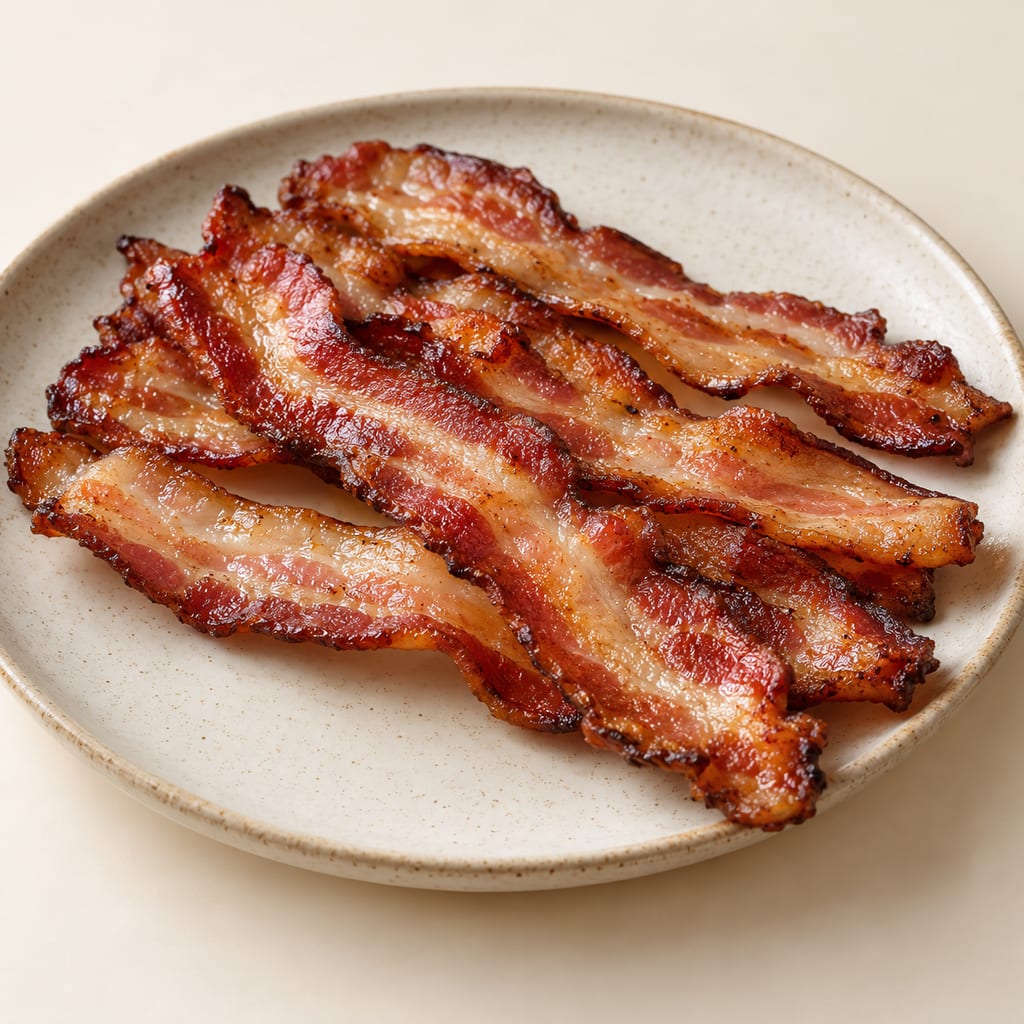
Maple-beer wet-cured bacon
A refrigerated pork-belly brine combines beer and maple syrup with salt, garlic powder and measured Cure #1.
 FermenteaWhere food goes to change
Traditional method
maple syrup (small batch)
Maple sap of about two percent sugar boiled down in a shallow pan until it reaches syrup density, the sugar concentration the standard defines, then filtered hot and packed hot.
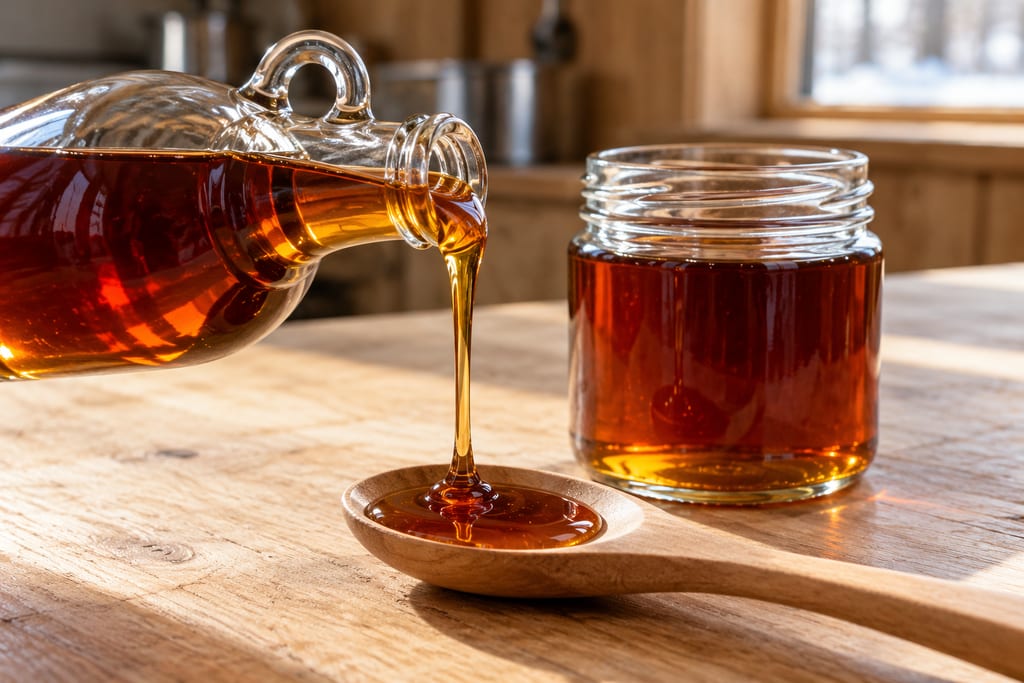
Maple syrup is sap from sugar and black maple trees, boiled until most of its water has gone. The sap is only about 2 percent sugar, which is why the batch needs about 43 gallons of sap for each gallon of syrup. The University of Minnesota leaflet gives that ratio for sap at this strength, and says the batch is less when the sap is sweeter.
The leaflet credits American Indians with the discovery of the conversion and places maple products in local trade before 1620. It names sugar and black maple as the commercial sources and records Vermont and New York as the largest producing states in 1976.
The leaflet's batch method uses a large, shallow pan, which spreads the heat and lets the water leave quickly. Sap is added as the level drops, and foam is skimmed from the surface. As the sap concentrates, its boiling point rises above that of water. The end point is reached when the syrup boils seven degrees above the boiling point of water, or when a refractometer shows syrup density. Utah State's fact sheet gives the regulatory standard: at least 66 percent soluble solids by weight.
Near the end the boil must be watched closely to prevent burning. Utah State notes that the flavour comes partly from heating, so the time spent boiling affects the syrup. It also describes reverse-osmosis preconcentration to about 4 percent sugar; the sources do not establish how that changes the finished flavour.
The finished syrup is filtered while hot through wool or another suitable filter to remove sugar sand, which settles out of the concentrate. It is packaged while hot, at no less than 180 °F (82 °C), which the leaflet gives as the means of preventing spoilage in storage.
The leaflet gives no storage time for the packed syrup. For sap, it gives four or five days in cold, well-stored conditions and no longer period. A thermometer calibrated at least 15 degrees above the boiling point of water is the leaflet's instrument for the end point.
The University of Minnesota leaflet says American Indians are generally credited with discovering the conversion of maple sap into syrup, and that maple products were important in local trade before the Pilgrims arrived in 1620.
Yield 1 gal syrup per 43 gal sap at about 2% sugar · Scaling: source batch only
The leaflet warns to control the boil near the end to prevent burning and overheating.
Hazard sourcePackage the syrup hot.
Control sourceMost of the sap's volume leaves as steam; boiling indoors puts that water into the room.
Where the University of Minnesota leaflet was published; it names sugar and black maple as the commercial sources. Not a claim of origin.
The largest producing states in 1976, according to the same leaflet.
A refrigerated pork-belly brine combines beer and maple syrup with salt, garlic powder and measured Cure #1.
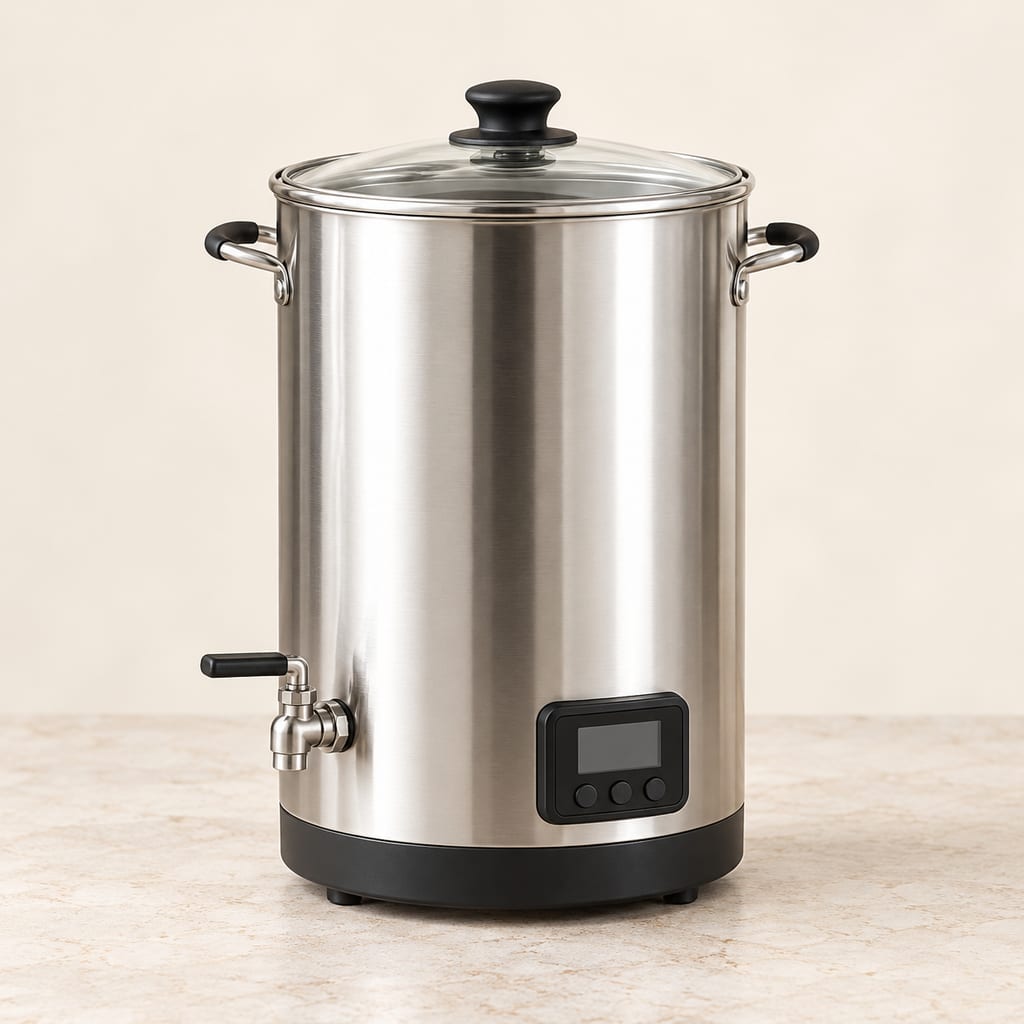
An electric brewing vessel that combines controlled heating with a removable grain basket and, on the documented models, a recirculation pump for mashing and boiling wort.
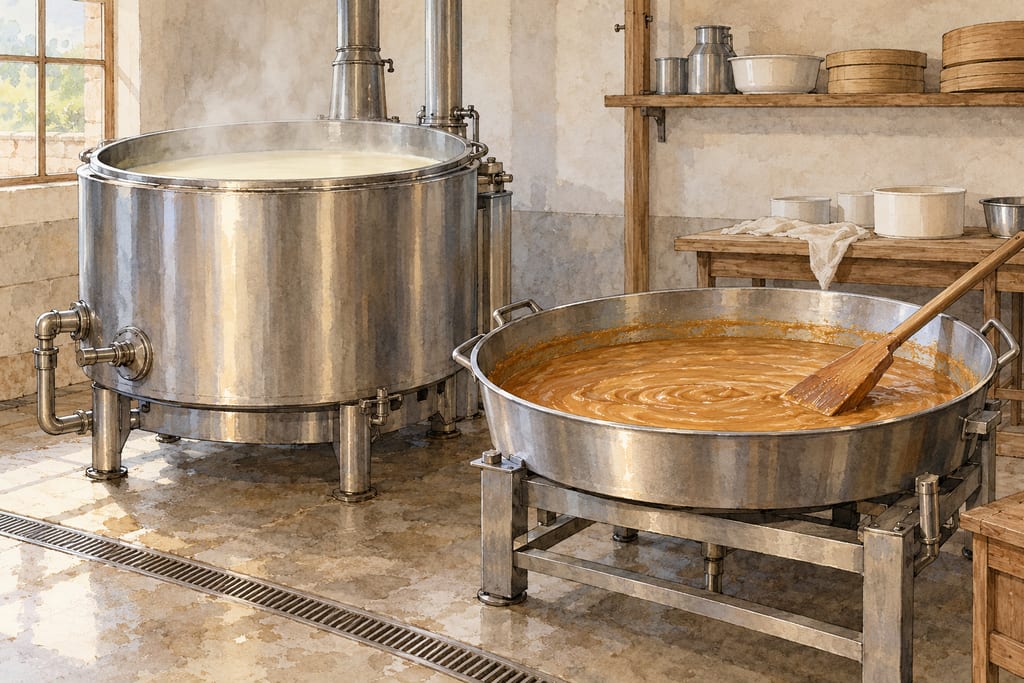
The kettle heats and reduces a large volume of thin liquid such as whey; before it nears the brewer's minimum fill the batch moves to a wide pan for the thick, stirred finish.
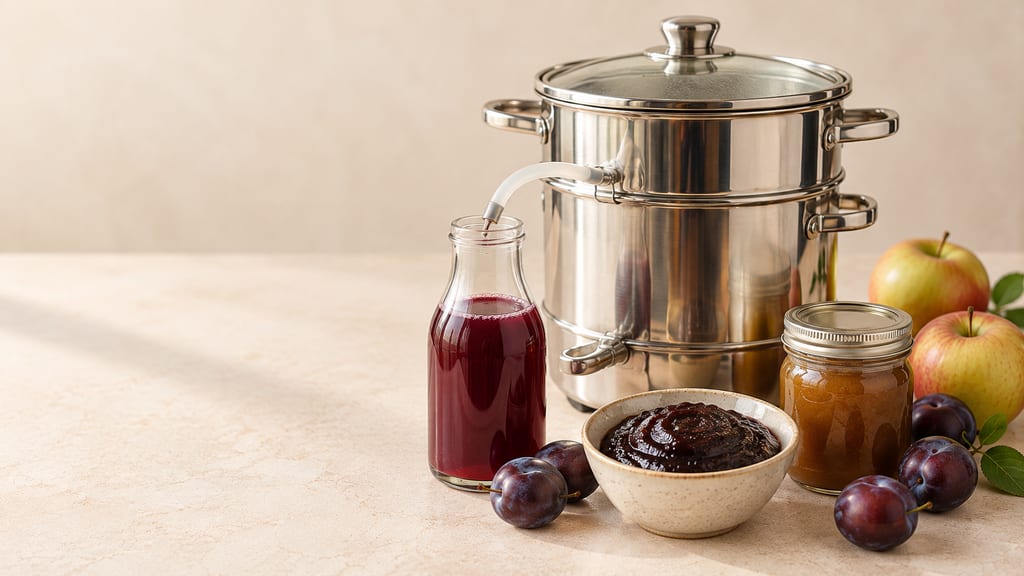
Fruit becomes juice, butter, paste or syrup in two moves: get the liquid out, then drive the water off. Steam juicers, slow cookers, microwaves and freezers each do one of those moves well, and none does both.
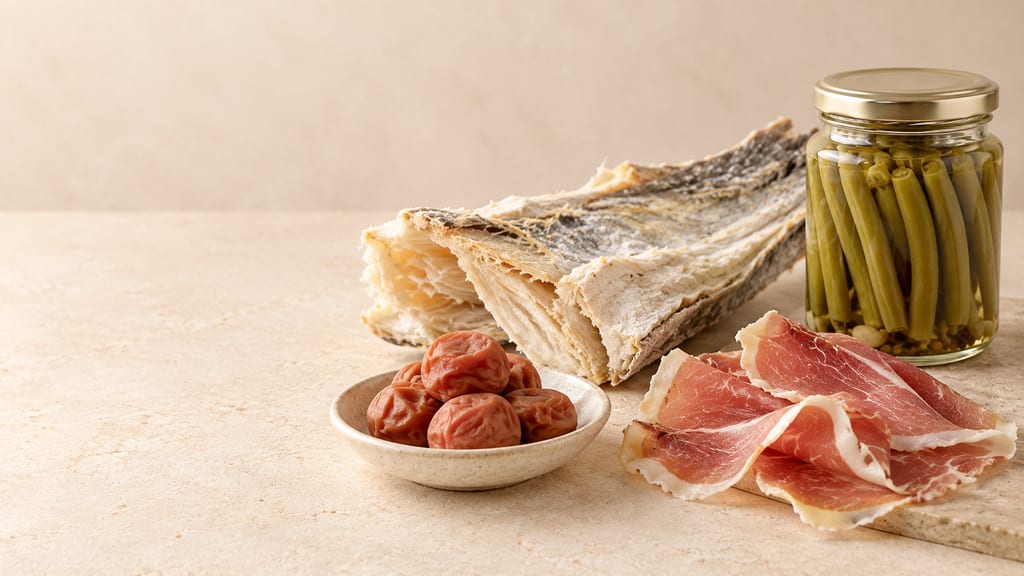
Every preserved food is a stack of barriers against microbes, enzymes, air and time. This is how they work, what a recipe's numbers measure, and how cooks worldwide build them.
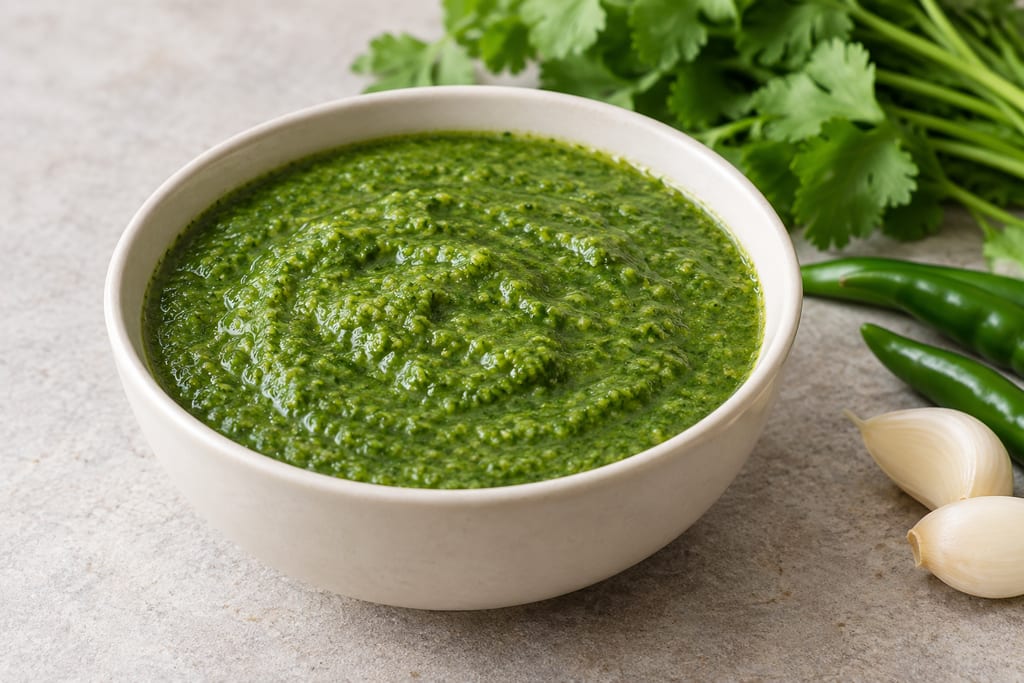
Afghan coriander chatni is a sharp, hot herb sauce with garlic and vinegar. A 2008 Afghanistan manual records green or red pepper and optional walnut; heat and household versions vary.

Aam panna is a tart Indian summer drink made by cooking unripe green mango until its flesh softens, then blending the pulp with sweetener, salt and spices and diluting it with water.
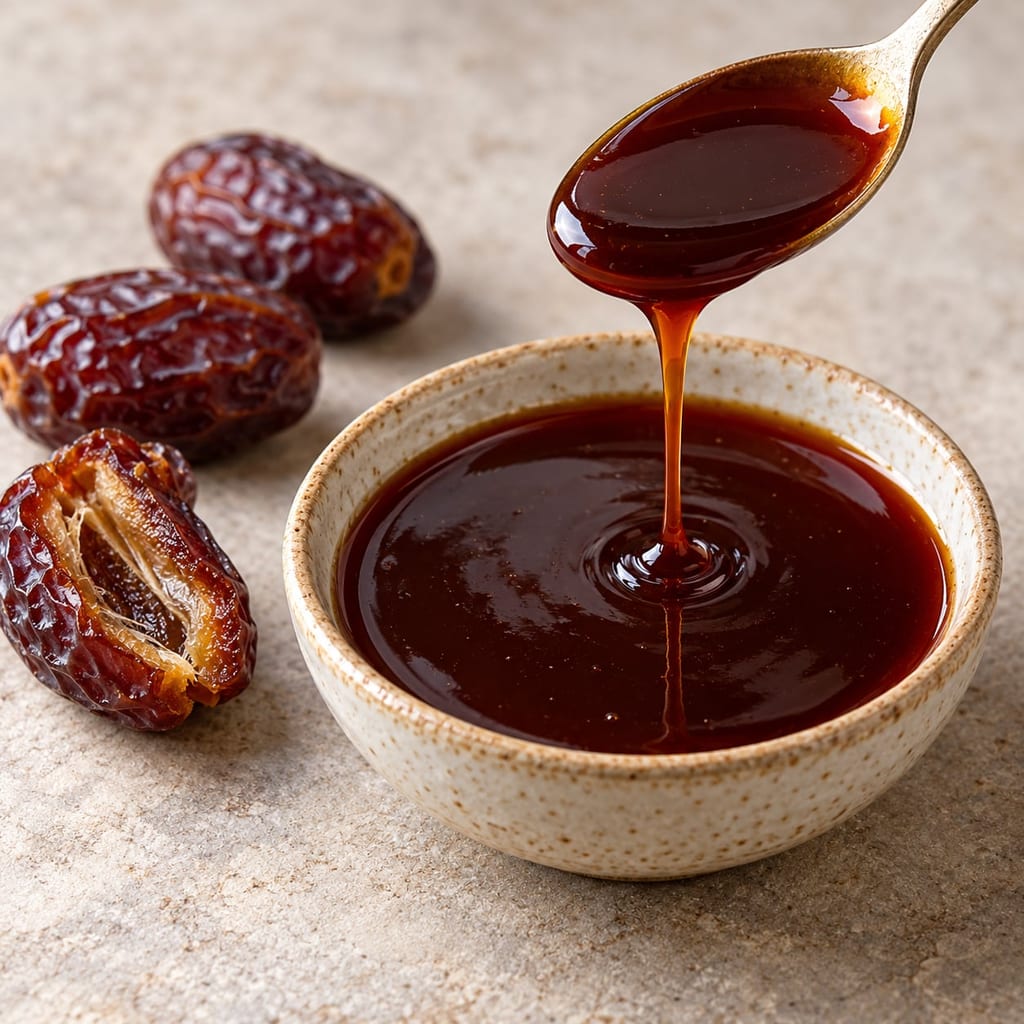
A thick, dark, very sweet syrup made from dates, known as dibs, rub, silan or date molasses. It sweetens tahini and desserts and glazes or sauces savoury dishes across the Middle East and North Africa.
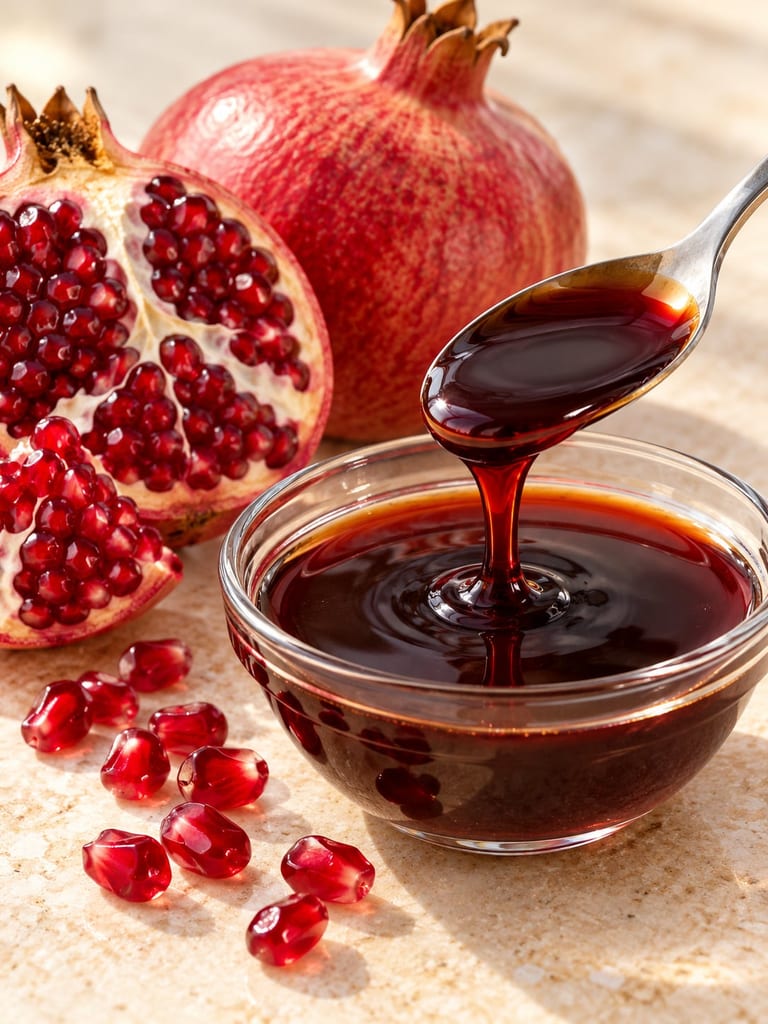
The registered Hatay method presses pomegranate arils and slowly concentrates the strained juice. Its 100 kg source batch and experienced-producer endpoint are retained; no home-scale time or shelf-life is inferred.
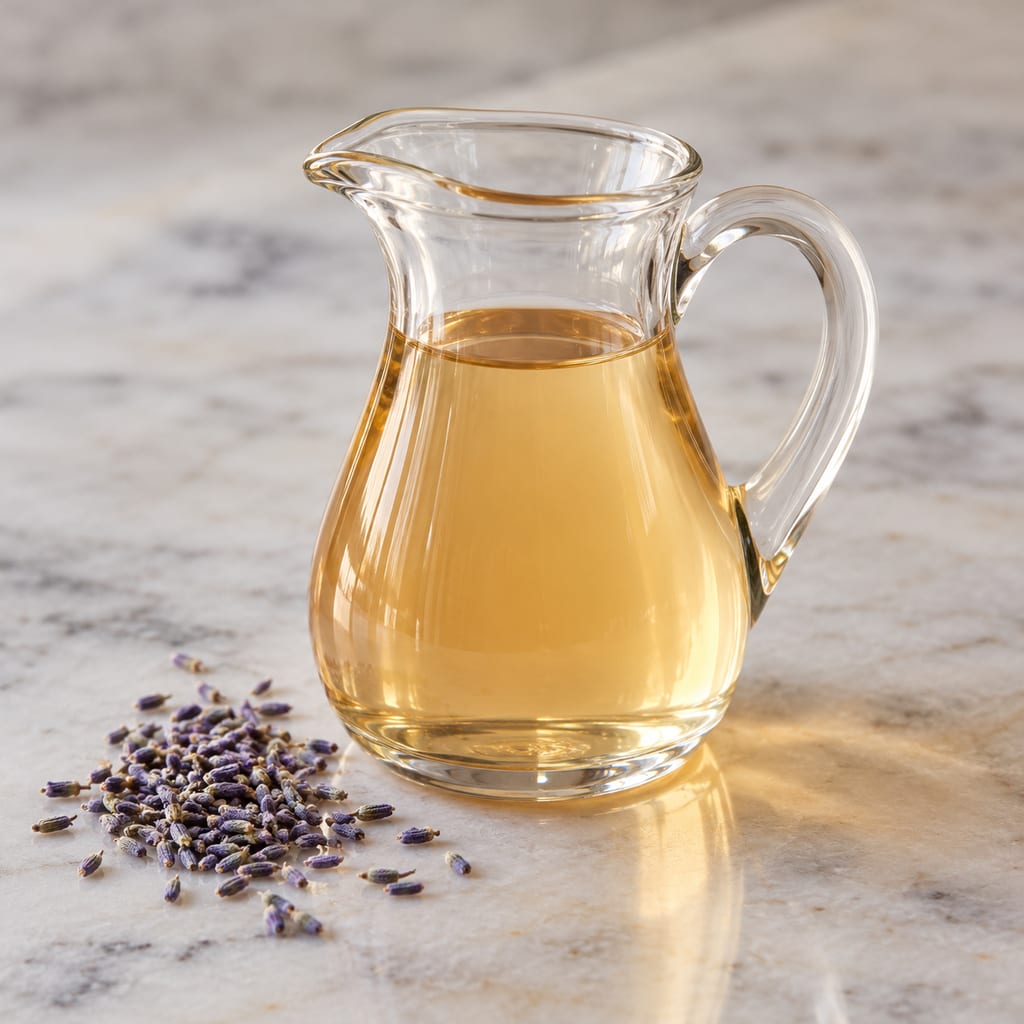
Sugar syrups flavoured by holding botanicals, sugar and water in sealed bags in a 135°F (57°C) water bath for an hour, then cooling and refrigerating; several can share one bath.
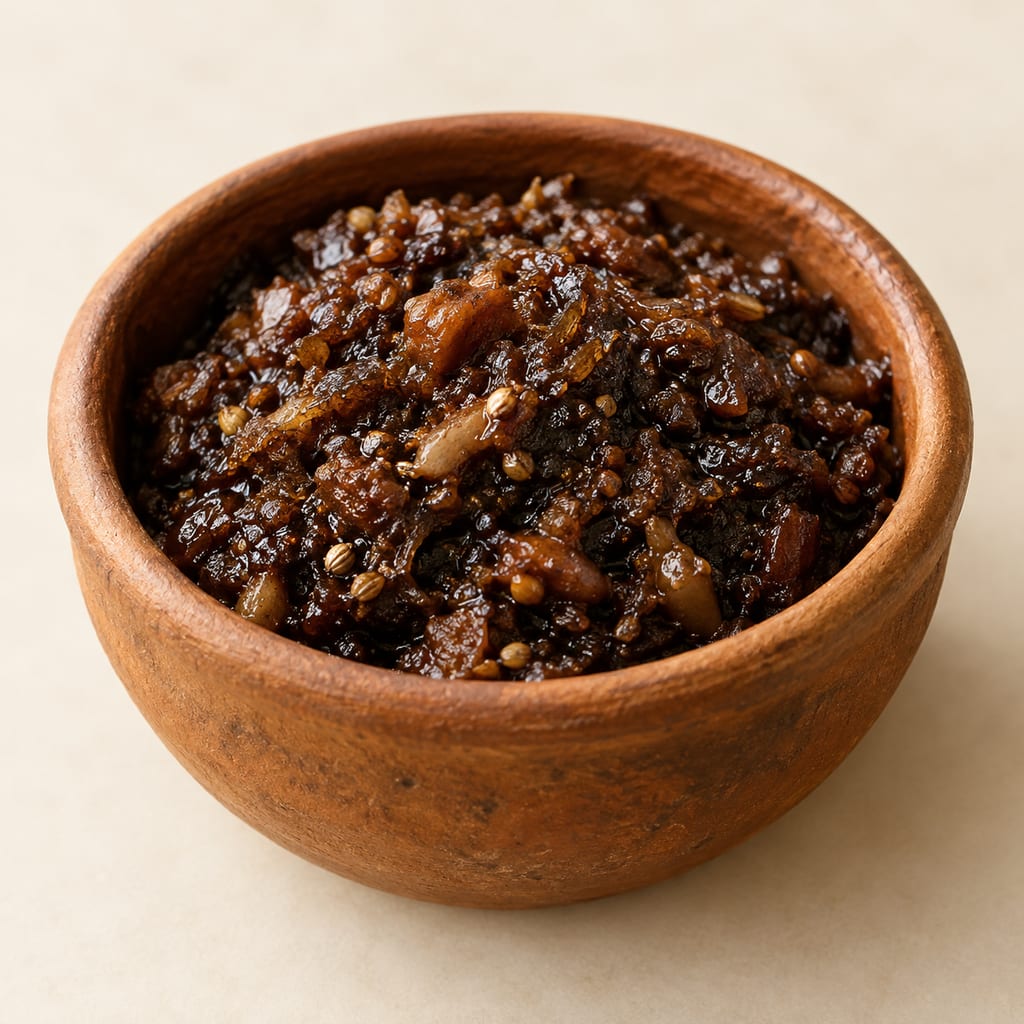
Must murri was a medieval Andalusi and North African seasoning of baked wheat dough, grape must and aromatics, cooked slowly in an oven.
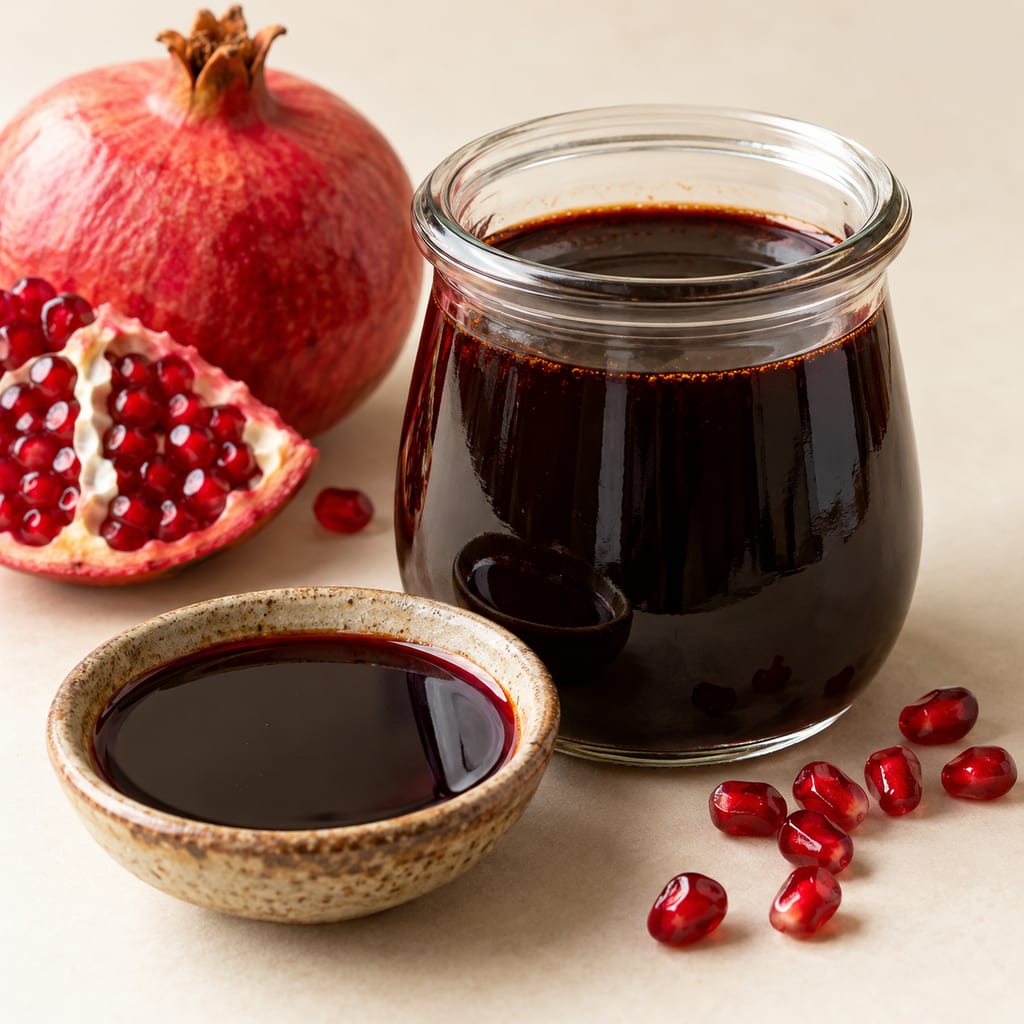
A thick, sour condiment made by reducing pomegranate juice over heat until it is concentrated, used across the Middle East, the South Caucasus and the Balkans in dressings, stews and grilled dishes.
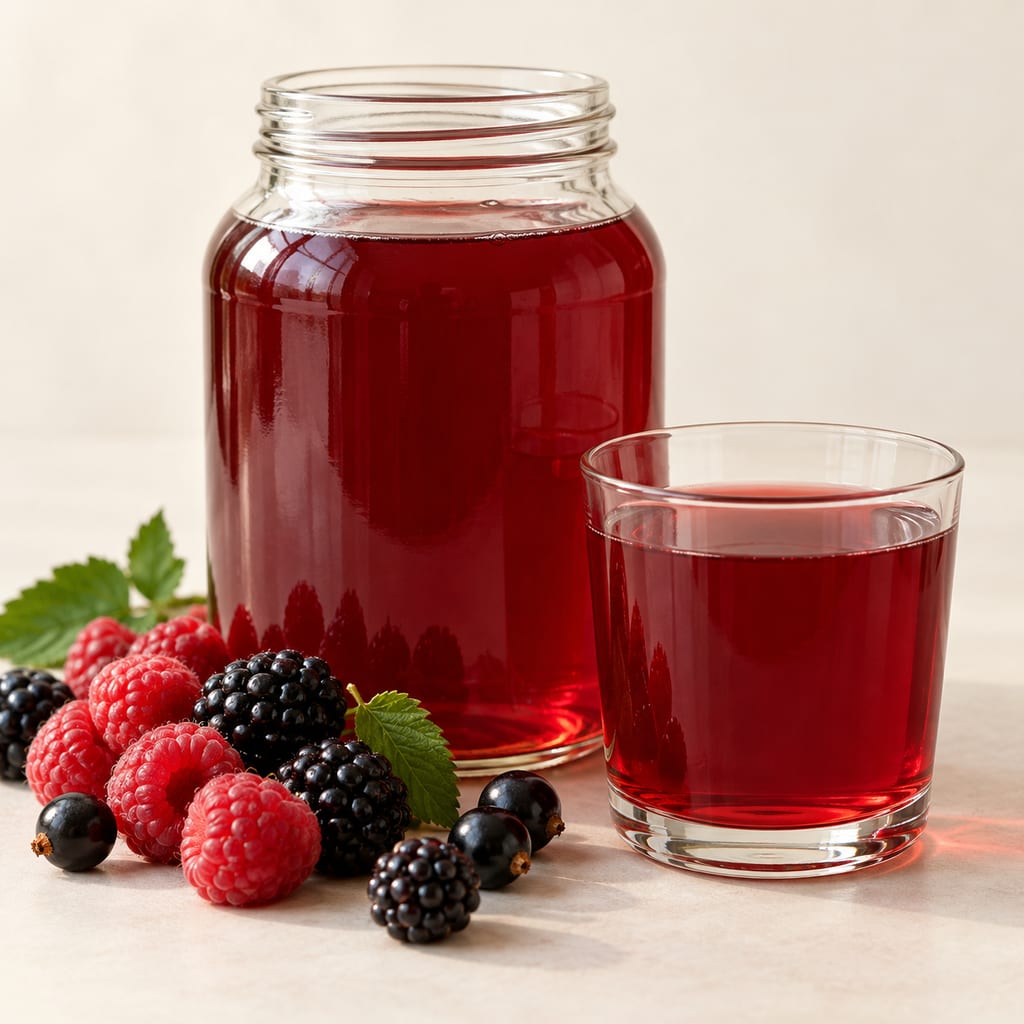
Clear juice that a stacked steam juicer draws out of ripe fruit by steam alone, without crushing it. It is the base for jelly, syrup or cordial and still needs its own keeping step.
No community contributions have been published for this entry yet.
Sign in to contribute. Published comments and photos are free to read.
University of Minnesota Agricultural Extension Service, Forestry No. 11-1976 (date read from the OCR text; probable)Method · History · Storage
Homemade Maple SyrupBatch method; shallow pan; seven degrees above the boiling point; hot filtering; packing at 180 °F; 43 gallons to 1 gallon; history
Cited in: Sap at about two percent sugar; Boiling it down; Filtering and packing
Utah State University Extension, with The Forest Farmers, LLC (date not printed)Method · Science
044 - Maple Sap Collection and Sap Processing Systems (Utah Forest Facts)66% soluble solids standard; reverse osmosis; flavour from heating; refractometer; revised Jones rule
Cited in: Boiling it down