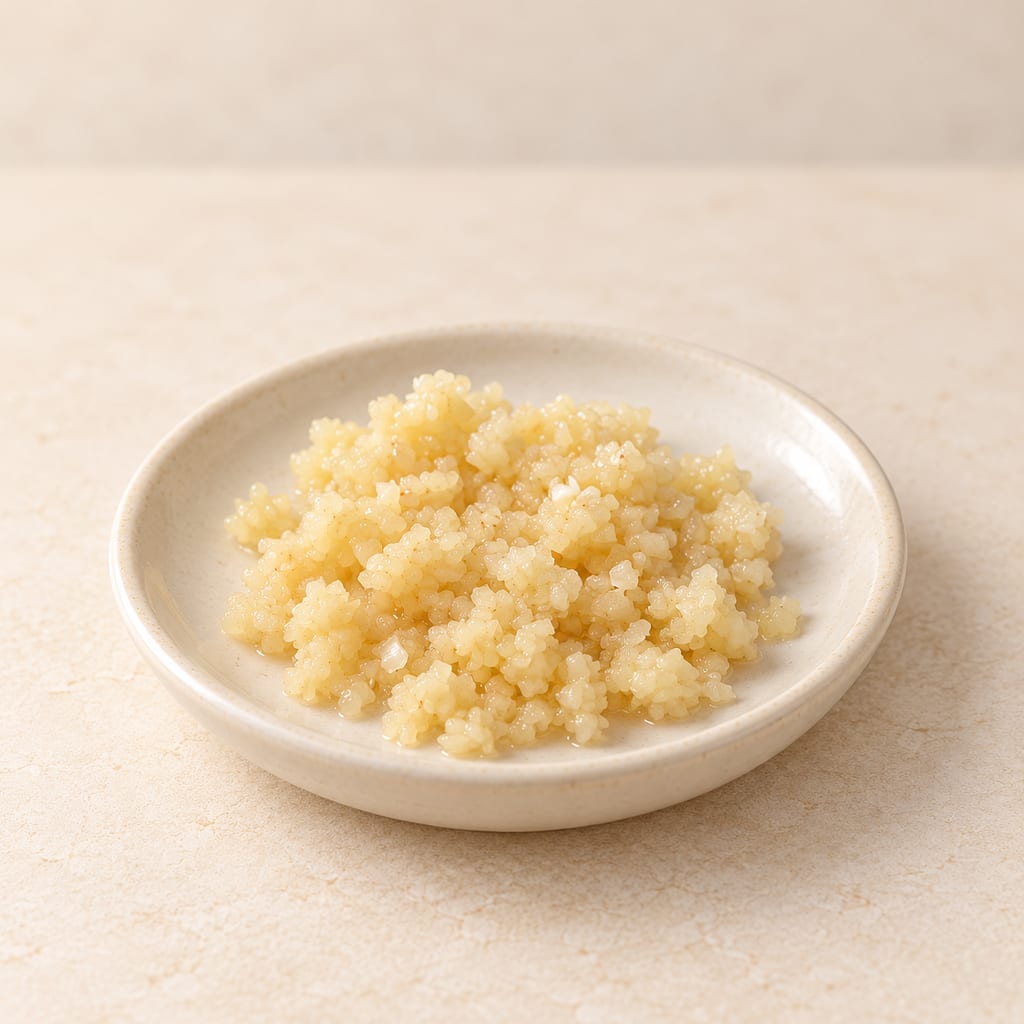
Minced garlic
Minced garlic is peeled Allium sativum cut into small, moist pieces, releasing the pungent sulfur aromas that season sauces, vegetables and meat preparations.
 FermenteaWhere food goes to change
Maple sap is the dilute, mildly sweet liquid gathered from maple trees in late winter and early spring, before heat concentrates it into syrup or sugar.
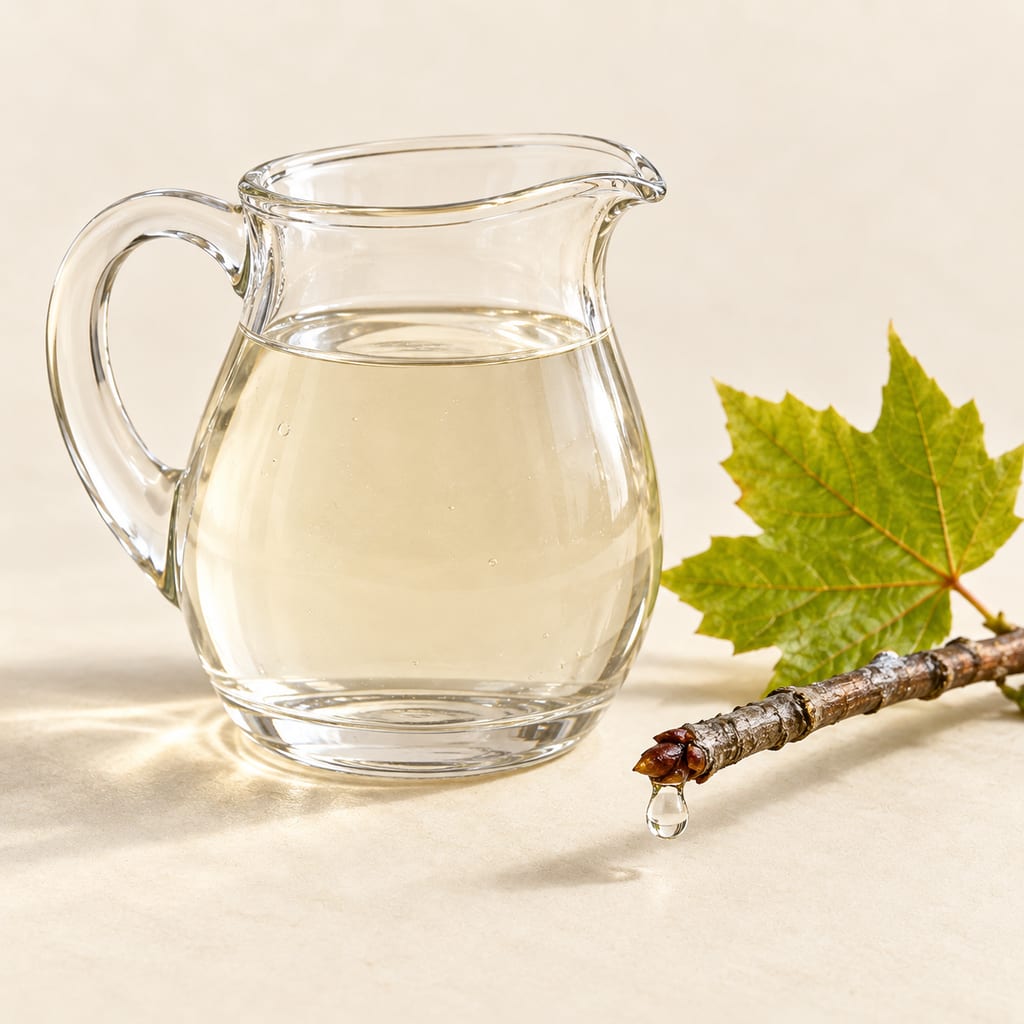
Maple sap is the watery fluid that rises through a maple tree and can be collected through a small tap. Fresh sap is clear to faintly coloured and only mildly sweet: unlike maple syrup, it is a dilute raw material rather than a finished sweetener. Its composition varies from tree to tree and through a season, so sap is not a standardised syrup ingredient by itself.
Maple foods have a history that predates colonial written records. Indigenous peoples knew and valued maple products long before European settlement. A 1691 account by the Récollet missionary Chrestien Leclercq describes Mi’kmaq people boiling sap in wooden troughs until it became a reddish syrup; the same historical account records a cold method in which sap was frozen overnight in bark containers and the ice removed. These are specific recorded practices, not evidence that maple use began in 1691. The written colonial record should not be mistaken for the full history of Indigenous knowledge.
Sugar maple (Acer saccharum) is especially valued because its sap usually has more sugar than that of other maple species. Red maple (Acer rubrum) also yields sweet sap. The trees store starch in their sapwood during late summer and autumn. As the wood warms, enzymes convert some of that reserve mainly into sucrose, which passes into the sap.
The collection season follows weather rather than a fixed calendar. When freezing nights alternate with warmer days, pressure changes in the tree move sap through its water-carrying vessels. In Maine, the University of Maine describes this cycle from roughly mid-February to early April in southern areas and mid-March to late April in northern areas; those dates describe Maine, not every maple-growing region. Sap yield and sweetness vary with the tree, the tapping method and the season.
Fresh sap is mostly water. Utah State University Extension gives a typical sugar concentration of about 2%, while noting variation between trees. To make syrup, producers remove water by boiling until the liquid reaches at least 66% soluble solids. The large difference in concentration explains why a broad, heated evaporating surface is useful: water leaves as steam while sugars and other dissolved material become concentrated.
Some modern systems use reverse osmosis to remove part of the water before heating. It can reduce the amount of boiling required, but heat is still needed to develop the characteristic flavour of maple syrup. Sap can also be concentrated with pans over a fire or another heat source. The historical cold-freezing method and heated evaporation are different processes, and they do not produce identical forms: the museum’s account says the cold method made syrup but not dry sugar.
Maple sap brings water and naturally occurring sugars, chiefly sucrose, to a ferment. Those sugars can serve as a substrate for yeast and other microorganisms when a recipe deliberately ferments the sap, but sap alone does not define a fermented drink. The linked preparation Acerum is a distinct product made from maple sap; the ingredient should not be confused with that finished preparation or with boiled maple syrup.
The dilute sugar level also distinguishes sap from syrup in a recipe. Substituting syrup changes both sweetness and water content, while fresh sap contributes relatively little sugar per volume. The appropriate amount therefore depends on the specific recipe and the sap’s measured composition; the sources here do not establish a universal substitution ratio or fermentation schedule.
Sap is perishable. University of Maine Extension warns that sap left in warm conditions can sour, and advises keeping collected sap cold and boiling it soon. This matters because collection lasts across changing weather and the sap is dilute; warm storage allows quality to deteriorate before concentration. The guidance is not a shelf-life claim, and this page does not assign a storage duration.
The collection systems described in extension guidance range from a bucket attached to a tree spout to tubing that carries sap to a collection point. Covers help keep rain, snow and foreign material out. These are collection details, not ingredients to add to the sap, and the vessel or tubing does not change the identity of the liquid.
Maple sap is the starting material for maple syrup and maple sugar, and it has also been used as a drink or as the base for fermented preparations. Across the Canadian Maple Belt, maple production and trade became part of household economies as well as a seasonal practice; spring sugaring-off remains a marker of the end of winter in Canadian public history. The breadth of that tradition does not mean every region used the same species, collection system or method.
For choosing sap, the useful distinction is its source and state: fresh sap from a maple is not syrup, and a sweet liquid from another tree is not automatically maple sap. Sugar maple is the usual high-sugar choice in the extension account, but red maple sap is also used. No single flavour profile or sugar concentration can be promised for every tree or season.
Parks Canada describes Indigenous knowledge and Canadian Maple Belt production; this country-level row does not identify a single origin.
University of Maine Extension documents collection and syrup processing in Maine; not a claim that the practice is confined to Maine.
The museum’s historical account discusses maple sugar and sap reduction in the St. Lawrence colonial context.
Minced garlic is peeled Allium sativum cut into small, moist pieces, releasing the pungent sulfur aromas that season sauces, vegetables and meat preparations.
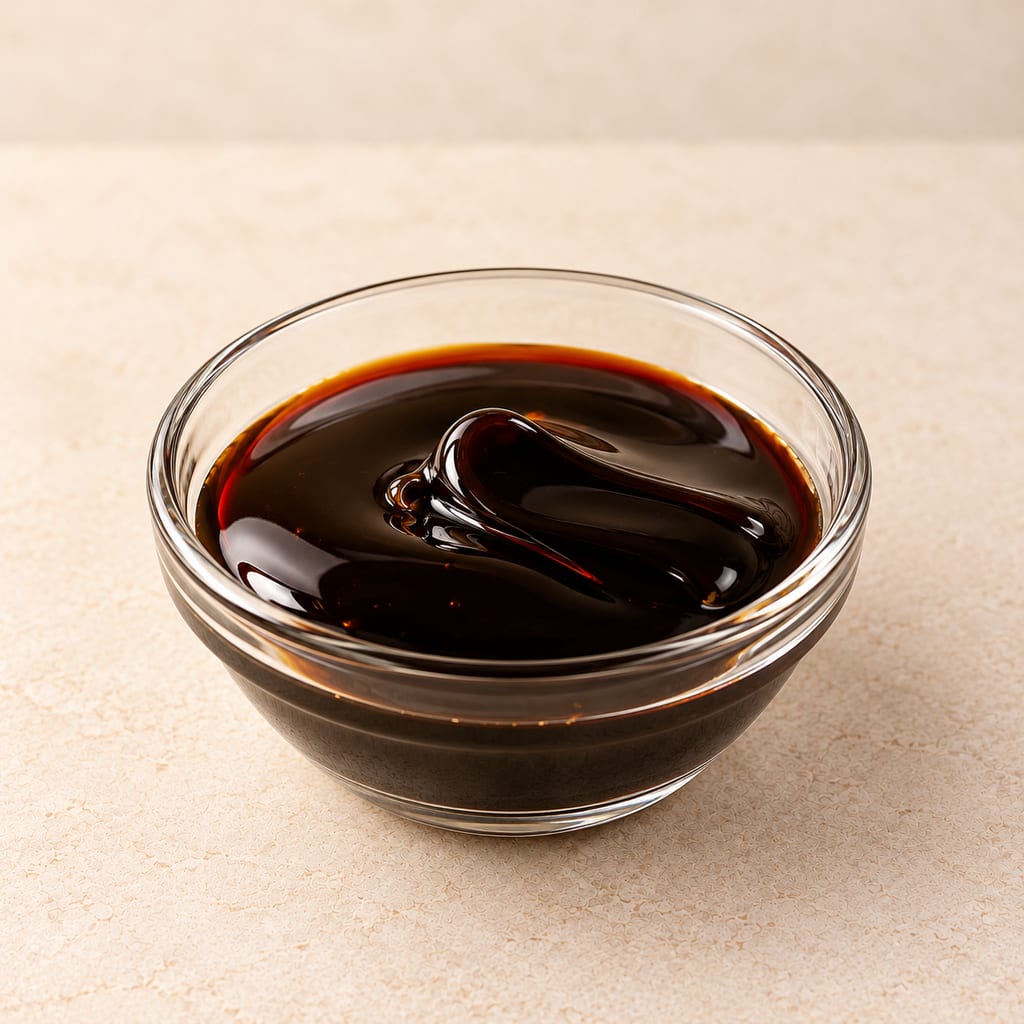
Molasses is the syrup separated as sugar crystallises from cane or beet; its grades and food uses vary, from Anadama and steamed brown bread to fermentation.

A gelling polysaccharide extracted from red seaweeds, sold as kanten strips or powder; it sets firm at a low concentration and stays solid until about 85 °C.

A Dominican table and seasoning condiment of sour orange juice, mixed with lime and salt and bottled raw; garlic, oregano or a hot pepper may be added for meat or a spicier bottle.

Cicerbita alpina is an alpine perennial whose tender shoots and leaves have been eaten raw or cooked. Sámi milk preparations and modern Carnian dishes are distinct uses, with serious identification and preservation limits.

Japanese skipjack tuna cooked, then repeatedly smoked and dried over a wood fire by the hand-fired tebiyama method into a hard block for shaving into dashi: the first stage of katsuobushi.

A Swedish-style spirit vinegar made by fermenting neutral alcohol with live vinegar bacteria, with a separate guide to commercial ättika strengths.

A yeast-raised wheat ring shaped from a firm dough, briefly boiled and baked. This source-batch formula gives a gently malted crust and a chewy crumb.

A warm dip of garlic, anchovy and olive oil, often enriched with butter, that Piedmont serves over a flame with raw and cooked vegetables and bread.

Bechamel is a white sauce of milk thickened with a butter and flour roux, one of the French mother sauces, and the base from which Mornay and other cheese and cream sauces are made.
No community contributions have been published for this entry yet.
Sign in to contribute. Published comments and photos are free to read.
Utah State University ExtensionIdentity · Collection · Concentration · Processing
044 - Maple Sap Collection and Sap Processing SystemsMaple sap generally contains about 2% sugar, with variation among trees; syrup is concentrated by heating to at least 66% soluble solids; reverse osmosis can preconcentrate sap but heating develops maple syrup flavour.
Cited in: From sap to concentrated maple foods; A fermentation ingredient, with limits; Uses and regional context
University of Maine Cooperative ExtensionTree physiology · Season · Species variation · Handling
Bulletin #7036, How to Tap Maple Trees and Make Maple SyrupSugar maple sap usually has the highest sugar content among maple trees; red maple also produces sweet sap. Stored starch is converted mainly to sucrose as wood warms; freeze-thaw cycles drive sap flow. Collected sap can sour in warmth and should be kept cold and boiled soon.
Cited in: A seasonal flow from the tree; Collecting and keeping it fresh; Uses and regional context
Parks CanadaHistory · Trade · Cultural use
Maple Products National Historic EventParks Canada describes maple products as known and valued by Indigenous peoples before European settlers, records their trade and farm-economic importance in Canada’s Maple Belt, and identifies spring sugaring-off as a cultural marker.
Cited in: Sap before syrup; Uses and regional context
Canadian Museum of HistoryHistory · Documented historical preparation
FoodwaysThe museum distinguishes maple sugar from syrup in colonial accounts; it identifies Leclercq’s 1691 description of Mi’kmaq sap reduction by boiling in wooden troughs to a reddish syrup and reports cold reduction by freezing in bark receptacles.
Cited in: Sap before syrup; From sap to concentrated maple foods