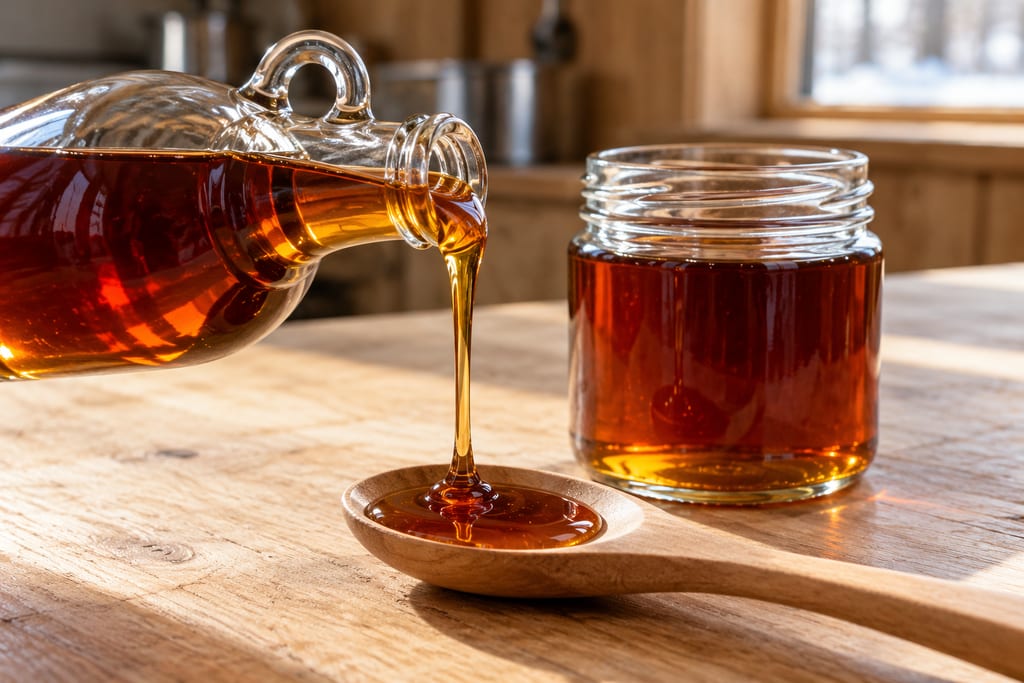
Maple syrup (batch method)
Maple sap of about two percent sugar boiled down in a shallow pan until it reaches syrup density, the sugar concentration the standard defines, then filtered hot and packed hot.
 FermenteaWhere food goes to change
Built structures · Kettles, coppers and boilers
two-vessel reduction
The kettle heats and reduces a large volume of thin liquid such as whey; before it nears the brewer's minimum fill the batch moves to a wide pan for the thick, stirred finish.
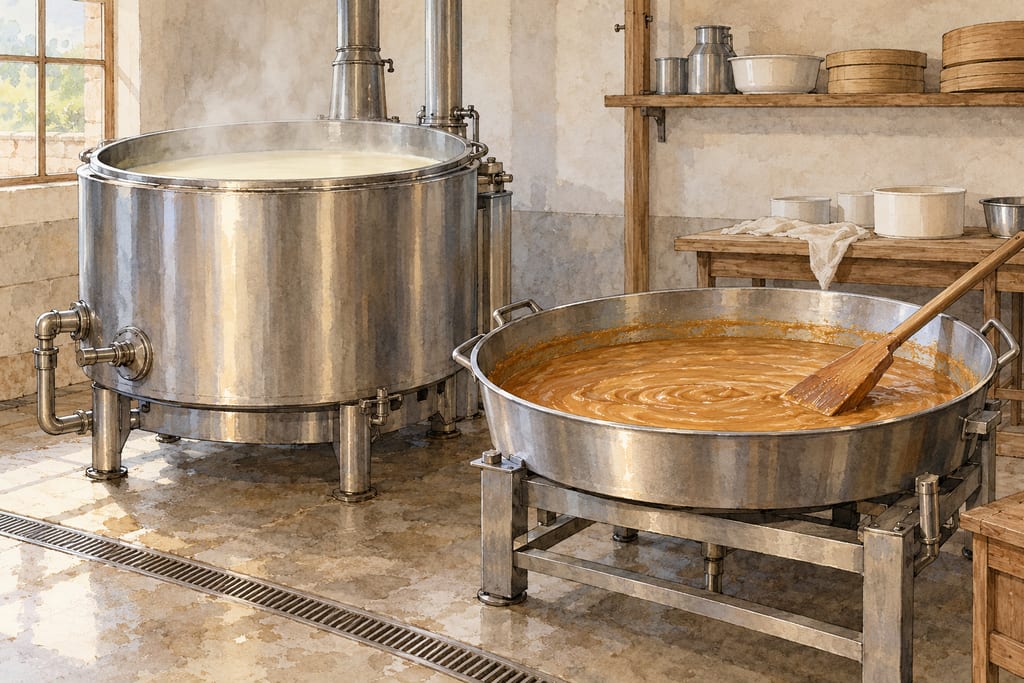
A brewer that heats and reduces a large volume of thin liquid works for the early part of a long reduction. A wide pan takes over for the thick, stirred finish. The split is needed because the two phases suit different vessels.
Brunost is the dairy example. Whey is boiled down with milk and cream to about 75% dry matter. Store norske leksikon describes an industrial process in which about 90% of the water is first removed by vacuum evaporation to 45 to 50% dry matter; the mass is boiled on, browns in the last 15 minutes as it nears 100 °C, and is cooled quickly to 80 to 85 °C under vigorous stirring. TINE adds that the cheese is cooled gently in portion bags so the milk sugar crystallises for a smooth consistency.
Evaporation depends on exposed surface and heat input. A tall kettle has little surface for its volume. As the batch thickens, a base element under a viscous, sugary mass and a deep vessel that is hard to stir are poor partners. The volume then falls toward the brewer's minimum fill, which is 4 litres for the BrewZilla in the cited manual.
A wide pan gives surface area, room for constant stirring and a visible endpoint.
Brunost and mysost: the kettle makes the early whey reduction, and a pan does the browning and stirred finish. The dossier marks this as an adaptation; the industrial figures are not a home recipe.
Ssal-jocheong (rice syrup): warm malt conversion and early reduction in the kettle, then a thick finish in a pan. Amylase conversion and concentration are separate stages, and the endpoint is not a fixed cooking time.
Maple syrup: the kettle preconcentrates the sap. University of Minnesota Extension prefers a large shallow evaporation pan, because the water-removal burden, steam and minimum fill make a kettle conditional. The shallow-pan finish and endpoint measurement are the adapted part.
Measure the remaining volume against the brewer's minimum fill, the mass temperature during browning and cooling, and the endpoint the tested recipe specifies. Without a dry-matter measurement a home endpoint is undefined.
No home brunost method with quantities was found. The industrial figures are not a home recipe.
The transfer must happen before the remaining volume falls below the appliance minimum, or before the viscosity makes heating impractical. This is a process-compatible workflow, not a tested universal recipe.
Evidence: adaptation. Each step is documented in other vessels; the two-vessel split is the adapted part.
Store norske leksikon (updated 2025) and TINE describe the industrial brunost process. The rice syrup and maple syrup sources are current home guides. The two-vessel split is not dated in any of them.
A build is made where it stands: moving it means building it again.
The BrewZilla manual says not to boil dry or energise with less than 4 litres of liquid.
Hazard sourceTransfer the batch to the pan before the brewer nears its minimum fill.
Control sourceThick, sugary masses burn on a base element; stir constantly in the pan.
Store norske leksikon describes industrial brunost practice: vacuum evaporation, boiling, browning and quick cooling to 80-85 °C.
The rice syrup method is a home recipe from a Korean cooking source; amylase conversion and concentration are separate stages.
The University of Minnesota Extension homemade maple syrup guide prefers a large shallow evaporation pan over a kettle.
Maple sap of about two percent sugar boiled down in a shallow pan until it reaches syrup density, the sugar concentration the standard defines, then filtered hot and packed hot.
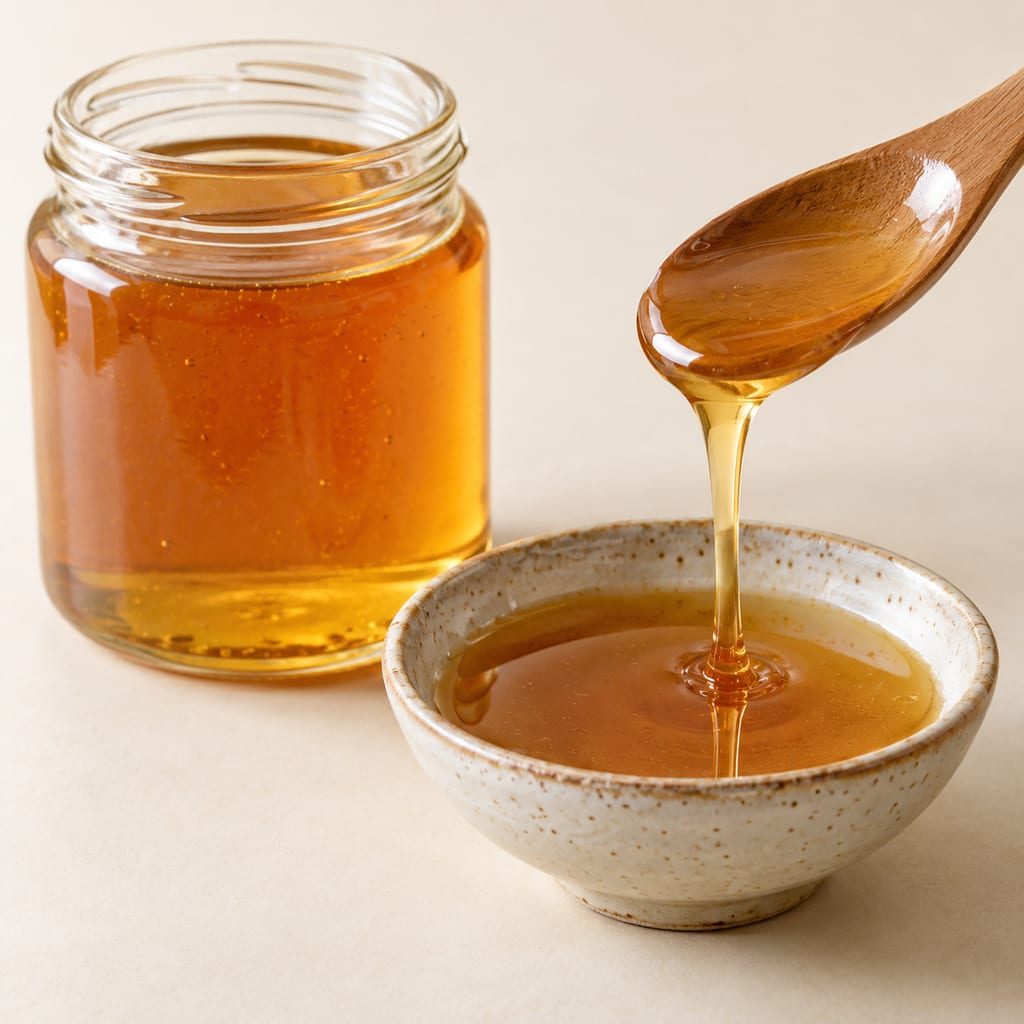
A Korean rice syrup: cooked rice is converted by barley malt in a long warm hold, strained, and the sweet liquid is boiled down until it pours like maple syrup.
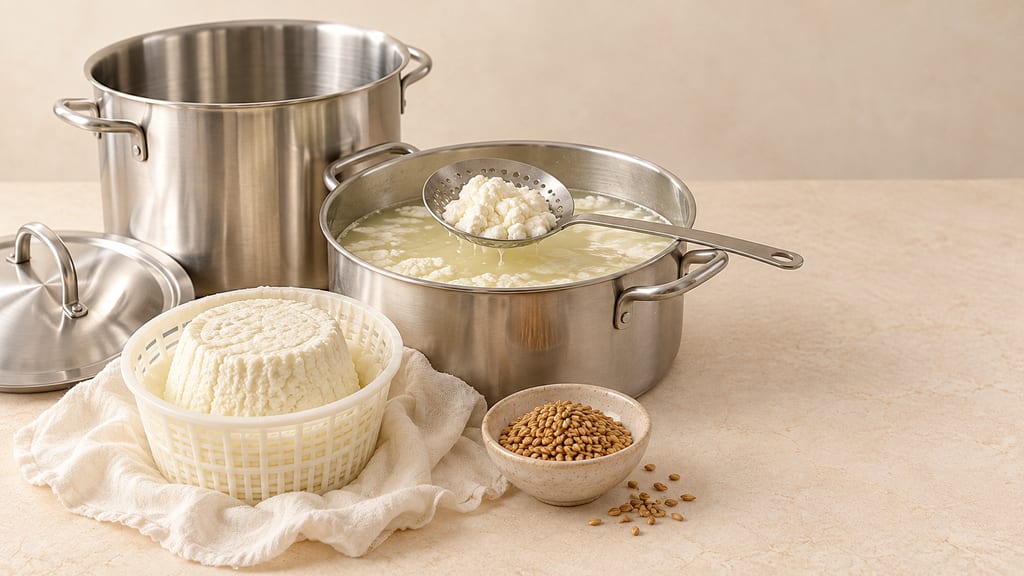
A home brewing kettle can hold a cheese pot in hot water, supply wash water and reheat whey. This is what two brewer manuals allow, and which cheeses show each job.
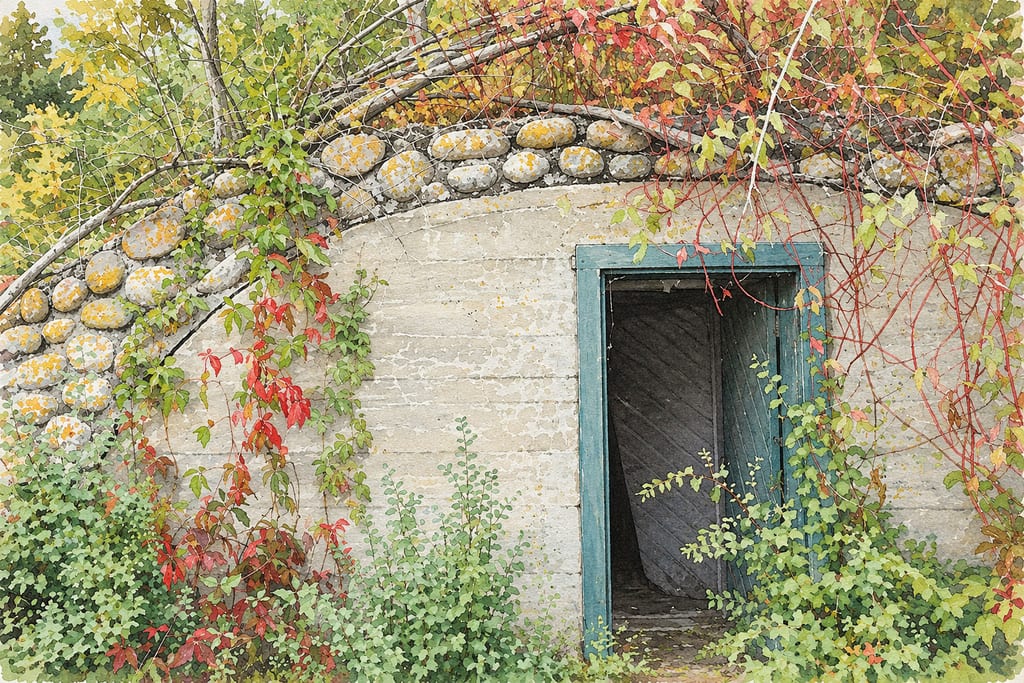
A documented root cellar at Minnesota’s Joyce Estate was built into a hillside near the kitchen to store garden produce. Its exposed east wall is concrete trimmed with fieldstone.

Soft, spreadable Calabrian pork sausage made with a great deal of red chilli and fatty pork, stuffed into natural casings, sometimes smoked and matured while staying soft.

A way to add independent temperature logging to an existing food dehydrator without changing its built-in controls or protections. It is a monitoring method, not a rewiring plan.

Pleurotus cystidiosus is the abalone mushroom, a cultivated oyster-type fungus with dark brown caps that grows more slowly and is more demanding than other Pleurotus species.

A dark, balanced vinegar from Emilia-Romagna made by combining cooked or concentrated grape must with wine vinegar, then acetifying and refining it in wood under a protected specification.

A living dairy inoculum that starts controlled cream fermentation, developing acidity and aroma before sour cream or cultured butter is finished.

A small electric incubator holds jars at a selected temperature for yogurt and other documented warm food preparations. Controls, capacity and vessel arrangement vary by model.

Adygean salt is a seasoned table salt associated with Adygea and the wider North Caucasian culinary tradition. Salt is blended with garlic and a variable selection of herbs and spices; the exact mix depends on the named style and maker.

The African Caesar-group mushroom, Amanita masasiensis, is a wild ectomycorrhizal species of central and southern African woodlands, eaten locally. The genus contains deadly poisonous species, so identification needs care.
No community contributions have been published for this entry yet.
Sign in to contribute. Published comments and photos are free to read.
Store norske leksikonMethod
Brunost (Preben S. Ottesen, Eva Narten Høberg; updated 3 October 2025)Cited in: Overview; Documented uses; Measuring
KegLand Distribution Pty Ltd (copy hosted by The Malt Miller)Method
BrewZilla 35L - Gen 4 Instruction Manual (Last Updated 30/08/2022), distributor copyCited in: How it works; Limits and evidence
Maangchi (maangchi.com)Method
Homemade rice syrup (Ssal-jocheong) recipe by MaangchiCited in: Documented uses
University of Minnesota Agricultural Extension ServiceMethod
Homemade Maple SyrupCited in: Documented uses; Limits and evidence