Built structures
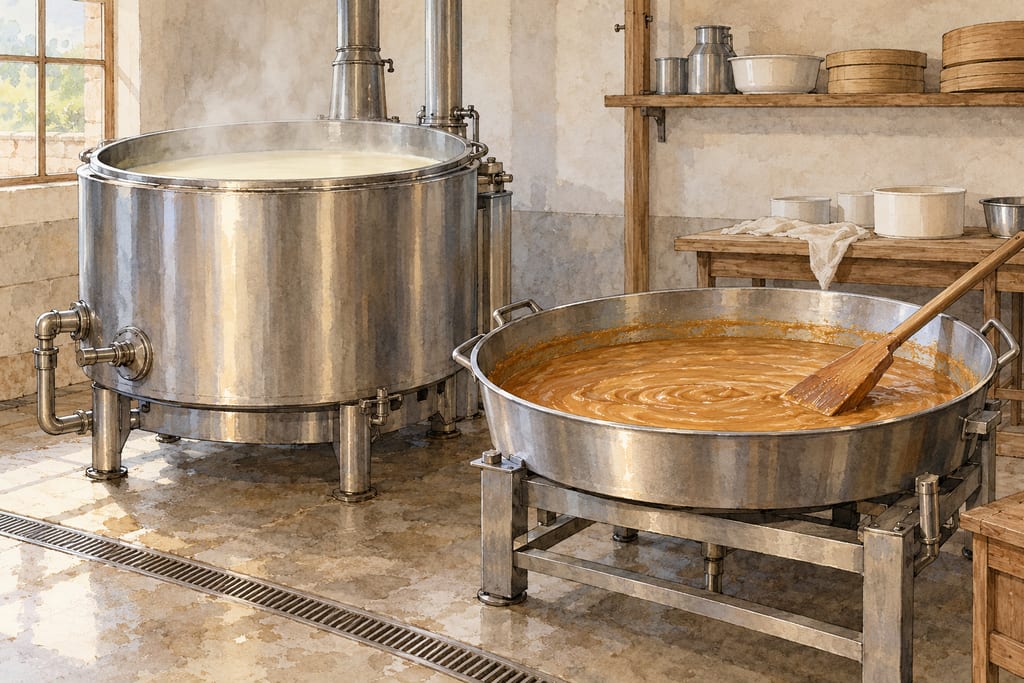
Brewer for bulk work and a finishing pan
The kettle heats and reduces a large volume of thin liquid such as whey; before it nears the brewer's minimum fill the batch moves to a wide pan for the thick, stirred finish.
 FermenteaWhere food goes to change
626 sourced equipment pages: vessels, tools, appliances and built structures.
The kettle heats and reduces a large volume of thin liquid such as whey; before it nears the brewer's minimum fill the batch moves to a wide pan for the thick, stirred finish.
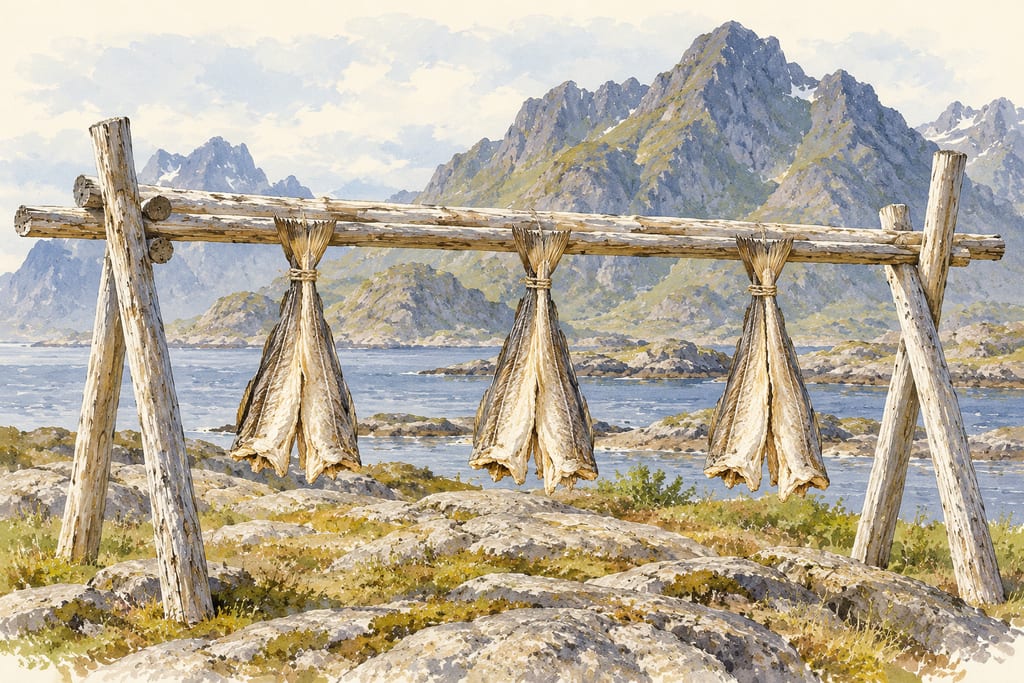
A Lofoten hjell is a large outdoor wooden rack for drying stockfish in the region’s moving coastal air. Flat racks and piles are recorded in the product specification; the archive also describes horizontal and tall triangular arrangements.
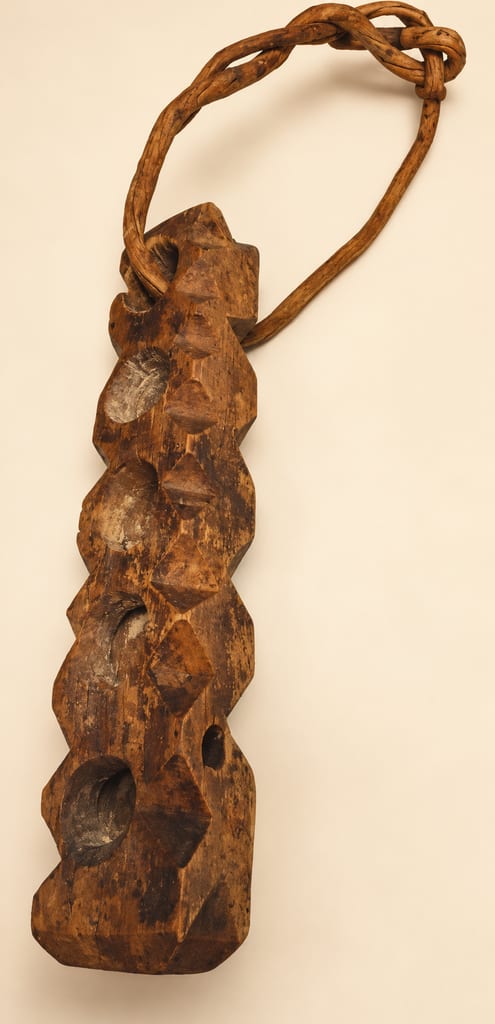
A carved wooden carrier used in Norwegian farmhouse brewing to dry and keep yeast-rich material between batches; its holes and hanging loop distinguish it from a linked wooden yeast ring.
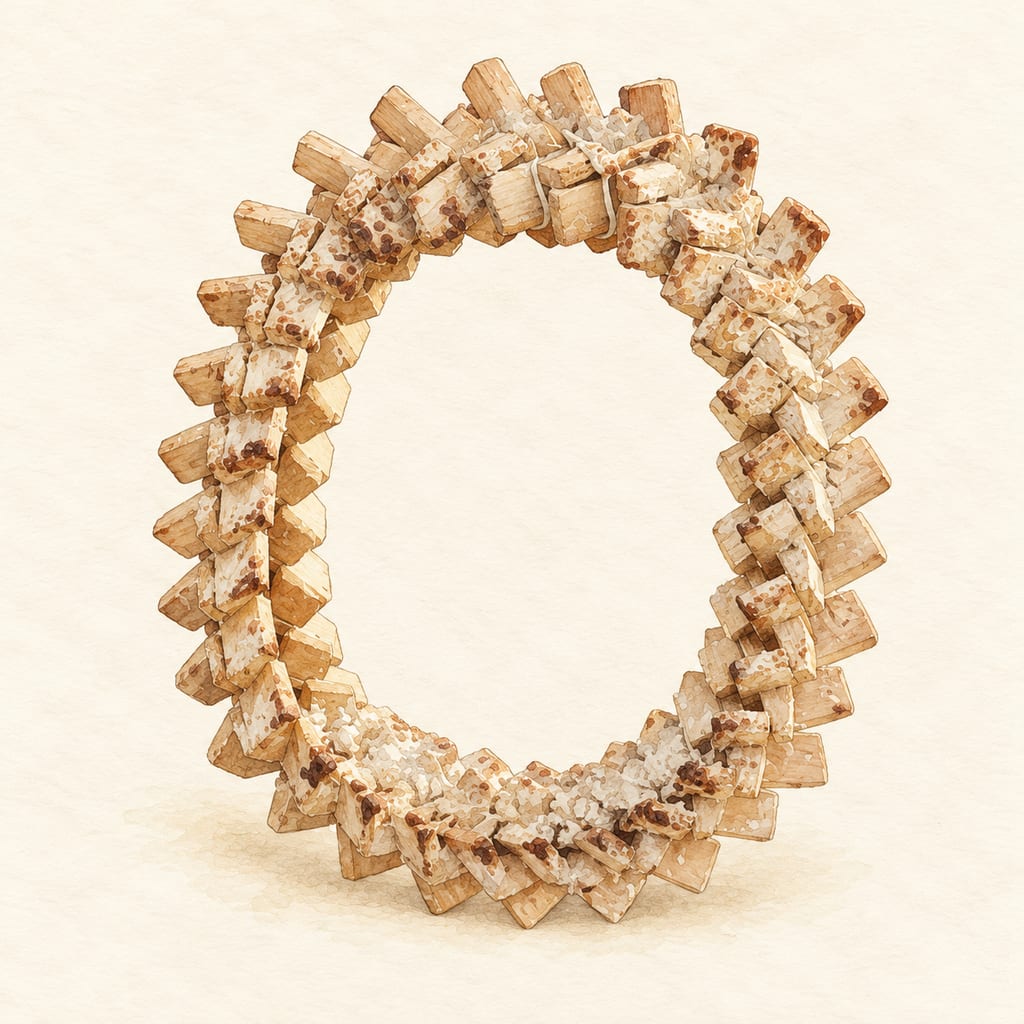
A yeast ring (Norwegian gjærkrans) is an open wooden carrier that holds yeast from a previous brew while it dries for reuse. Lars Marius Garshol documented a linked-block ring in use at a farmhouse brewery in Vestbygda outside Voss.
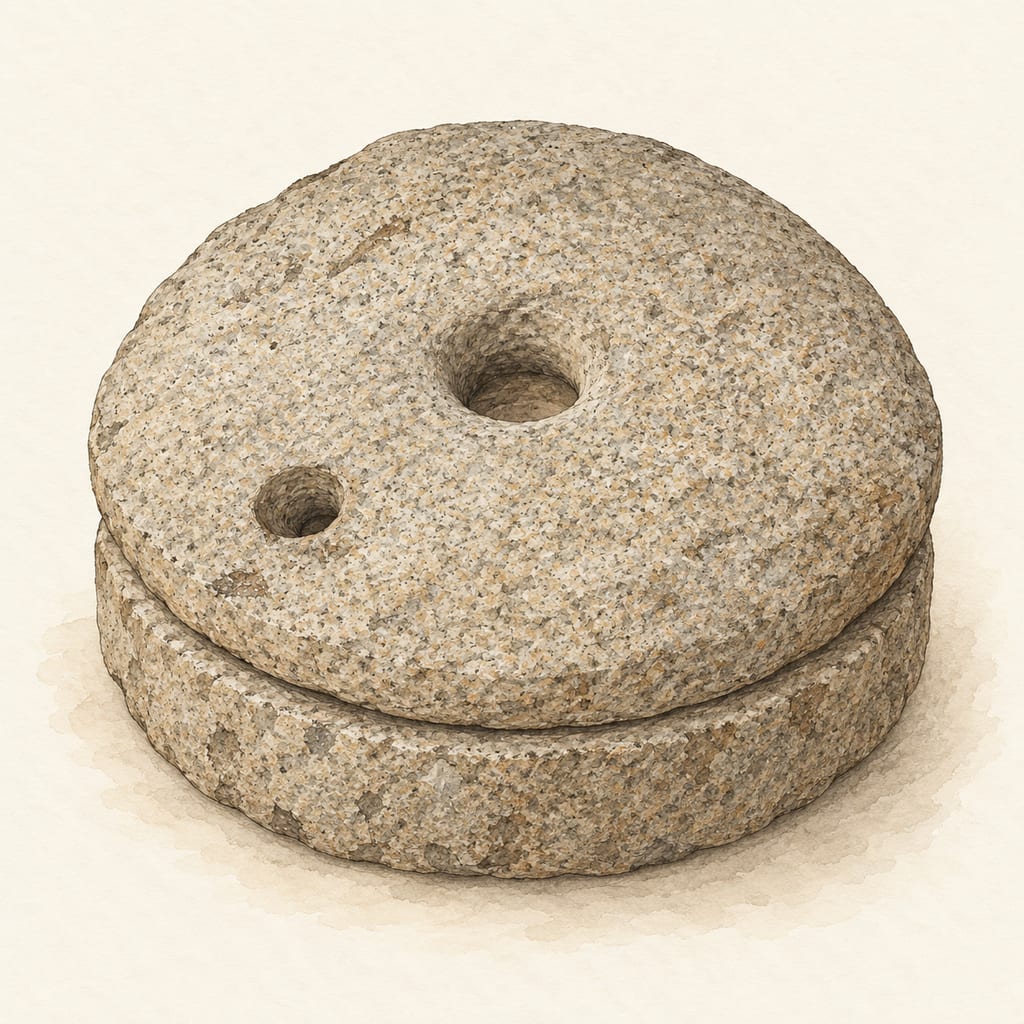
A rotary quern is a hand-operated mill with a runner turning over a fixed bedstone to grind grain. Scandinavian household use of rotary querns increased around the beginning of the Viking Age.
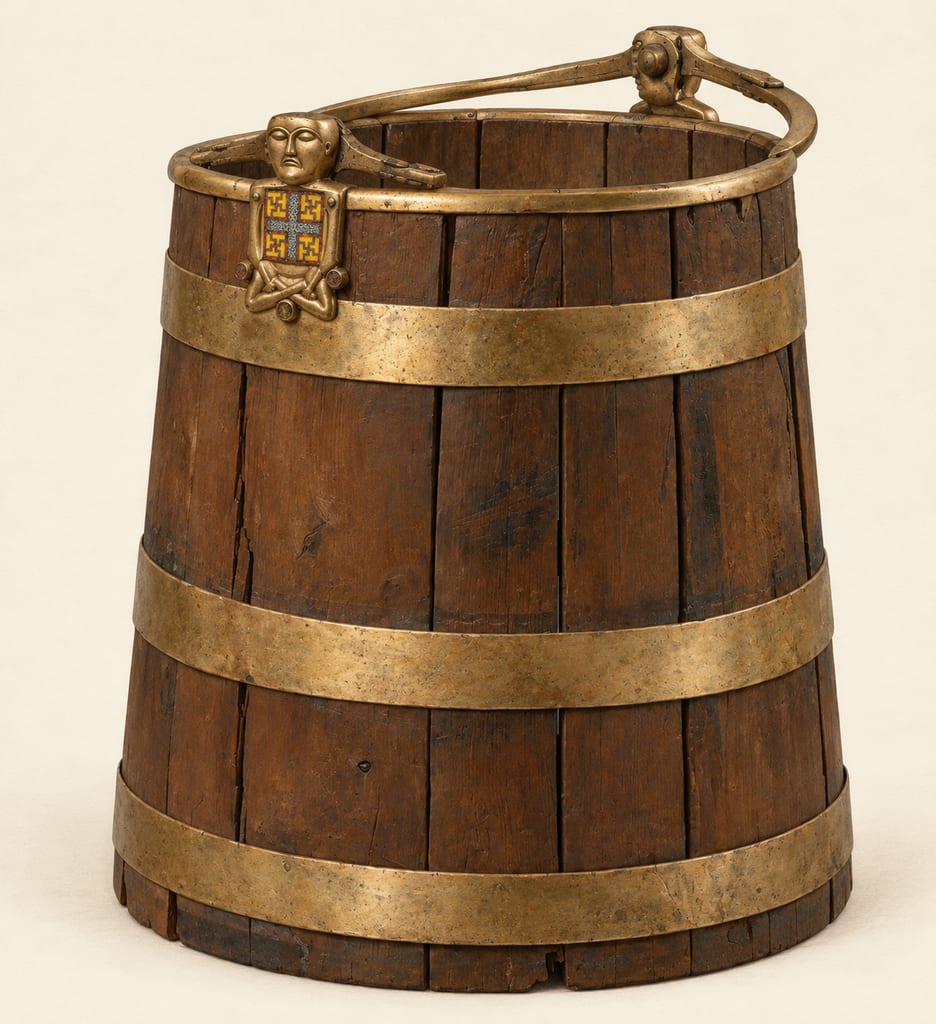
The Oseberg bucket is a 36 cm yew stave vessel bound in bronze, its enamelled human fittings a rare record of skilled craft and elite display.
Show on map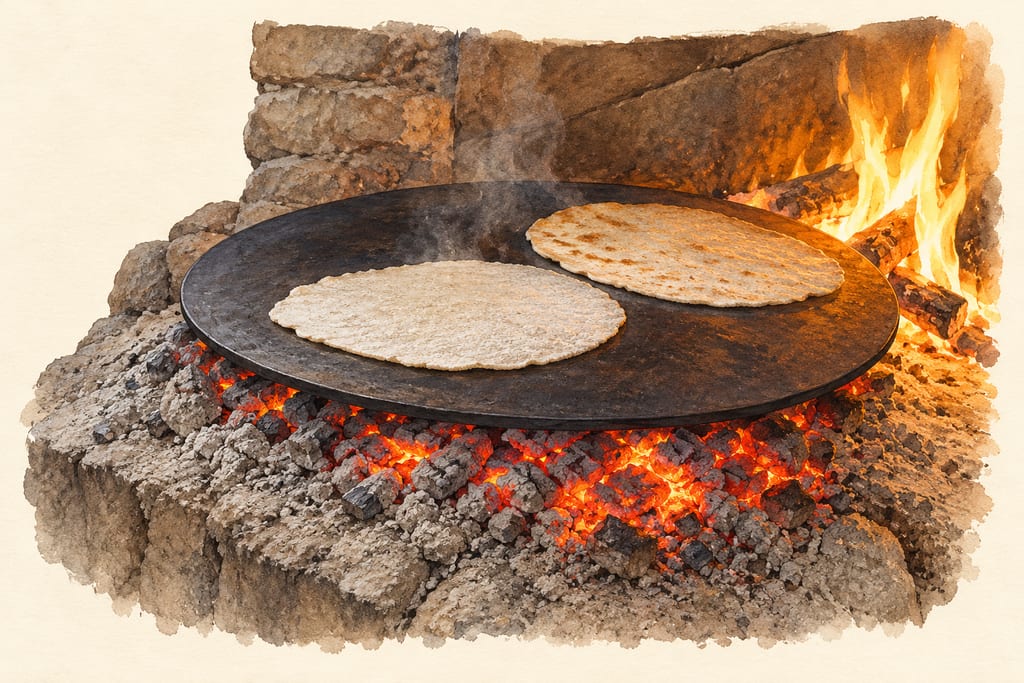
A heated iron or stone plate for fat-free baking of thin breads. Norwegian sources document the takke and stone bakstehelle, from wood-fired hearths to modern electric models.
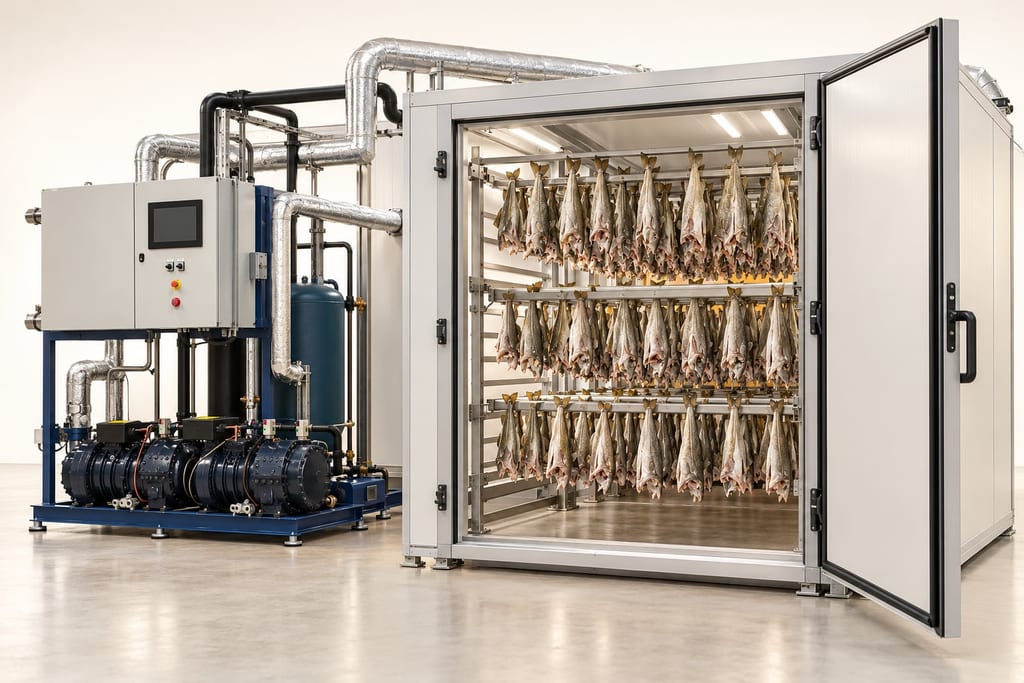
A modern industrial system for controlled indoor drying of stockfish. Documented Norwegian examples combine a drying chamber or duct with heat-pump dehumidification and process monitoring; the evidence does not describe a household cabinet.
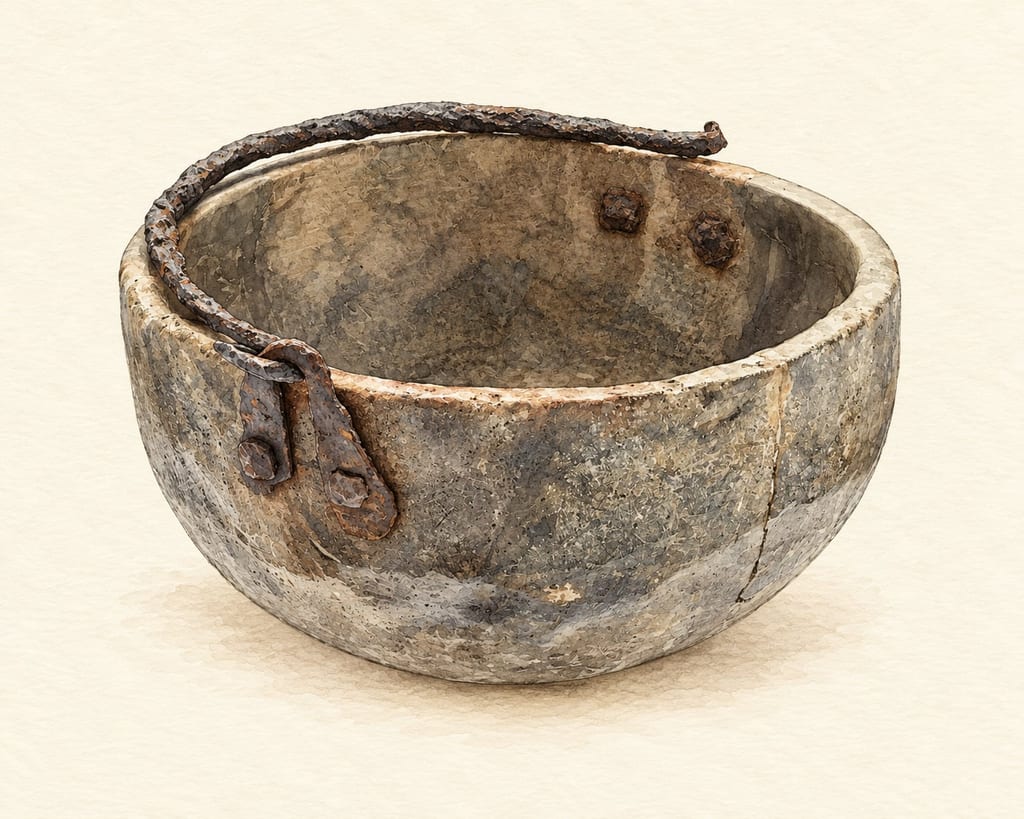
A Viking Age cooking pot carved from soapstone, exemplified by a partly reconstructed Birka grave find with iron handle fittings. Similar vessels were used across Scandinavia, but their forms and later handles changed over time.
A thin stone griddle used over an open hearth. Norwegian archaeology documents the established tradition from the early Middle Ages; a Viking-period origin is only a cautious suggestion linked to Shetland.