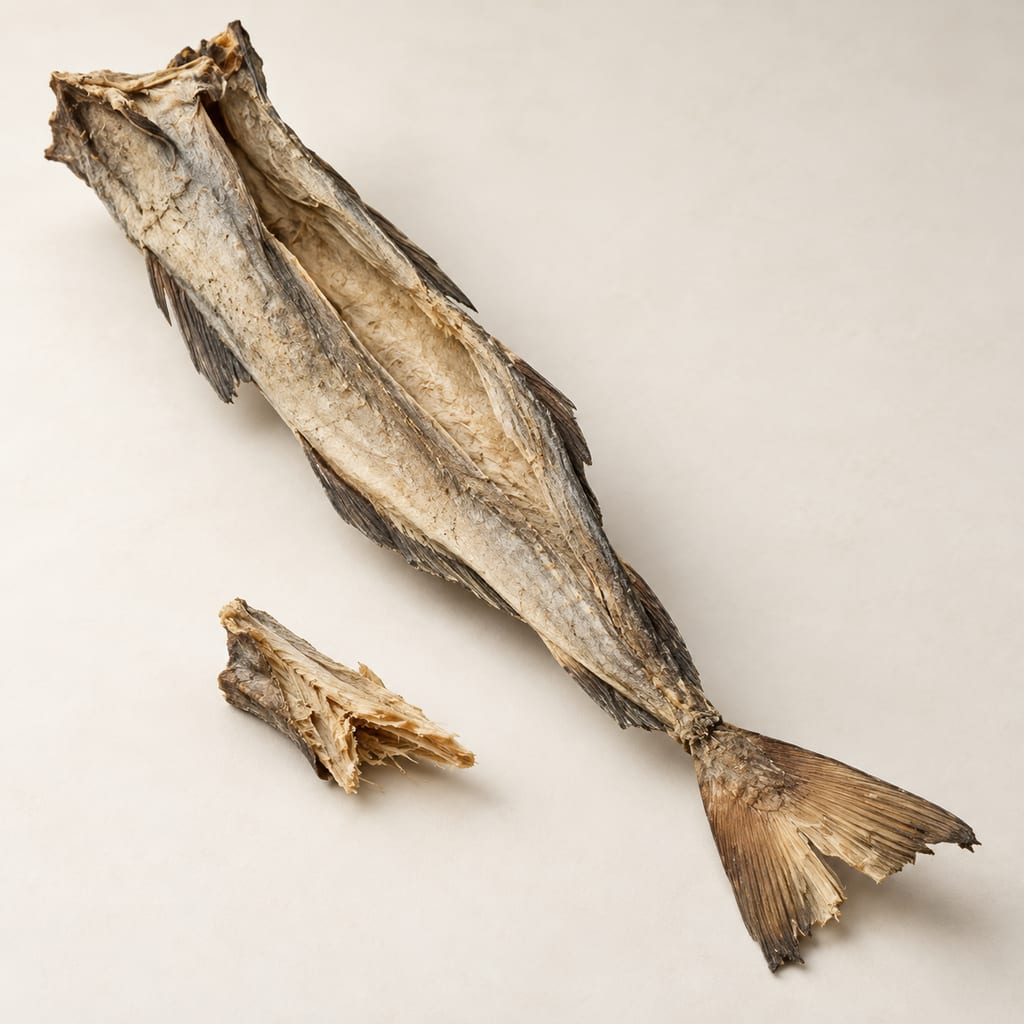
Stockfish
Cod hung on open racks in cold northern air until most of its water has gone, leaving a hard, light, unsalted fish that keeps and travels and must be soaked for days before cooking.
 FermenteaWhere food goes to change
Equipment · Drying kilns and dryers
A modern industrial system for controlled indoor drying of stockfish. Documented Norwegian examples combine a drying chamber or duct with heat-pump dehumidification and process monitoring; the evidence does not describe a household cabinet.
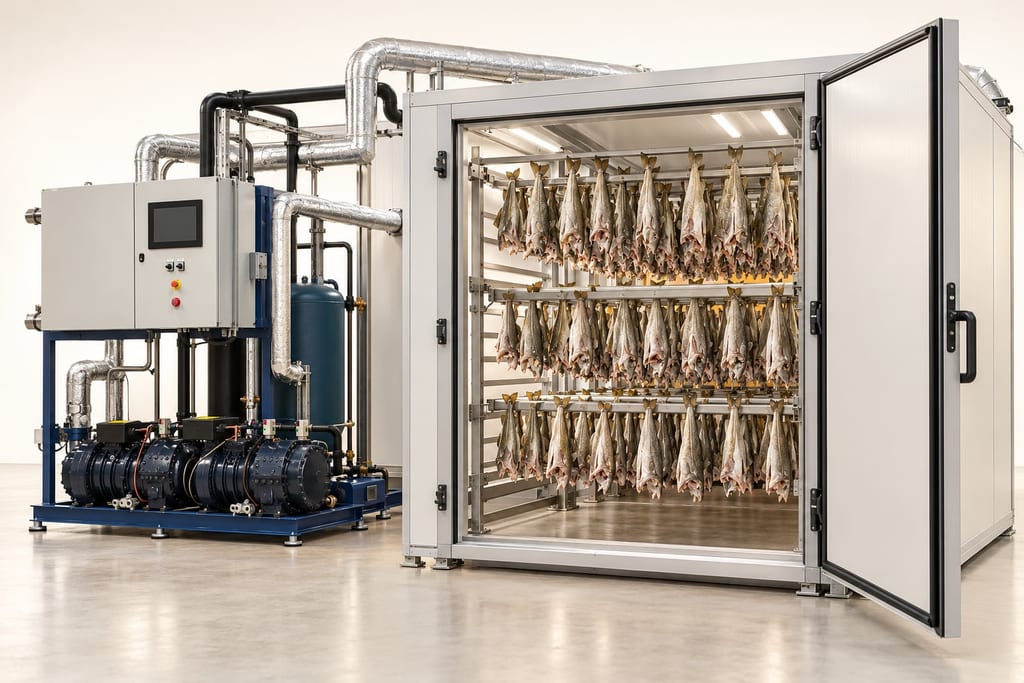
Nofima describes a modern indoor process for stockfish made from fresh headed and gutted cod, the same raw material used in traditional outdoor stockfish production. The process was developed at Nofima’s laboratory in Ås through research involving exporter Athena Seafoods and European partners. Nofima reports that its pilot took less than a month, compared with about four months on outdoor racks. Italian specialists assessed the dried fish, and the project reported encouraging sensory tests. Those results belong to the documented research process, not to every indoor dryer.
The European Commission’s SAFETRACKFOOD final report describes a prototype indoor drying unit and five trials. Alfsen og Gunderson later reports delivering a drying installation to SafeTrackFood at Bø in Vesterålen. The sources connect these developments to indoor stockfish production, but do not establish that every named prototype component and supplier installation was one identical unit.
The documented modern form is an industrial drying system, not a small household cabinet. CORDIS names an AFOS AT1-1000 dryer in its project report and says it rapidly dried matured fish in the final part of the process; that dryer alone was not designed to control the preceding maturation stage. The project added hardware and software, sensors, a control station and an automated programmable-logic-controller process-control system to monitor maturation as well as drying.
Alfsen og Gunderson describes commercial fish-drying equipment as tailored chamber or duct/long dryers. Its systems combine heat-pump technology with sorption dehumidification, and current supplier material describes CO2 as the refrigerant in its ECO-Dryer. Product may be hung or placed on trays depending on the installation. The sources do not provide a standard cabinet size, rack count, electrical rating or rated capacity for the SafeTrackFood prototype.
CORDIS reports five indoor trials and a final 31-day run that began with 300 kg gross fresh Lofoten skrei. The trials’ gross batch weights ranged from 103 to 352 kg, but those research loads are not a manufacturer’s rated capacity. Nofima’s under-one-month comparison likewise describes a particular pilot process; the published article does not provide a complete domestic recipe or universally valid machine settings.
A separate 2018 Nofima study examined heat-pump-equipped, climate-controlled warehouses used to end-dry stockfish after the outdoor rack stage. Its reported conditions apply to that separate storage study, not automatically to the full indoor maturation-and-drying prototype. This record therefore identifies the machine as industrial food-processing equipment and leaves capacity, dimensions, material specification and operating set points unstated where the sources do not give them.
Nofima developed an indoor drying process at its Ås laboratory within the SafeTrackFood research effort. A later supplier account identifies an indoor stockfish drying installation delivered to SafeTrackFood at Bø in Vesterålen. The public sources do not establish that every named prototype component was one identical unit.
The project report describes whole-fish maturation and drying as a monitored, validated process; it also documents hazards associated with uncontrolled outdoor handling.
Hazard sourceUse the installation’s validated process documentation and monitoring; this record does not provide operating set points or a domestic preservation method.
Control sourceA heat pump by itself does not validate stockfish production. The cited fast indoor result depended on an integrated research process and control system.
The under-one-month result belongs to a specific Nofima/SafeTrackFood research process; the sources do not provide general household settings or validate arbitrary heat-pump dryers for stockfish.
Source →Climate-controlled end-drying after outdoor rack drying is a separate use from the full indoor maturation-and-drying process.
Source →Nofima reports that the indoor process was developed in its laboratory at Ås; this does not claim that the commercial plant was installed there.
Alfsen og Gunderson reports a drying-system delivery for SafeTrackFood at Bø; PTG separately reports a reversible heat pump for Nergård Seafood’s dried-fish plant there.
Cod hung on open racks in cold northern air until most of its water has gone, leaving a hard, light, unsalted fish that keeps and travels and must be soaked for days before cooking.
A thin stone griddle used over an open hearth. Norwegian archaeology documents the established tradition from the early Middle Ages; a Viking-period origin is only a cautious suggestion linked to Shetland.
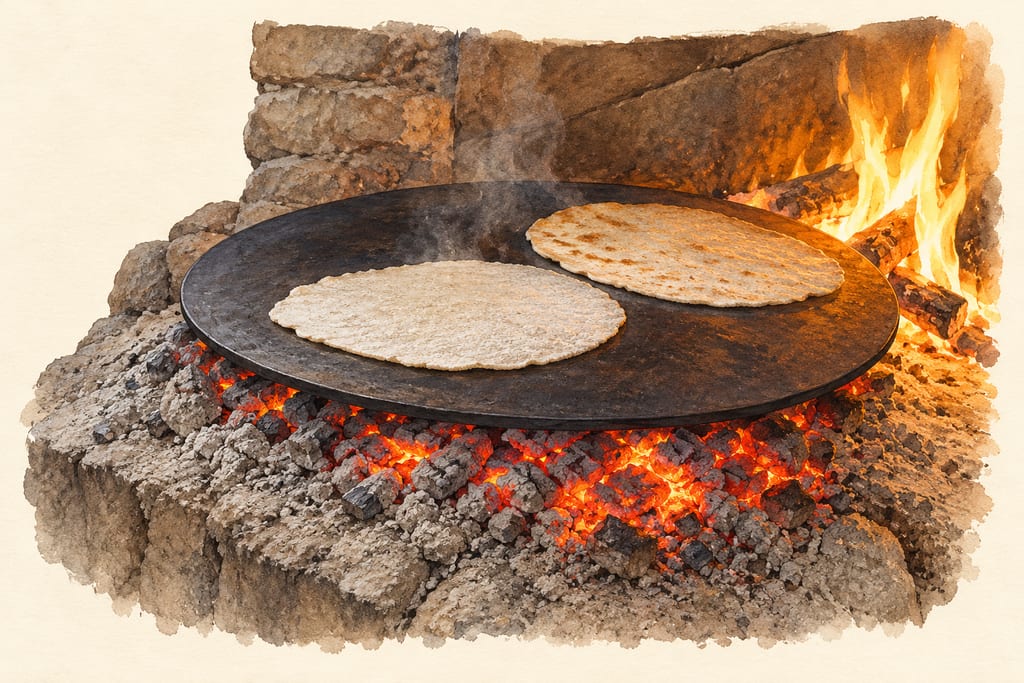
A heated iron or stone plate for fat-free baking of thin breads. Norwegian sources document the takke and stone bakstehelle, from wood-fired hearths to modern electric models.
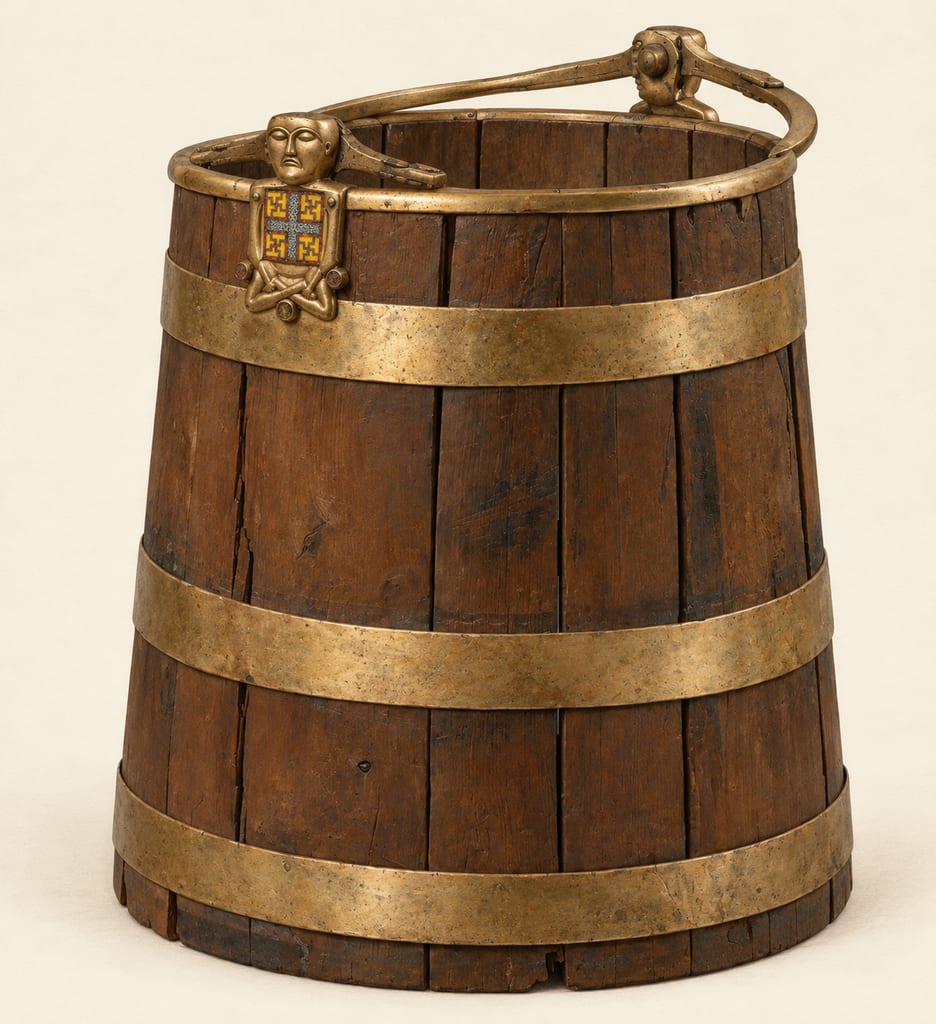
The Oseberg bucket is a 36 cm yew stave vessel bound in bronze, its enamelled human fittings a rare record of skilled craft and elite display.
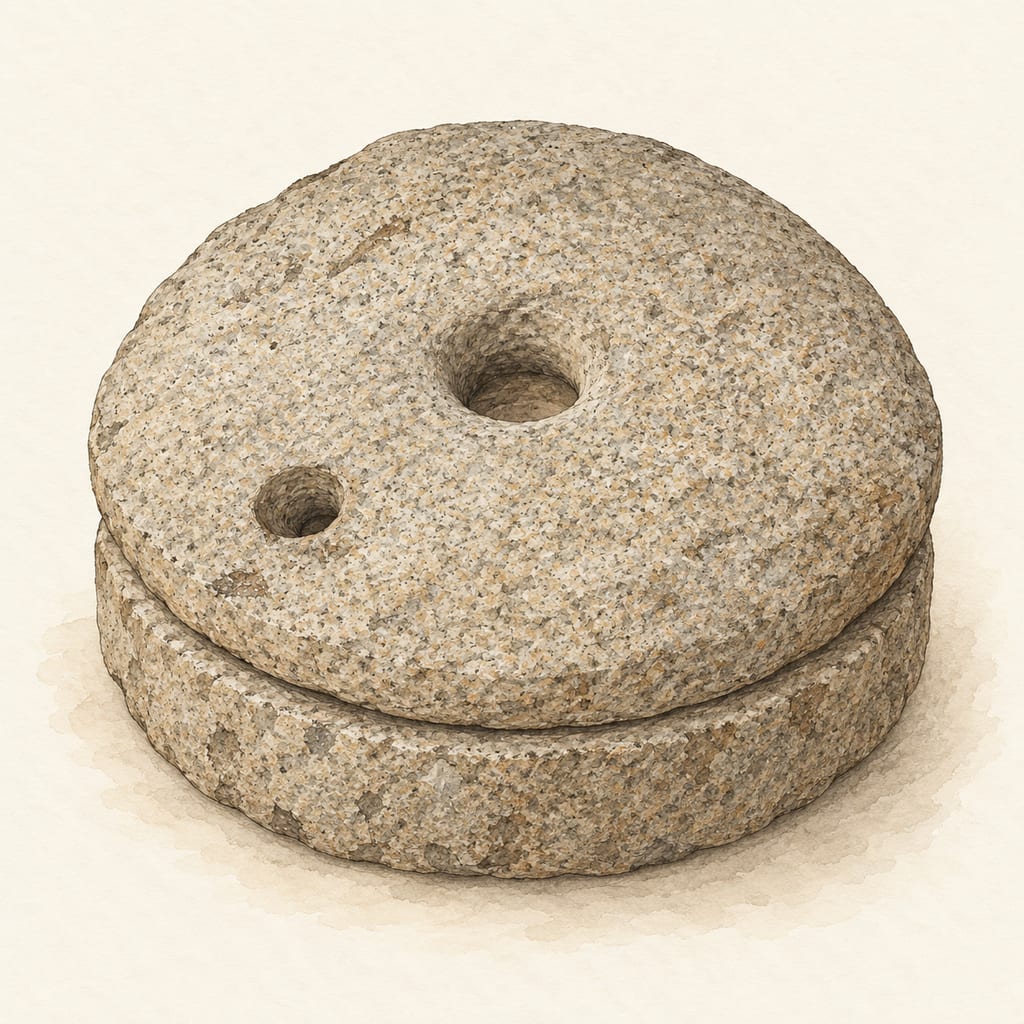
A rotary quern is a hand-operated mill with a runner turning over a fixed bedstone to grind grain. Scandinavian household use of rotary querns increased around the beginning of the Viking Age.
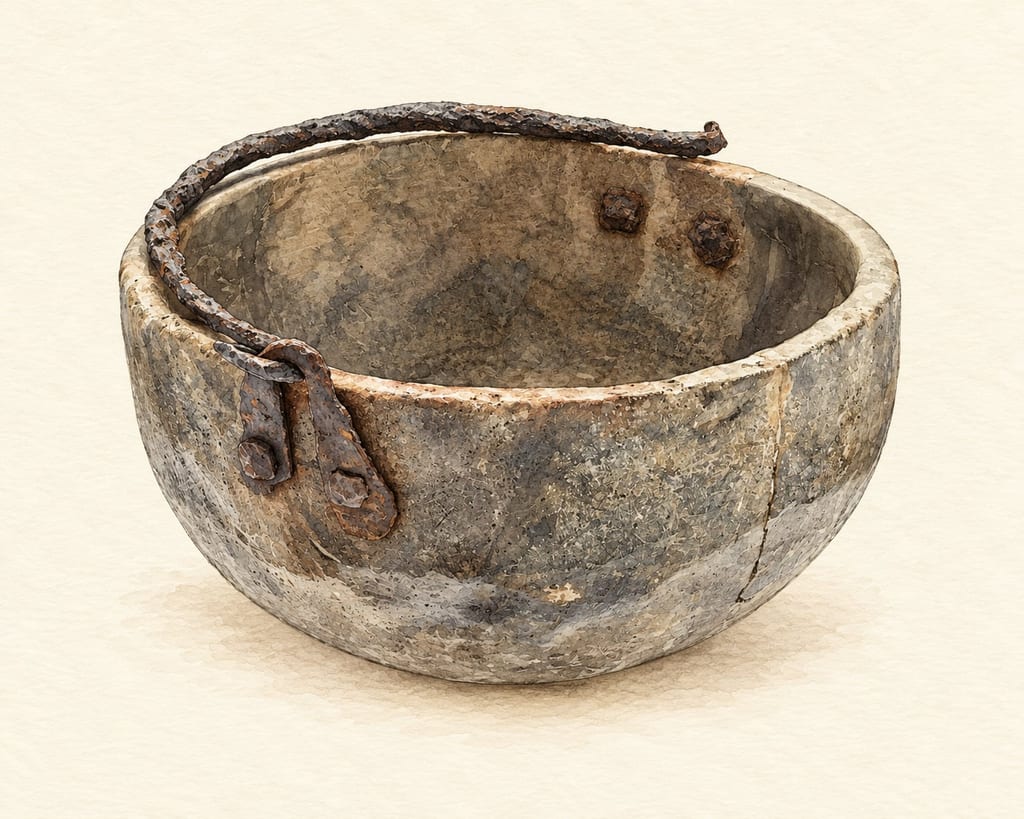
A Viking Age cooking pot carved from soapstone, exemplified by a partly reconstructed Birka grave find with iron handle fittings. Similar vessels were used across Scandinavia, but their forms and later handles changed over time.
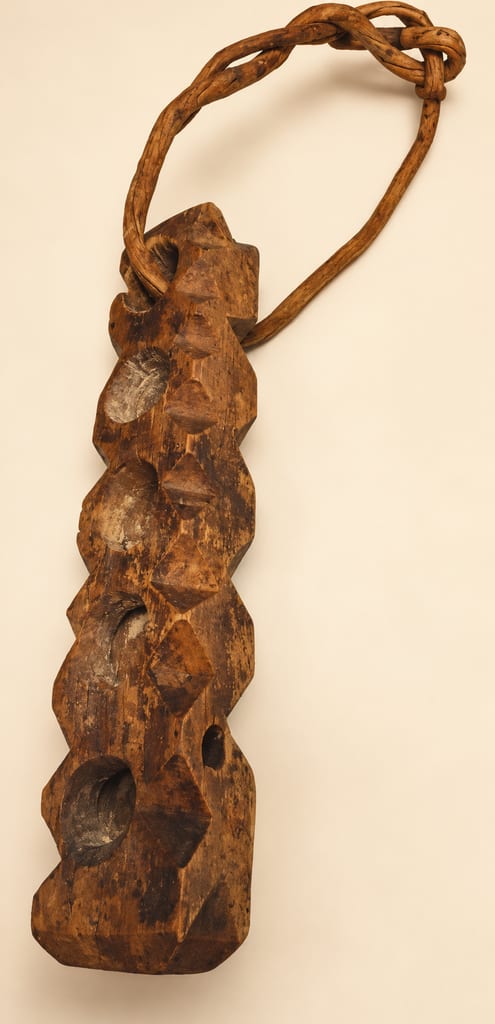
A carved wooden carrier used in Norwegian farmhouse brewing to dry and keep yeast-rich material between batches; its holes and hanging loop distinguish it from a linked wooden yeast ring.
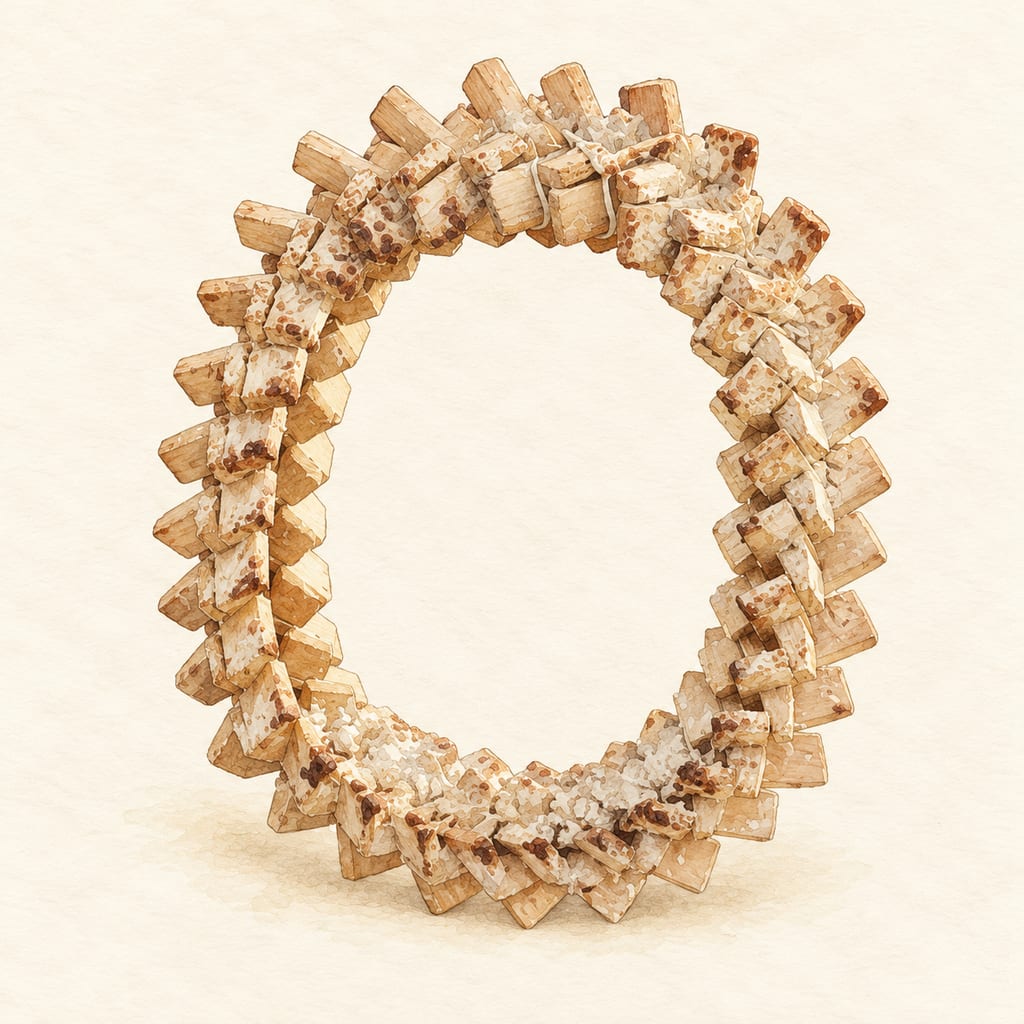
A yeast ring (Norwegian gjærkrans) is an open wooden carrier that holds yeast from a previous brew while it dries for reuse. Lars Marius Garshol documented a linked-block ring in use at a farmhouse brewery in Vestbygda outside Voss.

Soft, spreadable Calabrian pork sausage made with a great deal of red chilli and fatty pork, stuffed into natural casings, sometimes smoked and matured while staying soft.

A way to add independent temperature logging to an existing food dehydrator without changing its built-in controls or protections. It is a monitoring method, not a rewiring plan.

Pleurotus cystidiosus is the abalone mushroom, a cultivated oyster-type fungus with dark brown caps that grows more slowly and is more demanding than other Pleurotus species.

A dark, balanced vinegar from Emilia-Romagna made by combining cooked or concentrated grape must with wine vinegar, then acetifying and refining it in wood under a protected specification.

A living dairy inoculum that starts controlled cream fermentation, developing acidity and aroma before sour cream or cultured butter is finished.

A small electric incubator holds jars at a selected temperature for yogurt and other documented warm food preparations. Controls, capacity and vessel arrangement vary by model.

Adygean salt is a seasoned table salt associated with Adygea and the wider North Caucasian culinary tradition. Salt is blended with garlic and a variable selection of herbs and spices; the exact mix depends on the named style and maker.

The African Caesar-group mushroom, Amanita masasiensis, is a wild ectomycorrhizal species of central and southern African woodlands, eaten locally. The genus contains deadly poisonous species, so identification needs care.
No community contributions have been published for this entry yet.
Sign in to contribute. Published comments and photos are free to read.
NofimaProcess development · Performance · Geography
Indoor production of stockfishNofima describes indoor drying of fresh headed and gutted cod, developed at its Ås laboratory.
The report compares under one month indoors with approximately four months on outdoor racks and describes Italian sensory evaluation.
Cited in: An indoor stockfish development in Norway; What the documented trials do—and do not—establish
European Commission, CORDISPrototype design · Process control · Trial evidence · Safety context
Development of a novel Industrial Fish Drying and Maturing Process to secure Seafood Safety, Traceability, and Quality — Final Report SummaryThe project developed and tested an indoor stockfish unit with an automated bioprocess-control system; five trials were reported.
The report names an AFOS AT1-1000 dryer for rapid final-stage drying, then describes added sensors and integrated process controls for the preceding maturation stage.
The final trial began with 300 kg gross fresh Lofoten skrei on 4 May 2015 and finished on 4 June, a 31-day run; this is one trial, not a capacity rating.
Cited in: An indoor stockfish development in Norway; An industrial chamber and drying system; What the documented trials do—and do not—establish
Alfsen og GundersonEquipment design · Power and controls
Drying of fish and fish filletsThe supplier offers equipment packages and turnkey chamber or duct/long dryers for fish, tailored to product, capacity and available space.
Its systems combine heat-pump technology and sorption dehumidification and include monitored process controls and batch reports.
Cited in: An industrial chamber and drying system
Alfsen og GundersonInstalled example · Modern form
Avfuktere og tørkesystemerThe supplier says its AG ECO-Dryer combines sorption dehumidification with CO2 heat-pump technology.
The article says AG delivered a drying installation to SafeTrackFood at Bø in Vesterålen for a project aiming at indoor stockfish production.
Cited in: An indoor stockfish development in Norway; An industrial chamber and drying system
NofimaDistinguishing related system
Optimization of quality and yield of stockfish by end-drying in climatic controlled storageThis separate study addresses controlled end-drying after outdoor rack drying, using heat-pump-equipped warehouses; it is not the same process as full indoor maturation and drying.
Cited in: What the documented trials do—and do not—establish
PTGInstalled example · Geography
Dried fish all year roundPTG reports supplying a reversible heat pump to Nergård Seafood’s dried-fish plant at Bø in Vesterålen in 2020 and describes year-round indoor production.